David Duffield: The PeopleSoft Defeat That Fueled Workday's Revenge
After Oracle acquired PeopleSoft, David Duffield started again and built Workday around cloud software, culture, and a second chance.

View all stories about this mogul
David Duffield watched the company he loved disappear into Oracle. Instead of retiring, the veteran founder returned with a more dangerous advantage than youth: he knew exactly what enterprise customers disliked about the old software model.
PeopleSoft had made Duffield a major figure in business software. Its hostile takeover by Oracle closed one chapter, but it also supplied the emotional and strategic fuel for Workday. Founded with Aneel Bhusri in 2005, Workday was designed for a world shifting from installed software to subscription services delivered through the cloud.
The second act was not merely revenge. It was a disciplined attempt to rebuild human-resources and finance software before incumbents could escape the weight of their legacy systems.
What did David Duffield learn from building PeopleSoft?
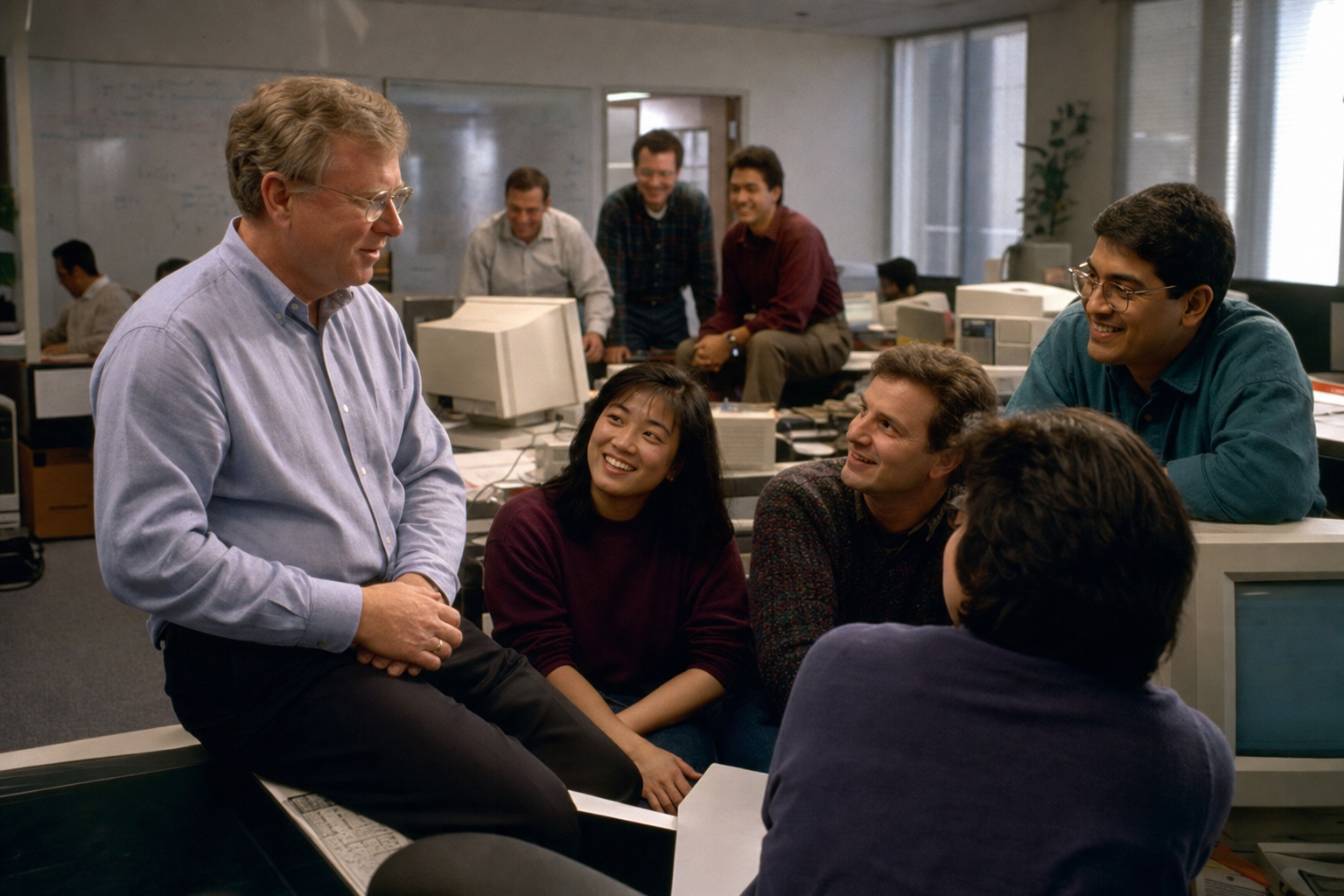
Duffield founded PeopleSoft in 1987 after years in business software. The company became known for human-resources applications and a culture that emphasized employees and customers. Its friendly identity differentiated it in a category often associated with long implementations and impersonal vendors.
PeopleSoft expanded into a broad enterprise suite and became one of the industry’s major players. Growth brought complexity. Large customers wanted integrated HR, finance, supply-chain, and analytics systems, while every release had to support varied databases, configurations, and older deployments.
That installed base was an asset and a burden. Maintenance contracts created durable revenue, but upgrades could be disruptive. Software versions fragmented across customers. Innovation had to coexist with compatibility.
Duffield learned that enterprise software is not sold once. It becomes embedded in payroll, hiring, accounting, and reporting—processes where failure is unacceptable. The vendor-customer relationship can last decades, making trust and service part of the product.
How did Oracle’s takeover create Workday?

Oracle launched a hostile bid for PeopleSoft in 2003. After a prolonged battle involving regulators, courts, shareholders, and competing corporate visions, Oracle completed the acquisition in 2005.
For Duffield, the outcome was personal. PeopleSoft’s employee-centered culture had been central to his identity. Yet defeat clarified the opening. The market still needed human-capital software, and internet delivery was becoming credible for core business systems.
Duffield and former PeopleSoft executive Aneel Bhusri founded Workday in 2005. They could not simply recreate PeopleSoft. Oracle already owned the assets, and the better opportunity was architectural: build a new system for cloud delivery rather than retrofit software designed for customer data centers.
The fresh start removed compatibility constraints. Workday could maintain one evolving code line, operate the service, and deliver regular updates to customers. Subscription pricing changed the relationship from large periodic licenses toward recurring revenue and continuous improvement.
Why did Workday’s cloud model threaten incumbents?

Cloud software concentrates responsibility with the vendor. Workday manages infrastructure, security updates, and product releases rather than shipping software for each customer to operate independently. That model can shorten deployment and reduce version fragmentation.
It also creates hard obligations. Outages affect many customers at once. Security failures can expose sensitive workforce and financial data. New releases must work across a broad customer base, and configurability must not become uncontrolled customization.
Workday initially built strength in human-capital management, where Duffield and Bhusri had deep credibility. It then expanded financial management, planning, analytics, and adjacent applications. Each expansion increased the platform’s value but brought the company into closer competition with Oracle, SAP, and other specialists.
The company’s public offering in 2012 gave it capital and visibility. Recurring subscriptions supported a different valuation logic from perpetual licenses, but growth required heavy spending on research, sales, data centers, partners, and international expansion.
Is Workday really a revenge story?

The revenge framing is irresistible: a founder loses PeopleSoft to Oracle, starts again, and builds a cloud competitor. But it understates the constructive lesson. Duffield did not win by attacking the past. He and Bhusri chose a technological transition that allowed a newcomer to reset the rules.
Culture was part of that design. Workday emphasized employees, customers, and long relationships, echoing values Duffield had championed before. In enterprise markets, culture can influence retention and service quality, though it must survive scale and leadership transitions to remain meaningful.
Workday still faces formidable constraints. Large enterprises change core systems slowly. Incumbents have broad portfolios and deep account relationships. Implementation partners shape outcomes, and artificial intelligence is opening another race over interfaces, automation, and data.
Duffield’s second act demonstrates the value of founder-market memory. He carried forward knowledge of customer needs, talent, and culture, while leaving behind an architecture built for another era.
Frequently asked questions
When was Workday founded?
David Duffield and Aneel Bhusri founded Workday in 2005.
Why did Oracle acquire PeopleSoft?
The acquisition expanded Oracle’s position in enterprise applications after a lengthy takeover contest.
What made Workday different?
It was built as a cloud service with a unified platform, recurring subscriptions, and vendor-managed updates.
The deepest revenge was not financial. It was architectural. Duffield proved that losing a company did not erase the accumulated judgment behind it—and that the best response to an ending can be to build for the next technological era.
💡 Key Insights
- ▸ Duffield turned the emotional loss of PeopleSoft into a clear product and cultural thesis for Workday.
- ▸ A cloud-native architecture allowed Workday to challenge incumbents without copying their installed-base model.
- ▸ Enterprise software competition depends on trust, implementation, and ecosystem depth as much as features.
- ▸ A founder's second act can reuse relationships and lessons while discarding legacy technology.