Daymond John: How FUBU Turned Cultural Credibility Into a Licensing Empire
FUBU grew because Daymond John treated cultural access as distribution before retailers recognized the demand—then learned how licensing can extend a brand and dilute it.
View all stories about this mogul
Daymond John did not wait for a department-store buyer to validate hip-hop fashion. He started where the culture was already moving: Queens streets, music-video sets, local performers, and consumers who could recognize whether a garment belonged to them or merely borrowed their image.
That was FUBU’s first advantage. The company could not outspend established apparel groups, but it could learn faster inside a community the incumbents watched from a distance. Product placement became distribution. Scarcity became proof of demand. Family labor and small production runs kept the experiment alive.
The later licensing empire grew from that credibility. It also exposed the central danger of brand expansion: every new category can monetize trust, and every weak category can spend it.
Chapter One: A Home Workshop Becomes a Market Test
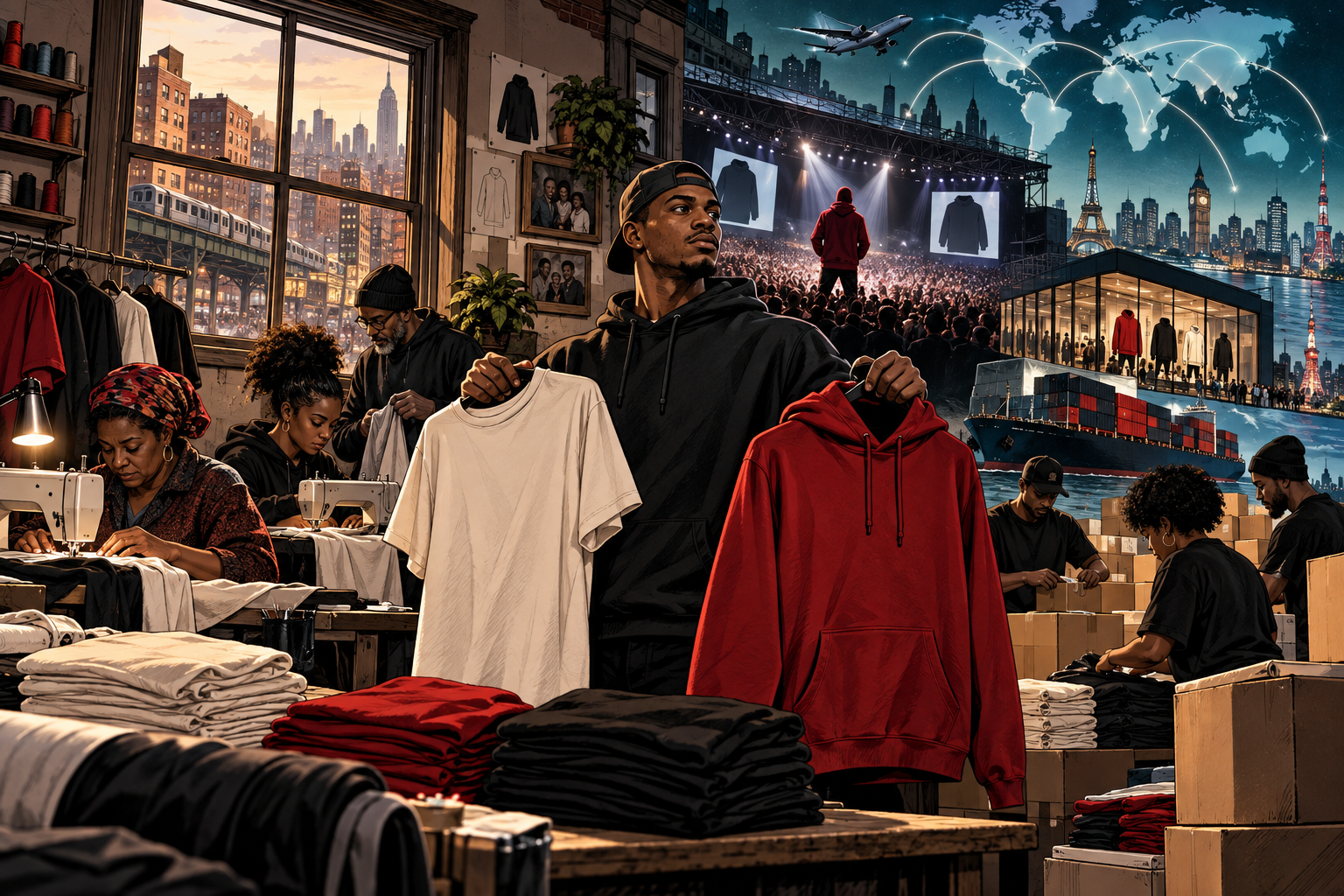
John grew up in Queens and began selling tie-top hats inspired by styles he saw in his neighborhood. His mother supported the business and, according to official biographies, used their home as working space. John and his partners expanded from hats into shirts, sweatshirts, and jackets.
The operation was constrained by cash. Fabric, sewing, inventory, and delivery had to be financed before a retailer paid. That pressure encouraged a useful discipline: make small quantities, put them in front of the target audience, and treat every sale as market research.
This was not romantic garage entrepreneurship. Apparel punishes forecasting mistakes. The wrong sizes or colors become dead inventory. Fast growth consumes working capital. A founder can appear successful while running out of cash between production and payment.
FUBU’s name—For Us, By Us—gave the product a clear constituency. The phrase was commercially powerful because it made the customer’s identity part of the value proposition. The brand did not need to explain itself through a large advertising campaign. Wearing it carried the message.
The mechanism is transferable. A small company can begin with a group whose needs and symbols it understands deeply, then use visible adoption inside that group as evidence for larger channels. The hard part is maintaining respect for the original community after broader demand arrives.
Chapter Two: Culture Worked as Distribution
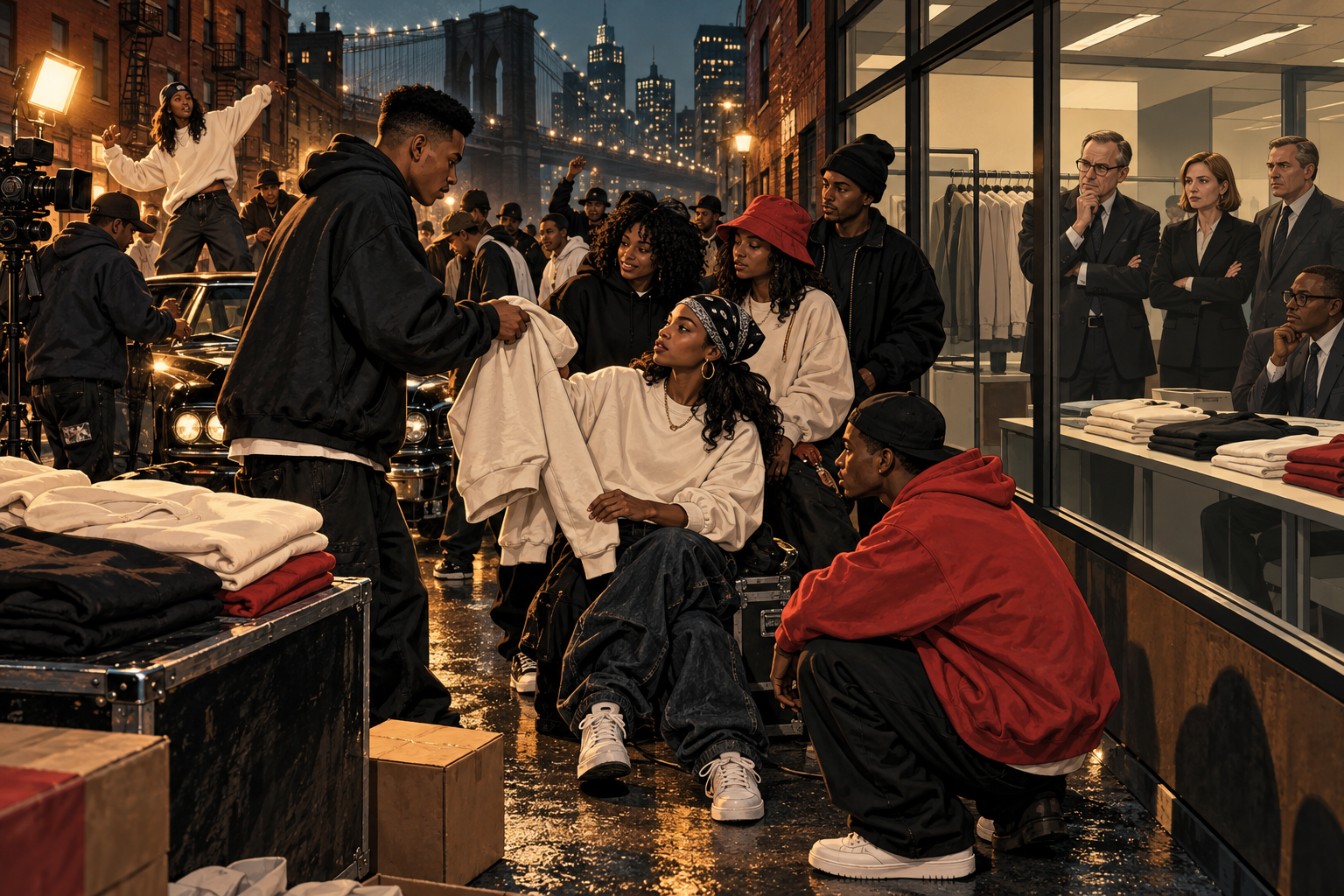
FUBU lent clothes to rappers for videos and appearances. The same garments could circulate among performers, creating more visibility than the inventory count suggested. LL Cool J’s public association with the brand became especially important, though simplified retellings can make one celebrity moment sound like the entire strategy.
The deeper system was repetition across a network. Artists, stylists, video crews, neighborhood retailers, and fans reinforced one another. A shirt seen in a video could be recognized in a store because both were connected to the same cultural conversation.
Traditional advertising buys attention. FUBU earned contextual legitimacy. That difference matters. A mass-market brand could hire a performer, but consumers could still detect whether the company understood the culture or was renting it for a campaign.
Trade-show demand and retail orders later created a new challenge: proof of demand had to become production finance. Orders are not cash. Manufacturers and suppliers must be paid, and large retailers can impose long payment cycles or return risk.
John’s story is often told as a straight line from a mortgaged house to a global brand. The operational truth is more useful. Cultural demand solved the discovery problem; financing, sourcing, quality, and delivery still had to be solved separately.
Chapter Three: Licensing Turned a Label Into a Portfolio

Licensing allows a brand owner to enter categories without owning every factory or distribution network. A partner receives defined rights to use the brand, typically in exchange for royalties and subject to quality controls.
The model can expand quickly. A partner already knows footwear, eyewear, fragrance, or a geographic market. The brand contributes recognition and demand; the licensee contributes category expertise, working capital, and channels.
This is leverage, but it is not free money. Consumers experience the licensed product as part of the same promise. Poor quality, discounting, or inconsistent design can damage the core brand even if the brand owner did not manufacture the item.
FUBU’s expansion showed both sides. The label became broader than its first sportswear products and reached international markets. Yet fashion cycles change, retail channels consolidate, and a logo that once signaled discovery can become overexposed.
The licensing flywheel therefore needs brakes: category selection, territorial discipline, approval rights, minimum quality, and a willingness to end agreements. More licensed products can increase short-term royalties while reducing long-term scarcity.
Chapter Four: From Fashion Founder to Founder Brand
John later turned his operating story into a second platform through books, speaking, consulting, and television. As an investor on Shark Tank, he became publicly associated with evaluating small businesses, negotiating equity, and translating brand ideas into retail logic.
That platform reinforces his biography: the resource-constrained founder who learned guerrilla marketing and licensing. It also requires separation between entertainment and diligence. A televised pitch compresses customer retention, margins, channel risk, and founder dynamics into minutes.
The useful lesson from John’s public persona is that expertise itself can become a product. Founders accumulate frameworks, networks, and pattern recognition. Packaging those assets can diversify income after the original operating role changes.
The risk is turning a complex business history into slogans. FUBU succeeded through timing, identity, distribution, financing, partnerships, and execution. “Hustle” describes effort; it does not explain working capital or licensing governance.
John’s most durable contribution is the demonstration that underserved culture is not a niche waiting for mainstream permission. It can be the center of a global market—and founders from that culture can own the commercial layer.
The Real Lesson
FUBU’s first scarce asset was not fabric or shelf space. It was credible access to a community that incumbents wanted but did not understand. Licensing created scale only after that trust existed, and every extension had to borrow against it.
💡 Key Insights
- ▸ Cultural credibility can function as a distribution channel before formal retail opens.
- ▸ Scarcity and consignment reduce cash risk while turning demand into proof.
- ▸ Licensing converts brand equity into category expansion but transfers quality risk to partners.
- ▸ A founder's public persona can become a second platform without replacing the original brand's history.