Jim Ratcliffe: The Deal-Driven Chemistry Empire Behind INEOS
The biography of Jim Ratcliffe is not a tech-founder fairy tale. It is the rise of a chemical engineer who built INEOS by buying unwanted industrial assets, financing hard deals, and turning complexity into one of Britain’s biggest private fortunes.
View all stories about this mogul
Jim Ratcliffe: The Deal-Driven Chemistry Empire Behind INEOS
Jim Ratcliffe did not build INEOS by inventing a world-changing app, designing a luxury brand, or becoming a celebrity CEO. He built it by buying the industrial assets other people were tired of owning. The rise and fall of sentiment around Jim Ratcliffe is really the story of a man who understood that “boring” chemicals could be turned into a fortune if bought cheaply, financed aggressively, and run with brutal attention to cash.
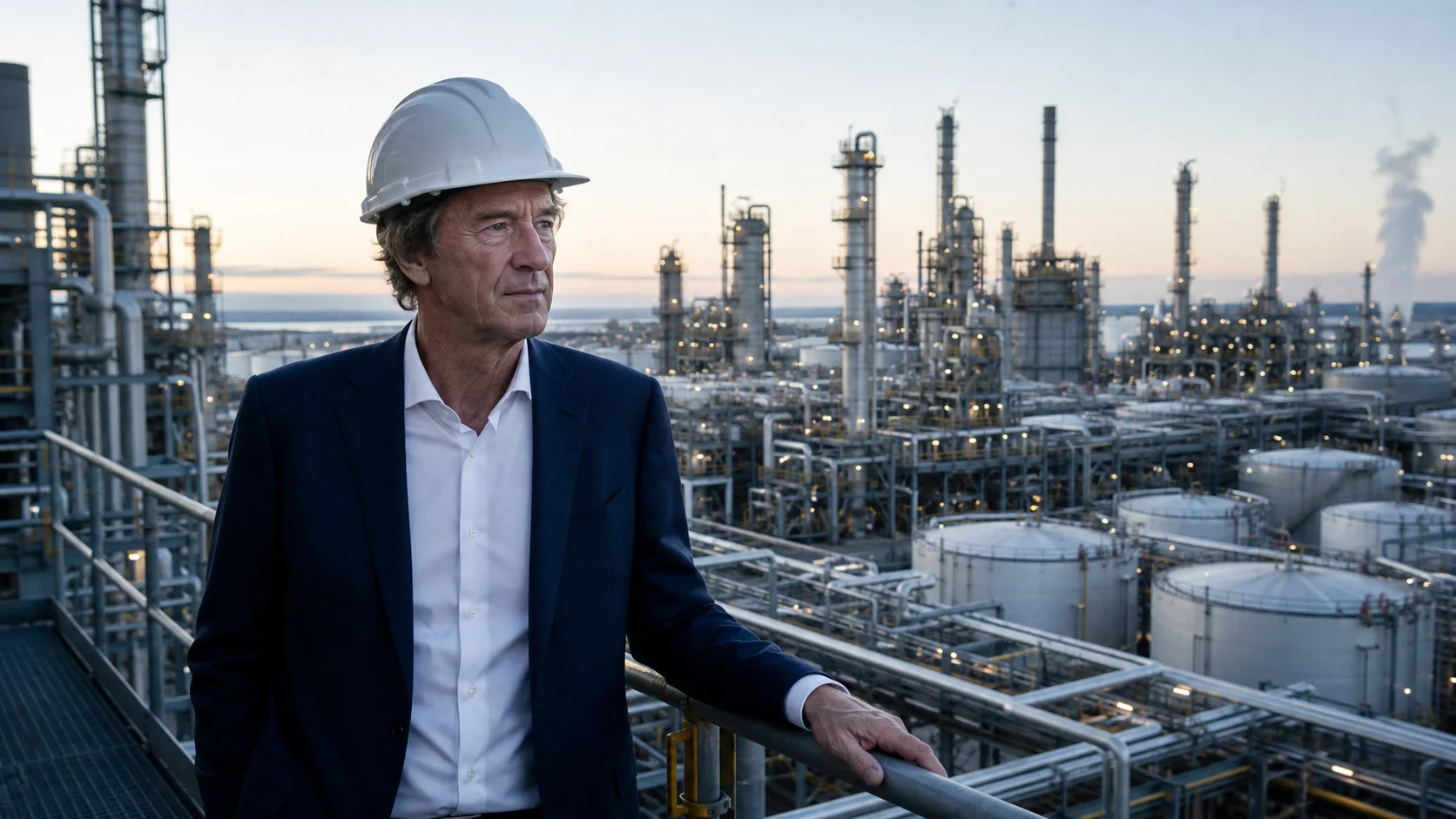
This is the biography of Jim Ratcliffe as a dealmaker: a chemical engineer from northern England who became one of Britain’s richest people by assembling a private empire of refineries, polymers, pipelines, petrochemicals, sports teams, and an off-road vehicle company under the INEOS name.
Key Facts About Jim Ratcliffe and INEOS
| Question | Answer |
|---|---|
| Who is Jim Ratcliffe? | British chemical engineer, founder and chairman of INEOS |
| What is INEOS? | A privately held chemicals and industrial group founded in 1998 |
| How did Jim Ratcliffe build INEOS? | By buying under-loved chemical assets from BP, ICI, BASF, Norsk Hydro, and others |
| What is Jim Ratcliffe’s net worth? | The Sunday Times Rich List 2026 estimated it at £15.194 billion |
| What was INEOS’s breakthrough deal? | The 2005 acquisition of BP’s Innovene business for about $9 billion |
| What major sports asset does he own? | A minority stake in Manchester United, completed in February 2024 |
| Why is INEOS controversial? | Heavy debt, fossil-fuel exposure, tax-residence moves, environmental scrutiny, and hard cost-cutting |
How Did Jim Ratcliffe Build His Empire?
Jim Ratcliffe’s empire began with an unpopular idea: big chemical companies often sell valuable assets because those assets no longer fit their strategy, not because they are worthless.
Ratcliffe saw opportunity in the gap between corporate neglect and industrial utility. Petrochemical plants are not glamorous. They require capital, permits, safety discipline, skilled operators, and patience. They sit inside supply chains that most consumers never see: packaging, fuels, solvents, PVC, insulation, pharmaceuticals, paints, synthetic rubber, textiles, and automotive parts.
That invisibility became Ratcliffe’s advantage. While the public markets chased software and consumer brands, he looked at chemical sites that were too small, too cyclical, or too unfashionable for giants like BP and ICI. His insight was simple but powerful: if a plant still had customers, infrastructure, and technical know-how, it might be worth more in the hands of a focused owner.
The how Jim Ratcliffe built INEOS story begins before INEOS itself. Ratcliffe studied chemical engineering at the University of Birmingham, later earned an MBA from London Business School, and worked in oil, chemicals, and private equity. That combination mattered. He could read a plant, but he could also read a balance sheet.
In 1992, Ratcliffe helped create Inspec, a chemicals business connected to BP assets. In 1998, he founded INEOS to buy an ethylene oxide facility in Antwerp, Belgium. The deal was worth about £84 million and was financed with a small amount of management equity, outside backing, and high-yield debt.
That first deal contained the DNA of the future empire: acquire a real industrial asset, use leverage, focus on cash flow, and expand.
🧪 Chapter 1: The Chemical Engineer Who Learned Finance

Ratcliffe was born on October 18, 1952, in Failsworth, then in Lancashire and now part of Greater Manchester. His early life has become part of the INEOS origin myth: a northern working-class upbringing, a father who worked as a joiner and later ran a factory making laboratory furniture, and a mother who worked in accounts.
The important detail is not poverty mythology. It is proximity to industry. Ratcliffe grew up in a Britain where manufacturing still mattered, where factories were physical places rather than nostalgic talking points. He later studied chemical engineering, which trained him to think in systems: feedstocks, pressure, heat, output, yield, risk.
But Ratcliffe did not remain only an engineer. He moved into business, worked at Esso, then Courtaulds, and joined Advent International, the private equity firm, in 1989. That private equity phase gave him the second half of the toolkit. He learned how ownership changes behavior. He learned how debt can accelerate returns. He learned how neglected divisions inside huge companies can become entrepreneurial platforms once separated.
By the time he founded INEOS, Ratcliffe was not a young founder trying to discover a market. He was in his mid-40s, with technical knowledge, financial training, and a clear view of what corporate sellers wanted to remove from their balance sheets.
That timing shaped the company. INEOS was never built like a venture-backed startup. It was built like an industrial acquisition machine.
🏭 Chapter 2: Antwerp and the Birth of INEOS
The first decisive move came in 1998. Ratcliffe created INEOS to acquire the Antwerp ethylene oxide and derivatives business from Inspec. The name INEOS came partly from “INspec Ethylene Oxide Specialities,” but the company later leaned into a broader meaning, connecting it to ideas of a new beginning.
The Antwerp acquisition was not huge by later INEOS standards, but it was symbolically massive. It proved that Ratcliffe could raise debt, buy a complex asset, and operate outside the shadow of a corporate parent.
Ethylene oxide is not a household product, but it is a key industrial building block. It feeds into products used in detergents, antifreeze, solvents, plastics, pharmaceuticals, and personal care. In other words, Antwerp was not a trophy. It was a node in the chemical economy.
Ratcliffe’s edge was recognizing that these nodes could be stitched together. One plant could lead to another. One product line could connect to another supply chain. One relationship with a seller could lead to the next divestment.
The first INEOS years were defined by speed. The company bought assets from ICI, BP, BASF, and other large industrial groups. These were often businesses that did not excite public-company investors but still generated cash. INEOS became a home for the unwanted pieces of the old European chemical order.
💰 Chapter 3: The Roll-Up Strategy

The phrase “roll-up” usually belongs to private equity. It means buying many fragmented or neglected businesses and combining them into a larger platform. Ratcliffe applied that logic to chemicals.
The net worth of Jim Ratcliffe came from this roll-up strategy. He did not need every asset to be a breakthrough. He needed each deal to be bought at the right price, financed correctly, and improved enough to support the next acquisition.
INEOS grew by exploiting several conditions at once.
First, large oil and chemical companies were simplifying. BP, ICI, BASF, and others had reasons to sell non-core assets. Public investors often preferred cleaner stories, not sprawling chemical divisions with cyclical earnings.
Second, debt markets were open. Ratcliffe used leveraged finance to buy assets that would have been impossible with management equity alone.
Third, chemicals are essential but cyclical. When sentiment is poor, sellers may accept low prices. When demand recovers, cash flow can rebound sharply.
Fourth, INEOS operated with a decentralized structure. Businesses were expected to stand on their own. That gave the group speed and accountability, though it also made the company dependent on disciplined capital allocation from the center.
By the mid-2000s, INEOS had become a serious force. Then came the deal that transformed it from an aggressive acquirer into a global chemical heavyweight.
🚀 Chapter 4: Why Was the Innovene Deal So Important?
The 2005 acquisition of BP’s Innovene business was the defining transaction in the Jim Ratcliffe INEOS roll-up empire.
Innovene was BP’s olefins, derivatives, and refining business. INEOS agreed to buy it for about $9 billion, a massive leap from the company’s first Antwerp deal only seven years earlier. The acquisition brought refineries, petrochemical sites, and scale across multiple countries.
This was the moment Ratcliffe’s strategy either had to work at world scale or break under its own weight.
The Innovene deal gave INEOS a much larger position in olefins and polymers, including materials used in packaging, pipes, automotive components, and consumer goods. It also gave the company exposure to refining through assets such as Grangemouth in Scotland and Lavera in France.
But scale came with leverage. INEOS had used debt as a tool from the beginning. After Innovene, the company was no longer a nimble buyer of cast-offs. It was a heavily financed industrial giant exposed to commodity cycles, energy prices, credit markets, and global demand.
For several years, the bet looked brilliant. Then the financial crisis arrived.
📉 Chapter 5: What Happened to INEOS During the Financial Crisis?
The 2008 financial crisis hit industrial demand hard. Cars, construction, packaging, durable goods, and consumer spending all weakened. For a company like INEOS, that meant lower volumes, lower margins, and more pressure on debt covenants.
This was the downside of the roll-up model. Debt magnifies success when markets are good, but it also narrows room for error when cash flows fall. Chemical plants cannot be managed like software subscriptions. They have fixed costs, maintenance demands, environmental obligations, and safety requirements.
INEOS survived, but the crisis forced a period of consolidation. Ratcliffe had to show lenders that the empire could endure a downturn. The company sold assets, negotiated, cut costs, and focused on liquidity.
The survival of INEOS through the crisis became part of Ratcliffe’s reputation. He had built fast, but he had also built something resilient enough to avoid collapse when a major competitor, LyondellBasell, filed for bankruptcy protection in 2009.
That does not mean the model was risk-free. It means Ratcliffe had the temperament and lender relationships to navigate a credit storm.
🔁 Chapter 6: From Chemicals to Energy Infrastructure
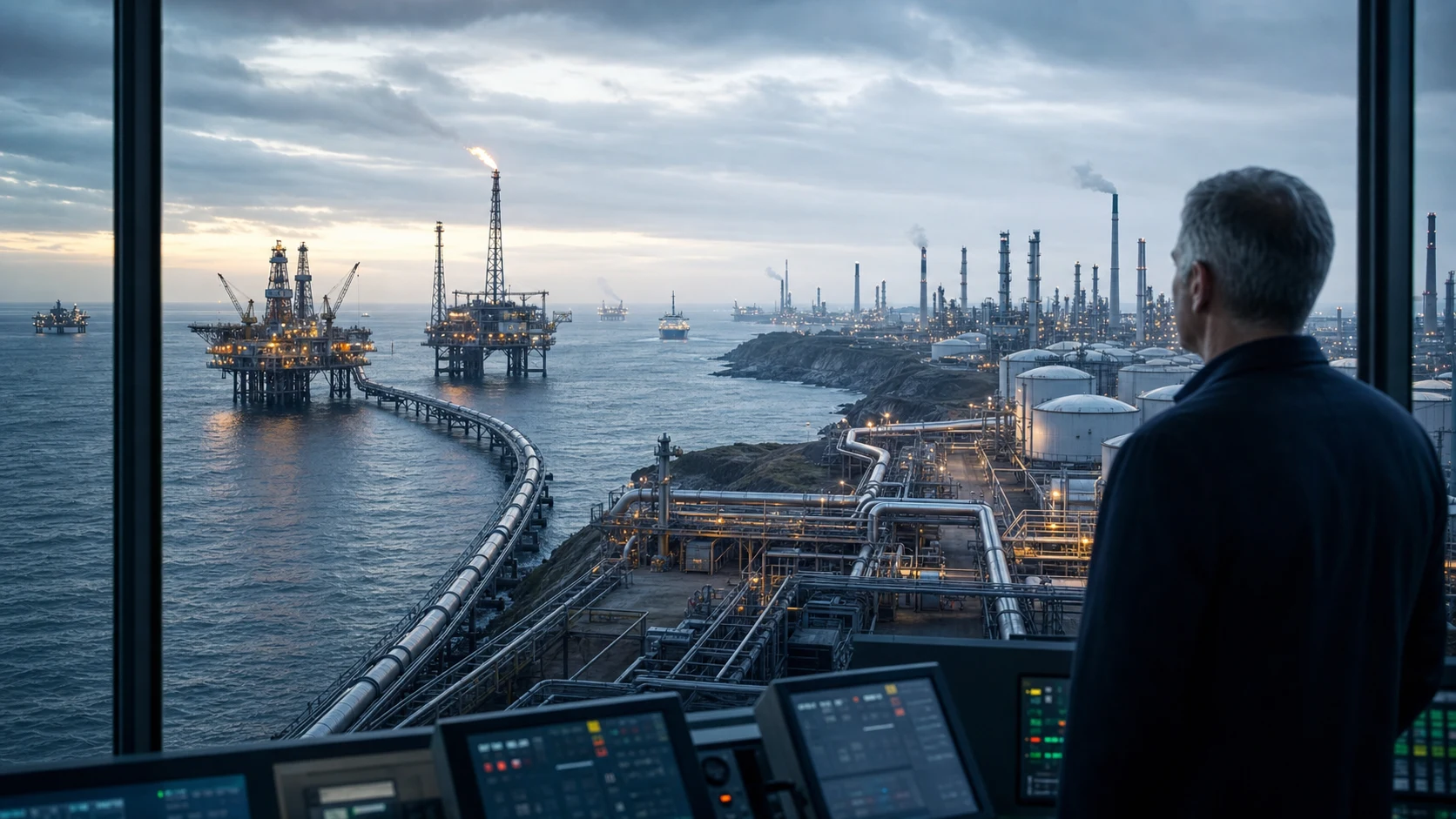
After the crisis, INEOS continued to expand, but the empire became broader. The company moved deeper into energy infrastructure, joint ventures, and strategic acquisitions.
In 2011, INEOS and PetroChina formed Petroineos, a refining and trading joint venture. In 2017, INEOS bought the Forties Pipeline System from BP for about $250 million. The Forties system is one of the key pieces of North Sea oil infrastructure, carrying crude from offshore fields to the UK mainland.
This was not a random deal. It showed Ratcliffe’s willingness to own physical infrastructure other companies wanted to exit. Pipelines, refineries, and chemical plants are difficult assets. They come with regulation, environmental scrutiny, operational risk, and public attention. But they can also be strategically valuable.
The pattern repeated in 2020 when BP agreed to sell its petrochemicals business to INEOS for $5 billion. The business included aromatics and acetyls operations with interests in 14 plants across Asia, Europe, and the United States. For BP, the sale supported a strategic shift away from petrochemicals. For INEOS, it was another chance to buy scale from a corporate giant changing direction.
The transaction looked like classic Ratcliffe: move when a larger company wants strategic simplicity, then absorb the complexity.
🏎️ Chapter 7: Why Did Jim Ratcliffe Buy Sports Teams?

By the late 2010s, Ratcliffe was no longer just an industrialist. INEOS began appearing in sport: cycling, Formula One, sailing, football, and elite endurance projects.
The sports push changed Ratcliffe’s public image. Before that, he was known mostly in business circles. After INEOS bought French football club OGC Nice, Swiss club Lausanne-Sport, backed the INEOS Grenadiers cycling team, partnered with Mercedes-AMG Petronas Formula One, and pursued Manchester United, Ratcliffe became a far more visible billionaire.
The Manchester United deal was the biggest public leap. In February 2024, Ratcliffe completed a minority investment in the club through Trawlers Ltd. The deal gave him a significant stake and influence over football operations. The Associated Press reported the investment at about $1.3 billion for up to 25%, with additional capital commitments lifting the stake to roughly 27.7% at completion.
For Ratcliffe, Manchester United was emotional and strategic. He had long been described as a supporter of the club. But the deal also placed INEOS at the center of one of the world’s most watched sports institutions.
The move brought a different kind of scrutiny. Chemical assets are judged by cash flow, permits, and safety. Football clubs are judged weekly by millions of fans. Every transfer, executive hire, layoff, ticket-price decision, and match result becomes part of the owner’s reputation.
🚙 Chapter 8: The Grenadier and the Risk of Leaving the Core
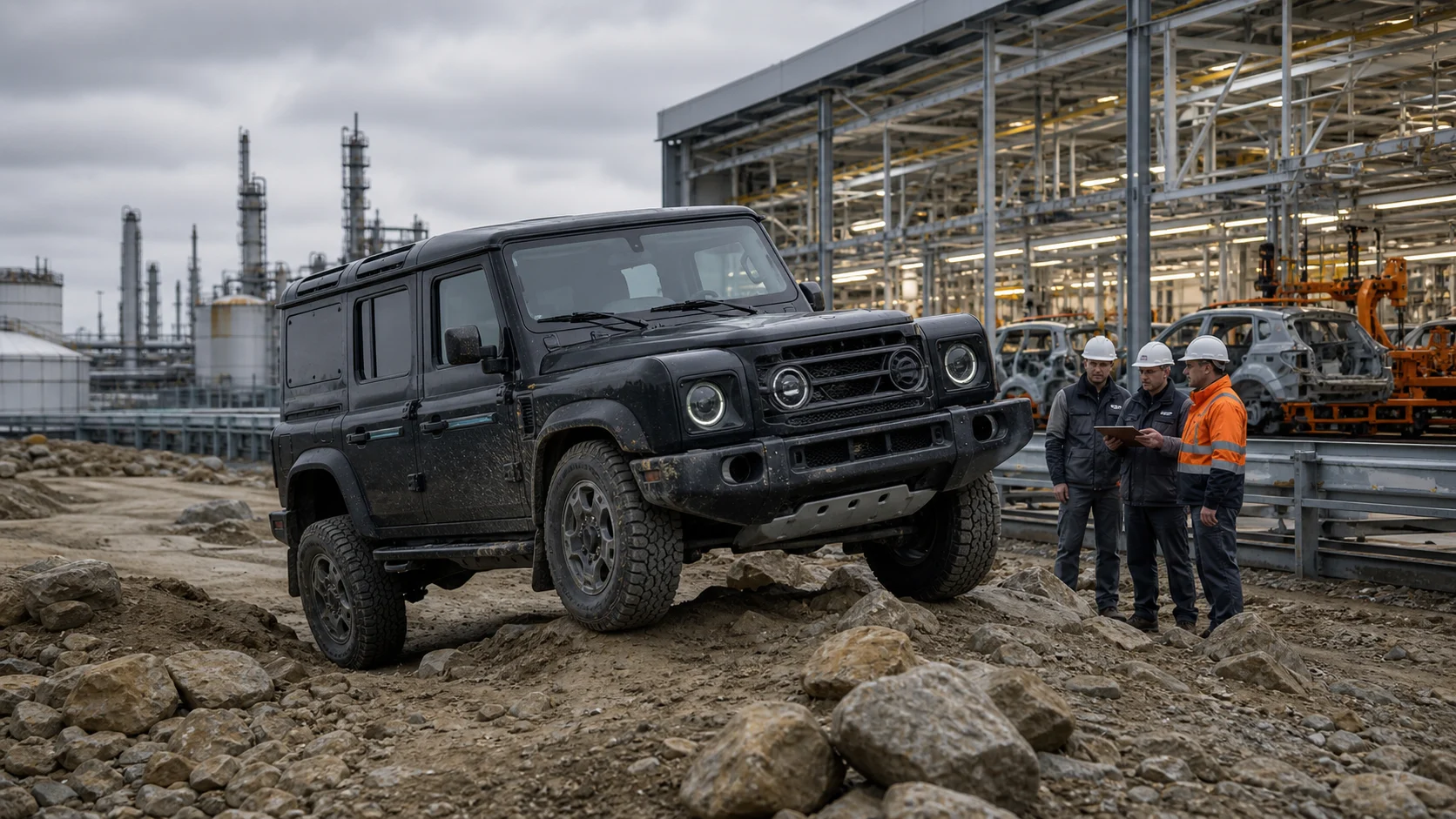
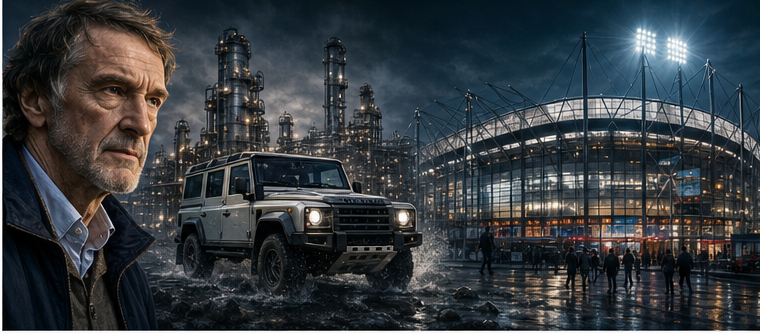
INEOS Automotive is another example of Ratcliffe’s taste for physical, difficult markets. The Grenadier was conceived as a rugged off-road vehicle inspired by the gap left after the old Land Rover Defender ended production.
The idea fit Ratcliffe’s personality: practical, mechanical, resistant to fashion. But automotive manufacturing is a brutal industry. It requires design, supplier management, homologation, distribution, warranty support, capital spending, and brand credibility.
Unlike buying a chemical plant with existing customers, building a car company means creating demand in a market dominated by giants. The Grenadier gave INEOS a consumer-facing product, but it also exposed the group to the risks of a new industrial category.
That is the tension in Ratcliffe’s later empire. The core INEOS playbook was buying assets with existing industrial logic. Some of the newer ventures, especially automotive and sport, require a different kind of operating excellence.
⚠️ Chapter 9: What Are the Biggest Risks in the INEOS Empire?
The INEOS empire has always lived with four big risks: leverage, cyclicality, regulation, and reputation.
Leverage is the most obvious. Debt helped Ratcliffe scale fast, but it also makes the group vulnerable when earnings weaken. In 2026, The Sunday Times estimated Ratcliffe’s fortune at £15.194 billion, down from £17.046 billion in 2025, citing pressure around INEOS and its debt burden. Private-company wealth estimates are imprecise, but the direction matters: when industrial profits weaken, paper fortunes tied to private companies can fall quickly.
Cyclicality is built into chemicals. Demand depends on construction, autos, packaging, consumer goods, energy markets, and global trade. A slowdown in Europe or China can ripple through volumes and margins.
Regulation is another pressure point. INEOS operates in sectors tied to emissions, plastics, fossil fuels, and hazardous materials. European energy costs and carbon rules have been frequent targets of Ratcliffe’s criticism. Environmental groups, regulators, and local communities often see petrochemical expansion differently from industrial owners.
Reputation is newer but increasingly important. Ratcliffe’s move to Monaco for tax residence, his Brexit-era public positioning, INEOS’s environmental footprint, and Manchester United cost-cutting have all made him a more controversial public figure.
The core question is whether the same hard-edged discipline that built INEOS can translate into public-facing institutions where emotion matters as much as operating margin.
📊 Jim Ratcliffe Timeline

| Year | Event |
|---|---|
| 1952 | Jim Ratcliffe is born in Failsworth, England |
| 1974 | Graduates from the University of Birmingham with a chemical engineering degree |
| 1989 | Joins Advent International, gaining private equity experience |
| 1992 | Helps create Inspec |
| 1998 | Founds INEOS to buy the Antwerp ethylene oxide business |
| 2001 | INEOS buys major ICI commodity chemicals assets |
| 2005 | INEOS agrees to buy BP’s Innovene business for about $9 billion |
| 2008-2010 | Financial crisis tests INEOS’s leveraged model |
| 2011 | Petroineos joint venture with PetroChina is completed |
| 2017 | INEOS agrees to buy the Forties Pipeline System from BP |
| 2020 | BP agrees to sell its petrochemicals business to INEOS for $5 billion |
| 2024 | Ratcliffe completes minority investment in Manchester United |
| 2026 | Sunday Times Rich List estimates Ratcliffe’s wealth at £15.194 billion |
What Is Jim Ratcliffe’s Net Worth?
The net worth of Jim Ratcliffe depends heavily on how analysts value INEOS, which is private and therefore harder to assess than a listed company.
The Sunday Times Rich List 2026 estimated Ratcliffe’s net worth at £15.194 billion. That was lower than its 2025 estimate of £17.046 billion, reflecting pressure on INEOS from weaker chemical markets, debt concerns, and industrial headwinds.
Other publications may publish different numbers because they use different assumptions about INEOS earnings, debt, private-company multiples, property, sports investments, and liquidity. The safest reading is that Ratcliffe remains one of Britain’s richest self-made industrialists, but his fortune is not a simple pile of cash. It is tied to a leveraged, cyclical, private industrial group.
How Did Jim Ratcliffe Make His Money?
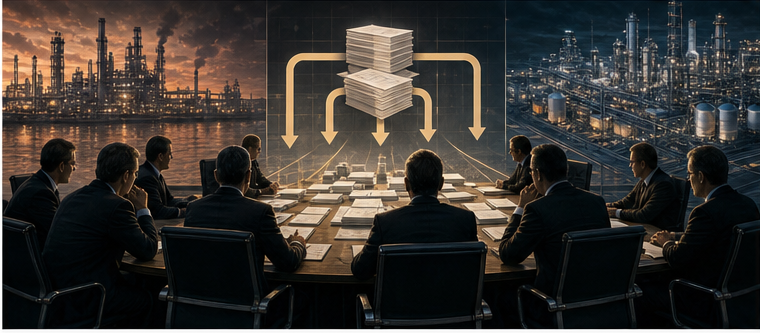
Jim Ratcliffe made his money through ownership of INEOS.
The wealth formula was:
- Buy chemical assets from companies that wanted to sell.
- Use debt to increase purchasing power.
- Improve operations and cash generation.
- Keep ownership private.
- Repeat the process across geographies and product lines.
This made Ratcliffe different from many modern billionaires. He did not rely on network effects, advertising, luxury margins, or public-market hype. He built around physical assets and industrial chemistry.
The result was a fortune that looks old-fashioned but was assembled with modern private equity logic.
Why Does INEOS Matter?
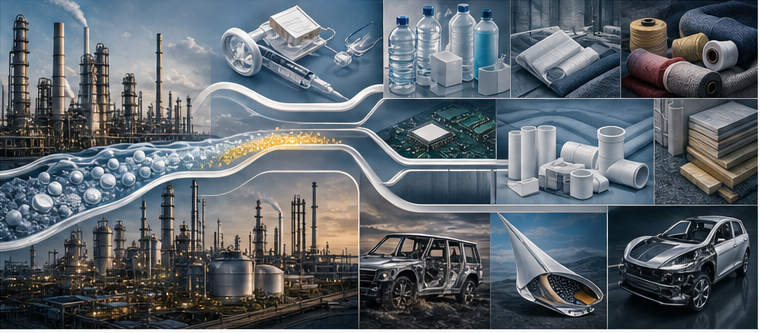
INEOS matters because it sits inside the hidden infrastructure of everyday life.
Its products and feedstocks touch packaging, medicine, fuel, insulation, cleaning products, electronics, cars, construction, clothing, and food supply chains. The company is not usually visible to consumers, but its materials are everywhere.
That invisibility is part of why Ratcliffe could build so much wealth without becoming a household name for most of his career. INEOS was not selling a lifestyle. It was selling the industrial ingredients behind other companies’ products.
The empire also matters because it raises uncomfortable questions about modern capitalism. When public companies divest carbon-heavy or complex assets, those assets do not disappear. They often move into private ownership, where disclosure is lower and strategic control is concentrated.
Ratcliffe became rich by accepting the complexity others wanted to shed.
FAQ
What is Jim Ratcliffe’s net worth?
The Sunday Times Rich List 2026 estimated Jim Ratcliffe’s net worth at £15.194 billion. Because INEOS is private, estimates vary and can change with debt levels, chemical demand, and valuation assumptions.
How did Jim Ratcliffe build INEOS?
Jim Ratcliffe built INEOS through acquisitions. Starting with an Antwerp chemicals business in 1998, he bought assets from companies including BP, ICI, BASF, and others, often using debt and focusing on operational cash flow.
What was Jim Ratcliffe’s biggest deal?
One of his most important deals was INEOS’s 2005 acquisition of BP’s Innovene business for about $9 billion. It transformed INEOS into a much larger global petrochemical and refining group.
Does Jim Ratcliffe own Manchester United?
Ratcliffe does not own all of Manchester United. In February 2024, he completed a minority investment that gave him a significant stake and influence over football operations.
Why is Jim Ratcliffe controversial?
Ratcliffe is controversial because INEOS operates in fossil-fuel-linked and chemical industries, has used substantial debt, has faced environmental scrutiny, and has been associated with tax-residence and cost-cutting debates. His role at Manchester United has also placed him under intense fan and media scrutiny.
The Empire Behind the Headlines
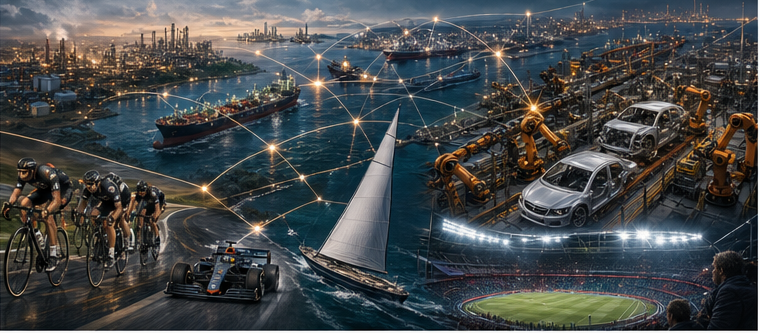
The story of Jim Ratcliffe is not just the story of a billionaire buying Manchester United or building a rugged SUV. Those are the visible parts. The deeper story is a quarter-century of industrial dealmaking.
Ratcliffe built INEOS by understanding something unfashionable: the modern economy still runs on chemicals, pipes, refineries, solvents, polymers, and feedstocks. Digital companies may capture attention, but physical industry still captures cash.
The boldness of the INEOS empire is also its vulnerability. It is private, leveraged, cyclical, and exposed to political fights over energy, emissions, manufacturing, and globalization. Ratcliffe’s genius was seeing value where others saw headaches. His challenge is that the headaches never disappeared. He bought them, financed them, and turned them into an empire.
💡 Key Insights
- ▸ Jim Ratcliffe built INEOS through a roll-up strategy: buying unfashionable chemical assets from larger companies, often with debt, then forcing operational discipline.
- ▸ The core story is not invention but acquisition: Antwerp in 1998, ICI assets in 2001, BP's Innovene in 2005, Forties in 2017, and BP's petrochemicals business in 2020.
- ▸ Ratcliffe's wealth is tied to a private industrial empire, making net worth estimates sensitive to debt, earnings, commodity cycles, and private-company valuation assumptions.
- ▸ INEOS shows the power and risk of leverage: debt helped Ratcliffe scale fast, but high energy costs and weaker chemicals demand have also pressured the empire.
Sources
- Sir Jim Ratcliffe net worth - Sunday Times Rich List 2026 ↗
- Jim Ratcliffe: Turning cast-offs into gold ↗
- Jim Ratcliffe ↗
- Our History ↗
- BP agrees to sell petrochemicals business to INEOS ↗
- Sir Jim Ratcliffe completes Manchester United minority investment ↗
- Ratcliffe secures minority stake in Man United ↗