Larry Gagosian: How a Single Dealer Took the Art Market Upmarket
Larry Gagosian built a gallery network that moved the art trade closer to finance, using scale, exclusivity, and private sales as leverage rather than retail foot traffic.

View all stories about this mogul

Larry Gagosian did not invent the art gallery. He industrialized a version of it: a global network of exhibition spaces, a roster of blue-chip artists, and a private-sale practice that treats major works less like retail inventory and more like scarce assets with a paper trail.
The public story is personality. The durable story is architecture. A gallery that operates in one city is a shop with taste. A gallery that operates across several cities, represents the estates and living artists that anchor museum programming, and can place a work privately without an auction is doing something structurally different.
The Setup: What Was Actually Scarce
Art dealing looks like a market in objects. Functionally, it is a market in access. The scarce goods are not paintings in general but a small number of works by artists whose importance institutions and collectors agree on, and the right to place those works with the right buyers.
That scarcity is socially produced. Museum retrospectives, biennials, catalogue raisonnés, academic attention, and secondary-market prices all reinforce one another. A dealer who influences which artists get that reinforcing attention is not just selling—he is participating in the manufacture of consensus.
Gagosian’s early advantage was not a single masterstroke. It was a combination: an eye for artists who were about to matter, a willingness to invest in exhibition space, and a social facility that made collectors comfortable dealing privately with him rather than only at auction.
Early Advantage: Gallery Space as a Legitimacy Machine

Gallery exhibitions cost money and rarely sell out at the door. Their value is less about direct retail revenue than about conferring seriousness. An artist shown in a well-reviewed gallery gains a resume line; a collector who attends gains access; a gallery gains the right to speak about an artist with authority.
This is why gallery space functions as a legitimacy machine rather than a storefront. It converts capital into credibility, which converts back into access to artists and inventory. For a dealer with ambition beyond a single city, the machine has to be replicated—because an artist with a global reputation wants exposure in several capitals, not one.
The cost of that replication is the central strategic tension in the business. Real estate, staff, insurance, shipping, and exhibitions are expensive everywhere. The return is not guaranteed by the shows themselves but by the position the network confers.
How the Business Really Worked
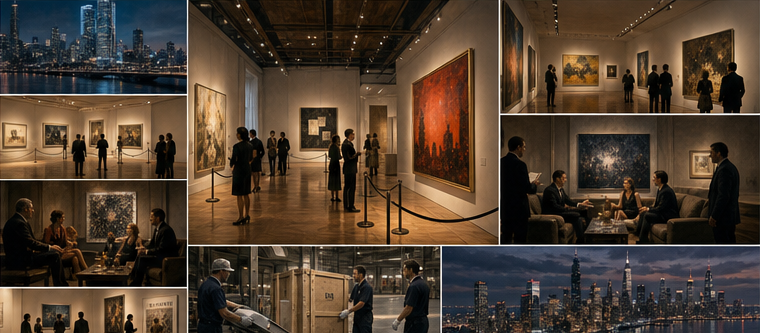
A gallery at this level runs on three interacting revenue streams, each with different economics.
The first is primary-market sales: works sold directly by the gallery on behalf of the artist, typically with a commission split. These sales build the artist’s market and often favor buyers who will hold or donate, because placement affects future demand.
The second is secondary-market and private sales: works resold from existing collections, sometimes brokered privately. These can be large, discreet, and margin-rich, and they put the gallery in competition with auction houses for the same supply.
The third is the indirect value of the network: museum relationships, art fair participation, publishing, and the ability to introduce collectors to one another. This does not always appear on a balance sheet, but it sustains the other two.
The mix matters because primary sales depend on artist relationships while private sales depend on inventory access and collector trust. A gallery strong in only one stream is vulnerable; one that can move between them has more room to maneuver when the market turns.
The Turning Points
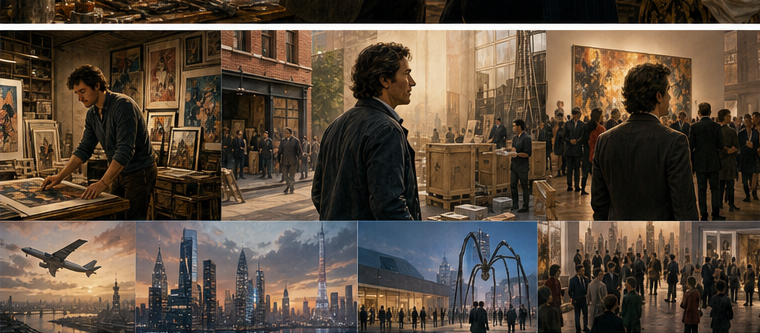
The decisive moves in this kind of business are rarely dramatic events. They are usually about which artists a dealer commits to before consensus forms, and which physical locations he opens to support them.
Committing to an artist early is a bet on institutional attention. If museums and critics follow, the gallery’s inventory appreciates and the artist’s loyalty deepens. If they do not, the gallery carries exhibitions and storage costs with limited return. The skill is not taste alone but timing relative to institutional consensus.
Opening in multiple cities is a bet on global collector mobility. Collectors travel, and a gallery present in several art capitals can serve them wherever they are. It also lets an artist’s work circulate without the gallery having to ship everything from one place.
Neither move is unique to one dealer. What distinguishes the strongest galleries is consistency: doing both repeatedly, with enough capital to absorb the failures.
What Most People Miss

Most popular storytelling overweights personality and underweights operating design. Charisma opens doors, attracts talent, and buys forgiveness, but it does not by itself scale a business that depends on inventory, logistics, and timing.
The less visible machinery includes financing. Galleries often carry inventory for long periods, and a work consigned by one collector may sit until the right buyer appears. That requires working capital or patient backing. A gallery with cheap, flexible capital can wait out a soft market; one without it may be forced to discount.
A second mechanism is information. A dealer who knows which collector is quietly selling, which museum is planning a retrospective, and which estate is considering an auction can act before the market prices that knowledge. Information asymmetry is a real asset, and it compounds with network size.
A third is placement discipline. Selling to the right buyer at a slightly lower price can raise an artist’s long-term value by putting works in museum collections rather than storage. That is a strategic decision, not a concession.
Timeline
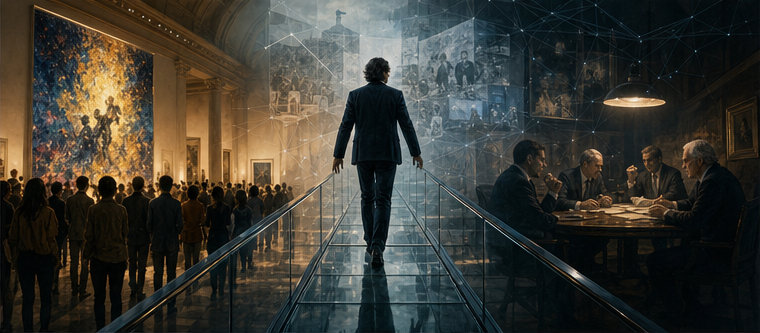
- 1970s–1980s: Gagosian begins dealing in art in Los Angeles, initially in a small space and later with larger exhibitions.
- 1980s: The gallery expands its program and moves toward New York, the center of the American art market.
- 1990s: The business grows through primary representations and private sales; the gallery opens additional locations.
- 2000s: International expansion continues with spaces in London and other art capitals, and the gallery’s private sales practice becomes a significant channel.
- 2010s: The gallery operates across multiple cities, publishes Gagosian Quarterly, and participates heavily in major art fairs.
- 2020s: The network remains one of the largest gallery operations by footprint and artist roster, with continued emphasis on private sales and museum placements.
Key Numbers and How to Read Them
Galleries at this scale are private companies, so figures surface through interviews, fair participation lists, and market reports rather than audited filings. That makes point estimates fragile.
Three indicators are more useful than any single number. The first is the number of locations and their concentration in art-market capitals, which indicates how much infrastructure the business carries. The second is the artist roster, particularly whether it includes estates and artists with museum-level institutional support. The third is participation in major fairs and the volume of private sales reported in trade press.
The Art Basel and UBS Art Market Report provides the broader context: dealer sales, online share, and fair attendance trends. A gallery’s position relative to those trends is more informative than a headline about one record sale.
Failures, Criticism, and Counterarguments
The most common criticism is that galleries of this scale have made the art market more financialized and less about art. When a few dealers control access to the most valuable artists, prices can reflect positioning and scarcity as much as aesthetic judgment.
A second criticism concerns concentration. A large gallery can offer an artist global reach that a smaller gallery cannot match, which draws more artists to large galleries and further concentrates the market.
A third is the sustainability of the model. Fixed costs across many cities are heavy, and a downturn in demand can force retrenchment. The gallery’s resilience depends on its mix of recurring private sales, artist loyalty, and financial reserves.
The honest counterargument is that scale also creates public goods: museum-quality exhibitions, serious publications, and support for artists whose work is difficult to sell. Whether concentration outweighs those benefits is a judgment, not a fact.
Why This Story Still Matters
The art market has become increasingly global and increasingly intermediated by a small number of institutions and dealers. Understanding a gallery as a network with three revenue streams, a legitimacy machine, and a capital requirement is more useful than treating it as a personality cult.
The same architecture appears elsewhere: luxury brands, sports agencies, talent management, and any business where access to scarce, socially validated goods is the real product. The lesson is that distribution and placement can be more valuable than inventory.
FAQ
Is Gagosian a gallery or a dealer? Both. The business operates physical exhibition spaces and also conducts private sales and art advisory work, which makes it a hybrid between retail gallery and dealing house.
How many locations does Gagosian have? The gallery operates multiple spaces across major art-market cities. Because the footprint changes, check the gallery’s official locations page for the current list.
Why are private sales important to galleries? Private sales can be larger and more discreet than exhibitions, and they let a gallery act as a counterparty rather than only a showroom. They also provide revenue that is less tied to individual show schedules.
Does gallery representation make an artist more valuable? It can. Representation by a major gallery brings museum relationships, fairs, and international exposure that support institutional attention, though it does not guarantee prices.
What is Gagosian Quarterly? A publication produced by the gallery featuring interviews, essays, and artist projects. It functions as both editorial content and a way to build the gallery’s intellectual credibility.
The Real Lesson
Ambition alone is cheap. What matters is the translation layer between belief and execution—which locations were opened, which artists were backed early, which collectors were given priority access, and which sales stayed private.
The gallery business rewards architecture as much as taste. A network that can place work in museums, sell privately to the right collectors, and keep artists loyal across cities is a system, not a shop. That is why it compounds.
💡 Key Insights
- ▸ The biggest moats are often ecosystem moats disguised as product leads.
- ▸ In a relationship business, scale can be used to concentrate scarcity rather than dilute it.
- ▸ Private sales move a gallery from retailer to counterparty.
- ▸ Distribution in art means which museum walls and which collectors you can reach.