Mo Ibrahim: How Celtel Built a Mobile Network Across Africa Without Paying Bribes
Mo Ibrahim turned difficult African telecom markets into Celtel, sold it for $3.4 billion, and made clean governance part of the operating model.
View all stories about this mogul
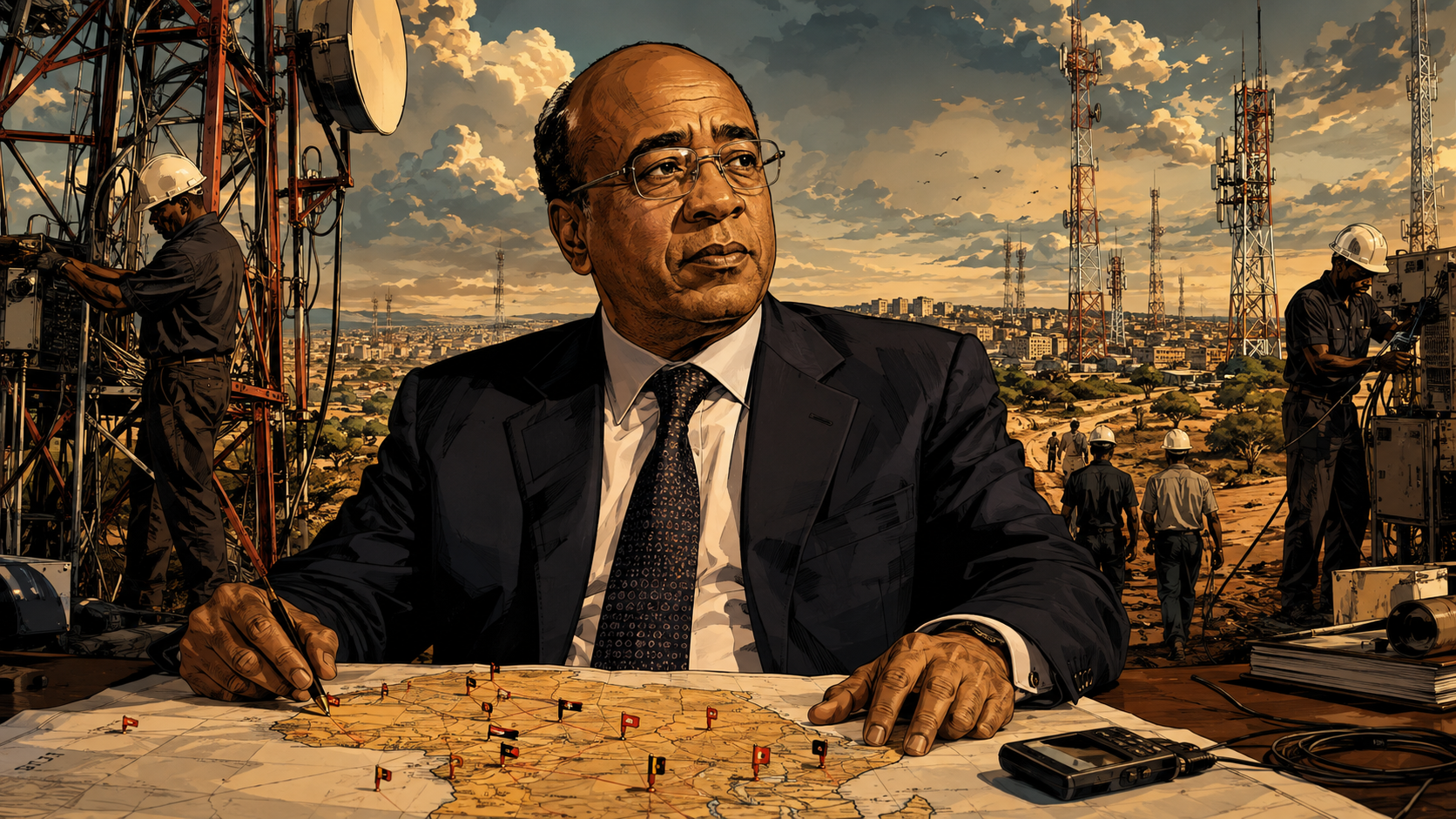
Mo Ibrahim built Celtel in markets many global telecom executives described as too poor, too fragmented, and too politically dangerous. His answer was not to wait for Africa to look like Europe. It was to design a mobile operator for the conditions that actually existed—and to insist that clean governance could be an operating advantage.
Born in Sudan in 1946, Ibrahim trained as an electrical engineer before moving into British telecommunications. He saw the mobile transition from the inside, then recognized a gap: the technology could leap over weak fixed-line infrastructure, but capital and operators were still avoiding much of Africa.
In 1998 he created MSI Cellular Investments, later renamed Celtel. Seven years later, Kuwait’s Mobile Telecommunications Company, now Zain, agreed to acquire Celtel for about $3.4 billion. The headline number was impressive. The machine underneath it was more instructive: local licenses, prepaid economics, patient infrastructure, and a refusal to build the balance sheet on political favors.
How did an engineer see the market others dismissed?

Ibrahim’s career began in engineering rather than finance. After studying in Egypt and Britain, he worked in telecommunications, including at British Telecom, and later helped build Mobile Systems International, a consultancy that designed mobile networks. That experience gave him a view of both radio technology and the economics of rollout.
In the 1990s, many African countries had extremely low fixed-line penetration. Installing copper to dispersed communities required time and capital that governments often lacked. Mobile networks offered a different curve: towers could cover wide areas, capacity could expand with demand, and customers did not need a wired connection to each home.
The apparent opportunity came with several reasons to stay away. Regulation differed by country. Currency risk could destroy returns. Power grids and roads were unreliable. Importing equipment was slow. A license could become worthless after a political change. Average income looked too low for the contracts and subsidized handsets common in wealthier markets.
Ibrahim understood that these were not separate annoyances. They defined the product. Celtel needed prepaid billing because customers could not commit to long contracts. It needed resilient sites and backup power because the grid could not be assumed. It needed local managers who understood ministries and communities. It needed multiple markets so a single regulator could not sink the group.
The engineering mindset shaped the strategy: break a large uncertainty into solvable constraints, then repeat the architecture.
Why did Celtel’s operating model travel across borders?
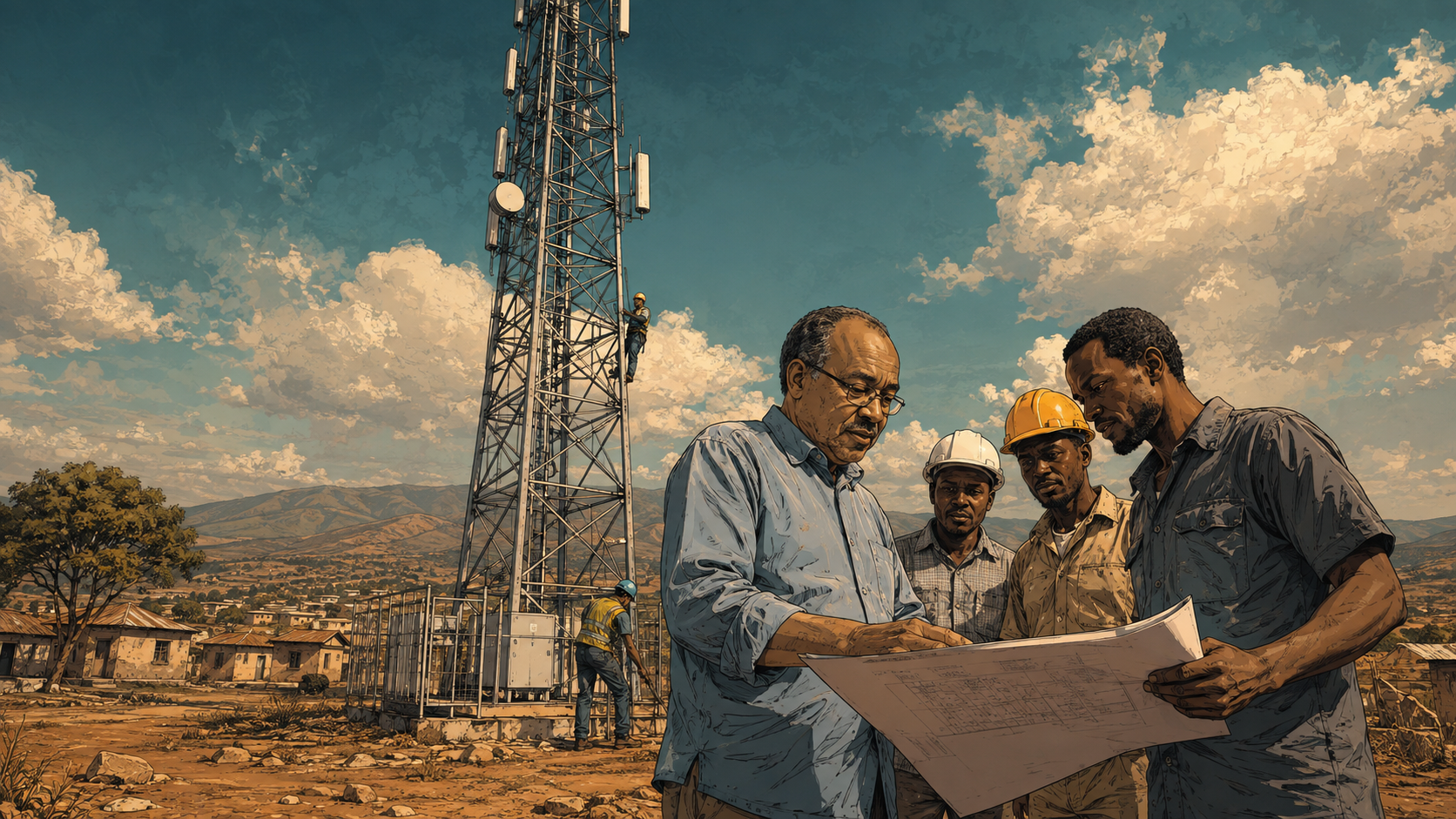
Celtel expanded through licenses and acquisitions across countries including Uganda, Zambia, Malawi, Sierra Leone, the Democratic Republic of Congo, Kenya, Tanzania, and others. Each market required its own regulatory work, but the company could reuse technical design, procurement knowledge, financing relationships, and executive experience.
Prepaid service changed the addressable market. Instead of evaluating customers through credit histories, the operator could collect cash before providing airtime. Small recharge amounts matched irregular incomes. The handset became a shared household asset, a business tool, and in many communities the first reliable personal connection to distant family or customers.
Demand was not merely social. A call could save a trader a long trip, let a farmer compare prices, or allow a driver to coordinate a delivery. That economic utility supported spending even where headline incomes looked low.
Infrastructure remained expensive. Towers needed generators, security, transmission links, technicians, and spare parts. Celtel therefore had to manage utilization carefully. Build too slowly and service quality collapsed; build too aggressively and capital sat idle. As subscriber bases grew, density improved the economics and created a barrier for late entrants.
The group’s multi-country footprint also gave suppliers and lenders a larger counterparty. International Finance Corporation and other development-oriented capital providers played roles in African telecom expansion because mobile infrastructure had both commercial and developmental value.
Ibrahim publicly emphasized that Celtel would not pay bribes. In markets where licenses and customs approvals touch government, that promise increased short-term friction. It also reduced a dangerous class of hidden liability. A payment that wins access today gives the recipient leverage tomorrow, and any acquisition due diligence can turn informal arrangements into a valuation discount.
Clean records made the company easier to finance, partner with, and ultimately sell.
Why did the $3.4 billion exit validate more than growth?

By 2005, Celtel served millions of customers across 13 African countries. MTC’s acquisition valued the network as a strategic platform, not a collection of isolated licenses. The buyer gained operating teams, spectrum positions, infrastructure, and a brand spread across markets where subscriber growth still had room to run.
For Ibrahim and early investors, the exit proved that African infrastructure could produce a large, internationally marketable company. It also showed why governance affects valuation. A buyer can model towers and subscribers. It struggles to price undisclosed obligations to officials, politically connected intermediaries, or informal partners.
The sale did not mean every decision was perfect. Telecom markets later became more competitive, regulation evolved, and Zain eventually sold many African operations to Bharti Airtel. Celtel’s value depended partly on a specific period when mobile penetration was rising from a low base.
Still, the timing was disciplined. Ibrahim sold after proving the platform and before the founder’s identity became the only glue holding it together. A strategic buyer could pay for regional option value that public markets might have discounted.
The transaction also changed Ibrahim’s personal allocation problem. He could have become a conventional billionaire investor. Instead, he turned much of his attention toward the political institutions that determine whether companies and citizens can plan for the long term.
What is the real lesson of Celtel—and the foundation after it?

In 2006 Ibrahim established the Mo Ibrahim Foundation. Its best-known initiatives include an index measuring African governance and a prize intended to recognize former African heads of state who leave office democratically and govern well. The prize has sometimes gone unawarded, which is not a design failure so much as evidence that standards matter.
The connection to Celtel is direct. A telecom company can build around unreliable power and sparse roads; it cannot fully hedge arbitrary rule, corruption, or institutional collapse. Ibrahim used the wealth created by solving commercial coordination to address political coordination.
For founders, the central lesson is not simply “enter Africa early.” It is to understand what outsiders label as one market. Celtel succeeded by treating countries as distinct operating systems while building shared technical and capital capabilities above them.
The no-bribery rule was equally practical. Values become strategy when they change hiring, documentation, partner selection, and which revenue the company is willing to lose. Governance was not a charity project appended after the exit. It was part of how the asset became sellable.
The Real Lesson: opportunity often hides inside constraints that established companies refuse to redesign around. Celtel did not wait for customers to adopt European contracts, for states to build fixed lines, or for regulation to become simple. It built a model for uncertainty—and made institutional trust part of the product.
💡 Key Insights
- ▸ A difficult market can become a moat when the company learns regulation and infrastructure country by country.
- ▸ Refusing bribes is not only ethics; it can reduce hidden liabilities and increase exit quality.
- ▸ Prepaid billing and shared infrastructure matched the economics of customers conventional telecom models ignored.
- ▸ The best founder exit can finance an institution that attacks the constraint the company could not solve alone.