Steve Jobs: The Man Who Made Technology Beautiful
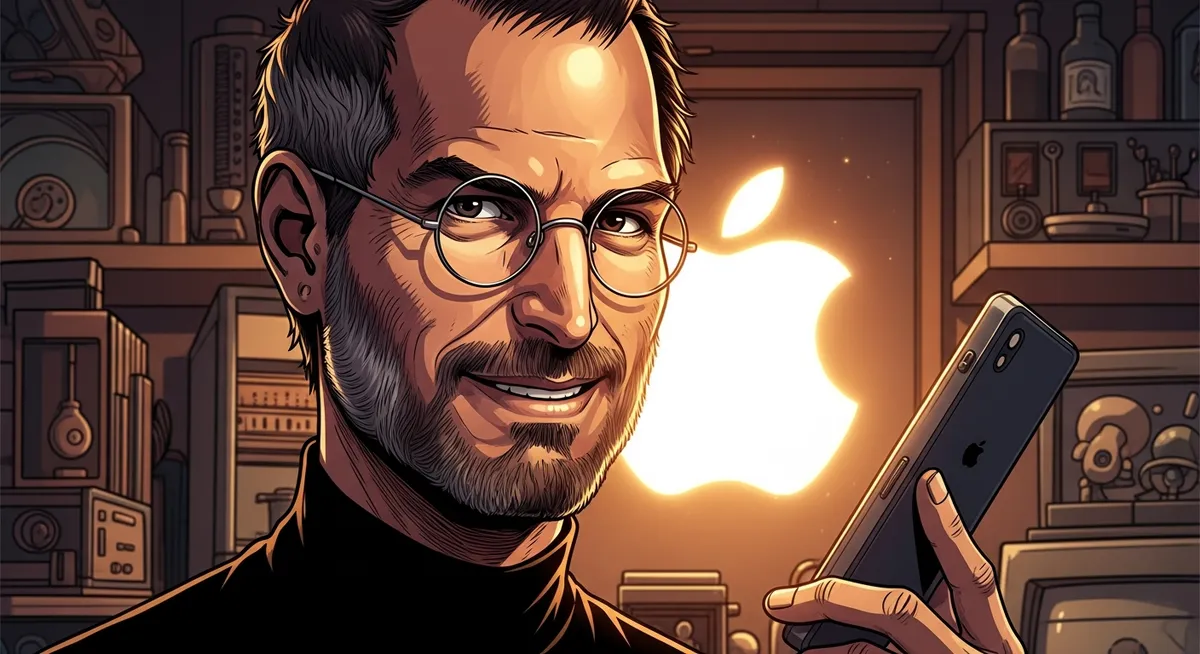
Adopted at birth, fired from his own company, diagnosed with cancer — Steve Jobs turned Apple from near-bankruptcy into the world's most valuable company, and changed how humanity interacts with technology forever.
View all stories about this mogul
Steve Jobs stank. Literally. He was on a fruit-only diet and believed — incorrectly, spectacularly incorrectly — that it meant he didn’t need to shower. His coworkers at Atari got so fed up with his body odor that management banished him to the night shift. This is the same man who would go on to create the most obsessively polished, meticulously designed products in the history of consumer technology. The guy who couldn’t be bothered to use soap built a company whose entire religion was that every detail matters.
If you want to understand Steve Jobs, start there. Start with the contradiction. Because this is a guy who changed the world at least four separate times — with the Mac, with Pixar, with the iPod, and with the iPhone — and he did it while being, by nearly all accounts, one of the most insufferable human beings in Silicon Valley. Which, given the competition, is really saying something.
This is the story of a genius, a demanding leader, a man who by his own admission failed as a father, and a showman who cared more about the curve of a corner radius than the feelings of the people around him — and who somehow, despite all of it, bent the entire arc of technology toward beauty.
🍼 Chapter 1: The Adoption — A Life That Almost Wasn’t (1955–1972)
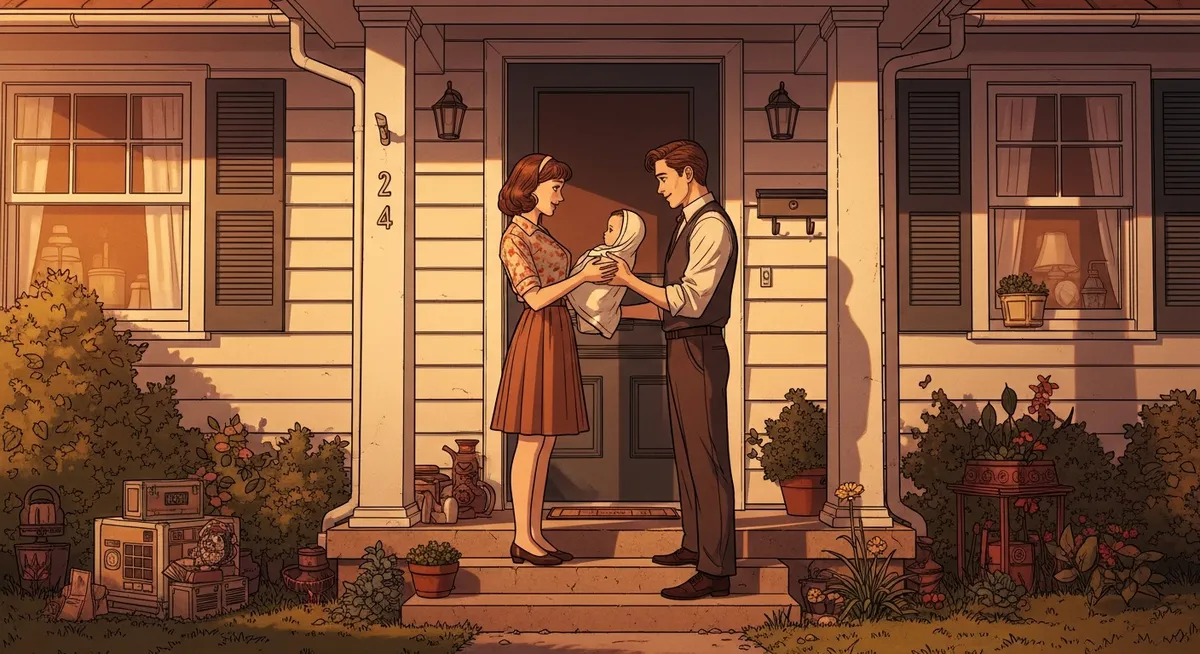
Steven Paul Jobs was born on February 24, 1955, in San Francisco. His biological parents were Abdulfattah “John” Jandali, a Syrian-born political science grad student, and Joanne Schieble, an American grad student whose strict Wisconsin farmer father threatened to disown her if she married a Syrian. So they gave the baby up for adoption.
There was one condition: Joanne insisted the adoptive parents be college graduates. The first couple selected — a lawyer and his wife — backed out at the last second because they wanted a girl instead. So the baby landed with Paul and Clara Jobs, a working-class couple from Mountain View. Paul was a machinist and repo man who never finished high school. Clara was an accountant who hadn’t finished college either.
When Joanne found out the adoptive parents weren’t college graduates, she refused to sign the papers for weeks. She only relented when Paul and Clara made a legally binding promise to send the boy to college. Think about that — the entire trajectory of personal computing, smartphones, animated films, and digital music nearly didn’t happen because of an unsigned piece of paper and some educational snobbery.
Growing Up in Silicon Valley Before It Had a Name
Paul Jobs was a meticulous craftsman who rebuilt cars and made furniture in his garage. He taught young Steve a lesson that would become the kid’s entire identity. While building a fence together, Paul insisted they make the back of the fence — the side no one would ever see — just as beautiful as the front.
“He loved doing things right,” Jobs later recalled. “He even cared about the look of the parts you couldn’t see.”
That one lesson became the operating system for everything Jobs ever built. The idea that quality isn’t just about what the customer sees — it’s about what the maker knows is there. He would later insist that the circuit boards inside Macintosh computers be aesthetically pleasing, even though no human being would ever look at them. When engineers asked why, he said: “I’ll know.” A man after his adoptive father’s heart — and just as exhausting to work with.
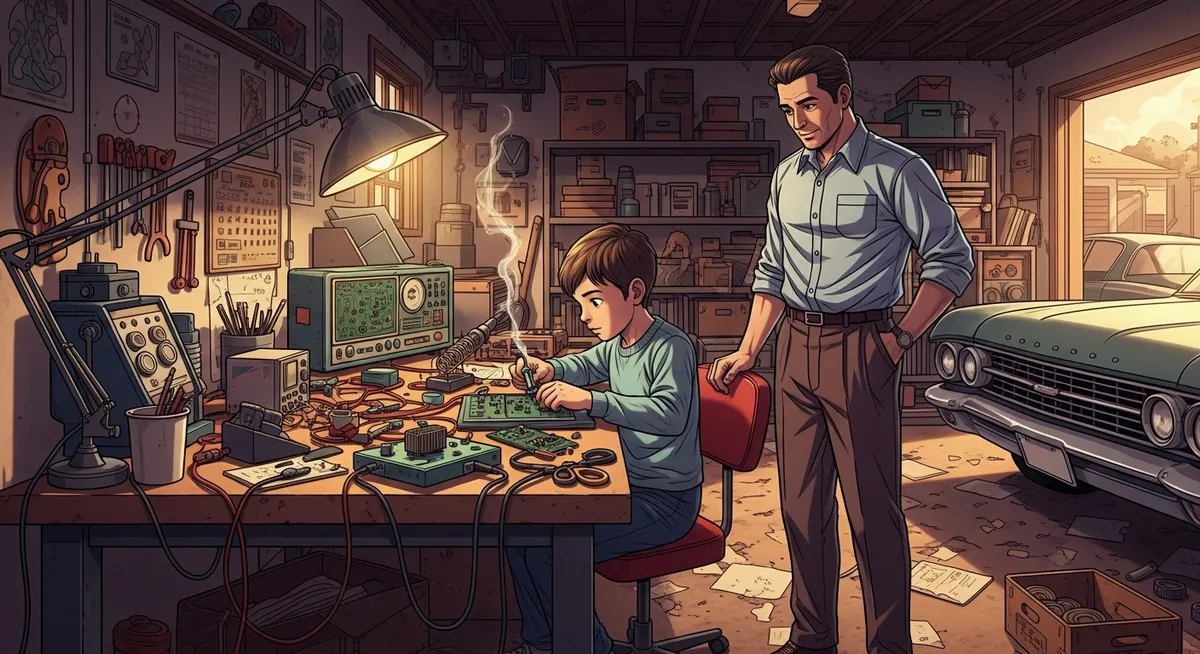
The Jobs family lived in Mountain View, smack in the middle of what would become Silicon Valley. The neighborhood was crawling with engineers from Hewlett-Packard, NASA Ames, and defense contractors. Steve grew up surrounded by people tinkering in garages. It was basically Hogwarts for nerds, and he absorbed every bit of it.
The Troublemaker
Jobs was a nightmare child. Brilliant but bored — a combination that teachers absolutely love (/sarcasm). He played pranks constantly. Once he convinced classmates to give him their bike lock combinations, then switched all the locks. Another time, he and a friend made posters announcing “Bring Your Pet to School Day.” The resulting chaos of dogs, cats, and one snake got multiple students sent home. The kid was basically a con artist by fourth grade.
Speaking of fourth grade — a teacher named Imogene “Teddy” Hill literally bribed him into behaving with candy and cash. Paid him to do math workbooks. It worked. Jobs later said she was one of the most important people in his life. She saw what everyone else missed: this wasn’t a bad kid. This was a bored genius who needed someone to aim him somewhere before he burned the school down.
Tests showed Jobs was performing at a tenth-grade level in fourth grade. The school wanted him to skip two grades. His parents agreed to one.
The Phone Phreaking and the Blue Box
In 1971, sixteen-year-old Jobs got shown something by his friend and future co-founder Steve Wozniak that changed the direction of his life. Woz had read an article in Esquire about “phone phreaks” — people who’d figured out how to make free long-distance calls by mimicking the tones AT&T’s switching system used. Woz, who was an electronics savant, built a device called a “blue box” that could do exactly this.
Jobs’s brain immediately went to dollar signs. He convinced Wozniak to mass-produce the blue boxes, and they sold them door-to-door in Berkeley dorms for $150 each. Jobs handled sales; Wozniak handled engineering. Their first partnership, and it established a dynamic that would define Apple for decades: Woz builds it, Jobs sells it.
Here’s the part that tells you everything you need to know about young Steve Jobs. One night, he used a blue box to call the Vatican, pretending to be Henry Kissinger and asking to speak to the Pope. He didn’t get through — it was the middle of the night in Rome — but the sheer audacity of a sixteen-year-old prank-calling the Pope with a homemade phone-hacking device is so perfectly Jobs it hurts. Most teenagers were sneaking beers. This kid was social-engineering the Catholic Church.
Years later, Jobs said: “If it hadn’t been for the blue boxes, there would have been no Apple. Woz and I learned that we could build something and control a giant system with it. That gave us the confidence to start Apple.”
🎓 Chapter 2: The Dropout and the Seeker (1972–1974)

In the fall of 1972, Jobs enrolled at Reed College in Portland, Oregon — an expensive, prestigious liberal arts school. His working-class parents were torching their life savings on tuition. After one semester, Jobs dropped out.
But here’s the move: he didn’t leave campus.
Sleeping on Floors and Auditing Classes
Jobs spent the next 18 months as a dropout mooching around Reed like a philosophical ghost. He slept on friends’ dorm room floors, returned Coke bottles for the 5-cent deposits to buy food, and walked seven miles every Sunday to the Hare Krishna temple for the one decent meal of the week.
But he was free. No required courses meant he could wander into whatever classes caught his eye. And one of those random classes ended up changing the entire history of technology. No pressure.
The Calligraphy Class
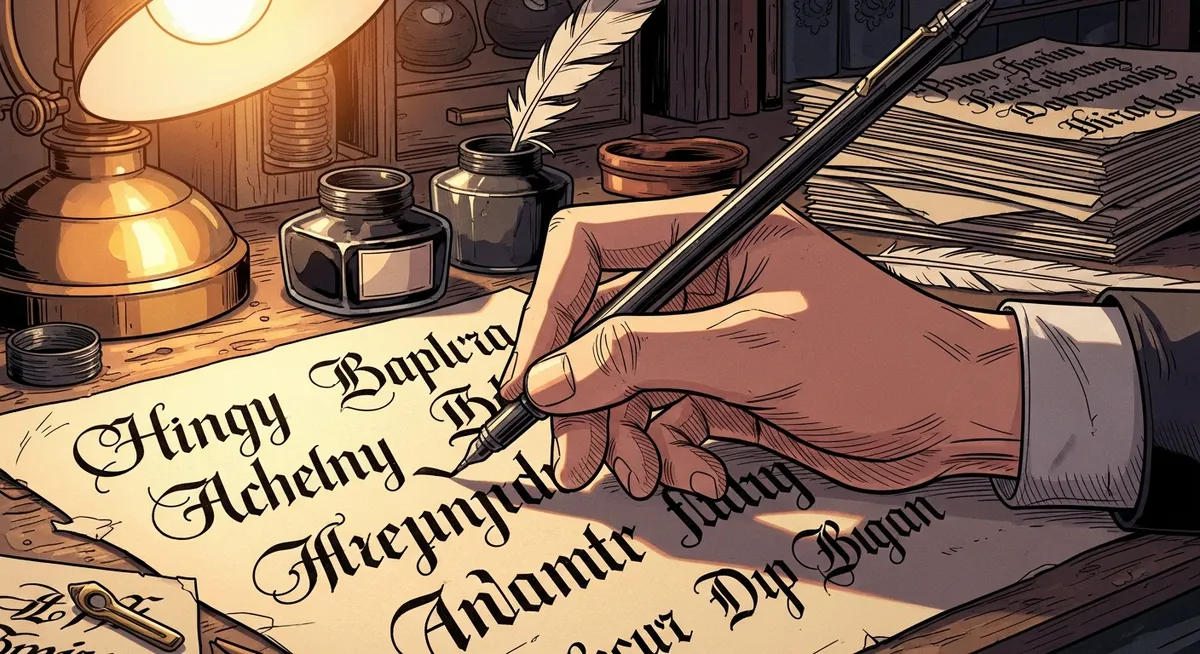
Reed College had what Jobs called the finest calligraphy program in the country. He wandered into a course taught by Robert Palladino, a former Trappist monk, and learned about serif and sans-serif typefaces, about kerning and leading, about making letters beautiful.
“None of this had even a hope of any practical application in my life,” Jobs said in his famous 2005 Stanford commencement speech. “But ten years later, when we were designing the first Macintosh computer, it all came back to me. And we designed it all into the Mac. It was the first computer with beautiful typography.”
If Jobs hadn’t dropped out, he never would have taken that class. If he hadn’t taken that class, personal computers might still look like they were designed by someone who hates you. Windows copied the Mac’s fonts. Every computer since has followed. The fonts you’re reading right now trace their lineage to a broke college dropout killing time in a calligraphy class because he had nothing better to do. That’s either destiny or the most productive procrastination in history.
India and Enlightenment
In 1974, Jobs traveled to India seeking spiritual enlightenment. He spent seven months wandering the subcontinent, visiting ashrams, studying Buddhism, and experimenting with psychedelics. He came back with a shaved head, wearing traditional Indian clothing, and with a deepened commitment to Zen Buddhism that would last his entire life. Most people come back from India with traveler’s diarrhea and some cool photos. Jobs came back with the philosophical framework for a trillion-dollar company.
The India trip wasn’t a gap-year detour. It was foundational. Jobs’s Zen practice — the emphasis on simplicity, intuition, and focus — became the backbone of everything he built at Apple. The stripped-down aesthetic of Apple products, the elimination of the unnecessary, the obsessive focus on what matters — all of that traces back to a nineteen-year-old seeking enlightenment in India. And also doing a lot of LSD, which he later called “one of the two or three most important things” he ever did. Not exactly what you hear in the commencement speeches.
The Atari Job
Before India, Jobs worked at Atari, the pioneering video game company. Employee number 40. He got the job by walking into the lobby and refusing to leave until they hired him. Classic Jobs — he had the reality distortion field before he was old enough to rent a car.
Then there was the body odor situation. Jobs was on a fruitarian diet — nothing but fruit — and had convinced himself this eliminated the need to bathe. Reader, it did not. He smelled so bad that Atari’s actual corporate solution was to banish him to the night shift so other employees could breathe.
Despite the hygiene situation, Atari founder Nolan Bushnell recognized Jobs’s talent. When Bushnell needed a stripped-down version of the arcade game Breakout, he offered a bonus for every chip eliminated from the design. Jobs recruited Wozniak to do the actual engineering — Woz completed the entire design in four days, a borderline superhuman feat — and they “split” the bonus. By “split” I mean Jobs told Woz the bonus was $350 and gave him half, when it was actually $5,000, according to Wozniak’s account in his memoir iWoz. Wozniak didn’t find out the real number until years later. He said it made him cry.
Let that sit for a second. According to Wozniak, Jobs shortchanged his best friend — the guy who did all the actual work — out of thousands of dollars. This wasn’t some ruthless business negotiation. This was, as Wozniak described it, a betrayal of the person who trusted him most. It was an early preview of a pattern that biographers would document throughout Jobs’s career: a willingness to bend the truth and rationalize it because, in his mind, Steve Jobs’s needs always came first.
🖥️ Chapter 3: Apple — The Garage That Changed the World (1976–1985)
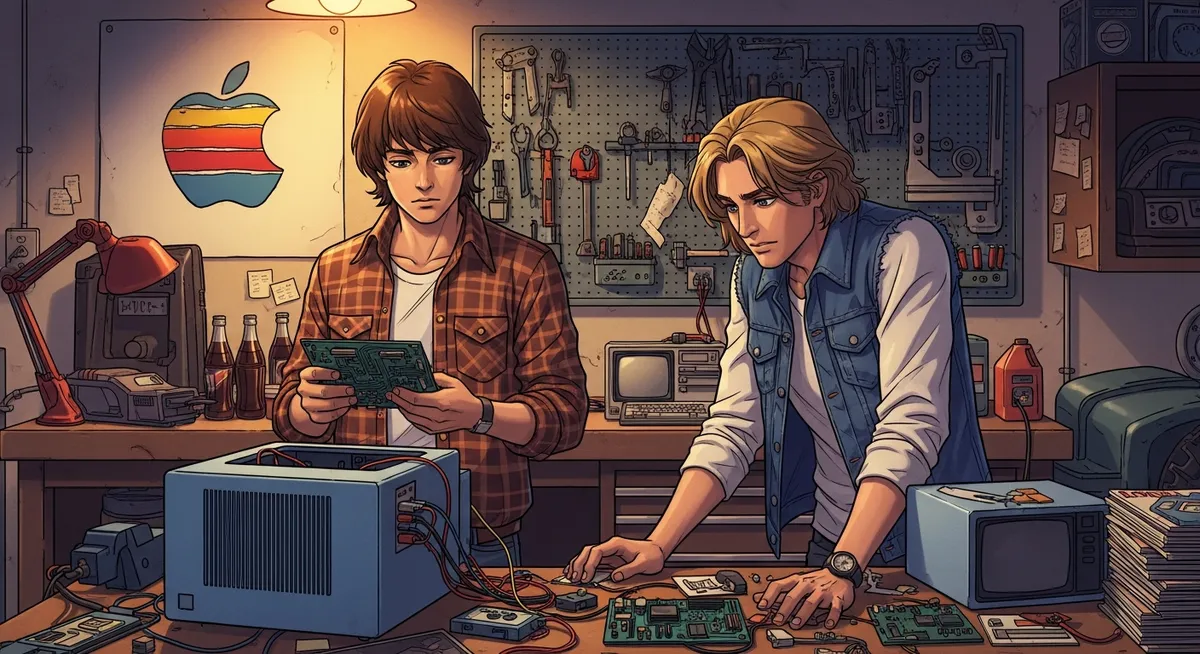
On April 1, 1976 — April Fools’ Day, which feels a little too on the nose — Steve Jobs, Steve Wozniak, and Ronald Wayne founded Apple Computer Company. Wayne, who was older and worried about potential debts, sold his 10% share back to Jobs and Wozniak twelve days later for $800. That stake would eventually be worth over $300 billion. It is, conservatively, the worst financial decision any human being has ever made. Somewhere out there, Ronald Wayne wakes up every morning and chooses not to think about it.
The first Apple I computers were assembled in the Jobs family garage. Wozniak designed the boards; Jobs handled sales, marketing, and supply chain. They sold about 200 units at $666.66 each — a price Jobs chose because he liked repeating digits and Woz liked the number of the beast. Just two dudes in a garage pricing their revolutionary computer after Satan. Normal startup stuff.
The Apple II and the First Fortune
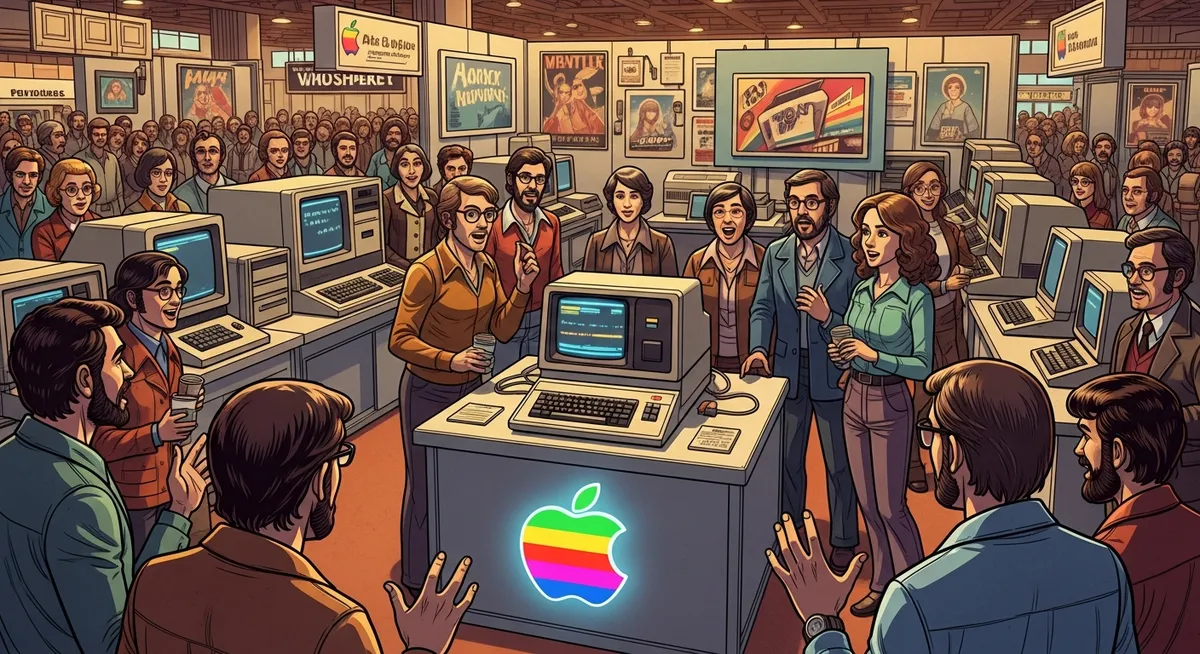
The Apple II, released in 1977, was the machine that turned Apple from a garage project into a real company. It was one of the first mass-produced personal computers, and when a third party created VisiCalc — the first spreadsheet program — for it, the Apple II went from hobbyist toy to essential business tool overnight.
Apple went public on December 12, 1980. The IPO raised $100 million and minted roughly 300 instant millionaires — more than any company in history up to that point. Jobs, at 25, was worth over $250 million. Quarter of a billion dollars. He was barely old enough to rent that car he couldn’t afford at Atari.
The Macintosh and the Reality Distortion Field
In 1979, Jobs visited Xerox’s Palo Alto Research Center (PARC) and saw a demonstration of the graphical user interface — windows, icons, a mouse pointer. Xerox had literally invented the future of computing and was just… sitting on it. Like finding a gold mine and using it as a parking lot.
“You’re sitting on a gold mine!” he reportedly shouted at the Xerox engineers. “I can’t believe Xerox is not taking advantage of this.”
Jobs redirected Apple’s entire development effort toward building a computer with a graphical user interface. The result was the Macintosh, released on January 24, 1984, and introduced by the legendary “1984” Super Bowl commercial directed by Ridley Scott. The ad — an athletic woman sprinting through a dystopian hellscape and hurling a sledgehammer at a giant screen displaying Big Brother — cost $1.5 million and aired exactly once during the broadcast. It’s still considered one of the greatest advertisements ever made, and it probably always will be.
The Macintosh team worked under what employees called Jobs’s “reality distortion field” — his terrifying, almost supernatural ability to convince people that the impossible was not only possible but overdue. Andy Hertzfeld, one of the original Mac programmers, described it this way: “The reality distortion field was a confounding mix of a charismatic rhetorical style, an indomitable will, and an eagerness to bend any fact to fit the purpose at hand.”
In practice, it worked like this: Jobs would walk into a room, declare that a feature needed to be done in two weeks when engineers estimated two months, and somehow — through a cocktail of inspiration, charm, and raw terror — the team would do it in three weeks. The reality distortion field didn’t just bend perception. It bent actual reality, because people under its influence achieved things they genuinely believed were impossible. It’s like a Jedi mind trick, except the Jedi is screaming at you and might also cry.

The Tyranny of Taste
Jobs’s design obsession led to legendary, exhausting battles with his own teams. He’d reject designs dozens of times. He’d lose his mind over the radius of a rounded corner. He insisted the circuit board inside the original Macintosh be beautiful, even though no customer would ever crack the case open. When engineers protested that nobody would know, Jobs dropped the immortal: “I’ll know.”
He was equally brutal — honestly, worse — with people. Jobs regularly made employees cry. Not occasionally. Regularly. He would call their work “shit” to their faces, in front of other people. He would steal credit for ideas that weren’t his and then deny it with a straight face. He would lavish someone with praise one day and psychologically disembowel them the next. The world divided neatly into two categories for Steve Jobs: things were either “the best thing ever” or “total garbage.” There was literally no middle ground. Your work was a masterpiece or it was worthless, and which one it was could change between breakfast and lunch.
His management style has been described by numerous former employees and biographers as, by any reasonable human standard, abusive. But those who survived it — and plenty didn’t — often said they did the best work of their lives under him. Debi Coleman, who worked on the Mac team, put it this way: “He got the best out of us because we didn’t want to let him down, and we didn’t want to face his wrath.” Which sounds a lot like something a hostage would say, but she meant it as a compliment.
The Firing
Despite the cultural impact of the Macintosh, initial sales were a disappointment. The machine was too expensive ($2,495), too slow, and too starved for memory. Meanwhile, Jobs’s volcanic personality had alienated basically everyone at Apple who had the power to do something about it.
In 1983, Jobs had personally recruited John Sculley from PepsiCo to be Apple’s CEO, deploying one of the greatest sales pitches in history: “Do you want to sell sugar water for the rest of your life, or do you want to come with me and change the world?”
By 1985, Jobs and Sculley were at each other’s throats. Jobs attempted a boardroom coup to oust Sculley. It failed. The board sided unanimously with Sculley. Every single vote. Jobs was stripped of all operational responsibilities.
On September 17, 1985, Steve Jobs resigned from Apple Computer. He was 30 years old. He sold all but one of his Apple shares — keeping a single share so he could still show up to shareholder meetings, which is the most passive-aggressive power move in corporate history. The man who’d co-founded the company in his garage, who’d willed the Macintosh into existence, who’d aired the greatest Super Bowl ad of all time, was out. Fired from his own company. At 30.

🏜️ Chapter 4: The Wilderness Years — NeXT and Pixar (1985–1996)
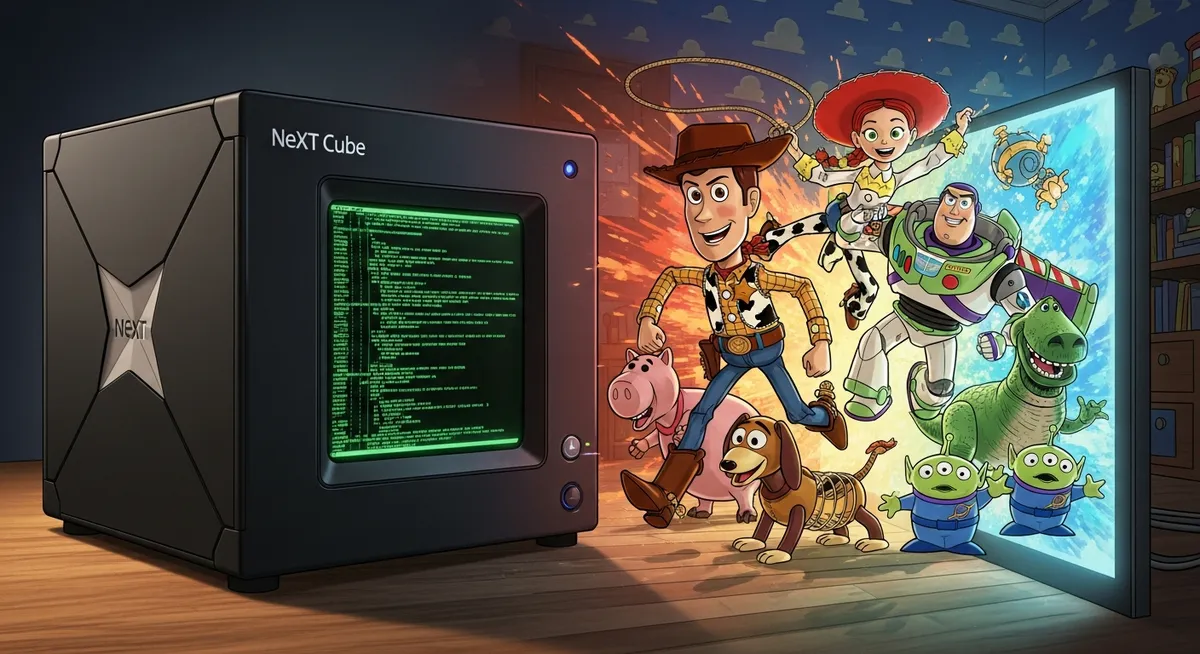
“I didn’t see it then, but it turned out that getting fired from Apple was the best thing that could have ever happened to me,” Jobs said in his 2005 Stanford speech. “The heaviness of being successful was replaced by the lightness of being a beginner again, less sure about everything. It freed me to enter one of the most creative periods of my life.”
This is the part of the Steve Jobs story that people skip. Everyone wants to talk about the garage, the iPhone, the turtleneck. But the 11 years in exile are what transformed a brilliant but emotionally stunted bully into the leader who would build the most valuable company in history.
NeXT: The Beautiful Failure
Jobs founded NeXT Computer in 1985 because apparently getting fired wasn’t enough humility for one decade. His ambition: build the perfect computer for higher education. A machine so advanced that universities would adopt it as the standard. The NeXT Cube, released in 1988, was exactly what you’d expect from Jobs: stunningly beautiful, technically brilliant, and priced like a luxury sedan.
The machine was encased in a perfect one-foot magnesium cube, painted matte black. Jobs spent $100,000 just developing the logo — hiring legendary designer Paul Rand, who presented exactly one option and told Jobs he could take it or leave it. Jobs took it. Probably the only time in his life someone out-Jobs’d Jobs.
The NeXT operating system, NeXTSTEP, was a genuine masterpiece of software engineering — the first major commercial use of object-oriented programming for a consumer-facing product. Elegant, powerful, years ahead of its time.
Also a commercial disaster. The NeXT Cube cost $6,500. Universities could barely afford chalk. Only about 50,000 units ever sold. NeXT eventually gave up on hardware entirely and became a software company.
But NeXTSTEP had two legacies that dwarf the failure. First, Tim Berners-Lee used a NeXT computer at CERN in 1989 to create the World Wide Web. The first web server and the first web browser both ran on NeXTSTEP. Second, the operating system would eventually become the foundation of macOS, iOS, watchOS, and every Apple operating system in use today. The commercial failure turned out to be the Trojan horse that conquered the future.
The real lesson NeXT beat into Jobs was one Apple never could: the market does not care how gorgeous your product is if nobody can afford it. Price matters. Accessibility matters. You can have the best technology in the world, and it means exactly nothing if it doesn’t reach people. Future Steve Jobs would remember this. Current Steve Jobs had to learn it the hard way.
Pixar: The Accidental Entertainment Empire
In 1986, Jobs bought the computer graphics division of Lucasfilm for $10 million and called it Pixar. His plan was to sell high-end graphics hardware. The animation stuff was just a side demo to show off the hardware’s capabilities. He had absolutely no intention of becoming a movie mogul.
For nearly a decade, Pixar hemorrhaged money. Jobs poured over $50 million of his own fortune into keeping the company alive. He came within days of selling it. He had meetings scheduled to pull the plug. Multiple times. The only thing that saved Pixar was a deal with Disney to produce three computer-animated feature films. The first one was Toy Story.
Toy Story: The Miracle
Toy Story, released on November 22, 1995, was the first fully computer-animated feature film in history. It was a technical milestone, but more importantly, it was a genuinely great movie — funny, emotionally devastating, beautifully crafted. It earned $373 million worldwide and snagged a Special Achievement Academy Award.
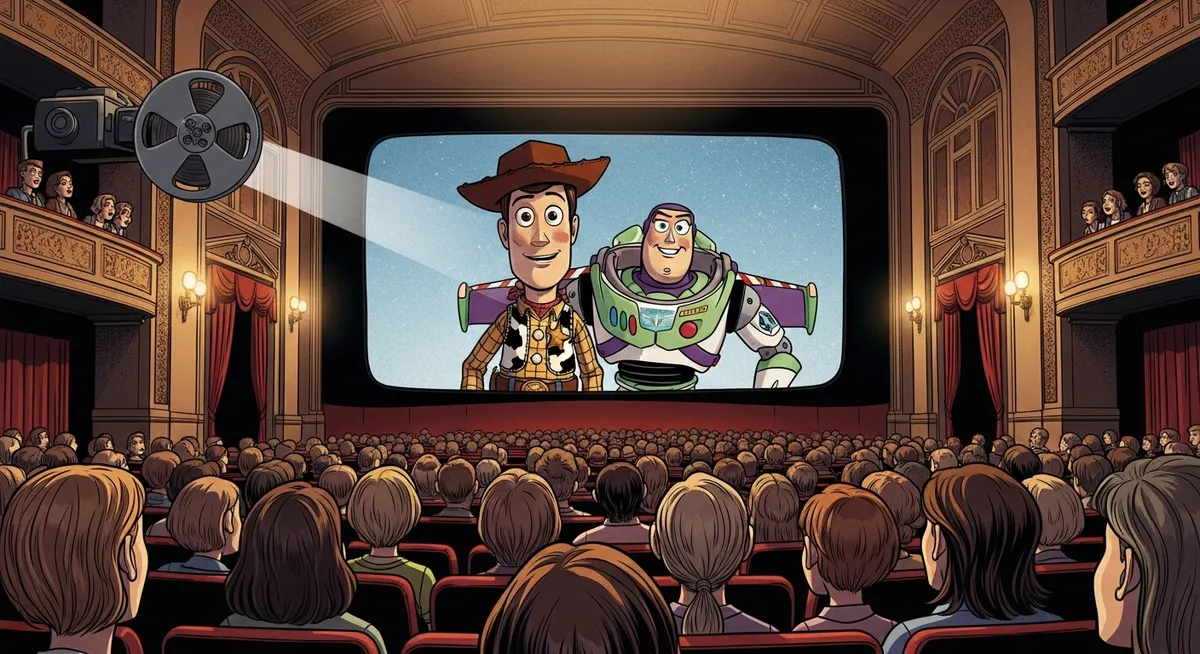
One week after Toy Story’s premiere, Pixar went public. The IPO raised $140 million, and Jobs’s 80% stake was suddenly worth over $1 billion. He was, once again, spectacularly wealthy. The guy couldn’t stop falling upward.
But Pixar gave Jobs something more valuable than money. Working with director John Lasseter and the Pixar creative team taught him about storytelling, collaboration, and the kind of leadership that inspires rather than terrorizes. At Apple, Jobs had ruled through fear and humiliation. At Pixar, he slowly, painfully learned that creative people produce their best work when they feel safe, not when they’re afraid you’ll call their life’s work garbage in front of their colleagues. It only took getting fired and spending a decade in the wilderness for him to figure this out. Better late than never.
Pixar went on to produce Finding Nemo, The Incredibles, WALL-E, Up, and a string of masterpieces. Disney ultimately acquired Pixar in 2006 for $7.4 billion in stock, making Jobs Disney’s largest individual shareholder and landing him a seat on the Disney board. Not bad for a side demo.
Laurene
During his wilderness years, Jobs also found some personal stability. In 1991, he married Laurene Powell at Yosemite National Park, officiated by a Zen Buddhist monk. They’d have three children together. Laurene brought a grounding influence to Jobs’s life that basically no one else could provide, mostly because everyone else was either afraid of him or recovering from working with him.
Jobs also gradually repaired his relationship with Lisa Brennan-Jobs — the daughter he’d had with his high school girlfriend Chris-Ann Brennan. And “repair” is doing a lot of heavy lifting in that sentence, because let’s be clear about what happened. For years, Jobs denied Lisa was his daughter. According to court records, he swore in a legal document that he was “sterile and infertile” — despite ample evidence to the contrary. He named the Apple Lisa computer after her, then publicly denied the connection. According to Lisa Brennan-Jobs’s memoir Small Fry and Isaacson’s biography, he allowed his daughter and her mother to live on welfare while he was worth hundreds of millions of dollars.
This isn’t a complicated moral question. It was shameful. Jobs himself later admitted as much, telling Isaacson it was one of the things he was most ashamed of. Lisa eventually moved in with the Jobs family as a teenager, and their relationship, while never uncomplicated, became closer over time. But the damage was done, and no amount of iPhone sales erases the fact that Steve Jobs chose ego over his own kid for years.
🍎 Chapter 5: The Return — Saving Apple from Death (1997–2001)
By 1996, Apple was a dumpster fire wearing a necktie. The company had burned through three CEOs since Jobs left. Its product line was an incomprehensible mess of overlapping models — Quadra, Centris, Performa, LC, Power Macintosh — names so forgettable they sound auto-generated. Market share had cratered from 16% to under 4%. Microsoft Windows owned the world. Apple was 90 days from bankruptcy.
Ninety days. That’s three months. The company that would become the first to hit $3 trillion in market cap was three months from ceasing to exist.
In December 1996, Apple acquired NeXT for $427 million, supposedly for its operating system technology. The deal brought Jobs back as an “advisor.” Within months, CEO Gil Amelio was shoved out by the board, and Jobs took over as interim CEO — or as he styled it, “iCEO.” Because even his job title needed a lowercase “i” and a whiff of false modesty.
He would hold that “interim” title for three years before dropping the “i.” During that time, he pulled off one of the most jaw-dropping corporate turnarounds in the history of capitalism.
The Great Purge
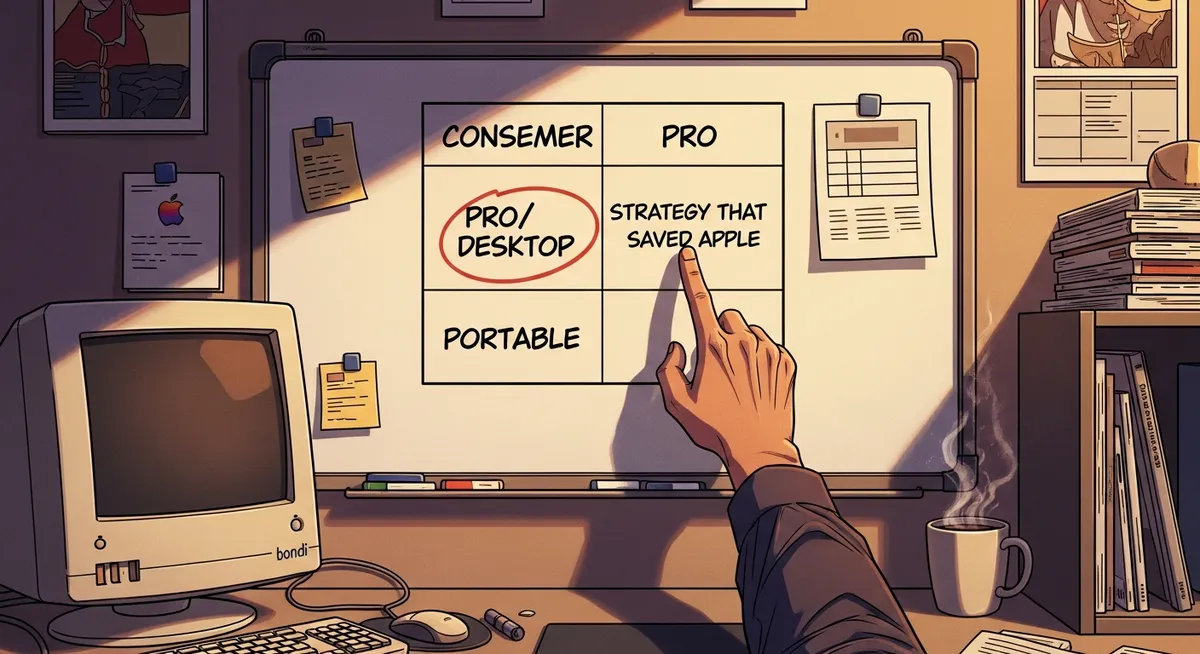
Jobs’s first move was a massacre. He killed 70% of Apple’s products. Drew a simple two-by-two grid on a whiteboard: Consumer and Professional on one axis, Desktop and Portable on the other. Apple would make four great products — one for each box. Everything else? Dead. Gone. Eliminated.
“Focus means saying no to the hundred other good ideas,” he explained. “You have to pick carefully. I’m actually as proud of the things we haven’t done as the things we have done.”
He killed the Newton. Killed the Mac clone licensing deals. Killed printers, servers, peripheral businesses. Laid off thousands of employees. It was a bloodbath. But it was the right bloodbath. By hacking Apple’s bloated product line down to the bone, Jobs freed up resources for the things that actually mattered.
The Partnership with Jony Ive
One of Jobs’s smartest early moves was recognizing Jonathan Ive — a young British designer who’d been toiling in Apple’s industrial design department without anyone caring. Under previous leadership, Ive had nearly quit multiple times. Then Jobs showed up and recognized a kindred spirit.
They connected instantly. Same design philosophy rooted in simplicity. Same obsession with materials and manufacturing processes. Same belief that technology should be beautiful enough to make you feel something. Their partnership — lasting until Ive’s departure from Apple in 2019 — produced virtually every iconic Apple product of the twenty-first century. It was like Lennon and McCartney, if Lennon made you cry in meetings and McCartney designed aluminum enclosures.
The iMac: Color Returns
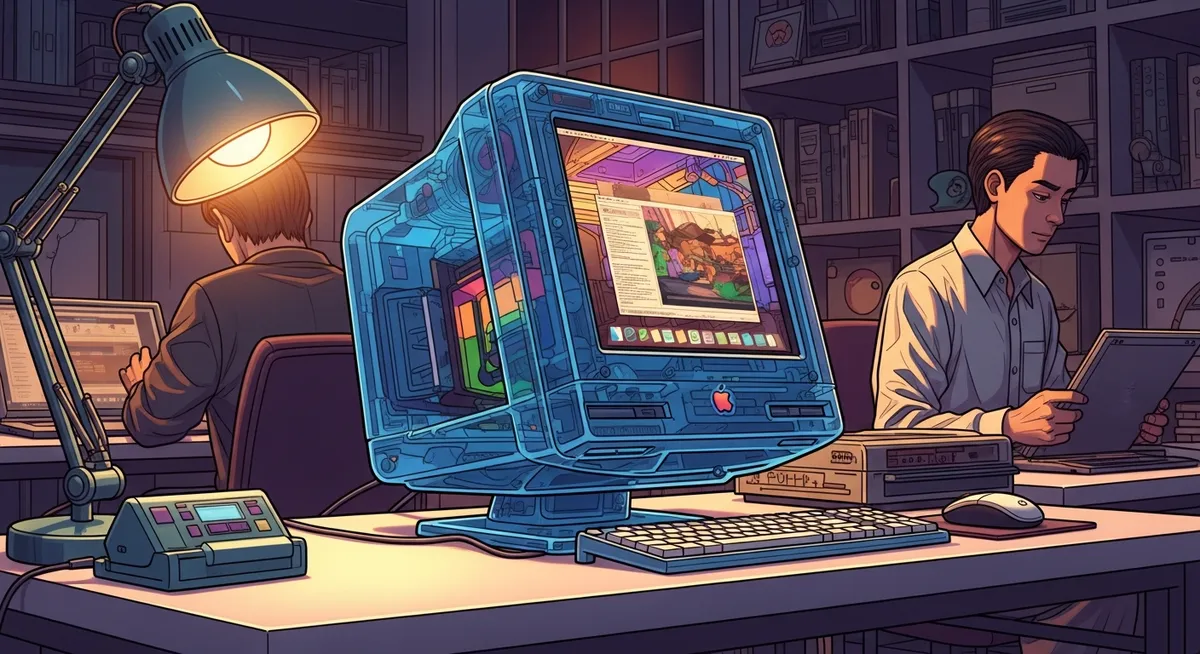
The iMac, released on August 15, 1998, was Apple’s first major product under Jobs 2.0, and it announced his return with all the subtlety of a sledgehammer wrapped in translucent Bondi Blue plastic.
At a time when every computer on Earth was a beige box that looked like it was designed by someone who had given up on life, the iMac was a translucent, candy-colored, egg-shaped all-in-one machine. No floppy drive — a decision that was widely mocked and proved completely right. The “i” stood for internet.
The iMac sold 278,000 units in its first six weeks — making it the fastest-selling computer in Apple history at that point. More importantly, it sent a signal: Apple is back. Technology can be fun. Computers can be beautiful. Design matters. And if you’re still making beige boxes, you’re already dead.
Think Different
Alongside the product turnaround, Jobs commissioned one of the most celebrated ad campaigns in history. “Think Different” featured black-and-white images of iconoclasts — Einstein, Gandhi, Lennon, Picasso, Amelia Earhart, Martin Luther King Jr. — with the tagline “Think Different.”
The voiceover, read by Richard Dreyfuss, was basically Jobs’s manifesto disguised as a commercial:
“Here’s to the crazy ones. The misfits. The rebels. The troublemakers. The round pegs in the square holes. The ones who see things differently. They’re not fond of rules. And they have no respect for the status quo… Because the people who are crazy enough to think they can change the world are the ones who do.”
Jobs himself had originally recorded the voiceover. His version was reportedly better — more personal, more intense. But he decided it would look too self-aggrandizing to use the CEO’s own voice. A rare moment of self-awareness from a man who wasn’t exactly known for the quality.
The Apple Store
In 2001, Jobs announced that Apple would open its own retail stores. The tech industry’s response was basically: “LOL.” Gateway was closing stores. Dell had proved that selling online was the future. A BusinessWeek headline read: “Sorry Steve, Here’s Why Apple Stores Won’t Work.”
Jobs hired Ron Johnson from Target and spent months obsessing over every detail. The stores were designed around the experience, not the transaction. Jobs built a full-scale prototype store inside a warehouse, hated it, tore the whole thing apart, and started over. Because of course he did.
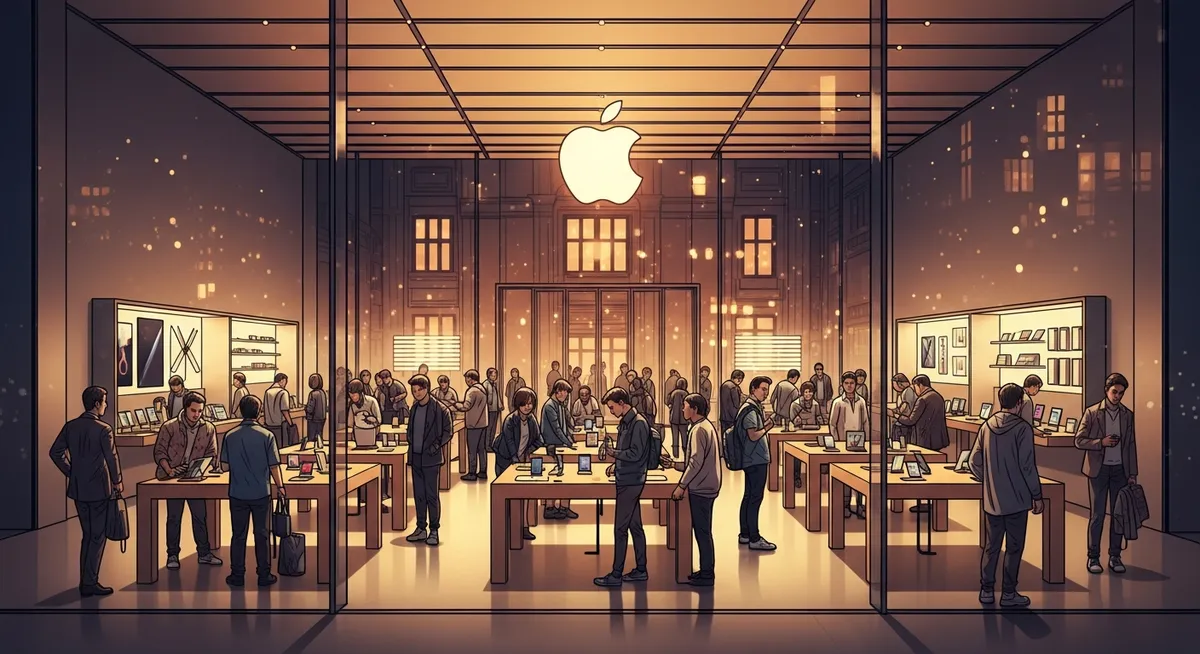
The first two Apple Stores opened in May 2001 in Tysons Corner, Virginia, and Glendale, California. Within three years, they had the highest revenue per square foot of any retailer in the world — higher than Tiffany’s. The stores that everyone said would fail became destinations, community centers, and the physical embodiment of everything Apple stood for. BusinessWeek did not publish a follow-up article apologizing.
🎵 Chapter 6: The Music Revolution — iPod and iTunes (2001–2006)
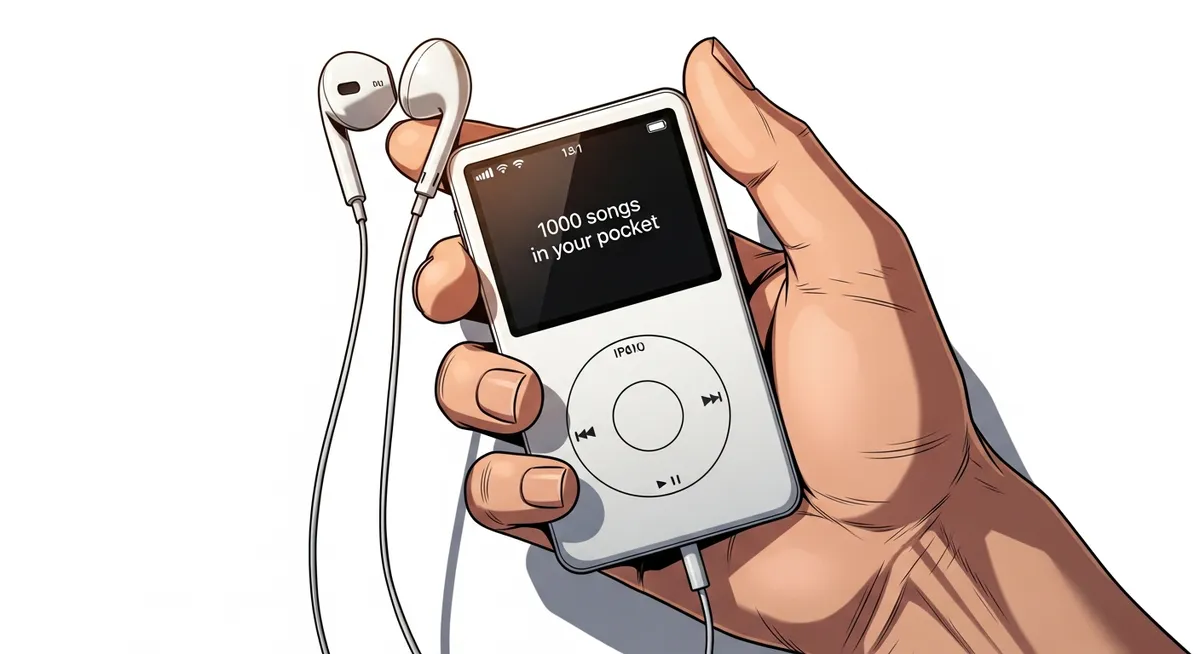
On October 23, 2001 — barely a month after September 11, with the country reeling and the economy in the tank — Jobs stood on stage and pulled a small white device from his jeans pocket.
“This amazing little device holds 1,000 songs,” he said, “and it goes right in my pocket.”
The iPod. Five words. No jargon. No specs. Just: here’s what it does for you. That’s Jobs in a sentence.
1,000 Songs in Your Pocket
The iPod was not the first portable digital music player. MP3 players existed before it. But they were all garbage — clunky, ugly, painful to use, with storage capacities that could hold maybe an afternoon’s worth of music. The iPod was different. It was beautiful. It was dead simple. It had a scroll wheel that felt like actual magic under your thumb. And it held your entire music library.
The tagline was perfect: “1,000 songs in your pocket.” Not “5 gigabytes of storage.” Jobs understood something that most tech companies still don’t: people do not care about specifications. They care about what a product does for their life. Nobody wants “5 gigabytes.” Everybody wants 1,000 songs.
The white earbuds became a cultural phenomenon — a status symbol visible from across a crowded subway car. The silhouette ads — dancers in black against bright backgrounds, white earbuds flying — became one of the most recognizable campaigns of the decade. Apple hadn’t just made a gadget. They’d made an identity.
iTunes and the $0.99 Song
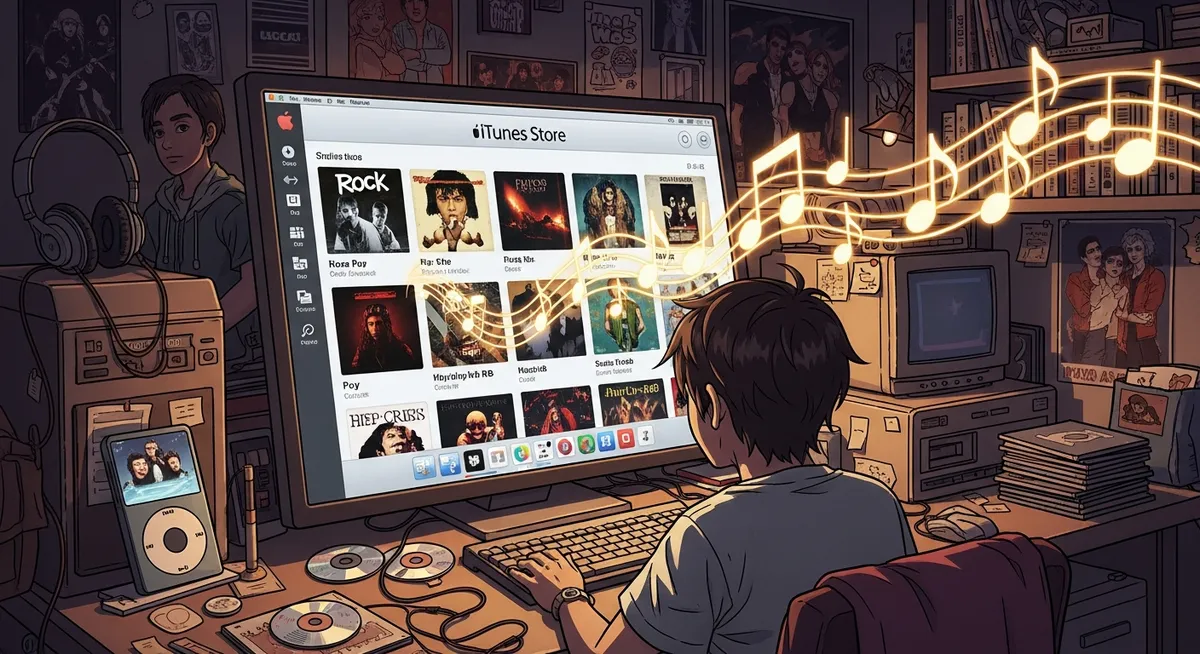
The iPod’s real genius wasn’t the hardware. It was the ecosystem. In 2003, Jobs launched the iTunes Music Store — legally buy individual songs for $0.99 each.
Getting every major record label to agree to this took every ounce of Jobs’s legendary powers of persuasion, and probably some of the reality distortion field too. The music industry was being devoured alive by Napster and piracy. Labels were suing teenagers. The entire business model was collapsing in real time.
Jobs offered them a lifeline: a legal, easy-to-use store that would give people a legitimate alternative to stealing music. He negotiated with each label head individually. He flew to meetings. He charmed them. He threatened them. He explained to them, slowly, that the alternative to his deal was oblivion.
The iTunes Store sold one million songs in its first five days. Within three years, it was the largest music retailer in the United States — bigger than Walmart. Jobs hadn’t just saved Apple. He’d reinvented an entire industry that had been too stubborn and too scared to reinvent itself.
📱 Chapter 7: The iPhone — The Device That Changed Everything (2007)
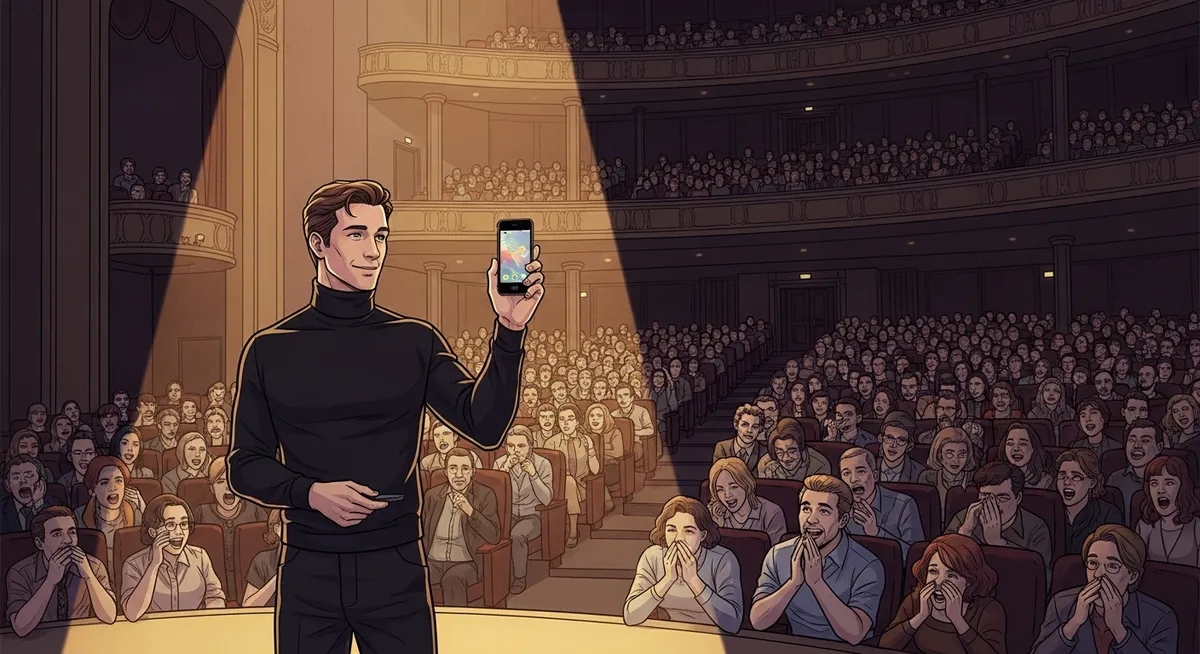
On January 9, 2007, at the Macworld Conference in San Francisco, Steve Jobs delivered what is widely considered the greatest product launch presentation in the history of business. It’s also one of the great acts of showmanship, period. Forget tech — this is up there with Houdini.
“Every once in a while, a revolutionary product comes along that changes everything,” he began. “Today, we’re introducing three revolutionary products. The first one is a widescreen iPod with touch controls. The second is a revolutionary mobile phone. And the third is a breakthrough internet communications device.”
He repeated the three products. The audience applauded politely. Then Jobs smiled. The bastard smiled.
“Are you getting it? These are not three separate devices. This is one device. And we are calling it… iPhone.”
The crowd lost its mind. And so, eventually, did the entire mobile phone industry.
The Secret Development
The iPhone had been in secret development for over two years under the internal codename “Project Purple.” The team worked in a locked section of Apple’s campus with security cameras and badge readers on every door. Even within Apple, most employees had zero idea what was being built. The secrecy was so intense that it makes the Manhattan Project look like a group chat.
The original concept wasn’t even a phone. It started as a tablet project. Jobs had been shown a demo of a multi-touch display by Apple engineers and was immediately captivated. “I could envision a phone with this,” he told the team. The tablet got shelved — it would eventually become the iPad — and all resources pivoted to the phone.
Here’s the part that makes engineers break into a cold sweat: the phone Jobs demonstrated on stage that day was barely functional. The software crashed constantly. The team had identified one specific sequence of demos — email, then web, then maps, then music — that the prototype could perform without dying on camera. If Jobs deviated from the script even slightly, the phone might freeze or shut down on live television in front of the world’s media.
Jobs nailed the demo perfectly. Nobody in the audience had any idea they were watching the most stressful tightrope walk in tech history.
”One More Thing”
No discussion of Jobs is complete without “One more thing…” — the phrase he’d drop at the end of keynotes to introduce surprise announcements. It became one of the most anticipated moments in technology. Audiences would sit through entire presentations just waiting for it. Jobs used it sparingly enough that it never became predictable, but frequently enough that it became legendary.
The phrase became so synonymous with Jobs that when Tim Cook used it after his death, it felt less like a catchphrase and more like a prayer.
The Impact
The iPhone didn’t just disrupt the phone industry. It obliterated it. Nokia — 50% global market share in 2007 — was basically finished within five years. BlackBerry went from 50 million subscribers to a punchline. The entire mobile phone industry was torn down to the studs and rebuilt around the paradigm Jobs introduced: big touchscreen, no physical keyboard, app ecosystem.
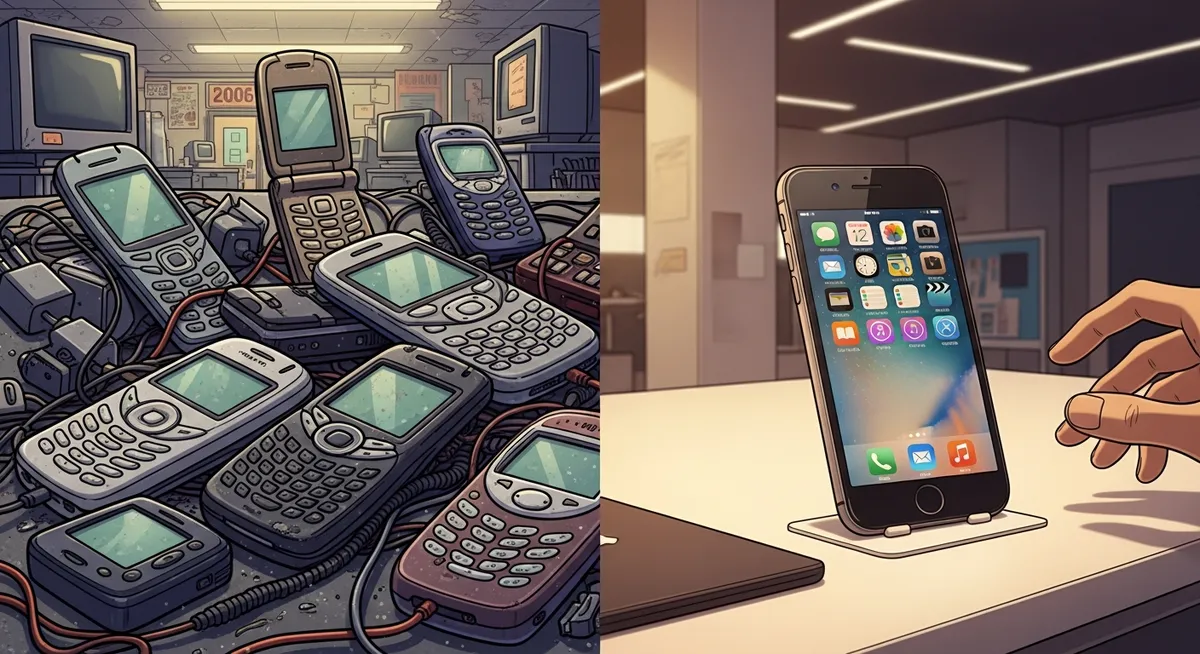
The App Store, launched in 2008, created an entirely new economy. Within a decade, it was generating over $60 billion annually for developers. Uber, Instagram, Snapchat, TikTok — none of these companies could exist without the platform Jobs created. He didn’t just build a phone. He built the stage on which half the modern economy performs.
By 2012, more iPhones were sold per day than babies born in the world. Let that one rattle around in your head for a minute.
💻 Chapter 8: The iPad and the Post-PC Vision (2010)
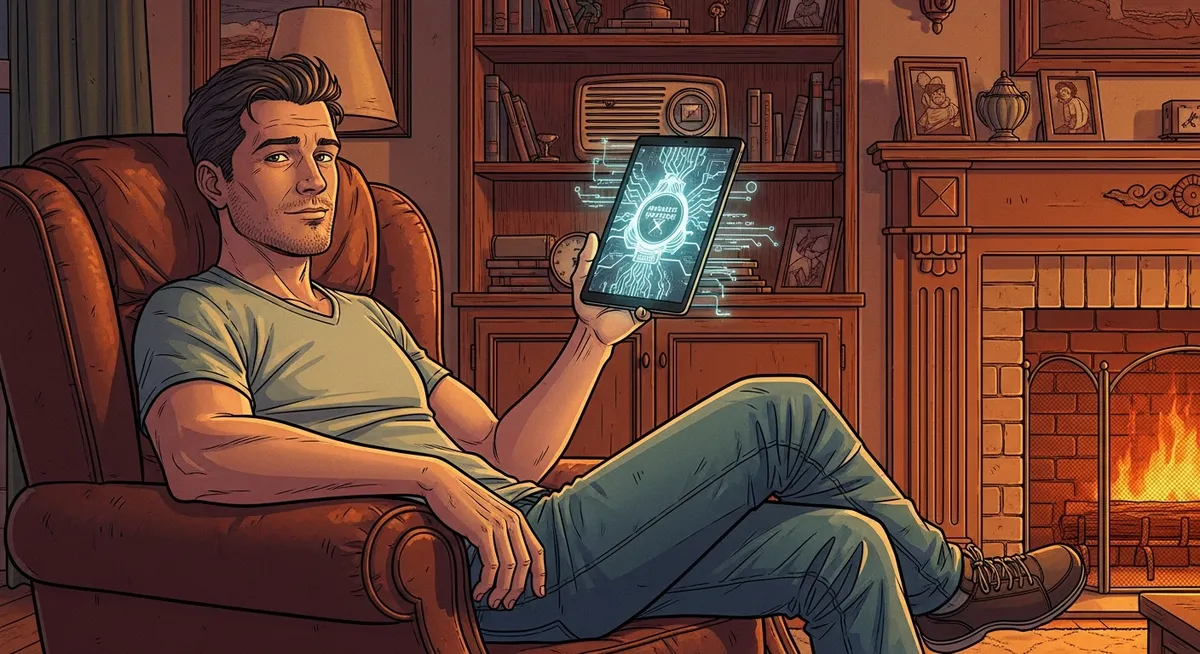
On January 27, 2010, Jobs unveiled the iPad. The reaction was… underwhelming. Critics called it “a giant iPod Touch.” Bloggers asked who would want something bigger than a phone but less capable than a laptop. The name “iPad” spawned a thousand feminine hygiene jokes that the internet thought were way funnier than they actually were.
None of the criticism mattered. The iPad sold 300,000 units on day one and 15 million in its first year. It created an entirely new product category — the tablet — and defined it so thoroughly that every competitor since has been measured against it and found wanting.
Jobs believed the iPad was his most important product. More than the Mac. More than the iPhone. He saw it as the device that would finally make computing truly accessible — a computer so intuitive that a two-year-old could use it, so elegant that an artist would want to. And he was right. The iPad found audiences that traditional computers never reached: little kids, elderly people who found laptops intimidating, artists who wanted to draw directly on screen, pilots replacing 40 pounds of paper manuals, doctors carrying patient records on rounds.
The Post-PC Declaration
With the iPad, Jobs declared that we’d entered the “post-PC era.” Personal computers, he argued, were like trucks — necessary for heavy work, but overkill for what most people actually do. Tablets and smartphones were the cars: simpler, more accessible, good enough for 90% of daily tasks.
This was controversial in 2010. By 2020, it was obviously correct. Smartphone and tablet sales had long since blown past PC sales. For billions of people worldwide, a phone or tablet is their primary — and often only — computing device. Jobs called it a decade early, and nobody gave him credit until it was too obvious to deny.
⚡ Chapter 9: The Rivalries — Gates, Google, and the “Thermonuclear War” (1985–2011)
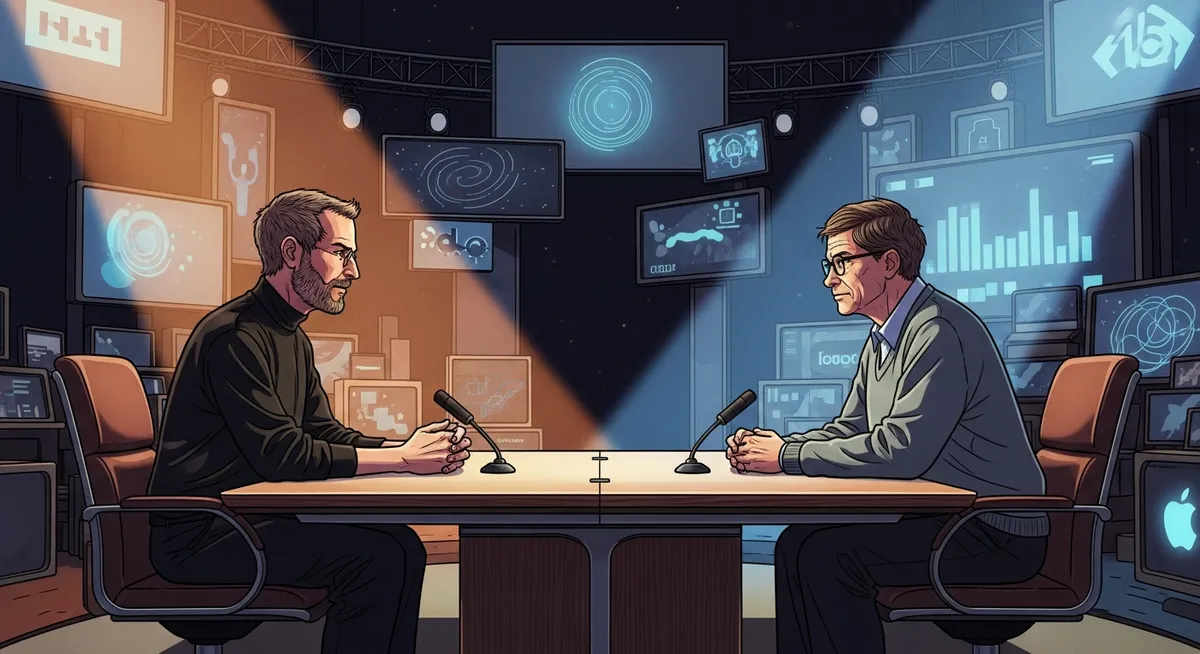
Jobs and Bill Gates
The relationship between Steve Jobs and Bill Gates is one of the great rivalries in business — and it’s way more complicated than the “cool guy vs. nerd” narrative that people love.
They met in the early 1980s when Microsoft was developing software for the Macintosh. Jobs saw Gates as a talented but tasteless programmer who wouldn’t know good design if it bit him. Gates saw Jobs as a brilliant showman who took credit for other people’s engineering. Both were completely right.
When Microsoft released Windows — which used a graphical user interface clearly, uh, “inspired” by the Mac — Jobs was apoplectic. “You’re ripping us off!” he reportedly screamed at Gates during a meeting. Gates, with the calm of a man who knows he’s winning, replied: “Well, Steve, I think there’s more than one way of looking at it. I think it’s more like we both had this rich neighbor named Xerox and I broke into his house to steal the TV set and found out that you had already stolen it.”
That might be the single greatest comeback in business history. Jobs had no answer for it, because it was true.
Jobs once showed up unannounced at Gates’s house to argue about Microsoft’s direction. Gates found him sitting in his living room. They argued for hours. This was just what Jobs did — the man assumed his reality distortion field had no geographic limitations and that showing up uninvited at a billionaire’s house was perfectly normal behavior.
Despite the war, there were moments of genuine connection. In 1997, when Jobs returned to a dying Apple, one of his first calls was to Gates, negotiating a $150 million investment from Microsoft — a financial lifeline. When Jobs announced the deal at Macworld, with Gates’s giant face appearing on screen via satellite, the audience booed. Jobs shut them up. He needed the money more than he needed the applause. That’s character growth.
In Jobs’s final years, Gates visited him at home. They sat together and talked for hours about their lives, their families, their regrets. Gates later said it was one of the most meaningful conversations of his life. After decades of rivalry, two aging titans found more in common than they expected. Turns out mortality has a way of putting market share in perspective.
The Google Betrayal
Jobs considered Google’s development of Android to be a personal act of treason. Eric Schmidt, Google’s CEO, had sat on Apple’s board during the iPhone’s development. Jobs was convinced Google had used that inside access to copy the iPhone’s entire approach. Whether that’s fair is debatable. Whether Jobs believed it with every fiber of his being is not.
“I will spend my last dying breath if I need to, and I will spend every penny of Apple’s $40 billion in the bank, to right this wrong,” Jobs told Walter Isaacson. “I’m going to destroy Android, because it’s a stolen product. I’m willing to go thermonuclear war on this.”
He was not being metaphorical. Apple launched a global patent war against Android manufacturers, particularly Samsung. The legal battles raged long after Jobs’s death, costing billions and reshaping patent law worldwide. Even from beyond the grave, the man was litigating.
🎭 Chapter 10: The Man Behind the Myth — Personality and Contradictions
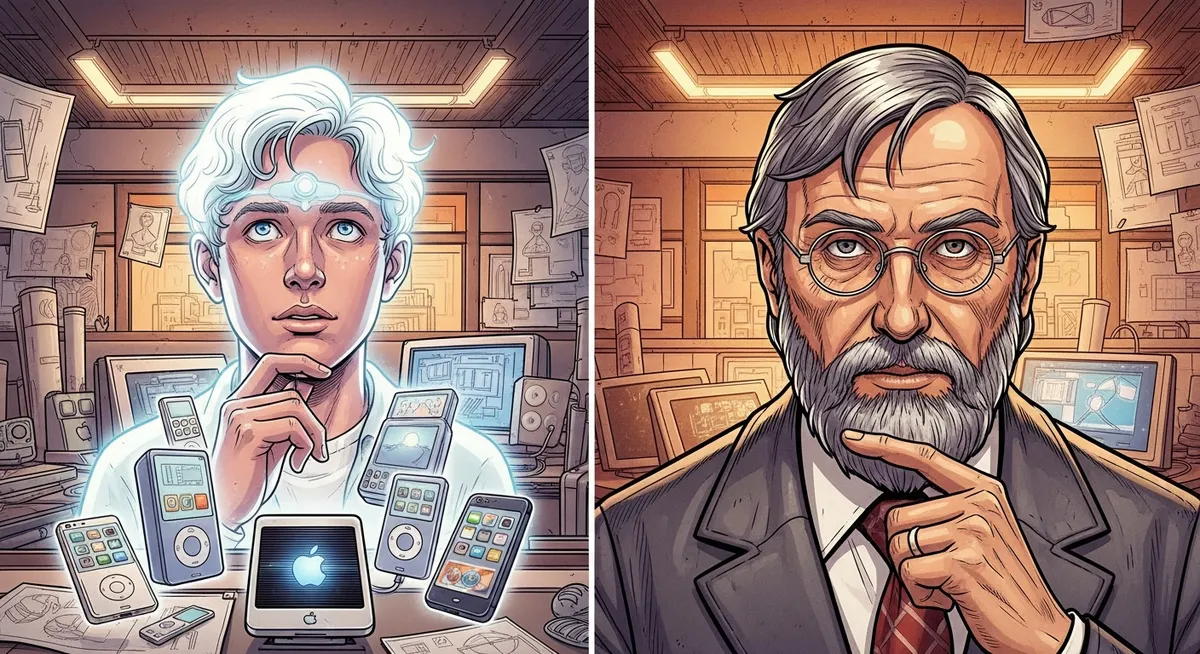
Steve Jobs was, by nearly unanimous testimony, one of the most difficult human beings in the history of American business. Understanding what he accomplished requires understanding who he was — gifts, costs, and all the deeply weird stuff in between.
The Reality Distortion Field
The term was borrowed from Star Trek — a technology that created simulated worlds — and Apple employees used it with a mix of awe and genuine fear. Jobs could walk into a room and convince battle-hardened engineers that a six-month project could ship in six weeks. The terrifying part? He was often right. Not because the timeline was realistic, but because people under his spell found reserves of capability they didn’t know they had. He didn’t change the deadline. He changed the people.
Bud Tribble, an early Mac team member, first coined the phrase. “In his presence, reality is malleable,” Tribble told Andy Hertzfeld. “He can convince anyone of practically anything.” This is either inspiring leadership or clinical narcissism, depending on which end of it you’re on.
The Crying
Jobs cried constantly. In meetings, in arguments, in product presentations. He cried when he was moved by a beautiful design. He cried when an engineer’s work wasn’t good enough. He cried when he unveiled products. He cried when people disagreed with him. This was not weakness — it was intensity cranked to eleven with no volume knob. Jobs experienced every emotion at maximum. His joy was ecstatic. His anger was volcanic. His sadness could fill a room like tear gas.
When he was dying, he told Isaacson he cried every day. Of course he did. Steve Jobs didn’t do anything at medium.
The Parking
For years, Jobs drove a silver Mercedes-Benz SL 55 AMG with no license plates. Not “expired plates” — no plates. He’d discovered a California loophole: new cars had a six-month grace period before plates were required. So he arranged a lease that swapped his car for a brand-new identical Mercedes every six months. The man hacked the DMV like it was a competing operating system.
He also routinely parked in handicapped spaces at Apple. Not occasionally. Routinely. As in, the handicapped spot was basically his reserved parking space, except it wasn’t his and he wasn’t handicapped. When confronted about it — and he was confronted about it, multiple times — Jobs would simply ignore the complaint. Rules, in his mind, existed for other people. People who weren’t Steve Jobs. People who hadn’t changed the world. The entitlement was breathtaking, and he didn’t lose a second of sleep over it.
The Diet
Jobs’s relationship with food was extreme and lifelong. He went through phases of eating only one or two foods for weeks or months at a time — nothing but apples, then nothing but carrots until his skin literally turned orange (a real medical condition called carotenosis), then nothing but fruit for months.
Remember the Atari body odor situation? That was the fruitarian diet. Jobs genuinely, sincerely believed that eating only fruit meant his body wouldn’t produce mucus or body odor. This is not how the human body works. This is not how any body works. But Jobs believed it with the same absolute certainty he brought to everything else, and no amount of gagging coworkers could convince him otherwise.
The dietary extremism wasn’t just quirky. It was dangerous. It caused nutritional deficiencies that worried his doctors. And more critically, it reflected a deep, lifelong comfort with alternative medicine and magical thinking about his own body — a comfort that would eventually have fatal consequences.
The Showman
Jobs’s product presentations were legendary, and they didn’t happen by accident. He rehearsed obsessively — for days, sometimes weeks. Every slide, every demo, every pause, every joke was choreographed within an inch of its life. He would practice a single transition dozens of times until it looked effortless, because the trick to seeming natural on stage is being the least natural person in rehearsal.
The black turtleneck, the Levi’s 501s, the New Balance sneakers — these weren’t fashion choices. They were a uniform, a costume designed to focus all attention on the products instead of the presenter. He learned the move from studying Edwin Land of Polaroid, who had pioneered the theatrical product demo decades earlier.
The “one more thing” was just the most visible trick in his arsenal. Every presentation had a narrative arc with heroes (Apple products) and villains (the competition). There were dramatic reveals, moments of carefully timed humor, emotional peaks engineered like bridge cables. Other CEOs gave presentations. Jobs put on shows.
🏥 Chapter 11: The Final Years — Cancer and Legacy (2003–2011)
In October 2003, Jobs was diagnosed with a pancreatic neuroendocrine tumor — a rare and relatively treatable form of pancreatic cancer, far less deadly than the common kind. His doctors told him the prognosis with surgery was good.
Jobs refused surgery.
The Nine-Month Delay
For nine months — nine months — Jobs tried to treat his cancer with alternative medicine. A vegan diet. Acupuncture. Herbal remedies. Fruit juices. A psychic. He consulted a doctor who prescribed hydrotherapy and the expression of negative emotions. He tried everything except the thing his actual oncologists were begging him to do.
His wife begged him. His doctors begged him. His friends begged him. He resisted. This was the dark, fatal side of the reality distortion field — the belief that willpower and alternative thinking could overcome anything, including a tumor growing in his pancreas. The same stubbornness that made engineers ship products in half the estimated time was now telling his cancer cells that they weren’t welcome. The cancer cells did not care about Steve Jobs’s force of personality.
In July 2004, Jobs finally had the surgery. The tumor had grown. During the operation, doctors found the cancer had spread to surrounding tissue and three liver lesions. What had been a highly treatable cancer — the kind oncologists call a “lucky” diagnosis, as far as pancreatic cancer goes — was now something far more serious.
Whether the nine-month delay cost Jobs his life is technically a matter of medical debate. But most oncologists who’ve looked at the case believe it did. Jobs himself later told Isaacson he regretted not having surgery sooner. The man who trusted his gut over everyone else’s data finally encountered a problem that intuition couldn’t solve. And it cost him everything.
The Stanford Speech
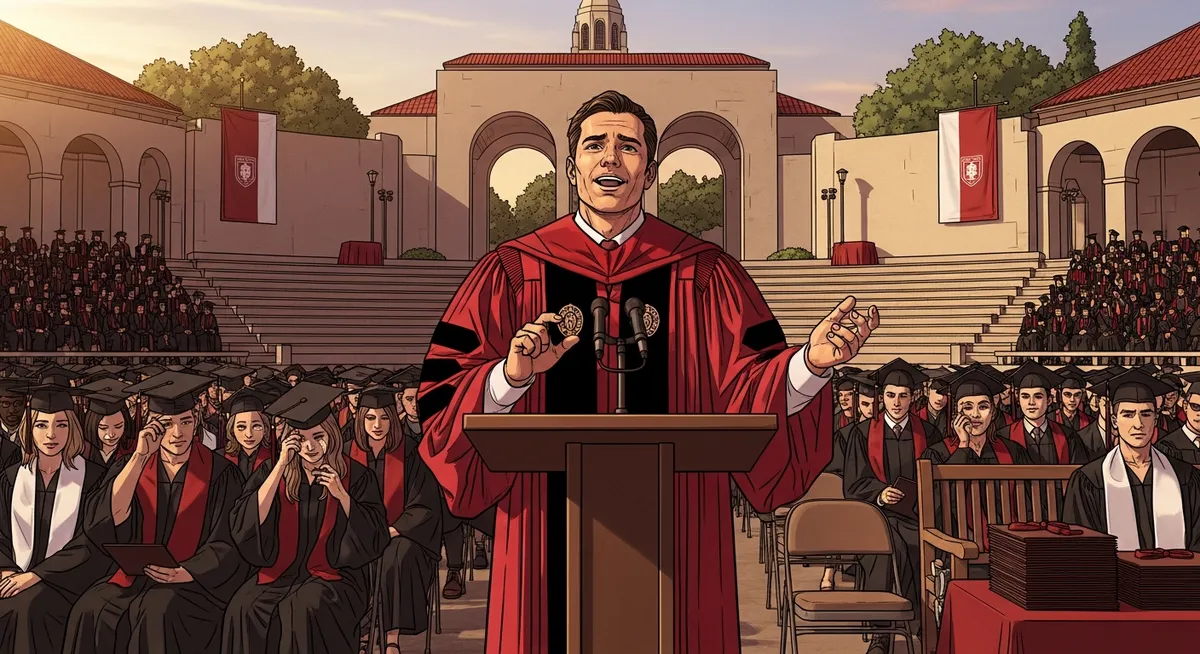
On June 12, 2005, Jobs delivered the commencement address at Stanford University. He was a year out from cancer surgery, and the brush with death gave his words an urgency that hit like a truck.
The speech — three stories from his life — covered his adoption, his firing from Apple, and his cancer diagnosis. Its conclusion became one of the most quoted passages in modern American oratory:
“Your time is limited, so don’t waste it living someone else’s life. Don’t be trapped by dogma — which is living with the results of other people’s thinking. Don’t let the noise of others’ opinions drown out your own inner voice. And most important, have the courage to follow your heart and intuition. They somehow already know what you truly want to become.”
He ended with “Stay Hungry. Stay Foolish” — borrowed from the Whole Earth Catalog, a publication that had influenced him since his hippie days.
It’s been viewed hundreds of millions of times online. It remains the most-watched commencement address in history. It’s also, if you think about it, bitterly ironic — a speech about following your gut from a man whose gut instinct about his own medical treatment may have killed him.
The Final Product Launches
Despite his declining health, Jobs kept working. He introduced the iPhone 4 in 2010 — still considered by many to be the most beautiful phone ever made, with its stainless steel band and glass sandwich design. He launched the iPad. He opened Apple Stores around the world.
He also shepherded Apple Park — a massive, ring-shaped headquarters in Cupertino that he envisioned as a fusion of technology and nature. He obsessed over every detail: the curvature of the glass, the wood in the theater, the species of trees in the park. He wouldn’t live to see it completed, but it would be built to his exact specifications. Even dying, he was micromanaging.
The Last Keynote
On June 6, 2011, Jobs made his final public appearance at Apple’s Worldwide Developers Conference, presenting iCloud. He was visibly thin — painfully, obviously thin — and anyone who looked closely could see that he was dying. But his intensity was undimmed. He stood on stage for an hour, demonstrating features and cracking jokes, performing the role of Steve Jobs one last time.
Four months later, on October 5, 2011, Steve Jobs died at his home in Palo Alto, surrounded by his family. He was 56 years old.
His last words, according to his sister Mona Simpson, were: “Oh wow. Oh wow. Oh wow.”
Even at the end, he was having one more thing to show us.
The World Reacts
Apple’s homepage went to a single black-and-white photo of Jobs with the dates 1955-2011. It stayed up for weeks. Fans left flowers, apples, and handwritten notes outside Apple Stores around the world. President Obama said Jobs was “among the greatest of American innovators.” Bill Gates — his rival, his frenemy, the man he’d screamed at and later shared his final thoughts with — said: “The world rarely sees someone who has had the profound impact Steve has had.”

🌟 Chapter 12: The Lesson — What Steve Jobs Actually Taught Us
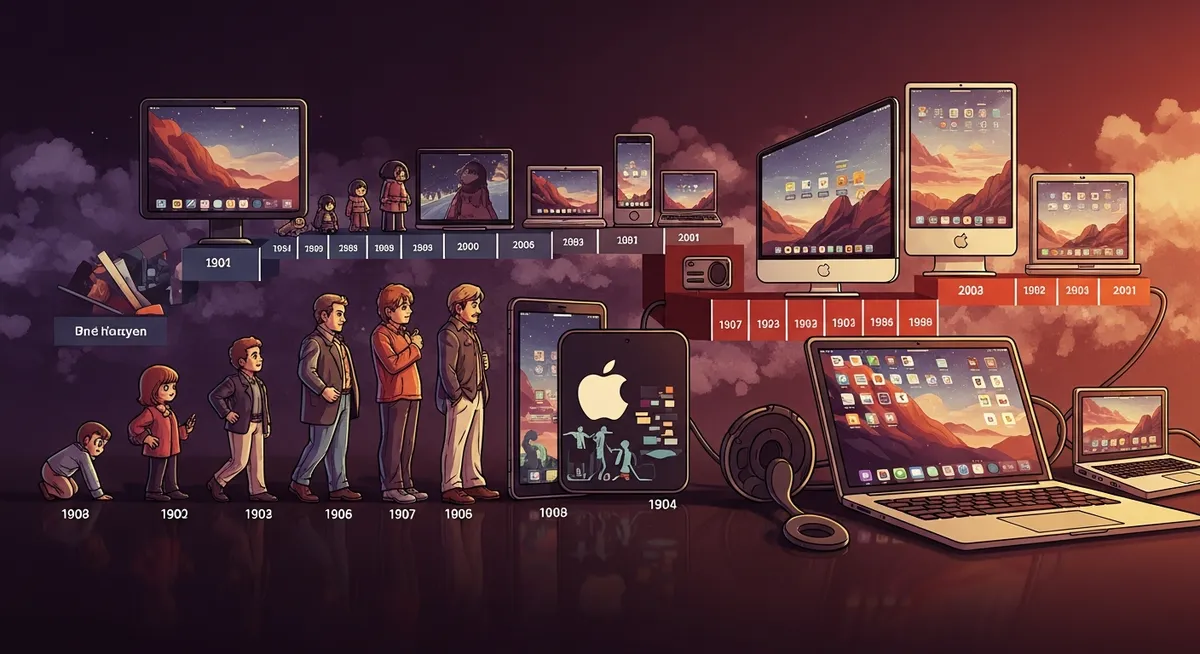
At the time of Steve Jobs’s death, Apple was the most valuable company in the world. It has stayed at or near that perch ever since, becoming the first company to hit $1 trillion, then $2 trillion, then $3 trillion in market cap. The garage in Los Altos is now a historical landmark. The turtleneck is in a museum. The man is a myth.
But Jobs’s legacy isn’t the market cap. It’s not even the products, as world-reshaping as they were.
Technology Meets Liberal Arts
At every product launch, Jobs showed a slide with a street sign where “Technology” and “Liberal Arts” intersect. This wasn’t marketing fluff. It was his core belief, the one that separated him from every other tech CEO of his era.
Jobs understood something that most technology leaders still don’t get: the point of technology is to serve human beings, and understanding human beings requires the humanities — art, literature, music, philosophy, design. The iPhone wasn’t a technical achievement that happened to be well-designed. It was a design achievement that happened to use technology. That distinction is everything, and almost nobody else in the industry has ever truly internalized it.
Simplicity as Strategy
Jobs’s product philosophy was always subtractive. The iPod had one button. The iPhone removed the keyboard. The MacBook Air removed ports. Each product was defined as much by what Jobs took away as by what he put in.
This took enormous courage. Engineers would build features for months — pour their hearts into them — and Jobs would look at the result and say “no.” Not because the feature was broken, but because it complicated the experience. He understood that every feature you add is a tax on the user’s attention. Most companies add features to justify a press release. Jobs removed features to protect the user. It’s the opposite instinct, and it’s why Apple products felt different.
The Integrated Approach
Jobs believed in controlling the entire experience — hardware, software, services, packaging, retail, all designed together by people who talked to each other. This “walled garden” approach got criticized as controlling, arrogant, and anti-competitive. It also produced a level of quality and coherence that no other technology company has consistently matched, before or since.
When you open an Apple product, the experience feels seamless — from the box to the setup to the daily use. That’s not magic. It’s the result of a single company obsessively controlling every piece of the puzzle, guided by a singular vision of how things should work. Everybody else ships a box of compromises. Apple ships an experience. The difference is a man who screamed at people about corner radii until they got it right.
What Was Lost
Let’s be honest about this part. Jobs was not a role model in every respect, and some of the hagiography that’s sprung up since his death does him — and the people he hurt — a disservice. According to numerous firsthand accounts documented in multiple biographies, he was cruel to employees in ways that would get a normal person fired and possibly sued. He denied his own daughter for years while, by multiple accounts, she lived in poverty. He parked in handicapped spots like the rules were someone else’s problem. He delayed cancer treatment because he trusted alternative remedies over oncologists. And according to Wozniak, he shortchanged his closest collaborator early in their partnership.
The lesson of Steve Jobs is emphatically not that you have to be a monster to build great things. Plenty of his contemporaries achieved remarkable things without making people cry in meetings or abandoning their children. The lesson is simpler and more useful: taste matters. Design matters. Caring about the details nobody else sees matters. And the courage to say “no” to everything that isn’t essential is the most powerful creative act there is.
Or, as Jobs himself put it: “Design is not just what it looks like and feels like. Design is how it works.”
He was a genius, and he was a jerk, and he was right about the things that mattered most. The world is full of devices that prove it.
📅 Timeline
| Year | Age | Event |
|---|---|---|
| 1955 | 0 | Born in San Francisco; adopted by Paul and Clara Jobs |
| 1969 | 14 | Meets Steve Wozniak through a mutual friend |
| 1971 | 16 | Builds and sells “blue boxes” with Wozniak |
| 1972 | 17 | Enrolls at Reed College; drops out after one semester |
| 1974 | 19 | Travels to India; works at Atari |
| 1976 | 21 | Co-founds Apple Computer with Wozniak and Wayne |
| 1977 | 22 | Apple II released; becomes a massive commercial hit |
| 1979 | 24 | Visits Xerox PARC; sees the graphical user interface |
| 1980 | 25 | Apple IPO makes Jobs worth $250 million |
| 1984 | 28 | Macintosh launched with “1984” Super Bowl ad |
| 1985 | 30 | Forced out of Apple; founds NeXT Computer |
| 1986 | 31 | Buys Pixar from Lucasfilm for $10 million |
| 1991 | 36 | Marries Laurene Powell at Yosemite |
| 1995 | 40 | Toy Story released; Pixar IPO |
| 1997 | 41 | Returns to Apple as interim CEO |
| 1998 | 43 | iMac released; “Think Different” campaign launches |
| 2001 | 46 | iPod launched; first Apple Store opens |
| 2003 | 47 | iTunes Music Store launches; diagnosed with cancer |
| 2004 | 49 | Has cancer surgery after nine-month delay |
| 2005 | 50 | Delivers Stanford commencement address |
| 2006 | 51 | Disney acquires Pixar for $7.4 billion |
| 2007 | 52 | iPhone launched — changes everything |
| 2008 | 53 | App Store opens; MacBook Air introduced |
| 2010 | 54 | iPad launched; iPhone 4 released |
| 2011 | 56 | Dies on October 5; Apple is the world’s most valuable company |
| 2018 | — | Apple becomes first $1 trillion company |
| 2023 | — | Apple reaches $3 trillion market capitalization |
💡 Key Insights
- ▸ Jobs didn't ask customers what they wanted — he showed them what they didn't know they needed. The iPhone had no market research. It had vision. The lesson: sometimes the customer doesn't know what's possible until you show them.
- ▸ Getting fired from Apple was the best thing that happened to Jobs. NeXT failed commercially, but it gave him the operating system that became macOS. Pixar gave him patience and storytelling. Failure taught him humility, and humility made him dangerous.
- ▸ Jobs proved that design is not decoration — it's function. He insisted the inside of computers look beautiful even though no customer would see them. That obsession with invisible quality is what separates good companies from great ones.
- ▸ The intersection of technology and liberal arts wasn't just a tagline — it was Jobs's entire philosophy. The calligraphy class he audited after dropping out of college directly influenced the Mac's beautiful typography. Curiosity in unrelated fields creates unexpected competitive advantages.
- ▸ Jobs's product strategy was addition by subtraction. When he returned to Apple, he killed 70% of the product line. The iPod had one button. The iPhone removed the keyboard. His genius wasn't adding features — it was having the courage to remove them.