Stewart Resnick: The Brand-and-Water Machine Behind The Wonderful Company
Stewart Resnick turned agricultural commodities into branded consumer products, building scale through orchards, water, processing, and relentless marketing.
View all stories about this mogul
Stewart Resnick did not become one of America’s most powerful agricultural owners by treating fruit as a commodity. He built a machine that controlled the crop, the processing, the package, the story, and—in California’s dry interior—much of the risk beneath them all.
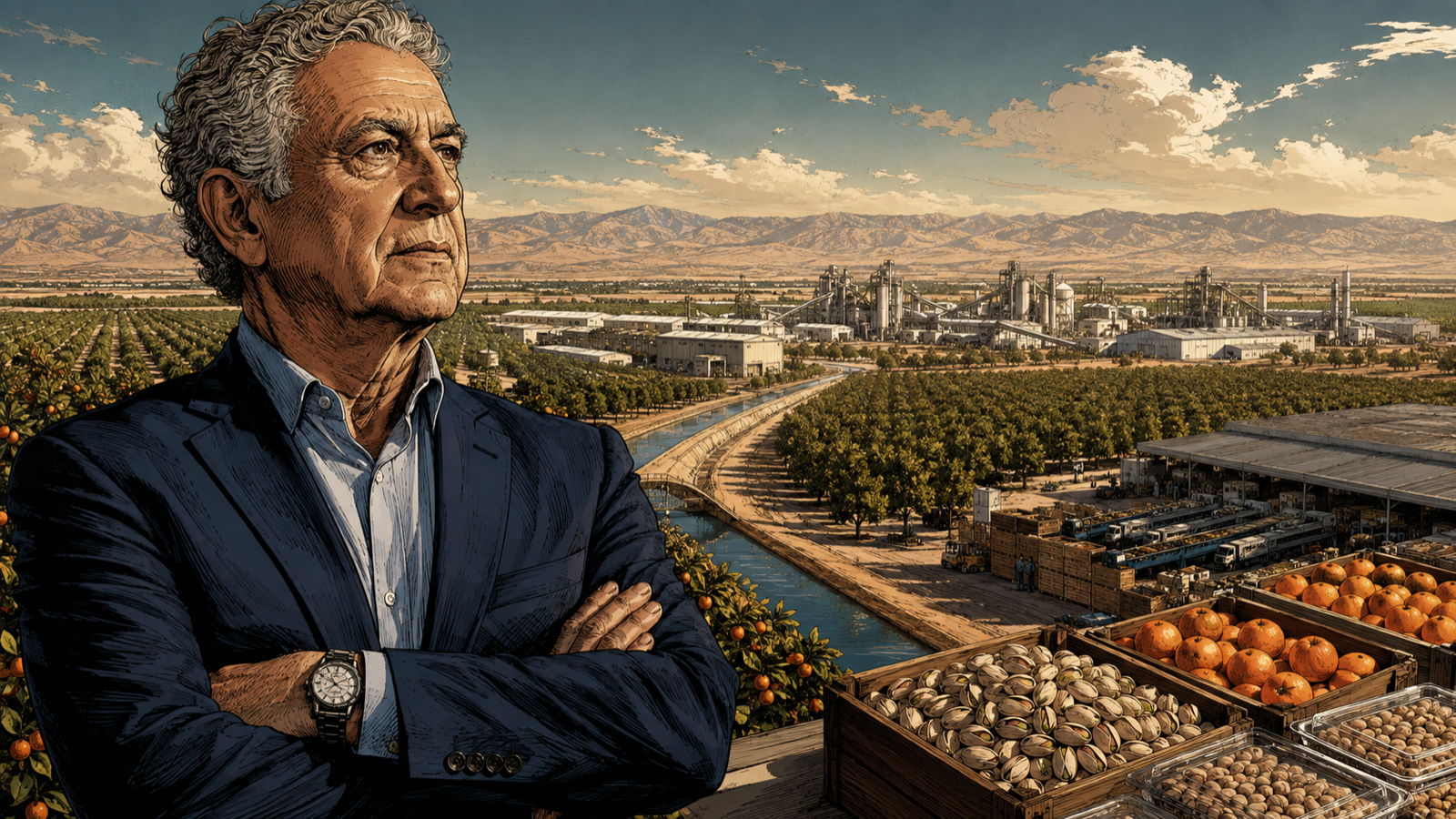
The Wonderful Company, owned by Stewart and Lynda Resnick, links pistachios, almonds, citrus, pomegranates, flowers, and Fiji Water under a private corporate umbrella. Its best-known brands made farm output feel like consumer products: Wonderful Pistachios became entertainment, POM Wonderful became a wellness object, and mandarins became Wonderful Halos.
The strategy created pricing power in categories that traditionally depended on harvest volume and wholesale markets. It also made the company a central character in debates about water, labor, environmental stress, and private influence over public resources.
How did commodity crops become consumer brands?
Resnick’s early business career included a janitorial-services company and the Franklin Mint collectibles business. The turning point was not one legendary invention. It was the acquisition and combination of assets that could be marketed more effectively together.
Agriculture usually hands power to distributors and retailers. A grower sells what the season produces, often with limited ability to distinguish one nut or orange from another. The Resnicks attacked that weakness by investing in recognizable names, consistent packaging, national advertising, and processing scale.
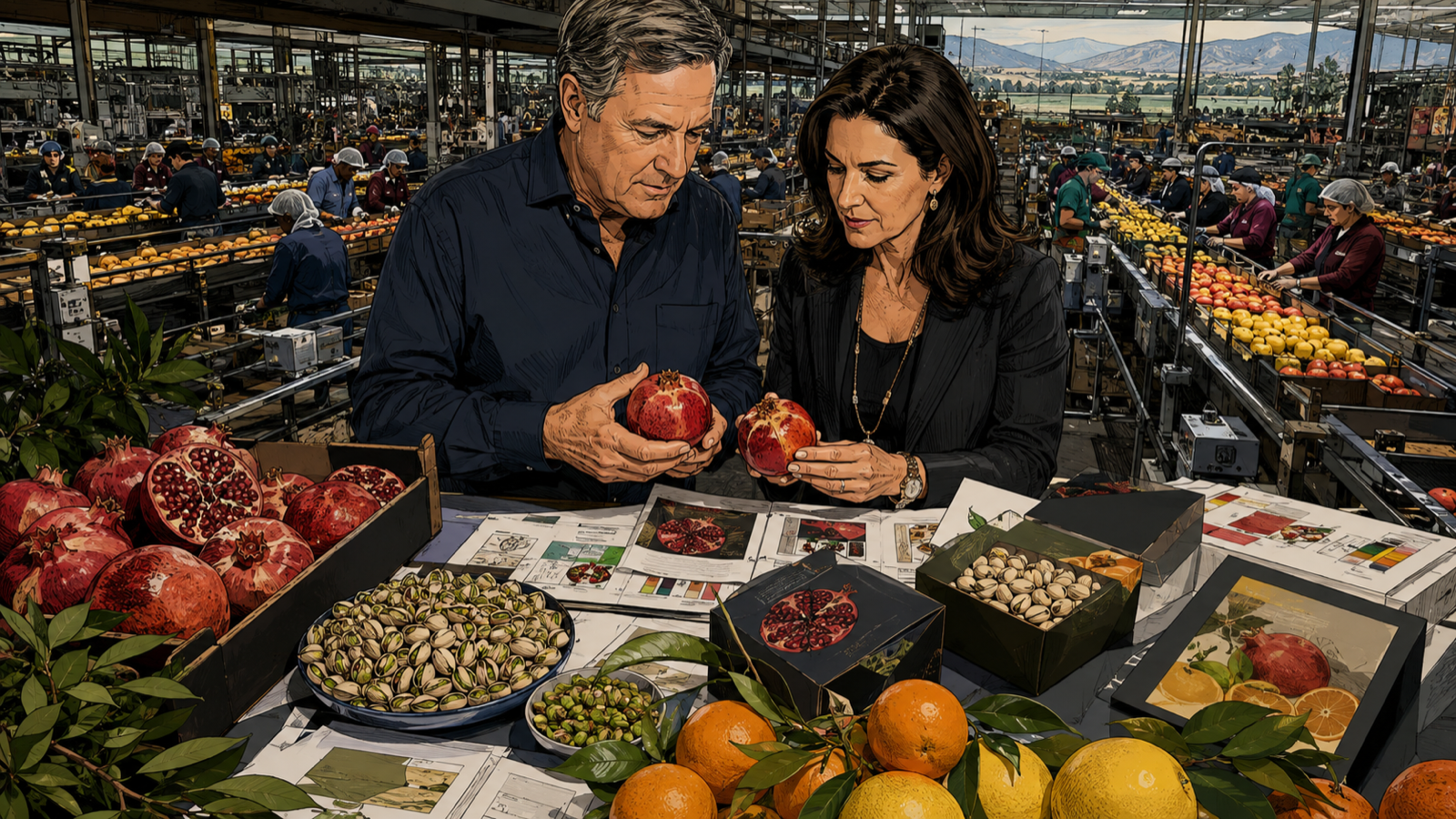
POM Wonderful packaged pomegranate juice in a distinctive rounded bottle and surrounded an unfamiliar fruit with a premium health narrative. Wonderful Pistachios used celebrities and the “Get Crackin’” campaign to make the shell itself part of the product’s personality. Halos made easy-peel mandarins a child-friendly snack brand rather than a generic produce-bin purchase.
The business logic was powerful. A trusted label could pull demand through supermarkets, while ownership of orchards and processing facilities could protect supply and quality. Advertising was no longer an expense attached to one harvest; it built an asset that could support repeated seasons.
But health-positioned branding has limits. POM became involved in a long dispute with the US Federal Trade Commission over the substantiation of disease-related advertising claims. The lesson was not that food cannot be marketed around wellness. It was that premium stories require evidence proportionate to their specificity.
Why did vertical integration become the moat?
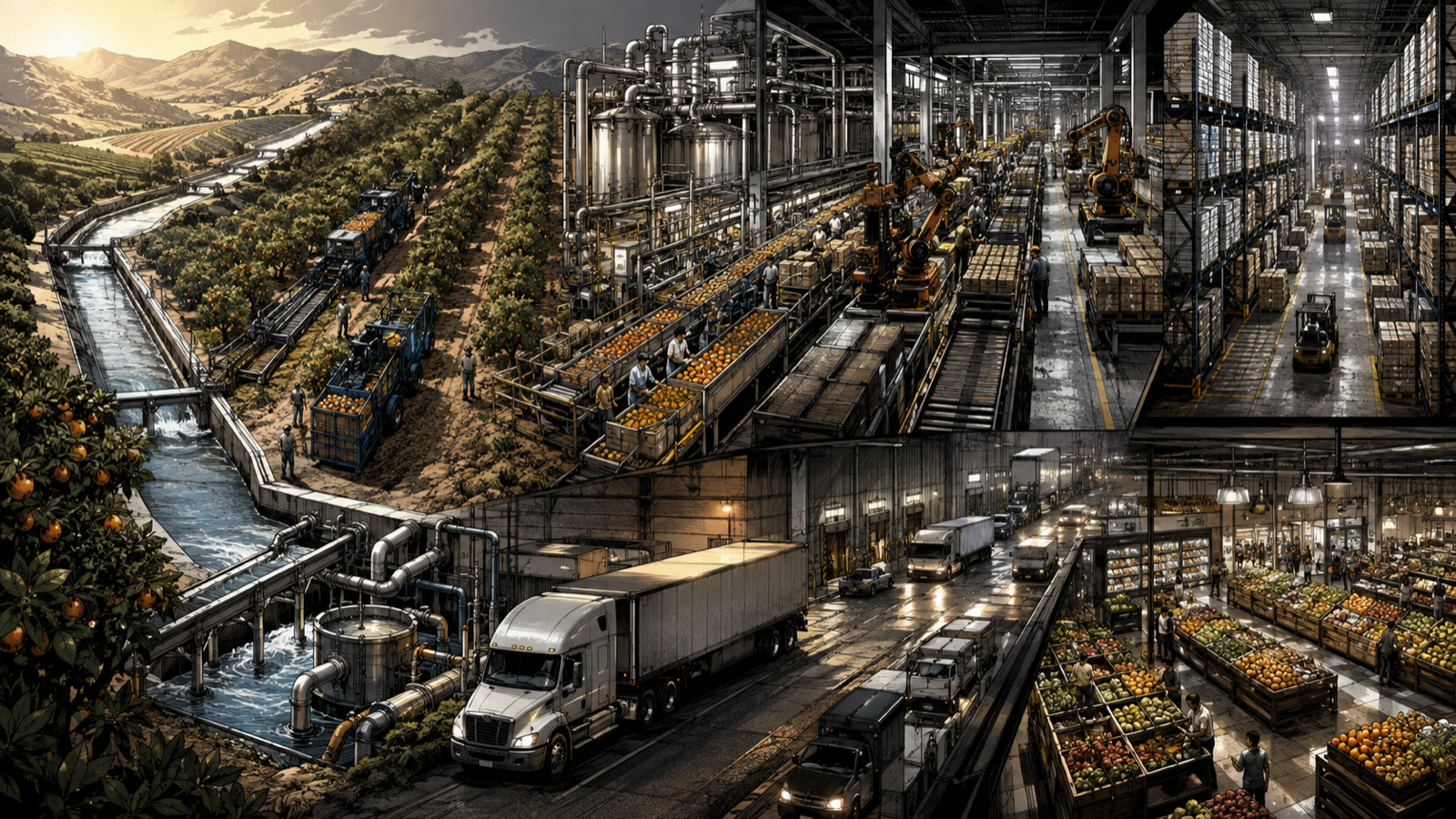
Wonderful’s advantage extends beyond logos. Permanent crops such as pistachios and citrus require years of investment before they reach mature production. Processing plants, cold chains, packing lines, and retailer relationships add another layer of capital.
Owning more of that chain creates coordination. The company can choose varieties, manage harvesting, standardize appearance, route output across brands, and time promotions around inventory. A processor with enormous throughput also gains cost and quality advantages that smaller farms may struggle to match.
This is a classic scale flywheel. More acres justify larger infrastructure; larger infrastructure improves unit economics and reliability; reliability supports brand promises; stronger brands make more acreage valuable. Private ownership gives the Resnicks patience to invest across long agricultural cycles without explaining every seasonal decision to public shareholders.
The same integration concentrates risk. Trees cannot be moved when a region loses water. A disease, drought, heat wave, or regulatory change can affect years of investment. A brand that promises abundance makes shortages and resource conflict more visible.
Geographic diversification and crop variety can soften individual shocks, but California remains central to the system. The empire’s durability therefore depends on agronomy and infrastructure as much as marketing.
Why is water the company’s strategic asset—and controversy?
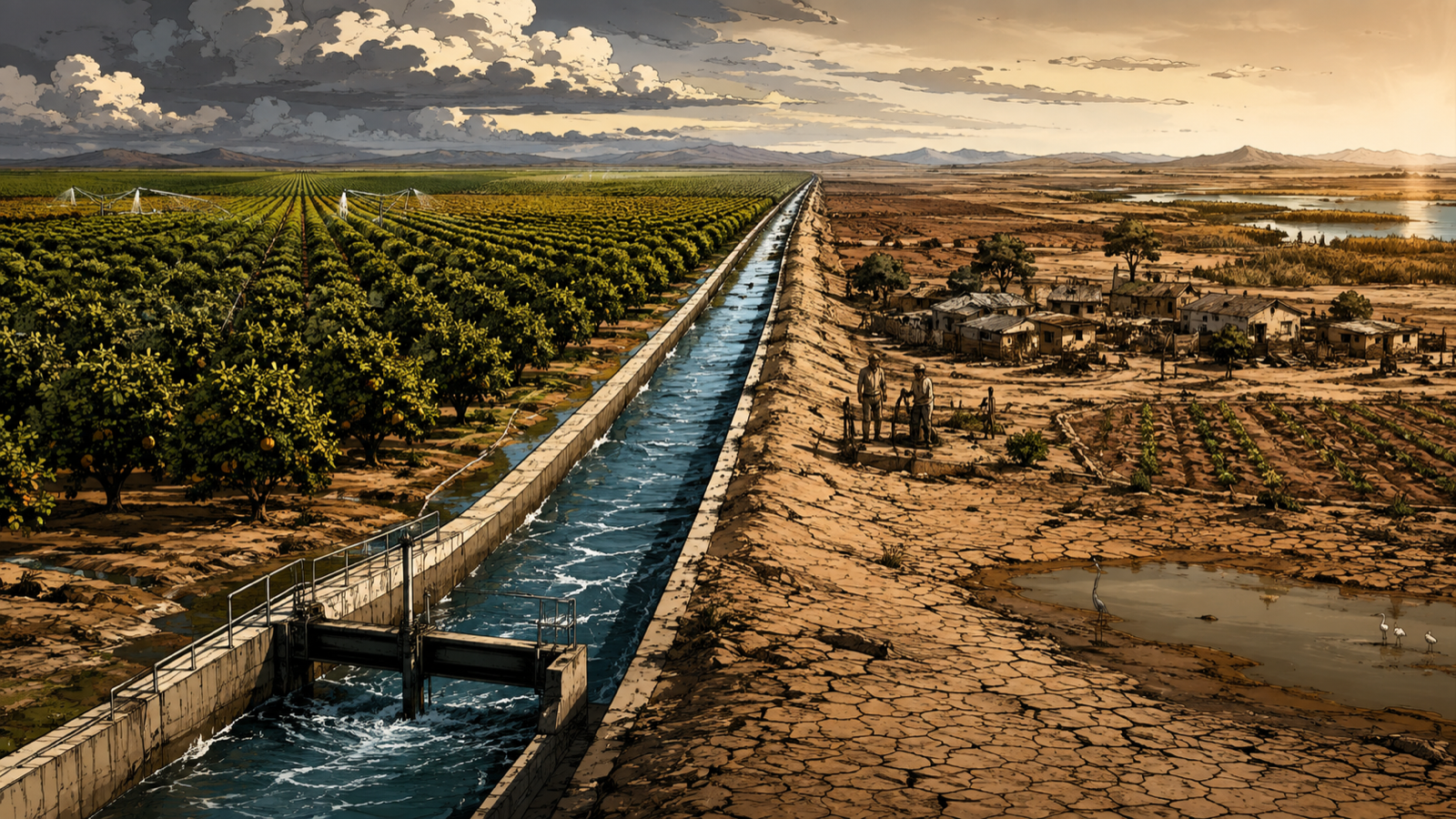
Agricultural power in California is inseparable from water. The state’s system connects reservoirs, aqueducts, irrigation districts, groundwater, contracts, and environmental rules. Rights and delivery expectations vary by location and hydrological conditions; there is no single simple ownership number that explains access.
Wonderful’s scale and participation in the Kern Water Bank have made the Resnicks symbols in public arguments over who benefits from the state’s engineered water network. Critics point to the tension between water-intensive permanent crops and ecosystems, small communities, and other users during drought. The company emphasizes efficiency investments, economic activity, and the complexity of legal allocations.
The governance issue is larger than one family. Water infrastructure turns a public natural resource into a portfolio of contracts, storage capacity, political decisions, and physical delivery. Sophisticated operators can plan around that structure better than small ones. Their competence can increase output while also widening power differences.
For Wonderful, efficient irrigation is not only environmental positioning; it is asset protection. Drip systems, soil monitoring, crop choices, recycling, and groundwater management affect the survival of orchards that took years to establish. Yet efficiency per unit does not automatically reduce total consumption when acreage expands.
Trust requires clearer reporting on withdrawals, recharge, community impacts, and drought scenarios. A private company can legally protect commercial details, but opacity increases suspicion when its core input is scarce and shared.
What is the real lesson of the Wonderful empire?
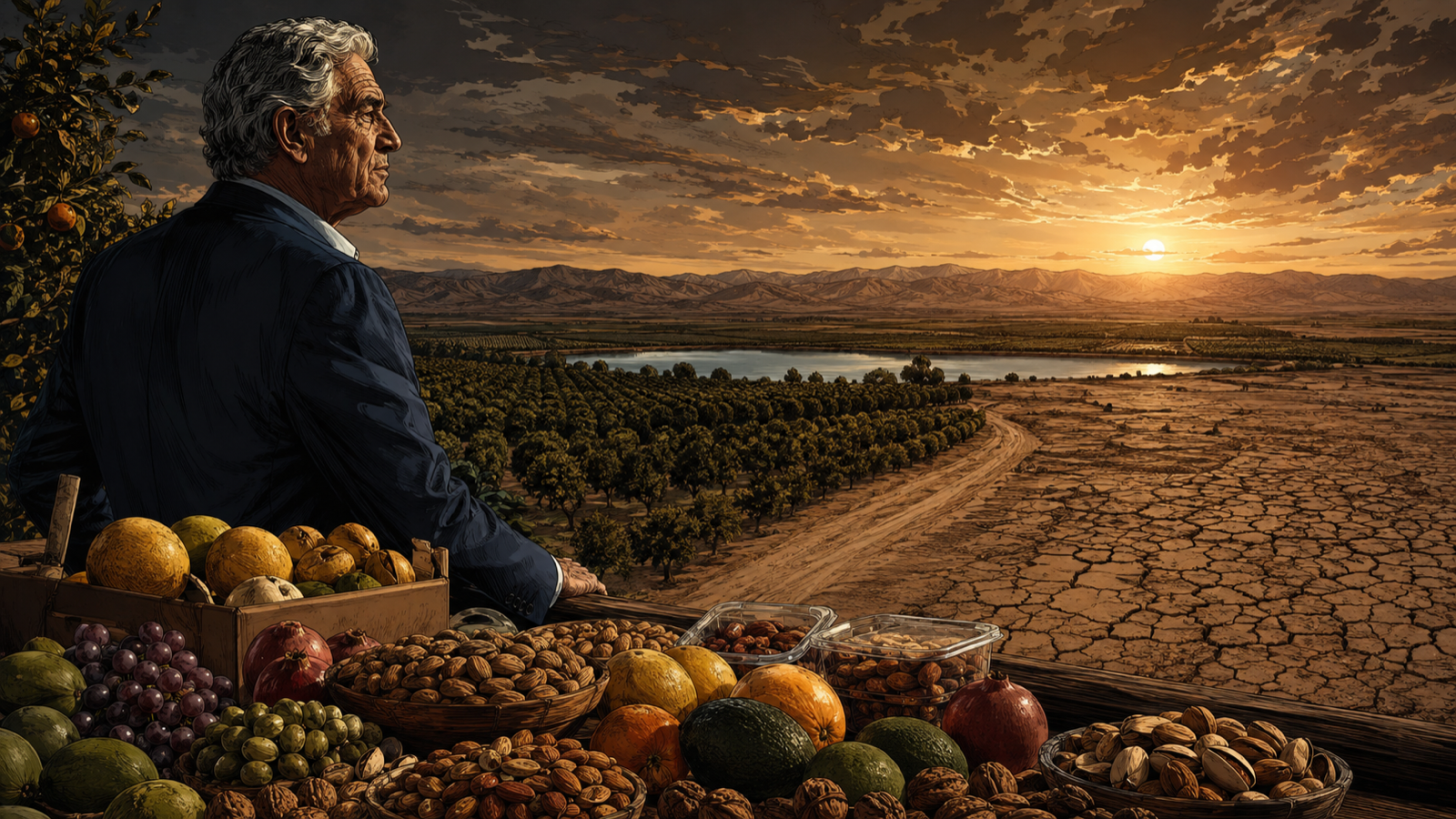
The Resnicks proved that agriculture can capture consumer-brand economics. They transformed sensory consistency, packaging, and cultural storytelling into demand for crops that once competed mostly on grade and price.
They also demonstrated the bargaining power of controlling complements. Orchards alone are exposed to processors. Processing alone is exposed to supply. Brands alone are exposed to manufacturers. Combining them changes negotiations with retailers, advertisers, and competitors.
The trade-off is responsibility. The more completely a company controls a chain, the harder it is to blame the chain when labor conditions, environmental effects, or claims go wrong. Wonderful’s philanthropy and community programs can create real value, but they do not substitute for accountable operating practices.
The empire’s next test is climate adaptation. Hotter conditions, water volatility, regulation, and scrutiny of health marketing will challenge the model. Its capabilities—capital, data, infrastructure, and direct consumer demand—are formidable. So is its exposure.
The real lesson is that a commodity becomes an empire when an operator controls both supply and meaning. Stewart Resnick built that control with unusual completeness. The same design that created the moat ensures that every question about the land and water behind the brand lands at his door.
💡 Key Insights
- ▸ Branding can turn a low-differentiation crop into a premium consumer habit.
- ▸ Vertical integration creates control but concentrates operational and climate risk.
- ▸ Water access is both a strategic asset and a public-accountability burden.
- ▸ A compelling health narrative still depends on transparent claims and resource use.