Tony Tan Caktiong and the Jollibee Global System
From an ice-cream shop to a multinational restaurant group, Tony Tan Caktiong built Jollibee by localizing taste, standardizing operations, and buying growth.
View all stories about this mogul
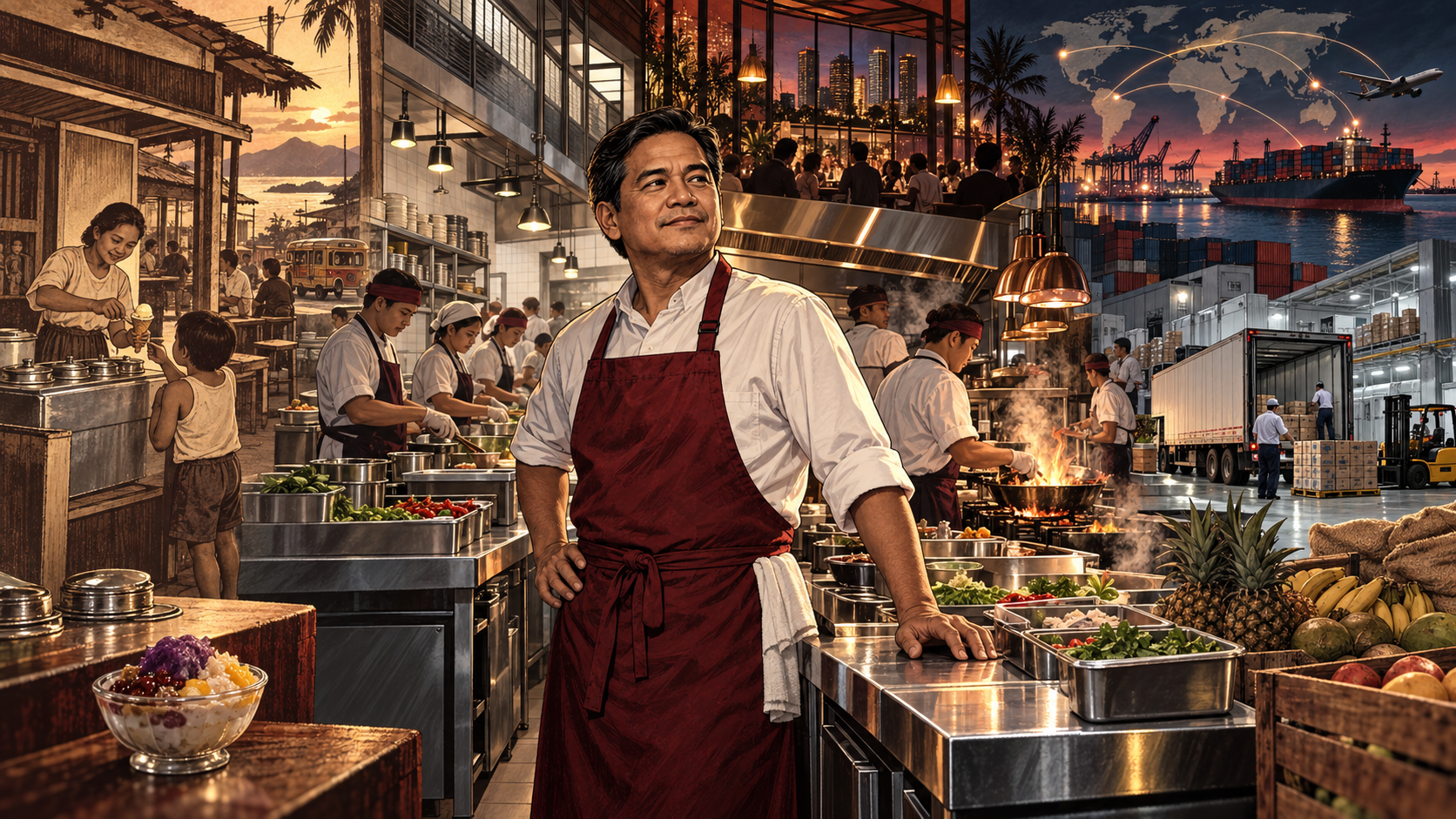
Tony Tan Caktiong’s first advantage was not fried chicken. It was attention. In 1975 his family opened an ice-cream business in Quezon City. Customers kept asking for hot meals, and the founders followed the demand. That willingness to change the product while preserving an operating discipline became the central habit of Jollibee Foods Corporation.
Chapter One: When the Side Menu Became the Business
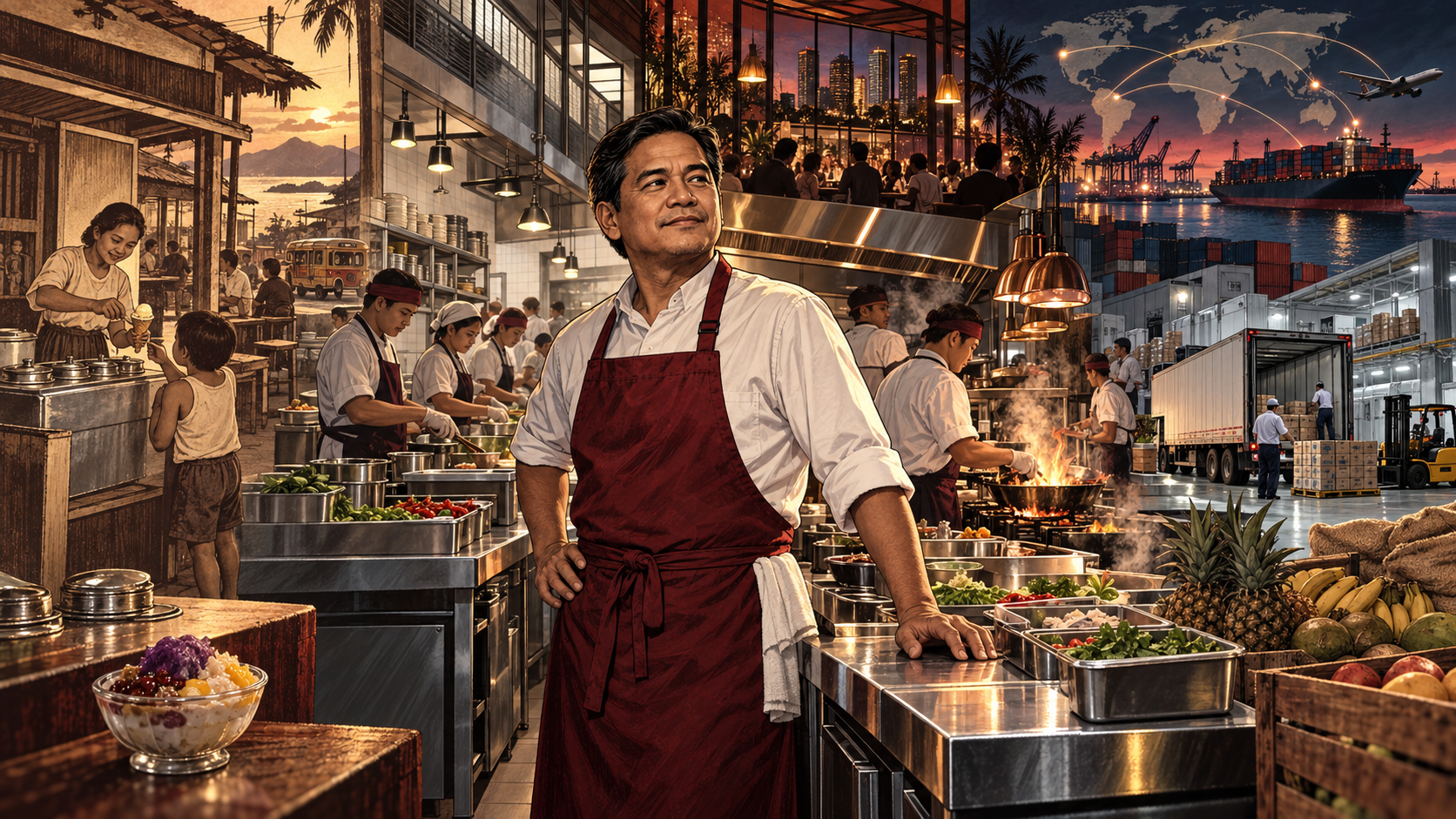
The Tan family entered food service with Magnolia ice-cream franchises. Burgers, spaghetti, and other meals initially complemented dessert, but sales revealed where the larger opportunity sat. By 1978 the business had become Jollibee, with a cheerful bee mascot and a menu calibrated to Filipino preferences.
The timing was formidable. McDonald’s entered the Philippines in 1981 with global capital, systems, and brand power. Jollibee did not respond by becoming a cheaper copy. It combined standardized fast-food operations with sweeter spaghetti, seasoned burgers, fried chicken, rice meals, and an emotional brand centered on family and home.
Tan Caktiong understood that local taste was not a temporary defense until consumers “graduated” to an American norm. It was an asset. Jollibee could learn faster from Filipino customers, test products within an existing cultural vocabulary, and turn familiarity into repeat traffic.
The founder also built a family-controlled public company rather than a collection of informal outlets. Jollibee listed in the Philippines in 1993, gaining capital and disclosure obligations. That structure helped finance expansion while allowing the family to retain strategic influence.
The origin story is often packaged as a charming pivot from ice cream to chicken. The deeper lesson is empirical: the family trusted observed demand over the original franchise concept, then invested in supply, training, and brand to make the new category scalable.
Chapter Two: Localization at the Front, Standardization Behind It
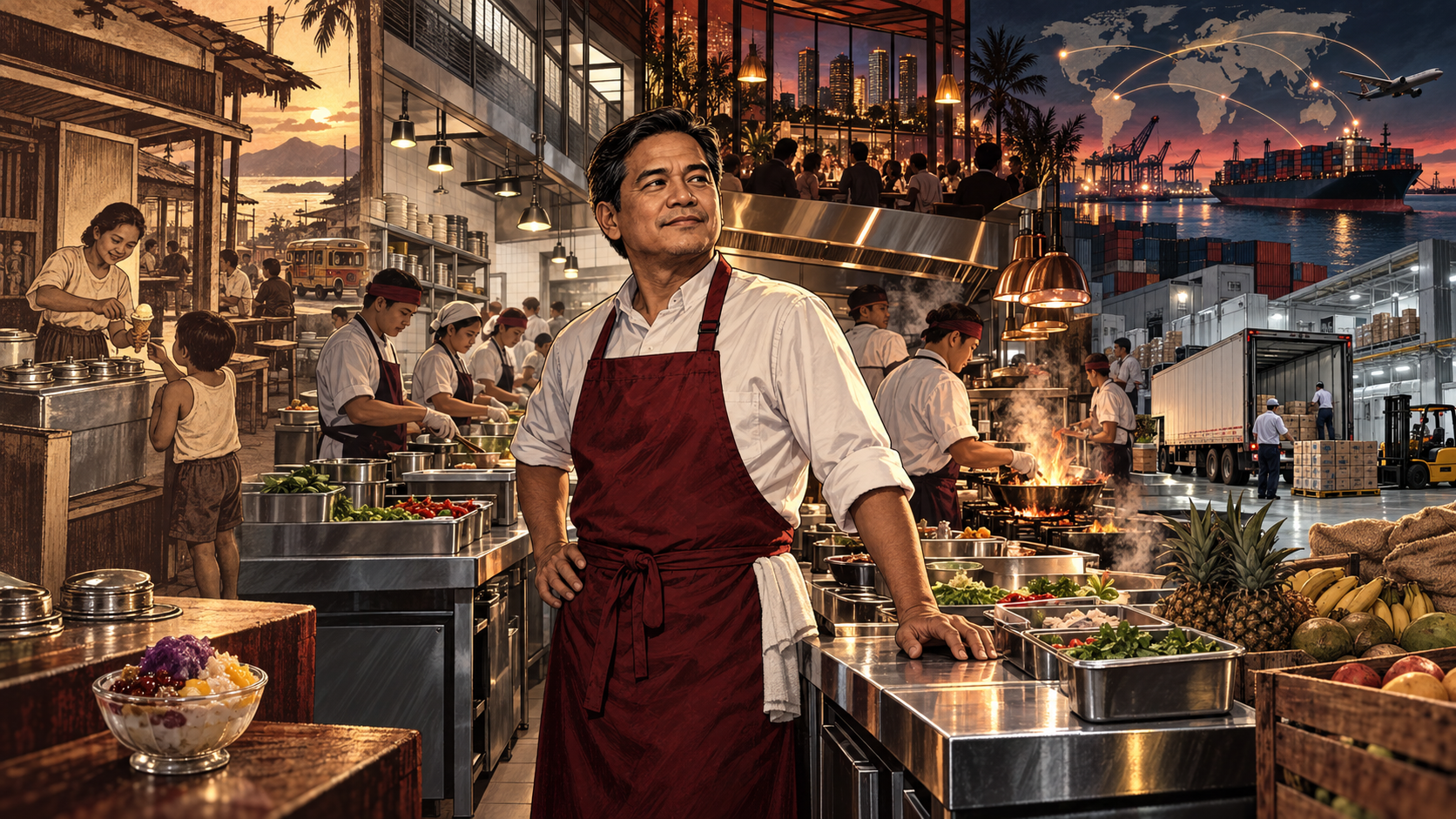
Jollibee’s moat sits between two apparent opposites. The customer sees products tuned to local habits. Behind the counter, the company needs repeatable food safety, procurement, kitchen timing, store design, labor scheduling, and franchise controls. Localization creates affection; standardization creates economics.
The group extended that system through multiple brands. It acquired or developed concepts including Chowking, Greenwich, Red Ribbon, Mang Inasal, and international assets. Each brand targets a different occasion or cuisine, while the parent seeks advantages in property selection, commissaries, purchasing, digital ordering, and management talent.
Overseas expansion initially followed the Filipino diaspora. A Jollibee store in the United States, Middle East, or elsewhere could begin with customers who already understood the food and emotional story. That base reduced the cost of introducing an unfamiliar brand, while queues and social media created curiosity among wider audiences.
Acquisition became a second growth engine. Coffee, bakery, and restaurant investments offered entry into markets where building Jollibee from scratch would be slow. The strategy can diversify revenue and import capabilities, but only when the group resists flattening every brand into one template.
The system’s financial logic depends on store-level discipline. A popular opening can hide weak unit economics. Rent, labor, food inflation, delivery commissions, and capital spending determine returns. Jollibee’s annual reports and Philippine Stock Exchange disclosures are therefore more revealing than viral opening-day lines.
Chapter Three: The Empire’s Friction
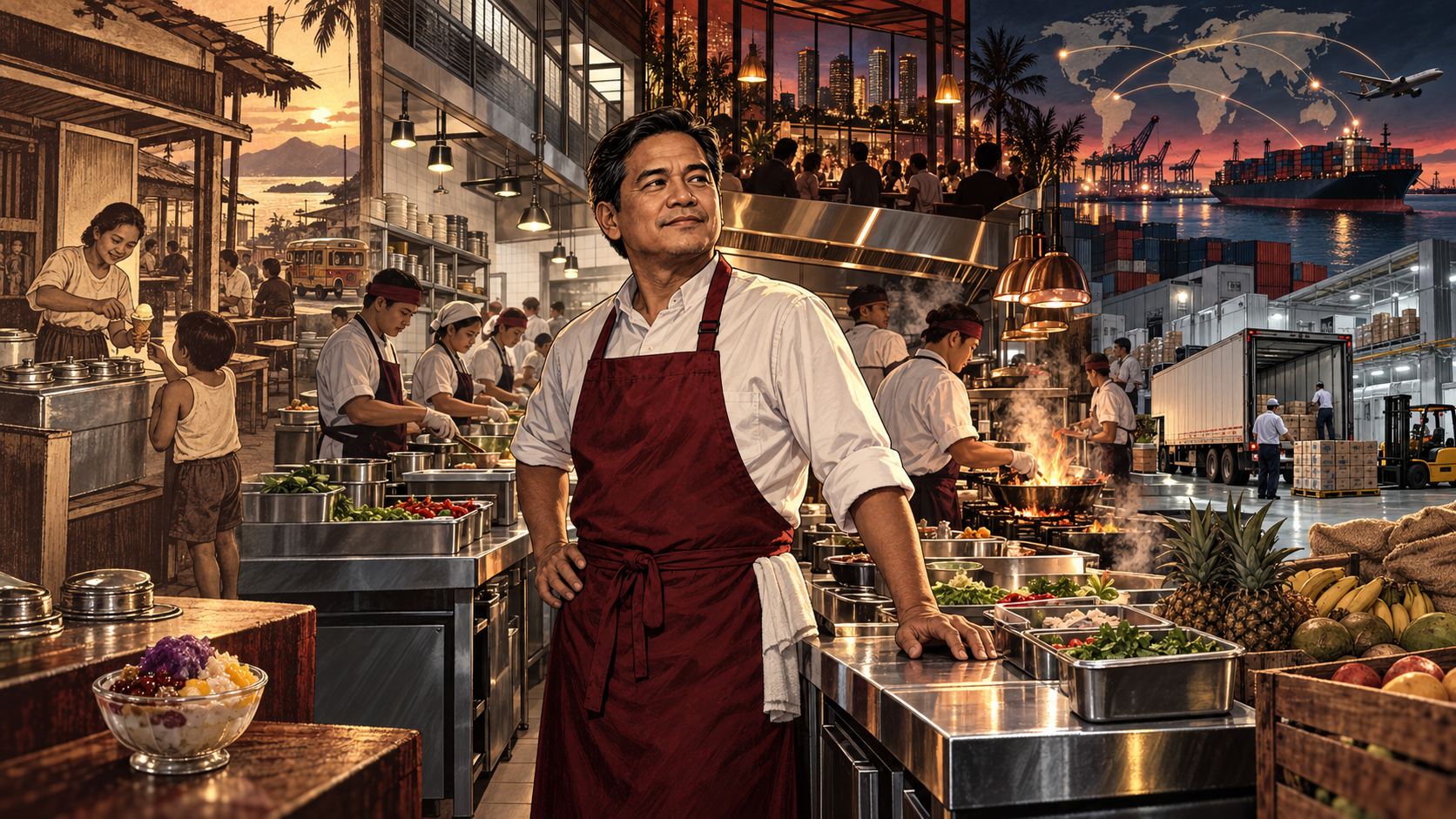
Restaurant roll-ups fail when headquarters overestimates transferable expertise. A burger-and-chicken system does not automatically know how to run a specialty-coffee brand or a bakery in another regulatory market. Different formats require different real estate, throughput, customer frequency, and supply chains.
Jollibee has experienced the cost of difficult overseas bets and underperforming stores. Management has closed locations, restructured businesses, and absorbed integration expenses. Those actions can improve a portfolio, but repeated “one-time” charges deserve scrutiny because they may reveal a pattern of optimistic acquisition assumptions.
Food inflation is another structural risk. Chicken, cooking oil, wheat, sugar, packaging, energy, and wages can rise at different speeds across countries. Passing every increase to customers can damage the affordability that made the brands mass-market institutions. Absorbing the cost compresses margins.
Food safety and labor standards carry asymmetric consequences. One incident can travel globally through social media faster than a traditional response process. A franchise-heavy system must enforce standards across operators without assuming a contract guarantees behavior.
Family control is both strength and governance question. Long-term ownership can protect investment from quarterly pressure and preserve culture. It can also concentrate succession decisions and reduce the corrective force of outside shareholders. The relevant safeguard is transparent governance, capable independent directors, and disclosure that lets investors separate founder confidence from evidence.
Chapter Four: A Local Champion That Learned to Travel
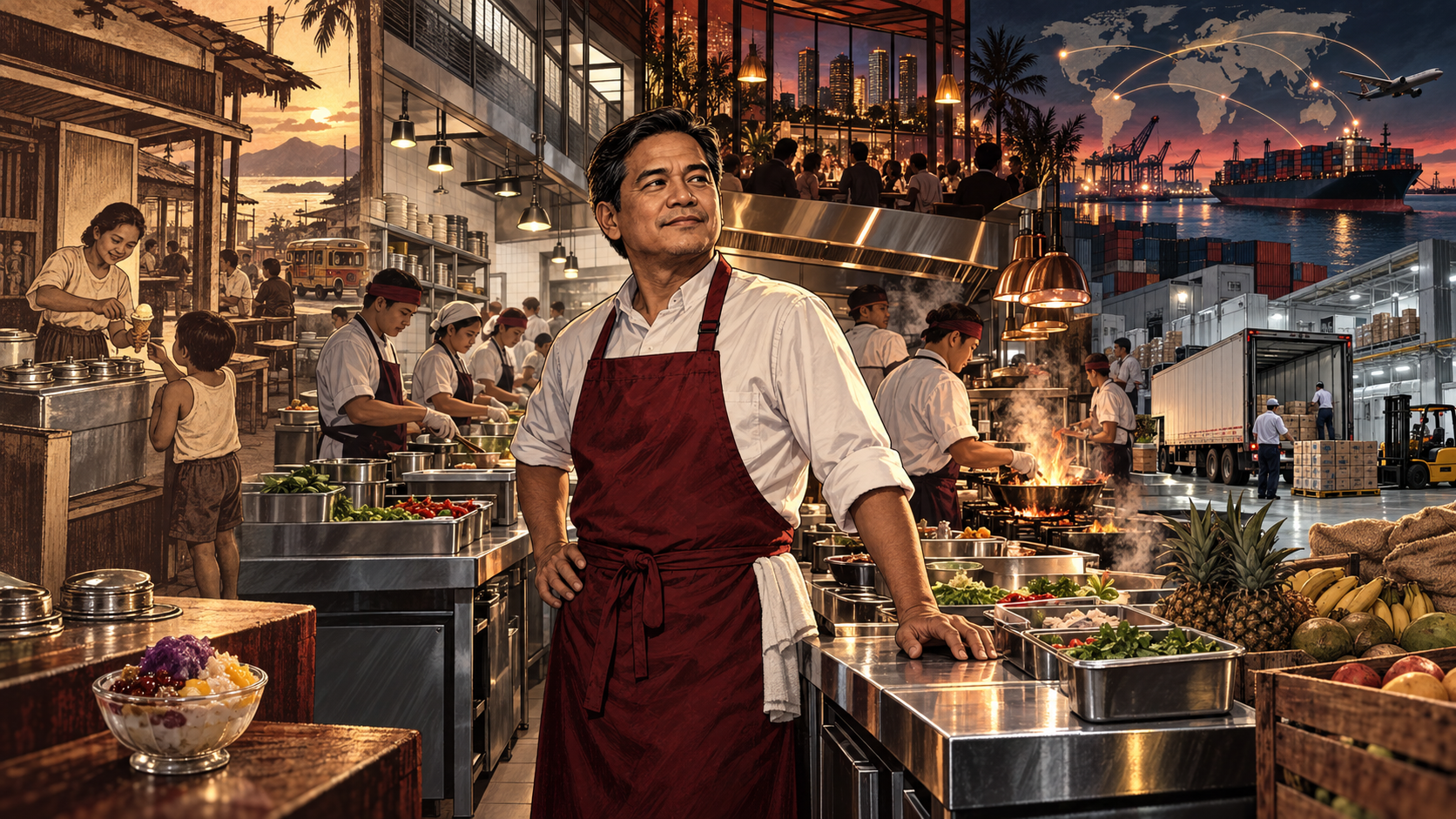
Tan Caktiong’s defining contribution was not discovering an exotic recipe. It was building an organization that treated Filipino preference as a scalable source of advantage. Jollibee survived a global competitor by being more local at the front end and increasingly systematic behind it.
The multinational portfolio tests whether that formula can travel. Diaspora demand provides a beachhead, acquisitions provide speed, and shared infrastructure can create scale. Yet every new brand makes the company harder to manage. Complexity grows faster than store count when formats, countries, and consumer occasions differ.
The balanced verdict is that Jollibee is a genuine operating empire, not merely a beloved mascot. It has public-market discipline, institutional supply capabilities, and brands with deep emotional equity. Its risks—acquisition integration, input inflation, franchise control, and succession—are also those of a mature multinational, not a simple founder story.
Tan Caktiong proved that a company from an emerging market could defend its home territory and then export its confidence. The next generation must prove something harder: that affection can coexist with portfolio rigor. The bee opened the door. Capital allocation and operational consistency will decide how far the group flies.