Yvon Chouinard Gave Patagonia Away While His Family Kept a Say
Yvon Chouinard transferred Patagonia’s ownership in 2022, directing surplus profits toward environmental work while preserving a role for his family in its governance.
View all stories about this mogul
On September 14, 2022, Patagonia announced that the Chouinard family had transferred its entire ownership of the outdoor business to two entities. One received 98% of the stock without voting rights. The other received the remaining 2% and every vote. Yvon Chouinard had given away his financial ownership while helping establish a structure through which his family would continue influencing the business. Patagonia’s announcement set out both parts of the arrangement.
The distinction matters. This was neither a sale followed by a donation nor a conversion of the clothing business into a charity. It was a succession plan that separated most of the financial interest from corporate control. To understand why Chouinard chose it, the useful starting point is an earlier decision: persuading climbers to stop using the product on which his equipment business depended.
The steel spikes that scarred the rock
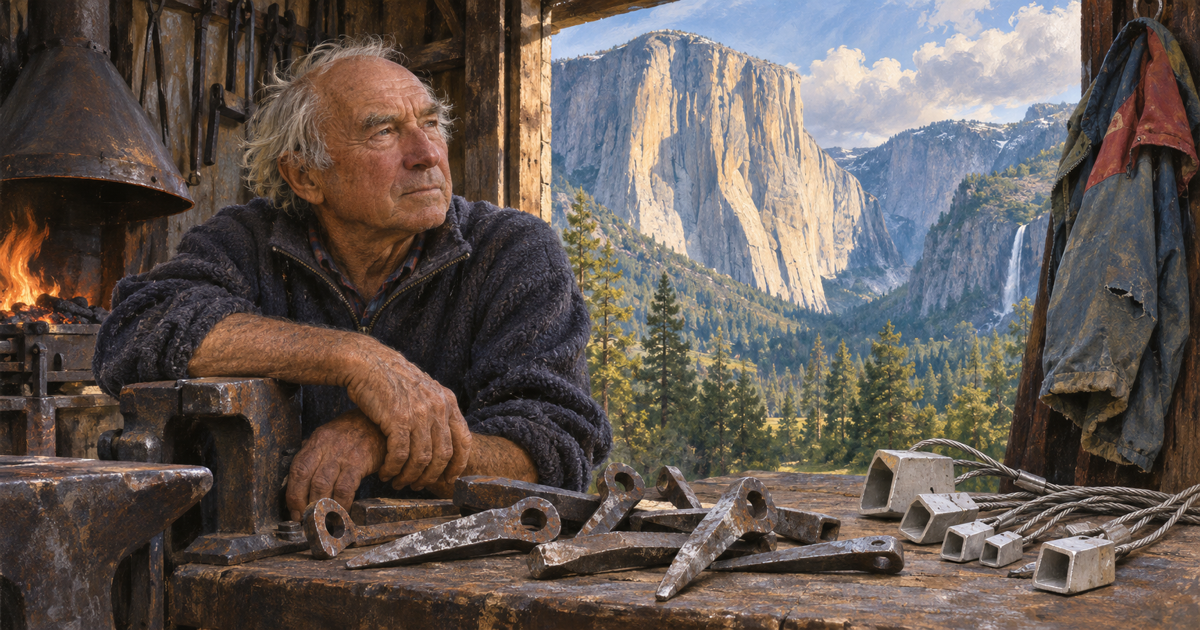
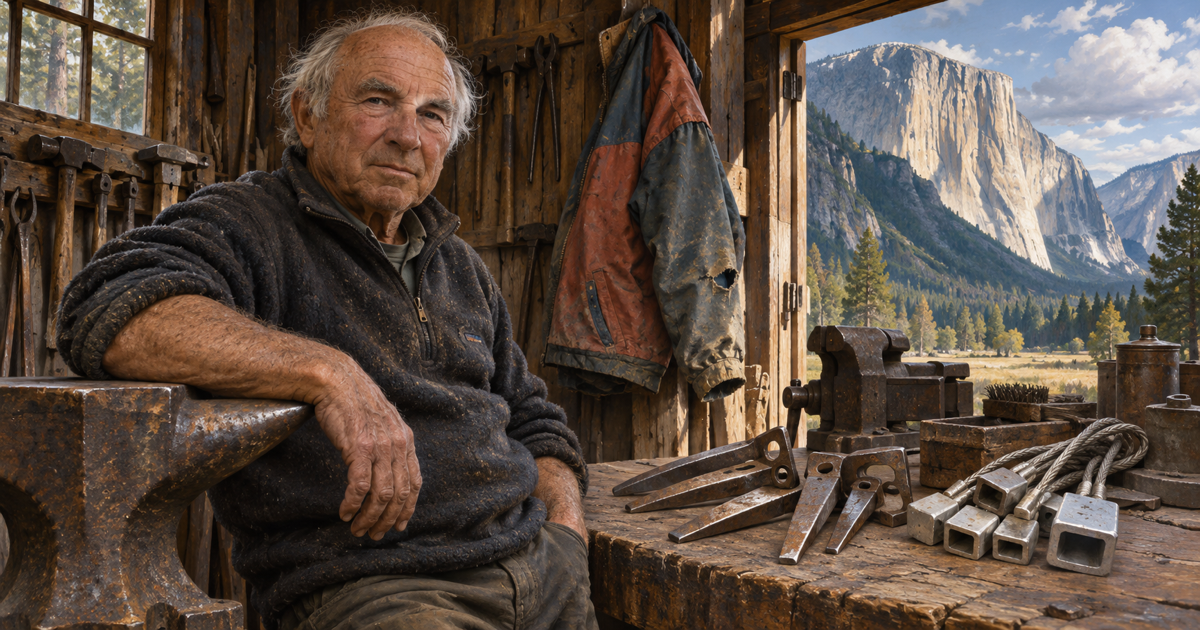
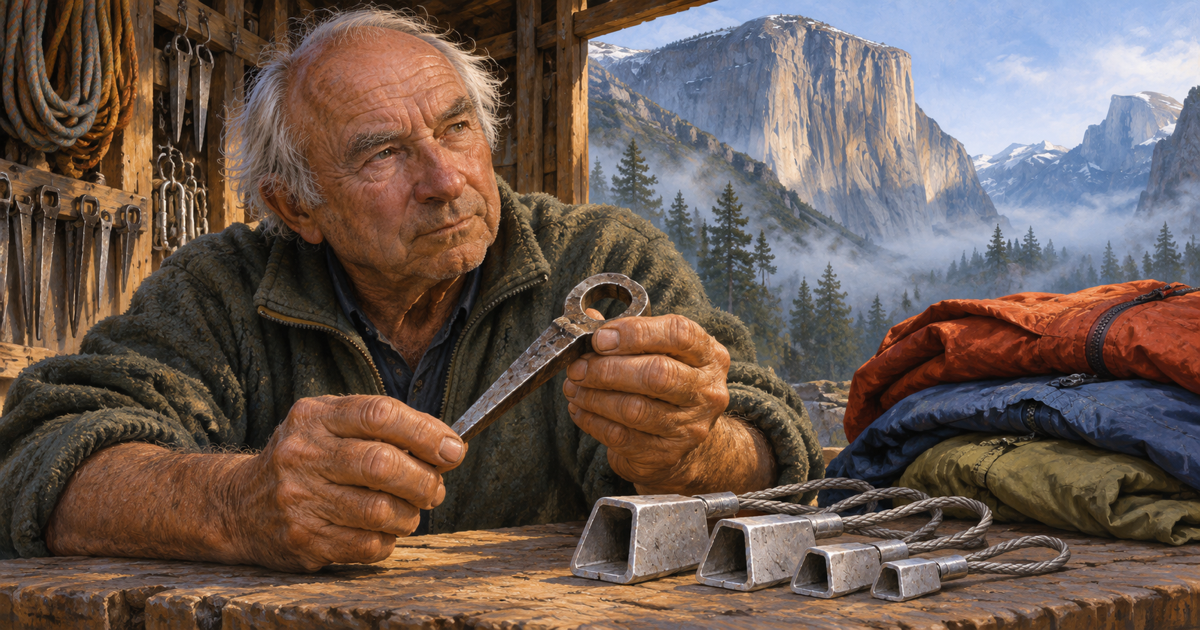
In the 1950s, Chouinard made climbing pitons from tough chrome-molybdenum steel and sold them from his car. A piton is a metal spike hammered into a crack to provide protection. His products could withstand repeated use, but repeated hammering during placement and removal damaged the rock. A durable tool could still leave a destructive trail. Patagonia’s clean-climbing archive documents that problem and the alternative his business promoted.
The damage exposed a weakness in judging equipment solely by its performance for the purchaser. A piton could work as intended for one climber while altering the route for everyone who followed. The sale recorded a satisfied customer; the rock recorded a cost that did not appear on the invoice. For a business serving people who returned to the same cliffs, that cost was difficult to keep abstract.
In 1972, Chouinard and his business partner, Tom Frost, used their equipment catalog to advocate removable protection. Aluminum chocks could be placed in suitable cracks without hammering. The catalog included a 14-page essay by climber Doug Robinson explaining the approach. It combined an argument about protecting climbing routes with practical instruction on using different gear. The archive reproduces the campaign’s historical context.
Commercially, this was a demanding form of persuasion. Customers needed a reason to reconsider familiar equipment and enough knowledge to adopt the replacement. A declaration of environmental concern would not establish where to place a chock or how to assess a crack. Instruction made the proposed change usable. The environmental argument and the product explanation belonged in the same catalog because neither was sufficient alone.
The episode also complicates the familiar portrait of Chouinard as a businessman who simply rejected commerce. His response required commerce: another product, an explanation of its use and a relationship with customers willing to listen. He was changing what the business sold and what it asked buyers to consider. The later ownership transfer would operate at a different level, changing who received the proceeds and who could govern the enterprise.
Clothing brought a larger business and a harsher lesson
Apparel began with a practical purchase. On a climbing trip to Scotland in 1970, Chouinard acquired a rugby shirt whose collar protected his neck from hardware slings. Friends wanted similar shirts. According to Patagonia’s company history, clothing became a way to support the marginally profitable equipment operation; by 1972, its offerings included imported rugby shirts, rainwear, gloves and hats.
That origin gave the clothing business a specific customer problem to solve. The shirt was useful because its construction suited climbing. Its appeal did not begin with a broad claim about outdoor identity. The business could explain a feature through an activity its founders understood, then sell to people with the same need. Such a connection helps explain the commercial logic without assuming that every later customer was a climber.
Material experiments followed. Malinda Chouinard found synthetic pile fabric at Malden Mills, and samples were tested in alpine conditions. Patagonia’s historical account describes the resulting garments as warm, quick to dry and effective beneath a shell. It also records the introduction of polypropylene insulating underwear in 1980. The product was increasingly a system of layers, with each layer affecting the usefulness of the others. Patagonia’s history attributes these developments to testing and adaptation.
Expansion, however, brought problems that a better fabric could not solve. In a 2007 Wharton lecture, former Patagonia chief executive Kristine Tompkins described sales rising from $20 million in the mid-1980s to $100 million in 1990. The business became overextended after years of rapid growth. In July 1991, it dismissed 120 employees, approximately one-fifth of its workforce. Wharton’s account of her lecture records both the expansion and the layoffs.
The same account cites Chouinard’s admission that management had failed to train new leaders adequately. Eight autonomous product divisions and three distribution channels had exceeded the organization’s ability to coordinate them. These were operational failures inside a business with strong convictions. A shared outlook did not automatically produce clear responsibilities, capable managers or a workable relationship between divisions.
The layoffs belong in the ownership story because they establish a financial limit to the founder’s ambitions. A business that intends to protect employment still has to finance inventory, pay suppliers and manage demand. Tompkins told the Wharton audience that profitability was necessary for Patagonia to remain an example. Her argument was practical: financial weakness could make the business dependent on institutions whose priorities its founders did not share.
Organic cotton required more than a purchasing promise
Patagonia’s later attempt to change its cotton supply showed how far a product decision could reach. In a 2021 interview with Yale Insights, longtime Patagonia executive Vincent Stanley recalled that the business decided in 1994 to move its sportswear line to organic cotton, allowing 18 months. Buying cotton directly from growers then exposed a gap: the farmers were disconnected from the spinners and mills needed to make finished fabric. Stanley’s interview describes the supply-chain problem.
A clothing brand does not receive a usable shirt simply by locating a preferred crop. Cotton must pass through processing, spinning, fabric production and garment manufacture. Changing one input can require cooperation across several businesses. The relevant managerial task is therefore larger than authorizing a different purchase. Someone must make the new material travel through a production system that can deliver acceptable quality and quantities.
Stanley’s account is especially useful because it includes the inadequacy of the initial preparation. The commitment came before the team fully understood the connections it would need. That detail gives the episode explanatory value beyond a claim of good intentions. A deadline can force action, but it cannot substitute for knowledge of how suppliers work or for the agreements that make production possible.
In the same interview, Stanley distinguished taking responsibility from claiming that the business was fully sustainable. He acknowledged that Patagonia still took more from the planet than it returned. He also described customer loyalty developing around shared values as well as product quality. These are statements from a company insider, rather than independent measurements of environmental performance, and should be read accordingly. Yale Insights identifies his role and presents the interview directly.
The cotton episode offers a useful standard for reading Patagonia’s subsequent announcements. A commitment becomes more substantial when it changes a specification, a production relationship or a decision right. The announcement alone cannot demonstrate the result. For the 2022 transfer, the corresponding questions concern ownership and authority: which entity holds the shares, which can appoint directors and where distributable earnings are supposed to go.
Two owners received different kinds of power
Patagonia’s September 2022 announcement assigned all voting stock to the Patagonia Purpose Trust. Those shares represented 2% of the total. The Holdfast Collective received the other 98%, consisting entirely of nonvoting stock. The family would help guide the trust, continue participating in the board and guide Holdfast’s philanthropic work. These provisions appeared in the original transaction announcement, alongside the ownership percentages.
The percentages can mislead if read without the rights attached to them. Holding almost all the shares does not necessarily mean holding the votes that determine the board. Conversely, a small percentage can carry decisive governing authority. The arrangement deliberately gave the two entities different functions. Most of the financial interest went to Holdfast, while the trust received the voting mechanism intended to preserve the business’s purpose.
That allocation was the central twist in Chouinard’s exit from financial ownership. A founder can surrender the right to receive private distributions without surrendering every means of shaping an institution. The continuing family role therefore deserves the same attention as the gift. It tells readers whose judgment the structure was designed to carry forward and prevents the transfer from being mistaken for a complete withdrawal.
Patagonia’s ownership explanation says the trust can approve key decisions involving board membership and changes to the corporate charter. It also identifies Holdfast as a 501(c)(4) nonprofit able to support environmental work through grants, investments and advocacy, including support for political candidates. Patagonia itself remains a for-profit business. These distinctions are explicit in the ownership questions and answers.
There are consequently separate decisions to examine. The operating business decides how to produce and sell goods. Its governance determines who oversees those decisions and protects its stated purpose. The recipient of dividends decides how to deploy the money it receives. Describing all three as a donation obscures the responsibilities involved. The legal structure connects them, but they remain different kinds of work.
The arrangement also concentrates responsibility. A purpose statement cannot choose a director, weigh competing investments or judge a proposed campaign. People acting through the relevant institutions must do those things. Keeping a role for the family made continuity part of the design; it did not make judgment unnecessary. The structure should therefore be assessed through the decisions its stewards make, as well as the intentions expressed at its creation.
A dividend depends on the business that pays it
At the announcement, Patagonia projected an annual dividend of roughly $100 million, conditional on the health of the business. It also said its existing contribution of 1% of sales to grassroots environmental activism would continue. The dividend projection was a forecast, not a guaranteed annual payment or evidence of money already distributed. The September 2022 release states the qualification.
The difference between sales and distributable earnings is essential here. A sales-based contribution refers to money coming into the business before all its costs have been met. A dividend depends on what can be distributed after the business has provided for its needs. Neither a large revenue number nor a strong year of customer demand establishes, by itself, the amount available to the new shareholder.
Patagonia’s explanation makes the reinvestment condition explicit. It includes retaining money for unforeseen events, such as a pandemic, before distributing excess profits to Holdfast. Chouinard’s accompanying letter also says the family considered selling the business or taking it public, then rejected those routes because of concerns about preserving its values. These were the founder’s stated reasons for the choice. His letter and the ownership explanation provide the direct account.
The resulting financial trade-off is unavoidable. Retaining more cash can support resilience, product development or future operations, while reducing the amount immediately available for environmental work. Distributing more can increase funding outside the business while leaving fewer resources inside it. The ownership arrangement establishes a destination for surplus; it does not remove the need to decide what constitutes a prudent surplus.
A sale would have posed a different problem. It could have produced an immediate pool of money, but it would also have put the operating business under a buyer’s control. Preserving the business as a source of recurring dividends instead tied future funding to its continuing performance. That comparison explains the transaction’s financial character without assuming that either route would necessarily produce more environmental benefit.
The same distinction should govern any later assessment. A projected dividend is not an actual dividend. A payment to Holdfast is not, by itself, a measured conservation outcome. And money retained by Patagonia is not automatically evidence that the structure has failed. Each claim requires its own evidence: business accounts for financial performance, distribution records for payments and project reporting for what the funding accomplished.
The succession plan preserved a difficult balance
Across these episodes, Patagonia’s decisions moved through different parts of a business. Clean climbing concerned what customers used. Apparel development concerned what products could do. The cotton conversion concerned how materials reached production. The ownership transfer concerned who could govern and who would receive the financial surplus. The progression gives Chouinard’s business history more substance than a succession of statements about personal values.
It also shows why the 1991 layoffs cannot be treated as an inconvenient aside. They demonstrate that a business can have a clear sense of purpose and still make serious mistakes in organization and expansion. The 2022 structure did not repeal that history. Its environmental funding would depend on an operating enterprise that still needed competent management, sufficient capital and products customers chose to purchase.
Nor does changing the destination of profits erase the effects of making the goods. The piton and cotton episodes concerned harm associated with the product or its production. The dividend arrangement concerns what happens to financial returns. Those interventions can complement one another, but they answer different questions. Funding environmental work cannot, on its own, establish that a garment was made with lower impact.
The family’s continuing role raises a similarly specific question about accountability. The arrangement was designed to preserve a particular purpose rather than give every interested party a vote over the business. Customers, workers and environmental organizations may have views about its choices, but the voting rights described in the transfer sit with the trust. Calling attention to that concentration makes the ownership account more accurate; it does not negate the financial transfer.
For readers examining the succession, the strongest evidence is therefore concrete. The stock allocation shows the separation of financial ownership and voting authority. The trust’s stated powers identify mechanisms for preserving purpose. The dividend conditions show continued dependence on commercial health. None of those details requires accepting the company’s wider claim that its approach can serve as a model for everyone else.
Chouinard’s decision left Patagonia operating, retained an institutional role for his family and designated environmental work as the destination for distributable profits. Its significance lies in that combination. He addressed the question of what should happen to the business after family financial ownership ended by creating two owners with different rights. The remaining test is how their stewards use those rights while keeping the enterprise capable of paying its bills.
Frequently asked questions
Did Yvon Chouinard sell Patagonia in 2022?
No. His family transferred its ownership to the Patagonia Purpose Trust and the Holdfast Collective.
Who received Patagonia’s voting rights?
The Patagonia Purpose Trust received all voting stock, representing 2% of the total shares.
Did Patagonia become a nonprofit?
No. It remains a for-profit business, with excess profits intended for environmental work after reinvestment.
💡 Key Insights
- ▸ Patagonia separated most financial ownership from voting control.
- ▸ The Chouinard family retained a role in governance after the transfer.
- ▸ Environmental dividends depend on earnings and reinvestment needs.
- ▸ The 1991 layoffs exposed the financial limits of a purpose-driven business.
Sources
- Patagonia Works: September 14, 2022 ownership announcement ↗
- Patagonia: Yvon Chouinard’s ownership letter and questions and answers ↗
- Patagonia: Clean climbing history and the 1972 catalog ↗
- Patagonia New Zealand: Company history ↗
- Yale Insights: Interview with Patagonia’s Vincent Stanley ↗
- Knowledge at Wharton: Kristine Tompkins on Patagonia’s leadership and finances ↗