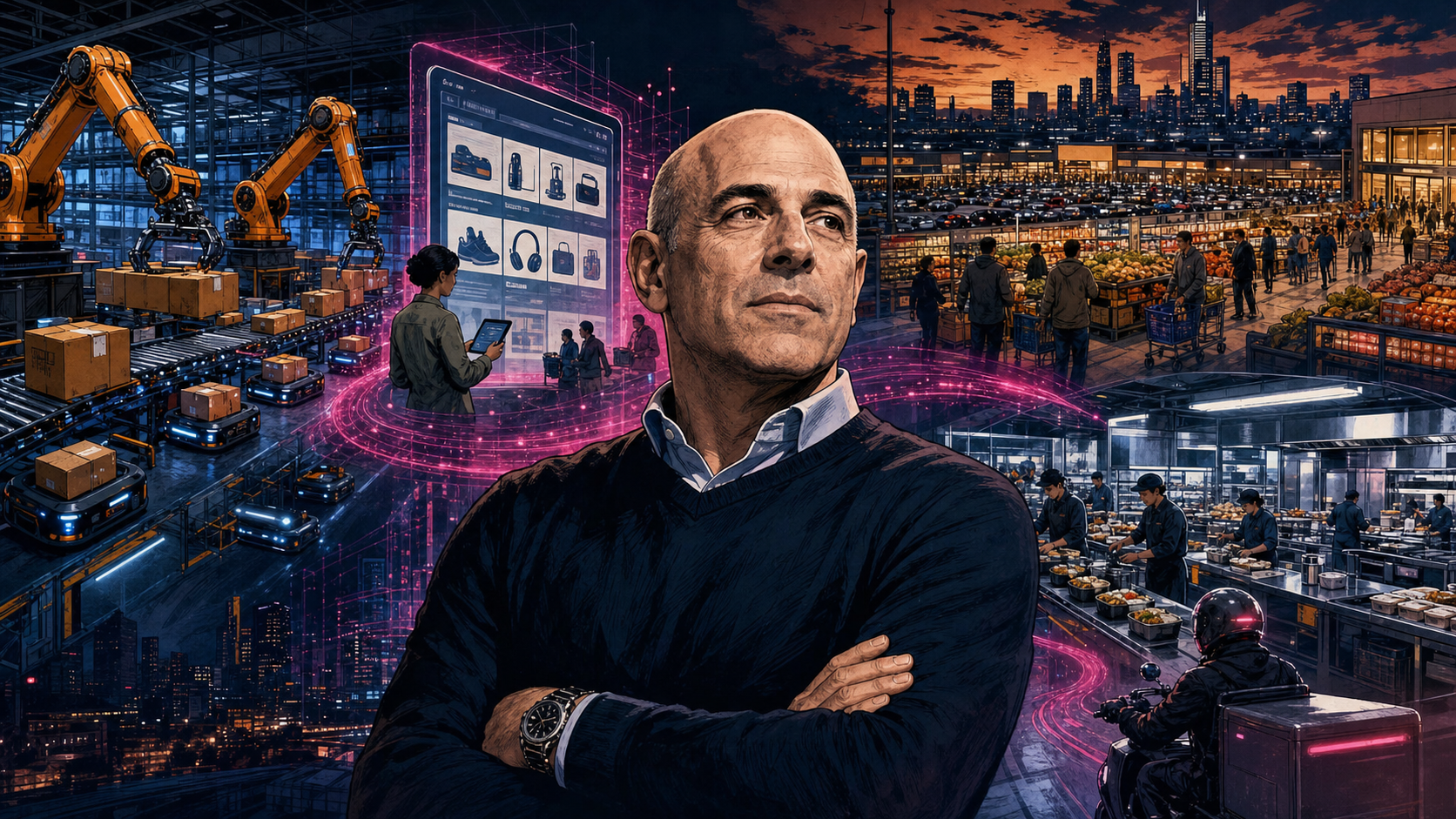
The Phantom Billionaire: How Chuck Feeney Vanished His $8 Billion Fortune (And You Didn't Even Notice)
Meet **Chuck Feeney**, the ultimate ghost in the machine of modern capitalism. He built an $8 billion empire, then spent his entire life orchestrating its secret, complete disappearance—not for himself, but for the world. This isn't just a story about money; it's a jaw-dropping exposé of radical generosity, stealth operations, and a legacy that redefines what it means to win the game.

View all stories about this mogul
🚀 Chapter 1: The Billion-Dollar Houdini Act

Alright, pull up a chair. Grab a drink. Because I’m about to tell you a story that sounds like something ripped from a fever dream, a caper cooked up by a Hollywood screenwriter on a serious bender. This isn’t your grandpa’s tale of a Silicon Valley wunderkind or a Wall Street shark. No, this is about a ghost, a phantom, a man who built an $8 billion fortune, then spent nearly his entire life making it vanish. Not into offshore accounts, mind you. Not into a private island populated by supermodels and pet tigers. No, this guy made his money disappear by giving it all away. Every. Last. Dime. And he did it in secret, for decades.
His name was Chuck Feeney. And if you haven’t heard of him, that’s exactly how he wanted it.
Picture this: It’s the late 20th century. Billionaires are popping up like dandelions after a spring rain. They’re buying sports teams, launching rockets, building gilded towers with their names etched in neon. And then there’s Feeney. He’s got the cash, more than enough to live like a king. But instead of crowns, he prefers a Timex watch. Instead of private jets, he flies economy. Instead of mansions, he rents apartments. While other moguls were busy constructing their personal monuments to ego, Feeney was orchestrating the most audacious, high-stakes, philanthropic vanishing act in history.
This isn’t just some feel-good story about a rich guy being nice. This is a masterclass in strategy, an intricate ballet of business acumen and radical altruism, played out on a global stage. It’s about building an empire from literally nothing, then weaponizing that empire for good, all while remaining utterly invisible. It’s a blueprint for impact so profound, it makes your head spin. And it starts, as all good legends do, with a humble beginning and a hell of a lot of hustle.
✈️ Chapter 2: From Humble Roots to the Runway Hustle

Chuck Feeney wasn’t born with a silver spoon. He was born in Elizabeth, New Jersey, in 1931, right smack in the middle of the Great Depression. His parents were Irish-American, no-nonsense working-class folks. His dad was an insurance salesman, his mom a nurse. Frugality wasn’t a choice; it was a way of life. This wasn’t a kid dreaming of yachts; this was a kid learning the value of a dollar, the dignity of hard work, and the importance of looking out for your own.
His early life reads like a classic American success story, but with a twist. He served in the U.S. Air Force during the Korean War. Imagine him, a young man, seeing the world, understanding logistics, developing a keen eye for opportunity. This wasn’t just military service; it was a crash course in global supply chains and human needs. After the war, he leveraged the G.I. Bill to attend Cornell University School of Hotel Administration. Hotels, travel, people on the move – these were the ingredients simmering in his entrepreneurial pot.
The real spark, though, came in the late 1950s. Feeney was selling duty-free liquor to American servicemen stationed in Europe. Picture this: GIs, often young, far from home, looking for a taste of the familiar, a gift for back home, or just a cheap drink. They’re on leave, they’re passing through ports, and they’ve got a little cash. Feeney saw a gap, a craving, and a system that could be tweaked.
He teamed up with a fellow Cornellian, Robert Miller. These two guys, with little more than a handshake and a killer instinct, started selling tax-free goods. Initially, it was just booze and smokes to sailors and military personnel in Mediterranean ports. No fancy storefronts. No massive marketing campaigns. Just two guys, a network of contacts, and a deep understanding of their customer. It was gritty, it was relentless, and it was a revelation. They were selling legally, but largely under the radar, bypassing local taxes that made goods expensive. They were providing a service, and pocketing a healthy margin. This was the primordial soup from which an $8 billion empire would emerge.
🛒 Chapter 3: The Birth of Duty Free Shops (DFS) – A Global Goldmine
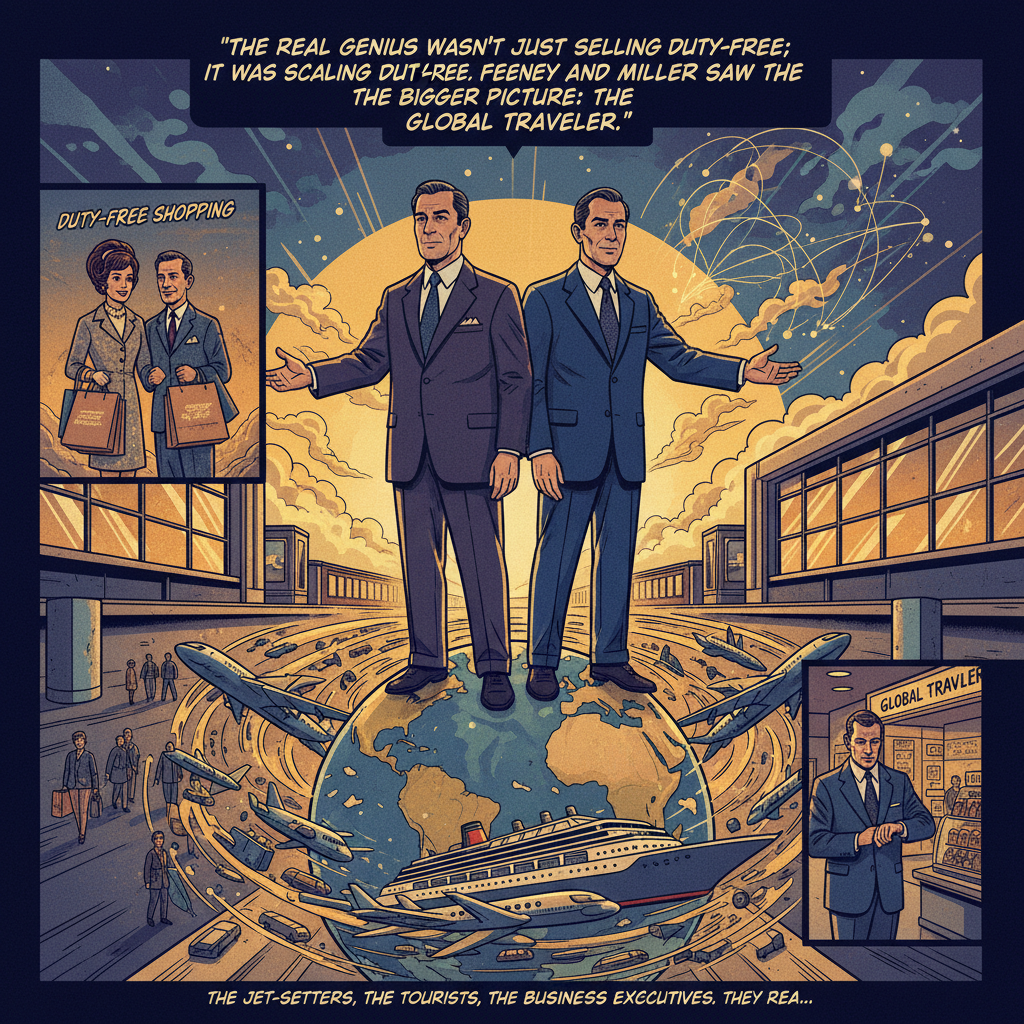
The real genius wasn’t just selling duty-free; it was scaling duty-free. Feeney and Miller saw the bigger picture: the global traveler. The jet-setters, the tourists, the business executives. They realized that airports, not just naval bases, were the true goldmines. Airports were captive markets. People waiting for flights, often bored, often with discretionary income, and always looking for a good deal on luxury items.
In 1960, they founded Duty Free Shoppers (DFS). Their first big win? Scoring the duty-free concession at Hong Kong’s Kai Tak Airport. Imagine the scene: a bustling, chaotic hub, full of passengers from every corner of the globe. And suddenly, there’s DFS, offering high-end goods – French perfumes, Swiss watches, designer handbags, premium spirits, all at prices that undercut local markets because they were exempt from taxes. It was an instant hit.
“We just started selling stuff. People were traveling and they had money. They wanted to buy things that were cheaper than back home. It wasn’t rocket science, just good timing and a lot of elbow grease.”
This wasn’t just about selling cheap booze anymore. This was about creating an experience. DFS became synonymous with luxury travel. They understood the psychology of the traveler: the desire for souvenirs, the thrill of a bargain, the allure of status symbols. They meticulously curated their inventory, building relationships with top global brands. They expanded aggressively, securing concessions in Honolulu, San Francisco, Anchorage, Guam, and eventually, a sprawling network across Asia, Europe, and the Americas.
Their strategy was brilliant in its simplicity and relentless execution:
- Strategic Locations: Always targeting high-traffic international airports and popular tourist destinations.
- Exclusive Concessions: Locking down long-term contracts, often at high cost, but guaranteeing market dominance.
- Luxury Focus: Shifting from basic goods to high-margin luxury items that appealed to affluent travelers.
- Customer Service: Understanding the diverse needs of a global clientele, offering multilingual staff and tailored experiences.
- Logistical Mastery: Building a sophisticated supply chain to stock thousands of products across dozens of countries, managing inventory, and navigating complex customs regulations.
DFS became a cash-generating machine, a silent giant in the global retail landscape. Feeney, the co-founder, was at the helm, quietly accumulating a fortune that would eventually dwarf the GDP of small nations. He was building an empire, but in his mind, it wasn’t for him. It was merely a means to a much, much grander end.
🤫 Chapter 4: The Radical Idea – Giving While Living, in Utter Secrecy
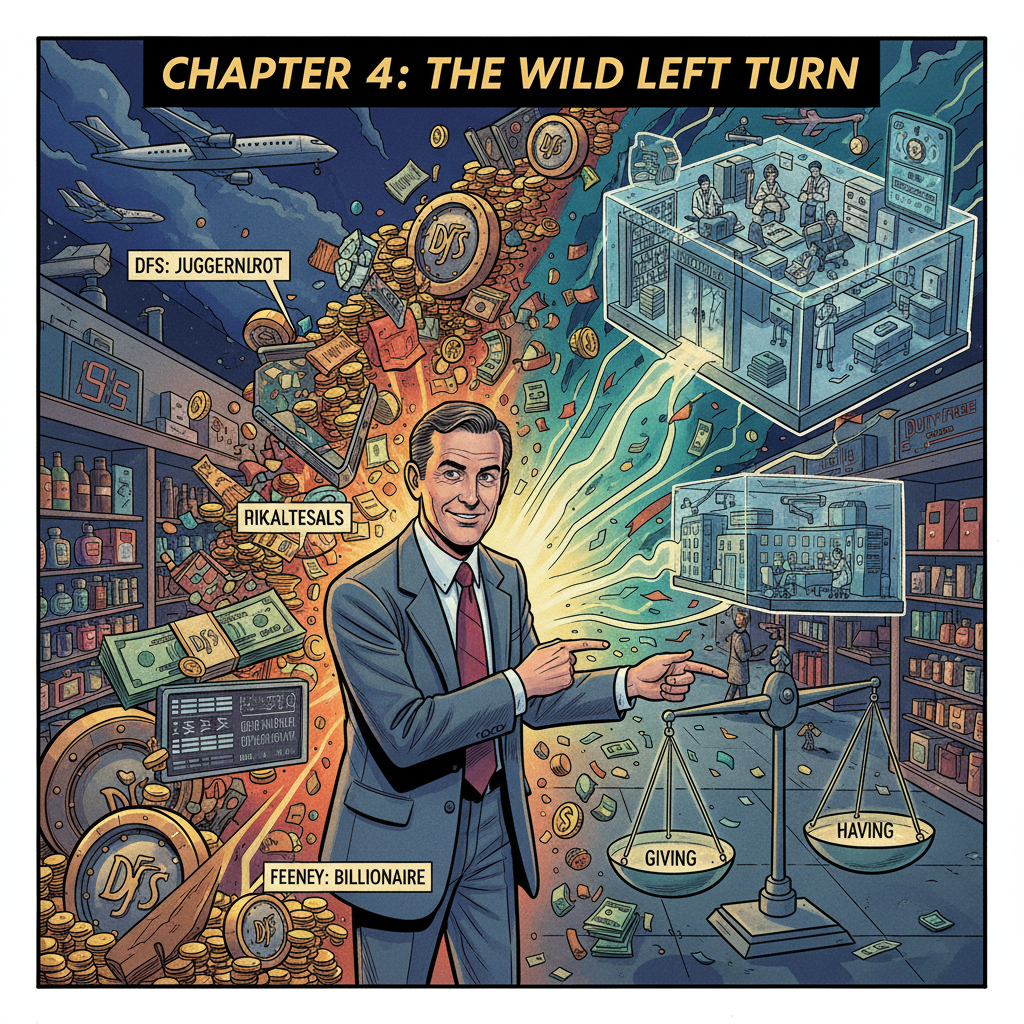
Here’s where the story takes a hard left turn, veering into territory so wild, so counter-intuitive, it redefines the very concept of wealth. By the early 1980s, DFS was a juggernaut. Feeney was a billionaire, several times over. He could have bought anything, done anything. But instead, he did something unprecedented.
In 1982, Chuck Feeney made a decision that would shape the rest of his life and impact billions of others. He secretly transferred virtually his entire ownership stake in DFS, worth billions, to a charitable foundation he called The Atlantic Philanthropies.
Think about that for a second. Most philanthropists set up foundations after they die, or they give away a percentage of their wealth, often with their name emblazoned on buildings. Not Feeney. He gave it all away, while he was still alive. And he did it with a single, non-negotiable condition: absolute, impenetrable secrecy.
“I had one idea that never changed in my mind: giving while living. I wanted to see the results of the money myself. I didn’t want my name on anything.”
This wasn’t just about humility; it was a strategic choice. He believed that anonymity would allow him to make grants without drawing undue attention, without recipients feeling beholden to him, and without his personal preferences influencing the work. He wanted the impact to speak for itself, not the donor.
The Atlantic Philanthropies was structured as a limited-life foundation. This was another radical departure. Most foundations are designed to exist in perpetuity, their endowments growing, distributing a small percentage each year. Feeney’s mandate was crystal clear: spend down all the money within a defined timeframe. This wasn’t about building a lasting institution; it was about creating immediate, transformative change. It injected an incredible urgency into the foundation’s work. Every dollar had to be deployed, every project had to have a clear, measurable outcome. There was no time for bureaucratic dawdling or endless committees.
For nearly two decades, Feeney operated in the shadows. He continued to manage DFS, growing its value, knowing that every dollar earned was destined for the foundation. He flew economy, carried his papers in a plastic bag, and ate at diners. His colleagues, his competitors, even his own family, had no idea of the scale of his generosity. To the world, he was simply the shrewd, frugal businessman behind the duty-free empire. He was the ultimate financial illusionist, making billions appear, only to make them vanish for the greater good.
🎭 Chapter 5: The Stealth Philanthropist’s Playbook
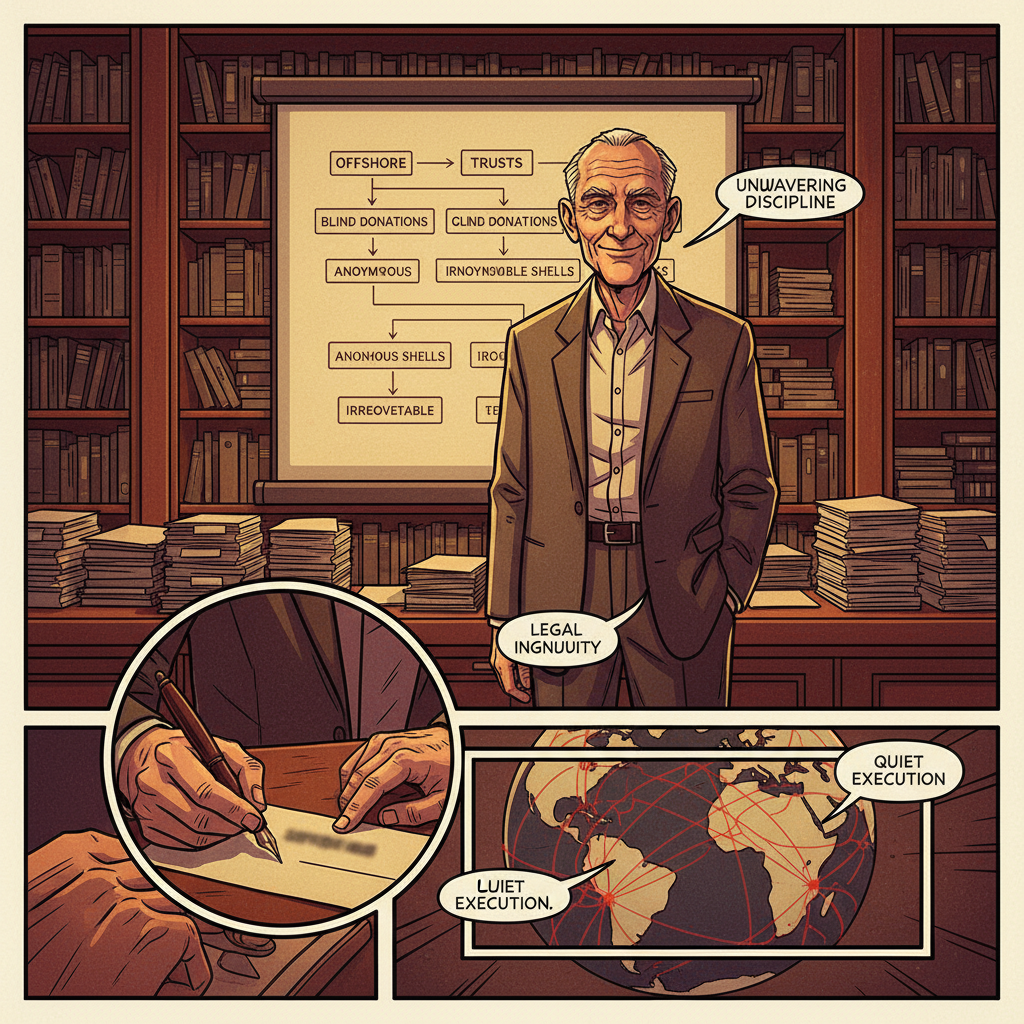
So, how do you give away billions without anyone noticing? It’s not just about signing checks. It’s an elaborate, multi-layered operation that required legal ingenuity, unwavering discipline, and a network of trusted operatives.
The legal structure of The Atlantic Philanthropies was ingeniously designed. Feeney transferred his wealth into a complex web of trusts and holding companies, registered in Bermuda, which then owned DFS shares. This shielded his identity from public scrutiny for years. The foundation’s board members were sworn to secrecy, operating under strict non-disclosure agreements. They knew the ultimate source of the funds, but their lips were sealed tighter than a submarine hatch.
Feeney himself became a hands-on, active philanthropist, but always behind the scenes. He wasn’t just a check-writer; he was a venture capitalist for social good. He’d travel the world, often incognito, visiting potential grant recipients, assessing needs, and ensuring that funds would be used effectively. He demanded accountability, measurable outcomes, and bold vision.
“I can only wear one pair of shoes at a time. I can only eat one steak at a time. I don’t need all that stuff. It’s better to give it away while you’re alive.”
His philanthropic strategy was characterized by “big bets.” He wasn’t interested in scattering small grants widely; he wanted to make monumental, transformative investments that could fundamentally alter institutions or solve systemic problems. His focus areas were vast, yet precise:
- Education: Billions poured into universities, particularly his alma mater Cornell, but also institutions in Ireland, Vietnam, and Australia. He funded new campuses, research facilities, scholarships, and entire academic programs.
- Health: Significant investments in public health initiatives, medical research, and healthcare infrastructure, often in underserved regions.
- Human Rights: Funding organizations fighting for justice, peace, and civil liberties, particularly in Northern Ireland and South Africa during apartheid.
- Science and Technology: Support for cutting-edge research and innovation that could benefit humanity.
Imagine the sheer audacity: a man building a massive fortune, then systematically dismantling it, piece by piece, to rebuild the world in quieter, more impactful ways. He funded the modernization of Vietnam’s healthcare system after the war. He invested in groundbreaking research at the University of California, San Francisco. He backed reconciliation efforts in Northern Ireland at a time when peace seemed impossible. All this, while the world thought he was just another wealthy businessman, perhaps a bit eccentric in his frugality. His “stealth wealth” was a weapon, deployed with surgical precision for global good.
💥 Chapter 6: The DFS Sale and the Billionaire’s Unmasking
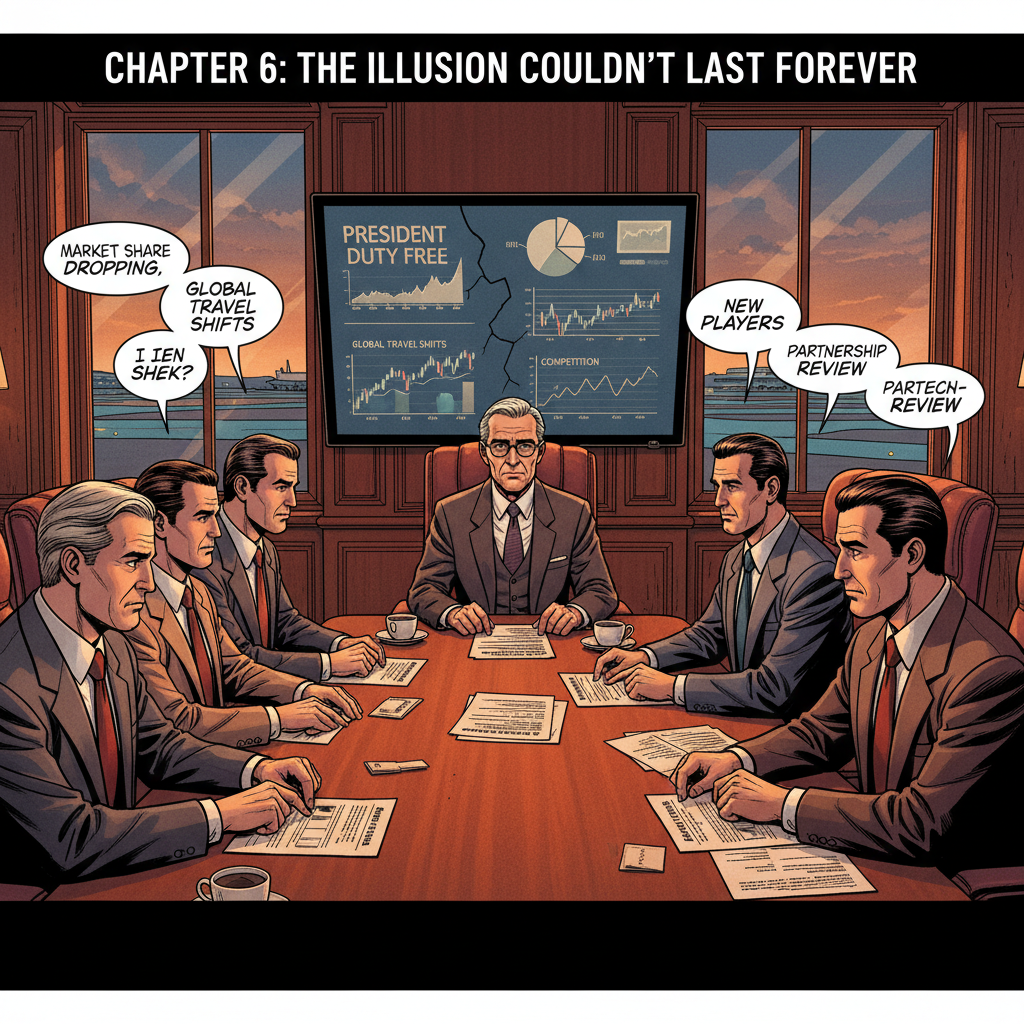
The illusion couldn’t last forever. In the mid-1990s, the world of duty-free retail was changing. Competition was fierce, travel patterns were shifting, and the original partnership between Feeney and Miller began to fray. Legal disputes erupted, forcing a partial unraveling of the tightly held DFS structure.
In 1996, the moment of truth arrived. Feeney agreed to sell his stake in DFS to the French luxury conglomerate LVMH Moët Hennessy Louis Vuitton. This was a massive deal, valuing DFS at billions. And when you sell a company worth billions, even the most dedicated ghost eventually has to show his face.
The sale forced The Atlantic Philanthropies to disclose its ownership of a significant portion of DFS. The cat was, finally, out of the bag. Sort of. The full extent of Feeney’s philanthropic crusade was still largely unknown, but the initial cracks in the secrecy began to appear.
It was Forbes magazine, in a groundbreaking 1997 article by Steven Bertoni, that finally pulled back the curtain on Chuck Feeney’s extraordinary story. The headline screamed: “The Billionaire Who Wanted To Die Broke.” The article detailed the decades of secret giving, the billions channeled through The Atlantic Philanthropies, and Feeney’s radical “giving while living” philosophy.
The world was stunned. Here was a man who, unlike his peers, had actively avoided the spotlight, not just for personal preference, but as a core tenet of his philanthropic strategy. This wasn’t a deathbed conversion; it was a lifetime commitment. Other billionaires, who had carefully cultivated public images of generosity, were suddenly forced to reckon with Feeney’s quiet, monumental achievement. He became a living legend, a challenge, and an inspiration.
“He became the role model for ‘Giving While Living.’ People often wait until they’re old, or dead, to give their money away. Chuck showed that you can do it right now, and see the impact.”
The unmasking didn’t change Feeney. He remained the same humble, frugal man. He continued to fly economy, wear simple clothes, and live in rented apartments. The billions were gone, but the man remained. His personal wealth, after decades of strategic divestment, was dwindling. He wasn’t just saying he wanted to die broke; he was actively making it happen.
🌍 Chapter 7: The Global Impact – A Billionaire’s Fingerprints Everywhere (But His Name Nowhere)
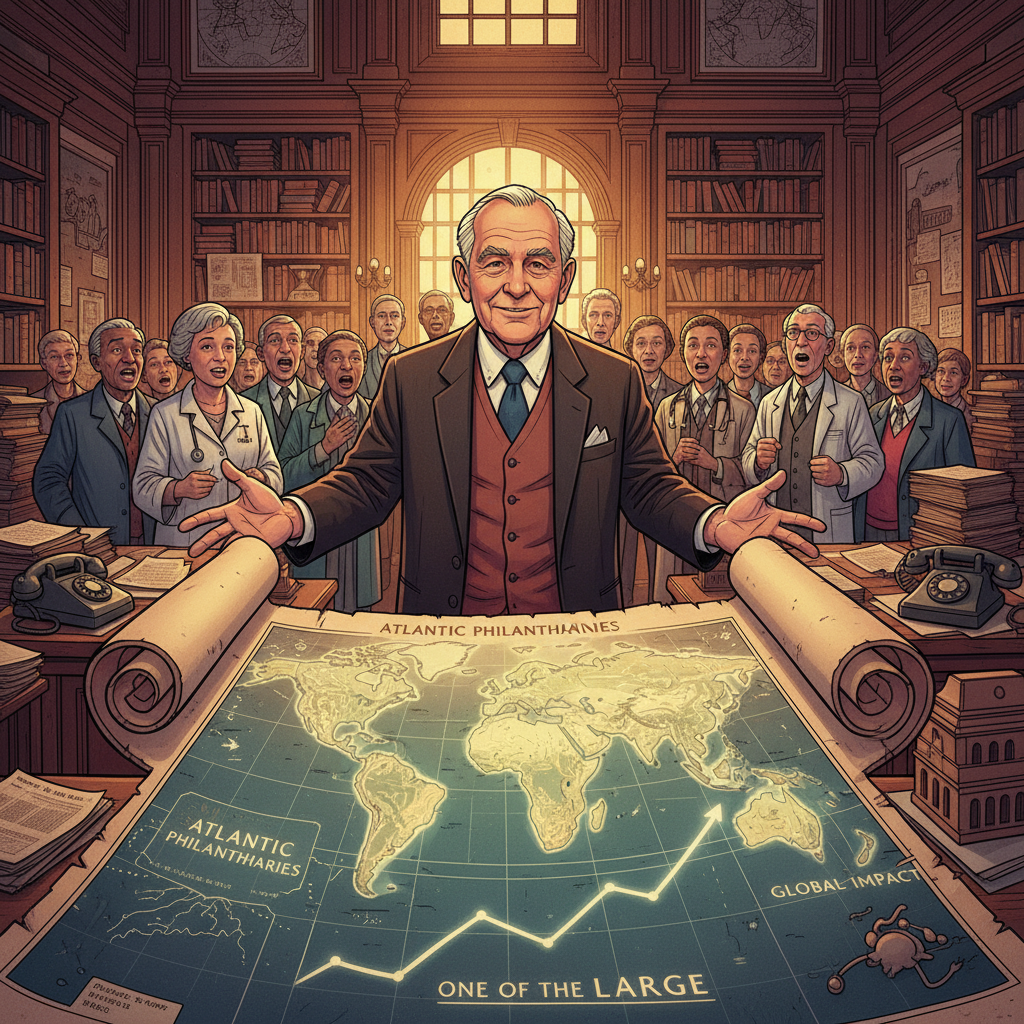
Once the secret was out, the sheer scale of Feeney’s impact began to emerge, like a hidden continent slowly revealed on a map. The Atlantic Philanthropies, under his direction, became one of the largest and most influential philanthropic organizations in the world, deploying its capital with a ferocity driven by its sunset clause.
Let’s talk numbers and impact. Over its lifetime, The Atlantic Philanthropies granted over $8 billion. To put that in perspective, that’s more than the entire endowments of many Ivy League universities combined. And it was all spent down, every last cent.
Where did it go?
- Ireland: Feeney, proud of his Irish heritage, became one of the largest foreign investors in the Republic of Ireland and Northern Ireland. He poured over $1.5 billion into building research universities (like the University of Limerick and Dublin City University), creating the Peace International Fund to foster reconciliation during the Troubles, and supporting scientific and technological advancements. He single-handedly transformed the higher education landscape of a nation.
- Vietnam: Following the Vietnam War, he invested hundreds of millions into modernizing public health, education, and infrastructure. He funded hospitals, libraries, and universities, helping a nation rebuild and connect with the global scientific community.
- Australia: Major grants went to research institutions and universities, particularly in health and medical science, aiming to position Australia as a global leader in these fields.
- South Africa: During the final days of apartheid and its aftermath, Atlantic funded human rights organizations, legal aid, and health initiatives, playing a crucial, though quiet, role in the transition to democracy.
- United States: While famously generous abroad, Feeney also invested heavily in his home country. His alma mater, Cornell University, received over $1 billion for campus expansion, research centers, and scholarships. He also funded significant initiatives in aging research, public health, and civil liberties across the US.
His approach wasn’t just about money; it was about strategic partnership. He often challenged recipients to match his grants, effectively multiplying his impact. He wasn’t afraid to take risks on bold ideas or to invest in areas that other philanthropists might shy away from due to political sensitivity or lack of immediate public recognition. He was a visionary investor, but instead of ROI measured in dollars, he measured it in lives improved, knowledge advanced, and injustices addressed. His fingerprints are on countless transformative projects around the globe, yet his name is conspicuously absent from most of them. That was the point.
⏳ Chapter 8: The Final Countdown – Sunset and Legacy
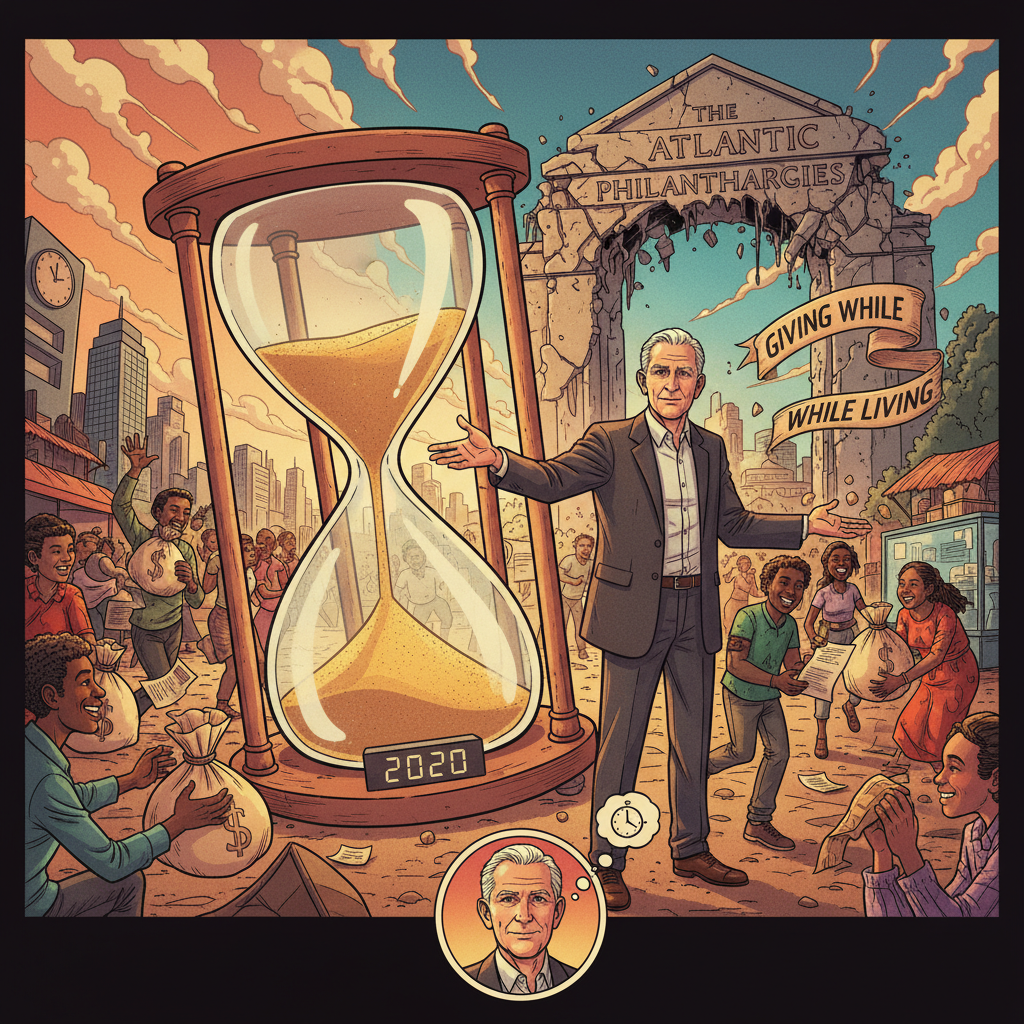
The Atlantic Philanthropies had a unique, self-imposed expiration date. Feeney insisted that the foundation spend down all of its assets and close its doors by 2020. This “giving while living” mandate created an unprecedented urgency, forcing the foundation to be incredibly strategic and impactful with its final grants.
Imagine the pressure, the focus. No more endless planning. No more hoarding capital. It was a sprint to the finish line, a race against time to deploy every last dollar for maximum effect. This meant making larger, more audacious grants, tackling systemic issues, and ensuring sustainability beyond Atlantic’s existence.
In 2016, a truly historic moment occurred. Chuck Feeney, at 85 years old, signed the documents to officially close The Atlantic Philanthropies, having fulfilled his lifelong ambition. The foundation had made its final grant, and the coffers were empty. He had achieved his goal: to give away virtually his entire fortune during his lifetime. The total tally: over $8 billion.
The closure of the foundation wasn’t just a bureaucratic act; it was the capstone on a revolutionary philanthropic career. It sent a powerful message to the world’s wealthy: it is possible to achieve immense good, to see the fruits of your labor, and to leave a legacy defined by impact, not by perpetual endowments.
“When people ask me, ‘Why give it all away?’ I say, ‘What’s the alternative? To leave it to your kids to fight over? To build a bigger yacht?’ I’ve had a great life, and I got to see the good my money did.”
Feeney, true to form, ended his philanthropic journey in the same humble style he lived it. He retired to a modest, rented apartment in San Francisco, living off a small pension. He famously didn’t own a car, wore a $10 watch, and preferred a sandwich to a gourmet meal. His wealth was gone, but his purpose was fulfilled. He died in 2023 at the age of 92, having truly died broke, leaving behind a legacy that is both monumental and, in its original intent, utterly invisible.
💡 Chapter 9: The MogulFeed Take – Business Lessons from the Billionaire Who Broke the Rules
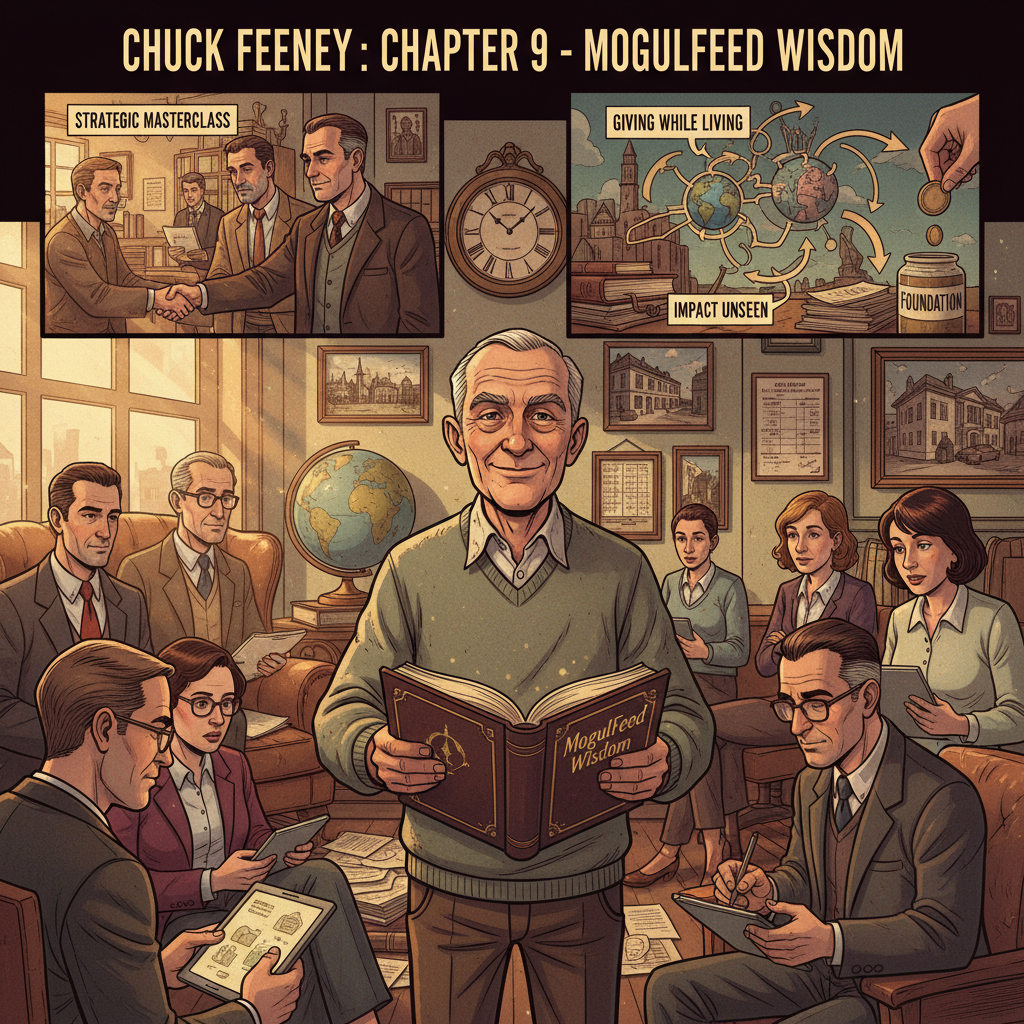
Alright, let’s peel back the layers and extract some MogulFeed-level wisdom from Chuck Feeney’s wild ride. This isn’t just a heartwarming tale; it’s a strategic masterclass for entrepreneurs, investors, and anyone looking to make a dent in the universe.
Lesson 1: Identify and Exploit Hidden Market Inefficiencies (The DFS Playbook)
Feeney didn’t invent retail. He saw a niche: the global traveler. He recognized that people moving across borders had unique needs and were subject to different tax laws. His genius was in creating a distribution channel (Duty Free Shops) that legally exploited these regulatory arbitrage opportunities.
- Actionable Insight: Where are the “borders” in your industry? What regulations, geographic constraints, or behavioral patterns create overlooked opportunities? Don’t just compete on existing battlegrounds; create new ones by finding the unserved, the undertaxed, the undervalued.
Lesson 2: Build for Scale, but Operate Lean (The Frugal Billionaire)
DFS became a global behemoth, but Feeney’s personal ethos was pure frugality. This wasn’t just a personality quirk; it was a business principle. A lean mindset, even at scale, fosters efficiency, reduces waste, and keeps focus on core value creation. If the founder flies economy, everyone thinks twice about unnecessary expenses.
- Actionable Insight: Can you maintain a startup’s lean agility even as you grow? Challenge every expenditure. Ask if it adds direct value to the customer or the mission. Frugality isn’t about being cheap; it’s about being strategically disciplined with resources.
Lesson 3: The Power of a Sunset Clause (Philanthropy as Venture Capital)
This is perhaps Feeney’s most revolutionary contribution. The “giving while living” with a mandated spend-down date transformed philanthropy from a slow-burning endowment game into an urgent, high-impact venture. It forced bold decisions, minimized bureaucracy, and maximized immediate results.
- Actionable Insight: How does a defined timeline change your strategic thinking? Whether in business or social impact, a clear deadline can be a powerful catalyst. It forces you to prioritize, innovate, and execute with an intensity that perpetual operations often lack. What if your next big project had a non-negotiable end date? How would that sharpen your focus?
Lesson 4: Anonymity as a Strategic Advantage (The Stealth Mode Billionaire)
Feeney’s secrecy wasn’t just about avoiding celebrity; it was a strategic choice. It allowed him to operate without personal ego influencing grants, without political pressure, and without recipients feeling indebted to a named donor. It ensured that the impact was the story, not the giver.
- Actionable Insight: In a world obsessed with personal branding, can you find power in anonymity or a low profile? For certain projects or initiatives, removing the ego of the leader or the brand can allow the mission itself to take center stage, fostering purer collaborations and unencumbered progress.
Lesson 5: Make Big Bets, Demand Accountability (Venture Philanthropy Before It Was Cool)
Feeney wasn’t afraid to pour massive sums into single projects, but he demanded rigorous planning and measurable outcomes. He was a hands-on investor, engaging with recipients, not just writing checks.
- Actionable Insight: Are you making enough “big bets” in your business or life? Are you willing to consolidate resources for truly transformative impact, rather than spreading them thin? And are you demanding the same level of accountability and measurable results from your investments, whether they’re financial or philanthropic?
Chuck Feeney wasn’t just a businessman; he was a disruptor. He disrupted retail, he disrupted philanthropy, and he disrupted the very idea of what it means to be a successful, wealthy individual. He showed that true power isn’t in what you accumulate, but in what you strategically deploy for the benefit of humanity.
🇮🇪 Chapter 10: The Irish Connection – Rebuilding a Nation

Let’s zoom in on one of Feeney’s most profound and personal impacts: his transformation of Ireland. His roots ran deep in the Emerald Isle, and his generosity there was nothing short of revolutionary. This wasn’t just philanthropy; it was nation-building by proxy, a strategic investment in human capital and economic future.
Feeney poured an astonishing $1.5 billion into Ireland, both the Republic and Northern Ireland. Think about that for a second. This wasn’t some token donation; this was a Marshall Plan orchestrated by a single, anonymous individual. His focus areas were meticulously chosen to maximize long-term impact:
- Higher Education: This was his crown jewel. He believed that a highly educated workforce was the bedrock of a modern, competitive economy. He made colossal grants to institutions like the University of Limerick and Dublin City University (DCU), essentially enabling them to build world-class campuses, cutting-edge research facilities, and attract top academic talent. He funded entire schools of engineering, science, and business. He didn’t just give money; he provided the vision and the capital to leapfrog decades of underinvestment.
- Research & Development: Feeney understood that economic growth in the 21st century would be driven by innovation. He funded scientific research hubs, fostering a culture of discovery and attracting foreign direct investment from tech and pharma giants looking for skilled talent and research partnerships.
- Peace and Reconciliation: During the height of the Troubles in Northern Ireland, a period of sectarian violence, Feeney became a silent, yet powerful, force for peace. He was a major funder of the International Fund for Ireland, an organization dedicated to economic and social development in both parts of the island, aiming to build bridges between divided communities. His money supported cross-community projects, educational initiatives, and efforts to create shared economic prosperity, proving that economic opportunity could be a powerful antidote to conflict.
“He completely transformed the landscape of higher education in Ireland. Universities that were struggling suddenly had the resources to compete globally. It was truly astonishing.”
Feeney often used a “challenge grant” model in Ireland, requiring universities or government agencies to match his donations. This leveraged his capital, created local buy-in, and ensured that the projects had sustainable funding beyond Atlantic’s involvement. He wasn’t just giving handouts; he was igniting self-sufficiency.
His impact on Ireland is almost incalculable. He helped turn a historically agricultural economy into a hub for technology, pharmaceuticals, and education. He enabled a generation of Irish students to access world-class facilities and research opportunities, preventing brain drain and fostering national pride. And he did it all without demanding a single building be named after him. His legacy in Ireland is etched not in stone, but in the minds of scholars, the breakthroughs of scientists, and the quiet dignity of a nation transformed.
🇻🇳 Chapter 11: From War to Opportunity – Feeney’s Vietnamese Odyssey
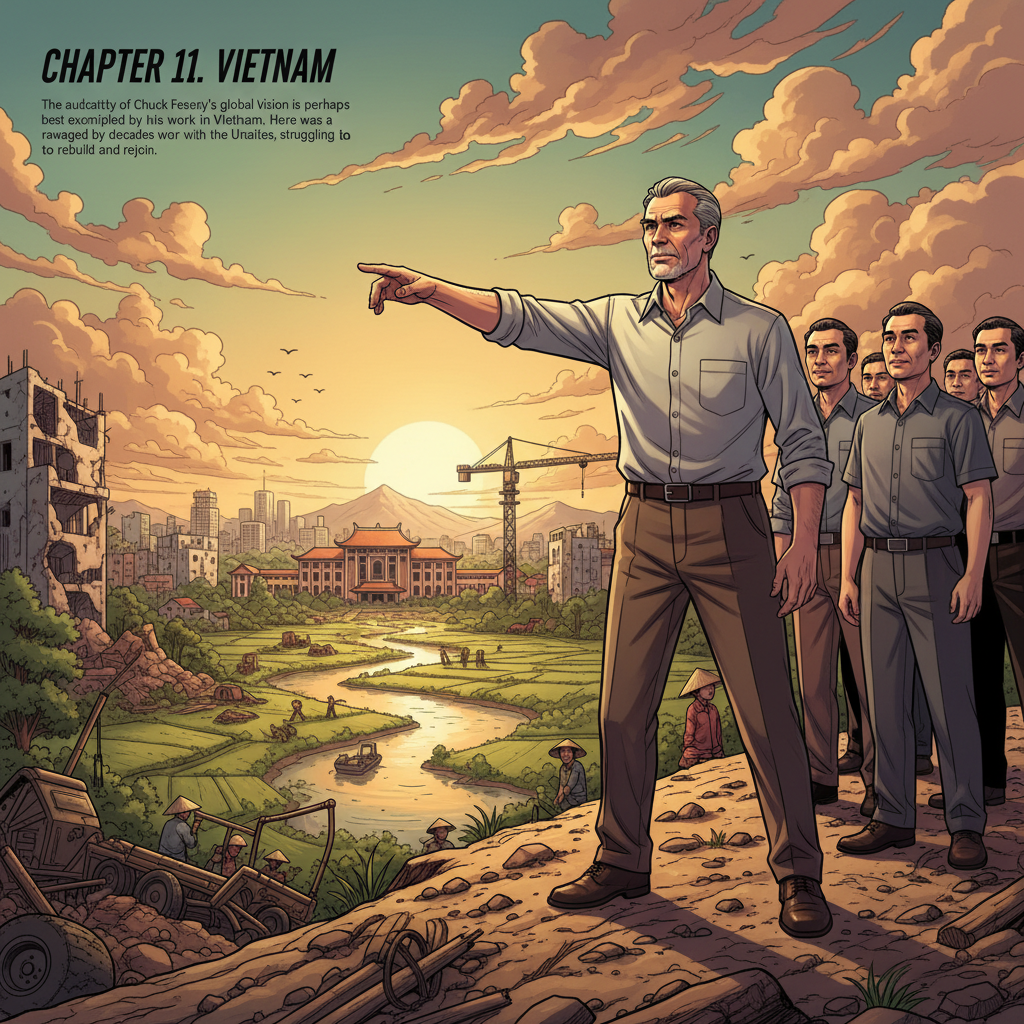
The audacity of Chuck Feeney’s global vision is perhaps best exemplified by his work in Vietnam. Here was a country, ravaged by decades of war with the United States, struggling to rebuild and rejoin the global community. And here was an American billionaire, pouring hundreds of millions into its future, again, largely in secret.
Feeney saw beyond the political scars and the historical baggage. He saw potential. He saw a young, energetic population eager for education and opportunity. His approach in Vietnam was emblematic of his pragmatic, impact-driven philanthropy:
- Healthcare Infrastructure: Vietnam’s healthcare system was desperately in need of modernization. Feeney funded the construction and equipping of new hospitals, medical schools, and research centers. He invested in training programs for doctors and nurses, bringing international standards to local communities. This wasn’t about charity; it was about building sustainable, high-quality public health systems.
- Education: Recognizing that education was the key to unlocking Vietnam’s future, Atlantic Philanthropies made significant investments in universities, libraries, and educational exchange programs. They funded facilities, provided scholarships, and supported curriculum development, helping Vietnam develop a skilled workforce and foster innovation.
- Science and Technology: Feeney understood that global competitiveness required a strong foundation in STEM. He supported scientific research, providing grants for laboratories and collaborative projects, helping Vietnamese scientists connect with their peers worldwide.
Imagine the scene: a quiet, unassuming American, flying into a country that many Americans still viewed with suspicion or pity, not with an agenda of political influence, but with a singular focus on human development. He wasn’t seeking forgiveness; he was offering a hand up, an investment in a shared future.
His grants helped Vietnam leapfrog technological divides, improve public health outcomes for millions, and build a generation of educated leaders. He contributed to the country’s economic liberalization and its growing integration into the global economy. All these monumental achievements were delivered with the same relentless focus on impact and the same steadfast commitment to anonymity.
Feeney’s work in Vietnam stands as a testament to the power of non-partisan, humanitarian investment. It proved that capital, deployed strategically and without ego, can transcend historical animosities and build bridges where political rhetoric often fails. It’s a powerful lesson in global citizenship and the quiet force of radical generosity.
💸 Chapter 12: The “$8 Billion Man” Who Died Broke – A Challenge to the Ultra-Rich
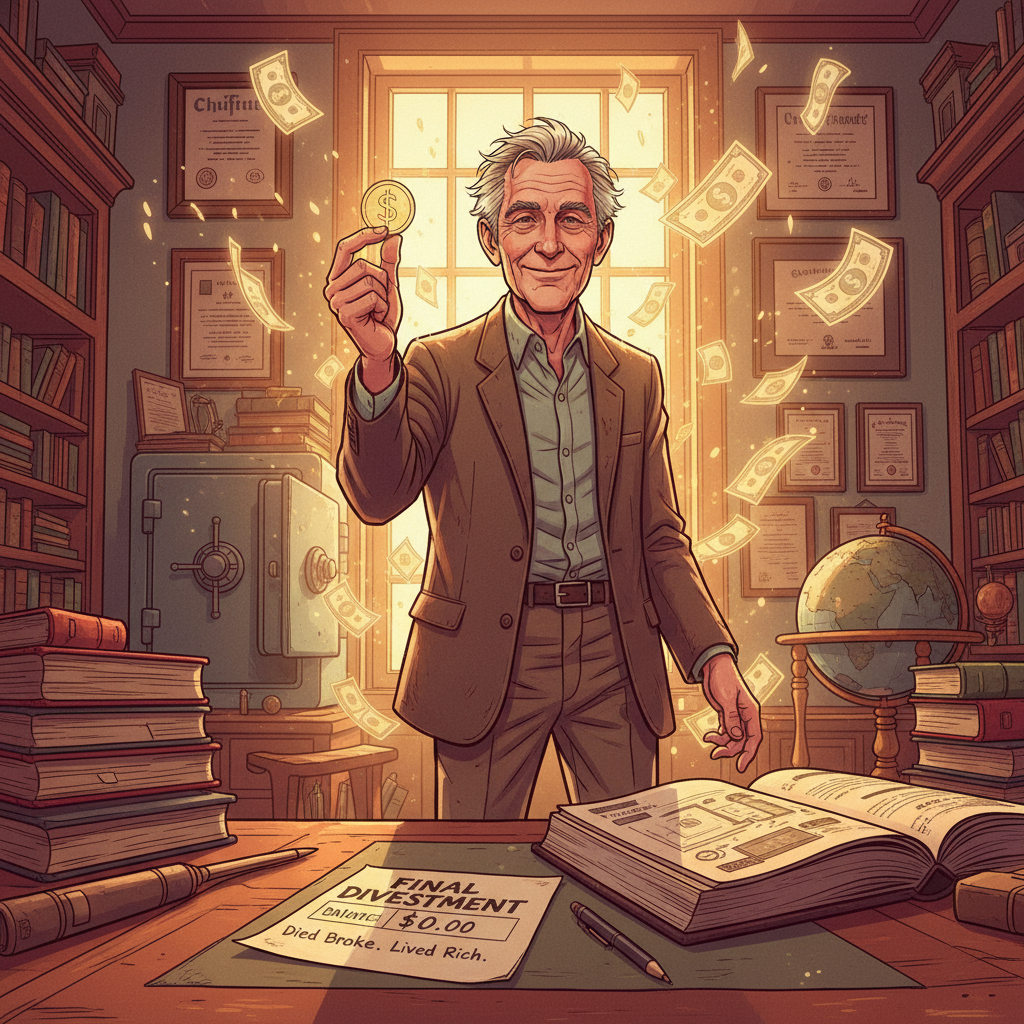
So, what’s the final verdict on Chuck Feeney? He was the $8 billion man who died broke. Not “broke” in the sense of destitute, but in the sense that he meticulously, strategically, and joyfully divested himself of every single dollar he accumulated, ensuring it went to causes he believed in, while he was still alive to witness the impact.
He wasn’t a saint, but he was a revolutionary. He wasn’t seeking adoration, but he earned the respect of titans like Bill Gates and Warren Buffett, who publicly credited him as a major inspiration for The Giving Pledge. He redefined philanthropy from a passive, posthumous act into an active, urgent, and deeply personal mission.
Feeney’s story is a powerful, almost uncomfortable, challenge to the ultra-rich of today. In an era of increasing wealth inequality, where billionaires amass fortunes that could solve global problems many times over, Feeney stands as a stark, unassuming counterpoint. He proved that it’s possible to build an empire, and then, with equal strategic brilliance, dismantle it for the greater good.
“Chuck Feeney is the ultimate example of how to use wealth to create lasting change. He didn’t just give; he invested, he pushed, he demanded results. He showed us all how it’s done.”
He leaves behind no statues, no gilded foundations bearing his name, no personal museums. His legacy is far more profound:
- Transformed universities in Ireland, Vietnam, and the US.
- Improved healthcare systems for millions.
- Advanced scientific research that continues to save lives.
- Supported human rights and peace efforts in troubled regions.
- Inspired a generation of philanthropists to “give while living.”
Chuck Feeney’s life was a masterclass in purpose-driven entrepreneurship, a testament to the idea that true wealth isn’t measured by what you keep, but by what you give away. He showed us that the greatest luxury isn’t owning more; it’s the freedom to let it all go, knowing you’ve made a difference. He played the game of capitalism, won decisively, and then used his winnings to fundamentally alter the scoreboard for everyone else. He was the phantom billionaire, and his legacy is everywhere, even if you don’t see his name. And that, my friends, is the most powerful kind of impact there is.
💡 Key Insights
- ▸ The 'Giving While Living' model isn't just a feel-good slogan; it's a strategic imperative. By setting a sunset clause for your philanthropic endeavors, you inject an unparalleled urgency and focus into impact, forcing audacious bets and accelerating change, rather than letting capital stagnate in perpetual endowments.
- ▸ Entrepreneurial success isn't solely about accumulation; it's about identifying and exploiting market inefficiencies. Feeney's Duty Free Shops thrived by recognizing a captive audience's unmet needs and leveraging regulatory arbitrage, demonstrating that sometimes the biggest opportunities lie in overlooked corners of global commerce.
- ▸ True long-term vision in any enterprise—be it business or philanthropy—requires a willingness to operate outside conventional norms. Feeney's insistence on anonymity, his hands-on approach to grant-making, and his commitment to spending down his fortune are radical deviations from the status quo that ultimately amplified his impact and redefined philanthropic best practices.