Estée Lauder: The Woman Who Touched Your Face and Took Your Money
She had no factory, no laboratory, no degree, and no money. What Estée Lauder had was an unstoppable belief that she could make women beautiful — and an almost terrifying willingness to grab strangers by the face and start applying cream. From a kitchen in Queens to a $90 billion beauty empire, this is the story of the most aggressive saleswoman who ever lived.

View all stories about this mogul
🏠 Chapter 1: The Kitchen Chemist
Josephine Esther Mentzer was not going to be ordinary. She decided this before she was ten years old, and she never wavered.
Born on July 1, 1906 (though she would later claim 1908 — vanity was a lifelong commitment), in Corona, Queens, New York, she was the daughter of Hungarian-Czech immigrants. Her father, Max Mentzer, ran a hardware store. Her mother, Rose, was a homemaker.
The family was solidly working class — comfortable but unremarkable. The neighborhood was filled with immigrant families pursuing the standard American dream: education, stability, respectability. Young Josephine — who would rename herself “Estée” — wanted something different. She wanted glamour.
“I was always the girl who noticed what other women were wearing, how they did their hair, what made one woman look elegant and another look ordinary. I wasn’t interested in ordinary. I was interested in beautiful.”
The transformative influence in young Esther’s life was her Uncle John — John Schotz, a chemist who had emigrated from Hungary and set up a small laboratory behind the Mentzer family home. Uncle John made skin creams — simple emulsions of oils, fats, and fragrances that he sold to local women.
Estée was fascinated. She spent hours in Uncle John’s laboratory, watching him mix ingredients, learning how different oils affected skin texture, understanding the basic chemistry of emulsions. Uncle John taught her to make his signature cream — the Super Rich All-Purpose Cream — and Estée immediately began improving it, experimenting with different proportions and ingredients.
By her mid-teens, Estée was making her own face creams in the family kitchen and applying them to every woman she could find. Friends. Neighbors. Strangers on the subway. Anyone with a face was a potential customer.
This aggressive, in-your-face sales approach — literally — would become her signature. And it would build an empire.
💋 Chapter 2: The Face Grabber
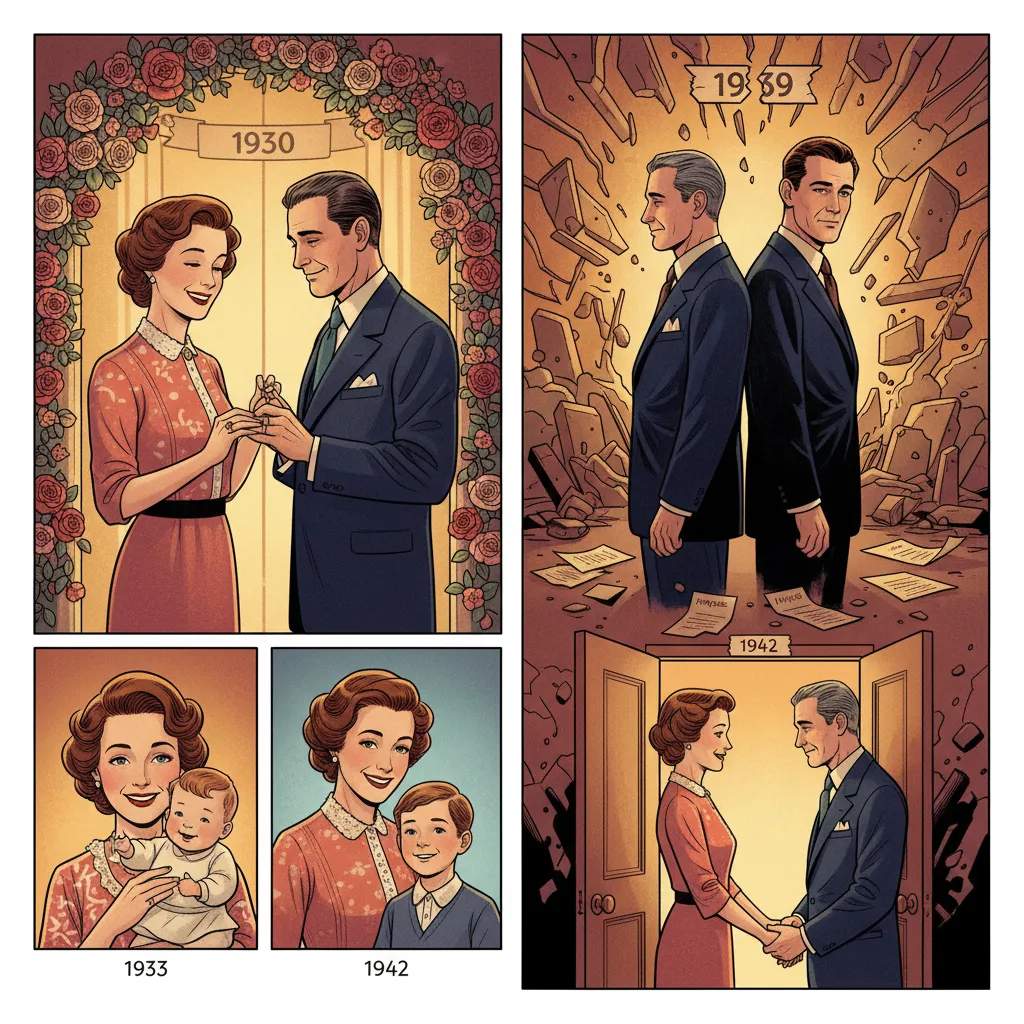
Estée married Joseph Lauter (later changed to Lauder) in 1930. The couple had two sons: Leonard in 1933 and Ronald in 1944. The marriage was turbulent — they divorced in 1939 and remarried in 1942 — but Joe Lauder proved to be a steady, supportive partner who managed the business side while Estée did what she did best: sell.
And sell she did. With a ferocity that bordered on clinical.
Estée Lauder did not wait for customers to come to her. She went to them. She stood outside beauty salons and grabbed women by the arm. She attended society events and cornered socialites. She walked up to women on the street and told them their skin looked dry, then pulled a jar of cream from her handbag and applied it to their face — with or without permission.
“I never let a woman walk by without touching her face. I would say, ‘You have beautiful skin, but it could be better. Let me show you.’ And before she could say no, I was already applying the cream. Nobody says no once you’re already touching their face.”
This technique — the unsolicited facial — was Estée’s secret weapon. It accomplished two things simultaneously. First, it got the product on the customer’s skin, where she could feel the quality difference immediately. Second, it created an intimate, personal connection between the saleswoman and the customer that made it psychologically difficult to refuse a purchase.
Was it aggressive? Yes. Was it boundary-violating by modern standards? Absolutely. Did it work? Spectacularly.
Through the 1930s and 1940s, Estée sold her creams at beauty salons, through home demonstrations, and at any social gathering she could infiltrate. She was not yet a major figure in the beauty industry, but she was building something more valuable than a business: a reputation.
Women who used Estée Lauder products told their friends. Word of mouth spread through New York’s social circles. The products were genuinely good — better than most department store brands — and Estée’s personal touch made customers feel special.
🏬 Chapter 3: Saks and the Art of Prestige
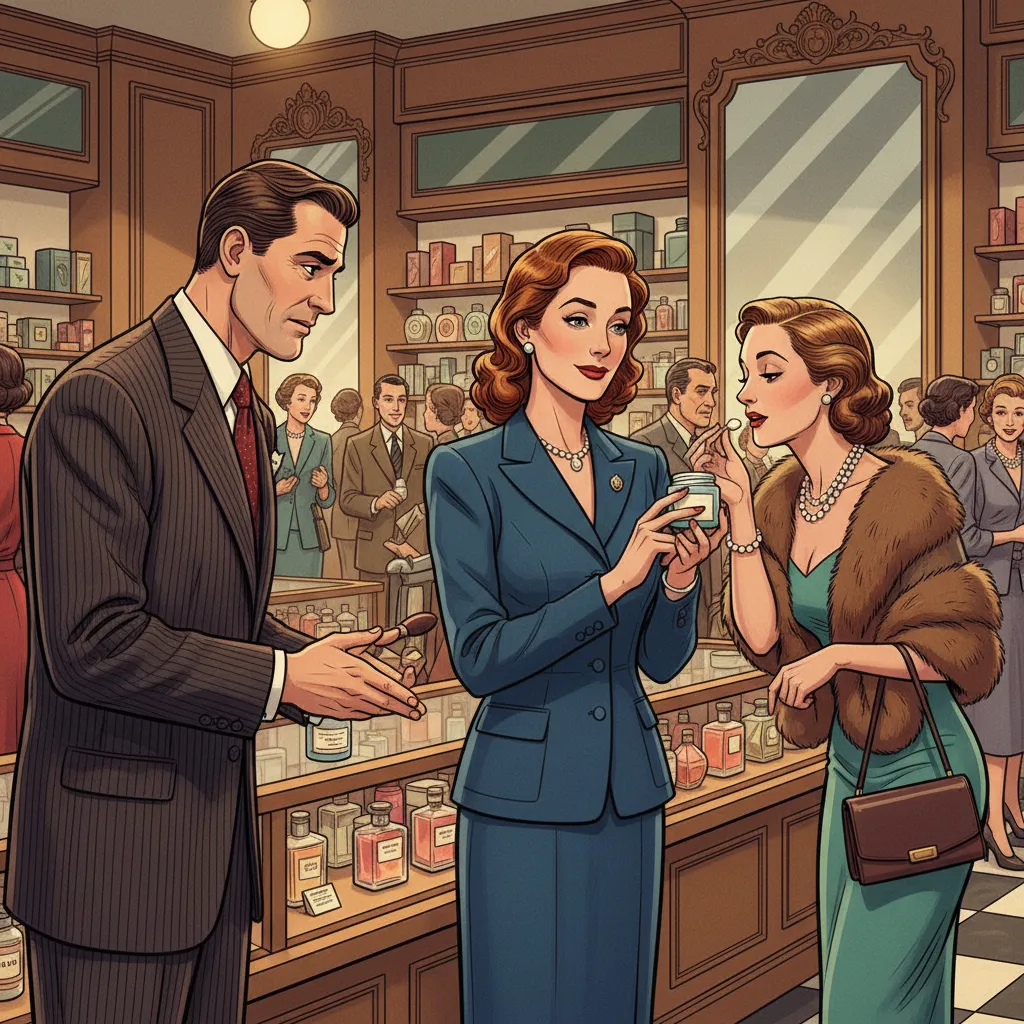
The turning point came in 1948.
Estée Lauder walked into Saks Fifth Avenue — the most prestigious department store in America — and demanded a meeting with the cosmetics buyer.
She didn’t have an appointment. She didn’t have a distributor. She didn’t have a marketing department. She had a bag of products and a personality that could cut through steel.
The buyer agreed to a small order — reportedly after Estée applied cream to her face during the meeting. The products were placed on a small counter in the Saks cosmetics department.
Then Estée did something brilliant. She gave away samples. Thousands of them. She stood at the Saks counter and gave free samples to every woman who walked by. She threw impromptu demonstrations. She created a sense of excitement and exclusivity that drew crowds.
The products sold out within two days.
Saks reordered. Then reordered again. Within months, Estée Lauder had a permanent counter at Saks Fifth Avenue — the most coveted real estate in American retail.
“I didn’t advertise. I couldn’t afford to advertise. So I gave away samples instead. A sample costs me pennies. An advertisement costs thousands. And a sample does something an advertisement can never do: it puts the product on her face. Once it’s on her face, I’ve already won.”
The “gift with purchase” strategy — offering free samples and bonus products with every purchase — became the foundational marketing tactic of the Estée Lauder company. It was widely imitated across the beauty industry and remains a standard practice today.
But Lauder’s genius was understanding why it worked. The gift wasn’t generosity. It was trial. The biggest barrier to premium beauty products wasn’t price — women would pay for products they believed in. The barrier was trial. Women were reluctant to spend $30 on a cream they’d never used. Give them a free sample, and the barrier disappears.
From Saks, Estée expanded to Neiman Marcus, Bloomingdale’s, Harrods, and eventually every prestige department store in the world. She never sold through drug stores, discount chains, or mass-market retailers. The brand was prestige, and prestige required prestige distribution.
✨ Chapter 4: Youth-Dew and the Perfume Revolution
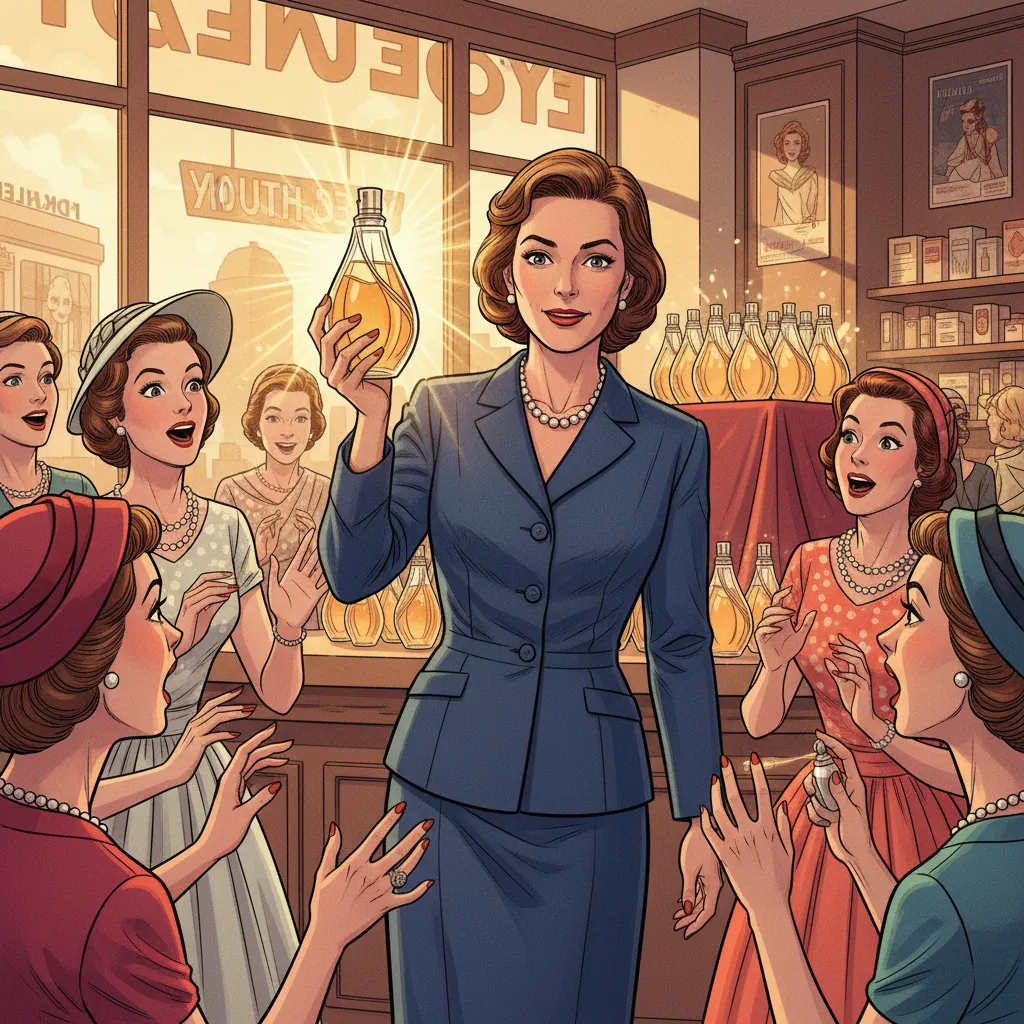
In 1953, Estée Lauder launched the product that would transform her company from a small cosmetics brand into a major beauty empire: Youth-Dew.
Youth-Dew was a bath oil that doubled as a perfume. It was priced at $8.50 — affordable enough for women to buy for themselves rather than waiting for it as a gift (at the time, perfume was traditionally purchased by men as gifts for women).
This positioning was radical. By making the product a “bath oil” rather than a “perfume,” Lauder gave women permission to buy fragrance for themselves. It wasn’t an extravagance — it was self-care. The distinction was psychological but commercially powerful.
Youth-Dew was a sensation. Sales reached $50,000 in the first year, then $150,000, then millions. By the mid-1960s, Youth-Dew was generating the majority of Estée Lauder’s revenue and had established the company as a major player in the beauty industry.
“Before Youth-Dew, women waited for men to buy them perfume. After Youth-Dew, women bought their own. I didn’t just sell a fragrance. I gave women permission to pamper themselves.”
The success of Youth-Dew demonstrated a principle that would guide the company for decades: fragrance is the gateway to prestige beauty. A $50 bottle of perfume was accessible to women who couldn’t afford $200 in skincare. Once they bought the perfume, they were in the Lauder ecosystem — exposed to the brand, familiar with the counters, and ready to trade up to skincare and cosmetics over time.
This funneling strategy — using accessible products to introduce customers to the brand, then moving them upmarket — would become the template for the entire prestige beauty industry.
🌍 Chapter 5: Building the Prestige Machine

Through the 1960s, 70s, and 80s, Estée Lauder Companies grew into the largest prestige beauty company in the world.
The growth was driven by a combination of organic expansion and brand creation. Estée Lauder the brand remained the flagship, but the company launched additional brands to serve different market segments:
Clinique (1968) — a dermatologist-tested, allergy-tested skincare and cosmetics line that pioneered the “clean beauty” concept decades before the term existed. Clinique’s simple, clinical packaging and three-step skincare system became iconic.
Aramis (1964) — one of the first prestige men’s fragrance and grooming lines.
Prescriptives (launched 1979) — a custom-blended foundation line.
Each brand had its own identity, its own positioning, and its own counter at the department store. They competed with each other, which might seem counterproductive but was actually strategic: better that Estée Lauder Companies’ brands compete with each other than with competitors.
The company was run as a family business. Joseph Lauder handled operations and finance. Estée handled product development and sales. Their sons — Leonard and Ronald — joined the business in the 1960s, with Leonard eventually becoming CEO in 1982.
“This is a family company. We make decisions for the long term, not for the next quarter. We invest in the brand, we invest in quality, and we never — ever — discount. The moment you discount, you stop being prestige. And once you stop being prestige, you’re just another cosmetics company.”
The no-discount rule was sacrosanct. Estée Lauder products were never on sale. Never. The gift-with-purchase provided perceived value without undermining the price point. This discipline maintained the brand’s prestige positioning and protected margins.
👑 Chapter 6: The Social Climber
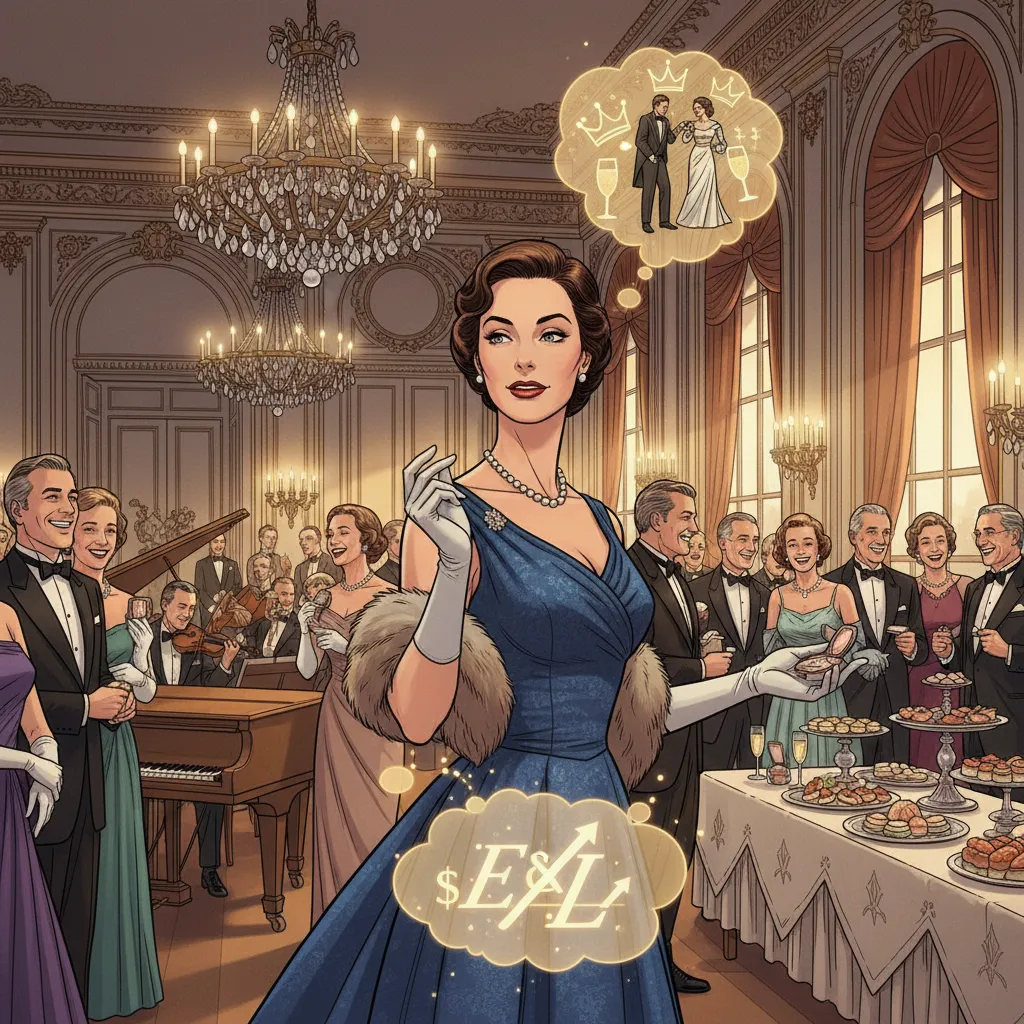
Estée Lauder’s business ambitions were matched — perhaps exceeded — by her social ambitions.
Born to immigrant parents in Queens, Lauder was consumed by a desire to penetrate New York’s upper echelons. She befriended socialites, attended charity galas, and systematically worked her way into the social circles that were her target customers.
She was not subtle about this. Lauder would introduce herself to wealthy women at parties, invite them to lunch, and invariably turn the conversation to skincare. Every social interaction was, at some level, a sales call.
She also fabricated her background. Lauder claimed to be the daughter of European aristocrats, not Hungarian-Czech immigrants. She said she grew up in Manhattan, not Queens. She subtracted years from her age. She constructed an elaborate fiction of privilege that supported her brand’s positioning.
“Estée understood that in the prestige beauty business, the founder IS the brand. If the founder was a girl from Queens with immigrant parents, the brand was aspirational but relatable. If the founder was a European aristocrat with connections to royalty, the brand was aspirational and exclusive. She chose exclusive.”
The social climbing was relentless and successful. By the 1970s, Estée Lauder was a fixture of New York society, counted among the city’s most prominent hostesses, and was received by royalty, presidents, and celebrities.
Whether this social ascent was motivated by personal ambition or brand strategy (or both) is debatable. What’s not debatable is the result: Estée Lauder the person became inseparable from Estée Lauder the brand. Her elegance, her confidence, her impeccable appearance — all reinforced the brand’s positioning as the aspirational choice for women who valued quality and sophistication.
🏢 Chapter 7: The Empire Expands

In 1995, Estée Lauder Companies went public on the New York Stock Exchange. The IPO valued the company at approximately $7 billion. The Lauder family retained majority control through a dual-class share structure that gave them voting power disproportionate to their economic ownership.
This structure would prove crucial. It allowed the family to make long-term investments in the brand without short-term market pressure — exactly the kind of patient, prestige-preserving strategy that the family had practiced for decades.
After the IPO, the company embarked on an aggressive acquisition strategy, purchasing brands that complemented its portfolio:
- MAC Cosmetics (1994-98) — the professional makeup brand beloved by artists and celebrities
- Bobbi Brown (1995) — the natural beauty brand founded by the makeup artist
- La Mer (1995) — the ultra-luxury skincare line with cult-status moisturizer
- Jo Malone London (1999) — the British fragrance house
- Tom Ford Beauty (2005) — the luxury fashion designer’s beauty line
- Too Faced (2016) — the millennial-focused cosmetics brand
- Dr. Jart+ (2019) — the Korean skincare brand
- Le Labo — the artisanal fragrance house
Each acquisition targeted a specific demographic, price point, or aesthetic that the existing portfolio didn’t serve. The strategy was not to integrate these brands into the Estée Lauder mothership but to let them operate independently, maintaining their unique identities while benefiting from the company’s distribution, manufacturing, and supply chain capabilities.
“The genius of Estée Lauder Companies was the portfolio approach. They didn’t try to make one brand that appealed to everyone. They created and acquired a portfolio of brands — each with its own identity, its own customer, and its own positioning. Together, they captured the entire prestige beauty market.”
By the 2020s, Estée Lauder Companies owned over 25 brands and was generating annual revenue exceeding $15 billion. The company was the world’s largest prestige beauty company by revenue.
👵 Chapter 8: The Matriarch’s Exit
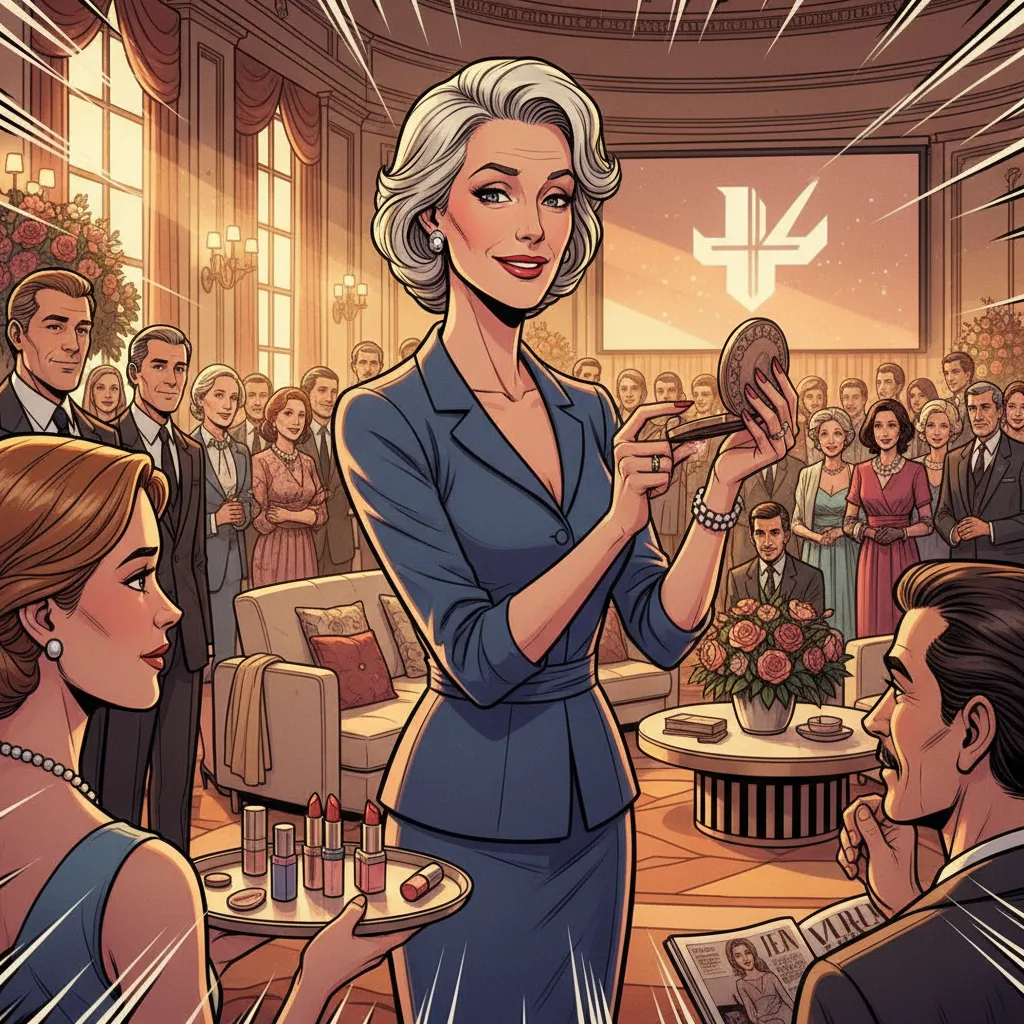
Estée Lauder stepped back from day-to-day management in the 1990s but remained involved in the business and the brand until late in life. She continued to attend events, review products, and — reportedly — grab unsuspecting women by the face and apply cream.
She died on April 24, 2004, at the age of 97 (or 95, depending on which birth year you believe).
Her legacy was a company worth tens of billions, a brand that was synonymous with prestige beauty, and a family dynasty that continued to control the business.
Leonard Lauder, her elder son, served as CEO until 1999 and then as chairman. He became one of the most prominent art collectors and philanthropists in the world, donating his collection of Cubist art (valued at over $1 billion) to the Metropolitan Museum of Art.
The Lauder family’s combined wealth was estimated at over $40 billion by the mid-2020s, derived primarily from their controlling stake in Estée Lauder Companies.
“She started with nothing — a jar of cream and the audacity to put it on strangers’ faces. She ended with everything — a global beauty empire, a fortune worth billions, and a brand that will outlive everyone who remembers her. That’s the power of relentless, shameless, absolutely unstoppable salesmanship.”
📉 Chapter 9: The Turbulence

The 2020s were turbulent for Estée Lauder Companies. The stock price, which had peaked at over $370 in early 2022, declined sharply over the following years due to several challenges.
The Chinese market — which had been a major growth driver — softened significantly. Chinese consumers, who had been enthusiastic buyers of prestige beauty products, became more cautious amid economic uncertainty. Travel retail (duty-free shops at airports), which had been another key revenue source, was slow to recover after the pandemic.
Competition intensified from indie brands, K-beauty brands, and direct-to-consumer competitors that used social media and influencer marketing to reach consumers without department store counters.
The stock fell below $70 by late 2025 — a decline of over 80% from its peak. The Lauder family, which still controlled the company, faced questions about leadership and strategy.
The challenges were real but the brand portfolio remained strong. La Mer, MAC, Jo Malone, Le Labo, and the flagship Estée Lauder brand continued to hold leading positions in their categories. The question was whether the company could adapt to a beauty market that was increasingly digital, increasingly global, and increasingly driven by social media rather than department store counters.
🏆 Chapter 10: What Estée Left Behind
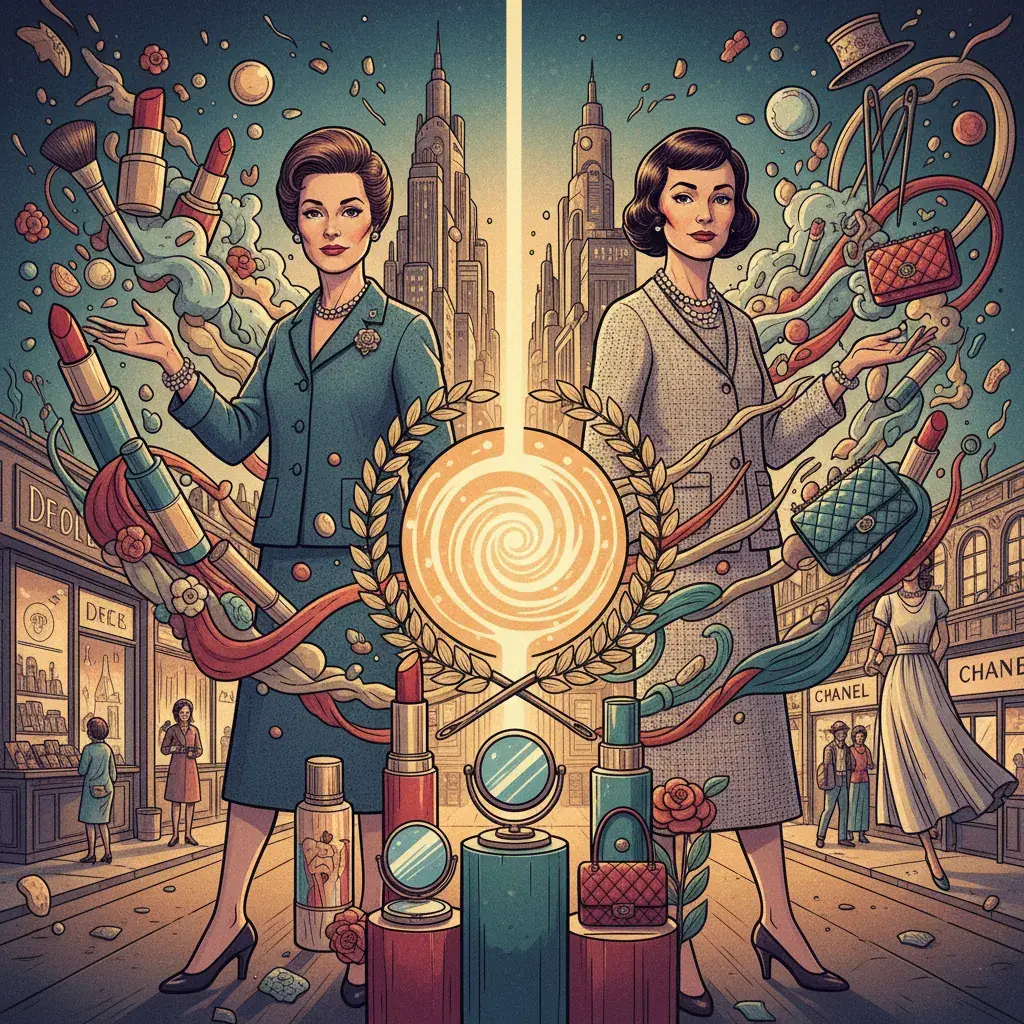
Estée Lauder’s legacy in the beauty industry is comparable to Coco Chanel’s legacy in fashion: foundational, transformative, and enduring.
The Lauder Playbook:
-
Touch the customer. Lauder’s insistence on physical contact — getting the product on the customer’s skin — was the most effective sales technique in beauty history. In a digital age, the lesson translates to: reduce the friction of trial. Free samples, try-before-you-buy programs, and generous return policies all serve the same function.
-
Gift with purchase. The concept seems simple but it’s psychologically sophisticated. The “gift” provides perceived value that justifies the price, encourages impulse purchases, and introduces customers to new products they wouldn’t have tried otherwise.
-
Never discount. Discounting destroys prestige. Once a customer sees your product on sale, they’ll never pay full price again. The discipline to maintain price integrity is one of the hardest things in luxury branding and one of the most important.
-
Build a portfolio, not a brand. A single brand can’t appeal to everyone. A portfolio of brands — each with its own identity and customer — can capture the entire market while maintaining the exclusivity of each individual brand.
-
Family control enables long-term thinking. The Lauder family’s dual-class share structure allowed them to invest in the brand over decades without quarterly earnings pressure. This long-term orientation is one of the most powerful competitive advantages in luxury.
“Every woman can be beautiful. That is not a platitude. That is a business model.”
Estée Lauder built that business model one face at a time. Literally.
Estée Lauder Companies (NYSE: EL) is the world’s largest prestige beauty company with over 25 brands and annual revenue exceeding $15 billion. The Lauder family maintains majority voting control through a dual-class share structure. Estée Lauder died on April 24, 2004, at the age of 97.
⚔️ Chapter 11: The Cutthroat Crown (1950s-1970s)

If Estée Lauder had a motto beyond “touch every face,” it might have been “win at all costs.” The beauty industry of the mid-20th century was less a genteel salon and more a gladiatorial arena, and Estée was ready to throw down. Her primary targets, the reigning queens of the cosmetics world, were Helena Rubinstein and Elizabeth Arden. These formidable women had built empires decades before Estée even brewed her first batch of Super Rich All-Purpose Cream, and they viewed this upstart with a mixture of disdain and, eventually, grudging fear.
The Original Beauty Queens: A Rivalry Forged in Fire
Rubinstein and Arden were legends, known for their distinct salon experiences and personal brands. Rubinstein, an eccentric Polish émigré, championed scientific skincare and exotic ingredients. Arden, a Canadian farm girl turned socialite, focused on elegance, good manners, and the color pink. They famously despised each other, often having their limousines deliberately crash outside each other’s Fifth Avenue salons – a level of petty drama that would make reality TV producers weep with joy. Estée, however, saw not just rivals, but weaknesses. Rubinstein was older, set in her ways, and often criticized for an overly clinical approach. Arden, for all her polish, was sometimes seen as a bit too conservative. Estée, with her relentless personal touch and innovative fragrance strategy (hello, Youth-Dew!), was the disruptive force they hadn’t anticipated. She wasn’t just selling cream; she was selling aspiration, access, and a bit of scandal.
Strategic Sabotage and Unapologetic Ambition
Estée Lauder didn’t play by the rules; she rewrote them, often with a mischievous glint in her eye. She famously told her sales staff to avoid mentioning her competitors by name, preferring to simply imply that other brands were “old-fashioned” or “not as effective.” But sometimes, her tactics were a little less subtle. Legend has it that when Estée Lauder counters were just starting to gain traction in department stores, she would occasionally send her employees to department stores with competing brands, particularly Arden and Rubinstein, to discreetly spritz Youth-Dew in their aisles. The idea? Get that intoxicating scent associated with a more established brand, confuse customers, and subtly steal their thunder. It was guerrilla marketing before the term existed, a deliciously audacious move that perfectly encapsulated Estée’s “all’s fair in love and war (and beauty)” philosophy. She knew that to stand out against titans who had already claimed their thrones, she had to be bolder, smarter, and just a little bit ruthless. She was, after all, building an empire, not a tea party.
The Revlon Rumble: Battling the Mass Market King
Beyond the high-society catfights with Arden and Rubinstein, Estée also had her eye on the burgeoning mass market, where the undisputed king was Charles Revson of Revlon. Revson, a brilliant marketer, had built his empire on nail polish and then bold, accessible makeup, promising every woman a chance at glamour. His famous quote, “In the factory, we make cosmetics. In the drugstore, we sell hope,” resonated with millions. Estée, meanwhile, was meticulously crafting a different narrative: “prestige,” “luxury,” “exclusive.” She knew she couldn’t out-Revlon Revlon in the drugstore aisle, but she could carve out a superior niche in department stores. Her strategy of offering “gift-with-purchase” (a concept she practically invented and perfected) was a direct counter to Revson’s mass-market promotions. It created a sense of exclusivity and value, subtly telling customers, “You’re getting something special, not just a discount.” While Revson aimed for ubiquitous reach, Estée aimed for aspirational loyalty, meticulously cultivating a clientele willing to pay a premium for her products, securing her own unique crown in the fiercely competitive beauty kingdom.
🧬 Chapter 12: The Dynasty Deepens: Innovation & Influence (1960s-1990s)
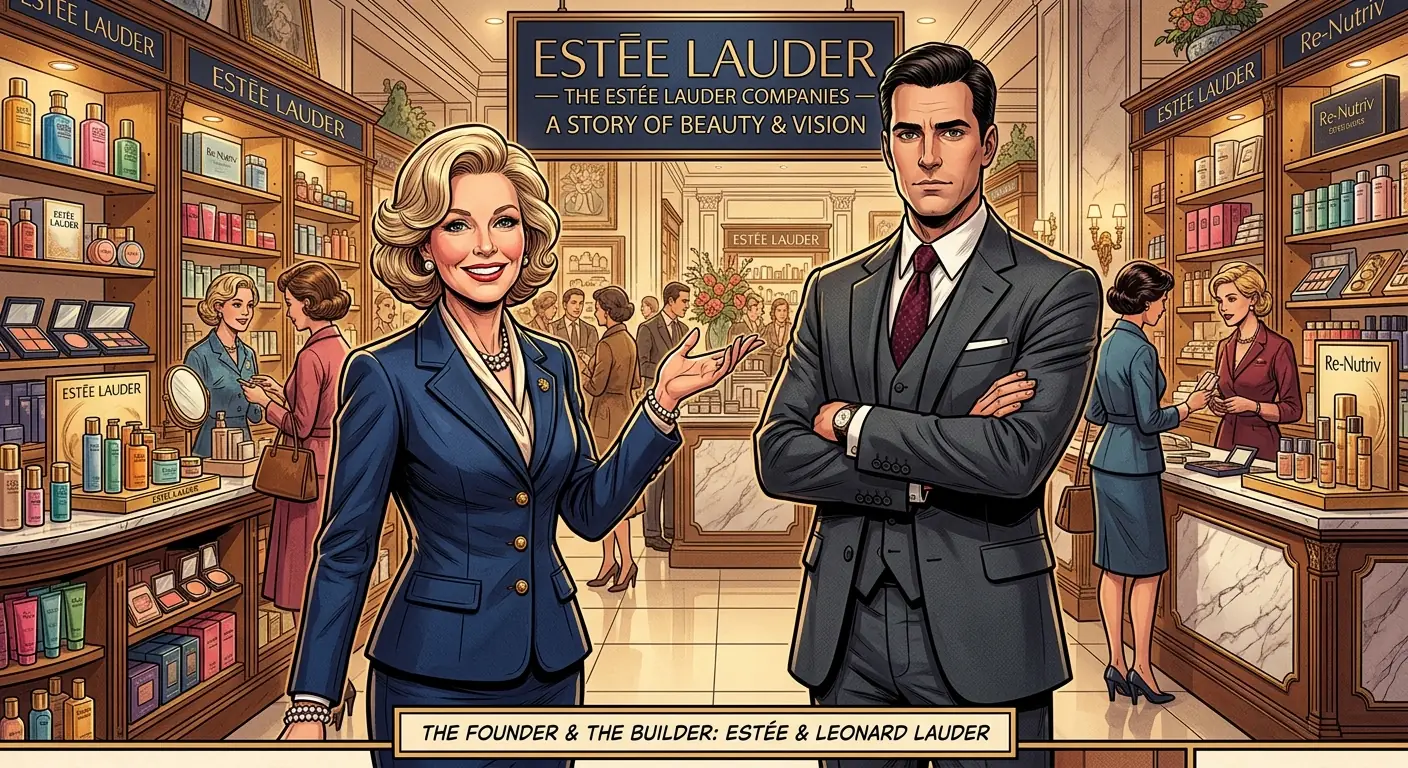
Estée Lauder might have been the face, the fire, and the relentless sales engine of her company, but even empresses need a succession plan. As the business exploded in the 1960s and 70s, it became clear that the kitchen chemist’s personal touch, while invaluable, couldn’t scale a global empire alone. Enter her sons, Leonard and Ronald Lauder, who, despite their mother’s occasionally iron-fisted control, brought a new kind of strategic thinking and professional management to the burgeoning beauty behemoth. Leonard, in particular, stepped into the CEO role in 1982, taking the reins from his aging mother and steering the company into a new era of corporate sophistication.
Leonard Lauder Steps Up: The Heir Apparent
Leonard Lauder wasn’t just a dutiful son; he was a brilliant strategist with a Harvard MBA and a keen understanding of retail dynamics. While Estée focused on the “touch the face” philosophy, Leonard was thinking about market share, brand architecture, and international expansion. He professionalized the company, implementing sophisticated marketing research, streamlining operations, and preparing the company for a future beyond its charismatic founder. It was Leonard who understood the power of brand segmentation, realizing that a single Estée Lauder brand, no matter how prestigious, couldn’t capture every demographic. He was the architect behind the company’s multi-brand strategy, a crucial pivot that allowed them to reach different consumer groups without diluting the core luxury appeal of the flagship brand. This foresight was critical in an increasingly diverse beauty market, proving that while Estée built the foundation, Leonard built the skyscraper.
Clinique: A Different Kind of Clean
One of Leonard Lauder’s most brilliant moves was the launch of Clinique in 1968. While Estée Lauder was all about glamour, fragrance, and the allure of aspiration, Clinique was positioned as the antithesis: “allergy tested,” “100% fragrance free,” and developed by dermatologists. It was a direct response to a growing consumer demand for scientific, no-nonsense skincare, particularly among younger, more educated women who were wary of perfumed creams. The idea for Clinique stemmed from a 1967 Vogue article titled “Can Great Skin Be Created?” which featured dermatologist Dr. Norman Orentreich. Leonard, seizing the opportunity, brought Orentreich on board to develop the line. Clinique wasn’t just a product; it was a system: the “3-Step Skin Care System” (Cleanse, Exfoliate, Moisturize) became iconic. It was sold in its own distinct, clinical-looking counters, staffed by white-coated “consultants,” not makeup artists. This stark contrast allowed Estée Lauder Companies to capture a completely different market segment without cannibalizing its existing luxury customers. It was a masterclass in brand differentiation, a move that would later be replicated by many other beauty giants.
Evelyn Lauder and the Pink Ribbon: Philanthropy as Legacy
While Estée was a force of nature, her daughter-in-law, Evelyn Lauder (Leonard’s wife), left an indelible mark on the company’s legacy and the world at large. A savvy businesswoman in her own right, Evelyn was instrumental in developing new products and marketing strategies, but her most enduring contribution came from a deeply personal place. In 1992, after a breast cancer diagnosis, Evelyn co-created the Pink Ribbon with Self magazine editor Alexandra Penney, launching the Breast Cancer Research Foundation (BCRF) the following year. What began as a simple ribbon and a powerful message quickly blossomed into one of the most recognizable and impactful corporate philanthropy initiatives globally. The Estée Lauder Companies’ annual Breast Cancer Campaign, which lights up landmarks in pink and sells limited-edition products, has raised over $118 million for global research since its inception. Evelyn transformed a personal struggle into a global movement, demonstrating that a beauty empire could also be a force for profound social good, adding a layer of deep meaning and purpose to the Lauder name that went far beyond cosmetics.
🚀 Chapter 13: The Next Frontier: Digital, Diversity, and Domination (2000s-Present)

Estée Lauder, the woman, may have departed this earthly realm in 2004 at the venerable age of 97, but her empire? It’s not just alive; it’s thriving, morphing, and conquering new territories faster than you can say “Advanced Night Repair.” The 21st century presented a whole new set of challenges for a company built on in-person sales and department store prestige: the rise of e-commerce, the democratization of beauty information via social media, and a seismic shift in consumer values towards diversity, sustainability, and transparency. Yet, Estée Lauder Companies (ELC) has proved remarkably adept at navigating these treacherous waters, leveraging its foundational strengths while boldly embracing the future.
Navigating the Digital Tsunami
For a company whose success was built on the tactile, sensory experience of touching a face or spritzing a perfume, the digital revolution was a potential existential threat. How do you convey luxury and efficacy through a screen? ELC’s answer was multifaceted. They invested heavily in their own e-commerce platforms, ensuring a seamless online shopping experience that mirrored the prestige of their physical counters. More importantly, they understood the power of influencer marketing and social media. Instead of shying away from digital natives, they embraced them, partnering with beauty bloggers, YouTubers, and Instagram stars to reach new, younger demographics. They learned to tell their brand stories not just through glossy magazine ads, but through authentic (or authentically-staged) digital content, adapting Estée’s original “word of mouth” strategy for the 21st century. The challenge was immense, but by maintaining their core values of quality and prestige while embracing new communication channels, ELC demonstrated a remarkable agility.
Acquisitions Galore: Expanding the Portfolio
One of the most defining strategies of ELC in the 21st century has been its aggressive and intelligent acquisition strategy. Under the continued leadership of the Lauder family (Leonard Lauder served as CEO until 1999, then Chairman, and now Chairman Emeritus, with Fabrizio Freda becoming CEO in 2009), the company recognized that organic growth alone wouldn’t cut it in a fragmented, fast-moving market. Instead of trying to force its heritage brands into every niche, ELC began acquiring successful, culturally relevant brands that resonated with diverse consumer segments. Think MAC Cosmetics (acquired in 1994, but truly scaled globally in the 2000s, becoming a powerhouse for professional makeup and diversity), Jo Malone London (1999, revolutionizing luxury fragrance), Kiehl’s (2000, bringing a “heritage apothecary” vibe), Smashbox (2010, pro-artist makeup), Too Faced (2016, playful, millennial-focused makeup), and the game-changing The Ordinary/DECIEM (2021, bringing affordable, science-backed skincare to the masses). This shrewd diversification has allowed ELC to maintain its prestige foothold while simultaneously tapping into everything from indie beauty to derm-focused skincare, creating a sprawling, resilient portfolio that generates billions of dollars in annual revenue and cements its position as a global beauty leader.
The Enduring Touch: Estée’s Legacy in the Modern Age
Estée Lauder’s legacy isn’t just in the jars of cream or bottles of perfume; it’s in the very fabric of the modern beauty industry. She pioneered the concept of luxury beauty as an accessible aspiration, not just for the elite. Her relentless focus on customer experience, the power of sampling, and the brilliance of the gift-with-purchase are still industry standards. Even today, the company she built remains fiercely committed to innovation, quality, and the idea that beauty is both a science and an art. With a market capitalization often exceeding $100 billion, and a presence in over 150 countries, ELC continues to dominate. From the original Kitchen Chemist to a global powerhouse navigating AI and TikTok, the spirit of Estée—her drive, her vision, her unwavering belief in the transformative power of a little cream and a lot of hustle—continues to touch faces and, yes, take money, around the world. What a woman.
💡 Key Insights
- ▸ Lauder pioneered the 'gift with purchase' concept — offering free samples and bonus products with every purchase. This wasn't generosity; it was calculated addiction creation. The free sample got the product on a customer's face. Once it was on her face, she could feel the quality difference. And once she felt the difference, she was hooked. Lauder understood that the biggest barrier to premium beauty products was trial, not price. Remove the trial barrier and the sales follow.
- ▸ The Lauder family's decision to maintain majority control through a dual-class share structure allowed them to make long-term brand investments that public market pressures might have prevented. The family consistently chose brand equity over short-term profits — investing in prestige positioning, refusing to discount, and acquiring brands strategically. This long-term orientation, enabled by family control, is a key reason Estée Lauder Companies became the world's largest prestige beauty company.