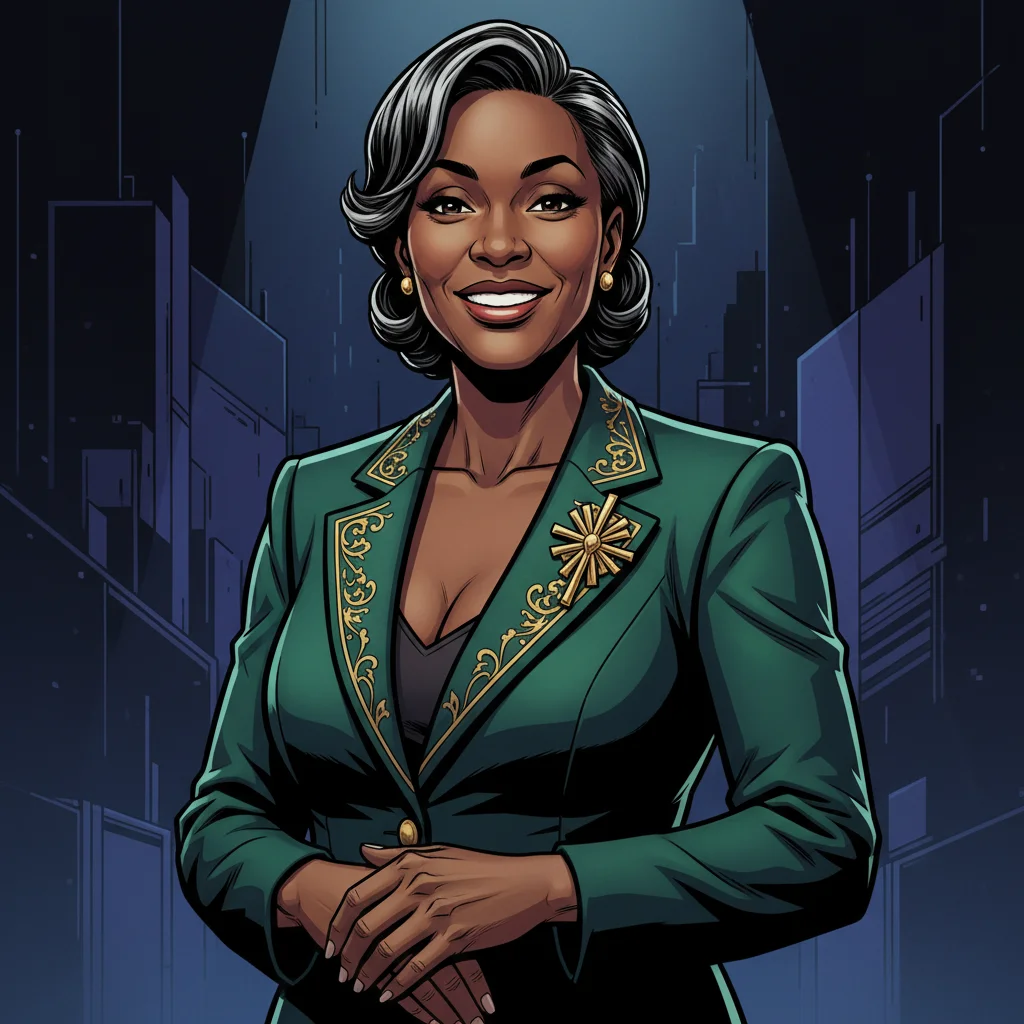
Oprah Winfrey: The Girl Nobody Wanted Who Became the Most Powerful Woman in Media
Born to an unmarried teen in rural Mississippi, sexually abused at nine, pregnant at fourteen — then she built a $2.8 billion empire that changed how America talks, reads, thinks, and buys.
View all stories about this mogul
On January 29, 1954, in the tiny town of Kosciusko, Mississippi — population 7,000, no hospital, no traffic lights — an unmarried teenage housemaid named Vernita Lee gave birth to a girl she named Orpah, after the biblical figure in the Book of Ruth. A clerical error on the birth certificate changed the name to Oprah. It was the first of many accidents in this child’s life that would turn out to be destiny.
There was no father present. Vernon Winfrey, a soldier and later a barber in Nashville, wouldn’t learn he had a daughter until later. Vernita couldn’t afford to raise the baby. So infant Oprah was sent to live with her maternal grandmother, Hattie Mae Lee, on a small farm in rural Mississippi — no running water, no electricity, poverty so deep it didn’t even know it was poor.
Sixty years later, that unwanted baby girl would be worth $2.8 billion, would have been called “the most influential woman in the world” by CNN, Time, Life, and virtually every publication on Earth, and would have single-handedly redefined what a media company could be. She would make presidents and destroy bestseller lists. She would turn her own pain into the most valuable brand in entertainment history.
This is how she did it.
🌾 Chapter 1: Mississippi Dirt — A Childhood No One Would Choose (1954–1968)

Oprah’s grandmother Hattie Mae was strict, deeply religious, and terrifyingly no-nonsense. She taught Oprah to read by age three — not out of progressive parenting philosophy, but because she believed literacy was a tool of survival for a Black girl in Jim Crow Mississippi. By four, Oprah was reciting Bible passages and poetry in front of the congregation at Faith United Mississippi Baptist Church. Church ladies called her “The Preacher.”
“I was raised with an outhouse, no plumbing. Nobody had anything, so you didn’t know you were poor. But my grandmother gave me the foundation for success. She taught me that I could do anything.”
Hattie Mae also whipped her. Regularly. With a switch that Oprah was forced to choose herself from the yard. It was the discipline of the rural Deep South in the 1950s — brutal by modern standards, but Oprah has consistently credited her grandmother with instilling in her the iron-willed work ethic that would carry her through everything that came next.
The Milwaukee Years
When Oprah was six, her mother Vernita — now living in Milwaukee, working as a housemaid — took her back. It was a disaster.
Vernita worked long hours. Supervision was nonexistent. Oprah has spoken publicly about being sexually abused starting at age nine — by a nineteen-year-old cousin, then by a family friend, then by an uncle. The abuse continued for years. She told no one. No one asked.
“I was silenced. For years. I carried the shame of it like it was mine to carry. It wasn’t.”
At thirteen, she ran away from home. At fourteen, she became pregnant. The baby, a boy, was born premature and died shortly after birth. Oprah has called this period the darkest of her life — a teenage girl, already a survivor of years of sexual abuse, now grieving a child she never got to raise, living in a home where she felt invisible.
Vernita, overwhelmed, sent Oprah to Nashville to live with Vernon Winfrey. It was the decision that saved her life.
Vernon’s Rules
Vernon Winfrey was a barber, a city councilman, and a man who believed in discipline the way other people believe in oxygen. He set rules that would have made a Marine drill sergeant nod in approval: mandatory book reports every week. No television until homework was finished. A curfew enforced with the certainty of gravity. And a weekly vocabulary list — Oprah had to learn five new words every week and use them in sentences.
“My father saved my life. He said, ‘You will not be a child who just gets by. You will be a child who excels.’”

At East Nashville High School, Oprah exploded. She joined the drama club, the debate team, the student council. She won a speech competition sponsored by the Elks Club that earned her a full scholarship to Tennessee State University. At sixteen, she landed a part-time job reading the news at WVOL, a local Black radio station. She was still in high school.
At seventeen, she won the Miss Black Tennessee beauty pageant. At nineteen, still a sophomore at Tennessee State, she was hired as a co-anchor at WTVF-TV, Nashville’s CBS affiliate — making her the youngest news anchor in the station’s history and the first Black female news anchor in Nashville television.
She was a teenager on the evening news. And she was just getting started.
📺 Chapter 2: Baltimore, Chicago, and the Birth of a Phenomenon (1976–1986)
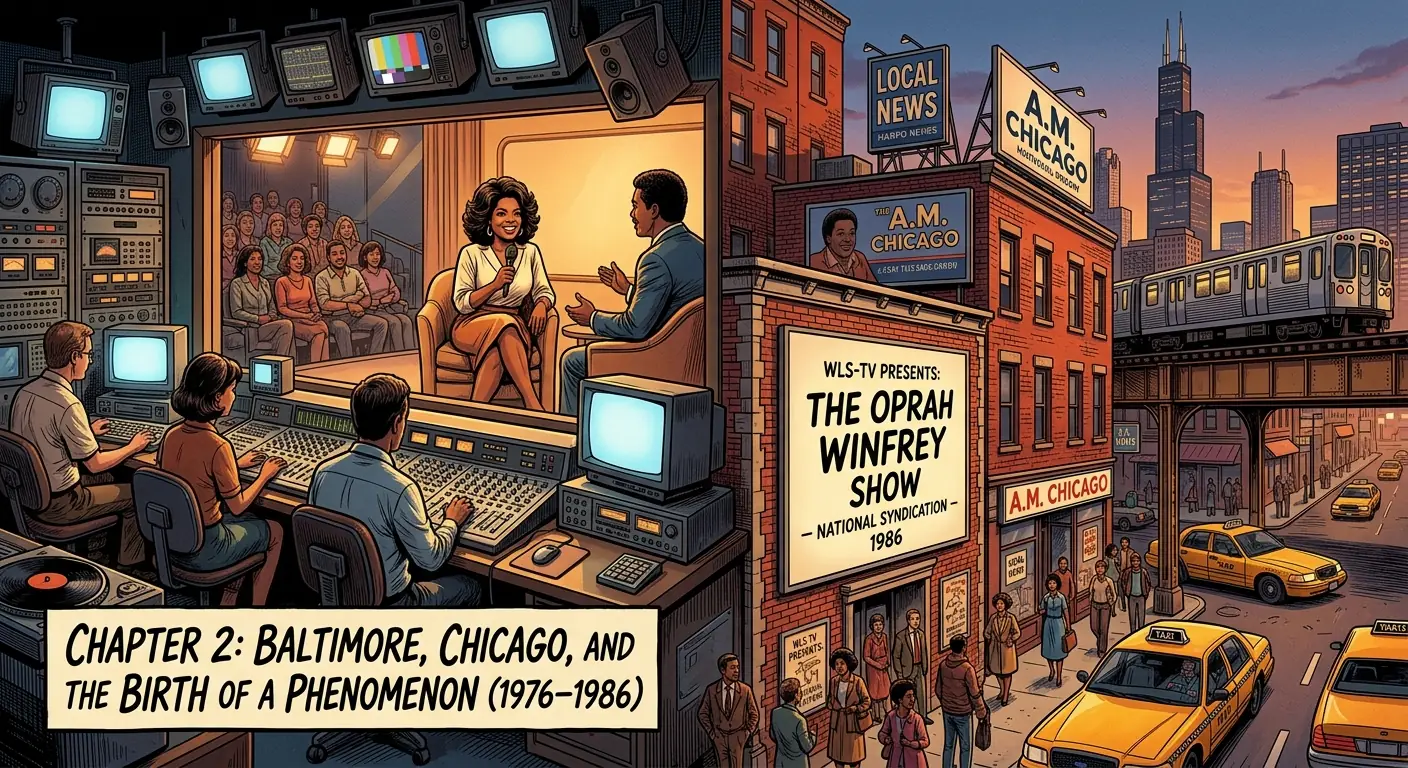
In 1976, Oprah moved to Baltimore to co-anchor the six o’clock news at WJZ-TV. It was supposed to be her big break. It almost ended her career.
The producers hated her. She was “too emotional.” She ad-libbed when she should have read the teleprompter. She cried during sad stories. She laughed during happy ones. She mispronounced words. She was, by the rigid standards of 1970s broadcast news, a disaster.
They demoted her. First to the morning cut-ins, then to a graveyard shift nobody watched. Then they tried to remake her entirely — sent her to a New York salon that gave her a bad perm that made her hair fall out. She showed up to work partially bald. They paired her with a co-anchor who openly disliked her. Every signal was the same: you don’t belong here.
And then, in what WJZ management considered a final humiliation, they moved her to a failing local talk show called People Are Talking. It was the television equivalent of being sent to Siberia.
On her first day hosting, August 14, 1978, Oprah interviewed the cast of a dinner theater production. It was not prestige television. But something happened. The audience responded to her. Not because she was polished — she wasn’t. Because she was real. She asked questions a normal person would ask. She laughed at things that were actually funny. She got emotional when something was genuinely emotional. The ratings started climbing.
“The first day I did that talk show, I felt like I’d come home. I knew in my bones that this was what I was supposed to do.”
The Chicago Gamble
In December 1983, Dennis Swanson, the general manager of WLS-TV in Chicago, was looking for someone to host a failing morning talk show called AM Chicago. The show was dead last in its time slot, getting destroyed by Phil Donahue — then the undisputed king of daytime talk television. Swanson watched a tape of Oprah on People Are Talking and flew to Baltimore to meet her.
On January 2, 1984, Oprah Winfrey debuted as the host of AM Chicago.

Within a month, the show had overtaken Donahue in the Chicago ratings. Within three months, it was the number one talk show in Chicago — Donahue’s own home market. Within a year, the show was expanded to a full hour and renamed The Oprah Winfrey Show.
Phil Donahue, to his credit, recognized what was happening. In a later interview, he said: “She was a force I’d never seen before. She had this ability to connect with people that was almost supernatural.”
The key to Oprah’s dominance was deceptively simple: she refused to perform objectivity. Every other talk show host maintained professional distance from their guests. Oprah dove in. If a guest was talking about addiction, Oprah talked about her own struggles. If a guest was discussing weight, Oprah discussed hers. If a guest cried, Oprah cried. If a guest told a joke, Oprah’s laugh — that full-body, head-thrown-back, genuine roar — shook the studio.
She wasn’t just empathetic. She made vulnerability the format. And America, it turned out, was starving for it.
🏗️ Chapter 3: Harpo Productions — Owning the Machine (1986–1998)
In 1985, Oprah starred as Sofia in Steven Spielberg’s The Color Purple. She received an Academy Award nomination for Best Supporting Actress. Hollywood came calling. Agents and managers circled. The conventional play was clear: ride the movie career, do the talk show on the side, let the network keep the profits.
Oprah did something else entirely.
In 1986, she formed Harpo Productions — “Oprah” spelled backward. And on September 8, 1986, The Oprah Winfrey Show went into national syndication, distributed by King World Productions to 120 markets across the United States.
The numbers were immediate and staggering. The show attracted 10 million viewers in its first week of national syndication. By the end of 1986, it was the highest-rated talk show in America. By 1987, it was generating $125 million in annual revenue.
But here is the move that separates Oprah from every other talk show host who ever lived: in 1988, she renegotiated her contract and acquired ownership of The Oprah Winfrey Show from ABC. Complete ownership. Master tapes, syndication rights, everything. The show would still air on ABC affiliates, but Oprah — through Harpo — owned it.
“The key to owning your own life is owning your own stuff. You can’t be truly free if someone else controls the means of your livelihood.”

In 1990, she purchased a 100,000-square-foot production facility on Washington Boulevard in Chicago for her studios. It was a former U.S. Army armory. She turned it into one of the most important buildings in American media.
The Oprah Effect
By the early 1990s, Oprah wasn’t just hosting a show. She was running an empire — and wielding a kind of cultural power that had no precedent.
Oprah’s Book Club, launched in September 1996, became the single most powerful force in American publishing. When Oprah selected a book, it didn’t just sell well — it detonated. Her first pick, Jacquelyn Mitchard’s The Deep End of the Ocean, sold 600,000 copies in the month after Oprah recommended it. Wally Lamb’s She’s Come Undone went from modest literary fiction to four million copies sold. Toni Morrison, already a Nobel laureate, saw her backlist sales increase by 3,000% after Oprah featured her work.
Publishers called it the “Oprah Effect.” The data was unambiguous: an Oprah Book Club selection was worth, on average, $2 million to $4 million in additional revenue for the publisher. No single person in the history of American letters — not Oppenheimer, not the entire New York Times Book Review — had this kind of power over what people read.
The Oprah Effect extended far beyond books. She featured Dr. Phil McGraw on her show — he became the second-most-watched personality in daytime television. She gave Rachael Ray a cooking segment — Ray got her own show. She championed Dr. Mehmet Oz — he got his own show. She was a one-woman talent incubator, and every franchise she launched added to the gravitational pull of the Harpo universe.
The Numbers
By 1995, The Oprah Winfrey Show was airing in 205 markets domestically and 132 countries internationally. It was seen by an estimated 30 million viewers per week in the United States alone. Harpo Productions was generating north of $300 million in annual revenue, and Oprah’s personal income exceeded $150 million per year.
In 1997, Forbes estimated her net worth at $550 million. She was on track to become a billionaire — and she was doing it without a husband, without inherited wealth, without venture capital, without a single business partner holding equity. Harpo was 100% Oprah-owned.
No Black woman in American history had ever accumulated this kind of wealth. No woman in media, period, had ever owned this much of her own operation. And she was just hitting her stride.
💰 Chapter 4: Billionaire — The Coronation and the Weight of Power (2000–2011)
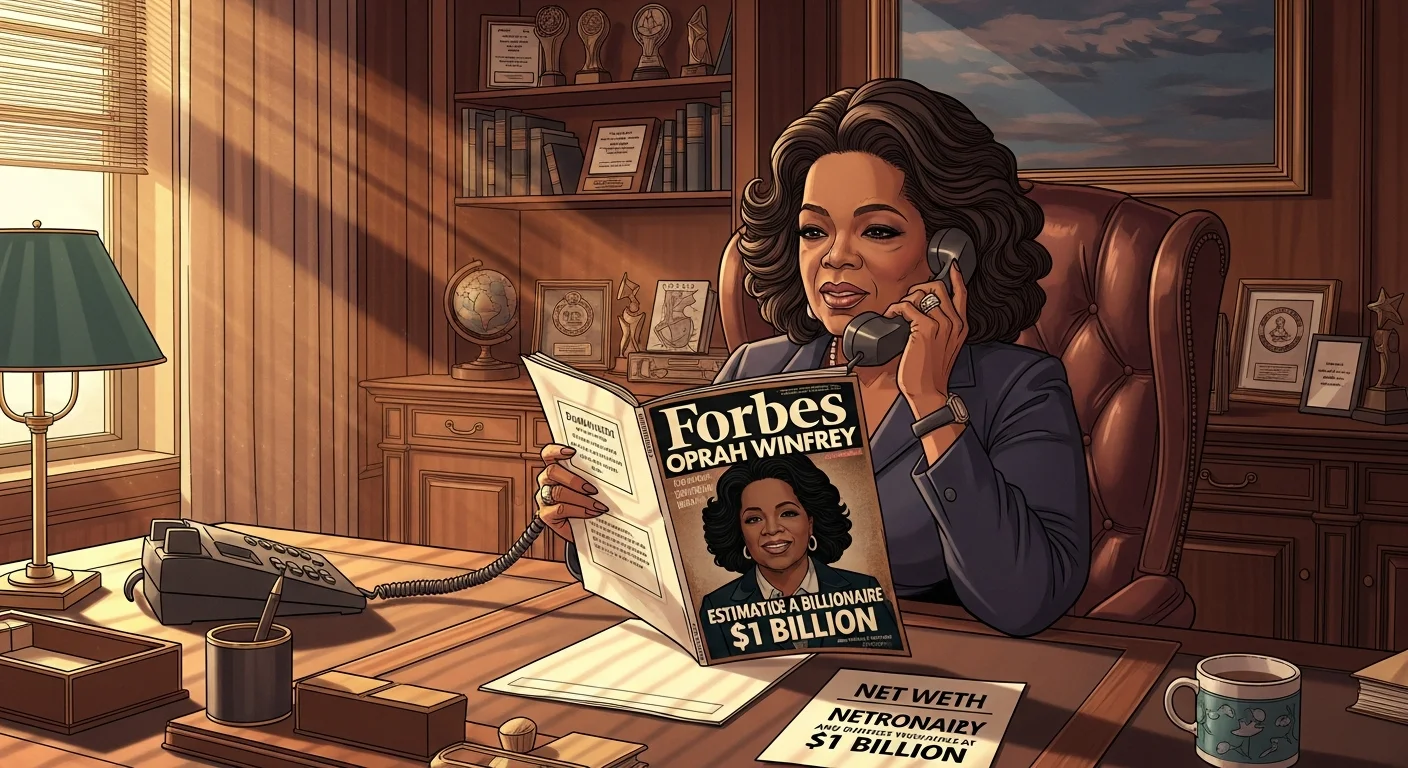
In 2003, Forbes officially declared Oprah Winfrey a billionaire for the first time, estimating her net worth at $1 billion. She was the first Black female billionaire in American history. She was the first self-made female billionaire in the entertainment industry. She was forty-nine years old.
“I don’t think of myself as a poor, deprived ghetto girl who made good. I think of myself as somebody who from an early age knew I was responsible for myself, and I had to make good.”
The milestone was historic, but Oprah didn’t slow down. Throughout the 2000s, The Oprah Winfrey Show remained the most-watched daytime program in America. O, The Oprah Magazine, launched in April 2000 in partnership with Hearst, hit a circulation of 2.7 million in its first year — the most successful magazine launch in publishing history. It generated an estimated $140 million in annual advertising revenue.
Oprah.com became one of the most visited lifestyle sites on the internet. Harpo Films produced a string of award-winning television movies and specials. Oprah’s annual “Favorite Things” episodes became cultural events — the products she featured would sell out within hours, sometimes crashing retailers’ websites.
The Weight Battle — Public Vulnerability as Power
One of the most remarkable aspects of Oprah’s career is how she turned her most personal struggle — her weight — into a source of connection and, ultimately, economic leverage.
In November 1988, Oprah wheeled a wagon loaded with 67 pounds of animal fat onto her stage, representing the weight she’d lost on a liquid diet. It was one of the highest-rated episodes in talk show history — 44 million viewers. She looked triumphant. Within two years, she’d gained all of it back.
The cycle repeated for decades. Oprah lost weight publicly, gained it back publicly, talked about it publicly. Critics mocked her. Tabloids tracked every pound. And through it all, her audience loved her more — not despite the struggle, but because of it. She was the richest woman in entertainment, and she couldn’t conquer the same thing they couldn’t conquer. It made her human. It made her trustworthy.
That trust would later become the foundation of one of her most lucrative investments.
The 2008 Presidential Impact
In December 2007, Oprah endorsed Barack Obama for president — her first-ever political endorsement. It was, by any measure, an earthquake. Economists Craig Garthwaite and Tim Moore later published a study estimating that Oprah’s endorsement was worth approximately one million additional votes in the Democratic primary.
“I’ve never campaigned for anyone before. But I believe in Barack Obama. I believe he is the one.”
She campaigned in Iowa, New Hampshire, and South Carolina. She drew crowds of 30,000 people — larger than Obama’s own rallies at the time. Political analysts credited her with helping Obama win the Iowa caucus, which transformed him from a long-shot candidate into the frontrunner who would eventually become the 44th President of the United States.
The endorsement came with a cost. Oprah’s favorability ratings dipped among Republican viewers, and some analysts estimated the show lost one to two million viewers in the aftermath. Oprah didn’t care.
📡 Chapter 5: OWN — The Network That Nearly Killed the Empire (2011–2016)
On May 25, 2011, Oprah taped the final episode of The Oprah Winfrey Show. After 25 seasons, 4,561 episodes, and an estimated $2 billion in total revenue, the most successful talk show in television history went dark.
The reason: Oprah was building something bigger. In January 2011, she had launched the Oprah Winfrey Network (OWN), a cable channel created in partnership with Discovery Communications. Oprah owned 25.5% of the network and served as its chairman and CEO. The vision was to create a cable network that embodied Oprah’s values — inspiration, self-improvement, authentic storytelling.
It was, for three years, the worst bet of her career.
OWN launched to only 500,000 viewers on premiere night — a fraction of what analysts had projected. The programming was weak. Shows like The Gayle King Show and In the Bedroom with Dr. Laura Berman flopped immediately. Ratings cratered. By late 2011, OWN was averaging fewer than 150,000 viewers in prime time.
The media smelled blood. “Oprah’s Network Is a Disaster,” declared Business Insider. “Is Oprah Over?” asked Newsweek. “The Failure of OWN,” announced the New York Times Magazine. Discovery’s stock dropped. Advertisers pulled back. Industry insiders whispered that Oprah had made the classic mogul mistake — believing her own mythology.
The Rescue
In June 2012, Oprah did something she had never done before: she acknowledged, publicly, that she had failed.
“I was spreading myself too thin. I wasn’t paying enough attention. And the results showed it.”
Then she went to war. She relocated from Chicago to Los Angeles to be physically present at OWN headquarters. She fired executives. She restructured programming. Most critically, she struck a deal with Tyler Perry — another powerhouse in Black media — to produce original scripted content exclusively for OWN. Perry’s shows, including The Haves and the Have Nots and If Loving You Is Wrong, became OWN’s first genuine hits.
By 2013, OWN was profitable. By 2014, it was the fastest-growing cable network in the United States among its target demographic. By 2017, Discovery valued the network at approximately $500 million, making Oprah’s 25.5% stake worth roughly $127 million — plus the hundreds of millions in executive compensation and production fees she had earned along the way.
She had walked into a burning building and dragged the network out alive with her bare hands.
⚖️ Chapter 6: Weight Watchers, Investments, and the Art of Being the Brand (2015–2026)
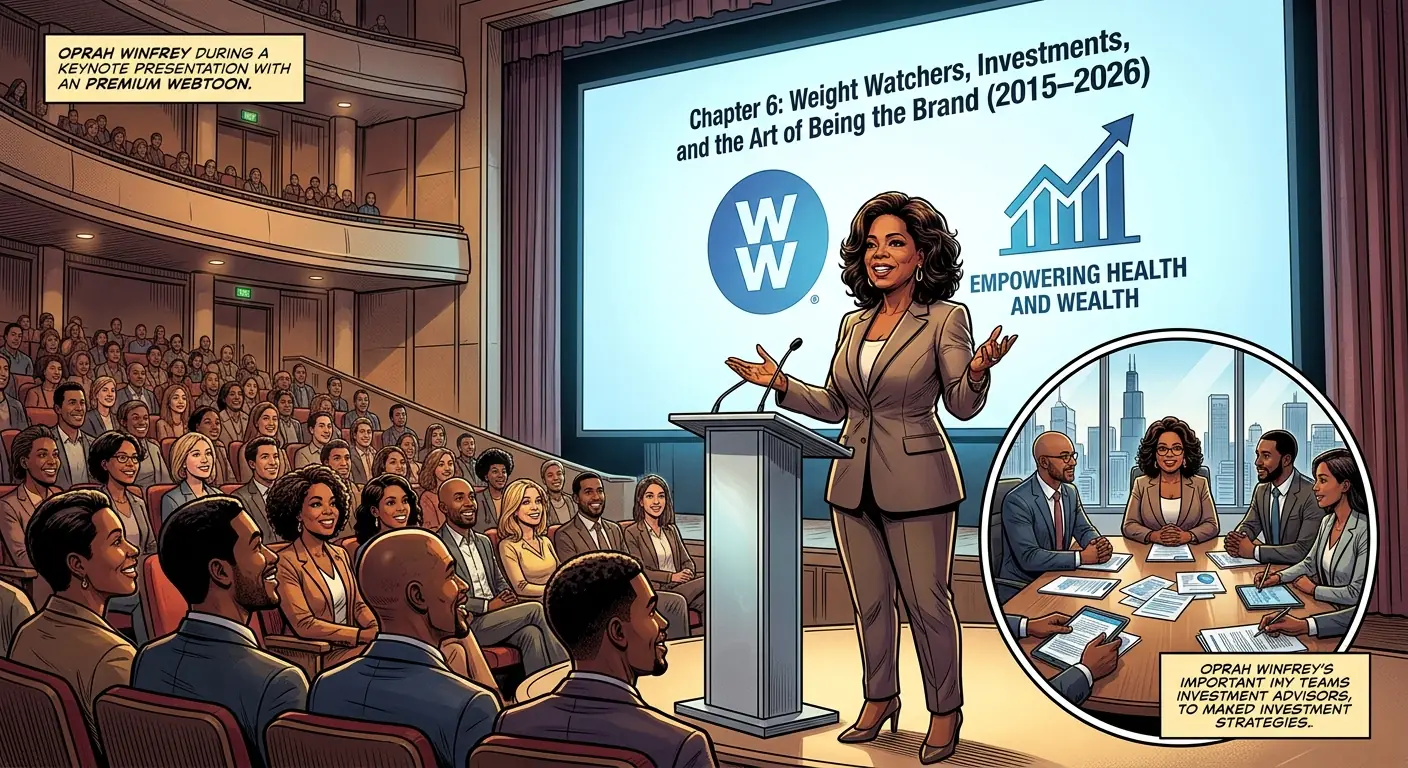
On October 19, 2015, Oprah Winfrey purchased a 10% stake in Weight Watchers International for approximately $43 million — roughly $6.79 per share. She also received options to buy an additional 5% and joined the company’s board of directors.
The stock price surged 105% on the day the deal was announced. In a single day, Oprah’s $43 million investment was worth over $88 million.
But the real play was deeper. Oprah didn’t just invest money — she invested herself. She began following the Weight Watchers program on camera. She posted about it on social media. She appeared in Weight Watchers commercials delivering lines that only Oprah could deliver:
“Inside every overweight woman is a woman she knows she can be.”
She made a commercial in early 2016 where she declared, with that signature Oprah delivery, “I love bread. I eat bread every day.” Weight Watchers stock jumped 20% in a single session after that commercial aired. A sentence about bread moved the stock market. That is the Oprah Effect in its purest form.
By February 2017, her Weight Watchers stake — including shares purchased with her options — was worth over $400 million. A $43 million investment had returned nearly ten times in less than two years.
The Portfolio
Beyond Weight Watchers, Oprah’s investment portfolio and business empire expanded across multiple verticals:
- Harpo Productions continued generating revenue through content licensing, library sales, and production deals.
- O, The Oprah Magazine ran for 20 years before transitioning to a digital-only format in December 2020.
- Oprah Daily, the digital successor, launched as a premium content platform.
- Real estate holdings exceeding $200 million, including a 42-acre estate in Montecito, California, purchased in 2001 for $50 million and now valued at over $100 million, plus additional properties in Maui, Colorado, and Washington state.
- A content partnership with Apple TV+, announced in June 2018, reportedly worth over $100 million for multi-year content development.
- In 2023, Discovery acquired full control of OWN, with Oprah receiving a reported $36 million annually through a content licensing agreement while retaining a minority stake.
The Net Worth Arc
Oprah’s wealth trajectory reads like a growth stock:
- 1986: $1 million (start of syndication)
- 1993: $200 million
- 1997: $550 million
- 2003: $1 billion (first Black female billionaire)
- 2007: $1.5 billion
- 2014: $2.9 billion (peak Forbes estimate)
- 2020: $2.6 billion
- 2026: Estimated $2.8 billion (Forbes/Bloomberg)
She earned every dollar. No inheritance. No spouse’s wealth. No venture capital. No IPO. Just a woman who understood media, owned her content, and turned herself into the most trusted brand in American life.
🔥 Chapter 7: The Philosophy — Why Oprah Won

On January 7, 2018, Oprah accepted the Cecil B. DeMille Award at the Golden Globes and delivered a speech that briefly convinced half of America she should run for president. It was a masterclass in everything that makes Oprah, Oprah — the storytelling, the emotional precision, the ability to make a room of a thousand people feel like she was talking to each one individually.
“For too long, women have not been heard or believed if they dared to speak their truth to the power of those men. But their time is up. Their time is up!”
She didn’t run. She never had any intention of running. But the fact that a speech could generate serious presidential speculation tells you everything about the scale of her cultural authority.
The Formula
Oprah’s success wasn’t accidental. It was built on a set of principles that she applied with the consistency of an algorithm:
1. Authenticity as strategy. Every other media mogul of her era maintained a wall between their public and private selves. Oprah demolished that wall. Her audience knew about her weight, her childhood abuse, her relationship with Stedman Graham, her best friendship with Gayle King. This vulnerability wasn’t weakness — it was the moat around her brand. You can copy someone’s format. You can’t copy their authenticity.
2. Ownership above all. Oprah understood, decades before the creator economy made it fashionable, that owning your content is the only path to durable wealth. She could have made hundreds of millions as a salaried talent. By owning Harpo, she made billions.
3. Trust as compound interest. The Oprah Effect worked because her audience believed her. She recommended books she actually read. She endorsed products she actually used. She shared weight loss journeys she actually lived. That trust compounded over 25 years into a force that could move stock prices with a sentence about bread.
4. Reinvention without abandonment. Talk show to production company to magazine to network to streaming platform to investment portfolio. Each evolution built on the last. She never abandoned her core audience — she brought them with her.
5. Pain as fuel. Oprah didn’t succeed despite her childhood trauma. She succeeded, in part, because she transmuted that pain into an extraordinary capacity for empathy. The girl who was abused and silenced became the woman who created the world’s largest platform for other people to be heard.
🌅 Chapter 8: Legacy — The Empire at Seventy-Two
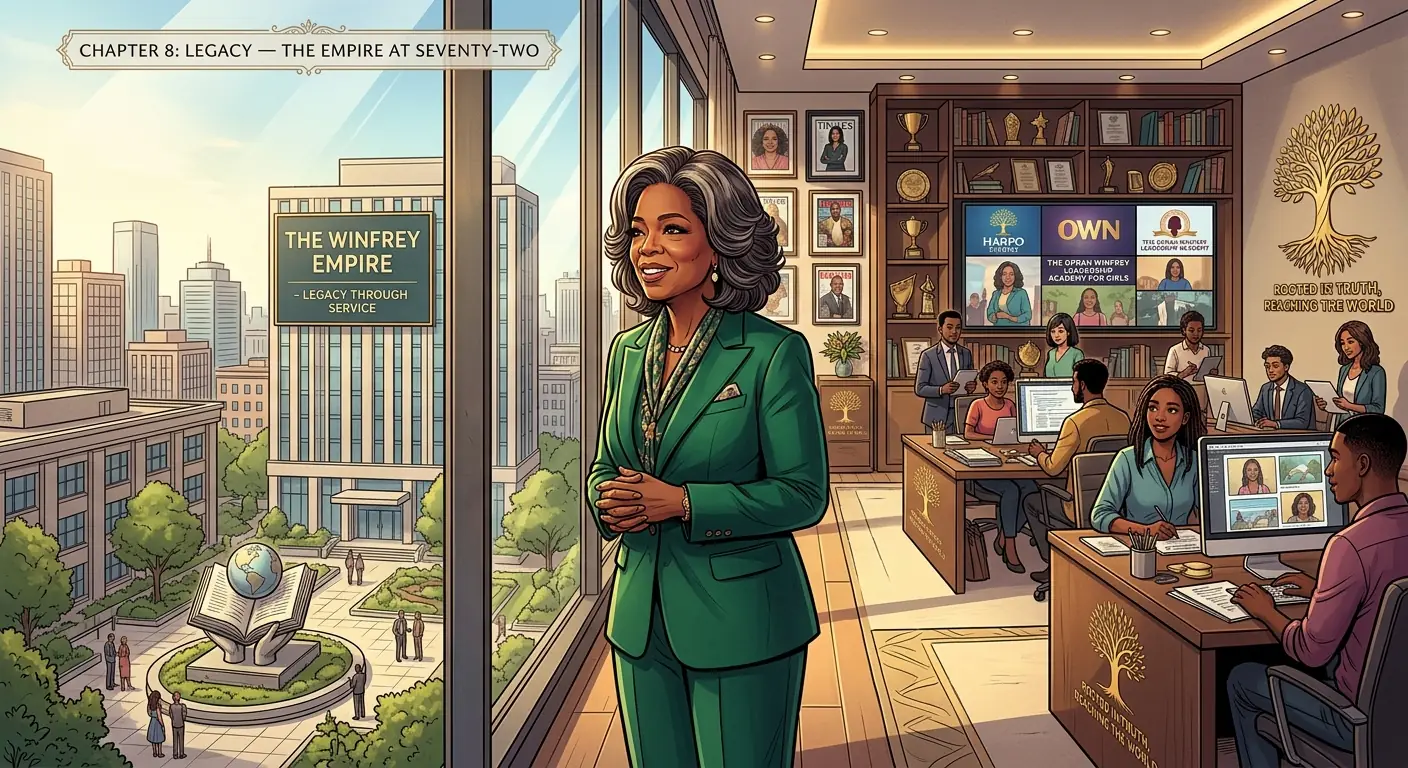
As of 2026, Oprah Winfrey is seventy-two years old. She lives primarily on her Montecito estate — a 42-acre compound with ocean views, gardens, and the kind of silence that a girl from Kosciusko, Mississippi, could never have imagined.
She is still working. The Apple TV+ deal continues to produce content. The Color Purple musical film, which she produced, grossed over $67 million at the box office in 2023. She remains on the board of multiple organizations. She oversees the Oprah Winfrey Leadership Academy for Girls in South Africa, which she founded in 2007 with a personal investment of $40 million — and which has since graduated hundreds of young women, many of whom have gone on to attend top universities worldwide.
Her total philanthropic giving exceeds $600 million.
“You become what you believe. Not what you wish for. Not what you want. What you believe. And I believe that everybody deserves a chance to be heard.”
 Oprah Winfrey was born with nothing. Less than nothing. She was born into poverty, abuse, and a society that had been systematically designed to ensure that someone who looked like her, came from where she came from, would never amount to anything.
She responded by becoming the most powerful woman in the history of American media. She didn’t ask for permission. She didn’t wait for a seat at the table. She built her own table, built her own room, built her own building — and then she put her name on it, backward.
From Kosciusko to billionaire. From nobody’s child to everybody’s Oprah.
That is a rise.
💔 Chapter 9: The Fallout — Tabloids, Lawsuits, and the Scrutiny of Stardom (1987–1997)
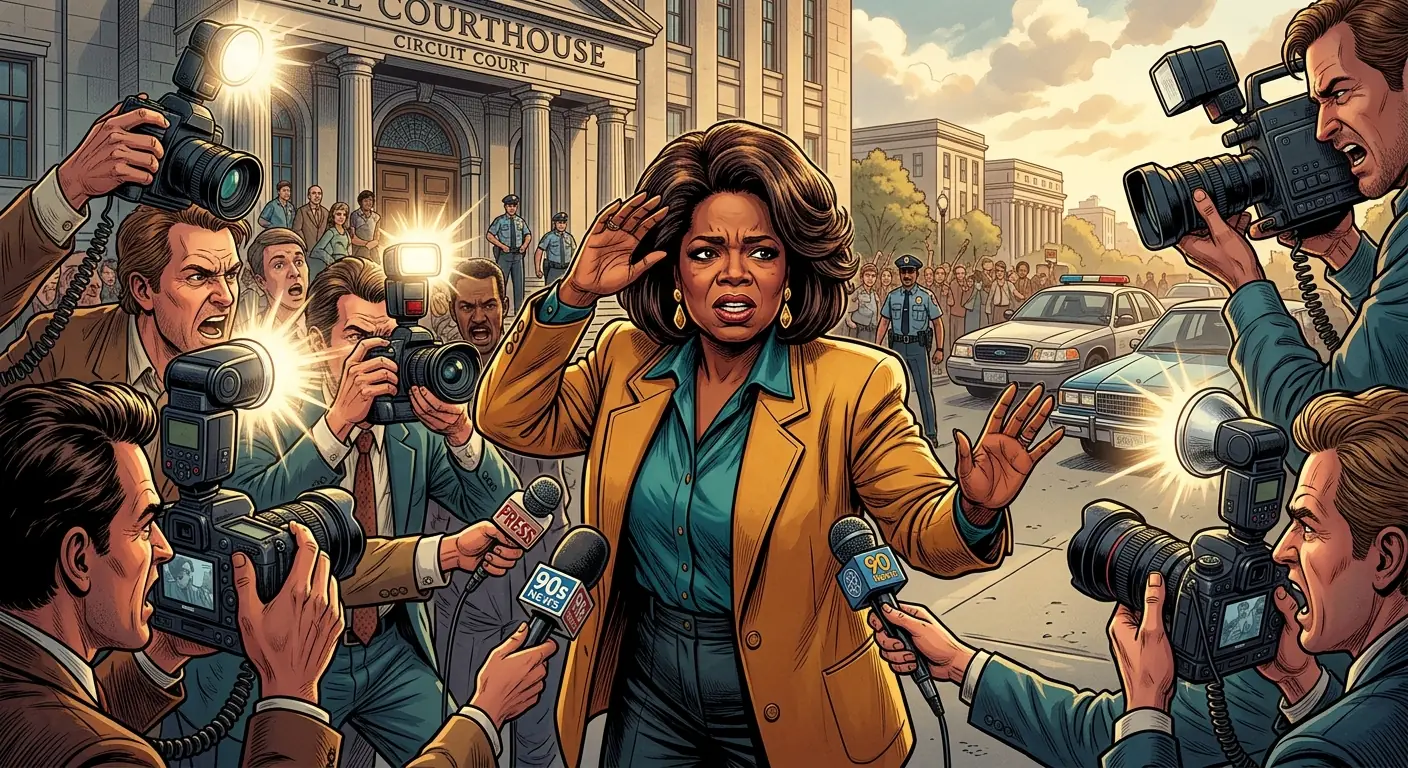
So, you’ve become a media mogul, a household name, and arguably the most powerful woman on television. Sounds glamorous, right? Well, for Oprah, the meteoric rise came with a dizzying, often brutal, price tag: the relentless glare of public scrutiny, the insatiable appetite of the tabloids, and the occasional, truly bizarre legal battle. It turns out, when you invite millions into your living room every day, some of them feel entitled to know everything. And then some.
The Tabloid Frenzy
 In the late 1980s and early 1990s, as The Oprah Winfrey Show exploded into a national phenomenon, so did the fascination with Oprah’s personal life. The tabloids, sensing blood in the water, went into a feeding frenzy. Every pound gained or lost, every public outing with Stedman Graham, every rumored feud became front-page news. Remember the time she wheeled a wagon full of fat onto her stage in 1988, symbolizing her 67-pound weight loss? It was a moment of incredible vulnerability and triumph, immediately capitalized on by every gossip rag. But the public obsession with her weight became a cruel, never-ending cycle, a burden she wrestled with for decades. The tabloids, of course, were always there to document every fluctuation, often with headlines designed to sting. It was a constant battle for control over her own narrative, a fight that even the most powerful woman in media couldn’t entirely win against the relentless machine of celebrity journalism. She was literally building an empire, and the world was more interested in her waistline. Go figure.
The Beef with Beef
Perhaps the most infamous, and frankly, ridiculous, legal skirmish Oprah faced was the “Mad Cow Disease” lawsuit. In 1996, during a segment about food safety, a guest on her show, a former cattle rancher, stated that he wouldn’t eat ground beef. Oprah, ever the empathetic listener, famously responded, “It has just stopped me from eating another hamburger!” A simple, human reaction, right? Wrong. The Texas cattle industry, apparently with too much time and not enough actual beef on their hands, sued Oprah and her production company for $11 million, claiming she had defamed beef and caused a drop in prices.
The trial, held in Amarillo, Texas, in 1998, became a media circus. Oprah, flanked by her legal team, testified for days, explaining her First Amendment rights and the context of her comments. She even brought a stack of books to read during breaks, because, well, she’s Oprah. She eventually won, with the jury finding that her statements were not disparaging under Texas law. But the ordeal was a stark reminder of the immense power she wield wielded, and how even a casual remark could trigger a multi-million-dollar legal battle. It also highlighted the bizarre landscape of American free speech, where a TV host’s opinion on a burger could nearly bankrupt a state’s cattle farmers. Talk about high stakes for a hamburger.
Guarding the Private Life
Despite the constant prying, Oprah fought fiercely to maintain a semblance of privacy, especially regarding her long-term relationship with Stedman Graham. Unlike many celebrity couples who turn their relationships into public spectacles, Oprah and Stedman consciously kept their love story largely out of the spotlight. They were often seen together, of course, but details of their home life, their disagreements, their vulnerabilities were rarely, if ever, aired publicly. This was a deliberate choice, a boundary set firmly in an era where reality TV was just beginning to blur the lines between public and private. Oprah understood that some parts of her life needed to remain sacred, away from the analytical gaze of her audience and the predatory lens of the paparazzi. It was a masterclass in self-preservation, proving that even as she shared her soul with the world, she knew exactly where to draw the line. And honestly, good for her. We all need a little mystery, especially when you’re Oprah.
🌍 Chapter 10: Global Reach — Educating Girls and Empowering the World (1994–Present)
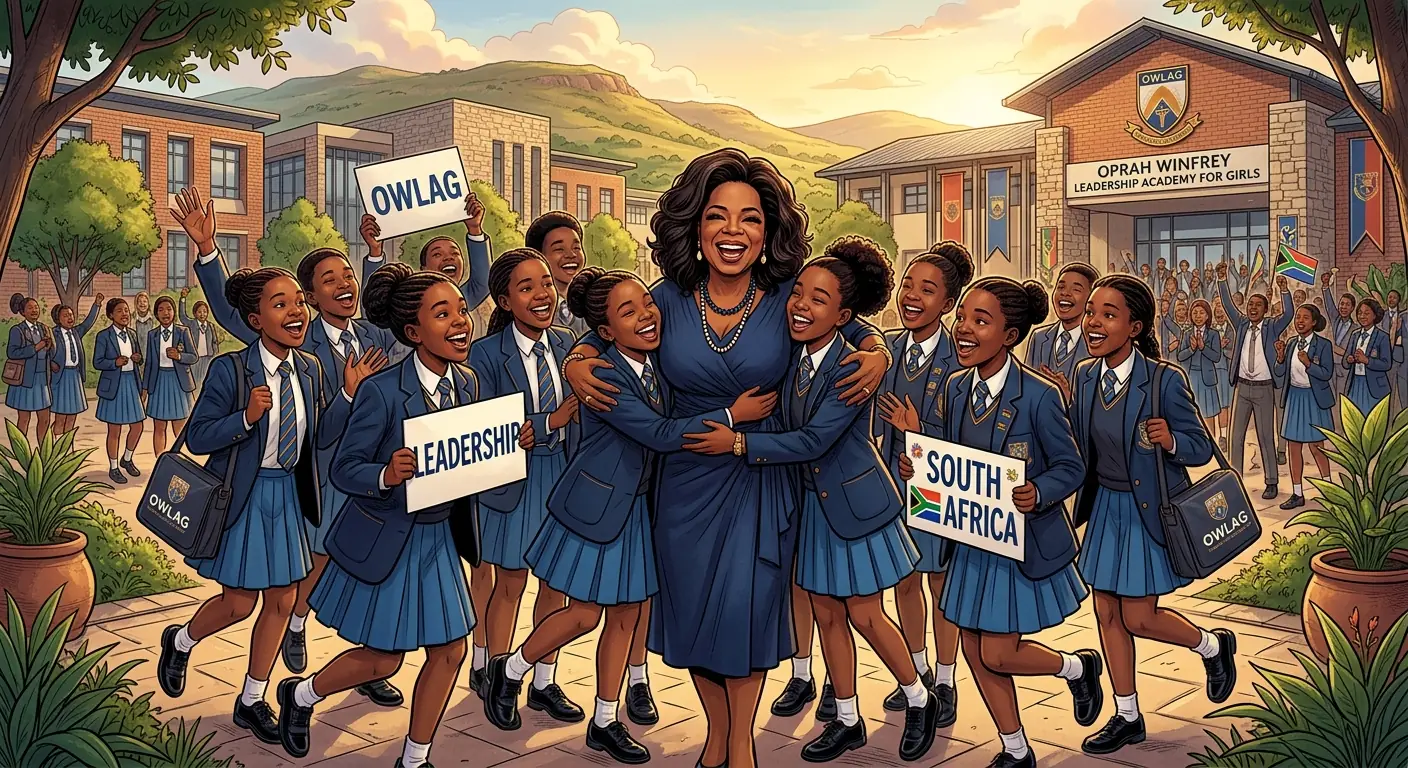
Oprah’s philanthropic efforts have always been an integral part of her empire, not just an afterthought. She wasn’t just writing checks; she was personally investing, often with astonishing depth and commitment. While her Angel Network (launched in 1997) touched countless lives with its “Use Your Life to Serve” mantra, her most ambitious and profoundly personal project took root thousands of miles away, embodying a belief that education is the ultimate equalizer. This wasn’t just charity; it was a crusade.
Building a Dream in South Africa
 The idea for the Oprah Winfrey Leadership Academy for Girls (OWLAG) was born from a conversation with Nelson Mandela in 2000, who implored her to invest in the education of South African girls. Oprah didn’t just donate; she built a school from the ground up, personally overseeing its design, curriculum, and even the selection of the first students. Located in Henley on Klip, South Africa, OWLAG opened its doors in January 2007, an audacious undertaking that cost an estimated $40 million of Oprah’s own money to construct, with ongoing annual operating costs often exceeding $10 million.
This wasn’t some flimsy schoolhouse; it was a state-of-the-art facility designed to rival the best private schools in the world, complete with advanced technology, a performing arts center, and beautiful dormitories. The goal was to provide a world-class education for academically gifted girls from impoverished backgrounds, girls who, like Oprah, faced significant obstacles but possessed incredible potential. She called them her “daughters” and maintained an intensely hands-on approach, visiting frequently, attending graduations, and mentoring the students. It was an enormous risk, a massive financial outlay, and a project that faced its own share of controversies and challenges in its early years, but Oprah’s unwavering belief in its mission never faltered. It was truly a monument to her conviction that opportunity, not just charity, transforms lives.
The Angel Network’s Reach
While OWLAG was her crown jewel, The Oprah’s Angel Network, established in 1997, harnessed the collective power of her viewers. Instead of just asking for donations, the network focused on “surprise transformations” and projects where every dollar donated went directly to charitable projects, with Oprah herself covering all administrative costs. This was a major change in the world of celebrity philanthropy, building immense trust with her audience. Over its 12-year run, before it was dissolved in 2010 (with its mission continuing through the Oprah Winfrey Charitable Foundation), the Angel Network raised over $80 million.
These funds were used for everything from building 55 schools in 12 countries, including South Africa, to providing scholarships, rebuilding homes after disasters like Hurricane Katrina, and establishing youth centers. It wasn’t just about big projects; it was about the everyday impact. The network often featured heart-wrenching stories of individuals in need, followed by collective action from her audience, proving that the “Oprah Effect” wasn’t just about selling books; it was about inspiring genuine goodwill and tangible change on a global scale. It allowed millions of ordinary people to feel like they were part of something bigger, a true testament to her ability to mobilize an audience for good.
Beyond the Checkbook
Oprah’s philanthropy extends beyond formal foundations and schools. It’s embedded in her philosophy of giving back and her belief in paying it forward. She has quietly supported countless individuals, funded small businesses, and provided mentorship to emerging leaders and artists. Her approach isn’t just about the financial contribution; it’s about the emotional and spiritual investment. She has often spoken about how giving is not just a responsibility of wealth, but a source of personal fulfillment, a way to connect deeply with humanity. It’s an extension of her “live your best life” mantra, demonstrating that true success involves lifting others as you rise. For Oprah, giving wasn’t a PR move; it was a core tenet of her being, a way to heal the wounds of her own past and create a better future for those who, like her, started with nothing but grit and dreams. And frankly, it’s a hell of a lot more impactful than just buying another yacht.
🤝 Chapter 11: Power Partnerships — From Stedman to Dr. Phil, Building an Inner Circle (1986–Present)
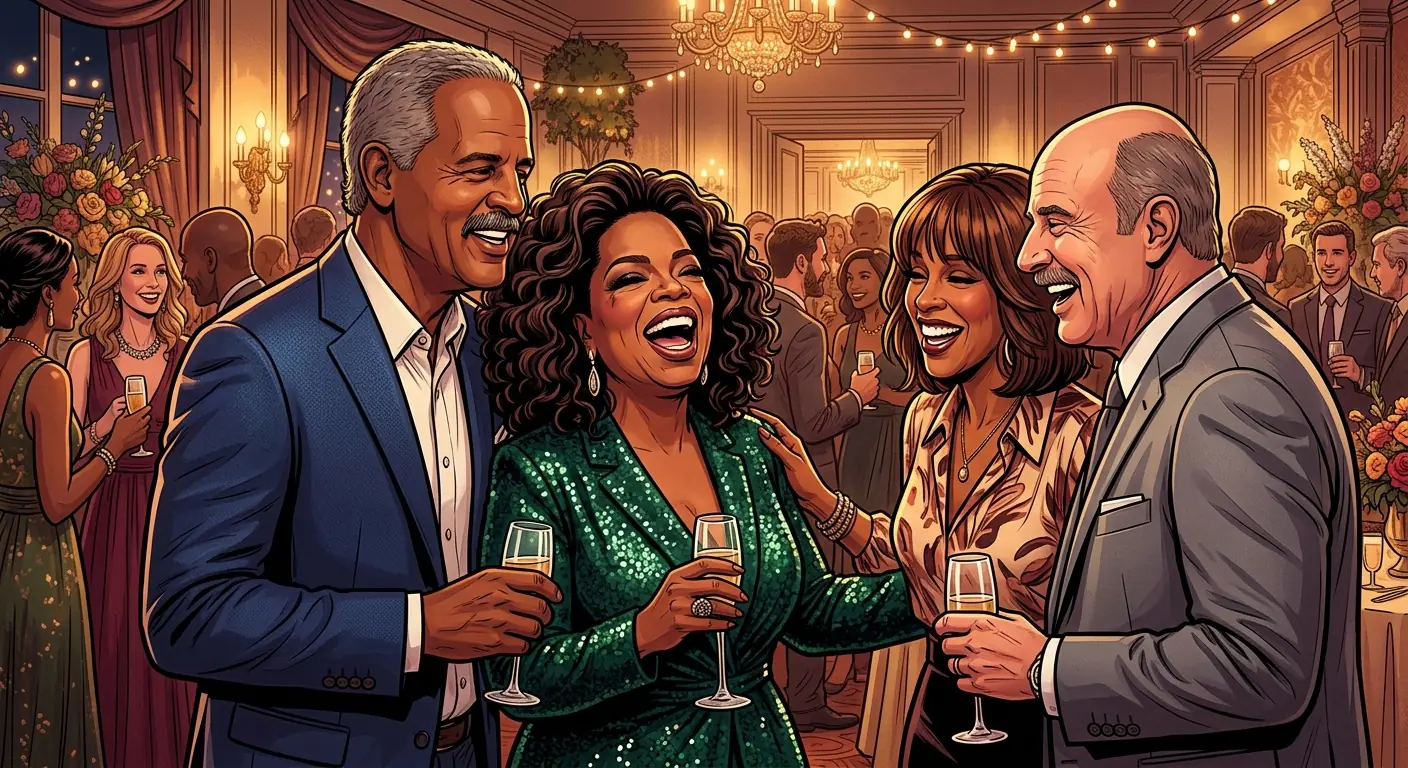
Oprah Winfrey didn’t build her empire alone. While her vision, charisma, and indefatigable work ethic were the engines, the fuel often came from a carefully cultivated inner circle of trusted confidantes, strategic partners, and, occasionally, protégés who became powerhouses in their own right. From her steadfast partner Stedman Graham to her best friend Gayle King, and the multitude of experts she launched into stardom, Oprah understood that true power isn’t just about what you can do, but who you surround yourself with. It’s like a corporate board meeting, but with more tears and fewer spreadsheets.
The Man Who Stood Beside Her
Let’s be real, navigating the shark-infested waters of Hollywood and media fame while maintaining a healthy personal relationship is a feat worthy of its own trophy. For over 35 years, Stedman Graham has been Oprah’s rock, her partner, and her greatest cheerleader. They met in 1986, the same year The Oprah Winfrey Show went national, and their relationship has defied every tabloid prediction and societal expectation. They never married, a conscious decision that Oprah attributes to maintaining their individual identities and the health of their bond.
“If we had married, we would not be together,” Oprah famously stated. “He’s a traditional man, and I would have had to be a traditional woman, and that is not who I am.”
Stedman, a successful businessman, author, and speaker in his own right, famously carved out his own space, never overshadowed by Oprah’s colossal fame. He understood the unique demands of her life and chose to support her, rather than compete with her. He’s been described as her “anchor,” a calm, grounding presence amidst the hurricane of her career. Their enduring partnership is a testament to mutual respect, fierce independence, and a shared understanding that love can look different than the fairy tales. And honestly, it’s probably one of the few celebrity relationships that genuinely makes you believe in true partnership.
The King of Her Castle (and Her Brand)
If Stedman is her anchor, Gayle King is her compass. Their friendship, spanning over 40 years, began in 1976 when they were both young journalists at WJZ-TV in Baltimore. Gayle, now a co-host of CBS Mornings and editor-at-large of O, The Oprah Magazine, isn’t just Oprah’s best friend; she’s an extension of the brand, a trusted sounding board, and arguably the only person who can truly tell Oprah anything without fear of repercussion.
Their bond is legendary – a testament to unwavering loyalty, shared experiences, and countless hours of phone calls. Gayle’s presence has often provided a relatable, human element to Oprah’s larger-than-life persona, grounding her in genuine connection. She’s been privy to Oprah’s biggest triumphs and deepest struggles, offering both celebration and tough love. In a world where celebrity friendships can feel manufactured, theirs is undeniably authentic, a crucial component of Oprah’s emotional support system and a powerful symbol of female camaraderie that resonated deeply with her audience. It’s the kind of friendship that makes you want to call your own bestie, just to say thanks.
Mentorship and Media Moguls
Oprah’s impact on the careers of others is simply undeniable. She didn’t just host a show; she launched empires. Think about Dr. Phil McGraw, who first appeared on The Oprah Winfrey Show in 1998 as a relationship expert and quickly became a phenomenon. Oprah recognized his straight-talking, no-nonsense appeal and, through Harpo Productions, helped launch Dr. Phil as a standalone syndicated show in 2002. It became an instant hit, quickly becoming the second-highest-rated talk show, only behind Oprah’s own.
Then there’s Dr. Mehmet Oz, another frequent guest who received the “Oprah bump” and his own syndicated show, The Dr. Oz Show, in 2009. Even Rachael Ray, the bubbly chef, got her big break on Oprah’s show before launching her own successful culinary empire. Oprah had an uncanny ability to spot talent, nurture it, and then strategically leverage her platform to propel individuals into their own stratospheres of fame and fortune. She wasn’t afraid to share the spotlight; in fact, she understood that by empowering others, she only expanded her own influence, creating a constellation of stars around her central sun. It was a brilliant, if sometimes risky, strategy, cementing her status not just as a media personality, but as a true kingmaker. Or, more accurately, a queenmaker.
🎞️ Chapter 12: Hollywood Dreams — From ‘The Color Purple’ to Oscar Nods (1985–2014)
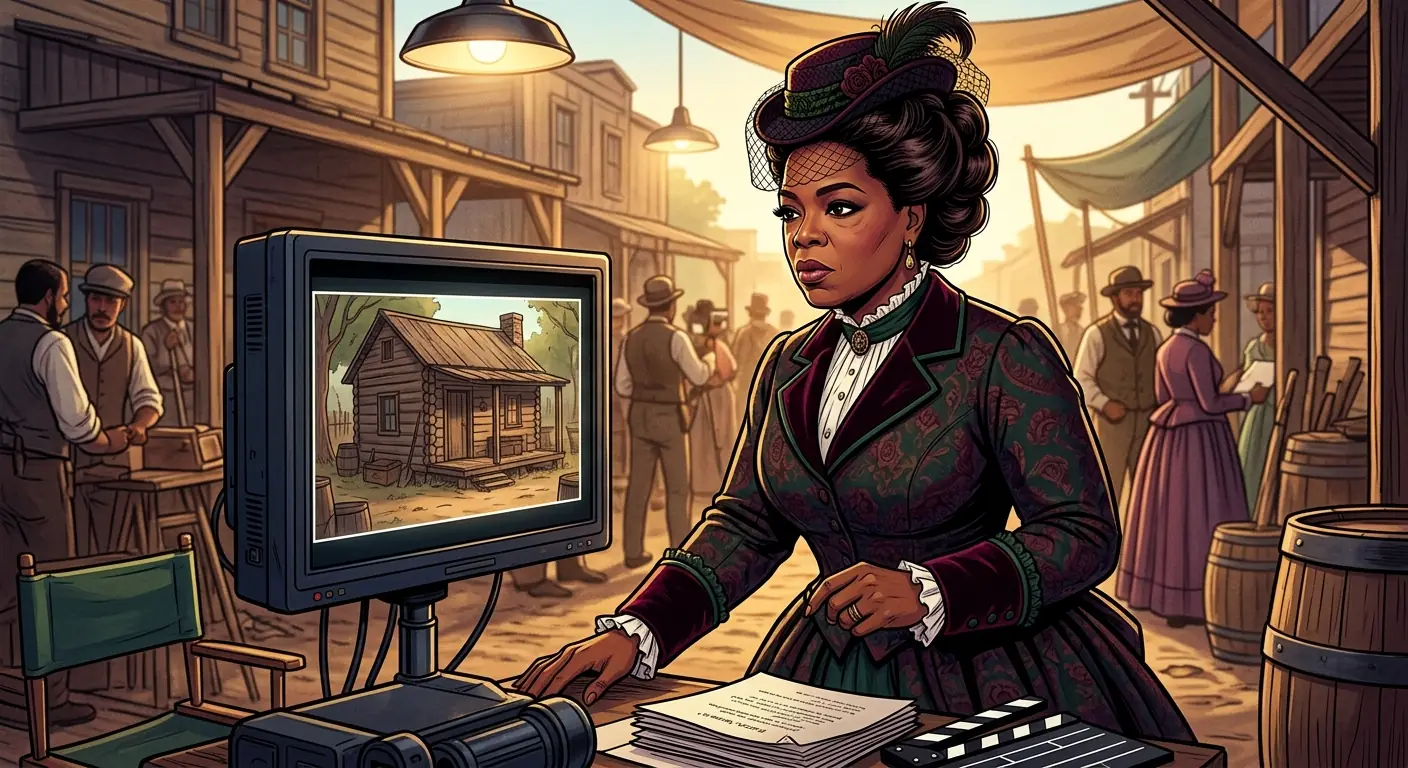
Before she was the undisputed Queen of Daytime, Oprah Winfrey had ambitions that stretched beyond the talk show set. She wanted to act. And not just dabble, but truly act. Her journey into Hollywood wasn’t just a side hustle; it was a profound, character-defining chapter that proved her talents extended far beyond interviewing. It also showed her business acumen could thrive in the cutthroat world of film production, turning Harpo not just into a TV powerhouse, but a serious player on the silver screen. She wasn’t just going to watch movies; she was going to make them.
A Powerful Debut
Oprah’s acting career began with a bang, a role so impactful it earned her an Academy Award nomination right out of the gate. In 1985, while still a local talk show host in Chicago, she was cast by Steven Spielberg in his adaptation of Alice Walker’s Pulitzer Prize-winning novel, The Color Purple. She played Sofia, a fierce, resilient woman who endures unimaginable hardship but never loses her spirit. It was a demanding role, a world away from the charming, conversational persona she cultivated on television.
Oprah famously recounted her hesitation, initially believing she wasn’t “pretty enough” for Hollywood. Spielberg, however, saw something raw and powerful in her. Her performance was a revelation, earning her both an Oscar nomination for Best Supporting Actress and a Golden Globe nomination. This debut immediately established her as a serious dramatic actress, not just a TV personality trying her hand at film. It was a pivotal moment, proving to herself and the world that her emotional depth and ability to connect were not limited to a studio audience; they were universal. And honestly, for someone who thought she wasn’t “pretty enough,” she absolutely dominated the screen. Take that, Hollywood beauty standards!
The Silver Screen Ambition
Following The Color Purple, Oprah didn’t just walk away from Hollywood; she leaned in, albeit selectively. She continued to take on challenging roles, often choosing projects that resonated with her personal values and commitment to powerful storytelling. In 1998, she starred in and produced Beloved, based on Toni Morrison’s Pulitzer Prize-winning novel. This was a passion project, a story she felt compelled to bring to the screen, investing $55 million of her own money (and Harpo’s) into its production.
While Beloved was a critical darling and a deeply moving film, it unfortunately underperformed at the box office, recouping only $22.8 million domestically against its hefty budget. This was a painful lesson in the brutal realities of Hollywood economics, even for someone with Oprah’s influence. However, it didn’t deter her. She understood that some stories needed to be told, regardless of commercial success. She also appeared in more lighthearted roles, like The Butler (2013), and later lent her voice to animated films and took on memorable roles in Selma (2014) as civil rights activist Annie Lee Cooper, and A Wrinkle in Time (2018). Her filmography reflects a discerning taste for projects that could both entertain and enlighten, always circling back to themes of resilience, identity, and social justice.
Harpo Films’ Vision
Beyond her own acting, Oprah’s production company, Harpo Films (a division of Harpo Productions), became a significant force in bringing important stories to the screen. From its inception, Harpo Films wasn’t just about making blockbusters; it was about producing quality, thought-provoking content, particularly stories that centered on Black experiences and female narratives, often adapted from books featured in Oprah’s Book Club.
Harpo Films produced a slew of critically acclaimed television movies and miniseries, including The Wedding (1998), Their Eyes Were Watching God (2005) starring Halle Berry, and The Immortal Life of Henrietta Lacks (2017) for HBO, starring Oprah herself. These productions often tackled complex social issues, historical events, and intimate personal dramas, reflecting Oprah’s commitment to using media as a tool for education and empathy. She understood that while the talk show reached millions weekly, film and television had a different kind of permanence, a legacy in the cultural archive. By strategically choosing projects and leveraging her brand, she transformed Harpo Films into a respected entity in Hollywood, demonstrating that her “live your best life” philosophy could be translated into captivating, impactful cinema. And if that’s not mogul behavior, I don’t know what is.
🎤 Chapter 13: Post-Show Power — Interviews, Apple TV+, and Political Influence (2011–Present)
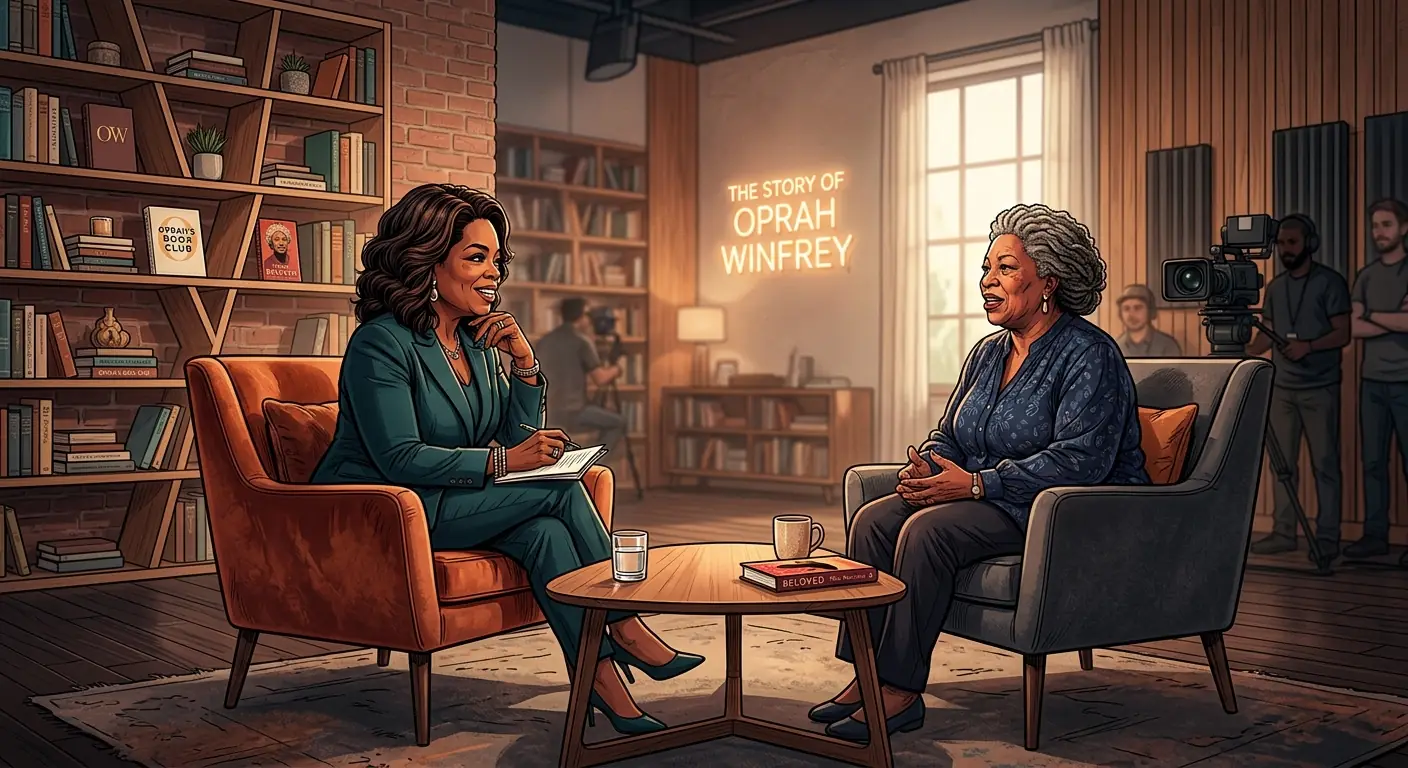
When The Oprah Winfrey Show ended its iconic 25-year run on May 25, 2011, many wondered if the Queen of Daytime would retreat into a life of quiet luxury. (Spoiler alert: she did not.) Instead, Oprah strategically pivoted, demonstrating a remarkable ability to adapt her brand and influence to a rapidly changing media landscape. The daily grind might have ended, but her power, particularly as a master interviewer and cultural tastemaker, only intensified. She wasn’t just stepping down; she was leveling up, proving that the medium might change, but the message, and the messenger, remained potent.
The Interview Queen Returns
Even after the daily show wrapped, Oprah’s unparalleled skill as an interviewer remained in high demand. She didn’t just ask questions; she elicited confessions, fostered breakthroughs, and often, made history. Her interviews became appointment viewing events, meticulously produced specials that showcased her unique blend of empathy, curiosity, and an uncanny ability to get to the heart of the matter.
Take, for example, her bombshell interview with Meghan Markle and Prince Harry in March 2021. Aired on CBS, it drew an astounding 17.1 million viewers in the U.S. alone and garnered global attention, unleashing a royal reckoning. This wasn’t just an interview; it was a cultural moment, a masterclass in controlled release of information, and a reminder that when Oprah sits down with someone, the world listens. Other notable post-show interviews include Lance Armstrong confessing to doping in 2013, and her powerful conversation with Michael Jackson’s children, Paris and Prince, in 2010. These weren’t just celebrity chats; they were deep dives into human experience, often with profound societal implications, cementing her status as the gold standard of confessional journalism. Nobody, and I mean nobody, does it like Oprah.
Streaming into the Future
In a bold move that signaled her continued relevance in the digital age, Oprah forged a multi-year content partnership with Apple TV+ in 2018. This wasn’t just a token deal; it was a strategic alliance to bring her unique brand of storytelling to a global streaming audience. Under the terms of the deal, Oprah would create original programs, including documentaries, unscripted series, and, naturally, more of those iconic interviews.
The partnership yielded shows like Oprah’s Book Club (a revival of her wildly successful segment, adapted for the streaming era), The Oprah Conversation (featuring deep-dive interviews with thought leaders and newsmakers), and Oprah Talks COVID-19 (a timely series addressing the pandemic). This move demonstrated Oprah’s understanding that media consumption had fundamentally shifted. Instead of clinging to traditional broadcast, she embraced the future, expanding her empire into the burgeoning streaming wars and proving that her brand was platform-agnostic. It solidified her position not just as a traditional media titan, but as a forward-thinking digital content creator, ready to captivate new generations of viewers on their terms.
The Enduring Political Voice
While Oprah has famously (and wisely) avoided running for political office herself, her influence on the American political landscape cannot be overstated. Her endorsement, often dubbed the “Oprah Effect,” has been shown to sway votes, particularly among women. In 2008, her early and fervent endorsement of Barack Obama for president was considered a significant factor in his primary victory against Hillary Clinton. A study by the University of Maryland and the University of Chicago estimated that her endorsement was responsible for over one million votes for Obama in the Democratic primary. That’s not just influence; that’s electoral power.
More recently, she has continued to use her platform to advocate for issues she believes in, from voter registration to social justice. While she generally avoids overt partisanship, her commitment to civic engagement and her ability to articulate complex social issues in an accessible way means her voice continues to carry significant weight in national conversations. She has also remained a powerful advocate for women, often speaking out on issues of equality and empowerment. Even without a daily show, Oprah’s ability to shape public opinion, rally support for causes, and influence political discourse remains as potent as ever. She’s not just a brand; she’s a force, a cultural compass that continues to point towards a more empathetic, informed, and frankly, better world. And that, my friends, is why she’s still the GOAT.
💡 Key Insights
- ▸ Oprah was fired from her first co-anchor job at Baltimore's WJZ-TV because producers said she was 'too emotional' for news. Instead of suppressing her personality, she leaned into it — and that raw emotional authenticity became the foundation of the most successful talk show in television history. The thing people criticize you for is often the thing that makes you irreplaceable.
- ▸ When Oprah negotiated ownership of The Oprah Winfrey Show through Harpo Productions in 1988, she became one of only three women in history to own and produce their own nationally syndicated show. Most talent sells their labor. Oprah understood, earlier than almost anyone in media, that owning the means of production is the difference between being wealthy and being rich.
- ▸ The 'Oprah Effect' could move markets, launch authors into millionaires, and shift public opinion overnight — but it was never manufactured. It came from genuine curiosity and an audience that trusted her completely. Trust, built over decades and never betrayed, is the most undervalued asset in business.
- ▸ OWN nearly destroyed everything Oprah built. The network hemorrhaged money for three years, ratings were catastrophic, and critics declared her finished. She responded by moving to Los Angeles, personally taking over programming, and grinding the network into profitability by 2013. The willingness to risk your legacy — and then fight like hell when the bet goes wrong — separates moguls from celebrities.
- ▸ Oprah's $43 million investment in Weight Watchers in 2015 turned into over $400 million in value at its peak. But the real genius wasn't the stock pick — it was integrating her personal weight loss journey into the brand narrative, making herself the product's most powerful testimonial. When you are the brand, every investment becomes a force multiplier.
Sources
- Kitty Kelley — Oprah: A Biography ↗
- Forbes Billionaires Index — Oprah Winfrey ↗
- Bloomberg Billionaires Index — Oprah Winfrey ↗
- Academy of Achievement — Oprah Winfrey Interview ↗
- Harvard Business School Case Study — Harpo, Inc. ↗
- The New York Times — Oprah Winfrey Coverage Archive ↗
- SEC Filings — Weight Watchers International (WW) ↗