Dieter Schwarz: The Secretive Retail Machine Behind Lidl and Kaufland
Dieter Schwarz built one of Europe's largest retail groups through narrow assortments, ruthless logistics, private ownership, and an almost total absence from public view.
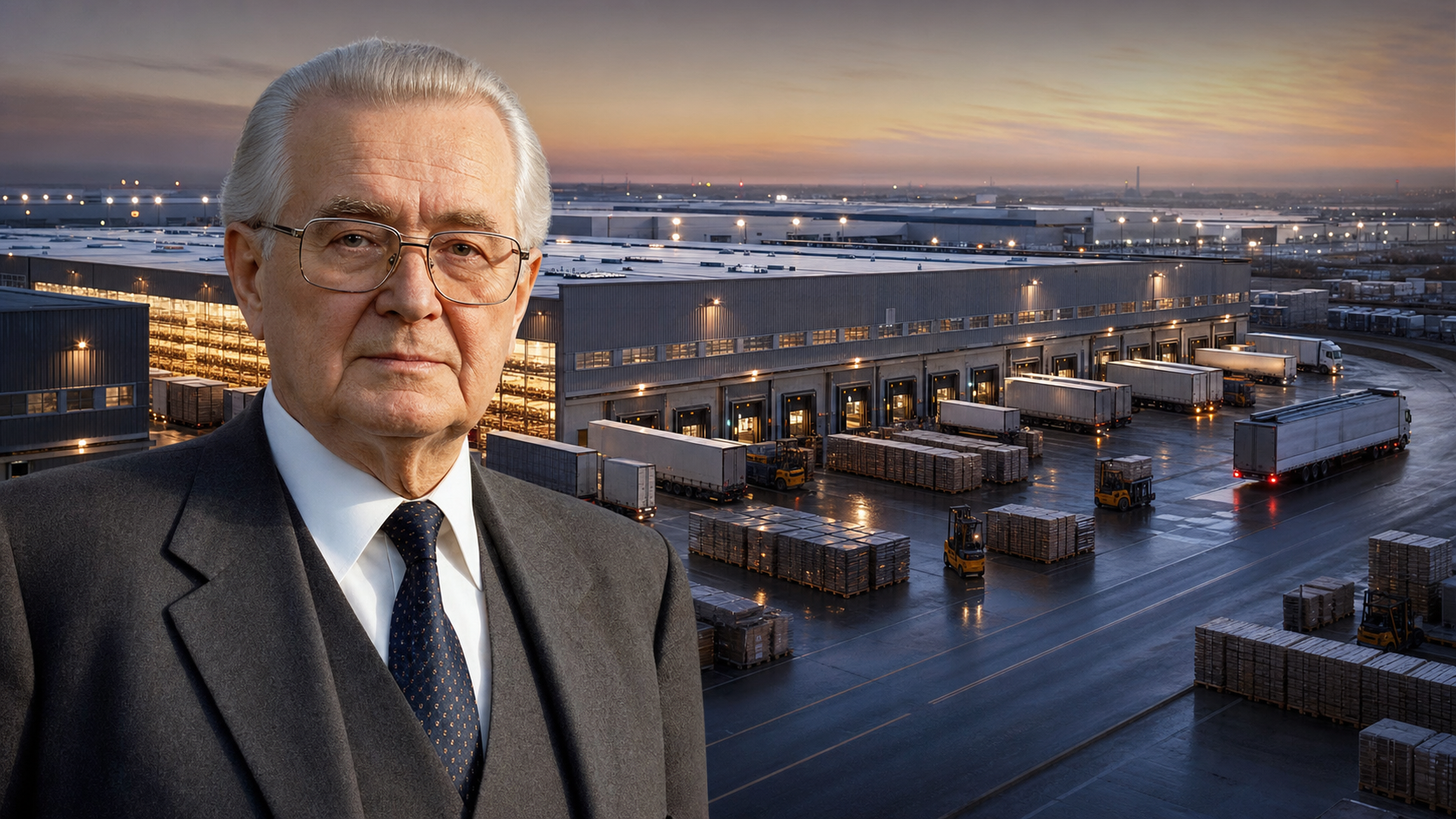
View all stories about this mogul
Dieter Schwarz became one of the world’s wealthiest retailers by making stores feel simpler than the machine behind them.
Lidl presents a limited assortment, private labels, weekly promotions, and prices designed to end debate. Behind that apparent minimalism sits an industrial system of purchasing, distribution centers, standardized stores, data, recycling, production, and real estate. Kaufland adds a larger-format hypermarket model. Together they form the Schwarz Group, a private retail empire spanning Europe and beyond.
Schwarz himself is famously absent from the spectacle of wealth. Few public appearances, limited photography, no founder-as-influencer performance. The operating system speaks in his place.
How did Dieter Schwarz turn a regional wholesaler into Lidl?
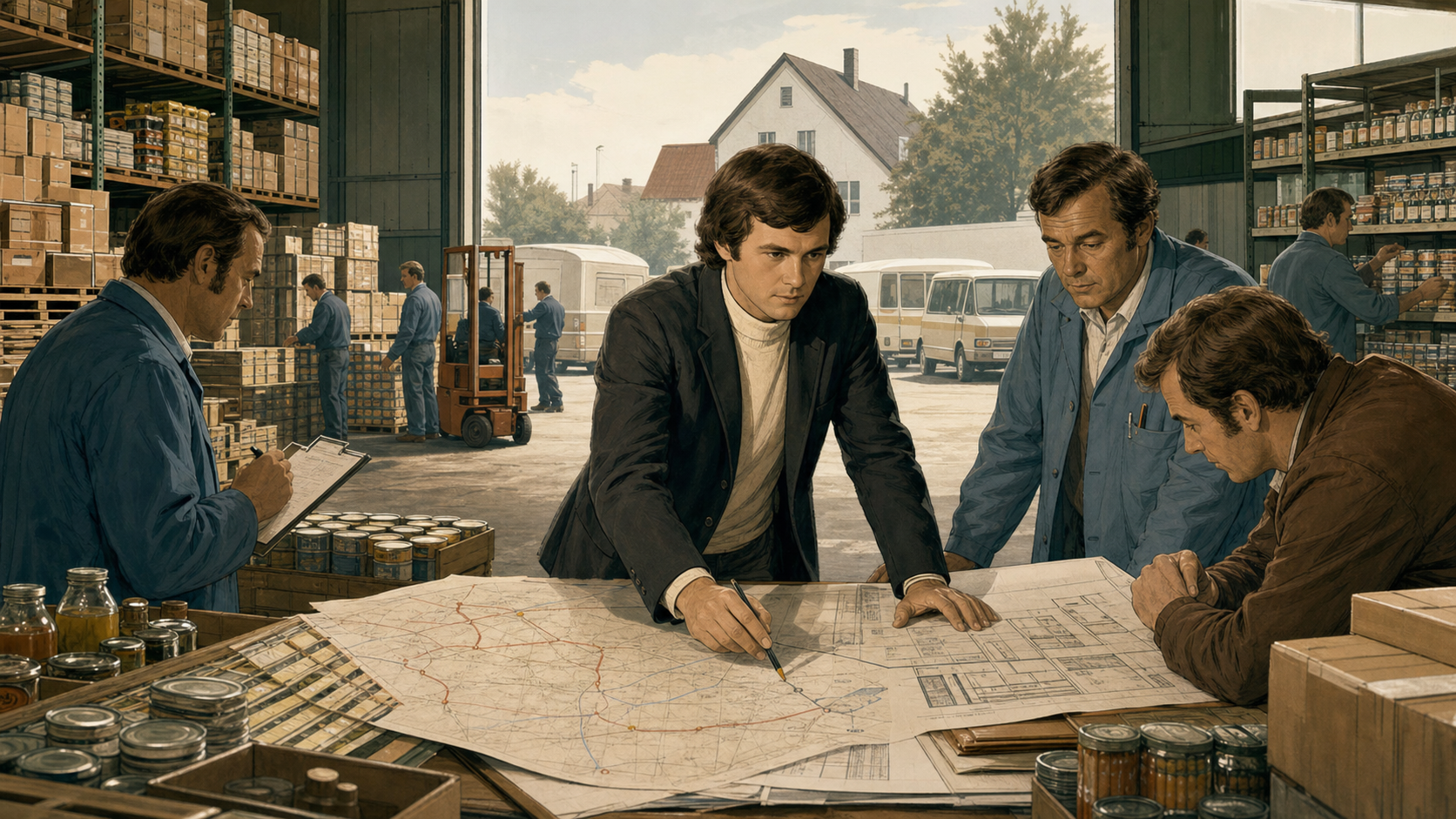
Schwarz was born in 1939 and joined the business associated with his father, Josef Schwarz. The company had roots in food wholesaling. After Josef’s death in 1977, Dieter Schwarz took greater control and accelerated expansion.
Germany already had formidable discount pioneers in Aldi. Competing head-on required more than copying low prices. Lidl developed its own formula: a constrained range, high volumes per item, standardized operations, private-label control, and promotional products that created urgency.
The Lidl name solved a practical branding problem. Schwarz, meaning black in German, was awkward for a grocery banner, and using the family name risked an unhelpful “black market” association. The company acquired rights to the Lidl name and built it into a format that could travel.
The economic logic is powerful. A conventional supermarket may stock many variations of the same product. A discounter offers fewer. That concentrates purchasing volume, simplifies replenishment, reduces shelf complexity, and raises the negotiating leverage behind each item. Customers trade some choice for lower prices and faster decisions.
| Period | Turning point | Why it mattered |
|---|---|---|
| 1970s | Schwarz assumed leadership after his father’s death | The wholesale base became an expansion platform |
| 1973 | Early Lidl discount store opened | The compact discount format began to scale |
| 1980s | Kaufland format expanded | The group added large stores and broader assortments |
| 1990s | Lidl accelerated across Europe | Standardization became an international advantage |
| 2000s | Logistics and private labels deepened | The visible store became one layer of a larger system |
| 2017 | Lidl entered the United States | The model confronted a different retail geography |
Why is Lidl’s low-price model so difficult to copy?

Low price is an output. The input is low complexity per unit sold.
Lidl uses private labels to control specifications and reduce direct brand comparison. Stores are designed for rapid stocking, often displaying products in shipping cartons. A relatively small range can sell quickly, producing inventory turns that support cash flow and reduce waste. Distribution centers and route density reinforce the advantage as more stores open in a region.
The group also built capabilities around the retailer. Schwarz Produktion manufactures selected food and beverage products. PreZero operates in waste and recycling. Information-technology units support the digital backbone. These businesses can lower dependency, capture margin, and turn operational problems into internal services.
Kaufland complements the discount stores with a much larger assortment and one-stop shopping mission. The formats are not identical, but shared procurement knowledge, property expertise, technology, and capital strengthen the wider group.
Copying shelf prices without copying the system is dangerous. A traditional grocer with more labor, more products, slower turns, and less private-label power can match Lidl temporarily and destroy its own margin.
What happened when the Schwarz model crossed borders?
International expansion rewarded standardization but punished arrogance. Across Europe, Lidl adapted assortments and presentation while preserving the economic core. The chain gradually improved store design and fresh-food offerings, broadening its appeal beyond shoppers under acute budget pressure.
The United States proved harder. Lidl entered with ambitious plans, but site selection, store layout, regional logistics, local tastes, and established competitors complicated the rollout. Expansion continued more cautiously after leadership changes and strategic adjustments.
That episode illustrates a rule of retail: a format can be portable without being plug-and-play. Density matters. A distribution center serving too few stores carries poor economics. Real estate patterns, driving distances, package sizes, labor markets, and supplier networks vary.
Private ownership helped absorb this learning. The Schwarz organization could take a longer view than a newly listed retailer facing quarterly questions about every delayed opening. But privacy also limits what outsiders can see about performance, capital allocation, and internal debate.
What is the real lesson of Dieter Schwarz’s private empire?
Schwarz’s fortune came from subtraction. Fewer items, fewer flourishes, fewer public statements. The organization then invested heavily in everything required to make that simplicity dependable.
His low profile also created a distinctive form of control. Ownership structures linked to foundations and private entities support continuity and philanthropy while keeping the group outside public equity markets. The arrangement can protect long-term investment, though concentrated and opaque systems depend heavily on robust governance.
Frequently asked questions
Did Dieter Schwarz found Lidl?
He developed and expanded Lidl from the family’s wholesale roots, turning the format into an international discount chain.
Does Dieter Schwarz own Kaufland too?
Lidl and Kaufland sit within the privately held Schwarz Group.
Why is Dieter Schwarz so private?
He has largely avoided public appearances and interviews. The precise personal reasoning is private, but the approach keeps attention on the organization rather than the founder.
How does Lidl keep prices low?
Its model combines a limited assortment, high purchasing volumes, private labels, standardized stores, rapid inventory turns, and dense logistics.
The real lesson is that discount retail is not cheap-looking retail. It is systems engineering. Schwarz built a machine in which purchasing, packaging, labor, trucks, shelves, waste, and capital all reinforce the same promise: remove enough friction and low prices become a durable strategy rather than a temporary promotion.
💡 Key Insights
- ▸ Lidl's narrow assortment converts simplicity into purchasing power, faster inventory turns, and lower operating complexity.
- ▸ Private ownership allowed the Schwarz organization to reinvest for decades without explaining every expansion cost to public markets.
- ▸ Kaufland and Lidl share infrastructure while addressing different shopping missions, widening the group's strategic coverage.
- ▸ Extreme founder privacy can protect focus, but it also makes governance and succession harder for outsiders to assess.