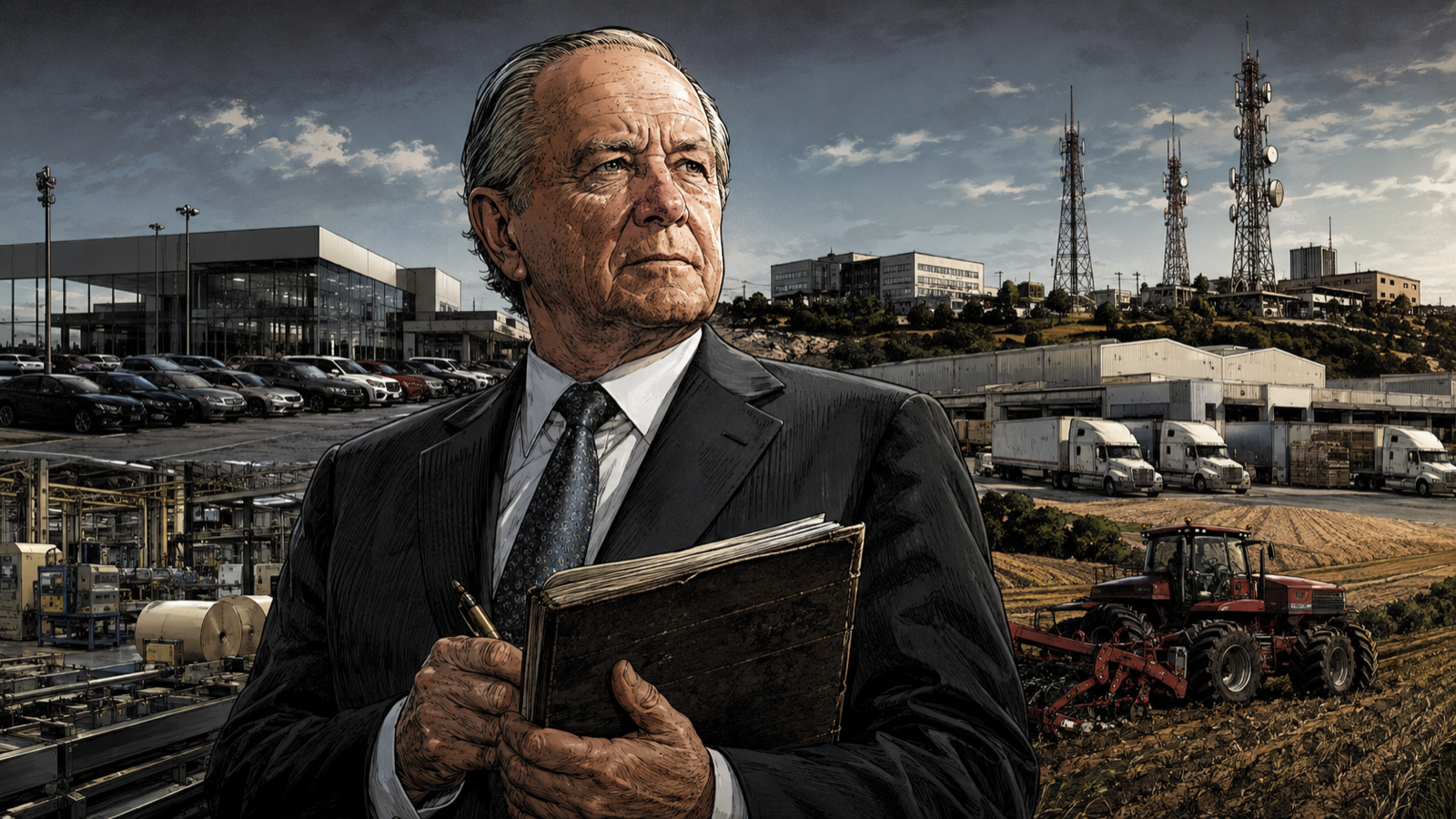
Fred Smith: The Overnight Network That Made FedEx a Logistics Empire
Fred Smith turned an expensive hub-and-spoke thesis into FedEx, survived an early cash crisis, and made guaranteed overnight delivery business infrastructure.

View all stories about this mogul
Fred Smith did not invent the parcel. He invented a network designed around a promise: a package collected in one city could reliably appear in another by the next morning. That promise required aircraft, sorting hubs, trucks, scanners, weather planning, regulatory battles, and enough package density to make the whole machine economical.
Federal Express began as a capital-intensive theory that looked reckless to conventional carriers. It became infrastructure for modern commerce.
How did Fred Smith turn a college idea into Federal Express?

Smith studied at Yale, served as a U.S. Marine officer in Vietnam, and returned with a strong interest in logistics and disciplined operations. His famous college paper is often described as proposing an overnight delivery system, although retellings of the grade vary. The important idea was structural: time-sensitive goods needed an integrated network built for speed rather than space borrowed from passenger airlines.
Traditional air cargo often moved in the unused holds of passenger flights. Routes followed travelers, not packages, and schedules could not guarantee overnight delivery between many city pairs. Smith proposed controlling aircraft, sorting, and ground pickup as one system.
He founded Federal Express in 1971, and operations began in 1973. The company used Memphis as its central hub. Packages from many origins could arrive late at night, be sorted rapidly, then leave on outbound aircraft before dawn.
Memphis offered a central location, available airport capacity, and weather advantages compared with some alternatives. The hub converted a sprawling point-to-point problem into a repeatable nightly wave.
Why did the hub-and-spoke model create a logistics moat?

Direct flights between every pair of cities grow combinatorially. A hub concentrates volume. One origin can reach many destinations through a shared connection, allowing more frequent service before each individual route has massive demand.
The model also creates a density flywheel. More customers produce more package volume. More volume supports more routes and better asset use. Better coverage attracts more customers. The network becomes difficult to copy because a competitor needs broad capacity before it can offer comparable reliability.
But a hub is also a point of operational truth. Weather, mechanical failures, or sorting problems can ripple across the system. FedEx had to build contingency planning, precise cutoffs, maintenance, and real-time control. The guarantee was not marketing pasted onto delivery; it was the output of the network design.
How did FedEx survive before the economics worked?

The early company consumed cash. Aircraft, fuel, facilities, and staff had to exist before route density made them efficient. Federal Express reportedly came close to running out of money during its first years. Smith scrambled for financing while the 1970s fuel shock raised pressure.
Founder folklore includes a Las Vegas gambling episode that temporarily helped cover expenses. The durable lesson is not gambling; it is that the business was structurally undercapitalized for the speed at which it had to build a national network.
| Milestone | Why it mattered |
|---|---|
| 1971 founding | Integrated express-delivery thesis becomes a company |
| 1973 operations launch | Overnight network begins from Memphis |
| Late 1970s profitability and public listing | Scale starts validating the economics |
| 1980s international expansion | Network logic extends beyond the United States |
| 1994 FedEx name adopted | Famous service becomes the corporate identity |
Deregulation also mattered. Changes in air-cargo rules allowed the company to use larger aircraft and design routes more efficiently. Strategy succeeded partly because policy stopped forcing the network into an outdated shape.
How did tracking turn information into part of the FedEx product?

Speed without certainty is stressful. FedEx invested in scanning and information systems so packages could be tracked across the network. For customers shipping documents, medical items, components, or inventory, visibility reduced the cost of uncertainty.
The information layer also improved internal control. Scans revealed bottlenecks, missed transfers, and route performance. Data became both customer reassurance and an operating sensor.
FedEx expanded through international service and acquisitions, eventually operating express, ground, freight, and logistics businesses. This breadth created cross-selling and scale, but also overlapping networks and organizational complexity. E-commerce changed package mix, residential density, and customer expectations. Rivals improved, and merchants built more logistics capacity of their own.
The system Smith created therefore had to evolve from pure expansion toward integration and efficiency.
What is the real lesson of Fred Smith’s FedEx empire?
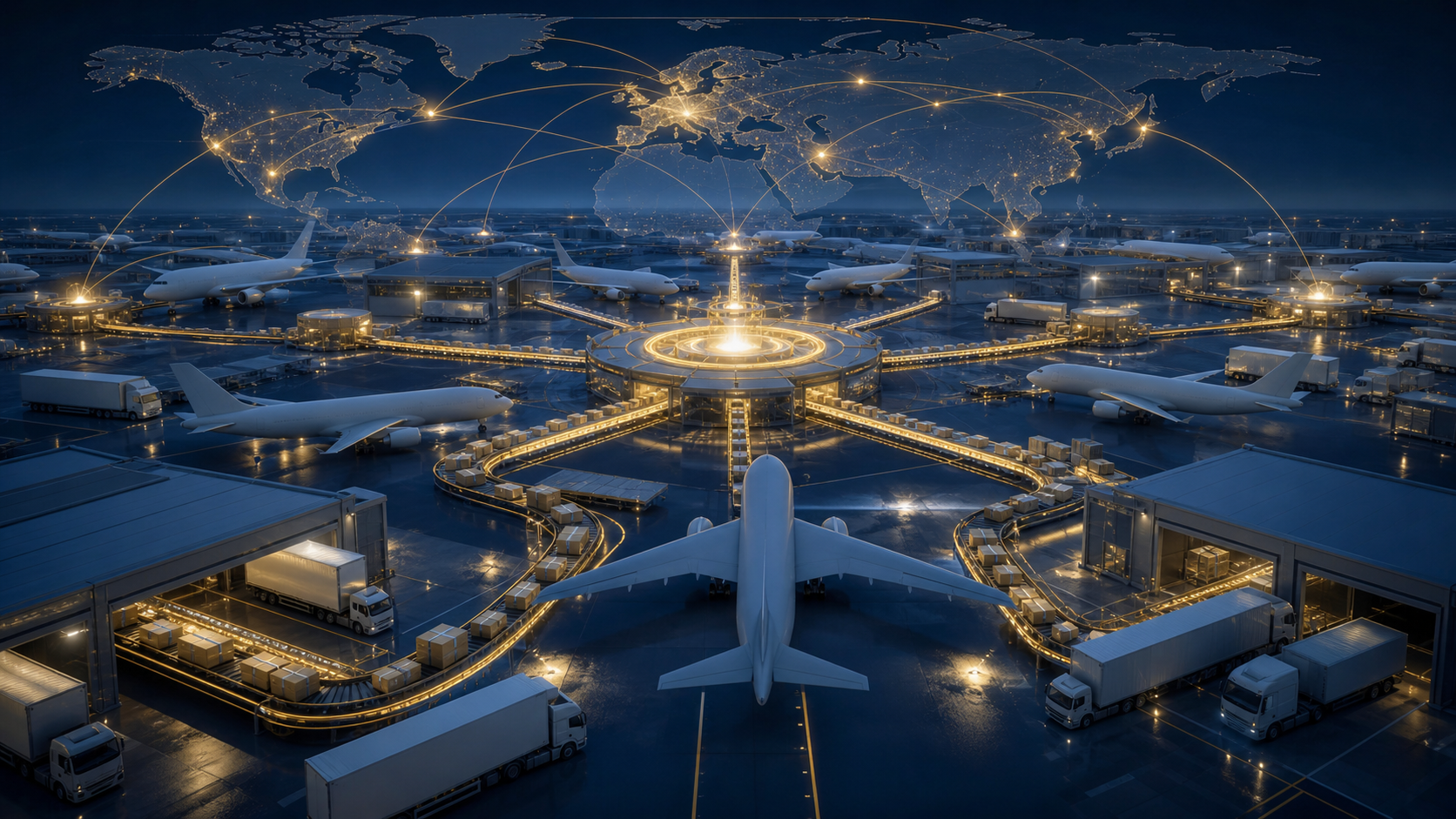
Fred Smith’s insight was that a service guarantee is an engineering problem. He controlled aircraft, hubs, ground routes, sorting, and information because the promise depended on all of them.
The moat came from coordination. Any single aircraft or warehouse could be copied. The synchronized network, package density, operating routines, customer trust, and data layer were much harder to reproduce together.
What was Fred Smith’s net worth?
Public estimates varied with FedEx holdings and other assets. They are approximate and can change with market prices and disclosures.
How did Fred Smith make his money?
His wealth primarily came from founding Federal Express, retaining ownership, and leading its growth into FedEx Corporation.
Did FedEx invent overnight delivery?
Other urgent delivery services existed, but FedEx built a dedicated, integrated national network that made reliable overnight express service a mass business product.
Why is FedEx based in Memphis?
Memphis offered geography, airport capacity, and generally favorable operating conditions for a central overnight sorting hub.
What is FedEx’s biggest strategic challenge now?
The company must keep simplifying and modernizing a large network while competing on cost, speed, reliability, and visibility in a changing parcel market.
💡 Key Insights
- ▸ A guaranteed service requires control of the network, not merely a strong brand promise.
- ▸ Hub-and-spoke economics turn route density into speed and asset utilization.
- ▸ Operational data can become part of the product when customers need certainty.
- ▸ A founder's greatest system can later become the incumbent architecture that must be redesigned.