The Billion-Dollar Beauty War: How Francoise Bettencourt Meyers Conquered the Ultimate Family Feud and Became the World's Richest Woman
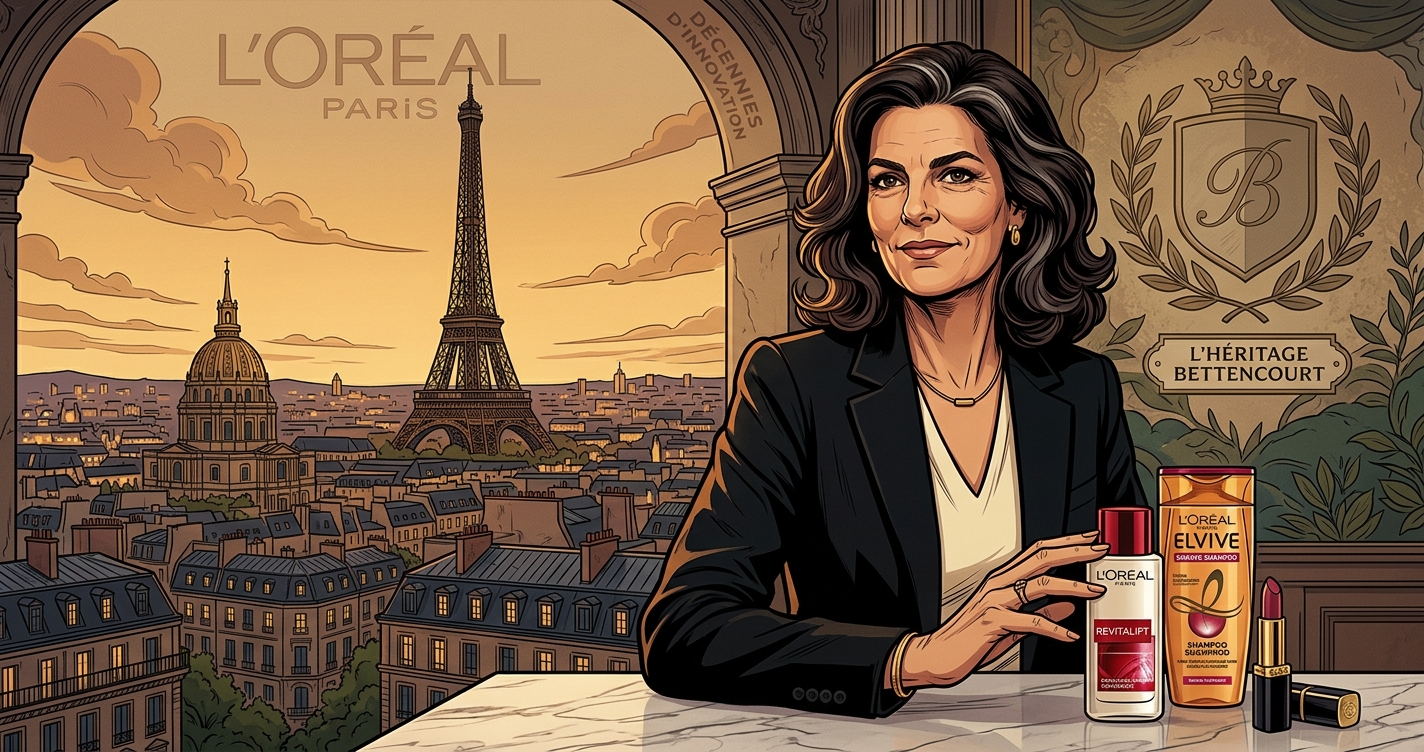
Imagine a fortune so vast it could buy small nations, built on the shimmering promise of beauty. Now imagine that empire's heiress caught in a bitter, public war with her own daughter, fueled by accusations of exploitation, political intrigue, and a cast of characters wilder than fiction. This is the saga of Francoise Bettencourt Meyers, the quiet intellectual who waged a decade-long battle, not just for her family's legacy, but for her mother's very soul, ultimately emerging as the undisputed empress of L'Oréal and the world's wealthiest woman.
View all stories about this mogul
💥 Chapter 1: The Billion-Dollar Beauty Myth

Picture this: A name synonymous with glamour, a brand that whispers promises of youth, radiance, and confidence in every language across the globe. L’Oréal. It’s more than just a cosmetics company; it’s a titan, a cultural behemoth, an almost mythical beast that has shaped the very definition of beauty for over a century. And at the heart of this empire, pulsing with unimaginable wealth, lies a family. A family whose story is less a gentle waltz through gilded halls and more a bare-knuckle brawl in the diamond-encrusted arena of French high society.
We’re talking about the Bettencourt family, specifically. Their fortune, inextricably linked to the L’Oréal empire, is so vast it almost defies comprehension. We’re talking about the kind of money that shifts global economic tides, the kind of legacy that shapes generations, the kind of power that could buy influence in the highest echelons of government.
But beneath the flawless veneer of this beauty dynasty, a storm was brewing. A tempest of filial duty, suspected exploitation, raw emotion, and political intrigue so explosive it ripped through France, captivated the world, and left a trail of shattered reputations and a mother-daughter relationship irrevocably broken. This isn’t just a business story; it’s a psychological thriller, a legal drama, and a profound meditation on the corrosive power of wealth when left unchecked.
Our protagonist, if you can call her that, is Francoise Bettencourt Meyers. The quiet, intellectual heiress, often overshadowed by her flamboyant mother, Liliane. The woman who, against all odds and through a crucible of public scandal, not only survived but ultimately ascended to become the world’s richest woman. Her journey isn’t just about inheriting billions; it’s about fighting for them, about wrestling control from the jaws of chaos, and about proving that sometimes, the sharpest minds are found not on the catwalk, but in the library, preparing for battle.
This is the story of how L’Oréal built its kingdom, how a family feud became a national obsession, and how Francoise Bettencourt Meyers, the unlikely warrior, claimed her destiny. Buckle up, because the truth is far wilder than any marketing campaign.
💄 Chapter 2: Genesis of a Glamour God: Eugène Schueller’s L’Oréal Vision

To truly understand the Bettencourt saga, we have to rewind, way back to the dawn of the 20th century, to a man named Eugène Schueller. This wasn’t some aristocratic scion or a marketing guru with a focus group. Schueller was a chemist, a visionary, and frankly, a bit of a maverick, who saw opportunity where others saw only traditional hairdressing.
In 1909, armed with a groundbreaking synthetic hair dye he called Auréale (later L’Oréal, a portmanteau of l’or, French for gold, and auréole, meaning halo), Schueller started his empire. This wasn’t just a new product; it was a revolution. Before him, hair dyeing was a messy, often dangerous affair, done with harsh chemicals or natural extracts that produced unpredictable results. Schueller’s dye was safer, more consistent, and offered a range of colors previously unimaginable. He didn’t just sell dye; he sold transformation. He sold the promise of control over one’s appearance, a radical concept for the nascent beauty industry.
Schueller was a relentless innovator and a shrewd businessman. He didn’t just create products; he created a market. He understood the power of advertising long before it became a science. He cultivated relationships with hairdressers, establishing a professional network that became L’Oréal’s first distribution channel. He branched out, moving beyond hair dyes to shampoos, skincare, and perfumes, always with an eye on scientific advancement and global reach. His philosophy was simple yet profound: “A company is not walls and machines, it’s men, it’s ideas, it’s products, it’s markets.”
But Schueller’s legacy isn’t without its shadows. During World War II, he was a known sympathizer of the far-right, pro-Nazi group La Cagoule. His connections to this antisemitic, anti-republican organization would later cast a long, uncomfortable shadow over L’Oréal’s pristine image. This dark chapter, though often downplayed, is a critical piece of the Bettencourt family’s historical puzzle, a foundational stain on the glittering empire. It’s a reminder that even the most beautiful facades can hide unsettling truths, a theme that would echo eerily in the family’s later drama.
“Eugène Schueller didn’t just build a company; he engineered an entire industry, weaving science and desire into a tapestry of global beauty. But every grand design has its hidden flaws, and L’Oréal’s foundation carried the weight of a complicated past.”
Schueller’s daughter, Liliane Bettencourt, would inherit this complex legacy. She grew up in the shadow of this ambitious, controversial man, absorbing his drive, his business acumen, and perhaps, some of his unyielding will. The stage was set for the next act of the L’Oréal story, where the personal would become inextricably intertwined with the corporate, and the stakes would rise to unimaginable heights.
👑 Chapter 3: Liliane’s Golden Reign: The Empress of Elegance
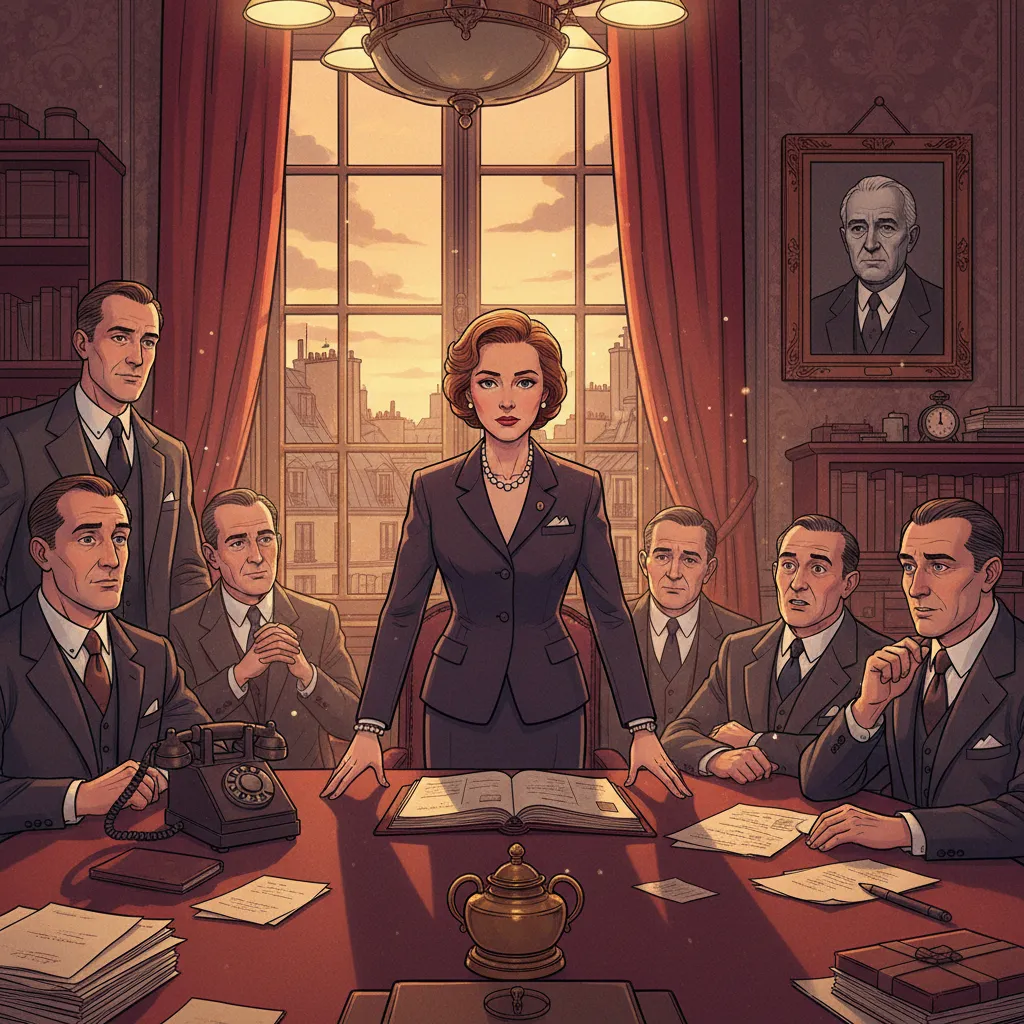
When Eugène Schueller died in 1957, his only child, Liliane Bettencourt, inherited the reins of L’Oréal. This wasn’t just a transfer of ownership; it was the ascension of a true matriarch, a woman who would not only safeguard her father’s empire but expand it into a global powerhouse beyond his wildest dreams. Liliane was, in many ways, the embodiment of L’Oréal’s glamour – elegant, poised, and immensely powerful.
Liliane was born into immense wealth and privilege, but she wasn’t content to merely be a socialite. She possessed a sharp intellect and a keen business sense, honed by years observing her father. Under her stewardship, L’Oréal transformed. She pushed for aggressive international expansion, acquiring iconic brands like Lancôme, Garnier, and Maybelline. She understood that beauty was not a monolith, but a mosaic of diverse needs and aspirations. L’Oréal’s portfolio became a carefully curated collection, catering to every demographic, every price point, every cultural nuance. From high-end luxury creams to drugstore staples, L’Oréal became ubiquitous.
Her vision was global, but her touch remained distinctively French – a blend of scientific innovation and artistic flair. She nurtured a corporate culture that valued both rigorous research and creative marketing. L’Oréal’s laboratories were constantly pushing boundaries, developing new formulas, textures, and delivery systems, while its advertising campaigns defined eras, celebrating individual beauty and empowerment.
Liliane was also a significant shareholder in Nestlé, a strategic alliance forged in the late 1970s to prevent a hostile takeover of L’Oréal. This cross-shareholding created a formidable barrier against external threats, ensuring the family’s control over their cherished company for decades. It was a brilliant move, cementing L’Oréal’s independence and allowing Liliane to focus on growth without the constant fear of corporate raiders.
Beyond business, Liliane was a prominent figure in French society, a patron of the arts, and a formidable philanthropist. She epitomized a certain kind of old-world European wealth – discreet yet undeniable, powerful yet often behind the scenes. She married André Bettencourt, a prominent politician who served in various French governments. Their union solidified the family’s position at the intersection of industry, politics, and high society.
“Liliane Bettencourt didn’t just sit on a throne; she built a larger, more opulent one. She understood that true empire-building wasn’t just about inheriting wealth, but about having the vision to multiply it, the courage to expand it, and the shrewdness to protect it.”
Her life, however, was not without its complexities. Beneath the polished exterior of wealth and influence, there were whispers of a woman who, despite her power, yearned for connection, for affection, and perhaps, for a certain kind of control. These deeper emotional currents would eventually collide, setting the stage for the most spectacular and devastating family feud in modern history. The empire was thriving, but the family within it was slowly, imperceptibly, fracturing.
📚 Chapter 4: Francoise’s Shadow: The Scholar in the Spotlight

Now, let’s turn our attention to Francoise Bettencourt Meyers, the only child of Liliane and André Bettencourt. From the outside, her life looked like a fairytale – born into unimaginable wealth, heir to a beauty empire. But Francoise was a different breed altogether. Where her mother, Liliane, was social, glamorous, and embraced the spotlight, Francoise was introspective, scholarly, and deeply private.
Growing up in the opulent Bettencourt residences, Francoise often seemed to exist in a parallel universe to her mother. Liliane reveled in the social whirl, hosting lavish parties and cultivating relationships with artists, politicians, and business titans. Francoise, on the other hand, found solace in books, in music (she was an accomplished pianist), and in intellectual pursuits. She studied Greek and Jewish biblical commentaries, authored several theological works, and approached the world with a meticulous, analytical mind.
This fundamental difference in temperament created an early, subtle chasm between mother and daughter. It wasn’t overt hostility at first, but a quiet disconnect. Liliane, with her focus on appearances and social graces, often struggled to understand her daughter’s intellectual intensity and her aversion to the superficial aspects of their wealthy existence. Francoise, in turn, likely perceived her mother’s world as frivolous, perhaps even empty, a stark contrast to the profound questions she wrestled with in her studies.
Francoise married Jean-Pierre Meyers, the grandson of a rabbi murdered at Auschwitz. This marriage, a union of two profoundly intellectual and cultured individuals, further solidified Francoise’s path away from the traditional French Catholic aristocracy that her mother inhabited. It also brought a new dimension to the family’s narrative, connecting the L’Oréal fortune to the deep, resonant history of a Jewish family scarred by the Holocaust.
While she was a director on the L’Oréal board and deeply involved in the family’s philanthropic efforts (she founded the Bettencourt Schueller Foundation with her mother and father, which supports medical research, culture, and social solidarity), Francoise rarely sought public attention. She preferred the quiet influence of strategy and governance to the dazzling glare of public life. She was the steady hand, the clear mind, the one who meticulously studied the numbers and understood the long-term implications, even as her mother was swept up in the latest social trend or artistic endeavor.
This background is crucial because it sets the stage for the coming storm. Francoise wasn’t just an heir; she was an individual with her own strong convictions, her own moral compass, and a deep-seated sense of responsibility. When she perceived her mother, and by extension the family legacy, to be in danger, she wouldn’t hesitate to act, no matter the personal cost or the public spectacle it might create. She was preparing for a different kind of battle than her mother had ever imagined.
⚡ Chapter 5: The Seeds of Discord: A Mother-Daughter Chasm Deepens

The relationship between Liliane and Francoise, always strained by their differing personalities, began to fray dramatically in the early 2000s. It wasn’t a sudden rupture, but a slow, agonizing erosion, like a magnificent cliff face slowly crumbling under the relentless assault of the sea. The chasm between the glamorous matriarch and the intellectual heiress deepened, fueled by misunderstandings, perceived slights, and a growing sense of unease on Francoise’s part.
Liliane, now in her late 70s and early 80s, was becoming increasingly isolated, often surrounded by a coterie of staff and social companions. Francoise, ever watchful, began to notice what she believed were signs of her mother’s declining mental acuity. Small forgetfulness, confusion about financial matters, a growing susceptibility to flattery – these were the subtle tremors before the earthquake.
The core of the discord, at this nascent stage, was not about money itself, but about control, protection, and love. Francoise, in her quiet, analytical way, believed her mother was vulnerable, and that her vast fortune made her a target. Liliane, on the other hand, likely felt her daughter was overly critical, perhaps even resentful of her independence and vivaciousness. She was a woman who had always been in charge, and the idea of her daughter questioning her judgment, or worse, her sanity, was an unbearable affront.
The dynamic was classic: a powerful, aging parent fiercely guarding their autonomy, and a concerned, watchful child desperate to protect them, often leading to a clash of wills that can be more brutal than any boardroom battle. The stakes here, however, were astronomical. We weren’t just talking about a family squabble over holiday plans; we were talking about the stewardship of billions, the legacy of a global empire, and the dignity of a formidable woman.
Francoise’s concerns were not merely familial; they were also deeply intertwined with the corporate governance of L’Oréal. As a board member, she had a fiduciary duty to the company’s long-term health and stability. If her mother’s judgment was compromised, it could have repercussions far beyond the family mansion. This layered responsibility added immense pressure to Francoise’s already heavy burden.
“The early cracks in the Bettencourt foundation weren’t about money; they were about a mother’s fierce independence colliding with a daughter’s desperate plea for protection. In the rarefied air of immense wealth, such personal dramas take on the scale of Greek tragedies.”
The tension simmered, largely out of public view, confined to the opulent salons and private discussions of the Bettencourt family. But this fragile peace was destined to shatter. The entry of an enigmatic figure, a man who would become a lightning rod for Francoise’s deepest fears, was about to ignite the smoldering embers of discontent into a raging inferno, transforming a private family drama into a public spectacle that would shock France and reverberate across the globe. The quiet scholar was about to be thrust onto the world stage, not as an author, but as a reluctant prosecutor in the most intimate of courtrooms.
📸 Chapter 6: The Photographer and the Fortune: Enter François-Marie Banier
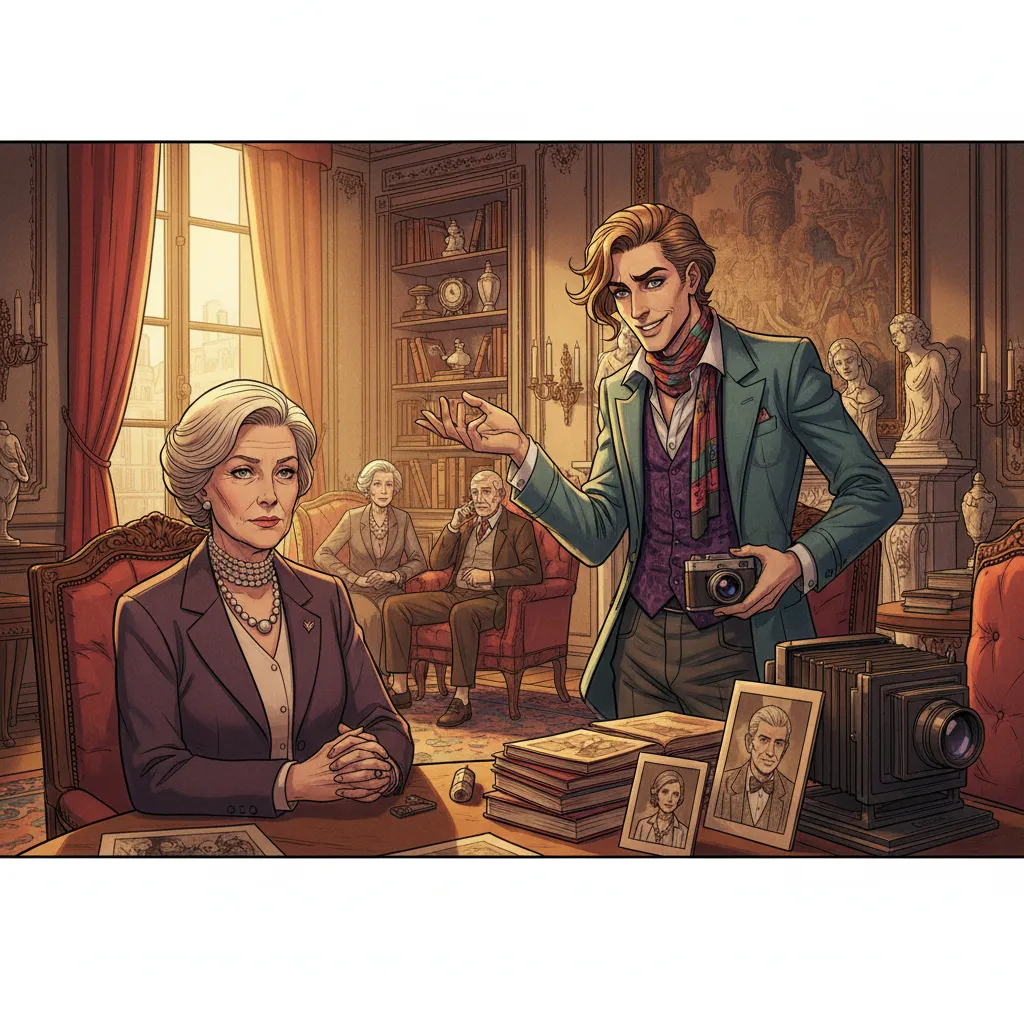
And then, into this simmering pot of family tension, a new ingredient was stirred: François-Marie Banier. He was a celebrated photographer, a flamboyant artist, a social butterfly who moved effortlessly through the circles of Parisian high society. And he had a magnetic personality, a wit, and a charm that captivated Liliane Bettencourt.
Banier entered Liliane’s life in the late 1990s, ostensibly to photograph her. But their relationship quickly deepened into something far more intimate, a profound friendship that transcended the typical patron-artist dynamic. For Liliane, who by now was largely isolated from her late husband and had a distant relationship with her daughter, Banier offered companionship, intellectual stimulation, and a vibrant connection to the artistic world she adored. He was her confidant, her muse, her constant companion.
What followed was an extraordinary series of gifts. Over the course of more than a decade, Liliane showered Banier with an astonishing array of assets: priceless works of art (Picassos, Matisses, Légers), life insurance policies, and vast sums of cash, reportedly totaling over €1 billion. This wasn’t just generous; it was unprecedented, even for a woman of Liliane’s immense wealth. The gifts were so lavish, so disproportionate, that they immediately raised red flags for Francoise.
From Francoise’s perspective, this was not a friendship; it was exploitation. She saw a vulnerable, aging mother being manipulated by a cunning opportunist. The sheer scale of the gifts, the increasing demands on Liliane’s time and attention, and the apparent secrecy surrounding these transfers fueled Francoise’s conviction that Banier was preying on her mother’s declining mental state. She believed Banier was systematically draining the family fortune, jeopardizing not only her inheritance but also the stability of the L’Oréal empire.
The drama intensified as Francoise repeatedly tried to intervene, to speak to her mother, to reason with her. But Liliane fiercely defended Banier, seeing her daughter’s concerns as an attack on her autonomy, her friendships, and her right to dispose of her own wealth as she saw fit. She felt betrayed by Francoise, perceiving her daughter as cold, unloving, and motivated by greed. The emotional chasm between them became an unbridgeable canyon.
“The entrance of François-Marie Banier wasn’t just a social event; it was a catalyst, igniting a powder keg of family resentments. He became the lightning rod for Francoise’s fears, transforming a private concern into a public accusation of epic proportions.”
This period marks the true genesis of the “Bettencourt affair.” It ceased to be a private family matter and began its inexorable slide into a public scandal. Francoise, driven by a potent mix of filial duty, moral outrage, and a deep-seated desire to protect her mother and her family’s legacy, made the agonizing decision to take legal action. She was about to unleash a storm that would engulf not just her family, but the highest echelons of French society and politics, revealing a hidden world of power, corruption, and the shocking fragility of immense wealth. The quiet scholar was about to become the reluctant warrior.
🚨 Chapter 7: The Scandal Breaks: Francoise Files Suit

In December 2007, Francoise Bettencourt Meyers made a decision that would send shockwaves across France and into the global media. She filed a criminal complaint against François-Marie Banier, accusing him of abus de faiblesse – “abuse of weakness” – essentially, exploiting her mother’s alleged mental frailty for financial gain. It was a drastic, unprecedented move, a daughter publicly accusing her mother’s closest confidant of preying on her.
The filing of the lawsuit ripped the veil of discretion from the Bettencourt family. What had been whispers in Parisian high society instantly became screaming headlines. The sheer audacity of the accusation, the staggering sums involved, and the celebrity of the protagonists ensured immediate, intense media scrutiny. The private world of the ultra-rich was suddenly laid bare, its glittering facade cracked open to reveal the messy, human drama beneath.
The initial complaint focused squarely on Banier, but its implications were far broader. It implicitly questioned Liliane’s judgment, her mental capacity, and her ability to manage her own affairs. This, naturally, infuriated Liliane, who vehemently denied any exploitation and fiercely defended her relationship with Banier. She saw Francoise’s actions as a hostile takeover attempt, a blatant effort to seize control of her fortune while she was still alive and lucid.
The legal battle was immediately ugly and highly personal. Francoise presented evidence of her mother’s lavish gifts to Banier, arguing that they were wildly out of proportion and indicative of undue influence. Liliane’s lawyers, in turn, painted Francoise as a jealous, greedy daughter, motivated by a desire to secure her inheritance prematurely.
The media, sensing blood in the water, descended like vultures. Every detail, every accusation, every leaked document became fodder for public consumption. The narrative quickly devolved into a sensational tale of an elderly heiress, a charming artist, and a scorned daughter. It was a soap opera played out on the grandest possible stage, but with real-world consequences that could shake the foundations of L’Oréal itself.
“When Francoise filed suit, it wasn’t just a legal maneuver; it was a declaration of war. The battle for her mother’s soul, and billions of euros, exploded into the public arena, proving that even the most discreet fortunes cannot escape the relentless glare of scandal.”
The scandal quickly expanded beyond the initial accusation against Banier. As investigations unfolded, they began to uncover a tangled web of political connections, undeclared bank accounts, and alleged illegal campaign financing. The quiet family dispute morphed into a full-blown national crisis, threatening to implicate some of France’s most powerful figures.
The decision to go public was undoubtedly agonizing for Francoise. It meant sacrificing her family’s privacy, enduring relentless media scrutiny, and alienating her own mother. But she clearly felt that the stakes were too high, the danger too great, to remain silent. She believed her mother was being exploited, and that she had a moral imperative to intervene, no matter the personal cost. The lawsuit was not just a legal document; it was a desperate cry for help, an act of last resort by a daughter trying to save her mother from what she perceived as ruin. The stage was now set for a legal labyrinth that would unravel the deepest secrets of power and privilege in France.
⚖️ Chapter 🎧 Chapter 8: The Legal Labyrinth and the Wiretap Bombshell

The lawsuit filed by Francoise Bettencourt Meyers against François-Marie Banier was merely the opening salvo in what would become a protracted, Byzantine legal battle, the likes of which France had rarely seen. This wasn’t just a civil dispute; it spiraled into a criminal investigation, dragging in a cast of characters that read like a political thriller novel.
The core of Francoise’s case rested on proving Liliane Bettencourt’s mental incapacity. To bolster this, Francoise’s legal team commissioned medical evaluations, which suggested that Liliane was indeed suffering from dementia. Liliane’s lawyers, of course, vehemently contested these findings, presenting their own experts who declared her perfectly lucid and capable of managing her affairs. It became a public spectacle of medical opinions clashing, of highly personal details about Liliane’s health being debated in the press.
But the real game-changer, the moment the scandal truly exploded beyond a family feud into a national crisis, came with the revelation of secret wiretap recordings. These recordings, made by Liliane’s former butler, Pascal Bonnefoy, were devastating. Hidden cameras and microphones in Liliane’s private residence captured conversations between Liliane, her financial advisors, and others, discussing everything from undeclared Swiss bank accounts to alleged tax evasion and, most explosively, illegal cash donations to political figures.
The wiretaps painted a damning picture. They revealed discussions about complex schemes to avoid taxes, moving vast sums of money out of France. More sensationally, they implicated high-ranking members of the French government, including Éric Woerth, then the Minister of Labour and a key ally of President Nicolas Sarkozy. The recordings suggested that Liliane had made large, illegal cash payments to political campaigns, including Sarkozy’s own 2007 presidential bid. This was a direct violation of campaign finance laws and immediately triggered a parallel political scandal that threatened to destabilize the government.
Woerth, whose wife was employed by Liliane as a wealth manager, was accused of conflict of interest and accepting illicit funds. The scandal became known as “Woerth-Bettencourt,” intertwining the family drama with the highest levels of French power. President Sarkozy himself was eventually questioned (though later cleared), highlighting the immense reach of the Bettencourt fortune and its alleged influence.
“The wiretaps weren’t just evidence; they were a hand grenade tossed into the gilded cage of French elite. They exposed not only a family in crisis but a political system allegedly riddled with illicit dealings, turning a personal tragedy into a national reckoning.”
The legal proceedings became a circus. Banier was charged with exploitation. Liliane’s financial manager, Patrice de Maistre, and her lawyer, Fabrice Goguel, were also implicated. The judge leading the investigation, Jean-Michel Gentil, became a household name. The sheer volume of evidence, the number of witnesses, and the political sensitivity of the case made it one of the most complex and closely watched legal battles in recent French history.
For Francoise, this expansion of the scandal was a double-edged sword. On one hand, the wiretaps seemed to validate her deepest fears about her mother’s vulnerability and the unsavory characters surrounding her. On the other hand, it meant the family’s dirty laundry was being aired on an unprecedented scale, dragging her and her own children into a maelstrom of public scrutiny. The battle for her mother’s mental state had morphed into a fight for the integrity of the French political system, and Francoise, the quiet scholar, found herself at the epicenter of it all, navigating a legal and political minefield with extraordinary resilience.
🏛️ Chapter 9: The Shifting Sands of Power: Guardianship and Nestlé

As the legal battles raged and the political scandal simmered, the core issue of Liliane Bettencourt’s mental capacity became increasingly urgent. The court, confronted with conflicting medical reports and the disturbing revelations of the wiretaps, ultimately had to make a decision about her ability to manage her vast fortune.
In October 2011, after years of painful legal skirmishes, a French court ruled that Liliane Bettencourt was no longer capable of managing her affairs due to “severe mixed dementia” and “moderately severe Alzheimer’s disease.” The court placed her under the legal guardianship of her daughter, Francoise Bettencourt Meyers, and her two grandsons, Jean-Victor and Nicolas Meyers. This was the moment of truth for Francoise, the culmination of years of desperate struggle. It was a victory, but a bittersweet one, achieved at the cost of a public family rupture and the official declaration of her mother’s cognitive decline.
This ruling effectively removed Banier and other alleged exploiters from Liliane’s immediate orbit and placed the L’Oréal heiress’s personal and financial well-being directly under her daughter’s control. It was a significant shift of power, both familial and financial. Francoise, who had been the plaintiff, the accuser, now became the protector, tasked with safeguarding her mother’s interests and the immense legacy she represented.
Beyond the personal, this guardianship had profound implications for L’Oréal. The family’s control over the company was primarily exercised through Tethys S.C.A., a holding company that owned the majority of the family’s L’Oréal shares. With Liliane under guardianship, Francoise now held the ultimate authority over these shares, securing the family’s long-term influence on the cosmetics giant.
Crucially, this period also saw significant developments regarding the strategic stake held by Nestlé in L’Oréal. For decades, Nestlé had held a significant minority stake (around 23%) in L’Oréal, a legacy of the 1970s agreement to protect L’Oréal from hostile takeovers. The family, through Liliane, held about 33%. This cross-shareholding had been a source of stability but also a point of strategic tension. There was always speculation about when Nestlé might divest its stake, or conversely, attempt to gain more control.
Under Francoise’s eventual influence, a new agreement was reached in 2014. Nestlé reduced its stake in L’Oréal, selling shares back to L’Oréal itself in a multi-billion euro deal. This move was strategic: it strengthened the Bettencourt family’s control over L’Oréal by increasing their effective share of the company’s capital, while also giving Nestlé a substantial cash injection. It was a clear signal that Francoise, now at the helm of the family fortune, was ready to assert her control and shape the future of L’Oréal on her own terms, ensuring the company remained firmly in family hands.
“The guardianship ruling was not just a legal decree; it was an earthquake that realigned the power structure of a multi-billion-dollar empire. Francoise, once battling for her mother’s protection, now found herself the undisputed steward of L’Oréal’s destiny, orchestrating strategic moves that cemented family control for generations to come.”
The trials related to the exploitation charges continued for years, culminating in a series of convictions for Banier and others involved, though many appealed and received reduced sentences. The legal saga was a testament to the slow, grinding nature of justice, but for Francoise, the immediate objective of protecting her mother and securing the family’s legacy was achieved. Liliane Bettencourt lived the remainder of her life under the quiet care of her family, passing away in September 2017 at the age of 94. Her death marked the end of an era, and the full, undeniable ascent of Francoise Bettencourt Meyers to the undisputed leadership of the L’Oréal empire. The quiet scholar had weathered the storm and emerged, not just victorious, but fully in command.
📈 Chapter 10: The Quiet Ascent: Francoise at the Helm

With the passing of her mother, Liliane Bettencourt, in 2017, Francoise Bettencourt Meyers officially inherited the vast majority of the L’Oréal fortune. The public drama that had consumed her family for a decade finally receded, allowing Francoise to step fully into her role as the matriarch of the world’s largest cosmetics company. But unlike her flamboyant mother, Francoise’s leadership style has been marked by a profound sense of quiet stability, strategic foresight, and an unwavering commitment to the core values of L’Oréal.
Francoise’s influence on L’Oréal is multifaceted. As the vice-chairwoman of the board, she plays a crucial role in shaping the company’s long-term vision and strategy. While she doesn’t involve herself in day-to-day operations, her presence ensures that the family’s legacy and commitment to the brand’s heritage are preserved. She’s not a CEO in the traditional sense, but a powerful steward, overseeing the grand strategic direction.
Under her watch, L’Oréal has continued its impressive growth trajectory. The company has skillfully navigated a rapidly evolving beauty market, embracing digital transformation, e-commerce, and new consumer trends. L’Oréal’s success isn’t built on a single product or trend; it’s a testament to its diversified portfolio, its relentless innovation in R&D, and its unparalleled global distribution network. From luxury brands like Giorgio Armani Beauty and Yves Saint Laurent Beauty to mass-market staples like Garnier and L’Oréal Paris, the company caters to every segment, constantly adapting to changing consumer demands for sustainability, inclusivity, and personalization.
Francoise has also emphasized the family’s philanthropic endeavors, through the Bettencourt Schueller Foundation, which has become a significant force in supporting scientific research, medical advancements, and arts and culture in France. This commitment to philanthropy reflects Francoise’s own intellectual and humanitarian interests, demonstrating that the family’s wealth is not just for accumulation but for societal impact.
Her tenure has been marked by a quiet strength. She avoids the spotlight, rarely gives interviews, and maintains a deeply private personal life. This stands in stark contrast to the public spectacle of the “Bettencourt affair.” It suggests a woman who learned profound lessons from the public scrutiny, choosing instead to focus on the substance of her responsibilities rather than the superficiality of celebrity.
“Francoise Bettencourt Meyers didn’t just inherit a fortune; she inherited a mission. Her quiet leadership, marked by strategic foresight and an unwavering commitment to L’Oréal’s core, proves that true power doesn’t always roar; sometimes, it hums with the steady rhythm of meticulous stewardship.”
Her business acumen, though often understated, is undeniable. She has overseen a period of consistent stock appreciation for L’Oréal, which has directly contributed to the exponential growth of her personal wealth. Her understanding of the company’s fundamentals, its market position, and its future potential has allowed her to make sound strategic decisions, ensuring the empire continues to thrive.
The journey from the intellectual scholar, embroiled in a bitter family feud, to the undisputed leader of a global beauty empire, is a testament to Francoise Bettencourt Meyers’s resilience and quiet power. She didn’t seek the spotlight, but when it was thrust upon her, she handled it with a quiet dignity, eventually steering her family’s colossal fortune and L’Oréal itself into a new era of stability and continued prosperity. Her story is a powerful reminder that sometimes, the greatest strength lies not in outward show, but in inner conviction and steadfast determination.
💰 Chapter 11: The World’s Richest Woman: A Legacy Forged in Fire

The year 2022 marked a historic milestone: Francoise Bettencourt Meyers officially became the first woman in history to amass a fortune exceeding $100 billion. As of early 2024, her net worth has continued to climb, solidifying her position as the wealthiest woman on the planet and one of the richest individuals overall. This isn’t just a number; it’s a testament to the enduring power of the L’Oréal empire and Francoise’s strategic stewardship.
How did this happen? It’s a confluence of factors, a perfect storm of business success and generational wealth transfer:
- L’Oréal’s Stellar Performance: At the heart of Francoise’s wealth is L’Oréal’s consistently exceptional performance. The company has been a powerhouse, delivering robust revenue growth and strong profitability for decades. Its global reach, diversified brand portfolio (from luxury to mass market, skincare to haircare, fragrance to makeup), and relentless innovation have allowed it to weather economic downturns and adapt to shifting consumer tastes. The company’s stock price has steadily appreciated, often outperforming the broader market.
- Strategic Ownership Structure: The Bettencourt family, through their holding company Tethys S.C.A., retains a significant majority stake in L’Oréal, currently around 34.7% of the shares. This substantial ownership means that as L’Oréal’s market capitalization grows, so too does the family’s wealth, directly and dramatically.
- Compounding Growth: Over decades, the sheer scale of the L’Oréal business and the family’s ownership stake have allowed for exponential compounding. Each percentage point of growth in L’Oréal’s valuation translates into billions for the Bettencourt Meyers family.
- Market Trends: The global beauty market has shown remarkable resilience and growth, driven by rising disposable incomes in emerging markets, the influence of social media, and a growing consumer focus on self-care and personal grooming. L’Oréal, with its unparalleled R&D and marketing prowess, is perfectly positioned to capture these trends.
- Francoise’s Steady Hand: While she isn’t involved in daily operations, Francoise’s role as vice-chairwoman of the board has provided crucial stability and long-term vision. Her focus on sustainable growth, sound corporate governance, and the preservation of L’Oréal’s core values has allowed the professional management team to thrive, ensuring consistent performance that benefits shareholders, including the family.
Francoise’s journey to this pinnacle of wealth is unique because it was forged not in the cutthroat world of tech startups or Wall Street trading floors, but in the crucible of a devastating family feud. She inherited a legacy that was both a blessing and a curse, a fortune inextricably linked to public scandal and personal anguish. Yet, she emerged from that fire not diminished, but strengthened, a testament to her resilience and the inherent power of the L’Oréal brand.
“Francoise Bettencourt Meyers didn’t just inherit a fortune; she fought for it, protected it, and now, quietly but firmly, commands it. Her ascent to the world’s richest woman isn’t just about numbers; it’s a story of endurance, strategic acumen, and the enduring, almost mythical power of a beauty empire built to last.”
Her story is a powerful reminder that immense wealth comes with immense responsibility, and often, immense challenges. It highlights how a family’s internal dynamics can play out on a global stage, impacting not just personal lives but corporate fortunes. Francoise Bettencourt Meyers, the quiet intellectual, the reluctant warrior, stands today as the undisputed empress of a beauty kingdom, her legacy now firmly entwined with the history of L’Oréal and the very definition of modern wealth. She is proof that sometimes, the most powerful figures are those who prefer to operate in the quiet shadows, letting their actions, and their assets, speak for themselves.
🌟 Chapter 12: The Unwritten Chapters: Legacy, Power, and the Future of Beauty
The saga of the Bettencourt family, the L’Oréal empire, and Francoise Bettencourt Meyers is more than just a sensational headline or a cautionary tale of immense wealth. It’s a multi-layered narrative that offers profound insights into business, power, family dynamics, and the very nature of legacy.
For Business Leaders and Entrepreneurs: The L’Oréal story, under both Liliane and Francoise, is a masterclass in brand building and diversification. It’s about understanding the nuances of a global market, investing relentlessly in R&D, and building a portfolio that can weather any storm. L’Oréal didn’t just sell products; it sold aspiration, innovation, and trust. The consistent performance of its stock, even through the turmoil of the family feud, underscores the resilience of a well-managed, globally diversified enterprise with strong underlying fundamentals. The lesson here is clear: build a business that is bigger than any single personality, brand, or even family drama. Build a business that can run itself, with robust structures and an unwavering commitment to its mission.
For Investors: The Bettencourt saga demonstrates the long-term value of investing in market-leading companies with strong brand equity and global reach. L’Oréal’s ability to generate consistent returns, even with internal strife, highlights the importance of looking beyond short-term noise to the underlying strength of a business. It also shows the power of compounding and holding significant stakes in successful enterprises over generations.
On Generational Wealth and Family Enterprises: The Bettencourt affair serves as a stark warning. The failure to establish clear communication, boundaries, and perhaps even legal frameworks for managing wealth across generations can lead to catastrophic public and personal fallout. While Francoise ultimately secured the family’s legacy, the cost was immense. For any family business, proactive succession planning, independent oversight, and clear understandings about mental capacity and decision-making are not luxuries, but necessities. The drama highlighted the inherent vulnerability of even the most powerful families when personal relationships and vast fortunes become entangled without proper safeguards.
The Enduring Power of a Brand: Throughout the entire ordeal, L’Oréal itself remained largely untarnished. Its products continued to sell, its innovation continued apace, and its market position remained dominant. This is a testament to the power of a brand that has transcended its founders and owners, becoming a global institution in its own right. The company’s executives and employees, despite the highly public and embarrassing revelations, continued to focus on the business, ensuring that the corporate engine kept humming, even as the family was embroiled in a civil war.
Francoise Bettencourt Meyers’s Legacy: Her story is far from over, but her legacy is already undeniable. She is not just the world’s richest woman; she is a symbol of quiet strength, intellectual rigor, and unwavering determination. She embodies a modern kind of power – one that shuns the ostentation of wealth for the substance of stewardship, that prioritizes long-term stability over fleeting headlines. She fought for what she believed was right, endured unimaginable public scrutiny, and emerged, not as a victim, but as the firm, capable hand guiding a multi-billion-dollar empire.
The unwritten chapters of the Bettencourt family will continue to unfold, shaped by Francoise and her sons. What remains certain is that L’Oréal, the beauty myth born from a chemist’s ingenuity, will continue to evolve, to innovate, and to redefine beauty for generations to come. And at its core, a quiet, formidable woman will continue to steer its destiny, a testament to a battle won and a legacy secured, all under the shimmering, sometimes tumultuous, halo of L’Oréal. The world watches, still captivated by the allure, and the indelible power, of beauty.
💡 Key Insights
- ▸ The enduring power of brand legacy and diversified portfolio management: L'Oréal's ability to weather family storms and market shifts underscores the resilience built into a globally recognized brand with a vast, adaptable product ecosystem. Entrepreneurs should focus on building brand equity that transcends individual personalities or short-term controversies.
- ▸ Navigating generational wealth transfer requires proactive governance and clear boundaries: The Bettencourt saga highlights the catastrophic potential of unresolved family dynamics intertwining with immense wealth. Implementing robust legal frameworks, independent oversight, and clear succession planning is crucial for any family enterprise, especially when mental capacity becomes a factor, to prevent public and financial fallout.
- ▸ The quiet strength of strategic long-term vision amidst chaos: While the drama unfolded, the underlying business of L'Oréal continued its growth trajectory, driven by savvy market expansion and innovation. This demonstrates that even in the most tumultuous personal circumstances, a well-managed, forward-thinking corporate entity can maintain its momentum, emphasizing the separation of ownership drama from operational excellence for sustained market leadership.