Bernard Arnault: How a Quiet Frenchman Outmaneuvered Everyone and Built the Largest Luxury Empire in History
He trained as an engineer, bought a bankrupt textile company for its hidden jewel, and spent four decades swallowing the world's greatest luxury brands — until he was worth more than anyone on Earth.
View all stories about this mogul
In January 2023, a seventy-three-year-old Frenchman who most Americans couldn’t pick out of a lineup quietly passed Elon Musk, Jeff Bezos, and every other billionaire on Earth to become the richest human being alive. No rockets. No social media platform. No cryptocurrency. Just handbags, champagne, and perfume — the most elegant accumulation of wealth the world has ever seen.
His name is Bernard Arnault. His company, LVMH Moet Hennessy Louis Vuitton, owns more than 75 luxury brands spanning fashion, wine, jewelry, cosmetics, and hospitality. Louis Vuitton. Christian Dior. Tiffany & Co. Hennessy. Sephora. Bulgari. Givenchy. Fendi. TAG Heuer. Dom Perignon. The list reads like a museum catalogue of human desire.
As of early 2026, Arnault’s net worth hovers around $220 billion, LVMH generates over $90 billion in annual revenue, and this soft-spoken engineer from northern France controls an empire that touches nearly every luxury purchase made on Earth.
The kicker? Almost nobody saw him coming.
This is the story of how Bernard Arnault — the man the French press calls le loup en cachemire, the wolf in cashmere — bought, maneuvered, and built his way to the top of the world.
🏗️ Chapter 1: The Engineer’s Son — Roubaix, France (1949–1971)

Bernard Jean Etienne Arnault was born on March 5, 1949, in Roubaix, a textile manufacturing town in northern France near the Belgian border. If you know anything about Roubaix, you know it’s about as far from Parisian glamour as you can get without leaving the country. It was a working-class industrial city, famous for wool and factories, not couture and champagne.
His father, Jean Arnault, ran a civil engineering and construction company called Ferret-Savinel. The business was solid, not spectacular — it built roads, social housing, and industrial infrastructure in northern France. His mother, Marie-Josephe Savinel, came from the family that co-owned the company. Bernard grew up surrounded by blueprints, construction sites, and dinner-table conversations about contracts, margins, and the mechanics of running a business.
This is important. Because unlike most luxury magnates, Arnault didn’t come from the world of fashion. He didn’t grow up sketching dresses or haunting ateliers. He grew up watching his father pour concrete and balance books. He was trained to build things — literally, structurally, from the ground up.
The Polytechnicien
Arnault was a brilliant student. In 1969, he graduated from Ecole Polytechnique — l’X, as the French call it — the most prestigious engineering school in France. Think of it as the MIT of France, but with more military traditions and a Napoleon-era pedigree. Polytechnique doesn’t produce dreamers. It produces systems thinkers: people who see the world as a series of problems to be optimized.
“I was always more interested in the business side of things than in art. But I learned early that the best businesses combine both — analytical rigor and creative vision.” — Bernard Arnault
After graduating, Arnault joined his father’s construction company, Ferret-Savinel. He was twenty-two years old. Within three years, he had convinced his father to sell off the company’s construction division — the core business, the thing the family had done for decades — and pivot entirely into real estate development. Jean Arnault, to his immense credit, listened to his son.
It was the first sign of a pattern that would define Arnault’s entire career: the willingness to destroy what exists in order to build something better. Most people inherit a business and maintain it. Arnault inherited a business and immediately started dismantling it.
By the late 1970s, the renamed company, Ferinel, had become a successful real estate and vacation property developer. Arnault was learning the mechanics of deal-making, capital allocation, and — perhaps most importantly — patience. He was making money, but he was bored. He wanted something bigger.
🐺 Chapter 2: The Wolf Arrives — The Dior Takeover (1984–1987)

In 1981, Francois Mitterrand and the Socialist Party came to power in France, and Bernard Arnault, sensing the political winds turning against wealthy business owners, did something drastic: he packed up his family and moved to the United States. He spent three years in New Rochelle, New York, running a small real estate development operation and studying the American business landscape.
What he learned in America changed everything. He watched how U.S. conglomerates were built — the leveraged buyouts, the hostile takeovers, the private equity playbook that was transforming corporate America in the 1980s. He studied the tactics of raiders like Carl Icahn and Henry Kravis. And he had an insight that would make him the richest man in the world: those tactics could be applied to luxury goods.
Nobody in Europe was thinking this way. The European luxury houses — Dior, Chanel, Hermes, Louis Vuitton — were family-owned, tradition-bound, and deeply resistant to the idea that fashion brands could be managed like industrial assets. Arnault saw them as undervalued companies waiting to be consolidated.
The Boussac Gambit
In 1984, the opportunity arrived. A sprawling French industrial conglomerate called Boussac Saint-Freres — which owned textile mills, retail chains, diapers, and, buried inside this mess of declining businesses, the couture house Christian Dior — went bankrupt. The French government was desperate to find a buyer to save the jobs. Nobody wanted it. The whole thing was toxic.
Arnault wanted it. Not for the textile mills. Not for the diaper business. He wanted Dior.
He convinced the French government, through a combination of deal-making and political maneuvering, to let him acquire Boussac for a symbolic price. His family invested approximately 90 million francs (around $15 million at the time) for control of the entire empire. Then he did exactly what everyone feared: he immediately liquidated everything he didn’t want. The textile mills? Sold. The diapers? Gone. Thousands of jobs? Eliminated.
What he kept was Christian Dior.
The French press was horrified. They called him a corporate raider, a destroyer, a vulture. The nickname le loup en cachemire — the wolf in cashmere — was born. Arnault didn’t care. He understood something the press didn’t: Dior wasn’t just a fashion brand. It was one of the most powerful names in the history of luxury. It was worth more than every other Boussac asset combined.
“In the luxury business, you have to control everything. If you license your brand to everyone, you lose your soul.” — Bernard Arnault
He immediately got to work. He brought in new designers, tightened licensing agreements that had diluted the Dior name, invested in retail stores, and began transforming Dior from a faded couture house into a global luxury powerhouse. Within two years, Dior was profitable again.
Arnault was thirty-five years old. He owned one of the most famous fashion houses in the world. And he was just getting started.
♟️ Chapter 3: The Hostile Takeover of LVMH (1988–1990)

The next chapter of Arnault’s career is one of the most extraordinary corporate power grabs in business history. It’s so devious, so perfectly executed, that business schools still teach it.
In 1987, two French luxury companies — Moet Hennessy (champagne and cognac) and Louis Vuitton (leather goods and fashion) — had merged to create LVMH, the world’s first luxury conglomerate. But the marriage was miserable. The two sides hated each other. Alain Chevalier, who ran Moet Hennessy, and Henry Racamier, who ran Louis Vuitton, were locked in a vicious power struggle over who would actually control the new entity.
Enter Arnault.
Henry Racamier, desperate for an ally against Chevalier, invited Arnault to invest in LVMH as a “white knight” — a friendly investor who would help the Louis Vuitton side win the internal war. Arnault agreed. He was charming. He was reassuring. He told Racamier exactly what he wanted to hear.
Then he ate them both alive.
Using a complex web of holding companies, borrowed money, and stock purchases, Arnault quietly accumulated a 24% stake in LVMH by early 1989 — enough to become the single largest shareholder. Then he went further. Through a series of aggressive moves, including a contested share offering that went all the way to the French courts, Arnault muscled his ownership up to 43.5% by the end of 1989.
On January 13, 1989, Arnault was officially named chairman of LVMH.
Chevalier was out. Racamier — the man who had invited Arnault in as his ally — was out too. Both men had been outmaneuvered by the quiet engineer from Roubaix.
Racamier, reportedly stunned by the betrayal, spent years fighting Arnault in court. It didn’t matter. Arnault controlled the board. Arnault controlled the votes. Arnault controlled LVMH.
The French establishment was genuinely shocked. Not just by the outcome, but by the method. This wasn’t how things were done in France. Corporate takeovers were supposed to be gentlemanly affairs, conducted over long lunches and resolved through social connections. Arnault had played it like an American raider — cold, calculated, and ruthless.
“It is very French, this idea that money is something dirty. In fact, it is the opposite. Money is the result of creating something people want.” — Bernard Arnault
He was forty years old. He controlled the largest luxury goods company on Earth. And now he was going to go shopping.
👜 Chapter 4: The Acquisition Machine (1990–2020)

What Arnault did over the next three decades is almost without parallel in modern business. He turned LVMH into the most prolific acquirer in the luxury industry — a machine that swallowed brand after brand, decade after decade, with an appetite that never seemed to diminish.
Here’s a partial list. Just reading it is exhausting:
1993: Berluti (Italian leather goods, founded 1895). Kenzo (Japanese-French fashion). 1994: Guerlain (perfume, founded 1828). 1996: Loewe (Spanish leather goods, founded 1846). Celine (French fashion). 1997: Sephora (cosmetics retail). Marc Jacobs. 1999: Tag Heuer (Swiss watches). Thomas Pink (British shirts). 2000: Emilio Pucci (Italian fashion). 2001: Fendi (Italian fashion, paying $930 million for a controlling stake alongside Prada — then buying Prada’s share too). DKNY and Donna Karan. 2010: Hermes (attempted — more on this shortly). 2011: Bulgari (Italian jewelry, $5.2 billion). 2013: Loro Piana (Italian cashmere, $2.6 billion). 2017: Christian Dior Couture brought fully under LVMH ($13.1 billion deal restructuring). 2019: Tiffany & Co. announced ($15.8 billion — originally $16.2 billion, renegotiated during COVID). 2021: Tiffany deal closed.
That’s not even close to all of them. LVMH today operates over 75 distinct brands across six business segments: Fashion & Leather Goods, Wines & Spirits, Perfumes & Cosmetics, Watches & Jewelry, Selective Retailing, and Other Activities.
The Arnault Method
What makes Arnault’s acquisition strategy different from, say, a private equity firm that buys brands, strips costs, and flips them? Three things.
First: he keeps the creative identity. Every brand LVMH acquires maintains its own creative director, its own design studio, its own aesthetic DNA. Louis Vuitton doesn’t look like Dior, which doesn’t look like Fendi, which doesn’t look like Loewe. Arnault understood from the beginning that luxury is about distinctiveness. The moment your brands start to feel corporate and interchangeable, you’ve killed the thing that makes them valuable.
Second: he invests in the brand, not just the business. When Arnault acquired a struggling brand — Celine, for example, which was a sleepy, unfocused mess in the 1990s — he didn’t just cut costs. He hired extraordinary creative talent (Phoebe Philo, later Hedi Slimane), gave them creative freedom, invested in flagship stores, and waited. Sometimes for years. The payoff with Celine was spectacular — Philo transformed it into one of the most coveted brands in the world.
Third: he provides the infrastructure. The real power of LVMH isn’t the brands themselves — it’s the back-end machine. Supply chain. Real estate. Retail operations. Manufacturing. Distribution. Advertising buying power. When a small luxury brand joins LVMH, it suddenly has access to the logistics and scale of a $90 billion revenue operation while still operating like an independent atelier. It’s the best of both worlds.
The Hermes War
Not every acquisition went smoothly. Arnault’s most famous failure — or at least his most famous stalemate — was his attempt to take over Hermes, the legendary French house famous for Birkin bags and silk scarves.
Starting in 2010, LVMH quietly accumulated a 23% stake in Hermes through an elaborate series of equity swap transactions — a financial maneuver so complex and so stealthy that the Hermes family didn’t know it was happening until Arnault announced it publicly. The family was furious. They accused Arnault of trying to stage a hostile takeover. The French financial regulator, the AMF, eventually fined LVMH 8 million euros for not disclosing its stake earlier.
The Hermes family fought back hard. They created a holding company, pooling over 50% of family shares into a structure designed to make a takeover impossible. In 2014, Arnault essentially gave up, distributing his Hermes shares to LVMH shareholders. He reportedly made a profit of several billion euros on the trade — but he didn’t get Hermes.
It remains the one that got away.
💎 Chapter 5: The Tiffany Crown Jewel (2019–2021)

If the Hermes attempt was Arnault’s most famous failure, the Tiffany acquisition was his masterpiece.
In November 2019, LVMH announced it would acquire Tiffany & Co. — the 182-year-old American jeweler synonymous with engagement rings, that iconic robin’s-egg blue box, and Audrey Hepburn eating a croissant on Fifth Avenue — for $16.2 billion. It was the largest luxury acquisition in history.
Then COVID hit.
As the pandemic devastated retail and luxury spending cratered globally, Arnault did something that stunned the business world: he tried to renegotiate the deal. LVMH’s board announced it could not proceed at the original price, citing a request from the French government regarding trade tensions with the U.S. (a claim many analysts found dubious). Tiffany sued LVMH to enforce the deal. LVMH countersued, claiming Tiffany had been mismanaged during the pandemic.
It was brutal, expensive theater. But behind the scenes, both sides knew they needed each other. In October 2020, they agreed on a revised price: $15.8 billion — a $400 million discount for Arnault. The deal closed in January 2021.
What happened next was classic Arnault. He immediately installed new leadership, brought in designer collaborations (including a partnership with Beyonce and Jay-Z for the brand’s advertising), renovated the Fifth Avenue flagship, and launched new product lines. By 2023, Tiffany was posting its strongest revenue growth in years.
A $15.8 billion bet on a blue box. And it was working.
🌍 Chapter 6: The Richest Man in the World (2022–2026)

For decades, the title of world’s richest person had bounced between American tech founders — Bill Gates, Jeff Bezos, Elon Musk. Then, in December 2022, Bernard Arnault surpassed them all.
It wasn’t a spike. It was a culmination. LVMH’s stock price had been climbing steadily for years, driven by relentless revenue growth, margin expansion, and the insatiable global appetite for luxury goods — particularly in China, where a rising middle class was spending billions on Louis Vuitton, Dior, and Hennessy.
In April 2023, LVMH became the first European company to surpass a $500 billion market capitalization. For context: that made a company that sells handbags and champagne worth more than most banks, oil companies, and tech firms on Earth.
By 2025, Arnault’s personal fortune had crossed $200 billion, and LVMH’s annual revenue exceeded $90 billion. The company employed over 213,000 people across the globe.
The numbers are staggering. But what makes Arnault’s ascent remarkable isn’t just the scale — it’s the category. Every other person who has held the title of world’s richest was a technology mogul. Gates built software. Bezos built e-commerce. Musk built electric cars and rockets. Arnault built desire. He sells things people don’t need but desperately want — and he does it at margins that would make a tech CEO blush.
Louis Vuitton alone reportedly generates operating margins above 40%, making it more profitable on a percentage basis than Apple’s iPhone business. A Louis Vuitton handbag that costs perhaps $200–$300 to manufacture sells for $2,000–$10,000. A bottle of Dom Perignon that costs maybe $20 to produce retails for $200+. The economics of luxury are, frankly, obscene — and Arnault understood that better than anyone alive.
“I think in business, you have to be able to take risks. If you are not willing to take risks, you cannot create anything great.” — Bernard Arnault
👨👩👧👦 Chapter 7: The Dynasty — Five Children, One Throne (2020s)

If you want to understand what Bernard Arnault is doing right now — in his mid-seventies, richer than anyone on Earth — you need to understand his family. Because Arnault isn’t just building a company. He’s building a dynasty.
He has five children from two marriages. And every single one of them has been positioned inside LVMH’s empire.
Delphine Arnault (born 1975), his eldest, is Chairman and CEO of Christian Dior Couture — one of LVMH’s crown jewels. She previously served as Executive Vice President of Louis Vuitton. She’s polished, strategic, and widely regarded as the most likely successor.
Antoine Arnault (born 1977), his second child, is CEO of Christian Dior SE, the holding company that controls LVMH’s controlling stake. He also oversees Berluti and LVMH’s image and communications. He’s married to supermodel Natalia Vodianova.
Alexandre Arnault (born 1992), from his second marriage, was installed as Executive Vice President of Tiffany & Co. after the acquisition — at age twenty-nine. He previously ran Rimowa, LVMH’s German luggage brand.
Frederic Arnault (born 1995) runs TAG Heuer as CEO — one of LVMH’s flagship watch brands.
Jean Arnault (born 2000), the youngest, was appointed to lead LVMH’s watches division in 2023, at age twenty-two.
The message is unmistakable: Arnault is running a controlled experiment in succession. Rather than anointing a single heir — the way Rupert Murdoch did (and lived to regret) — he’s placed each child in a meaningful operational role and is watching who performs. The empire will go to the most capable. Or perhaps it will be divided among all of them. Or perhaps Arnault, who shows no signs of slowing down, will simply outlast the question.
What’s striking is how different this is from the American model. Tech billionaires tend to hire professional managers and step back. Arnault is doing the opposite — he’s embedding his DNA into the organization, generation by generation, the way European industrial dynasties have done for centuries.
“What I would like my children to understand is that the most important thing is to create. Not to be administrators of what already exists, but to be creators.” — Bernard Arnault
🧠 Chapter 8: The Philosophy — What Makes Arnault Different

So what’s the Arnault playbook? After forty years of watching him operate, a few principles emerge:
Principle 1: Protect the Brand at All Costs
Arnault is famously obsessive about brand integrity. He once said that the measure of a luxury brand’s success is that people who can’t afford it still know the name. Louis Vuitton doesn’t discount. Ever. Unsold merchandise is destroyed rather than marked down. The price is the price. Scarcity and exclusivity aren’t marketing tricks — they’re the product itself.
Principle 2: Creative Talent Is Everything
Arnault is not a designer. He can’t sketch a dress. But he has an almost preternatural ability to identify creative talent and give them the resources and freedom to transform a brand. He hired John Galliano at Dior (a spectacularly controversial choice that produced some of the most iconic fashion shows in history). He backed Marc Jacobs at Louis Vuitton. He poached Nicolas Ghesquiere from Balenciaga. He hired Pharrell Williams as Louis Vuitton’s menswear creative director in 2023 — a move that blurred the line between fashion and pop culture.
His philosophy: find geniuses, give them money, give them freedom, and protect them from the bureaucracy. If they fail, replace them. If they succeed, get out of their way.
Principle 3: Control the Entire Chain
From raw materials to retail, LVMH controls as much of the value chain as possible. They own tanneries that produce the leather for Louis Vuitton bags. They own the vineyards that produce Dom Perignon. They own Sephora, which is one of the world’s largest beauty retailers — and which gives LVMH a direct-to-consumer retail channel for its own cosmetics brands.
Vertical integration isn’t glamorous. But it’s how you protect margins and quality simultaneously.
Principle 4: Think in Decades
Arnault doesn’t care about quarterly earnings. He cares about where a brand will be in fifty years. He’s willing to invest for years — sometimes a decade — in a brand before it becomes profitable. This long-term thinking is his structural advantage over publicly traded competitors who are slaves to short-term shareholder demands.
🏛️ Chapter 9: The Art Collector, the Philanthropist, the Strategist

Arnault’s ambitions extend beyond commerce. In 2014, he opened the Fondation Louis Vuitton, a stunning Frank Gehry-designed museum in the Bois de Boulogne in Paris. The building — a cascading glass sail that looks like it’s about to take flight — cost an estimated $143 million and houses one of the most important private art collections in the world.
He owns works by Picasso, Warhol, Basquiat, Giacometti, and Yves Klein. His collection is reportedly worth well over $1 billion. But the Fondation isn’t just a vanity project — it’s a strategic asset. It positions LVMH at the intersection of luxury and culture, reinforcing the idea that these aren’t just brands selling products. They’re custodians of civilization’s highest achievements.
It’s a brilliant move. By building a world-class museum, Arnault has elevated LVMH from a company into an institution. He’s made buying a Louis Vuitton handbag feel like participating in a cultural tradition, not just a commercial transaction.
🔮 The View From Here
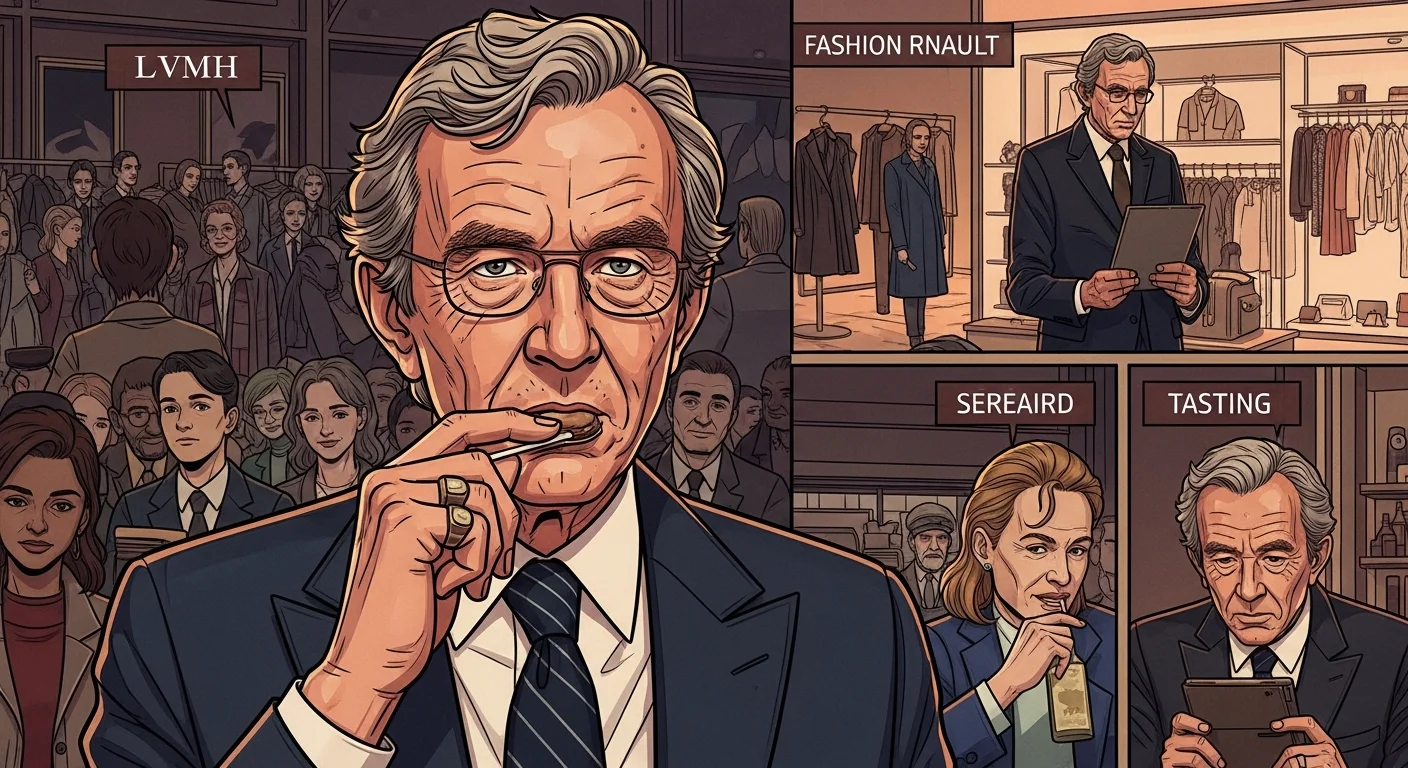
Bernard Arnault turns seventy-seven in 2026. He still runs LVMH personally, attending nearly every major fashion show, reviewing store designs, tasting wines, and approving or rejecting creative decisions across dozens of brands. He reportedly works six days a week. He has no announced retirement date.
The company he built — from a bankrupt textile operation and a $15 million bet on Christian Dior — is now worth over $400 billion. It employs more than 213,000 people. It generates more revenue than Nike, Hermes, Kering, and Richemont combined. It has survived recessions, pandemics, trade wars, and the rise and fall of digital luxury startups that were supposed to make physical retail obsolete.
And at the center of it all sits a quiet, relentlessly disciplined engineer from Roubaix who saw something nobody else did: that the most irrational purchases humans make — the handbag they don’t need, the champagne that costs ten times what it should, the watch that tells the same time as a phone — could be organized into the most rational business on Earth.
“Luxury goods are the only area in which it is possible to make luxury margins.” — Bernard Arnault
The wolf in cashmere is still hungry.
⚔️ Chapter 11: The Battles for Brand Dominance (1998–2001)
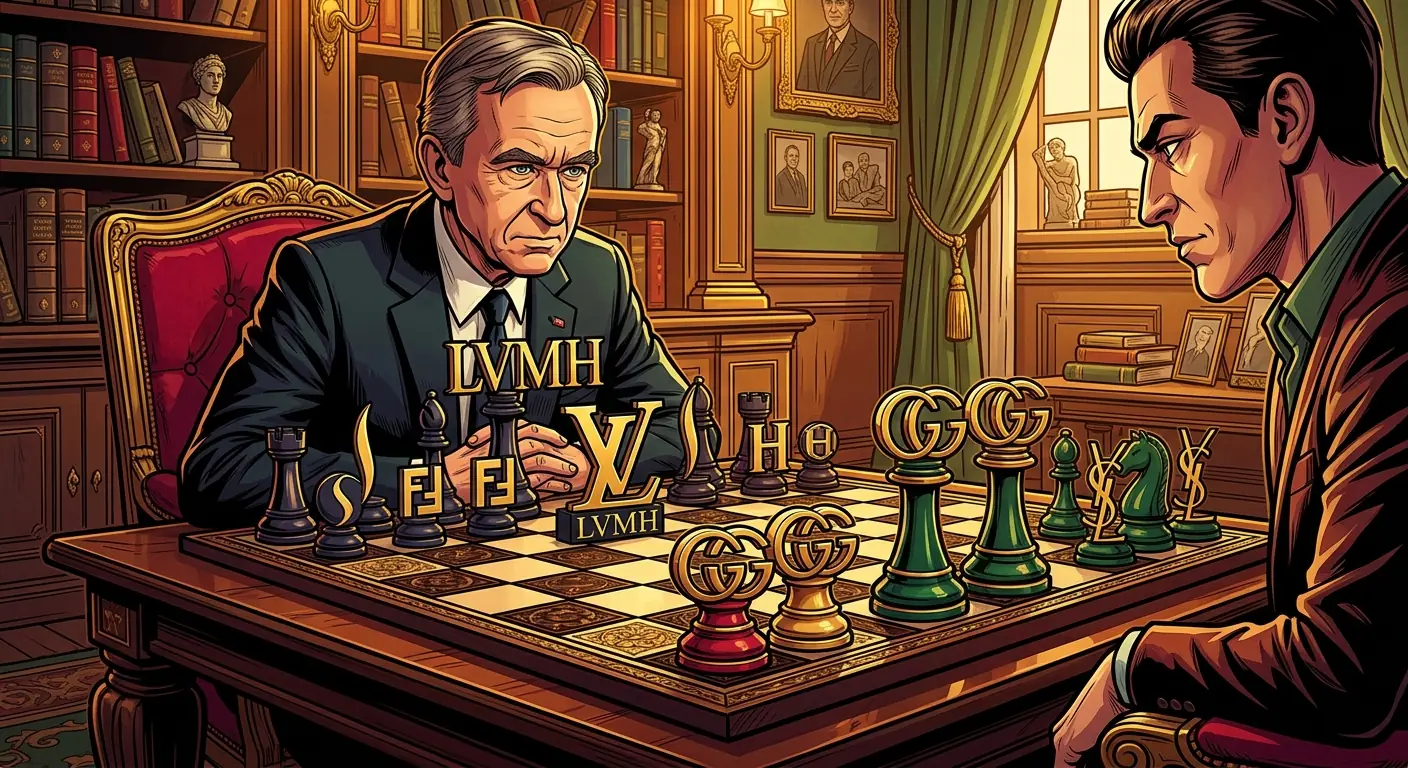
So, you’ve cornered the market on iconic brands, you’ve mastered the art of the hostile takeover, and you’re building an empire faster than a French baker can say “croissant.” What happens next? You start picking fights. Because for Bernard Arnault, it was never enough to just own the best brands; he also wanted to ensure his rivals didn’t. The late 1990s and early 2000s saw Arnault engage in some of the most dramatic, high-stakes boardroom brawls the luxury world has ever witnessed, primarily against a certain other French conglomerate.
The Gucci Wars: A Luxury Soap Opera
Remember the late 90s? Britney Spears was still innocent, the internet was dial-up, and LVMH was already a behemoth. But there was one glittering prize that Arnault coveted but couldn’t quite grasp: Gucci. This was before the Tom Ford-era renaissance, mind you. Gucci was a bit sleepy, but Arnault saw its potential. In January 1999, LVMH quietly began acquiring shares in Gucci Group, eventually amassing a 5% stake. They weren’t exactly subtle about it; it was classic Arnault, testing the waters, positioning himself.
But Gucci wasn’t having it. Its CEO, Domenico De Sole, and creative director, Tom Ford, famously bristled at the idea of becoming another jewel in Arnault’s already overflowing crown. They saw LVMH’s move as a prelude to a hostile takeover, and they were right to be suspicious. Arnault was, after all, le loup en cachemire. So, in a desperate attempt to fend off LVMH, De Sole turned to a white knight: François Pinault (now Kering), the head of another French conglomerate, then known as Pinault-Printemps-Redoute (PPR).
Pinault swooped in, offering Gucci a lifeline. In March 1999, he bought a 42% stake in Gucci for $3 billion, effectively diluting LVMH’s holdings and blocking Arnault’s path. What followed was a legal and financial slugfest that lasted for over two years, with lawsuits flying between Paris, Amsterdam, and New York. Arnault accused Gucci of illegal maneuvers, unfair practices, and generally being a party pooper. Pinault and Gucci hit back, accusing LVMH of market manipulation. It was deliciously messy.
“The Gucci case was a very unpleasant experience. It was a very hard fight, and we lost. But we learned a lot.” — Bernard Arnault (paraphrased, reflecting on the outcome)
Eventually, in September 2001, the two titans reached a truce. LVMH sold its remaining stake in Gucci to Pinault for $700 million, making a hefty profit (because, of course, Arnault always makes a profit) but losing the brand itself. It was a rare, public defeat for Arnault, a testament to the fact that even the Wolf of Luxury sometimes met his match. But it also proved his tenacity, his willingness to go to the mat for what he wanted. He lost the battle, but the war for luxury dominance was far from over.
The Hermès Enigma: A Family Feud
Fast forward a few years. Arnault’s appetite for legacy brands remained insatiable, and one name shimmered particularly brightly: Hermès. The ultimate symbol of understated, generational luxury, Hermès was (and still is) fiercely independent, family-controlled, and notoriously resistant to outside influence. So, naturally, Arnault saw a challenge.
Starting in 2001, LVMH began secretly acquiring shares in Hermès using complex financial instruments called equity swaps. This allowed them to build up a significant stake without triggering disclosure requirements, which would have surely alerted the famously paranoid Hermès family. By October 2010, LVMH suddenly announced it owned 17.1% of Hermès, quickly increasing it to 22.6% and then 28.3%. Cue absolute pandemonium at Hermès headquarters.
The Hermès family, descendants of Thierry Hermès who founded the company in 1837, were outraged. They viewed Arnault’s tactics as a hostile invasion, a betrayal of French heritage. They called it “an attack.” Arnault, ever the pragmatist, claimed it was merely “a friendly gesture,” an investment in a “beautiful French company.” Yeah, sure, Bernard. Like a fox saying hello to a hen house.
The family responded by consolidating their shares into a holding company, effectively creating a poison pill to prevent any further LVMH encroachment. Legal battles ensued, with French financial regulators (AMF) eventually fining LVMH €8 million in 2013 for failing to disclose its stake-building in a timely and transparent manner. It was a slap on the wrist for Arnault, but a public rebuke nonetheless.
In 2014, after years of tension and regulatory pressure, LVMH agreed to distribute its Hermès shares to its own investors and vowed not to buy any Hermès shares for the next five years. Another retreat, another public (though profitable) concession. These battles, while not always ending in outright victory for Arnault, cemented his reputation as the most relentless, cunning, and formidable player in the luxury game. He might lose a skirmish, but he was always eyeing the next war, and usually, he won that one.
😈 Chapter 12: The Controversies and the Critics (1990s–Present)
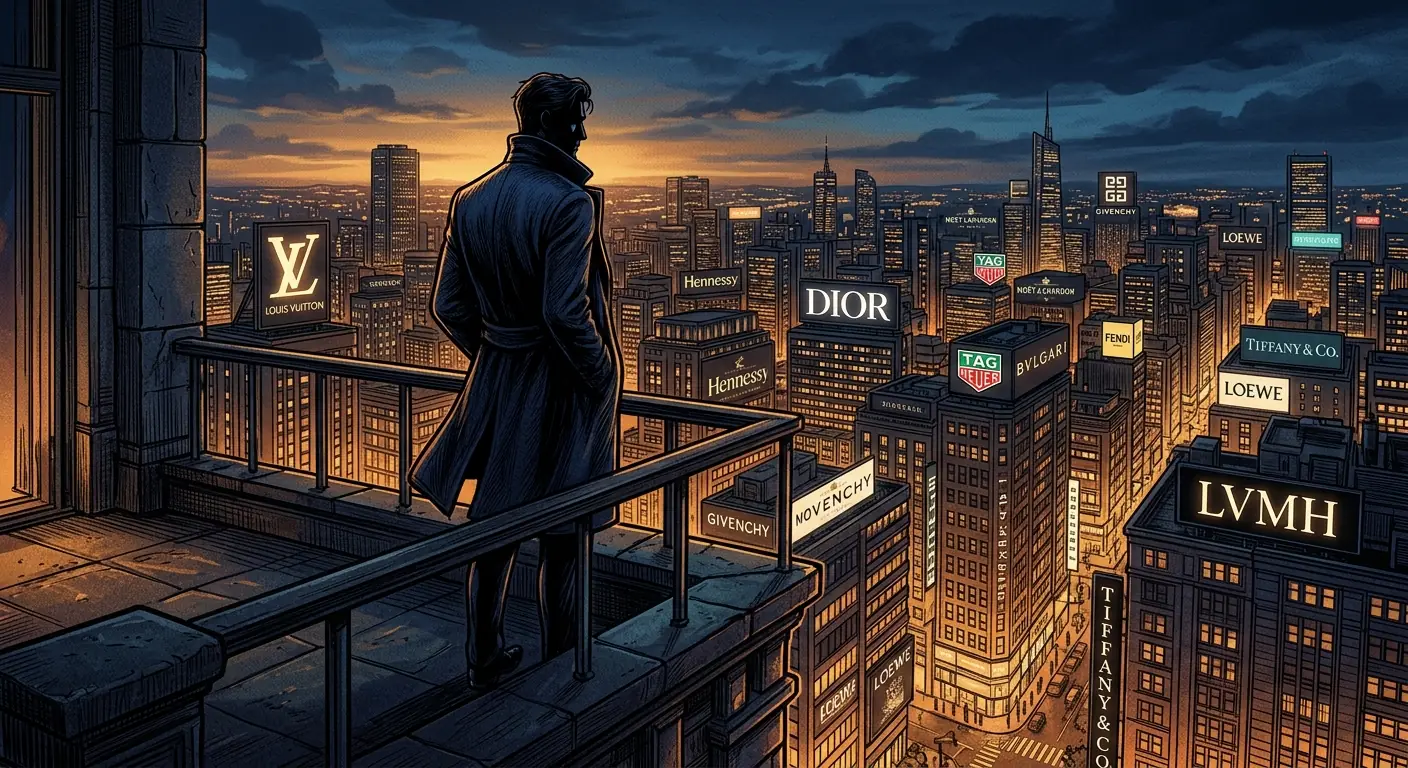
Bernard Arnault, for all his sophisticated veneer and impeccable taste, isn’t exactly everyone’s darling. While MogulFeed celebrates his strategic genius, it’s worth acknowledging that building an empire of this magnitude doesn’t happen without stepping on a few toes, raising a few eyebrows, and perhaps, occasionally, leaving a trail of scorched earth. The “Wolf in Cashmere” nickname isn’t just a flattering nod to his cunning; it also carries a hint of menace. His relentless pursuit of control and profit has, at times, led to accusations of ruthlessness, cultural insensitivity, and even a certain disregard for traditional business ethics.
The “Wolf in Cashmere” Reputation
Let’s be honest, Arnault didn’t get to the top by being Mr. Congeniality. His reputation as a fierce, even brutal, businessman is well-earned. The hostile takeovers of Dior and LVMH in the 80s were just the beginning. Throughout the 90s and 2000s, LVMH continued its aggressive expansion, often employing tactics that left rivals and even some employees reeling. When LVMH wanted something, they went for it with single-minded intensity.
Critics often point to the LVMH playbook: identify a struggling but iconic brand, acquire a significant stake, destabilize the current management, and then swoop in for the full takeover. The Gucci Wars (as discussed in Chapter 11) were a prime example of this strategy hitting a roadblock, but for every Gucci, there were many more successes where the target simply couldn’t withstand the pressure. This relentless approach, while undeniably effective for shareholders, has fostered an image of Arnault as a corporate predator, more concerned with market share than sentiment.
There have also been whispers, unproven but persistent, of LVMH’s alleged competitive intelligence gathering, sometimes bordering on industrial espionage. While specific, proven instances are hard to pin down, the sheer speed and precision with which LVMH often moved on acquisition targets fueled suspicion. “He knows what you’re having for breakfast before you do,” one rival quipped, perhaps only half-jokingly. This perception, whether entirely fair or not, contributes to the mystique and fear surrounding Arnault’s empire.
Ethical Quandaries & Cultural Minefields
Beyond the boardroom battles, LVMH has, like many global conglomerates, faced its share of ethical and cultural controversies. In an era increasingly sensitive to representation and authenticity, luxury brands, particularly those with a global footprint, are constantly scrutinized.
One recurring criticism revolves around cultural appropriation and a perceived lack of diversity within the top echelons of some LVMH brands. While LVMH has made strides in recent years towards more inclusive marketing and design, past instances have drawn significant backlash. For example, in 2019, Dior (an LVMH brand) faced criticism for its campaign featuring Johnny Depp alongside Native American imagery, which many found stereotypical and exploitative. Similarly, other brands have been accused of drawing inspiration from non-Western cultures without proper attribution or engagement, leading to accusations of commodifying cultural heritage.
Then there’s the broader issue of sustainability and labor practices. While LVMH has initiated various environmental and social responsibility programs (like their LIFE 360 program for biodiversity and circular economy), the luxury industry as a whole still grapples with its impact. The sourcing of exotic materials, the environmental footprint of global supply chains, and ensuring ethical labor conditions across thousands of suppliers worldwide remain ongoing challenges. Critics argue that for a company of LVMH’s immense wealth and influence, more aggressive and transparent action is needed.
Arnault himself, when confronted with such criticisms, often projects an image of unwavering focus on the long-term health and desirability of his brands. His response, implicitly, is that the pursuit of excellence and beauty ultimately benefits everyone. But for many, the immense wealth accumulated by LVMH and its patriarch stands in stark contrast to the often less glamorous realities of global production, making these controversies a persistent shadow on the otherwise dazzling empire.
✨ Chapter 13: Beyond the Boardroom – Art, Influence, and the Arnault Touch (2000s–Present)
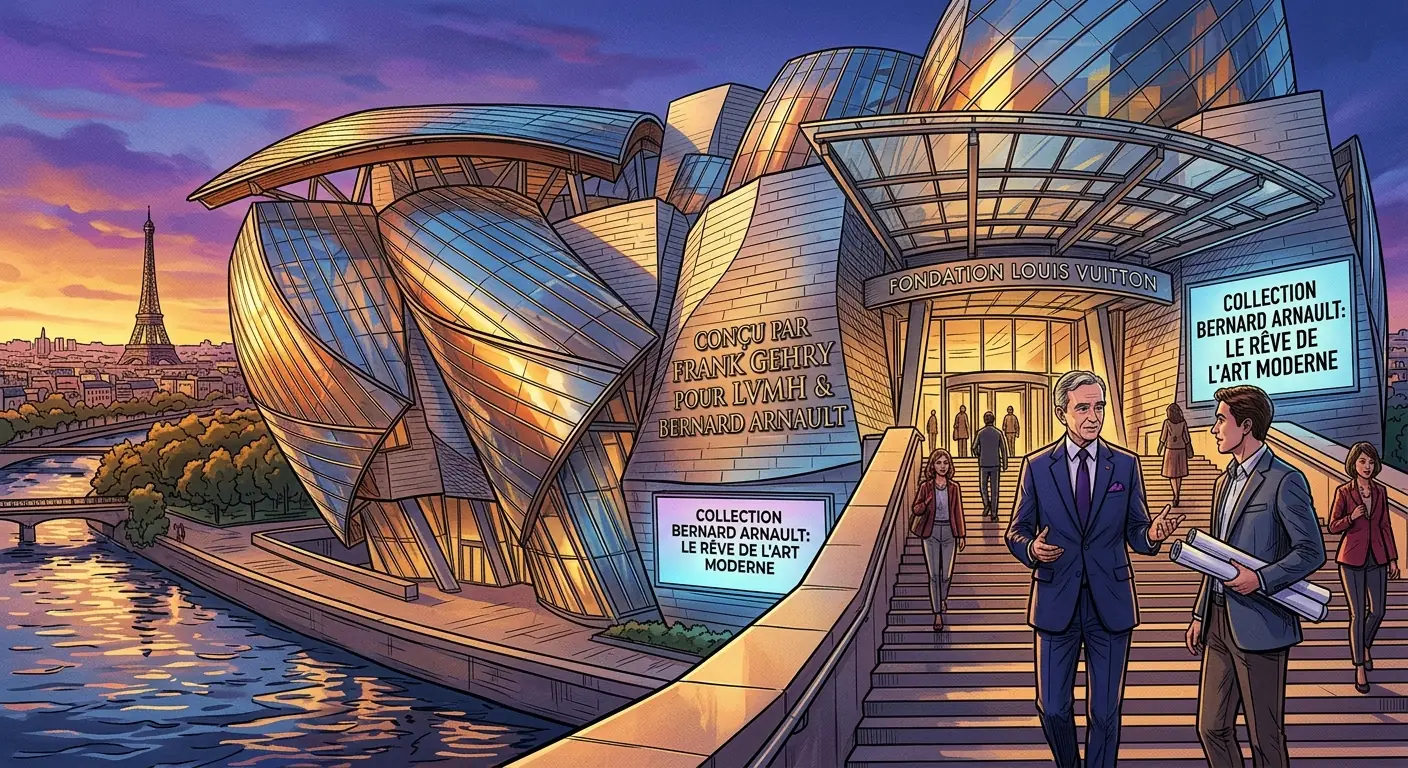
You’d think a man who spends his days orchestrating multi-billion-dollar takeovers and overseeing an empire of handbags would be all business, all the time. But Bernard Arnault, much like the masterpieces he collects, is a complex character. Beyond the ruthless corporate strategist lies a passionate art collector, a significant philanthropist, and a quiet, yet incredibly powerful, cultural force. He’s not just building a business; he’s actively shaping the landscape of French culture and wielding a form of soft power that few other billionaires can match.
The Patron of the Arts: Fondation Louis Vuitton
If you want to understand Arnault’s personal impact beyond LVMH’s balance sheets, look no further than the Fondation Louis Vuitton in Paris. Opened in October 2014, this architectural marvel, designed by Pritzker Prize-winning architect Frank Gehry, isn’t just a museum; it’s a testament to Arnault’s vision and his immense personal wealth dedicated to public good (and, let’s be real, a touch of brand prestige).
The Fondation, nestled in the Bois de Boulogne, cost an estimated €100 million (some reports suggest it was significantly more) and houses a permanent collection of modern and contemporary art, much of it from Arnault’s personal collection. It also hosts ambitious temporary exhibitions that draw millions of visitors. Think about it: a private individual, through his company, commissioned one of the world’s most famous architects to build a public art space of this scale and ambition. This isn’t just charity; it’s a statement. It’s Arnault’s way of saying, “Luxury isn’t just about what you wear; it’s about what you experience, what inspires you, what elevates culture.”
“I wanted to create a building that would represent France in the 21st century, a building that would be a symbol of creativity and innovation.” — Bernard Arnault, on the Fondation Louis Vuitton
This isn’t just a one-off. Arnault has been an avid art collector for decades, with a particular fondness for modern masters like Picasso, Yves Klein, and Andy Warhol. His art collection is considered one of the most significant private holdings in the world. This passion isn’t merely a hobby; it informs his approach to luxury, where craftsmanship, creativity, and timeless beauty are paramount. He sees a direct link between the enduring value of a piece of art and the enduring appeal of a Louis Vuitton trunk or a Dior gown.
France’s Economic Diplomat
Arnault’s influence extends far beyond the art world. As the head of France’s largest company and its richest citizen, he acts as an unofficial economic ambassador for the nation. When world leaders visit France, they often make a stop at LVMH’s headquarters or one of its iconic brands. Arnault hosts dignitaries, champions French savoir-faire, and symbolizes the country’s enduring appeal in the global luxury market. He is, in many ways, the embodiment of French economic success in the modern age.
His decisions have significant implications for the French economy, from job creation (LVMH employs over 195,000 people worldwide, many in France) to investment in heritage craftsmanship. When he speaks, the French government listens. He’s a vocal proponent of keeping production in France where possible, preserving traditional skills, and investing in new talent through apprenticeships. This isn’t just patriotism; it’s smart business, reinforcing the “Made in France” prestige that underpins much of LVMH’s allure.
Beyond France, Arnault is a key figure in global luxury, often dictating trends and setting benchmarks for competitors. His aggressive expansion into China, for example, in the early 2000s, almost single-handedly paved the way for other luxury brands, recognizing the immense potential of the burgeoning Chinese consumer class long before many others.
The Future of Luxury’s Architect
Ultimately, Bernard Arnault’s legacy will be defined not just by the brands he acquired, but by the entirely new paradigm he created for luxury itself. He transformed a fragmented industry of family-run ateliers into a consolidated, strategically managed global powerhouse. He proved that luxury, far from being quaint or niche, could be a serious, data-driven, massively profitable business.
His “Arnault Touch” combines a deep respect for heritage with a relentless pursuit of innovation, a keen eye for talent, and an almost superhuman ability to spot the next big trend. He has built an ecosystem where creativity flourishes under strict commercial discipline, ensuring that brands like Louis Vuitton and Dior remain relevant and desirable for generations. The man who started out building concrete structures now builds dreams, one exquisite acquisition at a time. And he’s still very much in charge, shaping the future of luxury, one masterpiece at a time.
💡 Key Insights
- ▸ Arnault didn't start by building — he started by acquiring. His first major move was buying a bankrupt textile company nobody wanted, purely to extract the one valuable asset buried inside it: Christian Dior. The lesson is ruthlessly clear — sometimes the greatest opportunities are hidden inside things everyone else has written off as worthless.
- ▸ While American tech moguls built empires by disrupting industries, Arnault built his by doing the opposite — preserving heritage, protecting craftsmanship, and making old things feel timeless. He proved there's a fortune to be made not in destroying the past, but in owning and elevating it.
- ▸ Arnault's takeover of LVMH was a masterclass in using other people's chaos against them. He entered as a 'white knight' investor during a bitter corporate war, then outmaneuvered both sides and seized control. In business, the person who stays calm while everyone else is fighting often ends up owning the battlefield.
- ▸ LVMH runs 75+ brands, but Arnault's organizational philosophy is radical decentralization — each brand operates with its own creative director, its own identity, its own P&L. He understood that luxury dies when it becomes corporate. The paradox: the world's largest luxury conglomerate succeeds precisely because each brand is treated as if it's independent.
- ▸ Arnault has positioned all five of his children inside LVMH's various divisions — watches, wine, fashion, holding companies — creating what might be the most carefully orchestrated succession plan in modern business. He's not picking a successor. He's building a dynasty, and he's making his children compete for the crown in real time.
Sources
- Ian Bremmer & Nadya Zhexembayeva — The New Luxury: Defining the Aspirational in the Age of Hype (Profile of Arnault) ↗
- Bloomberg Billionaires Index — Bernard Arnault ↗
- Alyssa McDonald — The Wolf in Cashmere: Bernard Arnault and the House of LVMH (The Economist) ↗
- LVMH Annual Reports and Financial Disclosures ↗
- Raphaëlle Bacqué — Richest Man in the World: The Arnault Dynasty (Le Monde) ↗
- The New York Times — Arnault, Tiffany, and the Art of the Luxury Acquisition ↗
- Financial Times — Inside LVMH: How Bernard Arnault Built the Luxury Colossus ↗