The Prancing Horse & The American Dream: How Enzo Ferrari's Obsession Forged an Empire and Sparked a Legendary War
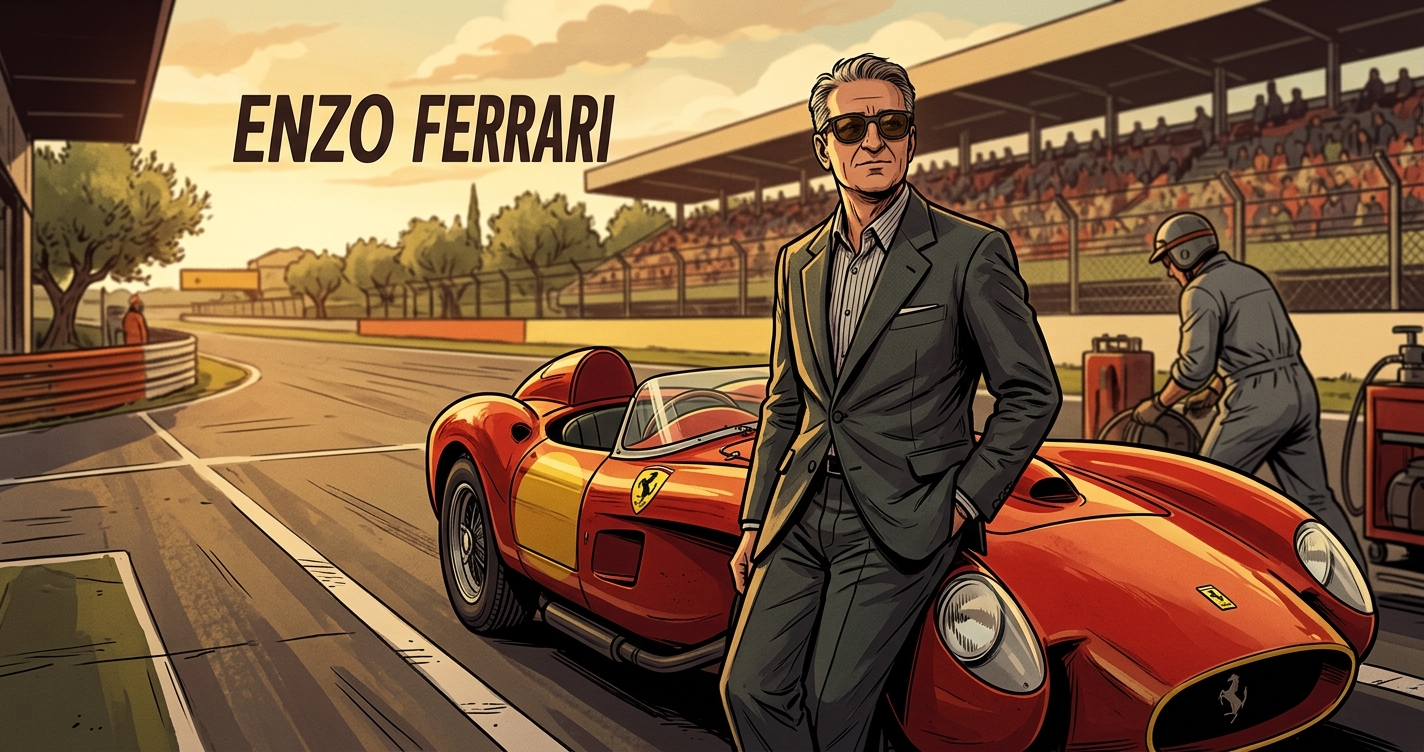
Meet **Enzo Ferrari**, the Godfather of Speed, a man whose life was a high-octane symphony of ambition, tragedy, and unyielding will. This isn't just the story of a car company; it's a blood feud, a relentless pursuit of perfection, and the ultimate showdown between a titan of industry and a vengeful American Goliath.
View all stories about this mogul
🏎️ Chapter 1: The Smoke-Filled Cradle of Ambition
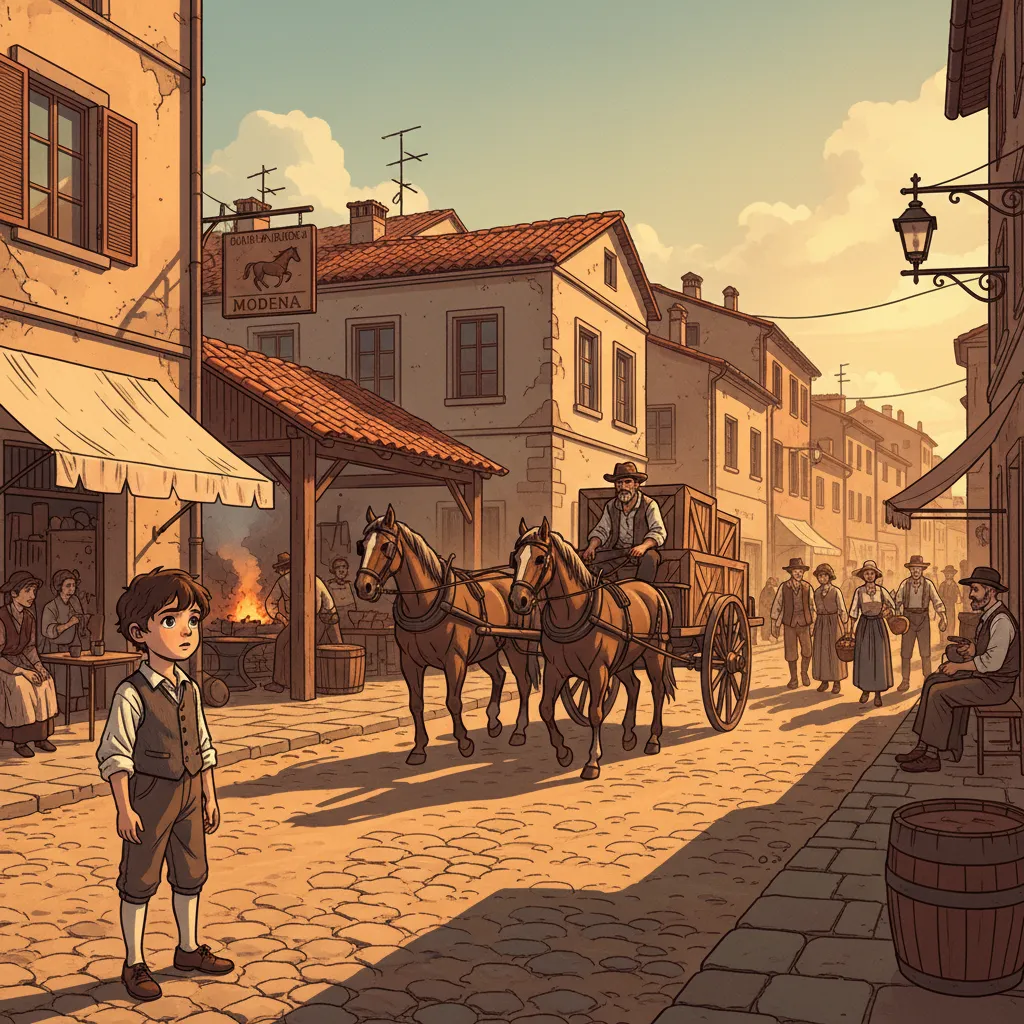
Picture this: Modena, Italy, 1898. Not exactly a global powerhouse. More like a sleepy, sun-drenched town where life moved at the pace of a horse-drawn cart. But in this quiet corner of the world, a storm was brewing. A boy named Enzo Anselmo Ferrari was born, destined not just to witness the dawn of the automotive age, but to forge its most legendary icon.
His father, Alfredo, was a metalworker, a man who understood the raw power of steel and fire. He ran a small workshop, and it was here, amidst the clang of hammers and the smell of hot metal, that young Enzo’s destiny began to whisper. He wasn’t a child of privilege; he was a child of grit. A kid who saw his first car race at the tender age of 10 and had his world utterly, irrevocably rearranged. It wasn’t just the speed; it was the roar, the spectacle, the sheer, unadulterated will to win etched on the drivers’ faces. It was a primal scream that resonated deep within his soul.
Life, as it tends to do, dealt him a brutal hand early on. World War I ripped through Italy, snatching away his father and his brother within months of each other. Enzo, barely a man, found himself adrift, grappling with grief and the crushing weight of responsibility. He served in the war, a far cry from the speed he craved, but the experience hardened him, sharpened his resolve. It taught him about survival, about fighting for what little you had. He emerged from the trenches with a burning desire to prove something, to build something, to leave an indelible mark on a world that had tried to erase his family.
After the war, he kicked around for a bit. A gig delivering chassis for a small car company, then a brief, unremarkable stint as a racing driver. Unremarkable, that is, if you only look at the trophies. Because what Enzo lacked in raw driving talent, he more than made up for in an almost superhuman understanding of the machine. He saw the car not just as a collection of parts, but as a living, breathing entity, a metallic extension of the driver’s will. He could hear its whispers, feel its tremors, intuit its breaking points. This wasn’t just mechanical aptitude; it was an obsession. A fever in his blood that would drive him, mercilessly, for the rest of his life.
He knew he wasn’t the fastest man behind the wheel, but he knew he could build the fastest car. And that, my friends, was the genesis. The first spark in the forge where legends are hammered into existence. This wasn’t just about winning races; it was about conquering death, defying limits, and etching his name into the very fabric of speed. He wanted to create art that moved at 200 miles an hour.
🐎 Chapter 2: The Prancing Horse Finds Its Rider (and Its Boss)
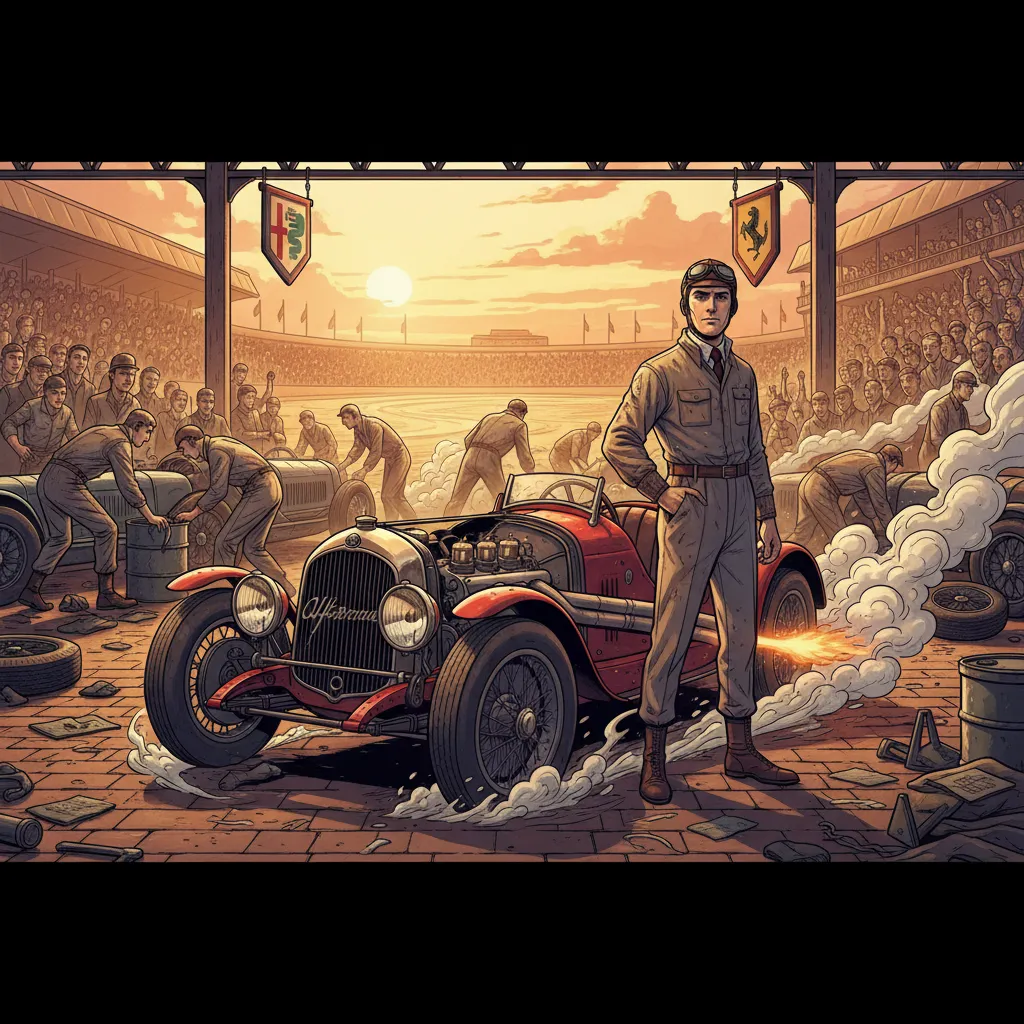
The roar of an Alfa Romeo engine. That’s where Enzo Ferrari truly found his footing, his first real shot at wielding power in the high-stakes arena of motorsports. He wasn’t just a driver anymore; he was a manager, a force of nature, a man who could spot talent like a bloodhound on a scent trail. In 1929, he founded Scuderia Ferrari, literally “Ferrari Stable,” as the racing division for Alfa Romeo. Think of it as a startup within a corporate giant, but with Enzo as the visionary, the mad scientist, the demanding maestro conducting a symphony of speed.
This wasn’t some cushy corporate gig. Enzo was a relentless taskmaster, a man who believed in sweat, blood, and tears as essential ingredients for victory. He assembled a stable of the greatest drivers of the era – men who lived and breathed speed, who stared death in the face every weekend. He pushed them, he challenged them, he sometimes alienated them, but he always, always got results.
He understood the psychological warfare of racing. He knew how to motivate, how to instill fear, how to extract every last ounce of performance from man and machine. He was a master manipulator, a Svengali of the pit lane, charming when he needed to be, ruthless when the situation demanded it. For Enzo, racing wasn’t a sport; it was war. And he intended to win.
But even a genius like Enzo chafed under the corporate yoke. Alfa Romeo, for all its glory, was still a large company with its own priorities, its own bureaucracy. Enzo wanted absolute control. He wanted to build his cars, with his vision, unencumbered by committees or shareholder demands. The seeds of his own independent empire were already germinating, pushing against the confines of his current arrangement. It was like a wild stallion, powerful and magnificent, being held on too tight a leash. Eventually, it had to break free.
The split from Alfa Romeo in 1939 wasn’t amicable. It rarely is when two strong wills clash. Enzo was essentially barred from using the Ferrari name in connection with racing for four years. A lesser man might have folded. Enzo? He saw it as a temporary inconvenience, a challenge to be overcome. He started Auto Avio Costruzioni, a company that initially built machine tools and aircraft parts. It was a holding pattern, a strategic retreat, a way to keep his dream alive while waiting for the perfect moment to unleash the Prancing Horse. He was biding his time, sharpening his knives, preparing for the day he could truly call the shots.
This period was critical. It showed his adaptability, his raw entrepreneurial spirit. When one door slammed shut, he didn’t just stand there; he found a window, even if it meant building something entirely different for a while. It was a pragmatic move, a testament to his long-term vision. He wasn’t just obsessed with cars; he was obsessed with winning, and he knew that winning required resources, flexibility, and, above all, absolute autonomy.
⚙️ Chapter 3: Forging the Legend: Racing First, Road Cars… Maybe
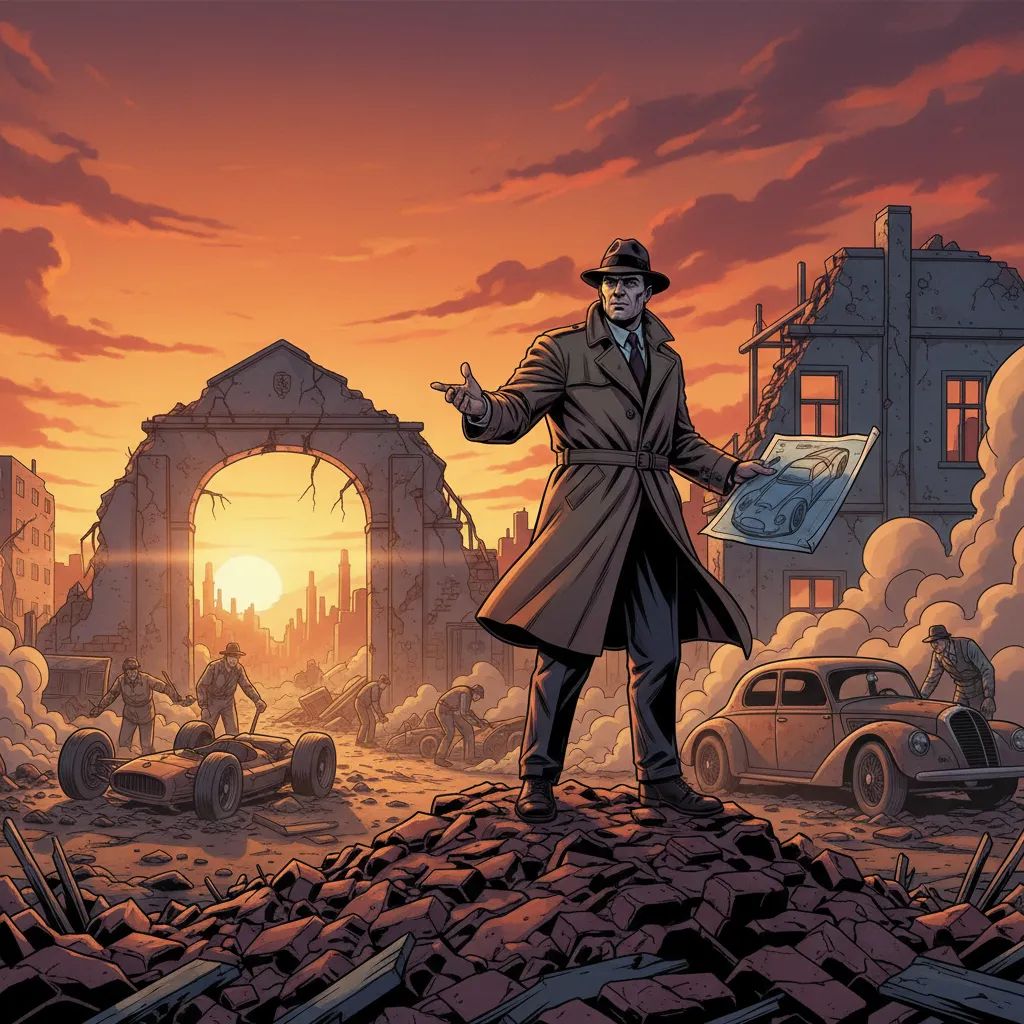
The end of World War II left Italy in ruins, a landscape scarred by conflict. But amidst the rubble, a new era was dawning, and Enzo Ferrari saw an opportunity not just to rebuild, but to redefine. The four-year non-compete clause with Alfa Romeo was finally over. The shackles were off. The Prancing Horse was ready to gallop.
In 1947, the very first car bearing the Ferrari name rolled out of the gates of the Maranello factory: the 125 S. It wasn’t a polished showroom model; it was a raw, visceral racing machine, designed for one purpose and one purpose only: to win. This was Enzo’s manifesto in metal and gasoline. He wasn’t building road cars to make money; he was building them to fund his racing obsession. It was a business model born of pure, unadulterated passion, a dangerous tightrope walk between glory and bankruptcy.
Think about that for a second. Most car companies start with a vision for consumer vehicles, then maybe dabble in racing for brand prestige. Enzo flipped the script entirely. For him, the road cars were a necessary evil, a means to an end. They were the cash cows that fed the racing beast. Every dollar earned from selling a gleaming red sports car was immediately funnelled back into developing faster engines, lighter chassis, and more aerodynamic bodies for the track.
His factory in Maranello wasn’t just a manufacturing plant; it was a cathedral of speed, a crucible where engineers, mechanics, and designers toiled under the demanding gaze of Il Commendatore. Enzo was everywhere, overseeing every detail, pushing every boundary. He was a micromanager with a macro vision, a man who understood that true perfection lay in the relentless pursuit of infinitesimal gains.
The early years were a whirlwind of triumphs and tragedies. Ferrari quickly established itself as a dominant force in motorsport, snatching victories at legendary races like the Mille Miglia, Targa Florio, and eventually, the crown jewel: Le Mans. But these victories often came at a terrible cost. Racing in the 1950s and 60s was a brutal, deadly sport. Drivers died. Mechanics died. Spectators died. The grim reaper was a frequent visitor to the Ferrari pit lane.
Enzo, by all accounts, was stoic, almost cold, in the face of these losses. He mourned, certainly, but he never let it deter him from his ultimate goal. He believed that the pursuit of speed, the pushing of human and mechanical limits, demanded sacrifice. It was a harsh philosophy, one that alienated many, but it was also the engine that drove Ferrari to unparalleled success. He saw these fallen heroes as martyrs in the name of progress, brave warriors in his endless crusade for victory.
“Ferrari will never be a great industrial company. It will always be a small artisan company making racing cars and road cars to fund the racing.”
This quote, often attributed to Enzo, encapsulates his entire business philosophy. He wasn’t interested in mass production, market share, or quarterly profits in the traditional sense. He was interested in speed, prestige, and the intoxicating taste of victory. The road cars were exquisite, certainly, but they were almost an afterthought, a byproduct of his true calling. This deliberate strategy of scarcity and performance-first thinking would ultimately define the brand, making Ferrari not just a car, but a legend.
👑 Chapter 4: The Emperor of Maranello: A Man of Contradictions
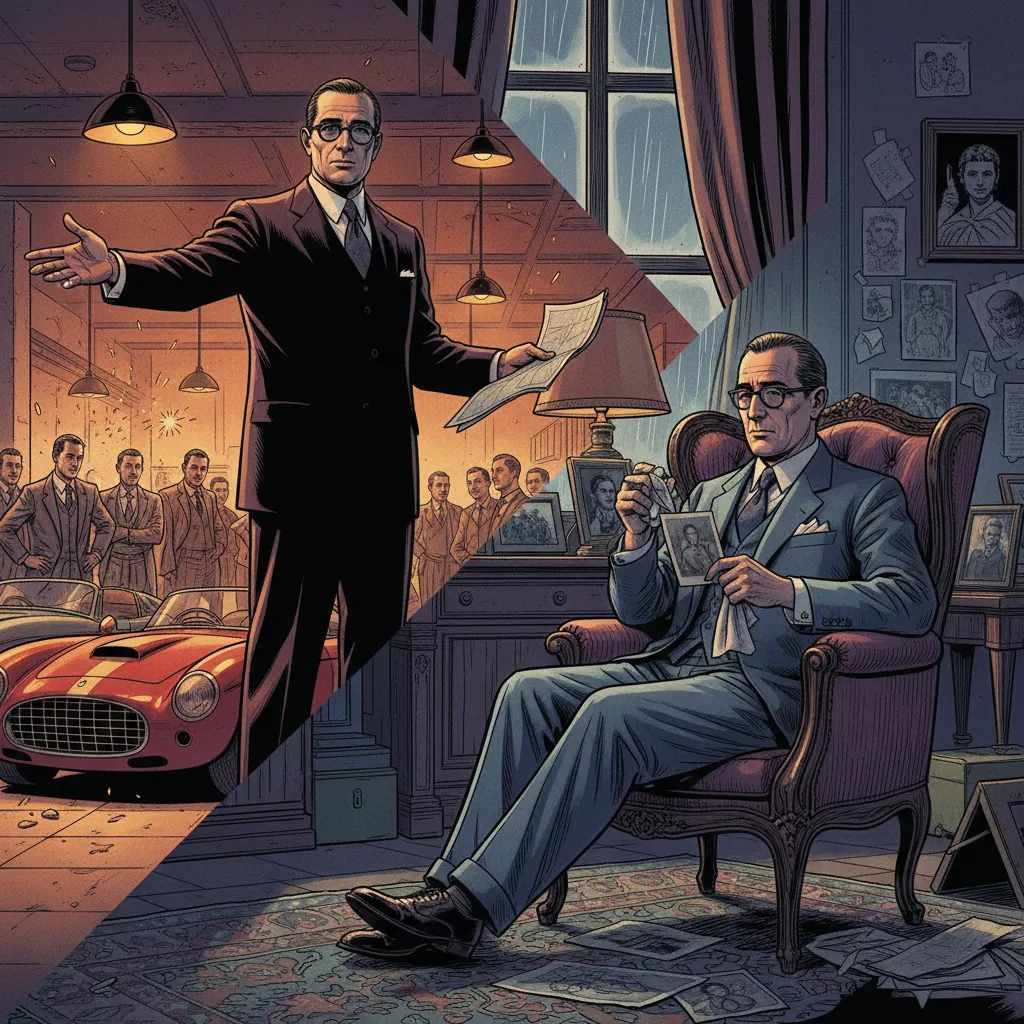
To understand Ferrari, you must understand Enzo Ferrari, the man. And to understand Enzo, you must grapple with his contradictions. He was a titan, an autocrat, a visionary, and a deeply flawed human being. He was adored by some, feared by many, and respected by all. He was a master of manipulation, a man who pitted his engineers against each other, his drivers against each other, believing that internal rivalry fueled innovation and drove everyone to perform at their absolute peak.
His management style was, to put it mildly, medieval. He ruled his factory like a feudal lord, his word absolute law. There were no committees, no consensus-building. There was only Enzo’s will. He had an uncanny ability to inspire loyalty and resentment in equal measure. He’d charm a driver one day, then publicly humiliate him the next if he failed to perform. He was a demanding father figure who expected nothing less than perfection, and failure was met with a chilling silence or a blistering rebuke.
This ruthless approach wasn’t just for show. It was a calculated strategy, born from his belief that true excellence could only be forged under immense pressure. He would often encourage engineers to work on competing solutions to the same problem, then choose the best, discarding the rest with brutal efficiency. This created an environment of intense competition, but also one where breakthroughs were frequent.
But beneath the hardened exterior, there was a man haunted by personal tragedy. The loss of his beloved son, Dino, to muscular dystrophy at a young age, cast a long, dark shadow over his life. Enzo immortalized Dino by naming a line of cars after him, a poignant tribute from a man who rarely showed vulnerability. This grief, some argue, only intensified his obsession with work, with leaving an indelible mark. The factory became his sanctuary, the pursuit of speed his coping mechanism.
He was a recluse in many ways, rarely travelling, preferring to hold court in his office in Maranello, often wearing his signature dark suit and dark glasses, even indoors. He communicated through telegrams and terse phone calls, maintaining a distance that only amplified his mystique. He cultivated an almost mythical persona, the aloof, all-powerful Commendatore who demanded everything and gave little but the promise of immortality through victory.
His relationships with his drivers were particularly complex. He saw them as gladiators, tools in his quest for glory, yet he was fiercely loyal to those who delivered. He demanded absolute commitment, pushing them to the ragged edge of human endurance and beyond. And when they inevitably crashed, sometimes fatally, he would mourn, but then immediately move on to the next talent, the next weapon in his arsenal. For Enzo, the show – the race – always had to go on. He was the ultimate chess master, sacrificing pawns to win the game.
This wasn’t just about cars; it was about power, control, and an unyielding will to bend reality to his vision. He built Ferrari not just with steel and carbon fiber, but with his own formidable, often terrifying, personality. And for decades, it worked. The world watched, mesmerized, as his Prancing Horse galloped to victory after victory, a testament to the singular, unshakeable will of its creator.
💸 Chapter 5: The Perilous Pursuit: When Glory Outweighs The Greenback
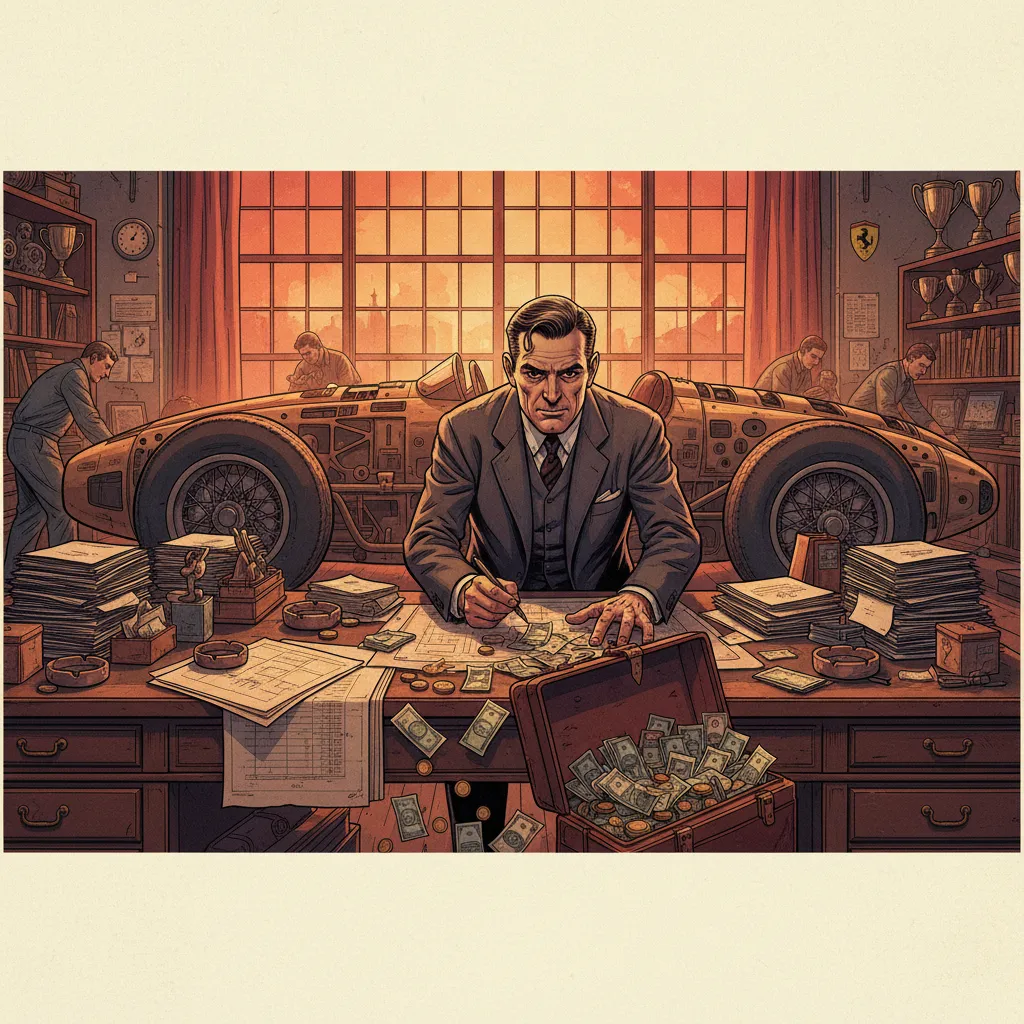
For all its triumphs on the track, Ferrari was almost constantly teetering on the brink of financial collapse. This wasn’t a secret; it was Enzo’s modus operandi. He poured every lira he had, and every lira he could borrow, into the racing division. Profits from the road car sales were immediately reinvested into engine development, aerodynamic research, and hiring the best engineers and drivers money could buy. This was a company that existed to race, not to generate quarterly returns for shareholders.
Imagine running a business where your core product – winning races – has an astronomical burn rate, offers no direct revenue stream, and carries an inherent risk of catastrophic failure (and death) every single weekend. That was Enzo’s reality. He was a high-stakes gambler, betting everything on the next race, the next innovation, the next victory.
This financial precarity meant Ferrari was always looking for infusions of capital. Enzo was a master at leveraging his brand’s prestige, his personal legend, and the sheer allure of his racing success to secure lines of credit, sponsorships, and even government aid. He was a shrewd negotiator, knowing the true value of the Ferrari name, even when his balance sheet looked like a crime scene.
But there’s only so long you can run on fumes, even when those fumes smell like high-octane racing fuel. By the early 1960s, the financial pressures became immense. The cost of developing cutting-edge race cars was skyrocketing, and the road car division, while producing exquisite machines, simply couldn’t keep pace with the demands of the racing budget. Enzo, for all his stubborn independence, knew he needed help. He needed a partner, an investor, someone to inject serious capital into his empire without diluting his absolute control over the racing operations.
This vulnerability was not lost on the titans of industry across the Atlantic. America, in the post-war boom, was a land of burgeoning consumerism and corporate ambition. And one man, in particular, was looking to make a massive splash, to inject a dose of European sophistication and racing pedigree into his automotive empire: Henry Ford II.
Ford, the grandson of the legendary innovator, was a different breed of industrialist than Enzo. He represented the epitome of American mass production, efficiency, and market dominance. His company cranked out millions of cars a year, focusing on affordability and accessibility. But something was missing. Prestige. Glamour. The kind of visceral, heart-stopping excitement that only racing success could provide.
Ford was launching a massive initiative called “Total Performance,” a multi-million-dollar push to dominate every form of motorsport, from NASCAR to drag racing. But the ultimate prize, the undisputed pinnacle of automotive racing, was the 24 Hours of Le Mans. And at Le Mans, one name reigned supreme: Ferrari.
Enzo, the proud, unyielding Commendatore, suddenly found himself in a precarious position. He had built his empire on blood, sweat, and an almost religious devotion to speed. But the altar of speed demanded ever more sacrifices, and his coffers were running dry. The stage was set for a collision of titans, a culture clash that would reshape automotive history. The Prancing Horse, for all its fierce independence, was ready to consider a suitor. But Enzo would soon prove that his heart, his very soul, was not for sale. Not at any price.
🇺🇸 Chapter 6: The American Dream Meets Italian Arrogance
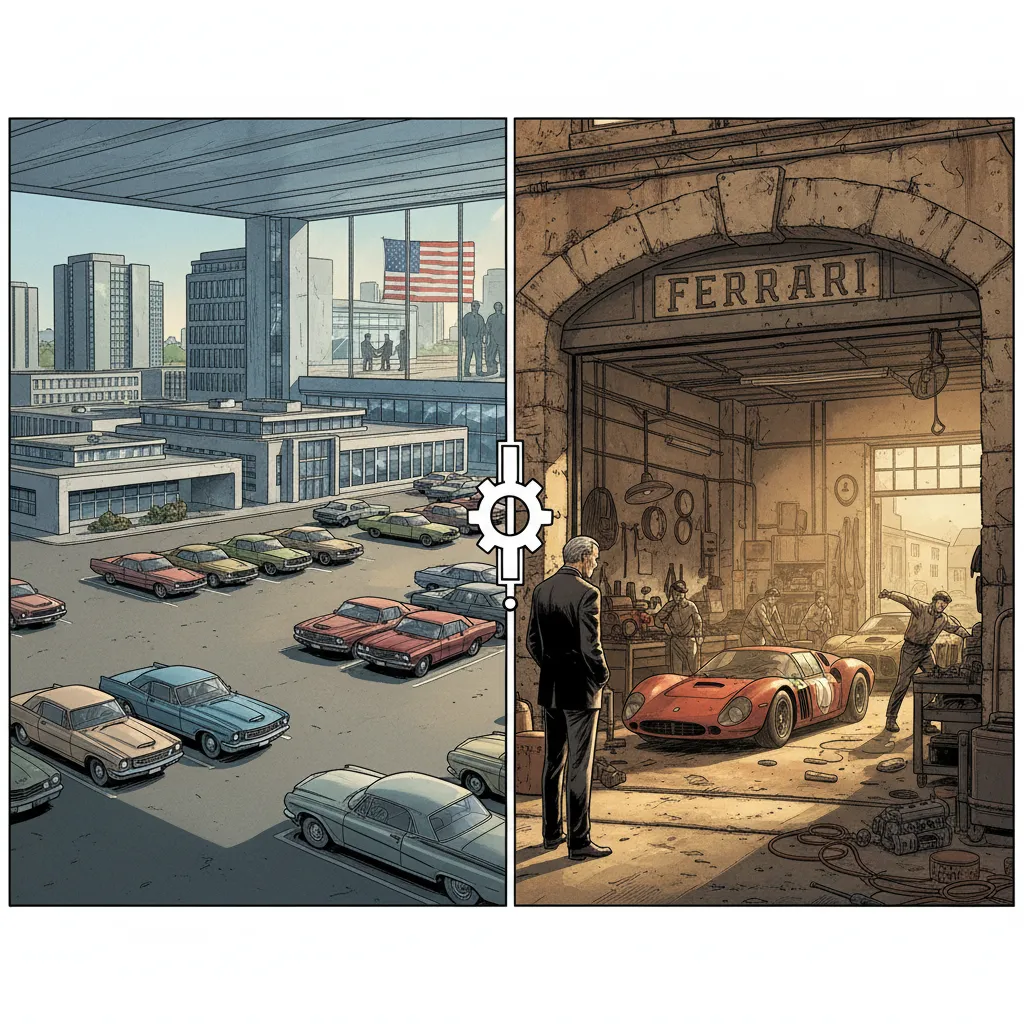
The year is 1963. Imagine the scene: the gleaming, sprawling headquarters of Ford Motor Company in Dearborn, Michigan, a monument to American industrial might. And then, contrast that with the dusty, passion-fueled workshop of Ferrari in Maranello, Italy, a place where art and engineering collided in a symphony of V12 engines. Two worlds, two philosophies, about to collide head-on.
Henry Ford II, known colloquially as “The Deuce,” was a man of immense ego and even greater ambition. He wanted Ford to be known not just for the sensible Falcon or the family-friendly Galaxie, but for speed, prestige, and winning. He wanted to beat Europe at its own game. And the fastest, most prestigious way to do that was to conquer Le Mans, a race that Ferrari had made its personal fiefdom.
The initial approach was logical, strategic. Ford decided, rather than build a Le Mans winner from scratch (a monumental and costly undertaking), it would simply buy the best. And the best, unequivocally, was Ferrari. A deal was struck, or so everyone thought. Ford offered a staggering sum – estimated around $10-18 million, an enormous figure for the time – to acquire Ferrari. This wasn’t just a financial transaction; it was a cultural one. The idea was that Ferrari would continue to build its race cars and high-end road cars, but with the immense financial backing and industrial might of Ford.
The negotiations were tense, a clash of titans with vastly different approaches to business and life. Ford’s executives, steeped in corporate protocols and legalistic frameworks, flew to Maranello, ready to dot every ‘i’ and cross every ‘t’. Enzo, on the other hand, was an intuitive, emotional negotiator, a man who saw business as a personal extension of his will. He was gracious, charming, and deeply cunning. He understood that Ford wanted more than just a company; they wanted his legacy, his name, his prestige. And he knew exactly how much that was worth.
The talks progressed, seemingly smoothly. Accountants crunched numbers, lawyers drafted contracts. It looked like a done deal. The papers were laid out, ready for signatures. Ford was practically ready to pop the champagne. This was it: the American behemoth would acquire the ultimate European racing legend.
Then came the hammer blow.
The sticking point, the deal-breaker, was a single, seemingly innocuous clause. Ford insisted on having ultimate control over Ferrari’s racing budget and decisions. This meant that if Ford decided a particular race wasn’t strategically important, or if they wanted to pull resources for another project, Enzo would have to comply. It was a standard corporate clause for any acquiring company, a fundamental requirement for exercising control over their investment.
But for Enzo Ferrari, it was an unforgivable affront. Control over his racing was not a negotiable point; it was the very essence of his being, the beating heart of his company. To cede that control would be to surrender his soul, to become a mere employee in his own kingdom. He had founded Ferrari to race, to win, to pursue perfection on his own terms. He had endured bankruptcy scares, personal tragedies, and countless challenges to maintain that autonomy. He wasn’t about to give it up for a pile of American dollars.
“He went through the motions, signed all the papers, smiled, and then when it came to the ultimate clause, he stood up and said, ‘No, I cannot sign that.’”
The room went silent. The Ford executives were stunned, humiliated. They had flown halfway across the world, spent millions in negotiations, and endured Enzo’s inscrutable charm, only to be rejected at the very last moment. The legendary Carroll Shelby, a former racer and key figure in Ford’s racing program, was reportedly present and witnessed the entire, disastrous charade. The personal insult to Henry Ford II, a man not accustomed to being told ‘no,’ was profound.
Enzo, with a cool, almost dismissive air, stood up, thanked them for their time, and walked out. The deal was dead. And in its place, a burning, visceral hatred was born. Henry Ford II, enraged and humiliated, reportedly turned to his top lieutenants and delivered a simple, chilling command: “Go to Le Mans. And beat his ass.”
This wasn’t just business anymore. This was personal. And the greatest automotive rivalry in history was about to explode onto the world stage.
🔥 Chapter 7: The American Goliath’s Vengeance: Project GT40
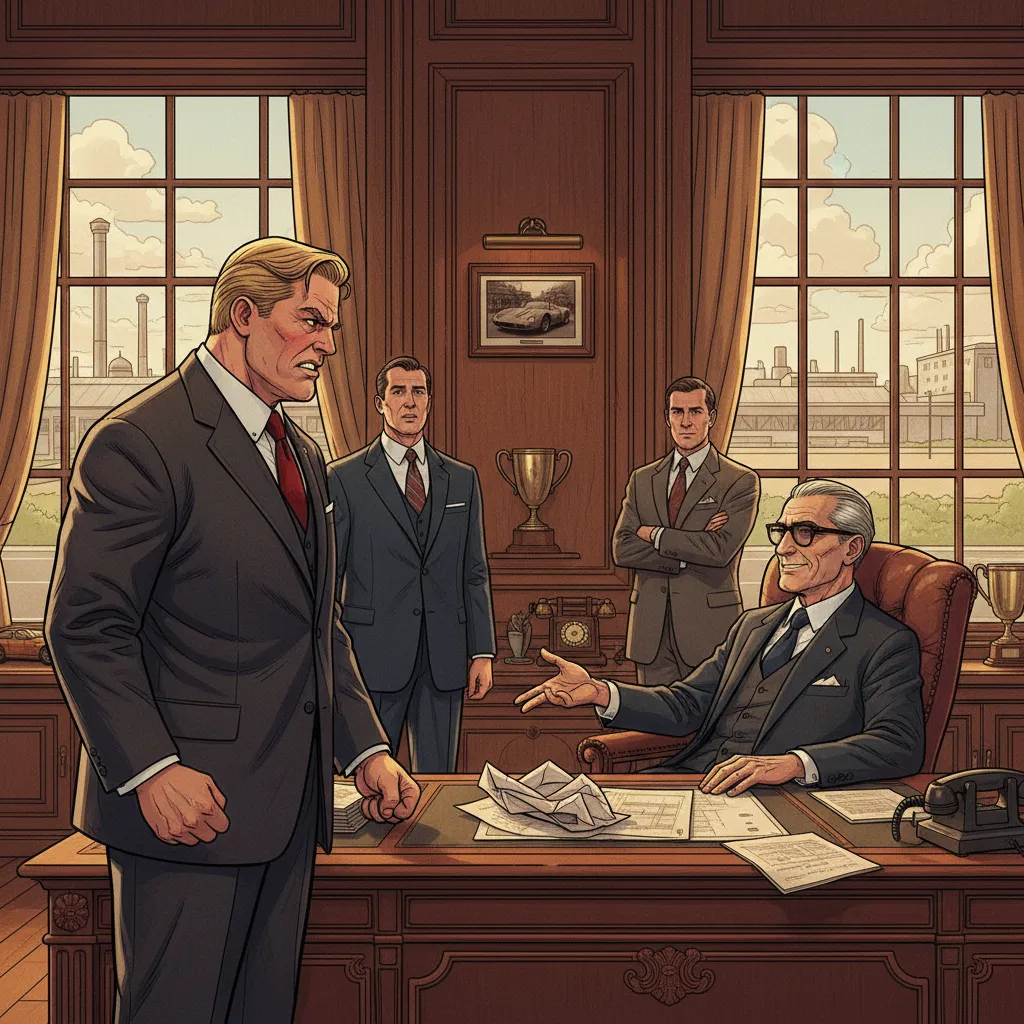
The rejection from Enzo Ferrari wasn’t just a business setback for Henry Ford II; it was a public slap in the face. A direct challenge to his ego, his company’s prestige, and the very notion of American industrial supremacy. The Deuce wasn’t one to back down. He transformed his humiliation into a mandate for vengeance. The mission: build a car, any car, that could go to Le Mans and utterly crush Ferrari. The budget? Practically unlimited.
Thus began Project GT40.
Ford threw everything they had at it. Millions of dollars, legions of engineers, and an unwavering commitment to a single goal: dethrone the Prancing Horse at its own game. They initially partnered with British racing firm Lola, acquiring their Lola Mk6 prototype as a starting point. The idea was to combine European chassis expertise with raw American V8 power. The name “GT40” was simple: “GT” for Grand Touring, and “40” for its height in inches, a nod to its low-slung, aerodynamic profile.
But building a Le Mans winner is not like building a family sedan. It’s a brutal, unforgiving crucible of engineering and endurance. The early years of the GT40 project were a disaster. The cars were fast, brutally fast, but they were also unreliable, difficult to handle, and prone to catastrophic failures. Engines overheated, transmissions exploded, suspensions collapsed. Drivers found them terrifying.
Ford’s corporate culture clashed violently with the demands of top-tier motorsport. Layers of bureaucracy, endless meetings, and a committee-driven approach simply didn’t work in the fast-paced, high-stakes world of racing development. The project was plagued by internal squabbles, leadership changes, and a frustrating lack of progress. Ford was pouring money into a black hole, and Ferrari continued to dominate Le Mans, taunting them with every victory.
Enter the Texans. Carroll Shelby, the legendary American racing driver and car designer, was brought in to salvage the project. Shelby was a maverick, a cowboy with grease under his fingernails and a burning desire to win. He spoke the language of speed, not corporate jargon. He understood that racing wasn’t about spreadsheets; it was about gut instinct, raw power, and an almost pathological commitment to pushing limits.
Shelby brought with him his own team of hard-nosed engineers and mechanics, including the brilliant but volatile Ken Miles. Miles was a British ex-pat, a gruff, uncompromising perfectionist who could make a car dance, but who had little patience for corporate nonsense. Together, Shelby and Miles formed an unlikely, volatile duo, the perfect antidote to Ford’s corporate inertia.
Shelby stripped away the bureaucracy, streamlined the decision-making process, and instilled a culture of aggressive experimentation. He threw out Ford’s cautious approach and embraced risk. He understood that to beat Enzo, you had to be just as ruthless, just as obsessed. He let his engineers experiment, fail, and then experiment again, faster.
The GT40 began to transform. Shelby and his team refined the aerodynamics, beefed up the chassis, and most importantly, tamed the monstrous Ford V8 engines, turning them into reliable, power-packed units capable of enduring 24 hours of flat-out racing. This wasn’t just about horsepower; it was about endurance, about building a car that could withstand the relentless punishment of Le Mans.
“You don’t win races by being nice. You win by being faster, tougher, and willing to push harder than anyone else.”
The development process was brutal. Test drivers pushed the cars to their absolute limits, often crashing spectacularly. The team worked around the clock, fueled by coffee, cigarettes, and the sheer force of Shelby’s personality. They were fighting not just a company, but a legend. They were fighting Enzo. And the thought of beating him was all the motivation they needed.
The stage was set for the ultimate showdown. Ford, the industrial giant, armed with an almost unlimited budget and a burning desire for revenge, was finally ready to challenge Ferrari, the artisan legend, on its sacred ground. Le Mans, 1966, would be the battleground where this epic grudge match would culminate in an unforgettable display of speed, strategy, and sheer will.
🏆 Chapter 8: The Crucible of Le Mans: 1966
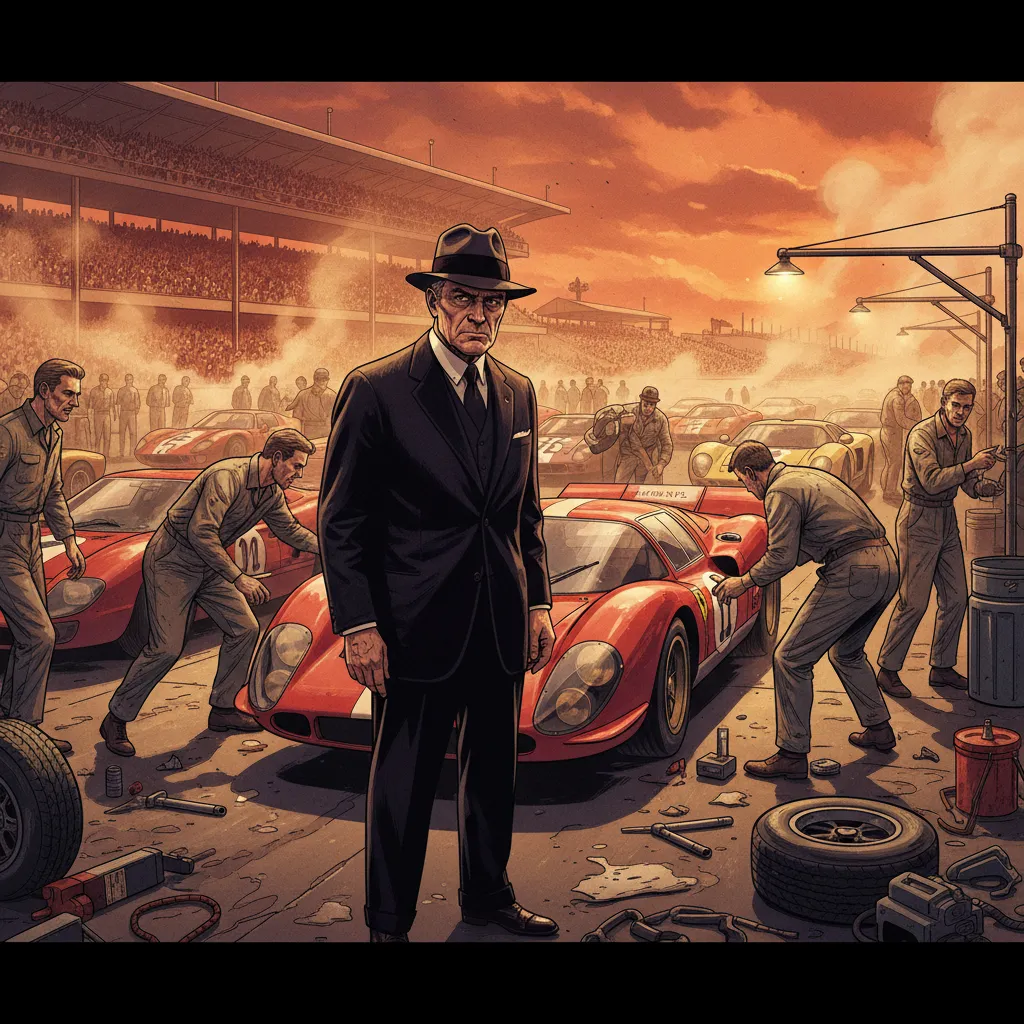
The 24 Hours of Le Mans, 1966. This wasn’t just a race; it was a war. The air crackled with tension, anticipation, and the intoxicating smell of high-octane fuel. For Enzo Ferrari, it was another opportunity to cement his legend, to prove the superiority of his meticulously crafted machines. For Henry Ford II, it was the culmination of years of frustration, a multi-million-dollar quest for vindication.
Ferrari arrived with its latest, most formidable prototypes, sleek, powerful machines that had dominated the endurance racing circuit for years. Their drivers were seasoned veterans, accustomed to the unique demands of Le Mans. They were the undisputed champions, the kings of the mountain.
Ford, on the other hand, arrived with a fleet of redesigned GT40s, refined and tuned by Carroll Shelby and his maverick team. They had suffered years of humiliating defeats at Le Mans – breakdowns, crashes, and strategic blunders. But this year felt different. The cars were faster, more reliable, and the team, forged in the fires of adversity, was hungrier than ever.
The race began under a cloud of expectation. From the very first lap, it was clear this was going to be a brutal slugfest. The Ford GT40s, powered by their roaring 7-liter V8 engines, immediately took the fight to the Ferraris. The pace was ferocious, pushing both man and machine to their absolute limits.
But Le Mans is a marathon, not a sprint. Over 24 grueling hours, the track punishes every mechanical flaw, every driver error. Early in the race, the expected attrition began. Ferraris, pushed beyond their limits, started to falter. Fords, too, faced their own demons. Engines blew, gearboxes failed, and the punishing pace took its toll.
As the hours ticked by, a relentless drama unfolded. Ford’s lead driver, Ken Miles, arguably the most talented and experienced among them, was on a mission. Paired with Denny Hulme, Miles drove with an almost inhuman precision and speed, pushing his GT40 to the very edge. He was not just winning; he was dominating, systematically dismantling Ferrari’s challenge. Miles had already won the Daytona 24 Hours and the Sebring 12 Hours that year. Le Mans would complete the unprecedented “Triple Crown” of endurance racing.
Enzo Ferrari, back in Maranello, was undoubtedly receiving updates, perhaps with a grim satisfaction as Ford’s cars occasionally broke down, or a growing unease as Miles continued to extend his lead. This was his territory, his legacy on the line.
As dawn broke on Sunday, the impossible seemed within reach for Ford. Their GT40s held the top three positions. Ken Miles was comfortably in the lead, poised for a historic victory. It was a moment of pure triumph for Ford, for Shelby, and for the entire American racing effort.
But then, the corporate suits interfered. In a move that still sparks debate and outrage among racing purists, Ford’s PR team, eager for a spectacular photo finish, ordered the three leading GT40s to cross the finish line together in a staged dead heat. They wanted a synchronized triumph, a perfect propaganda shot of three American cars conquering the European elite.
Miles, ever the professional, grudgingly complied, slowing down to allow Bruce McLaren and Chris Amon in the second-place GT40 to catch up. The third car, driven by Ronnie Bucknum and Dick Hutcherson, also closed the gap.
However, Le Mans rules stipulated that in the event of a tie, the car that started further back on the grid would be deemed the winner, as it had covered a greater distance in the same time. Bruce McLaren and Chris Amon had started further back than Ken Miles and Denny Hulme.
So, when the three GT40s crossed the finish line in formation, a breathtaking sight, it wasn’t a shared victory. It was McLaren and Amon who were declared the winners. Ken Miles, who had dominated the race for 23 of the 24 hours, was robbed of his well-deserved victory, and with it, his Triple Crown. It was a cruel, ironic twist, a corporate blunder that overshadowed the sheer brilliance of the Ford team’s achievement.
Despite the controversy, the message was clear, resounding, and undeniable. Ford had come to Le Mans, and they had not just beaten Ferrari; they had utterly crushed them, finishing 1-2-3. The Prancing Horse had been humbled. The American Goliath had had its revenge. The taste of victory, though bittersweet for some, was intoxicating for Henry Ford II. He had fulfilled his promise.
💔 Chapter 9: The Human Cost of Obsession
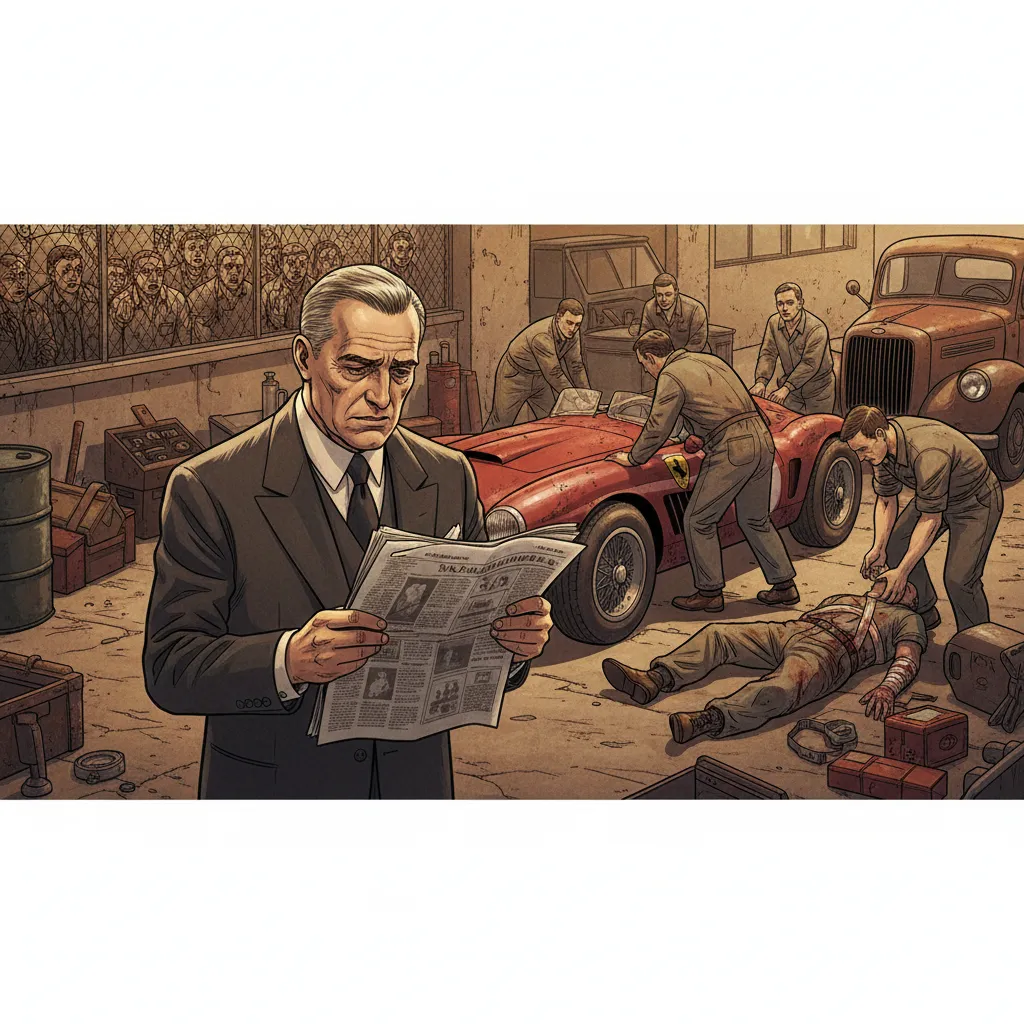
The roar of the engines, the flash of red, the taste of victory – these are the hallmarks of Ferrari. But beneath the gleaming chrome and the intoxicating speed lies a darker truth: the immense human cost of Enzo Ferrari’s relentless obsession. This was a man who pushed boundaries not just of engineering, but of human endurance and sacrifice.
Racing in the 1950s and 60s was a gladiatorial sport. Safety measures were rudimentary, often non-existent. Drivers were daredevils, risking their lives every single weekend, often for paltry sums compared to the glory they sought. And Enzo, the Commendatore, demanded nothing less than absolute commitment, even if it meant staring death in the face.
The list of drivers who raced for Ferrari and met tragic ends is long and heartbreaking. Alberto Ascari, Eugenio Castellotti, Luigi Musso, Peter Collins, Wolfgang von Trips – these were just a few of the stars who perished behind the wheel of a Ferrari. Each death was a tragedy, a stark reminder of the brutal nature of the sport.
Enzo’s response to these losses was often perceived as cold, detached. He would mourn, certainly, but then almost immediately focus on the next race, the next driver, the next victory. He believed that the pursuit of speed was a higher calling, one that demanded sacrifice. He saw his fallen drivers as martyrs in the service of an ideal, not as victims of his relentless ambition. This stoicism, while perhaps a coping mechanism, alienated many and contributed to his image as a ruthless, almost inhuman figure.
“You die a few times, and then you win.”
This grim sentiment, though not directly from Enzo, reflects the fatalistic attitude prevalent in racing at the time, an attitude Enzo tacitly encouraged. He understood that fear was a powerful motivator, and that true champions were those who could overcome it, or at least suppress it long enough to win.
But the human cost wasn’t limited to the track. Enzo’s autocratic management style, his tendency to pit engineers against each other, his public criticisms and mercurial moods, created an environment of intense pressure and personal animosity within the factory. The infamous “Palace Revolt” of 1961 saw several key figures, including engineers Carlo Chiti and Giotto Bizzarrini, walk out in protest against Enzo’s wife, Laura, who had an increasingly disruptive presence in the factory. These brilliant minds, crucial to Ferrari’s success, left to form rival companies like ATS, taking valuable expertise with them. Enzo, ever the pragmatist, simply replaced them, demonstrating his conviction that no individual was bigger than the brand, or his vision.
His personal life was equally fraught with tragedy. The death of his legitimate son, Dino, at a young age from muscular dystrophy, left an indelible scar. Enzo channeled his grief into his work, immortalizing Dino by naming a line of cars after him, but the loss undoubtedly hardened him further. He also had another son, Piero, born out of wedlock, whom he only officially recognized after his wife’s death. This complex family dynamic added another layer to the enigma of the man.
The cost was also borne by the company itself. The single-minded pursuit of racing glory often meant that the road car division, while producing exquisite vehicles, was underfunded and sometimes overlooked. This imbalance meant Ferrari rarely achieved the kind of industrial efficiency or widespread market penetration that its competitors enjoyed. It was a company built on passion, not always on sound business principles.
Enzo Ferrari was a man who lived and breathed speed, who saw life through the lens of a checkered flag. He built an empire, but he did so on the shoulders of giants, and often, at the cost of their lives and livelihoods. His legacy is a complex tapestry woven with threads of triumph and tragedy, a testament to the fact that absolute obsession, while capable of creating unparalleled greatness, often leaves a trail of human wreckage in its wake.
🤝 Chapter 10: The Prancing Horse Finds a New Stable (But Keeps Its Soul)
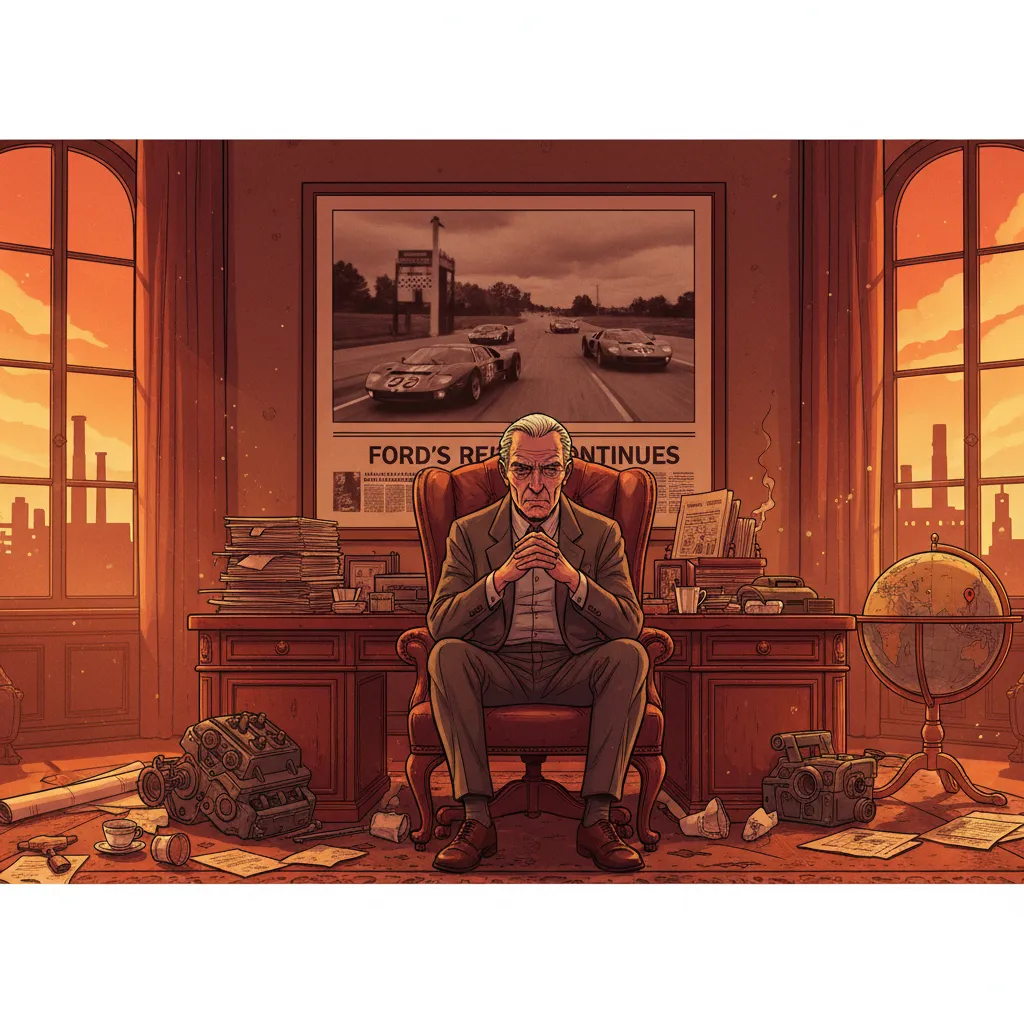
The humiliating defeat at Le Mans in 1966, followed by Ford’s continued dominance in 1967, forced Enzo Ferrari to confront a harsh reality: he could no longer fund his racing obsession independently. The costs of developing world-beating prototypes were simply astronomical, far beyond what his relatively small road car division could support. The relentless pursuit of perfection, the very essence of Ferrari, was becoming financially unsustainable.
But Enzo was not a man to surrender. He was a survivor, a pragmatist masked by an autocratic exterior. He understood that to save the racing team, to continue the legacy of the Prancing Horse, he needed external investment. This time, however, he would be far more cautious, far more cunning, about the terms of any deal. He had learned his lesson from the disastrous Ford negotiations. Control, especially over the racing arm, was non-negotiable.
Enter Fiat.
In 1969, Enzo Ferrari sold 50% of his company to Fiat, Italy’s automotive giant. This wasn’t a hostile takeover; it was a strategic alliance, a lifeline thrown to a struggling legend. The deal was carefully structured to allow Enzo to retain absolute control over the racing division, Scuderia Ferrari, and a significant say in the road car operations. Fiat provided the much-needed capital, the industrial scale, and the corporate infrastructure that Ferrari desperately lacked. In return, Fiat acquired an unparalleled brand, a symbol of Italian excellence, and a formidable racing pedigree.
It was a brilliant move, a testament to Enzo’s enduring business acumen. He managed to secure the financial stability required for Ferrari to thrive, while simultaneously protecting the very soul of his company. The Prancing Horse would still race, still win, but now with the backing of a powerful industrial partner. He had found a way to have his cake and eat it too, to continue his personal crusade for speed without sacrificing his autonomy.
The partnership with Fiat evolved over the years. Eventually, Fiat’s stake increased to 90%, but Enzo, even in his later years, remained the honorary president and retained significant influence, particularly over the racing team. He ensured that Ferrari would always be Ferrari – a company born of racing, dedicated to performance, and steeped in exclusivity.
This period marked a crucial shift in Ferrari’s business model. While racing remained at its heart, the road car division began to mature, to become a more significant and profitable part of the enterprise. Fiat’s involvement helped streamline production, improve quality control, and expand Ferrari’s global reach. The company started to move beyond being just a funding mechanism for racing to a truly self-sustaining luxury automotive brand.
Enzo’s legacy continued to grow. He oversaw the introduction of iconic models like the 308 GTB, the Testarossa, and eventually, the legendary F40, the last car launched under his direct supervision. He was still the demanding Commendatore, still obsessed with every detail, still pushing his engineers and designers to extract every last ounce of performance.
The sale to Fiat wasn’t a surrender; it was a strategic retreat, a masterful maneuver that ensured Ferrari’s survival and continued dominance. It allowed the Prancing Horse to keep galloping, to keep winning, and to cement its place as the most iconic automotive brand in the world. Enzo, the ultimate pragmatist, understood that sometimes, to preserve your independence, you must strategically align with power. He had secured the future of his dream, ensuring that his name, his vision, and his legendary cars would continue to inspire generations.
🌍 Chapter 11: The Enduring Legacy: More Than Just Metal and Horsepower
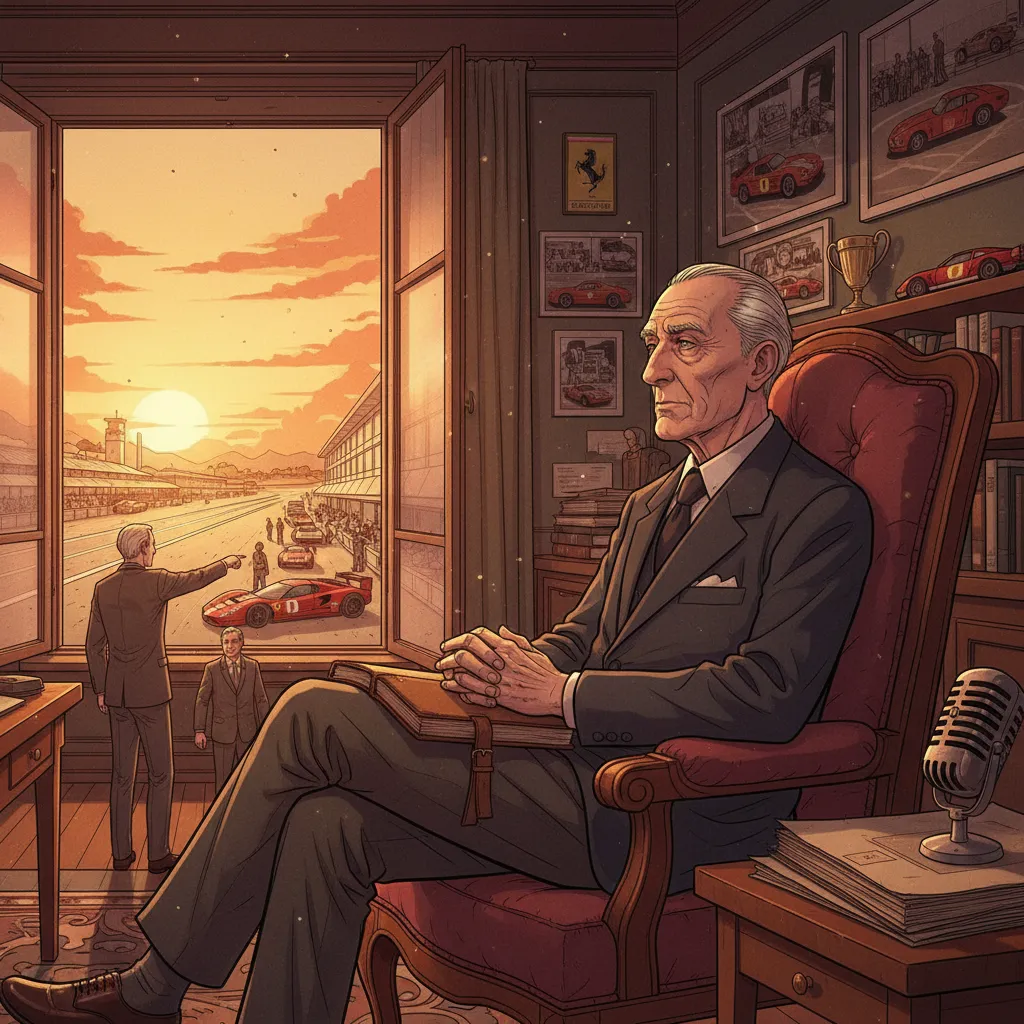
Enzo Ferrari passed away in 1988 at the ripe old age of 90. He left behind not just a company, but a legend, a philosophy, a way of life. The impact of his obsessive pursuit of perfection, the founding of Ferrari, and the epic Ford vs. Ferrari rivalry reverberates even today, long after the dust has settled on the racetracks of the past.
His legacy is multi-faceted, a complex tapestry woven with threads of triumph, tragedy, innovation, and an unyielding will.
-
The Ultimate Luxury Brand: Ferrari is more than a car; it’s an aspiration, a symbol of wealth, power, and exquisite taste. Enzo’s initial strategy of prioritizing racing and limiting production inadvertently created one of the world’s most exclusive and desirable brands. He understood, perhaps instinctively, the power of scarcity and mystique. Ferrari owners aren’t just buying a vehicle; they’re buying into a dream, a piece of racing history, a slice of Italian passion. This blueprint for luxury branding is still studied today.
-
Innovation as a Core Value: From the earliest V12 engines to groundbreaking aerodynamics, Ferrari has consistently pushed the boundaries of automotive engineering. Enzo’s relentless demand for speed forced his engineers to innovate, to experiment, to break new ground. This culture of continuous improvement, born from the crucible of racing, is deeply ingrained in Ferrari’s DNA. Every road car benefits from the lessons learned on the track.
-
The Power of Personal Branding (and its Perils): Enzo Ferrari was Ferrari. His personality, his vision, his stubbornness, and even his grudges shaped every aspect of the company. This created an incredibly strong brand identity, one that transcended mere marketing. For entrepreneurs, this highlights the immense power of a founder’s personal brand, but also the challenges of succession and the need to eventually institutionalize that vision beyond a single individual.
-
The Racing Imperative: Despite all its success as a road car manufacturer, Ferrari remains, at its heart, a racing company. The Scuderia Ferrari Formula 1 team is the longest-running and most successful team in the sport’s history. This unwavering commitment to racing, born from Enzo’s original passion, continues to fuel the brand’s mystique and drive its technological advancements. It’s a living testament to his belief that “the finest automobile is one that wins races.”
-
The Ford vs. Ferrari Rivalry as a Business Case Study: This epic clash wasn’t just about cars on a track; it was a microcosm of corporate strategy, ego, and the pursuit of competitive advantage. It showed how a personal insult could fuel a multi-million-dollar corporate vendetta. It demonstrated the challenges of cultural integration (Ford’s corporate bureaucracy vs. Ferrari’s artisan passion). And ultimately, it showed that with enough resources and relentless focus, even an underdog (Ford, in the endurance racing world) could overcome a seemingly insurmountable incumbent.
“I have never worked for money. I have worked for the joy of creating beautiful, fast machines and to see them win.”
This quote, often attributed to Enzo, encapsulates his entire life’s philosophy. He was an artist of speed, a maestro of metal, a man driven by an insatiable desire to conquer limits. He built an empire not with MBA textbooks, but with sheer will, raw talent, and an almost fanatical devotion to his craft.
Ferrari today is a publicly traded company, a global luxury powerhouse, yet it still bears the indelible stamp of its founder. The red cars, the Prancing Horse emblem, the roar of the V12 engine – all are echoes of Enzo’s original vision. His obsession, once a personal affliction, became the engine of a global phenomenon. And in doing so, he cemented his place not just as an automotive legend, but as one of the most compelling and paradoxical moguls in business history.
🏁 Chapter 12: The Mogul of Maranello: A Final Reckoning
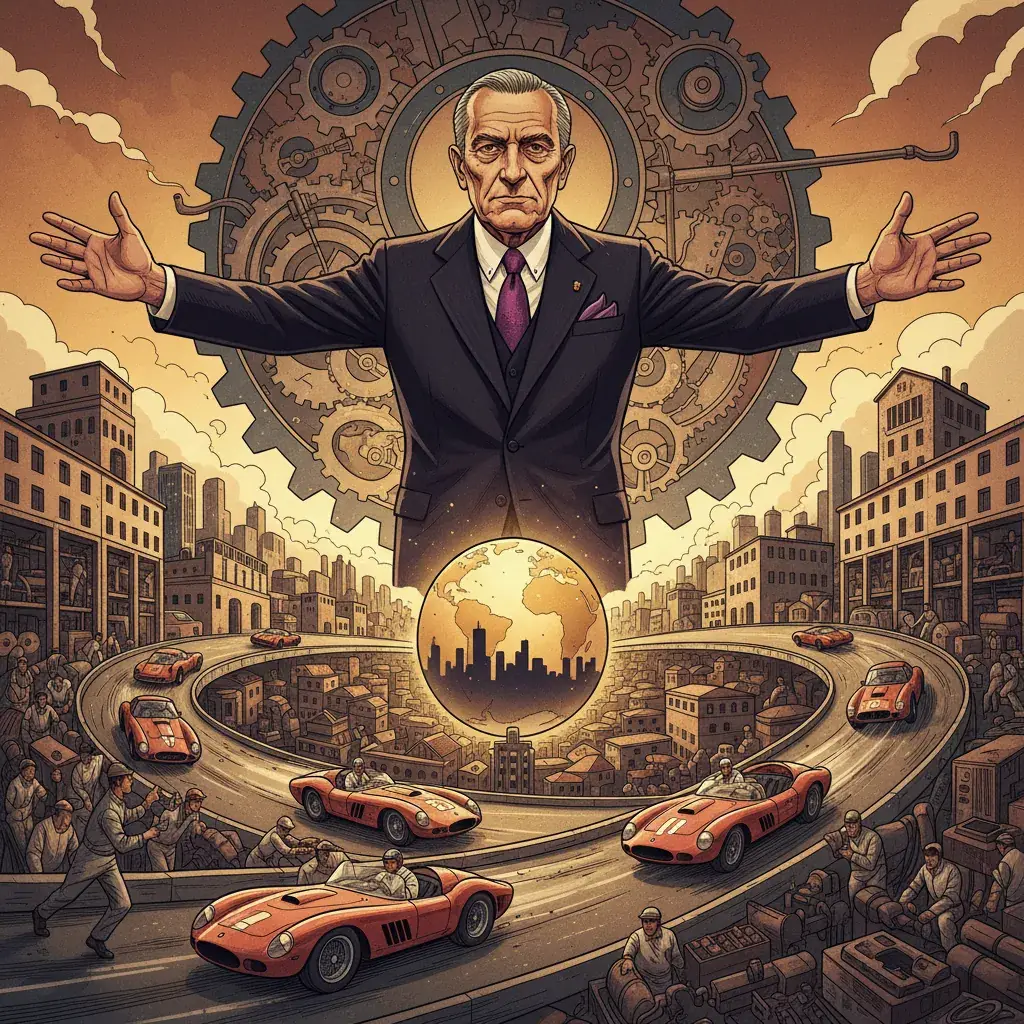
So, what do we take away from the saga of Enzo Ferrari? This isn’t just a story about fast cars and fiery rivalries; it’s a deep dive into the psyche of a true mogul, a man who bent the world to his will, often at great personal and professional cost.
Enzo Ferrari was an entrepreneur’s entrepreneur, but not in the lean startup, agile methodology sense. He was a force of nature, a singular vision made flesh. He showed us that:
-
Unwavering Vision Trumps All: Enzo had one goal: racing perfection. Every decision, every sacrifice, every partnership was filtered through this lens. He wasn’t swayed by market trends or conventional business wisdom. He built a brand that created its own market, a testament to the power of an uncompromising, almost messianic vision. For any entrepreneur, having that North Star, that absolute guiding principle, is paramount. Even if it means alienating people or making unpopular choices.
-
Passion as a Profit Driver: While he claimed not to work for money, his passion for racing created one of the most profitable and enduring luxury brands on the planet. The mystique, the exclusivity, the sheer emotional pull of Ferrari, are all direct derivatives of Enzo’s personal obsession. This is a powerful lesson: when your passion is authentic and relentless, it can attract resources, talent, and customers in ways that pure profit motive rarely can. People buy into the story, the dream, the soul of a brand.
-
The Art of Strategic Leverage: From his early days at Alfa Romeo to the crucial Fiat deal, Enzo was a master of leveraging his unique assets: his name, his expertise, his brand’s prestige. He understood his value and wasn’t afraid to walk away from deals that compromised his core principles (looking at you, Ford). Knowing when to hold ‘em and when to fold ‘em, and understanding your non-negotiables, is critical in high-stakes business.
-
Ruthlessness Can Be a Virtue (Sometimes): Enzo’s demanding, often brutal, management style fostered an environment of intense competition and innovation. He believed that only under extreme pressure could true genius emerge. While certainly not a model for modern HR, it highlights that sometimes, to achieve extraordinary results, you need extraordinary demands. The line between inspiring excellence and fostering a toxic environment is razor-thin, and Enzo walked it constantly.
-
The Paradox of Control: He craved absolute control, and that control allowed him to build Ferrari in his exact image. But it also nearly led to its demise (the Ford deal) and caused internal strife. Eventually, he learned to selectively cede control (to Fiat) to secure the company’s future, demonstrating a pragmatic flexibility beneath his iron will. Knowing when to delegate, when to partner, and when to let go is a critical lesson for any founder.
The story of Enzo Ferrari isn’t just a nostalgic look back at a bygone era; it’s a living, breathing case study in extreme entrepreneurship. It’s about a man who, against all odds, forged an empire out of sheer will, a love for speed, and a relentless pursuit of perfection. He built not just cars, but dreams. He sparked a rivalry that became the stuff of legend. And in doing so, he cemented his place as the ultimate Mogul of Maranello, a testament to what happens when raw ambition meets unyielding obsession.
So, the next time you see a gleaming red Ferrari flash by, don’t just see a car. See the fire, the passion, the blood, sweat, and tears of a man who refused to compromise, who stared down giants, and who built a legend, one perfect, roaring engine at a time. That, my friends, is the Enzo Ferrari story. And it’s still running at full throttle.
💡 Key Insights
- ▸ Obsession as a Business Catalyst: Enzo Ferrari’s story demonstrates that an almost fanatical dedication to a singular vision, even at personal and financial cost, can be the crucible for creating an enduring, globally recognized brand. Entrepreneurs must discern when their passion is a driving force and when it becomes a blind spot, but Ferrari shows the power of an uncompromising vision.
- ▸ Strategic Scarcity and Brand Mystique: Ferrari mastered the art of scarcity, making its products not just vehicles, but coveted trophies. By prioritizing racing and limiting production, Enzo cultivated an aura of exclusivity that amplified demand and allowed premium pricing, offering a masterclass in luxury brand positioning that transcends mere product features.
- ▸ The Peril and Power of Personal Brands in Corporate Strategy: Enzo Ferrari *was* Ferrari. His personality, his triumphs, and his grudges were inextricably linked to the company's identity and strategy, especially in the Ford rivalry. While a strong personal brand can be a formidable competitive asset, it also exposes the organization to the founder's personal whims and vendettas, a crucial balance for any founder-led enterprise.