Hiroshi Yamauchi: The Card Company He Turned Into a Video Game Powerhouse
Hiroshi Yamauchi transformed Nintendo through failed experiments, strict creative control and a hardware-software model that reshaped home entertainment.
View all stories about this mogul
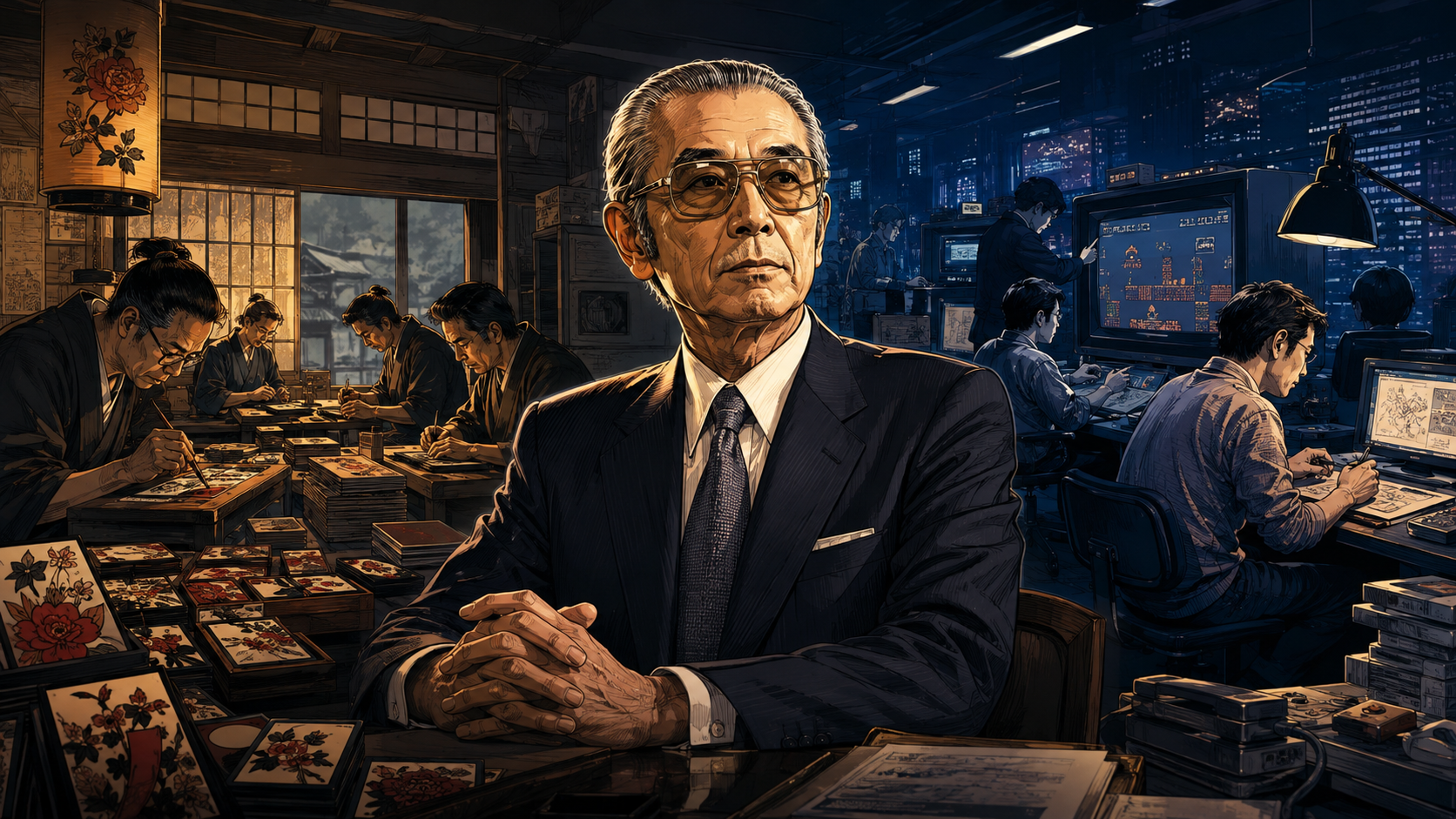
Hiroshi Yamauchi inherited a Kyoto playing-card company and left behind one of the most influential entertainment businesses in history. The path was not linear. Nintendo tried taxis, instant rice and other diversifications before discovering that its durable advantage was not paper cards. It was designing play.
Yamauchi’s tenure combined ruthless capital allocation with unusual faith in creative talent. He knew little about engineering games himself, yet he built a system in which hardware, software and characters reinforced one another.
Breaking Nintendo out of the card market
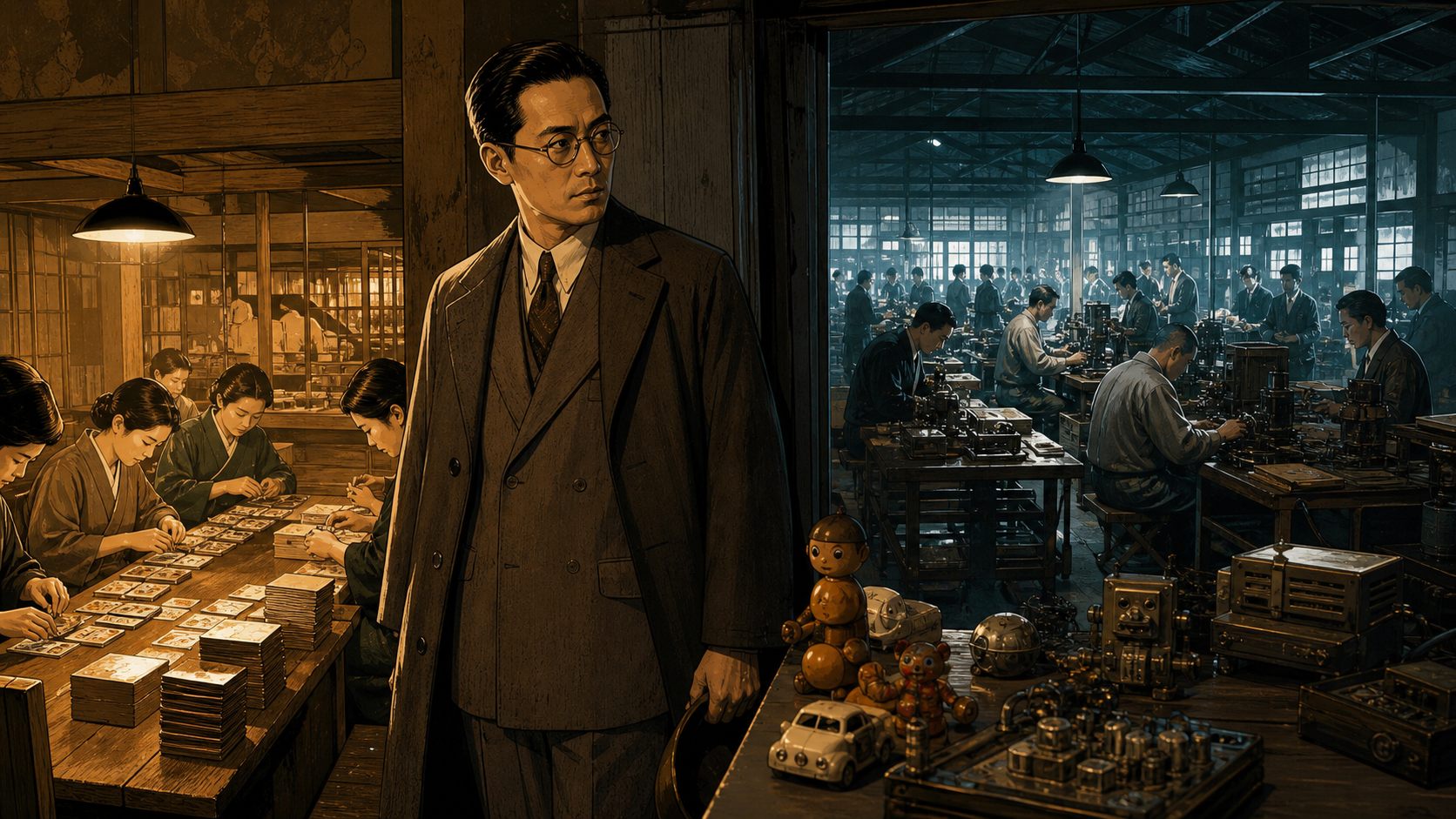
Yamauchi became president in 1949 while still in his twenties. Nintendo’s heritage stretched back to 1889, when it made hanafuda cards. Cards could be profitable, but the market imposed a ceiling.
He modernized manufacturing and pursued licensing, including character cards connected to Disney. The broader lesson from visiting the US playing-card industry was reportedly sobering: even the leading company occupied a modest office. Scale would require a new category.
Nintendo experimented widely. Several ventures failed, but the search built an appetite for consumer products and distribution. Toys proved more relevant. Designer Gunpei Yokoi created products including the Ultra Hand, showing that simple mechanisms and clear play value could produce mass-market hits.
Yamauchi did not need every experiment to work. He needed to recognize which failures were unrelated distractions and which capabilities—industrial design, manufacturing, retail relationships and playful invention—could form the next company.
From arcade risk to creative franchises
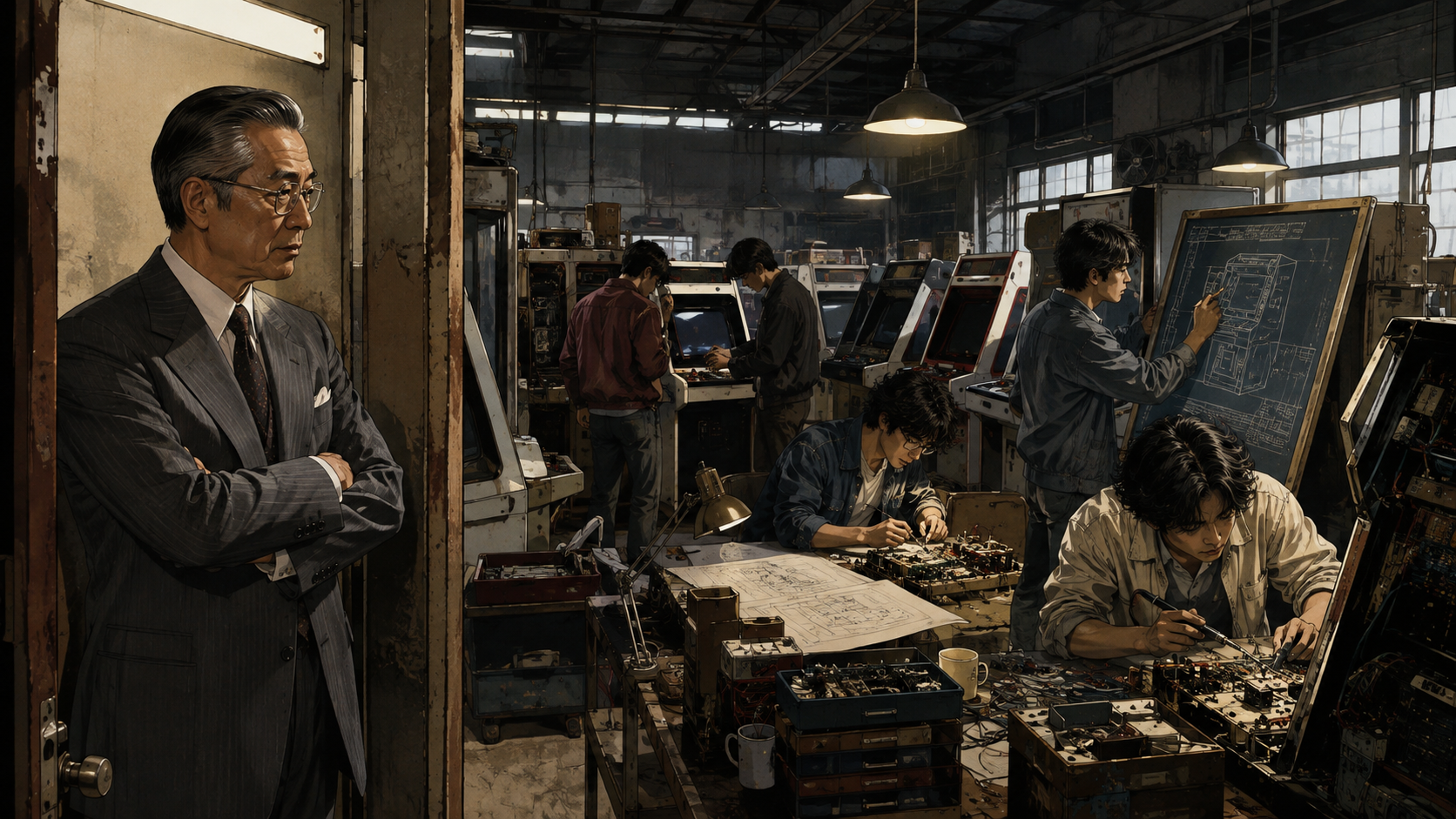
Nintendo moved through electronic toys and arcade games. The American subsidiary faced a crisis after Radar Scope machines failed to find buyers. Yamauchi assigned a young artist, Shigeru Miyamoto, to help create a replacement game using the cabinets.
The result was Donkey Kong in 1981. It supplied Nintendo with a global arcade hit and characters that could outlive one machine. Yamauchi’s decision illustrates portfolio judgment: place an unconventional creative on a constrained problem, then support the winner aggressively.
Nintendo’s internal structure gave small development groups identities and competition. Yamauchi reviewed concepts and made decisive calls even though he reportedly did not play games. His distance from the craft could be dangerous, but it also forced him to judge whether an idea communicated quickly to ordinary consumers.
Characters became reusable assets. Mario could move across genres and hardware generations, reducing launch risk and creating emotional continuity. Nintendo was building an intellectual-property engine before that phrase dominated corporate strategy.
The console system that rebuilt trust
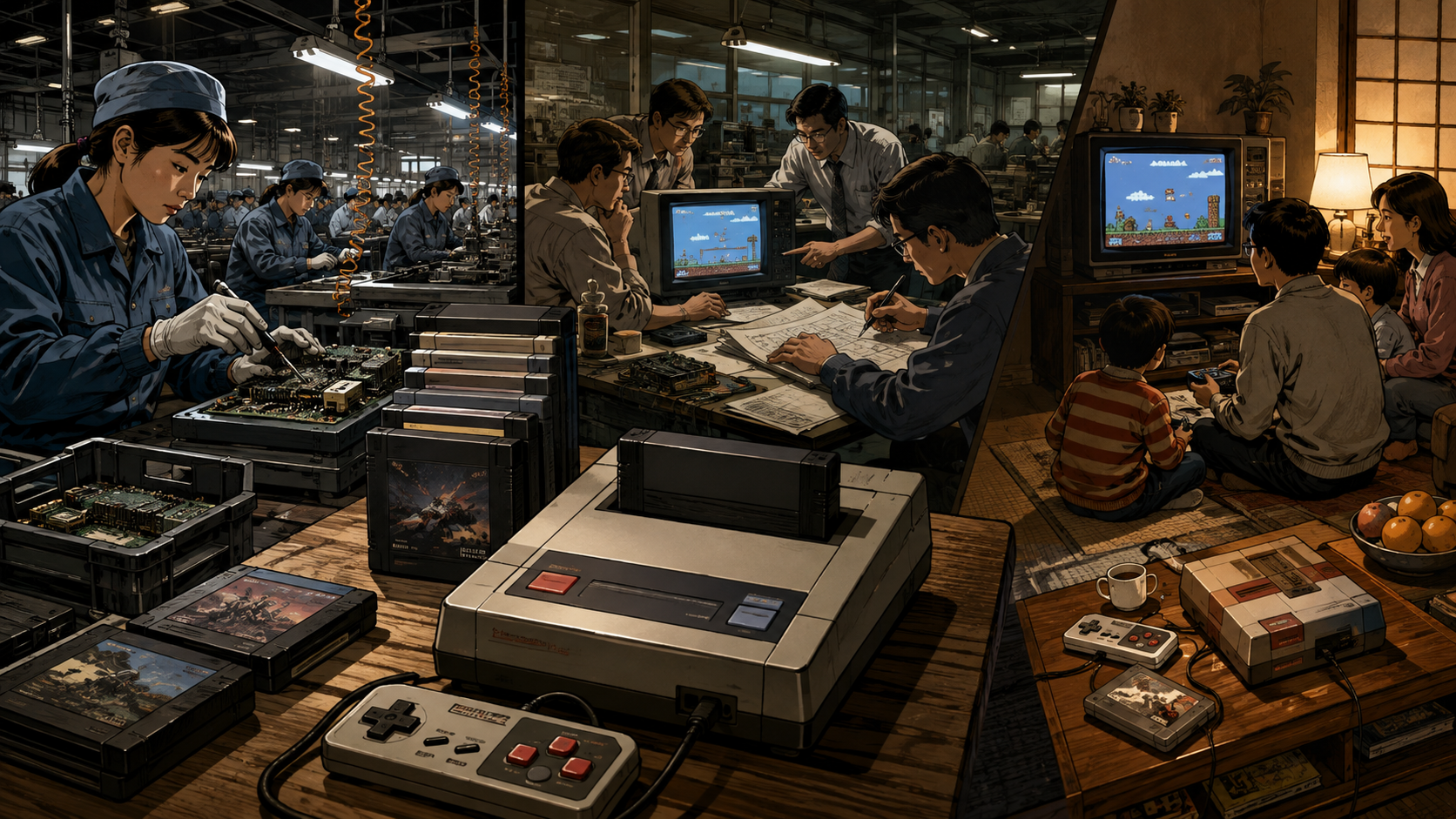
Nintendo launched the Family Computer, or Famicom, in Japan in 1983. Early hardware faults forced a costly recall, but the corrected system grew rapidly. The Nintendo Entertainment System reached the United States after the local console market had collapsed under low-quality software and retailer distrust.
Nintendo controlled licensing, cartridges and release volume. The seal and approval system reassured retailers and consumers that games met technical standards. Exclusive software made the hardware valuable; a large installed base made publishing valuable.
The control restored order but also concentrated power. Licensing restrictions produced antitrust disputes and resentment among developers. Platform governance can protect quality and still overreach.
Yamauchi extended the model through the Game Boy, Super Nintendo and Nintendo 64 eras. Hardware did not always lead technically. Nintendo’s edge was the integration of accessible design, distinctive controllers and exclusive games.
The Real Lesson
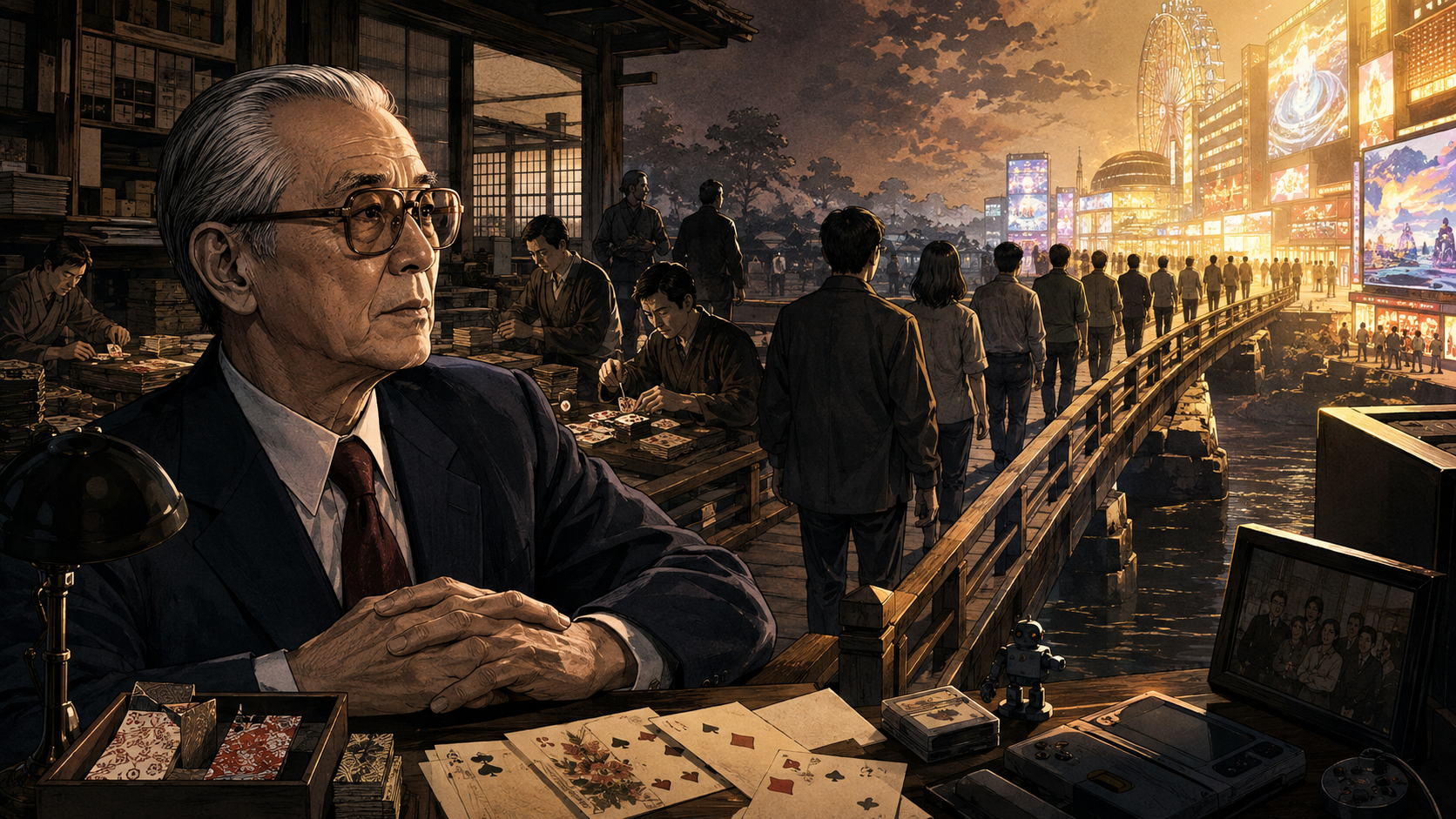
Yamauchi retired as president in 2002 after more than five decades. His legacy is not that he predicted every winning technology. Nintendo missed trends, fought partners and sometimes allowed platform control to become rigidity.
His achievement was more durable: he changed the company’s definition without discarding its underlying purpose. Nintendo moved from cards to toys to arcades to consoles, but remained focused on structured play.
The business lesson is to distinguish a product from the human need it serves. A card manufacturer that believes it sells paper eventually disappears. A company that believes it creates play can migrate across materials and generations—if leadership is willing to abandon yesterday’s format and protect tomorrow’s creators.
💡 Key Insights
- ▸ Diversification is useful when failures reveal the capabilities worth keeping.
- ▸ Hardware succeeds when exclusive software makes the machine more than a commodity.
- ▸ Creative talent compounds when executives protect small teams and make decisive portfolio bets.
- ▸ Platform control can restore quality while becoming harmful if licensing power is abused.