The Blueprint: How Jay-Z Built a Billion-Dollar Empire from Scratch
From the gritty streets of Marcy Projects to the glistening boardrooms of global finance, Shawn 'Jay-Z' Carter didn't just rap about the hustle – he became the blueprint. This is the audacious, street-smart saga of a kid who bypassed the gatekeepers, built an empire on his own terms, and redefined what it means to be a mogul in the 21st century.

View all stories about this mogul
💥 Chapter 1: The Ghetto’s Sermon – Brooklyn, 1980s

Picture this: It’s the late 1980s, the air thick with the scent of exhaust fumes, cheap fried food, and raw ambition. The backdrop? The Marcy Projects in Bedford-Stuyvesant, Brooklyn. Not exactly a postcard view. This was a concrete jungle, a crucible of harsh realities where opportunity was a rare, shimmering mirage, and survival was the only curriculum. It was here, amidst the cacophony of sirens and the rhythm of boomboxes, that a young man named Shawn Carter was forged.
He wasn’t born with a silver spoon; he was born with a silver tongue, though he didn’t quite know it yet. His early education wasn’t in hallowed halls of academia, but on the unforgiving streets, where the lessons were brutal, immediate, and utterly invaluable. He saw everything. The hustle, the grind, the desperation, the fleeting highs, the crushing lows. He witnessed firsthand the intricate, unregulated economy of the streets, an ecosystem demanding quick thinking, loyalty, and an almost preternatural ability to read people and situations. This wasn’t just about selling a product; it was about understanding supply and demand, managing risk, building a network, and establishing a reputation – all without a business degree or a formal mentor. It was a dark, dangerous MBA program, and Carter was an unwilling but sharp student.
He was a quiet kid, observant, soaking it all in. While others might have been consumed by their immediate surroundings, Carter possessed an innate curiosity, a hunger for something more, a future that stretched beyond the confines of those brick buildings. He loved words, loved how they could paint pictures, tell stories, convey emotions. Rap wasn’t just music; it was a diary, a newspaper, a battleground, a dream journal. He saw its power, its potential to transcend circumstance. He’d scribble rhymes in notebooks, a nascent poet channeling the raw energy of his environment into verses that would one day shake the world.
But dreams don’t pay the rent, and they certainly don’t buy groceries in the projects. So, like many around him, Carter found himself drawn into the street economy. It was a pragmatic decision, a means to an end. It taught him hard lessons: the importance of capital, the ruthlessness of competition, the necessity of calculated risks, and the power of a strong, independent brand – even if that brand was just your own name and reputation. He learned to manage cash flow, negotiate deals, and understand market dynamics, albeit in a shadow economy. These experiences, grim as they were, instilled in him a foundational understanding of business, a street-level MBA that would prove far more valuable than any textbook in the years to come.
He saw the flaws in the system, the lack of ownership, the constant threat of external forces disrupting your enterprise. He understood that true power wasn’t just in making money, but in controlling the means of production, the distribution, and the narrative. This wasn’t just about getting rich; it was about building something that belonged to him, something that couldn’t be taken away by arbitrary forces. That seed of self-ownership, cultivated in the barren soil of Marcy, would eventually blossom into one of the most formidable business empires of the 21st century.
🎤 Chapter 2: Roc-A-Fella’s Rebel Yell – The Birth of an Independent Kingpin
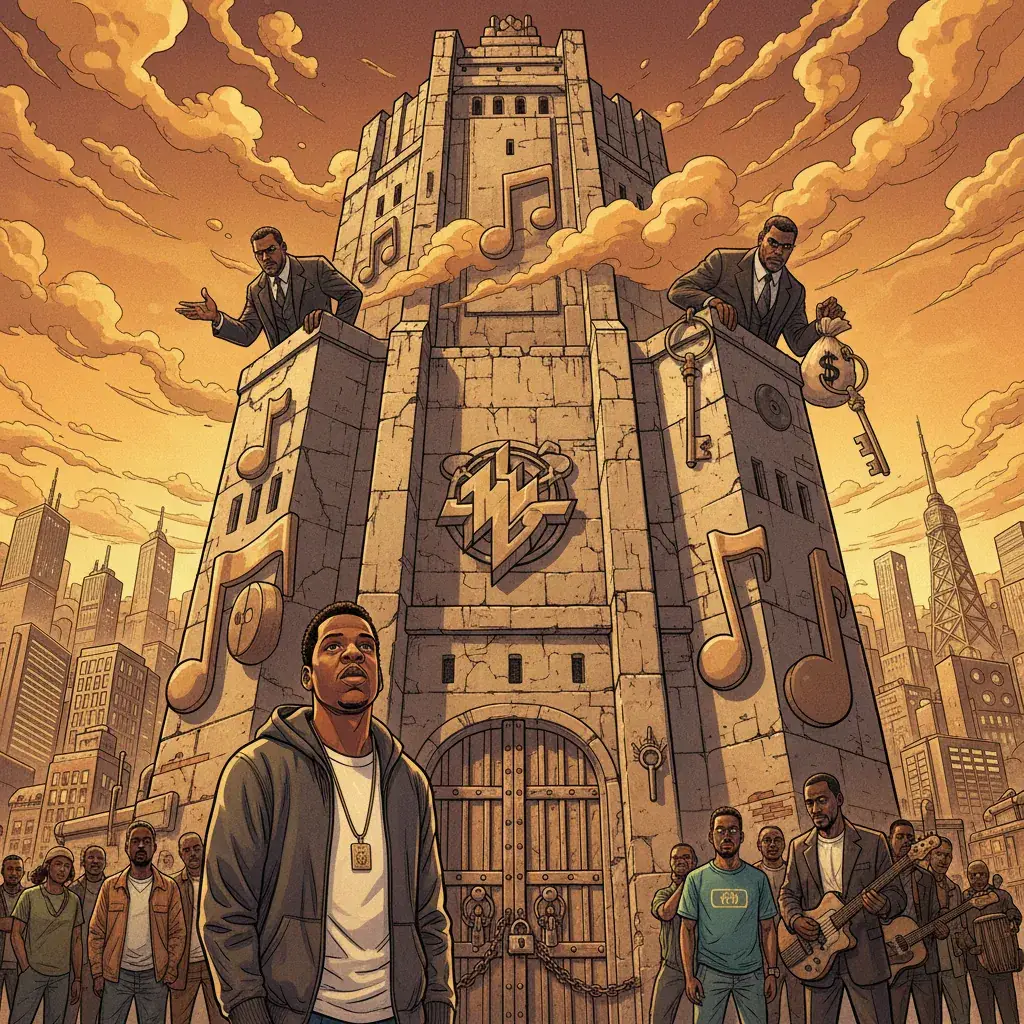
The music industry, back in the mid-90s, was a fortress with towering walls. Major labels held all the keys, dictating who got a shot, what sounded “marketable,” and how much artists were truly worth. For an unknown kid from Marcy Projects with a unique flow and unapologetic lyrics about his life, breaking in felt less like opening a door and more like tunneling through bedrock with a spoon. Jay-Z, though, wasn’t about to beg for a seat at anyone’s table. He decided to build his own damn banquet hall.
He’d shopped his demo tapes around, faced the polite rejections, the lukewarm interest, the industry gatekeepers who couldn’t quite grasp the raw, undeniable magnetism radiating from this young Brooklynite. They heard the street tales, but they didn’t hear the future. They heard the hustler, but they didn’t hear the CEO. They heard the rapper, but they didn’t hear the architect of an empire. So, Shawn Carter did what any true entrepreneur does when confronted with a brick wall: he found a sledgehammer. Or, more accurately, he found a couple of kindred spirits with shared vision and hustle: Damon Dash and Kareem “Biggs” Burke.
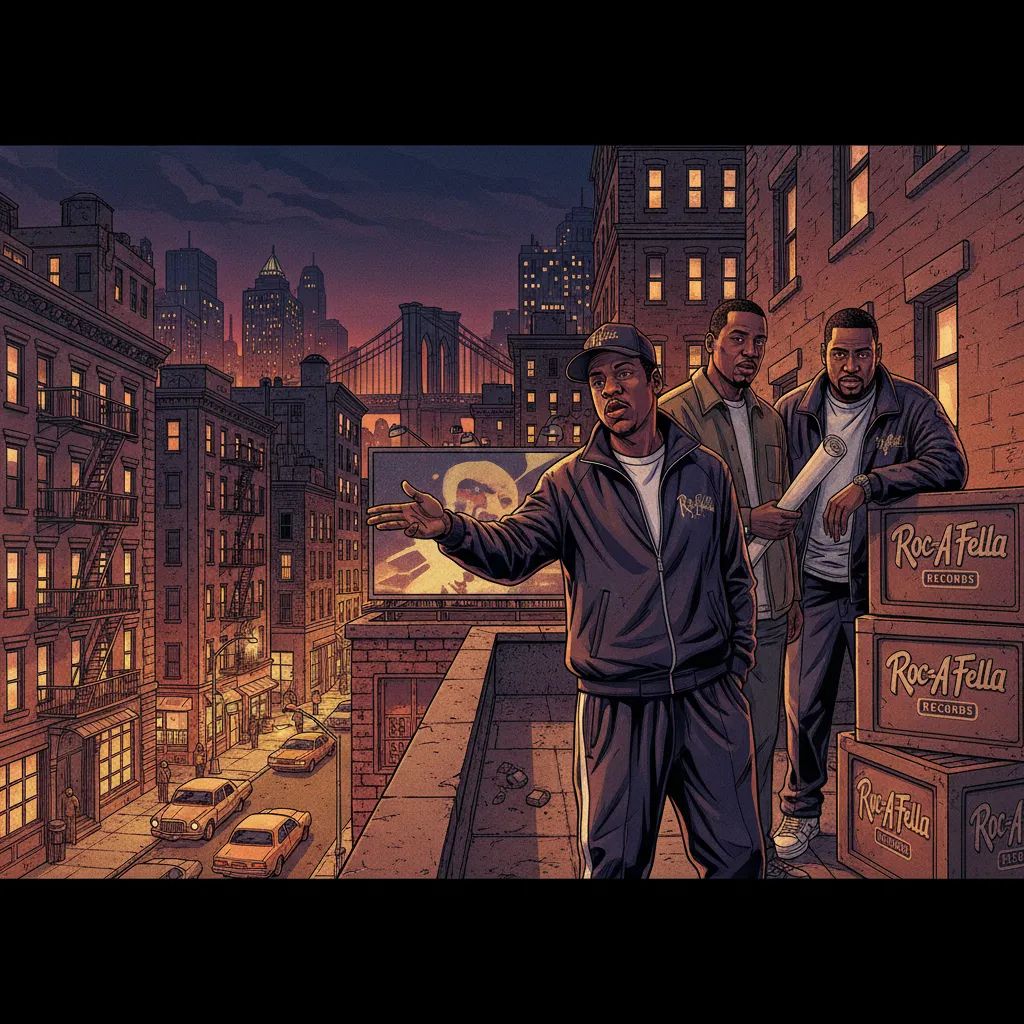
Together, with a handshake and a dream, they pooled their meager resources – literally selling CDs out of car trunks, taking risks that would make venture capitalists blanch – and founded Roc-A-Fella Records in 1995. This wasn’t some vanity project. This was a strategic move, a declaration of independence. They understood that in the music game, owning your masters, owning your distribution, owning your narrative, was the ultimate power play. They weren’t just making records; they were laying the groundwork for a new paradigm.
Their debut album, Reasonable Doubt, released in 1996, was a masterclass in independent ambition. It wasn’t just an album; it was a manifesto. Jay-Z’s lyrics weren’t just rhymes; they were blueprints for ambition, street-level philosophy, and the complex morality of the grind. He spoke of “hustling ‘til the sun come up, then I’m back up at the grind.” This wasn’t just a catchy line; it was his life, and it resonated with millions who felt the same hunger. The album was raw, sophisticated, and deeply personal, chronicling his journey from drug dealer to burgeoning music mogul. It was the sound of a man transitioning, making sense of his past while building his future.
“I’m not a businessman, I’m a business, man.” This isn’t just a lyric; it’s the foundational thesis of his entire empire. It encapsulates the radical self-ownership and brand building that defined his early career and continues to drive his ventures.
They didn’t have major label marketing budgets, so they relied on grassroots tactics, word-of-mouth, and Jay-Z’s relentless touring and networking. They leveraged their street credibility, turning their perceived disadvantage into an authentic connection with their audience. Every concert, every radio interview, every handshake was a brick laid in the foundation of Roc-A-Fella. They demonstrated that you didn’t need the established infrastructure if you had the vision, the talent, and the unwavering belief in your product. It was a risky bet, but the payoff was immense. Reasonable Doubt became a critical darling, a cult classic that slowly but surely built momentum, proving that the market was hungry for authenticity, for stories told by those who lived them, unfiltered and uncompromised. This was the first major lesson: control the narrative, own the means of production, and let your authenticity be your greatest marketing tool. The gatekeepers might have ignored him, but the streets didn’t. And the streets, as it turns out, often know best.
📈 Chapter 3: From Mixtapes to Mainstream – Scaling Roc-A-Fella and Mastering the Game
With Reasonable Doubt establishing his artistic credibility and Roc-A-Fella’s independent viability, Jay-Z didn’t rest on his laurels. He saw the independent success as a launchpad, not a destination. The next move was crucial: how do you scale a street-smart operation into a legitimate, formidable industry player without losing your soul or your edge? The answer was a masterclass in strategic maneuvering, market penetration, and relentless brand expansion.
Roc-A-Fella, initially a defiant middle finger to the industry, began to look less like a scrappy startup and more like a well-oiled machine. They inked a distribution deal with Def Jam Records in 1997, a move that offered them the best of both worlds: the reach and infrastructure of a major label, but with the crucial element of creative and operational independence that Jay-Z and his partners fiercely protected. This wasn’t a surrender; it was an alliance built on leverage. Jay-Z had proven he could sell records without them; now, he was inviting them to amplify his success, on his terms.
This period saw an explosion of productivity and strategic genius. Jay-Z started dropping albums like clockwork, each one building on the last, cementing his status as a lyrical titan. Albums like In My Lifetime, Vol. 1, Vol. 2… Hard Knock Life, and Vol. 3… Life and Times of S. Carter weren’t just commercial successes; they were cultural touchstones. He refined his sound, broadened his appeal, and infused his music with an increasingly sophisticated blend of street wisdom and aspirational luxury. He was rapping about Bentleys and boardroom deals, but always with a wink back to the projects. This duality was his superpower: he could speak to both worlds, the corner store and the corner office.
But Roc-A-Fella wasn’t just the house that Jay-Z built for himself. It became a powerhouse for other artists, too. He understood that an empire isn’t built by a single monarch, but by a loyal, talented court. He signed artists like Memphis Bleek, Beanie Sigel, Foxy Brown, and eventually, the nascent superstar Kanye West. This wasn’t just about collecting talent; it was about building a roster, diversifying the label’s sound, and creating a stable of artists who could generate multiple revenue streams. Each new signing was a strategic investment, expanding Roc-A-Fella’s footprint and influence across the hip-hop landscape. He wasn’t just selling his own music anymore; he was selling a movement, a lifestyle, a brand.
He was a meticulous curator, involved in everything from album art to marketing strategies. He understood the nuances of branding, the power of visual identity, and the importance of storytelling. The Roc-A-Fella logo – a sleek, aggressive eagle – became synonymous with quality, authenticity, and a certain kind of audacious ambition. It was more than just a record label; it was a cultural arbiter, a tastemaker, a symbol of what was possible when young Black entrepreneurs took control of their destiny.
The genius of this era was Jay-Z’s ability to constantly evolve while staying true to his core identity. He navigated the treacherous waters of the music industry – the shifting trends, the fickle public, the ruthless competition – with an uncanny blend of artistic integrity and sharp business acumen. He understood that the music was the product, but the brand was the asset. And Roc-A-Fella, under his guidance, became one of the most potent brands in music history, proving that the independent spirit, when coupled with strategic vision and relentless execution, could not only compete with the majors but often surpass them in innovation and cultural impact. He was building his own ladder to the sky, and he was inviting others to climb with him.
👕 Chapter 4: The Threads of Empire – Rocawear, From Streets to Global Catwalks
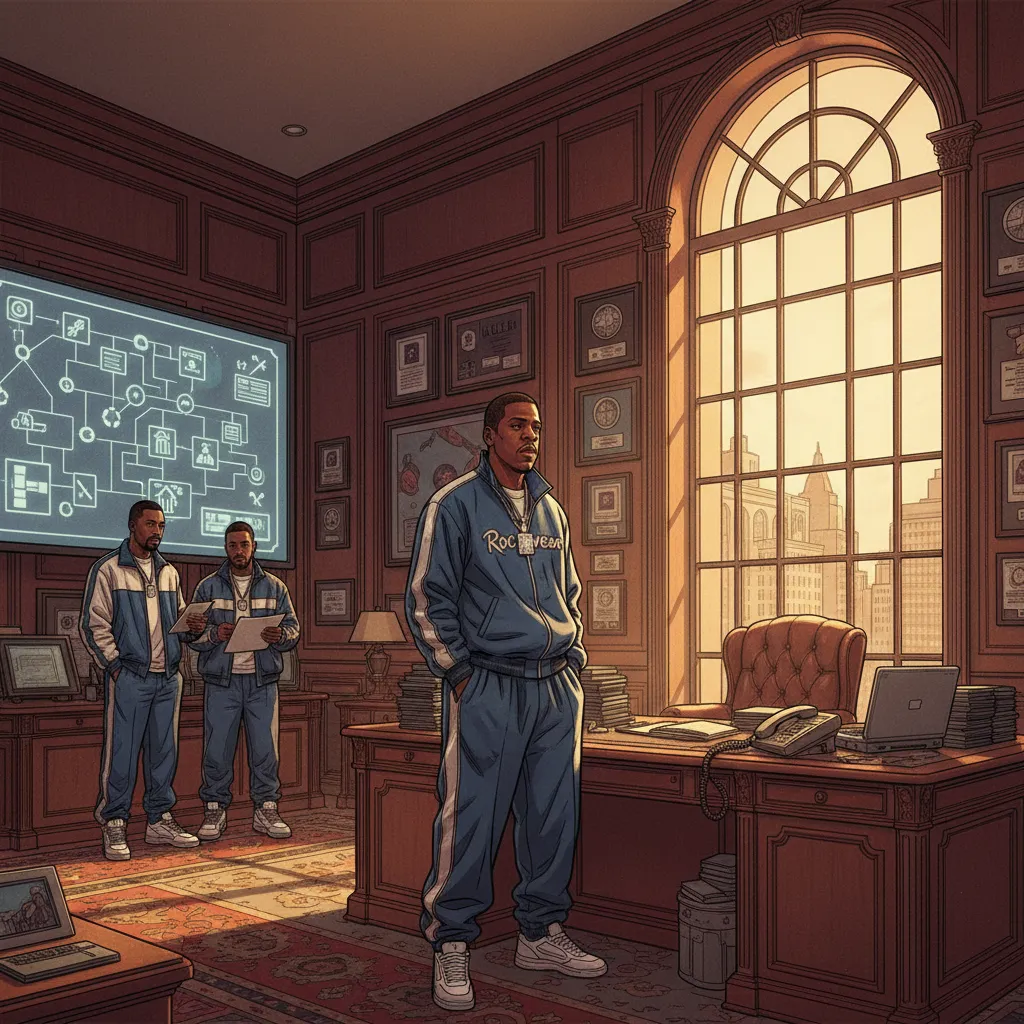
The year 1999. Roc-A-Fella Records was a force, Jay-Z a multi-platinum superstar. But for a mind like his, music was just one avenue, one piece of a much larger puzzle. He understood, intrinsically, that his influence extended far beyond the booth. His persona wasn’t just about rhymes; it was about a lifestyle, an aesthetic, a swagger. And where there’s a lifestyle, there’s an opportunity for commerce. This realization birthed Rocawear, his audacious leap into the cutthroat world of fashion.
This wasn’t some celebrity endorsement deal where he just slapped his name on someone else’s product. This was a ground-up venture, another testament to his unwavering commitment to ownership and control. He saw a gaping hole in the market: authentic, high-quality streetwear that resonated with the burgeoning hip-hop culture, but with a level of sophistication that could cross over into mainstream fashion. The existing brands either felt too niche or too mass-marketed, lacking the genuine street credibility that Jay-Z embodied.
Rocawear launched with a clear vision: to translate the aspirational luxury and street-smart aesthetic of hip-hop into tangible apparel. From denim to tracksuits, t-shirts to outerwear, the brand quickly became a staple. It wasn’t just about clothes; it was about identity. Wearing Rocawear was a statement, a badge of belonging to a culture that was rapidly taking over the world. Jay-Z, along with Damon Dash, understood the power of visual branding and the aspirational appeal of their own success stories. They were the ultimate walking advertisements, embodying the very lifestyle the brand represented.
“You can have all the talent in the world, but if you don’t own your business, you’re a slave to somebody else’s.” This ethos drove his diversification into Rocawear. It wasn’t just about making money; it was about building equity, owning the means of production, and controlling the brand narrative outside of music.
The brilliance of Rocawear’s strategy lay in its dual approach. On one hand, it maintained its street credibility through grassroots marketing, music video placements, and direct association with hip-hop artists. On the other, it aggressively pursued mainstream distribution, securing coveted shelf space in major department stores like Macy’s and Bloomingdale’s. This crossover appeal was crucial. It allowed Rocawear to capture both the core urban market and the broader consumer base eager to tap into the “cool” factor of hip-hop.
Scaling a fashion brand is no joke. It requires navigating complex supply chains, managing inventory, understanding retail cycles, and constantly innovating design. Jay-Z didn’t shy away from these challenges. He brought in experienced industry professionals, blending their corporate expertise with his street-smart intuition and cultural understanding. He recognized that while his vision was paramount, execution required specialized skills. This willingness to delegate and empower experts, while retaining ultimate strategic oversight, is a hallmark of truly effective leadership.
By the mid-2000s, Rocawear was a global juggernaut, raking in hundreds of millions in annual sales. It wasn’t just a clothing line; it was a lifestyle brand encompassing everything from eyewear to children’s apparel. In 2007, Jay-Z made another shrewd move, selling the rights to the Rocawear brand to Iconix Brand Group for a staggering $204 million. But here’s the kicker: he retained a significant equity stake and maintained control over marketing and product development. It was a strategic exit that allowed him to monetize the brand’s immense value while still having a hand in its future and, crucially, freeing up capital and time for his next ventures. This wasn’t just a sale; it was a masterful lesson in leverage and strategic divestment, demonstrating that sometimes, the smartest move is knowing when to cash out and reinvest. He had built a fashion empire from scratch, proved its immense value, and then skillfully parlayed that success into his next big play.
🏢 Chapter 5: Corporate Climb – Def Jam Presidency and the Mogul’s Metamorphosis
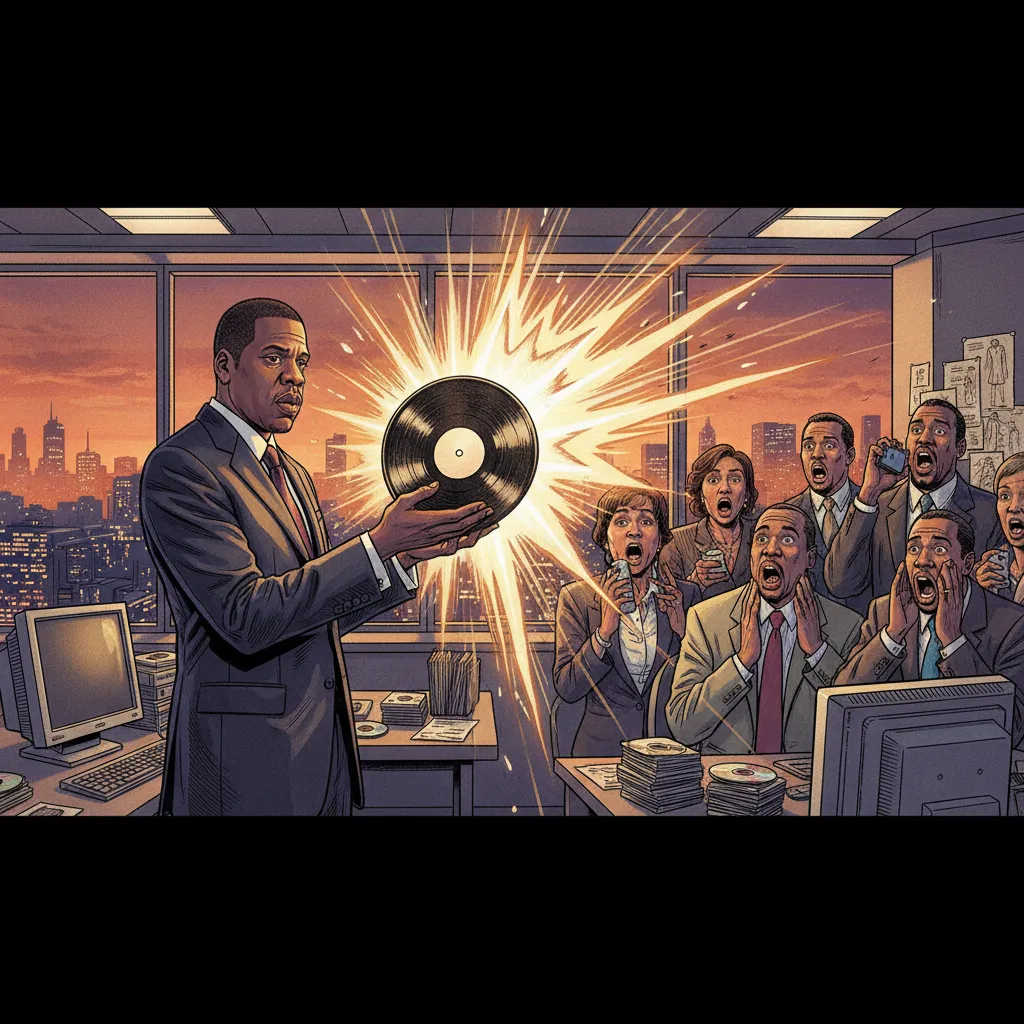
By the mid-2000s, Jay-Z had already carved out a mythical status. He was a multi-platinum artist, a record label CEO, and a fashion mogul. But in 2004, he made a move that shocked the industry, a stark departure from his independent roots: he accepted the presidency of Def Jam Records, the very label that had once distributed Roc-A-Fella. It was like the rebel leader, after years of insurgency, being invited to run the very empire he once challenged.
On the surface, it seemed contradictory. The man who championed self-ownership and built his own table was now sitting at the head of a corporate one. But for Jay-Z, it was a calculated power play, a strategic maneuver to gain insight and influence from within the belly of the beast. He had already sold his remaining stake in Roc-A-Fella Records to Def Jam for $10 million in 2004, consolidating his relationship with the Universal Music Group powerhouse. His presidency wasn’t just a job; it was an education, an opportunity to learn the inner workings of the major label system from the highest vantage point.
His tenure at Def Jam, though relatively short (2004-2007), was impactful. He brought his street smarts and artist-first perspective to a corporate behemoth, shaking up the old guard. He signed artists like Rihanna (a masterstroke that would redefine pop music), Young Jeezy, and Rick Ross, injecting fresh blood and undeniable talent into the label’s roster. He greenlit projects that might have been overlooked by more conventional executives, trusting his ear and his gut, much like he did when he first launched Roc-A-Fella.
His time as president wasn’t without its challenges. Navigating corporate politics, balancing budgets, and managing a diverse roster of artists and executives within a rigid structure tested his entrepreneurial spirit. He famously clashed with some of the more entrenched figures, often prioritizing artistic vision and market potential over established protocols. This period was a crucible, refining his leadership skills and giving him invaluable experience in large-scale corporate management, negotiation, and strategic decision-making in a high-stakes environment.
“My job is to find the next great talent, and give them a platform to be great. It’s about empowering people.” This statement, reflecting on his Def Jam tenure, shows his consistent focus on identifying and nurturing talent, a core tenet of his business philosophy across all ventures.
What did he gain from this apparent detour from his independent path? He gained an unparalleled understanding of the global music industry’s infrastructure, its pitfalls, and its opportunities. He learned the intricacies of major label distribution, marketing, and the complex legal frameworks that govern artist contracts and intellectual property. He built a vast network of contacts across the entertainment landscape, from lawyers to publicists to international executives. He saw how the machine worked, both its inefficiencies and its immense power.
Ultimately, Jay-Z left Def Jam in 2007, citing a desire to return to his roots of ownership and independent venture building. But he didn’t leave empty-handed. He left armed with knowledge, connections, and an even sharper understanding of how to leverage his cultural capital within the mainstream system. This experience wasn’t a retreat; it was a strategic reconnaissance mission. He didn’t just walk away from a corporate job; he walked away with a comprehensive education in how to build his next empire, an empire that would transcend music altogether. The metamorphosis was complete: the street hustler had fully transformed into a corporate titan, ready to play the game on an even bigger field.
🍾 Chapter 6: Spirits & Stakes – Jay-Z’s Astute Investment Portfolio and the Taste of Luxury

As the 2000s drew to a close and the 2010s dawned, Jay-Z’s ambitions transcended the traditional music and fashion industries. He wasn’t just a performer or a brand owner; he was rapidly evolving into a full-fledged investor, a venture capitalist with an uncanny eye for market trends and a deep understanding of luxury branding. This era marked his pivot from leveraging his brand to building other brands, often through shrewd acquisitions and strategic partnerships.
The first, and perhaps most emblematic, move in this new phase was his foray into the ultra-premium spirits market. In 2006, while still at Def Jam, he dramatically elevated the profile of Armand de Brignac champagne, affectionately known as “Ace of Spades,” after famously boycotting Cristal over perceived racist comments from its managing director. He featured the distinctive gold bottle prominently in his “Show Me What You Got” music video. This wasn’t just product placement; it was a cultural endorsement that catapulted the relatively unknown champagne into hip-hop lore and luxury status.
Then, in 2014, he took the ultimate step: he bought the brand outright from its parent company, Cattier. This wasn’t just an investment; it was a power move, a declaration of complete ownership over a luxury symbol he himself had helped create. He didn’t just drink the champagne; he owned the vineyard, metaphorically speaking. This move demonstrated his profound understanding of aspirational marketing and the value of cultural influence. He knew his audience, he knew what they desired, and he had the capital and vision to acquire the very symbols of that aspiration. The brand’s value soared under his ownership, culminating in a significant stake being sold to LVMH’s Moët Hennessy in 2021 for an undisclosed but undoubtedly massive sum, further validating his investment prowess.
But one champagne wasn’t enough. In 2011, he partnered with Bacardi to launch D’Ussé Cognac. This was another masterstroke of brand building. He co-created a premium cognac, again leveraging his personal brand and cultural cachet to imbue it with authenticity and desirability. D’Ussé quickly became a formidable player in the luxury spirits market, a testament to Jay-Z’s ability to identify market gaps and fill them with high-quality, culturally resonant products. His eventual sale of the majority of his stake in D’Ussé back to Bacardi in 2023, reportedly for $750 million, solidified his reputation as a kingmaker in the spirits industry.
“I’m more focused on the long term. I’m building an institution.” This quote highlights his strategic mindset: not just chasing quick wins, but investing in assets with enduring value, often through cultural resonance and premium positioning.
Beyond spirits, Jay-Z’s investment portfolio diversified rapidly. He was an early investor in Uber, famously accepting equity in the ride-sharing giant instead of cash for a performance. This wasn’t a fluke; it was a calculated bet on a disruptive technology, showcasing his foresight into emerging markets. He also invested in companies like JetSmarter (a private jet booking app, aligning with his luxury lifestyle brand) and Sweetgreen (a fast-casual salad chain, demonstrating a broader interest in consumer trends).
His investment vehicle, Marcy Venture Partners (MVP), co-founded with longtime business partners Jay Brown and Larry Marcus, further formalized his venture capital ambitions. MVP has since invested in a diverse range of startups, from consumer goods to tech, with a particular focus on companies with strong brand narratives and disruptive potential. This included investments in companies like Partake Foods (allergy-friendly snacks), Therabody (wellness tech), and Hungryroot (AI-powered grocery service). These investments weren’t scattershot; they were often in companies that aligned with his values, his understanding of consumer behavior, or his vision for the future.
This phase of Jay-Z’s career cemented him as a serious, sophisticated investor. He wasn’t just endorsing products; he was owning pieces of the future. He demonstrated an unparalleled ability to identify undervalued assets, infuse them with his cultural capital, scale them, and then execute strategic exits, all while building a diversified portfolio that would eventually form the bedrock of his billionaire status. He wasn’t just making money; he was making wealth, building an enduring financial fortress brick by calculated brick.
🌊 Chapter 7: The Tidal Wave – Tech Disruption and the Artist’s Stand
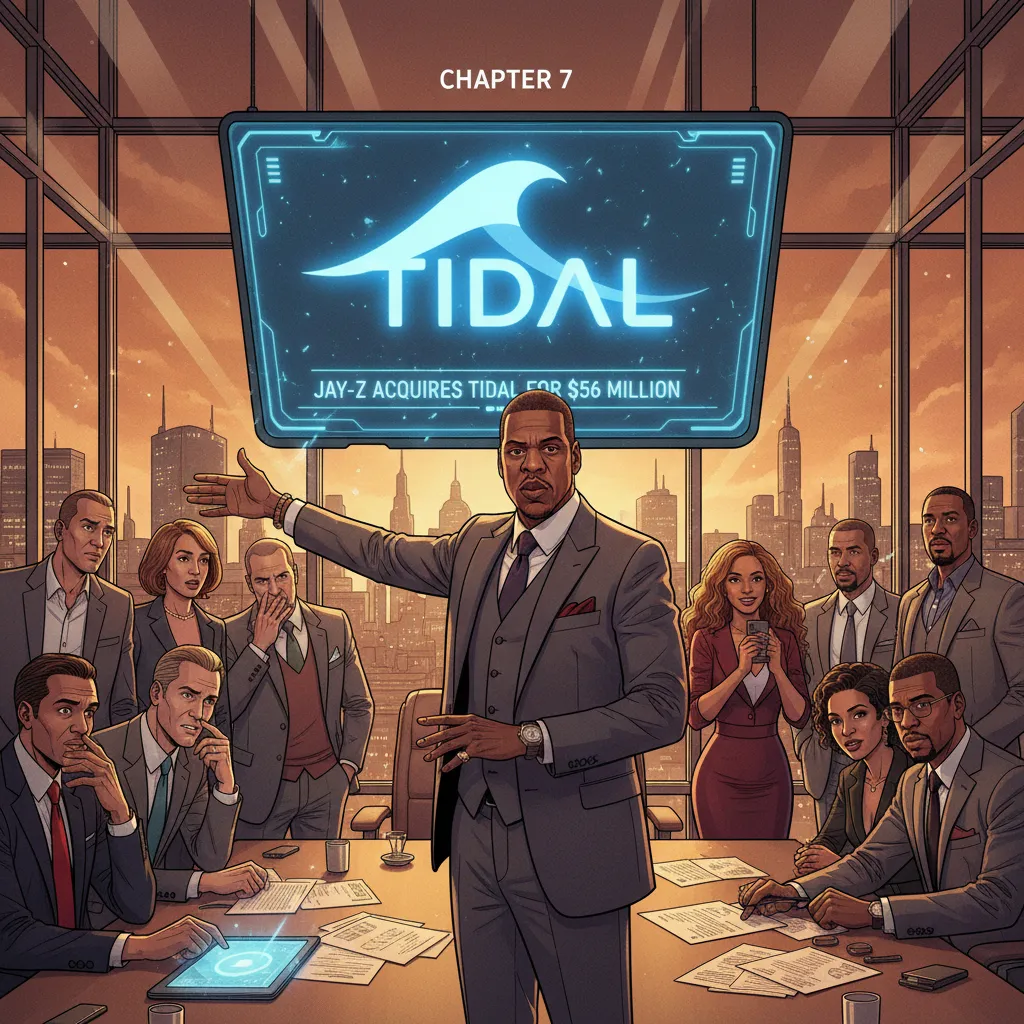
In 2015, Jay-Z made a move that was audacious, controversial, and utterly characteristic of his disruptive spirit: he acquired the Swedish music streaming service Tidal for a reported $56 million. This wasn’t just another investment; it was a direct challenge to the burgeoning streaming industry, a gauntlet thrown down at the feet of Spotify, Apple Music, and the major labels. His vision was clear: to create a streaming platform that prioritized artists, offered superior sound quality, and provided a more equitable compensation model.
The acquisition was announced with a dramatic press conference featuring a veritable who’s who of music superstars: Madonna, Rihanna, Kanye West, Daft Punk, Alicia Keys, Usher, and his wife, Beyoncé. They stood shoulder-to-shoulder, declared their collective ownership in Tidal, and pledged to reclaim control from the tech giants. It was a powerful statement, an almost revolutionary act in an industry where artists often felt commodified and underpaid by streaming services. Tidal promised higher fidelity audio (HiFi), exclusive content, and a direct connection between artists and fans.
The initial rollout was met with a mix of excitement and skepticism. Critics questioned whether a celebrity-backed service could truly compete with the established players, especially given its higher subscription price. Many saw it as a vanity project, a desperate attempt by aging stars to cling to relevance. But Jay-Z saw it differently. He saw an opportunity to disrupt, to innovate, and to put artists back in the driver’s seat. He leveraged his unparalleled network to secure exclusive album releases, most notably Beyoncé’s groundbreaking visual album Lemonade and Rihanna’s ANTI, which drove significant subscriber growth.
“We didn’t come to compete, we came to change the game.” This bold declaration from Jay-Z at Tidal’s launch event perfectly encapsulates his ambition to disrupt the status quo and empower artists in the streaming era.
Tidal’s journey was a rollercoaster. It faced intense competition, technical glitches, leadership changes, and ongoing skepticism about its financial viability. It was a stark reminder that even with immense cultural capital and star power, building and scaling a tech platform is a monumental undertaking. The economics of streaming are brutal, and user acquisition is a costly, relentless battle. Jay-Z had to navigate the complexities of content licensing, global expansion, and technological development, all while trying to maintain his artist-first ethos.
Despite the challenges, Tidal carved out a niche. It became known for its high-quality audio, its curated content, and its commitment to artist payouts. It demonstrated that there was a market for premium streaming experiences and that artists could have a greater say in how their work was distributed and monetized. Jay-Z poured his resources, his influence, and his strategic vision into the platform, determined to prove its worth.
Then came the next strategic move. In 2021, Jay-Z sold a majority stake in Tidal to Square (now Block), the financial tech company founded by Twitter co-founder Jack Dorsey, for $302 million. This wasn’t a defeat; it was a masterful exit. He had acquired Tidal for $56 million, grown its subscriber base, and significantly increased its valuation. The deal with Square provided Tidal with the financial backing and technological infrastructure it needed to compete long-term, while Jay-Z and his artist partners retained significant ownership and a seat on the board.
This transaction exemplified Jay-Z’s unparalleled ability to enter a market, create value, and then strategically divest when the timing is right. He had taken a calculated risk in a challenging industry, proven a concept, and then sold at a substantial profit, further solidifying his reputation as a visionary investor. The Tidal saga wasn’t just about streaming music; it was about the power of ownership, the courage to challenge established norms, and the strategic brilliance of knowing when to build, when to fight, and when to partner for ultimate victory. It was his biggest bet in the tech space, and it paid off handsomely.
🌟 Chapter 8: Roc Nation – A Multi-Headed Hydra of Influence
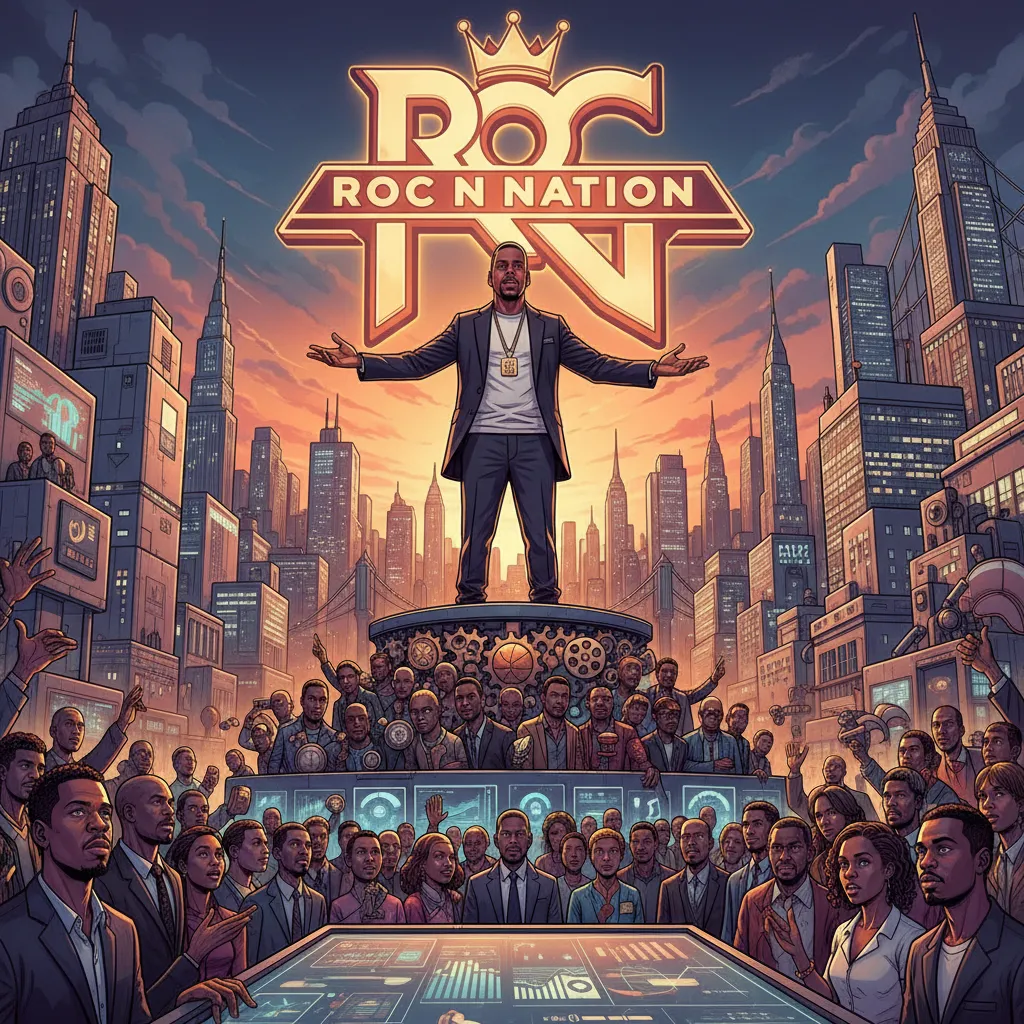
If Roc-A-Fella was Jay-Z’s declaration of independence, then Roc Nation, founded in 2008, was his audacious claim to dominion over vast swathes of the entertainment and sports industries. It wasn’t just a record label or a management company; it was envisioned as a multi-faceted entertainment conglomerate, a one-stop shop for talent across music, sports, film, television, and branding. This was the ultimate manifestation of his “I’m not a businessman, I’m a business, man” mantra.
Roc Nation was born from a desire to create a new kind of talent agency, one that understood artists and athletes from their perspective. Having navigated the labyrinthine music industry for decades, Jay-Z knew firsthand the pitfalls of traditional management, the often-unequal power dynamics, and the need for comprehensive, holistic support for talent. He wanted to build an organization that wasn’t just about securing deals but about shaping careers, building legacies, and maximizing long-term value for its clients.
The company rapidly expanded its footprint. Roc Nation Music continued to sign and develop artists, leveraging Jay-Z’s unparalleled ear for talent and his industry clout. It offered a full suite of services, from recording and publishing to marketing and touring, giving artists more control and transparency than traditional labels.
But the real game-changer was the launch of Roc Nation Sports in 2013. This move caused a seismic shift in the sports agency world. Jay-Z, famously a part-owner of the Brooklyn Nets at the time, divested his ownership stake to become a licensed sports agent. This wasn’t just a passion project; it was a strategic entry into a massive, lucrative market. He brought his unique blend of cultural influence, business acumen, and negotiation prowess to the representation of elite athletes.
Roc Nation Sports quickly amassed an impressive roster of clients, including some of the biggest names in professional sports: Kevin Durant, Saquon Barkley, Skylar Diggins-Smith, Robinson Cano, and many more. He leveraged his existing relationships, his understanding of branding, and his ability to command respect in any room to secure lucrative endorsement deals, negotiate groundbreaking contracts, and guide his athletes in building their own personal brands beyond the field or court. He understood that modern athletes were more than just performers; they were entrepreneurs, media personalities, and cultural icons, and Roc Nation Sports was built to maximize every facet of their potential.
“We see the world differently. We’re not just about getting the deal; we’re about changing the game for our talent.” This core philosophy of Roc Nation emphasizes empowerment and long-term strategic career development over short-term transactional gains.
Beyond music and sports, Roc Nation branched into Roc Nation Film & Television, producing documentaries, series, and feature films that often explored themes of social justice, culture, and entrepreneurship. They also established a strong presence in live events and experiential marketing, producing festivals like Made in America and executing large-scale concerts and tours.
What makes Roc Nation a “multi-headed hydra” is its interconnectedness. The synergies are undeniable. A Roc Nation artist can collaborate with a Roc Nation athlete for a brand campaign. A Roc Nation film can feature music from a Roc Nation artist. The entire ecosystem is designed to create a virtuous cycle of talent, content, and commercial opportunity, all under one powerful, unified brand.
Roc Nation is more than just a company; it’s a statement about the power of cultural capital and the limitless potential of a truly integrated entertainment empire. It’s the culmination of Jay-Z’s journey, bringing together all the lessons learned from Marcy, Roc-A-Fella, Rocawear, and his diverse investment portfolio. It embodies his vision of empowering creators, controlling their destiny, and building an institution that transcends individual careers. It’s his lasting blueprint for how to turn influence into enduring economic power.
💎 Chapter 9: The Billion-Dollar Blueprint – How the Numbers Added Up
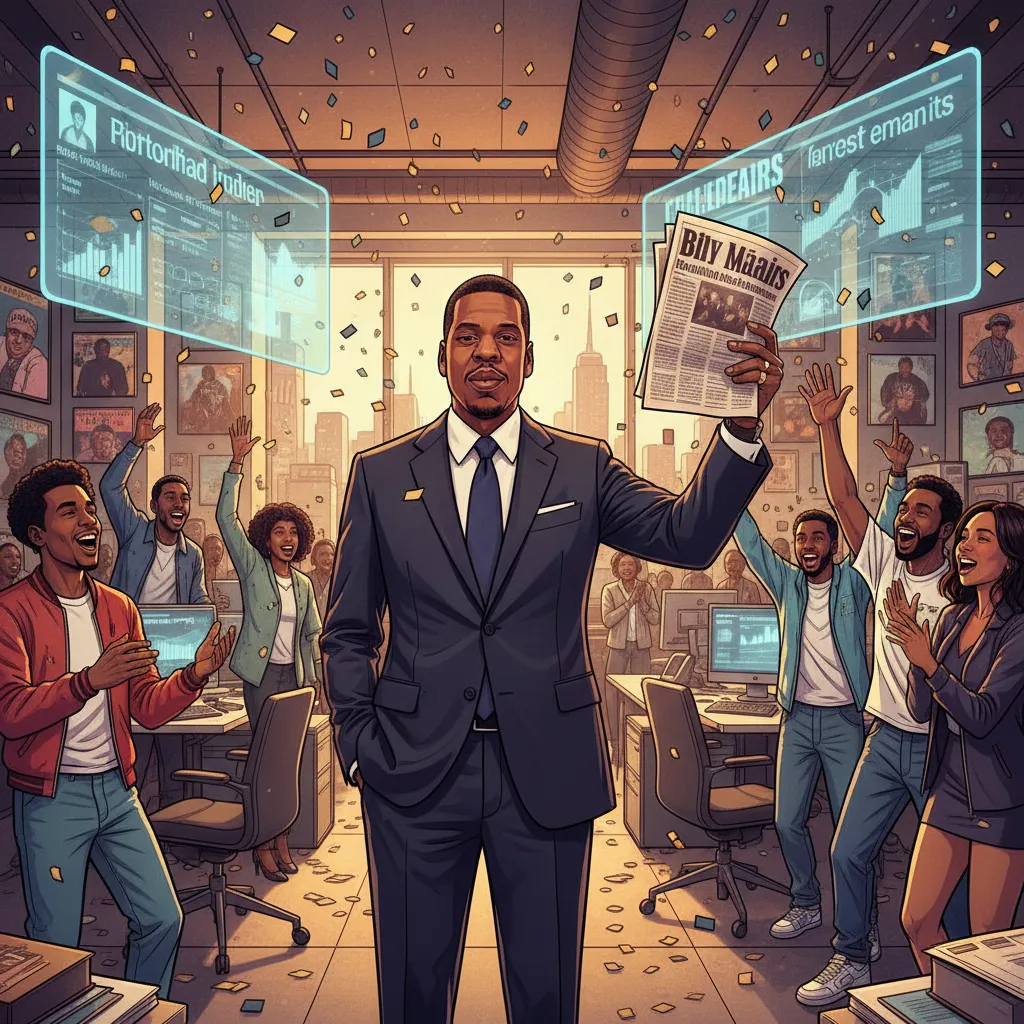
The headlines hit in June 2019: Forbes declared Jay-Z hip-hop’s first billionaire. It wasn’t just a catchy title; it was the official recognition of a financial empire meticulously constructed over decades, brick by calculated brick. For a kid who started selling crack in the Marcy Projects, reaching this pinnacle was an almost unfathomable achievement, a testament to relentless ambition, unparalleled business acumen, and a profound understanding of how to leverage cultural influence into tangible wealth.
But how did the numbers add up? It wasn’t a single lottery win or a lucky stock pick. It was a diverse, strategic portfolio of assets, each nurtured and grown over time, culminating in a net worth that placed him in an elite class of global moguls. Forbes’ rigorous calculations broke down his wealth into several key components:
- Armand de Brignac (Ace of Spades) Champagne: At the time of the Forbes valuation, his ownership in this ultra-premium champagne brand was estimated to be worth at least $310 million. He had not only acquired the brand but, through masterful marketing and cultural resonance, had elevated its status to an undeniable symbol of luxury and success. The eventual sale of a significant stake to LVMH further solidified this valuation and proved its immense worth.
- D’Ussé Cognac: His 50% stake in the joint venture with Bacardi was valued at approximately $100 million. Like Ace of Spades, D’Ussé benefited from his cultural endorsement and strategic positioning in the high-end spirits market. His recent sale of most of his remaining stake for $750 million shows this initial valuation was conservative and the asset’s true value was even higher.
- Tidal Streaming Service: Though it had its ups and downs, Forbes valued his stake in Tidal at around $100 million before its sale to Square. He had invested heavily, brought in major artists as co-owners, and built a platform that, despite competition, had a loyal following and unique offerings. The subsequent sale for over $300 million further validated his investment.
- Roc Nation Entertainment: This sprawling empire, encompassing music, sports, film, television, and branding, was conservatively valued at $75 million. This figure often feels low given the scale of its operations and the caliber of talent it represents, but Forbes’ methodology is typically conservative, focusing on tangible assets and established revenue streams. The brand equity and future earning potential are arguably far greater.
- Music Catalog: His extensive music catalog, including his own masters and publishing rights through Roc-A-Fella, was valued at $75 million. This is the bedrock of his initial fame, the intellectual property that continues to generate royalties and licensing fees year after year. Every hit song, every album, is a perpetual income stream.
- Art Collection: Jay-Z and Beyoncé are renowned art collectors, with a collection that includes works by Jean-Michel Basquiat and other high-value contemporary artists. This collection was estimated to be worth at least $70 million. Art is not just a passion; it’s a significant alternative asset class that appreciates over time.
- Real Estate: His diverse real estate holdings, including luxurious properties in Los Angeles, New York, and the Hamptons, were collectively valued at approximately $50 million. These properties aren’t just homes; they are appreciating assets, further diversifying his portfolio.
- Uber Stake and Other Investments: His early investment in Uber, along with various other venture capital stakes through his firm Marcy Venture Partners, added another $70 million to his net worth. This showcased his foresight in identifying disruptive tech companies and his willingness to make unconventional bets.
These figures, when combined, easily pushed him past the billion-dollar mark. But the true genius wasn’t just in accumulating assets; it was in the strategic interplay between them. His music fueled the Rocawear brand, which generated capital for his spirits ventures, which in turn funded his tech plays and consolidated his Roc Nation empire. Each success fed the next, creating a self-reinforcing cycle of wealth creation.
“The number doesn’t mean much to me. It’s about what you do with it. It’s about inspiring others, creating opportunity.” While the billionaire title is significant, Jay-Z consistently emphasizes the legacy and impact over the raw numerical value, showcasing a deeper understanding of true wealth.
Jay-Z’s billionaire status wasn’t a fluke; it was the ultimate vindication of his lifelong philosophy: ownership, diversification, strategic risk-taking, and the relentless pursuit of independence. He didn’t just climb the ladder; he built a skyscraper, one carefully placed beam at a time, proving that the blueprint for success can originate anywhere, even from the concrete canyons of Marcy Projects.
🚀 Chapter 10: Beyond the Bling – Legacy, Impact, and the Future of Hov
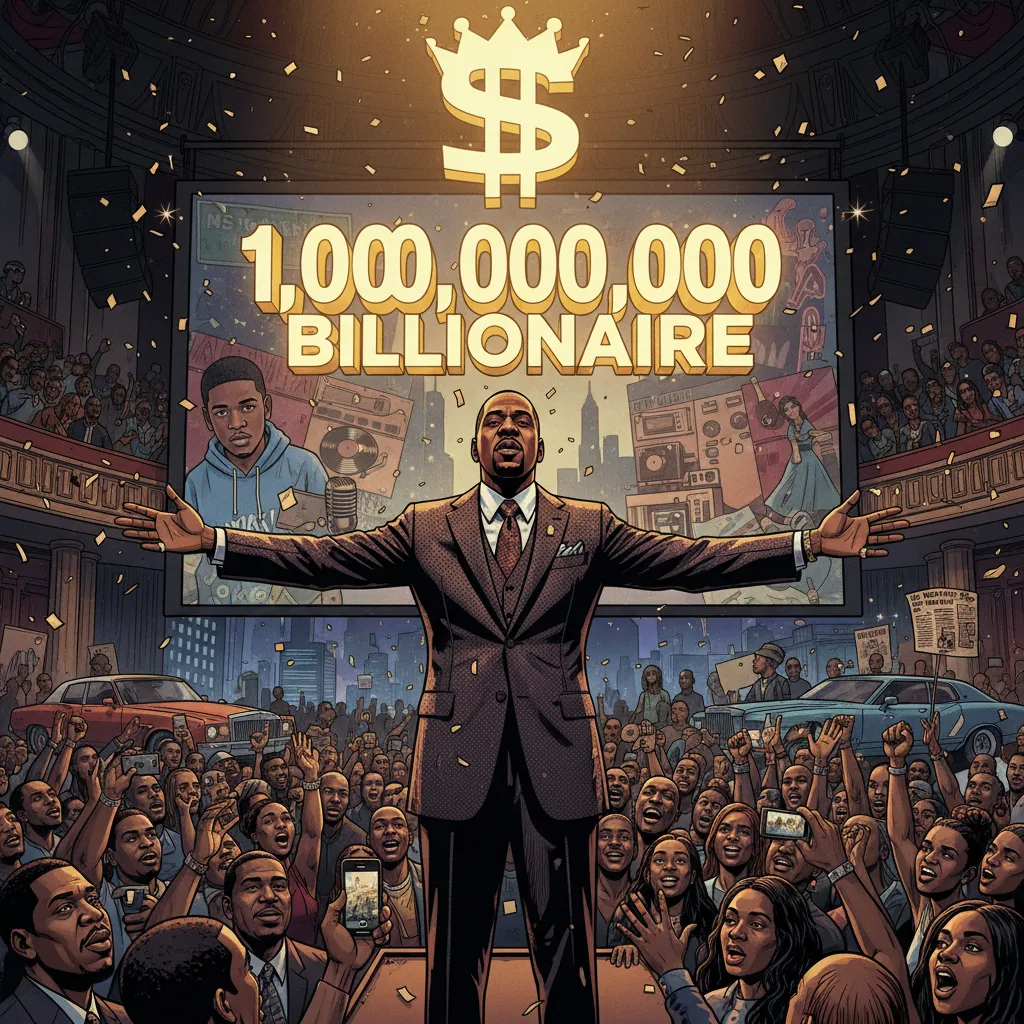
The “billionaire” tag is more than just a number for Shawn Carter; it’s a testament, a symbol, a beacon. It shatters preconceived notions, defies expectations, and rewrites the narrative of what’s possible for a Black man from the projects. But to fixate solely on the financial figure would be to miss the profound, multi-layered legacy he is actively building, a legacy that extends far beyond the confines of his balance sheet.
His impact on the music industry is irrefutable. He revolutionized the independent artist model with Roc-A-Fella, demonstrating that you don’t need the gatekeepers to achieve superstardom. He transformed the perception of rappers from mere entertainers to legitimate businessmen, opening doors for an entire generation to follow in his entrepreneurial footsteps. Artists today, from Travis Scott to Rihanna, understand the importance of brand ownership, strategic partnerships, and diversifying revenue streams – lessons that Jay-Z pioneered. He didn’t just make hits; he created an economic template.
Beyond music, his ventures in fashion (Rocawear), spirits (Armand de Brignac, D’Ussé), and tech (Tidal, Uber) showcased a polymathic business acumen. He proved that cultural influence is a powerful, bankable asset when wielded strategically. He took products and brands, imbued them with his inimitable swagger and authenticity, and watched their value skyrocket. This ability to translate intangible cultural capital into tangible financial gain is perhaps his most potent business superpower.
And then there’s Roc Nation, his magnum opus. It’s an ecosystem, a talent incubator, a full-spectrum agency that manages artists, athletes, and entertainers, offering them the holistic support he likely wished he had early in his career. Roc Nation isn’t just about making money; it’s about empowering talent, building lasting careers, and providing a platform for voices that deserve to be heard. It’s an institution, a testament to his vision of creating something enduring and impactful that will outlast his performing career.
But the legacy extends beyond boardrooms and balance sheets. Jay-Z has increasingly used his platform for social justice and philanthropy. Through the Shawn Carter Foundation, co-founded with his mother Gloria Carter, he provides scholarships, initiates educational programs, and supports community development for underserved youth. He has been a vocal advocate for criminal justice reform, using his influence to shed light on systemic issues and support organizations fighting for change. His ventures often have a social conscience, aiming to uplift communities and create opportunities where none existed before.
His partnership with the NFL, controversial as it was, aimed to impact social justice initiatives and cultural programming. His recent move into the cannabis industry with Monogram is not just a business play but also a stance on social equity, advocating for the release of individuals incarcerated for cannabis-related offenses. He understands that true power comes with responsibility, and he has embraced that role with a growing commitment to giving back and driving positive change.
The future of Hov isn’t about chasing another billion; it’s about solidifying an institution. It’s about continuing to identify disruptive opportunities, nurturing new talent, and leveraging his vast influence to create a more equitable and opportunity-rich world. He’s moved beyond proving himself; he’s now in the business of building monuments, both financial and societal.
From the raw hustle of Marcy to the refined power of global finance, Jay-Z’s journey is a masterclass in self-determination. He didn’t just break through the glass ceiling; he built his own damn skyscraper, inviting others to climb with him. His story isn’t just a rags-to-riches tale; it’s a living blueprint for entrepreneurial audacity, a testament to the power of vision, ownership, and the unwavering belief in one’s own ability to redefine the game. The “businessman” has become the business, and the business, man, is here to stay.
💡 Key Insights
- ▸ True entrepreneurial spirit often bypasses existing structures; Jay-Z's initial refusal to accept traditional record deals and instead launch Roc-A-Fella demonstrates the power of creating your own platform when the existing ones don't serve your vision. This teaches us that sometimes, the most lucrative path is to build the table, not just find a seat at it, thereby controlling the entire value chain.
- ▸ Diversification isn't just a financial strategy; it's an empire-building imperative. Jay-Z systematically moved beyond music into fashion, spirits, tech, and sports, creating multiple revenue streams and de-risking his overall portfolio. Entrepreneurs should constantly scout for adjacent markets where their brand, influence, or capital can create new value, ensuring longevity and exponential growth.
- ▸ Cultural capital is a powerful, often underestimated asset. Jay-Z leveraged his authenticity and street credibility, cultivated through his music and personal brand, to launch and scale ventures like Rocawear and Tidal. Understanding how to translate intangible cultural influence into tangible business value is a key lesson for modern market disruptors, highlighting the importance of brand equity and audience connection.
- ▸ Strategic exits and partnerships are as crucial as initial ventures. Jay-Z's willingness to sell stakes in successful businesses like Rocawear, Tidal, and D'Ussé at peak valuations, often to larger corporate partners, demonstrates a masterful understanding of market timing and leveraging external capital for further expansion. Knowing when to cash out and reinvest is a hallmark of a shrewd investor.