The Billion-Dollar Blood Feud: How the Ambani Brothers Tore an Empire Apart
It was a battle for the soul of India's largest business empire, a Shakespearean drama playing out on a global stage. Two brothers, forged in the shadow of a legendary father, turned a legacy of unprecedented wealth into a bitter, public war for control. This is the raw, unvarnished saga of the Ambani split, a tale of ambition, betrayal, and the brutal cost of unchecked power.
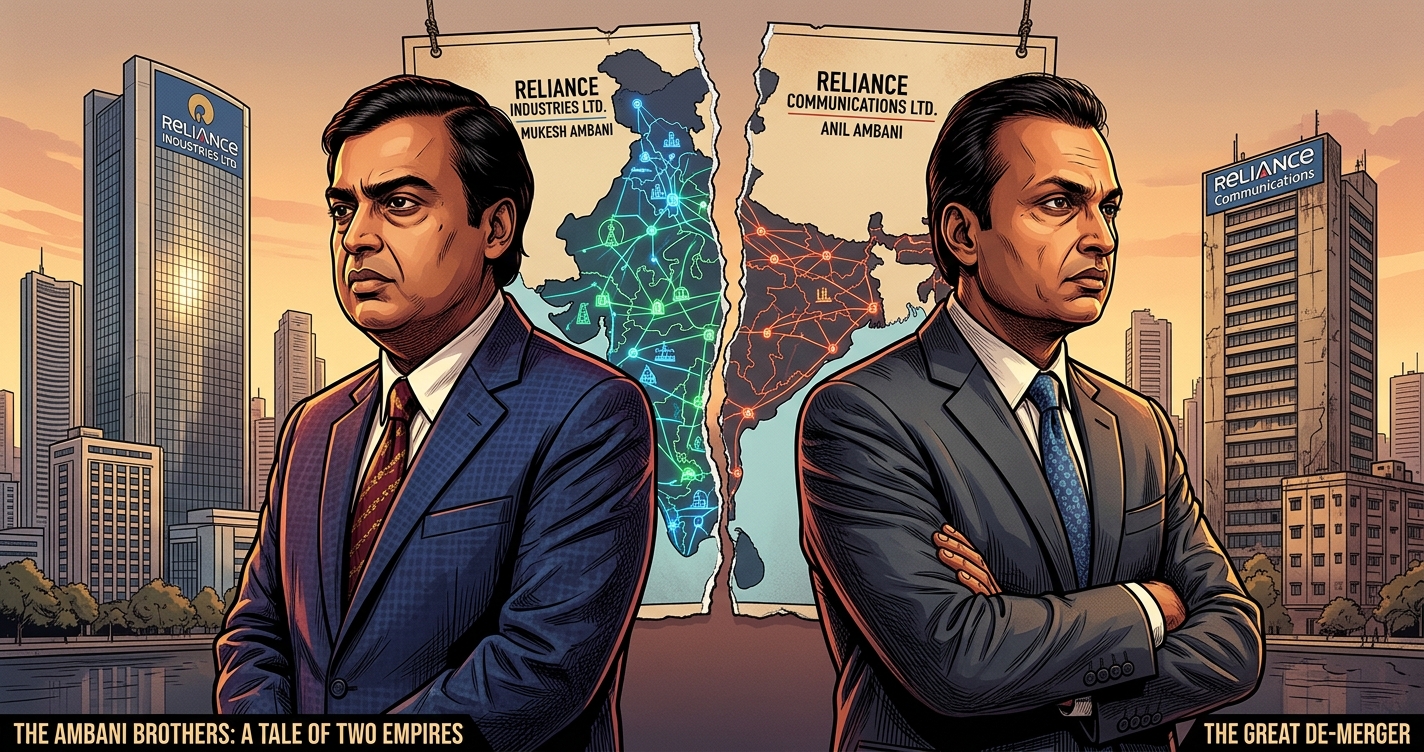
View all stories about this mogul
🔥 Chapter 1: The Godfather’s Shadow
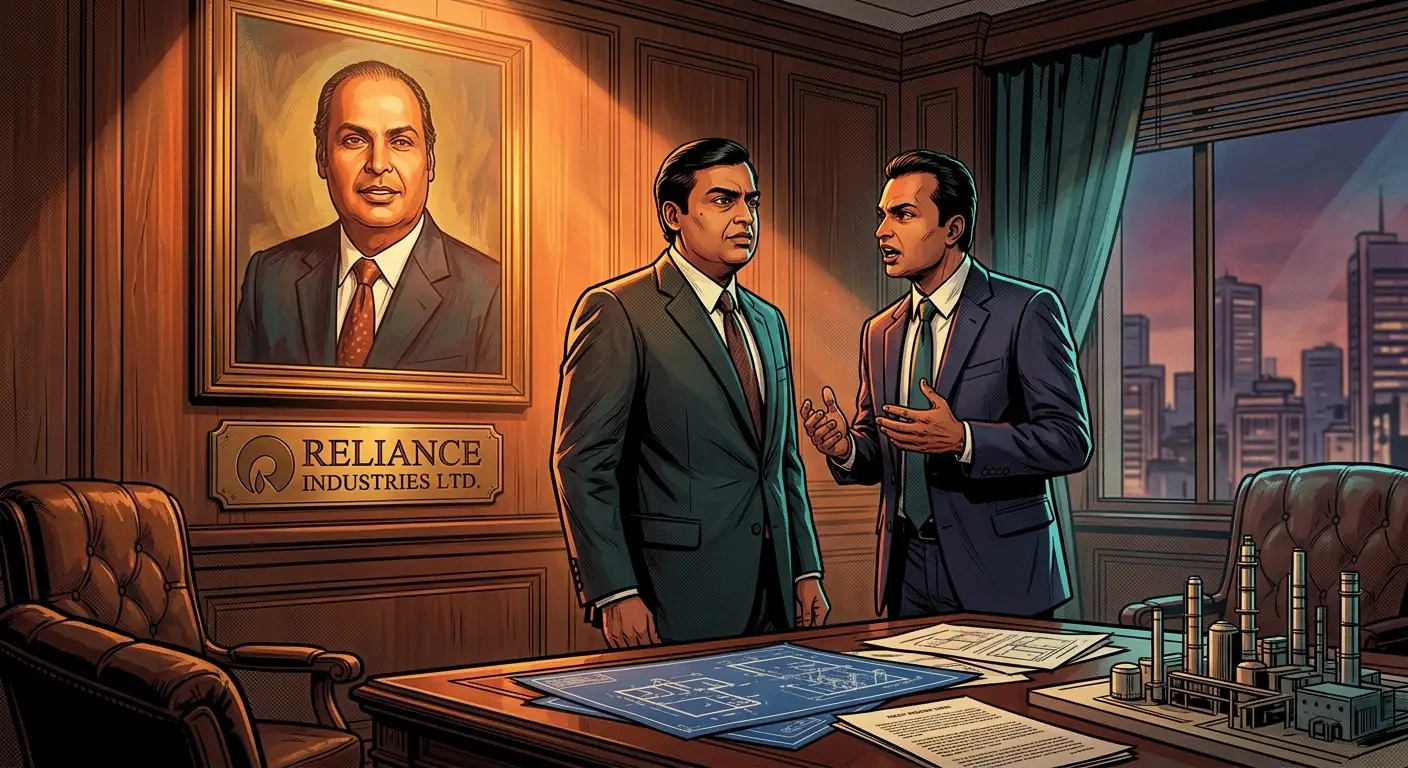
Picture this: Bombay, a humid evening in 1986. The air crackles not just with the monsoon humidity, but with an almost electric energy emanating from the Reliance Industries annual general meeting. Thousands of small shareholders, many of them ordinary folks who’d bet their life savings on a textile company that promised the moon, were packed into a stadium. They weren’t there for the balance sheet; they were there for Dhirubhai Ambani.
Dhirubhai wasn’t just a businessman; he was a phenomenon. A street-smart Gujarati from a humble background, he built an empire from scratch, starting with yarn trading and diversifying into textiles, petrochemicals, and refining. He was the original disruptor, the guy who made equity ownership fashionable in a socialist India, who demystified finance for the common man. He spoke their language, looked them in the eye, and sold them a dream. And boy, did they buy it.
He was a titan, a visionary, a man who saw India’s future before anyone else, and then built the infrastructure to get there. His style was audacious, his ambition limitless. He was a master of backroom deals, a wizard with regulations, and a relentless executor. He was, in every sense of the word, the Godfather of Indian Business.
Under his iron-fisted, yet undeniably charismatic, leadership, Reliance wasn’t just a company; it was a movement. It was a symbol of what a newly liberalizing India could achieve. From its humble beginnings, it had grown into an industrial behemoth, a sprawl of interconnected businesses that touched the lives of millions. Dhirubhai was the sun around which this entire universe revolved. He made all the decisions, held all the cards, and inspired an almost cult-like devotion from his employees and shareholders alike.
But even suns eventually set. And when they do, the void they leave behind can be catastrophic. Dhirubhai had groomed his two sons, Mukesh and Anil, to eventually take the reins. Mukesh, the elder, was seen as the quiet strategist, the operations man, grounded and methodical. Anil, the younger, was the flamboyant face, the finance whiz, charming and media-savvy. They were two sides of the same coin, seemingly complementary, destined to carry their father’s legacy forward, together.
Oh, how wrong everyone was.
💥 Chapter 2: The Emperor Falls Silent
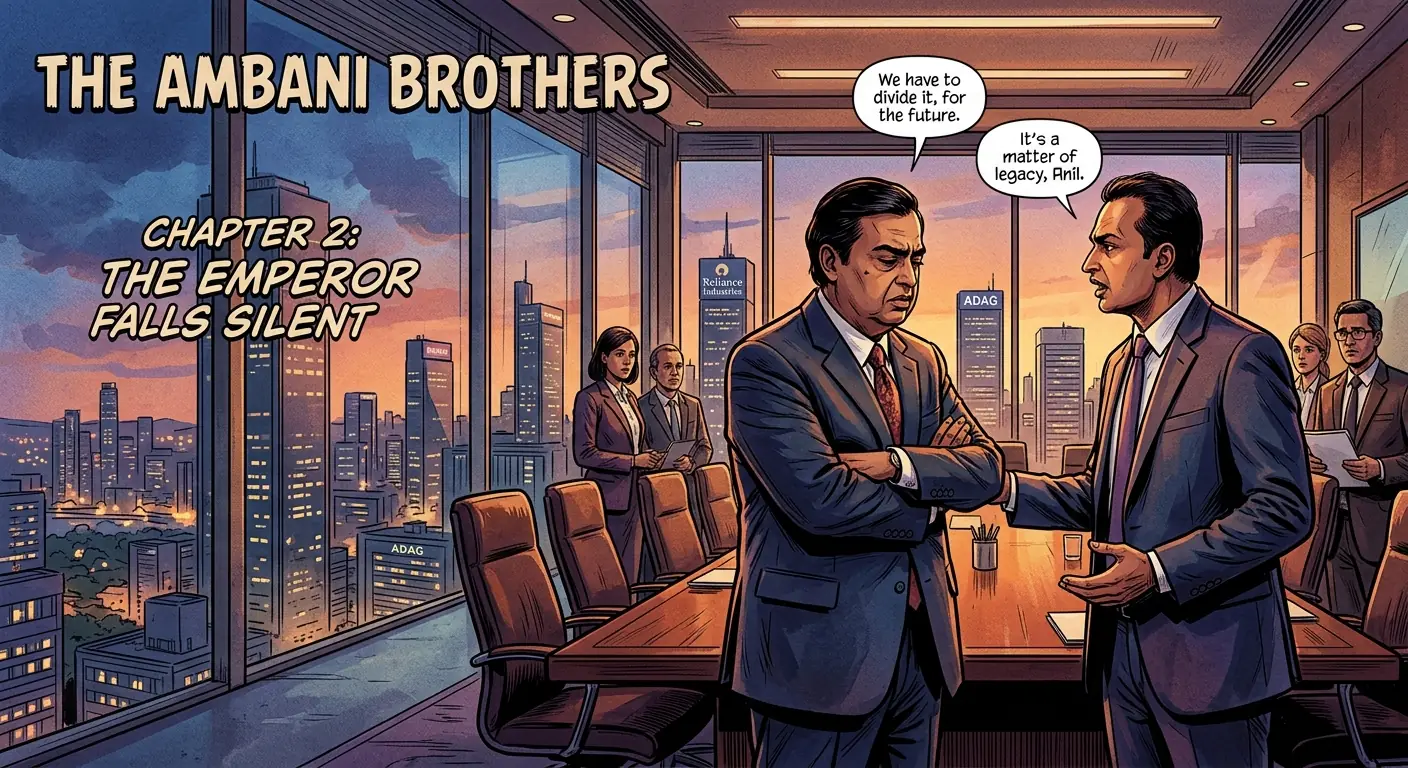
The year is 2002. The nation holds its breath. Dhirubhai Ambani, the man who built an empire on grit, audacious vision, and a telephone that was always ringing, lies in a coma. He had suffered a massive stroke, his second in 16 years. The first had left him partially paralyzed but had done little to dampen his spirit or his control over Reliance. This time, it was different. The titan was fading.
For weeks, the country watched, waited, and prayed. Mumbai’s Breach Candy Hospital became the epicenter of national anxiety. Political leaders, industrialists, and millions of ordinary Indians who had invested their trust, and their money, in Dhirubhai’s vision, tracked his every heartbeat. Reliance stock, often a barometer of India’s economic health, shuddered with every medical bulletin.
On July 6, 2002, the inevitable happened. Dhirubhai Ambani, at 69, breathed his last. The news hit like a thunderclap. A colossal void opened up at the heart of India Inc. The man who had personally steered Reliance through every storm, who had held every thread of its sprawling tapestry in his hands, was gone.
And with him, the crucial, unwritten rulebook of succession vanished into thin air.
Dhirubhai, for all his foresight in business, had committed a cardinal sin often seen in dynastic empires: he never formally documented his succession plan. No will, no clear division of power, no explicit instructions for his sons. He had always been the central nervous system, the brain, the heart of Reliance. He believed in the power of his personality, in his ability to mediate, to guide, to simply be. Perhaps he thought his sons would simply understand, would intuit his wishes, would stick together out of filial loyalty.
He couldn’t have been more wrong.
The immediate aftermath was a period of forced, uneasy calm. Mukesh Ambani, the elder, and Anil Ambani, the younger, stood united in grief, performing their father’s last rites with solemn dignity. They presented a picture of solidarity to the world, vowing to uphold their father’s legacy. Mukesh, the quiet operations guy, was already the Chairman and Managing Director. Anil, the public face, was Vice Chairman. On paper, it seemed like a clear hierarchy, a smooth transition.
But beneath the surface, tectonic plates were shifting. The glue that held the intricate, often opaque, web of Reliance businesses together was Dhirubhai himself. He knew where every rupee came from, where every contract was signed, who owed whom. Without him, the brothers were left to untangle a Gordian knot of holdings, cross-holdings, and a business philosophy that prioritized growth and aggressive expansion above all else.
The empire was vast, encompassing petrochemicals, refining, oil and gas exploration, textiles, power, telecom, and financial services. It was a multi-headed beast, each head hungry for resources, each vying for strategic importance. And now, two ambitious princes, each believing himself the rightful heir, were left to carve up the kingdom without a map. The stage was set for a conflict of Shakespearean proportions, a modern-day Mahabharata in the boardrooms of Mumbai.
⚔️ Chapter 3: The Silent War Begins
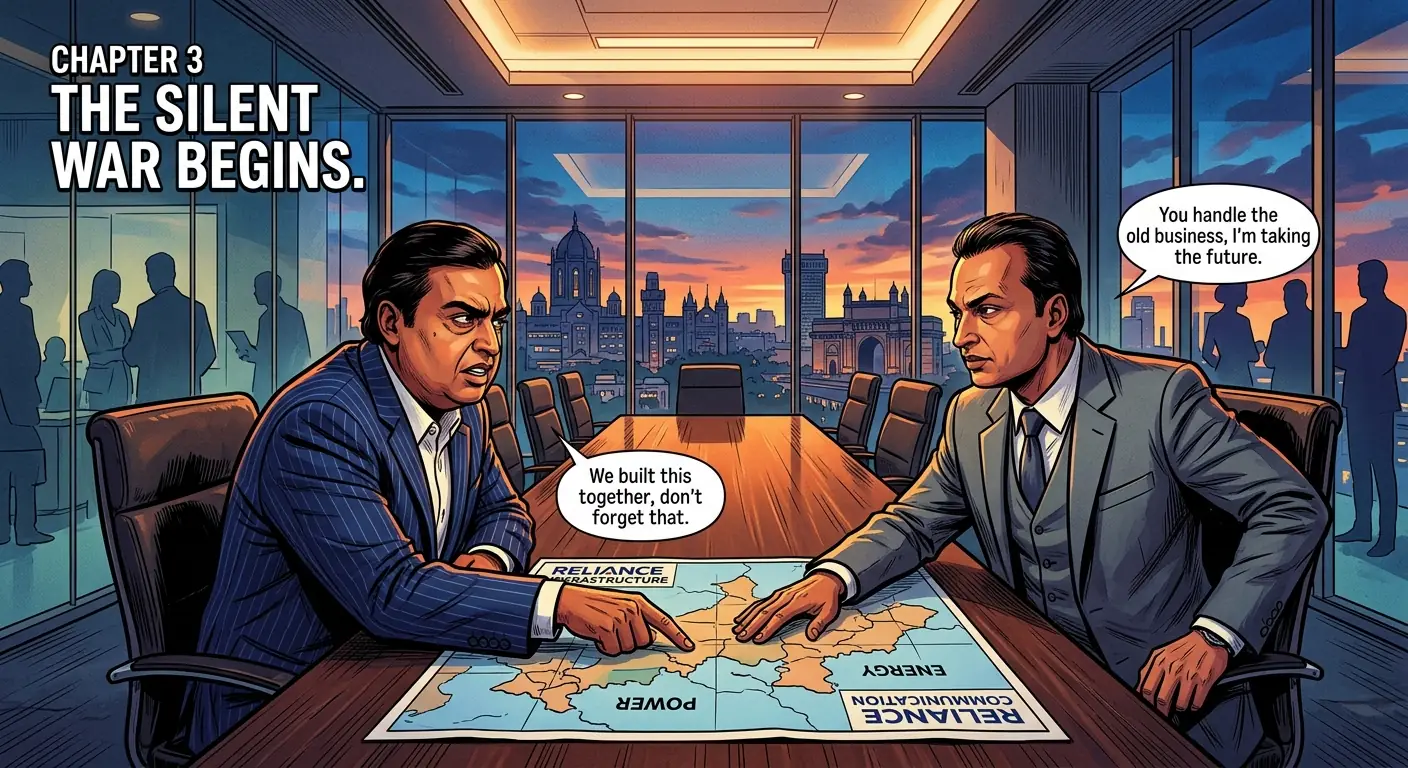
For a while, the brothers maintained the facade. They appeared together at public events, spoke of shared vision, and swore allegiance to their father’s memory. But the corporate corridors of Reliance were already humming with whispers. The air was thick with tension, a palpable unease that started to seep into every meeting, every decision.
The core issue was simple, yet devastatingly complex: control. Dhirubhai’s empire was a vast, integrated machine, but it also functioned like a personal fiefdom. Decision-making was centralized, highly informal, and ultimately rested with one man. Now, with that man gone, the system was suddenly headless.
Mukesh Ambani, the elder brother, had always been involved in the operational, capital-intensive heavy industries – refining, petrochemicals, oil and gas. He was the engineer, the builder, the one who oversaw the massive Jamnagar refinery, a sprawling industrial complex in Gujarat that was one of the world’s largest. He preferred to work behind the scenes, meticulously planning and executing grand industrial projects. He saw himself as the natural successor, the steady hand needed to steer the giant ship.
Anil Ambani, on the other hand, had gravitated towards the newer, more consumer-facing businesses, particularly telecom and financial services. He was the public relations maestro, the charismatic dealmaker, comfortable in the spotlight, adept at navigating the financial markets and charming investors. He believed his dynamism and financial acumen were crucial for Reliance’s future in a rapidly evolving India. He felt he deserved an equal say, perhaps even more, given his visibility and the growth potential of his domains.
The conflict wasn’t just about who got which company; it was about differing philosophies, clashing personalities, and a deep-seated sibling rivalry that had simmered for years, kept in check only by their father’s towering presence. Mukesh saw Anil as impulsive, perhaps even reckless, with an eye more on the stock market than on solid industrial foundations. Anil viewed Mukesh as slow, overly cautious, and too entrenched in the old ways of doing business.
The first public cracks appeared in late 2004. Anil began to speak to the media, subtly at first, then more overtly, about “ownership issues” and “corporate governance” within Reliance. He accused unknown parties within the group of siphoning funds and undermining his authority. This was a direct challenge to Mukesh, who, as Chairman, was ultimately responsible for the group’s operations. It was a bold, almost unthinkable move, to air dirty laundry so publicly, especially for a family as notoriously private as the Ambanis.
The media went into a frenzy. The “Ambani Battle” became front-page news, dominating headlines for months. India, accustomed to corporate power plays, had never seen anything quite like this – two brothers, heirs to the nation’s most iconic business empire, openly warring. The stakes were astronomical, not just for the family, but for the millions of shareholders and employees whose livelihoods were tied to Reliance. The silent war had exploded into a full-blown public spectacle. The empire, built on unity and vision, was now tearing itself apart from within.
👑 Chapter 4: The Matriarch’s Plea
The public spat escalated rapidly, turning into a daily soap opera played out in newspapers and on television screens. Anil, fueled by a sense of injustice and perhaps a touch of youthful impetuousness, continued his media blitz, painting himself as the wronged party, fighting for transparency and shareholder rights. Mukesh, initially silent and stoic, eventually responded through carefully worded press releases, maintaining that all was well, trying to project an image of calm control amidst the chaos.
The markets, however, were not fooled. Reliance stocks, once a blue-chip darling, became volatile. Investors, sensing instability at the top, grew nervous. The very foundation of trust that Dhirubhai had meticulously built with the Indian public was eroding with each leaked story, each public accusation.
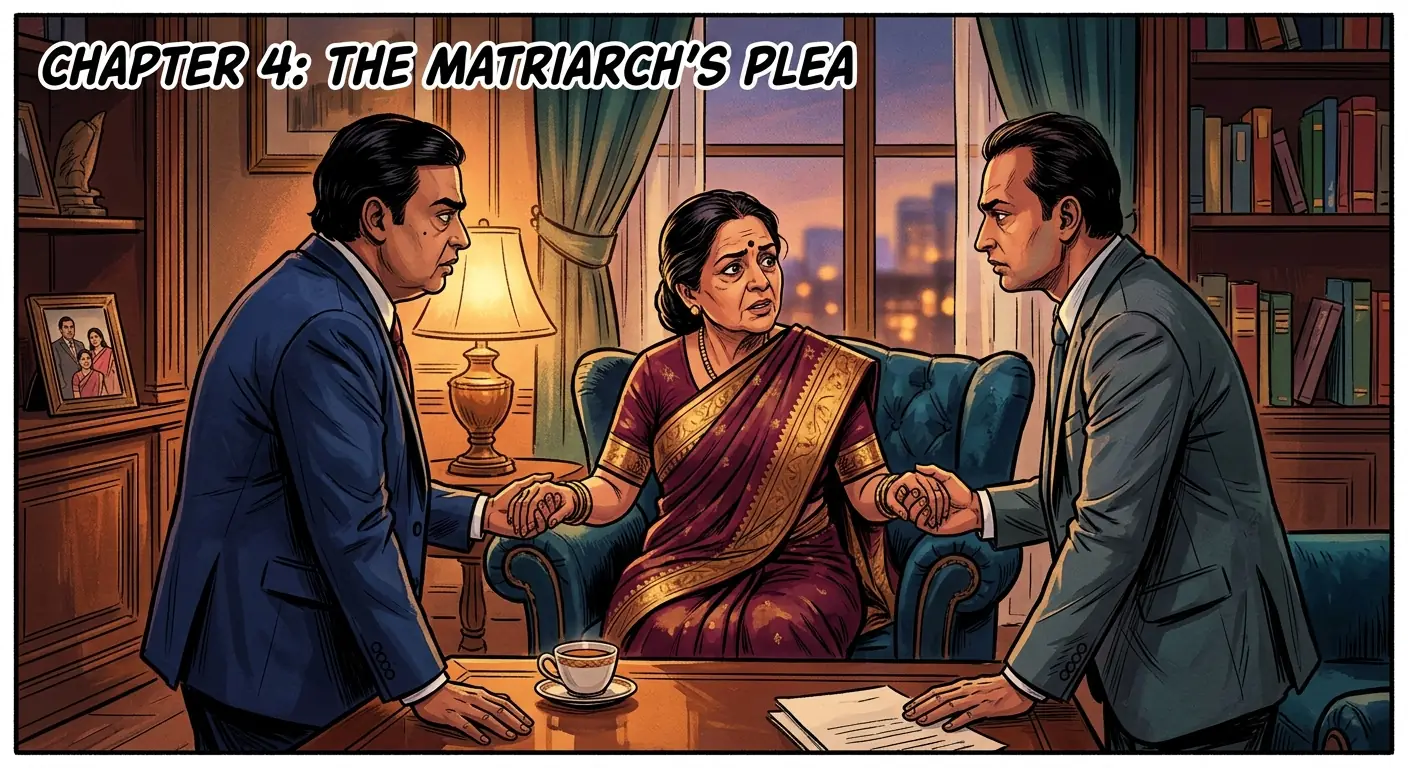
This wasn’t just a corporate dispute; it was a family tragedy playing out on a national stage. At the heart of it all was Kokilaben Ambani, the matriarch, the soft-spoken wife of Dhirubhai. She had watched her husband build an empire brick by brick, had raised her sons to inherit it, and now she saw it crumbling under the weight of their fraternal animosity.
Kokilaben, usually a private figure, found herself thrust into the unenviable role of mediator. She was the only one who still commanded respect, perhaps even fear, from both brothers. She bore the emotional burden of the family’s disintegration, caught between her two warring sons, each convinced of his own righteousness.
Her pleas for reconciliation, initially private, eventually became public knowledge. She appealed to their shared history, their father’s memory, and the immense responsibility they held. She knew that if the family fractured completely, the business empire would follow suit, perhaps irretrievably.
“My husband built this empire with his sweat and blood. It is his legacy. I want to see my sons united, working together as he envisioned. This fight must end.”
Her intervention was critical. It shifted the narrative from a purely corporate battle to a deeply personal, familial crisis. It reminded everyone, including Mukesh and Anil, of the emotional stakes involved, of the immense legacy they were jeopardizing. It was a powerful, symbolic appeal to the very roots of their existence, a call to remember their upbringing and the values instilled by their father.
Finally, after months of bitter public exchanges and mounting pressure from family elders, business associates, and the government, the brothers agreed to a partition. It was not a decision made lightly, nor was it easy. It was brokered not by lawyers or bankers, but by a mother’s desperate plea for peace, a last-ditch effort to salvage what remained of the family’s honor and their father’s monumental achievement. The stage was set for the most complex, high-stakes corporate divorce in Indian history, one that would redefine the landscape of Indian business forever. The empire would be divided, but the scars would run deep, perhaps never truly healing.
⚖️ Chapter 5: The Great Partition of Reliance
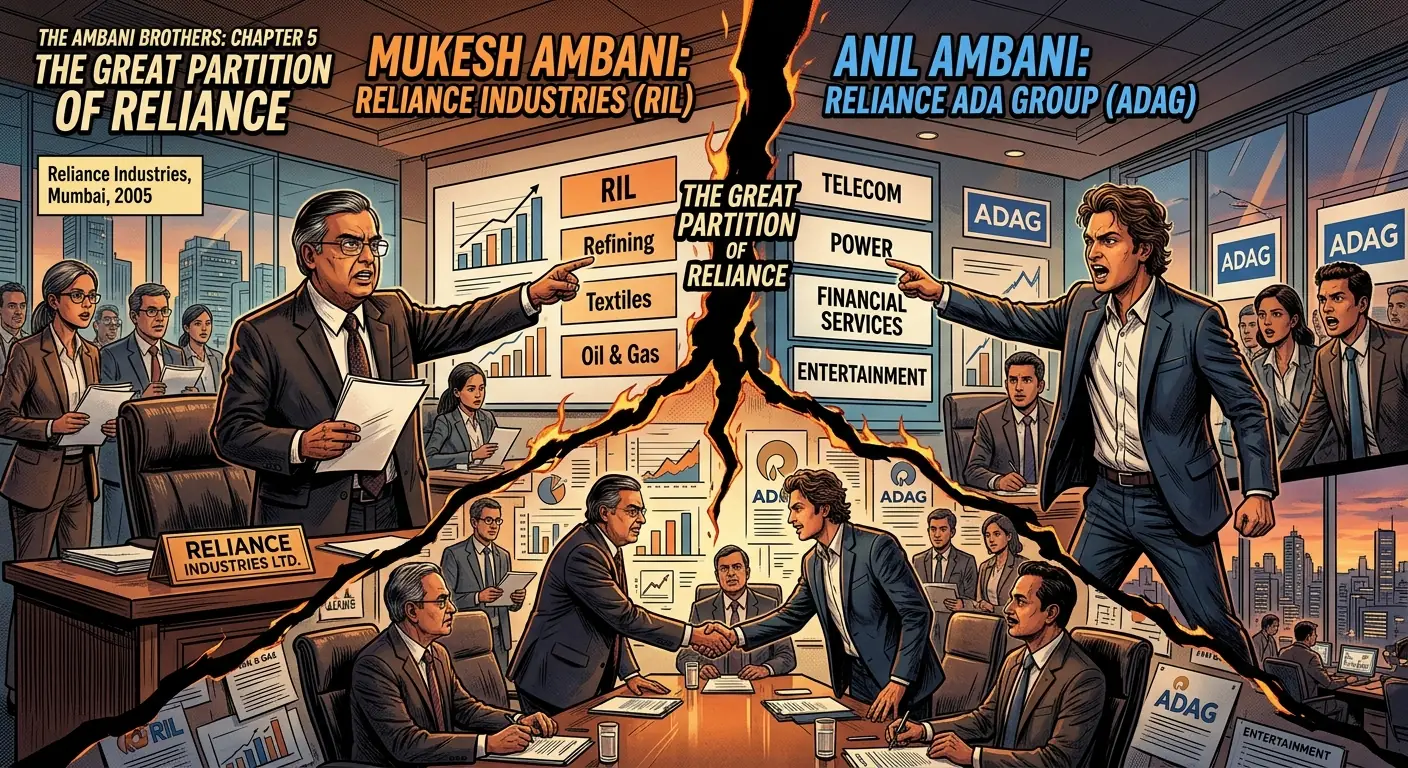
The decision to split the Reliance empire was monumental, a corporate surgery of unprecedented scale and complexity. It wasn’t just about dividing assets; it was about untangling decades of intertwined operations, shared resources, and a corporate culture that had grown organically around a single, dominant figure – Dhirubhai Ambani.
The task of carving up the behemoth fell largely to Kokilaben Ambani, acting as the ultimate arbiter, guided by legal and financial advisors. The goal was to ensure a fair and equitable division, preserving value for shareholders while allowing both brothers to pursue their own visions. This wasn’t a simple 50/50 split; it was a strategic allocation of diverse businesses, each with its own capital requirements, growth potential, and market dynamics.
After months of intense negotiations, back-and-forth arguments, and delicate balancing acts, the final settlement was announced in June 2005. It was a clean break, designed to minimize future points of conflict by creating two distinct, independent empires.
Here’s how the chips fell:
Mukesh Ambani, the elder, retained control over the traditional, asset-heavy, and highly profitable core businesses:
- Reliance Industries Limited (RIL): This included the crown jewels – oil and gas exploration and production (E&P), petroleum refining, petrochemicals, and textiles. These were the cash cows, the foundational pillars that Dhirubhai had built and Mukesh had meticulously expanded. RIL was a vertically integrated powerhouse, generating massive revenues and profits. It was a steady, predictable, and immensely valuable empire unto itself.
- IPCL (Indian Petrochemicals Corporation Limited): A major petrochemicals company that RIL had acquired, further solidifying Mukesh’s dominance in this sector.
Anil Ambani, the younger, received the newer, more growth-oriented, but also more capital-intensive and less mature businesses:
- Reliance Infocomm (later Reliance Communications - RCom): The nascent but rapidly expanding telecom venture, a direct-to-consumer business with huge potential but also massive investment requirements. This was Anil’s pet project, the one he had championed under his father’s guidance.
- Reliance Energy (later Reliance Infrastructure): Power generation, distribution, and infrastructure projects. Another capital-intensive sector, critical for India’s development but fraught with regulatory challenges and long gestation periods.
- Reliance Capital: Financial services, including asset management, insurance, and brokerage. A diverse portfolio in a competitive but high-growth sector.
- Reliance Natural Resources (RNRL): Involved in coal bed methane and gas supply, initially meant to supply gas to Anil’s power projects.
The division was complex, involving intricate share swaps and the transfer of ownership. Crucially, a non-compete agreement was put in place. This meant Mukesh and Anil were barred from entering each other’s core industries for a period of ten years. This was intended to prevent direct competition and future conflicts, allowing each brother to build his own kingdom without interference from the other.
On paper, it looked like a fair split. Mukesh got the stable, high-cash-flow industrial giants. Anil got the high-growth, consumer-facing, future-oriented businesses. Both were starting with substantial assets and immense potential. The media declared it a “peace treaty,” a resolution to the bitter feud.
But beneath the veneer of corporate harmony, the brothers had effectively drawn a line in the sand, dividing not just assets, but their destinies. They were no longer two princes of a single kingdom, but kings of separate, competing realms. The real test of their leadership, their strategic acumen, and their ability to navigate the cutthroat world of Indian business was about to begin. And the world would watch, captivated, as one brother soared to unprecedented heights, while the other began a long, agonizing descent.
🚀 Chapter 6: Mukesh’s Strategic Ascent – The Jio Revolution
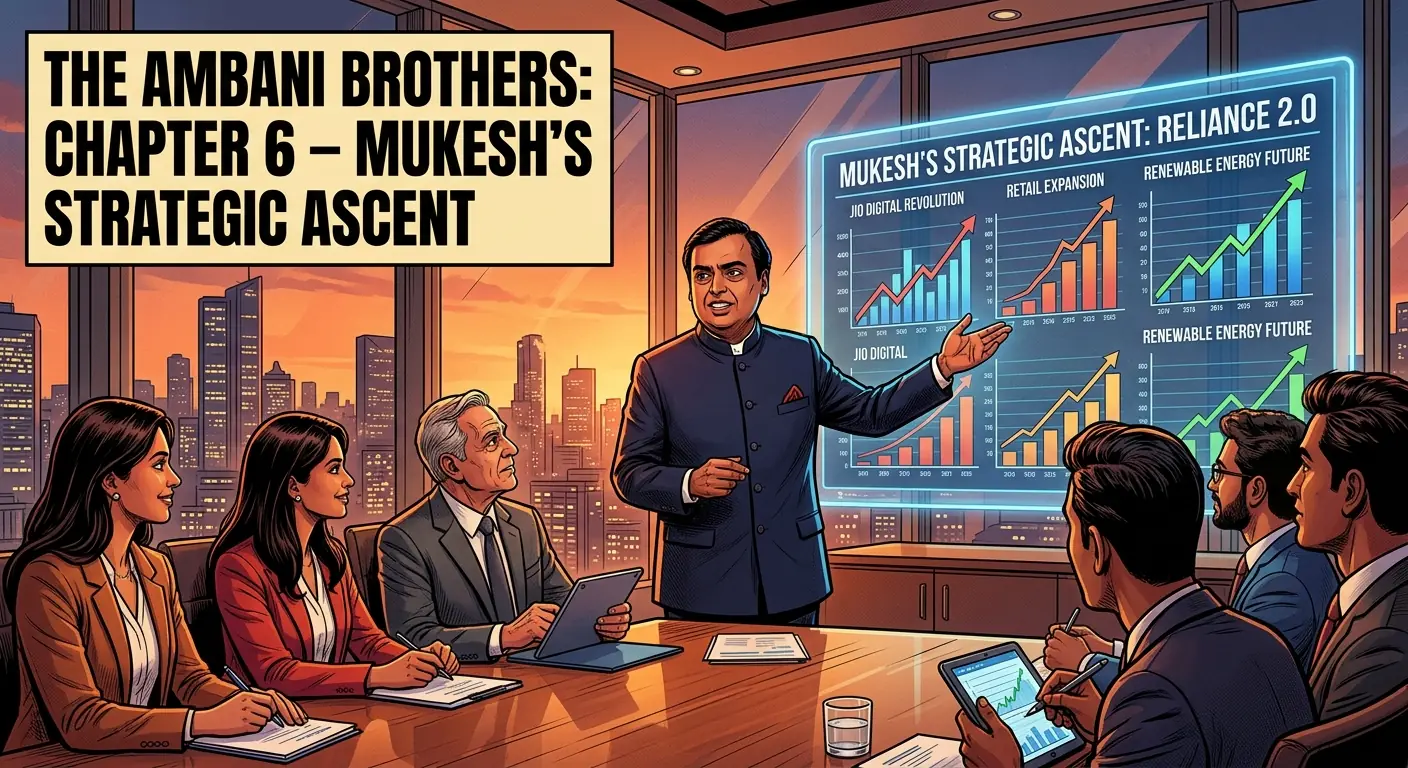
With the dust settled from the great partition, Mukesh Ambani stood at the helm of Reliance Industries Limited (RIL), a sprawling empire built on oil, gas, and petrochemicals. Many viewed his inheritance as the “legacy” business, stable but perhaps lacking the glamour of new-age tech or telecom. Oh, how wrong they were. Mukesh wasn’t content to simply manage his father’s empire; he intended to transform it.
Mukesh was the quiet giant, the methodical chess player. He understood that while his existing businesses were cash cows, the future lay elsewhere. He had a vision, one that was audacious even by Ambani standards: to digitize India. This was not a small ambition; it was a mission to fundamentally alter the digital fabric of a nation of over a billion people.
His weapon of choice? Reliance Jio Infocomm Limited (Jio).
Jio wasn’t just another telecom company; it was a declaration of war. Mukesh poured an unprecedented $35 billion (and eventually much more) into building a pan-India, all-IP, 4G LTE network from scratch. This wasn’t about incremental upgrades; it was about building future-proof digital infrastructure that would leapfrog existing technologies. He invested in fiber optics, data centers, and an ecosystem of digital services – everything from payment platforms to entertainment apps.
When Jio launched commercially in September 2016, it wasn’t just a new mobile network; it was an earthquake. Jio offered voice calls for free, forever. Data, the new oil, was offered at prices so low they were virtually free, a fraction of what competitors charged. This wasn’t merely aggressive pricing; it was a scorched-earth policy, designed to acquire market share at any cost and fundamentally disrupt the entrenched players.
The impact was immediate and brutal. Within months, Jio amassed tens of millions of subscribers, rapidly becoming the largest mobile operator in India. Competitors like Vodafone Idea and Airtel were forced to slash their prices, consolidate, or face existential threats. Many smaller players simply collapsed. Jio democratized internet access, bringing millions of first-time users online, transforming how Indians communicated, consumed media, and did business.
Mukesh’s strategy was simple, yet brilliant:
- Disruptive Pricing: Drive down costs to acquire massive scale.
- Future-Proof Technology: Build an infrastructure capable of handling exponential data growth.
- Ecosystem Play: Don’t just offer connectivity, offer a suite of digital services to keep users engaged and monetize beyond basic telecom.
- Debt Reduction: Once established, use the cash flows from traditional businesses and strategic stake sales in Jio to aggressively pay down debt, making RIL a lean, agile powerhouse.
“Data is the new oil. And India will be a data-rich nation.”
Mukesh’s vision wasn’t just about making money; it was about shaping India’s digital destiny. He transformed Reliance from an old-economy industrial giant into a new-economy tech and retail conglomerate. He attracted investments from global titans like Facebook, Google, Intel, and Saudi Aramco, validating his vision and injecting billions into his ventures.
By the early 2020s, Mukesh Ambani wasn’t just India’s richest man; he was a global business icon, a testament to strategic foresight, ruthless execution, and an almost superhuman ability to spot and capitalize on future trends. His empire, once defined by oil and gas, was now synonymous with digital transformation, retail, and green energy, soaring to unprecedented heights. The quiet strategist had become the undisputed king, not just of an inherited kingdom, but of a vastly expanded, future-ready empire he had forged himself.
📉 Chapter 7: Anil’s Fading Star – The Debt Trap
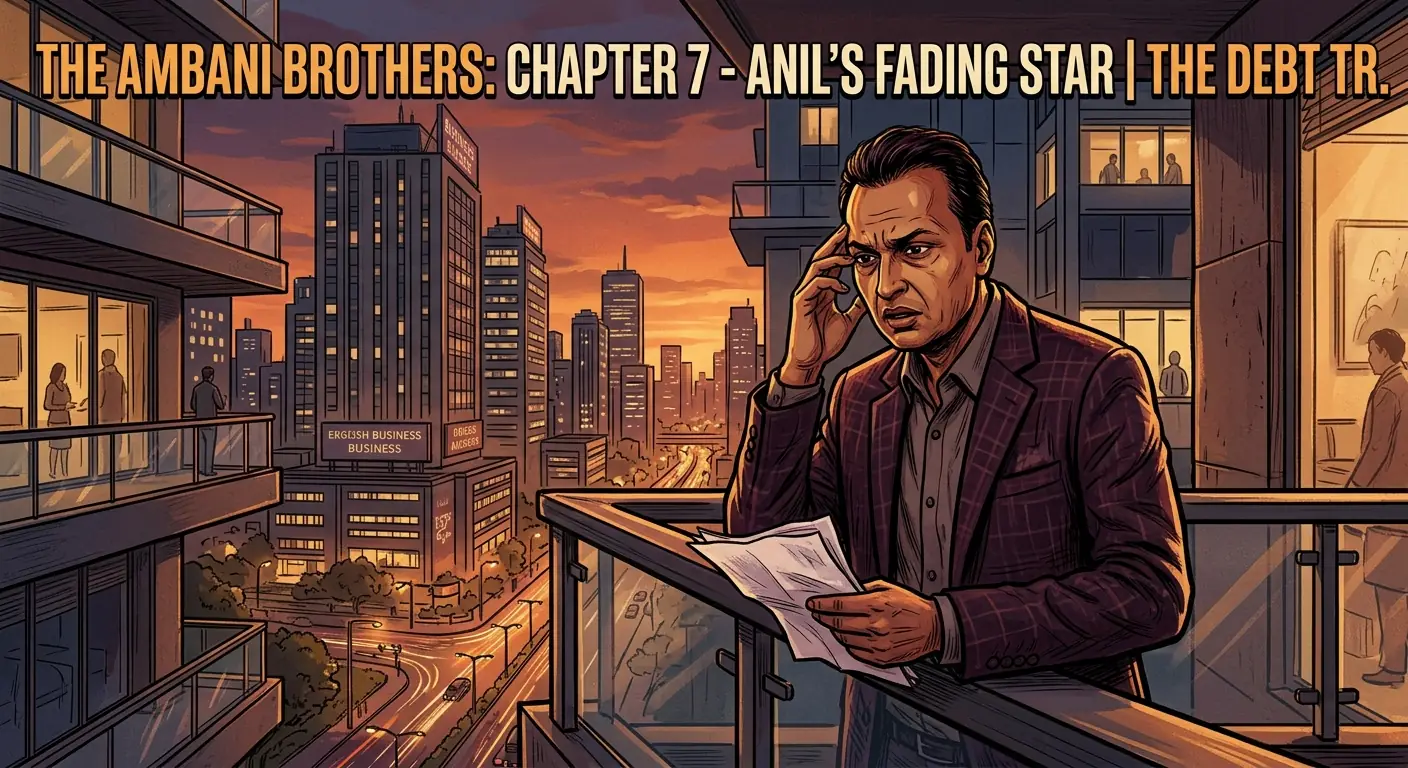
While Mukesh Ambani was orchestrating a digital revolution, his younger brother, Anil Ambani, was navigating an increasingly treacherous landscape. Anil had inherited the “sunrise” sectors – telecom, power, and financial services. On paper, these were the businesses of the future, promising high growth and immense potential in a rapidly developing India. But potential, as many entrepreneurs learn the hard way, is a fickle mistress.
Anil’s initial years post-split were marked by aggressive expansion and ambitious projects. He had the charm, the connections, and the drive. He was often seen jet-setting, striking deals, and addressing investor conferences with characteristic flair. His companies – Reliance Communications (RCom), Reliance Power, and Reliance Capital – were listed on the stock exchanges, raising significant capital and attracting investor interest.
However, Anil’s strategy was fundamentally different from Mukesh’s. Where Mukesh was cautious, methodical, and built from the ground up, Anil was often perceived as impulsive, acquisitive, and heavily reliant on debt. He expanded rapidly, sometimes without adequate foresight or a clear long-term strategy, chasing growth in highly capital-intensive and intensely competitive sectors.
Reliance Communications (RCom), his flagship telecom venture, was the first to hit major turbulence. The Indian telecom market was a brutal battlefield, characterized by cutthroat competition and massive capital expenditure. Anil made a series of strategic missteps:
- Technology Bets: He invested heavily in CDMA technology when GSM was becoming dominant, and then struggled to transition to 3G and 4G.
- Debt-Fueled Expansion: RCom took on enormous debt to finance its network build-out and spectrum acquisitions, often at high interest rates.
- Jio’s Entry: When Mukesh launched Jio with its disruptive pricing and advanced 4G network, it delivered the final, crippling blow. RCom, burdened by legacy technology and suffocating debt, simply couldn’t compete. Its subscriber base plummeted, and revenues dried up.
Reliance Power faced similar challenges. While India desperately needed power, setting up large-scale power plants required massive investments, faced regulatory hurdles, land acquisition issues, and fuel supply uncertainties. Anil pursued several mega-projects, but many were delayed, over budget, or struggled to secure long-term power purchase agreements. The debt pile grew.
Reliance Capital also struggled in a competitive financial services market, facing headwinds from economic downturns and increasing regulatory scrutiny.
The cumulative effect of these challenges was a spiraling debt crisis across all of Anil’s major ventures. Lenders, initially eager to fund the Ambani name, grew increasingly wary. Share prices of his companies plummeted, wiping out billions in shareholder wealth. The media, which once celebrated his dynamism, now chronicled his empire’s slow, agonizing collapse.
“The biggest mistake was perhaps the belief that the Ambani name alone could guarantee success, even without rigorous execution and a sustainable business model.”
Anil’s personal fortune, once counted in billions, dwindled. He was forced to sell assets, often at distressed prices, to service debt. His public appearances became less frequent, his pronouncements more subdued. The flamboyant dealmaker was now fighting for survival, facing insolvency proceedings and the very real threat of personal bankruptcy. The star that once shone so brightly was dimming, a stark contrast to the meteoric rise of his elder brother. The great partition, which was meant to give both brothers an equal shot, had, in less than two decades, led to two vastly different fates.
👻 Chapter 8: The Ghost of Dhirubhai – Guiding Hand or Haunting Specter?
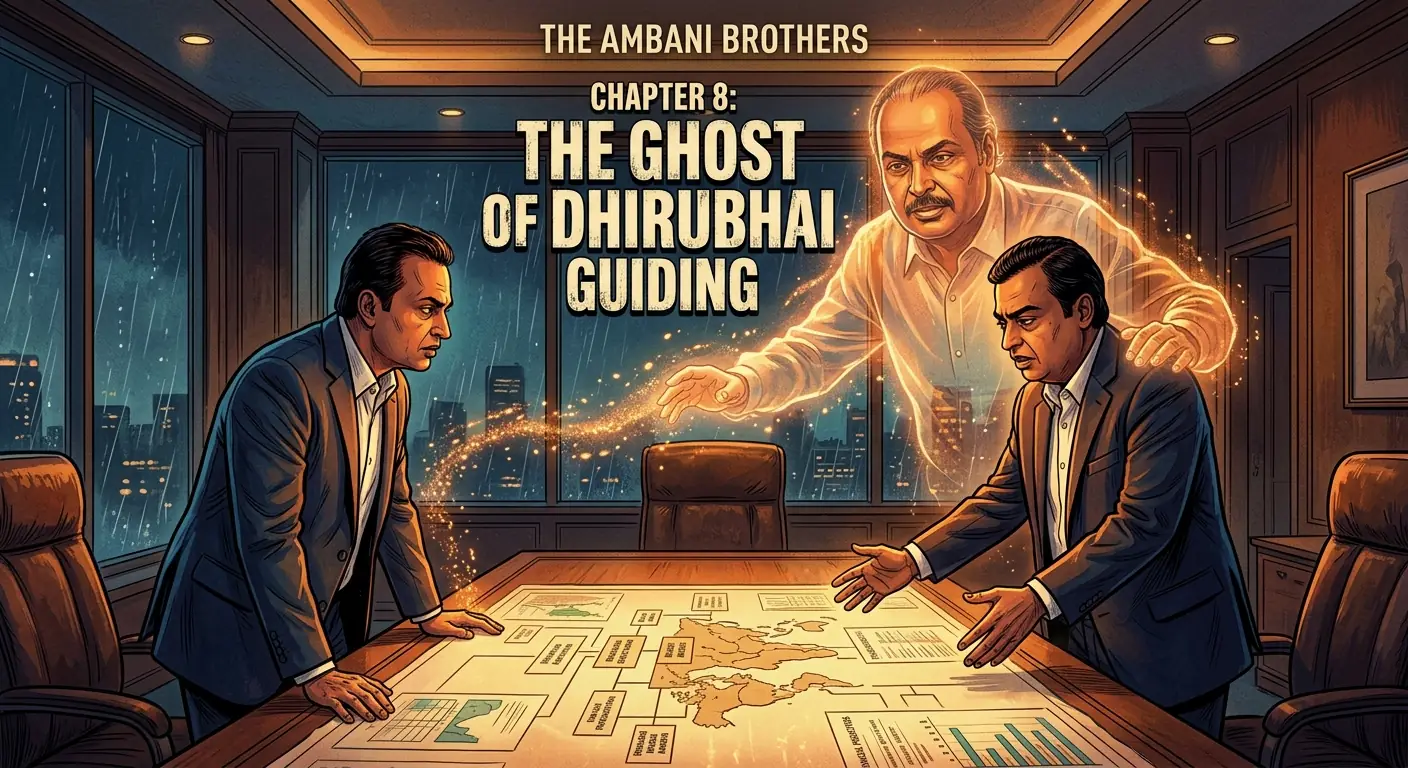
It’s impossible to discuss the diverging fortunes of Mukesh and Anil Ambani without invoking the specter of their father, Dhirubhai Ambani. Dhirubhai was more than a businessman; he was an ideology, a force of nature. His legacy, his principles, and even his unwritten rules continued to exert immense influence on his sons, sometimes as a guiding hand, sometimes as a haunting specter.
Dhirubhai built Reliance on a few core tenets:
- Scale and Integration: Go big, be vertically integrated. Control the entire value chain, from raw materials to finished products.
- Aggressive Growth: Never stop expanding. Always be hungry for the next big project, the next market opportunity.
- Shareholder Focus: Cultivate a loyal base of small investors. Make them feel like partners in the journey.
- Financial Acumen: Master the art of raising capital, often through unconventional means, and optimize financial structures.
- Political Savvy: Navigate India’s complex regulatory and political landscape with unparalleled skill.
Both Mukesh and Anil, in their own ways, tried to embody these principles.
Mukesh, the elder, arguably absorbed Dhirubhai’s lessons on scale and integration better. His expansion of the Jamnagar refinery, making it one of the largest and most complex in the world, was a direct continuation of Dhirubhai’s vision of industrial might. His entry into telecom with Jio, while seemingly new-age, was executed with Dhirubhai’s “go big or go home” philosophy. Jio wasn’t just a telecom company; it was a sprawling digital ecosystem, a masterclass in vertical integration for the digital age, controlling everything from infrastructure to content. Mukesh also inherited his father’s cautious approach to debt once a business was established, prioritizing deleveraging. He understood that while Dhirubhai used debt strategically for growth, he also knew how to manage it.
Anil, on the other hand, perhaps internalized Dhirubhai’s “aggressive growth” and “financial acumen” without fully grasping the underlying prudence. Dhirubhai was a master at raising money, but he was also a shrewd allocator of capital, always ensuring that projects had strong fundamentals and clear returns. Anil’s rapid expansion into power and telecom, while aggressive, often lacked the meticulous planning and integration that characterized Dhirubhai’s ventures. He borrowed heavily, convinced that the Ambani name and the sheer scale of his projects would ensure success. But he missed a crucial element of Dhirubhai’s genius: the ability to execute flawlessly against a backdrop of complex regulatory and market dynamics, and to quickly pivot when necessary.
The non-compete clause, a direct outcome of the split, ironically forced Anil to stay in the more capital-intensive, highly competitive segments where his father had often feared to tread without full integration. Dhirubhai had always been wary of the pure telecom play without owning the content or the underlying infrastructure end-to-end. He saw the risks in standalone power projects without captive fuel sources. Mukesh, free from the non-compete after its expiry, eventually entered and dominated the very telecom space that crippled Anil.
It’s a tragic irony that the very qualities Dhirubhai instilled in his sons – ambition, daring, financial wizardry – ultimately contributed to their divergent fates. Mukesh channeled them into building a future-proof, diversified behemoth. Anil, perhaps too eager to prove himself, too quick to expand, found those same qualities leading him down a path of over-leveraging and eventual decline. The ghost of Dhirubhai, a symbol of unparalleled success, thus became both an inspiration and, for Anil, a haunting reminder of what might have been.
🛑 Chapter 9: The Tipping Point – When Debts Became a Death Sentence
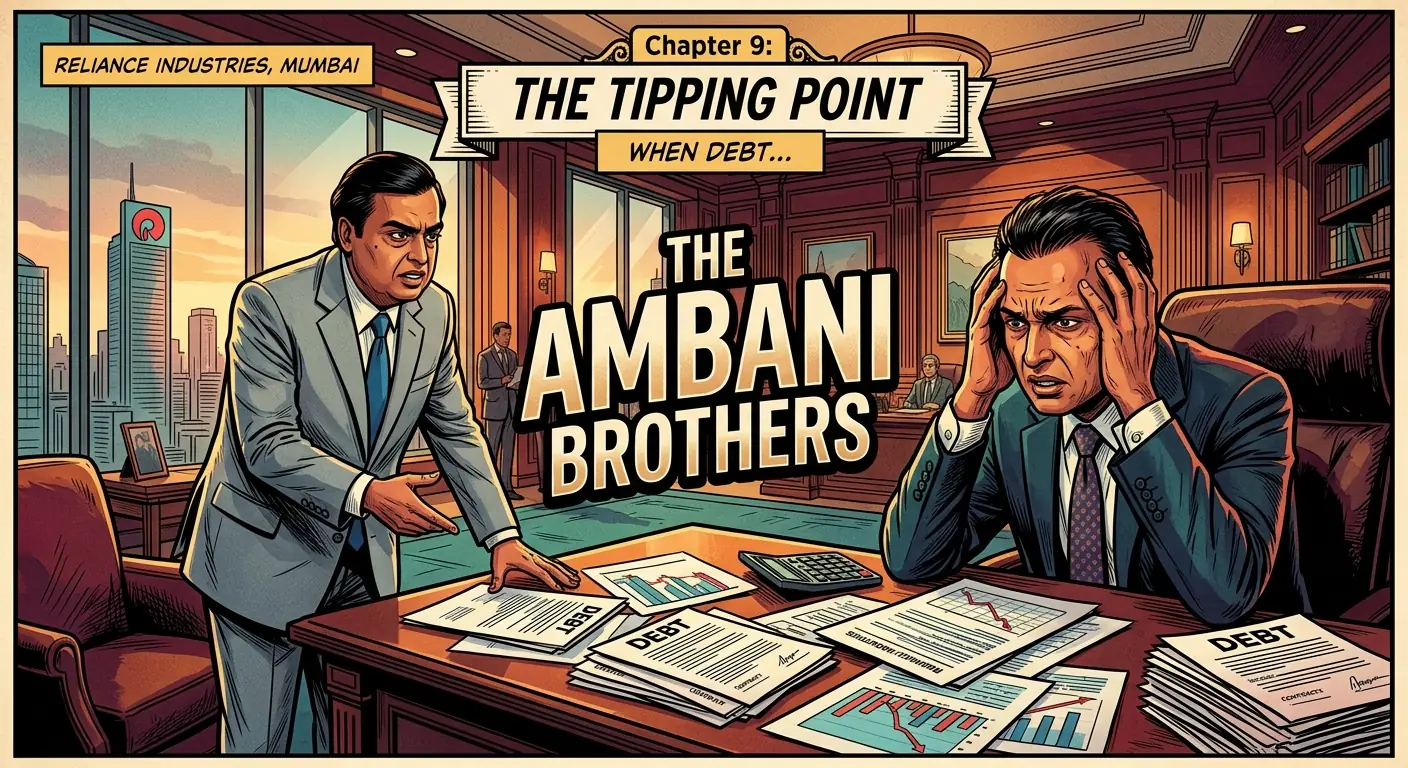
The decline of Anil Ambani’s empire wasn’t a sudden collapse; it was a slow, agonizing bleed, punctuated by a series of increasingly desperate maneuvers. But there was a definite tipping point, a moment when the mountain of debt became not just a burden, but a death sentence for his companies.
That moment arrived with the full force of Mukesh Ambani’s Jio revolution. When Jio launched in 2016, offering free voice calls and dirt-cheap data, it fundamentally altered the economics of the Indian telecom sector. For Reliance Communications (RCom), already struggling with legacy technology, high debt, and intense competition, it was an impossible challenge.
RCom’s financial health rapidly deteriorated. It tried to sell assets, merge with other struggling players, and restructure its debt, but it was too little, too late. Lenders, both domestic and international, grew increasingly impatient. The company’s once-valuable spectrum, towers, and fiber optic networks became distressed assets.
The crisis deepened when RCom failed to make payments on its loans, triggering defaults. Banks began to drag RCom into India’s newly formed bankruptcy courts. This was a brutal blow to the Ambani name, an unthinkable scenario for a company associated with India’s most powerful business family.
The domino effect wasn’t limited to RCom. Reliance Naval and Engineering, a shipbuilding venture Anil had acquired, also struggled, facing massive losses and eventually heading towards insolvency. Reliance Power and Reliance Infrastructure battled their own debt issues, project delays, and regulatory headwinds. The once-promising “sunrise” sectors had turned into black holes, sucking in capital and spitting out losses.
Anil Ambani, once one of India’s richest men, saw his personal wealth evaporate. In March 2019, he dramatically declared in a London court that his net worth was “zero,” claiming he was unable to pay a $100 million debt to three Chinese banks. This public admission was a stark and humiliating contrast to the immense wealth and power associated with the Ambani name.
The crisis reached its peak when Swedish telecom giant Ericsson initiated contempt of court proceedings against Anil for failing to pay a court-mandated settlement of Rs 550 crore (approximately $77 million) for services rendered to RCom. Failure to pay could have led to imprisonment. It was an unprecedented low for an Ambani, a public humiliation that underscored the gravity of his financial woes.
“The fall of Anil Ambani’s empire serves as a harsh lesson: in business, pedigree and ambition are not enough without disciplined capital allocation and an unyielding focus on sustainable cash flows.”
This was the tipping point. The sheer weight of debt, exacerbated by aggressive expansion in unforgiving sectors and a market disruption he couldn’t counter, had finally broken Anil’s empire. It wasn’t just about losing money; it was about losing control, losing reputation, and facing the very real threat of personal liberty. The once-bright star of Anil Ambani was now teetering on the brink, a cautionary tale of unchecked ambition and the brutal realities of the business world.
🤝 Chapter 10: The Unlikely Savior – Brotherhood Reborn (Sort Of)
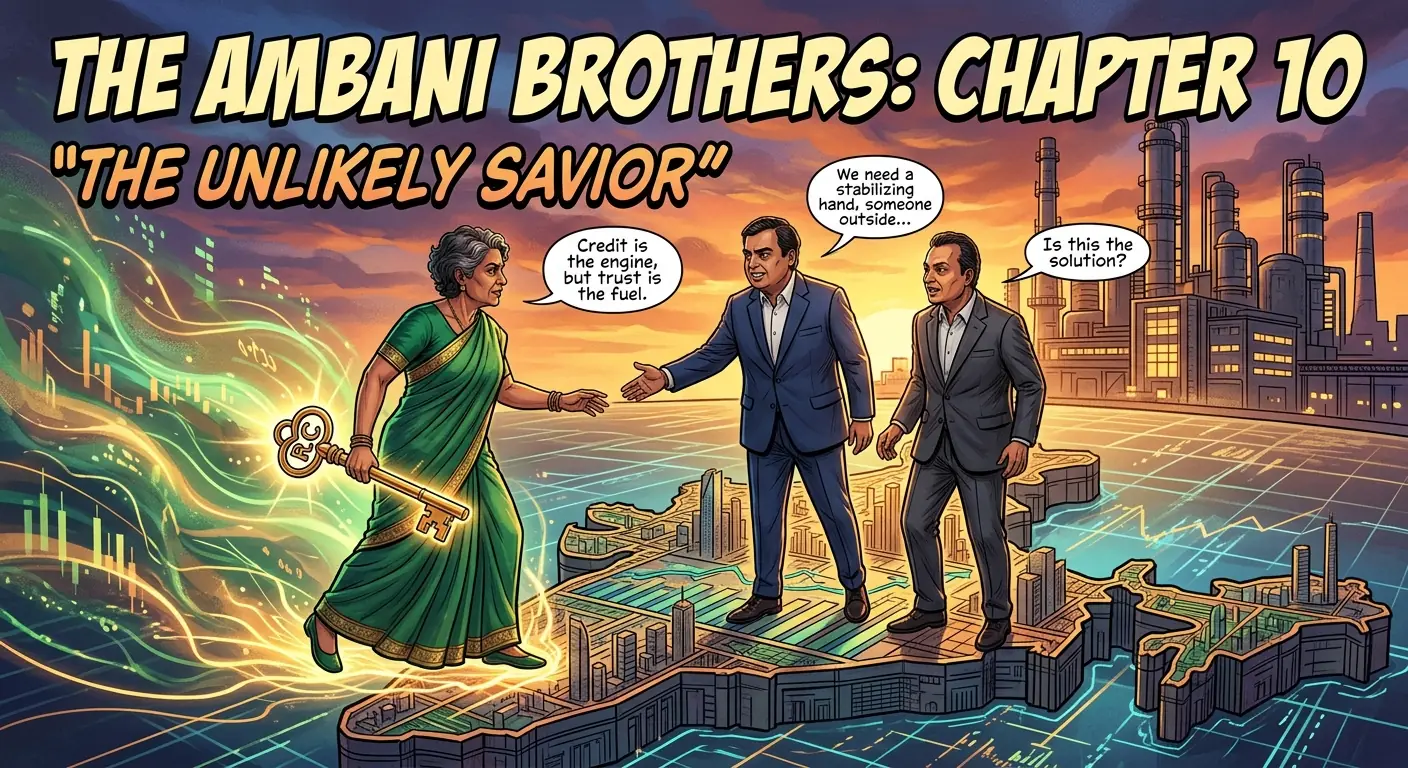
Just as the noose tightened around Anil Ambani in March 2019, with the threat of imprisonment looming over him in the Ericsson case, an unexpected lifeline appeared. It came from the most unlikely of sources: his elder brother, Mukesh Ambani.
Mukesh, who had been locked in a bitter feud with Anil for years, and whose company, Reliance Jio, had effectively driven Anil’s Reliance Communications (RCom) into insolvency, stepped in. He personally provided the Rs 550 crore (approximately $77 million) required to settle Ericsson’s dues, effectively saving his younger brother from jail.
The news sent shockwaves through India. The two brothers, whose rivalry had defined an era of Indian business, were suddenly performing an act of familial solidarity. Mukesh issued a brief, but pointed, statement: “I and my family are, and will always remain, steadfast in our commitment to our values and to our family. I am delighted that we have been able to live up to our commitment to my father, Dhirubhai Ambani, in letter and spirit by supporting Anil and making sure he meets his payment obligations. Our father, in his times of hardship, had stood by me and I am happy that by standing by Anil, we have emulated a small portion of what he did for me.”
This wasn’t just a financial transaction; it was a deeply symbolic gesture. It acknowledged the enduring, albeit strained, bond of brotherhood, and invoked the memory of their father, Dhirubhai Ambani. For all their public battles, for all the corporate blood spilled, the ties of family, perhaps, were not entirely severed.
Why did Mukesh do it?
- Family Honor: The imprisonment of an Ambani, especially one whose name was so closely tied to the family legacy, would have been a stain on the entire family. Mukesh, now a global titan, likely couldn’t afford that kind of reputational damage to the Ambani brand.
- Mother’s Influence: It’s widely believed that Kokilaben Ambani, the matriarch, played a crucial role, urging Mukesh to help his struggling brother. Her desire for family unity and the preservation of their father’s legacy remained a powerful force.
- Strategic Goodwill: While not directly business-related, such a public act of generosity could also generate goodwill, both within the family and among the wider Indian public. It projected an image of a powerful, benevolent leader, capable of compassion even after fierce competition.
The bailout, however, came with a clear understanding: this was a one-time gesture, a personal intervention, not a corporate merger or a reversal of fortunes. Anil’s companies continued their struggle, many eventually entering insolvency. RCom was formally liquidated, its assets sold off. Reliance Naval and Engineering followed suit. Reliance Power and Reliance Infrastructure continued to grapple with massive debt and asset sales.
The act of salvation was a poignant moment, a brief reunion on the battlefield. It showed that while business can be brutal, and rivalries can be fierce, the bonds of family, however frayed, can sometimes still hold. Mukesh saved his brother from personal calamity, but he did not save his brother’s empire. That, it seemed, was beyond even his formidable power. It was a clear delineation: family on one side, business on the other. And in business, there was only one king standing tall.
👑 Chapter 11: Two Paths, One Legacy – The Enduring Impact
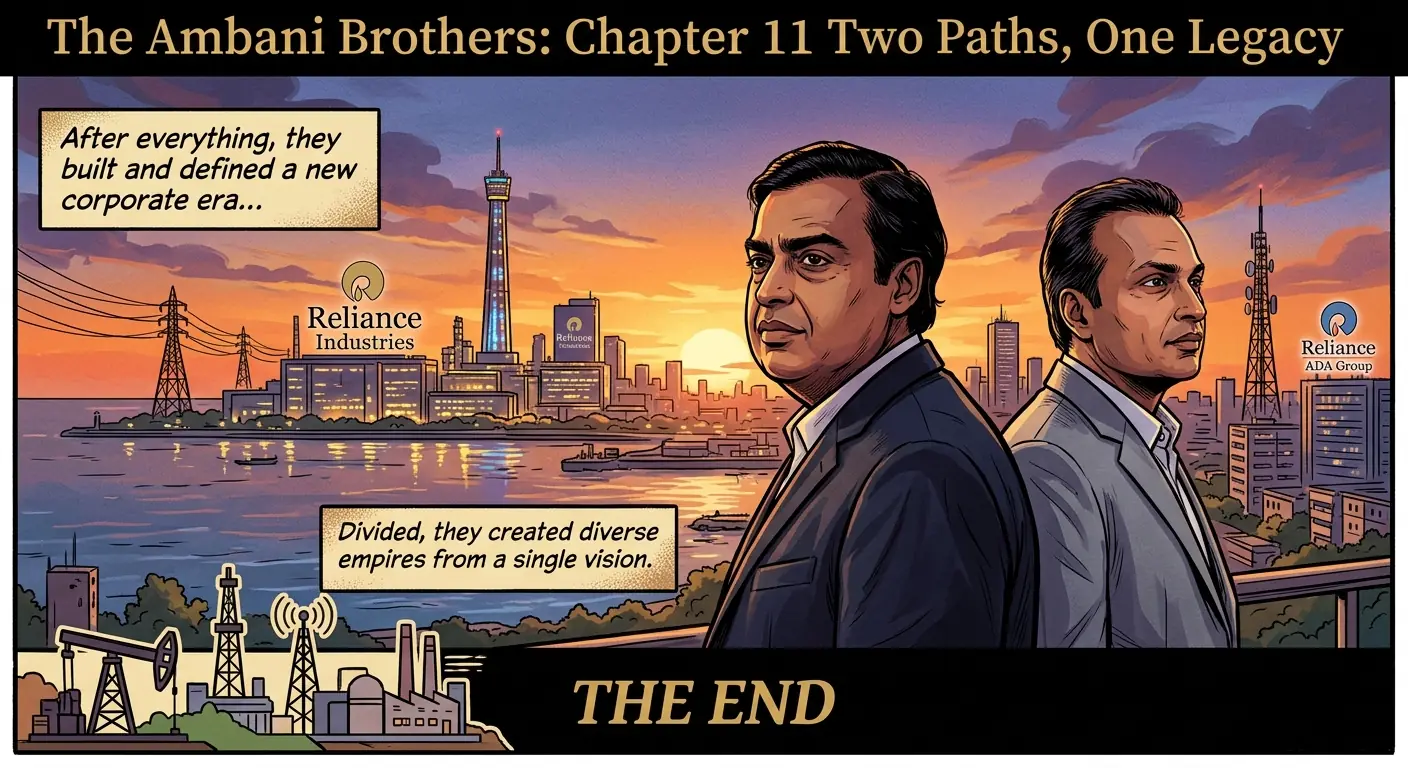
The story of the Ambani brothers is more than just a saga of corporate division and personal triumph or tragedy; it’s a profound narrative about leadership, strategic vision, and the brutal realities of wealth and power. It’s a tale that has left an indelible mark on the Indian business landscape and offers critical lessons for any aspiring mogul.
Mukesh Ambani carved out a path of relentless innovation, disciplined execution, and future-proofing his empire. He understood that simply managing inherited assets wasn’t enough. He made bold, calculated bets, like the Jio revolution, pouring billions into a vision that transformed India’s digital infrastructure. His strategy was built on:
- Long-term Vision: Seeing beyond current market trends to anticipate future needs.
- Capital Discipline: Massive investments, yes, but always with an eye on cash flows and aggressive debt reduction once a venture matured.
- Ecosystem Building: Not just offering a product, but creating an entire platform of services (Jio’s digital apps, Reliance Retail’s omni-channel presence) to capture and retain customer value.
- Strategic Diversification: Moving beyond traditional industries into new-age sectors like retail, digital services, and now, green energy, always with an integrated approach.
His empire, Reliance Industries Limited (RIL), is now a diversified global powerhouse, touching nearly every aspect of Indian life, from energy to telecom, retail to entertainment. Mukesh stands as India’s richest man, and one of the world’s wealthiest, a testament to his strategic genius and unwavering focus.
Anil Ambani’s journey, in stark contrast, became a cautionary tale of unchecked ambition, rapid expansion without commensurate execution, and the perils of excessive debt. His story highlights:
- The Fickleness of “Sunrise” Sectors: High-growth industries often demand immense capital, face intense competition, and are susceptible to rapid technological disruption.
- The Debt Trap: While debt can fuel growth, over-leveraging without sustainable cash flows or clear exit strategies can lead to catastrophic collapse.
- Execution Over Vision Alone: A grand vision, however compelling, means little without meticulous planning, flawless execution, and the ability to adapt to market shifts.
- The Cost of Competition: In a winner-take-all market, being a distant second or third can be an unsustainable position, especially against a dominant, deep-pocketed rival.
Anil’s once-thriving companies like Reliance Communications, Reliance Naval, and others faced insolvency, their assets sold off to repay creditors. His personal fortune dwindled to almost nothing, a tragic reversal for a man who once commanded immense wealth and influence.
The Ambani split, therefore, isn’t just a story about brothers. It’s a brutal masterclass in corporate strategy, risk management, and the enduring power of family legacy, for better or worse. It demonstrates that while a shared name can open doors, it cannot guarantee success. Each leader must forge their own destiny, guided by their own decisions and their own strategic compass.
“The Ambani saga teaches us that a legacy can be both a launchpad and a liability. True leadership lies in not just inheriting an empire, but in having the foresight and discipline to reshape it for a future only you can envision.”
The divide between Mukesh and Anil was more than just a corporate partition; it was a schism of philosophies, a battle of wills that ultimately revealed two profoundly different approaches to empire-building. One built an unshakeable fortress for the future; the other saw his castles crumble under the weight of their own ambition. The Ambani name lives on, powerful as ever, but now indelibly associated with two vastly different trajectories, born from the same legendary father, yet separated by a chasm of strategic choices and unforgiving market forces.
🏁 Chapter 12: Epilogue – What Happens When Empires Collide
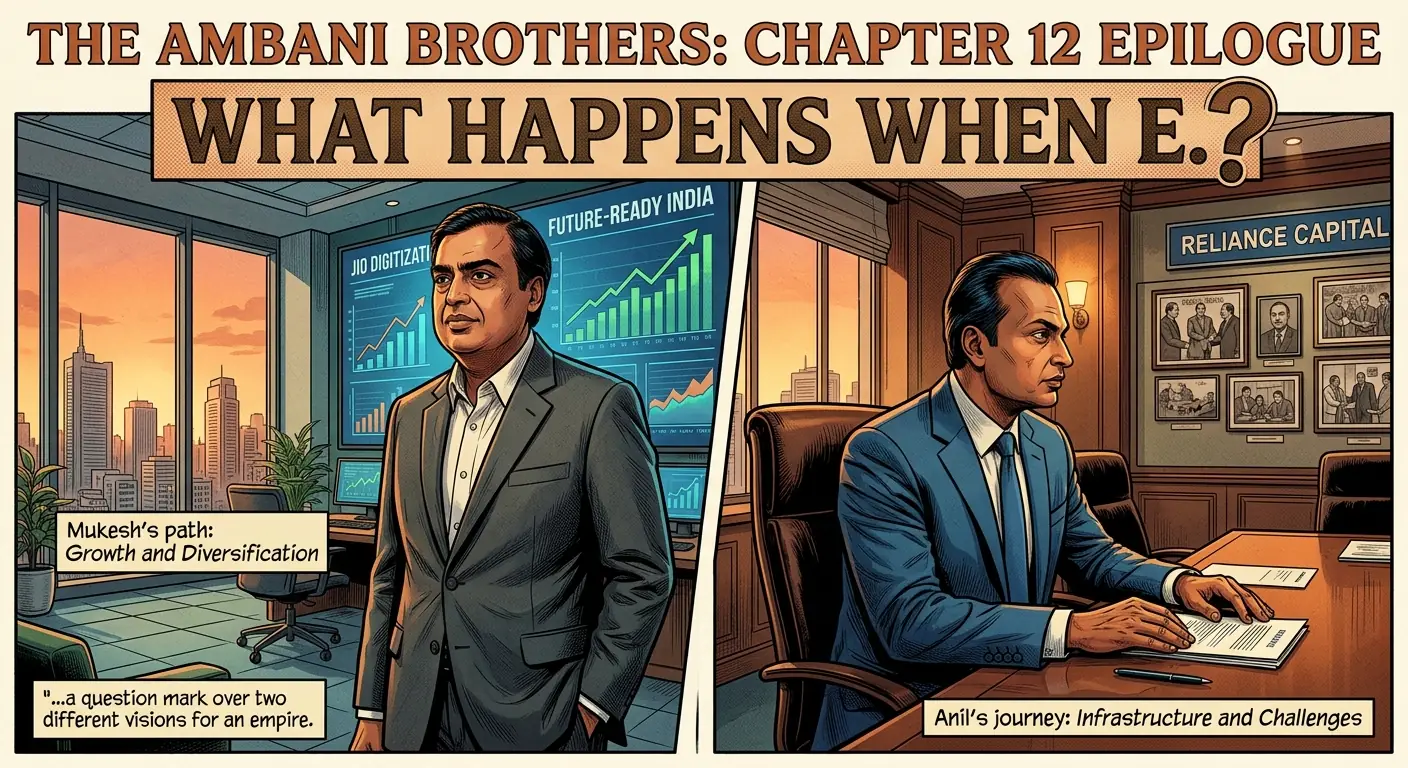
So, there you have it. The epic, no-holds-barred saga of the Ambani brothers. It’s a story ripped straight from a graphic novel, filled with unimaginable wealth, brutal betrayals, public spectacles, and a desperate struggle for survival. It’s the kind of tale that reminds you that even at the highest echelons of power and money, human drama, sibling rivalry, and the fundamental laws of business still reign supreme.
What’s the takeaway for you, the aspiring mogul, the investor, the entrepreneur trying to navigate your own treacherous waters?
First, succession planning is not optional, it’s existential. Dhirubhai Ambani, for all his genius, made a fatal error by not having a clear, documented will. His empire, built on his singular vision, almost imploded without him. Don’t let your legacy be defined by a power vacuum. Plan for the inevitable.
Second, debt is a double-edged sword. It can be a powerful accelerator for growth, but it can also be a crushing anchor. Mukesh Ambani used it strategically and then aggressively paid it down. Anil Ambani embraced it too readily, and it ultimately became his undoing. Understand the difference between good debt and bad debt, and always, always have a deleveraging strategy.
Third, strategy and execution trump pedigree. The Ambani name is gold in India, but even that wasn’t enough to save Anil’s empire when his business models faltered and his execution lagged. Mukesh, on the other hand, didn’t just inherit an empire; he revolutionized it with calculated risks and meticulous execution, building a future-proof behemoth. Vision without execution is hallucination.
Fourth, disruption is a force of nature. Mukesh didn’t just react to disruption; he created it with Jio, fundamentally reshaping the Indian telecom market. If you’re not disrupting, you’re being disrupted. Complacency is the silent killer of empires.
And finally, the most human lesson of all: family and business are often an explosive mix. The Ambani brothers’ story is a testament to the fact that even the strongest familial bonds can fray under the immense pressure of power, ego, and billions of dollars. Sometimes, a clean break, however painful, is necessary for survival. And sometimes, even after the fiercest battles, a flicker of that shared history, that common blood, can still manifest in an unexpected act of grace.
The Ambani saga isn’t just about India’s richest family; it’s a microcosm of global capitalism, a raw, unfiltered look at ambition, legacy, and the relentless pursuit of power. It’s a story that proves that even when you start at the top, the climb is never over, and the fall can be swift and brutal.
So, next time you see a Reliance logo, remember the two brothers, the one who soared, and the one who stumbled. Remember the titan who built it all, and the mother who tried to hold it together. Because this wasn’t just a business split; it was a family divided, an empire reshaped, and a legacy forever marked by the billion-dollar blood feud of the Ambani brothers. And trust me, stories like this don’t just happen in movies; they happen in the ruthless, exhilarating world of MogulFeed.
💡 Key Insights
- ▸ The catastrophic absence of a clear succession plan in a family-run business, especially one of Reliance's scale and complexity, inevitably leads to power vacuums and internecine warfare. Entrepreneurs must proactively define roles, responsibilities, and a formal leadership transfer process to prevent familial bonds from fracturing under the weight of immense wealth and control.
- ▸ Strategic vision and disciplined capital allocation are paramount for long-term business resilience. Mukesh Ambani's patient, calculated investments in future-proof sectors like digital and telecom, coupled with a relentless focus on debt reduction, created an unshakeable fortress, while Anil's rapid, debt-fueled diversification into capital-intensive, highly competitive segments without sufficient foresight led to a precipitous decline.
- ▸ Even in a hyper-competitive market, a dominant position achieved through scale and strategic foresight can create significant barriers to entry and consolidate power. Mukesh's aggressive push into Jio demonstrated the power of disruptive innovation backed by massive investment, fundamentally reshaping India's digital landscape and highlighting the winner-take-all nature of certain high-growth industries.