Jack Bogle: The Anti-Wall-Street Legend Who Changed Investing Forever
A sharp MogulFeed breakdown of the incentives, structure, and turning points behind Jack Bogle's business story.

View all stories about this mogul
This is a story about principle becoming product and then becoming doctrine.
The Setup

Jack Bogle did not become interesting because the public learned a memorable headline. The real story is how a set of incentives, structures, and strategic decisions compounded over time until they reshaped an industry. Jack Bogle: The Anti-Wall-Street Legend Who Changed Investing Forever works best when read not as biography but as a business case: what was seen early, what was funded aggressively, where the market mispriced risk, and which decisions created durable leverage.
In most business folklore, outcomes look cleaner than they were. Winners appear destined. Failures appear obvious. But the truth is usually more mechanical. Markets reward timing, yes, but they reward architecture even more. They reward systems that can scale while competitors are still improvising. They reward organizations that know which constraint actually matters.
That is the lens that makes Jack Bogle useful. The point is not admiration or condemnation for its own sake. The point is to understand the machine.
Early Advantage

Every outsized business story starts with an asymmetry. Someone sees something that others dismiss, underfund, or explain away with old assumptions. In cases like this, the early edge is rarely one thing. It is usually a stack: a better reading of demand, a better tolerance for short-term pain, a better sense for which layer of the market will end up owning the economics.
For Jack Bogle, the early stage mattered because it shaped the later playbook. Ambition alone is cheap. What matters is the translation layer between belief and execution. Which assets were accumulated first? Which relationships mattered? Which bottleneck was attacked before it became fashionable? Those are the questions that separate myth from analysis.
Most incumbents miss turning points for the same reason. They judge a new strategy by current margins instead of future control. They ask whether the move looks efficient this quarter instead of whether it locks up demand five years later. That is where unusual operators pull away. They spend through the discomfort zone.
How the Business Really Worked

The public tends to narrate companies through product launches, personalities, and controversies. The private reality is usually much less cinematic and much more important. A serious business is a cash-flow design. It is a bundle of incentives. It is a sequence of tradeoffs about who gets paid, how fast, and under what conditions competitors can realistically respond.
That is why the underlying model matters more than the mythology. Was the engine driven by asset intensity? Brand? Regulation? Switching costs? Distribution? Network effects? Embedded software? Access to cheaper capital? Usually the answer is some combination, but one or two elements dominate. Great operators know which part is carrying the real weight and keep reinforcing it while everyone else debates surface-level narratives.
Once that machine starts compounding, outsiders often mistake the results for inevitability. But there is nothing inevitable about it. Moats require maintenance. Dominance requires reinvestment. The companies that last are the ones that keep building behind the visible product layer.
The Turning Points
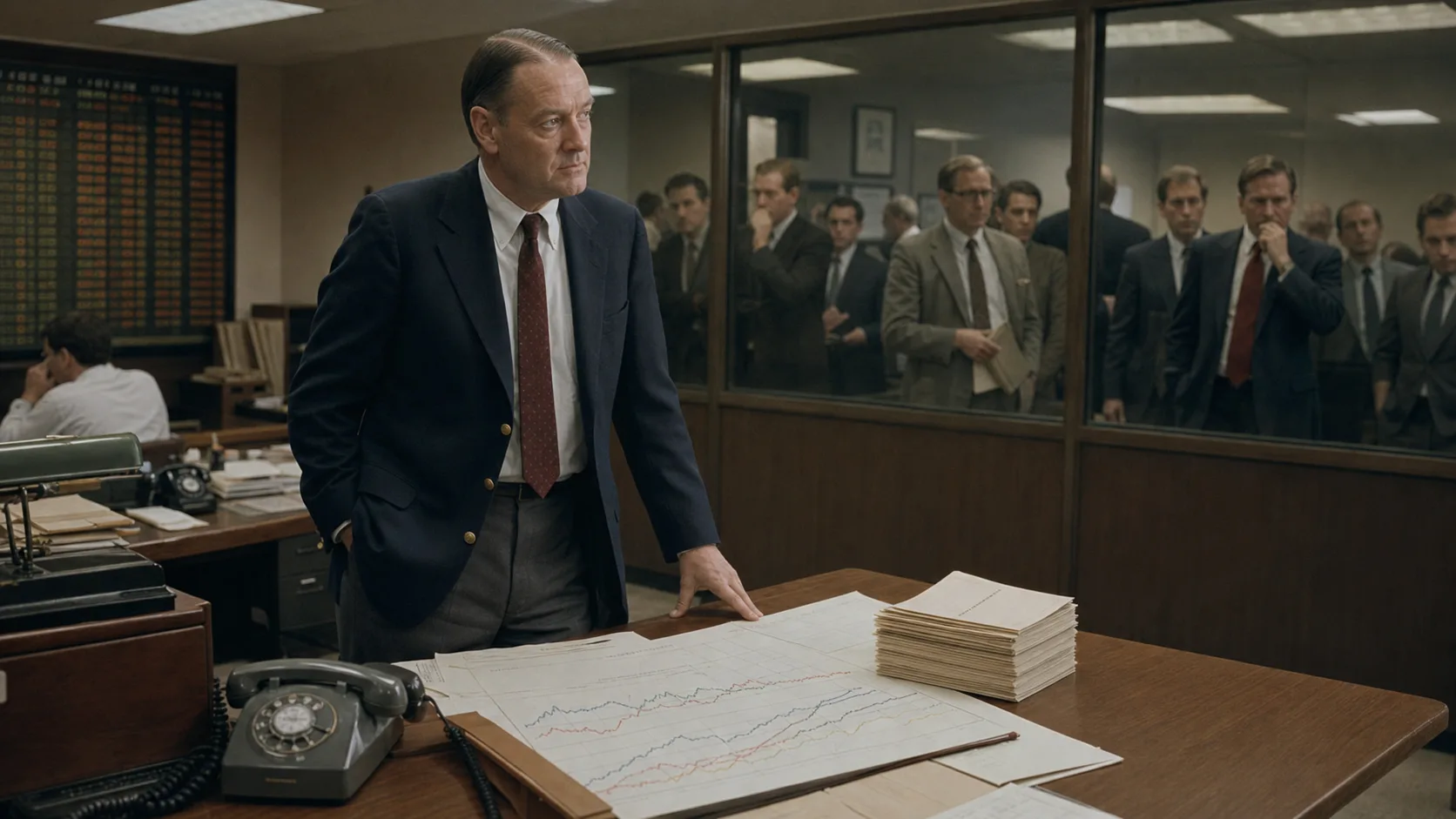
No empire, rise, collapse, or legacy is linear. The shape changes at specific inflection points. Sometimes a regulatory shift resets the board. Sometimes a financing window opens at exactly the right moment. Sometimes a scandal exposes weaknesses that had been visible to insiders for years. Sometimes one technical decision becomes the hinge on which an entire decade swings.
The important thing is not just to list turning points but to classify them. Which ones changed narrative only? Which ones changed economics? Which ones changed power? Those are not the same thing. Markets often react to the first before fully understanding the second. That gap is where fortunes are made and destroyed.
In stories like Jack Bogle’s, the cleanest analysis usually comes from working backward. Look at the final shape of the business. Then identify which earlier decision made that outcome much more likely. Often it is a boring move that did not look historic at the time: a pricing decision, a distribution buildout, a hiring philosophy, a willingness to absorb lower margins, or a refusal to optimize for the wrong metric.
What Most People Miss

Most popular storytelling overweights personality and underweights operating design. That makes stories easier to consume, but worse to learn from. Charisma can open doors. It can attract talent, capital, media oxygen, and forgiveness. But charisma alone does not scale a system. The deeper advantage is almost always structural.
That is especially true when the outcome looks dramatic. In a rise, observers focus on boldness and underplay infrastructure. In a fall, they focus on scandal and underplay governance design. In a legacy story, they focus on aphorisms and underplay institutional mechanics. In an empire story, they focus on size and underplay architecture.
For managers, investors, and builders, this is the practical lesson. Do not ask only who looked smartest. Ask what kept getting stronger underneath. Ask what customers, partners, employees, or regulators became dependent on. Ask which assumptions competitors never updated. That is where the real leverage sits.
The Real Lesson

In the end, Jack Bogle matters because this story exposes a repeatable pattern in capitalism: markets do not merely reward being right. They reward being right in a way that can be organized, financed, defended, and repeated. That is the difference between a headline and a durable business outcome.
If there is a reason to keep studying stories like Jack Bogle: The Anti-Wall-Street Legend Who Changed Investing Forever, it is not because they flatter greatness or dramatize failure. It is because they show how power actually moves. They show that incentives leave fingerprints, that structure eventually beats spin, and that the most important business decisions are often the least theatrical when they are made.
That is the part worth publishing. That is the part worth remembering.
💡 Key Insights
- ▸ The real edge came from structure and incentives, not charisma alone.
- ▸ Simple ideas become durable only when execution stays disciplined through market cycles.
- ▸ The strongest franchises often win by removing friction rather than adding spectacle.
- ▸ The myth matters less than the operating system built underneath it.