James Dyson: The 5,127 Prototypes Behind a Bagless Engineering Empire
James Dyson turned five years of failed prototypes into a vacuum category reset, then used engineering, premium pricing, and direct retail to build a global machine.
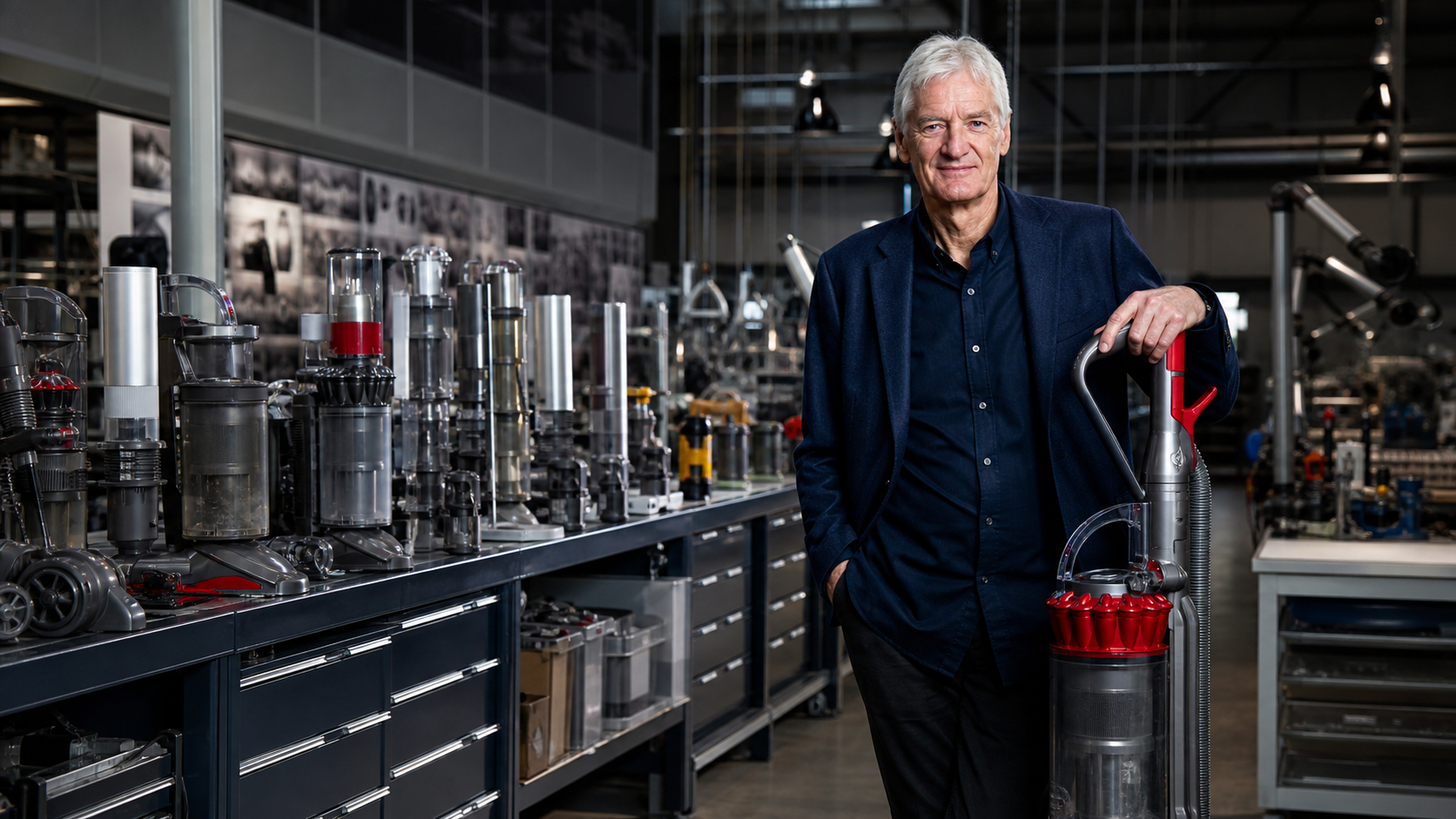
View all stories about this mogul
James Dyson’s most valuable asset was not the first bagless vacuum. It was the willingness to look wrong 5,126 times in a category that incumbent manufacturers considered finished.
The famous prototype count can sound like motivational folklore. Its business meaning is sharper. Dyson built a system in which repeated physical experiments produced proprietary knowledge, then wrapped that knowledge in patents, premium design, and distribution that forced consumers to understand why an ordinary appliance should cost more.
How did 5,127 prototypes become a commercial product?
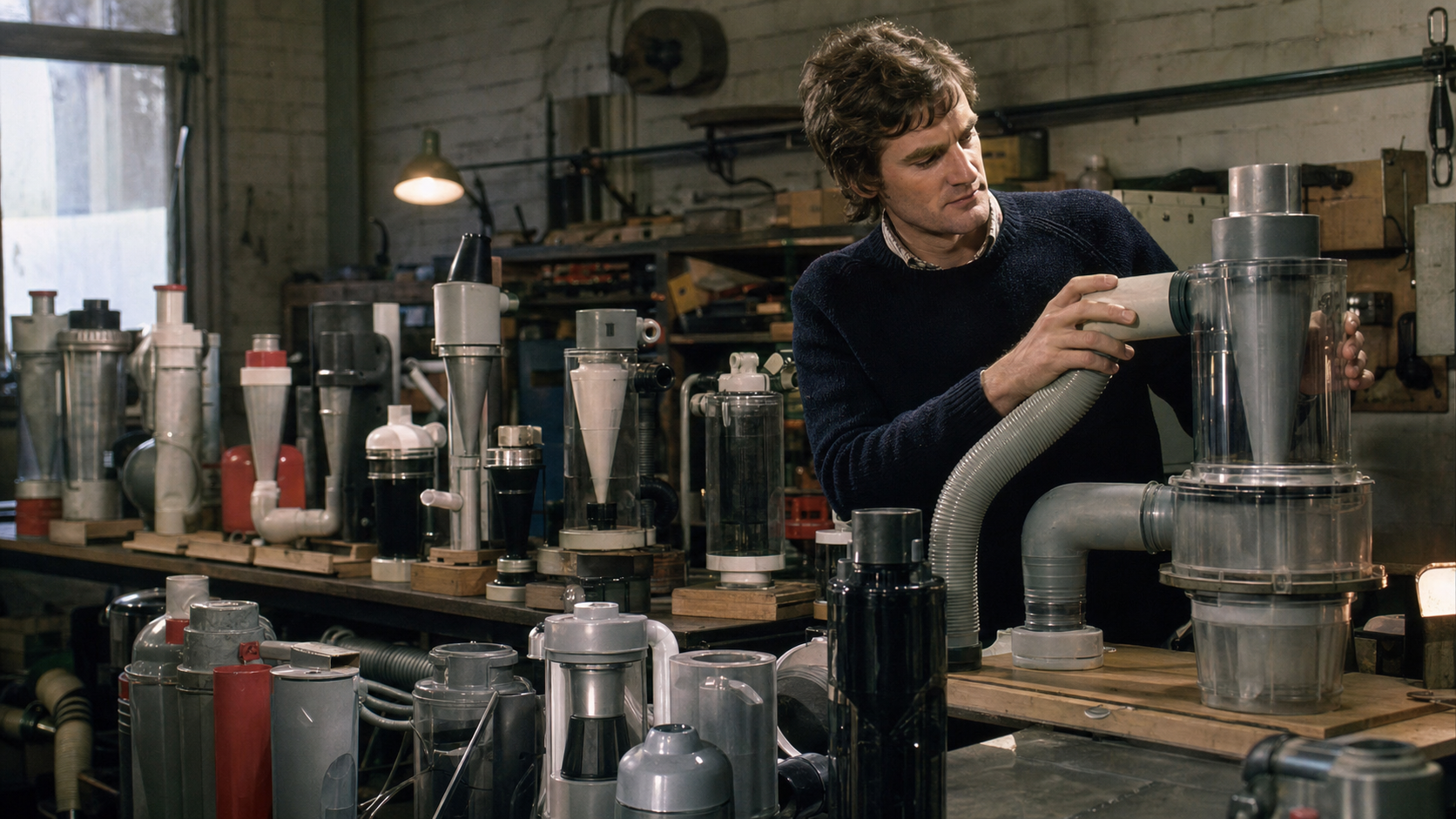
The idea began with frustration. Dyson noticed that his conventional vacuum lost suction as its bag filled with dust. At a sawmill, he saw an industrial cyclone separating particles from air and wondered whether the principle could be miniaturized for a home appliance.
From 1979, he spent roughly five years building and testing thousands of iterations. Each prototype changed geometry, airflow, seals, collection bins, or materials. This was not blind persistence. A failed cyclone revealed where turbulence formed; a clogged passage exposed a constraint; an unstable body changed the industrial design.
British manufacturers repeatedly rejected the concept. Bags produced recurring revenue, and a bagless machine threatened that aftermarket. Dyson eventually licensed an early version in Japan, where the G-Force vacuum helped generate money and credibility. He then founded Dyson Ltd and launched the Dual Cyclone in Britain in the early 1990s.
The transparent bin was a crucial communication device. Customers could see the dirt and the mechanism’s result. Engineering became theater, and theater made an unfamiliar premium claim legible on the shop floor.
Why did premium pricing strengthen the Dyson machine?
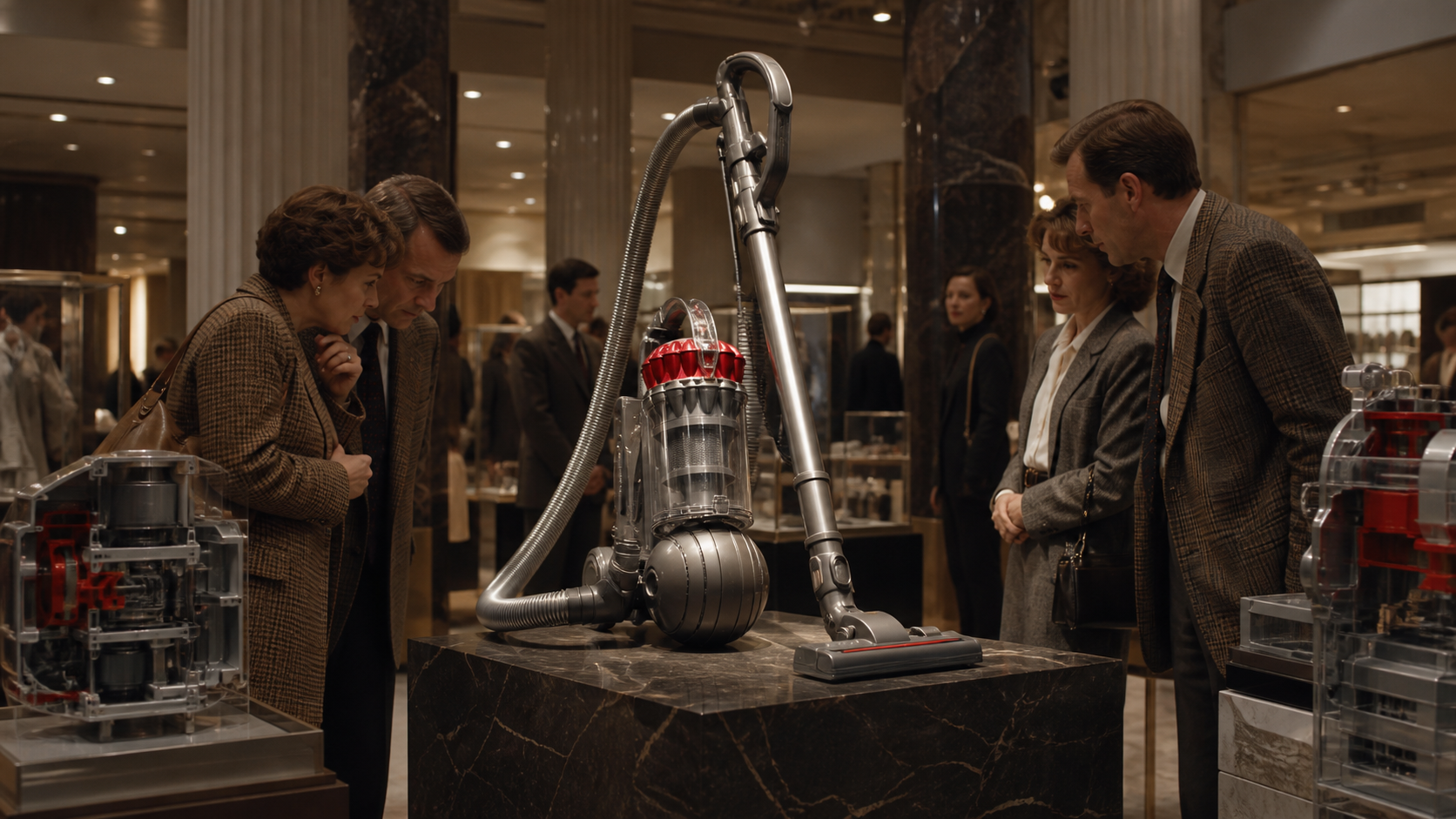
Dyson did not win by being a cheaper vacuum. It framed the category around suction, airflow, filtration, and design, making comparison with low-cost bagged machines less direct. The premium price paid for research, tooling, patents, advertising, service, and the inevitable cost of ideas that never shipped.
Patents bought time, but brand made that time valuable. Cutaway demonstrations and product names turned invisible physics into a story customers could repeat. The company carried the playbook into hand dryers, fans, air purifiers, hair care, and other products where airflow, motors, acoustics, and heat control could be presented as a shared engineering core.
The model also carried risk. Premium products invite scrutiny, competitors route around patents, and expansion can turn genuine engineering into expensive feature theater. Dyson’s abandoned electric-vehicle project showed both sides of the culture: the company was willing to invest heavily, but it also stopped when the economics did not support a commercially viable car.
What is the real lesson of the Dyson empire?
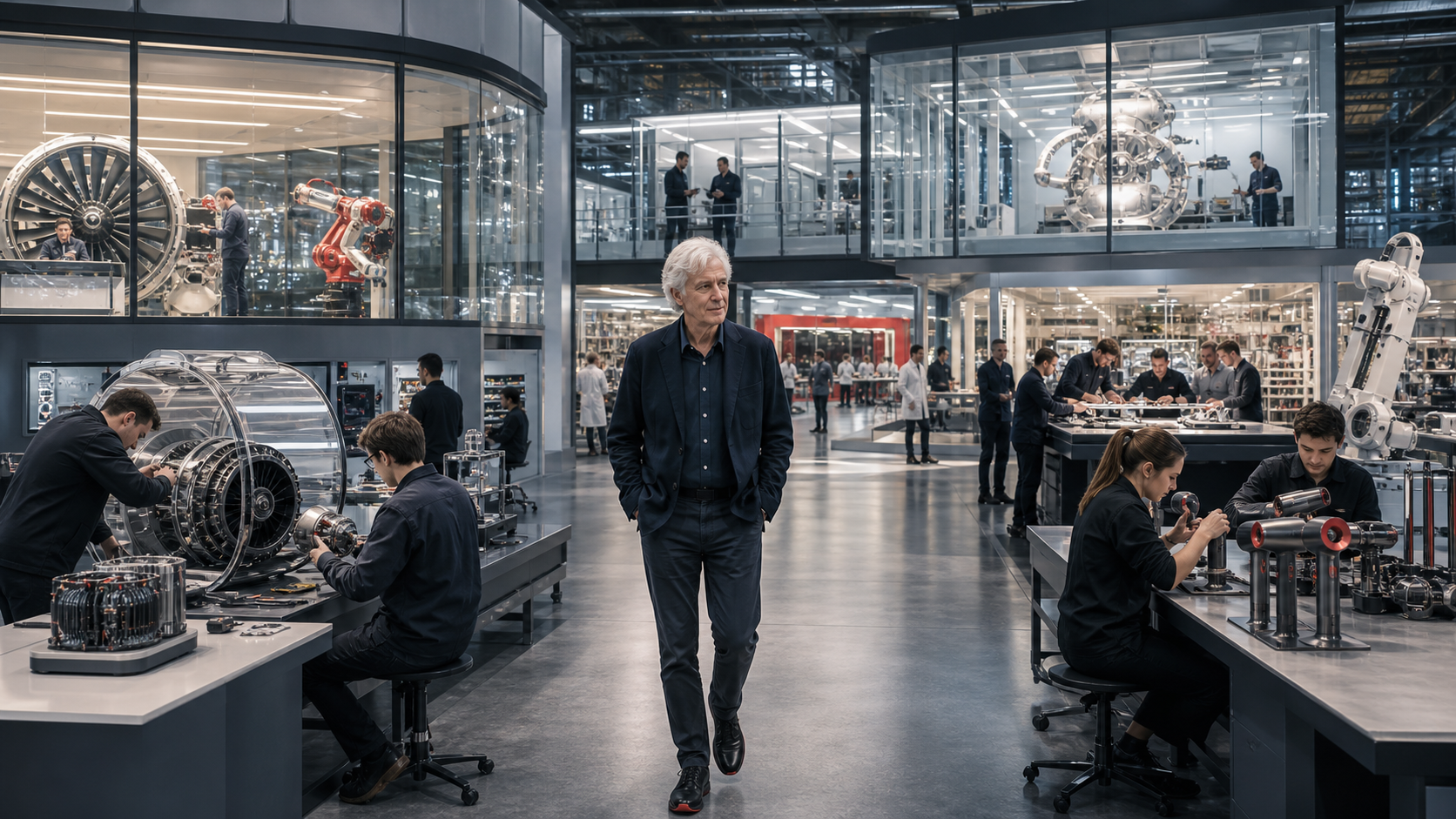
The lesson is not simply “never give up.” Some ideas deserve to die. Dyson’s advantage was a tight loop between problem, prototype, measurement, and revision. Persistence worked because the experiments accumulated knowledge and moved the design toward a customer-visible benefit.
The second lesson is that invention and commercialization are different crafts. The cyclone needed patents, a factory, retail education, memorable design, service infrastructure, and enough margin to keep funding research. Without that system, the 5,127th prototype would have remained an interesting machine in a workshop.
Dyson built an empire by making engineering the product, the marketing, and the corporate identity. That combination is hard to copy because it demands patience before launch and discipline after success.
💡 Key Insights
- ▸ Persistence becomes an advantage only when each failure produces usable information.
- ▸ Dyson entered a mature market by changing the economic object, not merely improving its styling.
- ▸ Premium pricing financed visible engineering and protected the product from commodity comparison.
- ▸ Owning more of distribution gave Dyson control over education, margins, and customer data.