The Chip Whisperer: Jensen Huang's Wild Ride from NVIDIA's Near-Death to AI Kingmaker
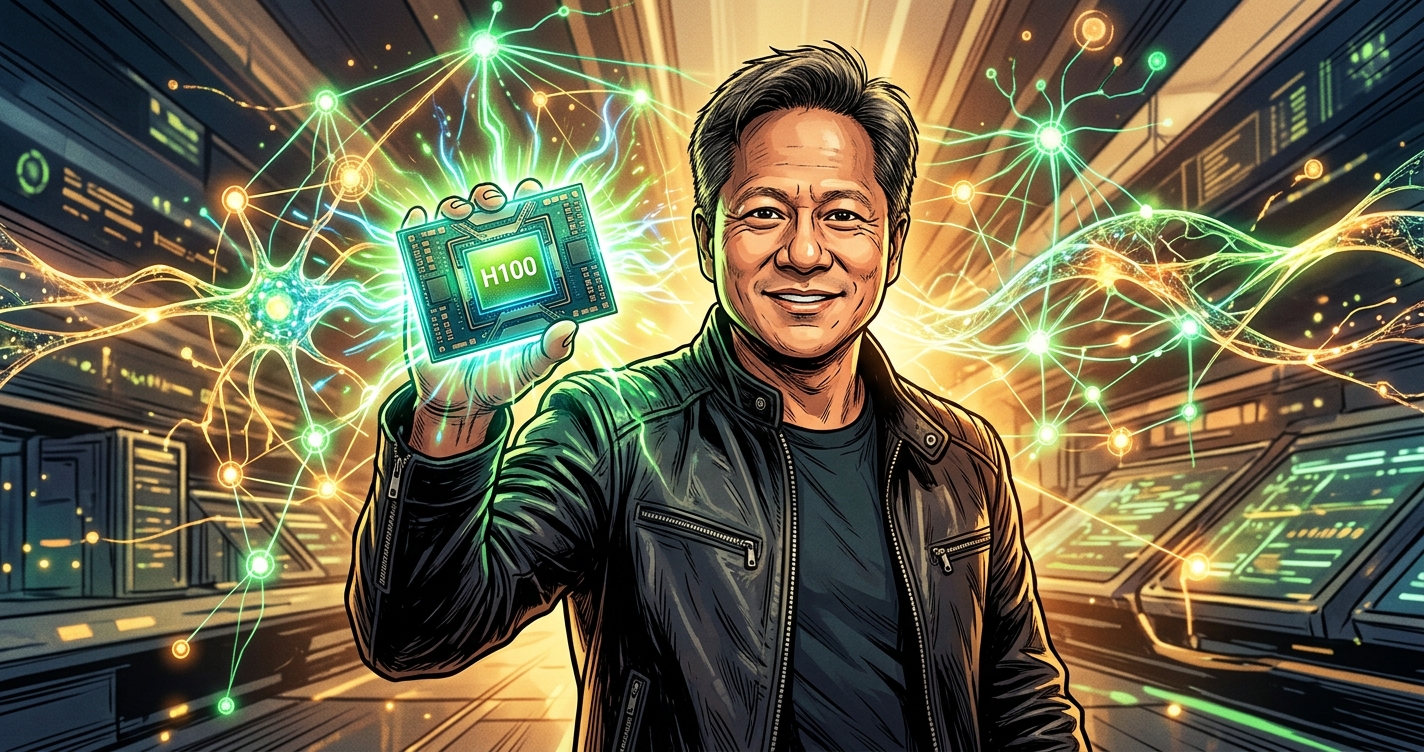
Meet **Jensen Huang**, the leather-jacketed visionary who started **NVIDIA** with a wild dream in a Denny's diner, only to steer it through multiple near-death experiences. This isn't just a story about chips; it's a high-octane saga of conviction, audacious bets, and relentless reinvention that turned a struggling graphics card company into the undisputed architect of the AI revolution.
View all stories about this mogul
☕ Chapter 1: The Denny’s Deal – A Napkin, Three Misfits, and a Wild Dream

Alright, settle in, because this isn’t your grandpappy’s Silicon Valley fairy tale. This is a raw, visceral, white-knuckle ride through the heart of tech’s most cutthroat arenas, led by a man who looks like he’d be more comfortable on a Harley than a boardroom, and whose company, NVIDIA, has clawed its way from the brink of oblivion not once, not twice, but multiple times, to become the undisputed, leather-clad kingmaker of the AI revolution.
Our story kicks off in 1993, not in a gleaming Palo Alto garage, but under the fluorescent hum of a Denny’s diner in San Jose. Picture it: the smell of stale coffee, sizzling bacon, and the clatter of ceramic mugs. Three guys, looking less like future billionaires and more like college students perpetually on the verge of missing a deadline, are huddled in a booth. There’s Jensen Huang, then 30, a Taiwanese-American immigrant with a quick wit and an even quicker mind, fresh off a stint at LSI Logic and AMD. Alongside him, Chris Malachowsky, an electrical engineer with a knack for systems design, and Curtis Priem, a visionary hardware architect.
They weren’t discussing the breakfast special. Oh no. They were cooking up something far more ambitious. The PC world was exploding, but graphics were still, frankly, anemic. Pixels were blocky, movements jerky, and anything resembling realism was a pipe dream. Jensen, Chris, and Curtis shared a fundamental belief: that the future of computing wasn’t just about faster CPUs, but about accelerated, parallel processing – specifically for graphics. They envisioned a world where stunning, real-time 3D graphics wouldn’t be confined to expensive workstations, but would live on every desktop. They saw a future where computers could see and create in ways previously unimaginable.
It was a bold, almost reckless, vision for the time. The market was fragmented, dominated by a mishmash of integrated graphics solutions and niche accelerator cards. The idea of a dedicated, powerful graphics processor as a standard component in every PC was far from accepted wisdom. But these three, fueled by caffeine and an almost messianic zeal, believed it with every fiber of their being. They pooled their collective experience, their last few dollars, and a whole lot of sheer audacity. They scratched out their business plan on a napkin, perhaps a testament to their humble beginnings or simply the urgency of the moment. And with that greasy, coffee-stained blueprint, NVIDIA Corporation was born.
They raised a modest seed round from Sequoia Capital and others – a few million dollars, which felt like a king’s ransom then, but in the context of chip design, was barely enough to keep the lights on and buy a few hundred pounds of silicon. They set up shop in a cramped office, a stark contrast to the sprawling campuses of Intel or Microsoft. Their mission was clear, if daunting: build the world’s best 3D graphics chip. They were David, staring down a Silicon Valley Goliath, armed with little more than a dream and a profound understanding of parallel processing. The game was on.
🌊 Chapter 2: The First Fumble & The Sega Bet – A Near-Death Experience in Pixelated Failure

Starting a chip company is like building a skyscraper on a fault line during a hurricane. It’s expensive, incredibly complex, and one wrong move can bring the whole damn thing crashing down. For NVIDIA, their inaugural product, the NV1, was less a triumphant debut and more a spectacular face-plant that nearly buried them before they’d even taken a proper breath.
The year was 1995. The NV1 was designed to be an all-in-one multimedia chip, integrating a 2D/3D graphics accelerator, a sound card, and a gamepad port. It was ambitious, perhaps too ambitious, especially for a fledgling company. Its fatal flaw? Jensen and his team had bet the entire farm on a relatively obscure graphics rendering technique called “quadratic textures.” It was mathematically elegant, but tragically, it was an outlier. The industry was rapidly coalescing around DirectX, Microsoft’s new API, which favored polygon-based rendering.
NVIDIA, in their youthful exuberance, had essentially designed a Ferrari for a road system that was being torn up and replaced with something entirely different. The NV1 launched to a lukewarm reception. Developers weren’t keen on supporting a proprietary rendering method when DirectX was quickly becoming the standard. The performance was underwhelming, and the market, fickle as ever, shrugged. It was a commercial flop, a brutal reality check that cost them millions and left them dangerously close to insolvency.
“You have to be willing to kill your darlings. We poured our hearts into the NV1, but when it was clear the industry was going another way, we had to pivot, or die.”
The air in NVIDIA’s small office must have been thick with despair. They had burned through most of their seed funding on a product that was technically impressive in its own niche, but utterly misaligned with the market’s trajectory. This was their first true near-death experience, a moment where many startups would have simply folded. But Jensen Huang, even then, possessed a steely resolve that belied his approachable demeanor. He wasn’t one to surrender.
Then came the lifeline, or so it seemed: a colossal deal with Sega. The Japanese gaming giant was gearing up for its next-generation console, the Dreamcast, and NVIDIA was in the running to provide the graphics chip. This wasn’t just a big contract; it was a potential company-saver, a chance to validate their core expertise on a massive scale. The stakes couldn’t have been higher. Winning this contract would secure their future, give them credibility, and a much-needed cash infusion. Losing it… well, losing it meant lights out.
Jensen and his team threw everything they had into the bid, pouring countless hours into developing a custom chip that would power Sega’s next big thing. The tension must have been unbearable. Imagine: the fate of your entire company, your life’s work, hinging on a single presentation, a single design spec. They battled against formidable competitors, including NEC and VideoLogic, who were pushing their own PowerVR chip.
The news, when it finally came, was a gut punch. Sega chose PowerVR.
The silence in NVIDIA’s offices must have been deafening. They had bet big, and they had lost even bigger. The Sega Dreamcast deal, which could have been their salvation, instead became a second, even more profound near-death experience. They were out of money, their first product was a dud, and their biggest potential contract had just evaporated. Most founders would have called it a day, packed up their desks, and gone home. But Jensen Huang, with his characteristic mix of stubbornness and strategic brilliance, was just getting warmed up. He looked at the wreckage, took a deep breath, and prepared to play a different game.
💥 Chapter 3: The Phoenix Rises – RIVA, GeForce, and the Birth of the GPU

Defeat can either crush you or forge you into something stronger. For NVIDIA, the twin failures of the NV1 and the lost Sega Dreamcast deal were not the end, but a brutal, fiery crucible from which a true phoenix would emerge. Jensen Huang, a man now intimately familiar with the taste of ash, rallied his decimated team with a renewed, sharper focus. “No more all-in-one multimedia chips,” he declared. “We are going to build the best damned 3D graphics chip, period. And it will be built for DirectX.”
This was a critical pivot, a strategic retreat from their previous misstep. They jettisoned the quadratic texture approach, embraced the industry standard, and poured their remaining cash and engineering talent into a single, laser-focused objective. The result was the RIVA 128, launched in 1997. “RIVA” stood for “Real-time Interactive Video and Animation accelerator.” It was fast, it was reliable, and most importantly, it was DirectX-compatible.
The RIVA 128 wasn’t just a good chip; it was a godsend for PC gamers and a lifeline for NVIDIA. It hit the market at precisely the right time, offering compelling 3D performance at an affordable price, and quickly outsold its competitors. It put NVIDIA on the map. They followed up swiftly with the even more powerful RIVA TNT (TwiN Texel processor), which further cemented their reputation. They were no longer the plucky underdog, but a serious contender in the burgeoning 3D graphics market.
But Jensen Huang wasn’t content with just being a contender. He had a grander vision, one that would redefine an entire category. In 1999, NVIDIA unleashed the GeForce 256. This wasn’t just another graphics card; this was a paradigm shift. Jensen Huang famously, and somewhat audaciously, coined a new term for it: the GPU, or Graphics Processing Unit.
Before the GeForce 256, a graphics card was essentially a collection of specialized components. The GeForce 256 integrated all the crucial 3D rendering functions – transform, clipping, lighting, and rendering – onto a single chip. This was revolutionary. It offloaded immense processing burdens from the CPU, allowing for far more complex and realistic graphics. It wasn’t just about making games prettier; it was about fundamentally changing how computers processed visual information.
“The GPU was born from a realization: the pixel is a parallel problem. If you want to draw a million pixels, you need a million processors. That insight changed everything.”
The GeForce 256 was a monstrous success. It was fast, efficient, and became the benchmark against which all other graphics cards were judged. NVIDIA had not only caught up to the market; they had defined it. They weren’t just making chips; they were creating a new class of processor, laying the groundwork for an entire industry built on parallel computing. From the ashes of the NV1 and the Sega heartbreak, NVIDIA had risen, not just alive, but dominant, a testament to Huang’s leadership and his team’s relentless engineering prowess. The era of the GPU had begun, and NVIDIA was its undisputed architect.
👑 Chapter 4: The Reign of Terror – Consolidating Power and Crushing Competitors
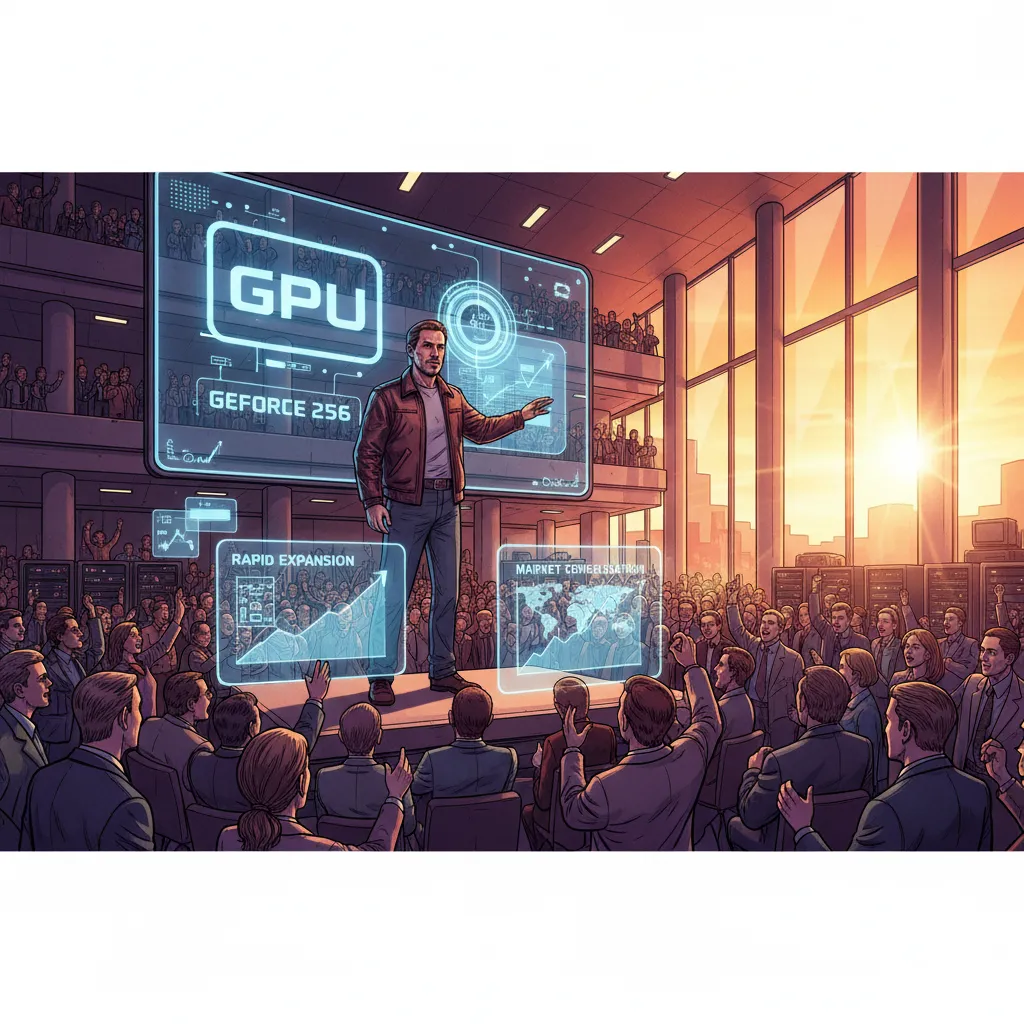
With the GeForce 256 and the coining of the GPU firmly establishing their dominance, NVIDIA entered a period of rapid expansion and market consolidation. This wasn’t just about innovation; it was about strategic warfare, acquiring rivals, and building an unassailable lead in the burgeoning 3D graphics market. Jensen Huang, the erstwhile underdog, was now leading a charge, turning NVIDIA into a formidable empire.
The early 2000s were a wild west for graphics. Many companies had sprung up, each vying for a piece of the pie. But one name loomed largest as NVIDIA’s primary competitor: 3dfx Interactive. 3dfx had been the original darling of PC gaming, famous for its Voodoo series of graphics accelerators. For a time, their Voodoo cards were the must-have upgrade for any serious gamer, defining the cutting edge of 3D gaming. But while 3dfx clung to its proprietary Glide API, NVIDIA embraced DirectX and OpenGL, anticipating the market’s shift towards open standards.
As NVIDIA’s GeForce series gained traction, 3dfx found itself in an increasingly precarious position. Its technology, once revolutionary, started to look dated, and its business strategy faltered. Jensen Huang, ever the pragmatist and aggressor, saw an opportunity not just to beat a rival, but to absorb it. In December 2000, NVIDIA announced the acquisition of 3dfx’s key assets, including its intellectual property and some of its engineering talent, for a cool $112 million in stock.
This wasn’t just a business deal; it was a power move, a strategic decapitation of their fiercest rival. The acquisition effectively eliminated 3dfx from the market, consolidating NVIDIA’s position as the undisputed leader in PC graphics. It sent a clear message to the remaining competitors: NVIDIA was here to win, and it would do whatever it took.
“In the early days, it was a knife fight in a phone booth. You had to be faster, smarter, and sometimes, you had to be willing to buy out the competition to survive.”
But dominance breeds new challenges. With 3dfx out of the picture, a new arch-rival rose to prominence: ATI Technologies. The rivalry between NVIDIA and ATI (later acquired by AMD) would define the next decade of graphics innovation, a relentless, tooth-and-nail battle for supremacy that pushed both companies to the absolute limits of engineering and marketing.
NVIDIA, under Huang’s relentless drive, didn’t rest on its laurels. They iterated rapidly, releasing new generations of GeForce cards that consistently pushed the boundaries of performance and features. They expanded beyond just consumer gaming, recognizing the potential of their powerful GPUs in professional visualization, scientific computing, and workstation applications. They started building out ecosystems, not just selling chips, but providing tools, drivers, and support that made their hardware indispensable.
This period was a whirlwind of innovation, market expansion, and fierce competition. Jensen Huang, dressed in his now-signature leather jacket, became the public face of this aggressive, visionary company. He understood that in the high-stakes world of silicon, you couldn’t just be good; you had to be dominant. You had to continuously innovate, aggressively market, and strategically acquire. NVIDIA had not only survived; it was thriving, a lean, mean, graphics-processing machine, seemingly unstoppable. But the tech world is a cruel mistress, and another storm was brewing on the horizon, ready to test their mettle once more.
🌪️ Chapter 5: The Red Queen’s Race – GeForce FX and Another Brush with Oblivion
The tech industry, like the Red Queen in Alice in Wonderland, demands that you run as fast as you can just to stay in the same place. To get anywhere, you have to run twice as fast. And in the early 2000s, NVIDIA was running like a cheetah, but its rival, ATI, was a relentless blur right behind it. This era, particularly centered around the launch of the GeForce FX series, would prove to be another harrowing near-death experience for Jensen Huang and his company.
After the triumphs of the GeForce 256 and the acquisition of 3dfx, NVIDIA was riding high. They were the market leader, the undisputed king of 3D graphics. This confidence, however, led to an ambitious, perhaps overambitious, project: the GeForce FX (codenamed NV30). Launched in late 2002, the FX series was designed to be a monumental leap forward, pushing the boundaries of programmable shaders and cinematic rendering. But in their quest for ultimate performance and feature sets, NVIDIA stumbled, hard.
The GeForce FX was a technical marvel on paper, but it was a nightmare in practice. It was notoriously hot, consumed enormous amounts of power, and often required elaborate cooling solutions, some of which were so loud they sounded like a jet engine taking off inside your PC. Its complex architecture, particularly its reliance on 128-bit floating-point precision in an era when 64-bit was often sufficient, made it difficult for developers to optimize for and sometimes led to performance bottlenecks.
“We got caught up in the feature race. We designed a chip that was technically brilliant but practically flawed. It was a humbling, almost fatal, mistake.”
While NVIDIA was wrestling with the FX’s thermal and power issues, ATI, their fierce Canadian rival, struck gold. Their Radeon 9700 Pro, launched just before the FX, was a masterclass in elegant, efficient design. It delivered exceptional performance, especially in DirectX 9, with far less power consumption and heat. It was faster, quieter, and simply a better product for the consumer. Suddenly, NVIDIA, the market leader, found itself playing catch-up, its flagship product being outmaneuvered by a more balanced, user-friendly competitor.
This was a major crisis. The GeForce FX was a commercial disappointment, tarnishing NVIDIA’s reputation for cutting-edge performance and efficiency. Retailers were struggling to move units, and gamers, once loyal to NVIDIA, were flocking to ATI. The company’s stock took a hit, and whispers of its demise began to circulate in the tech press. Jensen Huang, once again, found himself staring into the abyss.
But Jensen Huang is not a man who gives up easily. He mobilized his engineers, not to abandon the FX line entirely, but to rapidly iterate and refine. They released successive versions – the FX 5900, 5700, and others – that attempted to address the power and heat issues, offering more balanced performance. They learned a brutal lesson: raw technical prowess, no matter how impressive on paper, means little if it’s not practical, efficient, and user-friendly.
The GeForce FX saga was a painful, expensive lesson in humility and market responsiveness. It proved that even dominant players can make critical missteps and that competition, however fierce, ultimately drives innovation. NVIDIA survived, bruised but not broken, having learned that the Red Queen’s Race isn’t just about speed; it’s about smart, sustainable speed. They would emerge from this crucible with a renewed appreciation for efficiency and a deeper understanding of the delicate balance between pushing boundaries and delivering a usable product. And this experience, this close shave, would subtly shape their next, most revolutionary move.
💡 Chapter 6: The Unseen Seed – CUDA’s Quiet Birth and the Parallel Computing Prophecy
While NVIDIA was locked in a brutal, public battle with ATI over gaming graphics, a quiet, almost unnoticed revolution was brewing deep within its engineering labs. This wasn’t about making pixels prettier or frames faster; it was about fundamentally altering what a GPU could do. This was the birth of CUDA, and it would prove to be Jensen Huang’s most visionary, and ultimately, company-defining, gamble.
The year was 2006. For years, GPUs had been specialized processors, designed primarily for the highly parallel task of rendering graphics. Each pixel, each vertex, could be processed independently, making GPUs incredibly efficient at certain types of computations. Jensen Huang and his chief scientists, including David Kirk and John Nickolls, looked at this inherent parallelism and saw something far beyond gaming. They saw a general-purpose supercomputer, waiting to be unleashed.
The problem was accessibility. To program a GPU for anything other than graphics was akin to writing code in hieroglyphics. It required deep knowledge of graphics APIs and a willingness to contort general computing problems into visual ones. It was cumbersome, inefficient, and impractical for mainstream scientific or data processing applications.
Huang’s vision was audacious: transform the GPU into a fully programmable parallel processor, accessible to anyone who could write C, C++, or Fortran. This meant building an entirely new software platform, a unified architecture that would allow developers to harness the GPU’s immense parallel processing power for non-graphics tasks. This ambitious project became CUDA – Compute Unified Device Architecture.
“We bet the company on CUDA. We knew it would take years, maybe a decade, to pay off. But we saw the future of computing, and it was parallel.”
The internal struggle to develop CUDA was immense. It wasn’t just a technical challenge; it was a cultural one. NVIDIA was a hardware company, and investing so heavily in software development was a radical departure. It required diverting significant resources, engineering talent, and capital away from their core, revenue-generating graphics business. Many within the company were skeptical. The payoff was uncertain, and the timeline was long. Jensen Huang, however, was unshakeable. He believed, with an almost religious fervor, that parallel computing was the future, and that the GPU was its natural engine.
When CUDA officially launched in 2006, it wasn’t a splashy consumer product launch. It was a developer-focused event, aimed at scientists, researchers, and academics. Early adoption was slow, but critical. Researchers in fields like computational fluid dynamics, molecular dynamics, and financial modeling began to experiment, discovering that GPUs could accelerate their complex simulations by orders of magnitude compared to traditional CPUs.
CUDA wasn’t an overnight success. It was a slow burn, a decade-long investment in an ecosystem that wouldn’t yield significant returns for years. It required NVIDIA to not only build the hardware but also the software tools, libraries, and developer support to make it usable. It was a testament to Jensen Huang’s long-term strategic vision and his willingness to make massive, speculative bets that extended far beyond the next quarterly earnings report. While the world was still debating the merits of DirectX vs. OpenGL, NVIDIA was quietly sowing the seeds of a revolution, building the infrastructure for a future that few could yet comprehend: a future powered by massive parallel computation. The stage was being set for AI, even if no one, not even Jensen, knew it yet.
🎢 Chapter 7: The Wilderness Years – Mobile Misadventures and the Unseen Grind
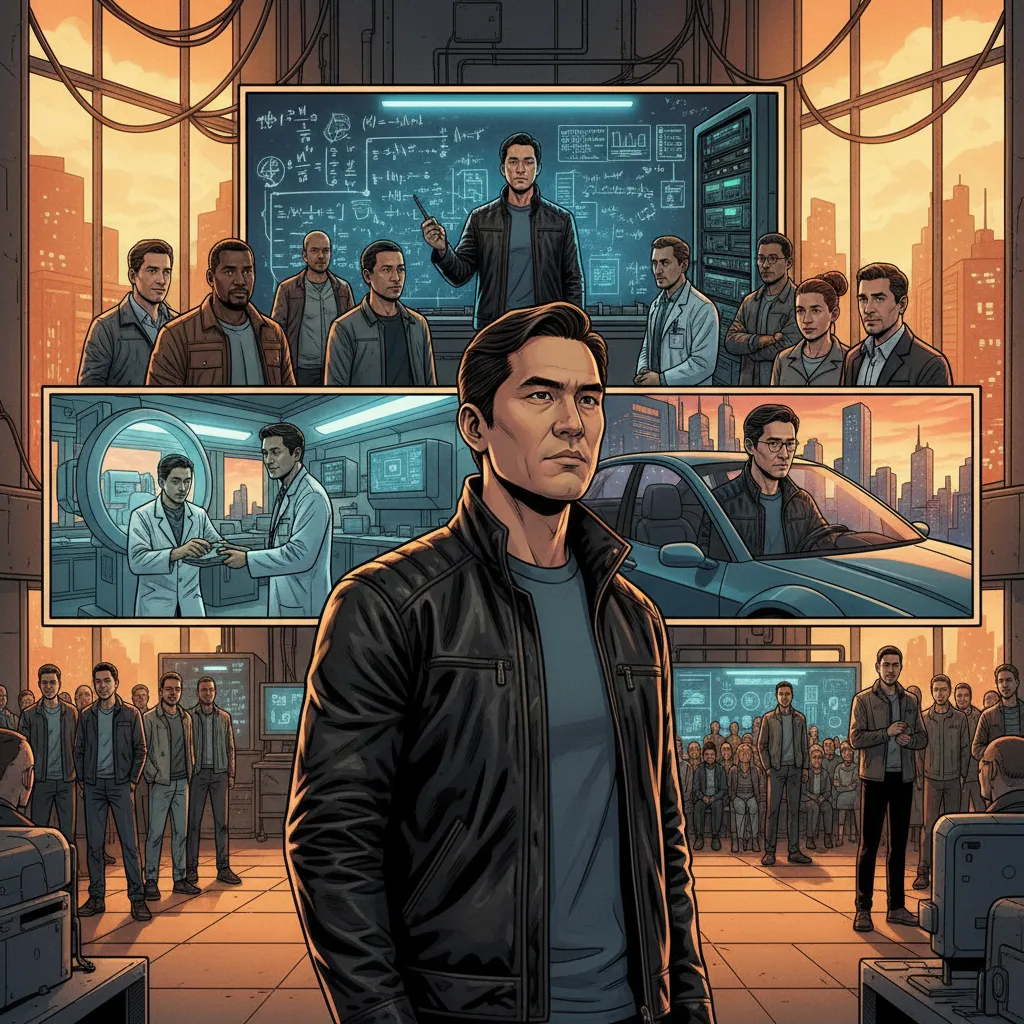
After the quiet launch of CUDA, NVIDIA entered a period that, from an outsider’s perspective, might have seemed like a search for its next big thing, a restless exploration beyond its gaming roots. These “wilderness years” saw NVIDIA make several significant strategic diversions, most notably into the burgeoning mobile market with its Tegra platform, a venture that ultimately proved to be a costly misstep, though one that provided invaluable lessons.
The late 2000s and early 2010s were defined by the smartphone revolution. Apple’s iPhone and Google’s Android platform were taking the world by storm, and every tech company wanted a piece of the mobile pie. Jensen Huang, always looking for new frontiers for accelerated computing, saw an opportunity for NVIDIA’s low-power, high-performance GPUs to power these new devices. The Tegra system-on-a-chip (SoC) was born, integrating an ARM-based CPU with NVIDIA’s graphics technology.
Tegra was ambitious. It powered early Android tablets, the Microsoft Zune HD, and even the Tesla Model S infotainment system. NVIDIA poured massive resources into developing a full mobile platform, believing that their graphics prowess would give them an edge in a market dominated by Qualcomm and others. They envisioned a world where NVIDIA-powered mobile devices would deliver console-quality gaming on the go, and advanced visual computing for all.
But the mobile market proved to be a brutal, unforgiving beast. The competition was cutthroat, margins were razor-thin, and the pace of innovation was dizzying. While Tegra chips found their way into some devices, they struggled to gain significant traction against entrenched players like Qualcomm, whose modem technology and strong ecosystem relationships gave them an insurmountable advantage. NVIDIA, a graphics powerhouse, was a newcomer in a market that prioritized connectivity and power efficiency above all else.
“We learned a hard lesson in the mobile market. Sometimes, being technically superior isn’t enough if you don’t own the adjacent technologies or the ecosystem.”
The Tegra gamble was expensive. It drained resources, diverted engineering talent, and ultimately failed to deliver the market share or revenue NVIDIA had hoped for. By 2014, NVIDIA largely exited the mainstream mobile phone market, though Tegra found a niche in automotive infotainment and, significantly, in the hugely successful Nintendo Switch console. It was a humbling experience, a reminder that even a company with NVIDIA’s engineering might could stumble when venturing too far from its core competencies and market dynamics.
Yet, even during these wilderness years, while the public narrative might have focused on NVIDIA’s struggles in mobile, the quiet, unseen grind on CUDA continued. Researchers, still a niche community, were steadily adopting CUDA for parallel computing tasks. The number of CUDA-enabled GPUs grew, the software libraries matured, and a small but dedicated developer ecosystem began to flourish. This was the true long game, the strategic patience that Jensen Huang had preached since CUDA’s inception.
These were the years of building infrastructure, refining tools, and cultivating a community, all without immediate financial gratification. It was a period of trial and error, of learning what worked and what didn’t, and crucially, of maintaining faith in a vision that still seemed abstract to most of the world. While the mobile misadventures made headlines, the real story, the one that would define NVIDIA’s future, was happening behind the scenes, fueled by Jensen Huang’s unwavering conviction that parallel computing, enabled by the GPU and CUDA, was destined for something far greater than just pretty pixels or even mobile devices. The stage was being set for a seismic shift, and NVIDIA was unknowingly preparing to be its architect.
⚡ Chapter 8: The Thunderclap – AlexNet, Deep Learning, and the AI Awakening

For a decade, CUDA had been a slow-burning ember, a niche tool for scientists and academics, a testament to Jensen Huang’s long-term vision for parallel computing. NVIDIA had poured billions into it, patiently nurturing its ecosystem, even as the company navigated the treacherous waters of the gaming market and the costly diversions into mobile. Then, in 2012, a thunderclap. A moment that would validate Huang’s audacious bet and catapult NVIDIA from a graphics card company into the undisputed infrastructure provider for the most transformative technology of the 21st century: Artificial Intelligence.
The catalyst was a relatively obscure academic competition known as the ImageNet Large Scale Visual Recognition Challenge (ILSVRC). For years, researchers had struggled to make significant breakthroughs in computer vision, teaching machines to “see” and identify objects in images. The traditional methods were reaching their limits.
Then came AlexNet. Developed by Alex Krizhevsky, Ilya Sutskever, and their supervisor Geoffrey Hinton at the University of Toronto, AlexNet was a deep convolutional neural network (CNN) that absolutely shattered previous records at the 2012 ImageNet challenge. Its error rate was nearly halved compared to the closest competitor, a monumental leap forward that sent shockwaves through the AI research community.
The secret sauce? AlexNet was trained almost entirely on NVIDIA GPUs. Specifically, it used two NVIDIA GeForce GTX 580 consumer graphics cards. The massive parallelism of the GPUs allowed the researchers to train their complex neural network much, much faster than traditional CPUs ever could. What would have taken weeks or months on CPUs could now be done in days or hours on GPUs.
“When AlexNet hit, it was like a lightning bolt. We knew then, unequivocally, that our decade-long bet on CUDA and parallel computing was about to pay off in the most spectacular way.”
This wasn’t just an academic victory; it was a profound demonstration of the GPU’s power in a completely new domain. It proved that GPUs were not just for rendering fantastical worlds in video games; they were the perfect engine for the massive, matrix-multiplication-heavy computations required by deep learning. The floodgates opened. Researchers around the world, seeing the undeniable results of AlexNet, began scrambling to acquire NVIDIA GPUs and learn CUDA.
Jensen Huang, ever the visionary, immediately recognized the magnitude of this moment. He pivoted NVIDIA’s focus with breathtaking speed and conviction. The company, which had been slowly shifting from “graphics company” to “visual computing company,” now embraced a new identity: the “AI computing company.” They started investing aggressively in AI research, collaborating with leading universities, and tailoring their hardware and software specifically for deep learning workloads.
The shift was profound. NVIDIA’s data center business, once a modest segment, began to explode. Their high-end GPUs, designed for professional visualization, were suddenly the essential workhorses for every major AI lab and tech giant. The long-term bet on CUDA, the quiet cultivation of a parallel computing ecosystem, had finally found its killer app. It wasn’t just a validation; it was a vindication. The world had woken up to the power of AI, and NVIDIA, thanks to Jensen Huang’s foresight and persistent investment, was already positioned at the very heart of it, ready to power the revolution. The wilderness years were over. The AI era had dawned, and NVIDIA was its indispensable architect.
🚀 Chapter 9: The Kingmaker’s Throne – Datacenter Dominance and the AI Gold Rush Architect
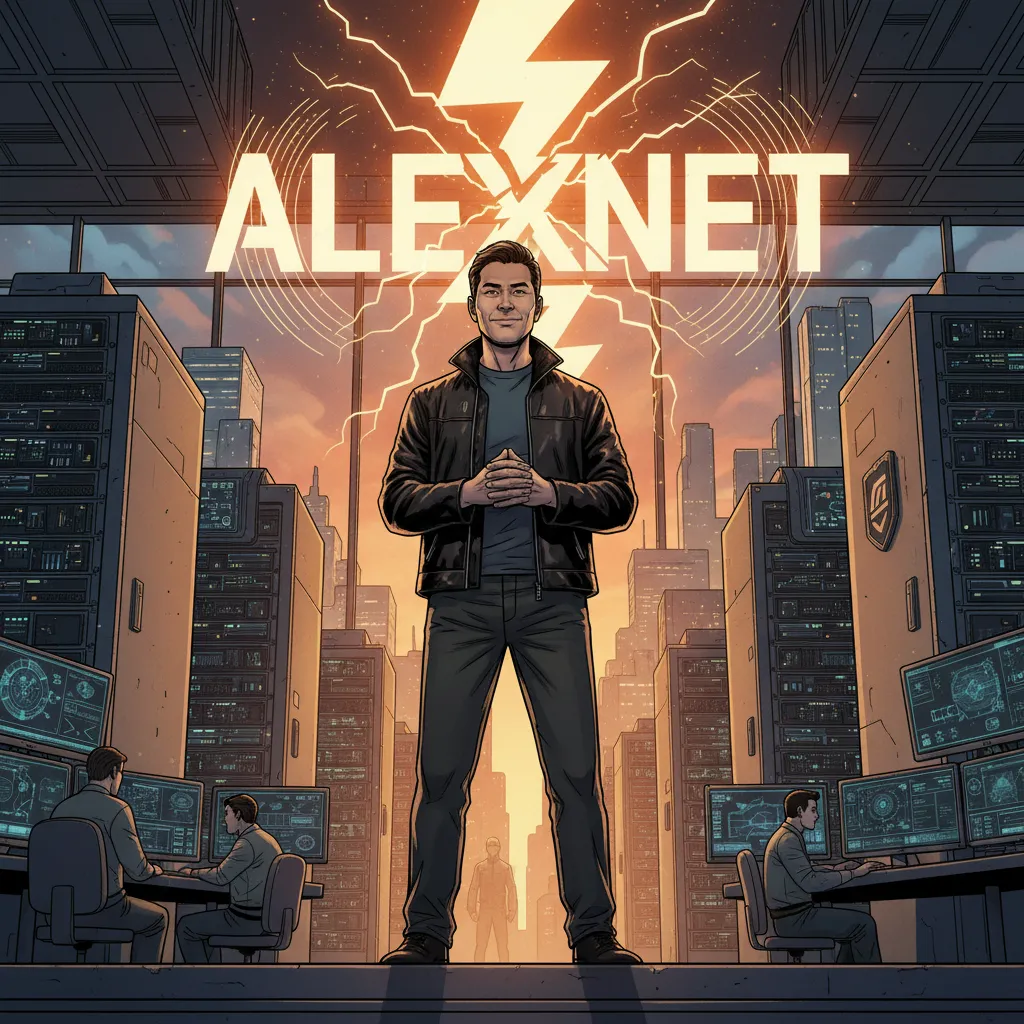
With the AlexNet thunderclap echoing through the tech world, NVIDIA didn’t just participate in the AI revolution; it became its architect, its infrastructure provider, its undisputed kingmaker. Jensen Huang, seeing the tectonic shift, steered the company with the precision of a master navigator, transforming NVIDIA’s datacenter business from a niche market into its primary engine of growth and influence.
This wasn’t merely about selling more GPUs. It was about building an entire ecosystem tailored for AI. NVIDIA understood that deep learning required not just raw computational power, but a complete stack: specialized hardware, optimized software libraries, development tools, and a robust framework for deploying AI models at scale. They didn’t just sell shovels; they sold the entire mining operation, from the pickaxes to the processing plants.
Their flagship products in this era became the Tesla line (later subsumed into the more general datacenter brand) and then the legendary A100 and H100 Ampere and Hopper GPUs. These weren’t your gaming cards; these were industrial-grade supercomputing engines, packed with billions of transistors, designed specifically for AI training and inference. They featured specialized cores like Tensor Cores, which dramatically accelerated the matrix multiplication operations crucial for neural networks.
The demand was insatiable. Every major tech company – Google, Amazon, Microsoft, Meta, OpenAI, Tesla – needed NVIDIA’s GPUs to train their ever-larger, ever-more-complex AI models. Startups, universities, and governments followed suit. Without NVIDIA’s hardware, the cutting edge of AI research and deployment would grind to a halt. They became the sole, indispensable supplier for the most valuable commodity in the AI gold rush: compute.
“We’re not just selling chips. We’re selling an entire platform. CUDA is our operating system for AI. Without the software, the hardware is just a rock.”
But the secret sauce wasn’t just the hardware. It was CUDA. The decade-plus investment in CUDA had created an unassailable moat. Developers, researchers, and engineers had invested countless hours learning CUDA, building their AI models and applications on its framework. Switching to an alternative platform, even if one existed, would mean rewriting vast amounts of code and re-optimizing entire workflows. This created a powerful vendor lock-in effect, a network effect of talent and tools that made NVIDIA’s ecosystem incredibly sticky.
NVIDIA also aggressively fostered its developer community. They hosted conferences, offered free training, provided extensive documentation, and invested in AI startups. They understood that the strength of their platform wasn’t just in the silicon, but in the collective intelligence and innovation of the people building on it. Jensen Huang, with his signature leather jacket and charismatic presentations, became the de facto evangelist for the AI revolution, articulating a vision where accelerated computing would solve the world’s most complex problems.
The company’s valuation soared, crossing the trillion-dollar mark, then the two-trillion, and even hitting three trillion dollars, a testament to its indispensable role. NVIDIA’s datacenter revenue eclipsed its traditional gaming revenue, signaling a complete transformation of the company. From a struggling graphics card maker to the architect of AI, NVIDIA, under Jensen Huang’s leadership, had not only found its new purpose but had also captured the ultimate kingmaker position in the most important technological shift of our time. They weren’t just selling the tools; they were defining the very language of AI.
📈 Chapter 10: The AI Gold Rush – NVIDIA’s Indispensable Role and the Future’s Foundation

We’re living in the thick of it now. The AI Gold Rush is in full swing, and if the prospectors are the developers, researchers, and tech giants, then NVIDIA is the only company selling the heavy machinery, the dynamite, and the sophisticated processing plants necessary to extract the gold. Their position isn’t just dominant; it’s almost monopolistic, not through nefarious means, but through decades of foresight, relentless innovation, and the cultivation of an unparalleled ecosystem.
Today, if you’re building a large language model like ChatGPT, a self-driving car AI, a groundbreaking drug discovery platform, or even just a sophisticated image generator, you’re almost certainly doing it on NVIDIA hardware powered by CUDA software. Their H100 and upcoming Blackwell series GPUs are not just chips; they are the literal foundation upon which the future of artificial intelligence is being constructed.
The demand for these chips is astronomical, far outstripping supply. Companies are literally fighting over allocations, willing to pay exorbitant prices for the computational power that only NVIDIA can consistently deliver at scale. This isn’t just a boom; it’s a fundamental shift in the economics of computing. The cost of training the most advanced AI models runs into the hundreds of millions, sometimes billions, of dollars, and a huge chunk of that goes directly to NVIDIA for its specialized GPUs.
“In the new era of AI, compute is the new currency. And right now, NVIDIA is minting it faster than anyone else.”
Jensen Huang often talks about “full-stack innovation,” and this is where NVIDIA truly shines. They don’t just design the silicon; they design the entire architecture, from the individual transistors to the massive data center racks (like the DGX systems), the networking interconnects (NVLink, InfiniBand), and crucially, the software stack that makes it all usable. Their libraries like cuDNN and TensorRT are optimized down to the bare metal, giving developers unparalleled performance. This integrated approach creates a virtuous cycle: better hardware enables more complex AI, which in turn drives demand for even better hardware and software.
Critics might point to the lack of serious competition in the high-end AI accelerator market. Intel has its Gaudi chips, AMD has its MI series, and tech giants like Google (TPUs) and Amazon (Trainium/Inferentia) are developing their own custom ASICs. But none have managed to replicate NVIDIA’s full-stack ecosystem, the sheer breadth of its developer community, or the decade-plus head start that CUDA provided. It’s a testament to the power of first-mover advantage combined with relentless execution.
NVIDIA’s role extends beyond just selling chips. They are actively shaping the future of AI. They are investing in quantum computing, robotics, autonomous vehicles, and even digital twins for industrial applications. They are pushing the boundaries of what’s possible, not just as a supplier, but as a thought leader and a strategic partner to the companies building the next generation of AI.
The AI gold rush is still in its early innings, but one thing is clear: without NVIDIA, it would be far slower, far less potent, and perhaps even impossible in its current form. Jensen Huang’s audacious bet in a Denny’s diner, his perseverance through multiple near-death experiences, and his unwavering conviction in parallel computing have positioned NVIDIA not just as a tech giant, but as the essential infrastructure provider for humanity’s most ambitious technological endeavor. They are not just participating in the future; they are building its very foundation, one GPU at a time.
🧠 Chapter 11: The Long Game – Huang’s Philosophy, Future Vision, and the Inevitable Risks

To understand NVIDIA’s unprecedented rise and its current indispensable status, you have to understand the man at its helm: Jensen Huang. He’s not just a CEO; he’s a philosopher of technology, a master strategist, and a relentless visionary. His leadership isn’t about chasing fads; it’s about playing the long game, making massive, multi-decade bets, and having the courage to stick with them through thick and thin.
Huang’s philosophy is rooted in a few core tenets:
- Accelerated Computing is Inevitable: His fundamental belief, since the Denny’s napkin, is that general-purpose CPUs alone cannot handle the computational demands of the future. Specialized, parallel processors like the GPU are essential. This conviction has been the North Star for NVIDIA, guiding every major strategic decision, from the creation of the GPU to the development of CUDA and the focus on AI.
- Software is the Moat: While NVIDIA is famous for its hardware, Huang consistently emphasizes that their real competitive advantage, their “soul,” is CUDA. It’s the software platform that binds everything together, creating an ecosystem that is incredibly difficult for competitors to replicate. He understood early on that in the world of computing, the platform owner ultimately controls the market.
- Full-Stack Innovation: NVIDIA doesn’t just sell components; it designs entire systems, from the chip architecture to the data center infrastructure, the networking, and the comprehensive software stack. This integrated approach ensures optimal performance and a seamless experience for developers, further reinforcing their ecosystem.
- Embrace the Future, Even if it’s Unpopular: Huang has consistently pushed NVIDIA into new, often risky, frontiers – from professional visualization to mobile (a learning experience), and ultimately to AI. He’s not afraid to make bold bets that take years to pay off, like CUDA. This requires immense patience and a willingness to withstand market skepticism.
“Our strategy has always been to invent the future, not just participate in it. Sometimes, that means going against the grain, making bets that look crazy in the short term.”
Looking ahead, Jensen Huang’s vision for NVIDIA extends far beyond just AI training. He sees a future where every industry, every company, every product will be infused with intelligence. NVIDIA is investing heavily in:
- Robotics: Powering autonomous machines, from factory robots to delivery drones.
- Digital Twins / Industrial Metaverse: Creating virtual replicas of factories, cities, and even entire planets, optimized by AI and simulated on NVIDIA’s Omniverse platform.
- Autonomous Vehicles: Providing the compute platform for self-driving cars, a massive, real-time AI challenge.
- Healthcare and Drug Discovery: Accelerating research, diagnostics, and personalized medicine through AI.
- Quantum Computing: While not directly building quantum computers, NVIDIA is exploring how classical GPUs can simulate quantum systems and integrate with future quantum architectures.
However, even a kingmaker faces risks. The very dominance that NVIDIA enjoys in AI compute also makes it a target.
- Competition: While currently behind, AMD, Intel, and custom ASIC developers are pouring billions into challenging NVIDIA’s lead. A breakthrough from a competitor could erode their market share.
- Geopolitics: The global chip supply chain is incredibly complex and vulnerable. Tensions, particularly around Taiwan (where TSMC, NVIDIA’s primary foundry, is based), pose a significant systemic risk. Export controls and trade restrictions could also impact their business.
- Customer Power: As AI models become more efficient, or as major customers like Microsoft and Google develop their own custom chips, the hyperscalers could reduce their reliance on NVIDIA.
- Innovation Treadmill: The pace of AI innovation is dizzying. NVIDIA must continue to out-innovate itself, consistently delivering generational leaps in performance and efficiency, or risk being overtaken.
- Regulatory Scrutiny: Such immense market power often attracts the attention of antitrust regulators, who might seek to break up or limit NVIDIA’s influence.
Jensen Huang, with his decades of navigating near-death experiences and market shifts, is acutely aware of these challenges. His ability to anticipate trends, make audacious bets, and relentlessly execute on a long-term vision has been NVIDIA’s greatest asset. The journey from a Denny’s napkin to the core of the AI revolution is a testament to that unwavering conviction and the relentless pursuit of an accelerated future.
🚀 Chapter 12: The Mogul’s Legacy – From Underdog to Architect of Tomorrow
So, there you have it. The improbable, high-octane saga of Jensen Huang and NVIDIA – a story that reads less like a business case study and more like an epic graphic novel, complete with dramatic plot twists, existential crises, and a protagonist who refused to stay down. From the humble, coffee-stained beginnings in a Denny’s diner to the undisputed throne as the architect of the AI revolution, NVIDIA’s journey is a masterclass in visionary leadership, strategic resilience, and the relentless pursuit of an audacious dream.
Think about it: this was a company that gambled on a proprietary graphics technique and failed spectacularly. It was a company that lost a make-or-break console deal to a rival. It was a company that designed a flagship product so flawed it nearly handed the market to its fiercest competitor. It made a massive, costly detour into mobile that went nowhere. By all conventional wisdom, NVIDIA should have been a footnote in Silicon Valley history, a cautionary tale of ambition over execution.
But Jensen Huang wasn’t conventional. He cultivated a corporate culture of brutal honesty, relentless self-improvement, and an almost fanatical belief in the power of parallel computing. He wasn’t afraid to make decades-long bets, like CUDA, that looked utterly insane in the short term, knowing that true paradigm shifts don’t happen overnight. He learned from every failure, every near-death experience, transforming setbacks into fuel for the next leap forward.
Today, NVIDIA isn’t just a chip company; it’s the nervous system of the future. Every major breakthrough in AI, every mind-bending large language model, every self-driving car inching closer to reality, every scientific simulation pushing the boundaries of human knowledge – they all run on the digital backbone that Jensen Huang and his team painstakingly built. They are no longer just making faster graphics for gamers; they are literally enabling machines to think, to learn, to create.
“Jensen Huang didn’t just build a company; he built a platform for the future. He saw the parallel universe forming long before anyone else.”
The legacy of Jensen Huang is not just about the staggering market cap of NVIDIA or the billions he’s amassed. It’s about demonstrating that true innovation requires more than just smart engineers and venture capital. It requires an almost messianic conviction, the guts to make massive, long-term investments, the humility to pivot when necessary, and the unwavering resolve to stare down the abyss of failure, not once, but multiple times, and emerge stronger.
He showed that sometimes, the most important product isn’t the flashy chip of today, but the quiet software platform you’ve been building for a decade. He proved that betting on an abstract concept like “accelerated computing” can, against all odds, become the indispensable engine of the next technological age.
In a world obsessed with quick wins and instant gratification, Jensen Huang’s story is a powerful reminder that the greatest empires are built not on fleeting trends, but on deep, foundational truths, pursued with unyielding tenacity. He didn’t just survive the tech jungle; he helped redefine it, leaving an indelible mark on how humanity interacts with information and intelligence. He is, without a doubt, one of the most compelling moguls of our time, and the architect of tomorrow’s digital universe. And trust me, the story’s far from over.
💡 Key Insights
- ▸ Jensen Huang's unwavering belief in accelerated computing, even through market skepticism and product failures, was key to NVIDIA's ultimate success. Entrepreneurs must identify their core conviction and defend it fiercely, understanding that true innovation often looks like madness before it looks like genius.
- ▸ NVIDIA didn't just sell chips; it built **CUDA**, a robust software platform, and cultivated a powerful developer community, creating formidable network effects and ecosystem lock-in. This demonstrates that in high-tech, true value creation often extends far beyond the hardware, demanding a holistic approach to product and community.
- ▸ The company endured multiple near-death experiences and navigated significant market shifts (gaming, mobile, crypto, AI), showcasing a critical balance between long-term strategic vision (like the decade-long bet on CUDA) and tactical agility in a volatile industry. This teaches that resilience isn't just about surviving, but about learning and adapting without losing sight of the ultimate destination.