Li Ka-shing: The Blueprint Behind Hong Kong's Quiet Empire
He arrived in Hong Kong as a refugee boy with grief in his pocket and scarcity in his bones. Then he turned plastic flowers, panic-soaked real estate, ports, telecom, and infrastructure into one of the most durable fortunes in modern Asia.
View all stories about this mogul
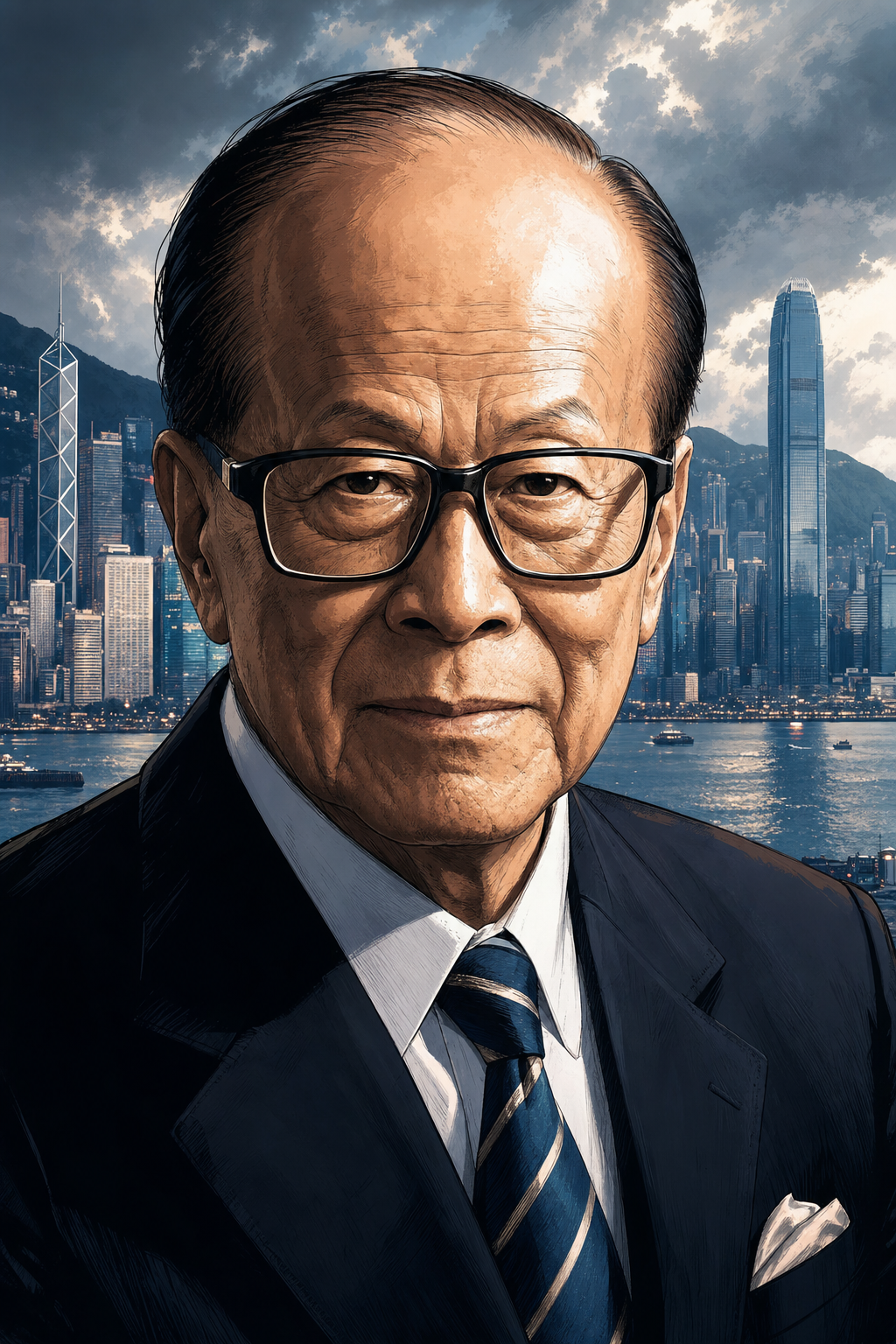
Before Li Ka-shing became Hong Kong’s Superman, he was a teenage factory worker trying to outrun humiliation. He had fled war, lost his father, left school early, and learned the oldest lesson in capitalism the hardest possible way: if you do not own the machine, the machine owns you.
That wound never left him. It became his edge.
Li did not build his empire with theatrical speeches or Silicon Valley mythology. He built it like a man laying reinforced concrete in the dark: one cash-flow engine, one land parcel, one audacious acquisition at a time. First plastic flowers. Then buildings. Then a British trading house. Then ports, power grids, pharmacies, phone networks, and tollbooths on the movement of modern life.
By the time the world started calling him Asia’s Warren Buffett, Li had already built something stranger and, in some ways, tougher: a quiet empire designed to keep earning whether markets were euphoric, terrified, colonial, Chinese, analog, or digital.
🌧️ Chapter 1: The Boy Who Learned What Powerlessness Costs
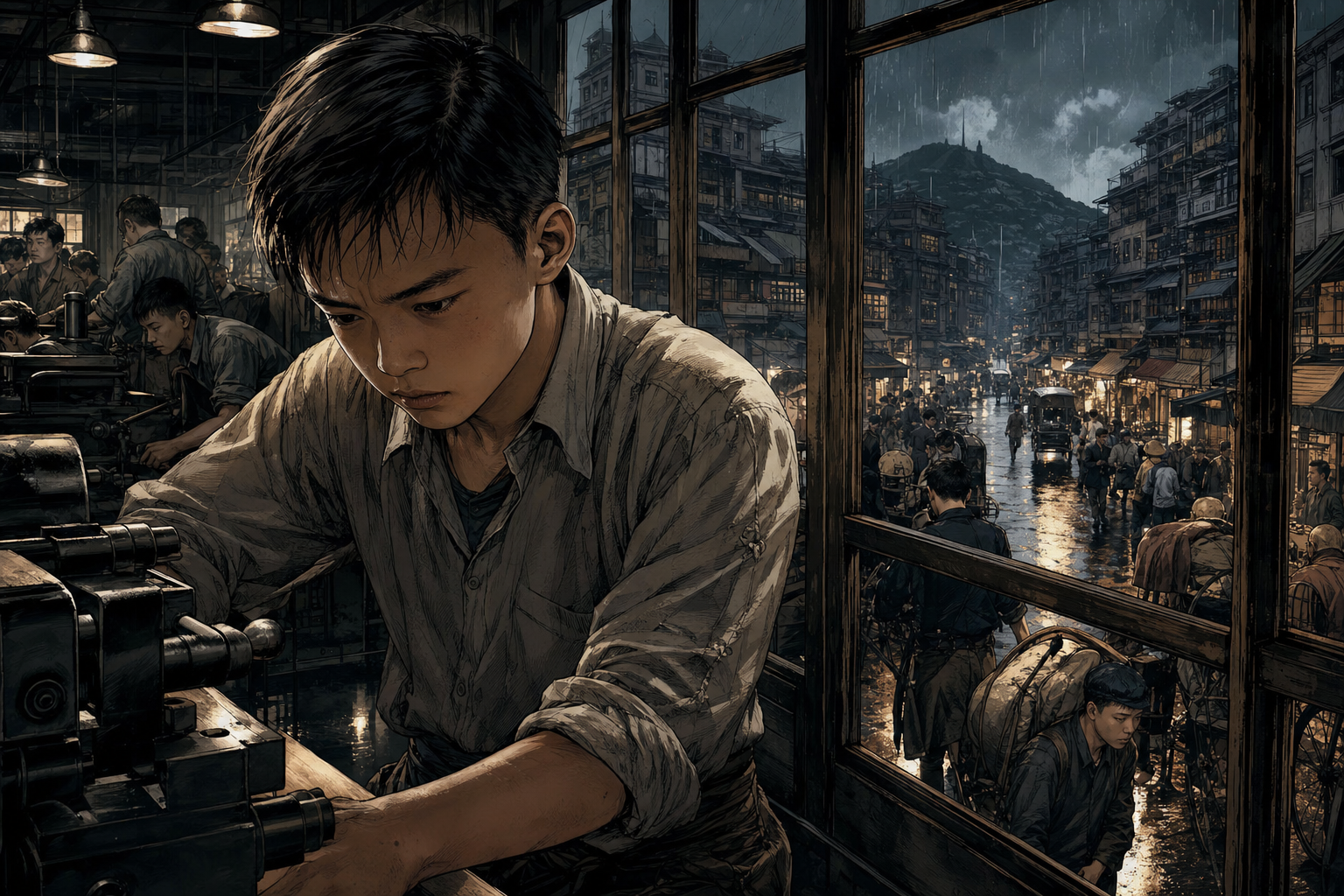
Li Ka-shing was born in 1928 in Chaozhou, Guangdong. In 1940, as war tore through China, his family fled to Hong Kong. Refugee stories are often told as prequels to triumph. In real time, they feel much uglier. Hong Kong was crowded, uncertain, and unforgiving. Then his father died of tuberculosis, and whatever remained of childhood snapped shut.
Li left school in his mid-teens and went to work. He labored long shifts in a plastics factory, sold watch straps, watched every coin, and absorbed the geometry of dependence. When you are poor, every boss is larger, every landlord colder, every bad week more dangerous. That emotional math became the hidden architecture of his life.
He would later carry himself with monk-like calm, but the engine under that calm was fear remembered precisely. Not fear of markets. Fear of helplessness. The future billionaire was shaped less by ambition than by a refusal to ever be cornered again.
🌸 Chapter 2: Plastic Flowers, Hard Cash, and the First Escape Hatch

In 1950, Li founded Cheung Kong with modest savings and borrowed support. He was still in his early twenties, with no pedigree and no cushion. What he had was an instinct for products simple enough to scale and export. He moved into plastic flowers just as postwar consumer demand was expanding, and he attacked the business with ferocious discipline.
There was nothing glamorous about artificial flowers. That was precisely the point. They could be manufactured efficiently, sold internationally, and turned into retained earnings. Li was not chasing prestige. He was building a cash engine.
This is where many legends get distorted. We prefer founders who seem to see the future in a lightning bolt. Li’s version was colder and better. He saw margins, export demand, working capital, and the power of compounding a dull business longer than everyone else had the patience to endure.
Cheung Kong’s success gave him something more important than profit: optionality. Manufacturing money is fragile. Manufacturing money that can be redeployed becomes strategy.
🏙️ Chapter 3: Buying Land When the City Was Afraid
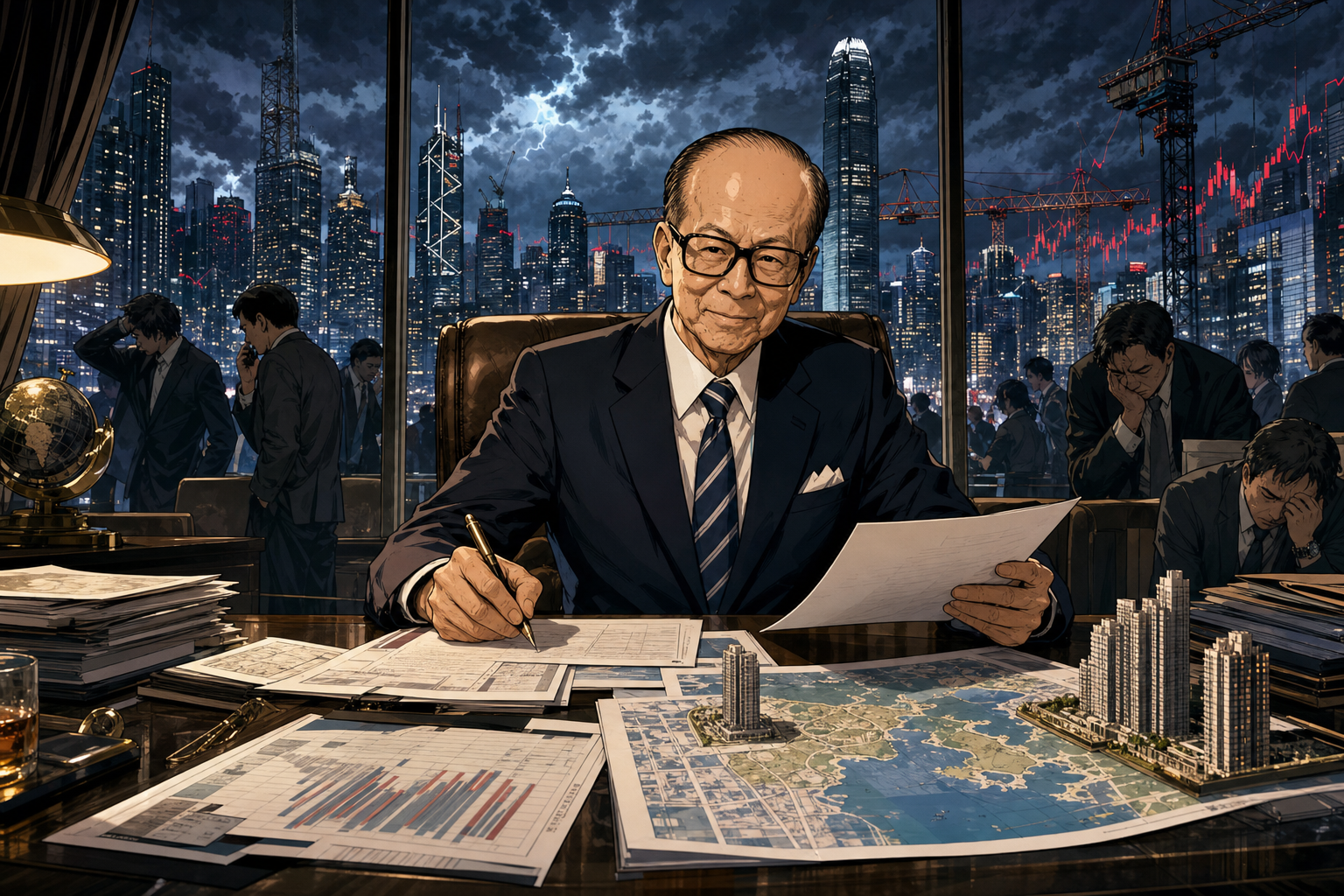
Hong Kong in the 1960s was rising fast, but it was also volatile. During the 1967 riots, confidence cracked and property values weakened. Many people saw danger and stepped back. Li saw discounted permanence.
He started buying land aggressively.
This was one of the defining moves of his life. Property in Hong Kong was not just an asset. It was a control surface. Land meant collateral, status with banks, recurring value, and leverage over the city’s physical future. While other businessmen treated real estate as a place to speculate, Li treated it as an operating fortress.
By the early 1970s, Cheung Kong was listed, and Li was no longer merely a smart manufacturer. He was becoming one of Hong Kong’s most formidable developers. The shift mattered because it changed the kind of deals he could enter. Manufacturing had taught him how to earn. Property taught him how to borrow, bargain, and dominate.
He was no longer surviving inside the city. He was beginning to own parts of it.
🎩 Chapter 4: The Night a British House Became a Chinese Empire
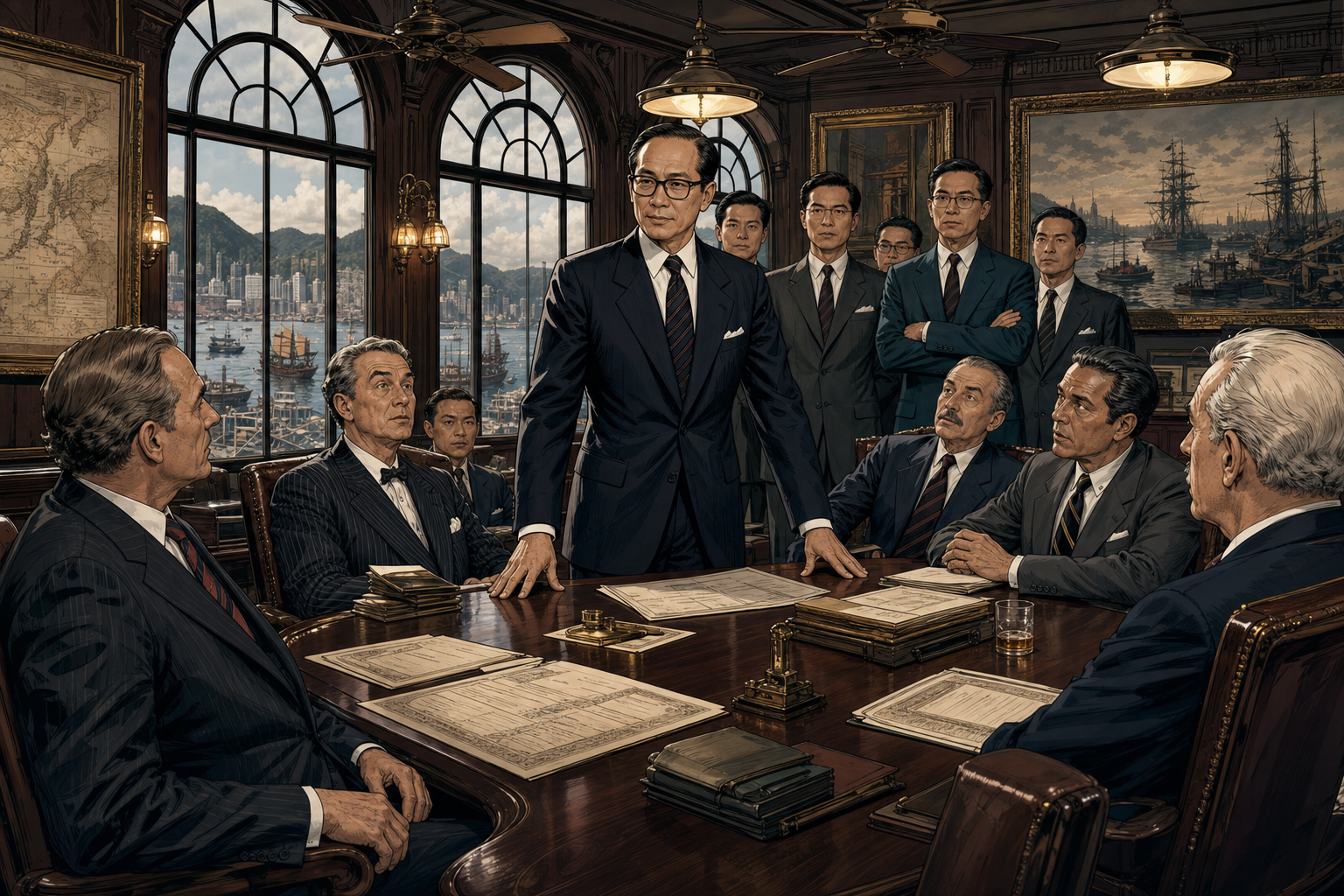
In 1979, Li Ka-shing pulled off the move that turned him from rich man into historic force. Through Cheung Kong, he acquired control of Hutchison Whampoa from HSBC, becoming the first Chinese businessman to control one of Hong Kong’s great old British trading houses.
It is hard to overstate the symbolism. Colonial Hong Kong had long been ruled not just by governors and policy, but by institutions, trading houses, shipping networks, and clubby financial hierarchies that were overwhelmingly British. Hutchison was one of those machines.
Li did not merely buy a company. He bought an operating empire built for a previous era and repurposed it for the next one.
That is what great capital allocators do. They do not always invent new platforms. Sometimes they inherit giant, creaking systems and discover that the real value is in rewiring them faster than anyone thought possible.
After Hutchison, Li’s reach changed shape. He now had ports, trading exposure, infrastructure pathways, and an institutional shell through which international ambition could move at scale. The empire stopped being local. It became transnational.
🚢 Chapter 5: Ports, Pharmacies, Power Grids, and the Geography of Everyday Life

The genius of Li Ka-shing’s empire is that it was built out of businesses ordinary people barely romanticize. Ports. Utilities. Retail chains. Infrastructure. Container terminals. Energy assets. Drugstores. Broadband lines. Things you use, pass through, or pay for without telling anyone at dinner.
That made the empire sturdier than fashionable wealth.
Under Hutchison and its related vehicles, Li expanded into port operations across continents and built one of the world’s largest independent port businesses. He widened the empire through A.S. Watson’s retail empire, infrastructure and utility holdings, and the kind of long-duration assets investors love when panic returns.
This was not an aesthetic empire. It was a systems empire.
Li understood that the richest place to stand in capitalism is often not on the stage, but at the junction box: where goods arrive, where electricity flows, where rent is collected, where shelves are restocked, where daily life becomes recurring revenue. His empire touched the mundane arteries of capitalism, and that is exactly why it lasted.
📡 Chapter 6: The Telecom Bets That Proved He Was Not Just Old Money in a New Suit
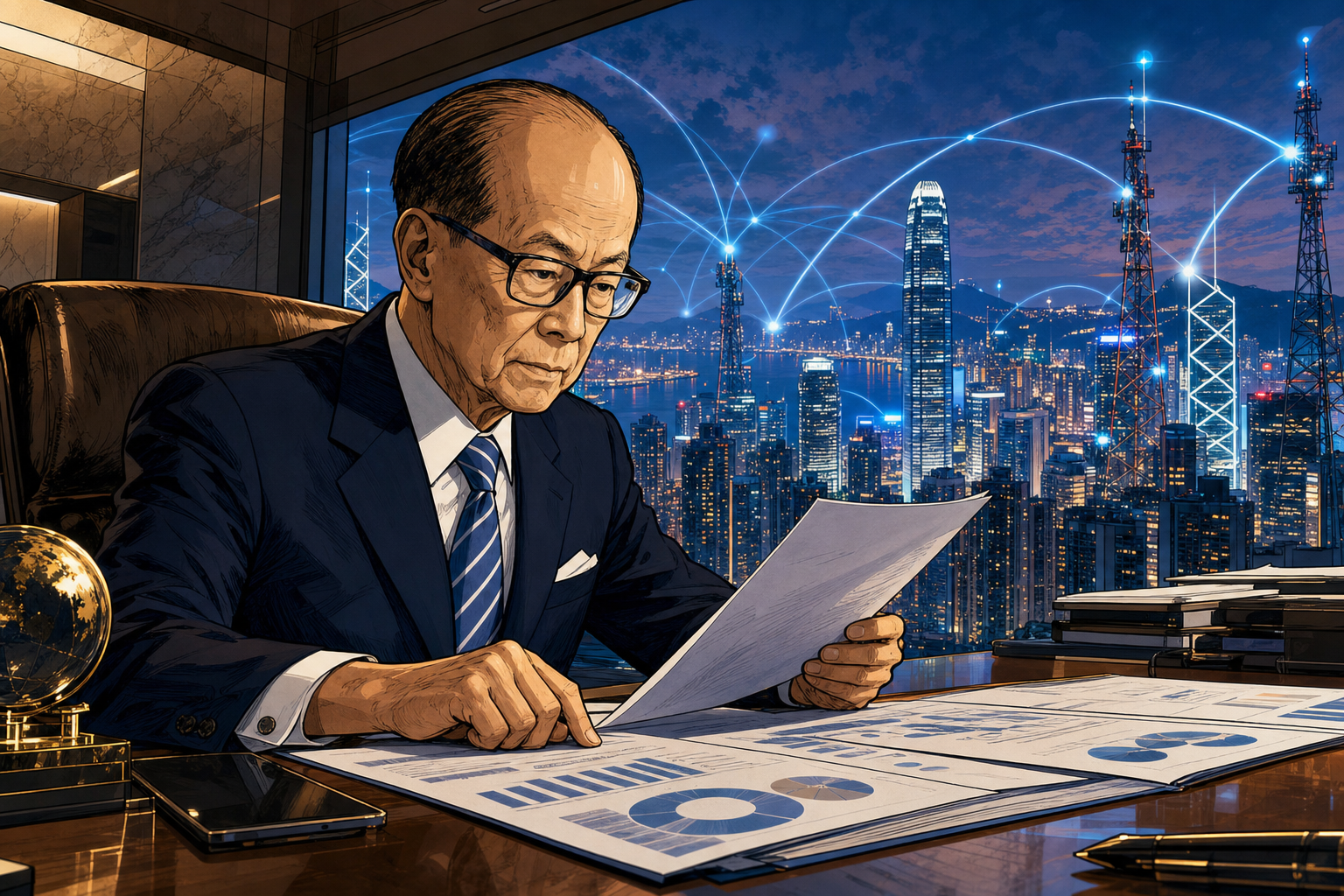
Conglomerate builders often age badly. They keep buying yesterday’s certainty and miss tomorrow’s platform. Li was different.
He pushed hard into telecommunications. Hutchison’s mobile ventures stretched from Hong Kong outward, including the creation and monetization of valuable wireless assets in Europe. The most famous payoff came with Orange. Li backed the business early, built value, and sold it in 2000 for a stunning windfall.
That sale mattered because it shattered the lazy caricature of Li as a man who only understood land and old-economy monopolies. He could nurture a modern asset, then exit when the market offered a price too good to ignore.
Even outside the public conglomerate, Li showed a feel for technological inflection points. Through his private investment activity, he took early stakes in companies such as Facebook, Spotify, and Siri. He was never trying to cosplay as a hoodie founder. He was doing something far more effective: placing quiet chips on the next layer of infrastructure while his main empire continued harvesting the current one.
🧮 Chapter 7: The Monk With a Balance Sheet
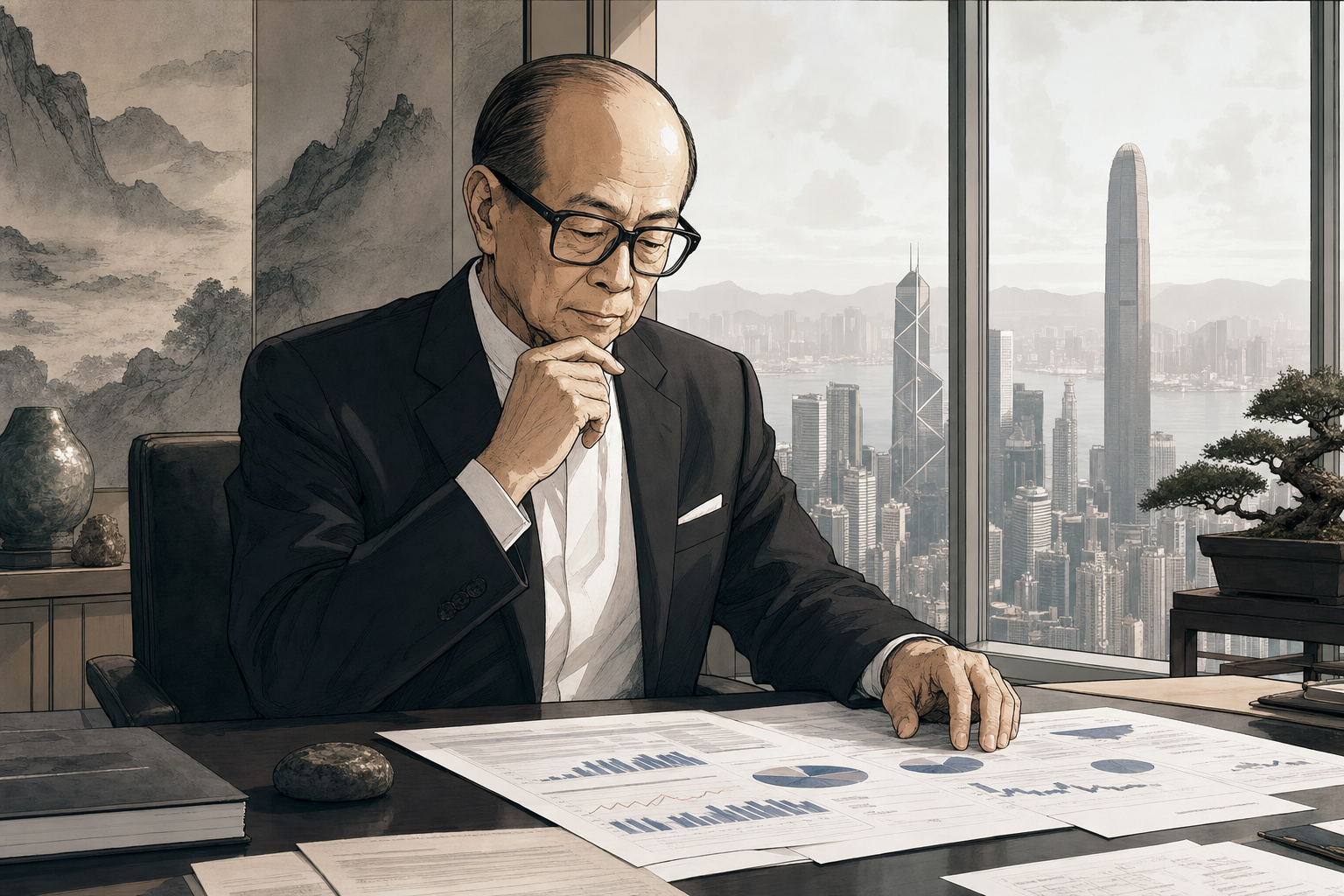
Li Ka-shing’s public image always felt almost suspiciously calm. No volcanic ego. No operatic quotes. No desperate need to be called visionary every quarter. He often looked less like a tycoon than like a careful schoolmaster who happened to control strategic assets on several continents.
But this mildness was tactical camouflage. Under it sat one of the sharpest capital-allocation minds in Asia.
His pattern repeated with almost eerie consistency: buy when fear distorts price, hold while the asset gains strategic weight, refinance or restructure when needed, and sell only when the market offers a truly compelling crystallization of value. He was patient without being sentimental.
That mindset also shaped his philanthropy. The Li Ka Shing Foundation gave away billions to education, medicine, and research, especially in Greater China. Even his charitable work carried the stamp of his business method: long-horizon, institution-focused, quietly scale-minded. He did not just fund moments. He funded structures.
🔁 Chapter 8: Splitting the Empire Before Succession Could Split the Family
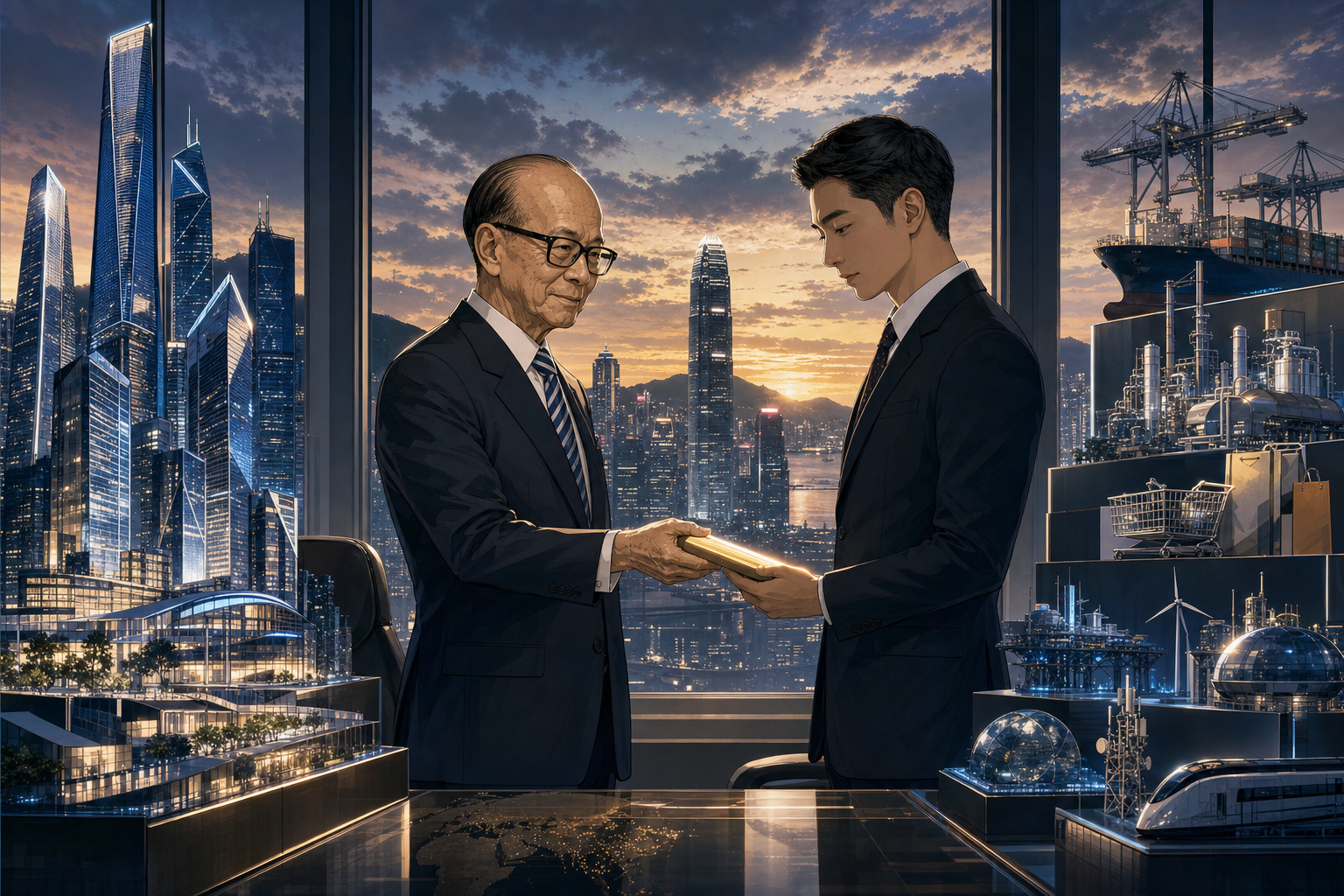
In 2015, Li reorganized the empire. The broad conglomerate became CK Hutchison Holdings, while the property business was separated into CK Asset Holdings. To casual observers, it looked like a corporate reshuffle. In reality, it was a masterclass in pre-succession engineering.
Great founders often fail at the final move. They build complexity that only they can decode, then leave their heirs a maze full of hidden pressure points. Li did the opposite. He simplified the map before stepping back.
When he retired as chairman in 2018 and handed formal control to his son Victor Li, the machine was already more legible: property here, conglomerate there, capital flows easier to explain, valuation cleaner, succession friction reduced. He remained a senior advisor, but the deeper achievement was this: he had translated founder instinct into institutional design.
That is rarer than it sounds. Many billionaires can build. Far fewer can build something that still makes sense the morning after they leave.
⚖️ Chapter 9: Superman, Suspicion, and the Long Shadow of a Quiet Empire

Hong Kong nicknamed him Superman. The nickname captured awe, but it also revealed anxiety. When one man’s corporate web touches homes, shops, ports, utilities, telecom, and land values, admiration starts to blend with unease.
Critics argued that Li’s power mirrored the deeper problem of Hong Kong capitalism: a small number of tycoons controlling enormous slices of ordinary life. Others watched his ties to both Hong Kong and mainland power centers with suspicion, especially as geopolitics hardened and strategic assets drew scrutiny abroad. The larger the empire became, the harder it was to view it as merely private.
And yet the scale of what he built remains staggering. A refugee boy who once worked factory shifts became one of the most consequential business figures in modern Asian history. He built wealth, yes, but more importantly he built durability — a system meant to keep producing through shocks, transitions, and generations.
That is the blueprint.
Not charisma. Not disruption theater. Not a single magic deal.
Cash flow. Nerve. Timing. Structure. Patience. Control.
Li Ka-shing understood that empires do not have to shout to dominate. Some of the most powerful ones simply keep collecting at the tollgate while the rest of the world argues about the future.
💡 Key Insights
- ▸ Li Ka-shing did not build his fortune through one explosive bet. He built it in layers: manufacturing cash flow, distressed land, a colonial conglomerate platform, then globally diversified infrastructure and telecom assets.
- ▸ His real genius was buying control systems rather than trophies. Land banks, ports, utilities, retail networks, and telecom infrastructure all gave him recurring leverage over daily economic life.
- ▸ Li's style looked conservative on the surface, but it was actually aggressive in one specific way: he was willing to buy hardest when everyone else was scared. The 1967 Hong Kong downturn and the 1979 Hutchison deal are the clearest examples.
- ▸ The 2015 restructuring was classic Li Ka-shing: simplify before succession, separate property from the conglomerate, and convert founder instinct into institutional architecture.