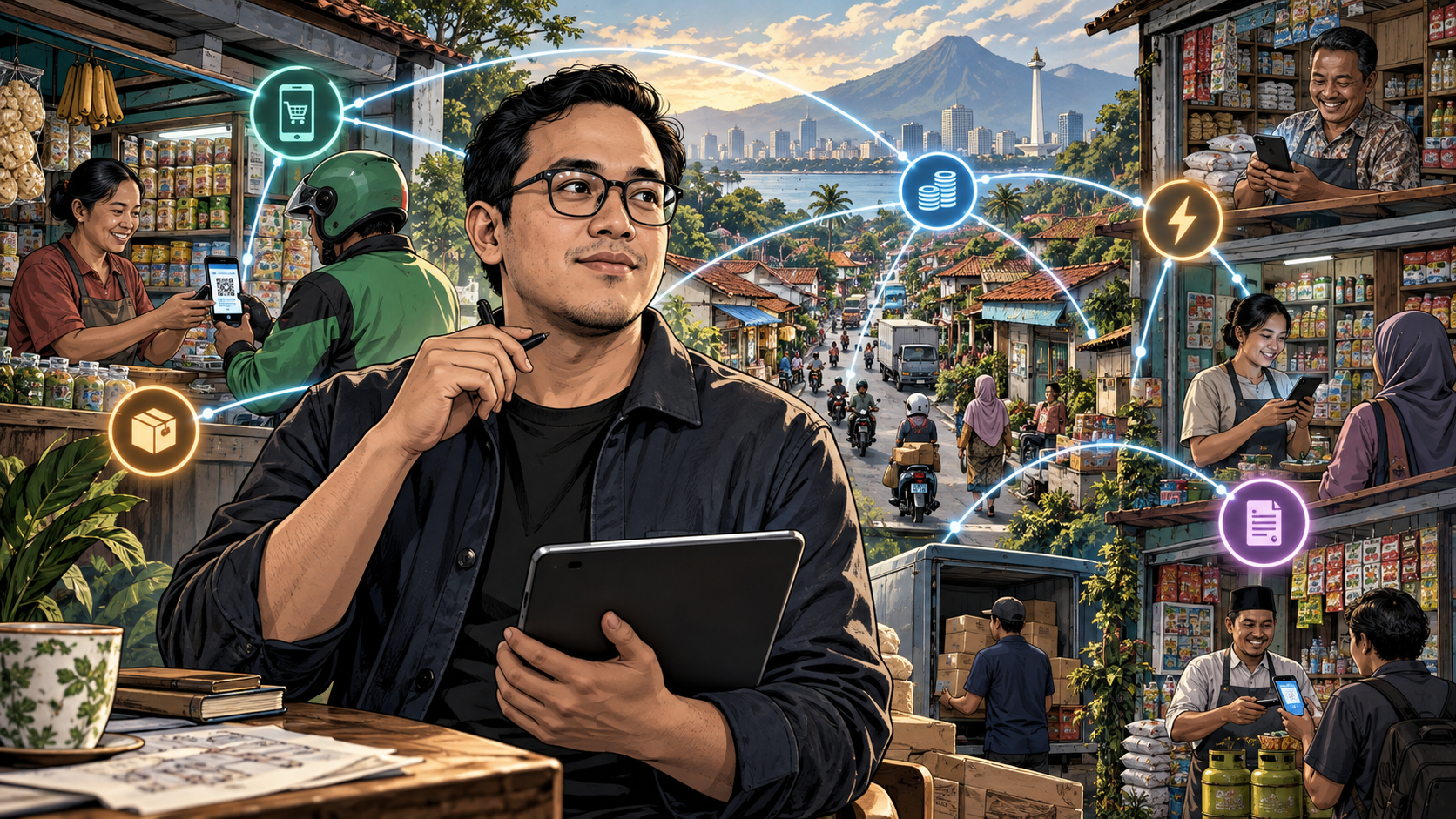
Nadiem Makarim and the Gojek Bet That Turned Motorbike Dispatch Into a Platform
Nadiem Makarim began with a call center for motorcycle taxis, then used payments, dispatch, and local density to build one of Indonesia's defining digital platforms.
View all stories about this mogul
Nadiem Makarim did not invent Indonesia’s motorcycle taxi. He saw that an enormous informal service already existed but was coordinated badly. Drivers waited at street corners, customers searched manually, prices were negotiated, and neither side knew when the other would arrive. Gojek’s original opportunity was not futuristic transport. It was removing friction from a familiar urban habit.
The company began as a call center in 2010 and launched its app in 2015. Ride dispatch became delivery, food, logistics, and financial services. That expansion created a powerful local network, but it also exposed the central danger of every super-app story: more transactions do not automatically produce good economics.
Chapter One: Organizing an Informal Network

Makarim had used motorcycle taxis, known as ojeks, to move through Jakarta’s congestion. Conversations with drivers revealed how much of their day was spent waiting rather than earning. Customers faced the mirror image of the problem: supply existed, but finding it at the right place and time was uncertain.
Gojek’s first system used a call center to match requests with drivers. That approach was operationally heavy, yet it proved the behavior before an app existed. Dispatch increased utilization. Standardized service reduced negotiation. A known intermediary gave both sides someone to hold accountable.
The important founder lesson is sequencing. Gojek did not need to persuade a city to adopt a novel vehicle. It inserted coordination into an existing market. The smartphone later made the matching cheaper and more visible, but the call center had already identified the job to be done.
Launching the mobile app in 2015 accelerated demand. Maps, status updates, digital records, and one-tap requests compressed several uncertain interactions into one interface. Dense urban geography helped: when riders, drivers, merchants, and customers were close together, each additional participant improved availability.
Chapter Two: From Rides to Daily Services
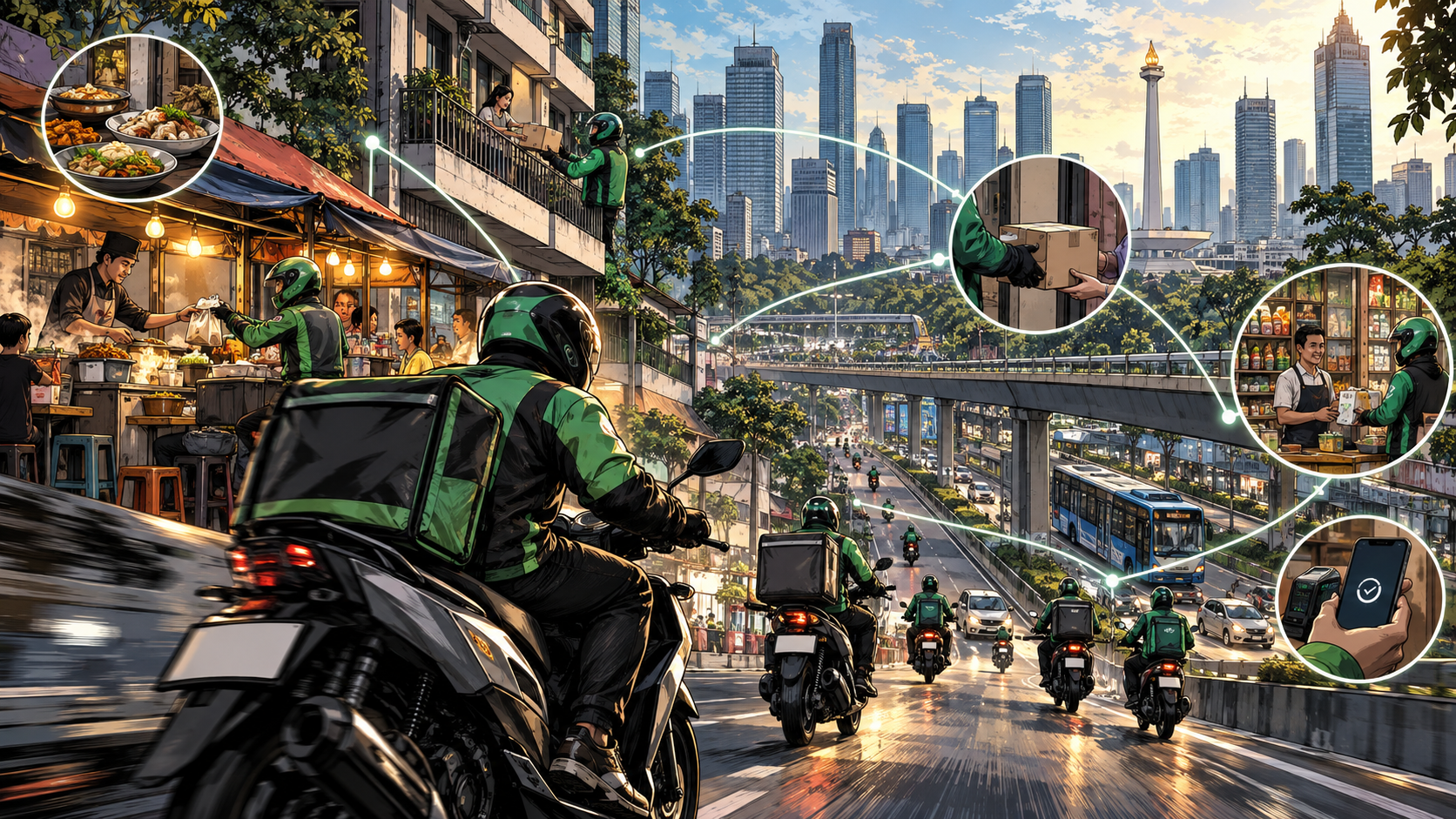
The app’s expansion followed the driver’s route. A motorbike capable of carrying a passenger could also carry a meal, document, medicine, or small parcel. Each service reused dispatch, location, identity, and payment infrastructure. Drivers gained more ways to fill idle time, while customers gained more reasons to keep the app installed.
Food delivery was especially strategic because it connected three constituencies: consumers, couriers, and merchants. A ride ends with two parties. A food order can add menu software, promotions, merchant financing, advertising, and repeat purchasing. The platform moved from selling transport to organizing neighborhood commerce.
Payments deepened that ambition. Cash created change problems and limited remote transactions. A wallet could make checkout faster and create a bridge to other financial products. But financial services also introduced regulated balances, fraud, credit losses, and consumer-protection obligations that dispatch software did not face.
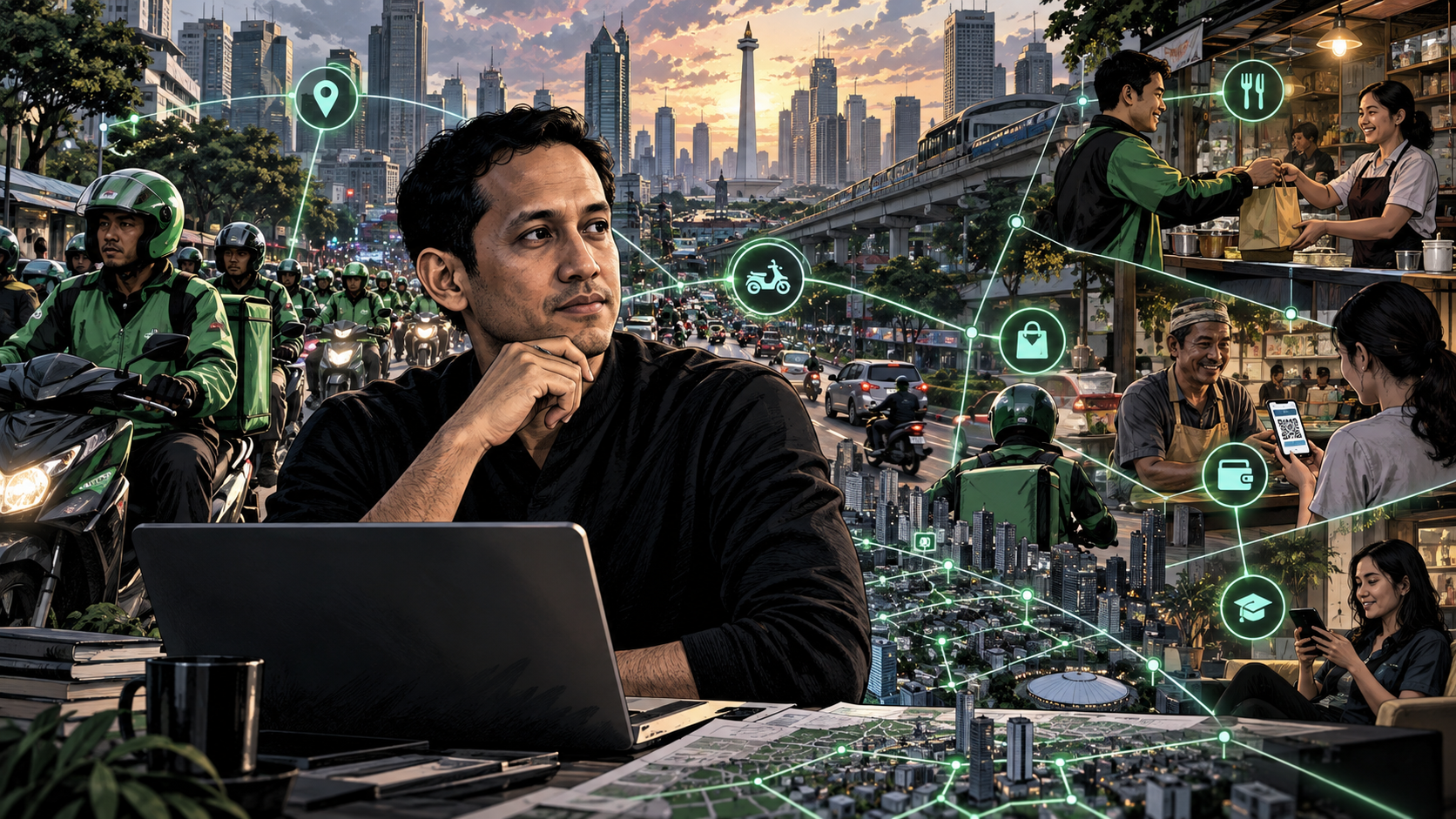
Gojek’s narrative became the super app: one account for movement, food, parcels, payments, and local services. The phrase was attractive, but the underlying advantage was more concrete. Shared identity and local density lowered the cost of launching an adjacent service—provided that the new service actually reused the network.
Chapter Three: Competition, Merger, and Discipline

Regional competition made growth expensive. Grab contested rides and food across Southeast Asia. E-commerce platforms competed for merchants, payments, and attention. Promotions could increase order volume while training users and drivers to switch to whichever app offered the best subsidy.
Makarim left Gojek in 2019 to enter Indonesia’s government, eventually serving as education minister. The company continued under professional leadership and in 2021 combined with Tokopedia to create GoTo Group. The merger linked on-demand services, financial technology, and e-commerce inside one listed company.
The strategic case was clear: Tokopedia orders could use Gojek logistics and payments; Gojek users could enter a broader marketplace; merchants could buy more services. The financial case was harder. Each business had its own competitors, incentives, and cost structure. A corporate diagram cannot force customers to move between products.
GoTo’s public filings became the proper test of the platform thesis. Investors could compare transaction growth with incentives, contribution margin, operating expense, cash, and segment performance. Management shifted toward profitable growth and efficiency as global capital became less tolerant of open-ended subsidies.
Chapter Four: What the Gojek Story Proves

Makarim’s strongest insight was that infrastructure can begin as coordination. Gojek did not own Jakarta’s roads or motorcycles. It built a trusted scheduling, discovery, and payment layer over assets already distributed through the city.
The second lesson is that adjacent services must share more than a brand. Delivery genuinely reused drivers, maps, and demand density. Some later extensions shared fewer operational advantages and therefore required separate capabilities. Managers should ask which cost, data, or relationship becomes cheaper because the platform already exists.
The model also depends on labor and regulation. Driver income, safety, insurance, classification, and bargaining power are not peripheral public-relations issues. They affect supply quality and the long-term legitimacy of the network. Financial services add an equally serious duty to manage fraud and credit responsibly.
Gojek’s legacy is not that every emerging-market company should build a super app. It is that a founder can start with one repeated coordination failure, prove it manually, digitize it, and then expand along the actual path of the asset. The balanced verdict credits Makarim with transforming a street-level service into national digital infrastructure while recognizing that the final measure is sustainable value for customers, drivers, merchants, and shareholders—not the number of icons on a home screen.