Narayana Murthy: The Global Delivery Machine That Turned Infosys Into India's Software Icon
Narayana Murthy turned scarce capital and distant customers into an operating model: split software work across locations, institutionalize quality, and sell trust globally.
View all stories about this mogul
Narayana Murthy did not sell software alone. He sold the belief that complex work could cross oceans without losing control.
Infosys began in 1981 with modest capital, a small founding team, and customers far from India. The company had to overcome weak infrastructure, restrictive business conditions, and the simple fear that remote engineering would fail.
Murthy’s answer was a system: divide work intelligently between the client site and delivery centers, document the process, measure quality, and make corporate credibility visible. That system helped turn Indian software services into a global industry.
Chapter 1: Building Under Constraint

Infosys was founded before India’s 1991 economic liberalization transformed the business environment. Importing computers, accessing foreign exchange, communicating internationally, and traveling to customers could be slow and bureaucratic.
Those obstacles punished companies that depended on abundant capital. Infosys instead depended on skilled labor, patience, and customer revenue. The founders wrote software and built relationships while learning to operate across institutional friction.
Murthy emphasized values that sounded almost conservative: respect contracts, disclose clearly, and build an institution larger than the founders. In an emerging outsourcing market, those choices were commercial weapons. A distant client could not easily inspect every line of work. It needed confidence in the organization.
The company also used employee stock ownership to align talent with long-term value. Software services walk out of the building every evening. Retaining ambitious engineers required more than salary; it required participation in the enterprise being built.
Infosys gradually became a signal that an Indian technology company could meet global governance and quality expectations, not merely offer cheaper labor.
Chapter 2: The Global Delivery Model Becomes a Machine

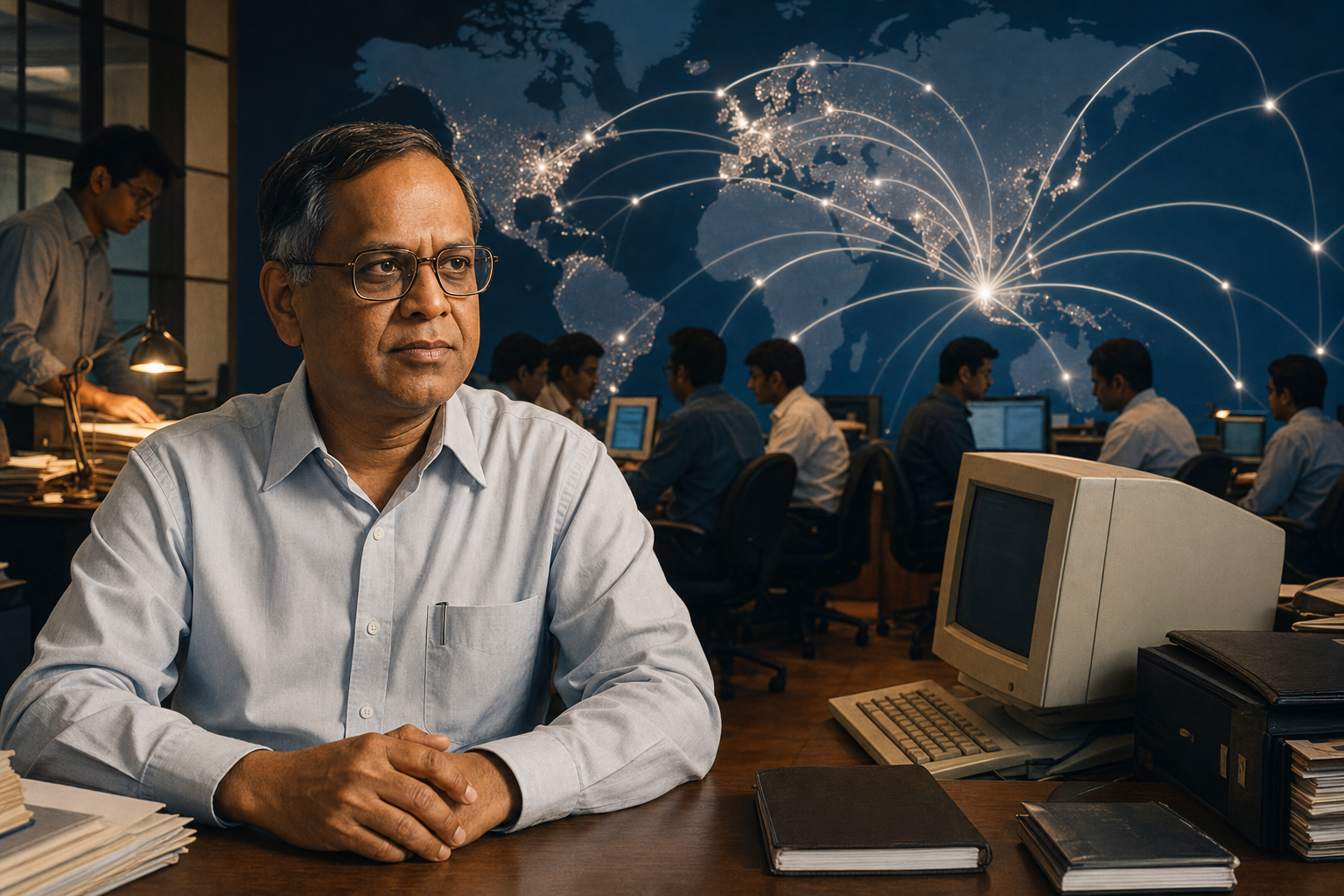
The global delivery model separated tasks by what needed proximity and what benefited from scale. Client-facing teams gathered requirements, managed relationships, and handled work that required local context. Larger delivery centers in India performed development, testing, maintenance, and support.
Time zones could become an advantage. Work handed off at the end of one business day could continue elsewhere. Large campuses concentrated talent, training, security, and process management.
The economics were compelling, but wage difference alone was not a moat. Competitors could hire from the same labor pool. Infosys invested in repeatability: documented methods, quality certifications, training, project governance, and standardized delivery.
That changed the buyer’s decision. A customer was not hiring an unknown collection of programmers. It was buying capacity from an institution with observable processes.
As enterprise technology expanded, Infosys moved beyond coding into consulting, systems integration, infrastructure management, and business-process services. Each expansion sought a larger share of the client’s technology budget.
Scale created its own flywheel. More global customers produced more domain experience. More experience supported larger contracts. Larger contracts funded recruiting and training, which expanded delivery capacity.
Chapter 3: Governance, Growth, and the Founder Problem
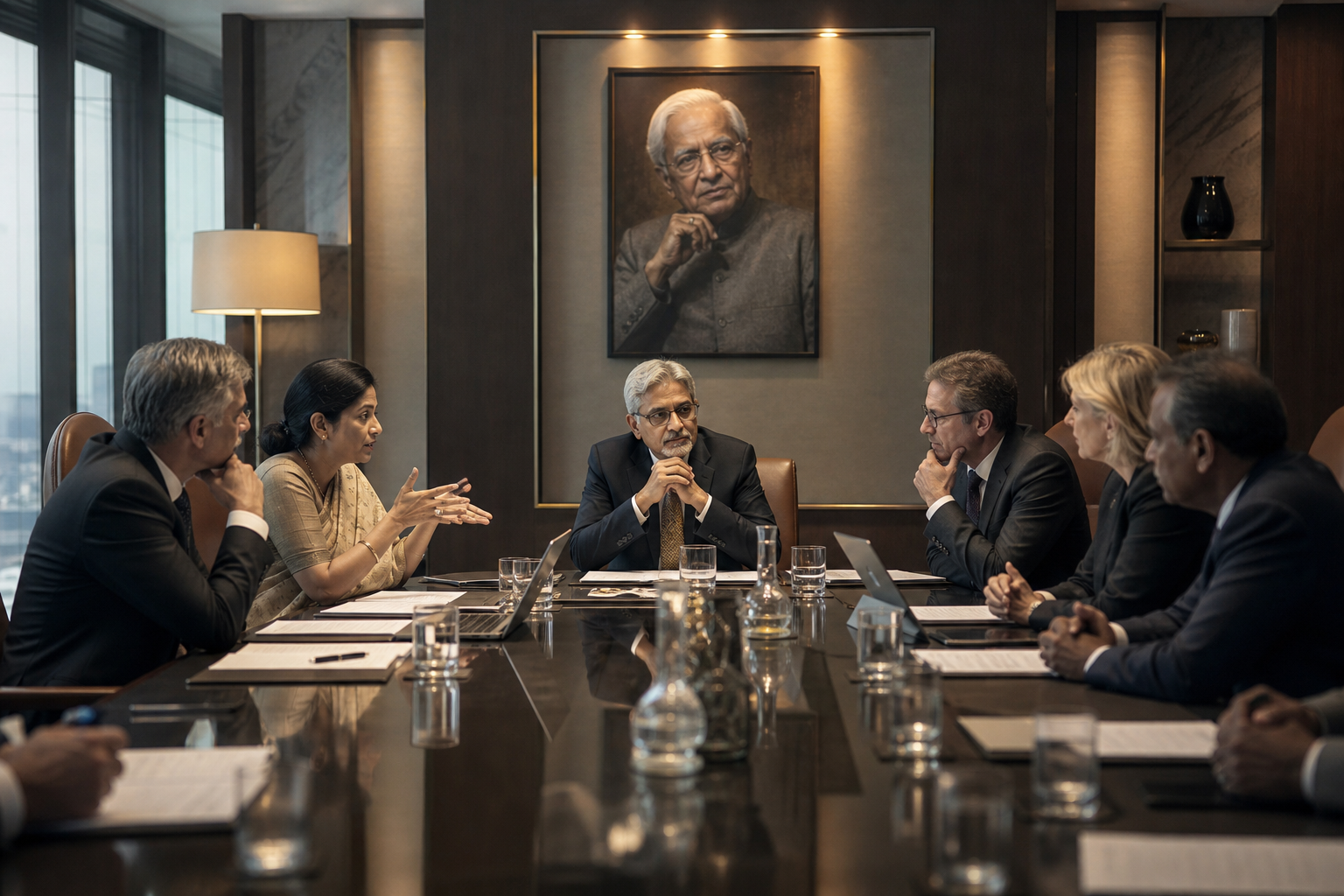
Infosys distinguished itself through public-market discipline and disclosure. Its international listing and investor communication helped the company appeal to global shareholders and customers who cared about governance.
Murthy stepped aside from executive leadership, returned in advisory or leadership roles at different moments, and remained an influential moral voice. That pattern revealed a tension familiar in founder institutions: the founder wants the company to outgrow him, yet remains the reference point when performance or culture is questioned.
Professional management is not only about replacing a founder. It is about preserving useful principles without turning the founder’s preferences into permanent vetoes.
Infosys faced leadership disputes and strategic pressure as cloud platforms, automation, and digital consulting changed the market. Traditional outsourcing rewarded large teams billed over long periods. Automation rewards doing more with fewer people, potentially challenging revenue models linked to headcount.
The company therefore had to sell transformation rather than labor arbitrage. Clients wanted cloud migration, data platforms, cybersecurity, and artificial intelligence—not merely maintenance at a lower hourly rate.
Murthy’s institutional achievement made that reinvention possible. A company built only around his personal sales ability would have struggled to survive multiple technology cycles.
The Real Lesson

Infosys proved that trust can be engineered. Governance, training, delivery metrics, and predictable processes were not corporate decoration. They reduced the perceived risk of moving critical work across borders.
The model also helped change India’s economic identity. Technology campuses, professional careers, and export revenue demonstrated what human capital could achieve at global scale.
Now the logic must evolve again. Generative AI can automate pieces of coding, testing, documentation, and support. A services firm can defend old labor volumes or use automation to deliver outcomes faster. The second path may pressure near-term billing while strengthening long-term relevance.
Murthy’s real product was an institution capable of turning constraint into process. The next generation has to apply the same discipline to a world where the scarce resource is no longer programmers alone. It is judgment: deciding what to automate, what to guarantee, and how to remain trusted when software can increasingly write software.
💡 Key Insights
- ▸ Infosys productized trust by making delivery processes, governance, and disclosure part of the offering.
- ▸ The global delivery model converted time zones and talent cost differences into a repeatable operating advantage.
- ▸ Professional management and employee ownership helped a services company scale beyond one rainmaker.
- ▸ The same model must keep evolving as automation changes the value of labor-based billing.