Reed Hastings: How a Former Peace Corps Volunteer Killed Blockbuster, Bet the Company Twice, and Rewired Hollywood
A $40 late fee at Blockbuster allegedly sparked the idea. Two decades later, Reed Hastings had destroyed the video rental industry, reinvented television, and built a $300 billion streaming empire.

View all stories about this mogul
On a spring evening in 1997 — or so the legend goes — Reed Hastings returned a VHS copy of Apollo 13 to his local Blockbuster Video in La Honda, California, and was charged a $40 late fee. Standing in the checkout line, annoyed and slightly embarrassed, he had an idea: what if you could rent movies without due dates, without late fees, and without ever leaving your house?
The story is probably apocryphal. Netflix co-founder Marc Randolph has said the real founding was more complicated, more gradual, and less cinematic. But Hastings has told the late-fee story so many times — in earnings calls, in interviews, in his own book — that it has become the company’s origin myth. And like all good origin myths, it captures something true even if the details are embellished: Reed Hastings built Netflix by identifying a friction that millions of people experienced and then systematically eliminating it.
First he eliminated the trip to the video store. Then he eliminated the video store. Then he eliminated the concept of scheduled television. Then he eliminated the need for Hollywood studios to be the gatekeepers of entertainment. Over 25 years, he dismantled the entire architecture of how human beings consume filmed entertainment — and replaced it with a red play button.
🎓 Chapter 1: The Unlikely Founder

Reed Hastings was not an obvious candidate to revolutionize entertainment. Born on October 8, 1960, in Boston, Massachusetts, he grew up in an affluent family — his mother was a socialite, his father a lawyer for the Nixon administration. He attended Buckingham Browne & Nichols, an elite private school in Cambridge, and then Bowdoin College in Maine, where he majored in mathematics.
After college, Hastings did something unexpected for a future tech billionaire: he joined the U.S. Marine Corps. He washed out during the initial officer training program — later saying the military “wasn’t for me” — and pivoted to the Peace Corps, teaching high school math in Swaziland (now Eswatini) from 1983 to 1985.
The Peace Corps experience shaped him more than he typically lets on. Living in rural southern Africa, teaching with minimal resources, Hastings developed an intense pragmatism and a tolerance for discomfort that would serve him well during Netflix’s near-death experiences. He also developed an educational philosophy that he would later fund with hundreds of millions of dollars in philanthropy.
After returning to the U.S., Hastings earned a master’s degree in computer science from Stanford. In 1991, he founded his first company: Pure Software, which made debugging tools for software developers. Pure Software went public in 1995 and merged with Atria Software in 1997 to form Pure Atria, which was subsequently acquired by Rational Software for $750 million.
Hastings walked away from the deal with a personal fortune estimated at $40 million. He was 37 years old, rich, and bored. And he had learned something crucial from running Pure Software: he hated managing a company that had lost its culture. Pure Software’s later years, in his telling, were plagued by bureaucracy, process creep, and talented people leaving because the environment had become stifling.
He swore his next company would be different. He would build a culture document. He would codify the values. He would run the company like a professional sports team — keep the stars, cut the rest, and never apologize for it.
📀 Chapter 2: The Red Envelope

Netflix was incorporated on August 29, 1997, by Hastings and Marc Randolph, a serial entrepreneur who had been carpooling with Hastings and brainstorming business ideas during their commute. The original concept was simple: rent DVDs by mail.
DVDs were new — the format had only launched in the U.S. in March 1997 — and they had a crucial advantage over VHS tapes: they were thin, light, and nearly indestructible. You could slip a DVD into a standard first-class envelope and mail it for the cost of a stamp. Try that with a VHS tape and you’d pay $3 in postage.
Netflix launched its website on April 14, 1998, with 925 DVD titles — essentially the entire catalog of DVDs available in the United States at the time. Customers browsed online, selected a movie, and received it in the mail in one to three days. When they were done, they mailed it back in a prepaid return envelope.
The early days were brutal. The company was burning cash. Customer acquisition costs were high. The postal system was slow. And the incumbent — Blockbuster Video, with 9,000 stores and $6 billion in annual revenue — seemed unassailable.
In 1999, Hastings introduced the innovation that changed everything: the subscription model. For $19.95 per month, customers could rent unlimited DVDs with no due dates, no late fees, and no per-rental charges. You could keep a movie for a week or a month — it didn’t matter. When you returned one, Netflix sent the next one from your queue.
The subscription model was counterintuitive. Wouldn’t people just hoard DVDs and never return them? Some did. But the psychology worked in Netflix’s favor: the “unlimited” feeling made customers feel like they were getting a deal, and the desire to get the next movie on their list motivated returns. Average hold times were about five days — far less than what the financial models assumed.
By 2000, Netflix had 300,000 subscribers. It was still losing money — $57 million that year — but the growth curve was undeniable.
💀 Chapter 3: The Blockbuster Meeting
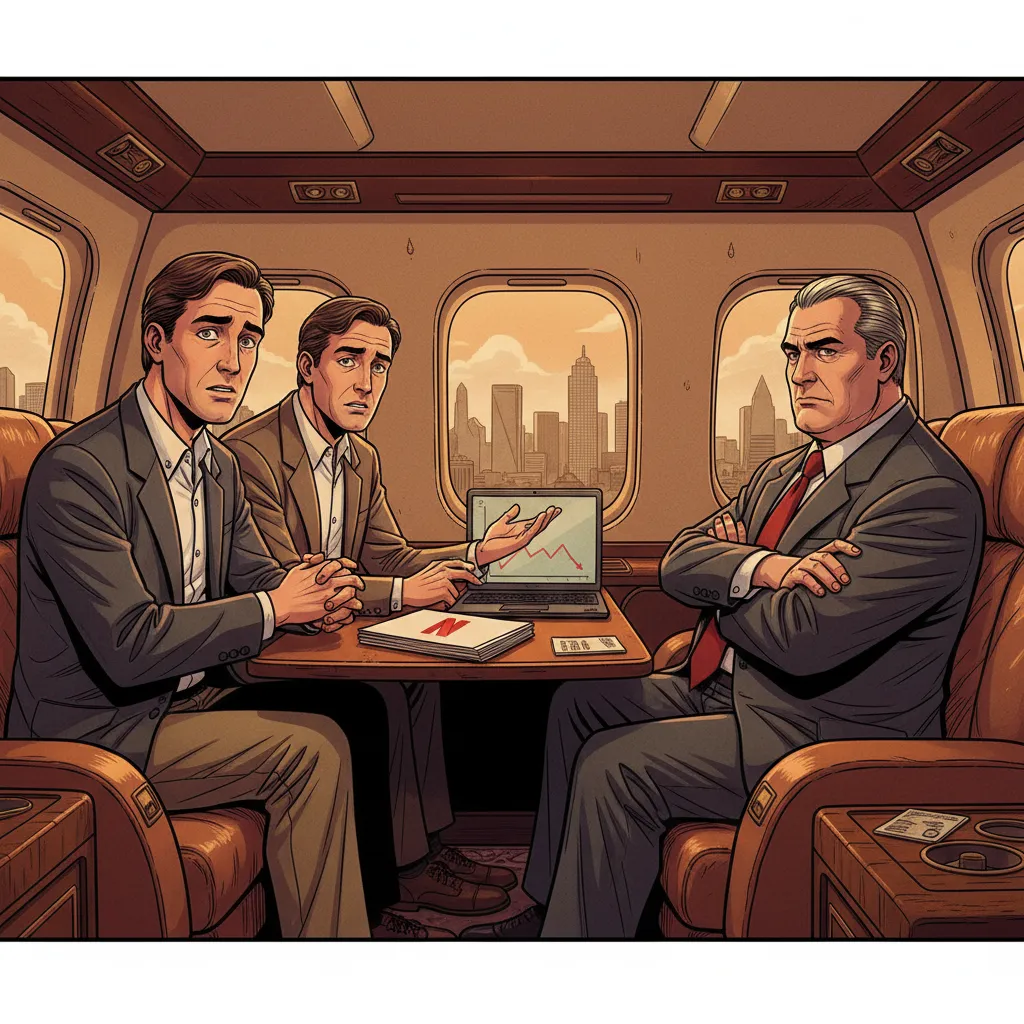
In early 2000, Netflix was running out of cash. The dot-com bubble was deflating. Investors were fleeing anything with “.com” in its business model. Hastings and Randolph flew to Dallas to meet with John Antioco, the CEO of Blockbuster, to propose a partnership: Blockbuster would promote Netflix in its stores, and Netflix would run Blockbuster’s online presence.
The asking price: $50 million for Netflix.
According to Randolph’s account in his memoir, Antioco and his team barely suppressed their laughter. Fifty million dollars for a money-losing DVD-by-mail company? When Blockbuster had 60 million members and $6 billion in revenue? The meeting ended with a polite “no.”
It was, alongside George Bell’s rejection of Google, one of the most catastrophic strategic decisions in business history. Within a decade, Blockbuster would be bankrupt. Netflix would be worth $15 billion and climbing.
Antioco, to his credit, eventually recognized the threat. In 2004, he launched Blockbuster Online — a direct Netflix competitor — and began eliminating late fees, which cost Blockbuster $400 million in annual revenue but was strategically correct. Blockbuster Online was gaining subscribers rapidly and putting real pressure on Netflix.
But Antioco was fired by the Blockbuster board in 2007. The board, influenced by activist investor Carl Icahn, replaced him with a CEO who reversed the online strategy and refocused on the retail stores. It was a death sentence. Blockbuster filed for bankruptcy on September 23, 2010.
🔄 Chapter 4: The Pivot

Even as the DVD business grew, Hastings was planning its obsolescence.
He had named the company Netflix — not Mailflix or DVDflix — because he always intended to deliver content over the internet. The DVD was a bridge technology. Streaming was the destination.
On January 16, 2007, Netflix launched its streaming service. Initially, it was a free add-on for DVD subscribers — a “Watch Instantly” feature with a limited library of about 1,000 titles. The video quality was mediocre. The content library was thin. Most customers ignored it.
But Hastings was playing a long game. Every year, he invested more in streaming content and technology. He struck licensing deals with studios. He optimized the streaming experience for different devices. He expanded from computers to gaming consoles to smart TVs to phones.
By 2010, streaming was growing faster than DVDs. In 2011, Hastings decided it was time to force the transition.
💥 Chapter 5: The Qwikster Disaster
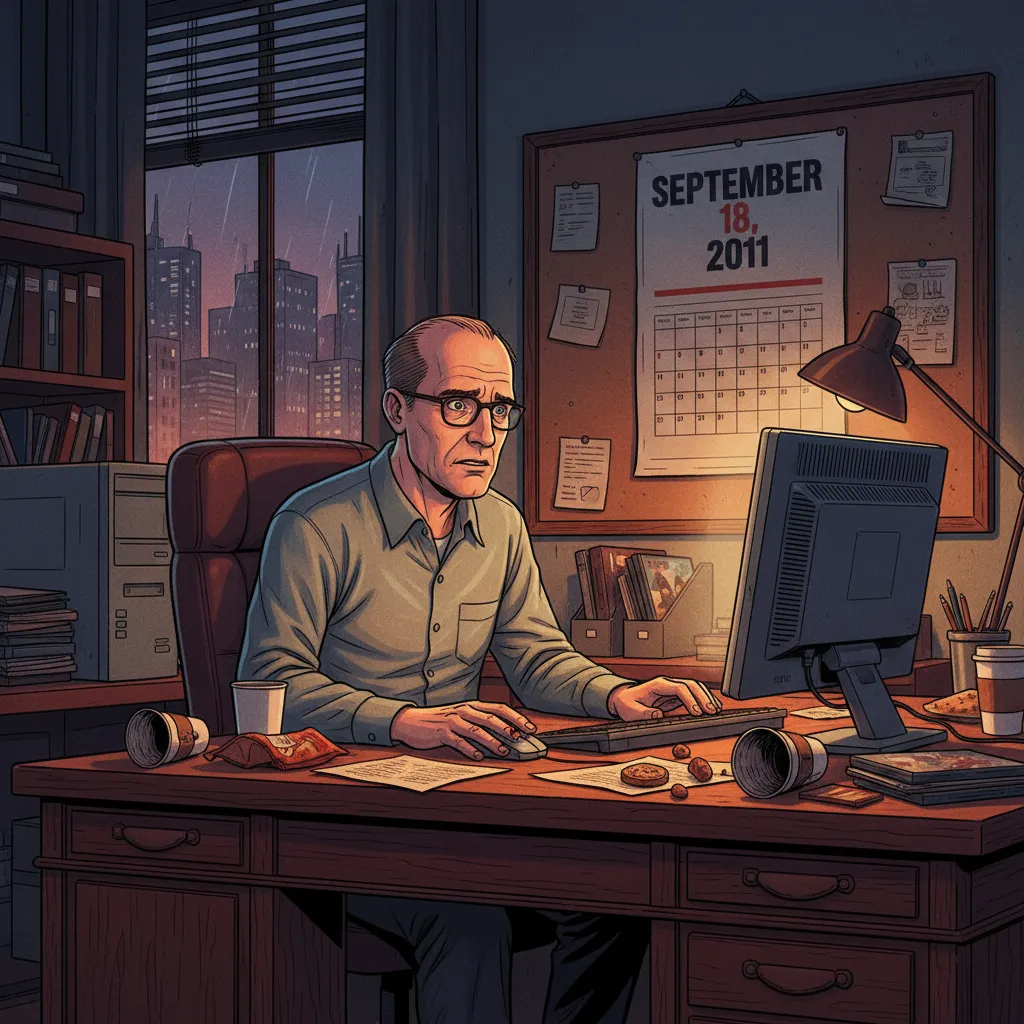
On September 18, 2011, Reed Hastings published a blog post that would become one of the most ridiculed corporate communications in internet history.
He announced that Netflix was splitting into two companies. The streaming service would keep the Netflix name. The DVD-by-mail service would be renamed “Qwikster” — with a “Q” — and would operate as a separate website with separate billing.
The reaction was immediate and ferocious. Customers were furious. They didn’t want two accounts, two bills, and two websites to manage. They didn’t care about Netflix’s internal strategic logic. They just wanted to watch movies without being punished for it.
Netflix lost 800,000 subscribers in a single quarter — the first subscriber loss in the company’s history. The stock price, which had peaked at $298 in July 2011, cratered to $53 by November. The company lost roughly 80% of its market value in four months.
Hastings killed Qwikster three weeks after announcing it. In an interview, he admitted: “I slid into arrogance based upon past success.” He said it was the most embarrassing and painful period of his professional life.
But here’s the thing: he was right about the strategy. DVDs were dying. Streaming was the future. The execution was catastrophic, but the underlying logic was sound. And Hastings — to his credit — didn’t overcorrect. He didn’t retreat to DVDs. He absorbed the humiliation, kept investing in streaming, and let the product speak for itself.
Within 18 months, Netflix stock had recovered. Within three years, it had surpassed its pre-Qwikster high. The Qwikster debacle is now taught in business schools not as a failure of strategy but as a lesson in change management: being right about the future doesn’t help if you force your customers there at gunpoint.
🎬 Chapter 6: The Content Revolution
The next bet was even bigger: original content.
In 2011, Netflix paid $100 million — roughly $4 million per episode — for two seasons of House of Cards, a political drama produced by David Fincher and starring Kevin Spacey. It was a staggering sum. No streaming service had ever produced original content at that budget level. The entire Hollywood establishment thought Hastings had lost his mind.
The strategy was born of necessity. Netflix’s streaming library depended on licensing deals with studios — and the studios were starting to realize that they were feeding their own disruptor. Starz, which had provided Netflix with a lucrative library deal, refused to renew in 2012. Other studios were pulling back or raising prices. If Netflix couldn’t license content affordably, it would have to make its own.
House of Cards debuted on February 1, 2013. All 13 episodes dropped simultaneously — another Netflix innovation that violated every rule of television scheduling. Traditional networks released one episode per week to sustain ratings over months. Netflix released entire seasons at once, betting that the binge-watching behavior it had observed in its data was real and powerful.
It was. House of Cards was a massive hit. It earned Netflix its first Primetime Emmy nominations. More importantly, it proved that a streaming platform could produce prestige television that competed with HBO, AMC, and the broadcast networks.
What followed was an explosion of original content. Orange Is the New Black. Stranger Things. The Crown. Narcos. Black Mirror. Bojack Horseman. By 2020, Netflix was spending over $17 billion per year on content — more than any studio in Hollywood history. It was producing more original films and series than every traditional studio combined.
🌍 Chapter 7: Global Domination
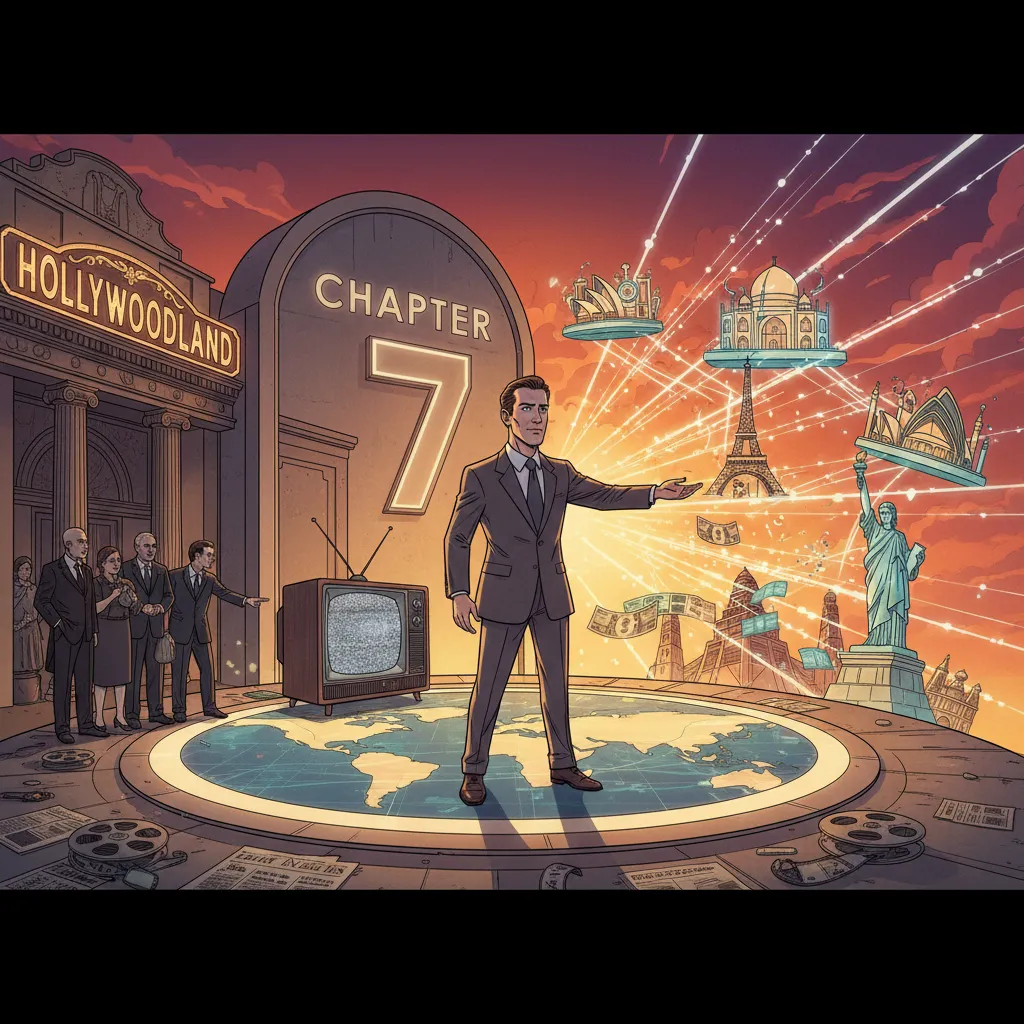
While Hollywood was still debating whether streaming was a fad, Hastings went global.
Netflix launched in Canada in 2010, then expanded to Latin America in 2011, Europe in 2012, and Asia-Pacific in 2015. On January 6, 2016, at the Consumer Electronics Show in Las Vegas, Hastings made a dramatic announcement: Netflix was launching in 130 additional countries simultaneously. Overnight, Netflix went from operating in 60 countries to operating in virtually every country on Earth (excluding China, North Korea, Syria, and Crimea).
The global expansion was expensive and risky. Content licensing had to be renegotiated territory by territory. Local-language programming had to be developed. Payment systems, regulatory requirements, and bandwidth limitations varied wildly. But Hastings understood something fundamental: in a subscription business, scale is everything. The more subscribers you have, the more you can spend on content. The more you spend on content, the more subscribers you attract. The flywheel only works at global scale.
By the end of 2024, Netflix had over 300 million paid subscribers in 190 countries. Non-English language content — Squid Game from South Korea, Money Heist from Spain, Dark from Germany, Sacred Games from India — had become some of the platform’s biggest hits. Netflix wasn’t just an American streaming service anymore. It was the first truly global television network.
📊 Chapter 8: The Ad Tier and the Endgame
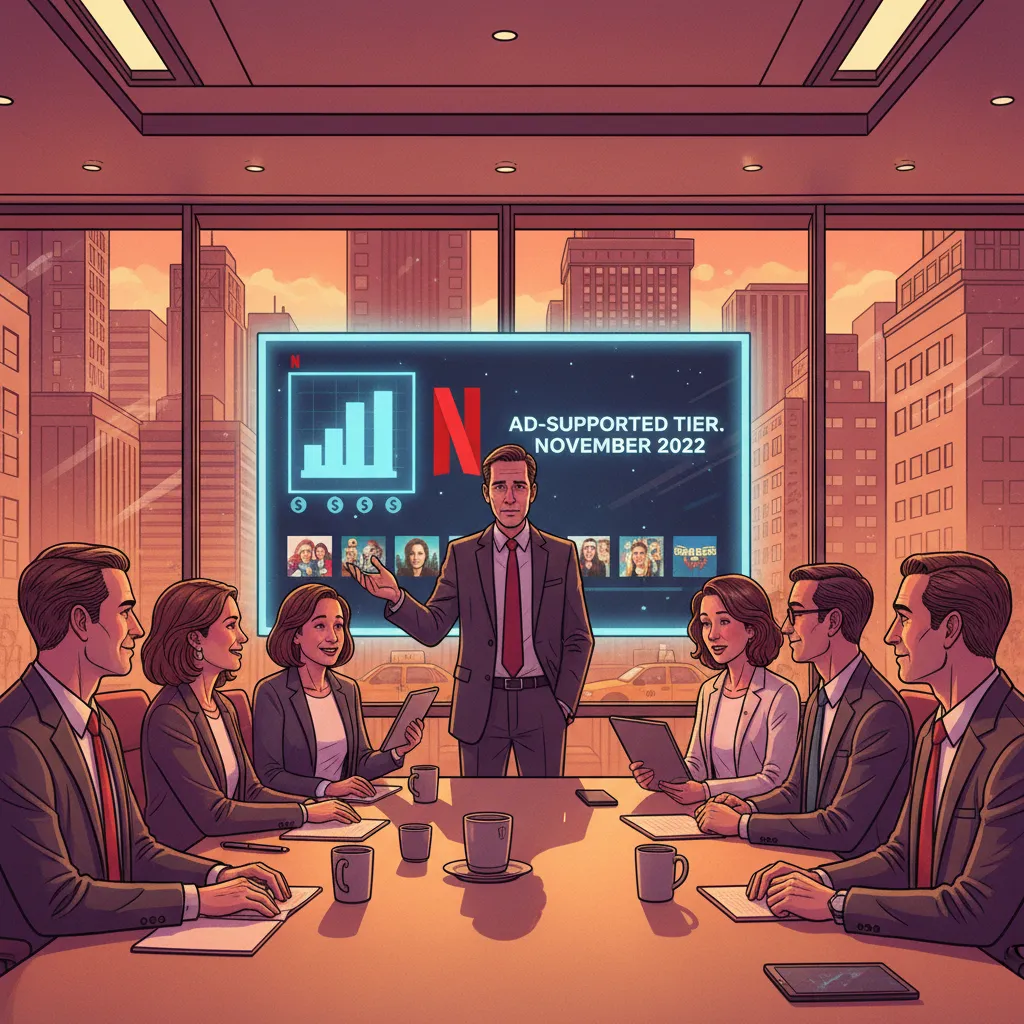
In November 2022, Netflix did something Hastings had sworn he would never do: it launched an advertising-supported tier.
For years, Hastings had been adamant that Netflix would remain ad-free. Advertising was for television. Netflix was something different. But reality intervened. Subscriber growth in the U.S. and Canada was plateauing. The content spending was approaching $20 billion annually. Wall Street was demanding either subscriber growth or profitability improvements.
The ad-supported tier — priced at $6.99 per month, roughly half the cost of the standard plan — was a concession to market reality. But it was also an enormous revenue opportunity. By early 2025, the ad tier had attracted tens of millions of subscribers, and Netflix’s advertising revenue was growing at a rate that rivaled its early subscription growth.
In January 2023, Hastings stepped down as co-CEO, transitioning to executive chairman. Ted Sarandos, the content chief who had built Netflix’s original programming engine, and Greg Peters, the product and technology leader, took over as co-CEOs.
It was a graceful exit. Hastings recognized that the company he’d built no longer required a founder’s vision — it required operators who could optimize a global entertainment machine. He turned his attention to philanthropy, pouring hundreds of millions into education reform, and to his personal passions, including competitive snowboarding.
🏆 Chapter 9: The Ledger
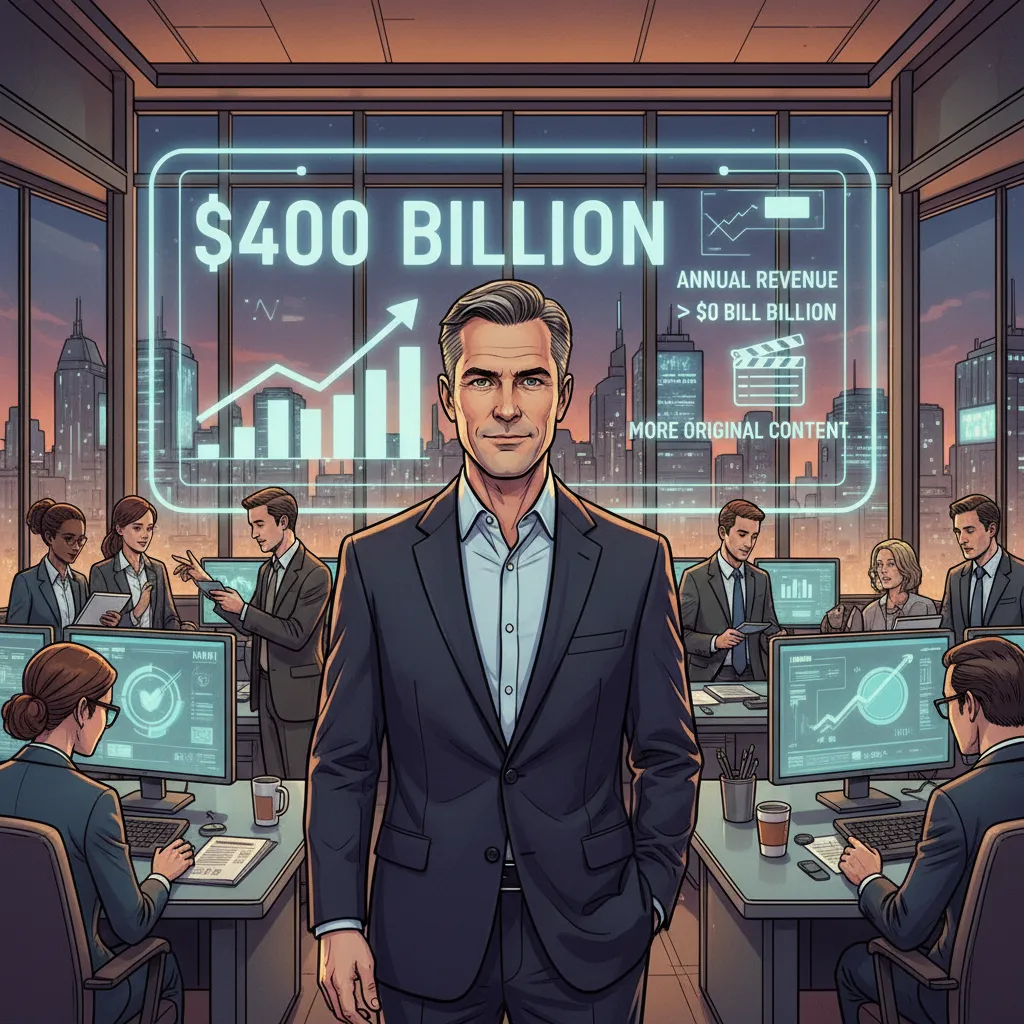
As of early 2026, Netflix has a market capitalization of approximately $400 billion. Annual revenue exceeds $40 billion. It produces more original content than any entertainment company in history. It has fundamentally altered how human beings consume entertainment — not just in America but worldwide.
Reed Hastings’s personal net worth is approximately $6.5 billion. He has donated over $500 million to education, making him one of the most significant education philanthropists in the country. He sits on the board of no operating companies other than Netflix.
The numbers are impressive. But the legacy is the behavior change. Before Netflix, watching television meant sitting in front of a specific device at a specific time on a specific channel. After Netflix, watching television means pulling out whatever screen is closest and choosing from a library of content that spans every genre, language, and format imaginable. The concept of “appointment television” — tuning in at 9 PM on Thursday for a new episode — is effectively dead for a generation of viewers.
Hastings didn’t just build a company. He changed a verb. “Netflix and chill” entered the cultural lexicon. Binge-watching became a lifestyle. The phrase “Are you still watching?” became the most existential question of the streaming age.
He started with DVDs in red envelopes, mailed from a warehouse in San Jose. He ended with a global entertainment platform that reaches 300 million households in 190 countries. Along the way, he destroyed Blockbuster, terrified Hollywood, survived a near-death experience that wiped out 80% of his company’s value, and emerged as the most consequential media executive of the 21st century.
Not bad for a guy who was annoyed about a late fee.
🤝 Chapter 10: The Culture Code & The Keeper Test (Early 2000s - 2010s)
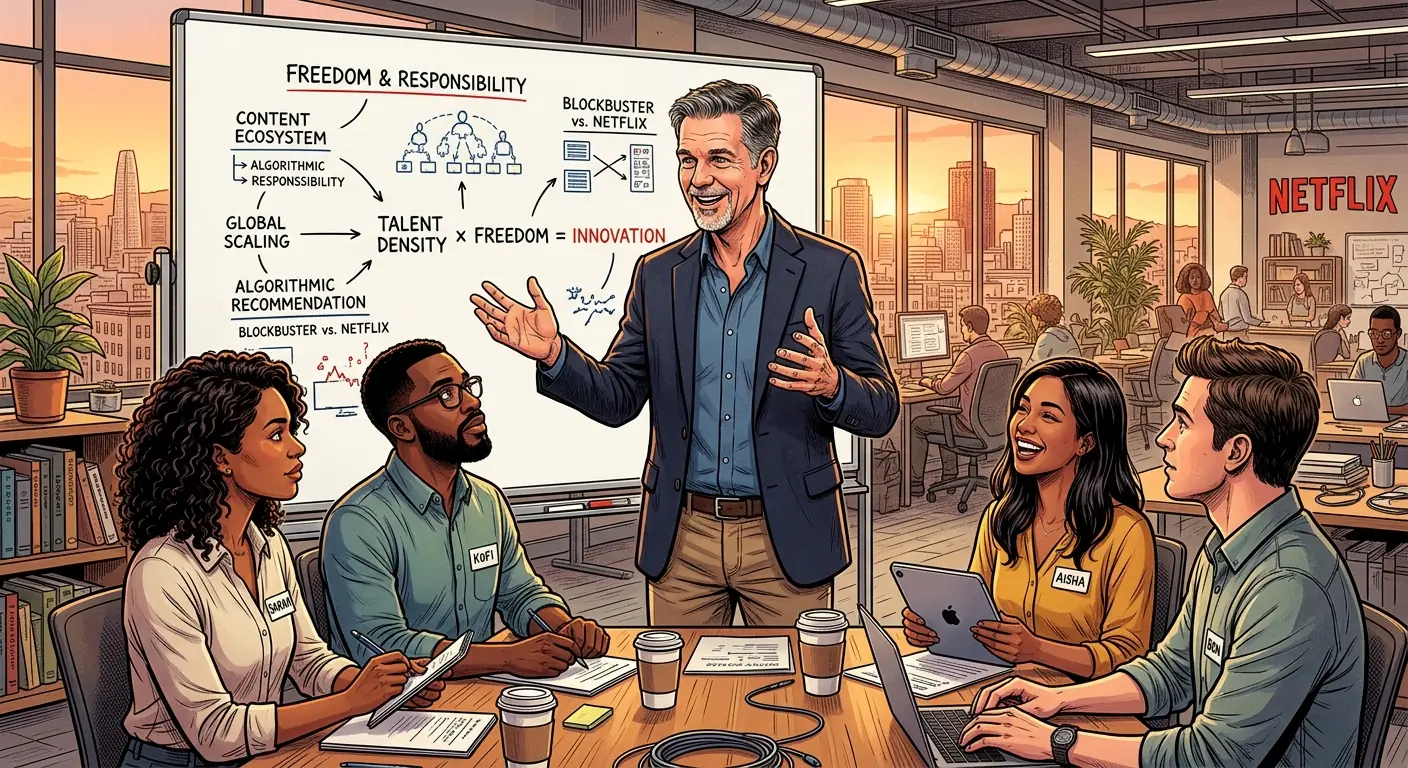
You know how some companies talk a big game about culture, plastering empty buzzwords on walls and then promptly ignoring them? Yeah, Reed Hastings wasn’t about that life. After his less-than-stellar experience at Pure Software, he was determined that Netflix would be different. This wasn’t just about hiring smart people; it was about building a system to keep them smart, motivated, and aligned, even if that system sounded a little… brutal to outsiders.
The “Freedom & Responsibility” Manifesto
Around 2001, Hastings and his chief talent officer, Patty McCord, started codifying what made Netflix, well, Netflix. The result wasn’t some fluffy HR handbook; it was a 124-slide PowerPoint presentation titled “Netflix Culture: Freedom & Responsibility.” This document, famously uploaded to the internet in 2009, went viral, garnering over 20 million views and being called “the most important document to come out of Silicon Valley” by Facebook COO Sheryl Sandberg. High praise, right?
The core idea was radical: Netflix would hire only “stunning colleagues” and then give them immense freedom – unlimited vacation, no expense approval needed, full transparency on company financials. In return, employees were expected to take immense responsibility for their actions and results. It was less about processes and more about performance. As McCord famously put it:
“The best thing you can do for employees — a perk better than foosball or free sushi — is hire only ‘A’ players to work alongside them. Smart creatives thrive on the challenge of working with other smart creatives.”
This meant ditching traditional HR rules in favor of radical candor and a “no rules rules” philosophy. Sounds great on paper, but it came with a significant catch that made many people outside the Valley raise an eyebrow.
The Keeper Test and Its Fallout
The flip side of “freedom & responsibility” was the “keeper test.” This was Netflix’s rather blunt answer to performance reviews. Managers were encouraged to ask themselves: “If one of your team members told you they were leaving for a similar job at a peer company, would you fight hard to keep them?” If the answer was anything but an enthusiastic “yes,” then maybe that person shouldn’t be on the team anymore. And here’s the kicker: under this philosophy, severance packages were often… non-existent.
This wasn’t about being mean; it was about ruthless efficiency. Hastings believed that average performers could drag down “stunning colleagues,” and a company could only sustain its high performance by continually culling those who weren’t exceptional. He often compared it to a professional sports team, where players are continually evaluated and traded if they don’t perform. While some lauded this as a transparent, meritocratic approach, others — particularly those who found themselves on the wrong side of the keeper test — found it incredibly harsh. Critics argued it fostered a culture of fear, where job security was perpetually tenuous. But for Hastings, this was the secret sauce, a culture designed to not just survive, but thrive in the brutal, fast-paced world of tech and entertainment. It was a defining characteristic that shaped every hiring decision, every team dynamic, and ultimately, Netflix’s trajectory.
🍿 Chapter 11: The Streaming Wars & The Debt Mountain (2010s - 2020s)
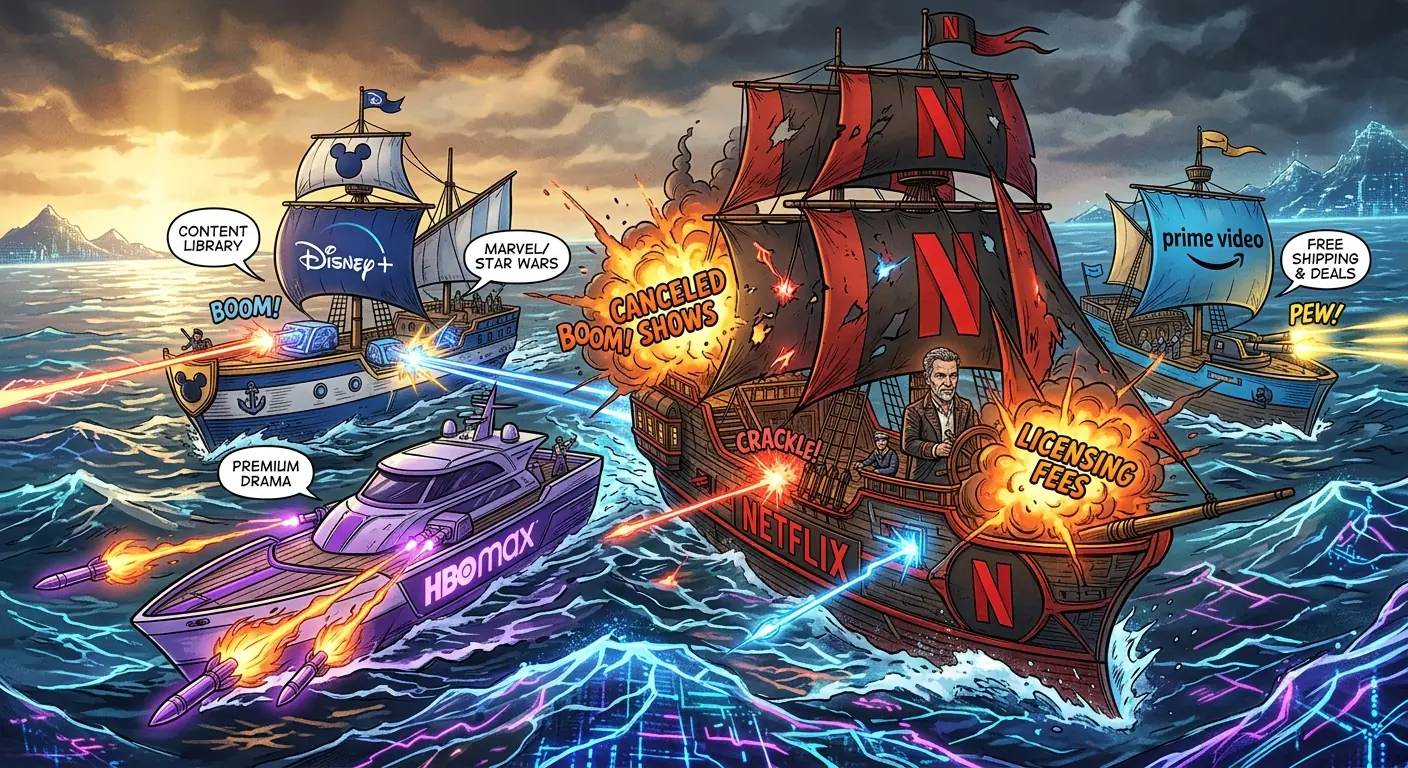
For years, Netflix had the streaming sandbox largely to itself. Sure, Hulu was around, and Amazon Prime Video was slowly building its library, but nobody was seriously challenging the red N. Then, Hollywood woke up. The very studios that had happily licensed their content to Netflix for years suddenly realized they were feeding a monster that was eating their lunch. And thus, the Streaming Wars began, turning a cozy market into a digital gladiatorial arena.
The Content Arms Race Ignites
It started subtly, with studios pulling their content. Then came the big guns: Disney+ launched in November 2019, bringing with it the MCU, Star Wars, Pixar, and Disney’s entire vault. WarnerMedia rolled out HBO Max in May 2020, leveraging the prestige of HBO, Warner Bros. films, and iconic TV shows like Friends. Apple threw its hat in the ring with Apple TV+ in November 2019, and Peacock (NBCUniversal) followed. Suddenly, Netflix wasn’t just a streaming service; it was one of many, all vying for subscriber eyeballs and, more importantly, subscriber wallets.
Reed Hastings’ response? Double down, then triple down. His strategy was audacious: if everyone else was going to make content, Netflix would make more content, better content, and global content. This meant an unprecedented spending spree. In 2018, Netflix spent $12 billion on content. By 2021, that figure had ballooned to over $17 billion, and it was projected to hit $20 billion in 2022. This wasn’t just about out-producing rivals; it was about creating a library so vast and varied that subscribers would see it as indispensable, a default choice amidst the clutter.
Riding the Debt Wave
This massive content investment wasn’t coming from thin air. For years, Netflix was famously free cash flow negative, meaning it spent more than it earned, funding its growth through debt. Critics, often with a hint of schadenfreude, pointed to Netflix’s “debt mountain.” By 2019, the company had $14.7 billion in long-term debt, a figure that made traditional financial analysts clutch their pearls. How could a company operate like this? Wasn’t it a house of cards?
Hastings, ever the contrarian, saw it differently. He understood that content was king, and to build a global entertainment empire, you needed to invest aggressively and early. He viewed the debt as a necessary evil, a fuel for the rocket ship. The bet was simple: acquire enough subscribers globally, and eventually, the economies of scale would kick in, turning the tide of free cash flow. It was a high-stakes gamble, requiring an almost unwavering faith in their ability to continually attract and retain subscribers. The pandemic, ironically, provided a massive tailwind, accelerating subscriber growth and momentarily silencing the debt doomsayers. But the streaming wars were far from over, and every dollar spent on a new series or film was a calculated risk against a backdrop of increasingly fierce competition and shrinking content exclusivity. It was a fascinating, terrifying period where Netflix went from disruptor to the disrupted, forcing Hastings to push the gas pedal even harder.
⚖️ Chapter 12: The Ethics & Optics of a Juggernaut (2010s - Present)
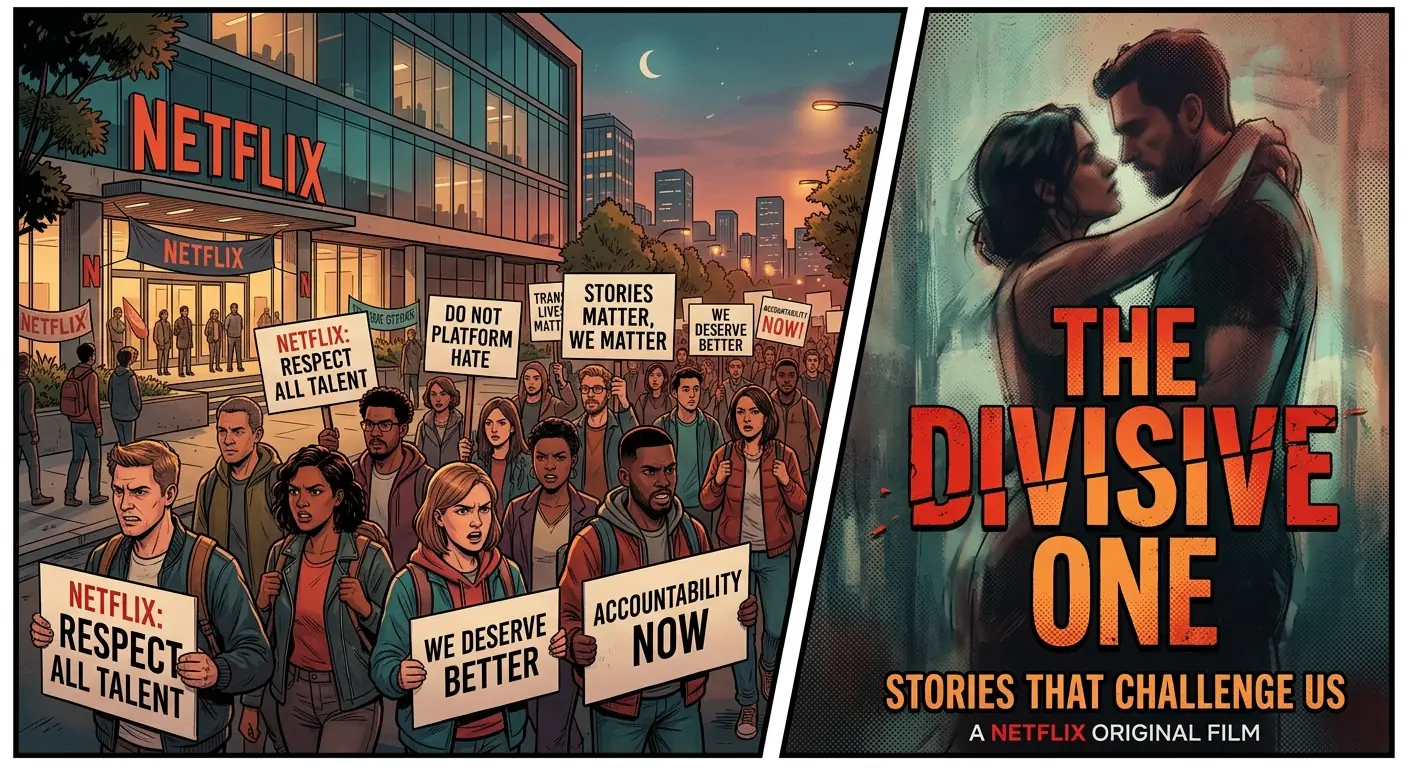
Being a global content behemoth means you’re not just selling entertainment; you’re often caught in the crosshairs of cultural debates, ethical dilemmas, and social justice movements. Netflix, under Reed Hastings’s watch, learned this the hard way, navigating several high-profile controversies that tested its commitment to creative freedom against public outcry and internal dissent.
The “Cuties” Backlash (2020)
Remember the absolute firestorm around “Cuties” (Mignonnes)? In August 2020, Netflix released a French film about an 11-year-old Senegalese girl who joins a dance troupe. The film itself was critically acclaimed and intended as a commentary on the hypersexualization of young girls. However, Netflix’s marketing team, in a spectacularly tone-deaf move, released a promotional poster and synopsis that heavily emphasized the children’s provocative dancing, completely misrepresenting the film’s nuanced message.
The backlash was swift and brutal. Social media exploded with accusations of child exploitation, pedophilia, and promoting the sexualization of minors. The hashtag #CancelNetflix trended, and petitions garnered millions of signatures. Senator Ted Cruz even called for a federal investigation. Netflix quickly apologized for the marketing, stating:
“We’re deeply sorry for the inappropriate artwork and synopsis for Cuties. Once we realized the issue, we immediately updated these images and the description. Cuties is a social commentary against the sexualization of young children.”
Despite the apology and the film’s artistic intent, the controversy highlighted the immense power — and responsibility — Netflix held as a global content distributor. It was a stark lesson in how quickly optics can derail intent, especially when dealing with sensitive subjects.
The Chappelle Conundrum and Employee Walkouts (2021)
Fast forward to October 2021, and another firestorm erupted, this time over Dave Chappelle’s stand-up special, “The Closer.” In it, Chappelle made jokes about transgender people that many in the LGBTQ+ community and their allies found deeply offensive and transphobic. This wasn’t just external noise; it sparked significant internal dissent at Netflix.
Some employees, particularly transgender staff and their allies, organized a walkout on October 20, 2021, protesting Netflix’s decision to not only carry the special but to defend its inclusion. Hastings and co-CEO Ted Sarandos stood firm, defending Chappelle and Netflix’s commitment to creative freedom and diverse voices, even those that might be controversial. Sarandos famously stated in an internal memo:
“We have a strong belief that content on screen doesn’t directly translate to real-world harm.”
This stance drew both praise for upholding artistic expression and fierce condemnation for seemingly prioritizing profit and a star comedian over the safety and dignity of marginalized communities. The situation forced Netflix to publicly grapple with its values: was it a platform for all voices, even uncomfortable ones, or did it have a responsibility to curate content that aligns with certain ethical standards? Hastings, ever the pragmatist and believer in “freedom & responsibility,” clearly leaned towards the former, arguing that “diverse stories” sometimes mean “diverse opinions,” and not every piece of content needs to appeal to everyone. This unwavering commitment to creative autonomy, even in the face of significant internal and external pressure, became a defining characteristic of Hastings’s leadership during these thorny ethical debates.
🌅 Chapter 13: The Succession & The Sunset (2023 - Present)
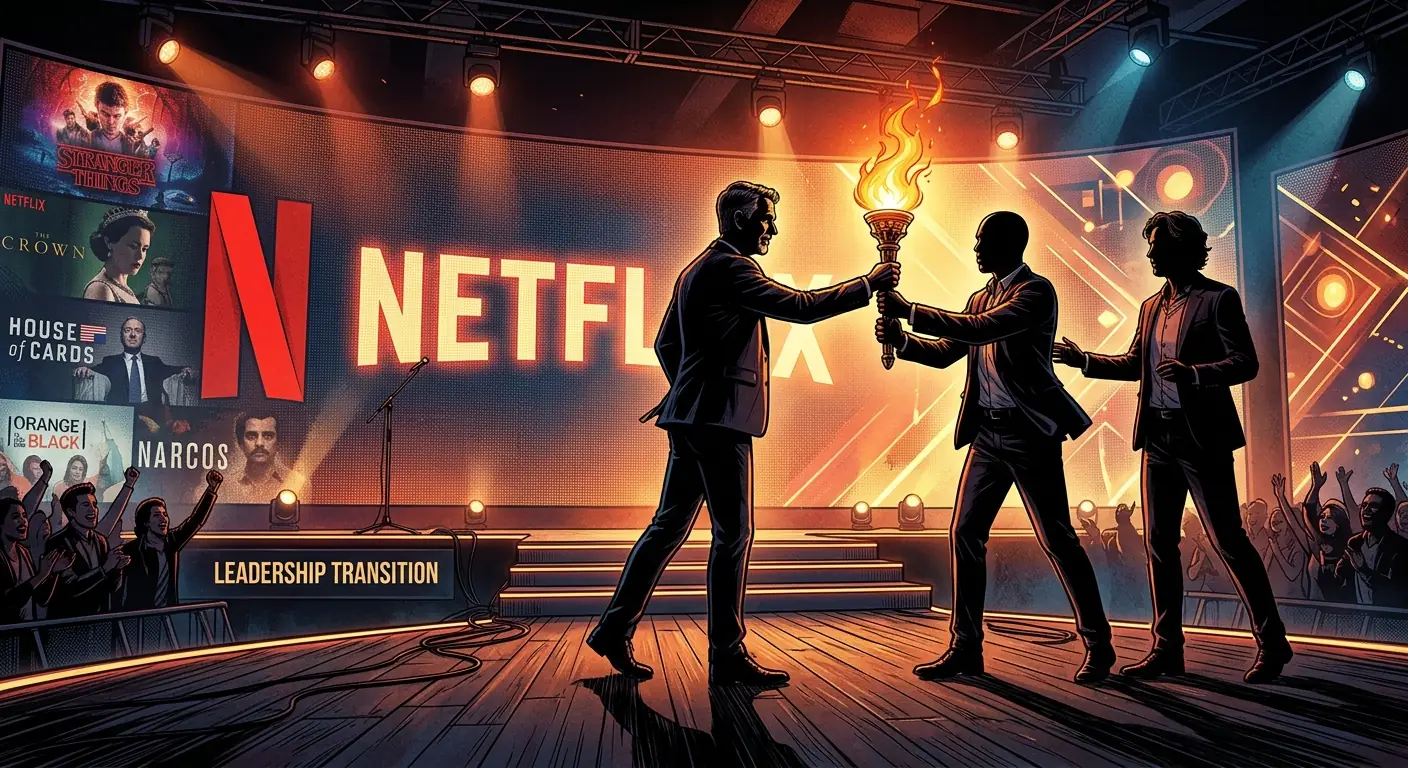
After more than two decades at the helm, having killed Blockbuster, survived Qwikster, and completely rewritten Hollywood’s playbook, Reed Hastings made his most significant move yet: he stepped aside. Not entirely, of course, because old habits die hard, but enough to signal a new era for the company he built from a late-fee dream. It was less of a sudden retirement and more of a carefully orchestrated succession, a final, strategic bet on the future.
Passing the Torch: A New Leadership Era (2023)
On January 19, 2023, Netflix announced that Reed Hastings was stepping down as co-CEO, transitioning to the role of Executive Chairman. The leadership baton was officially passed to his long-time lieutenants: Ted Sarandos, who had served as co-CEO since 2020 and was the architect of Netflix’s content strategy, and Greg Peters, who was elevated from COO to co-CEO. Peters, a tech veteran, had been instrumental in developing Netflix’s product, technology, and recently, the new ad-supported tier.
This wasn’t a “shocking” departure, as Hastings himself pointed out. It was the culmination of a decade of succession planning, a meticulous process to ensure the company’s DNA would endure. As he wrote in a blog post:
“It has been a decade in the making. Our Board has been actively discussing succession for many years. We’ve grown our two co-CEOs, Ted Sarandos and Greg Peters, into phenomenal leaders.”
His role as Executive Chairman is designed to be a bridge, allowing him to continue advising, mentoring, and acting as a sounding board without the day-to-day operational pressures. It’s a smart move, allowing a visionary founder to remain influential while empowering new blood to tackle the next set of challenges, from the ongoing streaming wars to navigating a shifting economic landscape.
Philanthropy and Educational Impact
Beyond Netflix, Hastings has long been a quiet, yet significant, force in philanthropy, particularly in education. His experience in the Peace Corps clearly left an indelible mark. In 2016, he and his wife, Patricia Ann Quillin, pledged $100 million to fund an education initiative called the Hastings Fund, focusing on personalized learning and charter schools. He’s been a vocal advocate for educational reform, believing that innovation in schooling is crucial for societal progress. This isn’t just a checkbook exercise; Hastings is deeply engaged, serving on the board of organizations like KIPP (Knowledge Is Power Program) Public Schools and the California Charter Schools Association.
His philanthropic work often mirrors his business philosophy: apply data, innovation, and a willingness to challenge the status quo to achieve breakthrough results. It’s about finding what works, scaling it, and not being afraid to disrupt traditional models.
The Ledger: A Legacy of Disruption
Reed Hastings’s legacy is undeniable. He didn’t just build a successful company; he fundamentally reshaped how the world consumes entertainment. He took a niche product (DVDs by mail) and transformed it into a global cultural phenomenon, demonstrating an almost prescient ability to anticipate technological shifts and consumer desires. He championed a radical corporate culture, gambled big on content, and weathered countless storms, from the dot-com bust to the Qwikster debacle to the streaming wars.
His story is a masterclass in relentless innovation, strategic risk-taking, and the power of a clear, often uncompromising, vision. He taught Hollywood that content could be global, on-demand, and subscription-based, effectively dismantling the old guard and building a new one in its place. The red play button, once a simple icon, now symbolizes a revolution, all thanks to a former Peace Corps volunteer who just hated late fees. The sunset on his direct CEO tenure might be here, but the afterglow of his impact will illuminate the entertainment industry for decades to come.
💡 Key Insights
- ▸ Hastings's genius wasn't the DVD-by-mail model — it was recognizing that DVDs were a transitional technology and that streaming was the future. He named the company Netflix, not DVDflix, because he always intended to deliver content over the internet. The best founders name their companies for where they're going, not where they are.
- ▸ The 2011 Qwikster debacle — where Netflix tried to split its DVD and streaming businesses and lost 800,000 subscribers in a quarter — is one of the most instructive failures in business history. Hastings was strategically right (DVDs were dying) but tactically catastrophic (customers felt punished for a transition they didn't ask for). Being right about the destination doesn't help if you crash the car on the way there.
- ▸ Netflix's decision to produce original content starting with House of Cards in 2013 was a $100 million bet that changed the entertainment industry. Hastings didn't just license other studios' content — he became a studio. The lesson: when your suppliers threaten to become competitors, the only defense is to become your own supplier.
- ▸ The Netflix culture deck — which Hastings published publicly in 2009 and which has been viewed over 20 million times — declared that Netflix would operate like a professional sports team, not a family. High performers were rewarded lavishly. Adequate performers were given generous severance. The policy was ruthless, controversial, and central to Netflix's ability to pivot faster than competitors.
- ▸ Hastings stepped down as co-CEO in January 2023 and transitioned to executive chairman, handing leadership to Ted Sarandos and Greg Peters. Unlike many founders who cling to control, Hastings recognized that the company he built no longer needed the skills that built it. The hardest decision a founder can make is to leave before they're pushed.
Sources
- Gina Keating — Netflixed: The Epic Battle for America's Eyeballs ↗
- Reed Hastings & Erin Meyer — No Rules Rules: Netflix and the Culture of Reinvention ↗
- Netflix SEC Filings — Annual Reports and Shareholder Letters ↗
- Marc Randolph — That Will Never Work: The Birth of Netflix and the Amazing Life of an Idea ↗
- Bloomberg Billionaires Index — Reed Hastings ↗