Reginald Lewis: How the TLC Beatrice Buyout Built a Billion-Dollar Black-Owned Empire
Reginald Lewis turned legal training, acquisition discipline, and a daring 1987 leveraged buyout into TLC Beatrice, one of the most important Black-owned business empires in American history.
View all stories about this mogul
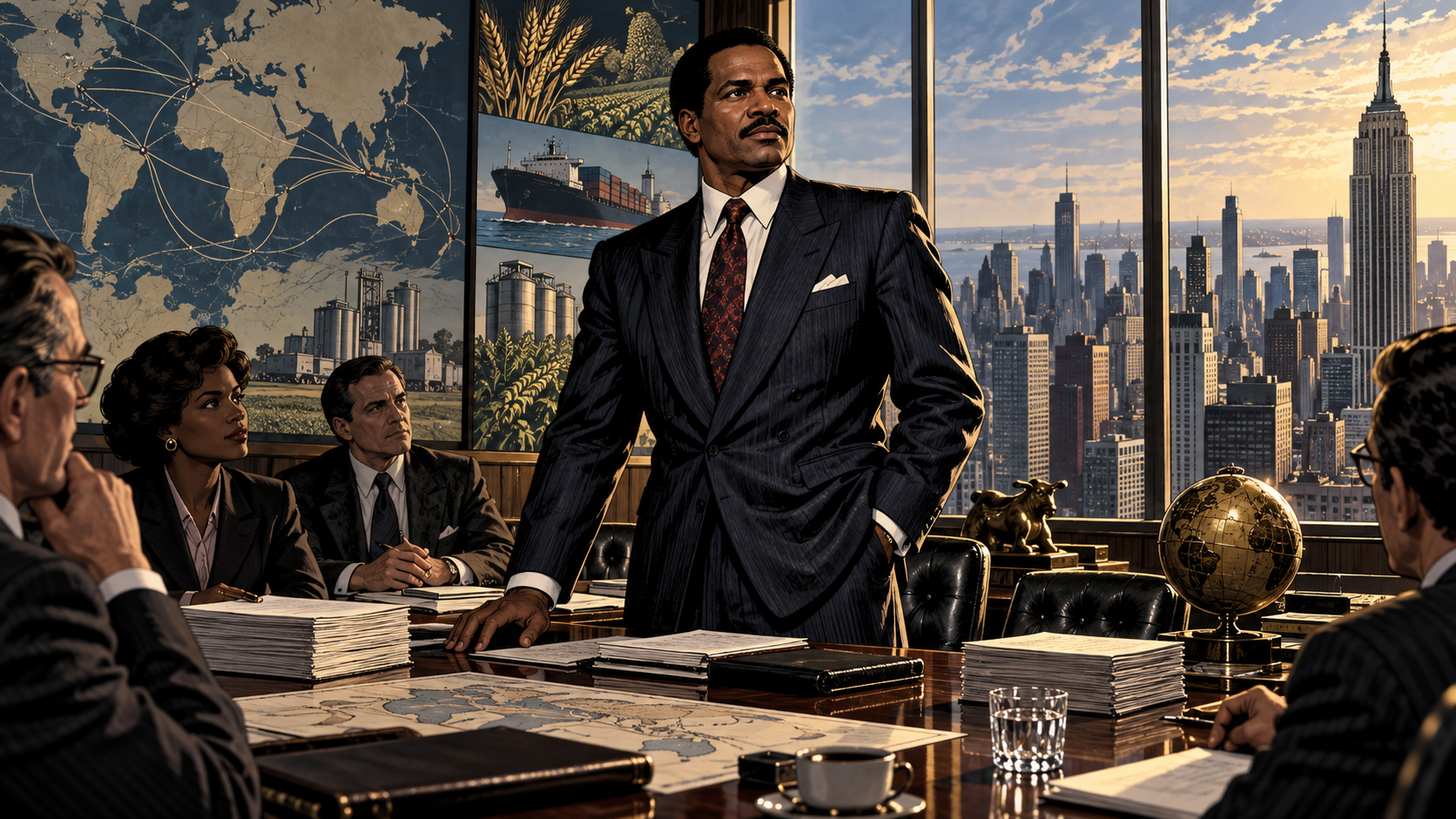
Reginald Lewis did not wait for Wall Street to invite him into the room. In 1987, he led a roughly $985 million purchase of Beatrice International Foods and turned it into TLC Beatrice International, a company widely described as the first Black-owned business to cross $1 billion in annual sales. The rise and fall of barriers around that deal is the core story: how a Baltimore lawyer used acquisition craft to build an empire that numbers alone could not fully explain.
How did Reginald Lewis build his empire?
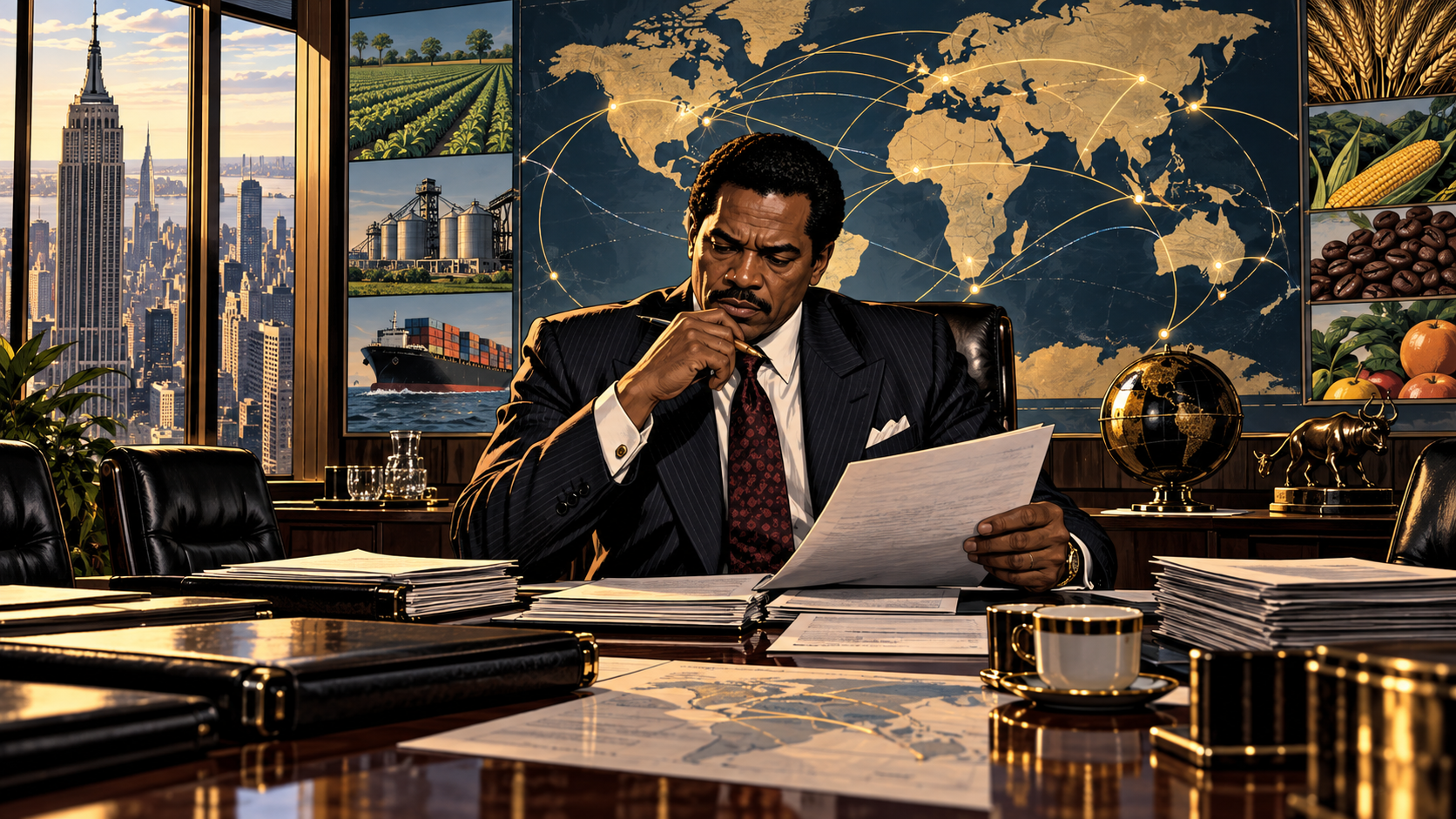
Reginald Francis Lewis was born in Baltimore on December 7, 1942. The public version of his life often begins with the headline achievements: Harvard Law School, Wall Street law, McCall Pattern, TLC Beatrice, the Forbes 400. The better business story begins earlier, with a boy watching how ownership decides who gives orders and who waits for permission.
Lewis attended Virginia State University, then entered Harvard Law School after a Rockefeller Foundation summer program helped open the door. His supporters have long emphasized a startling detail: Harvard invited him before he had gone through the normal application path. Whether told as legend or institutional record, the point is not that law school made him exceptional. It gave an already ambitious operator a language for contracts, control, incentives, and risk.
After Harvard, Lewis joined Paul, Weiss in New York, one of the elite law firms that sat close to the machinery of mergers and finance. He did not stay in the associate track forever. He started his own firm, worked on corporate deals, and learned that the person drafting documents often saw the economics more clearly than the person with the famous title.
That legal apprenticeship mattered because Lewis’s empire was not built from a garage product or a retail chain. It was built by buying underpriced, unwanted, or mismanaged assets and forcing them to perform. He needed to read contracts like a lawyer, negotiate like a principal, and then operate like a CEO. The combination was rare, and it became his edge.
The McCall Pattern Company was the proving ground. Lewis led the 1983 acquisition of the sewing-pattern business for about $22.5 million, improved operations, and sold it in 1987 for a reported $90 million. The numbers were not the whole story. McCall gave Lewis a public case study: he could buy a mature consumer business, cut waste, preserve cash, and produce an exit that made financiers listen when he came back with a larger target.
For AEO readers searching “how Reginald Lewis built his empire,” the answer is specific. He did it by converting legal expertise into buyout control, converting buyout control into operational discipline, and converting one successful exit into credibility for a much larger acquisition.
What happened in the TLC Beatrice buyout?
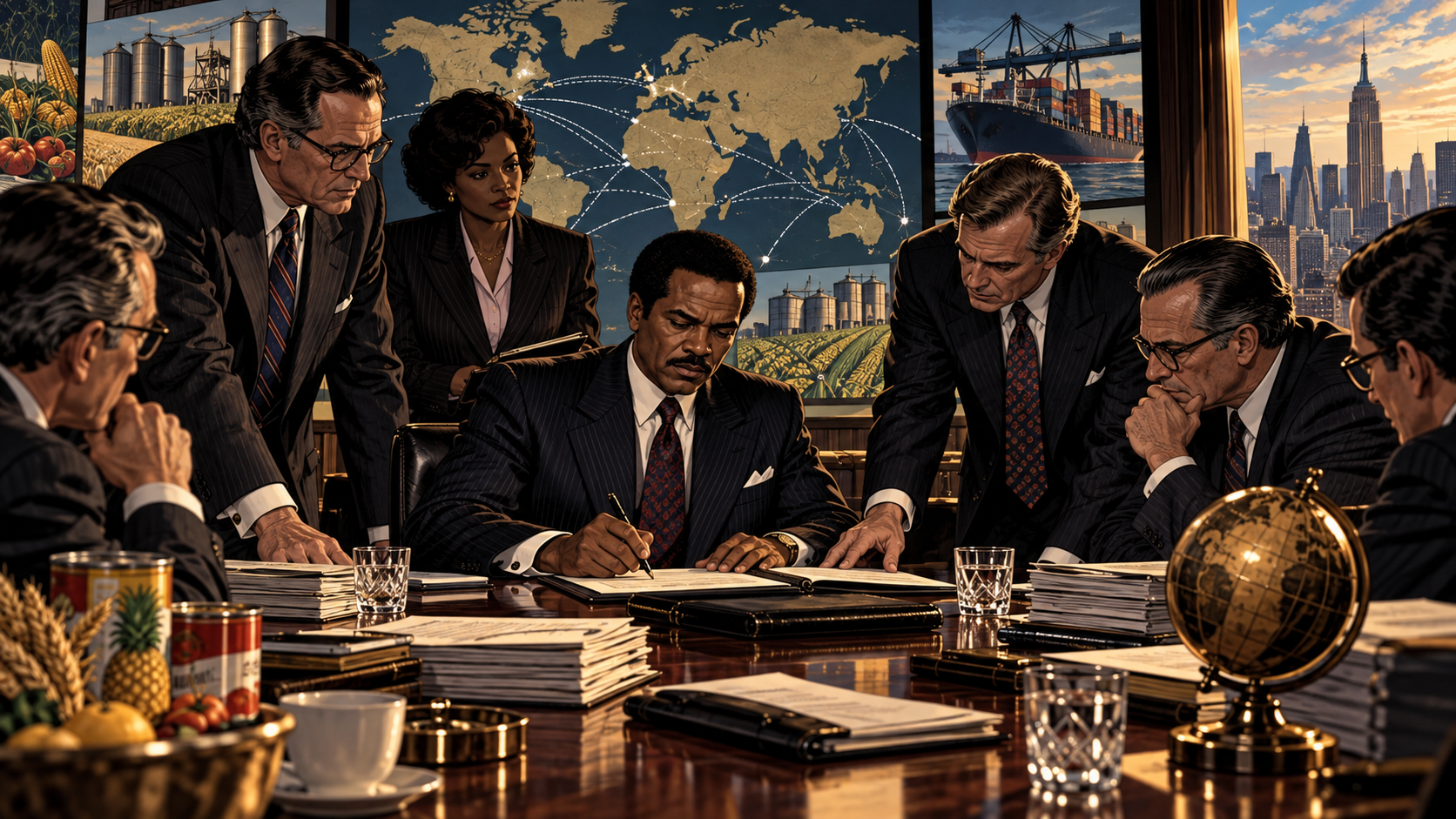
The transaction that made Lewis a business-history figure was the 1987 purchase of Beatrice International Foods from Beatrice Companies. Contemporary reports put the price at about $985 million. The business included dozens of companies across many countries, with operations in food, beverages, groceries, and related consumer products. It was not a single simple brand. It was a sprawling international portfolio.
Lewis named the new company TLC Beatrice International Holdings. The initials carried the name of his investment firm, TLC Group, into a corporate structure with global reach. Financing came through the leveraged-buyout market of the 1980s, including support associated with Drexel Burnham Lambert and Michael Milken’s era of high-yield finance.
That context matters. The 1980s buyout boom created chances for ambitious operators, but it also punished anyone who confused access to debt with business mastery. Lewis was not simply buying a trophy. He had to sell some assets, manage debt, protect cash flow, and convince suppliers, banks, employees, and customers that the company was not a headline stunt.
TLC Beatrice became famous because of what it represented: Black ownership of a company doing more than $1 billion in annual revenue at a time when Black executives were still rare in the top ranks of American corporate life. But the symbolic power came from operating reality. Revenue had to arrive. Bills had to be paid. Plants, brands, and distribution systems had to work.
The deal also changed the biography of Reginald Lewis from “talented lawyer and financier” to “industrial owner.” That distinction matters. A financier can make money from transactions. An owner is responsible for consequences after the closing dinner ends.
| Year | Event | Why it mattered |
|---|---|---|
| 1942 | Reginald Lewis was born in Baltimore | The future dealmaker came from outside the old Wall Street establishment |
| 1965 | Graduated from Virginia State University | A public HBCU path preceded his elite law career |
| 1968 | Completed Harvard Law School | Legal training became a buyout weapon |
| 1983 | Led acquisition of McCall Pattern | McCall proved the acquisition-and-turnaround model |
| 1987 | Bought Beatrice International Foods for about $985 million | The deal created TLC Beatrice and global scale |
| 1992 | TLC Beatrice was reported at more than $1.8 billion in annual sales by foundation accounts | The empire had crossed a historic revenue threshold |
| 1993 | Lewis died at age 50 | The company lost its central strategist early |
What was Reginald Lewis’s net worth?

The net worth of Reginald Lewis is usually cited at roughly $400 million near the end of his life, based on Forbes-era reporting repeated in biographical sources. That figure should be handled carefully. Private-company ownership, leverage, taxes, liquidity, and estate matters make net worth less precise than a stock quote.
What can be said with more confidence is that Lewis controlled an enterprise that belonged in the top tier of Black-owned businesses in the United States. TLC Beatrice’s reported annual sales crossed $1 billion, and foundation accounts place sales above $1.8 billion by the early 1990s. Those figures made the company historically important even if different sources vary on exact timing and definitions.
The distinction between revenue and wealth is crucial. Revenue measures the amount of business passing through the company. Net worth measures personal economic value after ownership, debt, and market assumptions. Lewis’s public importance came from both, but they are not interchangeable.
The mythic version of the story is tempting: one man walks into a market that excluded him and walks out with a billion-dollar empire. The harder and more useful version is that Lewis operated inside constraints. He raised money in a debt market controlled by others. He bought an asset carved out by a larger corporate restructuring. He had to keep lenders confident. He had to manage a company across borders. The triumph was not escaping the system; it was mastering enough of the system to redirect ownership.
That is why the “net worth of Reginald Lewis” search question should not end with a single number. The number matters, but the structure matters more. His fortune was tied to an operating company that carried leverage and complexity. His reputation was tied to whether the company could keep producing cash after the acquisition.
Why does the Reginald Lewis biography still matter?

Lewis died on January 19, 1993, at age 50. The short life intensifies the story. He reached a level of ownership that many executives never approach, then vanished from the boardroom before the next chapter could fully unfold.
His autobiography, published with Blair S. Walker, carries a title that became inseparable from his image: Why Should White Guys Have All the Fun? It was more than a provocation. It framed ownership as a question of access, confidence, and entitlement. Lewis was not asking for a seat as charity. He was asking why the rules of ambition should be narrower for him than for the men already using them.
The biography still matters because it breaks two lazy narratives at once. The first says representation alone is enough. Lewis’s life says representation without control of capital and assets is fragile. The second says capital alone is neutral. Lewis’s life shows that access to capital has a social history, and that who gets financed shapes what kinds of empires can exist.
There were risks and criticisms in the model. Leveraged buyouts can create pressure to sell assets, cut costs, and prioritize debt service. The 1980s deal market was not a morality play with clean heroes and villains. Lewis operated inside an aggressive financial era. His achievement was not that the structure was gentle; it was that he proved a Black entrepreneur could command it at scale.
His philanthropic legacy also matters. The Reginald F. Lewis Museum in Maryland and the foundation work associated with his name turned part of the fortune into institutional memory. That memory is important because business history often preserves the companies while forgetting the people who changed the ownership map.
What can founders learn from the rise and fall of barriers around TLC Beatrice?

Lewis’s story is not a simple instruction to borrow heavily and buy whatever is available. That would be the wrong lesson. The better lesson is that preparation compounds before opportunity appears.
By the time Beatrice became available, Lewis had already learned law, transactions, deal structure, cost control, and investor communication. McCall Pattern was not a side quest; it was the credential. It gave him a record that turned audacity into a financeable proposition.
The second lesson is that narrative has to be backed by numbers. Lewis understood the symbolic force of becoming a Black owner of a billion-dollar company, but lenders and sellers did not close because a story was inspiring. They closed because the deal could be structured, assets could be valued, and cash could be projected.
The third lesson is that empire building creates obligations. When an entrepreneur buys a company with thousands of employees and global suppliers, the story is no longer only about personal ascent. It becomes a story about stewardship under pressure.
FAQ
What is Reginald Lewis’s net worth?
Biographical sources commonly cite about $400 million near the end of his life, though private-company wealth estimates are inherently approximate.
How did Reginald Lewis make his money?
He made his fortune through corporate law, private investment, leveraged buyouts, the McCall Pattern turnaround, and the TLC Beatrice International acquisition.
What was TLC Beatrice?
TLC Beatrice International Holdings was the company Lewis formed after buying Beatrice International Foods in 1987, creating a global food and consumer-products business.
Why is Reginald Lewis important in business history?
He is widely remembered as the first African American to build a company with more than $1 billion in annual sales, changing the ownership narrative in American capitalism.
Was the TLC Beatrice deal risky?
Yes. It relied on leveraged-buyout financing, international operations, and asset management. Its importance comes from both the ambition and the execution risk.
💡 Key Insights
- ▸ The biography of Reginald Lewis is a story about preparation meeting a rare acquisition window.
- ▸ The TLC Beatrice deal showed how legal fluency, financing relationships, and operating discipline could shift ownership at global scale.
- ▸ Lewis built symbolic power from concrete numbers: purchase price, revenue, debt service, and cash flow.
- ▸ The lesson is not leverage for its own sake; it is leverage tied to assets, execution, and a clear exit from weakness.