Satya Nadella: The Cricket-Loving Engineer Who Saved Microsoft From Itself
When he took over in 2014, Microsoft was a punchline — bloated, internally at war, and mocked as a dying giant. A decade later, he had tripled revenue, crossed a $3 trillion valuation, and made Microsoft the most valuable company on Earth.

View all stories about this mogul
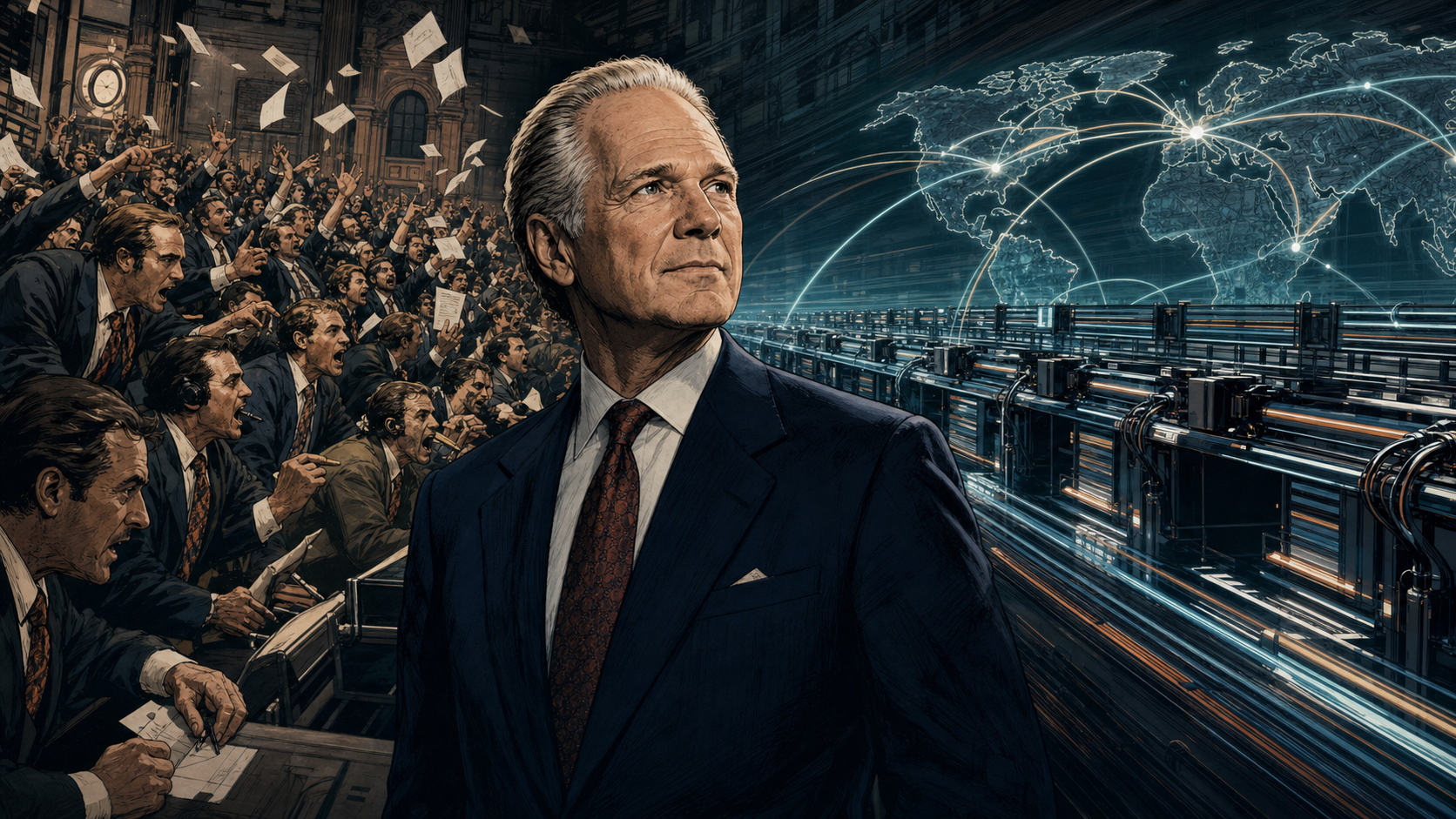
When Satya Nadella walked into his first all-hands meeting as CEO of Microsoft on February 4, 2014, he faced a room that had forgotten how to hope. The company he had just inherited was worth roughly $300 billion — a fraction of Apple, a shadow of Google. Its flagship Windows Phone had collapsed. Its Surface tablets had generated a $900 million write-down. Its internal culture was famous across Silicon Valley as a battlefield of knife fights, stack-ranking, and warring vice presidents.
Outside the company, the obituaries were already being drafted. Vanity Fair had published a brutal feature titled “Microsoft’s Lost Decade.” Analysts argued that Microsoft was now a legacy vendor managed for cash. Employees joked bitterly about “the Microsoft tax” — the penalty for working somewhere nobody wanted to work.
Nadella stood on the stage in a dark sweater and said something nobody expected. He didn’t talk about Windows. He didn’t talk about beating Google. He talked about empathy. He talked about mission. He talked about rediscovering the “soul” of a company that had forgotten what it was for.
People laughed. Some cried. Most went back to their desks certain that the new guy was going to fail. They were wrong. A decade later, Satya Nadella would preside over one of the most complete corporate turnarounds in business history — and Microsoft would briefly become the most valuable company in the world.
🏏 Chapter 1: The Boy from Hyderabad
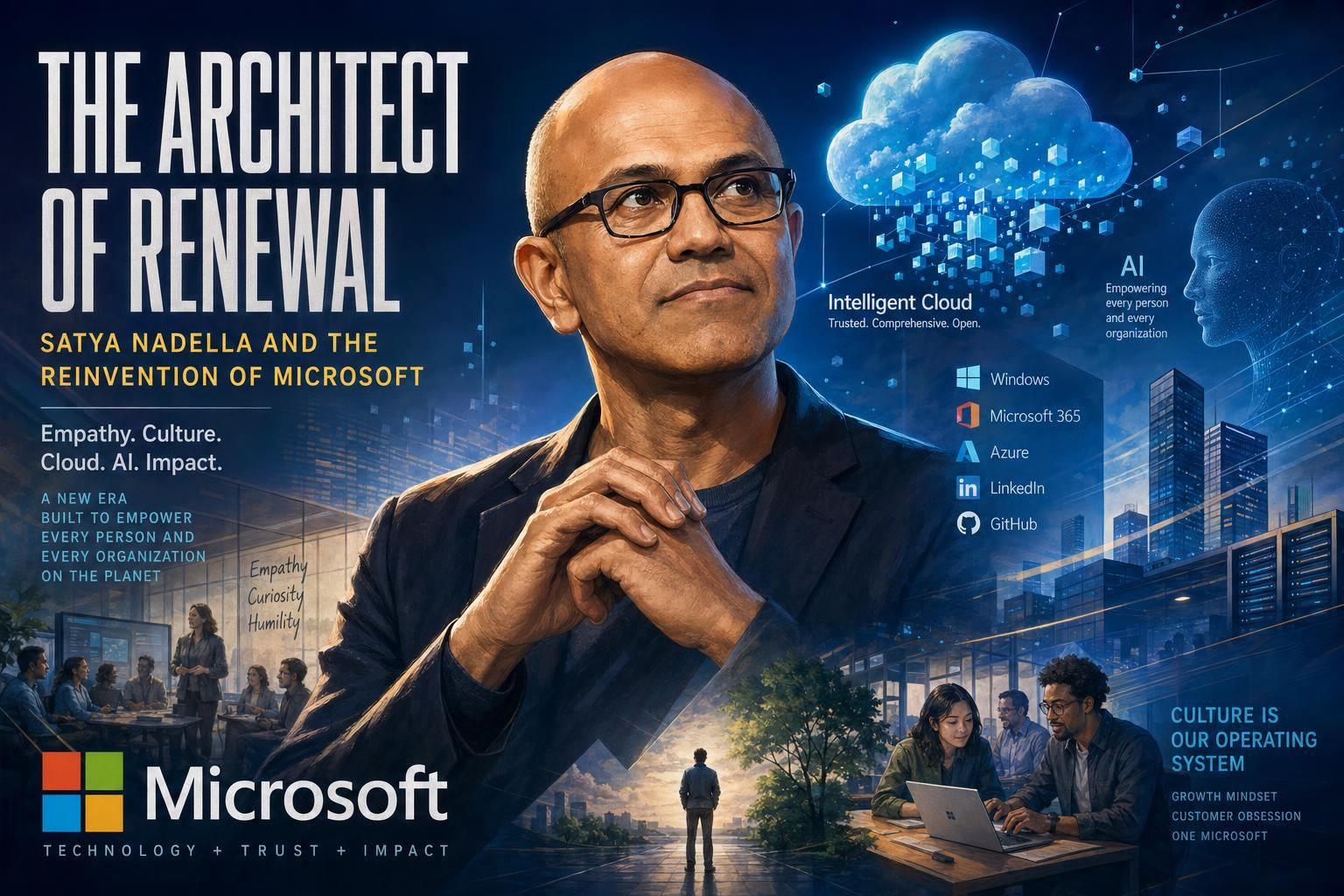
Satya Narayana Nadella was born on August 19, 1967, in Hyderabad, India. His father, Bukkapuram Nadella Yugandher, was a senior officer in the Indian Administrative Service — a cerebral, left-leaning intellectual who kept a library of Marxist texts and expected his son to become a civil servant or an economist. His mother, Prabhavati, was a Sanskrit scholar who taught him literature and poetry.
But young Satya wanted only one thing: to play cricket for India.
He was an above-average batsman and a decent bowler. He trained before school and after school. His father was unimpressed with the cricket obsession but tolerated it on one condition: the grades had to stay strong. Satya complied, and quietly, he began to notice something about his teammates. The best cricketers weren’t always the most talented; they were the ones who could elevate the players around them. He would later say that everything he knew about leadership, he learned first from captaining a cricket team.
He enrolled at the Manipal Institute of Technology, graduating with a degree in electrical engineering in 1988. Then, like so many Indian engineers of his generation, he applied to U.S. graduate schools. The University of Wisconsin–Milwaukee accepted him. He flew to America with two suitcases and a faint idea that computers might be the future.
💾 Chapter 2: Sun, Chicago, and a Microsoft Interview
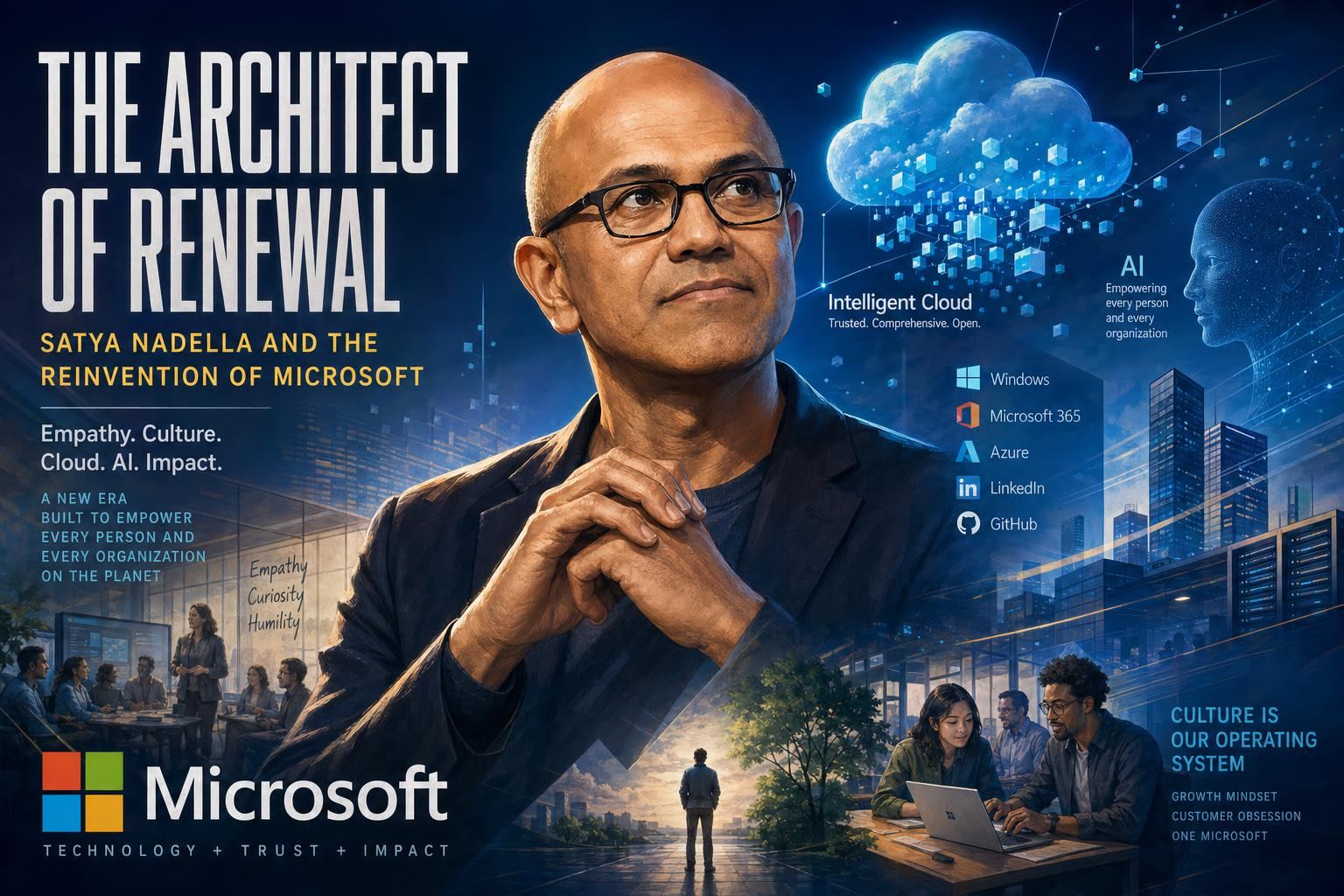
Nadella earned a master’s in computer science at Wisconsin, then took a job at Sun Microsystems — then one of the hottest companies in Silicon Valley. He worked on early network computing and systems software. At night, he enrolled in an MBA program at the University of Chicago Booth School of Business, commuting back and forth for years.
In 1992, a recruiter called him about a small job opportunity at a company called Microsoft. Windows 3.1 had just launched. The Internet was barely public. Microsoft was considered a solid but unglamorous destination compared to the California giants.
Nadella interviewed. The final question was from a manager who asked him a classic behavioral puzzle: “If you saw a baby lying in the street, crying, what would you do?” Nadella answered that he would call 911. The manager looked at him calmly and said, “No. You would pick up the baby.”
Nadella froze. Then he understood the lesson — the instinct of empathy should come before the instinct of procedure. He took the job. He never forgot the moment.
Over the next two decades, he would rotate through nearly every major Microsoft division: Windows, Office, Bing, Business Solutions, Server and Tools. He became known as the guy who could take a technically broken division and make it work — quietly, methodically, without drama.
☁️ Chapter 3: The Cloud That Nobody Believed In
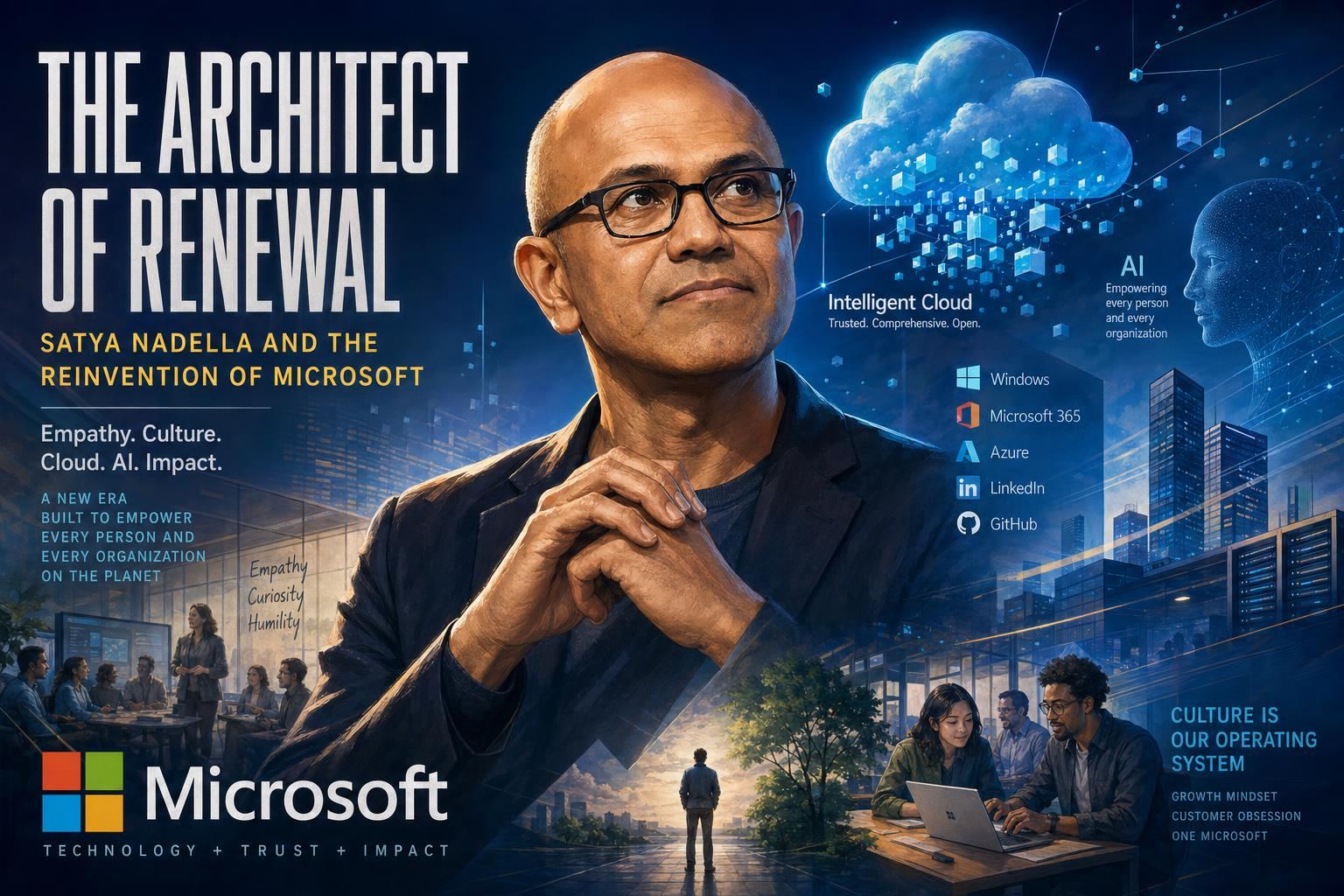
In 2011, Steve Ballmer promoted Nadella to lead Microsoft’s Server and Tools division, which included a nascent cloud computing service called Windows Azure. At the time, Amazon Web Services had a three-year head start, a much larger customer base, and a faster-growing revenue stream. Inside Microsoft, Azure was considered a side bet.
Nadella disagreed. He believed that cloud computing would become the biggest technology market of the next twenty years, bigger than PCs, bigger than smartphones, bigger than anything Microsoft had ever touched. He poured resources into Azure. He rewrote the engineering culture of the division around continuous deployment and customer feedback loops. He pushed engineers to support Linux workloads on Azure — a decision that horrified Windows loyalists but won enterprise customers who refused to be locked into Microsoft’s historical worldview.
By 2013, Azure’s revenue was growing over 100% year-over-year. Nadella had proven something no one else inside Microsoft had: that the company could build a new, non-Windows, non-Office business at scale, and win.
When Steve Ballmer announced his retirement in August 2013, the Microsoft board launched a CEO search. Reportedly, they interviewed Ford’s Alan Mulally, Nokia’s Stephen Elop, and several outside candidates. But the internal consensus was increasingly clear. The cloud guy had won.
🔁 Chapter 4: Hit Refresh
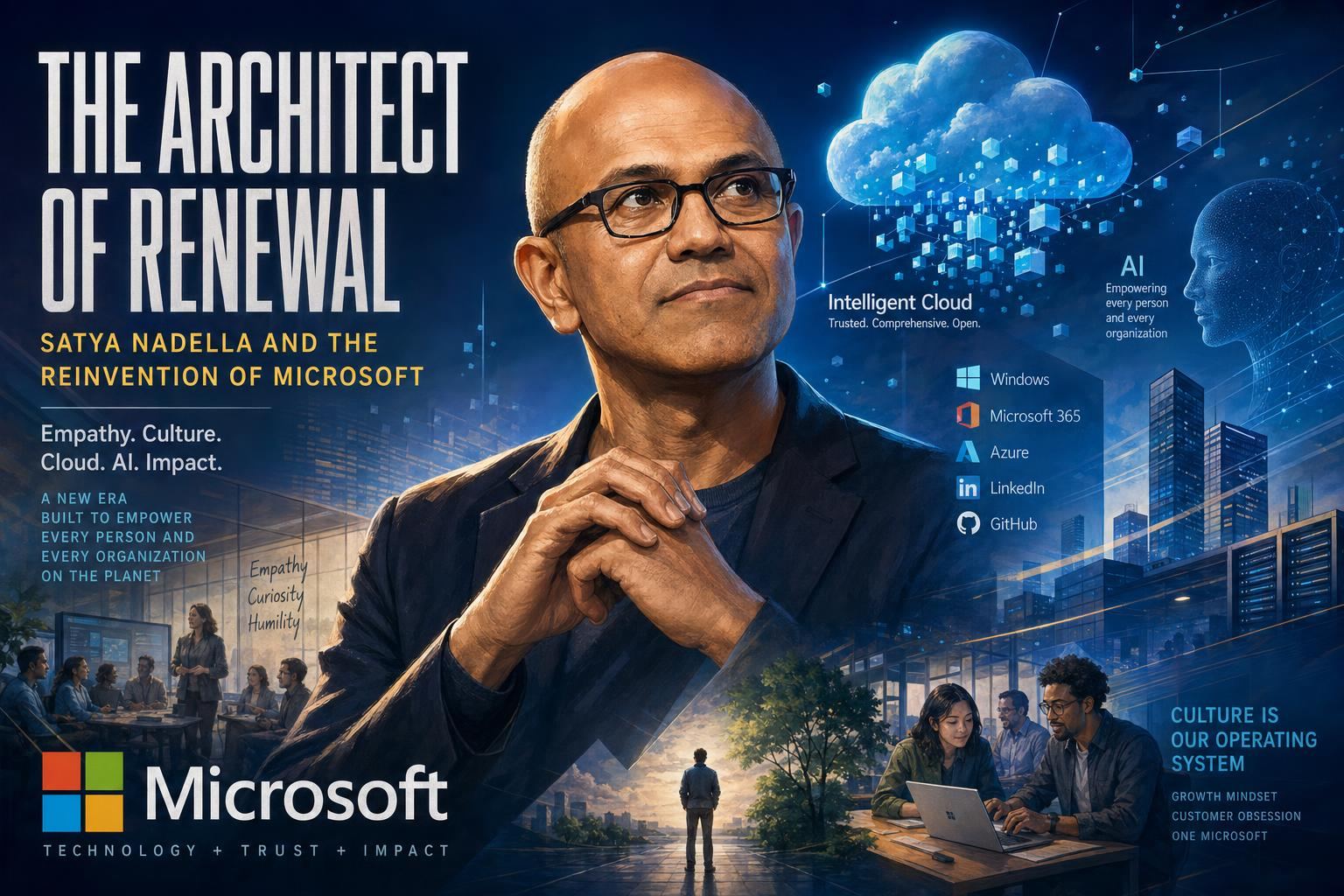
On February 4, 2014, Satya Nadella was announced as Microsoft’s third CEO. Bill Gates stepped down as chairman to become a technology advisor.
Nadella’s first act was not a product launch. It was a memo. In it, he argued that Microsoft had become too attached to protecting Windows — that the “Windows first” instinct was preventing the company from meeting customers where they actually lived. Customers lived on iPhones. Customers lived on Android. Customers lived on Linux servers. Microsoft needed to stop pretending otherwise.
Within weeks, he made decisions that would have been unthinkable under Ballmer. He announced Office for iPad, releasing Microsoft’s most valuable software on Apple’s platform. He embraced open source. He demoed Linux running on Azure and famously said, “Microsoft loves Linux” — a phrase that made old Windows veterans physically wince.
He killed Windows Phone as a strategic priority. He took the $7.6 billion write-down on the Nokia acquisition that Ballmer had forced through on his way out the door. He refused to pretend the phone war was winnable.
To the old guard, it looked like surrender. To Nadella, it was liberation. Microsoft was freed to compete where it could actually win — cloud, productivity, enterprise — instead of burning billions chasing battles it had already lost.
🤝 Chapter 5: The LinkedIn Bet
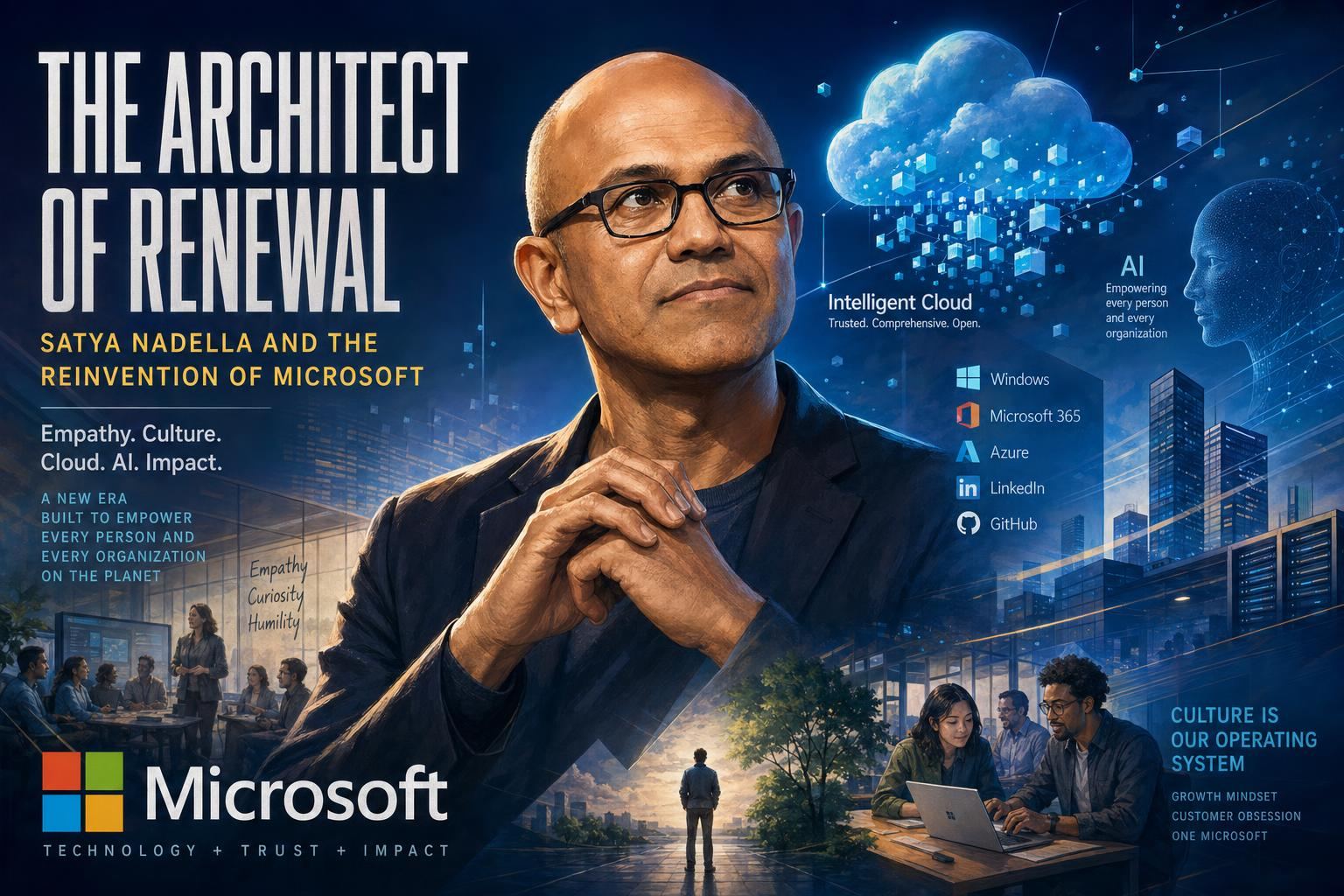
On June 13, 2016, Microsoft announced it was acquiring LinkedIn for $26.2 billion — the largest acquisition in Microsoft history. Wall Street was skeptical. Why was an enterprise software company spending 26 billion dollars on a social network for job seekers?
Nadella’s answer was quiet but strategic. LinkedIn was the professional identity graph for the global workforce. Microsoft Office was the productivity toolkit for the global workforce. Combining them would create a flywheel in which the tools people used to work would be tightly woven with the network that defined their career. Every new hire. Every résumé. Every business connection. All funneled through Microsoft’s ecosystem.
He also insisted on something unusual: LinkedIn would operate independently under its existing CEO Jeff Weiner, with its own culture, brand, and product roadmap. It was a masterclass in acquisition integration. No forced migrations. No ego wars. No rebrand.
Over the next seven years, LinkedIn revenue tripled. Its advertising and recruiter businesses became core Microsoft profit centers. The skeptics went quiet. The acquisition that had looked crazy in 2016 came to be seen as one of the most strategically coherent deals in the industry’s history.
🎮 Chapter 6: The Activision Gambit
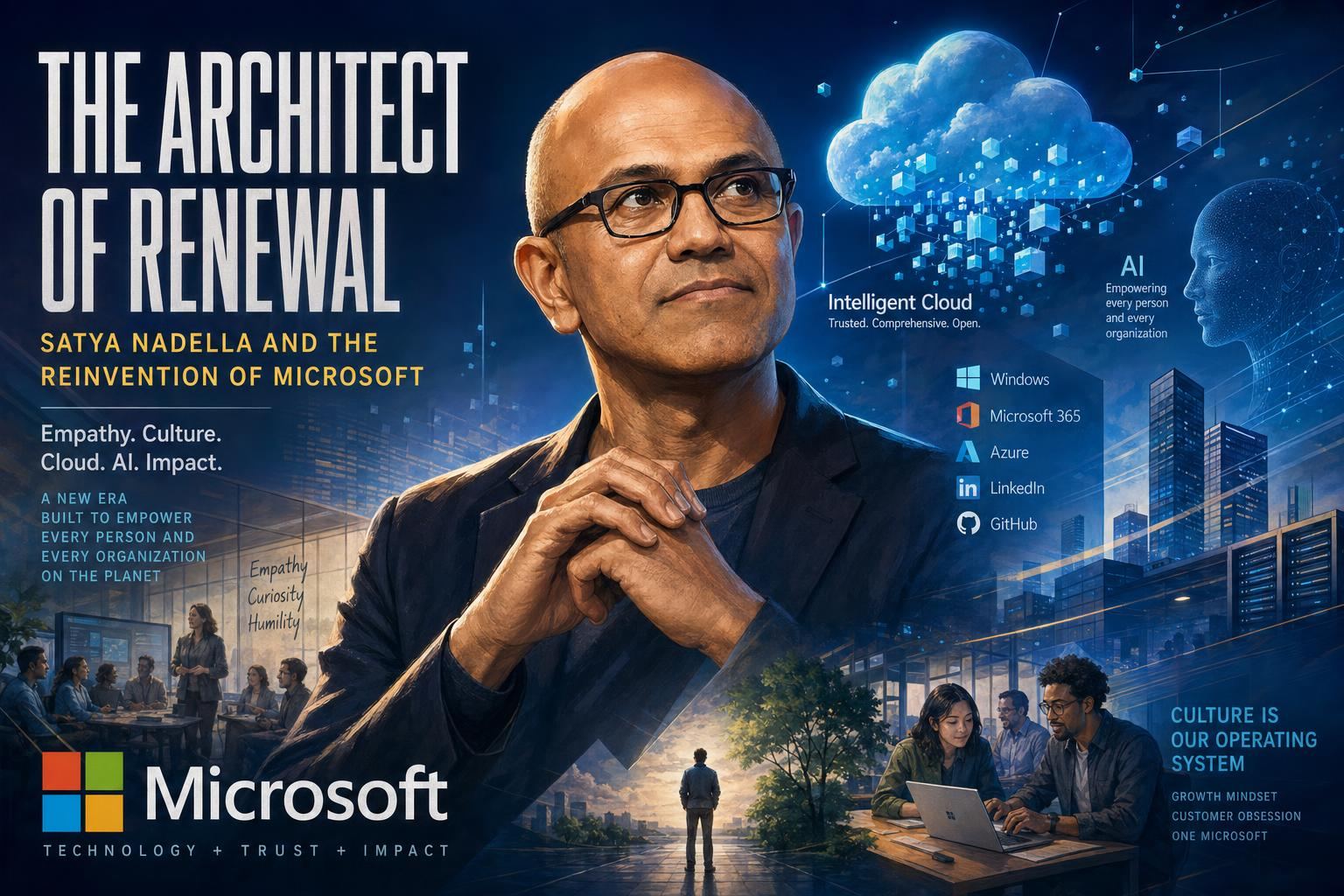
If LinkedIn was big, Activision Blizzard was enormous. In January 2022, Nadella announced Microsoft would acquire the troubled but massive game publisher for $68.7 billion — the largest acquisition in the history of the video game industry and one of the ten largest tech deals ever.
The timing was controversial. Activision was in the middle of a sexual harassment scandal involving its CEO Bobby Kotick. Regulators around the world — in the U.S., U.K., and E.U. — threatened to block the deal on antitrust grounds. The U.K.’s Competition and Markets Authority blocked the acquisition outright in April 2023. The U.S. Federal Trade Commission sued to stop it.
Nadella did not back down. Microsoft restructured the deal, offered concessions on cloud gaming rights, divested certain properties to Ubisoft, and pushed through a revised agreement. The deal finally closed on October 13, 2023, nearly two years after it was first announced.
Why spend almost seventy billion dollars on games? Nadella’s answer was consistent with his worldview. Gaming was the largest entertainment category in the world. Xbox alone was not enough. Microsoft needed content — Call of Duty, World of Warcraft, Candy Crush, Diablo — to give it leverage across every device and every platform, including the cloud and the future of mixed reality. It was the same logic that had driven the LinkedIn deal. Own the content. Own the distribution. Let the customers go wherever they want.
🧠 Chapter 7: The Culture Rewire
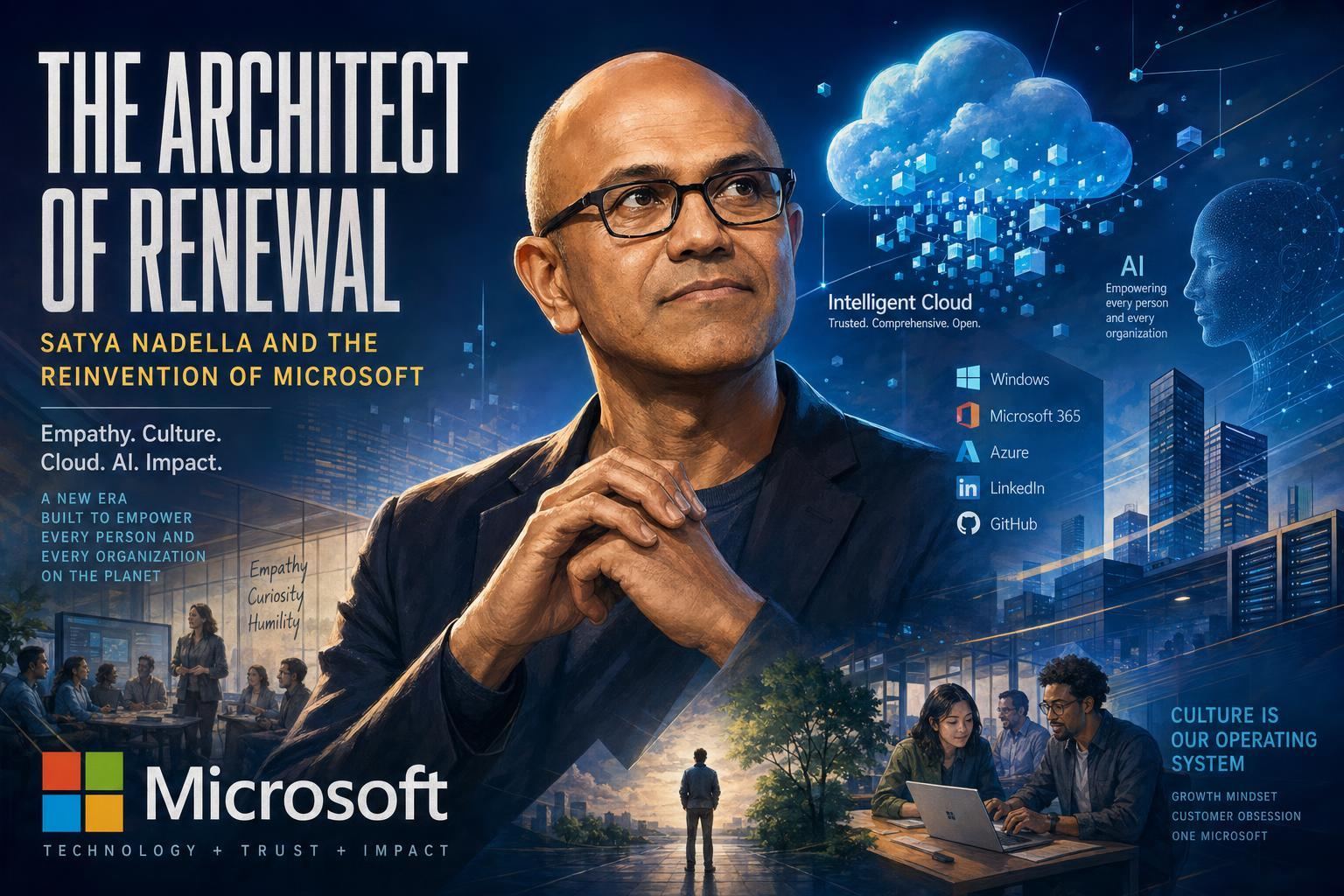
Nadella spent his first two years as CEO systematically dismantling Microsoft’s infamous “stack ranking” performance review system, in which employees were forced into a distribution curve and a fixed percentage were marked as underperformers regardless of actual output.
The old system had poisoned Microsoft’s culture for years. Engineers hoarded information. Teams refused to collaborate because helping a peer could hurt your own review. Vice presidents built political fiefdoms and sabotaged each other publicly.
Nadella replaced the entire system. He introduced a growth mindset framework — borrowed from psychologist Carol Dweck’s research — in which employees were evaluated on how much they helped others, how much they learned, and how much they contributed to cross-team outcomes. He trained managers to run different kinds of meetings. He changed the language of internal communications. He used the phrase “learn-it-all, not know-it-all” so often that it became an internal meme.
Slowly, the culture began to shift. Engineers stopped hiding code. Teams started collaborating across divisions. The political wars subsided. The Glassdoor ratings for Microsoft climbed from mediocre to excellent. By 2019, Microsoft was routinely cited as one of the best places to work in tech — a sentence that would have been unimaginable in 2013.
🤖 Chapter 8: The OpenAI Bet
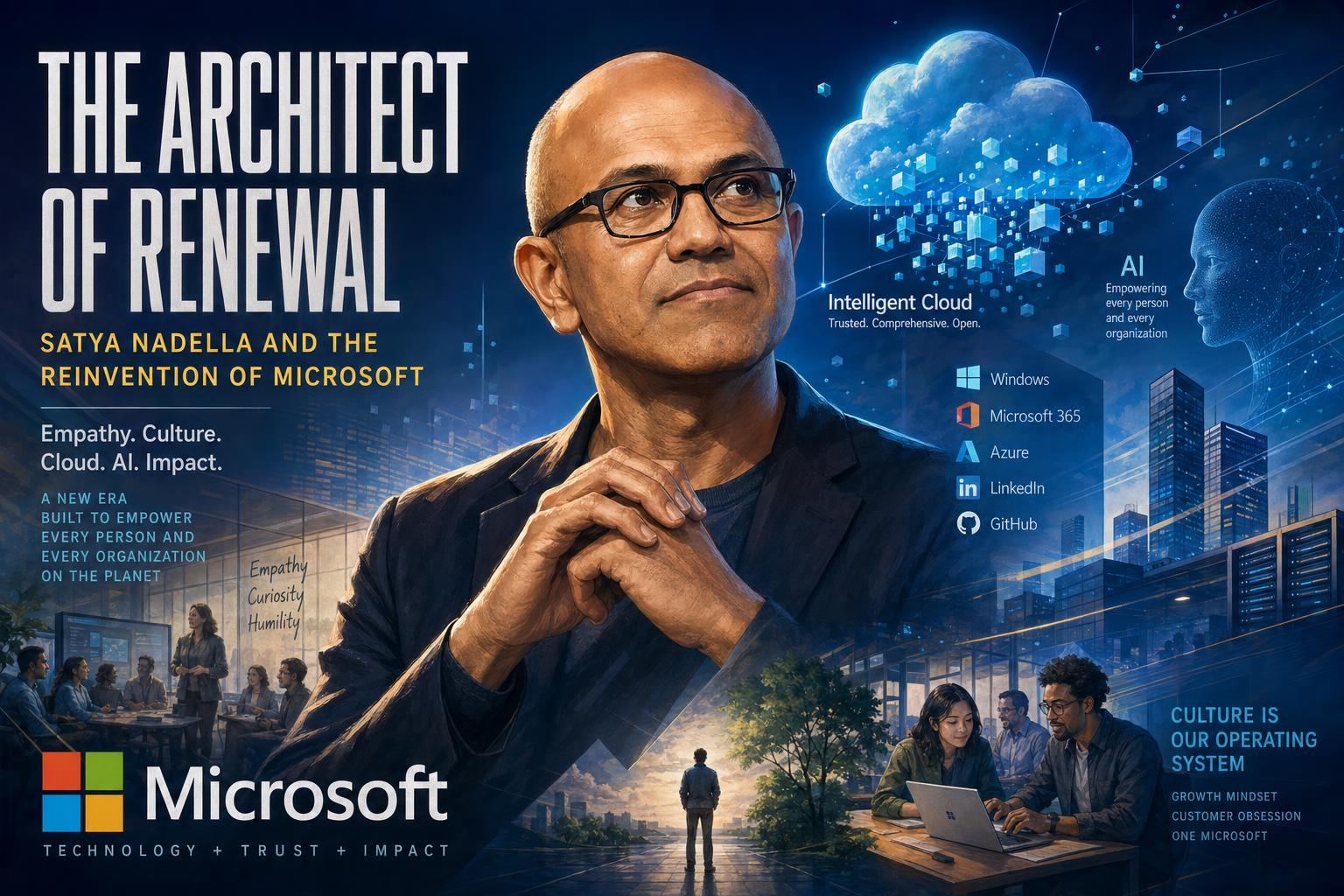
In July 2019, Microsoft announced a $1 billion investment in a little-known AI research lab called OpenAI. At the time, most of the technology press shrugged. OpenAI had produced interesting research but had no revenue and no product. Nadella was taking a bet on a nonprofit run by former Y Combinator president Sam Altman.
But Nadella saw something most observers missed. He believed that large language models were going to be the next platform shift — bigger than mobile, bigger than cloud. If he was right, Microsoft needed a horse in the race, and building one from scratch would take too long.
Over the next four years, Microsoft poured roughly $13 billion into OpenAI. Azure became OpenAI’s exclusive cloud provider. Microsoft’s researchers collaborated with OpenAI on GPT-3, GPT-4, and the eventual release of ChatGPT.
When ChatGPT launched in November 2022 and became the fastest-growing consumer product in history, Microsoft’s pre-positioning paid off spectacularly. Within months, Nadella rebranded Bing with GPT-4 integration. He launched Microsoft Copilot across Office, Windows, and GitHub. Microsoft’s market cap surged past Apple’s, briefly making it the most valuable company in the world.
The patient 2019 bet had become the single most consequential corporate investment of the 2020s.
💥 Chapter 9: The Sam Altman Weekend
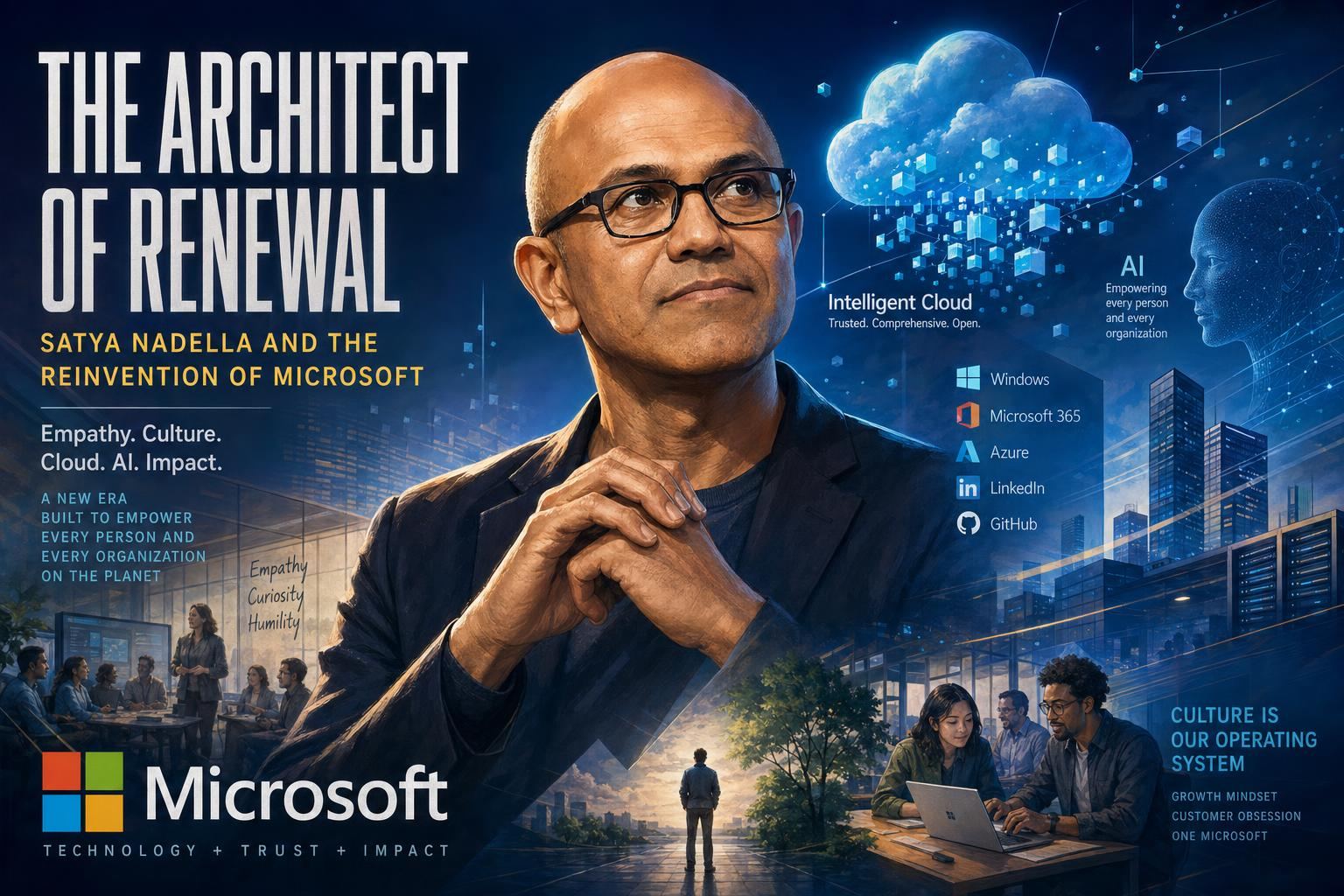
On Friday, November 17, 2023, OpenAI’s board abruptly fired Sam Altman as CEO. The decision stunned the technology industry and threatened Microsoft’s largest strategic bet.
Within 48 hours, Nadella did something that redefined corporate crisis management in the AI era. He announced that Microsoft would hire Sam Altman and Greg Brockman to lead a new advanced AI research group inside Microsoft — and that any OpenAI employee who wanted to follow them could join too. Hundreds of OpenAI employees signed an open letter threatening to resign. The board’s position collapsed.
By Tuesday, Altman had been reinstated as CEO of OpenAI. Microsoft had gained an observer seat on the OpenAI board. The crisis had been resolved in Microsoft’s favor without a single lawsuit filed or a single dollar renegotiated.
Through the entire weekend, Nadella’s public statements were calm, measured, and boring. He tweeted support for Altman’s leadership. He kept his options open. He reassured customers that Azure’s OpenAI services were not affected. He did what he has always done: stayed quiet and moved pieces decisively.
The technology press called it the most expertly handled corporate crisis in tech industry memory.
⚖️ Chapter 10: The AI Arms Race
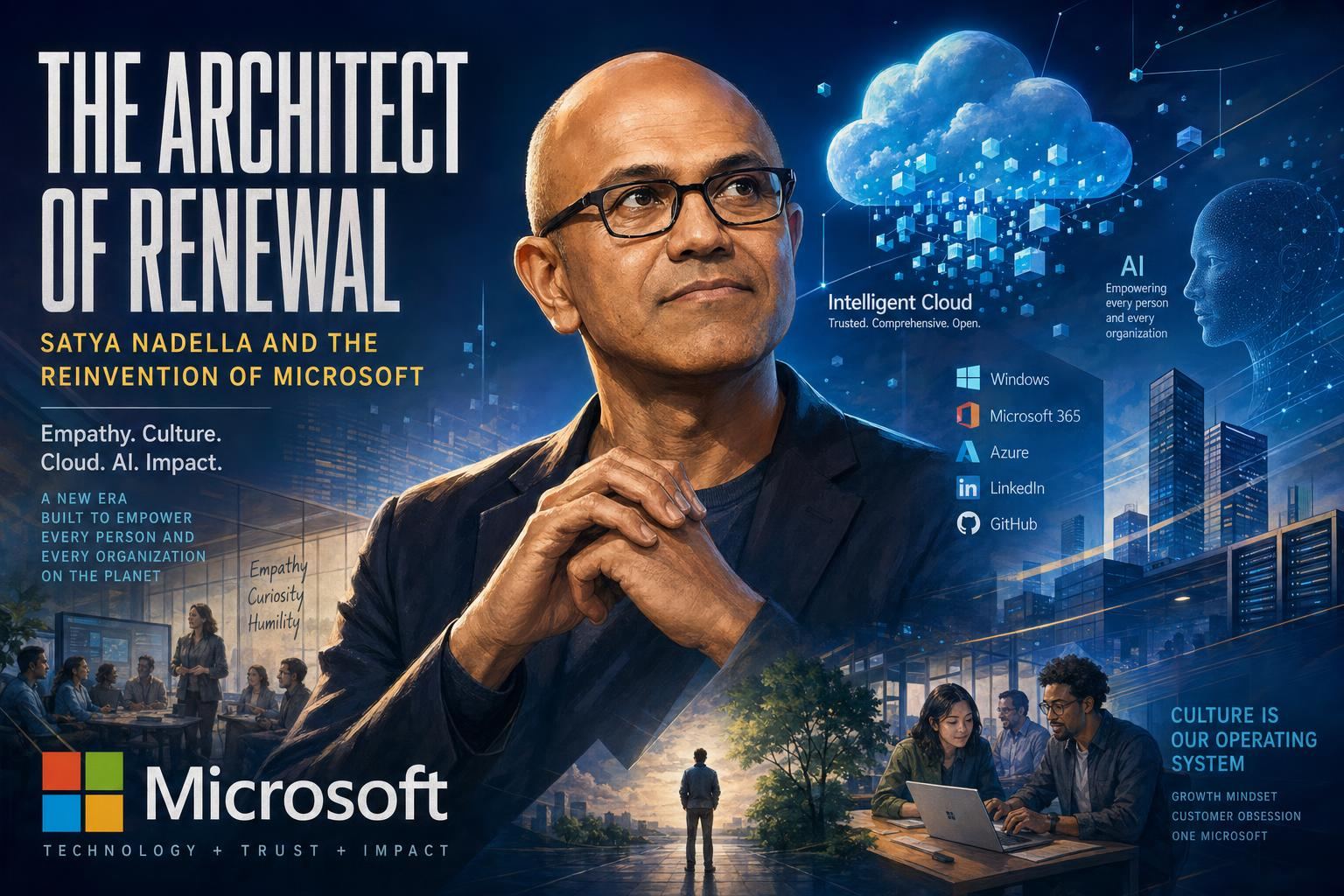
By 2024, Microsoft was spending over $50 billion per year on capital expenditures — much of it on data centers, GPUs, and AI infrastructure. The numbers dwarfed anything the company had ever invested in Windows, Office, or Xbox combined. Wall Street began asking whether the AI capex was sustainable. Nadella’s answer was always the same: if AI was the next platform, underinvesting now was the only unforgivable mistake.
He pushed Microsoft’s Copilot into every product surface: Word, Excel, Outlook, Teams, GitHub, Bing, Windows 11. He made the Copilot name ubiquitous. He forced a new business model in which customers paid per-user, per-month for AI augmentation — generating entirely new revenue lines on top of existing Office 365 subscriptions.
He also diversified the AI bet. Microsoft hired Mustafa Suleyman, the co-founder of DeepMind and Inflection AI, to lead a new Microsoft AI division. Microsoft licensed AI technology from Mistral. Microsoft built its own in-house language models. The strategy was consistent: don’t depend on any single AI partner forever, but don’t hesitate to partner aggressively in the meantime.
Competitors — Google, Amazon, Meta — were all forced to respond to Microsoft’s pace. For the first time in fifteen years, Microsoft was setting the agenda for the entire industry.
❤️ Chapter 11: The Quiet Engine of Empathy
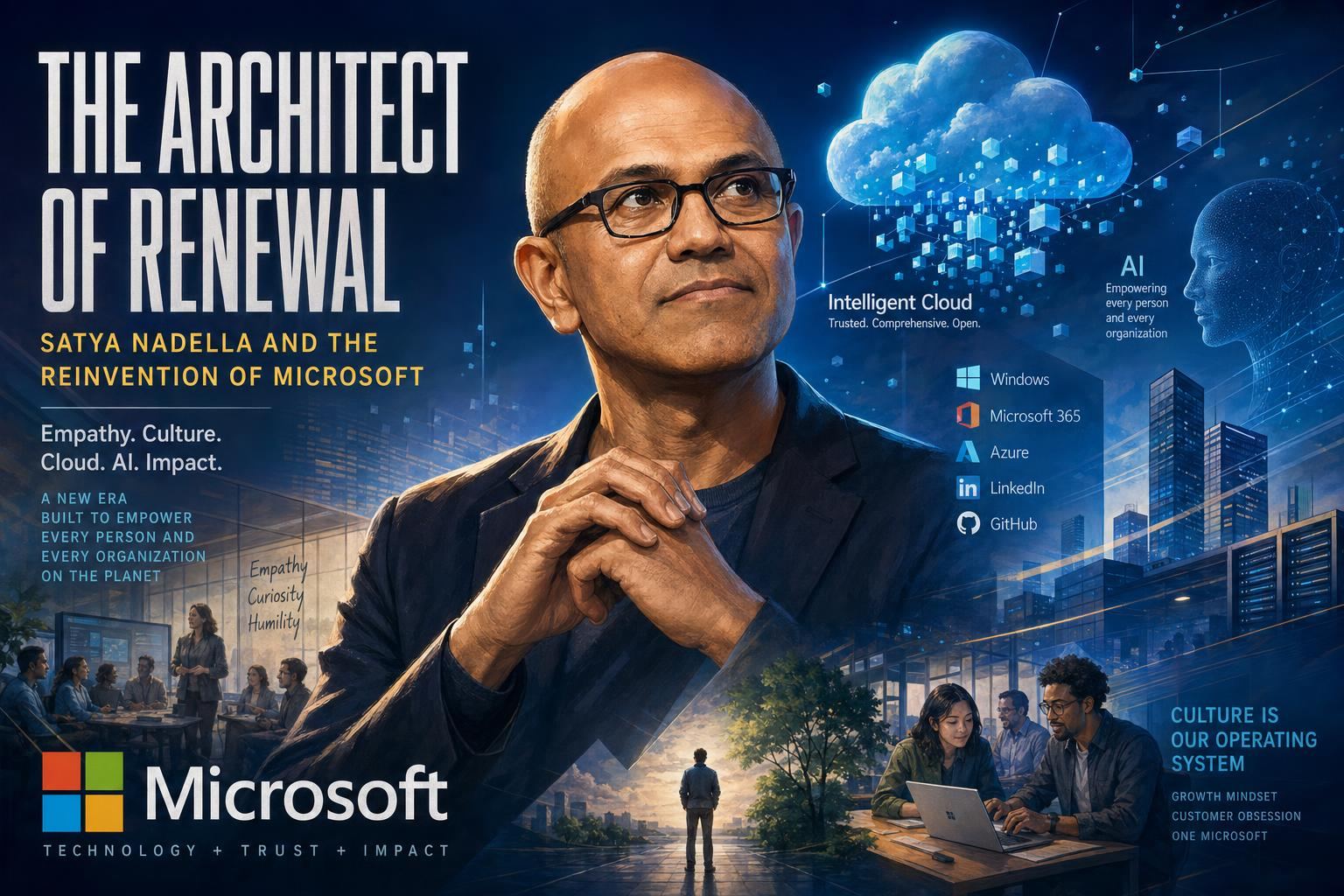
To understand Nadella’s leadership, you have to understand his family. In 1996, his first son Zain was born with severe cerebral palsy and was unable to walk or speak. Satya and his wife Anu built their lives around caring for Zain, advocating for him, and learning from him. Zain passed away in February 2022 at the age of 26.
Nadella has said, repeatedly, that raising Zain rewired his entire understanding of what leadership is. Empathy was not a soft skill. It was the foundational capacity that made all other skills possible. A manager who could not feel what an employee felt would never be able to predict what they would do next. A CEO who could not feel what a customer felt would never be able to build something the customer actually wanted.
This worldview is the quiet engine behind every visible move Nadella has made as CEO. His willingness to admit mistakes. His refusal to pick public fights. His insistence on calling employees “learners.” His cross-platform strategy — meeting customers where they are, not where Microsoft wants them to be. All of it traces back to a single framing: you must see the world through the other person’s eyes before you can serve them.
In an industry addicted to the myth of the ruthless founder, Satya Nadella’s career is a quiet but decisive counterexample. Empathy, it turns out, scales better than ego.
🌅 Chapter 12: The Trillion-Dollar Rebirth
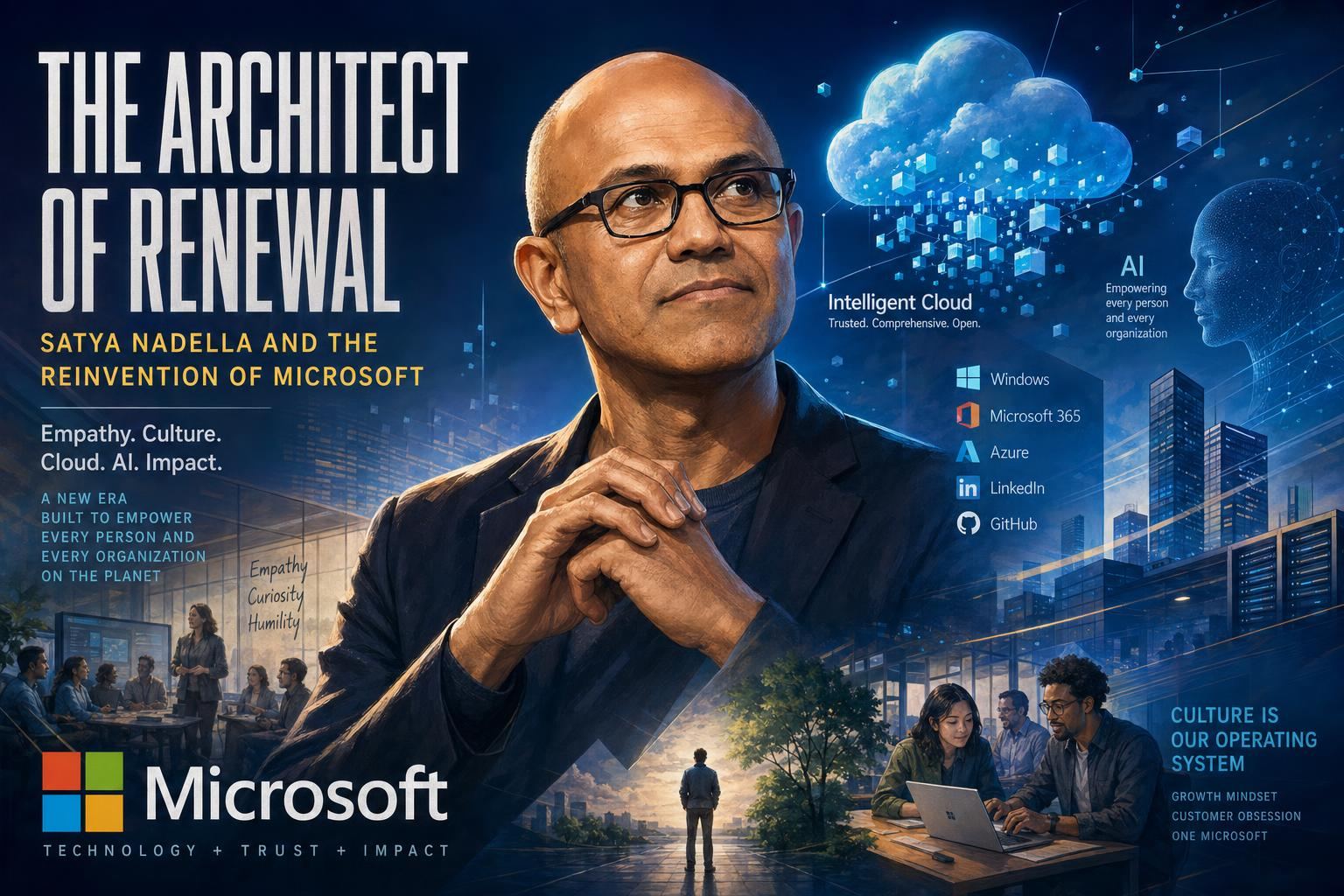
As of early 2026, Microsoft’s market capitalization is approximately $3.2 trillion. Annual revenue exceeds $245 billion. Azure is the second-largest cloud platform on Earth. Office 365 has over 400 million paying subscribers. GitHub is the largest developer platform in history. LinkedIn has over 1 billion members. Xbox and Activision together constitute the largest gaming business on the planet.
The company Nadella inherited in 2014 was worth roughly $300 billion. The company he runs today is worth more than ten times that. Shareholders who held Microsoft stock on the day he was announced as CEO and did nothing else have seen a return of over 900%. No other CEO of the 2010s or 2020s — not Tim Cook, not Sundar Pichai, not Jensen Huang — has engineered a comparable turnaround at comparable scale.
Nadella is still running Microsoft. He still wears dark sweaters to meetings. He still quotes poetry in earnings calls. He still talks about “empathy” and “learn-it-all” and “rediscovering the soul” of a company — phrases that once made jaded tech journalists roll their eyes and now read like a corporate philosophy vindicated by a decade of results.
The boy who wanted only to play cricket for India never got to wear the national jersey. But he captained something bigger than any cricket team: he captained a corporate resurrection that will be studied in business schools for the next fifty years. And the lesson of that resurrection is strangely simple. Pick up the baby. Listen before you speak. Meet people where they are. And never, ever, assume the game is lost just because the scoreboard looks ugly.
💡 Key Insights
- ▸ Nadella's first decision as CEO — killing internal Windows supremacy and embracing Linux, iOS, and Android — was a public admission that Microsoft had been fighting the wrong war for a decade. The lesson: the fastest way to unlock a stalled giant is to stop protecting the product that made it famous.
- ▸ The $26 billion LinkedIn acquisition and the $68.7 billion Activision acquisition proved that Microsoft under Nadella was willing to make the largest bets in its history — but always with a clear strategic logic tied to distribution and platforms, never to ego.
- ▸ Microsoft's $13 billion bet on OpenAI, made before ChatGPT existed, is the single most consequential corporate investment of the 2020s. It turned a stalled search business into a credible Google challenger overnight.
- ▸ Nadella replaced a culture of 'know-it-alls' with a culture of 'learn-it-alls.' This wasn't a slogan — it was an explicit rewiring of performance reviews, promotion criteria, and internal language. Culture change is downstream of incentive change.
- ▸ His empathy-driven leadership — formed partly by the experience of raising a son with severe disabilities — is the quiet engine behind every public move he has made. Understanding Nadella requires understanding that his worldview was shaped by caregiving, not by competition.