Michael Dell: The College Dropout Who Built PCs in His Dorm Room and Created a $100 Billion Empire
He started selling computers from his University of Texas dorm room at 19. Four decades later, Dell Technologies is one of the largest tech companies on Earth — and Michael Dell took it private, fixed it, and brought it back.
View all stories about this mogul
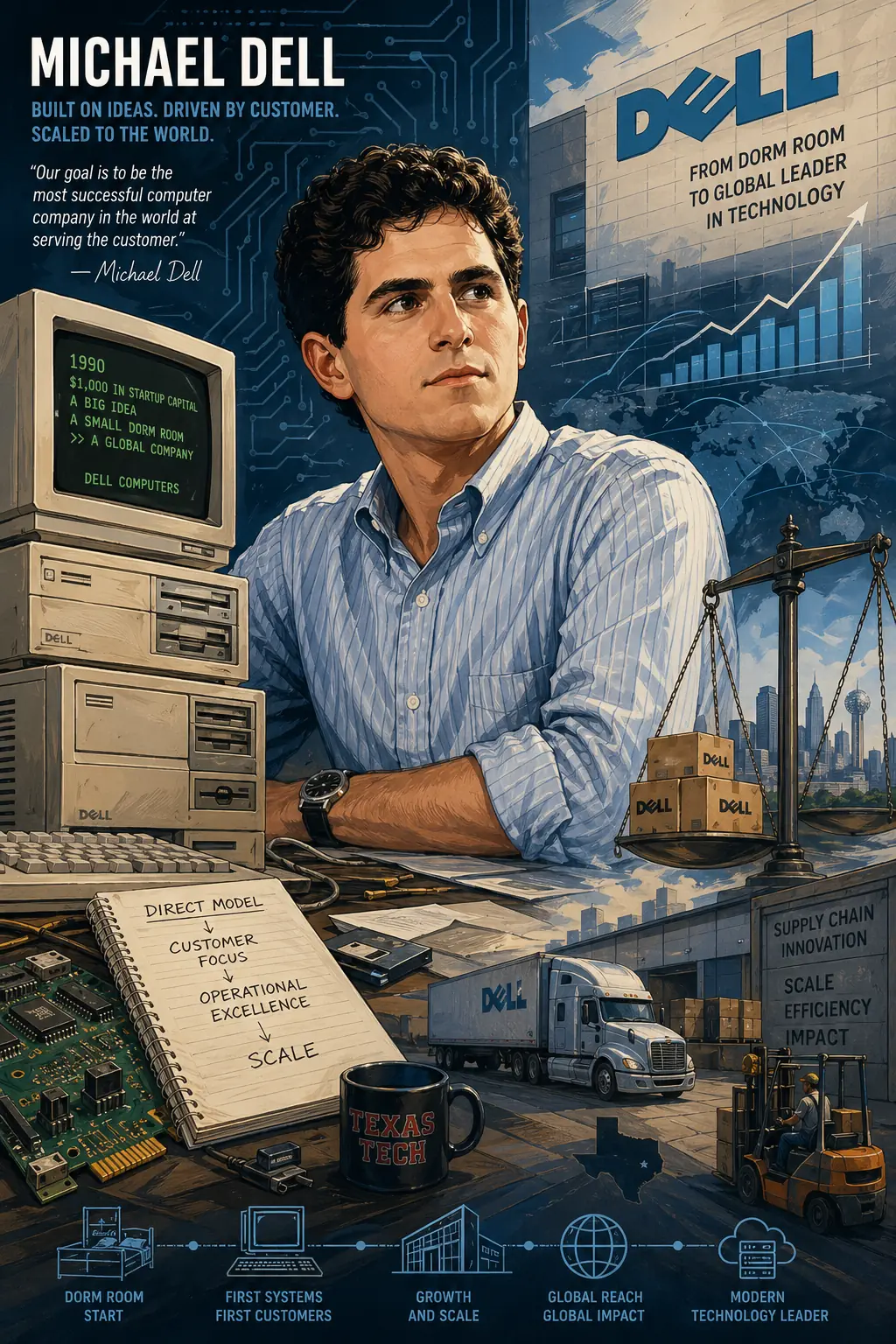
Michael Dell is the founder who never left. While other tech legends stepped aside, got fired, or cashed out, Dell has been running the company he founded in a University of Texas dorm room for over four decades. He took it public, took it private, took it public again, and transformed it from a PC maker into one of the world’s largest technology infrastructure companies. Along the way he became one of the fifty richest people on Earth, weathered a near-death experience for his company, and executed the largest technology acquisition in history. His story is a masterclass in the unsexy but essential art of operational excellence.
Chapter 1: The Houston Kid Who Sold Stamps (1965–1984)

Michael Saul Dell was born on February 23, 1965, in Houston, Texas. His father was an orthodontist; his mother was a stockbroker. The family was comfortable but not wealthy. What was unusual about young Michael wasn’t academic brilliance or athletic talent — it was an almost preternatural instinct for business.
At twelve, he ran a mail-order stamp trading business, using newspaper ads to attract customers and netting $2,000 — serious money for a middle schooler. At sixteen, he sold subscriptions to the Houston Post, discovering that newlyweds and new homeowners were the most likely subscribers. He developed a targeted mailing list and earned $18,000 in one year — more than his history teacher.
These early ventures taught Dell the principle that would define his career: eliminate the middleman and go directly to the customer. The stamp business bypassed dealers. The newspaper subscription business bypassed random cold-calling. In every case, a direct relationship with the customer produced better results than working through intermediaries. It was a simple insight, but Dell would apply it with extraordinary consistency for the next forty years.
Chapter 2: The Dorm Room Revolution (1984–1988)
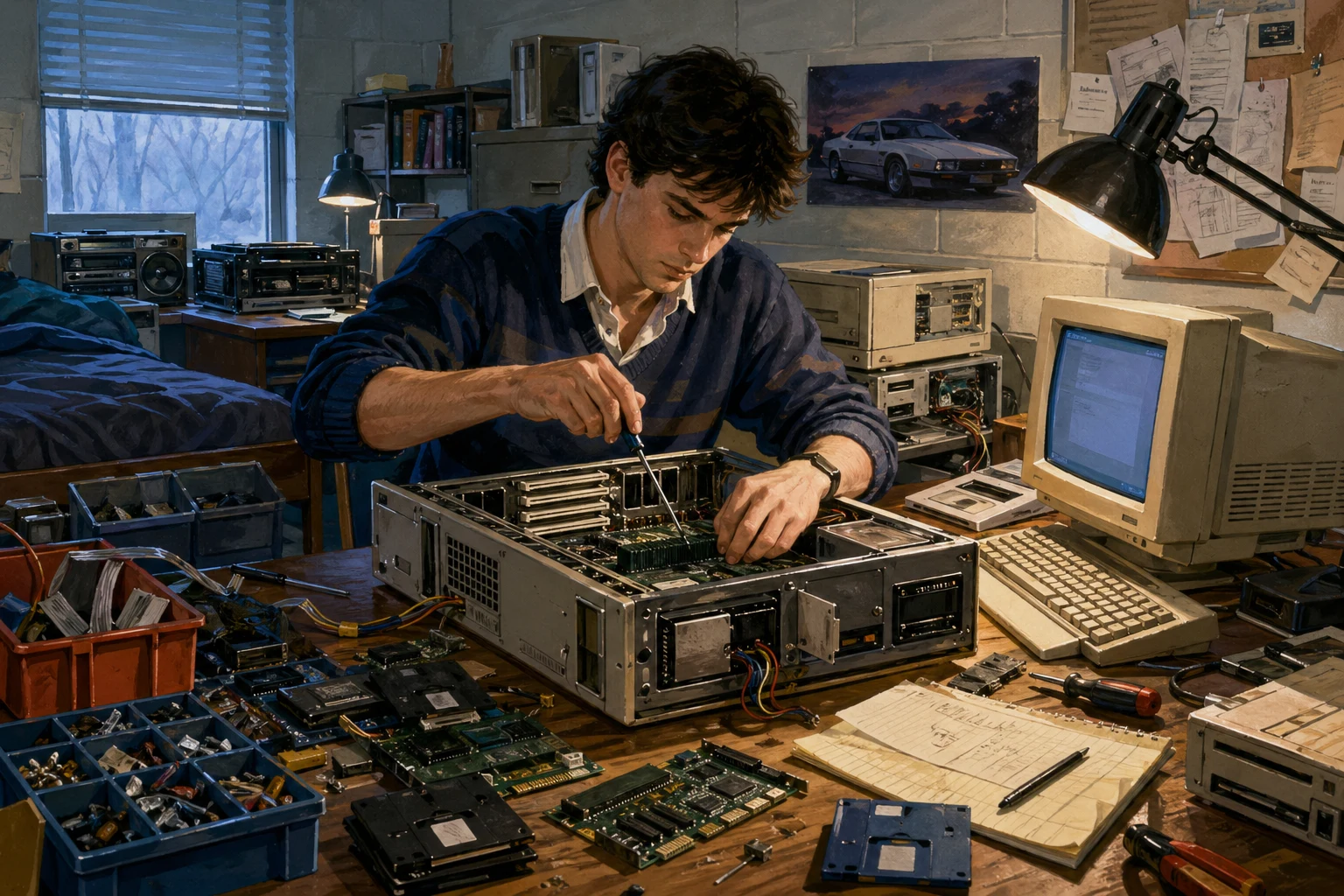
Dell enrolled at the University of Texas at Austin in 1983, ostensibly to become a doctor (his parents’ wish). Instead, he started building and selling computers from his dorm room. His insight was simple but powerful: IBM PCs were sold through retail dealers who added significant markups but provided little value. Dell could buy components, assemble computers to customer specifications, and sell them directly at lower prices with better customization.
He incorporated the company as PC’s Limited in 1984, dropped out of UT, and moved operations to a small office. By the end of the year, revenue was $6 million. By 1988, the company — now renamed Dell Computer Corporation — went public with a market capitalization of $85 million. Dell was twenty-three years old.
The direct model was Dell’s competitive advantage. While Compaq, HP, and IBM sold through retail channels — absorbing the costs of dealer margins, unsold inventory, and channel management — Dell sold directly to customers, building each computer only after it was ordered. This meant Dell carried almost no finished inventory, had superior cash flow, and could customize every machine. The model was devastatingly efficient.
Chapter 3: The Direct Model Dominance (1988–1999)
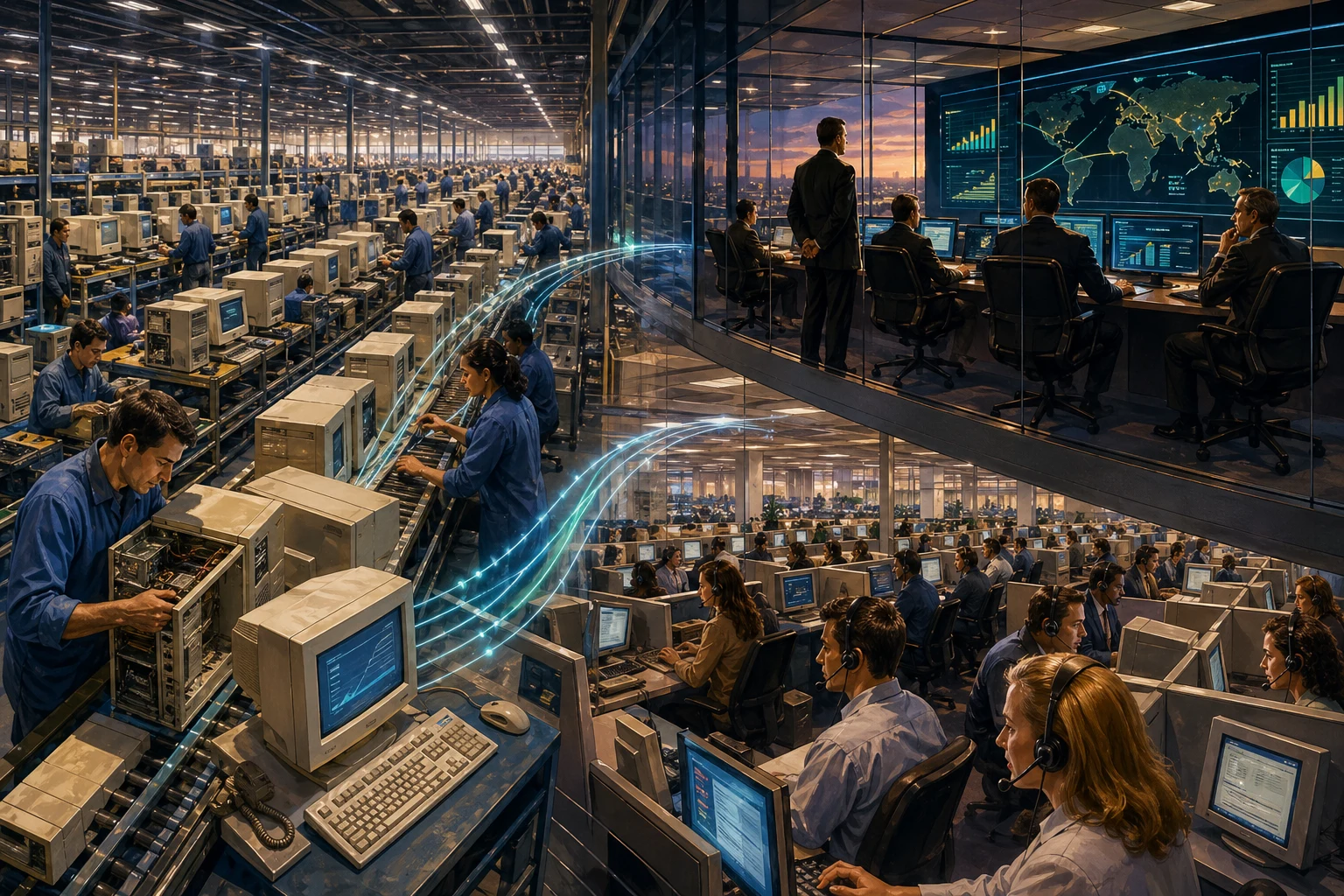
Through the 1990s, Dell Computer Corporation grew at a pace that astonished the industry. Revenue went from $500 million in 1991 to $25 billion by 1999. The stock price increased by nearly 90,000% during the decade, making Dell one of the best-performing stocks in history. Michael Dell became a billionaire in his early thirties.
The company’s growth was driven by relentless operational optimization. Dell pioneered just-in-time manufacturing for the PC industry, keeping only days of component inventory on hand and building machines within hours of receiving orders. This approach minimized the risk of holding components that could quickly become obsolete in the fast-moving PC industry. While competitors might be stuck with warehouses of unsold machines when a new processor launched, Dell simply started building machines with the new processor immediately.
Dell also pioneered online sales. Dell.com launched in 1996 and was generating $1 million in daily revenue within a year. By 1999, online sales exceeded $30 million per day. The internet was the perfect channel for Dell’s direct model — customers could configure their machines, place orders, and track shipments entirely online. The combination of direct sales, build-to-order manufacturing, and online commerce created a business model that was nearly unbeatable in the commodity PC market.
Chapter 4: The CEO Steps Aside — and Returns (2004–2007)

In 2004, Dell stepped down as CEO, handing the role to Kevin Rollins, the company’s president and a long-time operational lieutenant. Dell remained as chairman but reduced his day-to-day involvement. It was a decision he would later regret.
Under Rollins, Dell Computer faced growing challenges. The direct model that had been so dominant was being eroded. Competitors — particularly HP under CEO Mark Hurd — had improved their supply chains and distribution efficiency, narrowing Dell’s cost advantage. The consumer market was shifting toward laptops and aesthetics, areas where Dell’s utilitarian approach was a disadvantage. Apple’s design-driven products were capturing the premium market that Dell had never seriously pursued.
Quality problems emerged. Dell faced a massive battery recall in 2006 — over four million laptop batteries were recalled due to fire risk. Customer service complaints increased. The stock price, which had peaked in 2000, was declining steadily. In January 2007, Dell returned as CEO, displacing Rollins. The founder was back, and the company needed him.
Chapter 5: The Reinvention Begins (2007–2013)
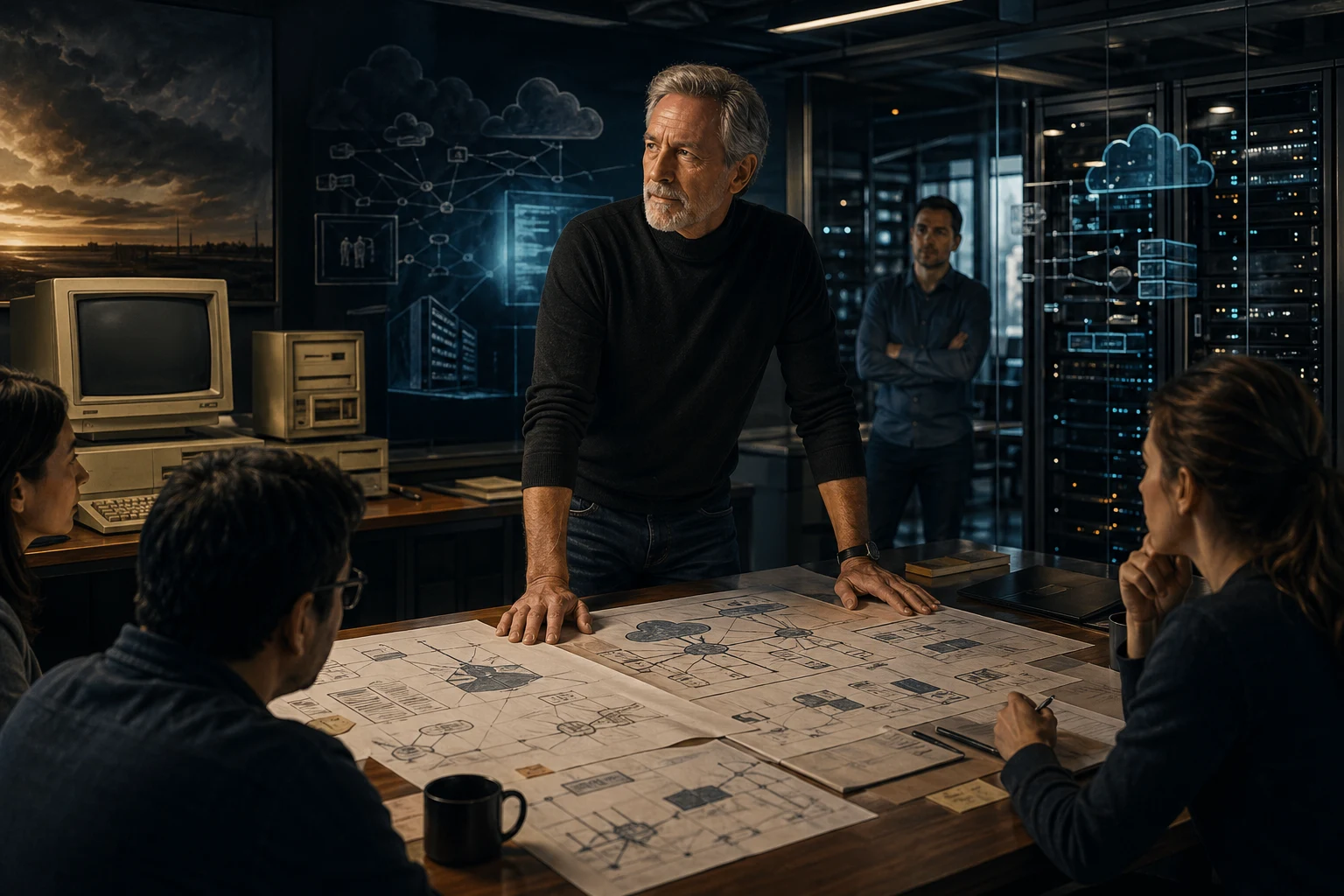
Dell’s return to the CEO role was driven by a recognition that the company’s core business — selling PCs directly to consumers and businesses — was a shrinking competitive advantage. The PC market was maturing, margins were compressing, and the future of technology was shifting toward services, cloud computing, and enterprise solutions.
Dell began acquiring companies to diversify. He purchased Perot Systems ($3.9 billion, IT services), EqualLogic ($1.4 billion, storage), and other companies that moved Dell beyond PCs and into the enterprise infrastructure market. The acquisitions were expensive and didn’t always integrate smoothly, but they reflected a clear strategic vision: Dell needed to become an enterprise technology company, not just a PC manufacturer.
The stock market wasn’t patient. Dell’s stock price languished as investors struggled to understand the company’s transformation strategy. Wall Street wanted quarterly earnings beats, not multi-year strategic pivots. Dell grew increasingly frustrated with the pressure to manage for short-term stock price rather than long-term business health. He began considering a radical solution.
Chapter 6: The $24.4 Billion Gamble — Going Private (2013)

In February 2013, Michael Dell announced a deal to take Dell Computer private in a $24.4 billion leveraged buyout — at the time, the largest tech buyout in history. Dell partnered with Silver Lake Partners, a private equity firm, and invested billions of his own fortune. The deal was controversial: activist investor Carl Icahn fought it publicly, arguing that Dell was buying the company on the cheap.
The buyout was approved by shareholders in September 2013, and Dell Computer became a private company for the first time since 1988. Dell described the decision as necessary freedom — freedom from quarterly earnings pressure, freedom from activist investors, freedom to make long-term investments that wouldn’t pay off for years.
Going private was a bet that Dell could transform the company faster and more effectively without public market scrutiny. The risk was enormous — the deal loaded the company with tens of billions in debt at a time when the PC market was declining and the enterprise transformation was incomplete. If the transformation failed, Dell would be bankrupt. Michael Dell was betting his fortune and his legacy on his ability to reinvent a company that many considered a dinosaur.
Chapter 7: The EMC Mega-Merger (2015–2016)
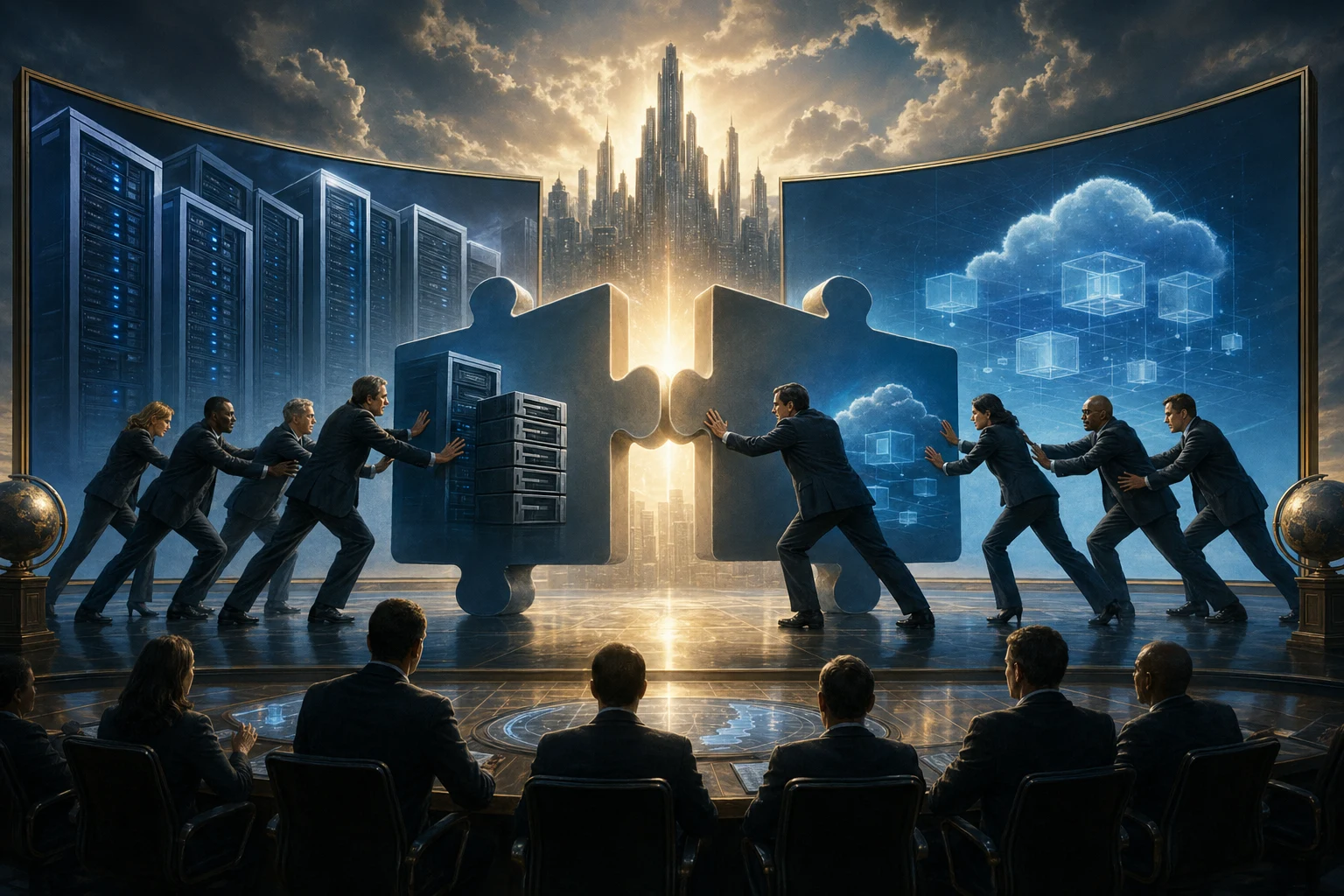
In October 2015, Dell announced the acquisition of EMC Corporation — and its crown jewel, VMware — for approximately $67 billion. It was the largest technology acquisition in history. The deal transformed Dell from a PC-plus-enterprise company into the world’s largest privately held technology company, with a comprehensive portfolio spanning PCs, servers, storage, networking, cloud computing, and virtualization.
The deal’s complexity was staggering. Financing required a combination of new debt, equity from Silver Lake, and a creative tracking stock structure that maintained VMware as a publicly traded entity while making it part of the Dell family. The debt load was enormous — over $50 billion — and skeptics questioned whether Dell could service it while investing in technology development.
Dell made it work through ruthless cost cutting, operational integration, and the strength of the combined company’s product portfolio. By 2018, the debt was being paid down faster than expected. The enterprise business was growing. VMware’s stock price was climbing. The gamble — taking Dell private, loading it with debt, and acquiring EMC — was paying off.
Chapter 8: Returning to Public Markets (2018)

In December 2018, Dell Technologies returned to public markets through a complex transaction that converted the VMware tracking stock into regular Dell Technologies shares. The transaction valued Dell Technologies at approximately $34 billion. Michael Dell’s personal stake was worth approximately $23 billion.
The return to public markets was a victory lap. Dell had taken a struggling PC company private, transformed it into a comprehensive enterprise technology provider, executed the largest tech acquisition in history, and returned to the market as a fundamentally different — and much more valuable — company. The stock price reflected the transformation: from the $13.65 buyout price to a market value that would eventually exceed $100 billion.
The journey from going private to going public again — five years of intensive restructuring, integration, and strategic repositioning — was one of the most ambitious and successful corporate transformations in technology history. Dell had proved that the right owner, with the right strategy and the willingness to take extraordinary risks, could breathe new life into a company that the market had written off.
Chapter 9: The Cloud Era and Dell’s Relevance (2019–2024)

As cloud computing grew to dominate enterprise IT, Dell Technologies occupied an unusual position. The company’s core business — selling servers, storage, and networking equipment — was the physical infrastructure that cloud computing ran on. Amazon, Microsoft, and Google might own the cloud platforms, but Dell built much of the hardware those platforms ran on.
Dell’s server and storage business benefited enormously from the AI boom that began in 2023. Companies racing to build AI infrastructure needed massive amounts of computing power, and Dell was one of the primary suppliers of the servers that housed NVIDIA’s AI accelerators. Dell’s stock price surged as AI infrastructure spending exploded.
The company also maintained its position as the world’s second-largest PC maker (behind Lenovo), providing a stable revenue base even as the enterprise and AI businesses grew faster. The combination of legacy PC business, enterprise infrastructure, and AI-driven demand created a diversified revenue stream that vindicated Dell’s long-term strategy of becoming a comprehensive technology infrastructure company.
Chapter 10: The Wealth and the Philanthropy (2000–2025)

Michael Dell’s personal fortune, estimated at over $100 billion by 2025, made him one of the twenty richest people in the world. The wealth came primarily from his Dell Technologies holdings but was amplified by investments through MSD Capital, his family investment office, which managed a diversified portfolio of real estate, private equity, and public equities.
Dell and his wife Susan established the Michael & Susan Dell Foundation in 1999, which has donated over $2.4 billion to education, childhood health, and economic opportunity. The foundation is one of the largest private foundations in the United States and focuses particularly on improving outcomes for children living in poverty.
Dell’s approach to philanthropy, like his approach to business, is data-driven and outcome-focused. The foundation measures its impact rigorously and redirects resources toward programs that demonstrate measurable results. It’s the same operational mindset that built Dell Computer — identify the most efficient path to the desired outcome and execute relentlessly.
Chapter 11: The Management Philosophy
Michael Dell’s management style is the antithesis of the celebrity CEO. He doesn’t give rousing keynotes. He doesn’t post provocatively on social media. He doesn’t cultivate a personal brand. He runs the company with a focus on operational metrics, customer satisfaction, and long-term strategic positioning that is almost aggressively boring.
His approach to decision-making is structured and data-driven. He famously asks subordinates to present options with data supporting each one, then makes decisions based on analysis rather than intuition. This approach can feel slow and bureaucratic to people who are used to more visionary, gut-instinct leaders, but it produces consistent results and avoids the catastrophic mistakes that more impulsive leaders sometimes make.
Dell’s longevity as a tech CEO is remarkable. Most tech founders either step aside voluntarily, get pushed out, or sell their companies. Dell has been running his company for over four decades, adapting to every major technology shift — the PC revolution, the internet, cloud computing, and now artificial intelligence. His ability to evolve without losing operational discipline is his defining characteristic.
Chapter 12: Legacy — The Builder Who Never Stopped Building

Michael Dell’s legacy is about endurance. In an industry that celebrates disruption and rewards the new, Dell has survived by adapting. He didn’t invent the personal computer — he just found a better way to sell it. He didn’t invent cloud computing — he just made sure his company provided the infrastructure it needed. He didn’t invent AI — he just ensured Dell servers were the ones running the AI models.
The direct model that he pioneered from his dorm room has been replicated and adapted across industries. The concept of build-to-order, eliminate-the-middleman, and maintain-direct-customer-relationships is now standard practice in everything from computers to cars. Tesla’s direct sales model, for example, owes a philosophical debt to Dell’s approach.
Michael Dell’s fortune — over $100 billion — is the financial measure of four decades of operational excellence. It’s not the flashiest story in tech. There’s no Steve Jobs-style mythology, no Elon Musk-style theatrics, no Mark Zuckerberg-style cultural upheaval. There’s just a man from Houston who figured out a better way to sell computers and has been refining that insight for forty years. In an industry obsessed with revolution, Michael Dell’s legacy is the quiet power of evolution.
💡 Key Insights
- ▸ Dell's direct-to-consumer model was revolutionary because it eliminated the middleman and the inventory risk simultaneously. By building computers only after they were ordered, Dell had negative working capital — customers paid before Dell paid suppliers.
- ▸ The $24.4 billion leveraged buyout to take Dell private in 2013 was one of the gutsiest moves in tech history. Dell bet that Wall Street's short-term focus was preventing the company from making the long-term investments it needed to survive.
- ▸ Dell's acquisition of EMC for $67 billion — the largest tech acquisition ever — transformed a PC company into an enterprise infrastructure giant. It was the strategic pivot that ensured Dell's relevance in the cloud era.