Palmer Luckey: The Homeschooled Teenager Who Built VR, Got Fired by Facebook, and Came Back to Arm America
He built Oculus in his parents' garage at 17. He sold it to Facebook for $2 billion at 21. He was fired at 24 over a political donation. Then he founded a defense tech company that is now worth $28 billion.

View all stories about this mogul
In the summer of 2009, a 16-year-old homeschooled Californian kid named Palmer Freeman Luckey sat in a cluttered garage in Long Beach, surrounded by piles of disassembled consumer electronics, and held up two tiny LCD screens in front of his eyes. The screens displayed a 3D scene generated by a cheap PC. When Palmer turned his head, the image turned with him. For a moment, it felt — if only barely — like he was somewhere else.
He had been trying to build a virtual reality headset for over a year. He had bought every existing commercial VR headset on eBay. He had disassembled them, studied them, and concluded that every single one was terrible — too heavy, too slow, too expensive, too low-resolution. The commercial VR industry had effectively died in the mid-1990s, killed by its own inability to deliver on its promises. Everyone who tried to revive it had failed.
Palmer Luckey was going to build a better one. In his parents’ garage. On a high school student’s budget. With parts he scavenged from online auctions.
Five years later, he would sell his garage project — by then called Oculus — to Facebook for $2 billion. Three years after that, he would be unceremoniously fired from the company he had founded, in what became the most controversial tech firing of the 2010s. Four years after that, he would return to Silicon Valley with a new company building missile-defense systems, and prove that the Valley’s exile had been one of the most expensive mistakes Mark Zuckerberg ever made.
🏠 Chapter 1: The Homeschooled Hardware Kid
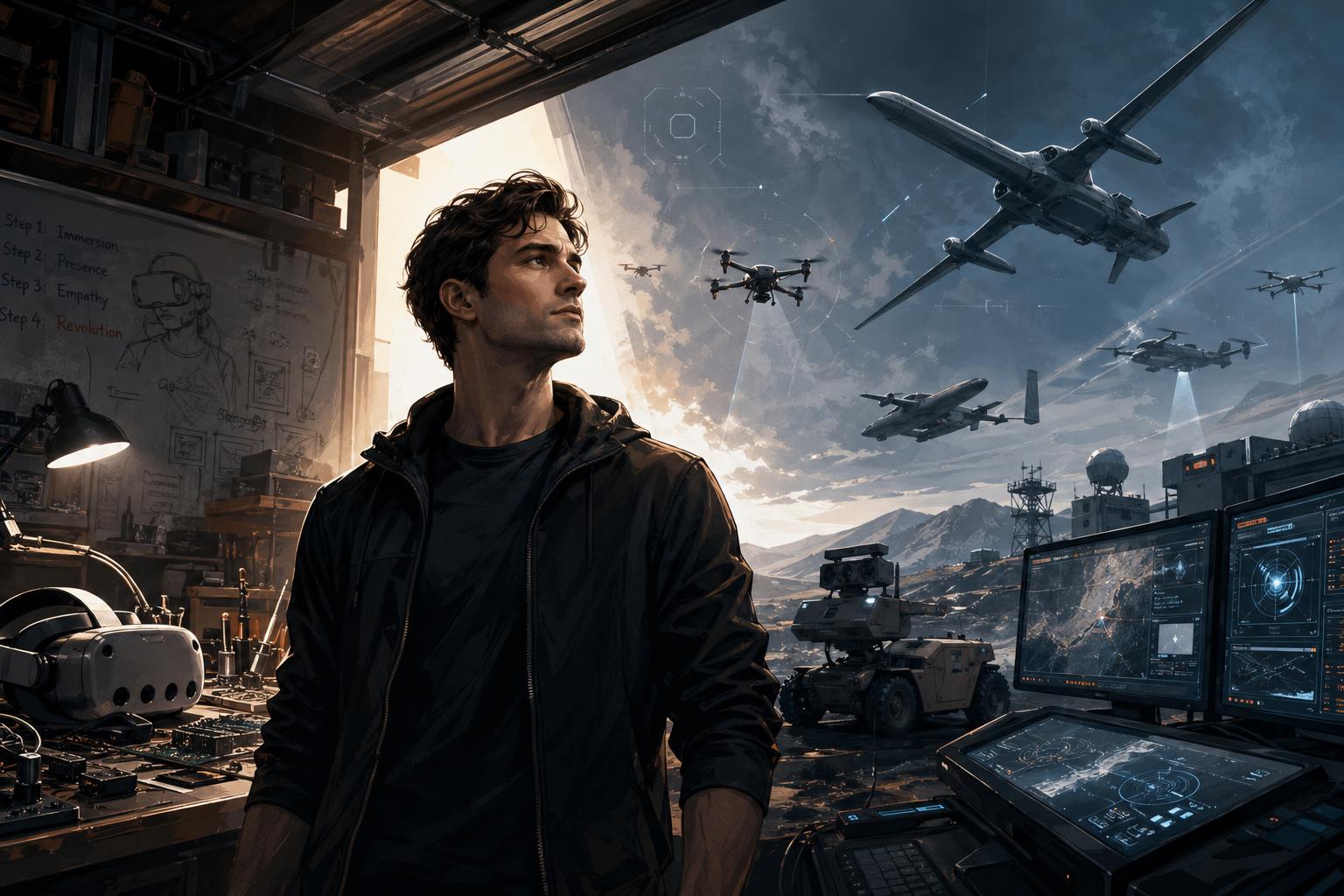
Palmer Freeman Luckey was born on September 19, 1992, in Long Beach, California, the eldest of four children in a tight-knit homeschooling family. His father was a car salesman. His mother taught the children at home — a decision the family made because they wanted the kids to learn at their own pace and pursue their own interests deeply.
For Palmer, the interest was hardware. From the age of ten, he was tearing apart old computers, video game consoles, and consumer electronics. His bedroom and the family garage became increasingly cluttered with circuit boards, cables, and half-built contraptions. His parents tolerated it. Some of his siblings mocked him for it. Palmer didn’t care.
He taught himself electrical engineering from online tutorials and free textbooks. He learned to solder, to write firmware, and to interpret circuit diagrams. By thirteen, he was participating in online electronics forums where his posts regularly impressed hobbyists twice his age. By fifteen, he had fixed up a laser projector, built his own high-voltage power supplies, and been injured multiple times by his own experiments.
He also became deeply interested in virtual reality — a technology that had been the subject of enormous hype in the early 1990s and then collapsed into embarrassing commercial failure. Palmer believed, stubbornly, that the hardware could be fixed. He just had to figure out how.
🛠️ Chapter 2: The Forum Kid Who Built the Rift
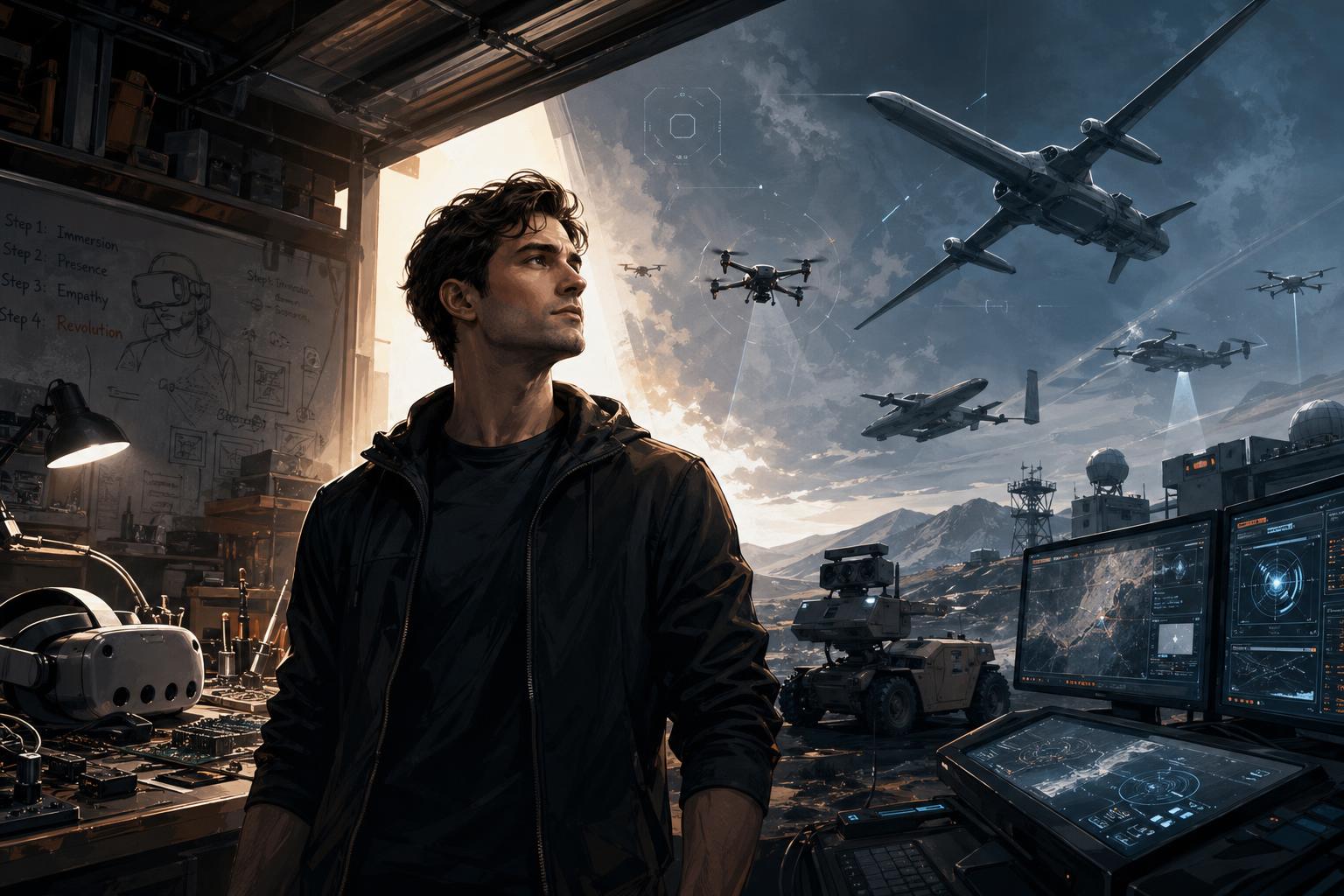
Palmer joined the online forums of the Meant to be Seen 3D community — a small group of enthusiasts obsessed with the revival of virtual reality. There, under the handle “PalmerTech,” he posted progress updates on his homemade VR prototypes. He was probably the youngest active member of the forum. He was definitely the most prolific builder.
Over the course of several years, he built roughly a dozen VR headset prototypes, each one better than the last. He used salvaged LCD screens from cellphones, custom-designed lenses, and 3D-printed plastic shells. He wrote his own firmware to reduce motion-tracking latency. He solved problems that commercial VR companies had spent millions of dollars failing to solve.
One of his prototypes caught the attention of John Carmack — the legendary id Software co-founder, the lead programmer of Doom and Quake, one of the most respected figures in the history of video game development. Carmack asked Palmer to send him a prototype. Palmer did. Carmack used it to show Doom 3 running in VR at the 2012 Electronic Entertainment Expo, announcing to the world that virtual reality was suddenly, shockingly, actually good again.
Palmer’s prototype was sitting at the center of the most important demo in gaming that year. He was 19 years old.
🎮 Chapter 3: Oculus and the Kickstarter
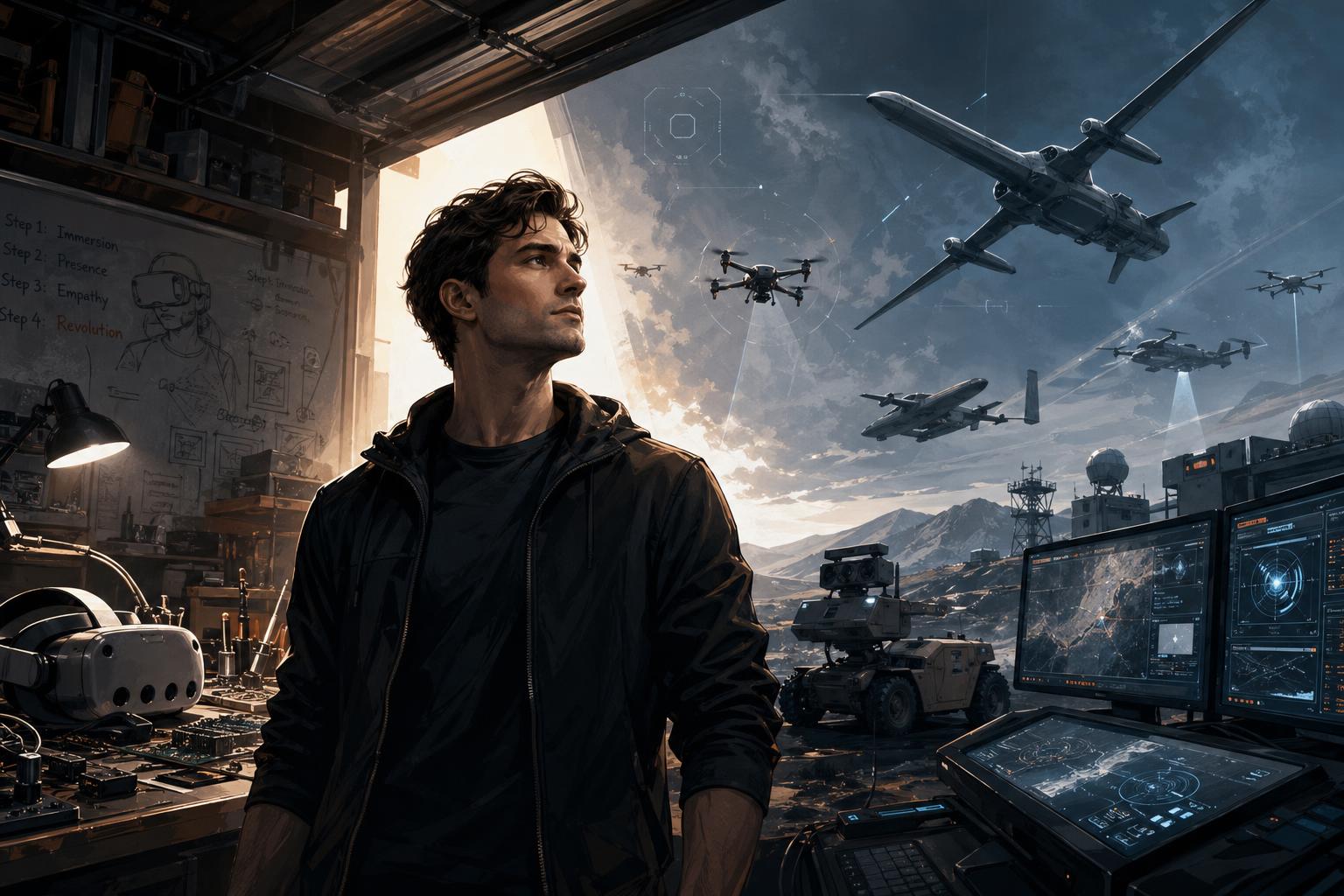
In June 2012, Palmer Luckey formally founded Oculus VR with a small team of collaborators he had met through the VR forums and the gaming industry. They launched a Kickstarter campaign in August 2012, aiming to raise $250,000 to produce a developer kit version of the headset.
The Kickstarter was a sensation. Within 24 hours, Oculus raised over $1 million. By the end of the campaign, it had raised $2.4 million from nearly 10,000 backers — at the time, one of the largest and fastest-funding technology Kickstarters in history. The VR community, long dormant, had erupted.
Venture capital followed almost immediately. In 2013, Oculus raised a $16 million Series A from Matrix Partners, Founders Fund, and Spark Capital. In early 2014, it raised another $75 million Series B. The company grew from a handful of people to dozens, then hundreds. Palmer hired John Carmack as chief technology officer. He hired Brendan Iribe, a veteran gaming executive, as CEO.
The Oculus Rift developer kit shipped in March 2013 to thousands of developers around the world. It was — by the standards of prior VR attempts — a revelation. Developers began making games for it immediately. The industry started to believe, for the first time in fifteen years, that virtual reality might actually become a real consumer market.
💼 Chapter 4: The Facebook Acquisition
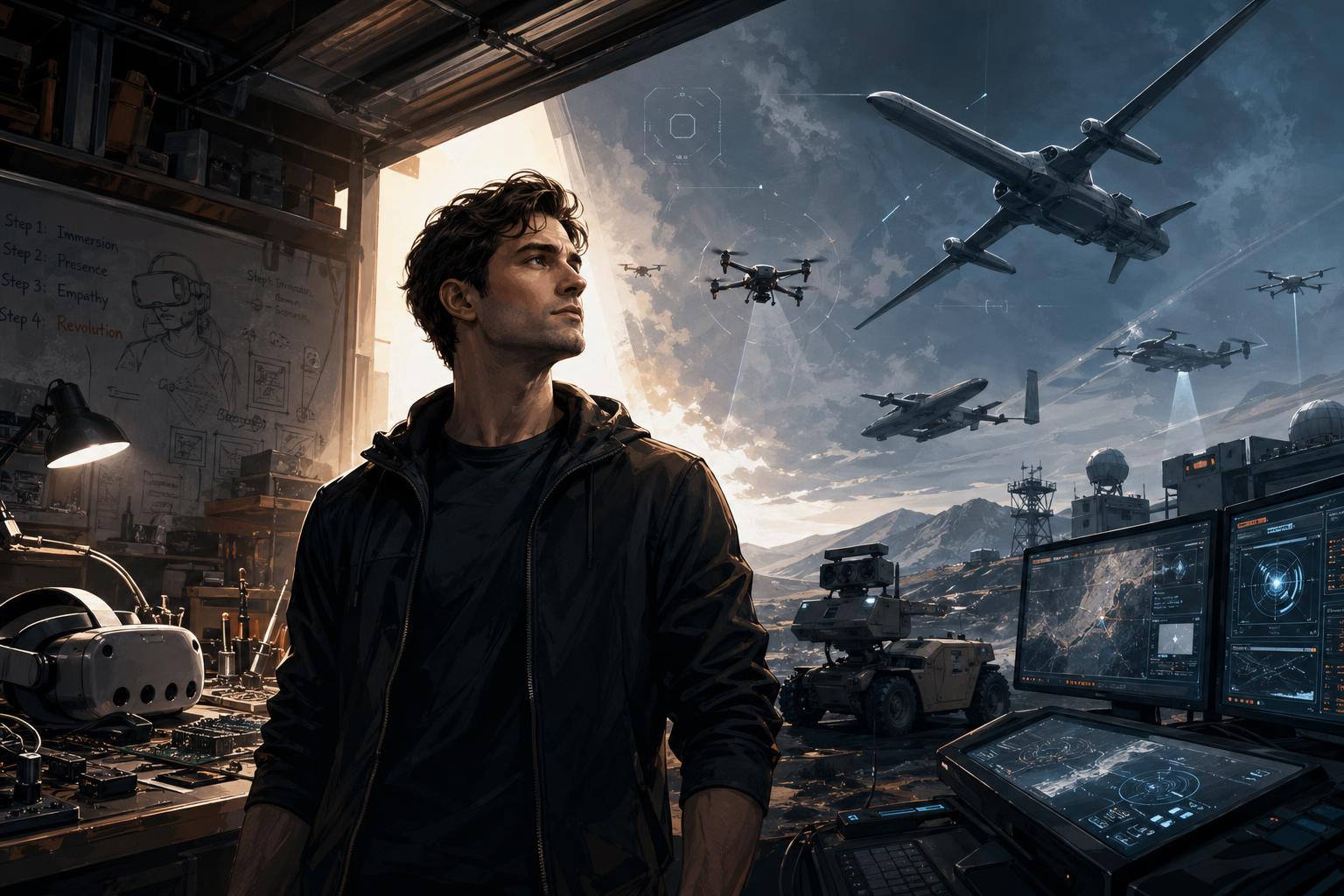
On March 25, 2014, Facebook announced it was acquiring Oculus VR for approximately $2 billion in cash and stock. Palmer Luckey was 21 years old. He had just become one of the youngest billionaires on paper in Silicon Valley history.
The acquisition was controversial. Many of the original Oculus Kickstarter backers felt betrayed — they had funded a small indie hardware company, not a Facebook subsidiary. They had assumed Oculus would remain independent and community-driven. Markus Persson, the creator of Minecraft, publicly canceled his plans to port Minecraft to the Rift over concerns about Facebook’s involvement.
Palmer defended the deal. He argued that Facebook had the capital, manufacturing relationships, and distribution scale to make VR a mainstream consumer product in a way Oculus could never achieve alone. He promised that Oculus would remain focused on gaming and creative applications. He expressed enormous personal admiration for Mark Zuckerberg.
The deal closed. Palmer Luckey joined Facebook as an executive. Facebook began pouring billions of dollars into VR research and development. The Oculus Rift consumer version shipped in early 2016. Palmer was on the cover of Time magazine.
And then, within a year, everything fell apart.
🗳️ Chapter 5: The Nimble America Scandal
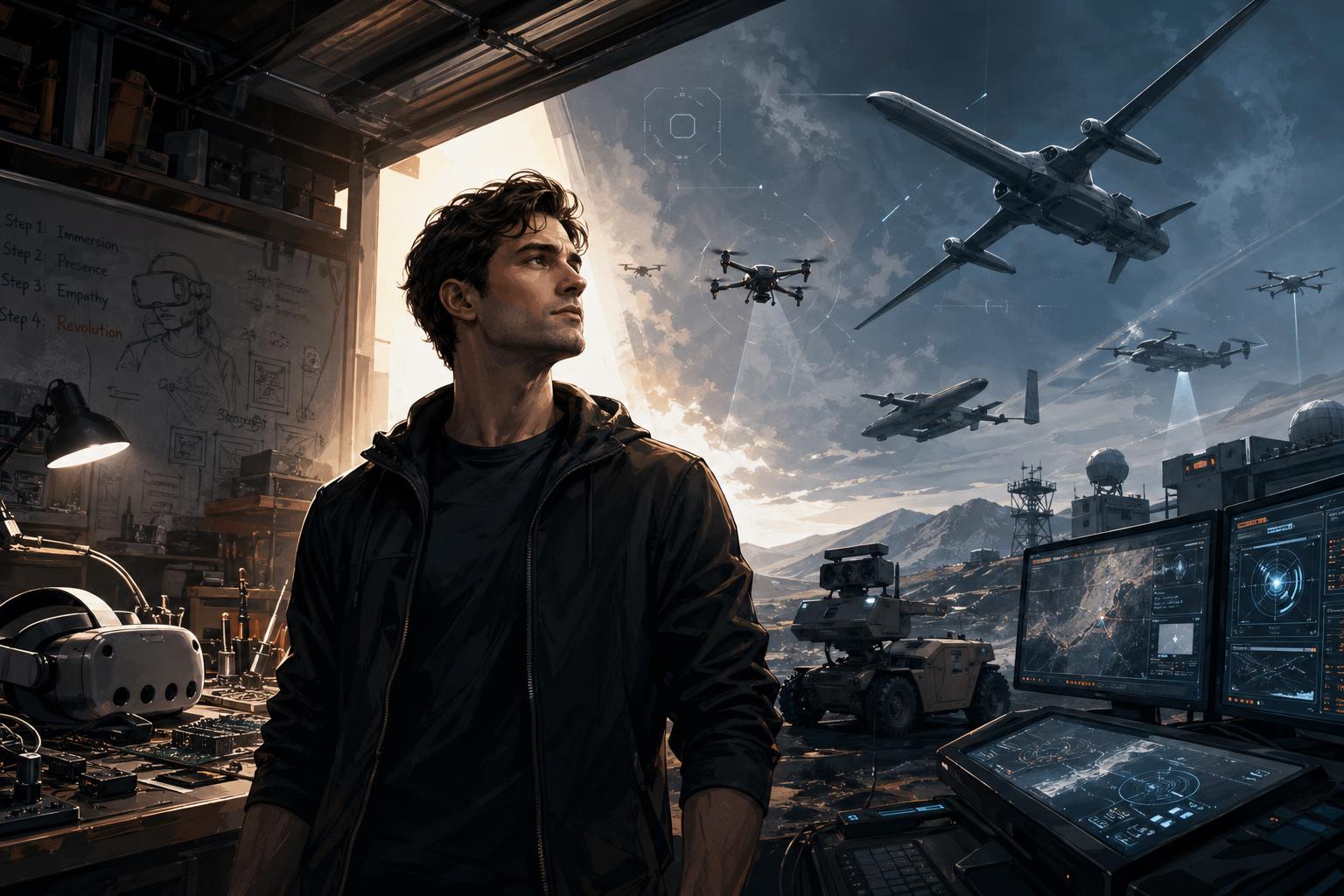
In September 2016, during the final weeks of the U.S. presidential campaign, The Daily Beast published an article revealing that Palmer Luckey had donated $10,000 to a pro-Trump meme group called Nimble America, which produced political cartoons and online content supporting Donald Trump.
The reaction inside Silicon Valley was swift and severe. Many VR developers — who leaned heavily Democratic — publicly announced they would no longer port their games to the Oculus Rift. Some prominent employees at Oculus and Facebook demanded Palmer’s removal. Palmer issued an apology that many felt was coerced and dishonest. The media coverage was brutal.
Palmer largely disappeared from public view in the months that followed. Facebook quietly removed him from many public-facing responsibilities. And in March 2017, Facebook fired him — officially saying his departure was a personal decision, though subsequent reporting by The Wall Street Journal would reveal that Palmer had been forced out.
The firing was a turning point in Silicon Valley’s relationship with political diversity. Some argued that Palmer had been fired for donating to a politically unpopular cause, not for any failure of performance. Others argued that his donation had created untenable brand damage for Facebook’s VR business. The debate raged for years. Palmer, for his part, mostly stayed quiet — until, years later, under oath in a legal case, he said plainly that he had been fired over his political beliefs.
Facebook reportedly paid Palmer roughly $100 million to $200 million in severance and equity settlements to make him go away. He went away.
🛡️ Chapter 6: The Birth of Anduril
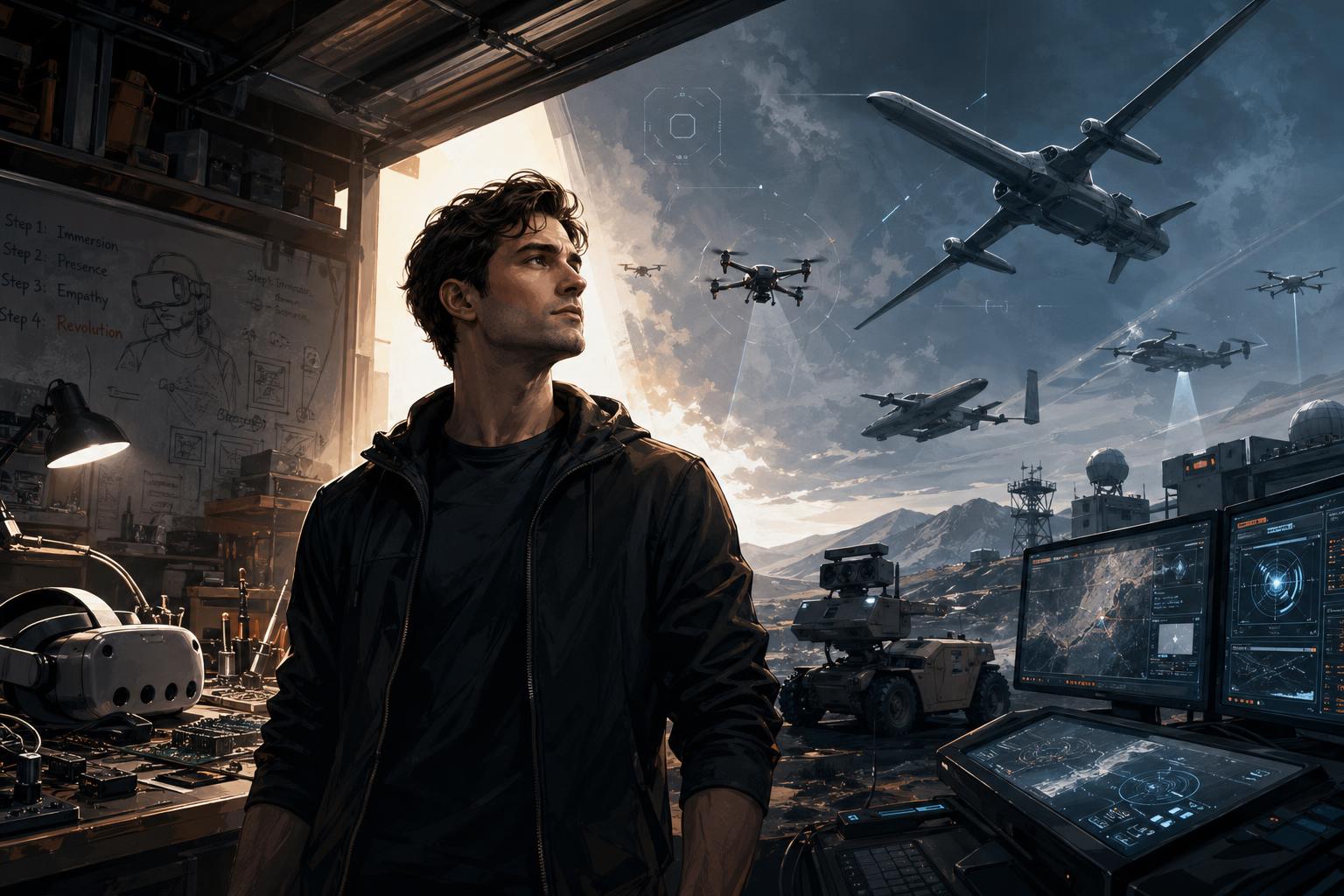
In 2017, shortly after leaving Facebook, Palmer Luckey began having conversations with a group of unlikely collaborators about an entirely different kind of technology company. He wanted to build defense technology — the kind of hardware and software the U.S. military needed but wasn’t getting from the traditional defense contractors.
His partners included Brian Schimpf, Trae Stephens, Matt Grimm, and Joseph Chen. Trae Stephens came from Founders Fund, where Peter Thiel had been openly advocating for Silicon Valley to rebuild its relationship with the U.S. defense establishment. Schimpf and Grimm came from Palantir, the data-analysis company Thiel had co-founded that had been serving intelligence and defense customers for over a decade.
In June 2017, they founded Anduril Industries, naming the company after a sword from J.R.R. Tolkien’s Lord of the Rings — “the flame of the West,” forged from the shards of a broken legendary weapon. The metaphor was deliberate. Palmer saw American defense technology as a broken legacy that needed to be reforged for a new era.
Anduril’s founding thesis was radical. Instead of waiting for the Pentagon to issue a requirements document, then bidding on a decade-long cost-plus contract, Anduril would build finished products using its own capital and sell them to the military as nearly-off-the-shelf systems. It was the Silicon Valley model — build fast, iterate fast, sell software — applied to defense.
Most defense industry veterans thought it couldn’t possibly work.
🏜️ Chapter 7: Sentry Towers in the Desert
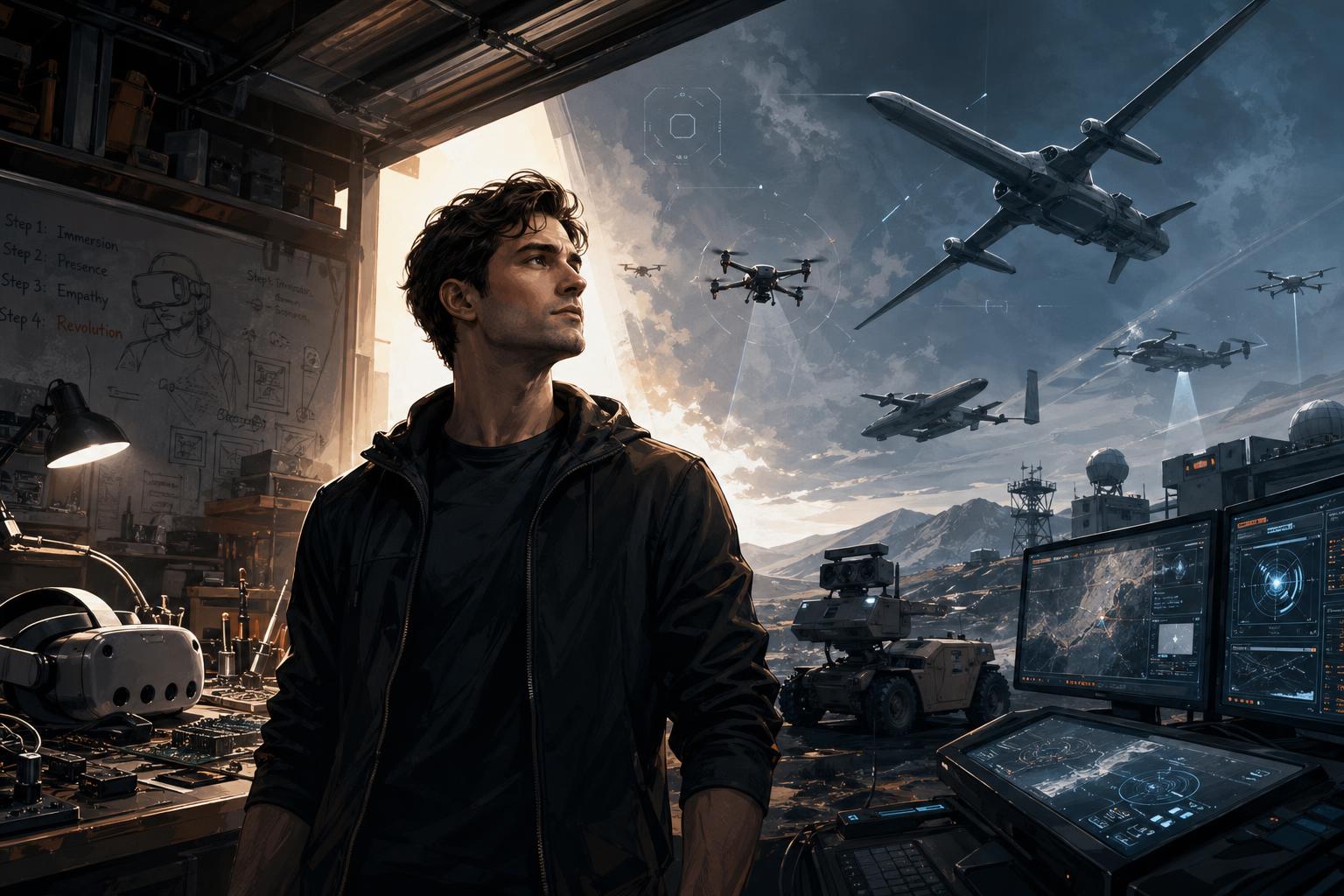
Anduril’s first major product was the Lattice platform, an AI-powered command-and-control system that integrated data from sensors, cameras, radar, and drones into a unified situational awareness picture. The first physical hardware product was a tower-mounted autonomous surveillance sensor used initially for border protection along the southern U.S. border and later for base defense.
The sentry towers worked. They used computer vision, AI, and radar to detect people and vehicles crossing designated areas, then automatically alerted human operators with precise location data. They required almost no manual configuration. They could be deployed by a few technicians in under a day.
Anduril began winning small but important contracts with the U.S. Customs and Border Protection, the U.S. Marine Corps, and eventually the U.S. Air Force. The company expanded into autonomous drones, anti-drone systems, submarine-detection networks, and counter-UAS platforms. Every product followed the same philosophy: build with internal R&D, iterate fast, ship working hardware.
By 2020, Anduril had won hundreds of millions of dollars in Pentagon contracts and was valued at over $1 billion. By 2022, it was worth over $8 billion. By 2024, it had crossed $14 billion. By 2025, it had raised capital at a $28 billion valuation in one of the largest venture rounds in defense technology history.
🎯 Chapter 8: The IVAS Contract
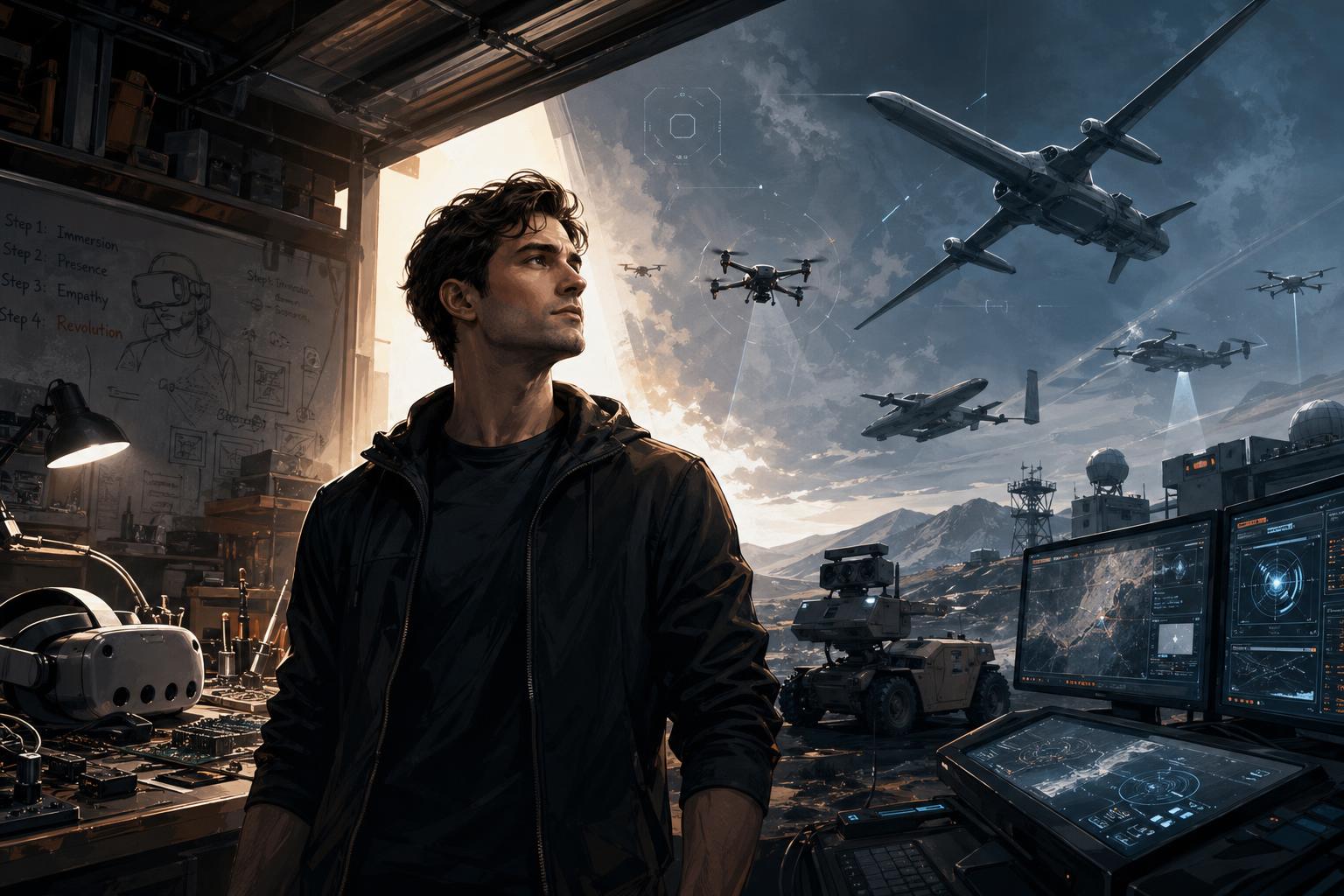
The most dramatic validation of Palmer Luckey’s comeback came in February 2025, when the U.S. Army announced that Anduril would take over the Integrated Visual Augmentation System (IVAS) program from Microsoft. The contract was worth up to $22 billion over ten years — one of the largest single technology contracts in the U.S. military’s history.
IVAS was a futuristic augmented-reality helmet designed to give individual soldiers thermal imaging, night vision, digital map overlays, and real-time data from other battlefield sensors — all integrated into a single wearable device. Microsoft had been the original lead contractor, adapting its HoloLens mixed-reality headset for military use. The program had struggled for years with reliability issues, nausea complaints from soldiers, and cost overruns.
The Army, frustrated, handed the contract to Anduril. And in a twist of almost poetic justice, the VR-obsessed teenager who had built Oculus in his parents’ garage was now in charge of building the most ambitious augmented-reality hardware program in the U.S. military — a program that Microsoft, with all its resources, had failed to deliver.
Palmer Luckey had, quite literally, returned to VR on his own terms. This time, the customer was not a consumer gaming audience that could be swayed by political outrage. This time, the customer was the U.S. Army, and the product had to work in combat.
⚔️ Chapter 9: The Ukraine Proof Point
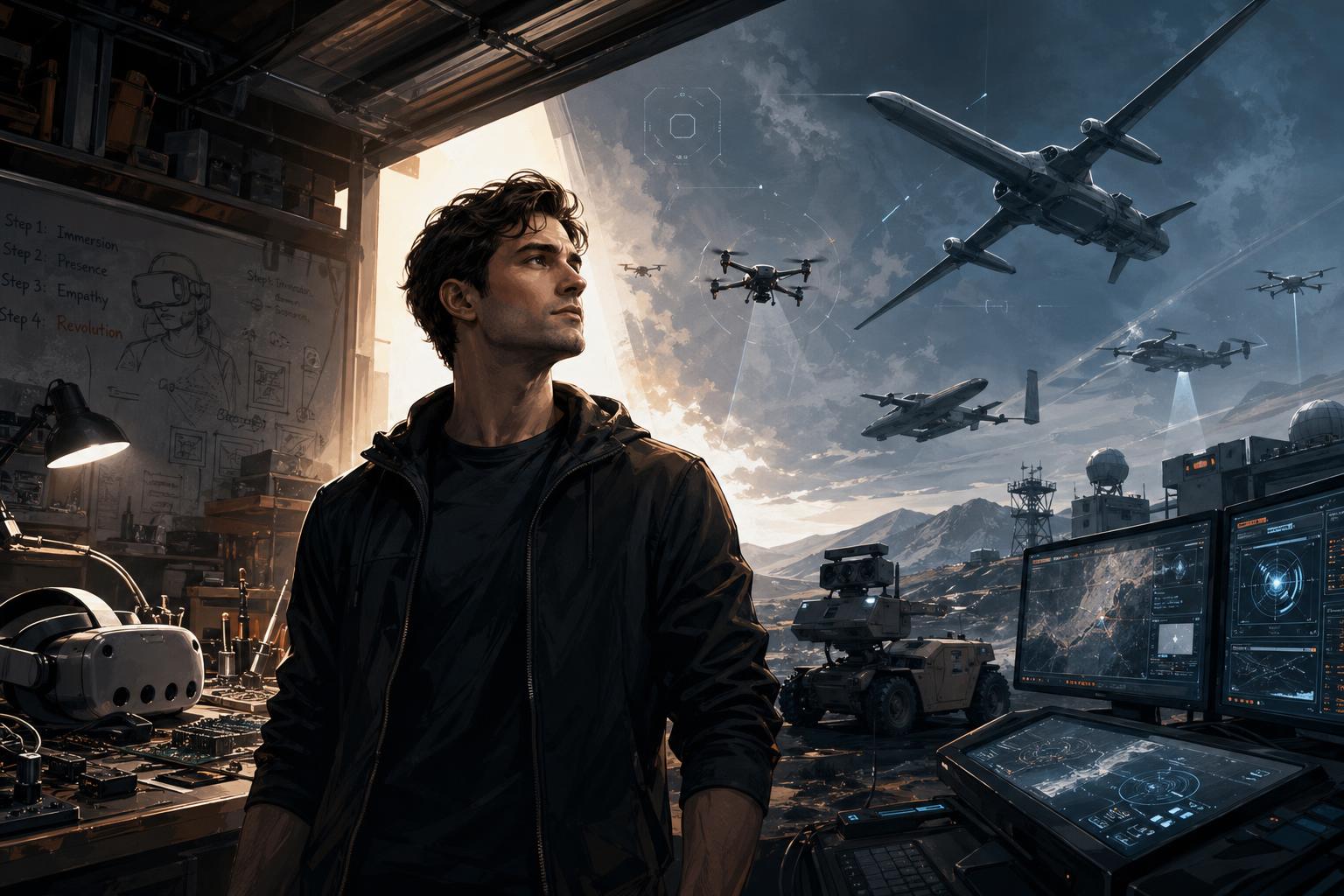
The war in Ukraine, which began in February 2022, became an enormous accelerator for Anduril and for defense tech as a whole. Ukrainian forces needed cheap, abundant, AI-powered drones and anti-drone systems. Traditional defense contractors moved too slowly to supply them. Anduril and its new-generation peers moved faster.
Anduril supplied multiple systems to Ukraine, including autonomous drones, counter-UAS platforms, and integrated battle-management software. The combat data that came back from Ukraine was priceless. Every engagement produced telemetry that made Anduril’s AI smarter, its hardware more rugged, and its software more capable.
More importantly, Ukraine proved the thesis that modern warfare had shifted. Cheap, smart, autonomous systems were decisively more important than a smaller number of expensive legacy platforms. The Pentagon, which had been slow to embrace this shift, began accelerating its procurement of Anduril-style systems. New defense-tech companies — Shield AI, Epirus, Saronic, Hadrian — emerged as part of an entire new cohort of Silicon Valley-backed defense startups.
Palmer Luckey became the unofficial spokesperson for this movement. He gave speeches at defense conferences. He testified before Congress. He publicly pushed back against progressive tech employees who refused to work on military contracts. He argued, repeatedly, that Silicon Valley’s refusal to engage with the U.S. military during the 2010s had been a historic moral failure.
🎩 Chapter 10: The Persona
Palmer Luckey the public figure is almost as famous as Palmer Luckey the founder. He wears Hawaiian shirts to Pentagon meetings. He sports a goatee and a mullet. He collects exotic vehicles, including a tank he reportedly bought and modified. He gave a keynote at a major industry event while barefoot. He has his own private island off the California coast. He has built a private submarine.
The persona is deliberate. In a defense industry dominated by starched shirts, buttoned-up executives, and retired generals, Palmer Luckey stands out as intentionally, almost aggressively, different. His personal brand signals to younger engineers — the kind of people he wants to recruit — that Anduril is a place where you can build serious weapons systems without surrendering your personality to a bureaucracy.
It also signals to Pentagon procurement officers that Anduril is a different kind of contractor. Palmer’s strange public image — the tank, the island, the Hawaiian shirts — is a kind of cultural armor that helps Anduril negotiate differently than Lockheed or Raytheon.
Whether this persona is sincere or strategic is beside the point. It works. Anduril is now widely considered one of the most desirable engineering employers for young defense-curious talent in the United States.
🏛️ Chapter 11: The Industry Reshaper
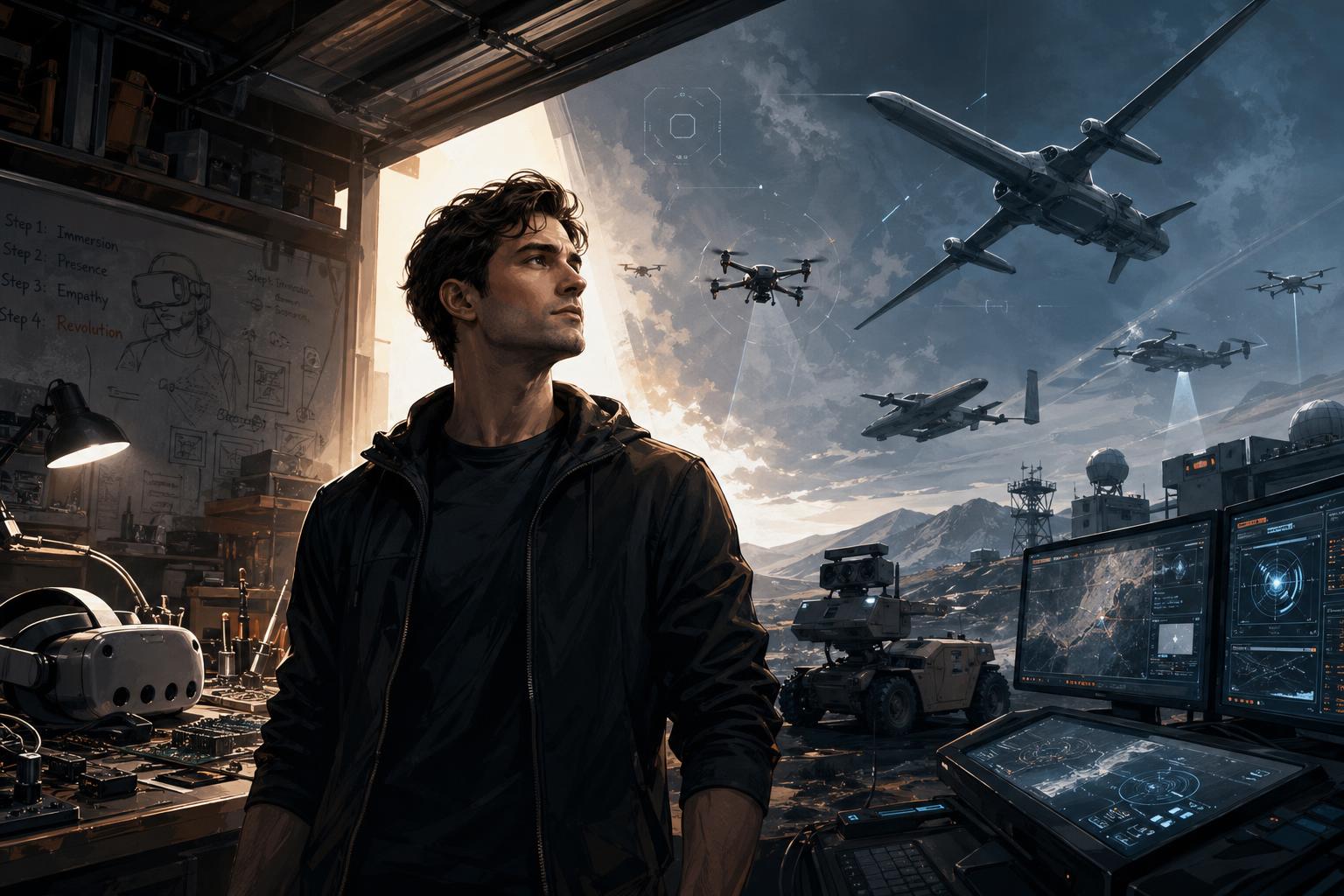
By 2026, Anduril has become the center of gravity for what is now being called the “defense tech renaissance.” Dozens of other startups have followed Anduril’s playbook. Venture capital flowing into defense technology has grown more than tenfold in five years. Even traditional defense primes are being forced to acquire Silicon Valley-style startups to remain competitive.
Palmer has also become an influential voice in national security policy. He has advocated loudly for increased U.S. defense spending on autonomous systems. He has pushed back against progressive proposals to restrict AI use in military contexts. He has personally donated millions to candidates and causes aligned with rebuilding American defense industrial capacity.
Not everyone admires him. Critics — especially in progressive tech and human rights circles — argue that he is helping to normalize a new generation of autonomous weapons that may lower the threshold for conflict and create terrifying ethical dilemmas. Palmer responds to these critics the same way every time: he argues that these systems will be built by someone, and it is better that they are built by democracies than by authoritarian states.
The argument is not going to be resolved in his lifetime. But it is clear that Palmer Luckey has permanently changed the terrain of the debate.
🌅 Chapter 12: The Ledger
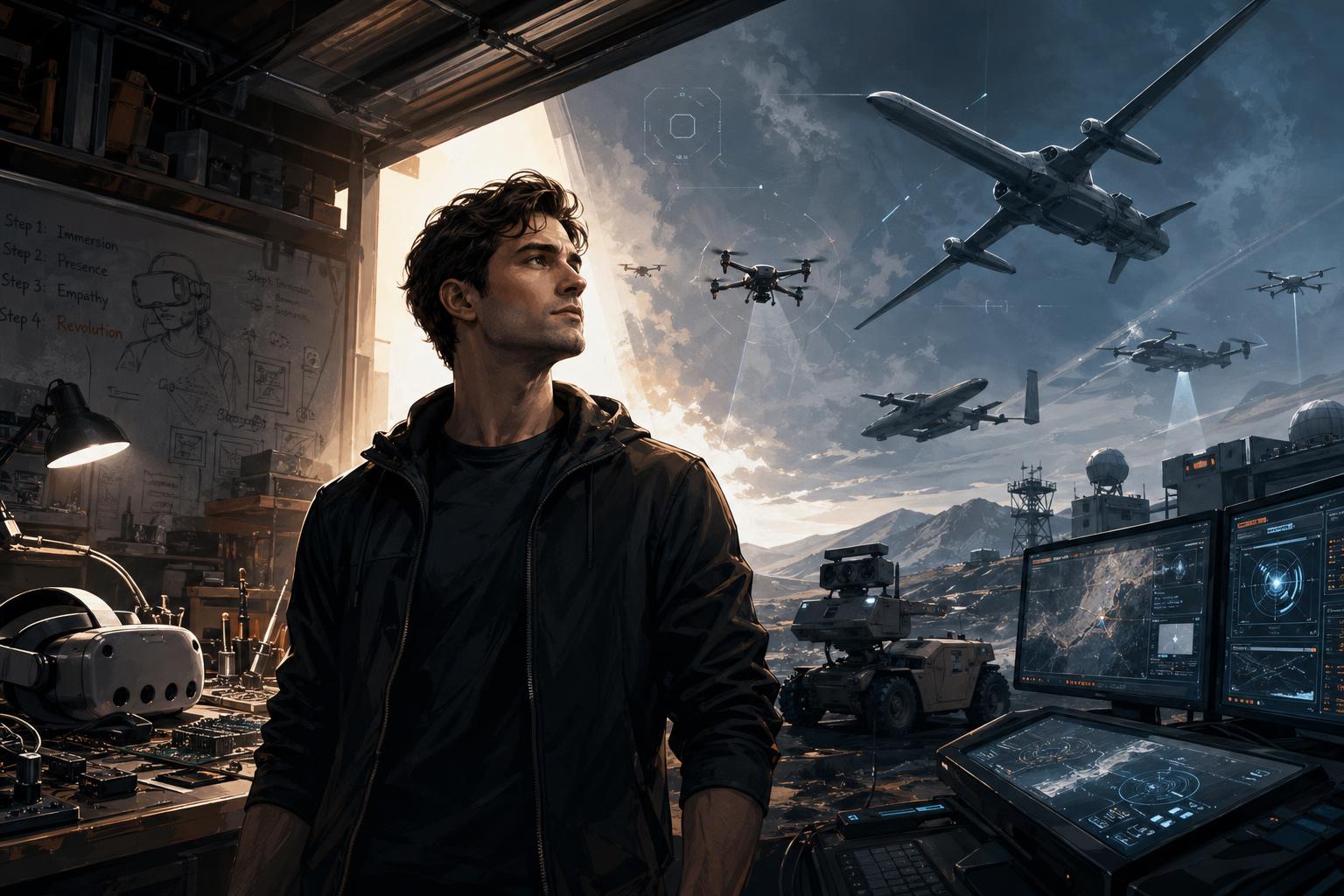
As of early 2026, Anduril Industries is valued at approximately $28 billion. It has more than 4,000 employees across multiple states. It holds billions of dollars in active U.S. government contracts. It is producing autonomous drones, anti-drone systems, submarines, fighter-support aircraft, augmented-reality combat helmets, and a software backbone that increasingly underpins the U.S. Department of Defense’s operational awareness.
Palmer Luckey’s personal net worth is estimated at over $4 billion, with much of it tied to his Anduril stake. He owns an island, a tank, a submarine, and a growing fleet of experimental personal vehicles. He lives in southern California. He is 33 years old.
His career has already become a case study in how quickly Silicon Valley narratives can be rewritten. In 2016, he was the tech industry’s most famous villain. In 2022, he was the tech industry’s most famous comeback story. In 2026, he is the tech industry’s most powerful defense-technology founder and a central figure in the United States’ national security debate.
The homeschooled teenager who built VR headsets in a garage was exiled from the industry he helped revive. He came back with a harder, more consequential company than the one he had lost. And in doing so, he proved something important about the texture of Silicon Valley: you can fire a founder, but you cannot fire an obsession. Palmer Luckey was never going to stop building. He simply changed what he was building to something the rest of the tech industry had been too uncomfortable to touch.
The irony is that it turned out to be the biggest opportunity of his generation.
💡 Key Insights
- ▸ Palmer Luckey's second act at Anduril is one of the most improbable comebacks in modern tech. A founder who had been exiled from Silicon Valley over a political donation returned four years later to build a defense company that is now larger than most traditional defense primes.
- ▸ Anduril's business model — building defense products on internal R&D and selling them fully-formed to the Pentagon — breaks the entire traditional defense-contracting playbook. It is the biggest structural disruption to the defense industry since Lockheed Martin's founding era.
- ▸ Luckey's willingness to publicly reject the standard Silicon Valley posture of anti-military tech — and to argue openly that tech workers had a moral obligation to help the U.S. military — gave him a brand edge that no other defense-tech founder could match.
- ▸ The $22 billion U.S. Army contract for Anduril's IVAS augmented-reality helmet system in 2024 proves that a VR-obsessed teenager really did grow up to build the kind of spatial-computing hardware that the Pentagon desperately wanted and Microsoft could not deliver.
- ▸ Luckey's philosophy — 'make the tech that matters, sell it to people who will use it' — is increasingly the template for a new generation of defense-tech founders, from Shield AI to Epirus to Saronic. He is the central node of a tectonic shift in how America's defense technology gets built.