The Billion-Dollar Hunger Games: Inside the Arnault Family's Battle for LVMH
In the cutthroat arena of ultra-luxury, five siblings stand poised for power, each vying for a piece of the sprawling LVMH empire built by their titan father, Bernard Arnault. This isn't just a family business; it's a high-stakes corporate drama unfolding on a global stage, where billions hang in the balance and the future of luxury itself is up for grabs.
View all stories about this mogul
🔥 Chapter 1: The Throne of Diamonds and the Five Aspiring Tyrants
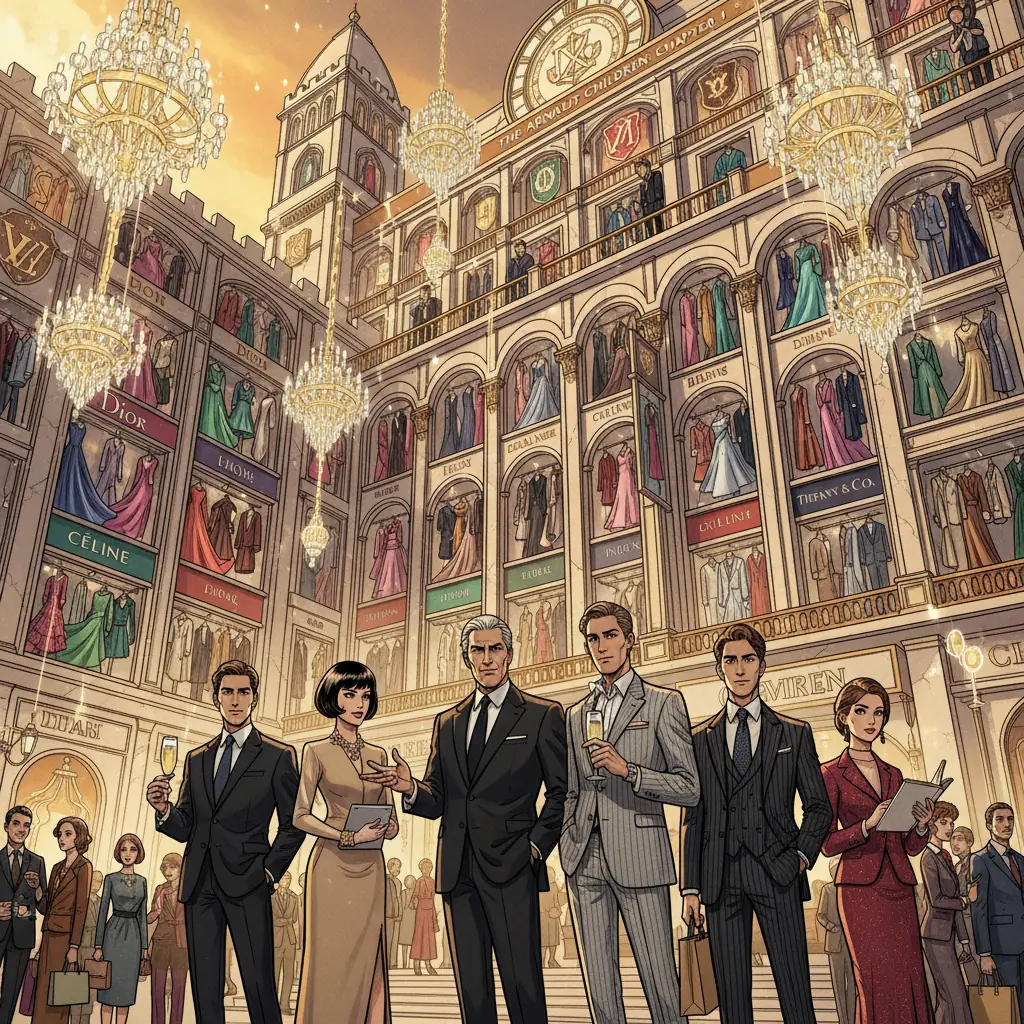
Picture this: A sprawling, opulent palace, not of stone and mortar, but of gleaming boutiques, whispering silks, and the clinking of champagne flutes. Its ramparts are built from the world’s most coveted brands – Louis Vuitton, Dior, Tiffany & Co., Sephora, Hennessy. This isn’t some fantasy kingdom from a forgotten tome; this is LVMH Moët Hennessy Louis Vuitton, the undisputed Death Star of luxury, a corporate behemoth that commands over 75 legendary houses, dictates global trends, and pulls in revenue that would make small nations blush. And at its heart, on a throne forged from a lifetime of ruthless ambition, sits Bernard Arnault, the Godfather of Luxury, a man whose net worth regularly jostles with the likes of Musk and Bezos for the top spot.
But even emperors, no matter how formidable, must eventually face the sunset. And for Arnault, that twilight isn’t just a quiet fading; it’s the prelude to a high-stakes, internal gladiatorial contest. Because Bernard Arnault isn’t just a business titan; he’s a patriarch with five highly ambitious, impeccably groomed, and fiercely intelligent children. Five heirs, each with a gleam in their eye, a brand under their belt, and a burning desire to prove themselves worthy of wielding the scepter of the world’s largest luxury empire.
Forget your corporate boardroom dramas with bland PowerPoint presentations. This is a real-life “Succession” meets “Game of Thrones,” played out in the gilded cages of Paris, New York, and Milan. The stakes aren’t just market share; they’re legacy, identity, and the very soul of an empire that defines aspiration for billions. We’re talking about a family dynasty where every dinner conversation could be a strategic summit, every sibling rivalry a proxy war for future control.
This isn’t just about who gets the corner office. This is about who gets to redefine luxury for the next generation. Who has the vision, the grit, the ruthlessness to not just maintain, but expand an empire that already seems to touch the sky? The world watches, breath held, as the Arnault children — Delphine, Antoine, Alexandre, Frédéric, and Jean — navigate a labyrinth of power, prestige, and profoundly personal ambition. Their father, the ultimate puppet master, observes, tests, and perhaps, enjoys the show. Because in the Arnault universe, the only thing more valuable than a Tiffany diamond is a proven successor.
💥 Chapter 2: The Architect of Aspiration – How Bernard Forged the Empire
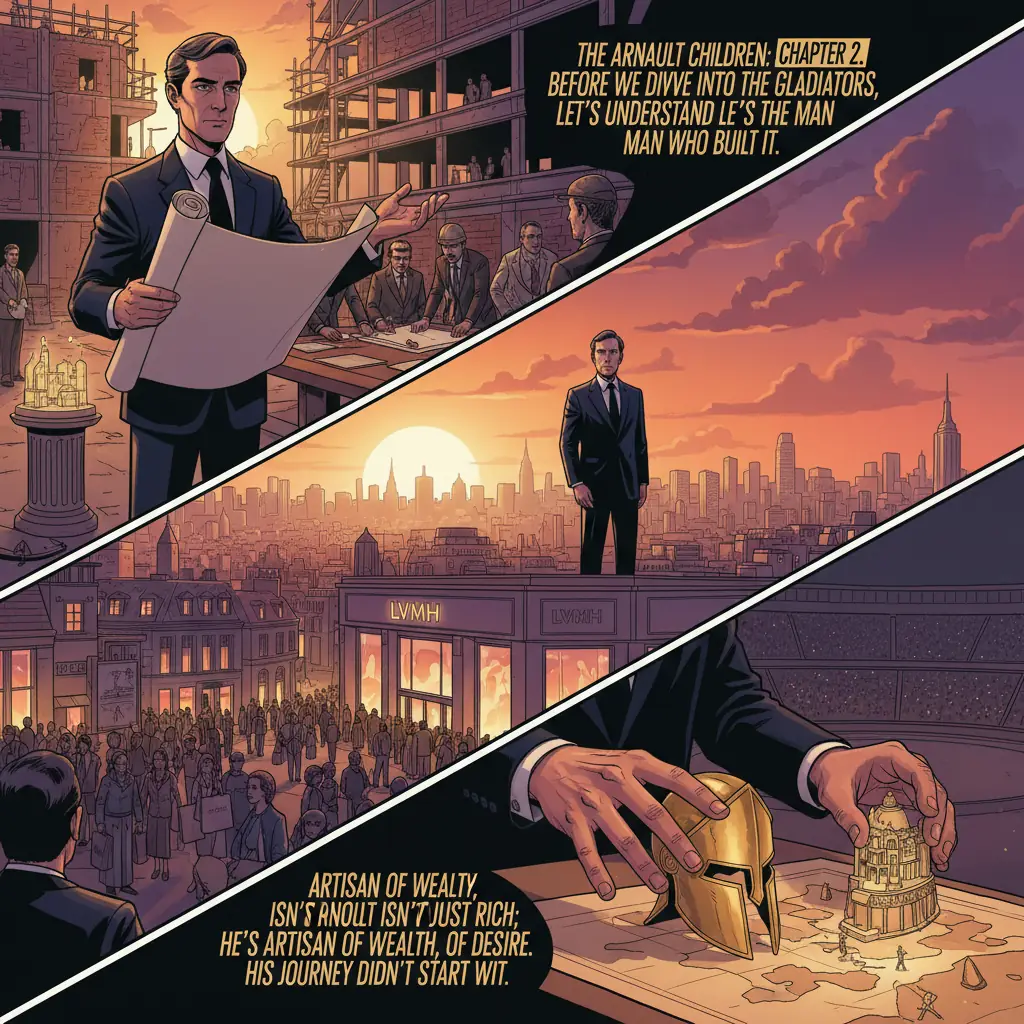
Before we dive into the arena with the gladiators, let’s understand the man who built it. Bernard Arnault isn’t just rich; he’s an artisan of wealth, a sculptor of desire. His journey didn’t start with haute couture, but with concrete. Born in Roubaix, northern France, into a family of industrialists, he cut his teeth in construction. But Arnault had a different kind of edifice in mind.
His entry into luxury was less a gentle stroll, more a scorched-earth invasion. In 1984, he seized control of Boussac Saint-Frères, a textile group that, crucially, owned Christian Dior. Boussac was a sinking ship, but Dior was a pearl. Arnault, with a cold, surgical precision, sold off most of Boussac’s assets, keeping only Dior and Le Bon Marché department store. Critics called him a “liquidator,” a “corporate raider.” He called it strategy. He used the proceeds to fund his next move: wresting control of LVMH itself.
At the time, LVMH was a fractured entity, born from the merger of Louis Vuitton and Moët Hennessy. Its various brands bickered, lacked cohesion, and were ripe for a strong hand. Arnault, seeing the immense potential in a unified luxury conglomerate, played a brilliant, brutal game of corporate chess. He exploited internal divisions, amassed shares, and eventually emerged as the undisputed emperor by 1989. It was a masterclass in hostile takeover, a move that solidified his reputation as “the wolf in cashmere.”
From that point, Arnault embarked on an acquisition spree that redefined the luxury landscape. He didn’t just buy brands; he integrated them, revitalized them, and often, made them more valuable than their founders could have dreamed. Sephora, Fendi, Celine, Givenchy, Bulgari, Tiffany & Co. – the list reads like a greatest hits album of global aspiration. He understood that luxury wasn’t just about products; it was about storytelling, heritage, exclusivity, and above all, desire. He built LVMH into a fortress where each brand, while distinct, benefited from the collective power, resources, and distribution of the mothership.
His management style is legendary: hands-on, meticulous, demanding, and utterly unsentimental. He has an uncanny knack for identifying talent, empowering them, and then holding them accountable to impossible standards. He’s a micro-manager with a macro-vision, a man who knows the sales figures of a specific handbag in a specific boutique as intimately as he understands global macroeconomic trends. He runs LVMH like a personal fiefdom, and now, that fiefdom needs new knights, new strategists, new rulers. The five children are not just competing for a job; they’re competing for the right to inherit a philosophy, a legacy, and a way of life.
👑 Chapter 3: Delphine Arnault – The Quiet Powerhouse, Heir Apparent?

In the intricate tapestry of the Arnault succession, one name consistently emerges with a whisper of inevitability: Delphine Arnault. The eldest child, born in 1975, she carries the weight of expectation with a composure that belies the immense pressure. If Bernard is the sun king, Delphine is often seen as the moon – reflective, powerful, and illuminating in her own right, yet always orbiting the central star.
Her journey through LVMH has been a meticulously crafted ascent, a masterclass in proving oneself through sheer competence rather than birthright. After graduating from the London School of Economics and working at McKinsey & Company, Delphine plunged into the family business in 2000, starting her luxury education at John Galliano. It was a tough, demanding school, but it honed her eye for design and her understanding of creative chaos.
From there, she moved to Dior, first as commercial director, then deputy general manager. This was where she truly began to shine, transforming the brand’s accessories division and proving her mettle in a high-pressure environment. She wasn’t just overseeing; she was innovating, streamlining, and driving growth. Her tenure at Dior was marked by a quiet, analytical approach, a sharp business mind combined with an innate understanding of aesthetics and brand DNA. She’s known for her keen eye for talent, her ability to nurture creative directors, and her unwavering focus on the bottom line.
In 2013, she became Executive Vice President of Louis Vuitton, LVMH’s crown jewel and largest revenue driver. This was a critical test. Louis Vuitton is a behemoth, a global phenomenon, and her role there was to oversee all product-related activities, working closely with the brand’s artistic director. She was instrumental in evolving Louis Vuitton’s image, pushing collaborations, and maintaining its coveted exclusivity while expanding its global reach. This experience was invaluable, giving her a deep dive into the operational complexities of LVMH’s flagship.
Then, in 2023, came the most significant move yet: Delphine was appointed Chairman and CEO of Christian Dior Couture. This wasn’t just a promotion; it was a strategic deployment, placing her at the helm of one of LVMH’s most prestigious and historically significant houses. It’s a role that demands both creative vision and rigorous business acumen, a perfect proving ground for a future leader of the entire conglomerate.
“Delphine represents the perfect blend of LVMH’s past and future. She understands the sacredness of heritage, but also possesses the strategic foresight to navigate the digital age and the shifting sands of global luxury consumption. She doesn’t just manage; she cultivates.”
What sets Delphine apart? Her discretion. She avoids the limelight, preferring to let her work speak for itself. She is fluent in the language of numbers and the poetry of fashion. She has earned respect not just within the family, but from the highly critical fashion industry itself. Many observers see her as the most likely candidate for the top job, the one best equipped to steer the entire LVMH ship. Her ascent to Dior CEO is widely interpreted as the clearest signal yet from Bernard that she is being groomed for ultimate leadership. She is, in many ways, the embodiment of her father’s strategic genius, but with her own refined, understated power. The quietest Arnault might just be the most potent.
🗣️ Chapter 4: Antoine Arnault – The Public Face and the Brand Whisperer
If Delphine is the quiet strategist, Antoine Arnault is the charismatic frontman, the public face of the Arnault dynasty, and a master of brand communication. Born in 1977, he’s Bernard’s second child, and his trajectory within LVMH has been equally strategic, albeit with a more outward-facing emphasis. Antoine has a flair for storytelling, a knack for public relations, and a clear understanding of how to connect luxury brands with a global audience.
Like his elder sister, Antoine didn’t just walk into a corner office. After studying at HEC Montréal and INSEAD, he started his career in the advertising department of Louis Vuitton. This hands-on experience in marketing and communications proved foundational. He grasped early on that in the digital age, luxury brands needed to do more than just sell products; they needed to sell dreams, experiences, and a lifestyle, often through the personality of their leaders.
His first major leadership role came in 2005 when he was appointed Communications Director for Louis Vuitton. This was a pivotal moment, as the brand navigated the burgeoning world of digital media and the increasing importance of celebrity endorsements and global campaigns. Antoine was instrumental in shaping Louis Vuitton’s global image, managing its intricate relationship with media, and ensuring its message of heritage and innovation resonated worldwide.
In 2011, Bernard Arnault entrusted Antoine with a new challenge: leading Berluti, a niche, ultra-luxury men’s shoemaker and tailor. Berluti was prestigious but small, and needed a jolt of energy and vision. Antoine took on the role of CEO, aiming to transform it into a global luxury lifestyle brand for men, expanding into ready-to-wear and leather goods. It was a tough assignment, requiring both brand building and operational overhaul. He brought in creative directors like Alessandro Sartori and Kris Van Assche, pushing Berluti into the fashion spotlight.
This wasn’t just about turning a profit; it was about proving he could take a lesser-known gem and polish it into a diamond. While Berluti’s scale pales in comparison to Louis Vuitton or Dior, the experience gave Antoine invaluable insight into brand revitalization and navigating the intricacies of niche luxury markets.
More recently, in 2023, Antoine was appointed CEO of LVMH’s holding company, Christian Dior SE, which controls the Arnault family’s stake in LVMH. This move is significant. While not directly managing a brand, this role places him at the nexus of the family’s financial control over the entire conglomerate, overseeing the strategic investments and financial health of the family’s primary vehicle. It’s a powerful, behind-the-scenes position that suggests a role in high-level governance and strategic direction.
Beyond his specific roles, Antoine is also known for his leadership of Loro Piana, another ultra-luxury brand specializing in cashmere and wool. He is also the Group Head of Communications and Image for LVMH, a role that perfectly leverages his strengths in public relations and brand messaging. He’s the one often seen representing the family and the group at major events, speaking to the press, and embodying the polished, sophisticated image of LVMH.
Antoine’s strengths lie in his people skills, his ability to articulate LVMH’s vision, and his deep understanding of how to build and protect brand equity in the public eye. While perhaps not as focused on the operational minutiae as Delphine, his strategic importance to the family’s public image and the overall governance structure is undeniable. He’s the smooth operator, the face that puts the human touch on a colossal empire.
💡 Chapter 5: Alexandre Arnault – The Tech-Savvy Disruptor and American Dreamer

Then comes Alexandre Arnault, born in 1992, the third child and the eldest of Bernard’s three sons from his second marriage. Alexandre is often seen as the “Americanized” Arnault, a bridge between old-world luxury and new-world tech. He brings a youthful dynamism, an affinity for digital innovation, and a keen understanding of the millennial and Gen Z consumer base that is increasingly critical for luxury brands.
Alexandre’s entry into the LVMH machine was anything but traditional. After studying at Télécom ParisTech and École Polytechnique, he didn’t start in haute couture or leather goods. Instead, his first major project was at Rimowa, the German luggage maker that LVMH acquired in 2016. Bernard Arnault immediately installed his then 24-year-old son as co-CEO, a bold move that raised eyebrows. But Alexandre quickly proved his worth.
At Rimowa, he spearheaded a major brand transformation, pushing collaborations with cutting-edge brands like Supreme and Off-White, revamping its digital presence, and injecting a fresh, contemporary energy into a venerable but somewhat staid brand. He understood that luxury luggage wasn’t just about durability; it was about lifestyle, travel, and a connection to culture. Under his leadership, Rimowa saw significant growth and became a much cooler, more desirable brand, particularly among younger, digitally native consumers. It was a clear demonstration of his ability to take a traditional brand and infuse it with modern relevance.
His success at Rimowa caught the attention of not just his father, but the entire industry. In 2021, after LVMH completed its monumental acquisition of Tiffany & Co. for a staggering $15.8 billion – one of the largest luxury deals in history – Alexandre was appointed Executive Vice President of Product and Communications at the iconic American jeweler. This was a colossal leap, putting him at the heart of one of LVMH’s most significant investments and a direct competitor to many of its existing jewelry brands.
At Tiffany, Alexandre has been tasked with revitalizing the brand, making it more appealing to younger demographics while respecting its storied heritage. He’s been instrumental in pushing collaborations with Beyoncé and Jay-Z, launching new collections, and modernizing its marketing strategy. He’s known for his active presence on social media, his embrace of new technologies, and his willingness to experiment. He speaks English flawlessly, moves easily in American business and cultural circles, and embodies a more casual, accessible face of luxury.
“Alexandre is the future-proofing agent for LVMH. He’s not afraid to break conventions, to push boundaries, or to speak the language of the next generation of luxury consumers. His digital fluency and cultural currency are invaluable assets in an increasingly competitive landscape.”
Alexandre’s strength lies in his entrepreneurial spirit, his digital savviness, and his ability to connect with a younger, diverse audience. He’s not just managing; he’s disrupting. He understands that the rules of luxury are changing, and he’s eager to write the new playbook. While his operational roles have been with acquired brands rather than the core French houses, his successes have been undeniable, proving his capacity to drive significant growth and transformation. He represents the vanguard of LVMH’s push into new markets and new ways of engaging with consumers.
⌚ Chapter 6: Frédéric Arnault – The Prodigy, Timekeeper of Innovation

Next in line is Frédéric Arnault, born in 1995. If Alexandre is the tech disruptor, Frédéric is the tech prodigy, a classically trained pianist with a passion for mathematics and a fierce intellect. Like his brother, he also graduated from the prestigious École Polytechnique, signaling a mind geared towards precision, analysis, and innovation.
Frédéric’s journey into LVMH began with a focus on the Group’s watchmaking division. He joined TAG Heuer, a Swiss luxury watchmaker, in 2017. Like his brother at Rimowa, Frédéric was quickly given significant responsibility. He initially focused on connected watches, a segment where traditional luxury watch brands often struggled to compete with tech giants. Frédéric saw an opportunity, not a threat.
He was instrumental in developing TAG Heuer’s connected watch strategy, blending Swiss watchmaking expertise with cutting-edge technology. His vision was to create smartwatches that were genuinely luxurious, technologically advanced, and still carried the brand’s heritage. This required a deep understanding of both hardware and software, a challenge that perfectly suited his analytical mind.
In 2020, at just 25 years old, Frédéric was appointed CEO of TAG Heuer. This was another bold move by Bernard Arnault, placing a relatively young family member at the helm of a respected, global brand. Under Frédéric’s leadership, TAG Heuer has undergone a significant modernization. He’s pushed for a stronger digital presence, innovative product development, and strategic partnerships. He has focused on expanding the brand’s reach to younger luxury consumers while maintaining its appeal to traditional watch enthusiasts. His tenure has been marked by a clear strategy to fuse tradition with technology, ensuring TAG Heuer remains relevant in a rapidly evolving market.
Frédéric’s success at TAG Heuer led to an even broader appointment in 2024. He was named CEO of LVMH Watches, overseeing not just TAG Heuer but also Hublot and Zenith. This promotion places him in charge of the entire watchmaking ecosystem within LVMH, a critical and highly competitive segment of the luxury market. It’s a clear indication that Bernard sees Frédéric as a key player in LVMH’s future, particularly in areas requiring technological foresight and brand harmonization across multiple distinct houses.
Frédéric is known for his sharp intellect, his deep dive into product development, and his strategic thinking. He’s comfortable with complex data and has a clear vision for how technology can enhance, rather than dilute, the luxury experience. He’s not just a manager; he’s an engineer of luxury, meticulously crafting strategies and products that resonate with both heritage and innovation.
He represents the intellectual firepower and future-oriented vision of the Arnault generation. While watches might seem like a smaller slice of the LVMH pie compared to fashion or jewelry, it’s a segment that demands incredible precision, innovation, and a long-term view. Frédéric’s ability to excel here positions him as a strong contender for roles that require strategic oversight and technological integration across the entire group. He’s proving that a deep understanding of product and a relentless pursuit of innovation can carve out a formidable path to power.
🌐 Chapter 7: Jean Arnault – The Youngest Scion, Forging His Own Path
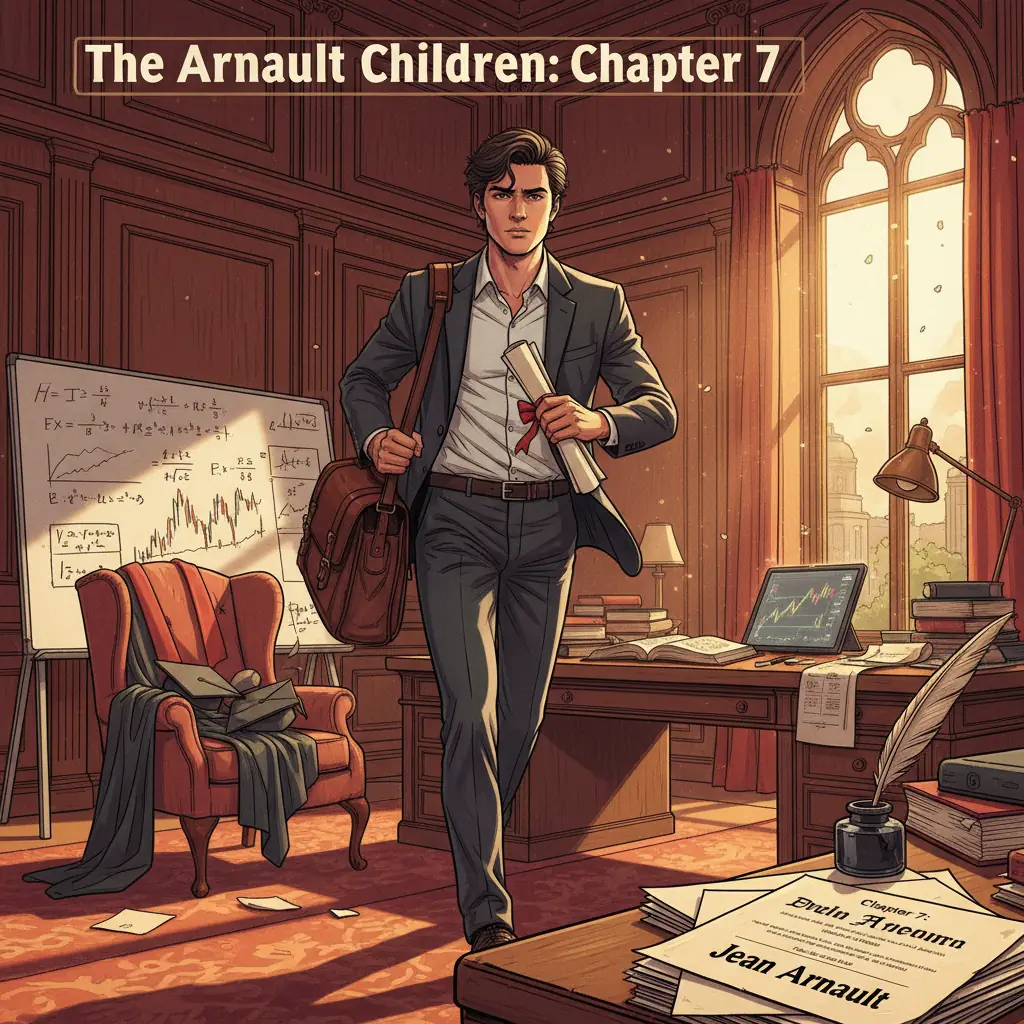
Finally, we have Jean Arnault, the youngest of the five, born in 1998. The ink is barely dry on his academic degrees from MIT and Imperial College London, specializing in financial mathematics and mechanical engineering. If his older siblings have already logged significant years in the corporate trenches, Jean is still very much in the early stages of proving himself, yet his entry into LVMH has been no less strategic or demanding.
Jean’s path, much like Frédéric’s, has led him into the intricate world of luxury watchmaking. In 2021, he joined the watch division of Louis Vuitton, LVMH’s flagship brand. This wasn’t just any entry-level position; he was appointed Director of Marketing and Product Development for Louis Vuitton’s watches. This role is crucial, as Louis Vuitton aims to elevate its watchmaking credibility and compete more directly with established Swiss maisons.
His responsibilities include overseeing the creation of new watch collections, managing product launches, and shaping the brand’s marketing strategy in the highly competitive and discerning watch market. It’s a role that demands a blend of creative vision, technical understanding, and marketing savvy. For the youngest Arnault, this is a sink-or-swim assignment, placing him directly into a segment where the nuances of craftsmanship, heritage, and innovation are paramount.
Jean is known for his passion for horology, his analytical mind, and his eagerness to learn. He is following in the footsteps of his older brother Frédéric by focusing on watches, suggesting a strategic family effort to fortify LVMH’s position in this segment. While he has less public-facing experience than Antoine or Alexandre, and less operational history than Delphine or Frédéric, his academic background and current role indicate a focus on precision, product excellence, and strategic marketing within a complex luxury category.
“Even the youngest Arnault is thrown into the deep end, not to drown, but to learn how to command the currents. Jean’s role at Louis Vuitton watches isn’t just a job; it’s an intensive apprenticeship designed to test his mettle, refine his judgment, and prove his capability to handle a crucial facet of the LVMH empire.”
His early career progression is a testament to Bernard Arnault’s philosophy: every child must earn their stripes, regardless of their last name. Jean is under immense pressure to demonstrate his leadership potential, his strategic insight, and his ability to contribute meaningfully to the LVMH machine. His performance at Louis Vuitton watches will be closely watched, not just by his father, but by his siblings and the entire luxury industry. He represents the next wave, the youngest contender still actively carving out his distinct niche and proving his worth in the grand Arnault succession narrative. The journey for Jean is just beginning, but the expectations are already sky-high.
🏛️ Chapter 8: The Training Grounds – A Gauntlet of Fire
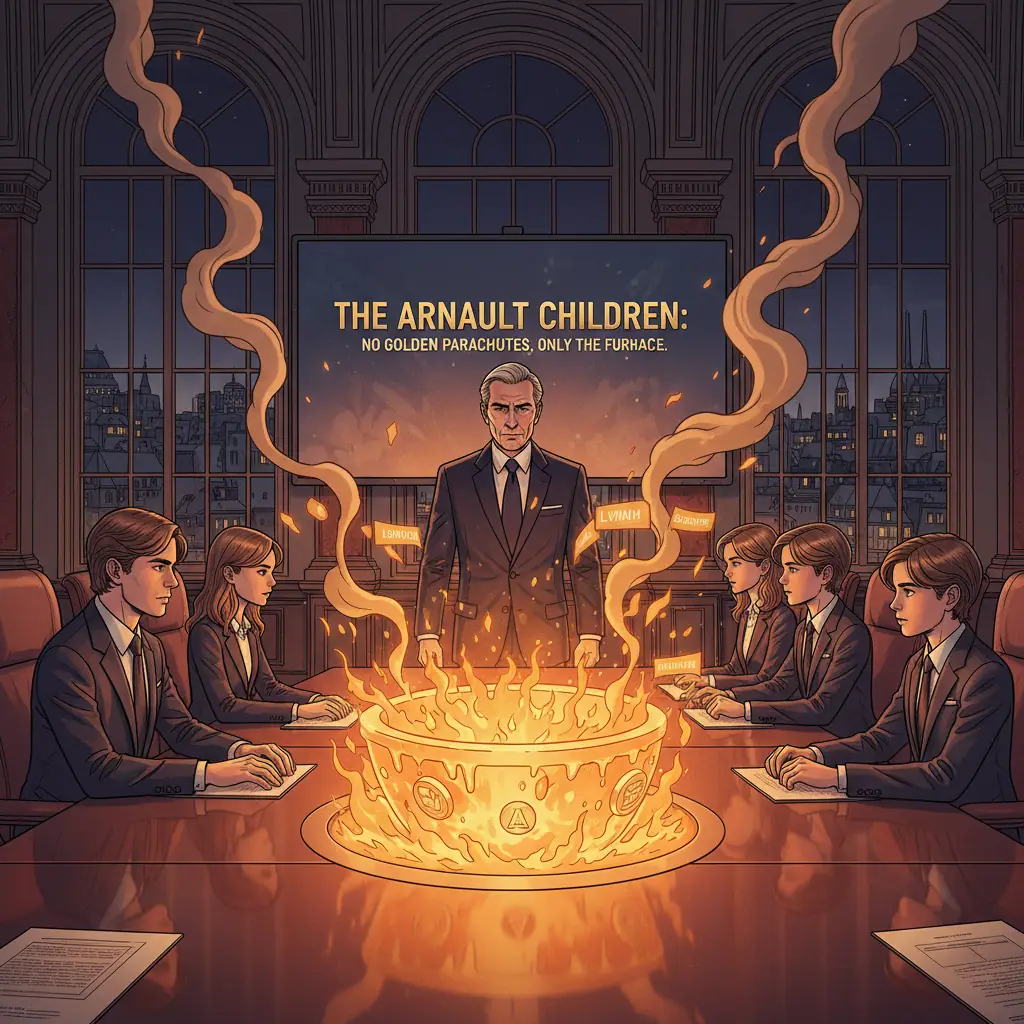
Bernard Arnault doesn’t believe in handing out golden parachutes. He believes in forging his heirs in the white-hot furnace of corporate reality. For his children, LVMH isn’t just a family business; it’s an elaborate, multi-stage gauntlet, a relentless series of tests designed to reveal character, competence, and sheer resilience. This isn’t just about managing a brand; it’s about mastering the art of luxury, proving strategic vision, and demonstrating the ruthless efficiency that built the empire in the first place.
Each child’s journey, as we’ve seen, is a carefully curated curriculum of challenges. They are moved between brands, from established giants to niche players, from design-centric roles to operational and financial ones. This strategic rotation serves multiple purposes:
- Holistic Understanding: By immersing them in different segments – fashion, leather goods, jewelry, watches, retail – they gain an encyclopedic knowledge of the entire luxury ecosystem. They learn the nuances of craftsmanship, supply chain, marketing, distribution, and customer experience across diverse product categories.
- Leadership Versatility: Moving from a small, struggling brand like Berluti to a global powerhouse like Louis Vuitton forces them to adapt their leadership styles, problem-solving approaches, and team management skills. Can they inspire a niche atelier as well as command a global marketing team?
- Stress Testing: These aren’t symbolic roles. They are high-pressure, high-stakes positions with real P&L responsibilities. Bernard watches closely, monitoring their successes, their failures, and how they navigate both. He’s not just looking for results; he’s looking for composure under fire, innovative thinking, and the ability to course-correct.
- Internal Competition: While not explicitly stated, the very nature of these assignments creates an implicit competition. Who can turn around a brand faster? Who can drive more innovation? Who can deliver better quarterly results? This rivalry, carefully managed by Bernard, sharpens their skills and pushes them to excel.
Consider the contrast: Delphine, honed at Dior and Louis Vuitton, deeply immersed in fashion’s creative and commercial engines. Antoine, taking on the challenge of Berluti, then overseeing Loro Piana and the family holding company. Alexandre, transforming Rimowa and now revitalizing Tiffany. Frédéric, revolutionizing TAG Heuer and now leading an entire watch division. Jean, diving into the sophisticated world of Louis Vuitton watches. Each role is distinct, yet each is a crucial piece of the LVMH puzzle, equipping them with unique skill sets that could one day be applied to the entire conglomerate.
This training regimen is a reflection of Bernard Arnault’s own hands-on, meticulous approach. He believes that true leaders are forged through direct experience and relentless accountability. He is not just preparing them for the throne; he is preparing them to earn it, brick by painful, glorious brick. The goal isn’t just to find a successor, but to ensure that whoever takes the reins has the comprehensive understanding, the strategic depth, and the proven track record to not just maintain, but accelerate LVMH’s dominance for decades to come. The Arnault children are not just executives; they are undergoing the most rigorous, high-stakes executive development program on the planet.
📊 Chapter 9: The Silent Scorecard – Papa’s Unspoken Criteria
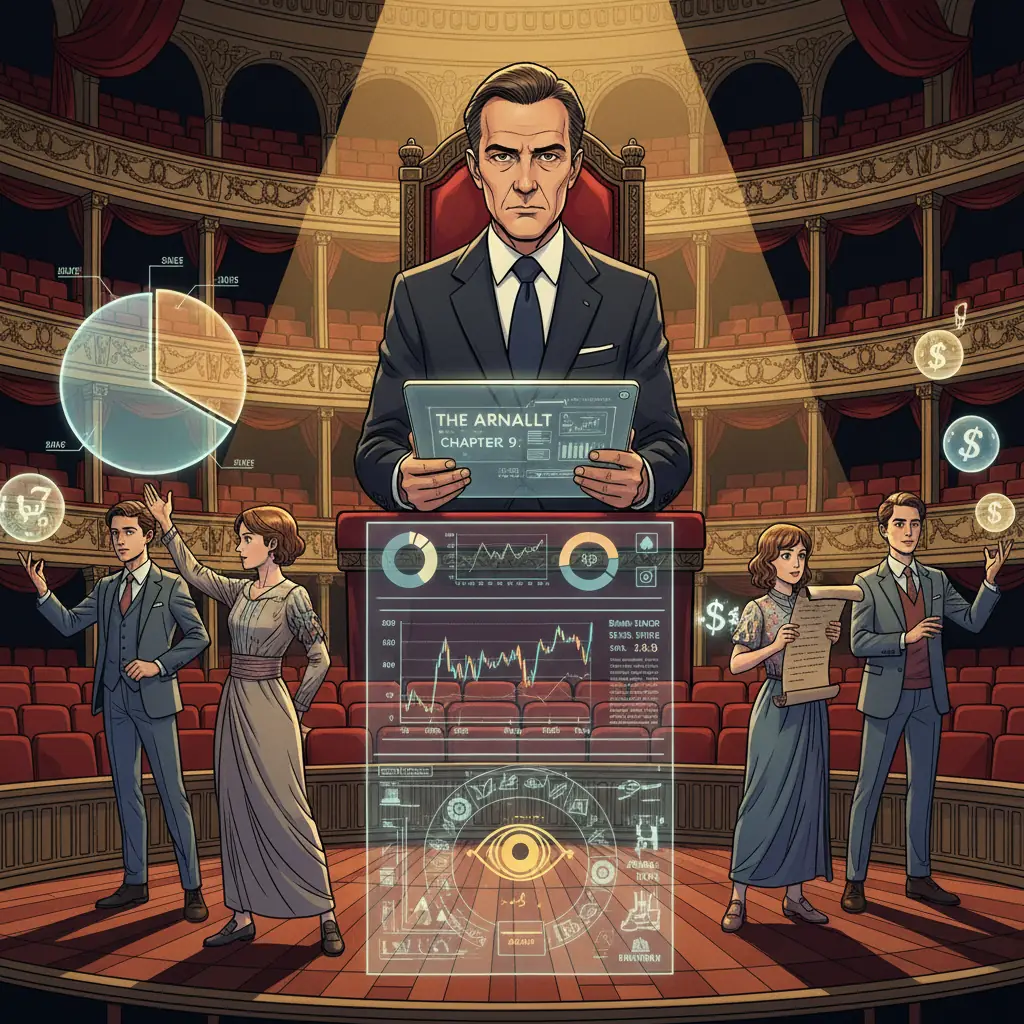
In the grand theater of LVMH, with five children performing under the spotlight, the ultimate judge sits in the imperial box: Bernard Arnault. But what metrics is he using? What hidden scorecard guides his assessments? It’s far more nuanced than just quarterly earnings, though profit is undoubtedly king. Bernard Arnault, the man who built an empire on calculated risk and ruthless efficiency, is evaluating his children on a complex, often unspoken, set of criteria.
-
Financial Performance & Growth: This is the bedrock. Can they grow their assigned brands? Can they increase revenue, improve margins, and expand market share? Delphine’s success at Dior and Louis Vuitton, Alexandre’s turnaround at Rimowa, Frédéric’s revitalization of TAG Heuer – these are all tangible proof points of their ability to deliver financially. Bernard is a numbers man above all else, and results speak louder than any eloquent presentation.
-
Strategic Vision & Innovation: Luxury is not static. It evolves with culture, technology, and consumer desires. Bernard looks for foresight. Can his children anticipate trends? Can they innovate without diluting brand heritage? Alexandre’s push into digital and collaborations, Frédéric’s focus on connected watches, Delphine’s ability to foster creative talent – these demonstrate a strategic mind capable of guiding brands into the future. He wants leaders who can see around corners.
-
Brand Stewardship & DNA Protection: While innovation is crucial, protecting the sacred DNA of each luxury house is paramount. This is where the art of luxury management comes in. Can they modernize a brand without sacrificing its essence? Can they expand its reach without making it ubiquitous and thus, less exclusive? This requires a deep reverence for heritage combined with a willingness to evolve. It’s a tightrope walk only the most discerning can master.
“Bernard Arnault isn’t just looking for someone to run the company; he’s looking for someone to be the company. Someone who embodies the relentless ambition, the exquisite taste, and the strategic foresight that built LVMH. It’s a test of spirit as much as skill.”
-
Ruthlessness & Resilience: Bernard Arnault became the “wolf in cashmere” by being decisive, unsentimental, and willing to make tough calls. He will be observing his children’s ability to navigate crises, make difficult personnel decisions, and stand firm in the face of adversity. Do they have the killer instinct? Can they protect the empire at all costs? This isn’t about being cruel, but about being utterly focused on the long-term health of the business.
-
Leadership & Team Building: Can they inspire and lead diverse teams of creative geniuses, shrewd business managers, and skilled artisans? Can they attract and retain top talent? LVMH’s success is built on the strength of its people, and a future leader must be able to galvanize this vast, global workforce.
-
Discretion & Loyalty: In a family business of this scale, trust and discretion are gold. Bernard values loyalty above almost everything else. He will be watching for any signs of disunity, overt rivalry, or attempts to undermine siblings. The family’s public image of unity, even amidst fierce internal competition, is carefully cultivated.
-
Global Perspective: LVMH is a global enterprise. A successor must possess a deep understanding of diverse markets, cultural nuances, and geopolitical forces. Alexandre’s American focus, Delphine’s global retail experience – these are critical elements.
Ultimately, Bernard Arnault isn’t looking for a carbon copy of himself. He’s looking for the one (or ones) who can best adapt his core philosophy – artistic excellence, relentless innovation, and uncompromising quality – to a rapidly changing world. The scorecard is silent, but the stakes are deafeningly clear.
⚔️ Chapter 10: The Power Plays and Subtle Sabotage – Sibling Rivalry Under the Surface

Beneath the polished facade of family unity and corporate professionalism, the currents of sibling rivalry are undoubtedly swirling. This isn’t the stuff of public brawls or leaked emails (the Arnaults are far too sophisticated for that). Instead, it’s a subtle, high-stakes game of strategic positioning, quiet alliances, and carefully orchestrated successes.
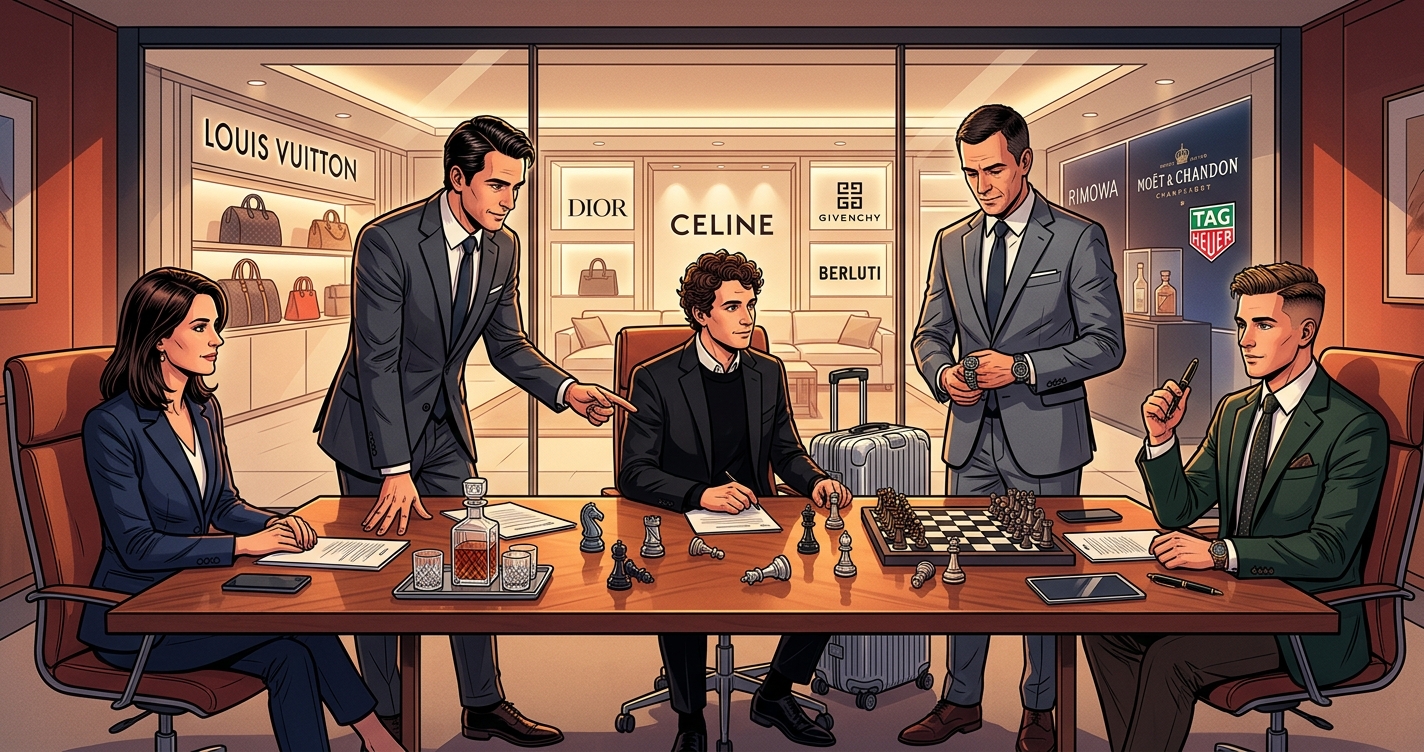
Imagine a chess match played on a global board, where each move of a brand, a promotion, or a new initiative is a pawn advanced, a knight deployed.
-
The “Favorite” Narrative: The media often positions Delphine as the frontrunner, the “heir apparent.” This creates an immediate dynamic. Does it motivate her siblings to work harder to prove themselves? Or does it foster resentment and a desire to outperform her in their respective domains? The perception of favoritism, even if unintended, can be a powerful catalyst for competition.
-
Sectoral Dominance: Each sibling has been given a specific sector or set of brands to lead. Delphine in couture and fashion, Antoine in communications and specific niche brands, Alexandre in jewelry and digital, Frédéric in watches, and Jean in Louis Vuitton watches. Their individual successes strengthen their claims to broader authority. If Frédéric can revitalize the entire watch division, it makes a compelling case for his strategic oversight capabilities across other categories. If Alexandre can successfully modernize Tiffany, it demonstrates his ability to integrate and transform major acquisitions.
-
The Race for Innovation: Who can bring the most groundbreaking ideas to the table? Who can best navigate the challenges of sustainability, digital transformation, and reaching new demographics? Alexandre’s tech-forward approach and Frédéric’s focus on connected watches are direct plays for the “innovator” crown, potentially positioning them as indispensable for LVMH’s future relevance.
-
Alliances and Support Systems: While direct “sabotage” is unlikely and severely frowned upon, subtle alliances might form. Perhaps two siblings share similar strategic visions, or one might lend support (or expertise) to another’s initiative, strengthening their collective position. Or, conversely, one might discreetly withhold resources or knowledge that could benefit a rival’s project. The LVMH board, packed with Arnault family members and loyalists, serves as both a stage and a referee for these intricate power plays.
-
The Parent Trap: Bernard Arnault himself is the ultimate arbiter, and his presence shapes the competition. His children are not just competing against each other; they are competing for his approval. This creates a unique pressure dynamic, where every decision, every success, every failure is implicitly measured against their father’s exacting standards. He’s not just a CEO; he’s the patriarch, and his children’s desire to impress him is a potent, unspoken force.
“This isn’t just about who gets the corner office; it’s about who best embodies the future of luxury, who can uphold the Arnault legacy, and who can endure the relentless scrutiny of a father who built an empire from sheer force of will. The competition is silent, but the stakes scream.”
The beauty (and terror) of this setup is that the “competition” isn’t necessarily about undermining each other directly. It’s about outperforming, out-innovating, and out-strategizing. It’s about proving, beyond a shadow of a doubt, that you are the most capable, the most visionary, the most essential for the future of LVMH. Bernard Arnault has orchestrated a system where collaboration is encouraged, but ultimate individual merit is paramount. It’s a delicate, high-wire act where the smallest misstep can have monumental consequences for an individual’s standing within the family and the empire.
🏰 Chapter 11: Beyond Blood – The Corporate Fortress and Governance

While the drama of sibling rivalry captures headlines, it’s crucial to understand the intricate corporate fortress Bernard Arnault has meticulously constructed to ensure LVMH’s long-term stability and family control, irrespective of who ultimately takes the helm. This isn’t just a family squabble; it’s a multi-billion-dollar enterprise with a governance structure designed to withstand any internal tremors.
At the heart of this structure is Agache, a French holding company, which in turn controls Christian Dior SE. Christian Dior SE is the listed entity that holds the Arnault family’s majority stake in LVMH. This tiered structure provides a robust defense against hostile takeovers and ensures that the family, through Bernard, retains ultimate voting control. In 2022, Bernard Arnault further solidified this structure by transforming Agache into a limited joint-stock partnership, a legal entity that makes it incredibly difficult for outsiders to challenge family control for decades to come. This move essentially guarantees that the Arnault family will remain LVMH’s controlling shareholder long after Bernard steps aside.
This governance structure isn’t just about financial control; it’s also about managing the transition of power and minimizing potential disputes among the heirs.
-
The Family Council: While not a formal public body, Bernard Arnault has established a “family council” or similar forum where the children are regularly involved in high-level discussions about strategy, acquisitions, and the overall direction of the group. This ensures they are all deeply invested in the collective success of LVMH and provides a platform for discussing their individual roles and aspirations. It’s a mechanism for both collaboration and controlled competition.
-
Strategic Board Appointments: Bernard has strategically placed his children in various key positions across the LVMH board and the boards of its major brands. Delphine is on the LVMH board and CEO of Dior. Antoine is CEO of the family holding Christian Dior SE and on the LVMH board. Alexandre is EVP at Tiffany. Frédéric is CEO of LVMH Watches. These appointments ensure that all five children have significant operational and governance roles, providing them with influence and a voice, even if only one ultimately becomes the group CEO.
-
Separation of Power (Potential): It’s entirely possible that the ultimate succession plan won’t involve a single, all-powerful CEO. Bernard might opt for a more distributed leadership model, with one child as CEO, another as Chairman, and others leading major divisions or regional operations. The current placement of his children in distinct, yet interconnected, roles suggests a potential for a shared leadership structure, where each contributes based on their strengths, maintaining family unity while ensuring effective management of the vast empire.
-
Meritocracy, Not Just Birthright: While they are Arnaults, their positions are not merely ceremonial. As discussed, each has been given significant operational challenges and is expected to deliver tangible results. This meritocratic approach, instilled by Bernard, is crucial for both internal morale and external confidence. It signals that LVMH will continue to be run by competence, not just by blood.
The corporate fortress built by Bernard Arnault is a testament to his long-term vision. He’s not just planning for his own departure; he’s planning for LVMH’s enduring legacy, ensuring that the empire he painstakingly built remains under family control and continues its trajectory of growth and dominance for generations. The governance mechanisms are designed to channel the competitive energies of his children into productive outcomes, safeguarding the golden goose that is LVMH.
🔮 Chapter 12: The Future Throne – Who Wears the Crown?
The question that hangs in the Parisian air, whispered in the hallowed halls of LVMH, and debated in every luxury capital, is simple yet profound: Who will ultimately wear the crown? Who among the five Arnault children will step into the colossal shoes of Bernard Arnault? Or will it be a different kind of succession entirely?
Speculation is rampant, and here are the leading theories:
-
Delphine Arnault – The Uncontested Empress: Many seasoned industry observers place their bets firmly on Delphine. Her deep operational experience at Dior and Louis Vuitton, her strategic acumen, her quiet leadership, and her recent promotion to CEO of Christian Dior Couture are all compelling indicators. She has proven her ability to manage LVMH’s largest and most prestigious brands, combining creative vision with rigorous business execution. She embodies the “art of luxury” with a keen commercial sensibility, making her a strong candidate for overall group CEO.
-
A Triumvirate of Power: Another strong possibility is a shared leadership model. Perhaps Delphine as CEO, Antoine as Chairman (leveraging his governance role at Christian Dior SE and his communication skills), and one of the younger sons (Alexandre or Frédéric) as a key operational leader overseeing a crucial segment like digital transformation or a specific division (e.g., Watches & Jewelry). This would leverage each child’s unique strengths and potentially mitigate internal rivalries by distributing power.
-
The Rise of a Younger Son: While Delphine is widely seen as the frontrunner, Bernard Arnault is known for his unpredictable, often counterintuitive moves. Could one of the younger, more digitally-native sons like Alexandre or Frédéric, whose successes in transforming brands and embracing innovation have been significant, make a late surge? Their understanding of future consumers and technologies is invaluable. Bernard may see their disruptive energy as essential for LVMH’s next chapter.
-
A Long Transition: Bernard Arnault, despite being in his mid-70s, shows no signs of slowing down. He recently raised the age limit for the LVMH CEO position to 80, giving himself more time at the helm. This allows for a prolonged, perhaps multi-year, transition period where the children continue to be tested, groomed, and strategically positioned. The “succession” might not be a single event, but a gradual handover of responsibilities and authority.
What does LVMH need in its next leader?
- A global vision: The world is the market, and the leader must navigate diverse cultures and economies.
- Digital fluency: The future of luxury is intertwined with technology, e-commerce, and new forms of consumer engagement.
- Sustainability leadership: Ethical sourcing, environmental impact, and social responsibility are no longer optional.
- Creative guardianship: The ability to foster and protect the artistic integrity of 75+ diverse brands is paramount.
- Unwavering ambition: To not just maintain the empire, but to expand it into new territories, new categories, and new heights of aspiration.
Bernard Arnault has spent decades building LVMH into an unassailable luxury fortress. His succession plan is not just about choosing a heir; it’s about ensuring the perpetuation of his vision, the safeguarding of his legacy, and the continued dominance of his empire. He has set up a brilliant, brutal proving ground. The children have been trained, tested, and placed. The pieces are on the board. The world waits to see who will make the final, decisive move.
🚀 Chapter 13: The Empire’s Endurance – What’s at Stake?

Beyond the personal ambitions of the Arnault children and the strategic machinations of their father, the LVMH succession has far-reaching implications for the entire luxury industry and global markets. This isn’t just about a family; it’s about an empire that influences trends, sets benchmarks, and moves billions. What’s truly at stake here?
-
LVMH’s Stock Value and Investor Confidence: A messy or poorly executed succession could send shockwaves through the market, potentially wiping billions off LVMH’s valuation. Investors crave stability and clear leadership. A smooth transition, demonstrating continued competence and strategic vision, would reinforce confidence and ensure the stock’s premium valuation. The Arnault family’s control mechanisms are designed to prevent market panic, but the perception of leadership quality is paramount.
-
Brand Integrity and Creative Direction: LVMH’s strength lies in its portfolio of diverse, yet meticulously managed, brands. Each house has its own heritage, creative director, and market position. A successor must possess the delicate touch to foster creativity while maintaining brand discipline across such a vast array. A wrong choice could lead to dilution, creative missteps, or a loss of brand identity, eroding the very essence of what makes these brands desirable.
-
Future Acquisitions and Growth Trajectory: Bernard Arnault built LVMH through an aggressive, strategic acquisition strategy. The next leader must possess the same foresight, negotiating prowess, and financial acumen to identify and integrate future targets. Will they continue to expand the empire’s reach into new luxury categories or geographies, or consolidate and refine the existing portfolio? The direction of growth hinges on the vision of the successor.
-
Influence on the Luxury Industry Landscape: LVMH is a trendsetter. Its moves influence competitors, suppliers, and even the broader fashion and retail industries. The priorities of the next Arnault leader – whether it’s digital transformation, sustainability, new market penetration, or a focus on specific product categories – will inevitably shape the direction of the entire luxury sector. Their choices have a ripple effect across the globe.
-
The Arnault Legacy: For Bernard Arnault, this isn’t just about business; it’s about his life’s work, his legacy. He wants to ensure that the empire he built, against all odds, continues to thrive and dominate for generations. A successful succession guarantees his place in history as not just a brilliant businessman, but as a dynastic founder. A failure, however, could tarnish that legacy.
The Arnault succession is more than a family affair; it’s a critical moment for a global titan. The precision with which Bernard Arnault has orchestrated his children’s careers, the deliberate challenges he has set, and the robust governance structures he has put in place all point to a man obsessed with the long-term endurance of his creation.
“This isn’t just a competition for control; it’s a crucible for the soul of luxury itself. The Arnault children aren’t just vying for a title; they are vying for the right to define aspiration, to shape desires, and to steer a colossal empire through the turbulent seas of the 21st century. The stakes couldn’t be higher.”
The world watches, not just for the drama, but for the implications. Because when the Arnaults make a move, the entire world of luxury feels the tremor. The endurance of this empire, built on desire and ambition, now rests on the shoulders of its next generation. And Bernard Arnault, the ultimate puppet master, is ensuring they are more than ready for the weight of the crown.
🏁 Chapter 14: The Unfolding Saga – A Dynasty in Motion

So, here we stand, at the precipice of a dynastic transition that promises to be as captivating as any corporate thriller. Bernard Arnault, the architect of the ultimate luxury behemoth, has spent decades not just building an empire, but meticulously engineering its future. He has cultivated not one, but five potential successors, each with their own unique talents, battle scars, and burning ambitions.
Delphine, the quiet force, the proven operator, navigating the high-pressure world of couture. Antoine, the public face, the brand whisperer, now overseeing the family’s financial stronghold. Alexandre, the tech-savvy disruptor, modernizing icons and speaking to the next generation. Frédéric, the intellectual prodigy, fusing tradition with innovation in the complex world of watches. And Jean, the youngest, forging his path in the precise art of horology, learning to command the currents of the flagship brand.
This isn’t a simple hand-off of keys. This is a continuous, unfolding saga, a carefully choreographed dance of power, ambition, and familial loyalty. Bernard Arnault hasn’t just built a company; he’s built a system. A system designed to identify, test, and ultimately elevate the most capable among his own bloodline, ensuring that the LVMH empire, with its dazzling constellation of 75+ brands, remains an undisputed titan of global luxury.
The beauty of this story, for us observers, is that it’s real. It’s playing out in boardrooms and boutiques, in financial statements and fashion shows. There are no scriptwriters, only relentless ambition and the harsh realities of the market. The Arnault children are not just executives; they are characters in a multi-billion-dollar drama, each move scrutinized, each success celebrated, each challenge a potential step closer or further from the ultimate prize.
Will there be a single emperor? Or a council of powerful siblings, each ruling their own dominion within the vast Arnault galaxy? Only time, and Bernard Arnault’s ultimate decision, will tell. But one thing is certain: the future of luxury will be written by an Arnault. And the journey to that throne promises to be one of the most compelling business stories of our generation. The Billion-Dollar Hunger Games? They’re just getting started.
💡 Key Insights
- ▸ Succession planning in family-owned conglomerates requires a delicate balance of meritocracy, strategic placement, and robust governance structures. Leaders should actively cultivate internal competition while establishing clear, objective metrics for evaluation, mitigating the risks of internal strife and ensuring the empire's continuity.
- ▸ For aspiring entrepreneurs and investors, the Arnault saga highlights the immense value of strategic brand aggregation and diversified portfolio management within a specific high-growth sector. It also underscores the importance of developing future leadership talent from within, even if it means orchestrating a competitive internal environment.
- ▸ The luxury industry's future leadership demands a blend of traditional craftsmanship appreciation and radical digital innovation. Companies must groom leaders who can respect heritage while fearlessly embracing new technologies, sustainability imperatives, and evolving consumer behaviors across diverse global markets.