Patrick Collison: The Irish Teenage Prodigy Who Built the Payments Backbone of the Internet
He won the Irish Young Scientist award at 16, sold his first company at 19, and co-founded a payment processor with his younger brother that now moves over $1 trillion a year.

View all stories about this mogul
In the small town of Dromineer, in County Tipperary, Ireland, there is a modest farmhouse where two boys named Patrick and John Collison grew up in the late 1990s and early 2000s, surrounded by fields, tractors, and the kind of silence that only rural Ireland produces. Their parents were entrepreneurs — their mother, Lily, ran a hotel and a bed-and-breakfast; their father, Denis, was a microbiologist turned business owner. Dromineer was small enough that you could know everyone by name. It was also quiet enough that a teenage boy could disappear into a computer for hours without anyone noticing.
Patrick Collison, the elder brother, disappeared into computers from the age of eight. He taught himself to program. He read every book on software he could find in the local library, then ordered more over the internet. By the time he was twelve, he was writing applications that were good enough to surprise professional engineers. By the time he was fifteen, he had started competing in the Irish national science competition, the BT Young Scientist and Technology Exhibition.
In 2005, at the age of sixteen, Patrick Collison won the Young Scientist of the Year award for a project on a new programming language he had invented called Croma. It was a functional programming language inspired by Lisp, designed to make AI research more accessible. It was an extraordinary achievement for a sixteen-year-old. It was also a preview of a pattern that would define Patrick’s career: when he got interested in something, he did not skim it. He rebuilt it from first principles.
Seventeen years later, Patrick and his younger brother John would be running one of the most valuable private companies in the world, processing more than a trillion dollars in annual payments for millions of businesses, and quietly becoming one of the most influential founder teams in the entire technology industry.
🌾 Chapter 1: Two Brothers in Tipperary
Patrick Collison was born on September 9, 1988, in Limerick, Ireland. His brother John was born on August 6, 1990. The two boys grew up almost inseparably close, raised in a family that valued curiosity, independence, and long conversations around the dinner table.
From a young age, Patrick was the obsessive learner. He would read a book on a topic — mathematics, history, philosophy, computer science — and immediately want to talk about it for hours. John was the quieter, more social brother, but he absorbed almost everything Patrick was doing. When Patrick got his first computer, John soon learned to program too. When Patrick started building websites, John built them alongside him. The two brothers developed a way of working together that resembled more a single mind than a partnership.
Their parents encouraged them. Lily Collison, in particular, would later recall that she never questioned why her sons were spending so many hours in front of computers. She trusted that they were learning something important. The Collison household had books in every room, conversations about ideas at every meal, and a patient acceptance of two children who were, by any reasonable measure, unusually gifted.
Patrick finished high school in three years instead of five, achieving the highest secondary school scores in Ireland. John would later do the same, also finishing early and graduating at the top of his class. Both boys were accepted to the Massachusetts Institute of Technology. Patrick went first, at the age of seventeen.
💡 Chapter 2: Auctomatic and the First Exit
At MIT, Patrick met Harj Taggar, a fellow student from the United Kingdom, and Kulveer Taggar, Harj’s brother. Together with John — who was still in high school in Ireland — they founded a startup called Shoppers Pad, later renamed Auctomatic. Auctomatic built tools for eBay power sellers to manage their listings more efficiently.
In January 2007, Auctomatic was accepted into Y Combinator’s winter batch. Patrick dropped out of MIT to focus on the company full-time. Within months, the startup had real customers and growing revenue. In March 2008, Auctomatic was acquired by the Canadian software company Live Current Media for approximately $5 million. Patrick was nineteen years old. John was seventeen.
The exit gave the brothers their first taste of Silicon Valley wealth — modest by later standards, but significant for teenagers. More importantly, it gave them credibility. They had built, sold, and integrated a real software company. They understood what it took to ship products, work with customers, and navigate a startup exit.
They also learned something specific from Auctomatic: the most painful part of building any internet business was the infrastructure for accepting payments. Every e-commerce tool, every subscription site, every marketplace had to wrestle with credit card processors, merchant accounts, compliance paperwork, and arcane APIs. It was a universal source of developer misery. And nobody — not PayPal, not the banks, not the traditional payment processors — seemed interested in making it better.
💳 Chapter 3: /dev/payments
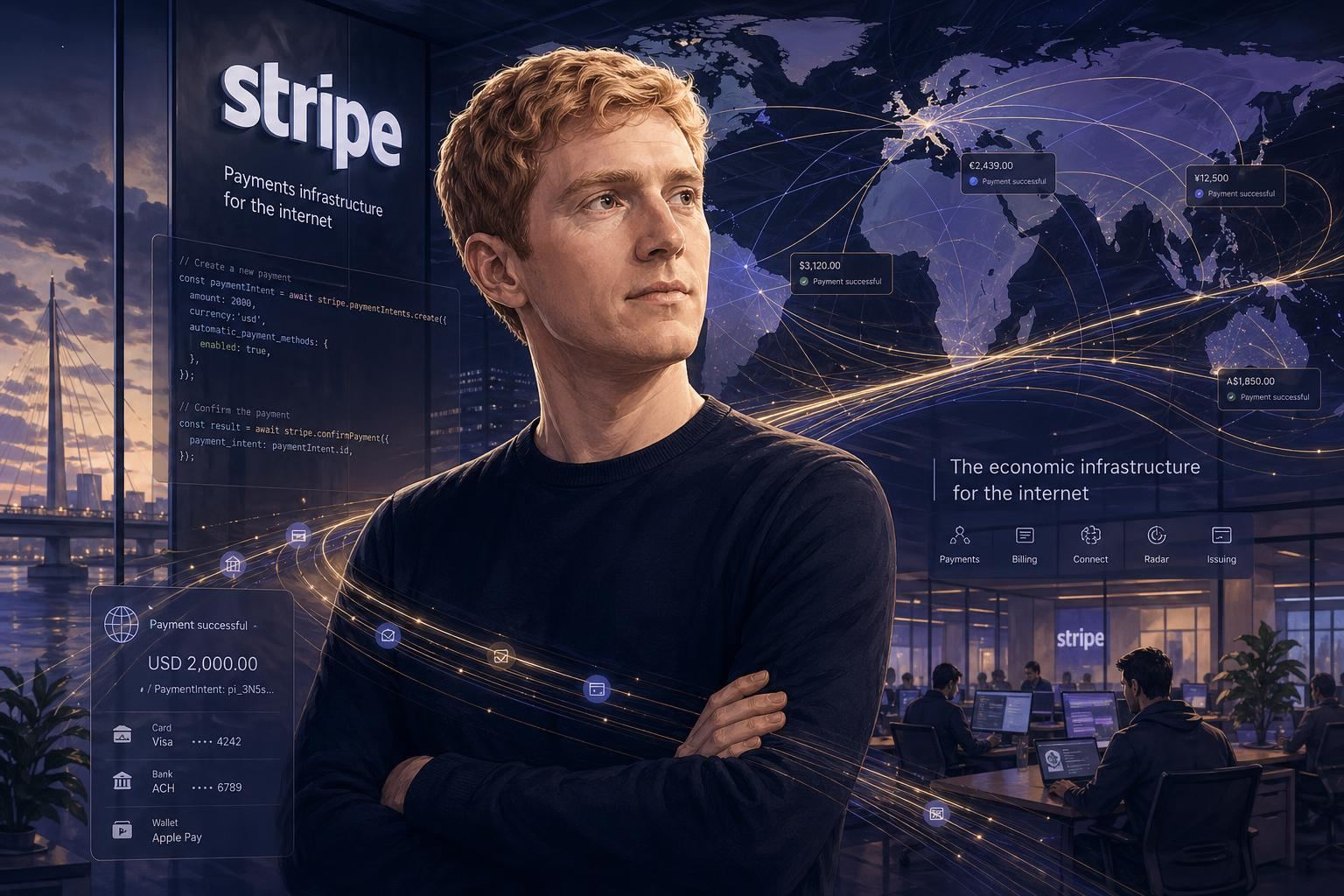
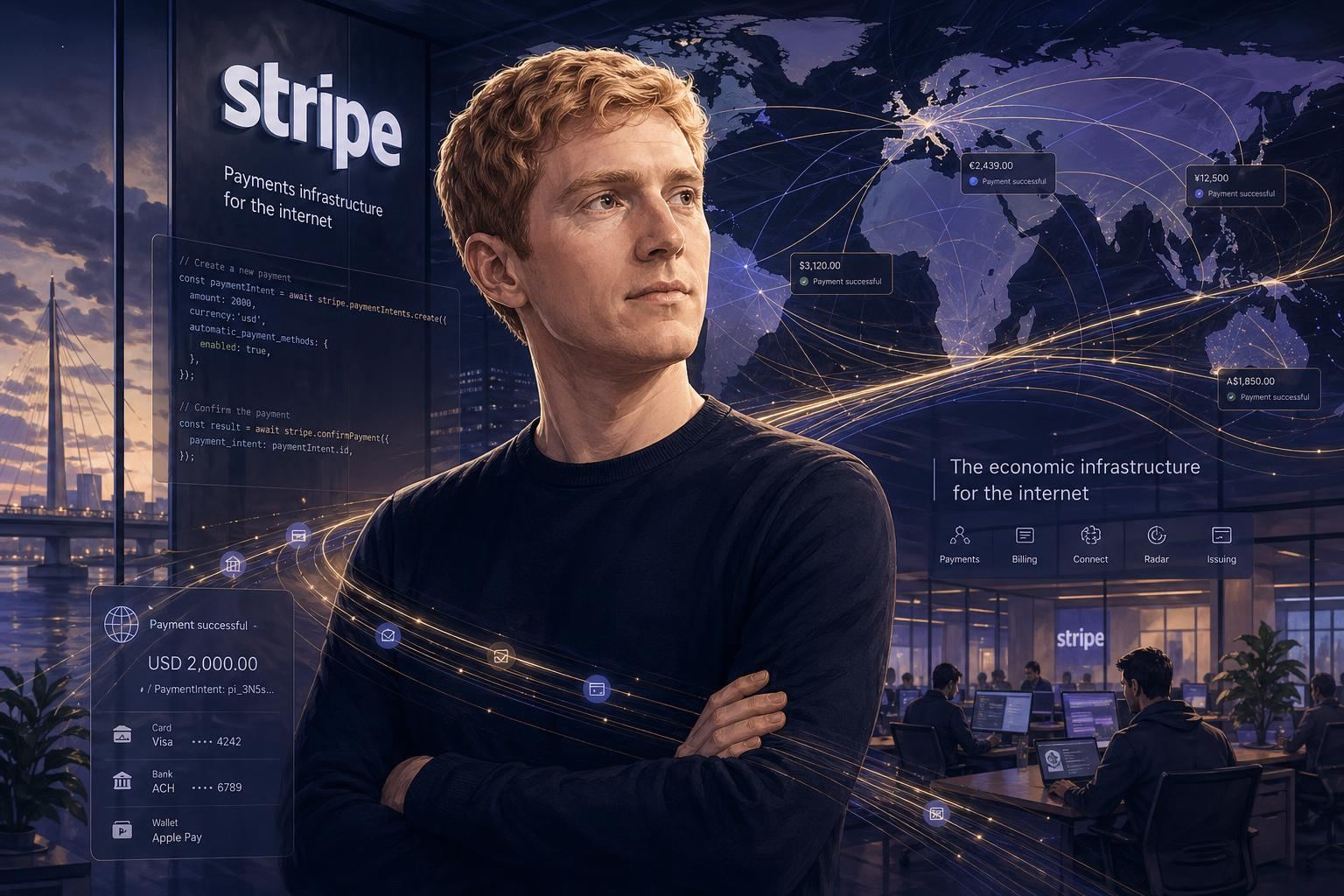
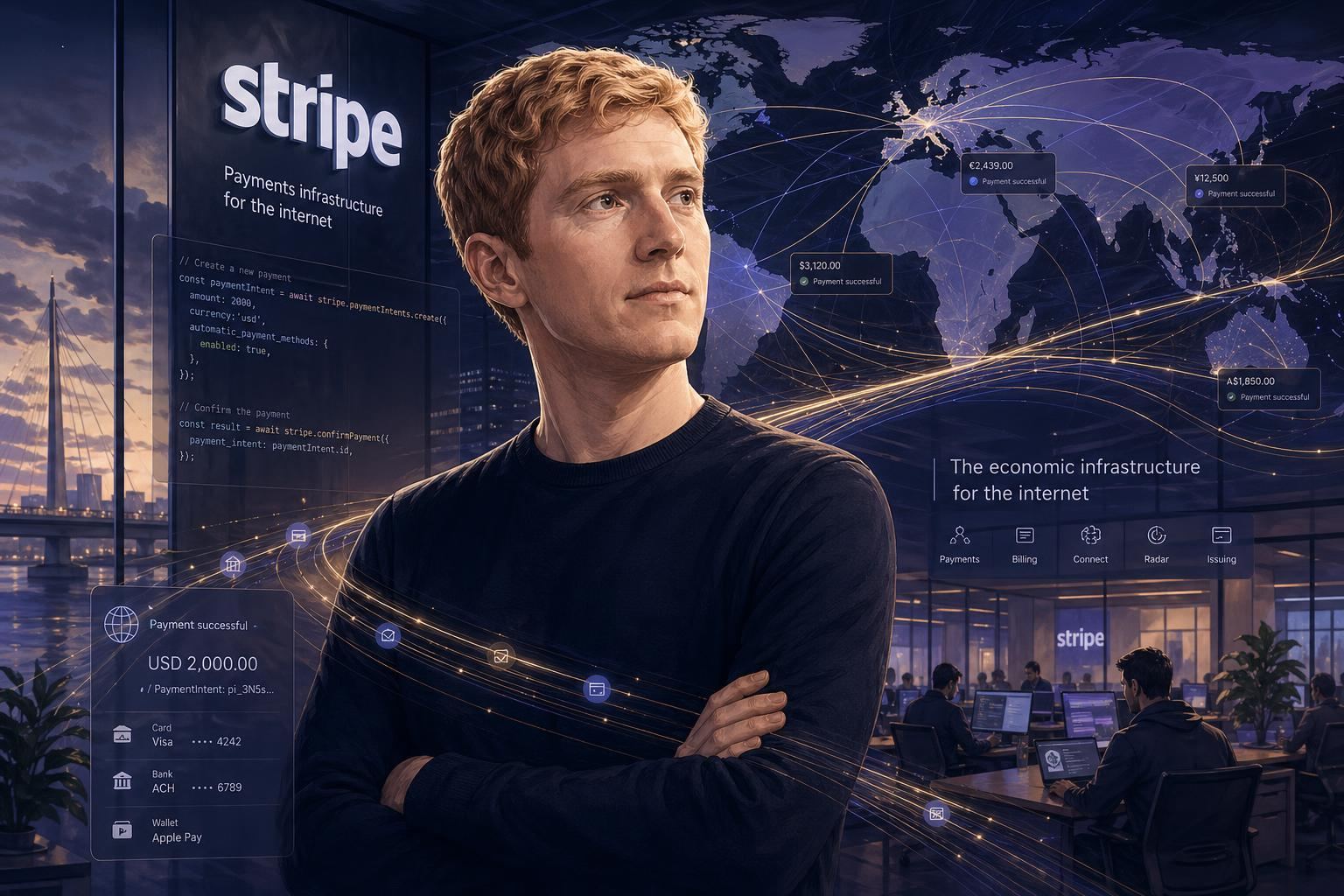
In 2010, Patrick and John began quietly working on a new project. They wanted to build a payment system that a developer could integrate into a website in a single afternoon, using only a few lines of code. No bank meetings. No compliance interviews. No month-long underwriting cycles. Just a clean API and instant functionality.
The project was originally called “/dev/payments,” a reference to the Unix device file convention, and then briefly “Charge.” Eventually the brothers settled on the name Stripe — inspired partly by the magnetic stripe on a credit card and partly by the word’s clean, simple typography.
They moved to San Francisco. They joined Y Combinator’s summer 2010 batch, where Paul Graham and Harj Taggar — the same Harj from the Auctomatic days, now a Y Combinator partner — mentored them. The brothers were obsessed with developer experience. They spent weeks agonizing over tiny details of their API: what each function would be called, how errors would be returned, how the documentation would read.
Stripe launched publicly in September 2011, and the developer community reacted almost immediately. Programmers who had spent years fighting with traditional payment processors discovered they could integrate Stripe in under an hour. The famous seven-line code snippet for accepting a credit card payment — barely more than a hello-world example — became a staple of developer blogs and tutorials.
📈 Chapter 4: The Y Combinator Flywheel
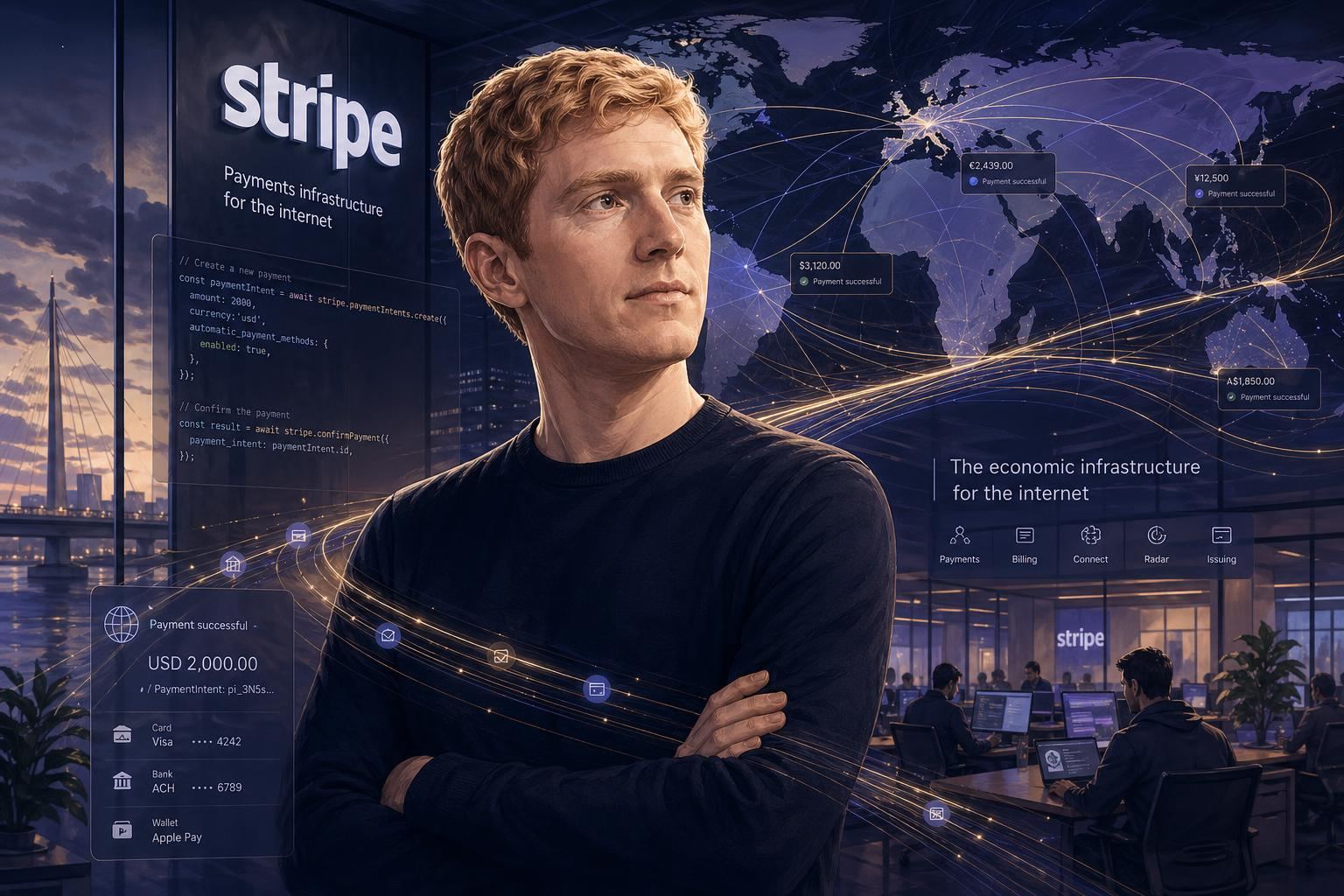
Stripe’s early growth was fueled by a simple, powerful flywheel: it was the default payment processor for every new Y Combinator startup. Every time a new YC company launched, it used Stripe. Every time that company grew, Stripe grew with it. Stripe became, in effect, the default financial plumbing for the entire new generation of Silicon Valley startups.
Major investors noticed. In 2011, Sequoia Capital and other top firms led Stripe’s first round of institutional funding. In 2012, Stripe raised $18 million. In 2014, it raised $80 million at a $1.75 billion valuation. By 2016, Stripe was worth $9 billion. By 2019, it was worth $35 billion. By early 2021, during the pandemic’s e-commerce boom, Stripe raised funds at a staggering $95 billion valuation — making it, briefly, one of the highest-valued private companies in the world.
Throughout this growth, Patrick remained CEO and John remained president. The brothers divided responsibilities carefully: Patrick handled strategy, long-term product vision, engineering culture, and public communications; John handled business operations, enterprise partnerships, and day-to-day management. They were famous inside Stripe for finishing each other’s sentences, for making decisions through long written memos, and for almost never publicly disagreeing.
🏗️ Chapter 5: Building the Unsexy Empire
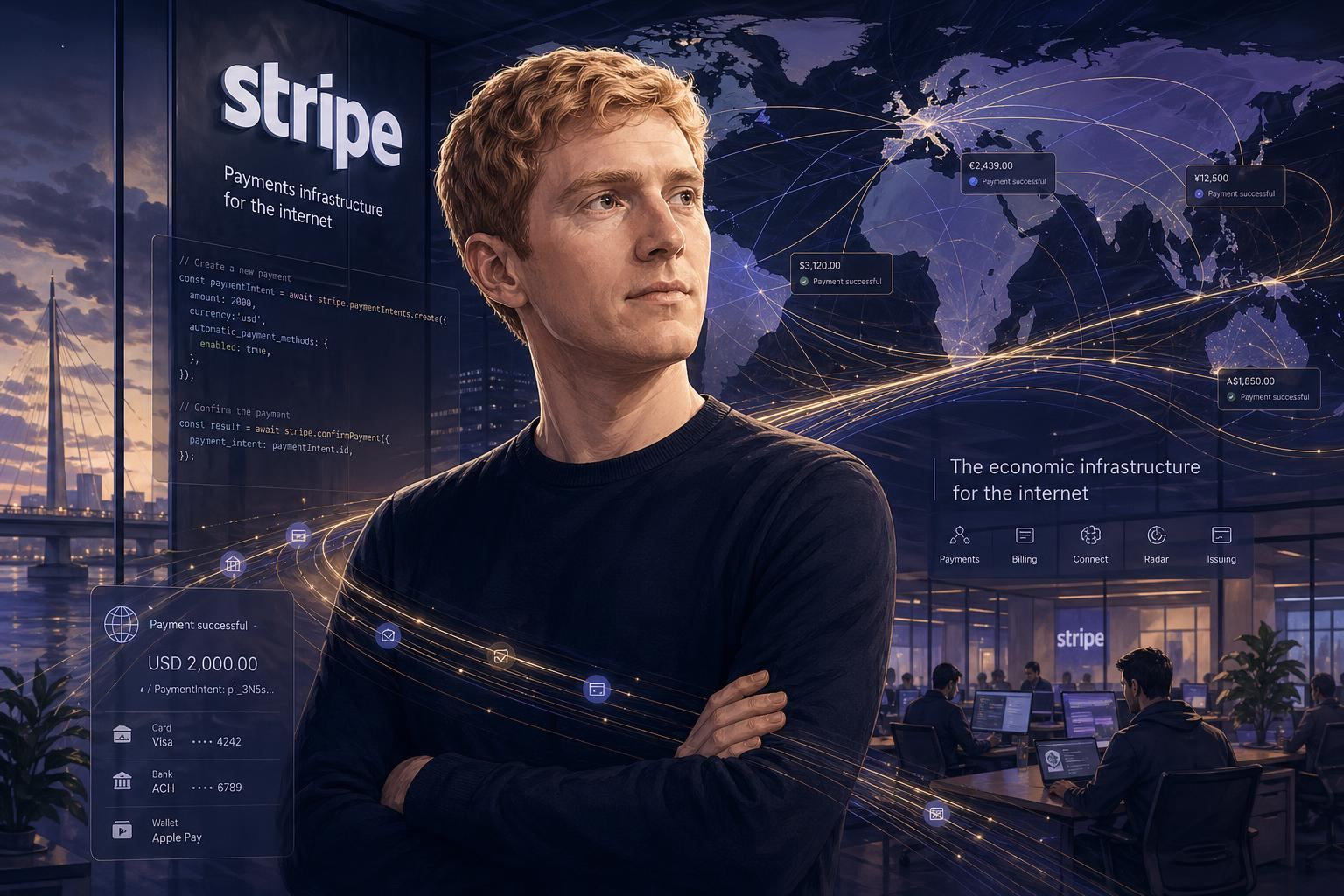
Over the years, Stripe expanded far beyond simple payment processing. The company launched Stripe Atlas, a tool that helped foreign founders incorporate a U.S. company in minutes. It launched Stripe Radar, an AI-powered fraud detection system. It launched Stripe Connect, a platform for marketplaces like Lyft and Instacart to pay their drivers. It launched Stripe Issuing, a system for creating and managing virtual credit cards. It launched Stripe Capital, a small-business lending product. It launched Stripe Tax, a system for automated sales-tax calculation. It launched Stripe Climate, a program that allowed businesses to direct a portion of revenue to carbon removal.
Each new product extended Stripe’s reach into a different corner of business infrastructure. The underlying strategy was consistent: solve every financial and administrative annoyance that modern internet businesses faced, and bundle everything into a single, coherent platform. If you ran a startup on Stripe, you essentially never had to deal with banks, credit card networks, tax authorities, or compliance paperwork directly. Stripe absorbed all of it.
This deep platform strategy gave Stripe one of the most durable moats in the software industry. A customer could theoretically switch to a rival payment processor, but they would have to replace not just payments, but ten or fifteen interconnected systems. The switching costs were enormous.
📉 Chapter 6: The 2022 Valuation Crash
The 2021 $95 billion valuation was extraordinary but also, in retrospect, unsustainable. When the post-pandemic SaaS correction hit in 2022, Stripe was not immune. Stripe’s internal valuation was marked down. In early 2023, the company raised $6.5 billion in fresh capital at a valuation of $50 billion — nearly a 50% haircut from the peak.
The Collison brothers handled the correction with characteristic calm. Patrick wrote an internal memo to employees explaining that Stripe had grown too aggressively in 2020 and 2021, that the company needed to slow hiring, and that roughly 14% of staff would be laid off. The memo was direct, self-critical, and apologetic. The severance packages were unusually generous by industry standards.
Stripe’s revenue continued growing despite the valuation correction. In 2023, the company processed over $1 trillion in total payment volume for the first time. In 2024, it became profitable on a full-year basis. By 2025, investors were once again marking up Stripe’s internal valuation — to $70 billion, then $80 billion, then over $90 billion by the end of the year. The crash had not broken Stripe. It had only tested the discipline of its leadership.
📚 Chapter 7: Stripe Press and the Public Intellectual
One of the most unusual things about Patrick Collison is that he runs a CEO-led book publishing operation. In 2018, Stripe launched Stripe Press — a small, beautifully-designed publishing imprint that publishes books about science, technology, economics, and intellectual history. Stripe Press has republished classics like The Dream Machine by M. Mitchell Waldrop, published new editions of works by scientists like Freeman Dyson, and produced original titles by authors including Byrne Hobart.
The press is explicitly unprofitable. Patrick treats it as a public good — a way to contribute to the intellectual ecosystem that he believes produces the kind of people who build important things. The books are famous for their production quality: thick paper, beautiful typography, hardcover bindings. They are given as gifts to Stripe customers and investors, and are frequently found on the bookshelves of other Silicon Valley founders.
Patrick has also become something of a public intellectual through his Twitter account and his personal blog. He reads widely — on average several books per week — and often posts lengthy threads about books he has enjoyed. He has advocated publicly for “progress studies,” an emerging academic movement that tries to understand why technological and scientific progress happens faster in some eras and places than others. He co-authored an influential 2019 essay in The Atlantic with economist Tyler Cowen arguing for the creation of a new academic field devoted to the study of progress.
🧠 Chapter 8: The Philosophy of the Long View
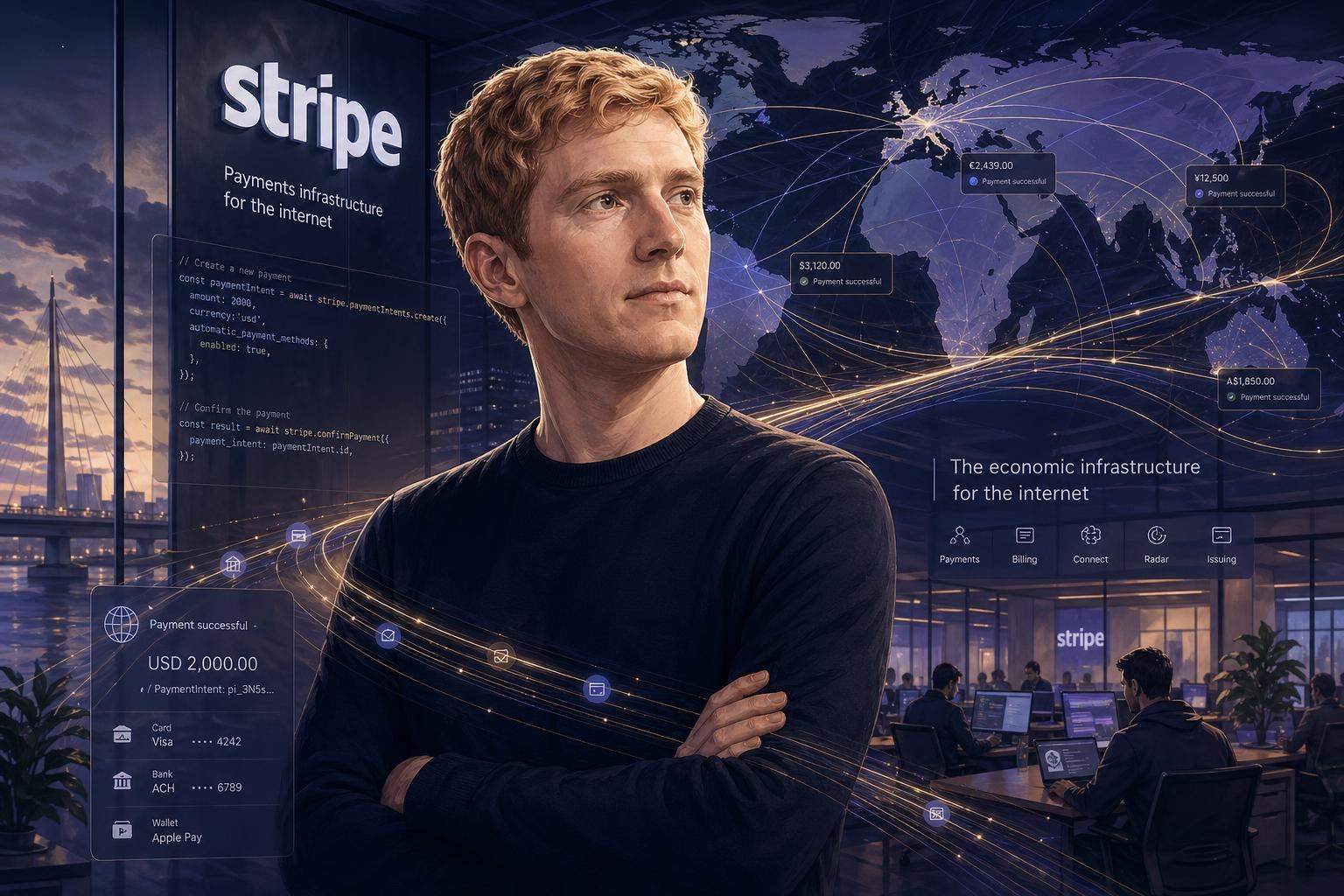
Patrick’s stated strategic philosophy — for Stripe, for his investments, for his public commentary — is the primacy of the long view. He has repeatedly argued that the most important decisions a founder makes are ones whose consequences only become visible over decades, and that most founders are trapped by the pressure of quarterly thinking, venture capital cycles, and media attention.
This philosophy has shaped Stripe’s decision to remain private. Patrick has been asked, in nearly every major interview, why Stripe hasn’t gone public. His answer is always some version of the same point: being public forces CEOs to optimize for a small set of short-term metrics, and he believes Stripe can make better long-term decisions by avoiding that pressure. Stripe has, at various points, offered liquidity to employees and early shareholders through secondary transactions and tender offers, but it has consistently declined to do a full IPO.
The decision is controversial. Some employees — especially those who joined during the peak valuation years — have expressed frustration at the lack of a liquid market for their equity. Some investors would have preferred a public listing for reasons of audit quality and exit optionality. But Patrick has held firm, and the results — measured in revenue growth, product depth, and customer satisfaction — seem to validate the patience.
🌍 Chapter 9: Global Infrastructure for the Internet Economy
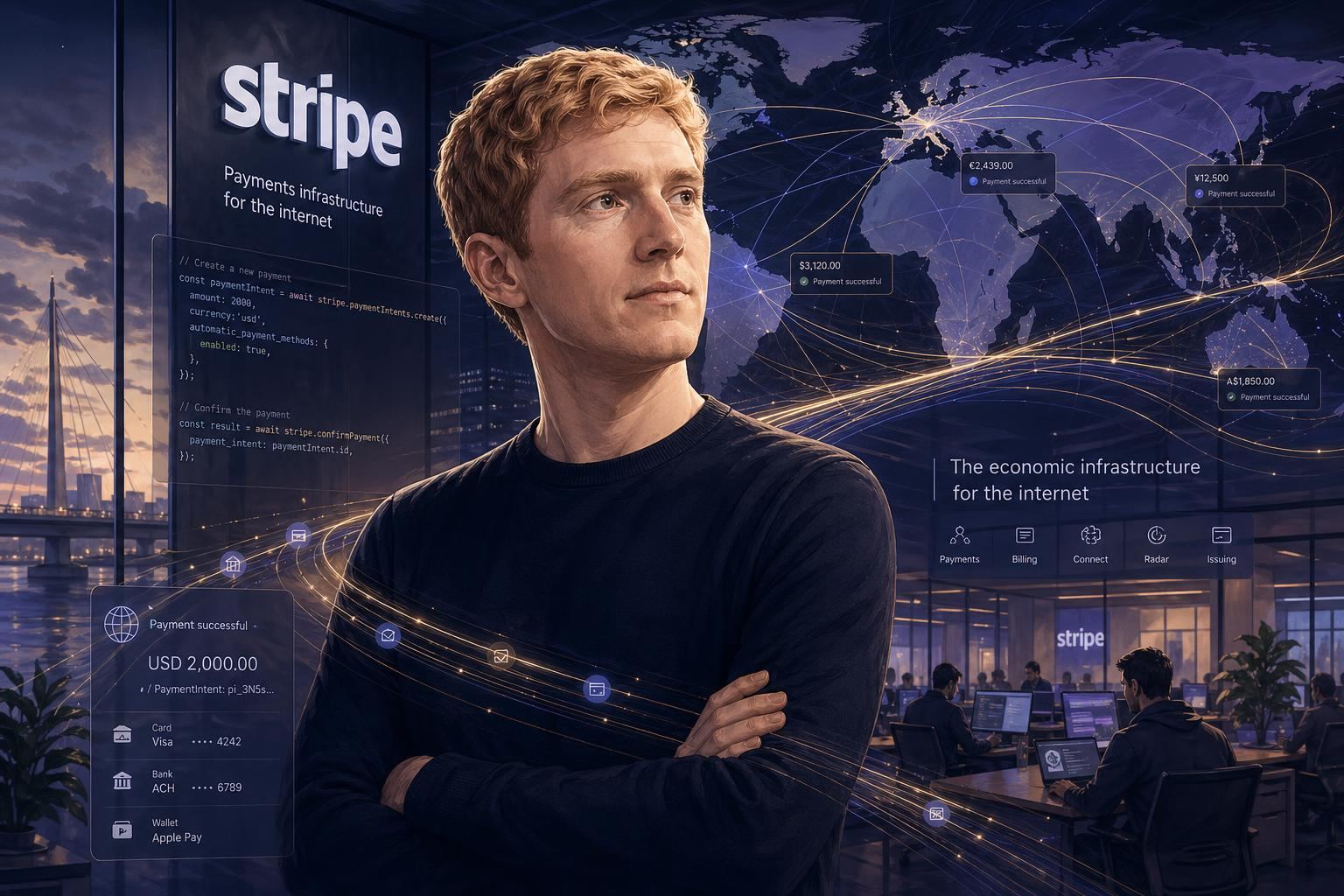
Stripe’s international expansion has been equally aggressive. The company now supports payments in over 135 currencies and operates in nearly 50 countries. It has built local bank partnerships in Europe, Asia, Latin America, and Africa. It has navigated complex regulatory regimes in each jurisdiction. It has localized its APIs, its documentation, and its support.
One of Patrick’s most consistent public positions is that the internet should be treated as a single economic zone — a marketplace where any business, anywhere, should be able to sell to any customer, anywhere, without being punished by friction. He has framed Stripe’s mission explicitly in these terms: “to increase the GDP of the internet.”
The phrase captures what Patrick actually cares about. He is not interested in payments for their own sake. He is interested in payments as the infrastructure layer that determines how quickly new businesses can form, how much global commerce can flow, and how much economic opportunity is available to people who happen to have been born in countries without strong traditional financial systems. Stripe’s expansion into emerging markets — where traditional banking infrastructure is weakest — is partly a commercial strategy and partly a statement of philosophy.
🤖 Chapter 10: The AI-Era Bet
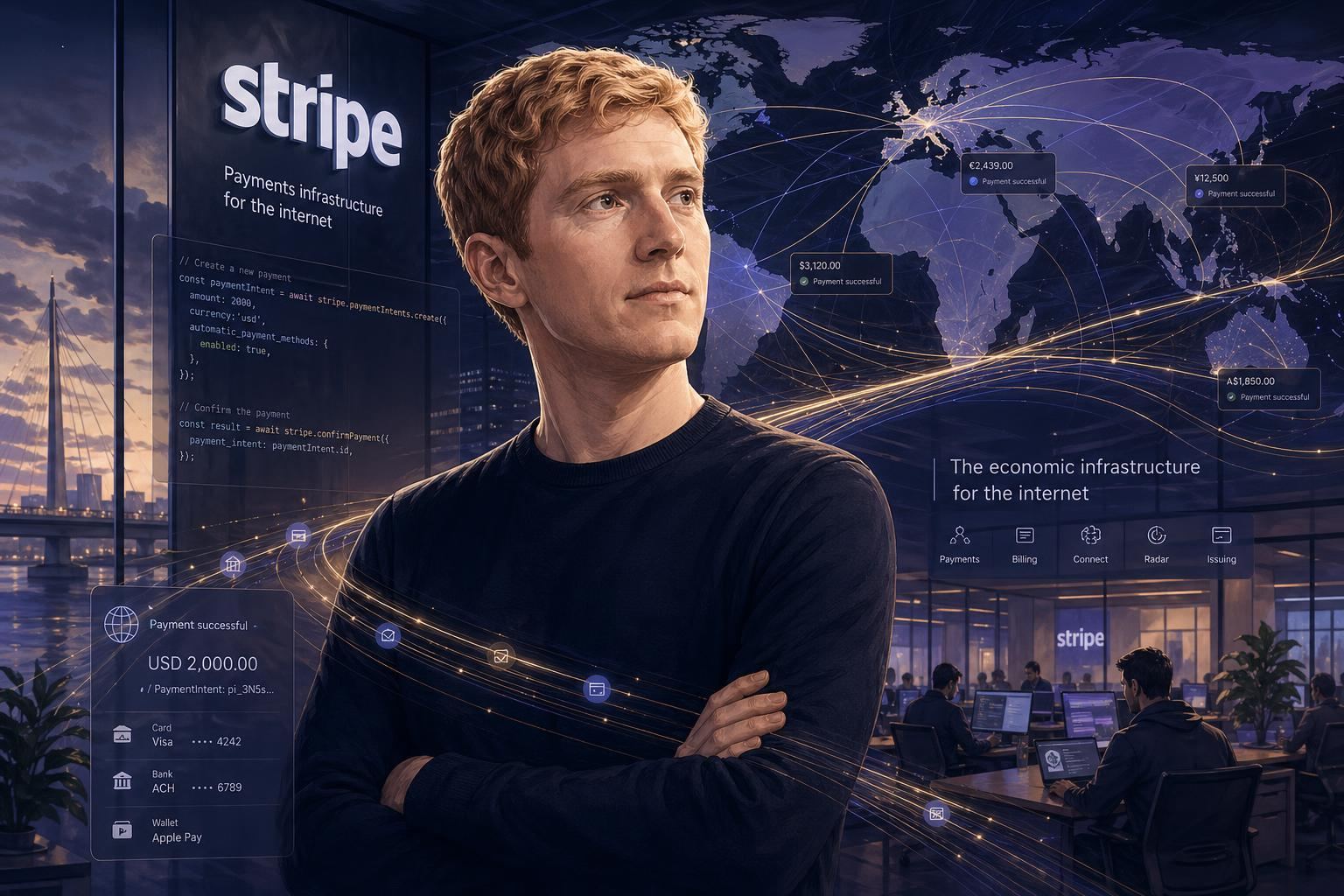
Stripe was one of the first large fintech companies to bet heavily on AI integration. In 2023 and 2024, the company rolled out AI-powered features across its product line: automated fraud detection using large language models, AI-based customer support, AI-driven reconciliation for complex payment flows, and AI assistants for developers integrating Stripe’s APIs.
Patrick has also been unusually public about his views on artificial general intelligence. He has argued that AI is likely to be the most important economic and scientific event of the 21st century and that understanding AI’s implications is the single most important intellectual challenge of the current decade. Stripe has invested in multiple AI-focused startups through its corporate venture arm and has built strong partnerships with OpenAI, Anthropic, and Mistral.
In 2025, Stripe launched a new initiative called Stripe Agents — infrastructure designed to let AI agents autonomously make purchases, pay invoices, and manage financial workflows on behalf of their human users. The bet was strategic and long-term. If the future of commerce included AI agents as first-class economic actors, Stripe wanted to be the payment infrastructure those agents used by default.
🏡 Chapter 11: The Brothers’ Private Life
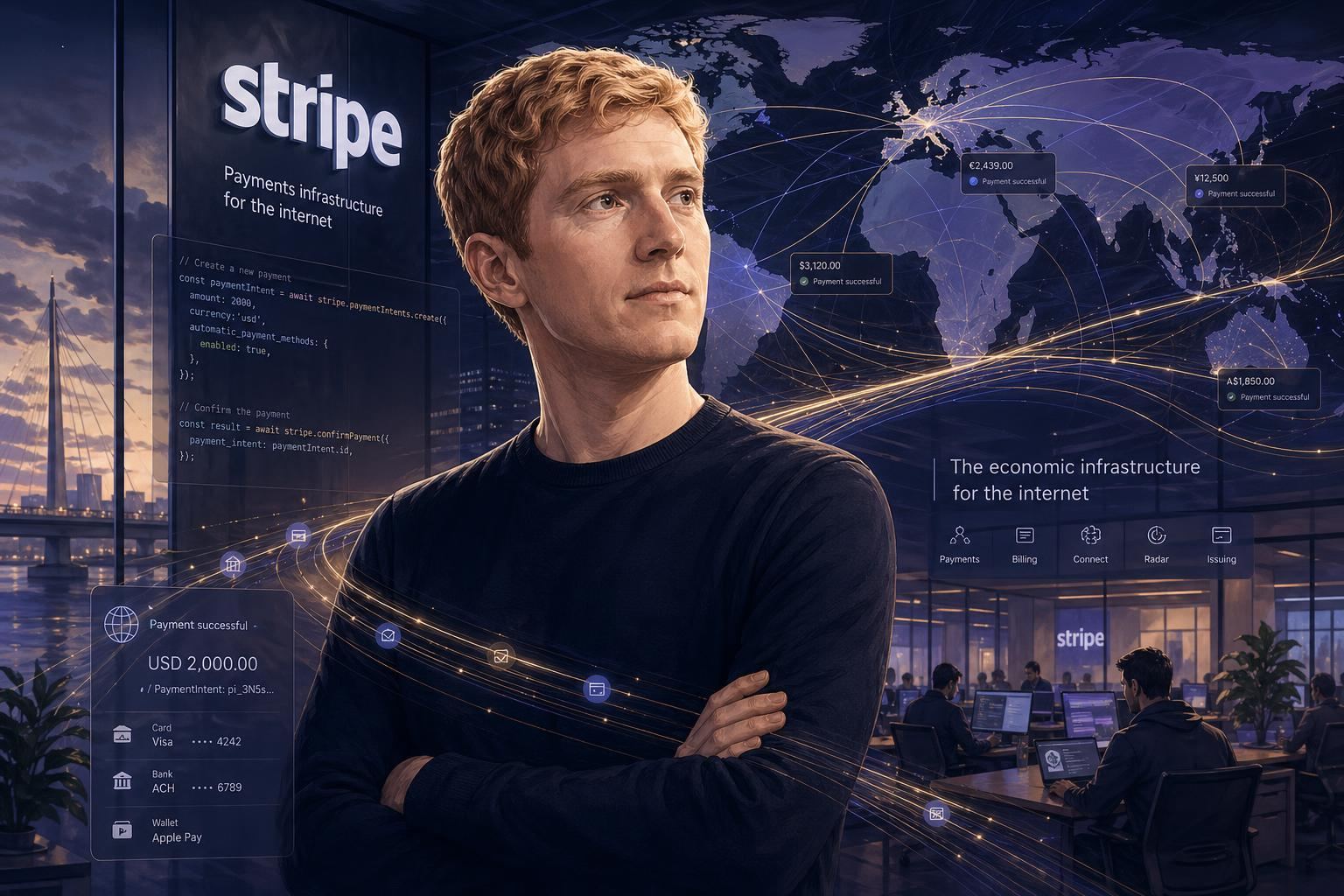
Despite being among the most financially successful founders of their generation, the Collison brothers have remained remarkably low-profile in their personal lives. They do not give flashy interviews to consumer media. They do not own yachts, private islands, or sports teams. They do not appear in celebrity gossip columns. They are, by Silicon Valley standards, almost monastic.
Both brothers signed the Giving Pledge in 2021, committing to donate the majority of their wealth during their lifetimes. They have funded scientific research, educational programs, and economic development efforts through their personal foundations. Patrick has been particularly active in funding work on scientific meta-research and the study of progress.
They still see their parents frequently and maintain close ties to Ireland. Their mother, Lily Collison, published a book in 2022 about raising successful children in a rural setting — a memoir that became a modest bestseller in Ireland and served as a fascinating window into the family that produced one of Silicon Valley’s most distinctive founder teams.
🌅 Chapter 12: The Ledger
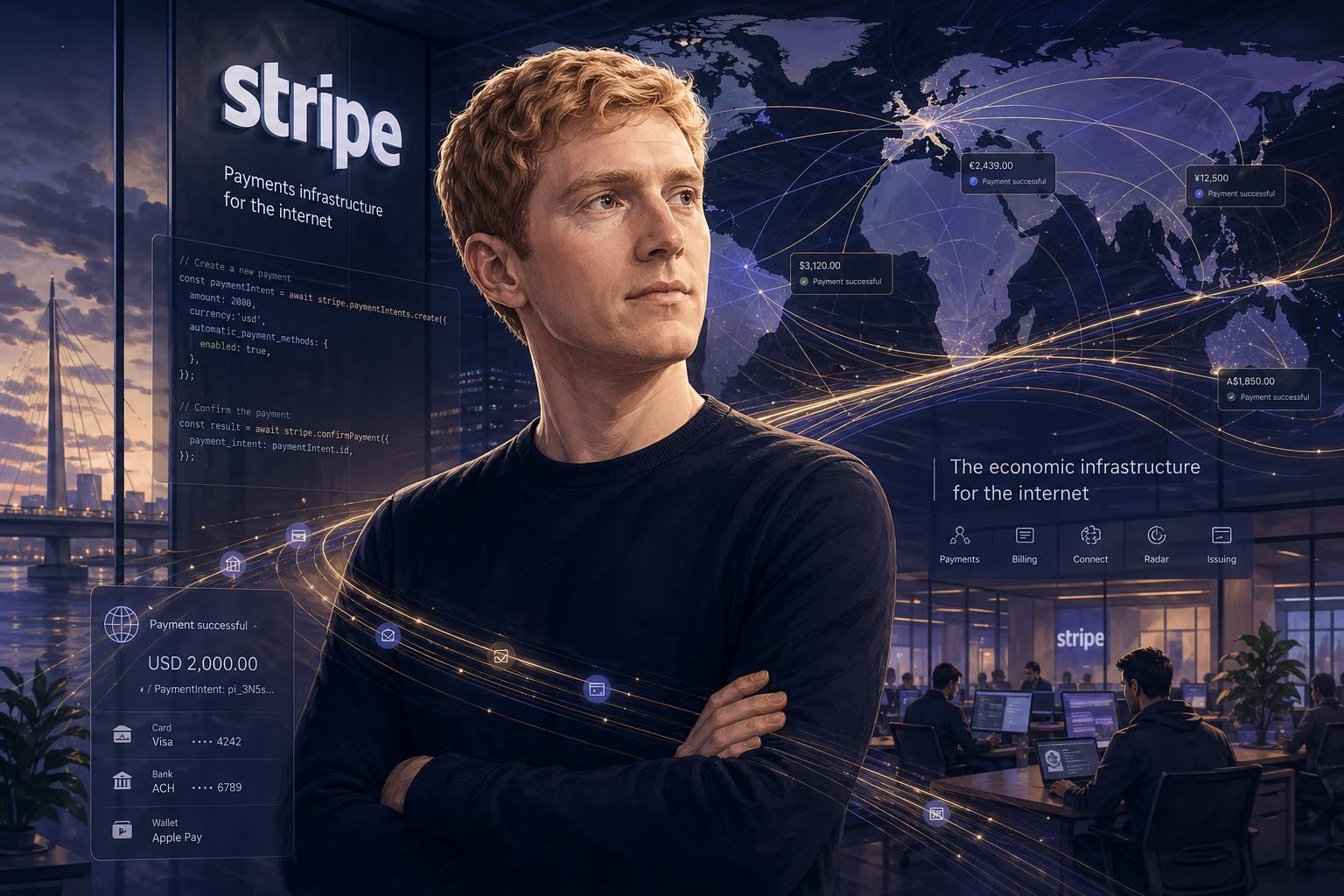
As of early 2026, Stripe processes more than $1.4 trillion in annual payment volume. Its internal valuation fluctuates around $90 billion. It serves millions of businesses in 50 countries. It remains private, profitable, and one of the most closely watched private companies in the world. Patrick and John Collison’s combined personal net worth is estimated at more than $20 billion.
They are 37 and 35 years old, respectively. They still run the company together. Patrick is still CEO. John is still president. They still finish each other’s sentences. They still write long internal memos. They still avoid dramatic public behavior.
Stripe’s story, at this point, is less about payments and more about what happens when a pair of obsessively thoughtful founders refuse to optimize for short-term market pressures and instead build quietly, carefully, and patiently for decades. Stripe is neither the flashiest nor the loudest technology company in the world. But it is one of the most important — the infrastructure layer on top of which much of the modern internet economy has been built.
The two boys from Dromineer grew up to construct the payments backbone for the global internet. They did it by respecting the problem, respecting their customers, respecting their engineers, and respecting the long time horizon that almost every other founder is too impatient to tolerate. It turns out that the long view pays best.
💡 Key Insights
- ▸ Stripe's entire company was born from a single observation: payments were the most frustrating thing about building a website, and nobody was obsessing over making them better. The lesson: a deeply unsexy problem solved well can become one of the largest businesses on Earth.
- ▸ The Collison brothers' decision to build their early infrastructure with excessive care — strict API design, obsessive documentation, long feedback cycles — set a developer-experience bar that every later fintech company had to clear. Developer love is a durable moat.
- ▸ Stripe has deliberately stayed private for over a decade despite being one of the most valuable private companies in the world. Patrick's stated reason — that the discipline of public markets would distort long-term product decisions — is a rare public defense of private-company patience.
- ▸ Patrick Collison's obsession with progress studies, the idea that humanity needs to systematically understand why progress happens faster in some eras than others, has turned him into a public intellectual among technologists in a way few other billionaire CEOs have managed.
- ▸ Stripe's willingness to build long-horizon adjacent products — Atlas, Radar, Issuing, Capital, Climate, Tax — shows a founder optimizing for ecosystem depth rather than quick revenue. Build a platform that takes care of your customers and the customers never leave.