Larry Ellison: Oracle's Ruthless Samurai Who Conquered Silicon Valley
From a Chicago orphan to the world's fifth-richest man — how Larry Ellison built Oracle through sheer aggression, hostile takeovers, and an unbreakable will to win.

View all stories about this mogul
Larry Ellison: Oracle’s Ruthless Samurai Who Conquered Silicon Valley
He was abandoned at birth, flunked out of college twice, and arrived in California with $1,200 to his name. Six decades later, Larry Ellison owns an entire Hawaiian island, races yachts across oceans, and commands a fortune exceeding $150 billion. This is the story of how the most combative man in technology built one of the most dominant software companies the world has ever seen — and crushed everyone who got in his way.
🏚️ Chapter 1: The Orphan from Chicago’s South Side

Lawrence Joseph Ellison was born on August 17, 1944, in New York City to Florence Spellman, an unwed 19-year-old mother. When baby Larry contracted pneumonia at nine months old, Florence made the agonizing decision to send him to her aunt and uncle in Chicago — Lillian and Louis Ellison. She would never raise him again.
The Ellisons were lower-middle-class Russian Jewish immigrants living on Chicago’s South Side. Louis Ellison was a government employee who had lost most of his savings during the Great Depression. He was not a warm man. Larry would later describe his adoptive father as someone who told him repeatedly that he would “never amount to anything.”
That phrase — never amount to anything — became the fuel that would power one of the most extraordinary careers in business history.
Larry didn’t learn he was adopted until he was 12 years old. The revelation shattered something inside him, but it also planted a seed of fierce independence. He didn’t belong to anyone. He didn’t owe anyone anything. And he would prove every single doubter wrong.
He enrolled at the University of Illinois at Urbana-Champaign in 1962 but dropped out after his sophomore year when Lillian Ellison died. He briefly attended the University of Chicago but left after his first semester. Two colleges, zero degrees. His adoptive father’s prediction seemed to be coming true.
But Larry Ellison was heading west. He packed his belongings into his car and drove to Berkeley, California, in 1966. He was 22 years old, had $1,200 in his pocket, and possessed exactly one marketable skill: he could program computers.
💾 Chapter 2: The CIA, a Paper, and the Birth of Oracle
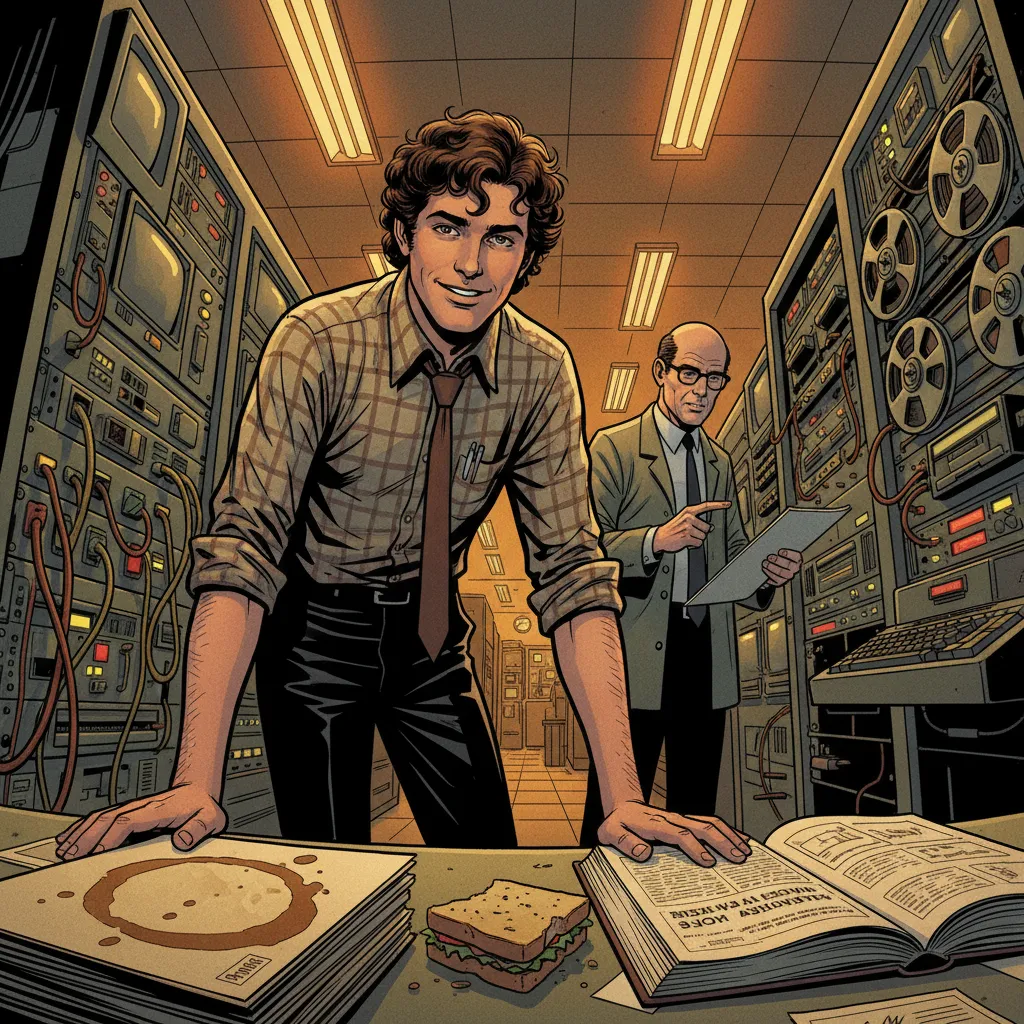
Throughout the late 1960s and early 1970s, Ellison bounced between programming jobs at various companies in the San Francisco Bay Area, including Ampex Corporation. It was at Ampex that two things happened that would change his life forever.
First, he worked on a project for the CIA codenamed “Oracle.” The name stuck in his mind.
Second, he came across a research paper published by an IBM computer scientist named Edgar F. Codd in 1970. The paper, “A Relational Model of Data for Large Shared Data Banks,” described a theoretical framework for organizing data in relational tables. IBM had published it but showed little interest in actually building the product. Most people who read the paper saw an academic exercise.
Larry Ellison saw a fortune.
In June 1977, Ellison and two co-workers from Ampex — Bob Miner and Ed Oates — founded Software Development Laboratories (SDL) with $2,000 in capital. Ellison put in $1,200 of his own money. Their mission was audacious: build the world’s first commercial relational database management system based on Codd’s theoretical work.
They had almost no money, a rented office, and three programmers. What they also had was Larry Ellison’s pathological refusal to lose.
By 1979, they had delivered their first product — Oracle Version 2 (there was no Version 1; Ellison figured customers would be wary of buying a first version of anything). The company renamed itself Relational Software Inc., and then again to Oracle Systems Corporation in 1982.
The timing was perfect. Businesses were drowning in data they couldn’t organize. Mainframes were giving way to smaller systems. And Oracle’s relational database could run on virtually any hardware platform — a radical advantage over competitors who locked customers into proprietary systems.
By 1986, Oracle’s revenue hit $55 million. By 1987, it was the largest database management software company in the world.
Larry Ellison was just getting started.
⚔️ Chapter 3: The Database Wars and Near-Death Experience
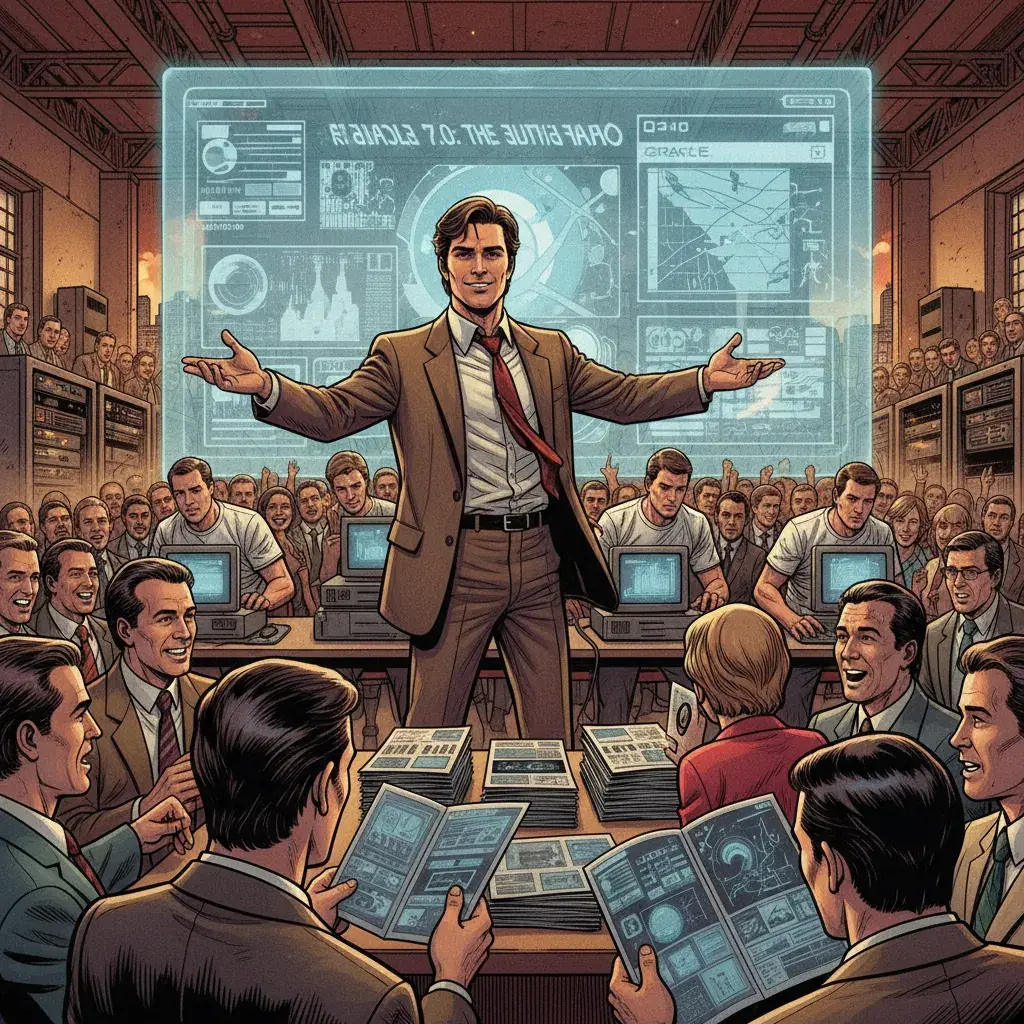
The late 1980s and early 1990s were Oracle’s crucible. Ellison had adopted what would become his signature tactic: sell the product before it’s ready, promise features that don’t exist yet, and grow at all costs.
Oracle’s sales culture was legendarily aggressive. Salespeople were encouraged — practically required — to book revenue on deals that hadn’t been finalized. Customers were promised features that engineers hadn’t built. License agreements were structured to front-load revenue.
For a while, it worked spectacularly. Oracle’s revenue rocketed from $55 million in 1986 to $584 million in 1990. Ellison graced magazine covers. He bought a mansion in Atherton. He seemed unstoppable.
Then the house of cards wobbled.
In 1990, Oracle announced that it would have to restate its earnings. The company had been booking revenue on deals where customers hadn’t actually paid. When the restatement hit, Oracle’s stock crashed by more than 30% in a single day. The company came within weeks of bankruptcy.
Ellison fired half the sales force and brought in new management to clean up the books. It was a humbling moment — perhaps the only one in his career. But Ellison learned a critical lesson: you can be aggressive, but you can’t be fictional. The numbers have to be real eventually.
The near-death experience also hardened Ellison’s competitive instincts. Throughout the 1990s, he waged brutal database wars against Sybase, Informix, and IBM’s DB2. He took out full-page ads mocking competitors. He hired away their best engineers. When Informix CEO Phil White claimed his company had overtaken Oracle in quarterly revenue, Ellison responded by offering $1 million to anyone who could prove it. (White was later convicted of fraud for inflating Informix’s numbers.)
One by one, Oracle’s database competitors fell. By the end of the decade, Oracle held roughly 40% of the relational database market. The company’s revenue had surged past $8 billion.
And then Ellison turned his attention to an even bigger prize: enterprise applications.
🏰 Chapter 4: The Hostile Takeover Machine
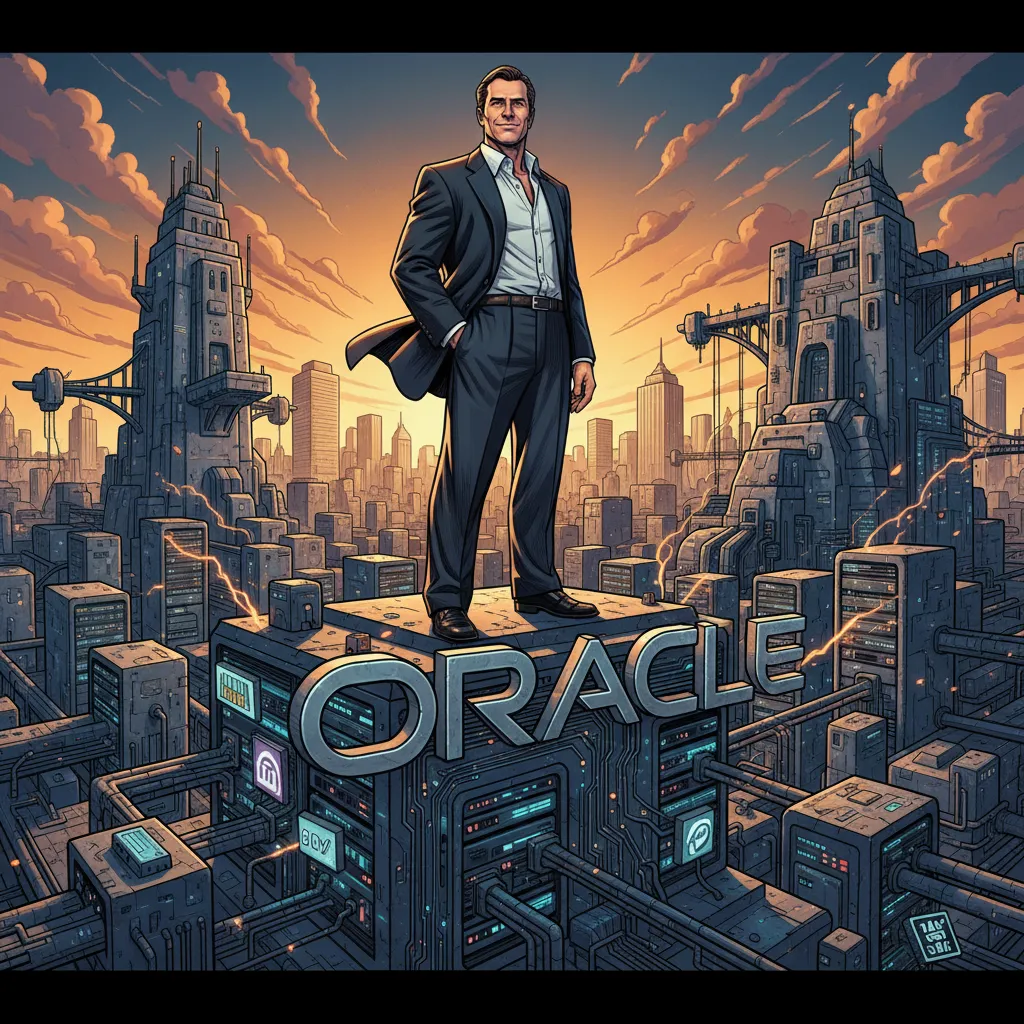
If the database wars established Oracle as a technology powerhouse, the acquisition wars of the 2000s transformed it into an empire.
Ellison had watched as companies like SAP, PeopleSoft, and Siebel Systems built massive businesses selling enterprise applications — software that managed payroll, customer relationships, supply chains, and human resources — all running on top of Oracle’s database. These companies were Oracle’s biggest customers and, increasingly, its biggest competitors.
Ellison decided he wanted it all.
On June 6, 2003, Oracle launched a $16 billion hostile takeover bid for PeopleSoft. The move sent shockwaves through the software industry. PeopleSoft CEO Craig Conway called Ellison a “sociopath” and vowed to fight the takeover with everything he had.
What followed was one of the most bitter corporate battles in Silicon Valley history. PeopleSoft adopted a “poison pill” defense. The U.S. Department of Justice filed an antitrust lawsuit to block the merger. Conway rallied employees, customers, and politicians to his side.
None of it mattered.
Ellison raised his bid multiple times, eventually offering $26.50 per share — a total of $10.3 billion. On December 13, 2004, after 18 months of warfare, PeopleSoft’s board capitulated. Oracle had won.
Ellison’s quote upon completing the acquisition was pure Ellison: “This is a huge win for our customers, our employees, and our shareholders. And it’s a huge win for Oracle.” Notice who wasn’t mentioned: PeopleSoft.
The PeopleSoft acquisition was just the opening salvo. Over the next decade, Oracle went on one of the most aggressive acquisition sprees in corporate history:
- Siebel Systems (2005) — $5.85 billion
- BEA Systems (2008) — $8.5 billion
- Sun Microsystems (2010) — $7.4 billion (giving Oracle ownership of Java and MySQL)
- Micros Systems (2014) — $5.3 billion
- NetSuite (2016) — $9.3 billion
- Cerner (2022) — $28.3 billion
Between 2003 and 2025, Oracle acquired more than 130 companies for a combined value exceeding $100 billion. Each acquisition followed the same playbook: buy the company, eliminate redundancies (a polite way of saying “fire people”), integrate the technology into Oracle’s stack, and cross-sell to Oracle’s massive customer base.
The Sun Microsystems deal was particularly audacious. Sun was a hardware company with a storied history — it had built much of the infrastructure of the early internet. But by 2009, it was bleeding money. Ellison swooped in and acquired it for $7.4 billion, gaining control of Java (the world’s most widely used programming language), MySQL (the world’s most popular open-source database), and Solaris (a respected operating system).
Critics said Ellison was buying dinosaurs. Ellison said he was buying ecosystems.
⛵ Chapter 5: Samurai, Sailors, and the Island King
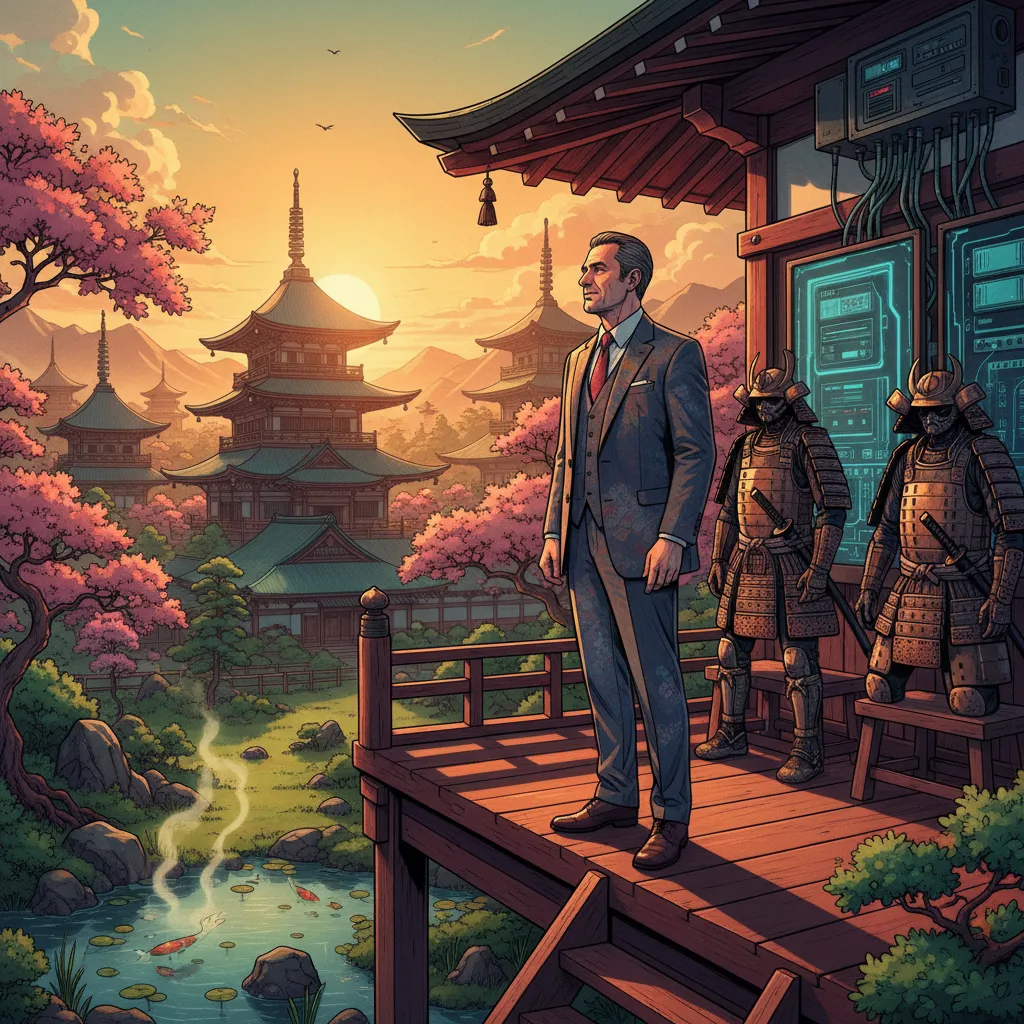
To understand Larry Ellison, you have to understand his obsessions. And Larry Ellison has always been obsessed with Japan.
He built his Woodside, California estate in the style of a 16th-century Japanese emperor’s palace — a $200 million compound sprawling across 23 acres with a man-made lake, koi ponds, and meticulously maintained Japanese gardens. He practiced kendo and studied the way of the samurai. He saw business as warfare and himself as a ronin — a masterless warrior answering to no one.
This samurai mentality extended to his personal life. Ellison has been married four times (to Adda Quinn, Nancy Wheeler, Barbara Boothe, and romance novelist Melanie Craft). He has two children, David and Megan, from his third marriage. Each divorce was expensive. None seemed to slow him down.
His other great passion was sailing. In 2010, Ellison’s racing team BMW Oracle Racing won the America’s Cup, sailing’s most prestigious trophy, using a revolutionary trimaran with a 223-foot rigid wing sail. The campaign cost an estimated $200 million. When asked why he spent so much on a boat race, Ellison responded: “Because I could.”
But perhaps nothing captures Ellison’s appetite for conquest quite like his purchase of Lanai, Hawaii’s sixth-largest island. In 2012, he bought 98% of the island from Castle & Cooke for an estimated $300 million. He didn’t just buy property — he bought a 141-square-mile island with roughly 3,000 residents.
Ellison has since invested hundreds of millions into transforming Lanai into his vision of a sustainable paradise: solar power, organic farming, desalination plants, luxury resorts, and a high-tech health center. The residents of Lanai effectively live in Larry Ellison’s kingdom.
He also owns properties in Malibu (spending over $200 million on beachfront homes), a $43 million estate in Palm Beach, and an extensive collection of Japanese art. His total real estate holdings are estimated to exceed $1 billion.
☁️ Chapter 6: The Cloud Wars and Oracle’s Reinvention
By the early 2010s, a new threat had emerged that even Larry Ellison couldn’t bully into submission: cloud computing.
Amazon Web Services, launched in 2006, was fundamentally reshaping how businesses thought about technology infrastructure. Instead of buying Oracle database licenses and running them on their own servers, companies could rent computing power from Amazon by the hour. Microsoft Azure followed. Google Cloud emerged. The entire model that had made Oracle rich — selling expensive software licenses plus annual maintenance fees — was under existential threat.
Ellison’s initial response was denial. In 2008, he famously mocked cloud computing at an Oracle conference: “The interesting thing about cloud computing is that we’ve redefined cloud computing to include everything that we already do. The computer industry is the only industry that is more fashion-driven than women’s fashion.”
But by 2012, Ellison had changed his tune. He recognized that if Oracle didn’t move to the cloud, it would die. He launched Oracle Cloud Infrastructure (OCI) and began the painful process of converting Oracle’s on-premise customers to cloud subscriptions.
The transition was rocky. Oracle was years behind AWS and Azure. Enterprise customers were skeptical. Wall Street punished Oracle’s stock as license revenue declined faster than cloud revenue grew.
But Ellison did what Ellison always does: he competed with everything he had. Oracle invested billions in building data centers worldwide. It developed autonomous database technology that could tune and patch itself. And it went after a market that AWS and Azure hadn’t fully captured: running enterprise workloads that required the extreme performance and reliability Oracle was known for.
By 2025, Oracle Cloud Infrastructure had become a $25 billion annual revenue business, growing at over 50% year-over-year. Oracle’s total annual revenue exceeded $65 billion. The stock price hit all-time highs, and Ellison’s personal net worth soared past $150 billion, making him one of the five richest people on the planet.
The pivot to cloud also brought an unexpected partnership. In 2024, Oracle deepened its relationship with AI companies, with OCI becoming a preferred infrastructure platform for training large language models. Ellison, now in his 80s, was suddenly at the center of the AI revolution.
🎭 Chapter 7: The Controversies and the Critics
No story of Larry Ellison would be complete without acknowledging the controversies that have followed him like a shadow.
Oracle has faced repeated antitrust scrutiny for its acquisition practices. The company has been accused of using its database monopoly to lock customers into expensive contracts with punishing audit practices. Former customers have described Oracle’s licensing terms as “hostage situations.”
Ellison’s personal relationship with former President Donald Trump raised eyebrows, particularly when Oracle was selected as a “trusted technology partner” for TikTok’s U.S. operations in 2020 — a deal negotiated while Ellison was hosting Trump fundraisers at his Rancho Mirage estate. Oracle later won a controversial $10 billion Pentagon cloud contract.
His compensation has been equally controversial. In fiscal year 2019, Ellison received a total compensation package valued at over $100 million despite stepping down as CEO in 2014 (he remained as chairman and CTO). Shareholders have repeatedly voted against Oracle’s executive pay packages, though these votes are non-binding.
And then there’s the gender discrimination lawsuit. In 2017, the U.S. Department of Labor sued Oracle, alleging the company systematically underpaid women and minorities. The case dragged on for years and was part of a broader reckoning in Silicon Valley over pay equity.
Ellison has addressed few of these controversies publicly. His standard response to criticism has remained consistent throughout his career: win so decisively that the critics become irrelevant.
👑 Chapter 8: The Legacy of the Ruthless Samurai
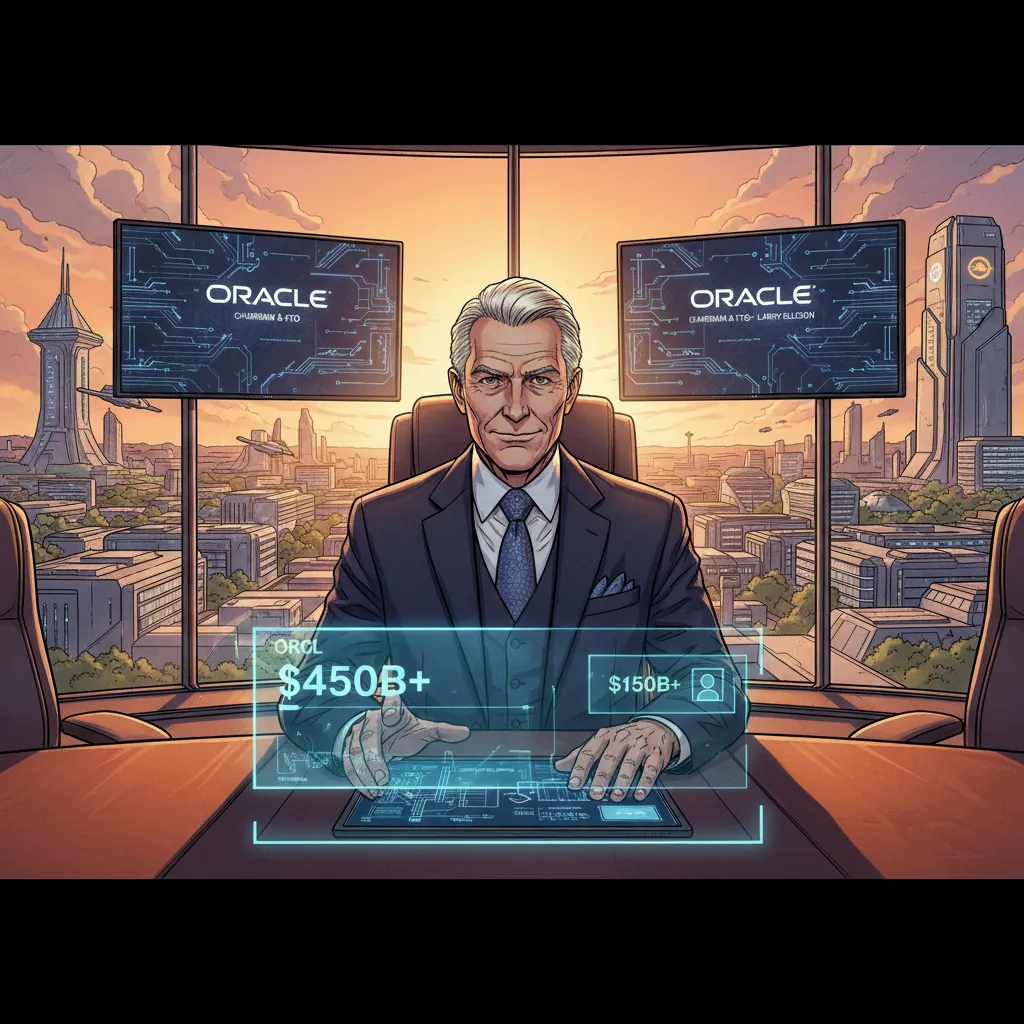
As of March 2026, Larry Ellison is 81 years old. He holds the title of Chairman and Chief Technology Officer at Oracle, a company with a market capitalization exceeding $450 billion. His personal net worth fluctuates around $150-160 billion, placing him firmly among the five wealthiest people alive.
He still works. He still competes. And he still carries that chip on his shoulder — the one placed there by a father who told him he’d never amount to anything, by a biological mother who gave him away, by a series of institutions that tried to contain him.
Ellison’s philanthropy, while less publicized than some of his peers, has been substantial. He has donated over $1 billion to medical research, including a major gift to the University of Southern California and significant funding for anti-aging research. In 2024, he pledged $100 million to fund research into longevity — a cause deeply personal to a man who has always refused to accept limits.
His competitive legacy is undeniable. Oracle is the world’s second-largest software company by revenue, behind only Microsoft. The relational database that Ellison built from a CIA project name and an IBM research paper now underpins the operations of virtually every Fortune 500 company. The cloud platform he was late to embrace is now one of the fastest-growing in the industry.
But perhaps Ellison’s greatest legacy is the model he created for technology competition: aggressive, relentless, and utterly without mercy. He proved that in the software business, the most dangerous competitor isn’t the one with the best technology — it’s the one who simply refuses to lose.
As Ellison himself once said: “I have had all of the disadvantages required for success.”
The orphan from Chicago’s South Side had proven his father wrong. He had amounted to something after all.
Larry Ellison’s story is far from over. At 81, he shows no signs of slowing down — still racing yachts, still acquiring companies, still proving doubters wrong. In the mogul’s playbook, there is no retirement. There is only the next conquest.
🚀 Chapter 9: The IPO, the Burnout, and the Brink (1986-1992)
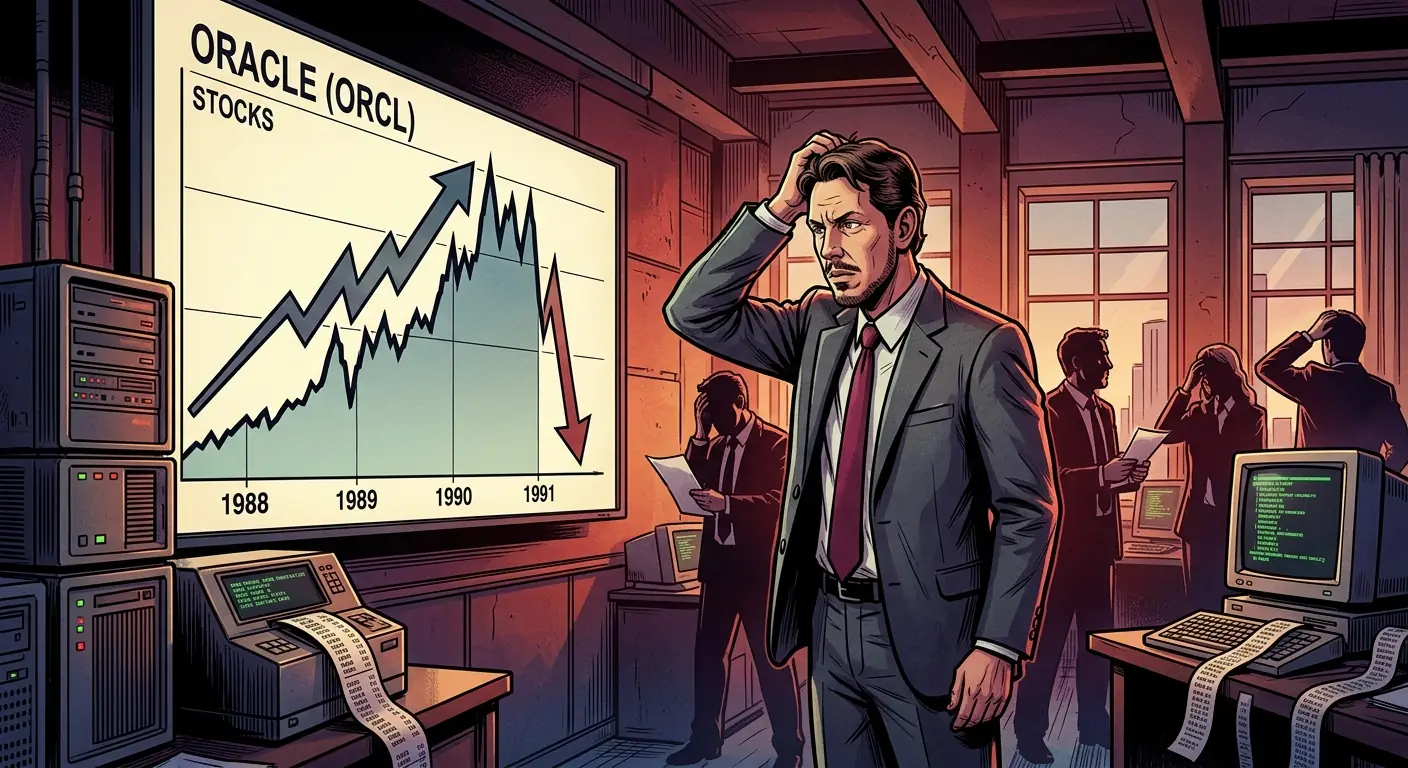
By the mid-1980s, Oracle wasn’t just a company; it was a phenomenon. After delivering Oracle Version 2 in 1979, they were riding the wave of the booming mini-computer market. Companies realized they needed to store and access data efficiently, and Oracle’s relational database was the gold standard. The growth was dizzying, almost reckless. In 1986, just nine years after its founding, Oracle went public. The IPO, priced at $15 a share, raised about $31 million. It was a massive success, but it also set the stage for a period of hyper-growth that nearly cratered the entire enterprise.
The Rocket Launch and the Reckless Ride
Ellison, never one for subtlety, pushed Oracle to expand at an insane pace. He wanted to dominate, and he wanted it yesterday. The company’s sales force was incentivized to close deals, any deals, often with questionable tactics. They’d book future sales as current revenue, a practice known as “channel stuffing,” and even encouraged customers to sign multi-year contracts that they couldn’t possibly fulfill. The mantra was “sell, sell, sell,” and the financial reporting struggled to keep up with the reality. Oracle’s revenue exploded from $55 million in 1986 to a staggering $584 million by 1990. Stock analysts loved it, investors flocked, and Oracle became a Silicon Valley darling. Ellison was lauded as a visionary. But beneath the shiny veneer, cracks were forming.
”Creative Accounting” and the Cliff Edge
The party couldn’t last forever. Oracle’s aggressive sales practices caught up with them in 1990. The company had been booking future license revenue immediately, creating an illusion of unstoppable growth. When the next quarter rolled around, there was nothing left to sell to those customers. The result was a spectacular collapse in earnings. In March 1990, Oracle announced its first-ever quarterly loss. The stock plummeted by 80%, wiping out billions in market value. It was a disaster, a near-death experience that sent shockwaves through Silicon Valley. Ellison himself would later admit, “We made an incredible number of management mistakes. We failed to do any planning. We grew so fast, we were out of control.” He famously called it an “accounting error,” but it was far more systemic. Thousands of employees were laid off, and Oracle faced multiple class-action lawsuits. The company, once the envy of the industry, was on the brink of bankruptcy.
Ellison’s Reckoning
This crisis forced Ellison to do something he rarely did: look inward. He replaced his top management, bringing in seasoned executives like Ray Lane (later Oracle’s COO) to instill financial discipline and operational rigor. He shifted the focus from merely selling to customer satisfaction and product quality. It was a brutal, humbling period for Ellison. For a man who defined himself by winning, this public stumble was a massive blow to his ego. But like a true samurai, he used the defeat to forge a stronger weapon. He learned invaluable lessons about the importance of financial controls, ethical sales, and sustainable growth. Oracle survived, emerging leaner and meaner, ready to take on the next decade with a newfound, albeit still ruthless, discipline. The 1990 crisis was perhaps the most crucial turning point in Oracle’s history, second only to its founding, shaping the company’s future trajectory and Ellison’s leadership style profoundly.
🤝 Chapter 10: The Friend, The Foe, The Frenemy: Ellison and Steve Jobs (1980s-2011)

Silicon Valley is a place of epic rivalries, but few relationships were as complex, competitive, and ultimately, as enduring as the one between Larry Ellison and Steve Jobs. They were kindred spirits in their ambition, their ruthlessness, and their uncompromising vision, yet they also pushed eachpective buttons like few others could. Their friendship, forged in the crucible of the tech boom, lasted for decades, peppered with deep admiration, candid advice, and more than a few playful jabs.
Two Titans, One Yacht
Ellison and Jobs were more than just acquaintances; they were genuine friends. They lived near each other in Woodside, California, often went on walks, and famously vacationed together on Ellison’s yachts. Ellison recounted how Jobs would often call him up, saying, “Let’s go for a walk,” and they’d spend hours discussing technology, business, and life. They shared a certain disdain for mediocrity and a burning desire to create things that were not just good, but insanely great. Jobs, the perfectionist, would even critique Ellison’s yacht designs. Ellison, ever the showman, would tease Jobs about his preference for Zen simplicity. This personal bond, however, never dulled their competitive edge. Jobs once quipped about Ellison’s penchant for lavish spending, while Ellison would playfully remind Jobs about Apple’s near-death experiences.
Apple’s Prodigal Son and the Oracle’s Temptation
The depth of their friendship was truly tested during Jobs’s wilderness years. When Steve Jobs was ousted from Apple in 1985, and then returned in 1997 to a company teetering on the brink of bankruptcy, Ellison was there. He famously offered to buy Apple outright and put Jobs back in charge. He even developed a plan to take Apple private, believing that without the scrutiny of public markets, Jobs could truly innovate. Ellison described his logic: “I just thought it was the stupidest thing in the world to kick Steve Jobs out of Apple. And I figured, ‘Well, if I buy Apple, I’ll just give it back to Steve.’ So that was my plan.” The deal never materialized, largely because Jobs himself, despite the bond, didn’t want to owe Ellison that kind of favor. Instead, Jobs engineered a $150 million investment from Microsoft, a move that undoubtedly stung Ellison, but Jobs knew it was necessary to save Apple without relinquishing control to his friend. It was a pragmatic decision by Jobs that Ellison, despite his disappointment, ultimately understood and respected.
A Legacy Intertwined
Ellison remained a close confidant to Jobs through his final years, often visiting him as his health declined. After Jobs’s death in 2011, Ellison publicly spoke of his profound grief, calling Jobs “my best friend.” He reflected on Jobs’s unique ability to combine art and engineering, a trait Ellison admired deeply. While their paths diverged dramatically—Jobs focusing on consumer products and design, Ellison on enterprise software and sheer market domination—they both shared an unwavering belief in their own vision and an almost supernatural ability to convince others to follow it. Their relationship underscores a fascinating aspect of Silicon Valley’s early days: intense competition could coexist with deep personal connections. Ellison often stated that Jobs was the greatest innovator he had ever known, and that admiration speaks volumes about a man who rarely looked up to anyone.
🏢 Chapter 11: The Enterprise Software Empire Strikes Back: Applications and Acquisitions (1995-2005)
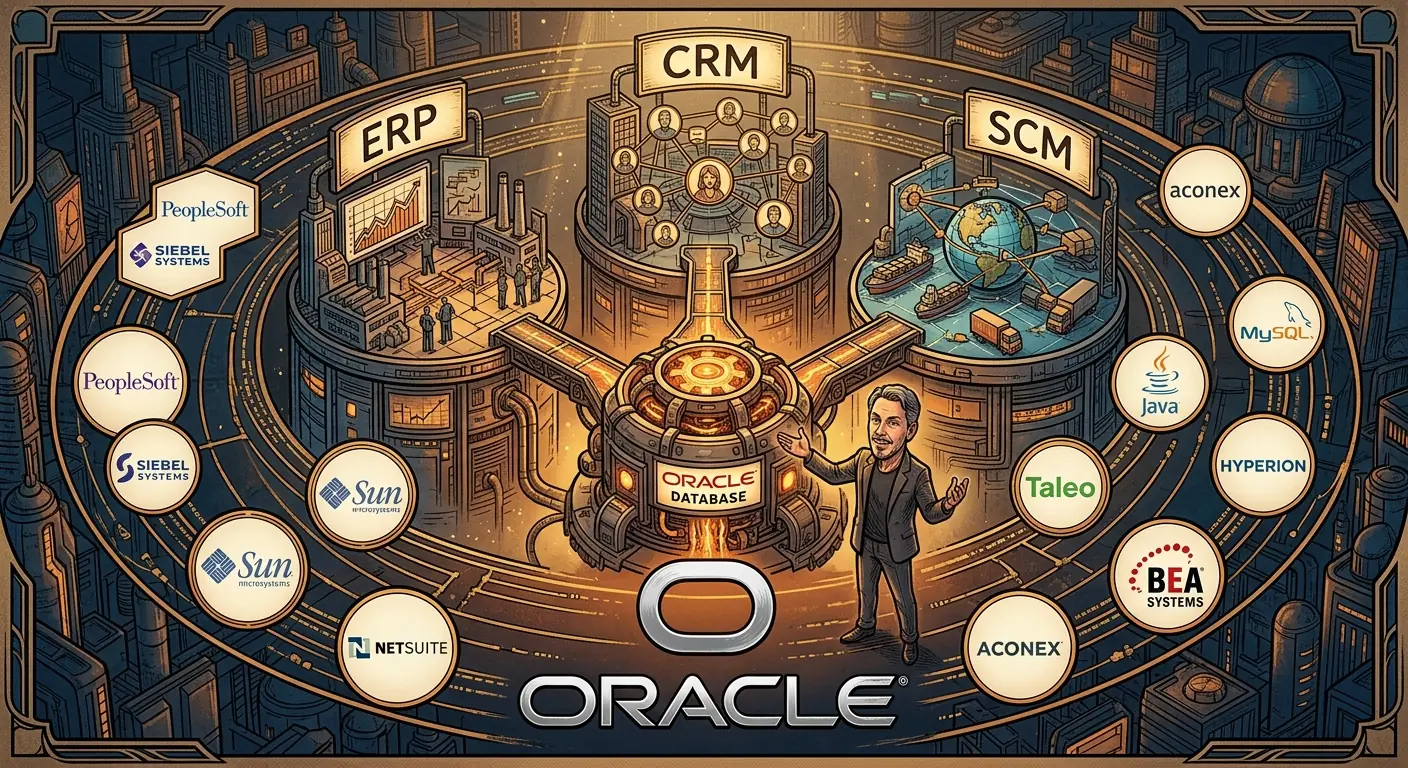
Having survived the brink of collapse in the early 1990s, Larry Ellison and Oracle emerged with a sharpened focus. But merely being the world’s best database company wasn’t enough for Ellison. He saw a bigger prize: owning the entire software stack that ran a business. This meant moving beyond just the plumbing and into the actual applications – the Enterprise Resource Planning (ERP), Customer Relationship Management (CRM), and Supply Chain Management (SCM) systems that were becoming critical for large corporations. This strategic pivot, executed with Ellison’s characteristic aggression, would redefine Oracle and the enterprise software landscape.
Beyond the Database: The Software Stack Ambition
Ellison famously declared that Oracle would build applications that ran directly on its database, creating a “full stack” solution. Why? Because he saw a fragmented market dominated by dozens of niche players, often with incompatible systems. Oracle already owned the core data layer; extending into applications was a logical, albeit audacious, next step. This move put Oracle in direct competition with giants like SAP, PeopleSoft, and Siebel Systems, companies that had built their fortunes on these application layers. Ellison’s vision wasn’t just about selling more software; it was about creating an integrated, end-to-end solution that was more efficient and powerful than anything else on the market. He bet that customers would prefer a single vendor for their critical business software, rather than juggling multiple suppliers. He was right.
The PeopleSoft Wars: A Hostile Masterclass
While Oracle developed some applications internally, Ellison’s true genius lay in his acquisition strategy. He believed it was faster and more effective to buy market share and technology than to build it from scratch. This philosophy culminated in one of the most hostile and dramatic takeovers in tech history: the acquisition of PeopleSoft. In June 2003, Oracle launched an unsolicited $5.1 billion bid for PeopleSoft, a direct competitor in the HR and financial software space. PeopleSoft’s board vehemently rejected the offer, calling it “unsolicited, inadequate, and opportunistic.” What followed was an 18-month corporate soap opera involving lawsuits, public mud-slinging, and Ellison’s relentless pursuit.
Ellison famously stated, “I don’t believe in friendly takeovers. I believe in hostile takeovers. I believe in getting rid of the management of the company you acquire.”
He increased his offer multiple times, eventually paying $10.3 billion in December 2004 – more than double his initial bid. It was a brutal, no-holds-barred fight that demonstrated Ellison’s unwavering resolve. Many analysts criticized the high price and the prolonged battle, but Ellison saw it as a necessary step to consolidate Oracle’s position in the applications market and eliminate a major rival.
Consolidating the Kingdom
The PeopleSoft acquisition wasn’t an isolated incident; it was the first domino in a flurry of strategic acquisitions. Oracle followed it up by acquiring Siebel Systems (CRM) for $5.85 billion in 2005, and then Hyperion (business intelligence) for $3.3 billion in 2007, among many others. Ellison was systematically buying up entire segments of the enterprise software market, creating an integrated suite of products that no other single vendor could match. This aggressive, often controversial, strategy transformed Oracle from a database company into an enterprise software behemoth, a one-stop shop for critical business applications. It cemented Oracle’s dominance and showed the world that Larry Ellison’s vision extended far beyond just databases; he wanted to run the entire digital backbone of the world’s largest companies.
🏛️ Chapter 12: Battles Beyond the Boardroom: Lawsuits, Politics, and Public Persona (2000s-Present)
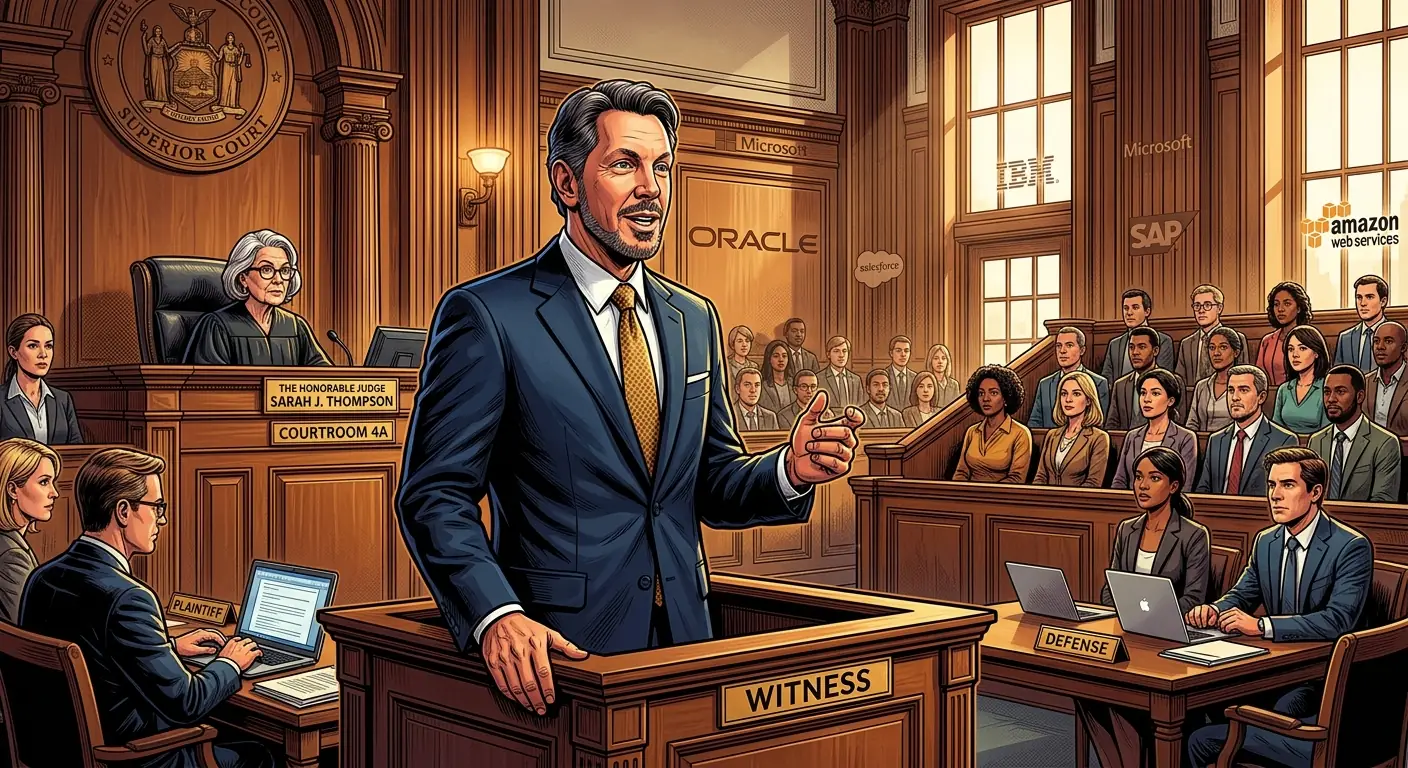
Larry Ellison built Oracle by being fiercely competitive, a trait that didn’t just manifest in product development or market share battles. It spilled over into a penchant for legal warfare, high-stakes political maneuvering, and a public persona that relished controversy. For Ellison, a courtroom wasn’t just a place to resolve disputes; it was another arena to win, another platform to assert dominance. His career is littered with landmark legal battles and the kind of unfiltered commentary that would make most PR departments spontaneously combust.
The Google Android Saga: A Billion-Dollar Fight
Perhaps Ellison’s most famous legal crusade was against Google over its Android operating system. Oracle acquired Sun Microsystems in 2010, and with it, the rights to Java, a programming language and platform. Oracle then sued Google, alleging that Android infringed on Java patents and copyrights by using Java APIs without a license. This wasn’t a minor skirmish; it was a decade-long legal epic. The core of the argument revolved around whether APIs (Application Programming Interfaces) could be copyrighted. Google argued that APIs were functional and therefore could not be copyrighted, essential for innovation. Oracle argued that they were expressive code and deserved protection. The case went through multiple trials, appeals, and reversals, reaching the U.S. Supreme Court in 2021.
During one trial, Ellison famously quipped, “We didn’t think they were using Java, we thought they were stealing Java.”
In a 6-2 decision, the Supreme Court ultimately sided with Google, ruling that Google’s use of Java APIs constituted “fair use” under copyright law. While Oracle lost the battle, the lawsuit itself highlighted Ellison’s willingness to pursue legal action against even the biggest tech titans, and it sparked a global debate about intellectual property in software development. The potential damages Oracle sought were astronomical, initially estimated at $9 billion, showcasing the enormous stakes involved in Ellison’s legal campaigns.
Washington’s Oracle: Lobbying and Influence
Beyond the courtrooms, Ellison also understood the power of political influence. Oracle became a significant player in Washington D.C., spending millions on lobbying efforts. The company cultivated relationships with politicians and policymakers, particularly concerning government contracts – a massive revenue stream for Oracle. Ellison himself has been a notable political donor, often aligning with Republican causes, but always with an eye toward Oracle’s strategic interests. His direct involvement in advising President Trump, even serving on an economic advisory council, raised eyebrows. In 2020, he hosted a fundraiser for Trump at his private estate in Rancho Mirage, California, sparking internal dissent among Oracle employees. For Ellison, these weren’t necessarily ideological stances as much as pragmatic moves to ensure Oracle’s continued success and influence in critical sectors, especially government and defense.
The Unrepentant Provocateur
Ellison’s public persona is as much a part of his legend as Oracle itself. He’s known for his sharp wit, often bordering on arrogance, and his readiness to trash-talk competitors. He relishes being the underdog, even when he clearly isn’t. He’s called IBM “irrelevant,” Microsoft “monopolistic,” and has never shied away from mocking rival CEOs. This provocative style isn’t just for show; it’s a calculated part of his brand. It draws attention, energizes his employees, and often disarms his opponents. While critics have labeled him abrasive and thin-skinned, his fans see him as refreshingly honest and unapologetically ambitious. He’s a man who has always played by his own rules, whether in the boardroom, the courtroom, or the public arena, and he has built a multi-billion dollar empire doing it.
🌅 Chapter 13: The Sunset (or Sunrise?) of the Samurai: Succession, Legacy, and the Future (2010s-Present)
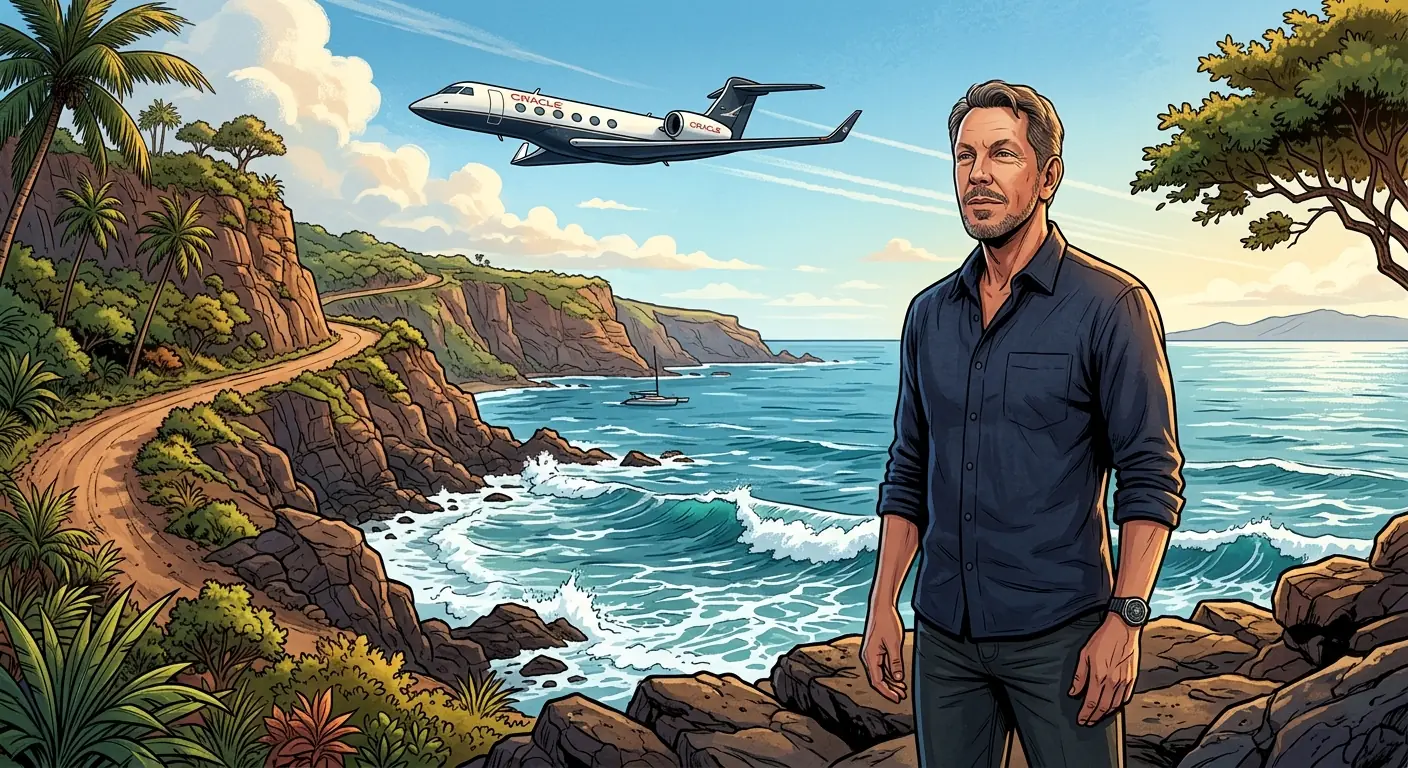
For decades, Larry Ellison was Oracle. His vision, his drive, his ruthlessness defined the company. But even a samurai must eventually consider succession. In 2014, Ellison made a shocking announcement: he was stepping down as CEO, handing the reins to co-CEOs Safra Catz and Mark Hurd (who sadly passed away in 2019). This wasn’t a full retirement, though. Ellison remained Chairman and Chief Technology Officer (CTO), a role that still kept him deeply involved in product strategy and vision. It was a move that signaled a new era for Oracle, one where the founder’s shadow still loomed large, but the day-to-day operations were entrusted to others.
The CEO Steps Down (Sort Of)
Ellison’s transition from CEO was less a departure and more a strategic repositioning. He still commanded significant influence, continuing to shape Oracle’s technological direction, particularly in the critical shift to cloud computing. This allowed him to focus on what he loved most: innovation and engineering, rather than the incessant demands of being a public company CEO. Critics wondered if Oracle could truly thrive without Ellison at the absolute helm, but the move was also seen as a necessary step to ensure continuity and demonstrate that Oracle was more than just a one-man show. Safra Catz, a long-time Oracle executive known for her financial acumen, took on the operational and financial leadership, while Ellison, as CTO, delved into next-generation database and cloud technologies. It was an acknowledgment that even the most indispensable leaders need to plan for the future, even if that plan still involves them quite a bit.
The Island King’s New Kingdom
While still active at Oracle, Ellison also indulged his other passions, most notably his acquisition of 98% of the Hawaiian island of Lanai in 2012 for an estimated $300 million. This wasn’t just a lavish personal playground; it became a living laboratory for Ellison’s vision of sustainable living and cutting-edge technology. He invested heavily in renewable energy, converting the island’s utilities to solar power, and exploring desalination projects. He envisioned Lanai as a model for ecological sustainability, a high-tech wellness destination, and a place for agricultural innovation. This venture, while seemingly a world away from enterprise software, reflects Ellison’s characteristic ambition: to create something grand, innovative, and entirely his own. It’s a physical manifestation of his desire to build and control, extending his empire beyond just data centers to an entire island ecosystem.
Oracle’s Next Chapter: AI, Healthcare, and the Texas Exodus
In recent years, Oracle has continued its aggressive evolution. After a somewhat late start in the cloud wars, they’ve doubled down, investing billions in their Gen2 Cloud Infrastructure (OCI) and pushing autonomous databases. In 2021, Oracle announced it was moving its corporate headquarters from Redwood Shores, California, to Austin, Texas, citing flexibility for employees and a lower cost of living. This move marked the end of an era, symbolizing a shift away from the traditional Silicon Valley hub. Ellison himself confirmed he would spend more time in Texas. The company’s future strategy also heavily involves artificial intelligence (AI) and, significantly, healthcare. Oracle acquired Cerner, a major electronic health records company, for a colossal $28.3 billion in 2022, marking its largest acquisition to date. This move positions Oracle to become a dominant player in healthcare technology, aiming to modernize hospital systems and patient data management. Larry Ellison, now in his late 70s, remains deeply engaged, a reminder that the ruthless samurai, even with a Hawaiian island and a new home base, is still very much in the arena, charting Oracle’s course for decades to come. His legacy is one of relentless innovation, brutal competition, and an unshakeable belief in his own vision—a vision that continues to shape the future of business technology.
💡 Key Insights
- ▸ Relentless aggression in business can build empires — Ellison never waited for permission to dominate markets.
- ▸ The database became the backbone of the digital economy, and Ellison saw it before almost anyone else.
- ▸ Hostile takeovers, when executed with precision, can accelerate growth faster than organic expansion.
- ▸ Personal flamboyance and competitive obsession can coexist with brilliant strategic thinking.
- ▸ Reinvention matters — Ellison pivoted Oracle to cloud computing in his 70s, keeping the company relevant.
Sources
- Softwar: An Intimate Portrait of Larry Ellison and Oracle by Matthew Symonds ↗
- Forbes Billionaires Profile: Larry Ellison ↗
- The Wall Street Journal - Oracle's Acquisition Strategy ↗
- Bloomberg Businessweek - Larry Ellison Profile ↗
- SEC Filing - Oracle Corporation Annual Reports ↗
- The New York Times - PeopleSoft Hostile Takeover ↗
- CNBC - Larry Ellison's Hawaiian Island Purchase ↗