The Billion-Dollar Ghost: Jho Low's Epic Heist and the Fall of 1MDB
Imagine a party that never ends, fueled by stolen billions and a lifestyle so lavish it makes Hollywood blockbusters look tame. This is the story of Jho Low, the enigmatic architect behind the 1MDB scandal, who transformed a sovereign wealth fund into his personal ATM, leaving a nation reeling and a global trail of unimaginable excess.
View all stories about this mogul
💥 Chapter 1: The Kid Who Knew Everyone

Alright, settle in, because you’re about to hear a story that sounds like it was ripped straight from a Hollywood script – only, this one’s real. And the main character? He’s no movie star. He’s Low Taek Jho, better known to the world simply as Jho Low. Picture this: a portly, unassuming Malaysian kid, barely out of his teens, strutting into the exclusive circles of London’s Harrow School and then Wharton, a financial supernova in the making. But here’s the kicker: he wasn’t born into old money. He didn’t have a family dynasty paving his way. What he had was something far more potent: an uncanny knack for networking, an almost supernatural ability to make powerful friends, and a bottomless well of ambition.
Before the billions, before the superyachts and the private jets and the champagne flowing like a river, Jho Low was just a kid from Penang, Malaysia, with a family that had some means, but certainly not this kind of means. His grandfather had made a decent fortune in mining and textiles, but it was nowhere near the global oligarchy Jho Low would soon inhabit. His parents, particularly his father, Larry Low Hock Peng, understood the power of connections. They sent Jho to the finest schools money could buy, not just for the education, but for the access. And Jho, bless his audacious heart, took that access and ran with it, like a kid let loose in a candy store with an unlimited credit card.
At Harrow, he wasn’t the brightest academic star, but he was a social meteor. He befriended the sons of kings, prime ministers, and titans of industry. He threw parties that were already legendary, even on a schoolboy’s budget, learning the art of influence and the currency of lavish hospitality. He understood, with a clarity that would chill you to the bone, that money talks, but access screams. And he was building an address book that would soon be worth more than gold.
Then came Wharton, the University of Pennsylvania’s prestigious business school. This wasn’t just higher education; it was a finishing school for the global elite. Here, Jho Low cemented his reputation as the ultimate connector, the guy who could get you into any club, introduce you to anyone, and make any deal happen. He wasn’t the brilliant financier, the one crunching numbers till dawn. He was the maestro of the social scene, the puppet master pulling strings from behind a velvet rope. He understood the psychology of wealth, the unspoken desires of the powerful. They wanted to feel special, to be entertained, to be connected. Jho Low offered all that, wrapped in a package of seemingly boundless generosity. He was cultivating the soil for the seeds of his future empire, an empire built not on legitimate enterprise, but on an audacious, breathtaking, and ultimately catastrophic con.
🥂 Chapter 2: The Maestro of Mirage - Building the Persona
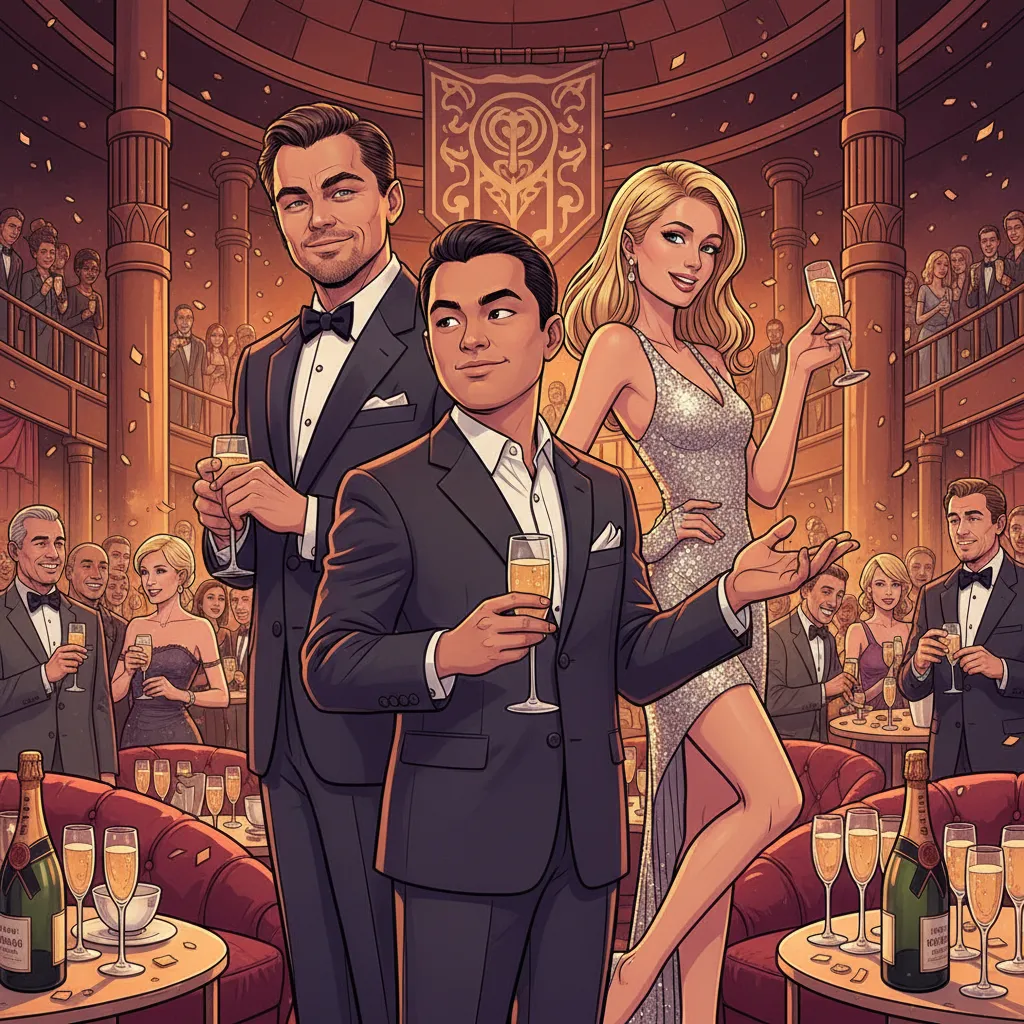
So, how does a kid with no discernible talent beyond schmoozing become a global player rubbing shoulders with Leonardo DiCaprio and Paris Hilton? It’s a masterclass in persona building, a performance so convincing it would make Jay Gatsby blush. Jho Low understood that in the world of high finance and even higher society, perception is reality. He didn’t just want to be a big shot; he projected being a big shot, long before he had the legitimate means to back it up.
His early ventures were a mix of legitimate-sounding deals and outright fantasy. He claimed to be managing money for Middle Eastern potentates, orchestrating massive real estate plays, and dabbling in private equity. The truth was far more pedestrian. He was a fixer, a go-between, connecting people and skimming off the top. But he did it with such an air of confidence, such an ostentatious display of wealth (even if it was borrowed or leveraged to the hilt), that people believed him. He would rent luxurious penthouses, charter private jets for “business meetings,” and dine at the most exclusive restaurants, always picking up the tab. He was building a brand: Jho Low, the unstoppable dealmaker, the guy with endless resources and even more connections.
His secret sauce was simple: make yourself indispensable to the powerful. He latched onto Najib Razak, then Malaysia’s Deputy Prime Minister and soon-to-be Prime Minister, through family connections. Najib’s stepson, Riza Aziz, was a close friend of Jho Low’s from their London days. This was the golden ticket, the ultimate access pass. Jho Low became Najib’s unofficial advisor, his go-to guy for “special projects,” his conduit to the glitzy world of international finance and celebrity. He understood that powerful people, especially those in government, often have blind spots or a desire to bypass traditional, bureaucratic channels. Jho Low presented himself as the agile, discreet solution.
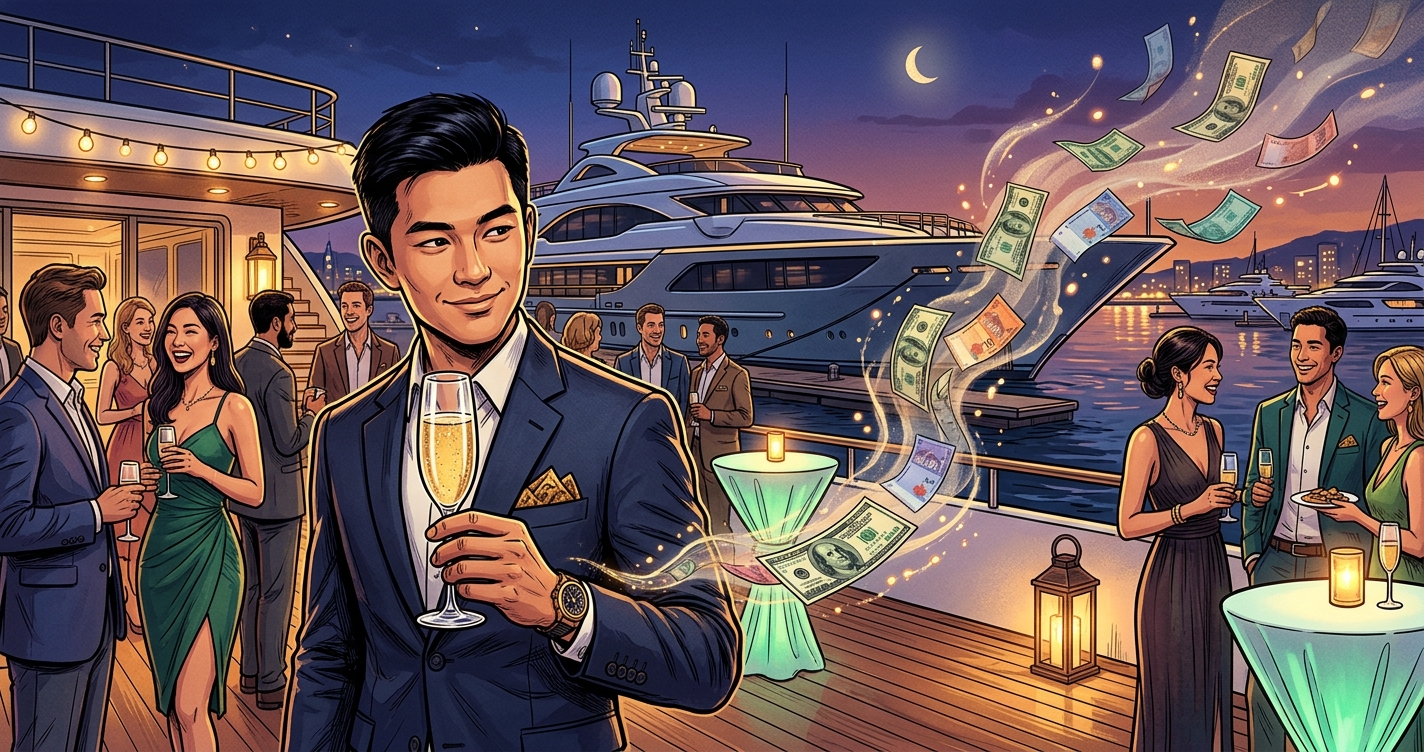
“Jho Low wasn’t just spending money; he was spending perception. Every champagne bottle popped, every celebrity photographed, every lavish party thrown was an investment in his image as an untouchable financial wizard, creating a smokescreen for the illicit fortune he was about to amass.”
He cultivated a reputation as a benevolent benefactor, always willing to lend a hand, always ready with a solution, always promising massive returns. He was a master of the “pump and dump” of social capital. He’d spend lavishly on someone, make them feel indebted, and then leverage that relationship for his next audacious move. He was a human spider web, meticulously weaving connections, each strand leading back to his ultimate goal: access to a virtually unlimited supply of cash. And soon, he would find it, wrapped in the patriotic flag of a Malaysian sovereign wealth fund.
🇲🇾 Chapter 3: The Birth of a Billion-Dollar Honey Pot - 1MDB
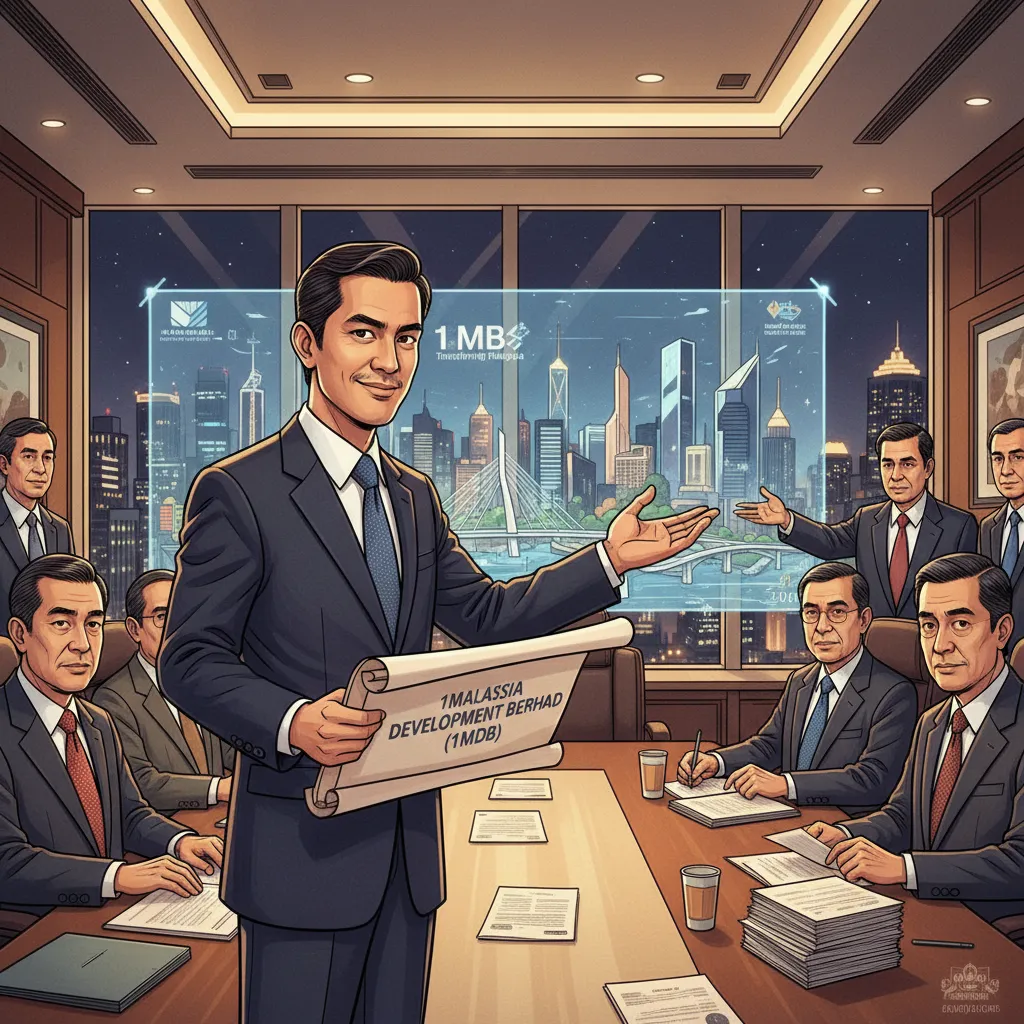
Enter 1Malaysia Development Berhad (1MDB). On paper, it was a brilliant idea, a visionary initiative designed to transform Malaysia into a developed nation. Launched in 2009 by Prime Minister Najib Razak, 1MDB was conceived as a state-owned strategic development company. Its mandate was noble: drive long-term economic development for Malaysia through strategic investments in energy, real estate, tourism, and agrifood. It was supposed to be a shining beacon of Malaysian ambition, attracting foreign investment and creating jobs, a vehicle for national prosperity.
The initial funding came from a rebranding of the Terengganu Investment Authority (TIA), a similar state fund. But 1MDB quickly ballooned in scope and ambition. It was structured as a government-guaranteed entity, meaning its debt was ultimately backed by the Malaysian taxpayer. This was crucial. This government backing gave it an air of unimpeachable credibility, making it incredibly attractive to international banks and investors eager to lend money to a seemingly rock-solid sovereign entity.
Jho Low, despite having no official position within 1MDB, was the invisible hand pulling the levers from the very beginning. He was the self-proclaimed architect, the “advisor” to the advisor, the guy whispering in Najib’s ear. He crafted the fund’s initial proposals, structured its early deals, and even helped select its board members – ensuring they were compliant or, at the very least, easily swayed. It was a classic Trojan horse maneuver. The exterior was gleaming, patriotic, and promising; the interior, however, was already being hollowed out.
The premise was simple: 1MDB would borrow vast sums of money from international banks, ostensibly for legitimate development projects. These projects would then generate returns, which would be reinvested, creating a virtuous cycle of growth. But Jho Low had a different kind of cycle in mind: a cycle of debt, diversion, and personal enrichment. He saw 1MDB not as a national treasure chest, but as a giant, unguarded ATM, ripe for the plundering.
The key vulnerability was the lack of independent oversight. As a state-owned entity, 1MDB operated under the direct purview of the Prime Minister’s office, with minimal parliamentary scrutiny. Decisions were made swiftly, often behind closed doors, and always with the implicit approval of the highest office. This created a perfect storm for corruption: immense sums of money, a veneer of legitimacy, and a glaring absence of accountability. The stage was set for one of the most audacious financial crimes in history.
💰 Chapter 4: The First Strike - PetroSaudi and the Great Deception
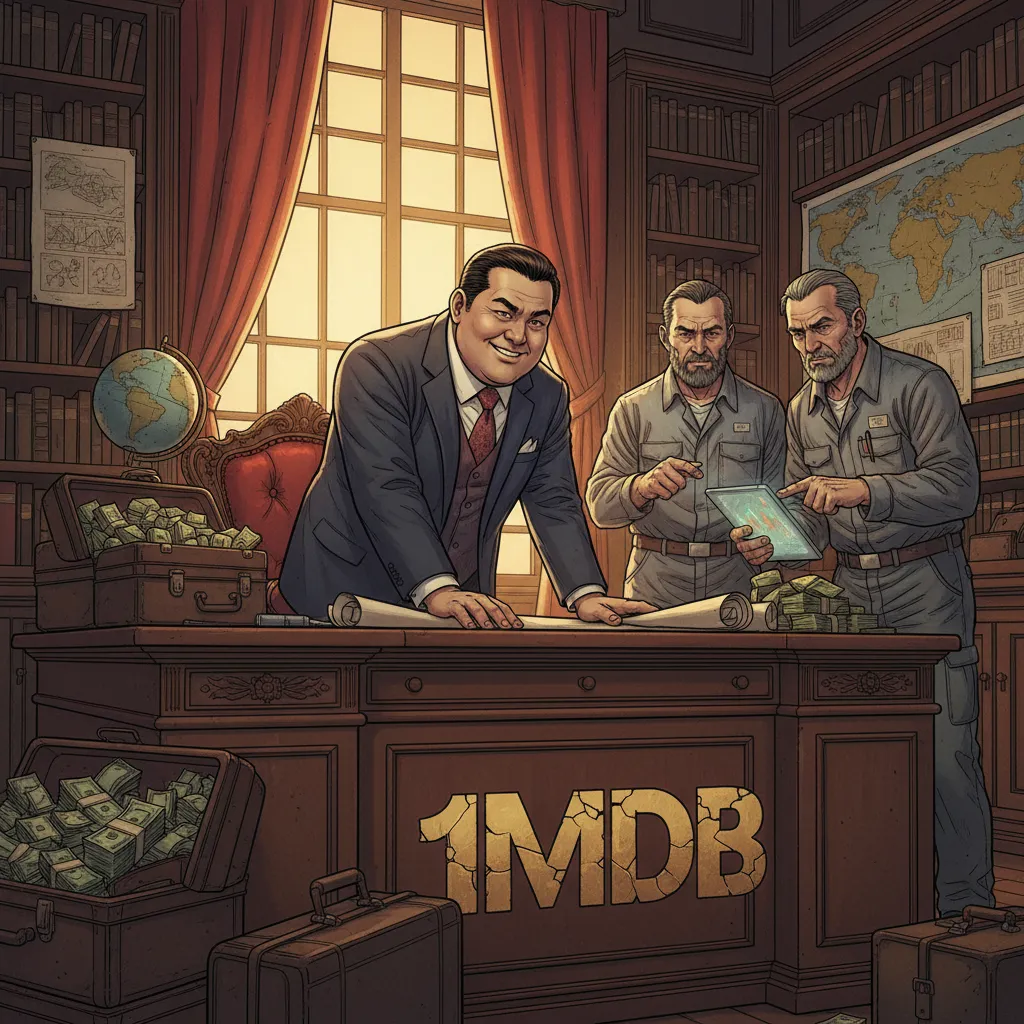
The first major heist, the opening act of this financial opera, came swiftly. In late 2009, barely months after 1MDB was established, Jho Low orchestrated a joint venture with a little-known oil exploration company called PetroSaudi International. On the surface, it looked like a legitimate, strategic investment: 1MDB would pump funds into an energy venture, diversifying its portfolio and securing future returns for Malaysia. The deal was structured as a 60/40 joint venture, with 1MDB contributing $1 billion in cash and PetroSaudi contributing assets valued at $700 million.
But here’s where Jho Low’s genius for deception truly kicked in. Before 1MDB’s $1 billion even hit the joint venture’s accounts, $700 million of it was immediately siphoned off. How? Through a convoluted scheme involving a supposed “loan repayment” to PetroSaudi. Jho Low convinced 1MDB officials that PetroSaudi had previously lent money to the joint venture and needed to be repaid from 1MDB’s initial capital injection. But the real recipient of that $700 million wasn’t PetroSaudi; it was a shell company called Good Star Limited, registered in the Seychelles, and secretly owned and controlled by none other than Jho Low himself.
Think about that for a second. The very first major transaction of Malaysia’s shiny new sovereign wealth fund, intended to uplift the nation, saw 70% of its initial cash injection vanish into the personal coffers of a 28-year-old middleman. It was audacious, brazen, and utterly brilliant in its simplicity. The remaining $300 million went into the actual joint venture, giving it just enough legitimacy to continue.
This wasn’t just a simple theft; it was a complex financial alchemy. The money moved through multiple layers, disguised as legitimate business transactions. Banks, in their eagerness to facilitate large-scale international deals, often failed to conduct adequate due diligence, or perhaps, chose not to look too closely. The sheer scale and the involvement of a sovereign wealth fund lent an air of unassailability to the transactions. Who would question a deal backed by a government?
“The PetroSaudi deal wasn’t just a robbery; it was a masterclass in financial obfuscation. It showed how easily billions could be laundered through seemingly legitimate joint ventures, exploiting the trust placed in sovereign funds and the lax oversight of global banks.”
This pattern of borrowing, diverting, and obfuscating would become the signature move of the 1MDB scandal. Each new bond issuance, each new “strategic partnership,” was an opportunity for Jho Low and his co-conspirators to skim off billions, moving the funds through an increasingly intricate web of offshore accounts and shell companies. The “investments” rarely materialized; the promised returns never came. Only the debt grew, and with it, the private fortunes of those at the center of the storm. The PetroSaudi deal was the blueprint, the proof of concept for the greatest financial heist of the 21st century.
🎬 Chapter 5: The Hollywood Hustle - From Sovereign Fund to Red Carpet Cash
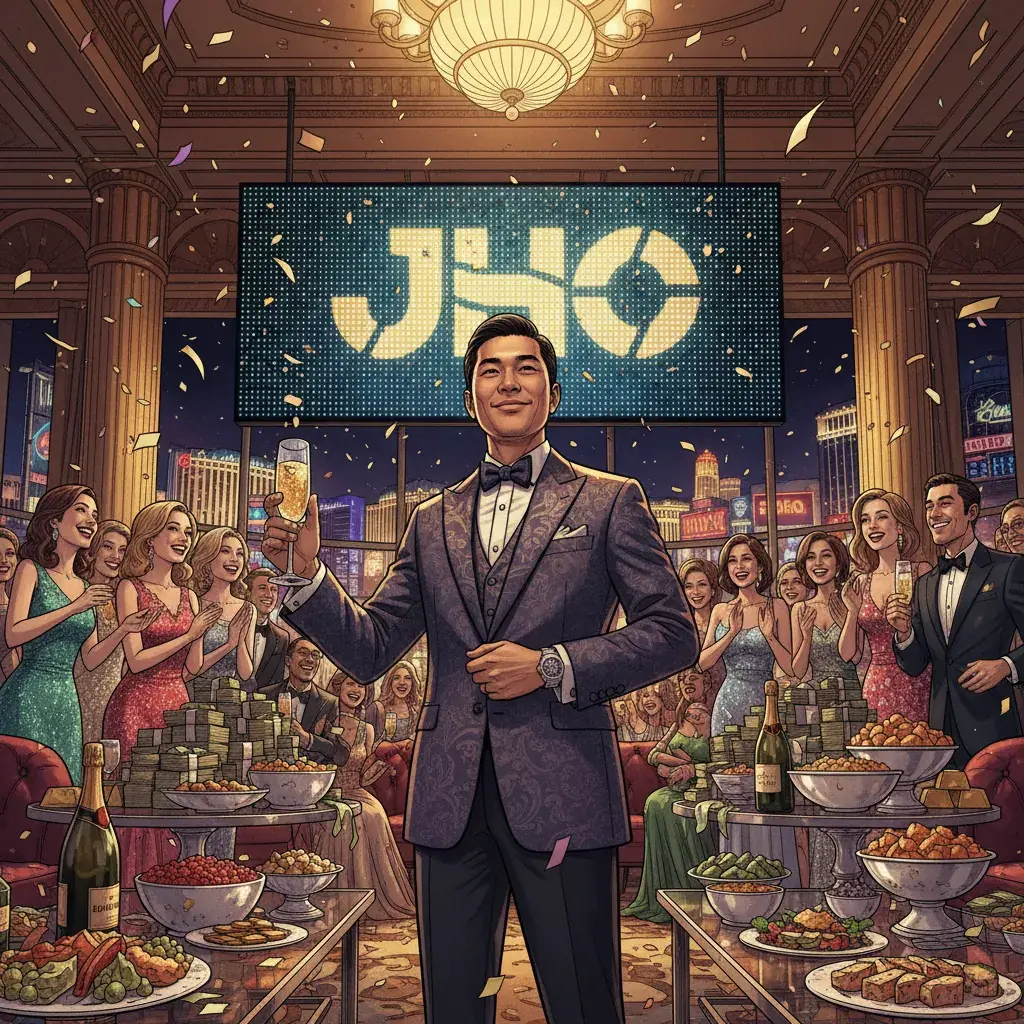
With the initial hundreds of millions secured, Jho Low didn’t squirrel it away in a quiet Swiss account to live a modest life. Oh no, that’s not Jho Low’s style. He understood the power of perception, and he was about to unleash a spending spree that would make Caligula blush. This wasn’t just about accumulating wealth; it was about accumulating glamour, influence, and legitimacy. He needed to move his illicit funds into the mainstream, to “clean” them through the most visible, most dazzling channels possible. And what better place than Hollywood?
Jho Low’s best friend from his Wharton days, Riza Aziz, was the stepson of Malaysian Prime Minister Najib Razak. Riza had dreams of becoming a movie mogul. Conveniently, Jho Low had access to seemingly limitless funds. Together, they founded Red Granite Pictures in 2010. Their first major film? None other than Martin Scorsese’s “The Wolf of Wall Street,” a darkly comedic biopic about a real-life stock market swindler. The irony, as they say, wrote itself.
Red Granite Pictures went from zero to a major player almost overnight, throwing money around like confetti. They bankrolled “The Wolf of Wall Street” with a budget exceeding $100 million, a staggering sum for a relatively new production company. This wasn’t just filmmaking; it was a money-laundering operation dressed up in designer clothes and flashing lights. The movie’s success, both critically and commercially, further legitimized Red Granite, allowing more illicit funds to flow through its accounts, disguised as film investments and production costs.
Jho Low wasn’t just funding movies; he was buying into the celebrity ecosystem. He became a fixture at exclusive parties in Las Vegas, New York, and St. Tropez, always surrounded by an entourage, always paying for everything. He flew celebrities like Leonardo DiCaprio, Paris Hilton, Jamie Foxx, and Miranda Kerr on private jets, showered them with gifts, and hosted extravaganzas that defied imagination. He reportedly bought DiCaprio a Marlon Brando Oscar and gifted Miranda Kerr a $1.29 million diamond necklace and a $3.8 million diamond pendant. These weren’t just gifts; they were tokens of a fabricated reality, a way to embed himself within the highest echelons of global social influence.
“The Hollywood escapade wasn’t just a lavish distraction; it was a calculated move to launder money through the most glamorous industry on Earth. By funding blockbusters and showering celebrities with gifts, Jho Low wasn’t just buying luxury; he was buying credibility, blurring the lines between legitimate wealth and illicit gains.”
Imagine the scene: a private jet filled with supermodels, a yacht party off the coast of Cannes with an impromptu performance by a global pop star, all paid for by a man who, just a few years earlier, was a relatively unknown Malaysian. The sheer audacity of it all was breathtaking. He wasn’t just stealing billions; he was using those billions to orchestrate a global theatrical production, with himself as the elusive, generous, and utterly opaque producer. This wasn’t just about funding a lavish lifestyle; it was about building a impenetrable fortress of social capital and a glittering smokescreen around his true activities. The world was watching the parties, not the illicit transfers.
💸 Chapter 6: The Art of Financial Obfuscation - Shells, Banks, and Black Holes
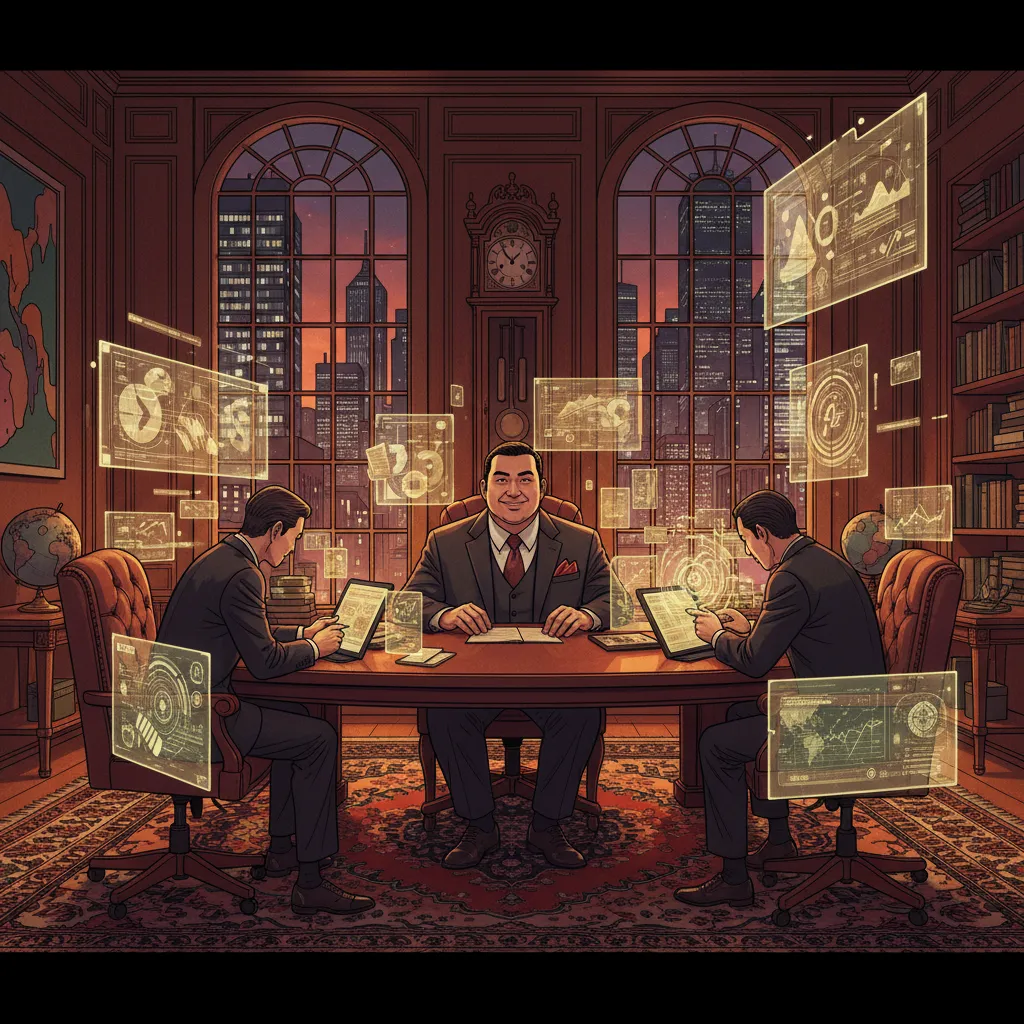
The parties and the movie deals were the flashy storefront, but the real work, the dark artistry, happened in the shadows of the global financial system. Jho Low was a master of financial obfuscation, creating a labyrinthine network of shell companies and offshore accounts that would make even the most seasoned investigator dizzy. This wasn’t just about moving money; it was about making it utterly untraceable.
The strategy was simple yet effective:
- Borrow Big: 1MDB would issue massive bonds, often arranged by prestigious investment banks like Goldman Sachs, ostensibly for grand development projects. These bonds were attractive because they were sovereign-guaranteed, implying minimal risk.
- Divert and Disguise: Once the funds were raised, a significant portion would be immediately diverted. Instead of going to the intended projects, it would flow into a series of shell companies. These companies, often registered in secrecy havens like the British Virgin Islands, Cayman Islands, or Seychelles, bore innocuous names that gave no hint of their true beneficial owners.
- Layering: The money wouldn’t stop at one shell company. It would be moved through multiple layers of these entities, often across different jurisdictions, in a process known as “layering.” Each transaction, each transfer, made it harder to trace the money back to its original source – 1MDB – or to its ultimate beneficiary – Jho Low.
- Legitimizing: Once sufficiently laundered, the funds would then be injected into seemingly legitimate assets: real estate, art, investments in businesses like Red Granite Pictures, or simply into luxury goods and services. This process, known as “integration,” made the illicit funds appear to be legitimate earnings.
The role of major financial institutions in this scheme is a dark chapter. Banks like Goldman Sachs, which arranged bond sales totaling over $6.5 billion for 1MDB, earned massive fees (reportedly over $600 million). While Goldman Sachs later claimed to have been misled, critics argue that the warning signs were numerous. The unusually high fees, the opaque nature of the transactions, and the involvement of an unofficial middleman like Jho Low should have triggered more rigorous anti-money laundering (AML) checks.
“The 1MDB scandal exposed the gaping holes in global financial oversight, demonstrating how even the most prestigious banks can be complicit – wittingly or unwittingly – in massive money laundering operations when lured by astronomical fees and the promise of lucrative government business.”
Swiss banks like BSI Bank and Falcon Bank, and Singaporean banks like DBS and UBS, also played critical roles. These institutions facilitated transfers, opened accounts for shell companies, and often failed to flag suspicious activities, leading to severe penalties and even closures for some of them in the aftermath of the scandal. The sheer volume of transactions, the rapid movement of funds, and the lack of clear economic rationale for many transfers should have set off alarm bells. But the lure of high-net-worth clients and the “don’t ask, don’t tell” culture in some financial sectors proved a fertile ground for Jho Low’s schemes. He exploited the very mechanisms designed to protect wealth, turning them into conduits for its theft.
💎 Chapter 7: The Empire of Excess - Yachts, Jets, and Masterpieces
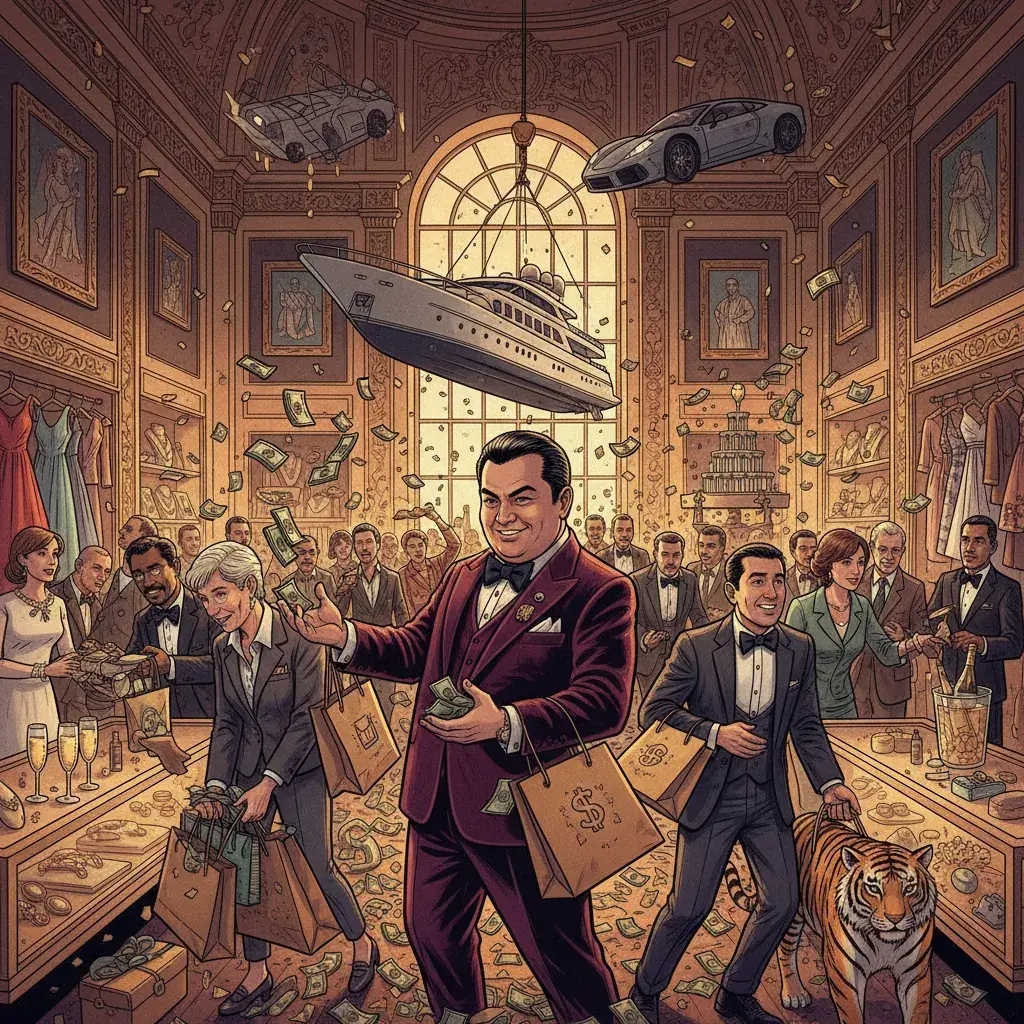
Imagine a shopping spree where money is no object, where every desire, no matter how extravagant, is instantly fulfilled. That was Jho Low’s reality. The billions he siphoned from 1MDB weren’t just abstract numbers in offshore accounts; they manifested into a tangible, glittering empire of excess that spanned continents. This wasn’t just wealth accumulation; it was a performative display, a defiant middle finger to the notion of financial restraint.
His crown jewel, literally and figuratively, was the superyacht Equanimity. A staggering 300-foot vessel, it boasted a helipad, a gym, a cinema, a Turkish bath, and accommodation for 26 guests and 33 crew members. It cost him a cool $250 million. This wasn’t just a boat; it was a floating palace, a mobile party venue that became synonymous with Jho Low’s hedonistic lifestyle. From the Mediterranean to the South China Sea, the Equanimity became a symbol of his seemingly limitless wealth, hosting celebrities and powerful figures, all oblivious (or willfully ignorant) to the dirty money that paid for their champagne and caviar.
Then there were the properties. Mansions in Bel Air, New York City, London, and Kuala Lumpur. Each one a sprawling testament to opulence, filled with designer furniture and bespoke amenities. He owned a penthouse in the Time Warner Center overlooking Central Park, multiple properties in the Hollywood Hills, and a lavish pad in London’s most exclusive neighborhoods. These weren’t just homes; they were assets, investments, and places to park his stolen billions, appreciating in value while the Malaysian people footed the bill.
His art collection was equally staggering. Jho Low became a major player in the global art market, spending hundreds of millions on masterpieces by Jean-Michel Basquiat, Claude Monet, Andy Warhol, and Vincent van Gogh. He once bought a Basquiat painting for $37 million and a Monet for $35 million, often buying works at inflated prices, potentially as a way to further launder money or simply because he could. He wasn’t collecting for passion; he was collecting to impress, to validate, and to store wealth in a highly liquid and globally transferable form.
“Jho Low’s empire of excess wasn’t just about indulging personal whims; it was a deliberate strategy to legitimize stolen funds by converting them into high-value, globally recognized assets. The superyachts, mansions, and masterpieces were not merely symbols of wealth, but sophisticated instruments in a vast money-laundering scheme.”
And let’s not forget the private jets, the diamond jewelry (including the gifts to Miranda Kerr and the $27 million pink diamond necklace for Rosmah Mansor, Najib’s wife), the designer clothes, and the gambling sprees in Las Vegas that reportedly ran into the tens of millions. He wasn’t just living large; he was living in an alternate reality, a constant, extravagant performance funded by the Malaysian public. Every purchase, every party, every gift was a drain on Malaysia’s future, a stark contrast to the development projects 1MDB was supposedly funding. His lifestyle wasn’t just lavish; it was an insult, a monumental display of hubris built on a mountain of lies.
🕵️♀️ Chapter 8: The Whispers Grow Louder - Whistleblowers and the First Cracks
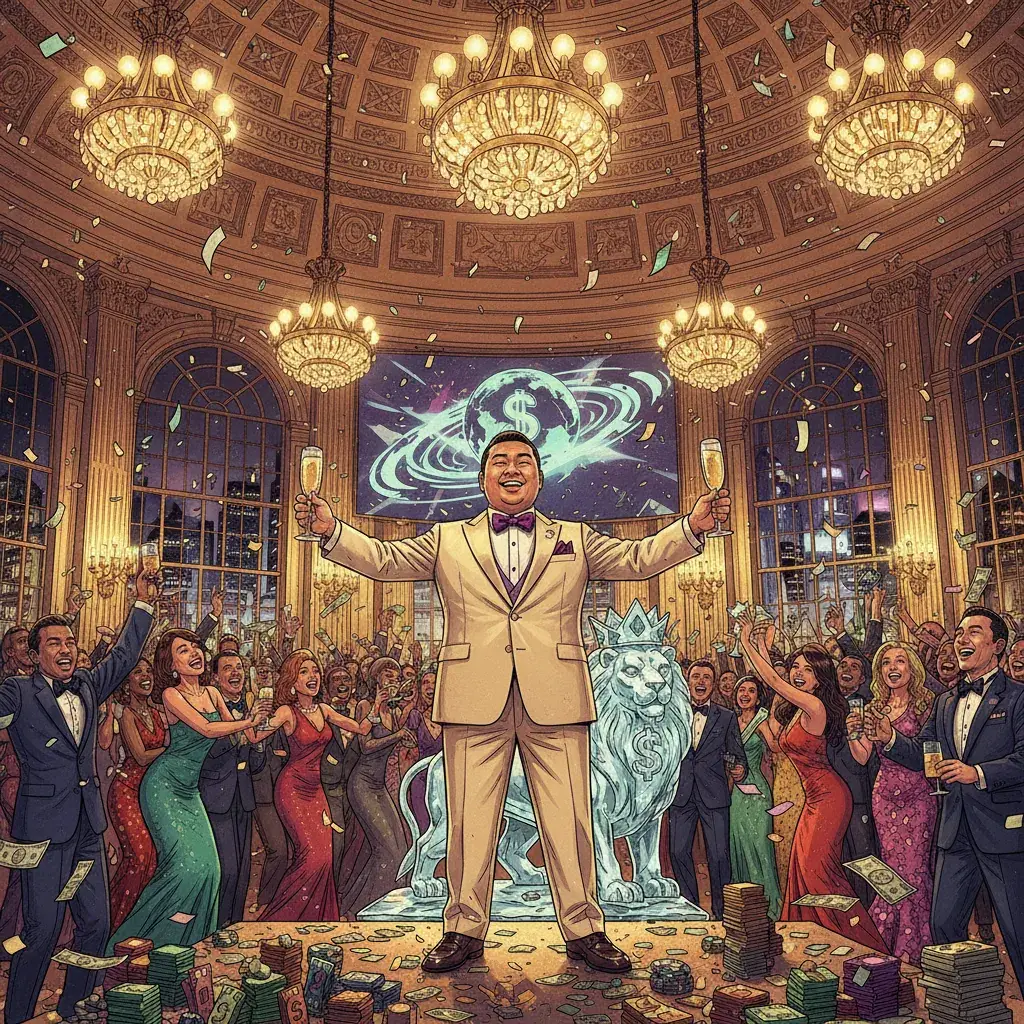
For a time, Jho Low’s grand illusion held. The parties continued, the money flowed, and the world seemed to accept him as a legitimate, if enigmatic, billionaire. But even the most meticulously constructed house of cards eventually faces a strong gust of wind. That wind came in the form of dedicated investigative journalists and a few brave whistleblowers.
The first significant crack appeared in 2015, largely thanks to the relentless reporting of Clare Rewcastle Brown, a British journalist based in Sarawak, Malaysia, and her independent news website, Sarawak Report. She started publishing damning articles, exposing the opaque deals, the missing funds, and Jho Low’s central, unofficial role in 1MDB. Her reporting, often based on leaked documents and anonymous sources, provided the first concrete evidence that something was terribly wrong. She meticulously traced the money flows, highlighting the discrepancies between 1MDB’s stated objectives and its actual financial transactions.
Simultaneously, the Wall Street Journal began its own in-depth investigation. Their reporting was explosive, alleging that nearly $700 million from 1MDB had been transferred into Prime Minister Najib Razak’s personal bank accounts. This revelation sent shockwaves through Malaysia and around the world. It elevated the scandal from a complex financial fraud to a direct accusation of corruption against the highest office in the land.
The initial reaction from the Malaysian government and those implicated was denial, deflection, and aggressive counter-attacks. Critics were dismissed as politically motivated, their claims baseless. Whistleblowers faced intimidation and threats. The government used its power to suppress information, firing officials who dared to ask questions and clamping down on media outlets. The attorney general who was investigating 1MDB was replaced, and key documents were classified. It was a full-court press to bury the truth.
“The unmasking of 1MDB wasn’t a single ‘aha!’ moment, but a testament to the power of persistent, independent journalism against overwhelming state suppression. It proved that even the most elaborate financial smokescreens can be pierced by dedicated truth-seekers.”
However, the sheer scale of the alleged theft, coupled with the detailed evidence presented by journalists, made it impossible to ignore for long. International financial regulators and law enforcement agencies began to take notice. The money wasn’t just vanishing in Malaysia; it was moving through their jurisdictions, implicating their banks and their financial systems. The whispers turned into shouts, and the isolated investigations began to coalesce into a global dragnet. The party was officially over, and the hangover was going to be epic. The world was about to learn the true cost of Jho Low’s extravagance.
🌍 Chapter 9: The Global Hunt - Justice Catches Up (Slowly)
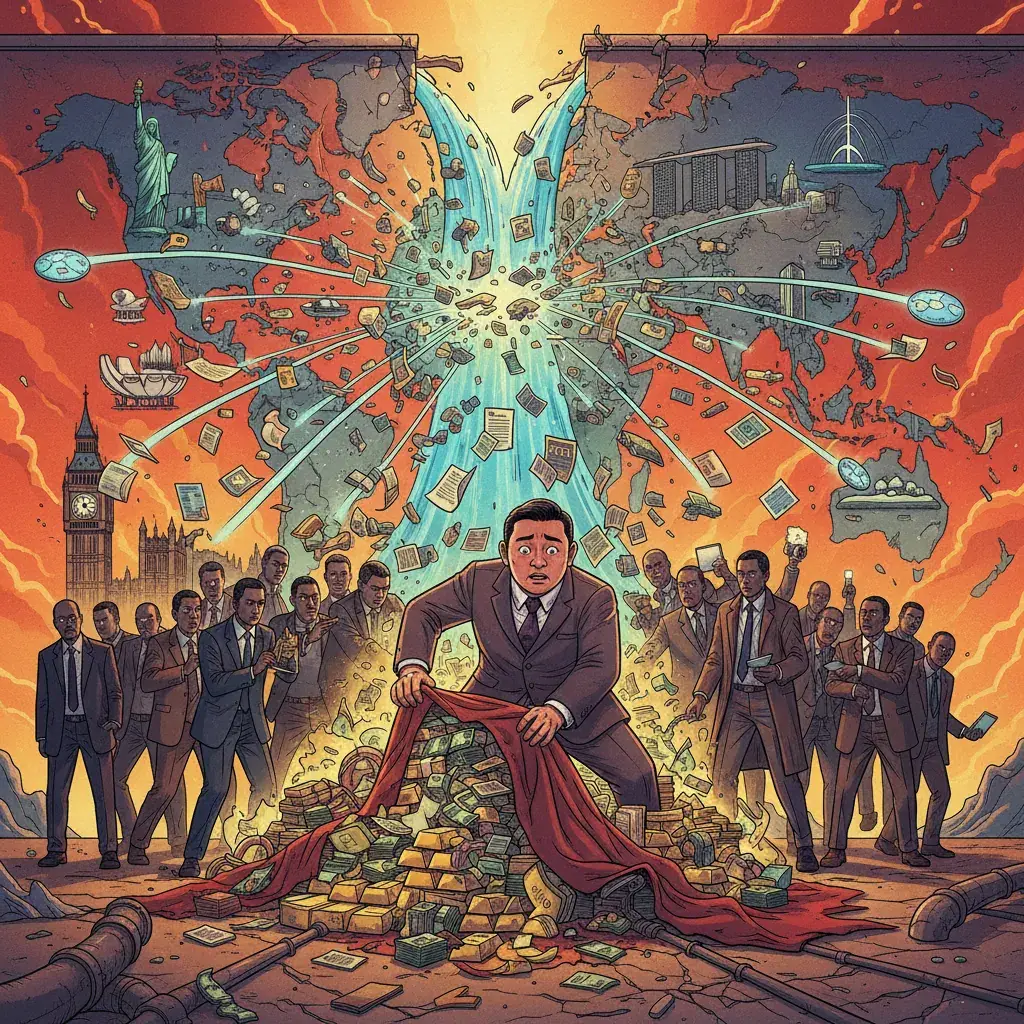
Once the dam broke, it unleashed a torrent of international investigations that crisscrossed the globe. The scandal was too big, too brazen, and involved too many jurisdictions to be swept under the rug. The money had touched down in financial hubs from Singapore to Switzerland, from the United States to Luxembourg, each nation’s authorities launching their own probes.
The U.S. Department of Justice (DOJ) took a leading role, filing a series of civil forfeiture lawsuits under its Kleptocracy Asset Recovery Initiative. These lawsuits sought to seize assets purchased with money allegedly stolen from 1MDB, including the Equanimity yacht, the Hollywood properties, the art collection, and the proceeds from “The Wolf of Wall Street.” The DOJ’s legal filings were meticulously detailed, laying bare the intricate web of shell companies and transactions Jho Low had constructed. They famously described the scheme as an “international conspiracy to launder money misappropriated from 1MDB.”
Singapore was one of the first countries to take decisive action. Its financial regulators shut down two Swiss banks, BSI Bank and Falcon Bank, for their egregious breaches of anti-money laundering regulations and their involvement in the 1MDB money flows. Several bankers were jailed, and millions in fines were levied. Switzerland, too, launched its own criminal proceedings against former officials of various banks, highlighting the systemic failures that allowed the fraud to flourish.
Meanwhile, in Malaysia, the political landscape was irrevocably altered. The scandal became a central issue in the 2018 general election, leading to a stunning defeat for Prime Minister Najib Razak and his long-ruling coalition. The new government, led by former Prime Minister Mahathir Mohamad, immediately reopened the 1MDB investigation, leading to criminal charges against Najib Razak, his wife Rosmah Mansor, and other high-ranking officials. Najib was eventually convicted on multiple counts of corruption, money laundering, and abuse of power related to 1MDB funds.
“The global crackdown on 1MDB funds showcased the immense power of international legal cooperation against financial crime. It sent a clear message that no amount of offshore layering or political influence can ultimately shield perpetrators from justice, though the road to recovery is long and arduous.”
Jho Low, however, remained elusive. As the investigations intensified, he vanished from public view, becoming a ghost in the machine. Warrants were issued for his arrest in multiple countries, but he continued to evade capture. Theories abound about his whereabouts, from China to the Middle East, protected by powerful allies or simply staying one step ahead of the law. The legal saga continues, with ongoing efforts to recover the remaining stolen billions, which are estimated to be around $4.5 billion, making it one of the largest financial frauds in history. The hunt for Jho Low became a global manhunt, a testament to the audacity of his crime and the determination of justice to prevail.
📉 Chapter 10: The Unraveling Empire - Assets Seized, Debts Remain
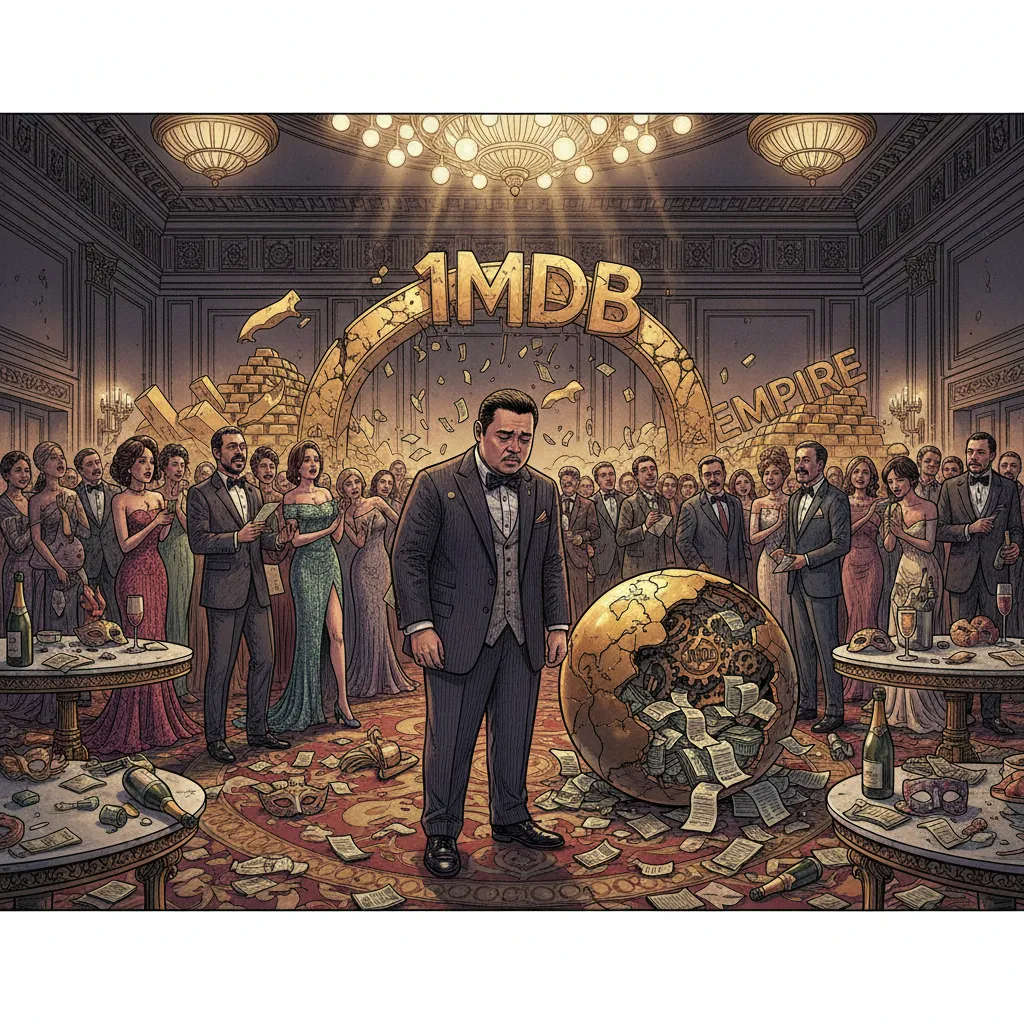
The party was over. The music stopped, the lights came on, and the true cost of Jho Low’s epic spree became painfully clear. The unraveling of the 1MDB empire wasn’t just about criminal charges; it was about the arduous, complex process of recovering stolen assets and reckoning with a national debt that would burden generations of Malaysians.
One of the most symbolic victories in the asset recovery efforts was the seizure of the superyacht Equanimity. After a lengthy legal battle, the yacht was seized by Indonesian authorities on behalf of the U.S. DOJ and eventually returned to Malaysia. It was later sold for $126 million, a fraction of its original cost but a significant step in recouping some of the stolen funds. This wasn’t just about money; it was about reclaiming a symbol of egregious excess and returning it, metaphorically, to the people it was stolen from.
Properties in the U.S. and UK, artwork, and even the rights to films produced by Red Granite Pictures were targeted and, in many cases, seized and sold. The Marlon Brando Oscar gifted to Leonardo DiCaprio was surrendered, as were other gifts. The total value of assets identified by the DOJ for forfeiture related to 1MDB exceeded $1.7 billion. While substantial, it’s still a long way from the estimated $4.5 billion that was allegedly stolen.
The financial fallout for Malaysia was immense. The country was left with a mountain of debt, incurred by 1MDB for projects that never materialized or were grossly overvalued. The new Malaysian government faced the monumental task of restructuring this debt, which had a significant impact on the nation’s credit rating and economic stability. It forced cuts in public spending and a renewed focus on fiscal discipline. The dreams of national development that 1MDB was supposed to fulfill were replaced by the grim reality of financial scandal and national embarrassment.
“The saga of 1MDB is a chilling reminder that financial fraud leaves not just a trail of stolen cash, but a profound national trauma. The recovery of assets, while crucial, can never fully compensate for the erosion of public trust, the economic burden, and the reputational damage inflicted upon a nation.”
The repercussions extended beyond Malaysia. Financial institutions like Goldman Sachs faced massive penalties. Goldman Sachs ultimately agreed to pay over $5 billion in penalties to authorities in the U.S., UK, Singapore, and other jurisdictions, and to disgorge over $600 million in fees it earned from the 1MDB bond deals. Two former Goldman Sachs bankers, Tim Leissner and Roger Ng, pleaded guilty to charges related to the scandal, shedding light on the internal complicity that facilitated the fraud.
The unraveling was a slow, painful process. Every asset recovered, every conviction secured, was a small victory in a battle against a colossal crime. But the shadow of 1MDB, and the haunting figure of Jho Low, continued to loom large, a stark reminder of the devastating consequences when greed, power, and a lack of oversight converge.
👻 Chapter 11: The Ghost in the Machine - Where is Jho Low?
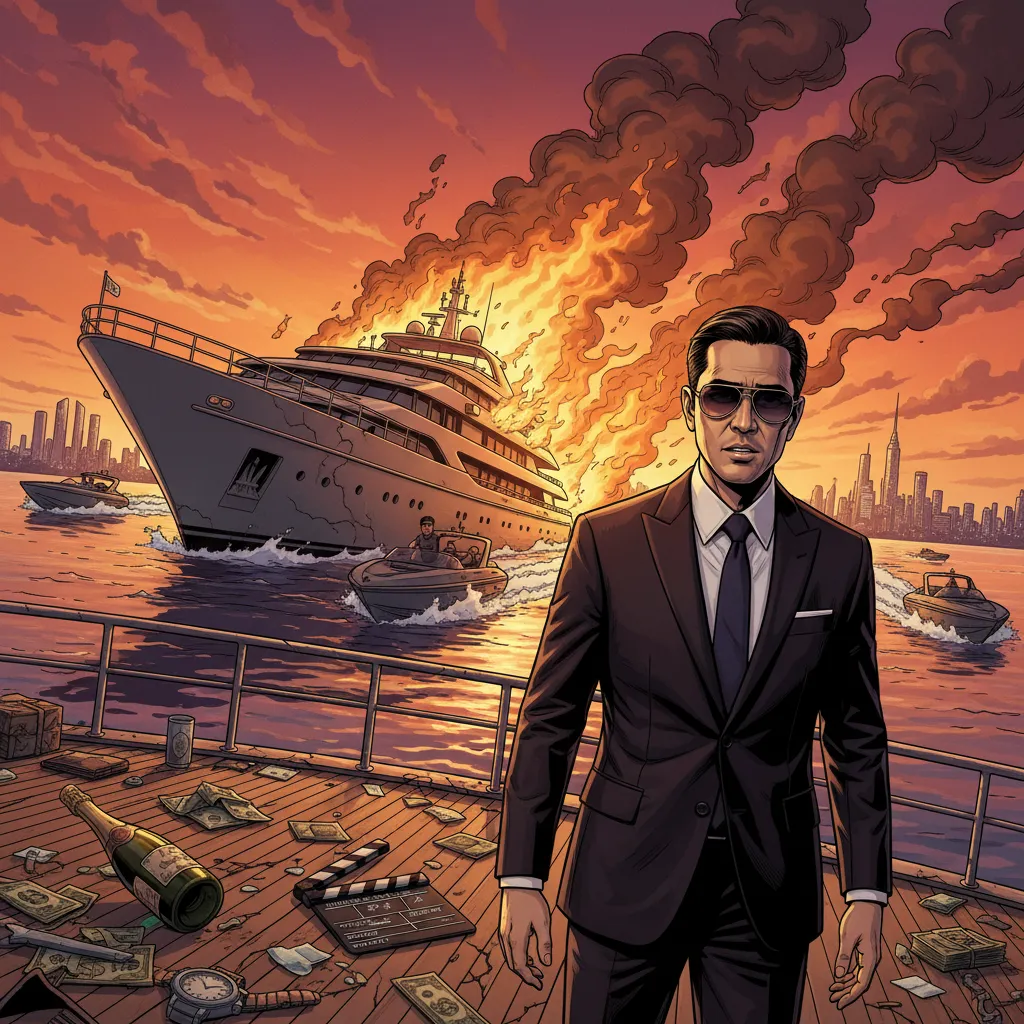
And so, we arrive at the final, lingering mystery of the 1MDB saga: Where in the world is Jho Low? The orchestrator of this multi-billion-dollar heist, the man who funded Hollywood blockbusters and partied with pop stars, has become a ghost, an international fugitive wanted by Interpol and authorities in Malaysia, Singapore, and the United States.
His last confirmed public sighting was reportedly in Thailand in 2018, shortly after the Malaysian elections that ousted Najib Razak. Since then, his trail has grown cold, punctuated only by occasional rumors and unverified reports. The most prevalent theory is that he is hiding in China, possibly under the protection of powerful figures. Chinese authorities have consistently denied harboring him, but his ability to evade capture despite a global manhunt suggests he has significant resources and connections to shield him.
Imagine living that life: constantly on the run, unable to use your real name, always looking over your shoulder. For a man who thrived on public spectacle and lavish displays of wealth, this forced anonymity must be a particular kind of hell. The billions he stole, once a source of endless pleasure, now represent a gilded cage. He can’t travel freely, can’t openly enjoy the fruits of his crime, and certainly can’t throw those legendary parties anymore. His social media presence, once a chronicle of his over-the-top existence, has been dormant for years.
His lawyers occasionally issue statements, denying his guilt and claiming he is merely seeking political asylum, but these are largely seen as delaying tactics. The legal pressure continues to mount. Malaysia has actively pursued his extradition and has made public appeals for assistance in locating him. The U.S. DOJ still has an active warrant for his arrest.
“Jho Low’s disappearance is more than just a fugitive story; it’s a chilling testament to the power of illicit networks and the challenges of international justice. His ghost-like existence serves as a constant reminder that while money can buy incredible privilege, it cannot always buy escape from the long arm of the law.”
The question of Jho Low’s whereabouts isn’t just about bringing a criminal to justice; it’s about closure for a nation that suffered immense financial and reputational damage. His capture would represent a significant victory in the global fight against financial crime and a definitive end to one of the most incredible true stories of greed and deception in modern history. Until then, he remains the ultimate phantom of the financial opera, a legend whispered in hushed tones, a symbol of unchecked ambition and the enduring allure of ill-gotten gains. The hunt continues.
💡 Chapter 12: The MogulFeed Takeaway - Lessons from the Billion-Dollar Con
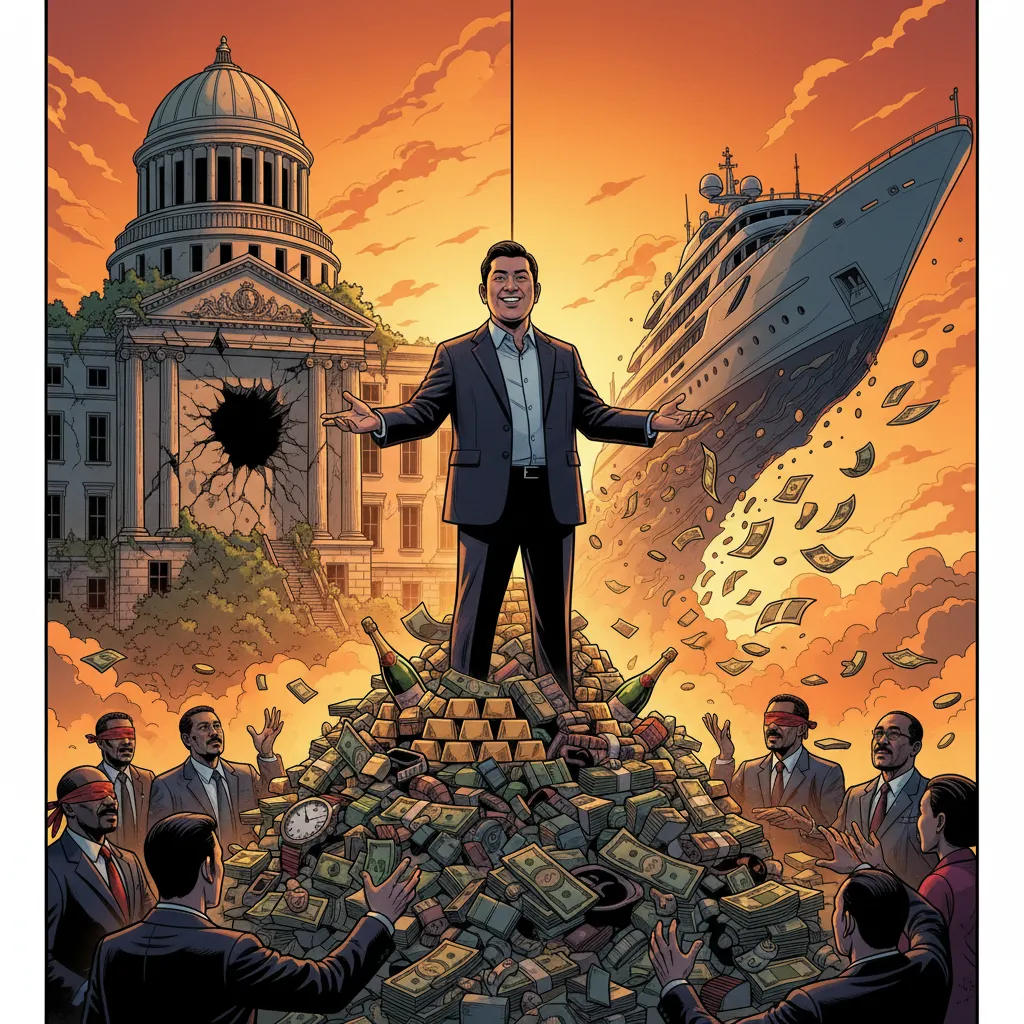
So, what do we take away from the epic, utterly insane saga of Jho Low and the 1MDB scandal? It’s not just a thrilling true-crime story; it’s a cautionary tale, a masterclass in how a system can be gamed, and a stark reminder of the enduring vulnerabilities in the gleaming towers of global finance. If you’re an entrepreneur, an investor, or just someone trying to navigate the complex world of money, there are lessons here that hit harder than a champagne bottle to the head.
First, let’s talk about due diligence – or the utter lack of it. Jho Low operated in plain sight, albeit behind a smokescreen of glamour. He had no official role in 1MDB, yet he was pulling strings that moved billions. How many red flags need to be waved before a deal is scrutinized? For entrepreneurs, this means understanding who you’re doing business with, truly. Don’t just look at the glossy prospectus; dig into beneficial ownership, question opaque structures, and be suspicious of anyone who promises too much, too easily, especially without a clear track record. If a deal sounds too good to be true, it probably involves a guy like Jho Low.
“The greatest lesson from 1MDB is that trust without transparency is a recipe for disaster. Whether in government or business, unchecked power, opaque dealings, and a lack of independent oversight create fertile ground for even the most audacious frauds to flourish.”
Second, consider the corrosive power of unchecked authority. 1MDB was structured with minimal oversight, directly accountable to the Prime Minister. This created a vacuum of accountability, allowing Jho Low to exploit the system from within, with the implicit or explicit complicity of powerful figures. For investors, this highlights the critical importance of strong corporate governance. Look for independent boards, robust internal controls, and clear lines of reporting. A company where one person holds all the power, or where decisions are made behind closed doors, is a ticking time bomb.
Third, the scandal exposes the global financial system’s Achilles’ heel: money laundering. Jho Low’s network of shell companies and offshore accounts wasn’t an anomaly; it’s a well-worn path for illicit funds. The complicity, or at least negligence, of major global banks in facilitating these transfers is a damning indictment. For financial institutions, this should be a constant siren call for enhanced AML (Anti-Money Laundering) and KYC (Know Your Customer) protocols. For individuals and smaller businesses, it’s a reminder that the seemingly legitimate financial world can be a conduit for dirty money, making it essential to understand the source of funds in any significant transaction.
Finally, the 1MDB story is about the audacity of ambition, untethered by ethics. Jho Low wasn’t just a thief; he was a performance artist, using stolen billions to craft an illusion of legitimate power and wealth. He understood human psychology: the desire for access, the allure of glamour, and the tendency of people to believe what they want to believe, especially when champagne is flowing freely. It’s a testament to the fact that sometimes, the biggest cons are hidden in plain sight, dazzling us with their brilliance until the lights come up and the stage is revealed to be empty.
The hunt for Jho Low continues, a ghost haunting the corners of the global financial system. His story serves as a permanent, chilling reminder that the line between legitimate enterprise and audacious fraud can be terrifyingly thin, and the consequences of crossing it can echo for generations. For MogulFeed, it’s the ultimate story of a fall, a cautionary tale etched in billions of stolen dollars and a lifestyle that burned brighter and faster than any star. This isn’t just business; it’s human nature laid bare, raw and utterly unforgettable.
💡 Key Insights
- ▸ The 1MDB scandal serves as a stark reminder of the critical importance of robust corporate governance and independent oversight, especially in government-linked entities. Entrepreneurs and investors must establish clear checks and balances, diverse board compositions, and transparent financial reporting to prevent single points of failure and the unchecked power of a few individuals.
- ▸ This saga underscores the sophisticated tactics employed in modern financial fraud, involving complex offshore structures, shell companies, and the complicity of global financial institutions. For investors, it's a cautionary tale about the need for extreme due diligence, understanding the true beneficial ownership of assets, and being wary of deals that promise outsized returns with opaque structures.
- ▸ The global reach of the 1MDB scandal highlights the interconnectedness of international finance and the necessity of cross-border collaboration in combating financial crime. It reveals how easily illicit funds can be laundered through legitimate channels, impacting market integrity and trust, and emphasizes the growing pressure on financial institutions to enhance their anti-money laundering (AML) controls.