Shiv Nadar: How HCL Built an Indian Technology Empire
Shiv Nadar moved from calculators and indigenous computers to global technology services, then redirected wealth toward ambitious education institutions.
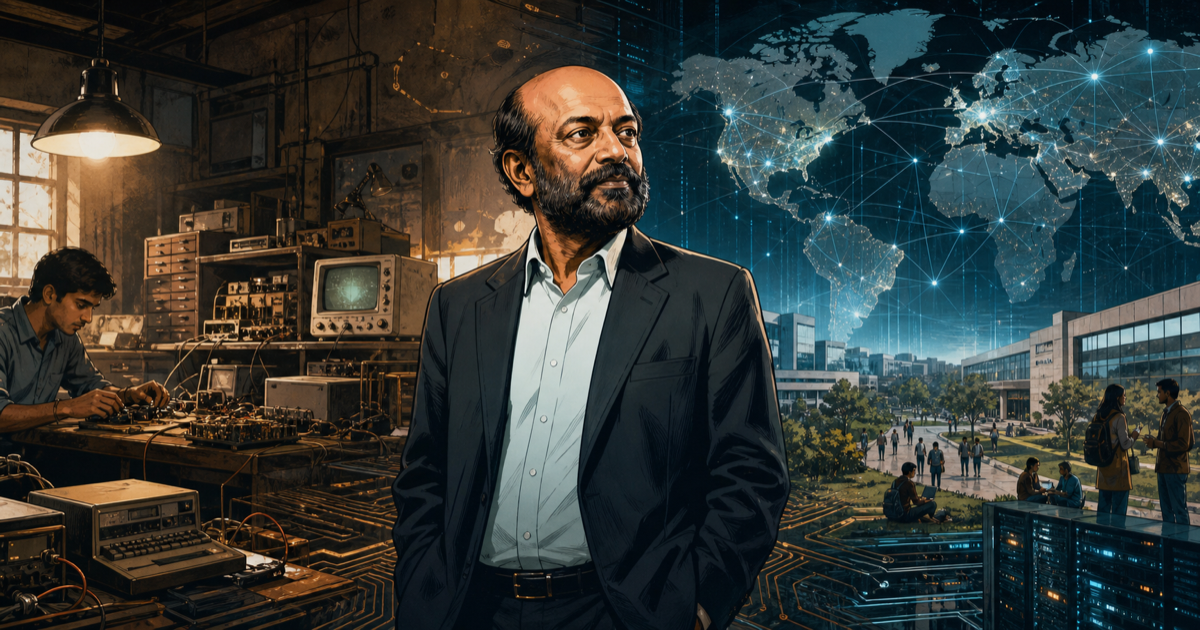
View all stories about this mogul
Shiv Nadar helped build an Indian computer company when the country had little private technology infrastructure, limited foreign exchange, and no guarantee that a domestic hardware maker could survive. HCL endured because it did not confuse its first product with its permanent identity.
The company moved from office equipment and microcomputers into enterprise systems, software, engineering, infrastructure, and global technology services. Nadar’s second empire grew beside the first: schools, universities, museums, and research institutions funded through the Shiv Nadar Foundation.
His biography is a study in strategic migration. He repeatedly moved capital and talent toward the next layer of value before the current one became a trap.
How did Shiv Nadar start HCL in 1976?
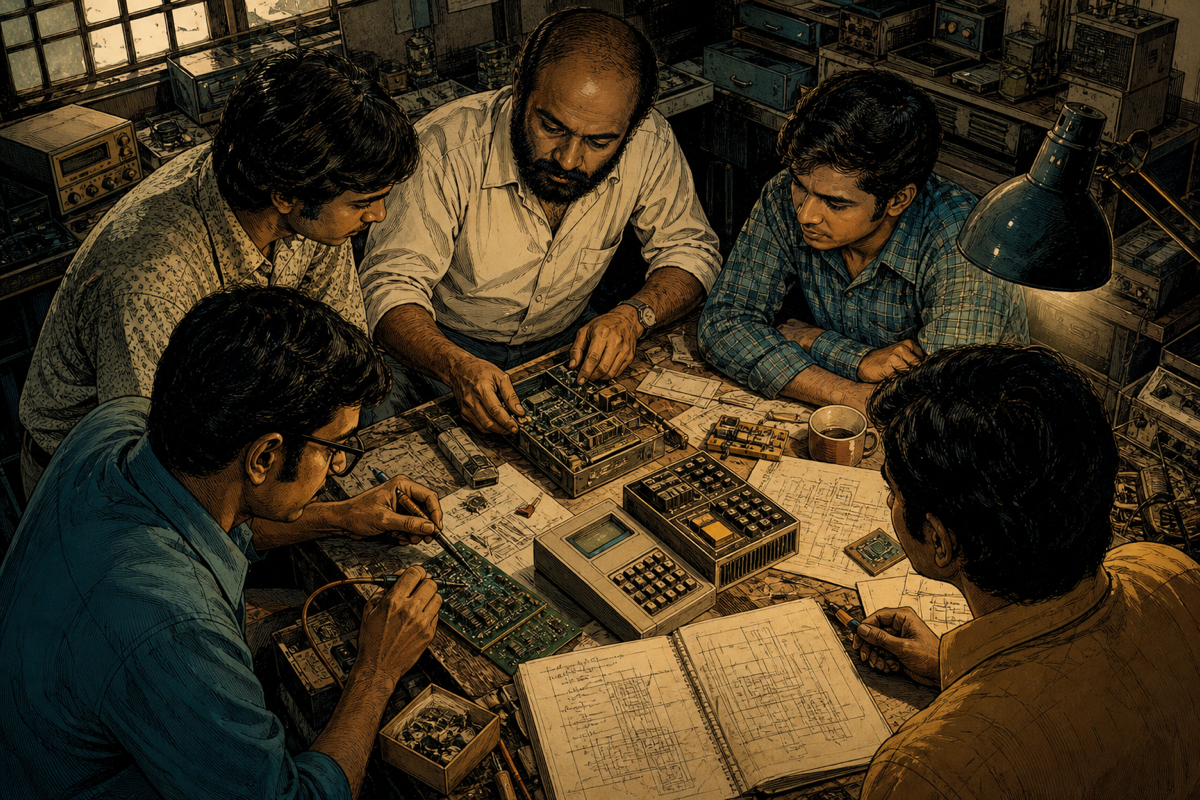
Nadar was born in 1945 in what is now Tamil Nadu and trained as an electrical engineer. After working at Cooper Engineering and later in the office-equipment division of Delhi Cloth Mills, he became convinced that a technology business could be built around the emerging demand for electronic calculators and computers.
In 1976, Nadar and a small group of colleagues left to create their own venture. The team first sold digital calculators under Microcomp, generating cash and market access while pursuing the larger ambition of building computers. Hindustan Computers Limited—HCL—emerged from that effort with support from a state industrial-development corporation.
The timing was consequential. India’s industrial policy restricted imports and foreign ownership, making global technology products expensive or unavailable. When IBM left India in 1978 after disagreements over local rules, the market opened further for domestic companies capable of building and supporting systems.
HCL developed microcomputers for the Indian market and emphasized a distributed architecture at a time when large centralized machines still dominated corporate imagination. The founders were not operating inside a mature semiconductor ecosystem. They had to assemble knowledge, components, distribution, service, and customer confidence simultaneously.
That constraint became an advantage. Because hardware could not simply be imported and resold at scale, HCL learned to engineer, integrate, and support systems. Customers were buying not only a machine but the promise that someone nearby could keep it running.
| Year | Milestone | Strategic meaning |
|---|---|---|
| 1976 | HCL is founded | Nadar’s team moves from calculators toward computing |
| 1978 | IBM exits India | Domestic computer makers gain room to expand |
| 1980s | HCL enters international markets | The company tests its technology beyond India |
| 1990s | Software and services gain importance | Value shifts from proprietary hardware toward global delivery |
| 1994 | Shiv Nadar Foundation is established | Institution-building becomes a parallel mission |
| 2020 | Nadar steps down as HCLTech chairman | Succession transfers leadership to Roshni Nadar Malhotra |
How did HCL move from hardware to global technology services?

Early success can become an anchor. HCL’s identity was rooted in indigenous hardware, but global computing economics shifted. Standardized personal computers reduced the advantage of proprietary systems. Multinational competition increased. Software, networking, maintenance, engineering, and outsourced technology operations became more valuable.
HCL adapted by expanding the service side of the business and building capabilities for global clients. The move required a different operating model. Hardware development concentrates value in products and distribution. Technology services concentrate it in talent, processes, client trust, delivery quality, and the ability to coordinate work across locations and time zones.
India’s engineering base and cost structure created an opportunity, but labor arbitrage alone could not build a durable enterprise. Clients needed partners who could run critical systems, modernize applications, secure infrastructure, and understand industry workflows. HCL pushed into remote infrastructure management, engineering and research services, and enterprise technology operations.
The broader HCL group went through restructurings and separations as different businesses matured. HCL Technologies, now branded HCLTech, became the flagship listed services company. The transformation showed Nadar’s willingness to let the center of gravity move. He did not insist that the company remain famous for the kind of computers that had made it relevant in the first place.
That flexibility came with organizational risk. A founder can personally connect a small group of engineers; a global services company needs layers of accountable leadership, repeatable delivery, sales discipline, cybersecurity, and succession. HCL professionalized while retaining significant family influence.
Roshni Nadar Malhotra eventually became chairperson of HCLTech, while professional executives handled day-to-day leadership. The transition made her one of the most prominent women leading a major listed technology company in India. It also tested whether the institution could separate founder authority from operational command without losing strategic continuity.
What is Shiv Nadar’s legacy in education and philanthropy?

Nadar established the Shiv Nadar Foundation in 1994 and directed substantial wealth toward education, art, and institution building. Its initiatives have included schools serving high-potential students, higher-education institutions, and the Kiran Nadar Museum of Art.
The approach reflects the same systems instinct visible at HCL. A scholarship helps one student. A university can educate cohorts, employ researchers, build laboratories, and generate knowledge for decades. Institutions are slower and harder than one-time giving, but they can compound.
Shiv Nadar University was designed as a multidisciplinary research institution rather than a narrow training center for HCL. That distinction matters. Corporate philanthropy can become recruitment marketing; an independent academic institution must develop standards, faculty governance, research depth, and a reputation that can outlast its benefactor.
The foundation’s work also highlights a recurring tension in billionaire philanthropy. Private wealth can move quickly and support ambitious experiments, but educational institutions still need transparent governance, academic independence, and long-term financial resilience. The quality of the legacy depends not on the amount announced but on what the institutions produce after the founder steps back.
Nadar’s business and philanthropic empires share one logic: capability is infrastructure. HCL built technical capability in a market where it was scarce. The foundation seeks to build intellectual and educational capability where access and research depth remain uneven.
What is Shiv Nadar’s net worth?
His net worth changes with the market value of HCL-related holdings. Forbes publishes a regularly updated estimate, so any fixed number quickly becomes stale. He has consistently ranked among India’s wealthiest individuals in recent years.
How did Shiv Nadar make his money?
Nadar built his wealth through ownership in HCL group companies, particularly the global technology-services business that became HCLTech.
Who founded HCL with Shiv Nadar?
HCL was created by a founding team, not by Nadar alone. Colleagues who left Delhi Cloth Mills with him contributed engineering, sales, finance, and operating capability to the early company.
Who leads HCL after Shiv Nadar?
Roshni Nadar Malhotra became chairperson of HCLTech, while professional executives lead operations. The arrangement separates board stewardship from day-to-day management.
Shiv Nadar’s most useful lesson is not simply to bet on technology. It is to recognize when the object of the bet has changed. Calculators financed computers. Hardware opened the door to services. Corporate wealth financed institutions. Each move carried the capabilities of the last era into a larger arena without being imprisoned by its products.
💡 Key Insights
- ▸ Regulatory constraints can become a product opportunity for teams willing to build local capability.
- ▸ Technology companies survive platform shifts by moving the source of value before the old market disappears.
- ▸ Founder-led teams need professional succession before complexity outruns personal control.
- ▸ Philanthropy compounds when it creates durable institutions rather than isolated gifts.