THE UNBROKEN WHEEL: Soichiro Honda's War Against Bureaucracy and Gravity
This isn't just a story about motorcycles or cars. It's about a blacksmith's son who roared defiance at an entire government, built an empire from scrap metal, and proved that a single, unyielding vision can outmaneuver even the most formidable bureaucracy. Buckle up, because Soichiro Honda's journey is a high-octane lesson in pure, unadulterated entrepreneurial rebellion.
View all stories about this mogul
🔥 Chapter 1: The Spark in the Blacksmith’s Dust
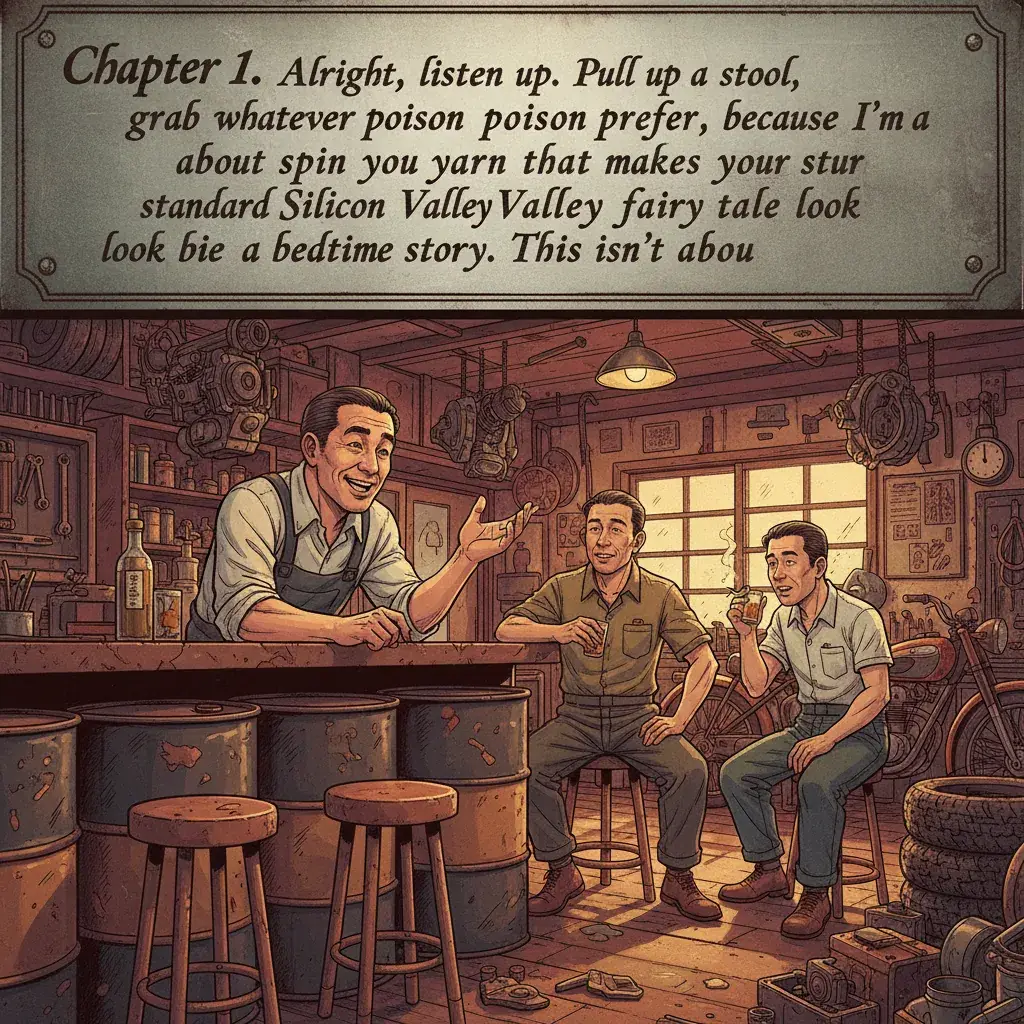
Alright, listen up. Pull up a stool, grab whatever poison you prefer, because I’m about to spin you a yarn that makes your standard Silicon Valley fairy tale look like a bedtime story. This isn’t about some trust-fund kid with a killer app. This is about Soichiro Honda, a man born with grease under his fingernails and fire in his belly. A man who started with nothing but a wrench, a dream, and a stubborn refusal to be told what he couldn’t do.
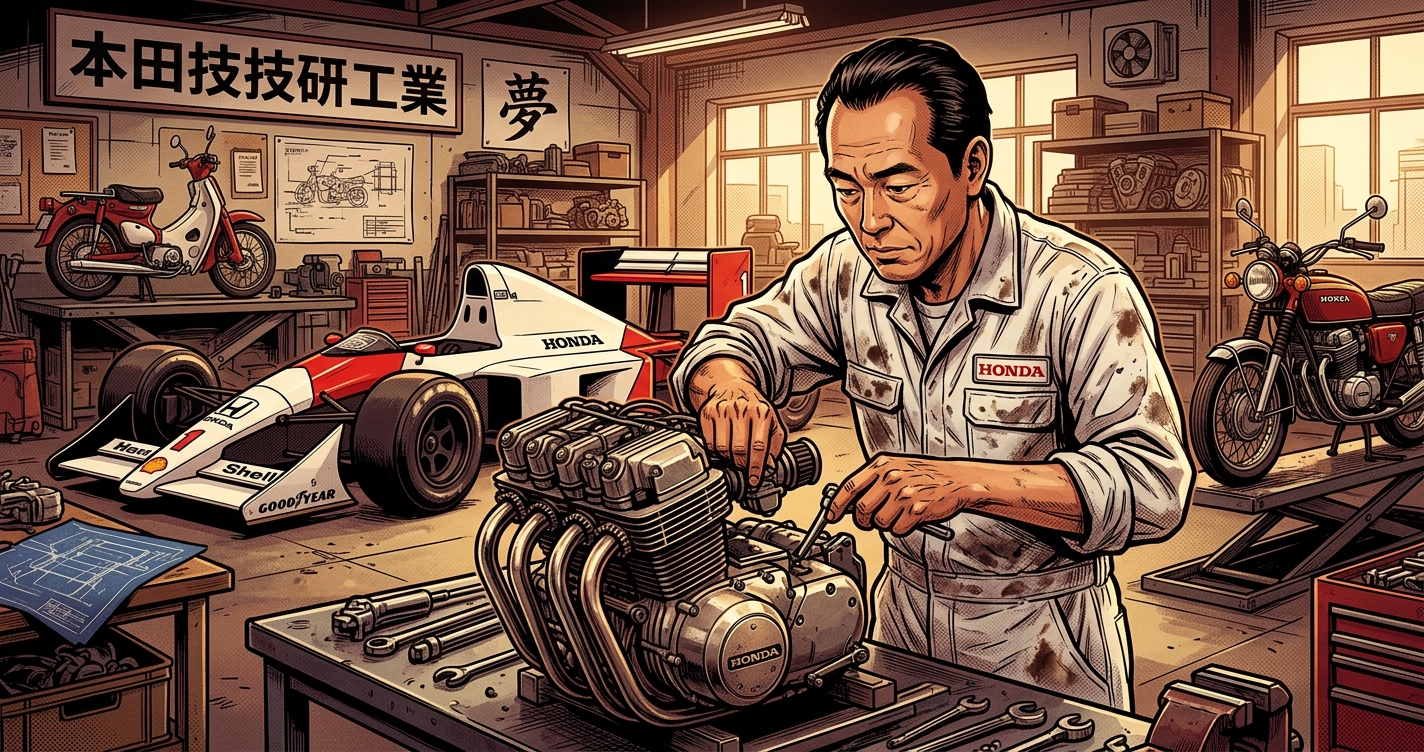
Picture this: Rural Japan, 1906. No iPhones, no venture capital, just the rhythmic clang of a blacksmith’s hammer echoing through the village. That’s the soundtrack to young Soichiro’s childhood. His father, Gihei Honda, was a blacksmith, a fixer of anything metal, a man who understood the raw power of heat and force shaping iron. Soichiro wasn’t playing with toy soldiers; he was mesmerized by the machinery that rolled through his village. The first car he ever saw, a Ford Model T, apparently made such an impression that he chased it down the road, inhaling the fumes like they were the sweetest perfume. The smell of gasoline became the scent of destiny.
He was a terrible student, by conventional metrics. School bored him. Books? Forget about it. His classroom was the world, his textbooks were broken engines, and his teachers were the metallic guts of anything with moving parts. He was the kind of kid who’d rather spend hours disassembling a clock to understand its intricate dance than memorize historical dates. He was a tactile genius, a mechanical prodigy in the making, but nobody knew it yet. They just knew he was trouble, always tinkering, always covered in grime, always asking “how does that work?”
This wasn’t just curiosity; it was an obsession. A deep-seated, primal drive to understand the inner workings of things, to master them, and eventually, to make them better. He saw the world as a giant, broken machine, and he believed he had the hands to fix it, to improve it, to make it sing. This early, almost instinctual connection to machinery would define his entire life, setting him on a collision course with convention, with societal expectations, and eventually, with the very fabric of Japanese industrial planning. He wasn’t just going to build things; he was going to build a legend, one piston, one engine, one defiant stand at a time. The smell of burning oil and hot metal was his siren song, pulling him away from the quiet life of a blacksmith’s son and into the roaring symphony of industry. He was a force of nature waiting for a catalyst, and Japan, ravaged by war and desperate for innovation, was about to provide it.
🔧 Chapter 2: The Grease Under the Fingernails: From Apprentice to Inventor
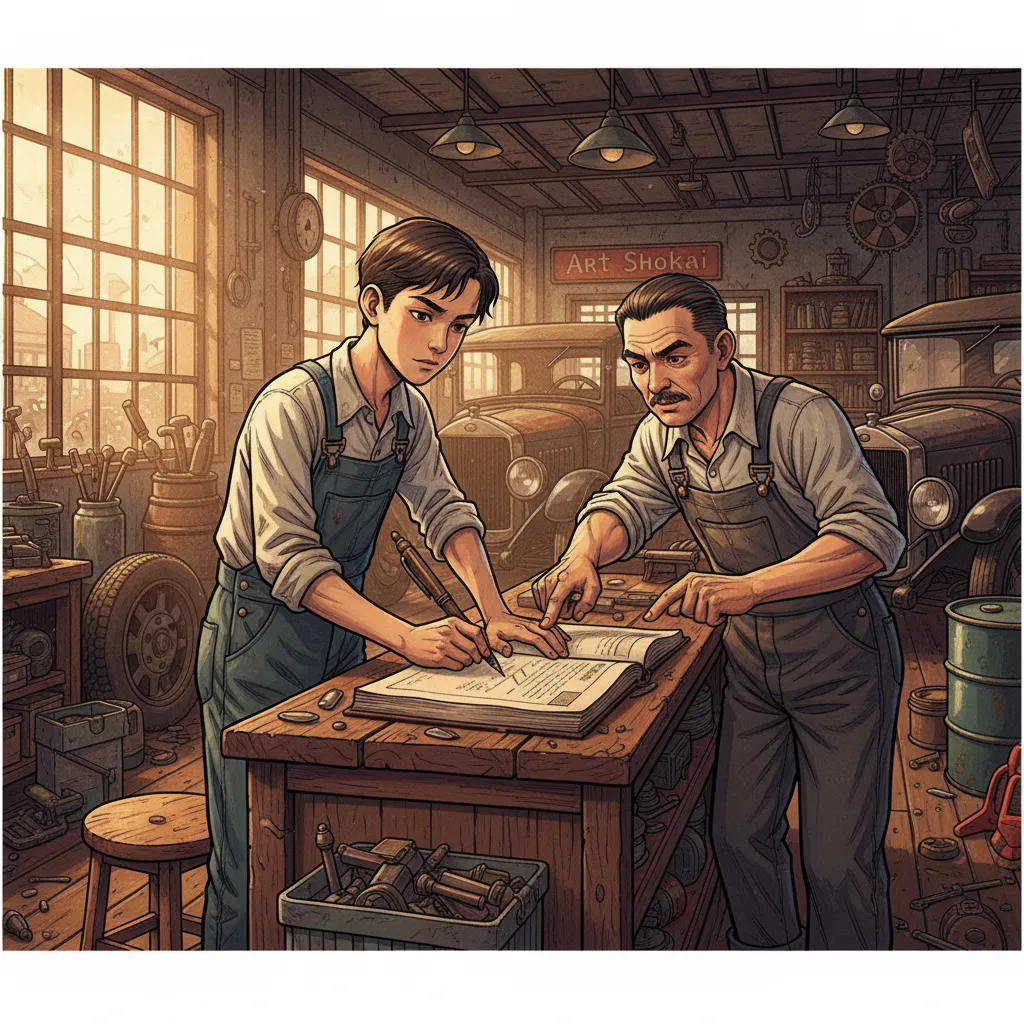
At 15, while most kids were still figuring out how to tie their shoes, Soichiro Honda dipped his hand into destiny and signed up as an apprentice at Art Shokai, a car repair shop in Tokyo. This wasn’t some fancy vocational school; this was the trenches. He didn’t just learn to fix cars; he lived them. He slept under them, ate next to them, breathed their oily fumes. His first job? Babysitting the owner’s infant son. Yeah, you heard that right. Kid in one arm, wrench in the other, probably already sketching engine designs in his head.
But even while wiping noses, his eyes were on the engines. He was a sponge, soaking up every bit of knowledge, every trick of the trade, every nuance of internal combustion. He saw a broken engine not as a problem, but as a puzzle, a challenge to his burgeoning mechanical intellect. He rapidly graduated from broom boy to master mechanic, astounding his elders with his intuitive understanding of complex machines. He wasn’t just following instructions; he was improvising, innovating, often finding better ways to do things than the established masters.
By 1928, at the ripe old age of 22, he felt the familiar pull of independence. He wasn’t content being a cog in someone else’s machine. He took a branch of Art Shokai back to his hometown of Hamamatsu, transforming it into his own enterprise. Art Shokai Hamamatsu Branch became his playground, a place where he could unleash his raw, untamed mechanical genius. This wasn’t just a repair shop; it was a laboratory, a crucible where ideas were forged in fire and oil.
He was a perfectionist, a tinkerer, a mad scientist of the garage. If a part wasn’t good enough, he’d make a better one. He even invented a cast-iron spoke wheel to replace the wooden ones, revolutionizing local rickshaw design. He was building a reputation, not just as a fixer, but as an innovator. But the real game-changer came when he started focusing on piston rings.
See, piston rings are tiny, but they’re the heart of an engine’s efficiency. They seal the combustion chamber, keeping the power contained. The ones available at the time were… well, let’s just say they left a lot to be desired. Soichiro spent years, years, obsessively perfecting them. He experimented with different alloys, different designs, different manufacturing processes. He even poured molten metal in his own home, much to his wife’s probable exasperation. He enrolled in an industrial school, not for the degree, but to understand the metallurgy, the science behind his craft. He was a self-taught genius who understood the value of formal knowledge when it served his purpose.
He faced countless failures. He lost money. He burnt his hands. But he never quit. He famously said, “Success is 99% failure.” And he lived that mantra. He tried, he failed, he learned, he tried again, each failure a stepping stone to mastery. Finally, after what felt like an eternity, he cracked it. He developed a superior piston ring, one that dramatically improved engine performance and durability. This wasn’t just a better part; it was a testament to his sheer grit and relentless pursuit of excellence.
“My greatest success came from my failures. I learned from them, and that’s how I got to where I am today.”
He founded Tokai Seiki Heavy Industry in 1937 to mass-produce these piston rings, securing contracts with Toyota. This was his first real taste of industrial scale, his first major entrepreneurial leap. He went from fixing individual cars to supplying a vital component for an entire automotive industry. The blacksmith’s son was now a manufacturer, a supplier to giants. But the world, as it often does, had other plans. War was on the horizon, and it would reshape everything, including Soichiro Honda’s destiny. The roar of engines was about to be drowned out by the thunder of bombs, and his factories, like so much else, would become targets.
💥 Chapter 3: From Rubble to Two Wheels: The Phoenix Rises
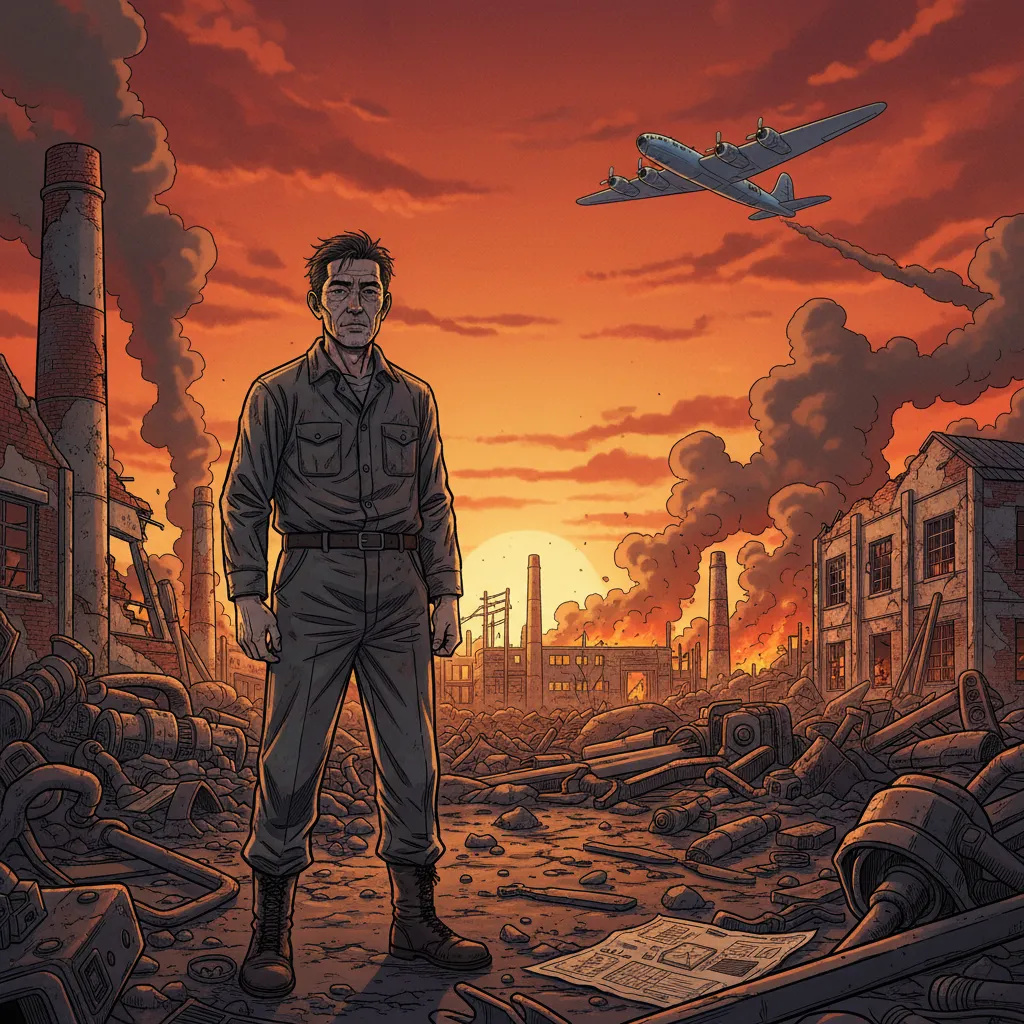
Then came the war. World War II ripped through Japan, leaving behind a landscape of ash and despair. Soichiro Honda’s factories, built with his sweat and ingenuity, were bombed repeatedly. First by American B-29s, then by an earthquake that flattened what was left. He was forced to sell his remaining assets – his piston ring company – to Toyota for a pittance. Everything he had built, everything he had worked for, was gone, reduced to rubble. Most men would have crumpled. Most men would have given up. Soichiro Honda? He saw an opportunity in the desolation.
Japan was a nation on its knees. Cities were destroyed, infrastructure was shattered, and the economy was in tatters. Food was scarce, and transportation was even scarcer. People needed to move, to work, to rebuild, but there were no cars, no trains, barely any fuel. This wasn’t a problem for Honda; it was a design challenge.
He was a survivor, a pragmatist, and above all, an engineer. He found himself with a small, surplus two-stroke generator engine – the kind used to power field radios during the war. It was loud, it was inefficient, but it worked. And Soichiro Honda, ever the problem-solver, looked at that little engine and saw the future of personal mobility for a devastated nation.
He took that engine, cobbled together some bicycle frames, and did what any self-respecting tinkerer would do: he bolted the engine to the bike. The result? A clunky, noisy, but undeniably effective motorized bicycle. It wasn’t pretty. It wasn’t fast. But it got people moving. And in a country where every yen counted, where every ounce of effort was precious, this was a revelation.
Initially, he just built one for himself, to get around. But people saw it. They heard it. They wanted it. The demand was immediate, overwhelming. He started producing them in his tiny workshop, literally from the ground up, using whatever materials he could scavenge from the post-war ruins. Parts were scarce, money was non-existent. He melted down aluminum pots and pans donated by his wife and neighbors to cast engine parts. Talk about bootstrapping! This wasn’t Silicon Valley “bootstrapping”; this was survival, ingenuity, and a sheer refusal to be beaten by circumstance.
“If you like motorcycles, you like them because you like the freedom of the open road, the wind in your hair, and the feeling of adventure. And those are the things we want to give to people.”
This primitive motorized bike was nicknamed the “Batabata” – an onomatopoeia for the sound of its engine. It wasn’t glamorous, but it was practical. It was accessible. It was a lifeline. And it was the first flickering spark of what would become the Honda Motor Company. From the ashes of war, powered by a tiny engine and an unshakeable belief in the power of engineering, Soichiro Honda was about to begin his greatest journey yet. He wasn’t just building bikes; he was rebuilding hope, one piston stroke at a time. The phoenix was about to take flight, albeit on two rather wobbly wheels.
🚀 Chapter 4: Dreaming Big, Starting Small: The Birth of Honda Motor
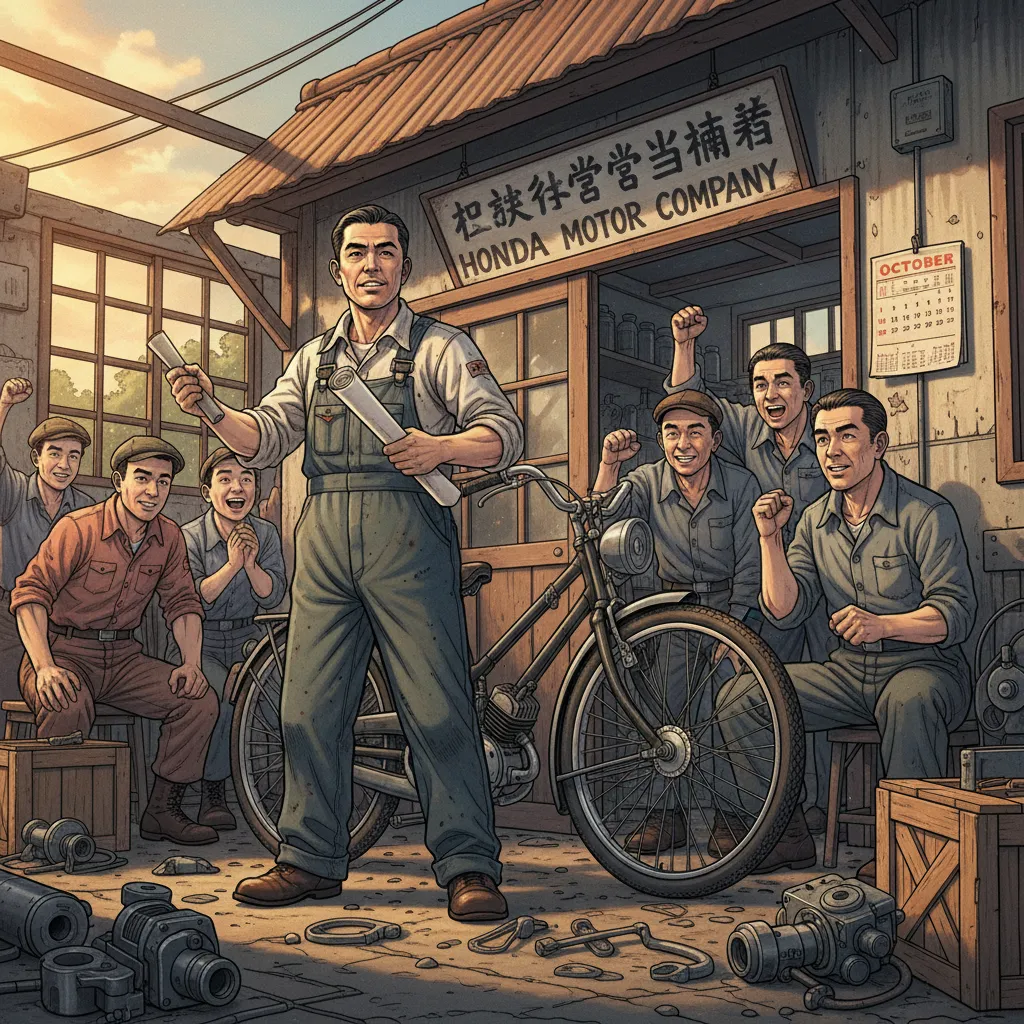
With the “Batabata” proving a hit, Soichiro Honda knew he was onto something bigger than just a garage hobby. In 1948, he officially founded Honda Motor Company. This wasn’t some grand corporate launch with venture capital and press releases. This was a man, a dream, and a shed. He partnered with Takeo Fujisawa, a brilliant businessman and marketer, who would become the perfect foil to Honda’s engineering genius. Honda handled the machines, Fujisawa handled the money and the market. It was a partnership forged in necessity and mutual respect, one that would become legendary.
Honda’s first true product under the official company banner was the Dream D-Type motorcycle in 1949. Forget what you think of modern motorcycles. This was still rough around the edges, but it was a massive leap from the “Batabata.” It was a proper motorcycle, designed from the ground up by Honda himself, featuring a 98cc, two-stroke engine. It was called “Dream” because, well, it was literally the realization of his dreams.
The Dream D-Type was a statement. It said, “We’re here. We’re serious. We’re building the future.” But it wasn’t an instant smash hit. The two-stroke engine was noisy, smoky, and not always reliable. Honda, ever the perfectionist, wasn’t satisfied. He knew he could do better. He was already thinking about his next move, a move that would truly define Honda’s early identity.
His next masterpiece was the Dream E-Type, launched in 1951. This was a game-changer. It featured Honda’s first original four-stroke engine, a 146cc powerhouse. The four-stroke engine was smoother, cleaner, more powerful, and more fuel-efficient than anything else on the market in Japan. It was a testament to Honda’s relentless pursuit of engineering excellence. He didn’t just want to build motorcycles; he wanted to build the best motorcycles. He wanted them to be reliable, accessible, and enjoyable.
This wasn’t just about selling a product; it was about selling a vision. In post-war Japan, owning a motorcycle wasn’t just about transport; it was about freedom, about aspiration. Honda understood this implicitly. He was building machines that empowered people, that gave them a taste of independence in a world that had stripped so much away.
From the very beginning, Honda instilled a culture of innovation and daring. He wasn’t afraid to challenge conventional wisdom, to experiment, to fail fast and learn faster. He pushed his engineers to think outside the box, to strive for perfection, and to always put the customer first. He believed that if you built a superior product, the market would follow. And he was right. The Dream E-Type became a massive success, laying the financial and reputational groundwork for Honda Motor Company to truly take flight. The garage tinkerer was now the CEO of a rapidly expanding motorcycle empire, and he was just getting started. The world was about to hear the roar of a Honda engine, loud and clear.
🛵 Chapter 5: The Unstoppable Cub: Conquering the World on Two Wheels
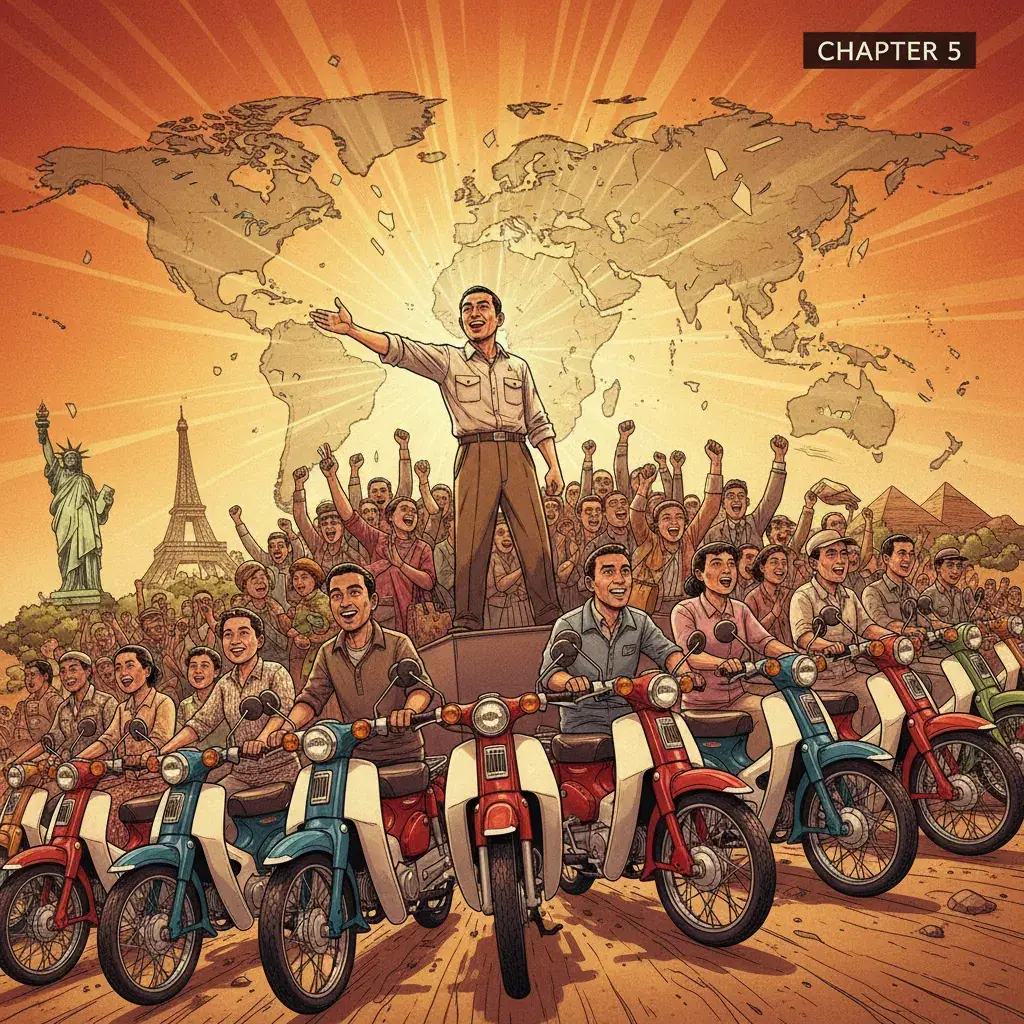
If the Dream series put Honda on the map in Japan, the Super Cub blew that map wide open and scattered it across the globe. Launched in 1958, the Super Cub wasn’t just a motorcycle; it was a phenomenon, a cultural icon, and arguably the most significant product in Honda’s history. It changed everything.
Soichiro Honda and Takeo Fujisawa had a bold vision: a motorcycle for everyone. Not just enthusiasts or racers, but for the milkman, the housewife, the student. It needed to be easy to ride, reliable, affordable, and stylish. It had to be a “people’s motorcycle.”
Honda’s engineering team, under his relentless guidance, delivered. The Super Cub featured a revolutionary step-through frame, making it easy for anyone to mount, even women wearing skirts. It had an automatic clutch, so no complicated gear shifting. Its 50cc four-stroke engine was incredibly fuel-efficient and bulletproof. And its distinctive plastic fairing kept riders clean from road grime. It was elegant in its simplicity and brilliant in its execution.
This wasn’t just a product; it was a masterclass in market disruption. While other motorcycle manufacturers were building bigger, faster, more intimidating bikes, Honda went in the opposite direction. He democratized motorcycling. He created a new category, effectively inventing the modern scooter.
Fujisawa’s marketing genius then took over. He looked beyond Japan, straight to the colossal American market. But there was a problem: motorcycles in America had a tough-guy, outlaw image. Harley-Davidson ruled the roost, catering to a specific, often rebellious, demographic. How do you sell a small, friendly scooter in that environment?
Enter the legendary “You Meet the Nicest People on a Honda” advertising campaign. It was brilliant. It completely flipped the script. Instead of appealing to the existing motorcycle market, it created a new market. It depicted clean-cut college students, suburban families, and respectable citizens enjoying the simple pleasure of riding a Honda. It wasn’t about speed or danger; it was about fun, freedom, and accessibility. It transformed the perception of motorcycling from a niche, often intimidating hobby, into a wholesome, family-friendly activity.
“Marketing isn’t just about advertising. It’s about fundamentally changing how people perceive your product and how they see themselves using it.”
The campaign was a resounding success. The Super Cub sold by the millions. It became, and remains, the best-selling motor vehicle in history, with over 100 million units sold worldwide. It penetrated markets no other motorcycle had ever touched, from bustling Asian cities to quiet American suburbs. It was cheap to buy, cheap to run, and virtually indestructible. It didn’t just sell motorcycles; it sold a lifestyle, an aspiration.
The Super Cub’s success provided Honda Motor Company with an unprecedented war chest. It proved Honda’s ability to innovate, to market, and to conquer global markets. But for Soichiro Honda, the Super Cub was just another stepping stone. He had conquered the world on two wheels, but his ambition didn’t stop there. He was already dreaming of four. And this dream would put him on a direct collision course with one of Japan’s most powerful, and stubborn, institutions.
🏁 Chapter 6: Racing to Glory, Defying Gravity: The Obsession with Excellence
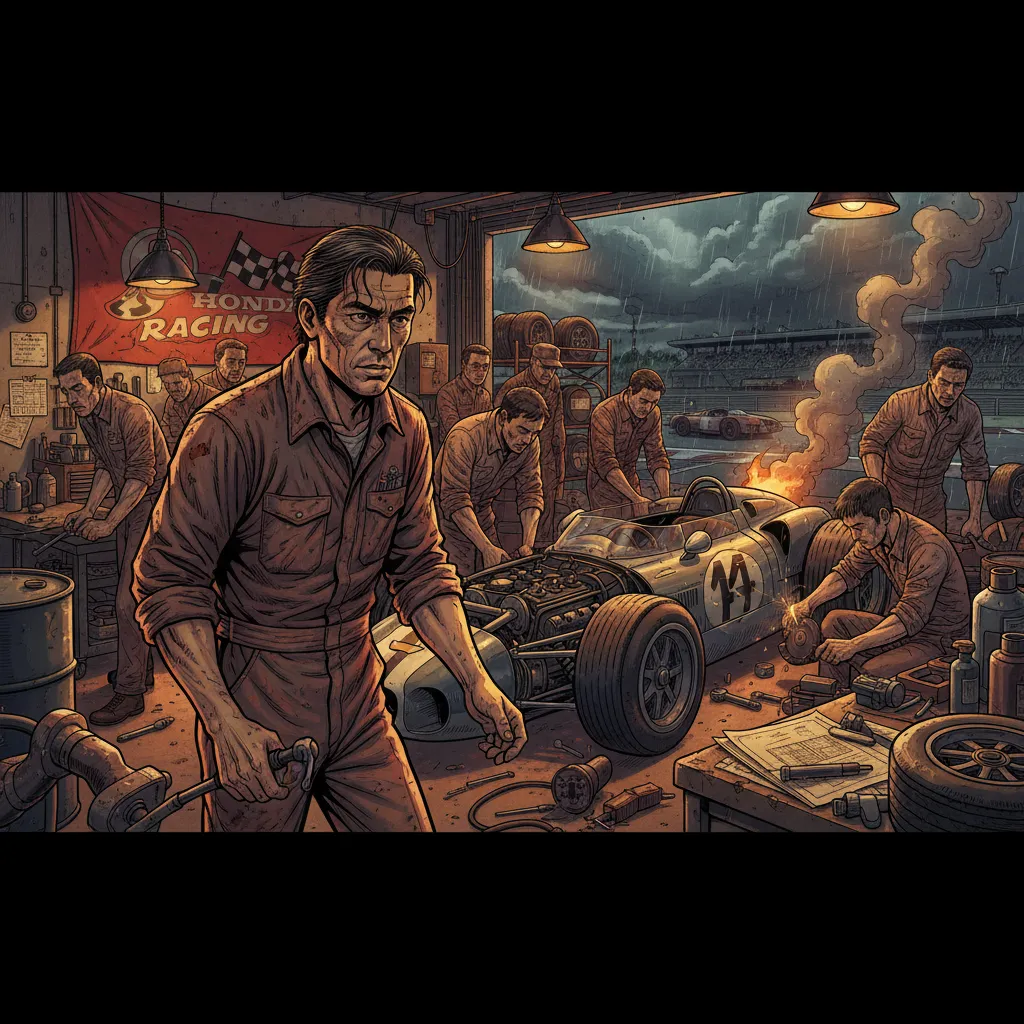
Soichiro Honda was an engineer to his core, and for an engineer, there’s no greater crucible than motorsports. Racing wasn’t just a hobby for him; it was a brutal, unforgiving laboratory for innovation, a proving ground where his machines could be pushed to their absolute limits, and where the world could see Honda’s technical prowess. He believed that if his bikes could win on the track, they would win in the showroom.
In 1954, even before the Super Cub’s success, Honda made a declaration that stunned the industry: he would compete in the Isle of Man TT race. This wasn’t just a race; it was the race. A terrifying, legendary circuit on a tiny island in the Irish Sea, known for its unforgiving nature and claiming the lives of many riders. It was the Everest of motorcycle racing, dominated by seasoned European manufacturers. For a relatively young Japanese company, this was an audacious, almost suicidal, ambition.
Honda poured resources into developing high-performance racing machines. He sent his engineers to Europe to study the competition, to learn, to absorb every detail. They failed, of course, multiple times. Their early attempts were outclassed, their engines blew, their riders struggled. But Honda, true to his philosophy, saw every failure as a lesson. He pushed his teams harder, demanding perfection, demanding speed, demanding reliability.
Finally, in 1959, Honda made its debut at the Isle of Man TT. They didn’t win, but they finished in the top six in the 125cc class, a remarkable feat for a first-timer. It was a clear signal: Honda was here to stay. And then, the victories started rolling in. By 1961, Honda absolutely dominated the Isle of Man TT, winning in both the 125cc and 250cc classes. They didn’t just win; they swept the podium. The world watched in awe as this upstart Japanese company, led by a former blacksmith’s son, humiliated the established European giants.
This racing success wasn’t just about trophies; it was about branding, about prestige, about demonstrating engineering superiority. It showed the world that Honda wasn’t just building reliable, affordable bikes; they were building cutting-edge, high-performance machines. This reputation for excellence resonated with consumers globally, validating the company’s “Dream” philosophy.
But Soichiro Honda’s ambition didn’t stop at two wheels. In 1962, he made another audacious announcement: Honda would enter Formula 1 racing. Yes, a motorcycle company, with no prior experience in top-tier automobile racing, was going to take on Ferrari, Lotus, and BRM. People laughed. They scoffed. They said it was impossible.
Honda didn’t care. He believed in his engineers, and he believed in the power of challenge. He insisted on building everything in-house – chassis, engine, everything. Their first F1 car, the RA271, debuted in 1964. It was a technical marvel, featuring a transversely mounted 1.5-liter V12 engine that revved to an astonishing 12,000 rpm – unheard of at the time. Again, they faced initial failures, retirements, and struggles. But just like at the Isle of Man, Honda persevered. In 1965, at the Mexican Grand Prix, Richie Ginther delivered Honda its first-ever F1 victory.
“If Honda doesn’t race, there is no Honda.”
This relentless pursuit of victory on the track wasn’t just for show. It was deeply embedded in Honda’s corporate DNA. It fostered a culture of extreme innovation, rapid problem-solving, and a refusal to accept limits. The lessons learned on the racetrack, the breakthroughs in engine design, materials science, and aerodynamics, directly translated into better, more reliable, and more powerful production vehicles. For Soichiro Honda, racing wasn’t a diversion; it was the very heartbeat of his company, a constant, roaring challenge to defy gravity and push the boundaries of what was possible. And this unyielding spirit was about to be tested like never before, not by a competitor on the track, but by the very government of Japan.
🏛️ Chapter 7: MITI’s Shadow: The Iron Hand of Bureaucracy
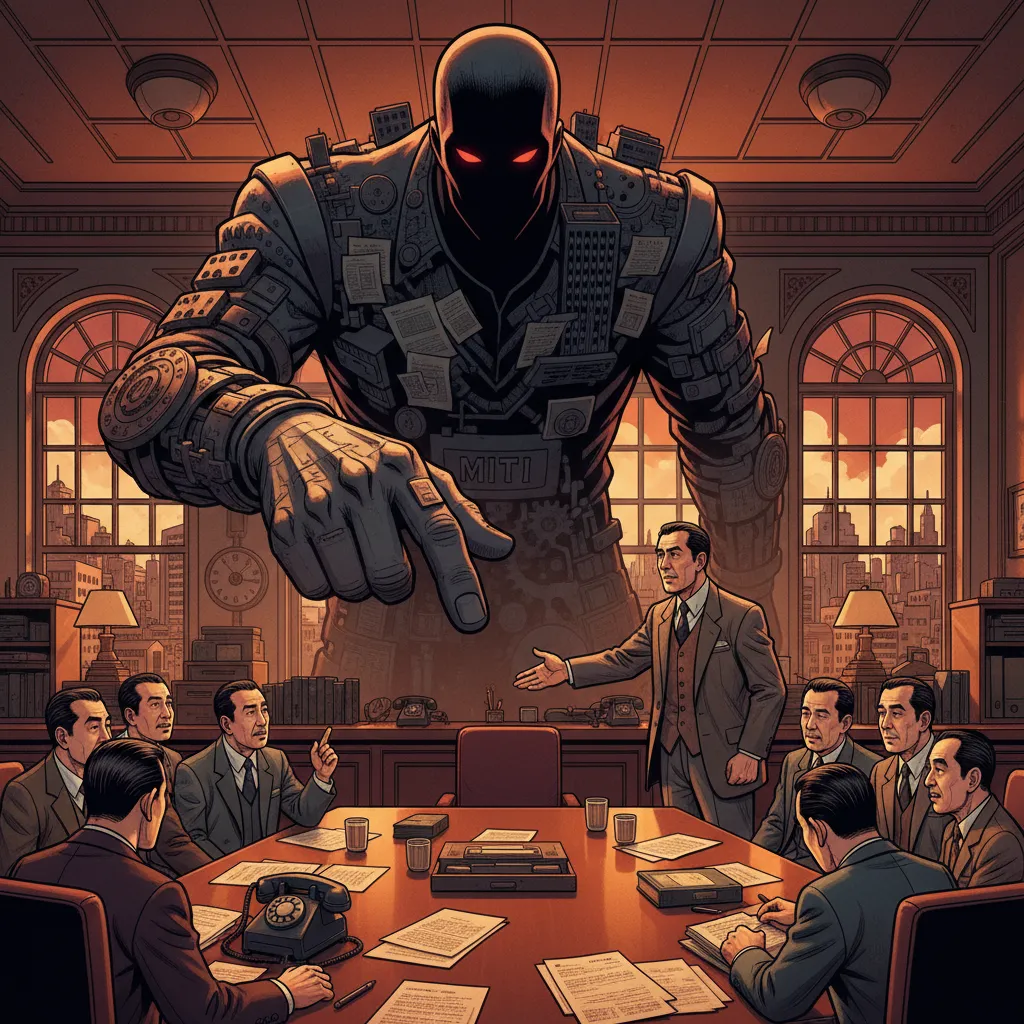
Now, let’s talk about the elephant in the room, or rather, the shadowy bureaucratic giant: MITI. The Ministry of International Trade and Industry was no joke. In post-war Japan, MITI was practically the conductor of Japan’s economic orchestra. Its mission was to rebuild and industrialize Japan, and it did so with an iron fist wrapped in a velvet glove. They identified key industries, encouraged mergers, provided subsidies, and, crucially, decided who got to do what. Their goal was to create globally competitive Japanese industries by avoiding fragmentation and fostering powerful national champions. Think of them as the ultimate central planners, with a vision for Japan’s future industrial landscape.
MITI believed in rationalization. They wanted a few strong players in each sector, not a chaotic free-for-all. They saw too many small companies as inefficient, diluting resources and hindering Japan’s ability to compete on the world stage. And by the early 1960s, as Japan’s economy began to boom, MITI turned its gaze to the burgeoning automotive industry.
Their plan was clear: consolidate. They wanted to reduce the number of passenger car manufacturers to just a handful – Toyota, Nissan, maybe one or two others. They believed that only large, integrated companies could achieve the economies of scale and the research and development capabilities needed to challenge the global giants like Ford and General Motors. New entrants, especially from unrelated industries, were seen as an unnecessary complication, a wasteful diversion of precious national resources.
And then there was Honda.
By the early 1960s, Honda was a global powerhouse in motorcycles. They had conquered the Isle of Man, launched the Super Cub, and were building a formidable international presence. Soichiro Honda, fueled by his racing success and his inherent drive to innovate, wasn’t content to stay in his lane. He looked at the motorcycle business and saw its limits. He looked at the automobile business and saw the future.
He wanted to build cars. And not just any cars, but Honda cars. Cars that reflected his engineering philosophy: innovative, high-performance, and accessible. He saw the shift in consumer demand, the growing affluence, the need for personal mobility beyond two wheels. He saw a massive, untapped market, and he believed his company, with its technical expertise and competitive spirit, was perfectly positioned to seize it.
But MITI had other ideas. They saw Honda as a motorcycle company. A very successful one, yes, but a motorcycle company nonetheless. Their official stance was that the Japanese automobile industry was already too crowded. They were actively pushing for mergers among existing carmakers. The last thing they wanted was a new player, especially one as headstrong and unpredictable as Soichiro Honda, muscling into the passenger car market.
They tried to discourage him. They tried to persuade him. They tried to warn him. Their message was subtle at first, then increasingly direct: “Stick to motorcycles, Honda-san. Leave the cars to the established players. It’s for the good of Japan.”
This was more than just a polite suggestion; it was an implicit threat. MITI had the power to deny licenses, restrict imports, control foreign exchange, and influence banking loans. They could make life very, very difficult for any company that defied their directives. For most Japanese corporations, challenging MITI was unthinkable. It was like challenging the very fabric of national prosperity. But Soichiro Honda was not “most Japanese corporations.” He was a maverick, an outsider, a man who had built his empire on defiance and sheer force of will. And he was about to go to war.
🚗 Chapter 8: The Automotive Gauntlet: Honda vs. The Machine
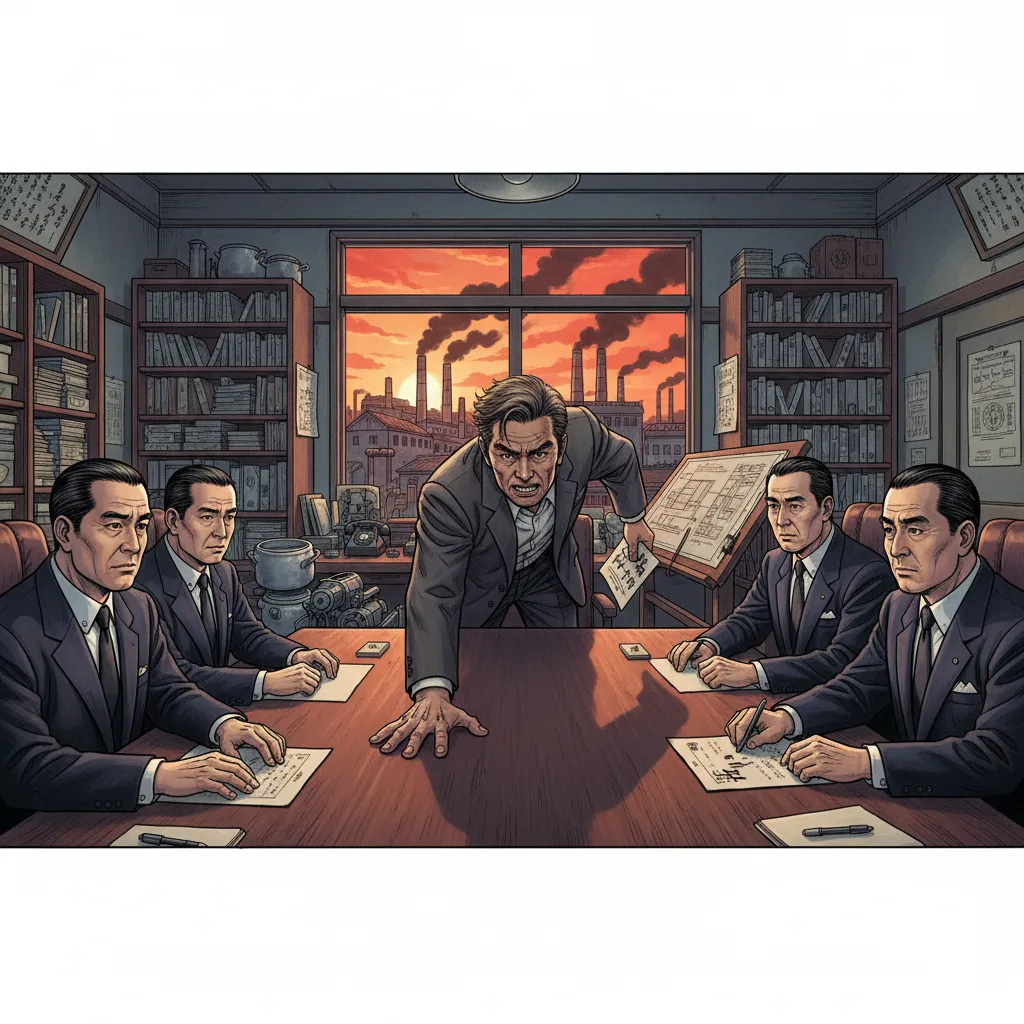
Soichiro Honda, a man who once melted aluminum pots to cast engine parts, was not about to be told by a bunch of bureaucrats what he could or could not build. MITI’s “guidance” felt like a direct assault on his entrepreneurial spirit, his engineering pride, and his vision for Honda Motor Company. Their message was clear: stay in your box. His response was equally clear: watch me build a bigger box.
In 1962, Honda defiantly unveiled its first automotive prototypes: the T360 mini-truck and the S360 sports car. These weren’t just concept cars; they were a middle finger to MITI’s restrictive policies. The T360 was a kei-truck, a tiny commercial vehicle, powered by a sophisticated 356cc DOHC engine derived from Honda’s racing motorcycles. The S360 was a roadster, a pure sports car, built for exhilaration.
MITI was furious. Their Automotive Industry Rationalization Plan was explicitly designed to prevent new entrants. They considered proposing a law that would effectively ban any company from building cars unless they had already been doing so for a significant period. This was a direct shot at Honda.
But Honda, ever the strategist, had already started production. The T360 went on sale in 1963, beating the proposed MITI legislation. It was a pre-emptive strike, a classic Honda move. He knew that once the product was in the market, it would be much harder for MITI to force him out. He wasn’t asking for permission; he was asking for forgiveness, or rather, daring them to stop him.
The S500, a slightly larger version of the sports car, followed shortly after, making Honda the 13th company to enter Japan’s passenger car market. MITI’s plans for consolidation were being actively undermined by one stubborn, brilliant engineer. The media loved it. The public was intrigued. Honda was painting himself as the underdog, the innovative challenger against the bureaucratic leviathan.
This wasn’t just about building cars; it was about a fundamental clash of philosophies. MITI represented centralized control, top-down planning, and risk aversion. Honda represented entrepreneurial freedom, bottom-up innovation, and a willingness to take audacious risks. He believed in the power of competition, in the market deciding what was best, not a committee of government officials.
“Without competition, there is no progress. We must welcome challenges, even if it means fighting against powerful institutions.”
Soichiro Honda famously declared, “If I didn’t want to build cars, I wouldn’t have built the company.” He saw the car as the natural evolution of his engineering prowess, the next frontier for his company. He argued that forcing companies to remain static was detrimental to innovation and ultimately to Japan’s long-term competitiveness. He believed that the best way to foster strong industries was through fierce internal competition, pushing everyone to do better.
The conflict became a public spectacle. MITI continued its efforts to “guide” Honda, even going so far as to suggest that Honda merge its automotive operations with another, established carmaker. Honda, of course, flatly refused. He would not compromise his independence, his vision, or his company’s future. He was willing to fight for his right to innovate, to compete, and to build the best damned cars on the planet. This wasn’t just a business decision; it was a battle for the soul of Japanese industry, a testament to the power of an individual vision against the inertia of institutional power. And the world was watching to see who would blink first.
💨 Chapter 9: The CVCC Coup: When Engineering Spoke Louder Than Bureaucracy
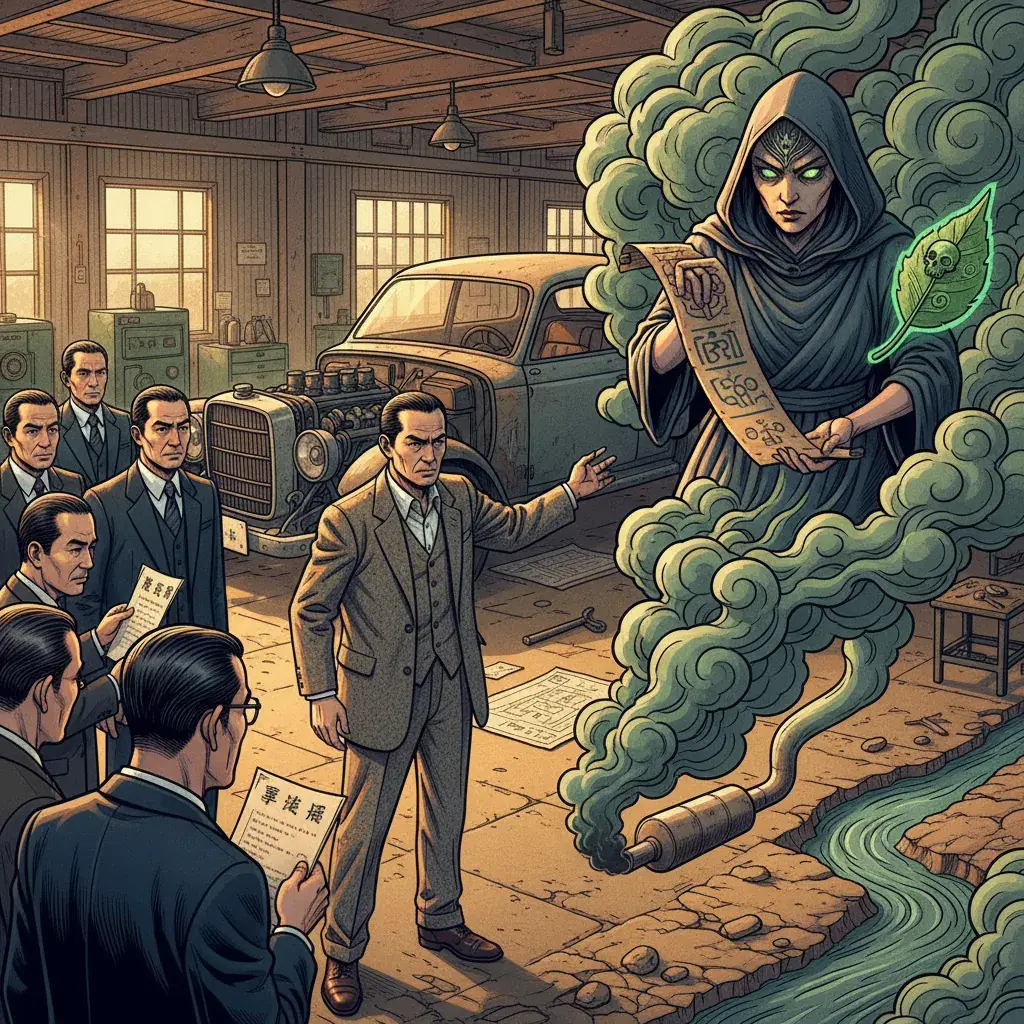
While Soichiro Honda was locked in a bitter struggle with MITI over his right to make cars, a new, even more formidable challenge emerged from an unexpected quarter: environmental regulation. Specifically, the U.S. Clean Air Act of 1970. This wasn’t just some minor tweak; it was a legislative sledgehammer that mandated drastic reductions in automotive emissions, particularly nitrogen oxides (NOx) and carbon monoxide (CO), by 1975.
The established American and European automakers cried foul. They lobbied furiously, arguing that the technology simply didn’t exist to meet such stringent standards. It was impossible, they claimed. It would cripple the industry. They were convinced that only expensive, inefficient catalytic converters could even come close, and those had their own problems. They essentially told the U.S. government, “You can’t do this to us.”
Soichiro Honda, however, saw a different kind of challenge. He saw an engineering problem, and he believed that given enough ingenuity, any engineering problem could be solved. This was his moment. While others complained, Honda’s engineers, under his relentless drive, hunkered down. They didn’t just want to meet the standards; they wanted to exceed them, with a superior solution.
Their breakthrough was the CVCC (Compound Vortex Controlled Combustion) engine. Instead of relying on expensive external devices like catalytic converters, the CVCC was an elegant, internal solution. It used a unique pre-chamber design with an extra intake valve for a lean fuel mixture. This created a stratified charge, allowing for much more complete combustion and significantly reducing emissions within the engine itself. It was revolutionary.
The CVCC engine not only met the stringent 1975 U.S. Clean Air Act standards without a catalytic converter, but it also offered excellent fuel economy at a time of rising oil prices. It was a technological marvel, an engineering tour de force that stunned the automotive world.
This wasn’t just a win for Honda; it was a humiliation for the established giants who had claimed impossibility. It was a vindication of Soichiro Honda’s unwavering belief in the power of engineering excellence and relentless innovation. He had taken on the biggest legislative challenge in automotive history and delivered a solution that was not only cleaner but also more efficient and cost-effective.
“If you make a superior product, the market will find you. If you solve problems others can’t, you create your own destiny.”
The CVCC engine became the heart of the Honda Civic, launched in 1972. The Civic, with its compact size, reliability, and incredible fuel efficiency (especially in the wake of the 1973 oil crisis), became an instant global sensation. It wasn’t just a car; it was a symbol of intelligent engineering, a beacon of hope for consumers grappling with rising costs and environmental concerns.
This was the ultimate “mic drop” moment for Soichiro Honda in his ongoing battle with MITI. While the bureaucrats had tried to keep him out of the automotive market, fearing he would dilute Japan’s efforts, Honda had not only entered but had done so with a technological leap that positioned him as a global leader in clean engine technology. He didn’t just build cars; he built better cars, cars that addressed the most pressing challenges of the era.
The success of the Civic and the CVCC engine cemented Honda’s place as a legitimate, formidable force in the global automotive industry. MITI could no longer deny his legitimacy. He had proven, through sheer engineering brilliance and market success, that his vision was not only viable but superior. He had used innovation as his weapon, and he had won. The blacksmith’s son had not only built a car company; he had redefined what a car company could be.
🌍 Chapter 10: The Global Empire: From Garage to Giant
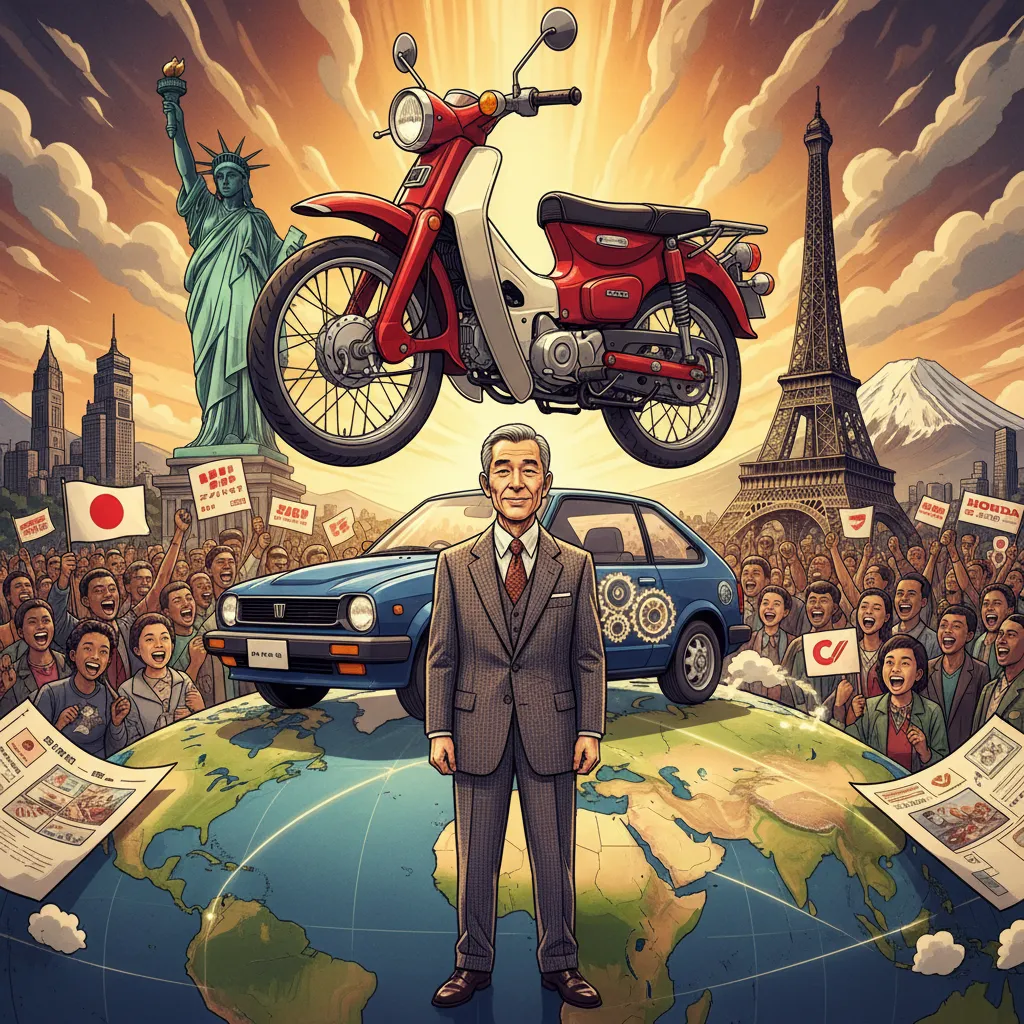
With the Super Cub dominating two wheels and the Civic, powered by the ingenious CVCC engine, conquering four, Honda Motor Company wasn’t just a Japanese success story anymore; it was a global phenomenon. Soichiro Honda’s philosophy of “building products close to the customer” became the blueprint for an aggressive, yet strategically brilliant, international expansion.
He wasn’t content to just export. He wanted to understand local markets, build local relationships, and manufacture locally. In 1978, Honda became the first Japanese automaker to establish a manufacturing plant in the United States, in Marysville, Ohio. This was another audacious move, directly challenging the “Big Three” American automakers on their home turf. Many questioned the wisdom of this, fearing cultural clashes and production inefficiencies. But Honda, with his characteristic stubbornness and belief in his people, pushed through.
The Marysville plant, which started with motorcycle production and quickly expanded to cars (the Honda Accord was the first car produced there in 1982), became a testament to Honda’s global vision. It wasn’t just about assembling cars; it was about replicating the Honda culture of quality, efficiency, and continuous improvement in a new environment. This move was a masterclass in market penetration and relationship building, creating jobs in America and demonstrating Honda’s commitment to its largest market.
The Accord, initially a compact hatchback, evolved into a mid-size sedan that perfectly captured the American desire for reliable, fuel-efficient, and well-built family cars. It consistently topped sales charts and garnered critical acclaim, becoming a staple of suburban driveways across the U.S.
Honda’s global footprint expanded rapidly across Europe, Asia, and other continents. They didn’t just sell cars and motorcycles; they built a powerful brand synonymous with quality, reliability, and engineering innovation. From lawnmowers to jet engines (yes, they eventually built jet engines!), Honda’s diverse product portfolio reflected Soichiro’s lifelong fascination with machinery and his belief that technology could improve people’s lives.
Crucially, Honda fostered a unique corporate culture. It was famously egalitarian for its time, eschewing strict hierarchies and encouraging open communication. Soichiro Honda himself was known for his hands-on approach, often visiting factory floors, talking directly to engineers and workers, and even getting his hands dirty. He valued practical experience and ingenuity over academic credentials. He believed in the power of the individual, empowering his employees to take risks and learn from their mistakes.
“What we need is not to be worried about failure, but to try again and again. If you fail, don’t be discouraged, but try harder.”
He also emphasized the “Three Joys” philosophy: the Joy of Buying (customer satisfaction), the Joy of Selling (dealer satisfaction), and the Joy of Creating (employee satisfaction). This holistic approach ensured that every stakeholder felt valued and invested in the company’s success. This wasn’t just a business strategy; it was a humanist approach to capitalism, reflecting Honda’s deep respect for people and their potential.
By the time he retired as president in 1973 (though he remained active as Supreme Advisor), Honda Motor Company was a global industrial giant. It was a testament to his vision, his engineering genius, his unparalleled stubbornness, and his ability to inspire those around him. He had taken a company born from the ashes of war, built on scrap metal and sheer will, and transformed it into a multinational powerhouse that continues to push the boundaries of mobility and technology. The garage tinkerer had built an empire, not by following rules, but by rewriting them, one innovation at a time.
🧘 Chapter 11: The Maverick’s Legacy: A Blueprint for Boldness
Soichiro Honda retired as president in 1973 at the age of 66, handing the reins to Kiyoshi Kawashima. This was another act of strategic brilliance and humility. He knew that for Honda Motor Company to truly endure, it needed to evolve beyond his singular personality. He famously said, “A company is not the property of one person, but of the society.” He stepped back, allowing new leadership to flourish, yet he remained a powerful, albeit informal, presence, always pushing for innovation, always challenging the status quo.
His retirement didn’t mean he stopped being Soichiro Honda. He continued to tinker, to invent, to express his passions. He even took up flying, earning a pilot’s license in his 70s. The man who chased the first car he saw as a child was now soaring above the clouds, a perfect metaphor for his boundless spirit.
So, what’s the enduring legacy of Soichiro Honda? It’s not just the millions of motorcycles and cars bearing his name. It’s not just the global empire that employs hundreds of thousands. It’s the blueprint he left behind for how to build a truly great company, how to innovate relentlessly, and how to defy the odds, even when those odds are stacked against you by your own government.
- Engineering as a Religion: For Honda, engineering wasn’t just a department; it was the soul of the company. Every problem was an engineering challenge, every solution a testament to human ingenuity. He understood that true competitive advantage comes from superior product and technological differentiation, not just marketing gimmicks. He pushed his teams to “build it better,” and that ethos became ingrained.
- The Power of Obsession: From perfecting piston rings to developing the CVCC engine, Honda’s career was marked by an obsessive focus on solving problems. He wasn’t afraid to fail, to iterate, to spend years chasing a solution. This relentless pursuit of excellence is a rare and powerful entrepreneurial trait.
- Customer-Centric Innovation: He didn’t just build what he could; he built what the customer needed, often before they even knew they needed it. The Super Cub’s ease of use and the Civic’s fuel efficiency were direct responses to market demands and societal shifts. He saw problems as opportunities to serve.
- Defiance as a Strategic Advantage: His stand against MITI wasn’t just a fit of pique; it was a calculated risk. He believed in the principles of free competition and innovation, and he was willing to fight for them. By refusing to be confined, he opened up entirely new markets for Honda and, in doing so, proved that bureaucracy can be outmaneuvered by sheer will and superior product. He taught us that sometimes, the biggest barrier isn’t competition, but the very system designed to “help” you.
- A Culture of Challenge: Honda fostered an environment where challenging assumptions, taking risks, and learning from mistakes were not just tolerated but encouraged. “Failure is not to be feared,” he often preached, “but to be learned from.” This culture of continuous improvement and daring experimentation is what allowed Honda to repeatedly reinvent itself and enter new, complex markets.
- Global Vision, Local Execution: His strategy of building manufacturing plants close to his customers, starting with the U.S., was revolutionary. It demonstrated a deep understanding of global markets and a commitment to being a truly international company, not just an exporter.
Soichiro Honda passed away in 1991, at the age of 84. His death marked the end of an era, but his spirit continues to infuse the company he built. He was a force of nature, a visionary who saw possibilities where others saw only obstacles. He didn’t just build cars and motorcycles; he built a legacy of audacious innovation, unwavering determination, and a profound belief in the power of the human spirit to overcome any challenge. His journey from a blacksmith’s dusty workshop to the pinnacle of global industry is not just a business story; it’s an epic saga of rebellion, resilience, and the relentless pursuit of a dream.
🏆 Chapter 12: MogulFeed Takeaway: The Unbreakable Spirit
Alright, you made it. The last drop in your glass, the final chapter in a story that should be tattooed on the soul of every aspiring entrepreneur. Soichiro Honda wasn’t just a guy who built some engines; he was a walking, talking, grease-stained lesson in what it means to be a true mogul, a disruptor, a titan of industry. And he did it all while battling forces far greater than any competitor on a racetrack.
What’s the MogulFeed takeaway here? It’s simple, but it ain’t easy:
1. Your Vision is Your Weapon; Don’t Let Anyone Dull It: Honda had a vision for personal mobility, for engineering excellence, and for his company’s future. MITI, a powerful government entity, tried to put him in a box. They said, “Stay a motorcycle company.” Honda essentially said, “Go pound sand.” He knew his capabilities, he understood the market, and he trusted his gut. For every entrepreneur out there: if you truly believe in your product, your service, your unique angle, you must be prepared to defend it, to fight for its right to exist, even against institutional inertia or established wisdom. Don’t let someone else’s fear or limited imagination dictate your destiny.
2. Innovation Isn’t a Buzzword, It’s a Blood Sport: Honda’s entire career was a testament to relentless innovation. From perfecting piston rings to the Super Cub’s accessibility to the CVCC engine’s clean-air triumph, he consistently out-engineered the competition and outsmarted regulators. He didn’t just make things; he made better things. In today’s hyper-competitive landscape, “good enough” is the fastest route to obsolescence. You have to be obsessed with pushing boundaries, solving problems others deem impossible, and continuously raising the bar. That’s your competitive moat, your shield, and your sword.
3. Embrace Failure as Fuel: Honda’s journey was paved with setbacks, explosions, broken parts, and early defeats on the racetrack. But he viewed every failure not as an end, but as data, as a lesson, as fuel for the next attempt. “Success is 99% failure,” remember? If you’re not failing, you’re not pushing hard enough. The market doesn’t reward perfection; it rewards persistence and the ability to learn faster than anyone else. Get up, dust yourself off, and get back to the drawing board.
4. Culture Eats Strategy for Breakfast, Lunch, and Dinner: Honda built a company culture rooted in challenge, independence, and a deep respect for the individual engineer. He empowered his people, fostered a spirit of daring, and ensured that everyone felt a part of the “Joy of Creating.” This isn’t just fluffy HR talk; it’s the engine that drove Honda’s global success. A strong, innovative culture will allow your company to adapt, grow, and defy expectations long after you’ve stepped away from the helm.
Soichiro Honda’s story is a raw, visceral reminder that entrepreneurship isn’t about fancy pitches or perfectly manicured projections. It’s about grit, vision, defiance, and a burning, unshakeable belief in what you’re building. He was the ultimate anti-hero, the rogue engineer who built an empire by refusing to play by anyone else’s rules. He proved that sometimes, to build the future, you first have to smash the past, and then, you just keep building, one piston stroke, one defiant stand, one revolutionary engine at a time. Now go out there and build something that makes the bureaucrats sweat.
💡 Key Insights
- ▸ Challenge the status quo, even if it's an entrenched government agency. Honda's defiance of MITI wasn't just stubbornness; it was a strategic refusal to be pigeonholed, driven by a deep conviction in his engineering capabilities and market vision. Entrepreneurs must be prepared to fight for their differentiation.
- ▸ Obsessive pursuit of technical excellence is a competitive moat. From piston rings to the CVCC engine, Honda's relentless focus on superior engineering allowed him to consistently outmaneuver competitors and regulatory hurdles, proving that innovation isn't just a buzzword, but a powerful weapon in the market.
- ▸ Don't just sell a product, sell a lifestyle and a dream. The 'You Meet the Nicest People on a Honda' campaign wasn't about engine specs; it was about transforming perceptions and opening up a new market. Understand your customer's unarticulated desires and build a bridge to them.
Sources
- The Official Global Honda Website - History ↗
- Wikipedia - Soichiro Honda ↗
- Forbes - The Legend of Soichiro Honda ↗
- Harvard Business Review - Managing for the Long Run: The Case of Honda Motor ↗
- The New York Times - Soichiro Honda, 84, Dies; Motorbike Innovator Built an Empire ↗
- MotorTrend - The Honda Story: How Soichiro Honda Built an Empire ↗