Wang Xing: The Relentless Iteration Behind Meituan's Local-Commerce Empire
After several startup attempts, Wang Xing built Meituan into a vast local-services platform by combining group buying, food delivery, travel, payments, and relentless execution.

View all stories about this mogul
Wang Xing built Meituan only after watching several earlier ideas lose momentum or control. He tried social networks, microblogging, and other internet products before committing to local commerce. The pattern was not random failure. Each attempt taught him how quickly Chinese consumer platforms could scale—and how brutally competitors could copy, subsidize, and consolidate a market.
Meituan became the durable expression of those lessons. It started in group buying, survived a war involving thousands of rivals, merged with Dianping, and expanded into food delivery, hotels, travel, groceries, and merchant services.
How did Wang Xing turn repeated setbacks into an operating advantage?

Wang studied electronic engineering at Tsinghua University and later went to the United States for graduate study before returning to China. He was fascinated by social networks and built Xiaonei, a campus-focused service often compared with Facebook.
Xiaonei gained traction but was sold amid financing pressure and later became part of Renren. Wang then created Fanfou, a microblogging service. It grew, but regulatory interruption damaged its momentum while larger rivals developed the category.
These experiences formed a distinct founder psychology. Wang learned that being early was not enough. A company needed capital, operational control, regulatory awareness, recruiting strength, and the endurance to survive subsidy wars.
In 2010 he launched Meituan as a group-buying site. The Groupon model was spreading globally, and China filled with competitors. Deals were easy to copy; durable merchant relationships and disciplined spending were harder.
Wang reportedly emphasized efficient market selection and careful expansion while many rivals burned cash on indiscriminate growth. Meituan survived the consolidation because it treated group buying as local operations rather than a page of coupons.
Why did food delivery become Meituan’s engagement engine?
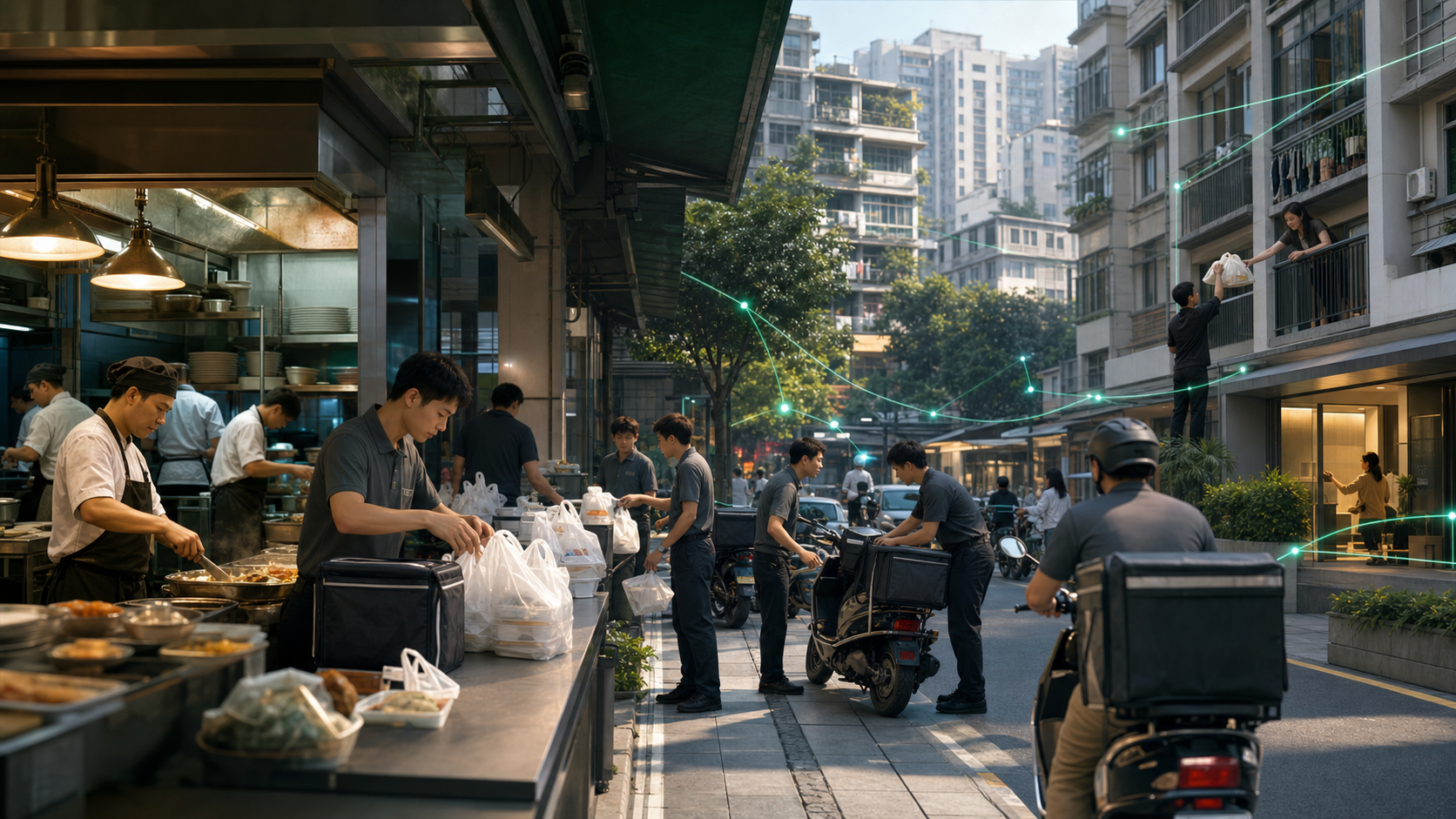
Group-buying deals are occasional. Food is frequent. Moving into restaurant delivery gave Meituan a reason to appear on a user’s phone every week or even every day.
Frequency produces powerful economics. More orders attract couriers and merchants. Greater density can shorten routes and improve estimated arrival times. Transaction data helps rank restaurants, target promotions, detect fraud, and predict demand.
But delivery is an operationally heavy marketplace. Algorithms must match orders to riders while accounting for kitchen preparation, traffic, weather, elevators, and customer expectations. Aggressive time targets can transfer pressure to couriers, creating safety and labor concerns.
Meituan developed merchant software, advertising, payments, and data services around the core transaction. A restaurant was not merely buying an order. It could rely on the platform for discovery, fulfillment, promotions, and operational tools.
The model drew intense competition, especially from Alibaba-backed Ele.me. Subsidies trained consumers to compare prices and forced platforms to spend for market share. Meituan’s advantage came from execution at scale, not permanent freedom from competition.
How did the Dianping merger create a local-services superapp?

Dianping had built a deep database of restaurant reviews and local discovery, similar in spirit to Yelp. Meituan brought transaction volume and operating momentum. Their 2015 combination removed a major rival and joined content, search, deals, and fulfillment.
The merged company could influence the entire consumer journey. A user might discover a restaurant through reviews, buy a deal, reserve a table, order delivery, or pay through related services. The platform could then sell advertising or software to the merchant.
Hotels and travel expanded the model. Meituan could acquire users through food and cross-sell higher-value services. Its 2018 Hong Kong listing gave it public capital and a global investor base.
The superapp label can obscure the hard part. Services do not become synergistic merely because they share an icon. Meituan’s strongest adjacencies reuse local demand, mapping, payments, merchant relationships, and logistics. Businesses without that overlap risk becoming expensive distractions.
Wang’s “Food + Platform” strategy expressed this discipline: use food-related demand as the high-frequency anchor, then build a platform around local life.
What can threaten Meituan’s local-commerce empire?

Regulation is a permanent strategic variable for Chinese platform companies. Authorities have scrutinized exclusivity, merchant fees, algorithmic management, data use, and courier protections. Compliance can raise costs, but weak protections can damage workers and public trust.
Delivery margins remain structurally constrained. Consumers value low prices, merchants protect already-thin restaurant economics, and riders need sustainable earnings. Advertising and merchant services can improve monetization, but the platform cannot ignore the physical cost of fulfillment.
Competition keeps changing shape. Short-video platforms can redirect local discovery through influencers and livestreams. E-commerce groups can subsidize grocery or instant retail. Autonomous delivery vehicles and drones may change portions of the network, but dense cities still contain elevators, security gates, weather, and human exceptions.
Meituan’s scale also creates responsibility. An algorithmic adjustment can affect millions of orders and a vast workforce. Efficiency gains that look small in a dashboard can meaningfully change a rider’s day or a merchant’s margin.
Frequently asked questions
What did Wang Xing create before Meituan?
His earlier ventures included Xiaonei, a campus social network, and Fanfou, a microblogging service.
When was Meituan founded?
Meituan launched in 2010 as a group-buying platform.
Why was the Dianping merger important?
It combined Meituan’s transaction and delivery strength with Dianping’s local reviews and discovery, creating a broader local-services platform.
The real lesson is that iteration becomes an advantage only when learning compounds. Wang did not win because failure made him heroic. He won because each venture sharpened his understanding of capital, competition, local operations, and the value of high-frequency demand.
💡 Key Insights
- ▸ Wang Xing treated failed ventures as iterations that built product, recruiting, and competitive knowledge.
- ▸ Meituan's power comes from linking consumer demand, merchant software, couriers, payments, and local discovery.
- ▸ High order frequency creates data and distribution advantages, but delivery scale carries labor and regulatory responsibility.
- ▸ Expansion works when adjacent services share users and infrastructure; diversification without operational overlap destroys focus.