William Boeing: Building an Aircraft Company Before Aviation Had a Market
William Boeing combined timber, engineering, air mail, and manufacturing discipline to build an aviation system before passenger demand could support one.
View all stories about this mogul
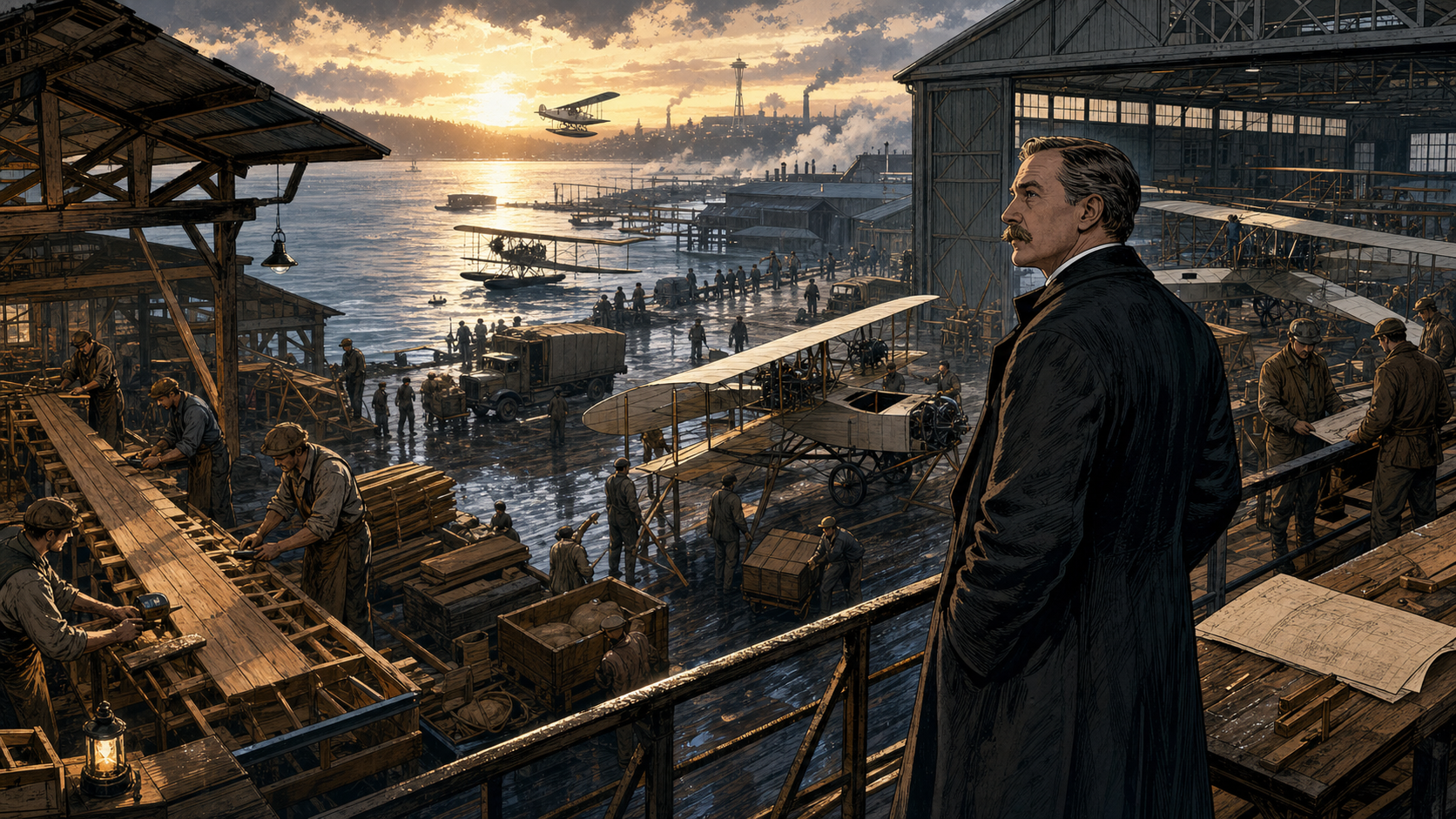
William Boeing entered aviation when aircraft were fragile experiments, customers were scarce, and the supporting industry barely existed. His advantage was the ability to turn fascination into an integrated manufacturing system.
He brought timber knowledge, capital, engineering partners, and a willingness to build missing capabilities inside the company. Aircraft led to mail routes; routes created demand for better aircraft; manufacturing experience made larger programs possible.
The structure became so powerful that the United States government eventually forced it apart. Boeing’s story is therefore both a creation narrative and an early warning about vertical integration in strategic infrastructure.
How did William Boeing turn timber expertise into airplanes?
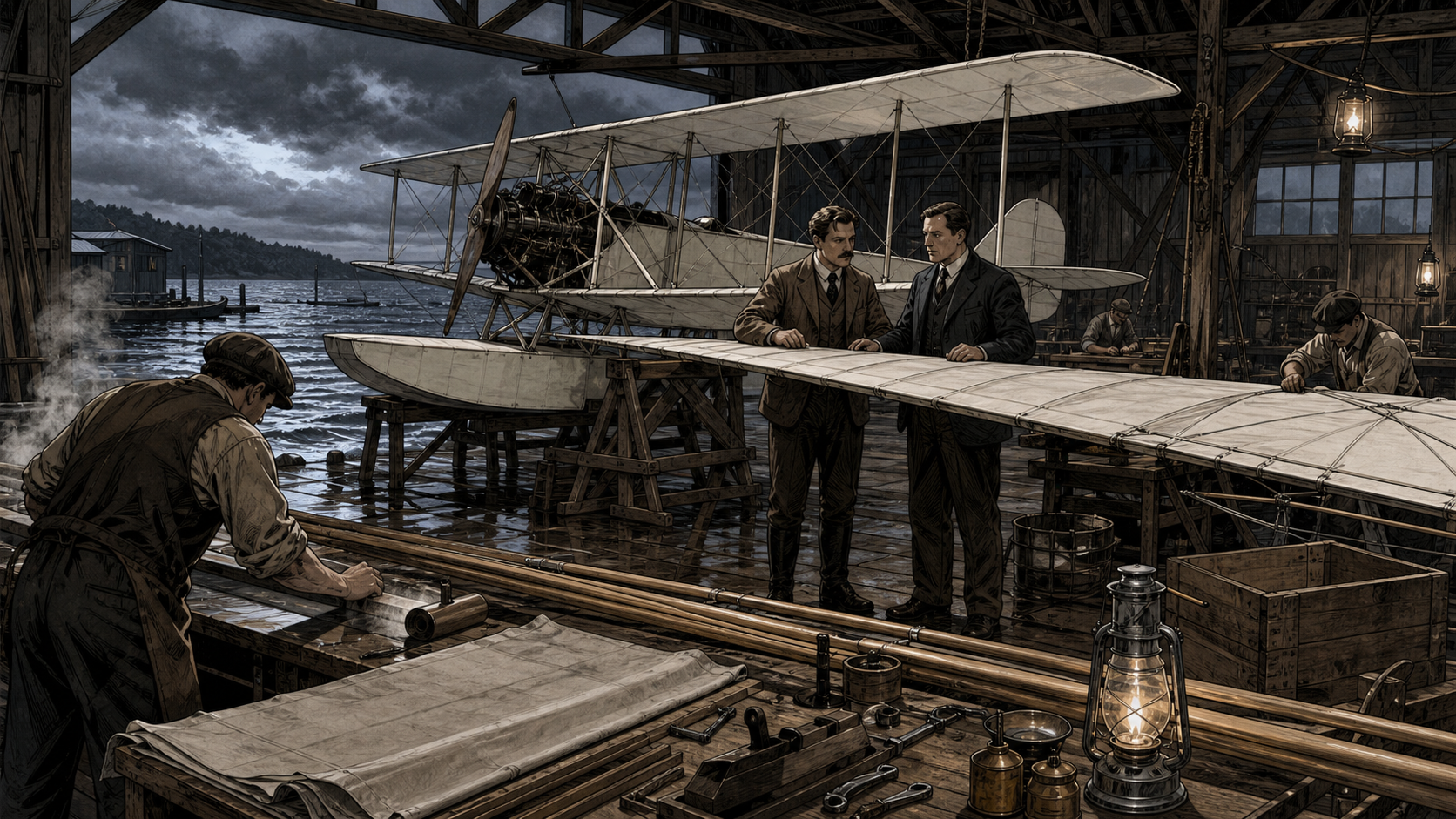
Boeing was born in 1881 and built wealth in the timber business in the Pacific Northwest. Wood knowledge mattered in early aviation because aircraft structures depended on carefully selected, shaped, and joined materials. Seattle also offered water for seaplane testing and access to skilled industrial labor.
After learning to fly and becoming dissatisfied with an aircraft he owned, Boeing worked with naval engineer George Conrad Westervelt to design a better seaplane. Their first B&W aircraft flew in 1916, and Boeing organized the Pacific Aero Products Company, soon renamed Boeing Airplane Company.
The timing was difficult. Military demand during the First World War provided contracts, but orders collapsed after the armistice. The company survived partly by producing furniture and other goods while searching for an aviation market.
That survival period exposed the difference between a prototype and an industry. Engineering talent was not enough; the company needed repeatable manufacturing, paying customers, trained pilots, maintenance, and reasons to fly regularly.
Boeing stayed because he believed the technology would become infrastructure. His timber background encouraged control over material quality, while his capital gave the company time to learn before civilian demand matured.
Why did air mail create the first durable flywheel?
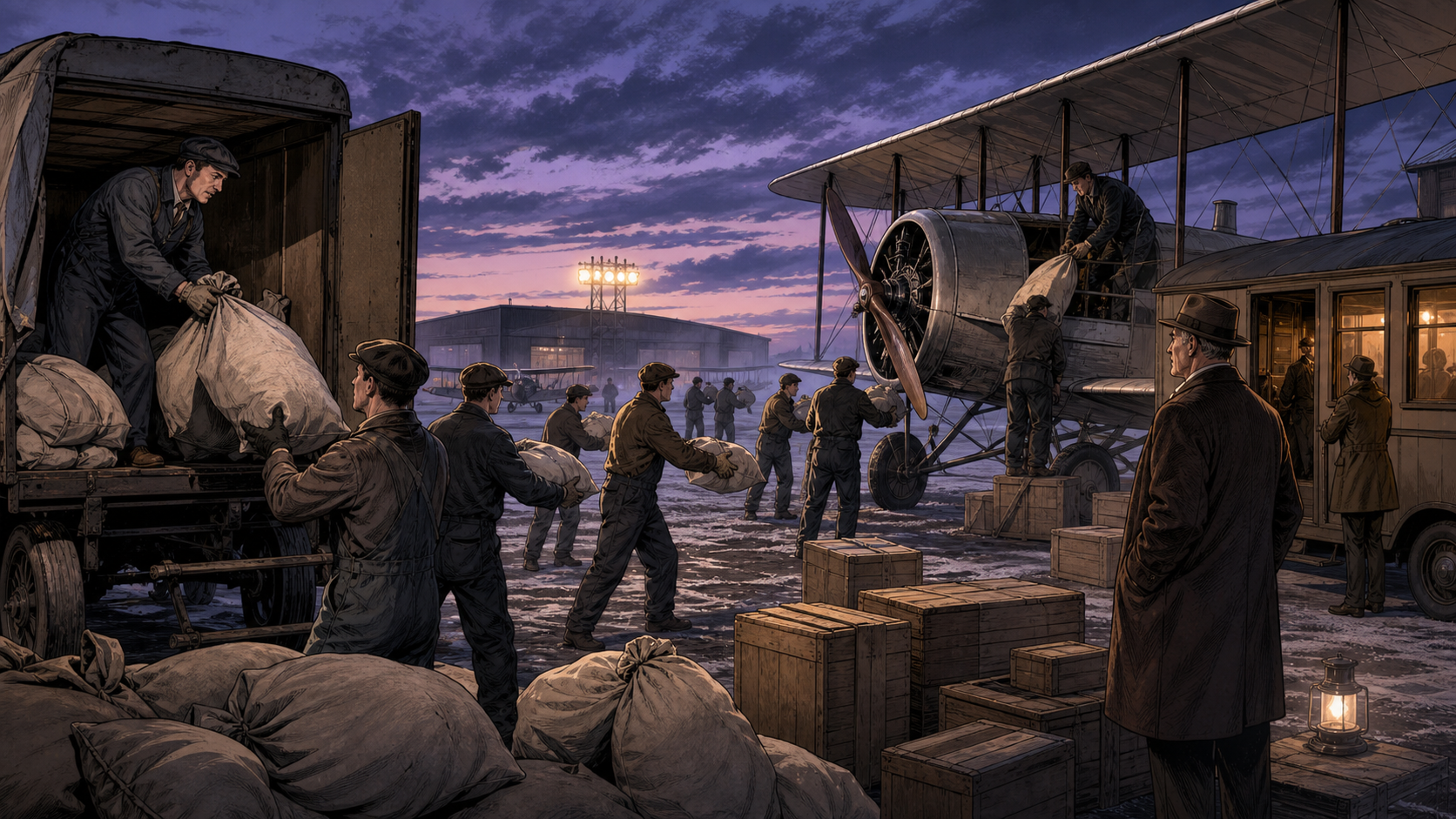
Federal air-mail contracts gave private aviation predictable revenue. Boeing built aircraft for the market, then created an airline operation to carry mail. Passenger service could develop around routes already justified by postal traffic.
The company expanded across the chain. Aircraft manufacturing, engines, airlines, maintenance, and route operations reinforced one another. Operating planes revealed what crews needed; manufacturing could respond; improved equipment made routes more reliable; reliable routes attracted more business.
This integration helped aviation cross the gap between spectacle and utility. Customers did not need to believe in a distant mass market. Mail payments supported scheduled operation while passenger confidence and volume grew.
The model also benefited from public policy. Government contracts can accelerate a strategic technology, but they invite scrutiny over allocation, competition, and political influence. A company that grows around one policy framework must be prepared for that framework to change.
By the early 1930s, Boeing’s interests had become part of United Aircraft and Transport, a vast combination spanning manufacturing and airlines. Its efficiency looked like dominance to regulators and rivals.
What did the breakup teach—and what did Boeing leave behind?
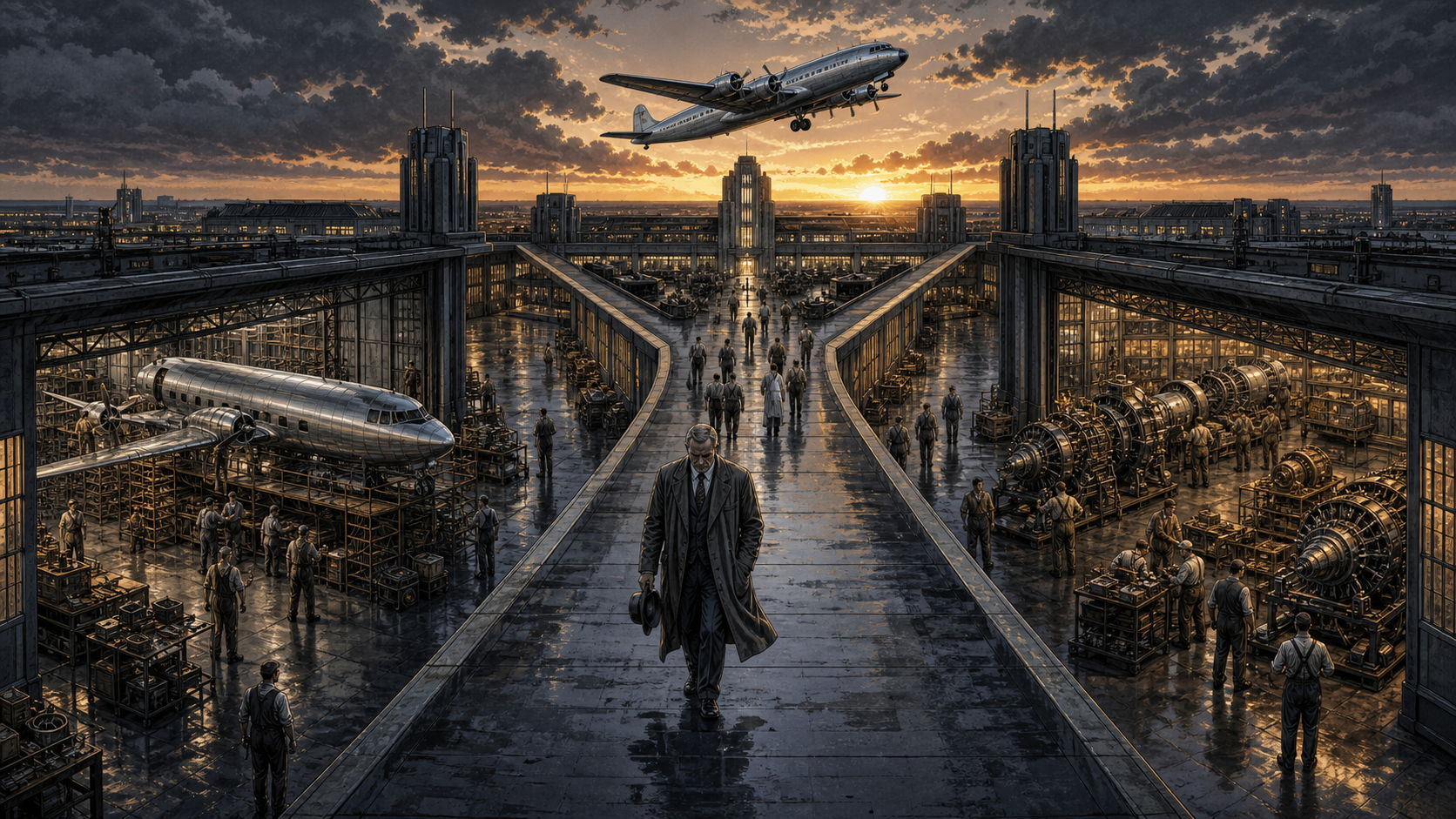
After controversy over air-mail contracting, the Air Mail Act of 1934 required the separation of aircraft manufacturing from airline operations. The integrated group broke into companies whose descendants included Boeing, United Airlines, and United Aircraft.
William Boeing stepped away from the aviation business. The company bearing his name continued to develop larger and more advanced aircraft, eventually becoming central to commercial jets, defense, and space.
The breakup showed that a business architecture can be commercially coherent and politically unacceptable at the same time. Integration reduced coordination costs in a young industry, but it also concentrated control over access to an essential network.
Boeing’s most durable contribution was not one airframe. It was the conversion of aviation into an industrial discipline: materials, design, testing, production, operations, and routes connected in a learning loop.
New industries often require founders to build missing layers themselves. The harder strategic question comes later: which layers remain necessary advantages, and which become liabilities once the market, suppliers, and rules mature?
💡 Key Insights
- ▸ New industries often begin as integrated systems because specialized suppliers do not yet exist.
- ▸ Government procurement can create a market while also shaping its structure and political risk.
- ▸ Manufacturing discipline turns experimental technology into dependable infrastructure.
- ▸ Regulation can dismantle a successful structure even when demand for the underlying product remains.