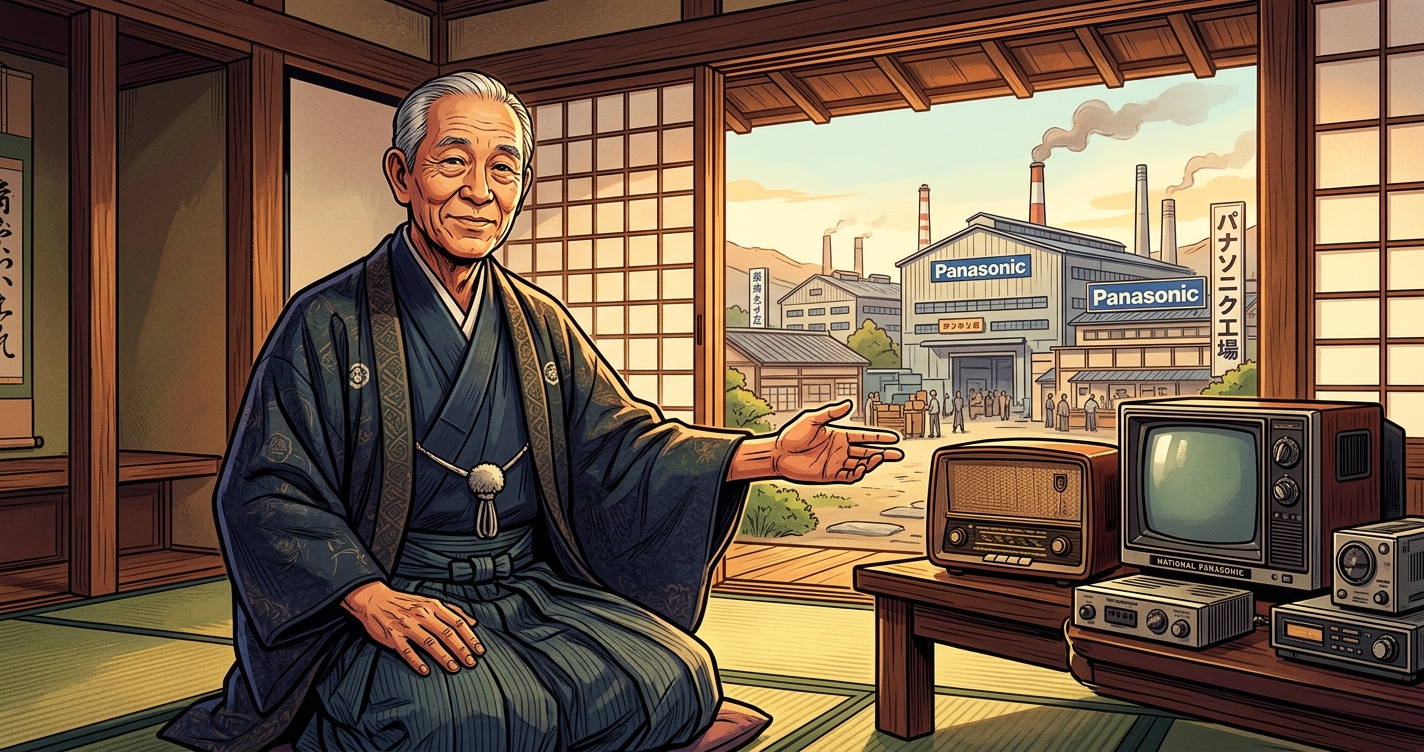
The Lightning Rod of Industry: How Konosuke Matsushita Forged Panasonic and Became Japan's 'God of Management'
From a dirt-poor childhood in rural Japan to building a global electronics empire, Konosuke Matsushita's journey is less a business story and more an epic saga. This isn't just about Panasonic; it's about the relentless pursuit of purpose, the brutal lessons of survival, and the birth of a management philosophy so potent it reshaped an entire nation's industrial soul.
View all stories about this mogul
⚡ Chapter 1: The Spark in the Darkness
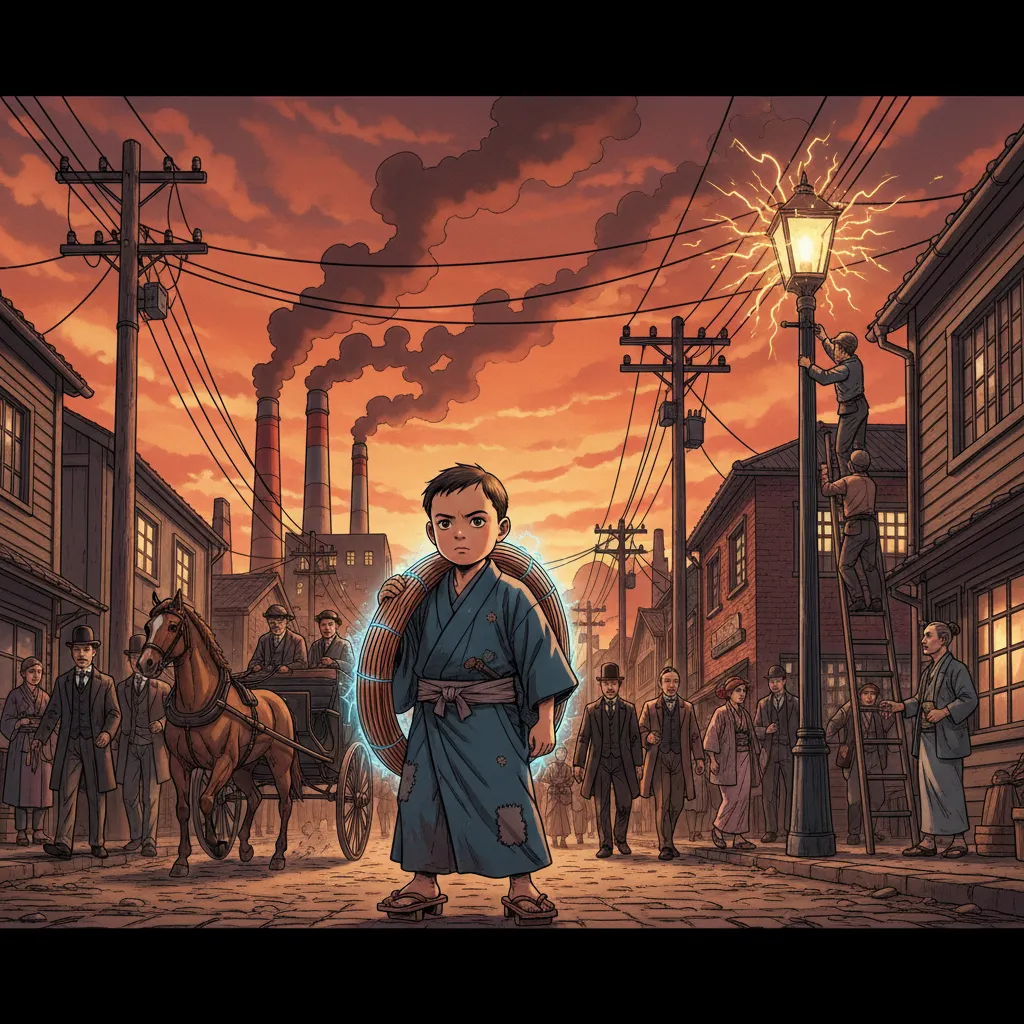
Picture this: It’s Japan, the late 19th century. A land still wrestling with the echoes of feudalism, but rapidly electrifying, industrializing, and hurtling into the future. Imagine a time when electric lights were a luxury, a novelty, a flicker of magic in homes that largely still relied on oil lamps. Now, picture a kid, Konosuke Matsushita, born in 1894, into a world that would chew up and spit out most without a second thought. A kid whose family, once landowners, was utterly decimated by a speculative rice market crash. Poverty? He didn’t just meet it; he lived in its grimy, unrelenting embrace.
This isn’t your typical Silicon Valley “two guys in a garage” origin story. This is a tale forged in the fires of deprivation, hammered out on the anvil of sheer will, and polished by a vision so profound it would eventually touch nearly every household on the planet. We’re talking about the founder of Panasonic, a name synonymous with electronics, innovation, and unwavering quality. But before it was Panasonic, before it was a global behemoth, it was just Matsushita, a skinny kid from a dirt-poor village in Wakayama Prefecture, staring down a future that offered precisely nothing.
No trust fund. No fancy education. Just a gut full of ambition and a mind that saw problems as puzzles waiting to be solved. This isn’t a story of genius handed down; it’s a story of genius earned. It’s about a man who, through sheer grit and an almost spiritual understanding of human nature, built an empire that would not only endure two World Wars, economic collapse, and relentless competition but would also inspire an entire nation. They didn’t just call him a successful businessman; they called him Japan’s ‘God of Management’. And by the time we’re done here, you’ll understand why that title isn’t hyperbole. It’s an understatement.
So, grab your drink, lean in close, because this isn’t just history. This is a blueprint for building something that lasts, a testament to the power of a relentless spirit, and a damn good story about a kid who started with nothing and changed everything.
🌩️ Chapter 2: A Childhood Forged in Fire and Iron
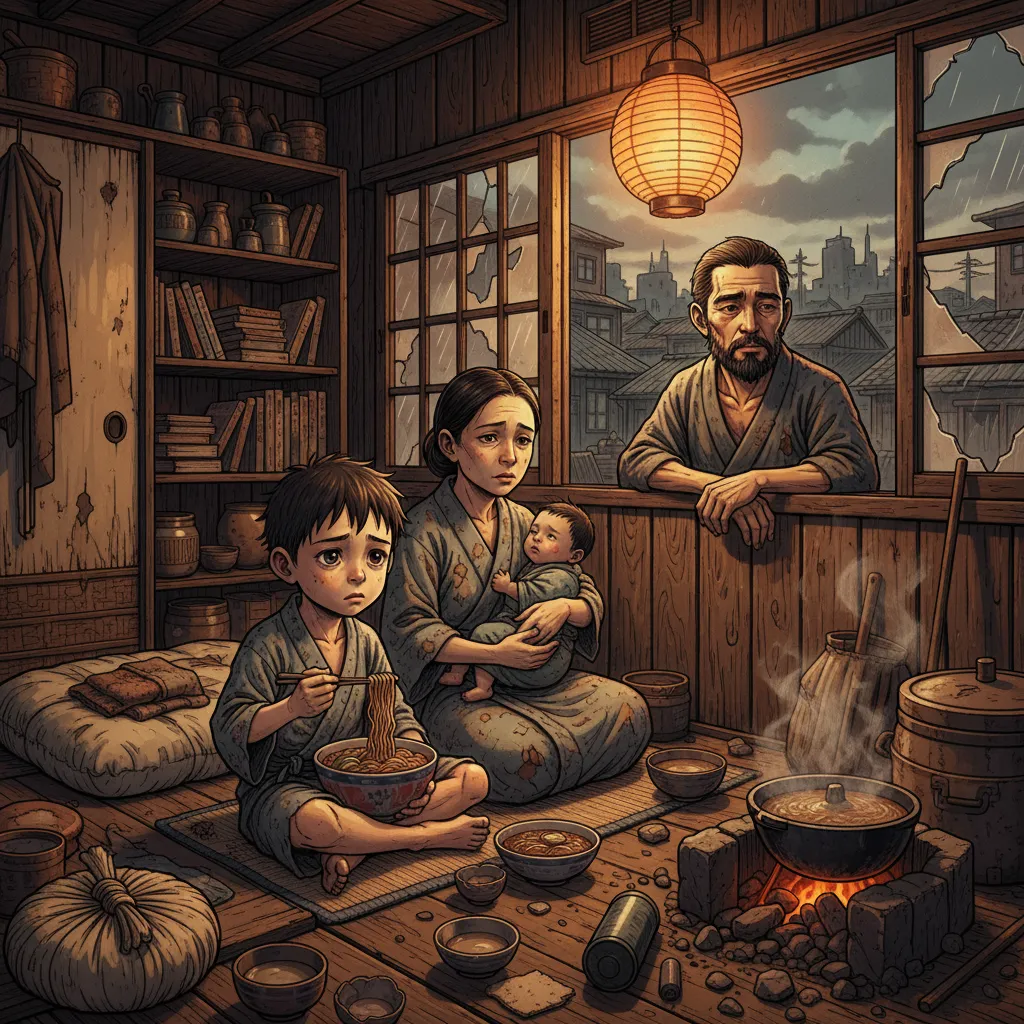
The early years of Konosuke Matsushita read like a Dickensian novel, but with less fog and more ramen. His childhood wasn’t just tough; it was brutal. By the age of four, his family had lost everything – their land, their fortune, their standing. They were forced to move to Osaka, a bustling, chaotic industrial hub, to scratch out a living.
At nine years old, most kids are worried about scraped knees or what’s for dinner. Konosuke was worried about providing for his family. He was pulled from school and sent to work as an apprentice in a brazier shop, making charcoal stoves. Imagine the scene: a small, frail boy, barely able to reach the workbench, sweating over hot coals, learning the harsh realities of manual labor. This wasn’t some summer job; this was his life.
“A life without hardship is a life without growth. My early struggles taught me the value of perseverance, the dignity of labor, and the absolute necessity of self-reliance.”
This brazier shop stint lasted less than a year. The business went under. Then came a bicycle shop, another apprenticeship, another grind. He polished bikes, ran errands, learned the mechanics of gears and chains. Each job, each hardship, was a brutal, accelerated education. He was learning resilience, problem-solving, and the sheer force of will required to survive in an unforgiving world. He saw firsthand how businesses succeeded and, more often, how they failed. He was a sponge, soaking up every lesson, every observation, even if he didn’t realize it at the time.
Then, a new force began to sweep through Osaka – electricity. The city was illuminating, literally. Electric trams zipped through the streets, homes were slowly being wired, and the air buzzed with a sense of the future. For a young, observant Konosuke, this wasn’t just a technological advancement; it was a revelation. It was a beacon, a sign pointing towards where the world was heading. He saw the glow of possibility, the hum of untapped potential.
He quit the bicycle shop and, at 15, took a job with the Osaka Electric Light Company. This wasn’t just a career move; it was a pivot into destiny. Here, he started as an assistant wiring homes, climbing poles, dealing with the raw power that was transforming society. He learned the intricacies of electrical engineering, the importance of safety, the delicate balance between innovation and reliability. He saw the crude, often inefficient electrical components of the day and, in his quiet, observant way, started to think: “There has to be a better way.” This wasn’t just a job; it was his unofficial university, his personal laboratory, his proving ground. The seeds of Panasonic were being sown, not in a classroom or a lab, but in the sweat and grime of a working-class kid determined to make his mark.
💡 Chapter 3: The Lightbulb Moment (Literally)
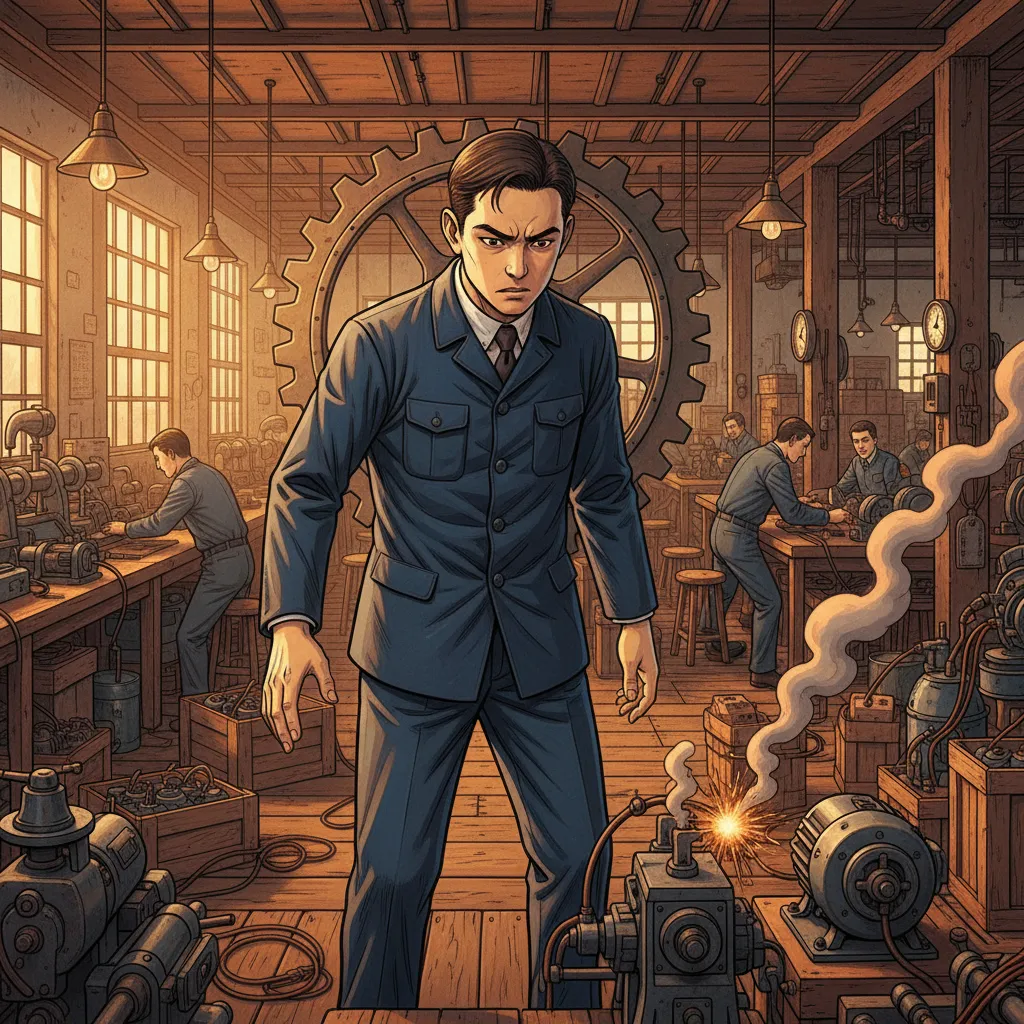
By his early twenties, Konosuke Matsushita was a young, ambitious, and increasingly frustrated technician at Osaka Electric. He was good at his job, even promoted to inspector, but he saw flaws everywhere. The electric light sockets of the era? Clunky, unreliable, and inefficient. They worked, sure, but they were far from elegant or truly practical for the average household.
He started tinkering. Not on company time, mind you. This was late nights, after grueling shifts, in the cramped, humble home he shared with his wife, Mumeno, and her brother, Toshio Iue. (Remember Toshio, he’s important later – he’d go on to found Sanyo Electric, another giant.) These weren’t elaborate labs; this was a kitchen table, a few tools, and a relentless desire to build something better. He conceived of an improved light socket, one that was more durable, easier to use, and more efficient. He poured his meager savings, his limited free time, and every ounce of his ingenuity into this personal project.
He even pitched his idea to his superiors at Osaka Electric. Their response? A shrug. “Not interested.” “Too complicated.” “Stick to your job, kid.” Ouch. A lesser man might have folded. A pragmatic man might have listened to the corporate wisdom and let the idea die. But Matsushita wasn’t a lesser man. He wasn’t just pragmatic; he was driven by an almost messianic belief in the potential of his invention. He knew he had something. He felt it in his bones, in the hum of the electricity he understood so intimately.
This rejection, this dismissal, was the crucial push. It was the universe telling him: “If you want it done right, do it yourself.” In 1917, at the age of 23, with just 100 yen (a paltry sum even then, barely enough to buy a bicycle) and the unwavering support of Mumeno and Toshio, he quit his stable job. He walked away from security, from a guaranteed paycheck, from the comfort of the known. He traded it all for a tiny, leaky house in Osaka and a dream that everyone else thought was insane.
Imagine the scene: a young man, a wife, a brother-in-law, huddled together in a small, rented house. Their entire “factory” was a corner of a room, their capital virtually nonexistent. They were literally building light sockets by hand, piece by laborious piece, fuelled by ambition, cheap rice, and the terrifying knowledge that failure wasn’t an option. This wasn’t just a business; it was a defiant act of creation, a desperate gamble against the odds. It was the moment Matsushita Electric Housewares Manufacturing Works – the precursor to Panasonic – was born. And it started with a lightbulb moment that ignited a global empire.
🛠️ Chapter 4: From Humble Sockets to the World’s First Bullet Lamp

The early days of Matsushita Electric Housewares Manufacturing Works were a brutal grind. They churned out those improved light sockets, but sales were slow. The market was skeptical of an unknown upstart. They were on the brink of collapse, facing insolvency within months. The dream was about to flicker out.
Then came the first stroke of entrepreneurial genius, a pivot that would define Matsushita’s approach to business: listen to the market, solve a real problem, and innovate relentlessly. A wholesaler, seeing their desperation but impressed by their quality, approached them with a custom order: fan insulators. It wasn’t Matsushita’s grand vision, but it was a lifeline. They took the order, executed it flawlessly, and the small profit kept them afloat. This wasn’t just a transaction; it was a lesson in agility and responsiveness.
But Matsushita wasn’t content just making insulators. His eyes were always scanning the horizon, looking for the next spark, the next need. He observed how people used their bicycle lamps – often dim, unreliable, and requiring frequent battery changes. The standard battery-powered lamp was more of a suggestion of light than actual illumination.
His mind clicked. What if he could create a durable, bright, and long-lasting bicycle lamp? He envisioned a lamp that was more like a small bullet, sleek and robust, powered by a battery that would last significantly longer than anything on the market. This wasn’t just an incremental improvement; it was a leap. It was the “bullet-shaped battery-powered lamp,” and it would become their breakout product.
“Our mission is to create products that improve people’s lives, not merely to sell goods. When you focus on solving problems for your customers, success naturally follows.”
The first prototypes were built with the same sweat and determination as the light sockets. Konosuke himself was deeply involved in the design and manufacturing, obsessed with quality and efficiency. When the “bullet lamp” was finally ready in 1923, it was a revelation. It offered 30-50 hours of continuous light, a monumental improvement over the 2-3 hours of competitors. It was robust, reliable, and suddenly, every cyclist in Japan wanted one.
The demand exploded. Matsushita Electric went from near-bankruptcy to booming. They hired more workers, expanded their tiny workshop, and started to gain a reputation for quality and innovation. This wasn’t just about a lamp; it was about building trust. It was about proving that a small, unknown company could deliver something truly superior.
This success wasn’t accidental. It was the result of Matsushita’s core principles already taking shape:
- Customer-centricity: He didn’t invent a product and hope people wanted it; he observed a need and engineered a solution.
- Quality obsession: He refused to compromise on the durability and performance of his products.
- Relentless innovation: He wasn’t afraid to challenge existing norms and create something entirely new.
The bullet lamp was more than a product; it was the slingshot that launched Matsushita Electric onto the national stage. It proved that in the cutthroat world of early 20th-century industry, a focused vision and an unwavering commitment to excellence could, quite literally, illuminate the path to success.
🌊 Chapter 5: The Philosophy of Abundance – “Running Water” and the Mission of Business
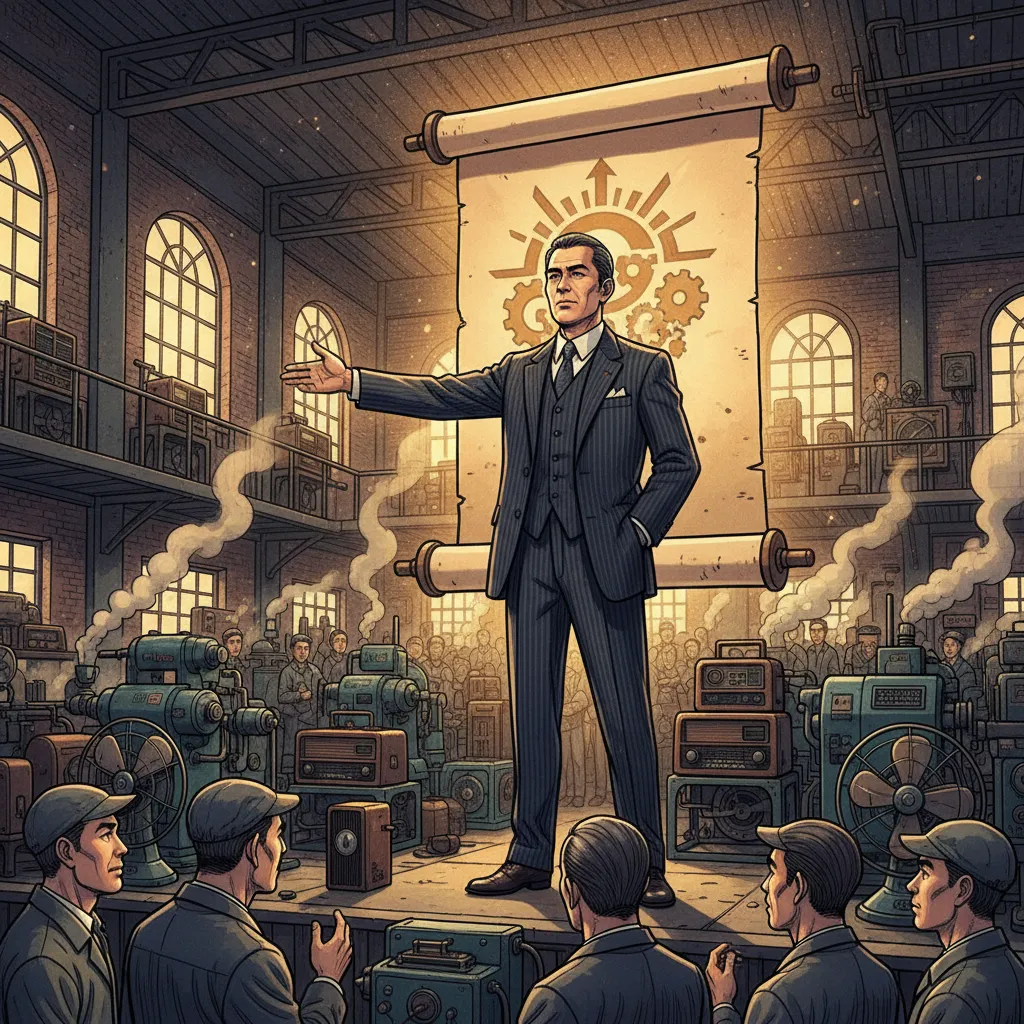
As Matsushita Electric grew, Konosuke Matsushita realized something profound. It wasn’t enough to just make great products. There had to be a deeper purpose, a guiding philosophy that transcended mere profit. This realization wasn’t an academic exercise; it was born from his own experiences with poverty and his vision for a better society.
In 1932, at a general meeting of his employees, Matsushita unveiled his revolutionary management philosophy. He didn’t talk about quarterly earnings or market share. He talked about the “mission of a manufacturer.” He argued that the purpose of business wasn’t to enrich the owners, but to “banish poverty from the land, to bring prosperity to all people.” He articulated this concept using a powerful metaphor: “Like water from a faucet.”
Think about it: water is essential. It flows freely, abundantly, and cheaply. It’s available to everyone. Matsushita believed that manufactured goods should be the same. They should be plentiful, of high quality, and affordable, constantly improving the lives of ordinary people. He wanted to make a washing machine not for the wealthy, but for the working mother. He wanted a radio not for the elite, but for every family in Japan to connect with the world.
“The purpose of an enterprise is to contribute to society by providing goods and services of high quality at reasonable prices, thereby improving the lives of people. Profits are merely the reward for fulfilling this mission effectively.”
This was a radical concept in an era often dominated by exploitative labor practices and a “profit-at-all-costs” mentality. Matsushita was essentially proposing a form of purpose-driven capitalism decades before the term was even coined. He believed that if a company genuinely served society, profits would naturally follow, like water flowing downhill. To him, profit was not the goal, but the result of fulfilling a higher purpose.
This philosophy was further distilled into what he called “The Matsushita Basic Business Principles”:
- Contribution to Society: Business exists to improve life.
- Fairness and Honesty: Integrity in all dealings.
- Cooperation and Teamwork: Collective strength.
- Untiring Effort for Improvement: Constant innovation and self-correction.
- Courtesy and Humility: Respect for all.
- Adaptability: Embracing change.
- Gratitude: Appreciation for customers, employees, and society.
He wasn’t just spouting platitudes. He structured his company, its goals, and its employee relations around these tenets. He believed in empowering his workers, giving them a sense of ownership and responsibility. He famously implemented a system where each product division operated almost as its own independent company, with its own profit and loss (P&L) statements, fostering fierce but healthy internal competition and accountability. This decentralization was groundbreaking, pushing decision-making power down the hierarchy and cultivating a culture of entrepreneurial thinking at every level.
This wasn’t some fuzzy, feel-good HR initiative. This was a strategic masterstroke. By aligning personal effort with a grander societal vision, Matsushita galvanized his workforce. They weren’t just clocking in; they were participating in a mission. This deep sense of purpose, combined with his unwavering commitment to quality and affordability, laid the unshakeable foundation for Panasonic’s future triumphs. He wasn’t just building electronics; he was building a movement.
🌪️ Chapter 6: Navigating the Tempest – The Great Depression and Unconventional Survival
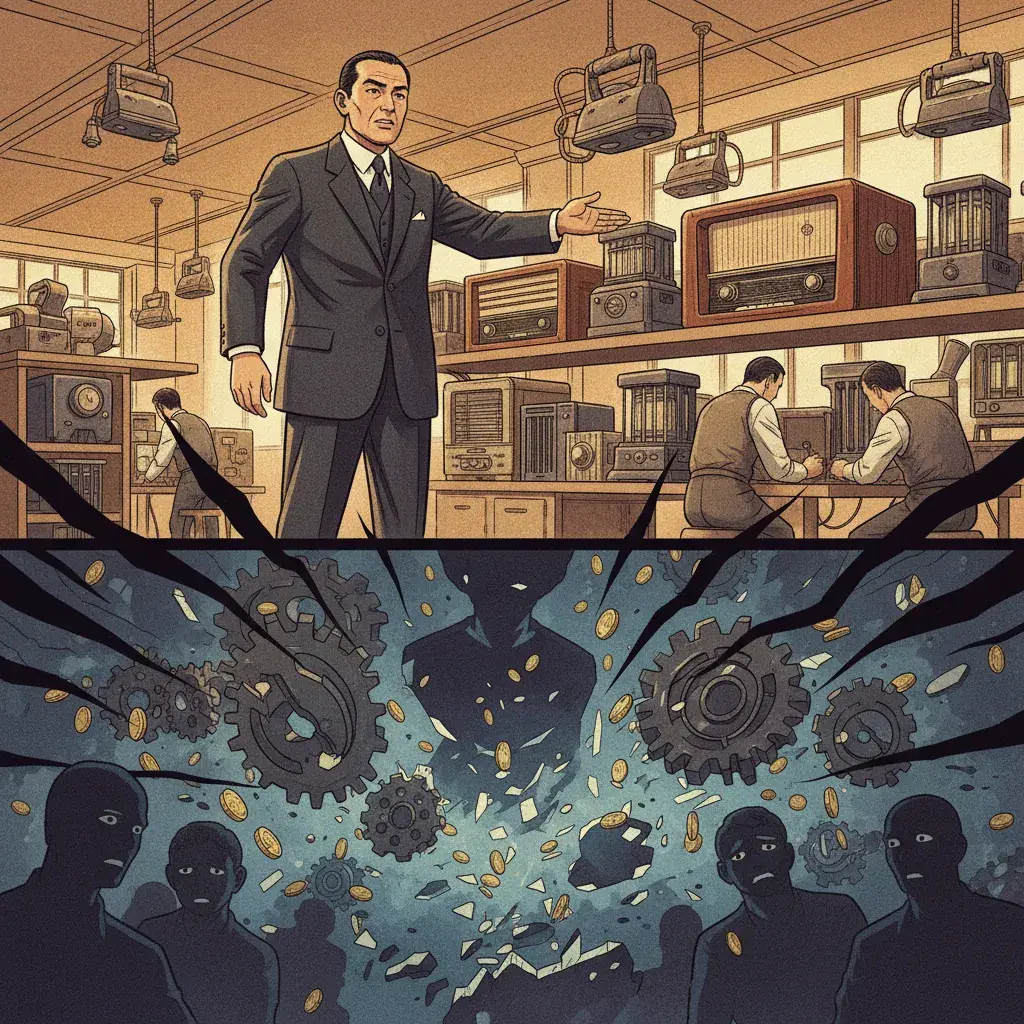
Just as Matsushita Electric was hitting its stride, expanding its product lines to include electric irons, radios, and other home appliances, the global economy plunged into the abyss of the Great Depression. The year was 1929, and the world braced for impact. Japan, heavily reliant on exports, was hit hard. Orders dried up overnight. Factories shut down. Mass layoffs became the grim reality across industries worldwide.
Matsushita Electric was not immune. Its warehouses were overflowing with unsold products. Production ground to a halt. The company faced a terrifying choice: drastically cut production, lay off thousands of loyal employees, and slash expenses to the bone, or face bankruptcy. The conventional wisdom, the cold, hard logic of capitalism, screamed for layoffs. Every other company was doing it.
But Konosuke Matsushita was not a conventional man. He gathered his executives and employees, a grim silence hanging in the air. He looked at the faces of the people who had built his company, who had believed in his vision, who had worked tirelessly alongside him. He remembered his own childhood poverty, the desperation of unemployment. He couldn’t do it. He refused to abandon his people.
“A company is its people. To lay off employees during hard times is to destroy the very foundation upon which future success is built. We must find a way to weather the storm together.”
His decision was radical, almost insane by contemporary business standards: no one would be fired. Instead, he announced a “half-day work, full-day pay” system. Employees would only work half the day on production, but they would still receive their full wages. The other half of the day? They were tasked with selling inventory. Every employee, from factory floor to management, became a salesperson. They cleared out warehouses, knocked on doors, explained the value of Matsushita products directly to consumers.
Imagine the shock, the relief, the renewed sense of purpose that swept through the company. Matsushita wasn’t just saving jobs; he was instilling an unparalleled sense of loyalty and shared destiny. His employees weren’t just workers; they were stakeholders, evangelists, co-pilots in a desperate fight for survival.
This move was a massive gamble. It drained the company’s reserves, put immense pressure on its financial stability. But it worked. The combination of continued production (albeit reduced), retained skilled labor, and an army of motivated salespeople successfully cleared inventory and kept the company afloat. When the economy eventually began its slow recovery, Matsushita Electric was not only intact but incredibly strong. It had retained its entire workforce, its institutional knowledge, and its morale was through the roof. While competitors were scrambling to rehire and retrain, Matsushita’s team was ready to hit the ground running.
This episode cemented Matsushita’s reputation as a visionary leader, a man who prioritized people over pure profit, a leader who understood that a company’s greatest asset isn’t its balance sheet but its human capital. It was a masterclass in crisis management, a testament to the power of unconventional thinking, and a profound demonstration of his commitment to his “mission of a manufacturer” – to contribute to society, even when society was crumbling around him. The lightning rod had weathered the storm, and emerged stronger, more resonant than ever.
🌅 Chapter 7: War, Ruin, and Resurrection – The Post-War Phoenix
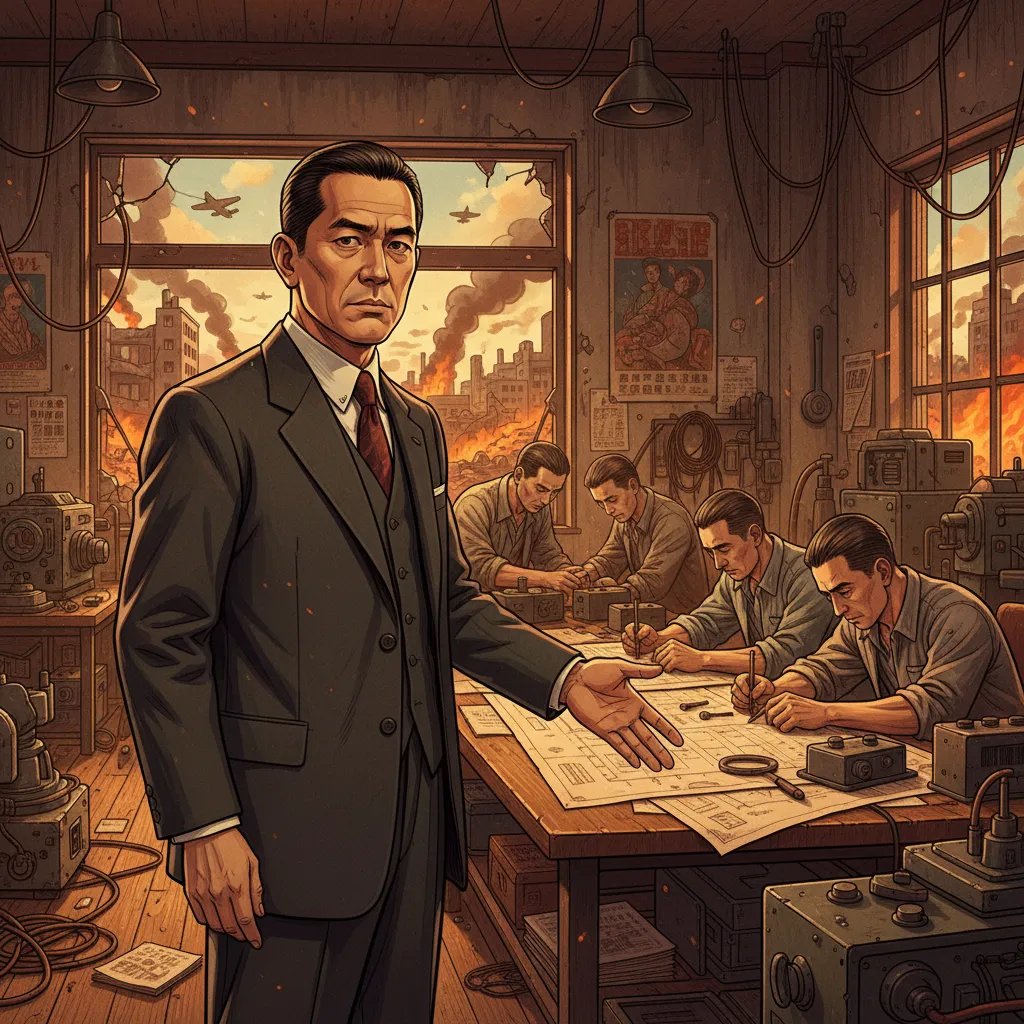
Just as the world began to recover from one cataclysm, another, far more devastating, loomed. World War II plunged Japan into total war. For Matsushita Electric, like all Japanese industries, this meant a dramatic shift from consumer goods to military production. Factories that once made radios and washing machines were now churning out parts for aircraft and ships. Matsushita, a reluctant participant, complied with government demands, knowing resistance was futile and dangerous.
The war years were a period of immense strain. Resources were scarce, factories were targets, and the company’s original mission of improving civilian life was sidelined. Then came the devastating end of the war: the atomic bombs, the unconditional surrender, and the occupation of Japan by Allied forces.
The post-war landscape was apocalyptic. Japanese cities, including Osaka, were reduced to rubble. Factories were destroyed. The economy was in ruins, its infrastructure shattered. Matsushita Electric was no exception. Its assets were severely damaged, and what little remained was targeted by the occupying forces for dismantlement as part of the reparations program.
Konosuke Matsushita himself was purged by the Allied General Headquarters (GHQ) from his position as president in 1946, accused of being a zaibatsu leader (a head of a large family-controlled business conglomerate, perceived as having contributed to Japan’s militarism). It was a crushing blow. The company he had built from nothing was on the verge of being dismantled, and he, its visionary founder, was sidelined.
“Even in the deepest valleys of despair, there is a path forward. We must embrace change, learn from our mistakes, and rebuild with an even stronger sense of purpose.”
But the loyalty he had cultivated through decades of fair dealing and his Depression-era policies paid off in spades. His employees, his unions, and even former competitors, rallied around him. They petitioned the GHQ, arguing that Matsushita was not a militarist but a champion of peace and prosperity, a leader who genuinely cared for his workers and aimed to improve the lives of ordinary people. Their collective voice was so powerful, so unwavering, that in 1947, the GHQ made a rare exception: Matsushita was reinstated.
This wasn’t just a personal victory; it was a testament to the profound impact of his management philosophy. The trust he had built, the goodwill he had generated, proved more resilient than bombs or political purges.
With his return, Matsushita faced the monumental task of rebuilding from scratch. Japan was impoverished, its people demoralized. But Matsushita saw opportunity in the ashes. He knew that the basic human need for convenience, for comfort, for a better life, remained. He turned the company’s focus back to its original mission: producing essential household appliances. Radios, washing machines, refrigerators – these weren’t luxuries anymore; they were symbols of hope, tools for rebuilding a shattered society.
He implemented a strategy of relentless efficiency and cost reduction, leveraging the discipline learned during the war, but now applied to civilian production. He emphasized quality and affordability, understanding that a recovering populace needed reliable goods they could afford. The phoenix rose from the ashes. Under Matsushita’s renewed leadership, the company began its incredible post-war resurgence, laying the groundwork for its global dominance and once again proving that true leadership shines brightest in the darkest hours.
🌍 Chapter 8: Glimpsing the Future – The American Tour and Global Ambition
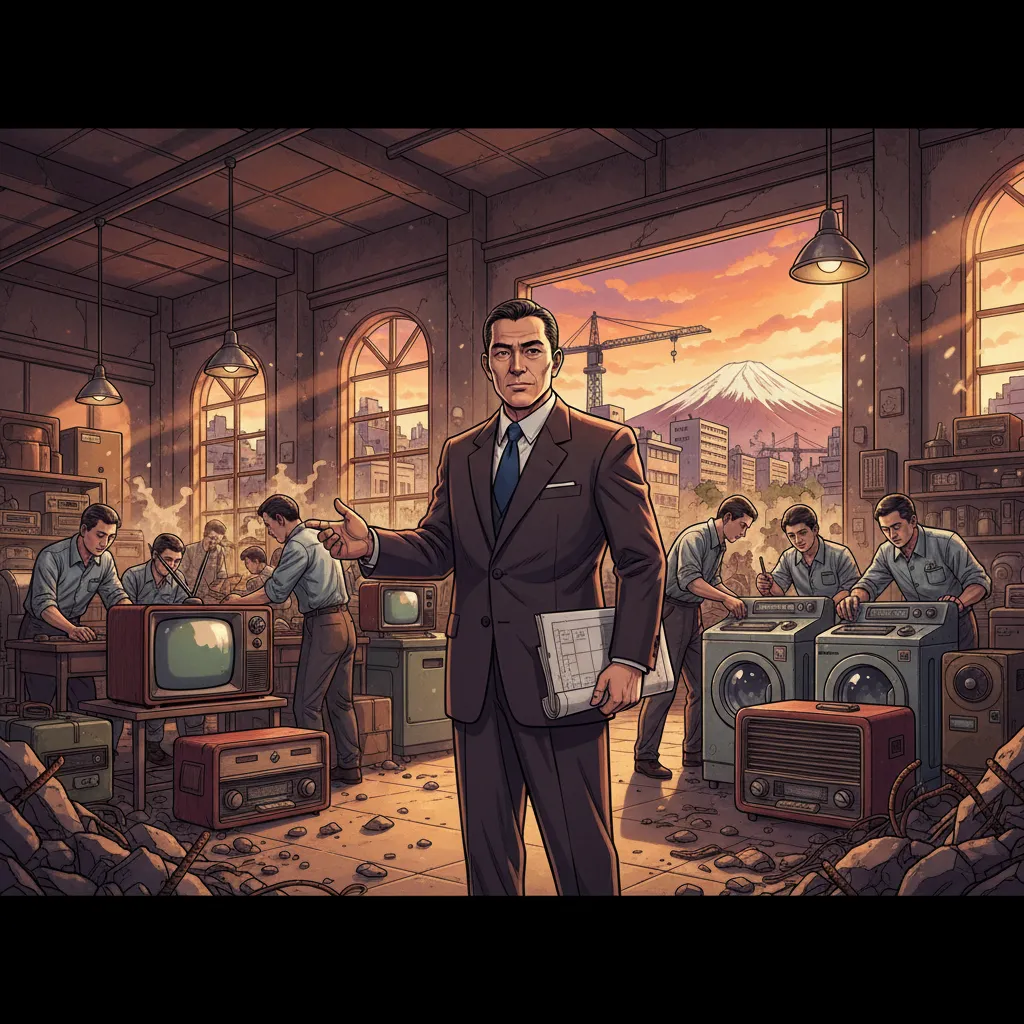
By the early 1950s, Japan was slowly but surely rising from the rubble. Matsushita Electric was a key player in this reconstruction, rapidly expanding its product lines and market share within Japan. But Konosuke Matsushita wasn’t content with domestic success. His vision had always been broader, more expansive. He saw a world connected by technology, a future where his products would bring convenience and joy to homes far beyond Japan’s shores.
In 1951, at the age of 56, Matsushita embarked on a pivotal journey: his first trip to the United States. This wasn’t a vacation; it was a pilgrimage, a reconnaissance mission, and a profound cultural immersion. He spent three months traveling across America, visiting factories, retail stores, universities, and homes. He observed American production methods, their marketing strategies, their consumer culture, and their technological advancements.
What he saw both amazed and humbled him. American factories were massive, highly automated, and incredibly efficient. Their consumer market was vibrant, driven by innovation and aggressive advertising. He witnessed a level of prosperity and technological sophistication that was far ahead of war-torn Japan. He saw products, appliances, and manufacturing techniques that were still dreams back home.
“My trip to America was an awakening. I saw that we were decades behind, but I also saw the immense possibilities. It wasn’t about catching up; it was about surpassing, by learning, adapting, and innovating with our unique spirit.”
This experience wasn’t discouraging; it was electrifying. It fueled his ambition and sharpened his strategic thinking. He realized that to compete on a global stage, Matsushita Electric needed to drastically improve its technology, scale its production, and embrace international partnerships. He famously said, “We are 20 years behind.” This wasn’t a lament; it was a battle cry.
Upon his return, he initiated a series of radical changes:
- Technological Acquisition: He actively sought out licensing agreements and joint ventures with leading Western companies. The most notable was the partnership with Philips of the Netherlands in 1952, which brought advanced electronics manufacturing technology to Japan and formed Matsushita Electronics Corporation. This was a game-changer, rapidly accelerating Matsushita’s technological capabilities.
- Investment in R&D: He significantly increased spending on research and development, establishing dedicated laboratories and fostering a culture of continuous innovation.
- Globalization of Vision: He instilled in his employees a global mindset, encouraging them to think beyond Japan and envision Matsushita products in every home worldwide. He understood that to be a true “God of Management,” he had to think beyond national borders.
- Branding: He recognized the need for a global brand. While “Matsushita Electric” was well-known in Japan, it wasn’t easy for Western consumers. This led to the eventual prominence of brands like National (for domestic use) and later, Panasonic (specifically for international markets, derived from “Pan” meaning “all” and “Sonic” meaning “sound,” initially for audio equipment).
The American tour wasn’t just a trip; it was a catalyst. It transformed Matsushita’s perspective from a national leader to a global visionary. It marked the beginning of Panasonic’s relentless march across international markets, driven by a founder who understood that the future of business lay not just in making good products, but in making them globally accessible, technologically advanced, and relentlessly innovative. The lightning rod had found its global current.
👑 Chapter 9: The ‘God of Management’ – Crafting a Pantheon of Principles
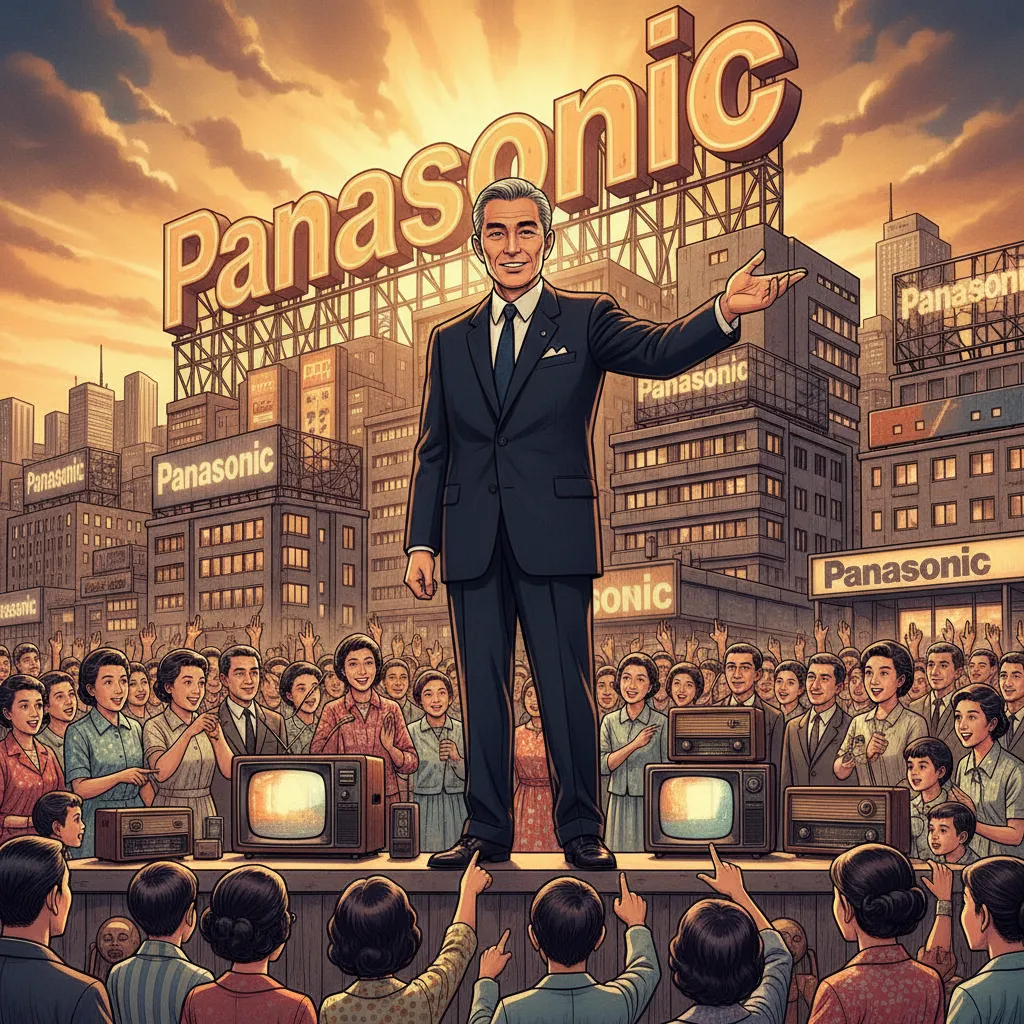
By the 1960s, Konosuke Matsushita was no longer just a successful businessman; he was a legend in his own time. His company, now widely known by its international brand, Panasonic, was a household name not just in Japan but increasingly around the world. He had built an empire from nothing, survived depressions and wars, and led Japan’s post-war economic miracle. The title ‘God of Management’ wasn’t just a flattering nickname; it was a recognition of his almost supernatural ability to lead, innovate, and inspire.
What truly set Matsushita apart wasn’t just his business acumen, but his holistic, almost spiritual approach to leadership. He didn’t just manage; he taught. He didn’t just command; he inspired. His principles, forged in the crucible of his own life, became the bible for aspiring entrepreneurs and established corporations alike.
Let’s break down some of the key tenets that earned him this divine title:
1. The Autonomous Divisional System (Bunsha Keiei)
This was perhaps Matsushita’s most revolutionary organizational structure. He decentralized the company into numerous, often hundreds, of autonomous divisions. Each division was a self-contained entity, responsible for its own product development, manufacturing, sales, and most importantly, its own profit and loss (P&L). They had their own balance sheets, their own objectives, and their own sense of entrepreneurship.
Imagine hundreds of mini-companies operating under one umbrella. This fostered intense internal competition, drove innovation, and instilled a sense of ownership and accountability at every level. It pushed decision-making close to the market, allowing for rapid adaptation and responsiveness. It was a masterclass in scaling while retaining the agility of a startup.
2. People Before Products (Hito wa Zaisan)
Matsushita genuinely believed that employees were a company’s greatest asset, its “treasure” (財産, zaisan). This wasn’t just rhetoric; it was embedded in his policies. From his no-layoff policy during the Depression to investing heavily in employee training and welfare, he put his money where his mouth was. He fostered a culture of lifelong employment, mutual trust, and shared responsibility. He believed that if you took care of your people, they would take care of the business.
3. The “No-Profit, No-Business” Principle (Mōkaranai Shōbai wa Akushōbai)
While deeply philosophical about social contribution, Matsushita was also a fierce pragmatist. He understood that charity wasn’t sustainable. His famous quote, “No-profit, no-business,” meant that while profit wasn’t the sole goal, it was an essential outcome. It was the “blood” that kept the company alive, allowing it to continue its mission to society. He sought fair, not excessive, profits, ensuring sustainability and growth. This balanced idealism with the hard realities of the market.
4. Lifelong Learning and Adaptability
Despite his lack of formal education, Matsushita was a tireless learner. He established the PHP (Peace and Happiness through Prosperity) Institute in 1946, not just as a think tank for management theory but as a platform for promoting peace, prosperity, and human understanding. He encouraged all employees to constantly learn, adapt, and improve, embodying the Japanese concept of kaizen (continuous improvement) long before it became a global buzzword.
5. The CEO as Philosopher and Visionary
Matsushita saw the role of the top leader as more than just a manager of operations. The CEO was the keeper of the company’s soul, the articulator of its purpose, and the visionary who painted the future. He spent significant time communicating his philosophy, telling stories, and inspiring his workforce to believe in a shared destiny. He led by example, working tirelessly, always seeking new ideas, and never losing touch with the factory floor or the customer’s needs.
These principles weren’t just theoretical; they were lived and breathed within Panasonic. They created an organizational culture that was resilient, innovative, and deeply committed to its mission. Matsushita didn’t just build a company; he built a living, breathing organism that could adapt, grow, and thrive through any challenge. He was the architect of a new kind of capitalism, one that elevated human potential and societal contribution alongside economic success. This was the essence of the ‘God of Management’.
🚀 Chapter 10: The PHP Institute and Passing the Torch
Even as Matsushita Electric (now truly Panasonic on the global stage) reached unprecedented heights, Konosuke Matsushita’s mind was already turning to the future – not just the future of his company, but the future of society itself. He believed that economic prosperity alone was insufficient. True peace and happiness required a deeper understanding of human nature, ethics, and effective governance.
This conviction led him to establish the PHP Institute (Peace and Happiness through Prosperity) in 1946. This wasn’t a side project; it was a passion project, a non-profit organization dedicated to “contributing to the realization of peace and happiness through prosperity.” It published magazines, books, and conducted research on management, philosophy, and societal issues. It was his way of giving back, of sharing the wisdom he had accumulated through a lifetime of struggle and triumph. The PHP Institute became a powerful vehicle for disseminating his ideas, influencing not just business leaders but also politicians, educators, and the general public.
“A company exists not just to make money, but to make people. We must cultivate wisdom, foster collaboration, and strive for a world where everyone can live with dignity and purpose.”
By the 1960s, Matsushita was a revered elder statesman of Japanese industry. In 1961, at the age of 67, he decided to step down as president, handing the reins to his son-in-law, Masaharu Matsushita. This was a pivotal moment. Most founders cling to power, unable to let go of the empire they built. But Matsushita understood the importance of succession, of bringing in fresh perspectives and ensuring the long-term vitality of the company.
He didn’t disappear entirely, though. He remained Chairman of the Board, continuing to act as a spiritual guide and philosophical anchor for the company. He traveled, lectured, wrote, and continued to refine his management theories. He became a living embodiment of the concept of “unretiring,” dedicating his later years to sharing his wisdom and fostering a better society through the PHP Institute.
His later decades were marked by an almost prophetic sense of the challenges facing humanity. He spoke about the need for environmental stewardship, ethical leadership, and global cooperation long before these became mainstream concerns. He continued to advocate for his “water faucet” philosophy, believing that technology and innovation, ethically applied, could solve many of the world’s problems.
He lived to see Panasonic become a global powerhouse, a testament to his audacious vision and unwavering principles. He witnessed the rise of Japan as an economic superpower, a transformation he had played a significant role in orchestrating. His influence extended far beyond the walls of his company, shaping the very fabric of Japanese corporate culture and inspiring countless leaders worldwide. The lightning rod had not only powered a company but had also illuminated a path for an entire nation.
🌟 Chapter 11: The Enduring Legacy – Panasonic and the ‘God’s’ Footprints
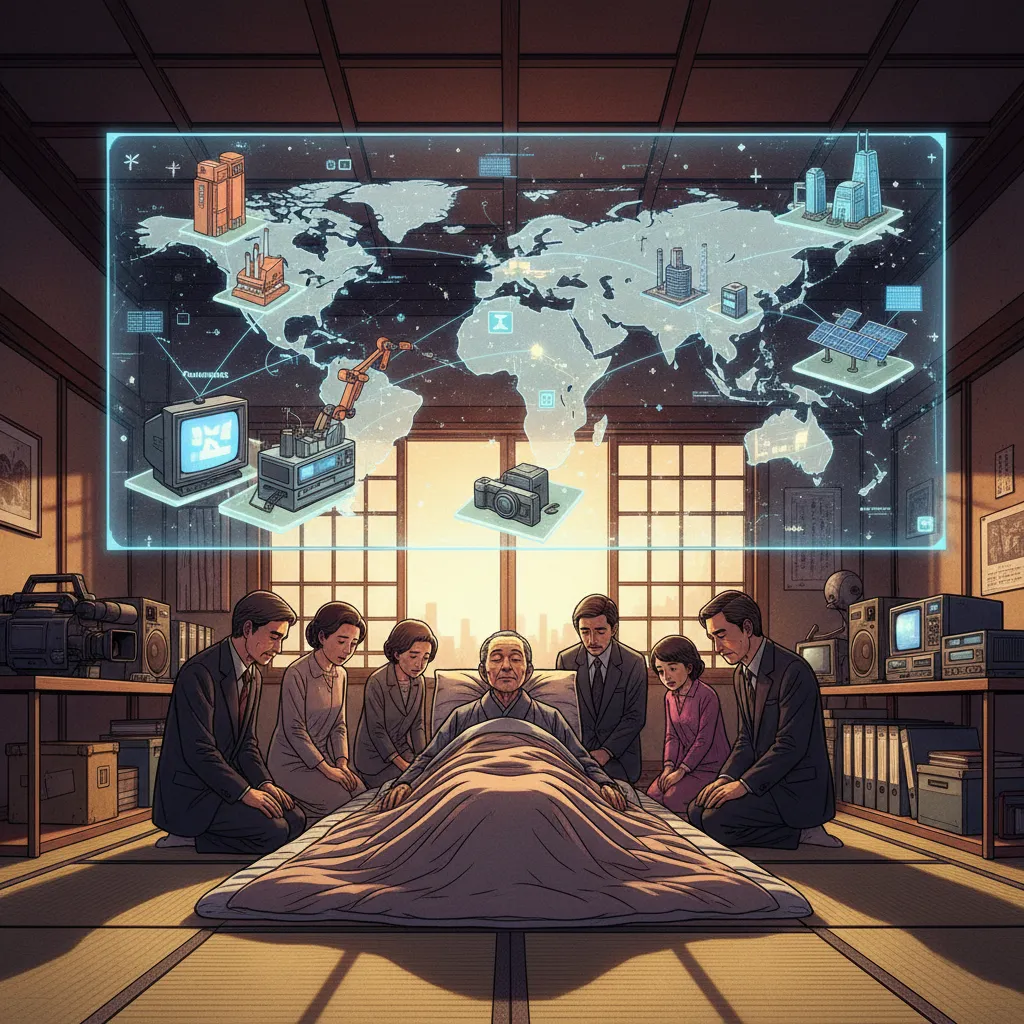
Konosuke Matsushita passed away in 1989 at the remarkable age of 94. By then, Panasonic was a global electronics giant, a diversified conglomerate with operations spanning the globe, involved in everything from televisions and VCRs to industrial equipment and semiconductors. His life spanned nearly a century, witnessing incredible technological, social, and economic upheaval, and he was at the forefront of much of it.
His legacy isn’t just etched in the balance sheets of Panasonic, or the countless products that bear its name. It’s deeply embedded in the very DNA of Japanese business and, increasingly, in global management thought.
What did he leave behind?
- A Global Brand: Panasonic remains a formidable force in the electronics industry, consistently adapting and reinventing itself, a direct reflection of Matsushita’s emphasis on adaptability and continuous improvement. From its origins in light sockets to leading in smart home technology, electric vehicle batteries, and advanced factory automation, the company continues to innovate.
- A Management Blueprint: The “God of Management” left behind a detailed, actionable philosophy. The autonomous divisional system, the emphasis on people, the balance of profit and purpose – these aren’t just historical footnotes. They are living principles studied in business schools worldwide. Many modern concepts like “intrapreneurship” and “decentralized decision-making” find their roots in Matsushita’s pioneering ideas.
- A Cultural Impact: Matsushita’s life story is a narrative of hope and resilience for the Japanese people. His journey from poverty to unparalleled success, coupled with his deep commitment to societal welfare, made him a national hero. He embodied the spirit of post-war Japan’s resurgence and its unique blend of traditional values with modern industrial prowess.
- The PHP Institute: Still thriving today, the PHP Institute continues to publish, research, and advocate for Matsushita’s vision of a society where prosperity leads to peace and happiness. It ensures that his philosophical insights continue to impact public discourse and leadership development.
- A Model for Ethical Capitalism: In an age where corporate greed often dominates headlines, Matsushita’s unwavering commitment to his “mission of a manufacturer” stands as a powerful counter-narrative. He proved that a company could be immensely successful not despite its ethics, but because of them. His legacy is a constant reminder that business can and should be a force for good in the world.
His story isn’t just a historical anecdote; it’s a living testament to the power of vision, perseverance, and a profound understanding of human nature. It’s a reminder that true leadership isn’t just about making money; it’s about making a difference, about building something that serves a higher purpose, and about inspiring others to join you on that journey.
The boy who started with nothing, tinkering with light sockets in a leaky house, became a titan whose influence continues to resonate across industries and cultures. He wasn’t just a founder; he was an architect of modern industry, a philosopher of commerce, and a beacon of hope. His light, once a small flicker in a poor Japanese home, became a powerful illumination, guiding generations.
⚡ Conclusion: The Unstoppable Current of a Visionary
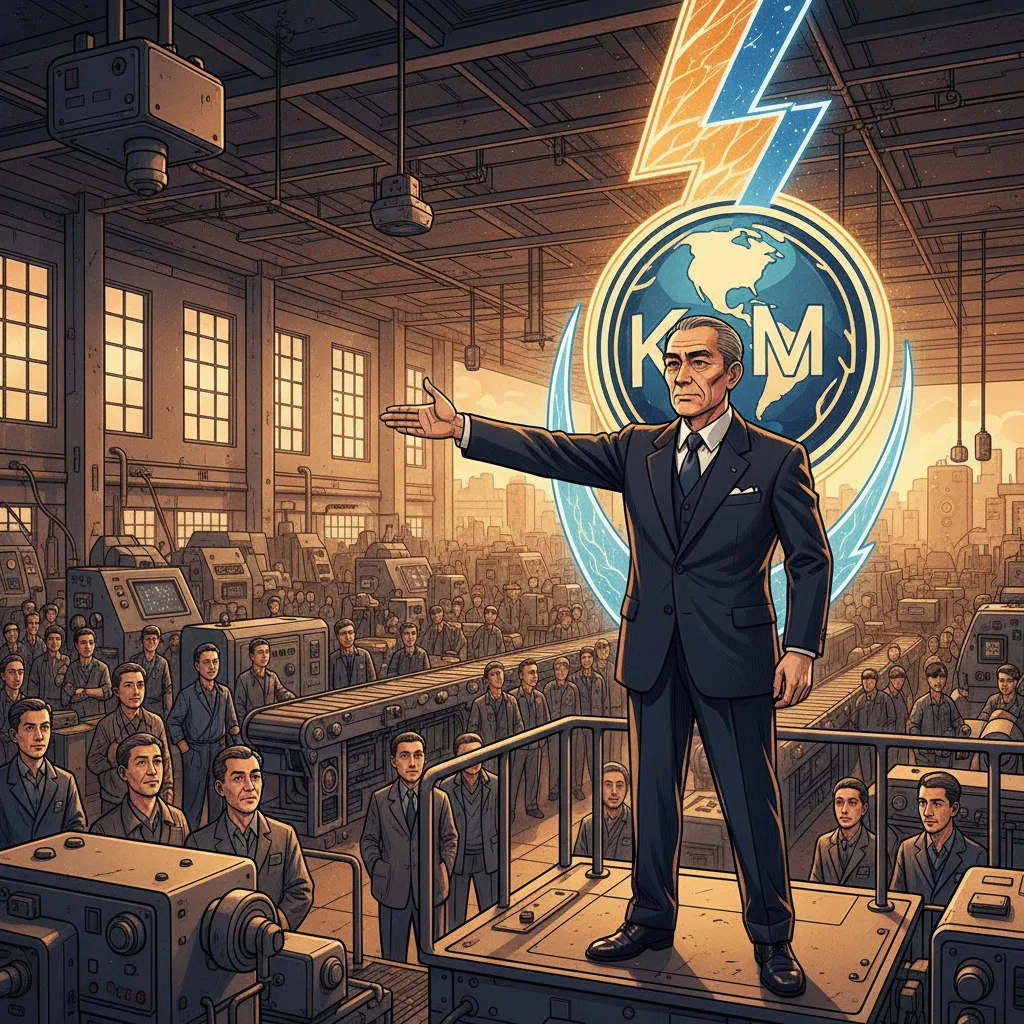
So, there you have it. The saga of Konosuke Matsushita, the man who pulled himself up from the depths of poverty, rejected corporate complacency, and built an empire that still hums with his electric spirit today. He wasn’t born into privilege; he forged his own. He didn’t follow the rules; he rewrote them. And in a world that often celebrates the cutthroat and the ruthless, he demonstrated that empathy, purpose, and an almost spiritual dedication to humanity can be the most potent competitive advantages of all.
His journey from an apprentice in a brazier shop to the undisputed ‘God of Management’ is a masterclass in what it means to be an entrepreneur. It’s a testament to the raw power of observation, the courage to defy the status quo, and the wisdom to know that a business, at its core, is a human endeavor. He saw problems not as roadblocks, but as invitations to innovate. He saw employees not as cogs in a machine, but as the living, breathing heart of his enterprise.
Think about the sheer audacity of his decisions: quitting a stable job with barely a dime, going against the grain during the Great Depression to save every single worker, rebuilding from the ashes of war, and then daring to dream of a global enterprise when his country was still finding its feet. Each step was a gamble, a leap of faith, backed by an unshakeable belief in his mission and his people.
His “water faucet” philosophy, the idea that goods should be abundant and affordable for all, wasn’t just a nice sentiment; it was a radical economic vision that propelled Panasonic to mass market dominance. His decentralized management structure, empowering divisions with P&L responsibility, was light-years ahead of its time, fostering a culture of ownership and innovation that many companies still struggle to achieve today.
In a world obsessed with short-term gains and immediate gratification, Matsushita played the long game. He understood that building something truly great, something that endures, requires a foundation of integrity, a relentless pursuit of purpose, and an unwavering commitment to the people who make it all possible. He didn’t just build a company; he built a movement, a philosophy, a way of life.
So the next time you see the Panasonic logo, or hear about a company putting people before profit, remember the lightning rod. Remember Konosuke Matsushita. Remember the kid who started with nothing but a spark, and ended up electrifying the world, proving once and for all that true leadership isn’t just about managing assets, but about inspiring souls. His current still runs strong, a powerful reminder that the greatest legacies are built not with bricks and mortar, but with vision, courage, and an unyielding belief in a better future. And that, my friends, is why he was, and remains, the God of Management.
💡 Key Insights
- ▸ Purpose-driven capitalism isn't a modern buzzword; it was the bedrock of Matsushita's success. He believed business existed to serve society, not just shareholders. This long-term, ethical vision fostered incredible employee loyalty and customer trust, proving that a moral compass can be the ultimate competitive advantage.
- ▸ In times of crisis, radical empathy and innovative problem-solving can save your enterprise. Matsushita's decision to avoid layoffs during the Great Depression, instead implementing a 'half-day work, full-day pay' system, was a masterclass in retaining talent and morale, demonstrating that investing in your people even when it hurts pays dividends in resilience and future growth.
- ▸ Decentralization and empowering employees with P&L responsibility, even at lower levels, cultivates an army of intrapreneurs. Matsushita recognized that true innovation and agility come from distributing decision-making power, fostering a culture where every division acts like a lean startup, constantly seeking improvement and market opportunities.