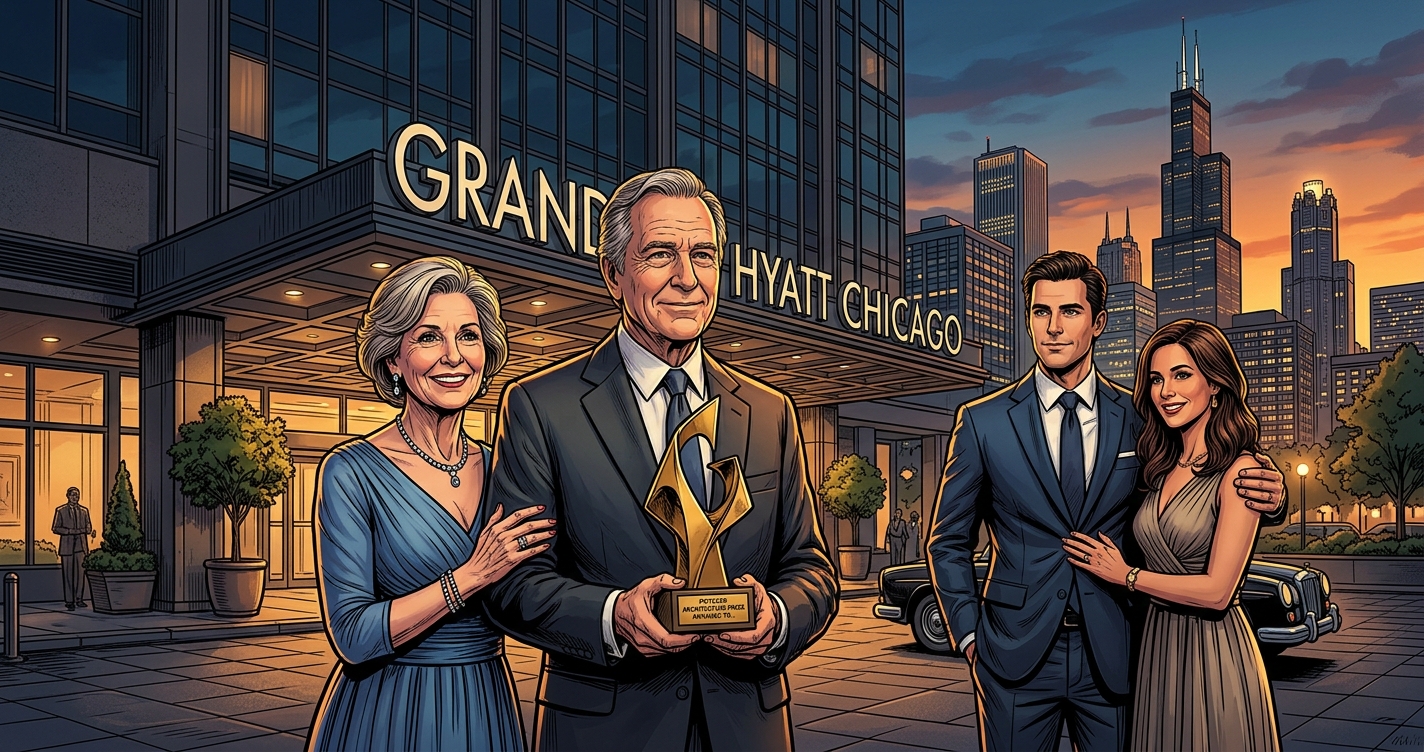
Theranos Investors: The Billionaires, Generals, and Statesmen Who Got Fooled by a Turtleneck
They invested $945 million into a blood-testing startup that couldn't test blood. This is the story of the people who wrote the checks — and why being rich didn't make them smart.

View all stories about this mogul
In 2014, Theranos was valued at $9 billion. Its founder, Elizabeth Holmes, was on the cover of Fortune, Forbes, and Inc. She was hailed as the next Steve Jobs. Her board of directors included two former Secretaries of State, a former Secretary of Defense, a four-star Marine general, and a former U.S. Senator. Collectively, investors had poured approximately $945 million into the company. The technology — a revolutionary blood-testing device that could run hundreds of tests from a single drop of blood — was going to save lives, reduce healthcare costs, and democratize diagnostics for billions of people.
There was just one problem: it didn’t work. The technology never worked. And nearly a billion dollars went up in smoke because some of the wealthiest and most powerful people in America wrote enormous checks based on a handshake, a turtleneck, and a story that was too good to question.
This isn’t the Elizabeth Holmes story. That story has been told. This is the story of the people who believed her — the investors, board members, and power brokers who handed over their money, their reputations, and their credibility to a 19-year-old Stanford dropout. It’s a story about how intelligence, wealth, and experience provide zero protection against a well-constructed narrative.
💰 Chapter 1: The Money
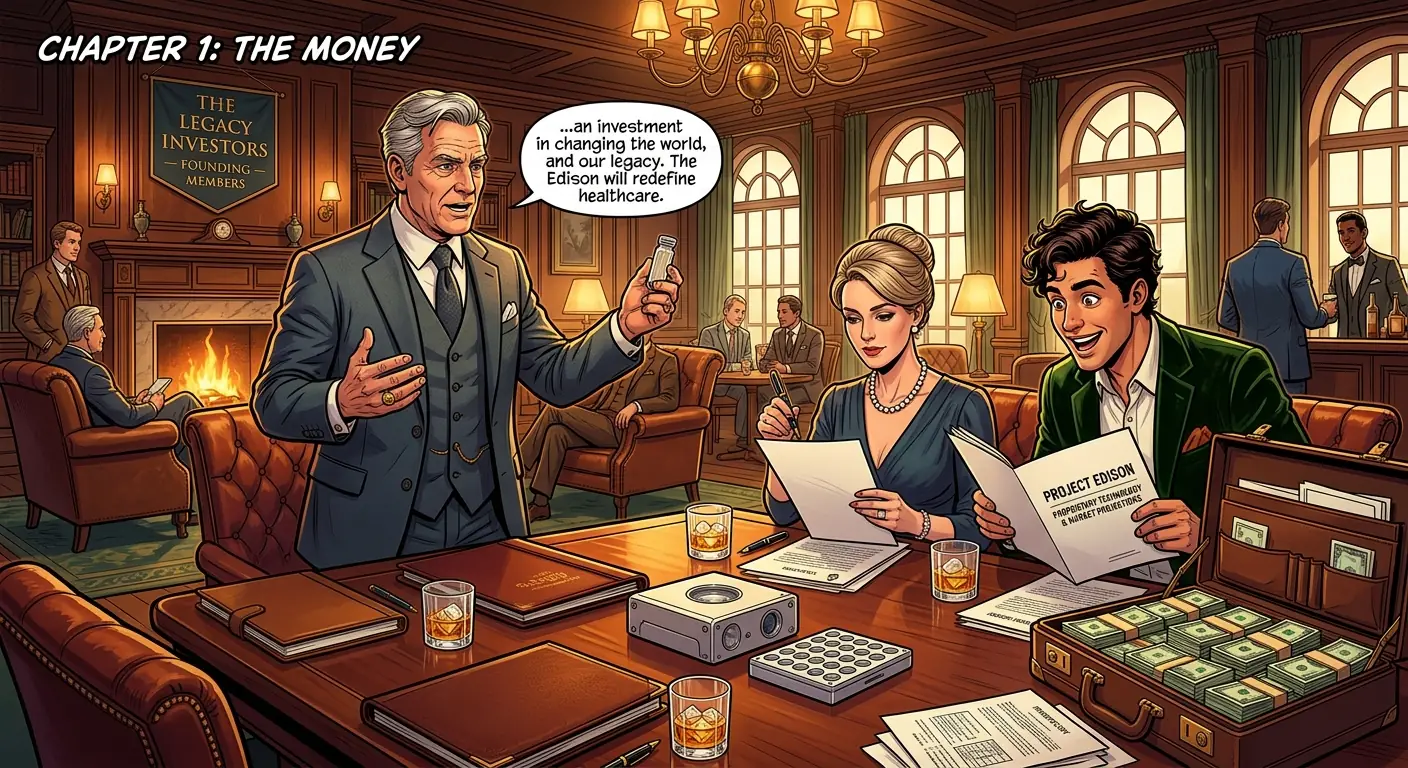
Let’s start with the checks, because the numbers are staggering.
The single largest individual investor in Theranos was the Walton family — heirs to the Walmart fortune. They invested approximately $150 million through their family office. At the time, the Waltons were collectively worth over $150 billion. A $150 million investment was a rounding error on their balance sheet. But it was still $150 million dollars committed to a company whose core technology had never been independently validated.
Rupert Murdoch, the media mogul who controlled Fox News, The Wall Street Journal, and a global newspaper empire, invested $125 million. Murdoch — a man who had spent 60 years navigating the most complex media landscape on Earth, who had survived phone-hacking scandals, hostile regulators, and four divorces — wrote a check for $125 million based on a series of private meetings with Holmes.
Betsy DeVos, whose family fortune derived from Amway and who would later serve as U.S. Secretary of Education, invested approximately $100 million. The Cox family — heirs to Cox Enterprises, which owns Cox Communications and the Atlanta Journal-Constitution — put in roughly $100 million. Other investors included Mexican billionaire Carlos Slim (through a small stake), South African retail magnate Christo Wiese, hedge fund titan Robert Kraft, and the family offices of some of America’s wealthiest dynasties.
In total, approximately $945 million was invested in Theranos across multiple funding rounds. The company’s peak valuation of $9 billion made Holmes, who owned roughly 50% of the shares, worth $4.5 billion on paper — the youngest self-made female billionaire in history.
Every single dollar of that investment was eventually written down to zero.
🎭 Chapter 2: The Board
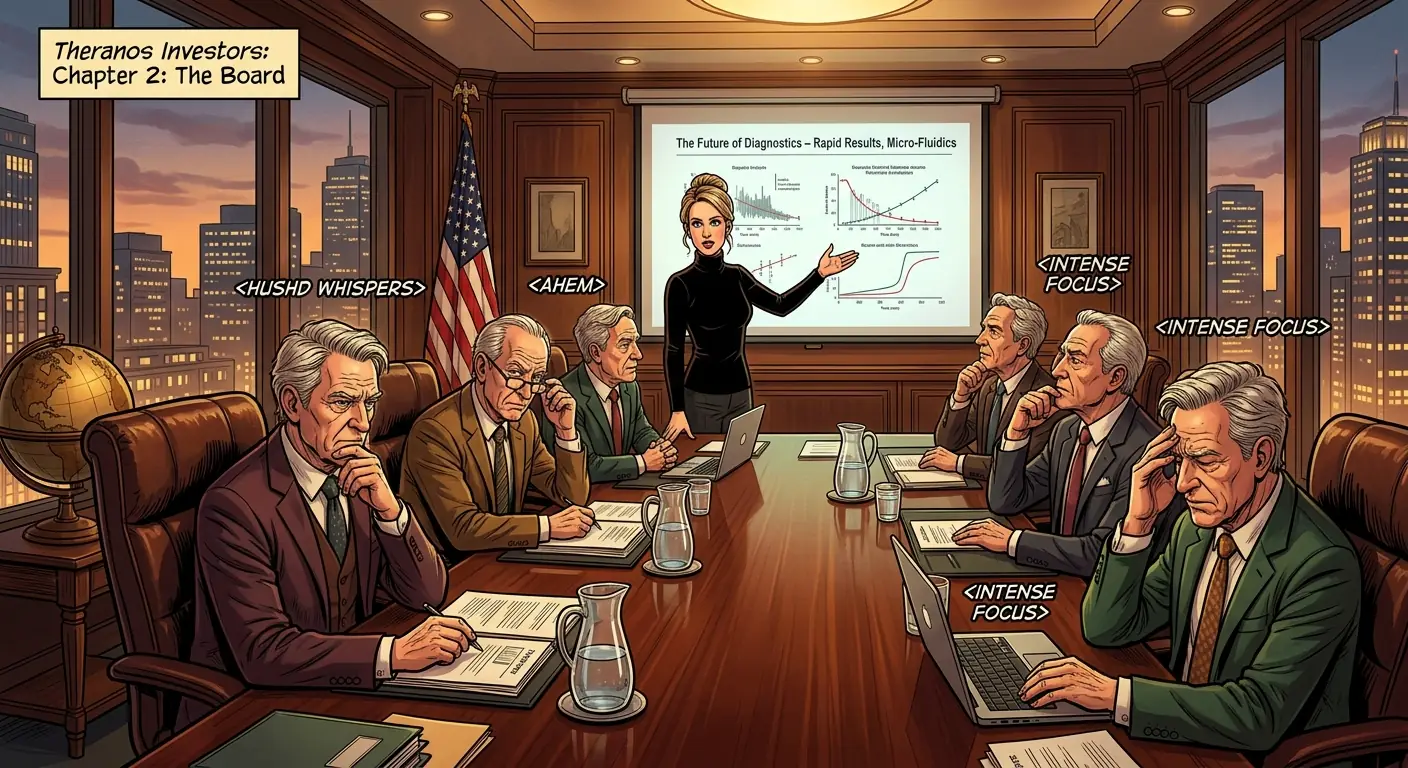
If the investor list was impressive, the board of directors was otherworldly.
George Shultz — former Secretary of State under Ronald Reagan, former Secretary of the Treasury under Richard Nixon, former president of Bechtel Corporation. He joined the Theranos board in 2011, when he was 91 years old. Shultz was so captivated by Holmes and her mission that he introduced her to virtually every powerful person in his extensive network.
Henry Kissinger — former Secretary of State, Nobel Peace Prize laureate, and arguably the most influential foreign policy strategist of the 20th century. He joined the board in 2013 at age 90.
William Perry — former Secretary of Defense under Bill Clinton, a Stanford professor and a genuine expert in technology and defense systems. Jim Mattis — a four-star Marine general who would later serve as Secretary of Defense under Donald Trump. Sam Nunn — a former U.S. Senator from Georgia and one of the most respected figures in defense policy. Gary Roughead — a retired four-star admiral and former Chief of Naval Operations.
The board was a murderer’s row of establishment power. And not a single member had expertise in biomedical technology, clinical diagnostics, or the regulatory pathways governing blood-testing devices.
This was the first red flag — visible in retrospect and invisible at the time. Holmes had constructed a board optimized for influence, not oversight. The board members could open doors at the Pentagon, the State Department, and the halls of Congress. What they couldn’t do was evaluate whether the Edison blood-testing device actually worked. And they never thought to ask anyone who could.
🧪 Chapter 3: What Wasn’t Working
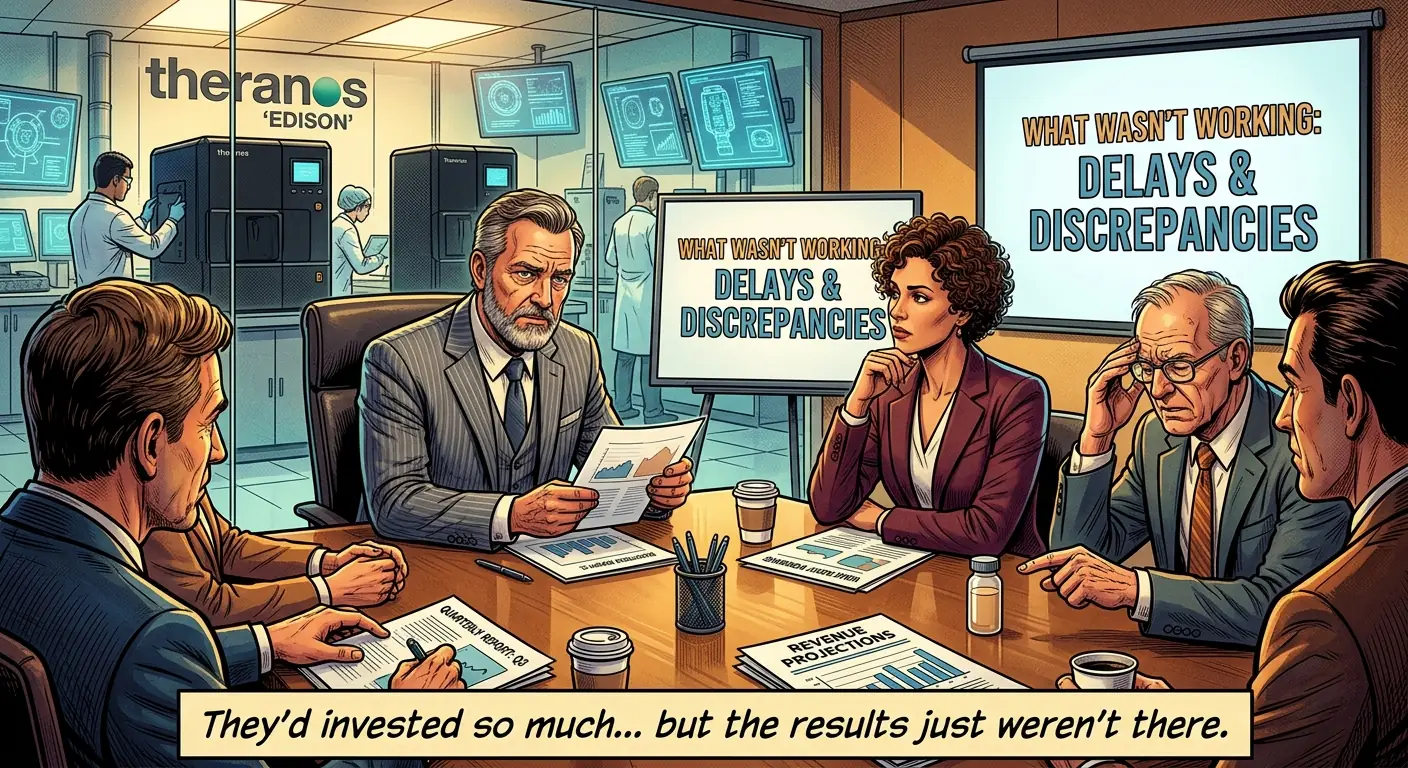
The core promise of Theranos was simple and electrifying: a small, proprietary device called the Edison could run over 200 blood tests from a single finger prick — a few drops of blood from a fingertip, instead of the tubes of venous blood required by traditional testing.
The problem was that the Edison couldn’t do any of that.
According to trial testimony and John Carreyrou’s reporting in The Wall Street Journal, the Edison device could perform — at best — a handful of simple tests with unreliable accuracy. For the vast majority of the tests Theranos advertised, the company was secretly running patient samples on commercially available machines made by Siemens and other established manufacturers. They were diluting the tiny finger-prick samples to create enough volume for the traditional machines — a process that introduced significant error rates.
Theranos knew this. Internal quality control data showed failure rates that would have been disqualifying at any legitimate lab. Employees who raised concerns were silenced, threatened, or fired. The company’s president and Holmes’s boyfriend, Ramesh “Sunny” Balwani, ran the lab with an iron fist, reportedly screaming at employees who questioned the results.
But the investors didn’t know. They were never given access to the internal quality control data. They were never allowed to independently verify the technology. Holmes maintained that the technology was a trade secret — too sensitive to share, even with the people funding it.
And the investors accepted this. They accepted it because of who else was in the room.
🤝 Chapter 4: The Social Proof Machine
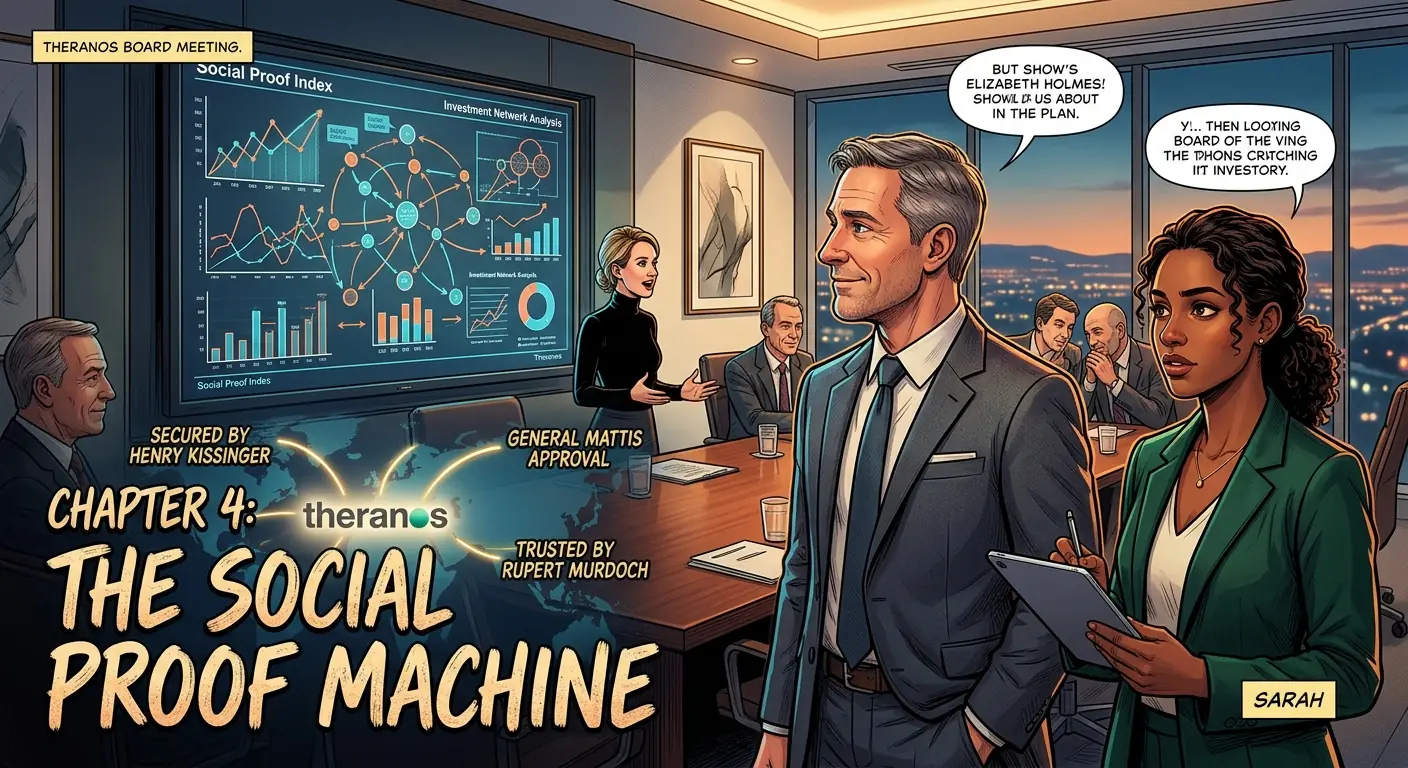
Here is the mechanism that made the fraud possible: social proof.
Social proof is the psychological phenomenon where people determine the correct course of action by looking at what other people are doing. It’s one of the most powerful cognitive shortcuts in human behavior. And in the Theranos case, it was weaponized.
Consider the calculus facing a potential Theranos investor in 2014. You’re a wealthy individual. You get a meeting with Elizabeth Holmes. She tells you about a revolutionary blood-testing technology. You’re not a scientist. You can’t evaluate the claims independently. So you look for signals.
Who’s on the board? George Shultz. Henry Kissinger. Jim Mattis. William Perry. These aren’t fools. These are some of the most accomplished, intelligent people in American public life. If they believe in this company, there must be something there.
Who else has invested? The Waltons. Rupert Murdoch. Betsy DeVos. These are people with teams of analysts, advisors, and due diligence professionals. If they’ve invested hundreds of millions, surely they’ve done the homework.
What does the press say? Forbes put Holmes on the cover. Fortune called her “the next Steve Jobs.” The New Yorker profiled her. If the media has validated the story, questioning it feels contrarian to the point of paranoia.
Each new investor became evidence for the next investor. Each new board member became validation for the next board member. The social proof compounded like interest, creating a feedback loop where everyone was relying on everyone else’s judgment — and no one was relying on the actual data.
This is the anatomy of a con. The con artist doesn’t need to fool everyone. She just needs to fool the first few credible people, and then their credibility does the rest of the work.
👴 Chapter 5: The Shultz Tragedy
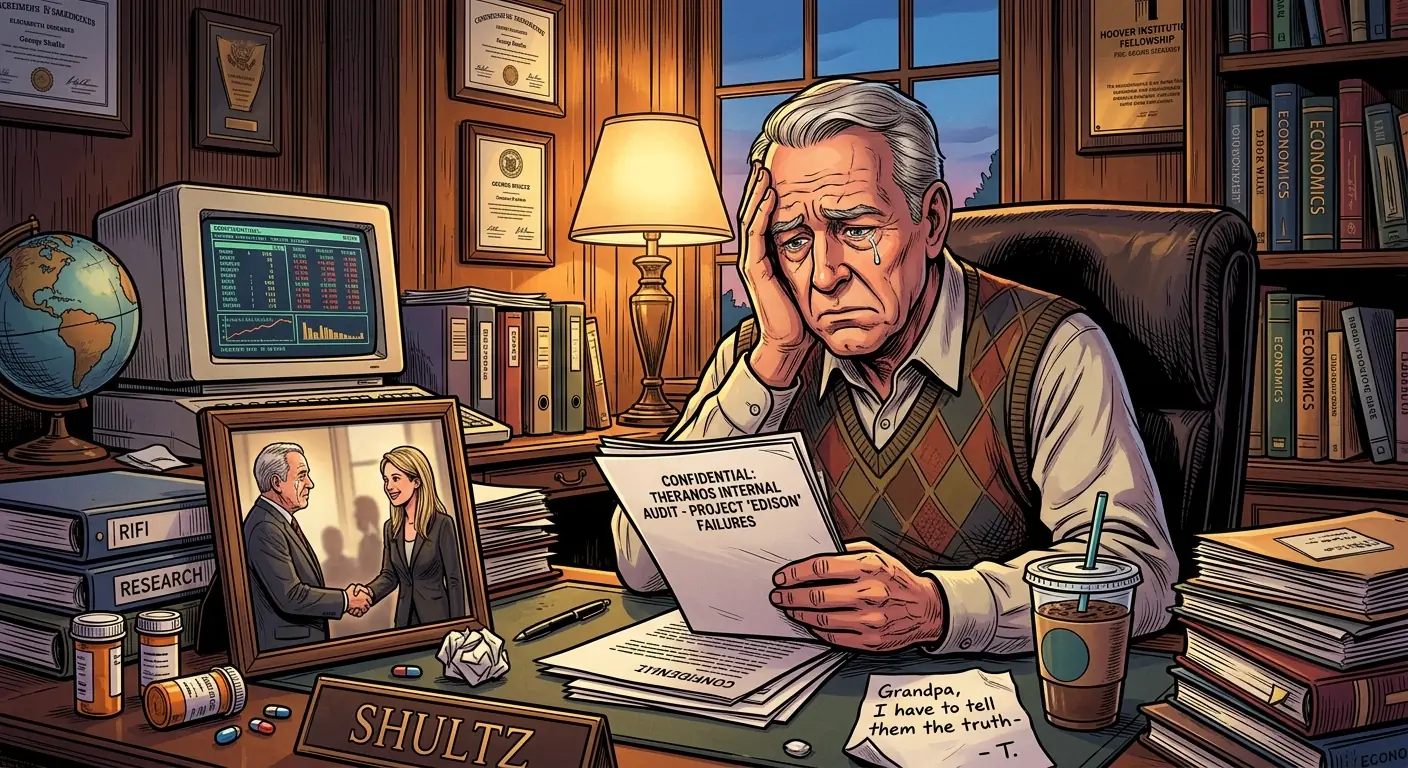
The most heartbreaking story within the Theranos debacle belongs to the Shultz family.
George Shultz, the former Secretary of State, was one of Theranos’s most passionate advocates. He believed in Holmes. He believed in the mission. He used his vast network to introduce her to investors, government officials, and military leaders. His imprimatur was one of the single most valuable assets Theranos possessed.
In 2013, George Shultz’s grandson, Tyler Shultz, graduated from Stanford with a degree in biology and went to work at Theranos. He was excited. His grandfather’s enthusiasm was infectious, and the idea of revolutionizing blood testing appealed to his scientific idealism.
Within months, Tyler realized something was deeply wrong. The test results were unreliable. The quality control processes were inadequate. The company was, in his assessment, running fraudulent tests on real patients. He raised his concerns internally to Sunny Balwani, who dismissed them. He told his grandfather.
George Shultz didn’t believe him.
According to Tyler’s testimony and later interviews, his grandfather chose to believe Holmes over his own grandson. George Shultz was 93 years old. He had staked his reputation on Theranos. Accepting that it was a fraud meant accepting that he had been deceived — that his judgment, the judgment of a man who had advised presidents and negotiated with the Soviet Union, had failed catastrophically.
Tyler went to regulators. He contacted the New York State Department of Health. He became one of John Carreyrou’s key sources. Theranos’s lawyers — from the powerhouse firm Boies Schiller — pursued him aggressively, hiring private investigators to follow him and sending threatening legal letters.
George Shultz eventually came around. In February 2021, he died at age 100. Before his death, he had publicly acknowledged that Tyler was right and that he himself had been wrong. It was a quiet, painful reconciliation between a grandfather who had been conned and a grandson who had tried to save him from it.
📰 Chapter 6: The Unraveling
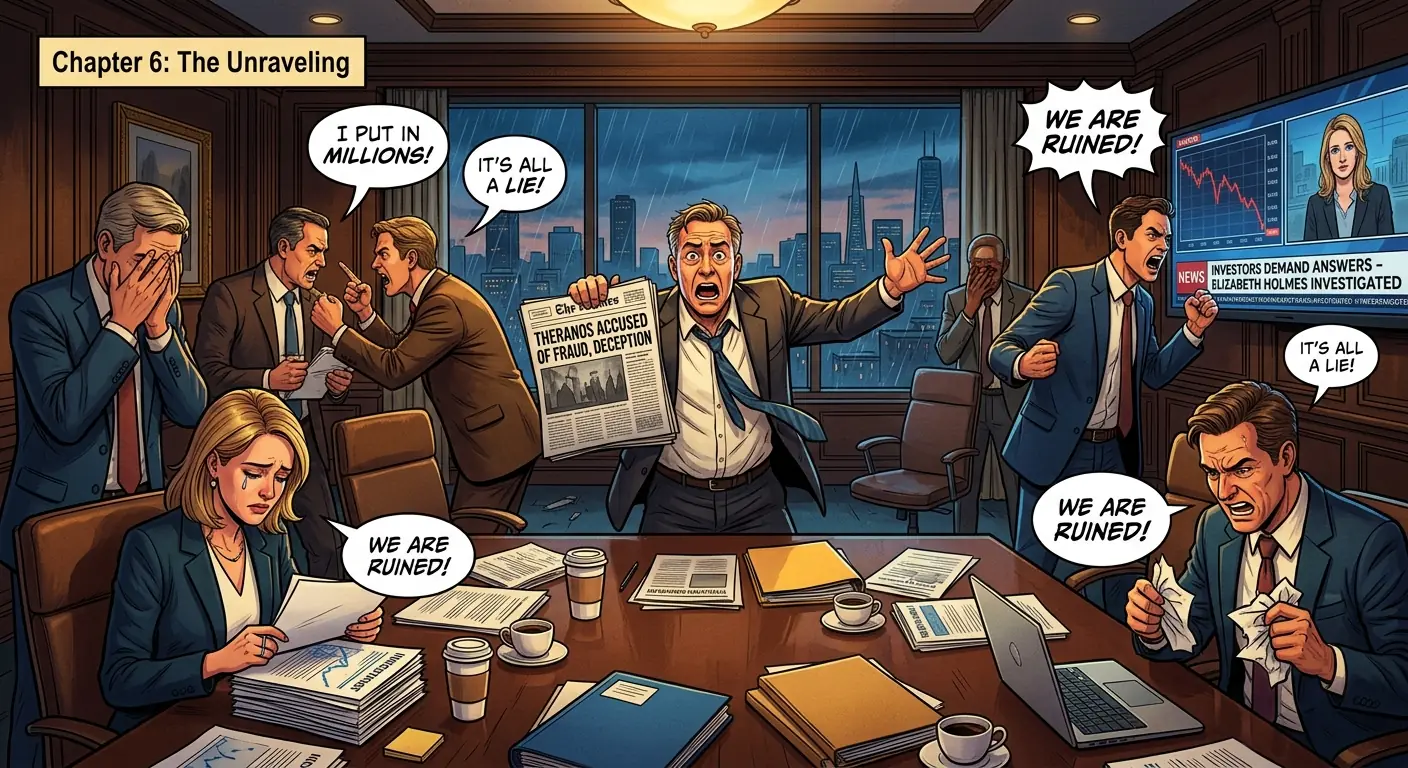
On October 16, 2015, John Carreyrou published the first of a series of articles in The Wall Street Journal revealing that Theranos was using its proprietary Edison device for only a small fraction of its tests and was running the rest on conventional machines. The articles cited anonymous sources, internal documents, and clinical data that contradicted virtually everything Theranos had told investors and the public.
Holmes fought back. She appeared on CNBC, on Jim Cramer’s Mad Money, on the TODAY show. She denied everything. She called Carreyrou’s reporting a hit job. She invoked her mission of saving lives. She wore the black turtleneck.
Rupert Murdoch — who owned The Wall Street Journal — reportedly asked Holmes about the stories during a private meeting. Holmes urged him to kill the investigation. Murdoch, to his credit, refused. He told Holmes that he didn’t interfere with WSJ’s journalism. It was one of the most expensive editorial decisions in media history: Murdoch let his own newspaper publish stories that would destroy his $125 million investment.
The dam broke quickly after that. The Centers for Medicare & Medicaid Services (CMS) inspected Theranos’s Newark, California lab in late 2015 and found deficiencies so severe that the agency determined the lab posed “immediate jeopardy to patient health and safety.” Theranos was banned from operating its blood-testing lab for two years. Walgreens, which had partnered with Theranos to offer in-store blood testing, terminated its partnership and sued for $140 million.
In March 2018, the SEC charged Holmes and Balwani with “massive fraud.” Holmes settled without admitting wrongdoing and agreed to pay a $500,000 fine and give up voting control of the company. In September 2018, Theranos officially dissolved.
⚖️ Chapter 7: The Trial and the Reckoning
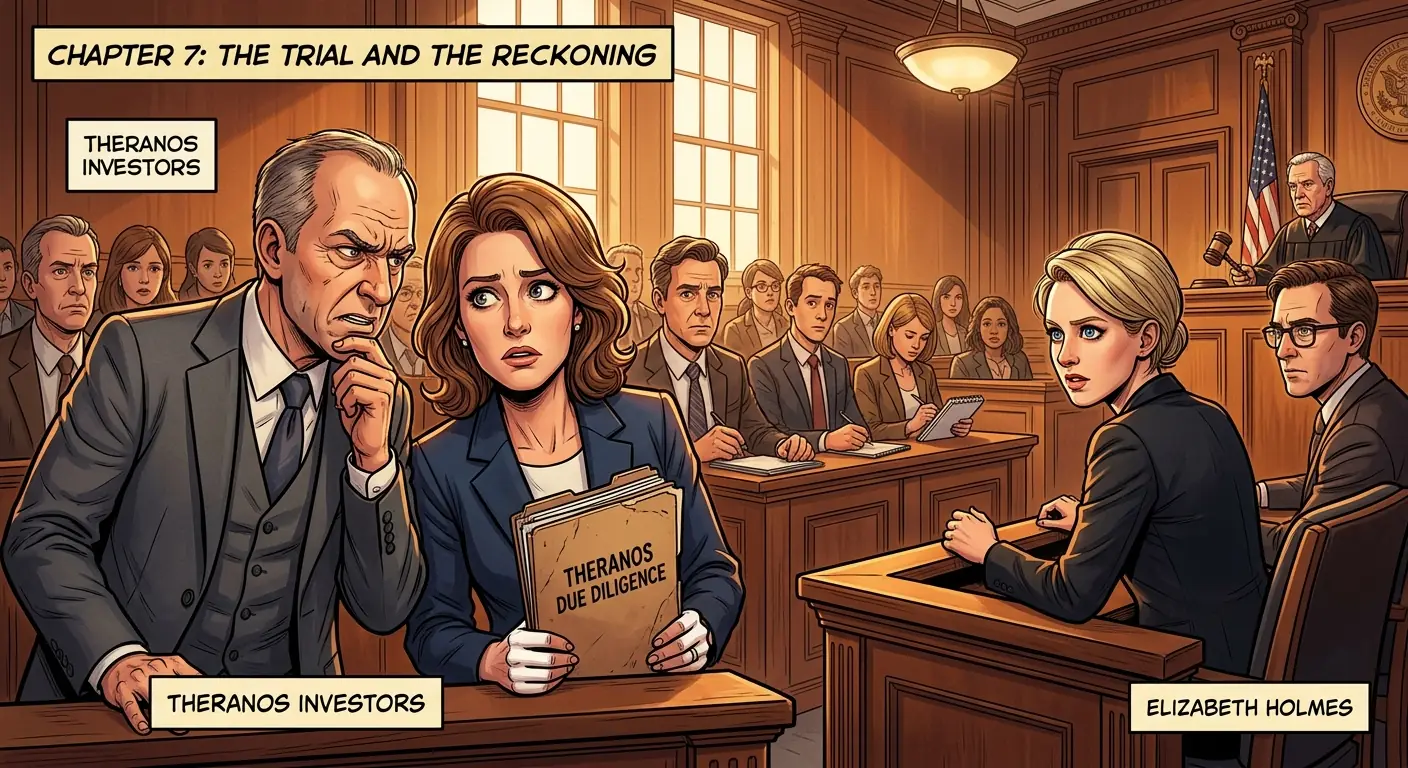
In January 2022, Elizabeth Holmes was found guilty of four counts of federal wire fraud — specifically, defrauding investors. She was acquitted of charges related to defrauding patients. In November 2022, she was sentenced to 11 years and 3 months in prison. She reported to a federal prison in Bryan, Texas, on May 30, 2023.
Ramesh Balwani was convicted on all 12 counts and sentenced to nearly 13 years in prison.
But the investors never got their money back. The $945 million was gone — spent on salaries, office space, equipment, legal fees, and the elaborate theatrical production of a company that didn’t have a working product.
The financial losses, while enormous in absolute terms, were proportionally small for most of the investors involved. Rupert Murdoch’s $125 million was roughly 1% of his net worth. The Walton family’s $150 million was approximately 0.1% of their fortune. For billionaire investors, Theranos was an embarrassment, not a catastrophe.
But the reputational damage was real. These were people who prided themselves on judgment — on being smarter, savvier, and more perceptive than ordinary investors. The Theranos debacle proved that wealth and status don’t protect against fraud. If anything, they make you more vulnerable, because they create the social distance that prevents you from asking basic questions.
📋 Chapter 8: The Autopsy
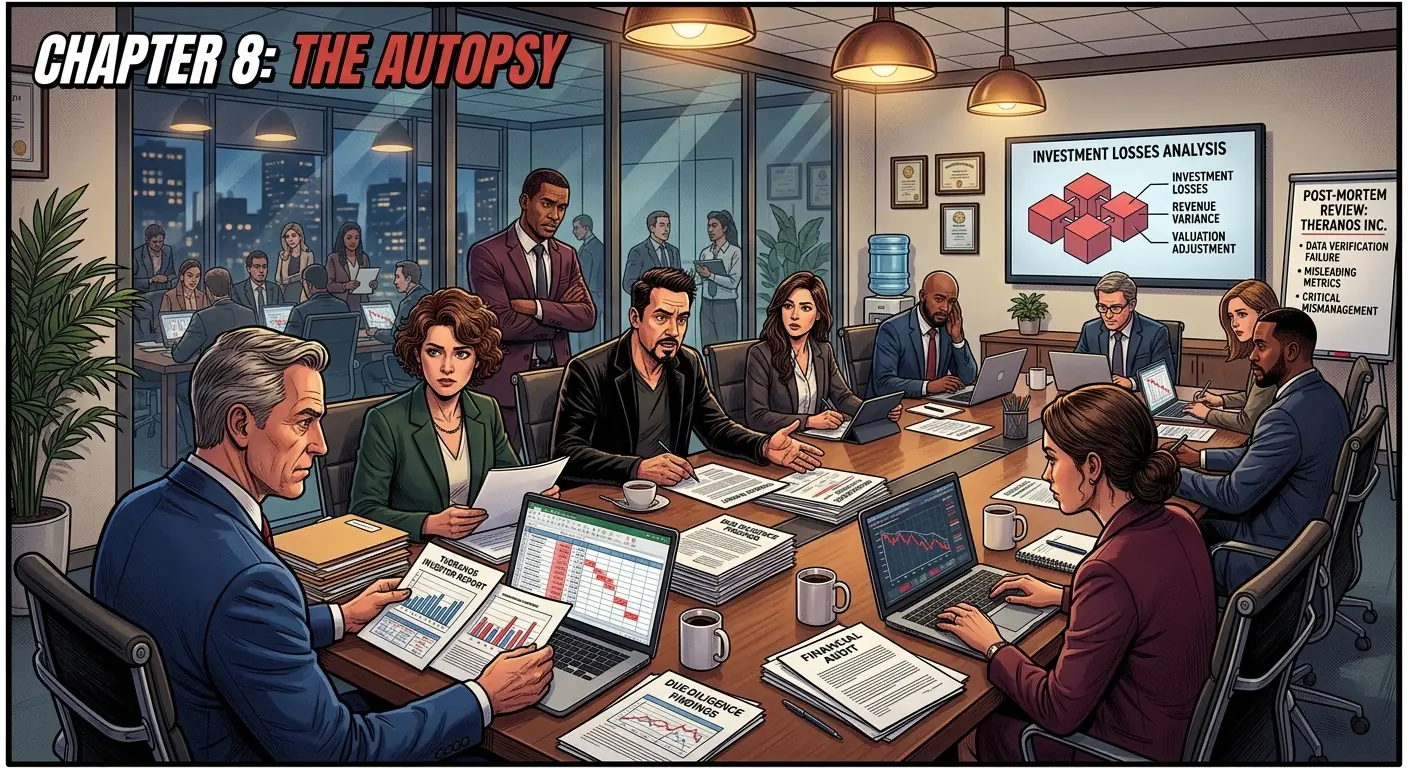
What went wrong? How did nearly a billion dollars flow into a company that couldn’t do what it claimed?
Due diligence failure. The most basic explanation is that the investors didn’t do their homework. They didn’t demand audited clinical trial data. They didn’t hire independent biomedical consultants to evaluate the Edison device. They didn’t insist on third-party verification of Theranos’s test accuracy. In normal venture capital, this level of due diligence is standard. For Theranos, it was skipped — partly because of social proof, partly because Holmes actively prevented it by claiming trade secret protections.
Board composition failure. A board of directors is supposed to provide oversight. Theranos’s board was constructed to provide access. Not a single board member had the technical expertise to evaluate a diagnostic blood-testing device. The board could open doors in Washington but couldn’t ask the right questions in the lab.
Regulatory gap. Laboratory-developed tests (LDTs), which is how Theranos classified its technology, were subject to far less FDA scrutiny than commercial diagnostic devices. Theranos exploited this regulatory gray zone for years, operating its tests in a clinical setting without the rigorous review that a standard medical device would require.
Narrative over evidence. Holmes was a masterful storyteller. She pitched a world where anyone could get a comprehensive blood test from a finger prick at their local pharmacy. The story was emotionally compelling, socially important, and technologically plausible (to non-experts). Investors bought the story. They never demanded the evidence.
The Theranos investor debacle is not primarily a story about a charismatic fraudster. It’s a story about a system — Silicon Valley’s ecosystem of wealth, power, and social proof — that was designed to fund ambitious ideas quickly and was therefore structurally vulnerable to ambitious lies.
The investors who got burned weren’t stupid. They were operating in an environment where speed, conviction, and social signals mattered more than independent verification. In that environment, Theranos was inevitable. If Holmes hadn’t built it, someone else would have exploited the same blind spots.
The lesson isn’t “be smarter.” The lesson is: when everyone in the room is relying on everyone else’s judgment, nobody is actually judging. And that’s when the music stops.
💡 Chapter 9: The Fickle Friendships (2003-2018)
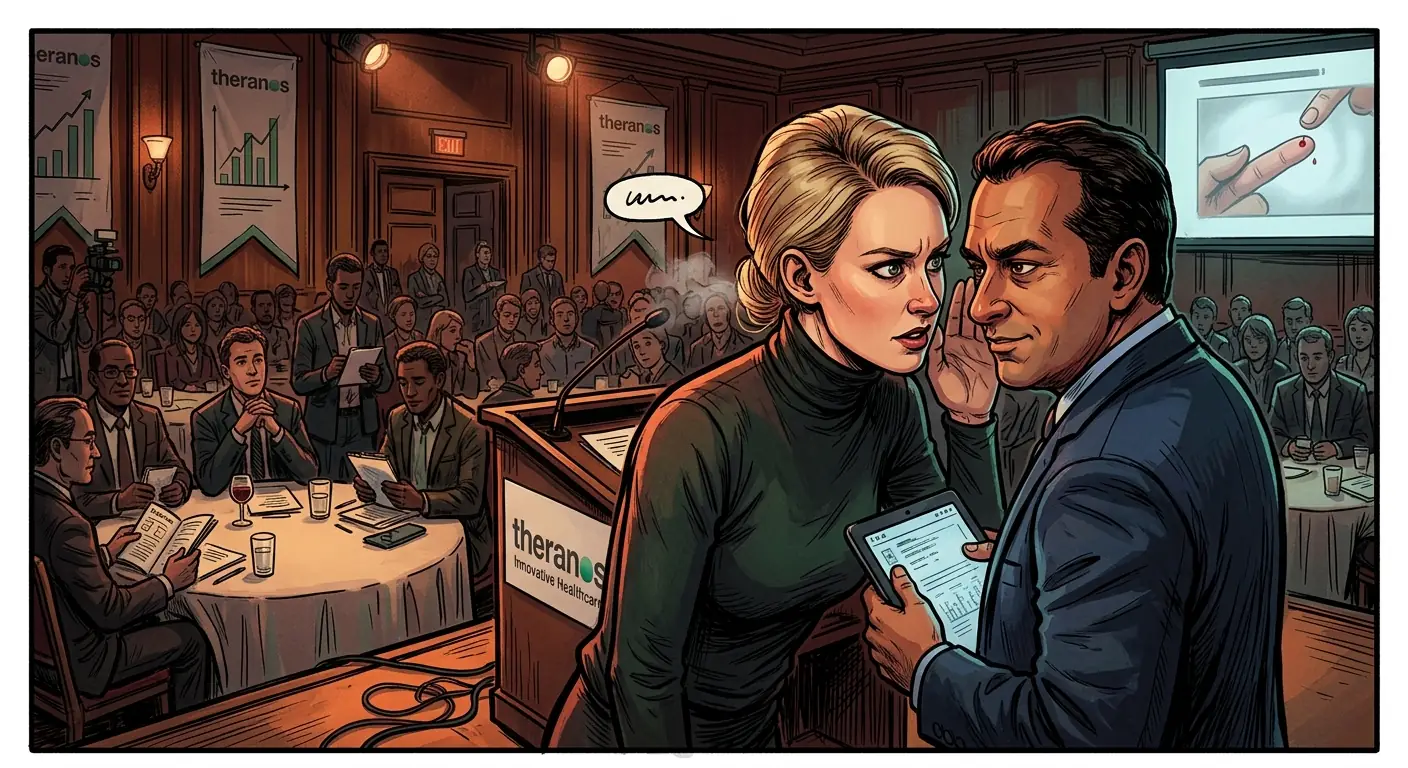
For all the talk of Theranos being a “tech” company, a “medical device” company, or a “diagnostics” company, it was perhaps most effectively a “relationship” company. Elizabeth Holmes was a master networker, yes, but she also cultivated a very specific, often isolating, set of personal and professional bonds that directly impacted investor confidence – and eventually, their losses. The dynamics within her inner circle weren’t just office drama; they were central to the company’s operational dysfunction and its eventual downfall. Investors, often kept at arm’s length from day-to-day operations, had no idea how deeply these personal entanglements corroded the company’s foundation.
The Unlikely Romance: Holmes & Balwani
It’s hard to talk about Theranos without talking about Ramesh “Sunny” Balwani. He wasn’t just Theranos’s president and COO; he was also Holmes’s secret boyfriend, a relationship that began when she was 18 and he was 37. This wasn’t just a quirky detail; it was a massive, undisclosed conflict of interest that permeated every decision. Balwani, with a background in software, not biotech, wielded immense power, often clashing with scientists and employees who questioned Holmes’s vision or the technology’s feasibility.
Their relationship, kept secret from almost everyone outside their very tight circle (including investors and many board members for years), meant that the top two executives were not just business partners but romantically intertwined. Imagine trying to give honest feedback to your boss, knowing her boyfriend is the COO and they’re sharing a pillow every night. Dissent was squashed, often ruthlessly. Employees reported Balwani’s volatile temper and aggressive management style. “You don’t know what you’re talking about,” he reportedly told a scientist who raised concerns about the Edison device’s accuracy. This created a culture of fear, where speaking truth to power was career suicide, and innovation was stifled by dogma. Investors, who saw a united front and heard grand pronouncements, were completely blind to this toxic internal dynamic, assuming a professional, merit-based hierarchy. Oh, how wrong they were.
The Inner Circle vs. The Outsiders
Holmes didn’t just have Balwani; she had a carefully curated inner circle, often composed of loyalists with little to no scientific background. Her brother, Christian Holmes, was hired, as was a friend from childhood, Daniel Edlin, who became her executive assistant. While nepotism isn’t unheard of in startups, at Theranos, these individuals often acted as gatekeepers, further insulating Holmes from inconvenient truths. The actual scientists and engineers, the people who knew the technology wasn’t working, were either ignored, marginalized, or fired.
This created a fortress around Holmes, where only positive news and fervent belief were permitted. When a brilliant scientist like Ian Gibbons, the company’s chief scientist, raised red flags, he was reportedly sidelined and his concerns dismissed. His tragic suicide in 2013, though never directly attributed to his work at Theranos, became a somber footnote that highlighted the immense pressure and isolation felt by those who dared to question the emperor’s new clothes. For investors, this meant their due diligence was performed on an elaborate stage production, not a functioning company. They saw the dazzling cast of generals and statesmen, but never glimpsed the terrified, overworked crew backstage, desperately trying to keep the props from falling over.
The Persona vs. The Person
Beyond the relationships, Holmes herself was a master of constructing a persona. The deep voice, the black turtleneck (a nod to Steve Jobs, naturally), the intense stare – it was all part of the mystique. She rarely broke character, even in private meetings, making it difficult for investors to get a genuine read on her. Was she a visionary, or an incredibly convincing actress?
This persona, combined with her youth and apparent conviction, disarmed even the most seasoned investors. They saw what they wanted to see: the next tech titan, a disruptor with a noble mission. They invested in the narrative, the image, the idea of Elizabeth Holmes, rather than a rigorously vetted business. It was a classic case of charismatic leadership overriding critical judgment. The personal relationships within Theranos amplified this effect, creating an echo chamber where the persona became the only reality, trapping investors in a gilded cage of their own making.
🚫 Chapter 10: The Regulatory Gauntlet (2015-2016)
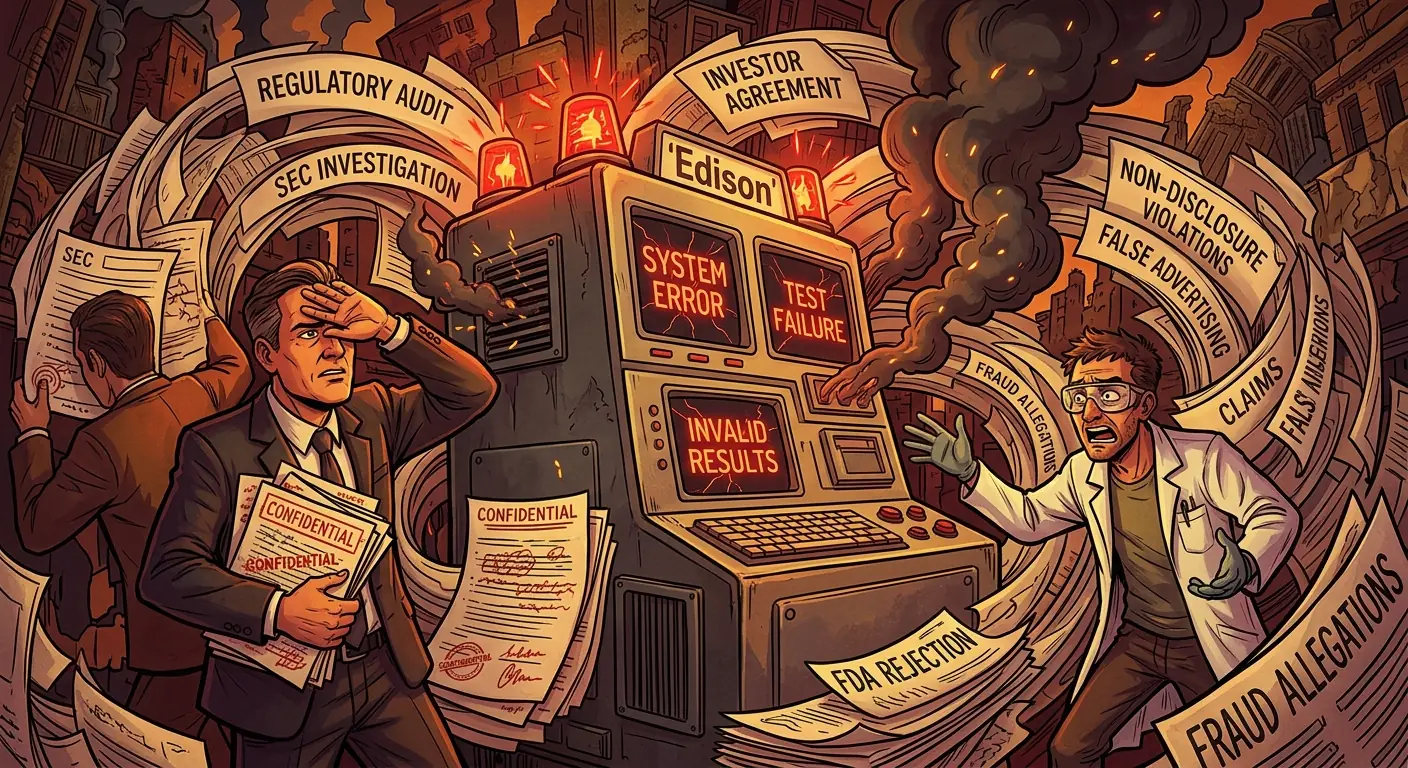
While investors were busy counting their theoretical billions, the actual work of Theranos was quietly, catastrophically failing under the radar. But the radar eventually found them, and when the regulatory hammer dropped, it wasn’t just the technology that crumbled – it was the entire house of cards built on investor dreams. The company’s attempts to navigate, or more accurately, evade regulatory oversight, proved to be one of its most egregious and ultimately fatal flaws, directly leading to the evaporation of nearly a billion dollars.
Dodging the Watchdogs: The FDA vs. LDTs
One of Theranos’s key strategies to avoid rigorous scrutiny was to classify its proprietary tests as “lab-developed tests” (LDTs). This was a brilliant, if ethically dubious, loophole. LDTs, traditionally developed and performed within a single lab, historically faced less stringent FDA oversight than commercially manufactured diagnostic devices. Holmes famously claimed that the Edison machines were simply tools within their CLIA-certified lab, not standalone devices requiring FDA approval for each test. This allowed them to launch their blood tests without the lengthy, expensive, and crucially, transparent process of demonstrating efficacy and safety to the Food and Drug Administration.
Investors were assured that Theranos had a strong regulatory strategy, and the narrative was spun that they were innovating so fast that traditional regulations couldn’t keep up. In reality, they were playing a dangerous game of semantics. The FDA, however, wasn’t fooled for long. By 2015, after The Wall Street Journal’s initial exposé, the FDA began to push back, questioning the LDT classification and eventually inspecting Theranos’s facilities. This wasn’t just a bureaucratic annoyance; it was the beginning of the end. The very premise that allowed Theranos to operate with such secrecy – and attract so much investment – was being dismantled.
CLIA’s Hammer: CMS Steps In
If the FDA was a warning shot, the Centers for Medicare & Medicaid Services (CMS) was a direct hit. CMS is responsible for enforcing the Clinical Laboratory Improvement Amendments (CLIA), which regulate all clinical lab testing performed on humans in the U.S. In late 2015 and early 2016, CMS conducted an inspection of Theranos’s Newark, California lab. The findings were not just bad; they were catastrophic.
The CMS report was a horror show of non-compliance: “deficient practices that pose immediate jeopardy to patient health and safety.” We’re talking about everything from unqualified personnel to improper instrument validation, inadequate quality control, and testing devices that weren’t performing as promised. They found that Theranos was using traditional venous draws and commercial analyzers for most of its tests anyway, directly contradicting their “one tiny drop” narrative. The lab was citing results from its proprietary Edison machines that were wildly inaccurate.
In March 2016, CMS proposed revoking Theranos’s CLIA certificate and banning Holmes and Balwani from owning or operating a blood-testing lab for two years. This wasn’t a slap on the wrist; it was a death sentence for a diagnostics company. Imagine writing a $100 million check to a company whose core business is about to be shut down by federal regulators. Ouch.
The Pullback and the Panic
The regulatory actions had immediate and devastating consequences. In April 2016, Theranos announced it would void tens of thousands of blood test results from its Edison devices from 2014 and 2015, impacting potentially hundreds of thousands of patients. This meant that any medical decisions made based on those faulty tests were potentially compromised. The company also stopped using its proprietary technology for all tests except one – a herpes test that had actually received FDA clearance (a rare win, and arguably a distraction).
The Walgreens partnership, once hailed as a major change, crumbled. By June 2016, Walgreens terminated its relationship with Theranos, closing all 40 of its “wellness centers.” The legal battles began almost immediately, with Walgreens suing Theranos for $140 million for breach of contract. For investors, this was the moment the dream officially became a nightmare. The company’s valuation, once $9 billion, plunged to zero. The regulatory actions didn’t just expose the fraud; they directly dismantled the operational capacity of the company, leaving investors with nothing but a very expensive lesson in due diligence.
🔬 Chapter 11: The Biotech Bluster (2003-2018)
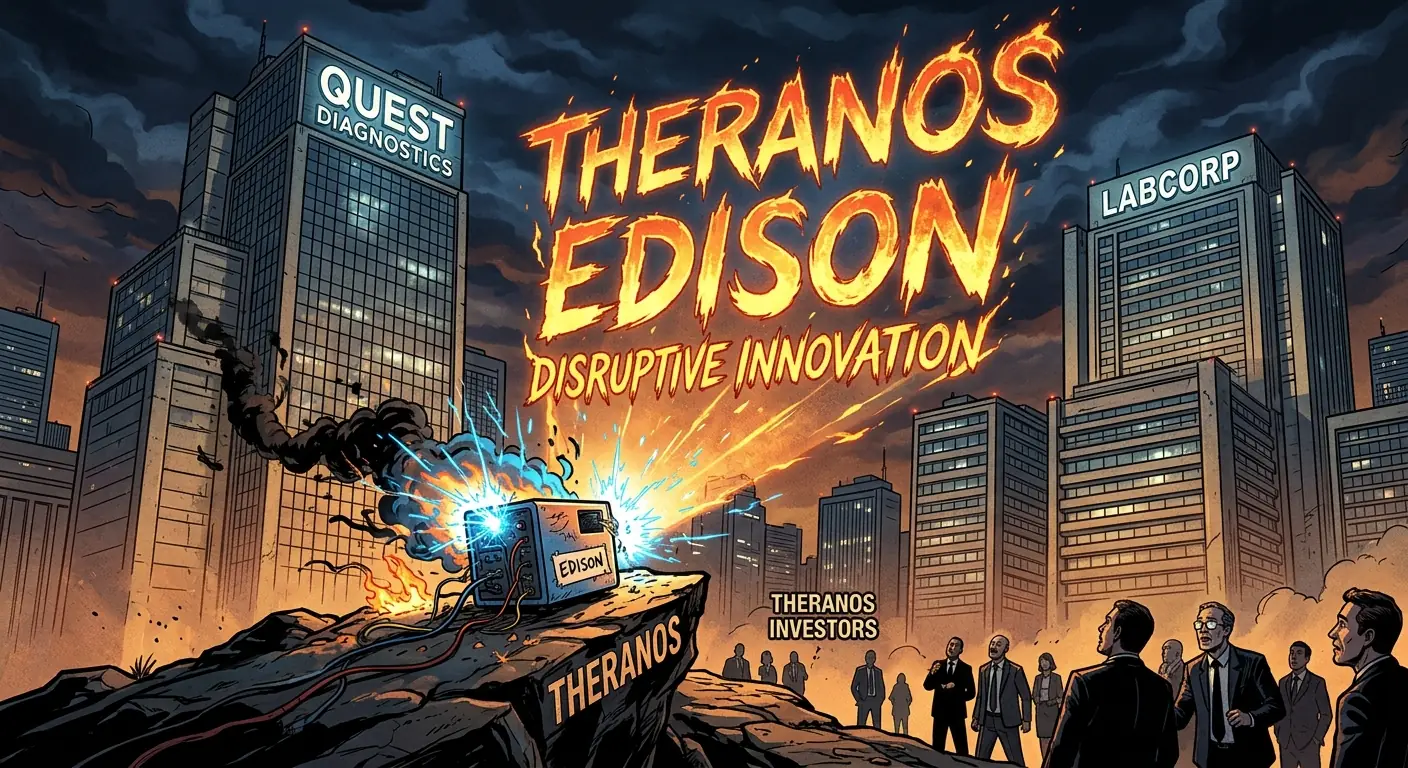
Theranos wasn’t just a company; it was a promise. A promise to revolutionize an entire industry, to make healthcare cheaper, faster, and more accessible. This promise, more than any actual technology, is what truly captivated investors, many of whom were drawn by the allure of disruption in a sector notoriously resistant to change. The biotech and diagnostics industry, dominated by behemoths like Quest Diagnostics and LabCorp, seemed ripe for an innovative shake-up. Holmes positioned Theranos as the David to their Goliath, and investors loved that story.
Disrupting the Giants: A Battle Not Fought
From its inception, Theranos presented itself as a disruptive force. The narrative was simple: traditional labs required large, painful venous blood draws, sent samples off to centralized labs, and took days to return results, all at high costs. Theranos, with its “miniLab” and “nanotainer” technology, would change all that. A single finger-prick of blood, results in minutes or hours, all performed in local pharmacies, and at prices significantly lower than existing tests. Sounds amazing, right?
This was the pitch that allowed Holmes to bypass traditional venture capital firms (who might have asked too many inconvenient questions) and go straight to wealthy family offices. These investors weren’t necessarily biotech experts; they were often generalists looking for the next big thing, the next Google or Apple. They saw the potential to upend a $75 billion diagnostics market and grab a huge slice of it. Established players like Quest Diagnostics and LabCorp, with their sprawling networks and decades of experience, were dismissed as slow, expensive, and outdated. For a brief, shining moment, it seemed Theranos was on the verge of making them obsolete. The reality, of course, was that Quest and LabCorp continued to operate, profitably and ethically, while Theranos imploded. The disruption never actually happened, much to the chagrin of those who bet big on it.
The “Wellness Centers” Illusion: Safeway & Walgreens
Perhaps the most visible manifestation of Theranos’s ambition – and its ultimate failure to disrupt – was its partnerships with retail giants Safeway and Walgreens. These weren’t just distribution deals; they were supposed to be the physical embodiment of the revolution: “wellness centers” where consumers could walk in, get a cheap blood test, and walk out with results, all before their latte got cold.
Safeway invested a staggering $350 million to build clinics in 800 of its grocery stores, believing in the vision of integrated health and wellness. They spent years and millions preparing for the rollout, only to be left with empty clinics and a massive financial loss when the technology couldn’t deliver. Walgreens, not to be outdone, partnered with Theranos in 2013, planning to roll out Theranos Wellness Centers in thousands of its pharmacies nationwide. They invested $140 million and installed clinics in 40 locations across Arizona and California. For investors, these partnerships were concrete proof of market validation, scaling potential, and competitive advantage. They saw the logos of trusted American brands next to Theranos, believing it conferred legitimacy.
But these deals were built on smoke and mirrors. The technology simply wasn’t ready. The Safeway deal never fully launched, and the Walgreens partnership spectacularly collapsed in June 2016 after the regulatory investigations. The grand vision of ubiquitous, accessible diagnostics was a mirage, leaving a trail of broken promises and significant financial losses for the retailers, which in turn devalued Theranos’s own perceived worth to investors.
A Scared New World: Chilling Effects
The Theranos saga had a profound, if unintended, impact on the broader biotech and diagnostics industry, particularly for startups seeking funding. In the immediate aftermath, there was a noticeable chilling effect on venture capital investment in diagnostic companies. Investors, suddenly spooked by the spectacular failure and the potential for fraud, became much more cautious. Due diligence became far more rigorous, with a greater emphasis on scientific validation, regulatory pathways, and transparent data.
This wasn’t entirely a bad thing. It forced a re-evaluation of the “fake it till you make it” mentality that had permeated some parts of Silicon Valley. For legitimate biotech startups with groundbreaking, working technology, the Theranos scandal made it harder to raise capital, as investors became skeptical of any grand claims. On the flip side, it also likely prevented other potential frauds from gaining traction, forcing a higher standard of proof. The industry learned a hard lesson: disruption is great, but it has to be built on science, not just a compelling story and a turtleneck. For the investors who got burned, it was a painful reminder that even the most innovative pitch needs to be backed by verifiable reality.
🌍 Chapter 12: The Global Gambit (2014-2016)
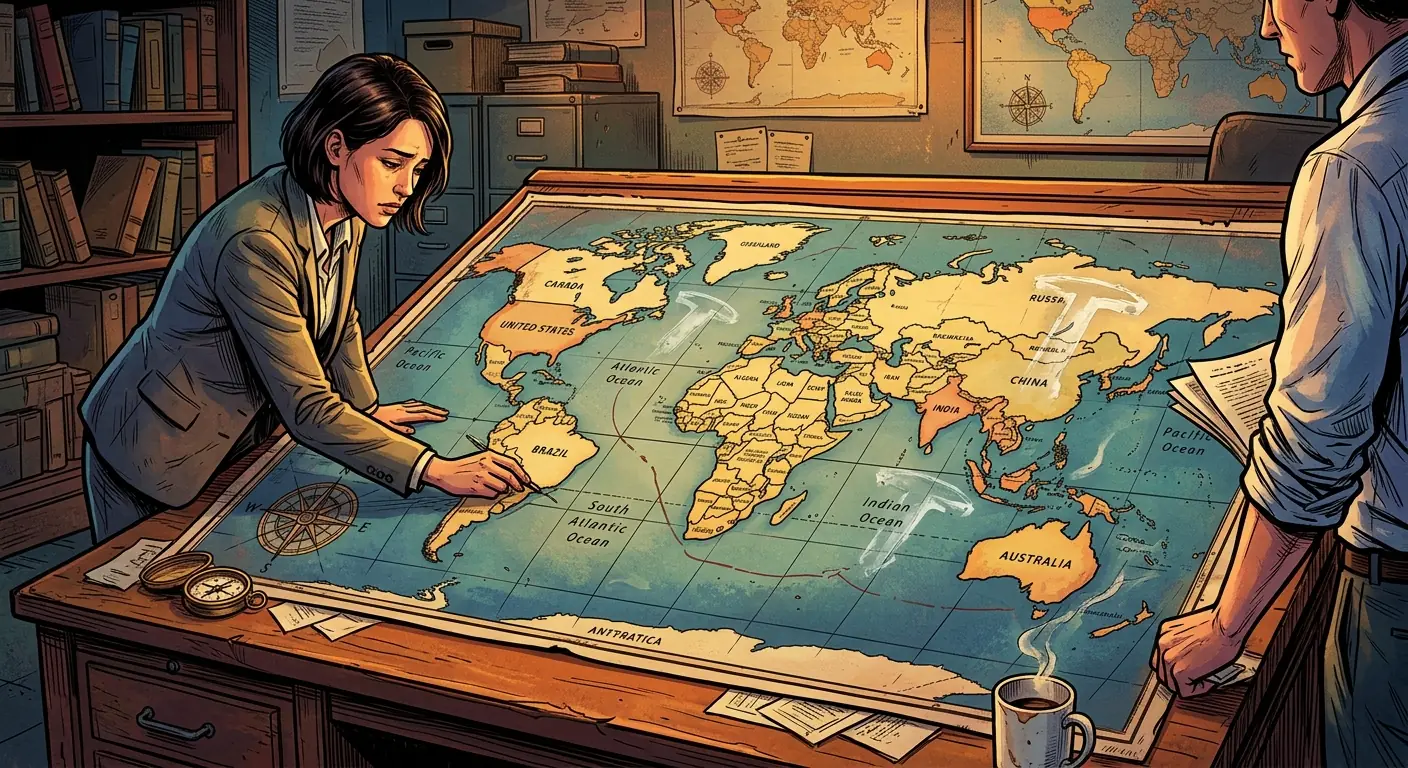
If Theranos’s domestic ambitions were already sky-high, Elizabeth Holmes often hinted at, and sometimes actively pursued, a global expansion that was even grander. She envisioned Theranos not just as a national player, but as a global health powerhouse, particularly in areas with limited healthcare access. These international aspirations, often communicated through veiled references and tantalizing hints, further fueled investor enthusiasm, suggesting an even larger market for their “revolutionary” technology. The idea was to save lives on a massive scale, and who wouldn’t want to be part of that?
The Africa Dream: A Humanitarian Facade
Holmes frequently spoke about bringing Theranos’s technology to developing countries, particularly in Africa, where access to diagnostics is severely limited. She painted a picture of a single drop of blood being able to diagnose diseases like HIV, malaria, and tuberculosis quickly and cheaply, right in remote villages. This wasn’t just good PR; it was a potent emotional appeal for investors who might have been swayed by the idea of their money doing good, not just making more money.
She attended global health conferences and made overtures to international organizations, positioning Theranos as a humanitarian solution. The narrative of saving lives in impoverished regions added another layer of unassailability to the Theranos story. How could anyone question a company with such noble intentions? Yet, like so many other aspects of Theranos, these global ambitions were entirely disconnected from reality. The technology couldn’t even reliably detect cholesterol in Arizona, let alone diagnose complex infectious diseases in challenging field conditions. The “Africa dream” was a powerful rhetorical device, a compelling vision that distracted from the lack of concrete, verifiable progress, both domestically and abroad. It was a classic “halo effect” designed to make investors feel good about their capital, even if the underlying product was a mirage.
Partnering with Big Pharma: The Elusive Pfizer Deal
Beyond public health, Holmes also sought to legitimize Theranos through partnerships with established pharmaceutical companies. The idea was that big pharma could use Theranos’s rapid, less invasive blood tests for drug development, clinical trials, and companion diagnostics. This would have provided a massive influx of capital, scientific validation, and a clear path to market for many of Theranos’s proposed tests.
One of the most frequently cited, yet ultimately unfulfilled, examples was the purported partnership with Pfizer. Holmes often hinted at close collaborations, creating the impression that a major pharmaceutical giant had vetted and approved Theranos’s technology. This was a critical piece of “social proof” for investors. If Pfizer, a company with immense scientific and regulatory expertise, was on board, then surely Theranos was legitimate. However, the reality was far less grand. While there were initial discussions and a very limited pilot project with Pfizer in 2007-2008, it quickly fizzled out due to Theranos’s inability to deliver on its promises. Pfizer explicitly denied any ongoing partnership or endorsement of Theranos’s technology after the scandal broke. The ghost of a Pfizer deal, however, continued to haunt investor presentations for years, a powerful, albeit false, beacon of validation.
The Military Angle: Battlefield Diagnostics
Another intriguing, and deeply patriotic, angle Holmes pursued was the application of Theranos technology for military use, particularly on the battlefield. The vision was compelling: a portable device that could quickly diagnose injuries, infections, or exposure to biological agents in remote, austere environments, potentially saving countless lives of soldiers. This resonated deeply with the generals and statesmen on her board, many of whom had direct experience with the challenges of military medicine.
Holmes reportedly sought to secure contracts with the Department of Defense, appealing to the national security implications of her technology. The notion that Theranos could provide critical diagnostic capabilities for troops in harm’s way was a powerful motivator, appealing to a sense of duty and national pride among potential backers. There were reports of Theranos devices being deployed in Afghanistan, though this was later revealed to be an exaggeration, if not outright fabrication. While some limited research was conducted, the technology was never widely adopted or proven effective for military applications. This “military angle” served as yet another layer of strategic positioning, designed to attract a specific type of influential investor and board member, who, blinded by the perceived national importance, might overlook the fundamental scientific shortcomings. It added a layer of gravitas and an implied endorsement from the highest levels of government, further cementing the illusion of a company destined for greatness.
⏳ Chapter 13: The Long Shadow (2018-Present)
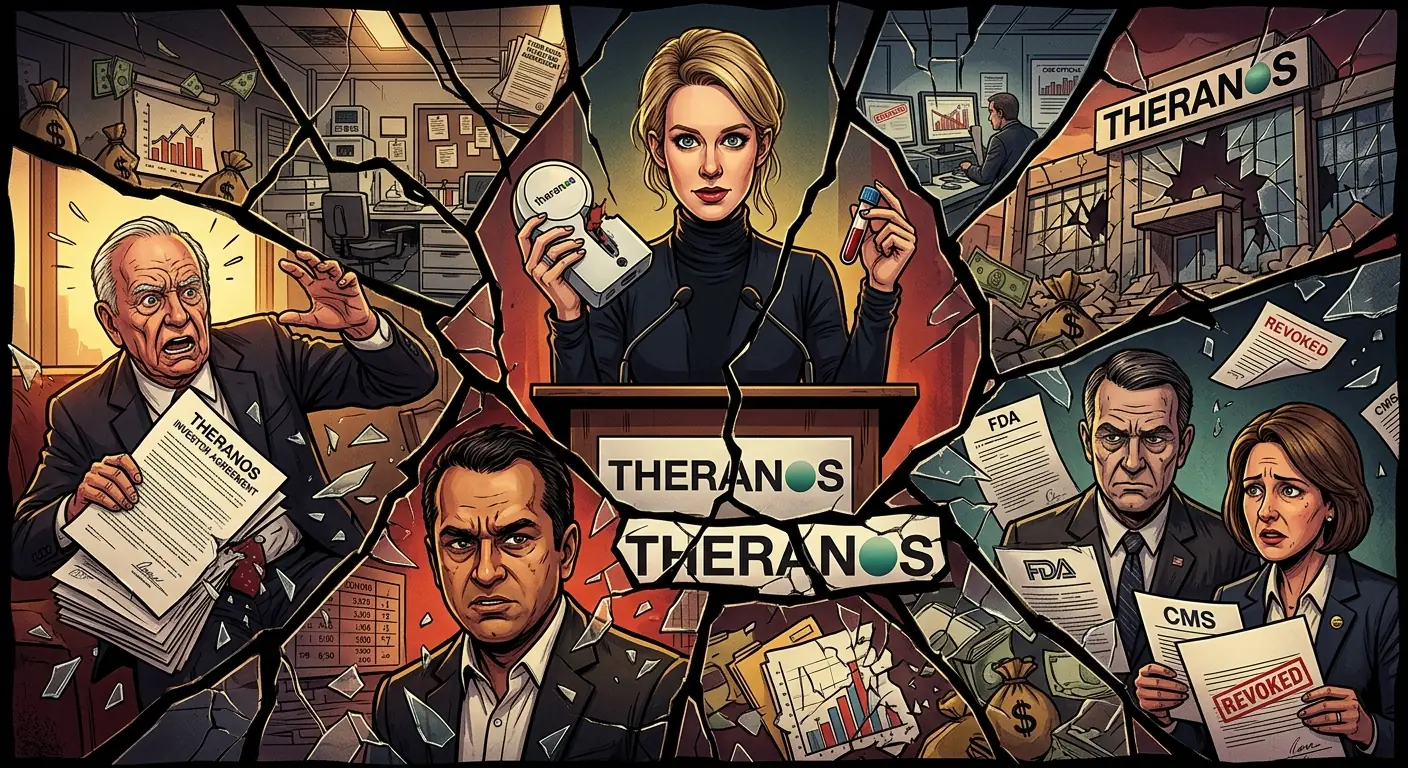
The Theranos empire officially dissolved in September 2018, but its shadow continues to loom large over Silicon Valley, the biotech industry, and the very concept of “disruption.” For the investors who poured nearly a billion dollars into the void, the story ended with a complete financial write-off. But the impact of Theranos extends far beyond the ledger, influencing everything from venture capital due diligence to media scrutiny and the public’s perception of “tech visionaries.” What happened to the key players, and what enduring lessons have been etched into the collective memory?
Where Are They Now?
Let’s start with the architects of this magnificent failure. Elizabeth Holmes was convicted on four counts of defrauding investors in January 2022 and sentenced to 11.25 years in prison in November 2022. She began serving her sentence at FPC Bryan in Texas in May 2023. Sunny Balwani was convicted on 12 counts of fraud in July 2022 and sentenced to 12.9 years in prison in December 2022, beginning his sentence at FCI Terminal Island in April 2023. Justice, albeit delayed, was served for their criminal actions.
And the investors? Their money is gone. The Walton family lost their $150 million. Rupert Murdoch, who sold his $125 million stake back to Theranos for a single dollar to claim a tax write-off just before the company collapsed, effectively lost it all too. Betsy DeVos and the Cox family also saw their $100 million investments vanish. For these billionaires, it was likely a painful but not life-altering financial hit – a rounding error, as we mentioned earlier. But it was a stark reminder that even immense wealth doesn’t guarantee immunity from sophisticated deception. Their reputations, however, took a ding for being so easily fooled. The powerful board members, like George Shultz (who passed away in 2021), Henry Kissinger, and Jim Mattis, largely escaped legal repercussions, but their association with Theranos will forever be a blot on their otherwise distinguished careers.
The Aftermath for Silicon Valley: Unicorns Under Scrutiny
The Theranos scandal sent shockwaves through Silicon Valley, prompting a much-needed reckoning regarding the “fake it till you make it” culture. For years, the mantra had been to prioritize growth and vision over immediate profitability or even fully functional products. Theranos was the ultimate manifestation of this, but without the “make it” part.
Venture capitalists and institutional investors, once seemingly content to write massive checks based on charisma and buzz, became noticeably more cautious. There’s been increased scrutiny on privately held “unicorn” companies (startups valued at over $1 billion), demanding more transparency, more scientific validation, and more independent oversight. The days of simply having a compelling story and a famous board to secure hundreds of millions might be over. Investors now ask tougher questions about IP, regulatory pathways, and actual product performance, not just potential market size. It forced a conversation about the ethics of hype and the responsibility of investors to conduct thorough due diligence, even when the founder is charming and the mission sounds noble.
The Enduring Legacy: Lessons in Skepticism
Theranos’s legacy is a complex one, a cautionary tale woven into the fabric of modern business history. It highlights several critical lessons:
- Skepticism is Essential: Never let a charismatic founder, a compelling narrative, or a star-studded board override fundamental skepticism and rigorous due diligence. If something sounds too good to be true, it probably is.
- Science Matters (Especially in Biotech): In industries like healthcare and biotech, where human lives are at stake, the burden of proof is immense. Scientific claims must be backed by peer-reviewed data, independent validation, and regulatory approval, not just marketing materials.
- The Perils of Secrecy: Theranos operated in extreme secrecy, which allowed the fraud to fester. Transparency, open communication, and a culture that encourages dissent are vital for healthy innovation.
- Media’s Role: The initial fawning media coverage of Holmes contributed significantly to her mystique and ability to attract investors. The subsequent investigative journalism by The Wall Street Journal’s John Carreyrou was instrumental in exposing the truth, reminding us of the critical role of a free press.
Ultimately, the Theranos story isn’t just about a con artist; it’s about the systemic vulnerabilities that allowed her to thrive. It’s about the seductive power of a story, the herd mentality of wealthy investors, and the uncomfortable truth that even the smartest people can fall for a well-crafted illusion. The long shadow of Theranos serves as a permanent reminder: when chasing the future, always keep one eye on the ground.
💡 Key Insights
- ▸ The Theranos investor list reads like a who's who of American power: Rupert Murdoch ($125M), the Walton family ($150M), Betsy DeVos ($100M), the Cox family ($100M). These weren't naive retail investors. They were among the most sophisticated capital allocators on Earth. Yet none of them demanded to see audited clinical data before writing nine-figure checks.
- ▸ Theranos exploited a specific blind spot in wealthy investors: the desire to be part of something world-changing. Holmes pitched a mission — democratizing healthcare — not a product. When you're selling a vision, the investor's own ego becomes your greatest asset. They don't want to be the person who 'didn't get it.'
- ▸ George Shultz, the former Secretary of State, was so committed to Theranos that he dismissed warnings from his own grandson, Tyler Shultz, who worked at the company and witnessed the fraud firsthand. The Shultz family dynamic illustrates the most dangerous form of confirmation bias: when your identity is tied to your investment, contradictory evidence becomes a personal attack.
- ▸ Every single person who conducted deep technical due diligence on Theranos walked away. The investors who got burned were the ones who relied on social proof — the board was impressive, the founder was charismatic, other rich people were investing. Social proof is a powerful heuristic in normal situations. In fraud situations, it's the mechanism of the con.
- ▸ The Theranos collapse wasn't caused by a competitor or a market shift. It was caused by a single investigative journalist — John Carreyrou of The Wall Street Journal — who spent months verifying tips from whistleblowers. A $9 billion valuation was destroyed by reporting. The lesson: sunlight remains the best disinfectant, and the most overvalued companies are always the ones that fight hardest to avoid it.
Sources
- John Carreyrou — Bad Blood: Secrets and Lies in a Silicon Valley Startup ↗
- SEC Enforcement Action — Theranos Inc., Elizabeth Holmes, and Ramesh Balwani ↗
- U.S. v. Elizabeth Holmes — Trial Testimony and Court Records ↗
- The Wall Street Journal — Theranos Investigation Coverage by John Carreyrou ↗
- Roger Parloff — Fortune Cover Story: 'This CEO Is Out for Blood' ↗