The Koch Brothers: America's Most Controversial Billionaires and Their $120 Billion Empire
They built the second-largest private company in America, spent billions reshaping U.S. politics, and became the most polarizing dynasty in modern capitalism.
View all stories about this mogul
The Koch Brothers: America’s Most Controversial Billionaires and Their $120 Billion Empire
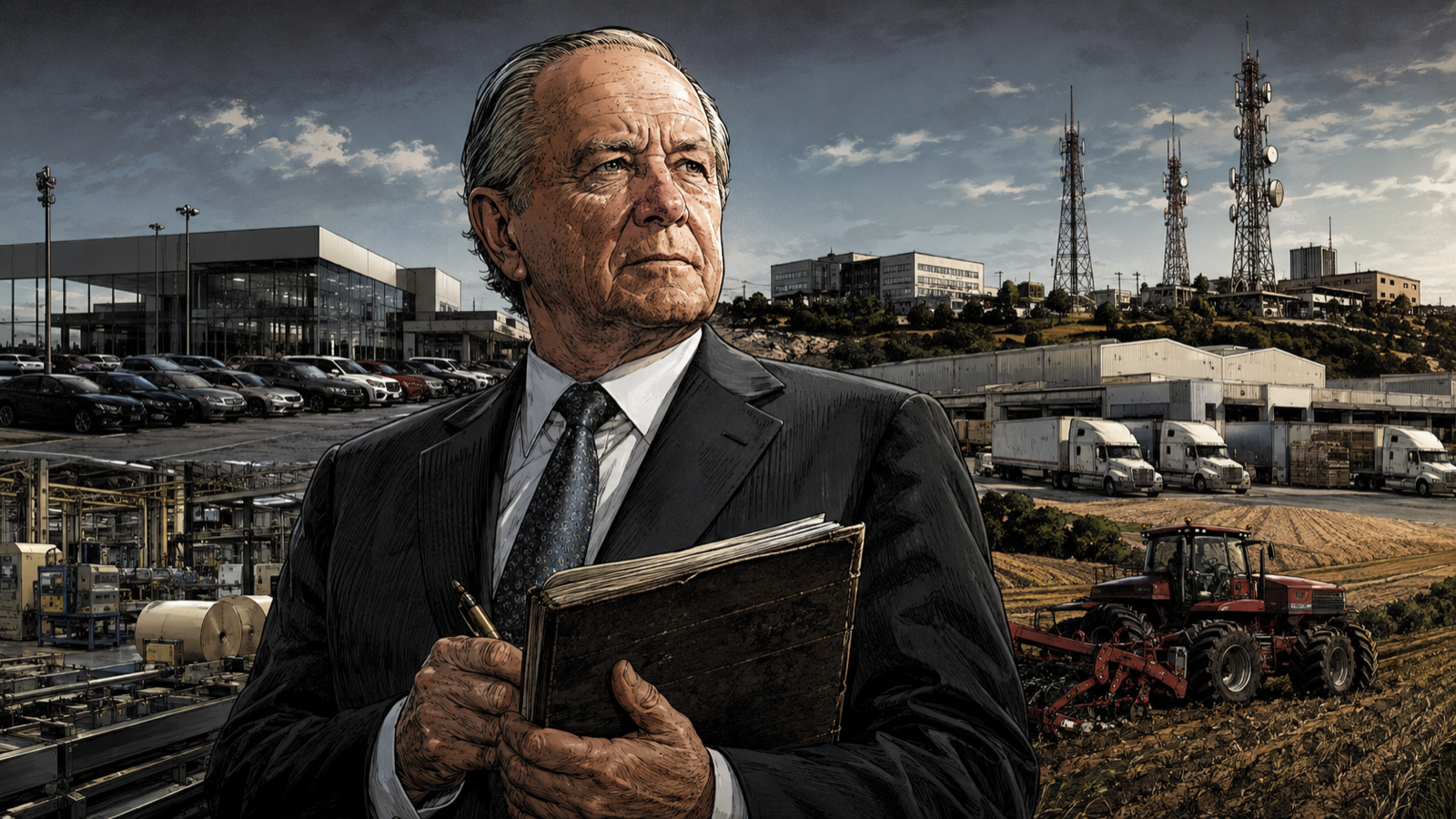
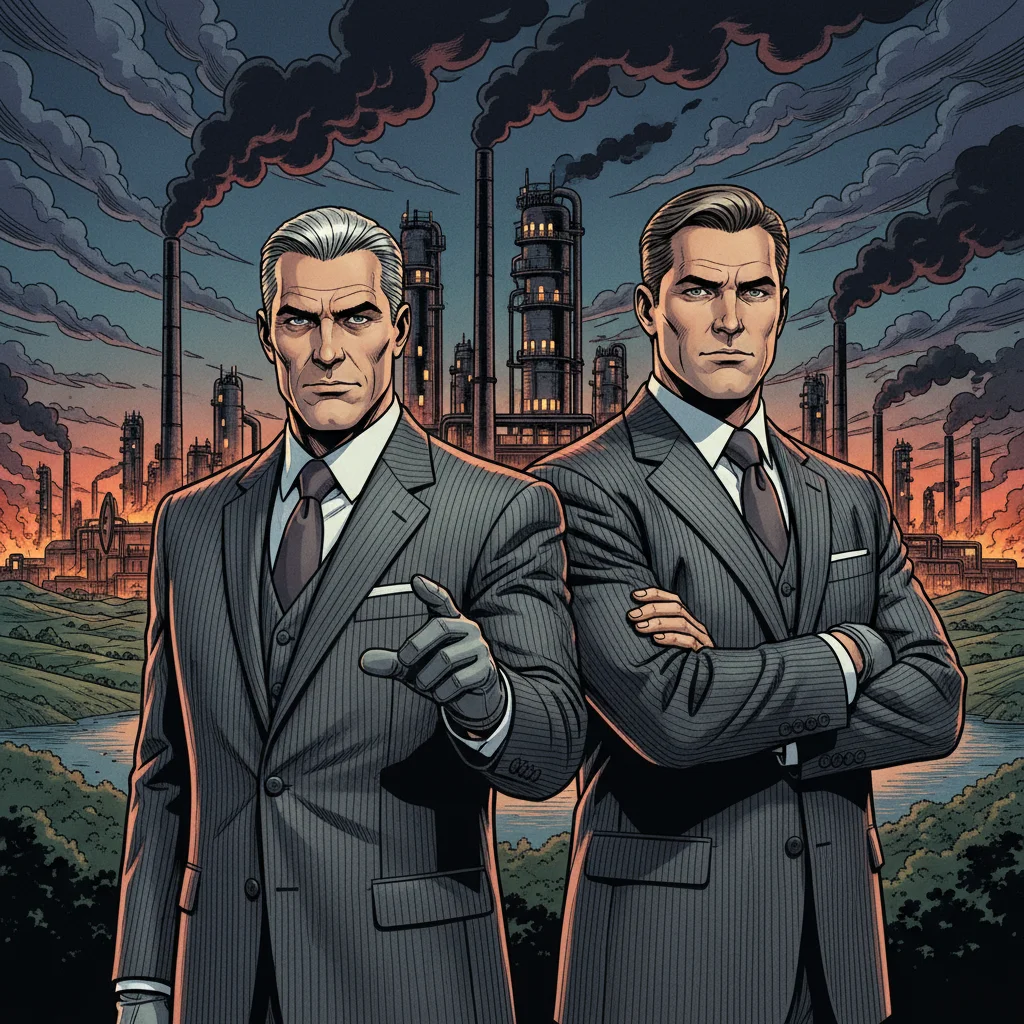
For half a century, Charles and David Koch operated in the shadows — building the second-largest private company in America, funding a network of political organizations that reshaped the Republican Party, and waging a multi-billion-dollar campaign against government regulation, environmental protection, and organized labor. To their supporters, they were patriotic defenders of free enterprise. To their critics, they were oligarchs who purchased democracy itself. With David’s death in 2019 and Charles continuing to steer the empire at age 90, the Koch story is one of staggering wealth, bitter family warfare, and the question of how much influence money should buy in a democracy.
🛢️ Chapter 1: Fred Koch — The Father Who Built the Foundation (in Stalin’s Russia)
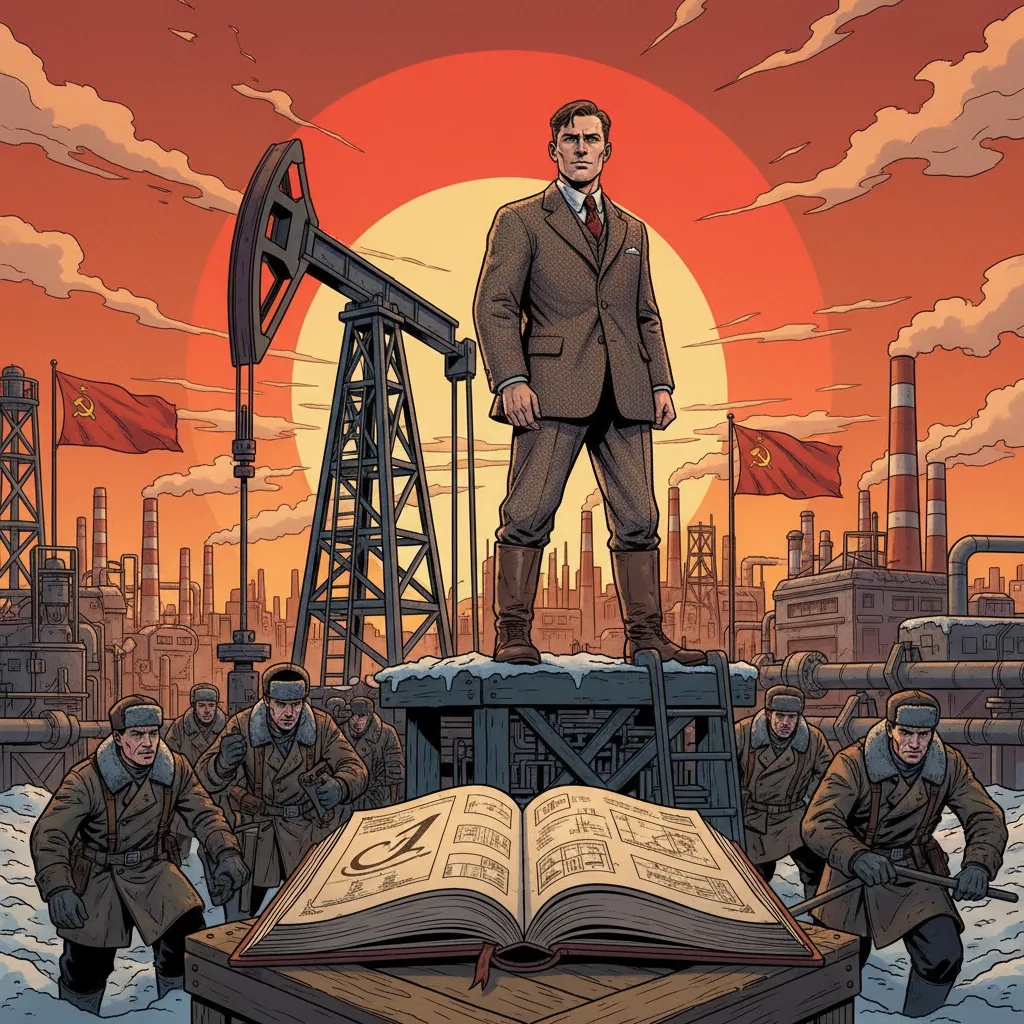
The Koch fortune didn’t begin with Charles and David. It began with their father, Fred Chase Koch, and it began in one of history’s great ironies: the Soviet Union.
Fred Koch was born in 1900 in Quanah, Texas. He studied chemical engineering at MIT and developed an improved method for refining crude oil into gasoline — a thermal cracking process that was more efficient than existing methods.
In the 1920s and 1930s, Fred Koch found himself locked out of the American market. Major oil companies, he claimed, conspired to block his technology through patent litigation. Whether or not the conspiracy was real, the result was that Fred Koch took his business abroad — specifically, to Joseph Stalin’s Soviet Union.
Between 1929 and 1932, Fred Koch’s company, Winkler-Koch Engineering, helped build 15 oil refineries in the USSR. The work was lucrative. It was also eye-opening. Fred witnessed firsthand the brutality of Stalin’s regime — the purges, the show trials, the forced labor. He returned to America a fervent anti-communist.
In 1940, Fred joined the oil business in earnest, acquiring the Rock Island Oil & Refining Company (later renamed Koch Industries). He also became one of the founding members of the John Birch Society, an ultra-conservative organization that accused the U.S. government of communist infiltration.
Fred raised his four sons — Frederick, Charles, and twins David and William — with Spartan discipline and an uncompromising ideology: government was the enemy of freedom, and free enterprise was the solution to every problem.
“I want my boys to be fighters,” Fred reportedly told associates. He sent them to strict boarding schools, put them to work on ranches, and instilled in them a worldview that combined libertarian economics with an almost religious faith in private enterprise.
Fred Koch died in 1967, leaving behind a mid-sized oil company, a philosophy of radical individualism, and four sons who would spend the next two decades fighting each other before two of them built one of the largest fortunes on Earth.
⚔️ Chapter 2: Brother Against Brother — The Koch Family War
The Koch family feud makes the Ambani split look like a mild disagreement.
When Fred Koch died, his four sons inherited equal stakes in Koch Industries. Charles, the second son, assumed control as chairman and CEO. He was the most business-minded of the brothers — a MIT-trained engineer with a vision for transforming Koch Industries from a regional oil company into a diversified industrial giant.
David, Charles’s younger twin brother, became an executive at the company and Charles’s closest ally. The two elder and younger brothers — Frederick and William — took a different path.
By the late 1970s, tensions had erupted. Frederick and William felt that Charles was running the company autocratically and that their shares were being undervalued. In 1980, William and Frederick attempted a corporate takeover to remove Charles from leadership.
The attempt failed. Charles and David consolidated their control and, in 1983, bought out Frederick and William’s shares for approximately $1.1 billion.
But William didn’t accept the price as fair. In 1985, he filed a lawsuit alleging that Charles had systematically undervalued the company to buy out the minority shareholders cheaply. Frederick joined the suit.
The litigation lasted nearly 20 years. Depositions were taken. Private investigators were hired. Family secrets were aired in court. William accused Charles of stealing from the company. Charles accused William of trying to destroy it.
In court filings, William revealed that Koch Industries had been systematically under-reporting the amount of oil it purchased from Native American and federal lands — effectively stealing oil. (Koch Industries later paid $25 million in fines to the U.S. government to settle these claims.)
The lawsuit was settled in 2001, with the court largely siding with Charles and David. The family was permanently fractured. The brothers did not speak for years. Frederick became a reclusive art collector. William built a competing energy company and America’s Cup racing yachts.
Charles and David, now controlling Koch Industries without interference, turned their attention to building the empire their father had started.
🏭 Chapter 3: Building Koch Industries — The Invisible Giant
Under Charles Koch’s leadership, Koch Industries grew from a $200 million oil company in 1967 to one of the largest private corporations in the world.
Charles’s management philosophy — which he called “Market-Based Management” (MBM) — applied free-market principles to internal company operations. Employees were encouraged to think like entrepreneurs. Divisions competed against each other. Performance was measured relentlessly. Bureaucracy was the enemy.
The growth strategy was acquisitive and diversified:
- 1969-1980s: Koch expanded its pipeline and refining operations, becoming one of the largest crude oil gatherers and pipeline operators in the United States
- 1990s: Koch acquired Purina Mills (animal feed), entered the chemical and fertilizer business, and expanded into commodities trading
- 2004: Koch acquired Invista, the maker of Lycra and Stainmaster carpet fibers, from DuPont for $4.4 billion
- 2005: Koch acquired Georgia-Pacific, one of the largest paper and building products companies in America, for $21 billion — one of the largest leveraged buyouts in history
- 2010s-2020s: Continued acquisitions in technology, glass manufacturing, and electronic components
By 2025, Koch Industries’ annual revenue exceeded $125 billion, making it the second-largest private company in America (behind Cargill). The company employed approximately 120,000 people across 70 countries. Its operations spanned petroleum refining, chemicals, fertilizers, paper products, building materials, electronics, software, and commodities trading.
The key advantage of being private was time horizon. While publicly traded competitors were pressured to deliver quarterly earnings, Koch Industries could invest for the long term. Charles Koch has frequently cited this as the company’s greatest competitive advantage:
“We don’t have the quarterly earnings pressure that public companies have. We can invest in things that might not pay off for five, ten, or fifteen years.”
This patience allowed Koch to make contrarian investments — buying assets when they were cheap, holding them through downturns, and selling them when they matured. It also shielded the company from the public scrutiny that comes with stock market listing.
🏛️ Chapter 4: The Political Machine
If Koch Industries was Charles Koch’s business masterpiece, the Koch political network was his ideological crusade.
Charles Koch’s political philosophy was shaped by his father’s anti-communism and refined by decades of reading libertarian economists — Friedrich Hayek, Ludwig von Mises, and Murray Rothbard. His core beliefs were clear:
- Government regulation was almost always harmful
- Free markets, left alone, would produce optimal outcomes
- Taxation was a form of coercion
- Most government programs should be eliminated or privatized
In 1977, Charles co-founded the Cato Institute, one of America’s most influential libertarian think tanks. In 1980, David Koch ran as the vice presidential candidate of the Libertarian Party on a platform that called for abolishing Social Security, the FBI, the SEC, and public schools. He received 1% of the vote.
The electoral defeat taught Charles a lesson: you can’t win by running libertarian candidates. Instead, you reshape the existing parties from within.
Over the next four decades, Charles and David built a political infrastructure unlike anything in American history:
Think tanks and academic centers: The Kochs funded the Mercatus Center at George Mason University, the Heritage Foundation, Americans for Prosperity, the Reason Foundation, and dozens of other organizations that produced research supporting deregulation, lower taxes, and reduced government spending.
Donor networks: Starting in 2003, Charles organized twice-yearly seminars for wealthy conservative donors. By 2015, the “Koch Seminar Network” (later rebranded as “Stand Together”) involved approximately 700 donors who collectively pledged nearly $900 million per two-year election cycle.
Grassroots organizing: Americans for Prosperity (AFP), founded in 2004 with Koch funding, built a state-by-state organizing infrastructure with paid staff in over 35 states. AFP played a central role in the Tea Party movement of 2009-2010, organizing rallies, training activists, and supporting candidates who opposed the Affordable Care Act.
Media and communications: Koch-funded organizations launched digital media operations, podcasts, and advertising campaigns promoting their agenda.
The scale of Koch political spending was staggering. Between 2000 and 2020, the Koch network is estimated to have spent over $2 billion on political activities — including campaign contributions, issue advertising, lobbying, and funding for allied organizations.
The impact was measurable:
- Koch-backed candidates and organizations successfully blocked cap-and-trade climate legislation in 2010
- Koch network efforts were instrumental in the passage of the 2017 Tax Cuts and Jobs Act, which reduced corporate tax rates from 35% to 21%
- Koch-funded legal organizations supported Supreme Court cases that weakened public sector unions and expanded corporate speech rights
- Koch-backed state-level campaigns led to right-to-work laws, voter ID requirements, and deregulation across dozens of states
🌡️ Chapter 5: The Climate Question
No aspect of the Koch legacy is more controversial than their role in the climate change debate.
Koch Industries is one of the largest greenhouse gas emitters in the United States. The company operates petroleum refineries, chemical plants, and fertilizer production facilities that collectively release millions of tons of CO2 annually. Any serious climate regulation — carbon taxes, cap-and-trade, emissions standards — would directly impact Koch Industries’ bottom line.
Starting in the 1990s, Koch-funded organizations began systematically challenging the scientific consensus on climate change:
- The Kochs funded the Heartland Institute, which organized conferences questioning climate science and distributed materials to public school teachers presenting climate change as a “debate” rather than established science
- Koch-funded think tanks produced reports arguing that climate regulation would destroy jobs and raise energy prices
- The Koch network spent an estimated $145 million between 1997 and 2018 on organizations that promoted climate change skepticism, according to a Greenpeace analysis
- Americans for Prosperity organized opposition to state-level renewable energy mandates
Koch-funded organizations didn’t always deny climate change outright — they employed a subtler strategy of “manufacturing uncertainty.” By funding research that questioned specific aspects of climate science, emphasizing uncertainty, and promoting the idea that the science was “not settled,” they successfully delayed climate action for over two decades.
Critics, including investigative journalist Jane Mayer (author of Dark Money), argued that the Koch climate campaign was fundamentally about protecting Koch Industries’ profits:
“The Kochs’ war against climate science was not motivated by philosophical commitment to free markets. It was motivated by financial self-interest. Climate regulation would cost Koch Industries billions.”
The Koch organizations disputed this characterization, arguing that their opposition to climate regulation was rooted in genuine concern about economic harm from government overreach.
The debate is unlikely to be settled. But the outcome is clear: the United States spent the 2000s and 2010s arguing about whether climate change was real instead of addressing it — and the Koch network played a significant role in that delay.
⚰️ Chapter 6: David’s Death and the Network’s Evolution

David Koch died on August 23, 2019, at age 79, after a long battle with prostate cancer. His net worth at the time of death was estimated at $50.5 billion.
David had been the more publicly visible of the two brothers. He lived in New York City, donated hundreds of millions to cultural institutions (Lincoln Center, the Metropolitan Museum of Art, the American Museum of Natural History, MIT, and New York-Presbyterian Hospital), and was a fixture of Manhattan’s social scene.
His philanthropy created a peculiar duality. David Koch’s name adorns theater wings, hospital pavilions, and museum galleries across New York — institutions that serve overwhelmingly liberal constituencies in one of America’s most liberal cities. The man who funded climate change skepticism and anti-union campaigns was also one of New York’s most generous cultural benefactors.
After David’s death, Charles continued to lead both Koch Industries and the political network, though the latter underwent significant evolution.
In 2019, the Koch network rebranded as “Stand Together” and shifted its focus from purely electoral politics to broader social issues, including criminal justice reform, immigration reform, and poverty reduction. Charles expressed regret about the partisan divisions his network had fueled:
“Boy, did we screw up!” Charles told a gathering in 2019. “What a mess!” — referring to the state of American political discourse.
The network’s willingness to break with the Republican Party on issues like immigration and criminal justice surprised observers. In 2024, the Koch network (through Americans for Prosperity) endorsed Nikki Haley for president over Donald Trump — a significant break with the MAGA movement that had come to dominate the party the Kochs had helped build.
Whether this evolution represents genuine reflection or strategic repositioning is debated. Critics argue that the Kochs’ core agenda — deregulation, lower taxes, weakened unions — hasn’t changed, and that the softer rhetoric on social issues is window dressing.
💰 Chapter 7: The Fortune by the Numbers
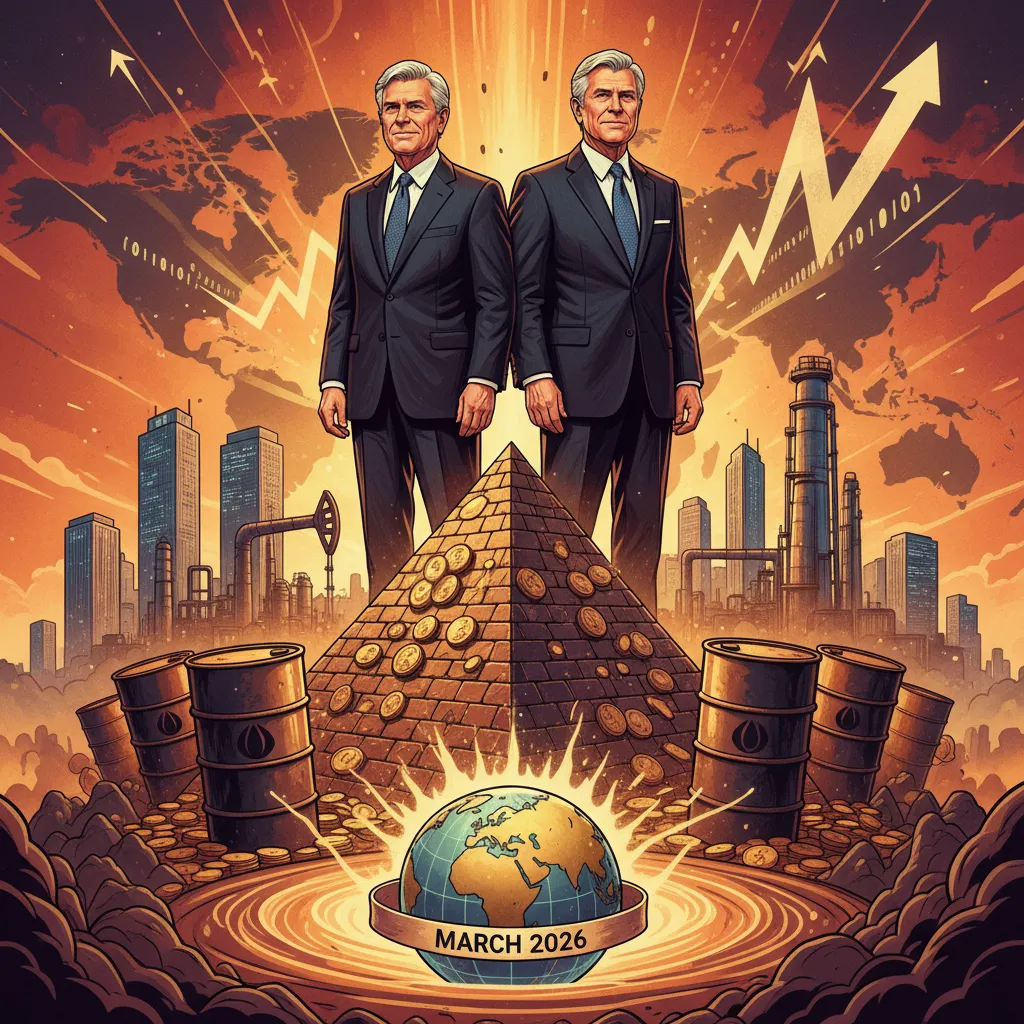
As of March 2026, the Koch fortune is one of the largest in the world:
- Charles Koch: Net worth approximately $65 billion (age 90)
- Julia Koch (David’s widow) and family: Net worth approximately $65 billion
- Combined Koch family fortune: Over $130 billion
Koch Industries remains private, with no plans to go public. The company’s estimated annual revenue of $125 billion would place it in the top 20 of the Fortune 500 if it were publicly listed.
The comparison with other industrial dynasties is instructive:
| Dynasty | Fortune (2026 est.) | Primary Industry | Public/Private |
|---|---|---|---|
| Koch | ~$130B | Diversified industrial | Private |
| Walton (Walmart) | ~$270B | Retail | Public |
| Mars | ~$160B | Food/Confections | Private |
| Ambani | ~$110B | Energy/Telecom | Public |
The Koch fortune is remarkable not just for its size but for its concentration. Unlike the Walton or Mars fortunes, which are spread across dozens of family members, the Koch fortune is controlled primarily by Charles and David’s heirs — giving them extraordinary influence over both business and political decisions.
🏛️ Chapter 8: The Legacy Question
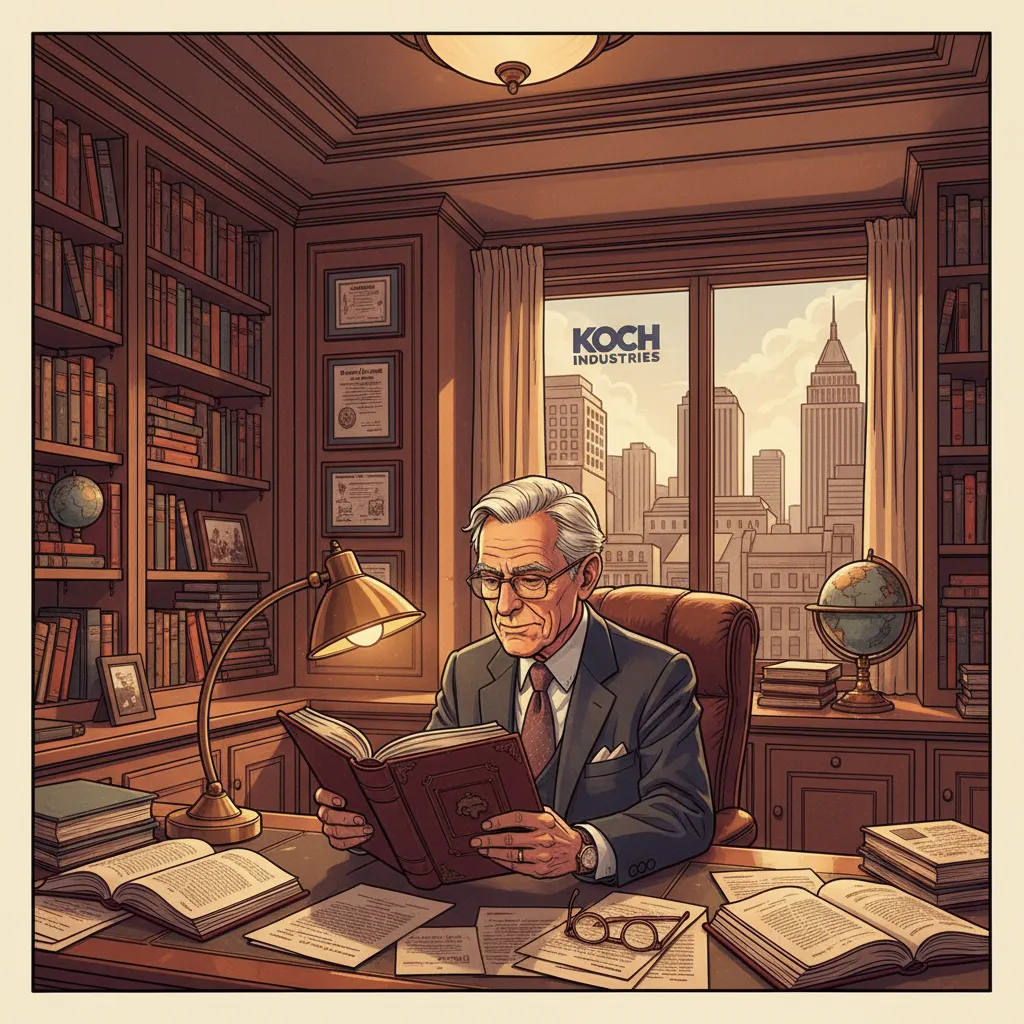
Charles Koch is 90 years old. He still goes to the office at Koch Industries’ headquarters in Wichita, Kansas, most days. He still reads voraciously — libertarian economics, management theory, history. He still believes, with the fervor of a true believer, that free markets and individual liberty are the solutions to humanity’s problems.
But the world he helped create is not the one he envisioned.
The political infrastructure the Kochs built — designed to promote free-market principles and limited government — helped create a Republican Party that, by the 2020s, had largely abandoned both in favor of populist nationalism under Donald Trump. The Tea Party movement, which the Koch network helped organize, metastasized into something Charles Koch didn’t recognize and didn’t want.
The climate delay the Koch network facilitated contributed to what scientists now describe as a narrowing window for preventing catastrophic warming. The environmental legacy is one that will be measured not in decades but in centuries.
Koch Industries itself has begun to evolve. The company has invested in renewable energy technology and waste reduction. Charles Koch has acknowledged that environmental stewardship matters. Whether these moves are sufficient — given the decades of opposition to environmental regulation — is a question that divides observers.
The Koch brothers’ story raises the most fundamental question in democratic capitalism: What should the relationship be between wealth and political power?
Charles and David Koch believed they had the right — and the duty — to use their wealth to advance their vision of a free society. Their critics believe that concentrating political power in the hands of billionaires is antithetical to democracy, regardless of the ideology being promoted.
Both positions have merit. Neither has a monopoly on truth.
What is undeniable is the impact. The Koch brothers — two men from Wichita, Kansas — reshaped American politics, energy policy, and public discourse more profoundly than most presidents. Whether that legacy is celebrated or condemned depends entirely on where you stand.
As Charles Koch himself once wrote: “I have devoted most of my life to understanding the principles that enable people to improve their lives. It is those principles — the principles of a free society — that have shaped my life, my family, my company, and everything I do.”
His critics would add: and everything the rest of us breathe.
The Koch brothers built an invisible empire — one that operates in boardrooms, think tanks, university endowments, and campaign war chests. They proved that you don’t need to hold office to run a country. You just need enough money to fund the people who do.
📈 Chapter 9: The Private Empire’s Playbook: Acquisitions & Diversification (1980s-Present)
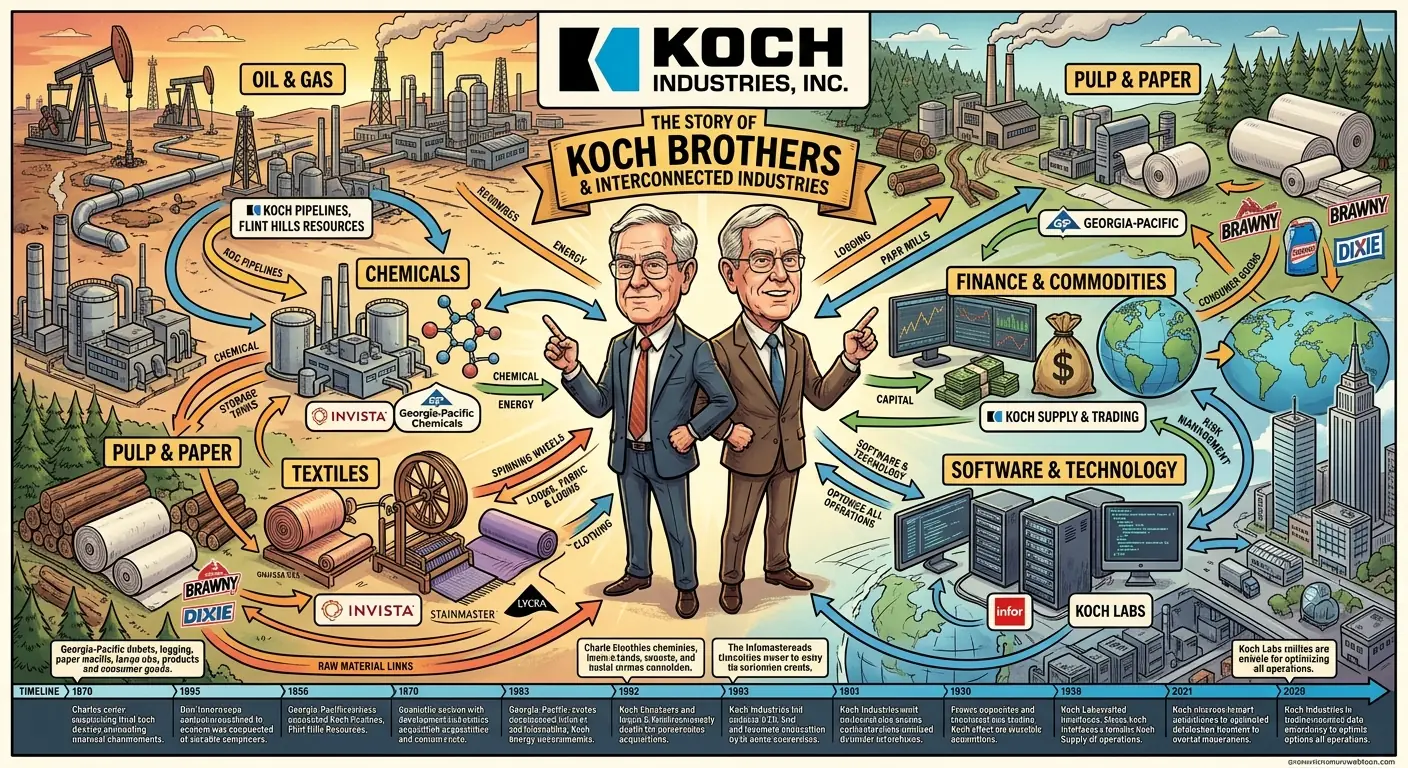
So, we know Charles and David built an “invisible giant.” But how exactly do you turn a regional oil refiner into the second-largest private company in America, with revenue north of $120 billion? It wasn’t just about shrewd trading or refining. It was a masterclass in aggressive acquisition, relentless diversification, and a truly unique management philosophy that became as famous (or infamous) as the brothers themselves. Think of it as a corporate version of a very intense, very successful game of Monopoly, played with real companies.
The “Market-Based Management” Philosophy
At the heart of Koch Industries’ incredible growth is Charles Koch’s brainchild: Market-Based Management (MBM). This isn’t your grandma’s management textbook stuff. MBM is a deeply philosophical, almost cult-like approach based on libertarian principles applied to business. It treats employees as “entrepreneurs” within the company, pushing decision-making down the hierarchy, rewarding innovation, and fostering internal competition. Sounds great, right? In practice, it meant rigorous performance reviews, a culture of extreme accountability, and a constant drive for efficiency that could make even the most dedicated employee feel the heat. Charles believed that by mimicking the spontaneous order and incentives of a free market within the company, Koch Industries could outperform any competitor. And judging by the numbers, he wasn’t entirely wrong. It’s an internal ecosystem where failure is a learning opportunity, but repeated failure means… well, you know.
Key Acquisitions and Industry Takeovers
While MBM was the engine, acquisitions were the fuel. Koch Industries didn’t just grow organically; they bought their way into new sectors with astounding frequency and scale. Their strategy was often to acquire struggling or undervalued assets, then apply their MBM principles to streamline operations, cut costs, and boost profitability. A prime example? The 2005 acquisition of Georgia-Pacific for a staggering $21 billion. Overnight, Koch Industries became a behemoth in paper, pulp, and building products, adding brands like Brawny paper towels and Dixie cups to their portfolio. This wasn’t just buying another oil company; this was a massive leap into consumer goods and forestry, demonstrating their willingness to diversify far beyond their traditional energy roots. Other notable acquisitions include Invista (polymers and fibers), Guardian Industries (glass), and Molex (electronic components). They weren’t just buying companies; they were buying entire industries.
Beyond Oil: From Textiles to Tech
The idea that Koch Industries is “just an oil company” is laughably outdated. By the time the 21st century rolled around, they were a sprawling octopus of enterprises. Their Invista subsidiary, for instance, is a global leader in fibers, making everything from the nylon in your carpet to the Lycra in your yoga pants. Guardian Industries manufactures glass for everything from skyscrapers to your car windshield. And in recent years, they’ve even dipped their toes into the tech world, with Koch Disruptive Technologies (KDT) investing in promising startups in areas like artificial intelligence, biotech, and advanced manufacturing. It’s a calculated move to ensure their empire remains relevant, even as the world potentially moves away from fossil fuels. From pet food ingredients to high-tech sensors, if there’s a market, chances are Koch Industries is either in it or eyeing it. It’s a testament to their relentless pursuit of profit and a fascinating case study in how a privately held company can quietly become one of the most powerful economic forces on the planet.
😈 Chapter 10: Dark Clouds & Dirty Deeds: Controversies Beyond Climate (1990s-2000s)
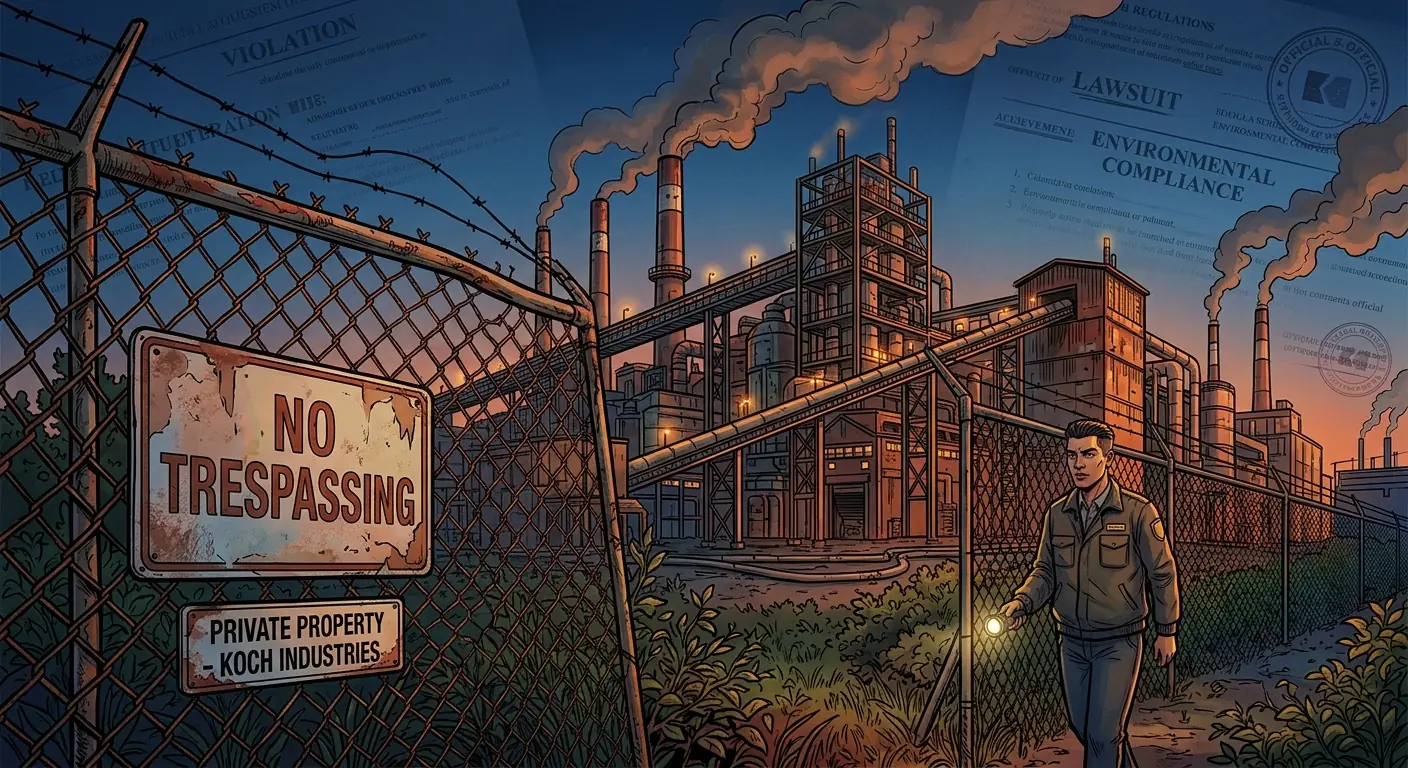
While the Koch brothers are most famously tied to climate change denial and political spending, their empire has also accumulated a rather impressive rap sheet of environmental violations, safety breaches, and corporate misconduct that stretches back decades. It’s almost as if, when you’re pursuing profit with the fervor of a religious zealot, sometimes you cut a few corners. And those corners, it turns out, often involved actual corners of the environment, or the well-being of their workers. This isn’t just about ideological battles; this is about tangible, real-world consequences that often came with hefty fines and public outrage.
Regulatory Battles and Environmental Fines
Koch Industries has a long, long history of run-ins with environmental regulators. Remember the early days when Fred Koch was building refineries? Well, the family business continued that tradition, often finding itself on the wrong side of the Clean Air Act and Clean Water Act. One of the most glaring examples came in the 1990s and early 2000s, when Koch Petroleum Group (now Flint Hills Resources) faced a barrage of lawsuits and fines. In 1995, the Environmental Protection Agency (EPA) accused Koch of 29 illegal oil spills from its pipelines in six states, leading to a $30 million settlement – at the time, the largest civil environmental fine ever levied against a company. Fast forward to 2000, and Koch was hit with another $35 million penalty for knowingly concealing violations at its Corpus Christi, Texas, refinery, which had been releasing vast amounts of benzene and other hazardous pollutants. It seems their “market-based management” didn’t always account for the market price of clean air and water.
Accusations of Price Fixing and Corporate Misconduct
The environmental issues weren’t the only stains on Koch Industries’ pristine corporate image. The company has also faced accusations of anti-competitive practices and corporate malfeasance. In the late 1990s and early 2000s, Koch Industries was embroiled in a scandal involving the under-reporting of crude oil volumes from federal and Native American lands. The U.S. government alleged that Koch had been systematically under-measuring oil purchased from producers, effectively short-changing royalty payments. While Koch denied wrongdoing, they eventually settled with the Department of Justice for $25 million in 2001 to resolve the claims. Then there’s the less-than-charming incident involving one of their fertilizer subsidiaries, Koch Nitrogen, which was accused of price-fixing in the ammonia market in the mid-2000s. While the company largely avoided direct culpability, several executives faced charges, and the episode certainly didn’t help their image as champions of free markets. It seems some markets were freer than others, especially when Koch was pulling the strings.
The “Dark Money” Label: Beyond Campaign Finance
Beyond the specific environmental and corporate misdeeds, the Koch network itself has drawn immense scrutiny, often labeled as the ultimate “dark money” operation. While their political spending is widely known, the extent to which they funded academic institutions, think tanks, and even grassroots organizations without clear disclosure was a persistent source of controversy. The accusation wasn’t just about donating to political campaigns; it was about shaping the intellectual landscape, influencing public opinion, and promoting their specific ideological agenda through a vast, interconnected web of non-profits, some of which operated with minimal transparency. Critics argued this created a system where ideas favorable to Koch Industries’ business interests were amplified, often without the public knowing the ultimate source of the funding. It blurs the lines between philanthropy, lobbying, and propaganda, raising fundamental questions about the integrity of public discourse.
🎭 Chapter 11: The Public Face and Private Lives: David Koch’s Journey (1990s-2010s)
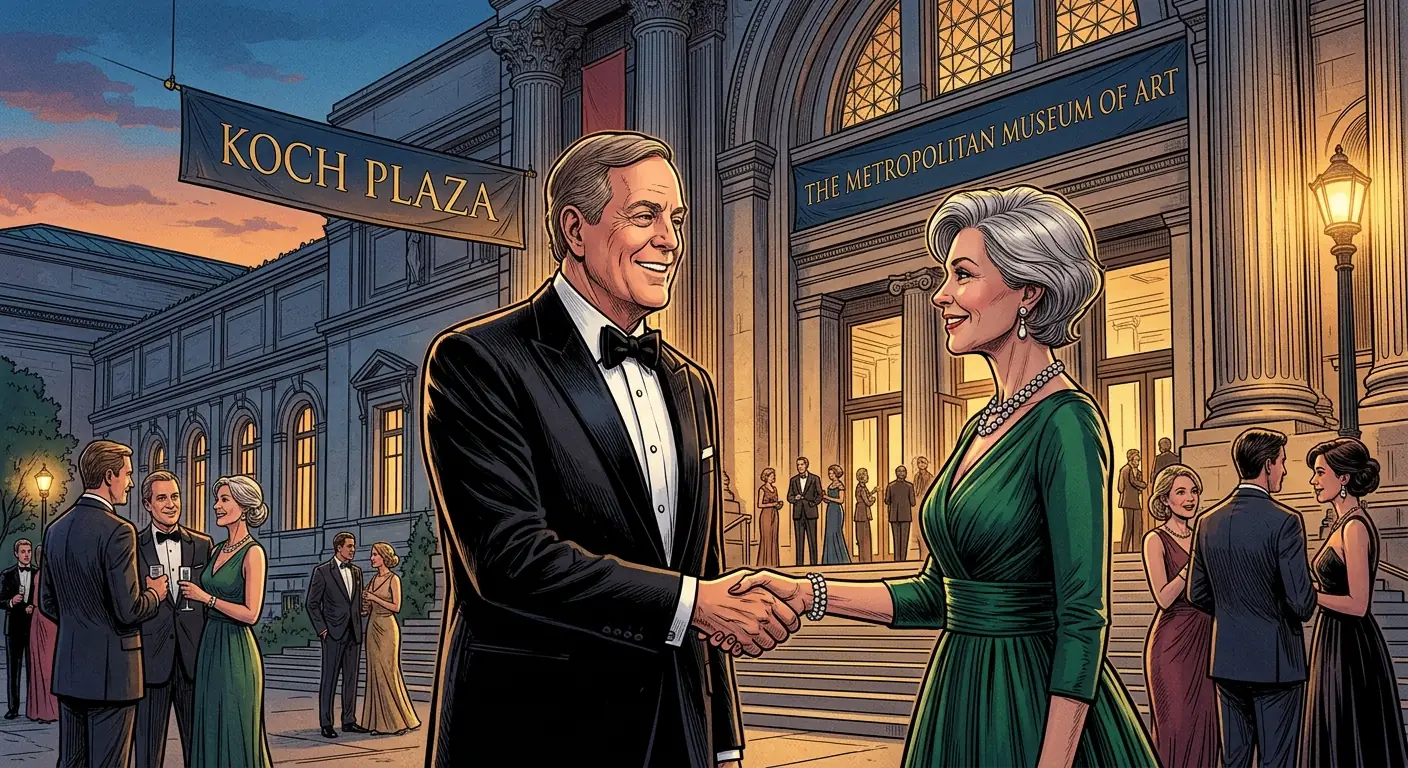
For much of his life, David Koch was the more public-facing of the two brothers, largely due to his brief but memorable run as the Libertarian Party’s Vice Presidential candidate in 1980. But beyond the political arena and the family’s business empire, David cultivated a distinct persona, especially later in life: that of a prominent New York philanthropist. While Charles remained the strategic mastermind and the quiet, intellectual force, David often played the role of the affable, albeit still ideologically driven, socialite. He was the one schmoozing at galas, cutting ribbons at museums, and generally making himself known in the elite circles of the Big Apple. It’s a different kind of power play, trading political influence for cultural cachet.
From Libertarian VP Candidate to Philanthropist
David’s political journey started early and audaciously. In 1980, at the ripe old age of 40, he was the Libertarian Party’s nominee for Vice President, running on a platform that called for, among other things, the abolition of most federal agencies, the repeal of Social Security, and the end of all corporate taxes. They garnered a mere 1% of the popular vote, but the experience solidified David’s commitment to libertarian ideals. However, as the decades passed, while his political funding continued unabated through the Koch network, his personal public face shifted. He became less the firebrand politician and more the generous benefactor. He moved to New York City in 1983 and gradually became a fixture in its social and cultural scene, often with his wife Julia Flesher Koch by his side. It was a conscious decision to engage with a different kind of legacy, one built on grand gestures of artistic and scientific patronage.
Battling Cancer: A Personal Turning Point
Perhaps one of the most defining, yet less publicly discussed, aspects of David Koch’s life was his decades-long battle with prostate cancer. Diagnosed in 1992, doctors initially gave him only a few years to live. He defied those predictions for an astonishing 27 years, undergoing various treatments and becoming a passionate advocate and donor for cancer research. This personal struggle undoubtedly shaped his philanthropic priorities. It’s often said that facing one’s mortality can profoundly change one’s perspective, and for David, it manifested in significant contributions to medical institutions. While his political giving always overshadowed his other endeavors in media coverage, his commitment to finding cures and improving healthcare was deeply personal and deeply felt. It added a layer of human vulnerability to a man often portrayed as an unfeeling corporate titan.
Arts, Medicine, and Museums: David’s Other Legacy
David Koch’s non-political philanthropy was truly monumental. He poured hundreds of millions of dollars into institutions that had nothing to do with lobbying or policy. The Lincoln Center for the Performing Arts received $100 million for the renovation of its state theater, which was subsequently renamed the David H. Koch Theater. The Metropolitan Museum of Art received $65 million for its new plaza. The American Museum of Natural History received $20 million for its dinosaur wing, among other contributions. In the medical field, he gave $150 million to Memorial Sloan Kettering Cancer Center and $100 million to New York-Presbyterian Hospital. These were not small checks; these were transformative gifts that left indelible marks on some of the world’s most prestigious cultural and scientific institutions. Critics might argue that this was “reputation laundering” – using philanthropy to distract from his political activities. But regardless of the motivation, the impact on these institutions and the millions who benefit from them is undeniable. David Koch’s generosity in these areas carved out a separate, often contradictory, legacy from his brother Charles, showcasing a different facet of the complex billionaire.
🤖 Chapter 12: Adapting to the 21st Century: Innovation and Evolution (2000s-Present)
For a company rooted in the gritty, often dirty world of oil refining and chemicals, Koch Industries has shown a surprising (or perhaps entirely predictable, given their MBM principles) agility in adapting to the rapidly changing technological and economic landscape of the 21st century. It’s not just about buying up old paper mills anymore; it’s about staying competitive in a world increasingly driven by data, automation, and sustainable (or at least less unsustainable) practices. While their public image often lags, portraying them as relics of the industrial age, behind the scenes, Koch Industries has been quietly investing in the future, ensuring their diversified empire remains resilient and profitable for decades to come.
The Digital Shift and Data Revolution
Even a company as traditionally industrial as Koch couldn’t ignore the digital revolution. Recognizing that data is the new oil (or at least a very potent additive), Koch Industries has made significant strides in integrating advanced analytics, artificial intelligence, and automation across its vast operations. This isn’t just about efficiency; it’s about predictive maintenance for pipelines, optimizing supply chains, and making smarter investment decisions. They’ve invested heavily in IT infrastructure and data science capabilities, transforming everything from their manufacturing plants to their trading floors. It’s a calculated move to extract every last drop of value from their existing assets and to gain an edge in new markets. Imagine using AI to fine-tune a chemical plant’s output or employing machine learning to predict market shifts in commodities – that’s the kind of innovation Koch has been quietly pursuing, far from the public eye.
Investing in Disruption: Koch Disruptive Technologies
Perhaps the clearest signal of Koch’s forward-looking strategy is the establishment of Koch Disruptive Technologies (KDT) in 2017. This venture capital arm is specifically designed to invest in “disruptive innovations” and promising startups across a range of high-growth sectors. We’re talking about companies in areas like biotechnology, advanced manufacturing, digital health, and artificial intelligence. KDT isn’t just throwing money at random startups; it’s strategically aligning with companies that could either enhance Koch’s existing businesses or open doors to entirely new, future-proof markets. They’ve invested in companies like PathAI (AI-powered pathology), Indigo Ag (sustainable agriculture tech), and various robotics firms. It’s a stark contrast to the image of a fossil fuel dinosaur, showing a keen awareness that to survive and thrive, even the most entrenched industrial giant must embrace the technologies that threaten to upend traditional industries.
Navigating a Greener Future (Their Way)
This is where things get really interesting, and predictably, controversial. While the Koch network has historically been a formidable opponent of climate regulations, Koch Industries itself, as a business, has to contend with the reality of a world slowly, inevitably, moving towards greener solutions. This doesn’t mean they’ve suddenly become environmentalists – far from it. But it does mean they’re investing in technologies that could potentially reduce emissions within their own operations or find new, less carbon-intensive avenues for profit. For example, some of their subsidiaries are exploring carbon capture technologies, recycling innovations, and more sustainable packaging solutions. They’re not doing it out of altruism, but because they recognize that market demands and regulatory pressures will eventually make these investments profitable, or at least necessary for continued operation. It’s a pragmatic, market-driven approach to environmental challenges, rather than an ideological shift. They want to profit from the solutions, not just fight the problems. It’s a delicate dance, but one they are clearly executing with characteristic strategic prowess.
🔮 Chapter 13: Beyond Charles: The Future of the Koch Empire (Present & Future)
With David Koch’s passing in 2019 and Charles Koch now in his late 80s (he’ll turn 90 in 2025), the question of succession and the long-term future of this colossal, privately-held empire looms larger than ever. How do you transition a company built on the singular vision of one man, maintained by the fierce loyalty of another, into a new era? It’s not just a business challenge; it’s a profound test of their “Market-Based Management” philosophy and the legacy they’ve so meticulously crafted. The Koch empire isn’t just about making money; it’s about a worldview, a set of principles, and an influence that extends far beyond quarterly reports.
Succession and the Next Generation
Unlike publicly traded companies, where succession plans are often scrutinized by shareholders, the Koch Industries process is largely shrouded in the privacy of a family dynasty. Charles Koch has long been grooming his successor, and while no official announcement has been made, the heir apparent seems to be his son, Chase Koch. Chase has been active within Koch Industries for years, holding various leadership roles, including president of Koch Disruptive Technologies (KDT). This suggests a future where innovation and diversification beyond traditional industrial sectors will play an even larger role. The transition won’t just be about who sits in the CEO chair; it will be about whether the next generation can maintain the same relentless drive, ideological commitment, and sheer scale of influence that Charles and David perfected. It’s a tall order, especially without the shared vision and formidable partnership of the original brothers.
The Shifting Sands of Influence
The political landscape has also shifted dramatically since the heyday of the Koch network’s influence in the 2010s. While still incredibly powerful, the rise of populist movements, the increasing polarization of American politics, and a growing public awareness of “dark money” have made their operations more scrutinized, and perhaps, less universally effective. The network itself has undergone rebranding and strategic adjustments, moving away from being solely identified with the Koch brothers to a broader “Stand Together” initiative that focuses on a wider range of issues, including poverty, education, and criminal justice reform. This signals an attempt to broaden their appeal and perhaps soften their image, adapting to a world where pure, unregulated free-market dogma might not resonate as strongly with a younger, more socially conscious generation. It’s an evolution, not an abandonment, of their core principles, but certainly a recognition of changing times.
The Enduring Question: Power, Principle, or Profit?
Ultimately, the legacy of the Koch brothers boils down to a fundamental question: was their multi-billion-dollar enterprise and political machine primarily about power, principle, or profit? For their supporters, it was always about principle – a steadfast defense of individual liberty, free markets, and limited government. For their critics, it was about power and profit – using their immense wealth to shape policy in ways that directly benefited their sprawling industrial empire, often at the expense of environmental protection or social welfare. The truth, as always, is likely far more complex, a tangled web of all three. As the Koch empire moves into an uncertain future without its founding brothers at the helm, its enduring impact will continue to be debated. Will it remain a quiet, formidable force shaping America’s economic and political landscape, or will the next generation steer it into a different direction, perhaps one that reconciles its immense wealth with a more widely accepted vision of social responsibility? Only time, and many more billions, will tell.
💡 Key Insights
- ▸ Staying private allowed Koch Industries to think in decades while public companies thought in quarters — a massive strategic advantage.
- ▸ Political spending can reshape an entire nation's policy landscape, but it also makes you a lightning rod for opposition.
- ▸ Family businesses that survive generational conflict (the Koch brothers sued each other for 20 years) can emerge stronger.
- ▸ The line between political advocacy and corporate self-interest is often invisible — Koch political spending consistently aligned with Koch business interests.
- ▸ Building political infrastructure (think tanks, universities, media) creates more lasting influence than campaign donations alone.