The Billionaire Who Broke Capitalism: Yvon Chouinard's Radical Gambit
Forget everything you thought you knew about wealth, power, and legacy. Yvon Chouinard, the reluctant billionaire behind outdoor giant Patagonia, didn't just sell his company – he gave it away. This isn't just a business story; it's a revolutionary manifesto etched in the annals of anti-capitalism, a seismic mic drop heard around the world.
View all stories about this mogul
🏔️ Chapter 1: The Mountain Man and the Misfit’s Forge
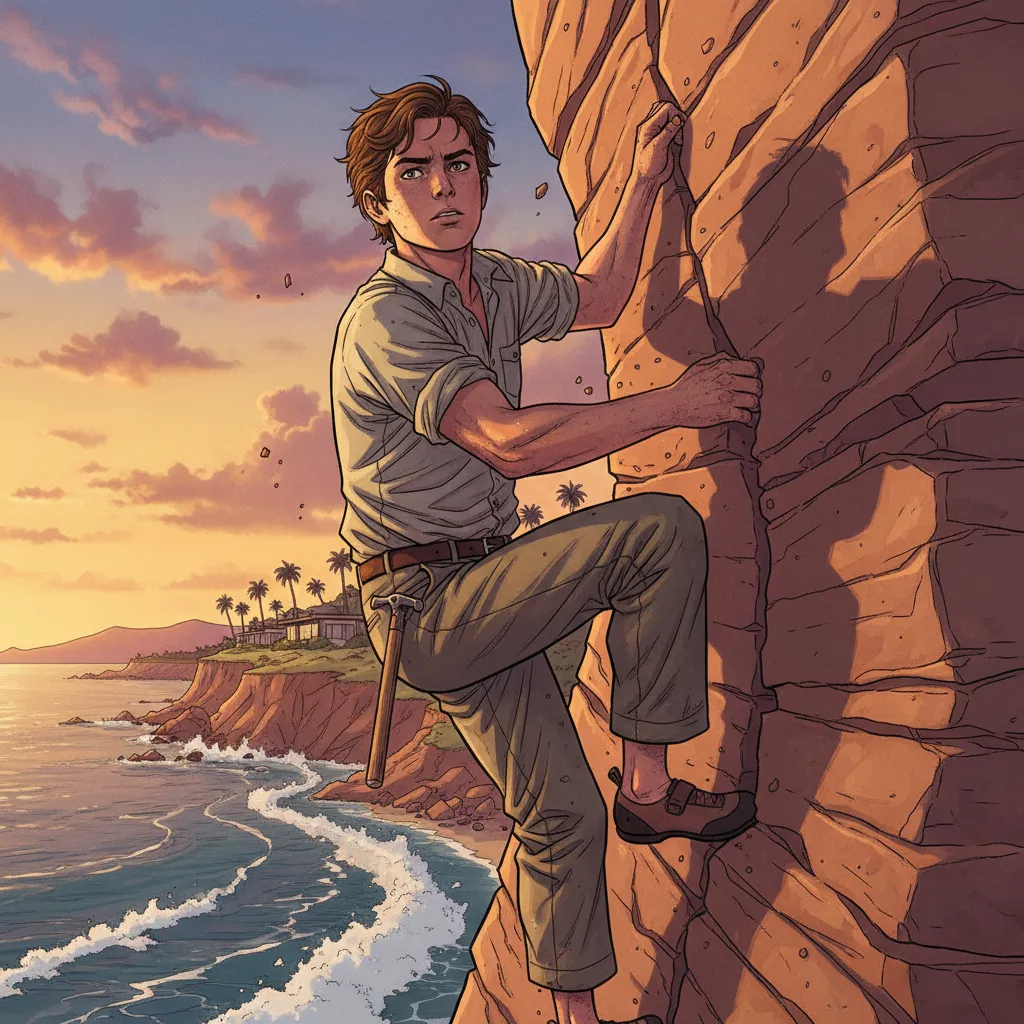
Picture this: Southern California, the 1950s. While most kids are glued to TV sets or cruising in hot rods, a skinny, intense teenager named Yvon Chouinard is scaling cliffs, his hands rough as sandpaper, his spirit wilder than any untamed canyon wind. He wasn’t chasing girls or grades; he was chasing verticality, the raw, visceral thrill of rock against skin, the silent communion with granite and sky. This wasn’t a hobby; it was an obsession, a monastic devotion to the unforgiving beauty of the natural world.
But here’s the kicker: the climbing gear available back then? It sucked. Soft iron pitons, single-use, hammered into cracks and left behind like litter. Chouinard, a tinkerer by nature, a craftsman with an almost medieval dedication to his tools, saw the problem and, more importantly, saw the solution. He set up a tiny forge in his parents’ backyard, a makeshift crucible of ambition and ingenuity. Imagine the scene: the clang of hammer on anvil, the acrid smell of burning metal, sparks flying like captured stars in the twilight, as he painstakingly shaped chrome-molybdenum steel into reusable pitons. These weren’t just tools; they were extensions of a climber’s will, engineered for resilience, designed to be retrieved, to leave no trace.
This wasn’t some grand business strategy hatched in a boardroom. This was the pure, unadulterated passion of a dirtbag climber, fueled by necessity and a burgeoning environmental ethic that, at the time, probably didn’t even have a name. He wasn’t thinking about market share or IPOs; he was thinking about the integrity of the rock, the longevity of the equipment, and the sheer joy of scaling new heights. He’d load up his beat-up car, drive to the climbing hotspots, and sell his wares out of the trunk. Word spread like wildfire through the climbing community – Chouinard’s gear was revolutionary. It was stronger, lighter, better. It was, in a word, authentic.
This humble beginning, this almost accidental entrepreneurship, is the bedrock upon which Patagonia would eventually rise. It was born not from a desire for profit, but from a profound love for the outdoors and an innate sense of craftsmanship. It was a business built by a man who fundamentally distrusted the very concept of “business,” a man whose idea of success was less about accumulating wealth and more about living a life of purpose, adventure, and minimal impact. He was a reluctant capitalist from day one, an anti-mogul in the making, forging his path not with spreadsheets, but with sweat, steel, and a defiant, untamed spirit.
🔥 Chapter 2: From Pitons to Parkas – The Accidental Empire
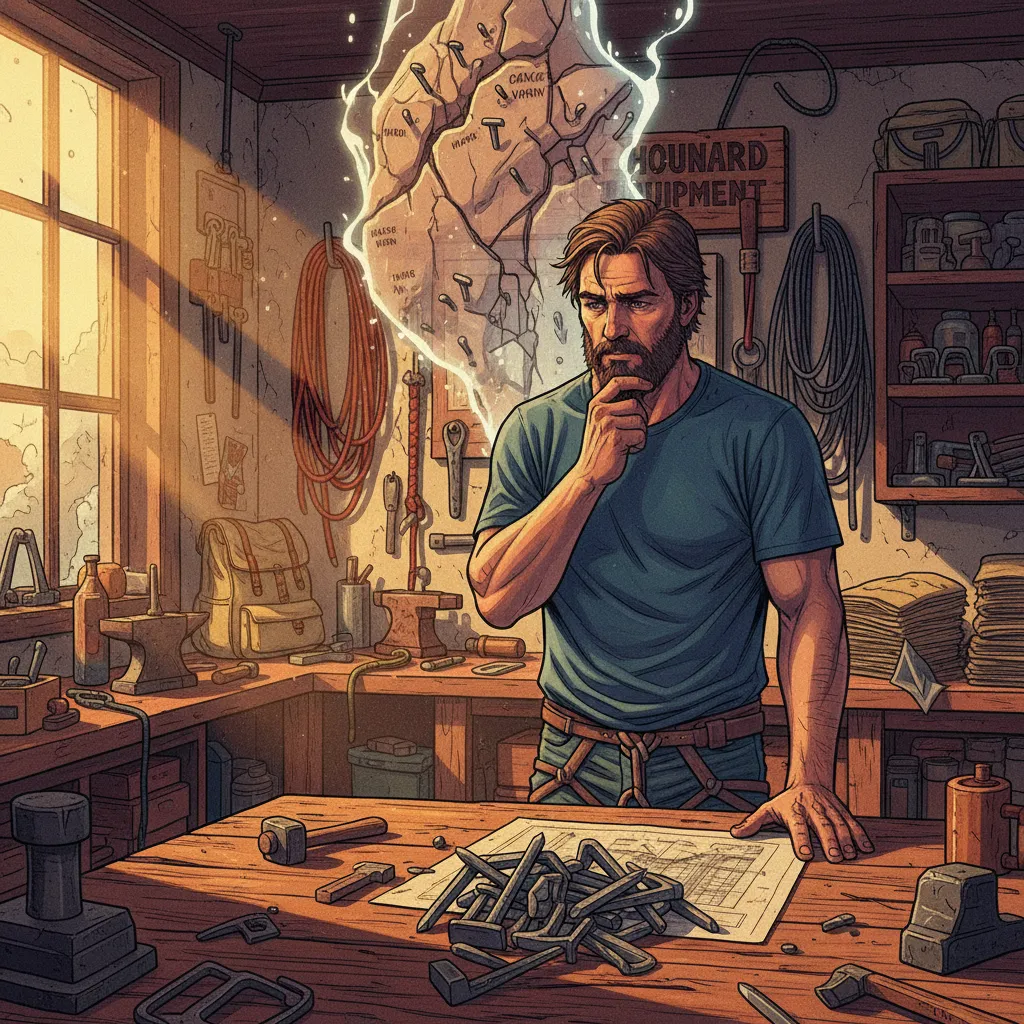
Chouinard Equipment grew organically, a testament to the quality and innovation baked into every product. But as the company thrived, Chouinard faced a profound ethical dilemma. His revolutionary reusable pitons, while better than the old ones, were still damaging the rock faces, widening cracks with repeated use. The very tools designed to enhance climbing were inadvertently scarring the natural cathedrals he revered. This wasn’t just a business problem; it was a crisis of conscience.
So, in a move that would define Yvon Chouinard’s radical approach to business for decades to come, he didn’t just innovate; he actively campaigned against his own best-selling product. He introduced aluminum chocks – devices that could be wedged into cracks without hammering – and then, through articles and educational outreach, urged climbers to stop using pitons entirely. He was, in essence, telling his customers: “Don’t buy my most profitable product. Here’s a better, more environmentally sound alternative.” Imagine a car company telling you to stop driving because it pollutes. It was heresy, brilliant and bewildering in equal measure.
This wasn’t just about gear; it was about apparel. On a climbing trip to Scotland in 1970, Chouinard picked up a rugby shirt – sturdy, colorful, with a collar that prevented harness chafing. It was perfect. Back home, he started importing and selling them. They flew off the shelves. Soon, the brand needed a name that evoked the wild, untamed beauty of the places they sought to protect and explore. In 1973, Patagonia was born, named after the remote, wind-swept region at the southern tip of South America, a place synonymous with adventure and untouched wilderness.
The transition from hard goods to soft goods wasn’t just a diversification; it was a strategic pivot that allowed the company to grow without compromising its core environmental values as severely as the hardware business had. Apparel offered a different kind of canvas for innovation – synthetic fabrics, recycled materials, ethical manufacturing. But the ethos remained the same: make the best product, cause no unnecessary harm, and use business to inspire and implement solutions to the environmental crisis.
“Every time I’ve elected to do the right thing, it’s ended up making me more money.”
This accidental empire, built on a foundation of ethical dilemmas and a fierce dedication to quality, started shaping its own unique DNA. It wasn’t just about selling jackets; it was about selling a lifestyle, a philosophy. It was about proving that you could build a successful business not despite your values, but because of them. And in a world increasingly driven by profit at any cost, Patagonia was quietly, defiantly, carving out a different path, preparing for a future where its biggest move wasn’t about what it sold, but what it became.
🌲 Chapter 3: The Soul of the Brand – Quality, Activism, and the Anti-Marketing Mantra
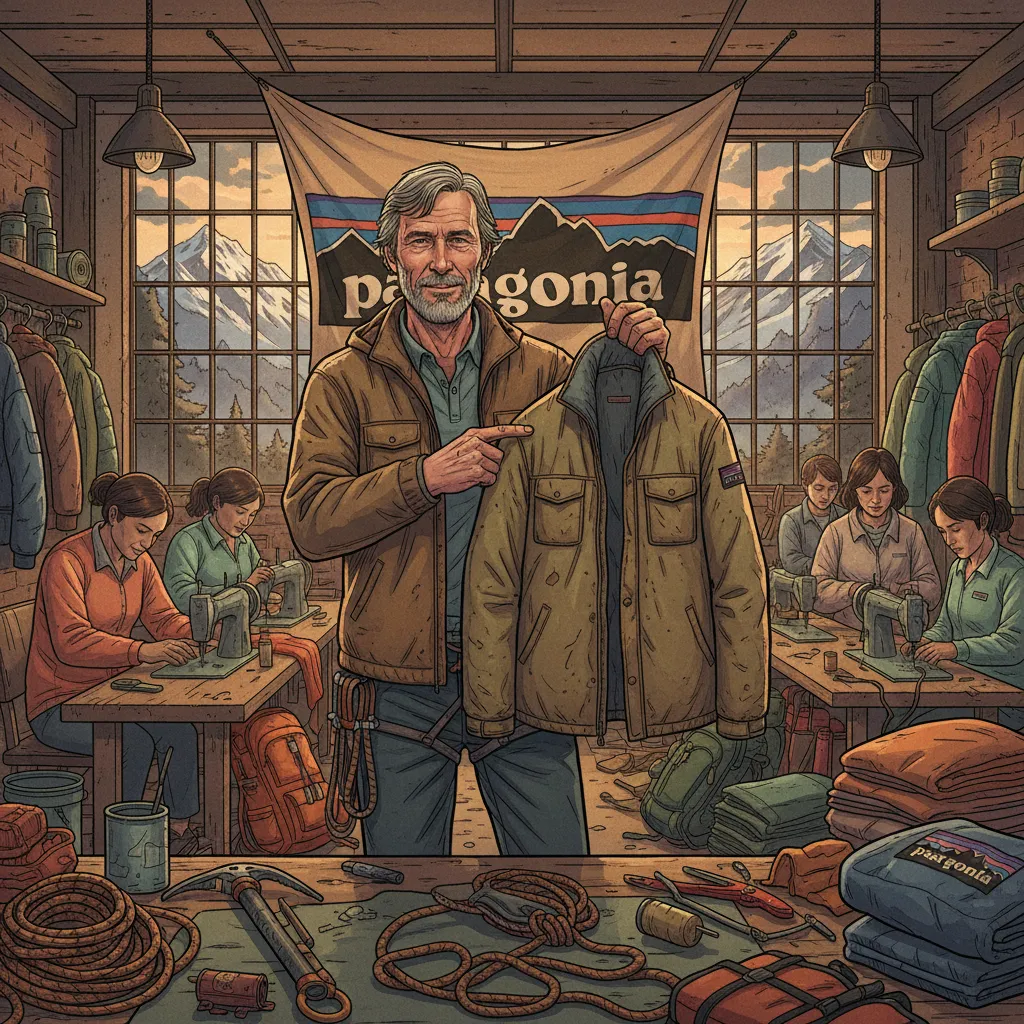
Patagonia wasn’t just another outdoor clothing company; it was a declaration. From the very beginning, its garments were built to last, designed for the harshest conditions, and backed by an ironclad guarantee. This commitment to durability wasn’t just good business; it was a radical act of anti-consumerism. In a world of fast fashion and planned obsolescence, Patagonia preached the gospel of “buy less, buy better.” Their famous “Worn Wear” program, encouraging repair and reuse, was a direct assault on the throwaway culture that capitalism often champions.
But the brand’s soul ran deeper than just product quality. Yvon Chouinard infused Patagonia with his own fierce, unwavering commitment to environmental activism. This wasn’t greenwashing; this was embedded in the company’s DNA. They started donating 1% of sales to grassroots environmental organizations way back in 1985, long before “corporate social responsibility” was a buzzword. This wasn’t an afterthought; it was a core operating principle, a tithe to the planet that sustained them.
Their marketing campaigns were legendary precisely because they defied convention. Remember the “Don’t Buy This Jacket” ad from Black Friday 2011? In a full-page spread in The New York Times, Patagonia didn’t urge you to buy their product; they urged you not to, unless you truly needed it. They highlighted the environmental cost of consumption, even of their own impeccably made products. This wasn’t just provocative; it was brilliant. It solidified their authenticity, demonstrating that their commitment to the planet superseded their commitment to immediate sales. It told customers: “We trust you to make conscious choices, and we’re here to support a world where those choices matter.”
This wasn’t just marketing; it was a manifesto. It was a rejection of the relentless pursuit of growth for growth’s sake, a critique of the endless consumption cycle that fuels modern capitalism. Patagonia became a beacon for conscious consumers, for people who wanted their purchases to align with their values. They weren’t just selling jackets; they were selling a philosophy, an identity, a way of seeing the world. And in doing so, they built a brand loyalty that few companies could ever dream of achieving.
The company became a certified B Corporation in 2011, legally enshrining its commitment to balancing profit and purpose. They became a living, breathing experiment in how a business could thrive while actively working against the very systems that typically define success. But even with all these groundbreaking initiatives, Chouinard still felt a gnawing unease. The success, the growth, the sheer accumulation of wealth – it all felt like a betrayal of his core principles. The stage was set for an even more radical act, one that would redefine not just Patagonia’s legacy, but potentially, the very future of conscious capitalism.
💰 Chapter 4: The Uncomfortable Truth – A Billionaire’s Burden
As the decades rolled on, Patagonia grew into a global powerhouse, a brand revered for its quality, its ethics, and its unwavering commitment to environmental causes. Its revenues soared, its market valuation climbed into the billions, and Yvon Chouinard, the reluctant capitalist, found himself an accidental billionaire. This wasn’t a goal he had ever pursued; in fact, it was a status that filled him with profound discomfort, even revulsion.
“I was in the one percent,” he once lamented, “and I didn’t want to be in the one percent.” This wasn’t false modesty; it was a deep-seated philosophical objection to the accumulation of vast personal wealth, especially when that wealth was derived, however ethically, from a system he fundamentally viewed as destructive. The paradox was stark: he had built a company designed to save the planet, yet its very success was making him a poster child for the very economic disparity and unchecked consumption he railed against.
Imagine the cognitive dissonance. Here’s a man who still lives modestly, drives an old Subaru, wears clothes until they’re threadbare, and whose idea of a good time is fly-fishing in a remote river. He hates suits, boardrooms, and anything that smacks of corporate pretense. Yet, he was at the helm of a multi-billion-dollar enterprise, a titan of industry by any measure. The idea of being a “good capitalist” started to feel like an oxymoron, a contradiction in terms. He saw the world burning, ecosystems collapsing, and felt the immense responsibility of his position.
His children, Fletcher Chouinard and Claire Chouinard, were equally steeped in this ethos. They understood the burden of their family’s wealth and the immense pressure to live up to the Patagonia name. They didn’t want to inherit a fortune that felt morally compromised, nor did they want the responsibility of managing a business empire that, no matter how ethical, was still part of a system contributing to the planetary crisis. They wanted to be part of the solution, not just another wealthy family benefiting from the status quo.
“I didn’t want to be a businessman. I started as a craftsman, making climbing gear for myself and my friends, then clothing for climbers. Then I got into environmental issues, and I wanted to use my business to do good.”
The family spent years grappling with this uncomfortable truth, wrestling with the ultimate question of legacy. How could they ensure Patagonia’s mission would endure beyond their lifetimes, untainted by the pressures of profit maximization or the whims of future owners? How could they truly “do good” with a company that was, by its very nature, generating immense wealth? This internal struggle, this deep-seated ethical dilemma, was the crucible in which the most radical business decision of the 21st century would eventually be forged. It wasn’t about avoiding taxes or making a quick buck; it was about confronting the inherent contradictions of capitalism and finding a way to break free.
🔍 Chapter 5: The Search for Salvation – All Traditional Paths Lead to Hell (or Compromise)
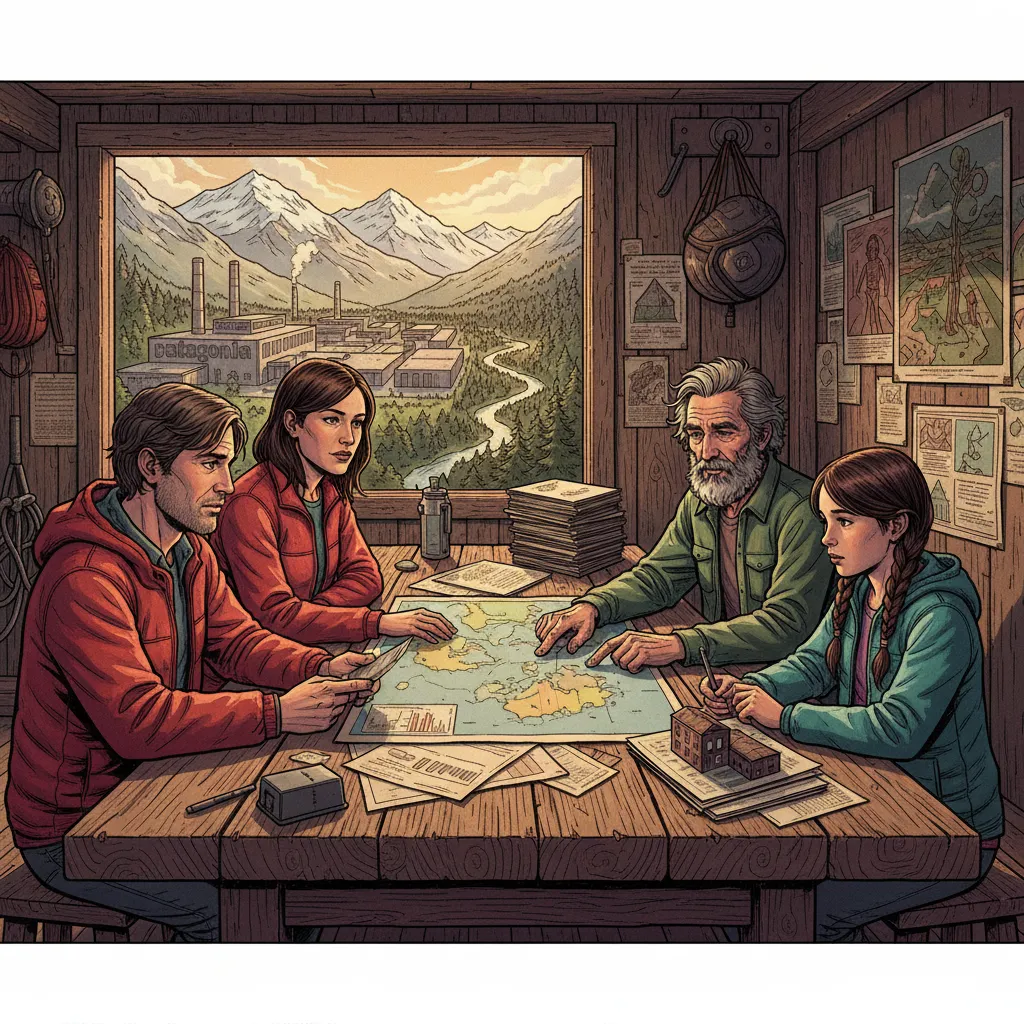
For years, Yvon Chouinard and his family explored every conceivable option for the future of Patagonia. They knew they couldn’t just keep things as they were. The company was too big, its influence too broad, and the planet’s crisis too urgent for a simple continuation of the status quo. But every traditional path they considered felt like a compromise, a betrayal of the core values that had defined Patagonia from day one.
Option 1: Sell the company. This was the easiest route to personal enrichment, a massive payday for Chouinard and his family. But the thought was anathema. Selling to a private equity firm or a larger corporation would inevitably lead to a focus on maximizing shareholder value, cutting costs, and potentially diluting Patagonia’s environmental mission. Imagine a new owner, beholden to quarterly earnings, dismantling the “1% for the Planet” commitment or pushing for cheaper, less sustainable manufacturing. The soul of Patagonia would be ripped out.
Option 2: Take the company public (IPO). An initial public offering would inject capital, yes, but it would also subject Patagonia to the relentless, short-term demands of Wall Street. Public companies are legally obligated to prioritize shareholder profits. This would turn a mission-driven enterprise into a quarterly earnings machine, where environmental initiatives might be seen as hindrances rather than assets. Chouinard envisioned ravenous investors demanding endless growth, a concept he abhorred.
Option 3: Sell to employees. This was a more appealing option, aligning with Patagonia’s progressive values. Employee stock ownership plans (ESOPs) can empower workers and keep profits within the company. However, even an ESOP, while admirable, often still requires a focus on profitability to distribute returns to employee-shareholders. It also didn’t fully insulate the company from future pressures or ensure the permanency of the environmental mission. It was good, but not radical enough for the scale of the problem Chouinard saw.
Option 4: Leave it to the kids. While Fletcher and Claire Chouinard were deeply committed to the mission, Yvon understood the immense burden of such an inheritance. It would tie them to the complexities of managing a multi-billion-dollar enterprise, potentially diverting them from their own passions and forcing them into roles they might not want. More importantly, it wouldn’t guarantee the mission’s longevity beyond their generation. What about their kids? The long game required a different kind of architecture.
“I never wanted to be a businessman. I don’t like the word ‘businessman.’ I like the word ‘craftsman.’ I like the word ‘tinkerer.’”
Every traditional exit strategy, every conventional path available to a successful founder, seemed to lead to a dilution of purpose, a compromise of principles. Chouinard wasn’t just looking for an exit; he was looking for a solution to the fundamental dilemma of capitalism itself. He needed a structure that would legally and permanently enshrine Patagonia’s values, protecting it from future corporate raids, market pressures, or even the changing whims of family members. He needed to build a fortress around the company’s soul, a mechanism that would ensure every dollar generated would serve the planet, forever. This wasn’t just about giving away money; it was about giving away control, and fundamentally redefining ownership. The answer, he realized, wouldn’t be found in existing corporate models, but in inventing a whole new one.
🛠️ Chapter 6: The Radical Blueprint – Forging a New Kind of Ownership
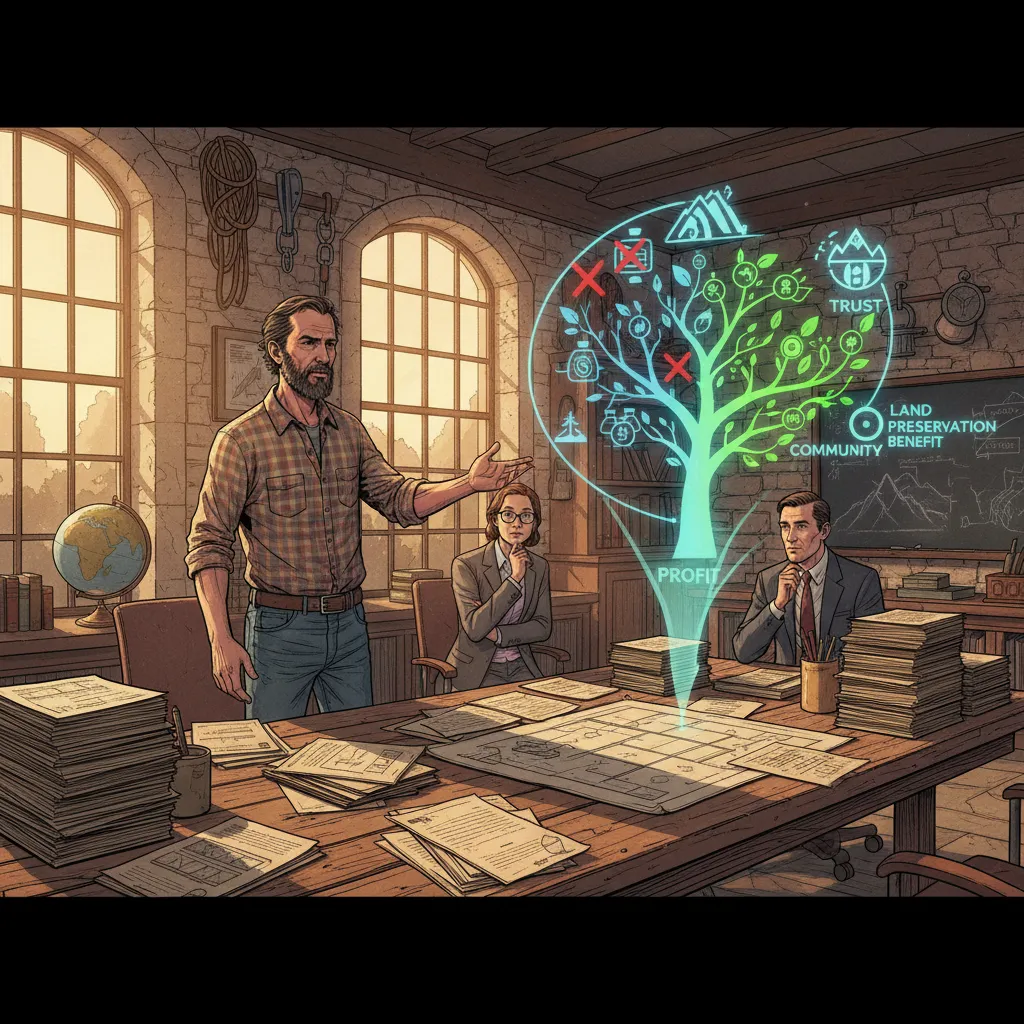
The traditional paths were dead ends. Yvon Chouinard knew he needed something unprecedented, a legal and financial architecture that would completely divorce profit from personal enrichment and permanently tether the company’s purpose to planetary preservation. He didn’t want to just be a philanthropist; he wanted Patagonia itself to be the engine of change, perpetually funded and guided by its mission.
The solution, born from years of frustrated brainstorming and discussions with lawyers, tax experts, and his family, was a stroke of genius in its elegant complexity: a dual-structure model. This wasn’t a simple charitable donation; it was a fundamental reimagining of corporate ownership.
First, the family created the Patagonia Purpose Trust. This trust was designed to be the ultimate holding entity, controlling all of Patagonia’s voting stock (100% of it). Its sole beneficiary? Planet Earth. The purpose of this trust is explicitly defined: to protect the company’s values and ensure that its mission to “save our home planet” is always at the forefront of every business decision. The trust is overseen by a small group of trusted individuals, including members of the Chouinard family and key Patagonia executives. Their job isn’t to maximize profit for shareholders; it’s to enforce the company’s commitment to its mission. They are the guardians of the brand’s soul, with the legal power to veto any move that deviates from its environmental objectives.
Second, the family established the Holdfast Collective, a 501(c)(4) nonprofit organization. This entity received all of Patagonia’s non-voting stock (100% of it). What does this mean in plain English? All of Patagonia’s profits – after reinvesting in the business – will now flow directly to the Holdfast Collective. And what does the Collective do with that money? Its explicit mandate is to use every single cent to fight the environmental crisis, protect nature, and support communities. This isn’t just a percentage of profits; it’s all the profits.
“We looked at the various options. We could sell the company and give all the money away, but we couldn’t be sure a new owner would maintain our values. A public offering was a disaster in the making. So we came up with our own solution.”
Think of it like this: the Patagonia Purpose Trust is the company’s brain and heart, making sure it stays true to its ethical compass. The Holdfast Collective is its bloodstream, channeling every financial resource directly into environmental action. There are no private shareholders to appease, no family members to enrich. The entire economic value of Patagonia, a multi-billion-dollar enterprise, is now irrevocably dedicated to fighting climate change.
This wasn’t a quick fix or a simple transfer of assets. It was a meticulously crafted legal and financial maneuver, years in the making, designed to be bulletproof against future attempts to dilute the mission. It’s a blueprint for a truly purpose-driven enterprise, where the purpose isn’t just a marketing slogan but the legal and financial bedrock of its very existence. It was, in essence, Yvon Chouinard’s ultimate mic drop, a defiant challenge to the very operating system of capitalism itself.
🌎 Chapter 7: Earth is Our Only Shareholder – The Mechanics of the Giveaway
Let’s break down the revolutionary mechanics of Yvon Chouinard’s radical move, because this isn’t just some feel-good story; it’s a structural masterpiece that could reshape how we think about corporate ownership. This isn’t charity in the traditional sense, where a rich person just writes a big check. This is a complete re-engineering of a multi-billion-dollar enterprise to serve a singular, non-profit mission.
Imagine Patagonia as a ship. Before, it was owned by Yvon Chouinard and his family, who were the captain and crew, charting its course and keeping some of the treasure. Now, the ship itself has been handed over to the planet.
Here’s how the ownership structure works, in simple terms:
-
The Patagonia Purpose Trust: This trust now owns 100% of the company’s voting stock. Think of voting stock as the power to make decisions, to steer the ship. The trust’s beneficiaries are explicitly “Planet Earth and its inhabitants.” Its primary directive is to ensure Patagonia remains a financially healthy business that continues to make high-quality products, but always with the explicit purpose of fighting the environmental crisis. The trustees (including members of the Chouinard family and other trusted individuals) are legally bound to uphold this mission. They can hire and fire CEOs, approve strategies, and ensure the company never strays from its core purpose. They are the ultimate guardians of Patagonia’s soul.
-
The Holdfast Collective: This 501(c)(4) nonprofit organization now owns 100% of the non-voting stock. Non-voting stock represents the economic value, the treasure chest. This means that every dollar of profit that Patagonia generates, after being reinvested back into the business to ensure its long-term health and growth, is now channeled directly into the Holdfast Collective. The Collective’s mission is singularly focused: to use these funds to fight the environmental crisis, protect nature, and support frontline communities. A 501(c)(4) designation allows it to engage in political advocacy and lobbying, giving Patagonia’s wealth a powerful new tool in the fight for environmental policy.
Crucially, this means:
- No Private Profit: The Chouinard family will no longer receive any financial benefit from Patagonia’s future profits. Their personal wealth from the company has effectively been zeroed out, apart from what they already held before the restructuring. This wasn’t a tax dodge; it was a profound act of divestment.
- Permanent Mission: The structure is designed to be permanent. It’s not a temporary initiative; it’s an irrevocable legal framework. Even if future generations of Chouinards were tempted to sell or change course, the Trust’s legal mandate would prevent it.
- Purpose-Driven Capital: Instead of capital being extracted for private gain, it is now perpetually recycled back into the fight for the planet. Patagonia’s profit motive is now entirely aligned with its environmental mission. It becomes a self-sustaining engine for environmental activism.
“Rather than ‘going public,’ you could say we’re ‘going purpose.’ Instead of extracting value from nature and transforming it into wealth for investors, we’ll use the wealth Patagonia creates to protect the source of all wealth.”
This is not a simple divestment; it is a profound redefinition of “ownership” itself. It asks: who should truly own the wealth generated by a company that relies on natural resources and the collective well-being of the planet? Chouinard’s answer is unequivocal: the planet itself. It’s a move that transforms a multi-billion-dollar company into a perpetually funded, activist organization, proving that profit and purpose don’t just coexist, but can be inextricably linked in service of a greater good. The ship is now sailing for Earth, with its sails billowing with profits, propelling it towards a more sustainable future.
⚡ Chapter 8: The Seismic Shockwave – Reactions from a Stunned World
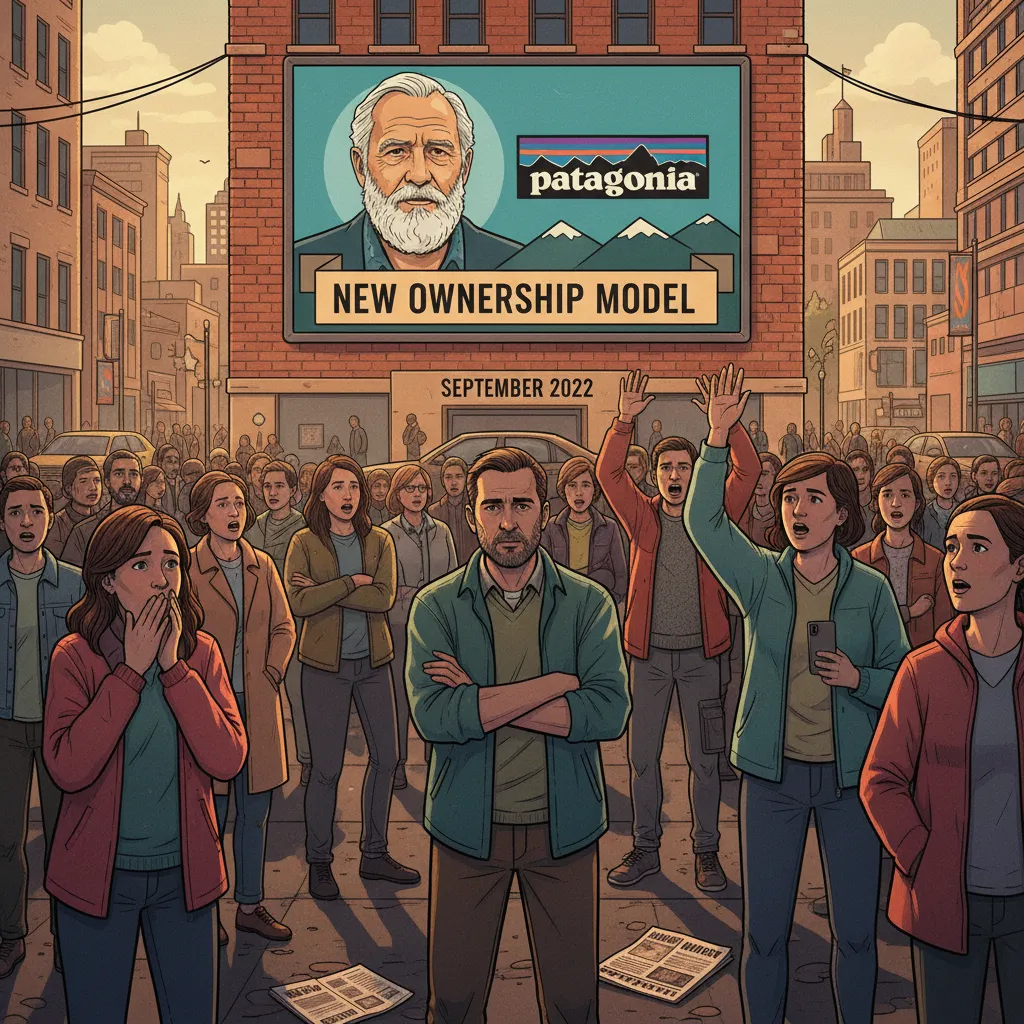
When the news broke in September 2022 that Yvon Chouinard had essentially given away his multi-billion-dollar company, Patagonia, the world reacted with a mixture of awe, skepticism, and outright disbelief. It wasn’t just a ripple; it was a seismic shockwave, reverberating through boardrooms, climate summits, and social media feeds globally.
For environmentalists and conscious consumers, it was a moment of profound vindication and hope. Here was a concrete, unprecedented example of a major corporation putting the planet unequivocally before profit. It wasn’t a pledge, not a promise, but a legally binding, structural overhaul. “This is the blueprint,” many exclaimed, seeing it as the ultimate expression of stakeholder capitalism, a radical answer to the question of corporate responsibility in an era of ecological collapse. It validated Patagonia’s decades-long commitment to activism, proving that their “Don’t Buy This Jacket” mantra wasn’t just clever marketing, but a deep-seated philosophy.
The business world, however, was largely stunned into silence, then erupted into a cacophony of analysis and debate. “Is this even legal?” “What are the tax implications?” “Is this a one-off stunt or a genuine paradigm shift?” Financial analysts scrambled to understand the implications of a company with no private shareholders, no profit motive beyond funding a collective. Some hailed it as visionary, a bold reimagining of corporate purpose. Others were openly skeptical, questioning its replicability, citing potential governance challenges, or wondering if it was a clever way to avoid estate taxes (a claim Chouinard vehemently denied, noting the significant tax payments made during the restructuring).
“I didn’t want to be a billionaire. It’s a big relief to me that I can just concentrate on doing good.”
The narrative of the “reluctant billionaire” captured imaginations worldwide. Here was a man who actively shunned the trappings of wealth, who found the very idea of his billionaire status deeply uncomfortable. He wasn’t a tech mogul seeking personal glory or a financial titan trying to cement a dynastic legacy. He was a dirtbag climber, an anti-establishment iconoclast, who saw wealth not as an end in itself, but as a powerful, potentially destructive force that needed to be tamed and redirected. His act resonated because it cut against the very grain of capitalist ambition, suggesting that the ultimate “win” isn’t accumulation, but liberation – liberation from the burden of wealth, and liberation of a company to fulfill its true purpose.
The move sparked intense debate about the future of capitalism itself. If a company could be owned by the planet, what did that mean for the traditional fiduciary duties owed to shareholders? Did it signal a new era of corporate governance, where environmental and social impact could legitimately supersede financial returns? Or was it simply an outlier, a unique maneuver by a unique individual with a unique company? Whatever the interpretation, one thing was clear: Yvon Chouinard had thrown a massive wrench into the gears of conventional business thinking, forcing everyone to reconsider the fundamental purpose of profit, ownership, and legacy in the 21st century. The shockwave was just the beginning of a much larger conversation.
🔬 Chapter 9: The MogulFeed Dissection – Tax, Governance, and the Market Signal

At MogulFeed, we don’t just tell stories; we dissect them. Yvon Chouinard’s move with Patagonia wasn’t just a grand gesture; it was a complex financial and legal maneuver with profound implications for tax law, corporate governance, and the very market signals it sends to the capitalist ecosystem. Let’s peel back the layers.
The Tax Angle: More Nuance Than Meets the Eye Initial reactions often jumped to “tax dodge!” But the reality is far more complex and, frankly, less cynical. When the Chouinard family transferred 100% of the voting stock to the Patagonia Purpose Trust and 100% of the non-voting stock to the Holdfast Collective (a 501(c)(4) nonprofit), they incurred significant tax liabilities.
- The transfer of the voting stock to the Trust was a taxable gift, requiring the Chouinards to pay approximately $17 million in gift taxes. This is a substantial personal outlay, directly contradicting the “tax dodge” narrative.
- The non-voting stock, transferred to the 501(c)(4), is exempt from federal gift and estate taxes. However, a 501(c)(4) is a “social welfare organization,” not a traditional public charity (501(c)(3)). While donations to a 501(c)(3) are tax-deductible for the donor, donations to a 501(c)(4) are generally not. This further underscores that the Chouinard family wasn’t optimizing for personal tax benefits.
- Crucially, the ongoing profits flowing to the Holdfast Collective are also subject to certain taxes, including the excise tax on investment income for private foundations (though a 501(c)(4) operates differently) and potentially taxes on unrelated business income. The family’s goal wasn’t to avoid taxes; it was to permanently dedicate the company’s value to its mission, accepting the tax implications as a cost of doing business differently.
Governance: A New Breed of Fiduciary Duty The Patagonia Purpose Trust fundamentally redefines corporate governance. The trustees’ fiduciary duty isn’t to maximize profit for private shareholders; it’s to ensure the company remains financially viable while strictly adhering to its environmental mission. This is a dramatic shift from conventional corporate law, where shareholder primacy is often paramount.
- Mission-First Mandate: The trust’s charter explicitly states its purpose, creating a legal firewall against future attempts to dilute the mission for profit. This means the CEO, management team, and even the board are accountable to the Trust’s environmental objectives, not just financial metrics.
- Long-Term Vision: Free from quarterly earnings pressure and activist investor demands, Patagonia can pursue truly long-term strategies for sustainability, even if they impact short-term profitability. This allows for investments in radical supply chain overhauls, expensive sustainable materials, or advocacy campaigns that might not immediately boost the bottom line but are crucial for the planet.
- Succession Planning Reimagined: This model effectively solves the perennial problem of founder succession. The mission itself becomes the ultimate inheritor, transcending individual leaders or family generations.
The Market Signal: A Shot Across Capitalism’s Bow Chouinard’s move sends an unmistakable signal to the global market:
- Valuation vs. Value: It forces a re-evaluation of what constitutes “value” in a company. Is it purely financial returns, or does it include ecological and social impact? For Patagonia, its brand equity, built on authenticity and mission, might actually increase as a result of this move, even if its traditional financial valuation model is now fundamentally altered.
- ESG on Steroids: Environmental, Social, and Governance (ESG) investing has been a hot topic, but often criticized as superficial or “greenwashing.” Patagonia’s move is ESG taken to its absolute extreme, embedding these principles into the very ownership structure. It sets an impossibly high bar for other companies claiming to be “purpose-driven.”
- The Anti-Growth Paradox: Patagonia has long championed responsible consumption (“Don’t Buy This Jacket”). This new structure doubles down on that, suggesting that a company can thrive and achieve market leadership without infinite growth as its primary directive. It challenges the fundamental assumption that “growth at all costs” is the only path to success.
“There’s a lot of talk about stakeholder capitalism, but very few people actually do it. We’re trying to show that it’s possible to build a multi-billion-dollar company and then turn it into a tool for environmental activism.”
This wasn’t a whimsical act; it was a carefully calculated, deeply philosophical business decision. It’s an intricate dance of legal, financial, and ethical considerations, designed not just to make a statement, but to build a durable, self-sustaining engine for environmental change. It’s a blueprint, albeit an audacious one, for how a company can truly belong to something bigger than itself, challenging every MogulFeed reader to consider: what is your business truly for?
🤯 Chapter 10: The Anti-Capitalist Manifesto – Is This a New Paradigm or a One-Off?

Yvon Chouinard’s radical act isn’t just a business maneuver; it’s a living, breathing anti-capitalist manifesto etched into the corporate landscape. It dares to ask fundamental questions about the nature of ownership, the purpose of profit, and the ultimate responsibility of wealth in a world teetering on ecological collapse. But is this a genuine paradigm shift, a blueprint for a new form of capitalism, or a singular, unrepeatable act born of a unique individual and a unique company?
The Argument for a New Paradigm:
- Redefining “Fiduciary Duty”: Chouinard’s model challenges the bedrock principle of shareholder primacy – the idea that a company’s sole purpose is to maximize profit for its owners. By legally mandating that Patagonia’s purpose is to fight the environmental crisis, the model introduces a new, higher form of fiduciary duty: one owed to the planet. If this model gains traction, it could fundamentally alter corporate law and governance, paving the way for more “mission-locked” companies.
- Beyond ESG and B Corps: While B Corporations and ESG investing are steps in the right direction, they often operate within the existing capitalist framework, seeking to mitigate harm or make incremental improvements. Patagonia’s structure goes further, transforming the entire profit-generating mechanism into a direct tool for planetary good. It’s not just “doing less harm”; it’s “actively doing good” with every dollar generated.
- The “Purpose Trust” Model: The legal structure of the Patagonia Purpose Trust and the Holdfast Collective offers a tangible, replicable mechanism for other founders to consider. It provides a robust framework for locking in values and mission in perpetuity, offering a powerful alternative to traditional exit strategies that often compromise these very values.
The Argument for a One-Off (or Extreme Edge Case):
- Uniqueness of Yvon Chouinard: Let’s be real. There aren’t many Yvon Chouinards out there. His lifelong disdain for wealth, his deep personal connection to the outdoors, and his decades of resisting corporate norms make him an anomaly. Most founders, even socially conscious ones, have a different relationship with their accumulated wealth. Replicating his motivation is perhaps harder than replicating the legal structure.
- Patagonia’s Brand & Financial Health: Patagonia is an exceptionally strong, profitable, and globally recognized brand. It has built immense brand loyalty over decades, allowing it to take risks that other companies simply couldn’t afford. Its financial health provides the robust income stream necessary to fund the Holdfast Collective effectively. Not every company has this luxury.
- Complexity and Cost: The legal and tax implications of this restructuring were immense, requiring years of expert consultation and significant tax payments. Such a complex maneuver, while brilliant, is not easily undertaken by smaller, less resourced companies.
- Potential for Dilution/Challenge: While the structure is designed to be robust, legal challenges or political shifts could theoretically attempt to undermine it in the distant future. The fight is never truly over.
“I never thought about being a businessman. I just wanted to be a craftsman and a climber. And then the business got bigger and bigger. And I never wanted to be a rich person. I hated it.”
Regardless of whether it’s a widespread paradigm or an extreme outlier, Chouinard’s move irrevocably alters the conversation. It provides a tangible, high-profile example of what truly radical, purpose-driven capitalism could look like. It forces every entrepreneur, investor, and business leader to confront the question: if this is possible, why isn’t my company doing more? It sets a new benchmark for corporate responsibility, pushing the boundaries of what it means to be a “good” business in a world demanding urgent action. It’s not just a whisper; it’s a roar, challenging the fundamental assumptions of how we build, own, and profit from businesses.
⛰️ Chapter 11: The Chouinard Legacy – Beyond the Billions

The name Yvon Chouinard will now forever be synonymous not just with high-quality outdoor gear and environmental activism, but with a revolutionary act of corporate divestment. His legacy isn’t about the billions he accumulated, but the billions he gave away, structurally and permanently, for the benefit of the planet. This isn’t just a feel-good story; it’s a profound statement on wealth, power, and the ultimate purpose of enterprise.
What does this mean for the future of business?
- A New North Star for Founders: For entrepreneurs grappling with succession planning or the desire to lock in their company’s mission, the Patagonia model offers a radical alternative. It provides a blueprint for founders who prioritize impact over personal enrichment, showing that you can build a hugely successful business and then ensure its wealth eternally serves a greater cause. It challenges the conventional wisdom that the only meaningful exits are IPOs or acquisitions.
- Pressure on “Purpose-Driven” Companies: Every company that claims to be “purpose-driven,” “ethical,” or committed to “ESG” now faces a new, higher standard. Patagonia has demonstrated that it’s possible to put your money (and your entire company) where your mouth is. This will inevitably put pressure on other brands to move beyond performative activism and consider deeper, structural commitments to their stated values.
- The Evolution of Capitalism: While it might be an extreme case, Patagonia’s move contributes to the ongoing evolution of capitalist thought. It amplifies the voices advocating for stakeholder capitalism, regenerative business models, and a redefinition of corporate success beyond quarterly profits. It proves that a company can thrive, innovate, and lead its industry while being fundamentally anti-growth in its ultimate purpose.
- Inspiration for Activism: By turning a multi-billion-dollar company into a perpetual funding engine for environmental activism, Chouinard has created a new model for philanthropic impact. It’s not just writing checks; it’s building an institution that generates its own capital for good, year after year, indefinitely.
Can it be replicated? The legal structure can certainly be adapted and replicated by other companies, especially those with strong founders and clear missions. However, the true replication challenge lies in the spirit of the act. Do other founders have the same profound disdain for wealth, the same unwavering commitment to a cause that transcends personal gain, that Yvon Chouinard possesses? Perhaps not in such extreme measure, but his act plants a seed. It provides a concrete example that such a path is not just idealistic, but entirely achievable and robust.
“I was really serious about saving the planet. I figured I would just throw my money at the problem. But I found out that it’s not just about money, it’s about control. And so, the only way to save the planet is to give away control.”
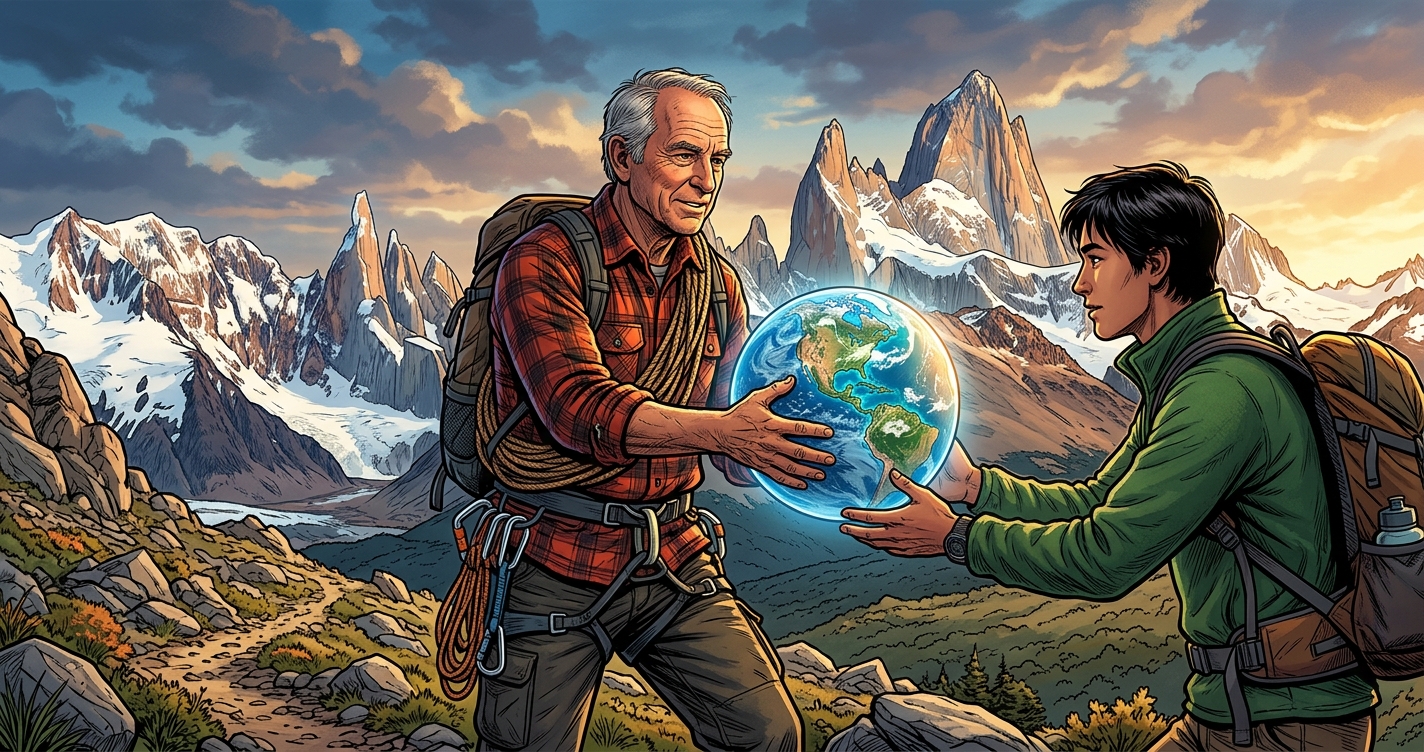
His ultimate mic drop wasn’t just about giving away his fortune; it was about giving away control. It was about acknowledging that true power, the power to effect lasting change, lies not in accumulation, but in liberation. Liberation of capital, liberation of purpose, liberation from the conventional chains of profit maximization. Yvon Chouinard didn’t just build a company; he built a blueprint for a better future, a testament to the idea that business, at its most radical, can be a force for profound, systemic good. His legacy isn’t written in dollar signs, but in the enduring spirit of a mountain man who dared to challenge the very summit of capitalism, and then gave it all away to save the view.
🚀 Chapter 12: The Ultimate Mic Drop – A Call to Arms (or a Chill Pill?)
So, what are we left with after dissecting Yvon Chouinard’s unprecedented move? Is it a call to arms for every entrepreneur to abandon the pursuit of personal wealth and dedicate their entire enterprise to a higher cause? Or is it a chill pill, a unique exception that proves the rule, allowing us to admire from afar while continuing our own capitalist journeys?
The truth, as always, lies somewhere in the messy, vibrant middle. Chouinard’s act is both an inspiration and a challenge, a beacon and a mirror.
It is, without a doubt, an undeniable call to arms. It rips through the polite veneer of corporate social responsibility and demands that we ask deeper questions: What is the true cost of our consumption? What is the ultimate purpose of profit? And what kind of legacy do we, as business leaders and consumers, truly want to build? Chouinard didn’t just donate; he re-engineered. He didn’t just talk the talk; he transformed the very ownership structure of his multi-billion-dollar empire to walk the walk, forever. This isn’t just about Patagonia; it’s about setting a new standard for what it means to be a “good” business in a world desperately needing solutions. It tells us that the tools of capitalism can, indeed, be wielded for profound good, if only we have the courage and conviction to redesign their very operating system.
But it’s also, in a way, a powerful chill pill for those who believe that systemic change is impossible within capitalism. Chouinard demonstrated that radical transformation can happen. You don’t have to burn down the system; you can meticulously, brilliantly, rebuild parts of it from the inside out. It offers a tangible, albeit extreme, solution for founders who feel trapped by the conventional exit strategies and the pressures of wealth accumulation. It reminds us that there are alternatives, that the dogma of infinite growth and shareholder primacy is not an unassailable law of nature, but a construct that can be challenged and redefined.
The impact of Yvon Chouinard’s decision will unfold over decades, its ripples shaping conversations in business schools, policy debates, and executive boardrooms globally. Will other companies follow suit? Perhaps not on the same scale or with the same fervor, but the blueprint is now out there. The idea that “Earth is our only shareholder” has been proven viable.
Ultimately, this is a story that defies easy categorization. It’s an adventure epic, a business masterclass, and an environmental manifesto all rolled into one. It’s the tale of a reluctant billionaire who, in the ultimate act of anti-capitalism, showed us what true wealth – wealth measured not in dollars, but in planetary health – truly looks like. It’s the ultimate mic drop, reverberating with a simple, profound message: the time for incremental change is over. The time for radical redefinition, for putting the planet first, is now. And if a dirtbag climber from California can do it with a multi-billion-dollar company, what’s stopping the rest of us from trying? The challenge has been laid down. The future of capitalism, and perhaps the planet itself, hangs in the balance.
💡 Key Insights
- ▸ Purpose-Driven Strategy as a Dominant Force: Chouinard's move transcends traditional CSR, demonstrating that embedding an existential mission into a company's very ownership structure can cultivate unparalleled brand loyalty, long-term resilience, and market differentiation, challenging businesses to align their profit motive with a higher societal purpose.
- ▸ Reimagining Succession and Exit Strategies: This radical act offers a powerful alternative to conventional founder exits (IPO, acquisition, dynastic family trusts), providing a blueprint for entrepreneurs who prioritize locking in their values and mission for perpetuity over maximizing personal financial gain, forcing a reevaluation of what 'success' truly means in the entrepreneurial journey.
- ▸ The Anti-Growth Paradox and Sustainable Capitalism: Patagonia’s move underscores a profound shift towards a 'sustainable prosperity' model, proving that sustained profitability and market leadership can be achieved, and even enhanced, by rejecting the relentless pursuit of infinite growth, offering a tangible example for industries grappling with environmental limits and consumer demand for ethical practices.