The Unapologetic Hustle of Estée Lauder: How a Kitchen Chemist Built a Billion-Dollar Beauty Empire
Forget your pristine boardrooms and slick venture capital pitches. This is the raw, unvarnished story of **Estée Lauder**, a woman who started with a few pots of cream in her kitchen and an iron will, transforming door-to-door sales into a global cosmetics dynasty. It’s a masterclass in relentless ambition, audacious marketing, and the sheer audacity to believe her potions could change the world, one face at a time.
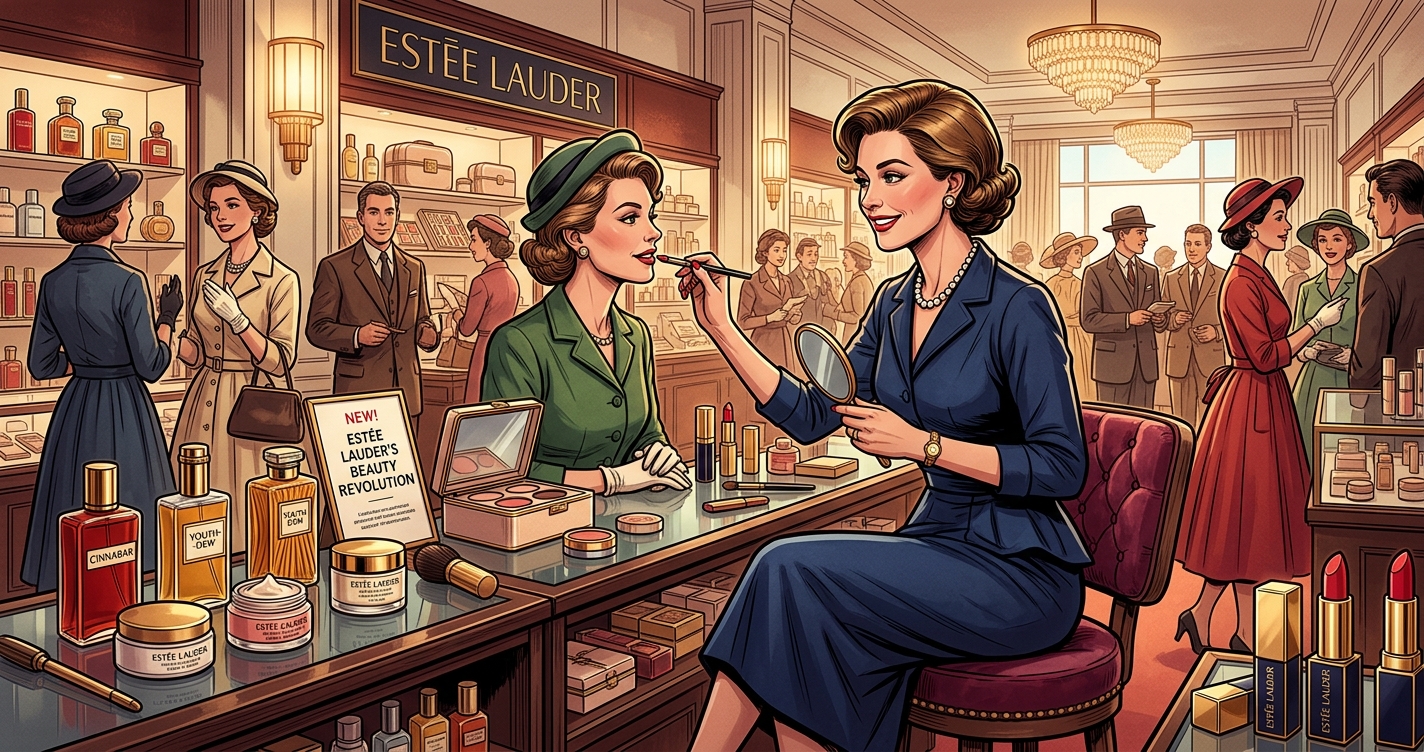
View all stories about this mogul
🔥 Chapter 1: The Kitchen Alchemist’s Crucible

Forget your Silicon Valley wunderkinds. Forget your ivy-league MBAs. Before the term “disruptor” was even coined, there was Josephine Esther Mentzer. A woman born in the borough of Queens, New York, in 1908, to Hungarian immigrants. Her story isn’t one of inherited wealth or lucky breaks; it’s a gritty, exhilarating tale of sheer, unadulterated hustle. This wasn’t a woman who thought about building an empire; she willed it into existence, one jar of meticulously crafted cream at a time.
Imagine the early 20th century: a world on the cusp of dizzying change, but where the concept of “beauty” was still largely relegated to the realm of high society or the hushed whispers of illicit potions. For most women, skincare meant cold cream from the drugstore, maybe a splash of rosewater. But young Estée – she’d later adopt the more elegant, continental-sounding “Estée” from “Esther” – saw something more. She saw potential. She saw a canvas. And she saw a market ripe for transformation.
Her crucible wasn’t a pristine laboratory, but a cramped kitchen, often filled with the pungent, intriguing aromas of her uncle, Dr. John Schotz. He was a chemist, a tinkerer, a man who brewed up skincare concoctions in a small factory. While other kids were playing hopscotch, Estée was mesmerized. She watched, she learned, she absorbed. The alchemy of blending oils and waxes, emulsifying liquids, creating something tangible that promised to erase lines, smooth complexions, and, most importantly, instill confidence – it was like magic to her. But Estée, even then, understood it wasn’t magic. It was chemistry. And it was business.
This wasn’t some romanticized notion of a childhood dream. This was practical. This was about survival, about carving out a future in a world that wasn’t handing out golden tickets. Queens wasn’t exactly a hotbed of glamour, but it was a melting pot of ambition. And Estée, with her sharp mind and even sharper instincts, was ready to boil over. She internalized every lesson from her uncle, not just about the science of skincare, but about the promise of it. The promise of looking better, feeling better, being better. This wasn’t just about selling a product; it was about selling hope, confidence, and a touch of attainable luxury.
From those humble beginnings, a legend was forged. A woman who understood that the true secret ingredient wasn’t just in the jar, but in the relentless, unwavering belief in what that jar could do, and the sheer grit it took to get it into every woman’s hands. The stage was set for a beauty revolution, and its unlikely general was a young woman from Queens with a gleam in her eye and a secret formula up her sleeve.
💄 Chapter 2: The First Brews – Potions of Promise

The air in Estée Lauder’s childhood home was often thick with the scent of science and possibility. Her uncle, Dr. John Schotz, a Hungarian-born chemist, wasn’t just a relative; he was her first mentor, her accidental co-conspirator in what would become a global empire. He taught her about the properties of lanolin, the efficacy of emollients, the delicate balance of ingredients that could transform a dull complexion into a glowing one. For Estée, this wasn’t just chemistry; it was an art form. It was the craft of creating desire.
She wasn’t content to merely observe. Young Estée was a sponge, absorbing every detail, every formulation secret. She understood early on that while her uncle was focused on the science, she could translate that science into something far more powerful: a personal transformation for women. She saw the potential beyond the laboratory, beyond the factory floor. She saw it in the mirror, in the yearning eyes of women who wanted to defy time, to look and feel their best.
Her first creations were humble, born not in gleaming labs but in her own kitchen. Imagine the scene: pots simmering gently, the clinking of spatulas, the careful measuring of ingredients. Her “Super Rich All-Purpose Cream,” a thick, nourishing balm, was her initial masterpiece. It wasn’t fancy, not yet. It was effective. It promised results. And Estée knew, deep in her gut, that efficacy was the bedrock of trust, and trust was the bedrock of sales.
“I never thought I could make a lot of money. I just wanted to make a good product, and I knew if I did that, it would sell.”
This wasn’t a product designed by a marketing committee. This was a product born of personal conviction and a deep understanding of what women truly wanted. It was a cream that felt luxurious, even if its origins were decidedly un-glamorous. It was a cream that delivered on its promise. And it was Estée’s unwavering belief in that promise that would become her most potent weapon.
She wasn’t just making face cream; she was crafting a narrative. Each jar wasn’t just a blend of chemicals; it was a vessel for dreams. She understood that in the world of beauty, perception was reality, and the story behind the product was almost as important as the product itself. She began to experiment, not just with formulas, but with presentation. How would it feel on the skin? How would it smell? How would it make a woman feel?
This early, hands-on experience was invaluable. It grounded her in the fundamentals of her craft. It taught her patience, precision, and the relentless pursuit of perfection. But more than that, it ignited a fire within her – an unshakeable belief that she had something truly special to offer. The kitchen was her first laboratory, but it was also her first boardroom, where she honed her vision, sharpened her instincts, and prepared to unleash her potions of promise onto a world that, unbeknownst to it, was about to be utterly captivated.
💅 Chapter 3: The Salon Hustle – Pounding Pavement, Patting Faces

Now, imagine the roaring twenties and thirties, but dial back the glamour and amp up the grit. This is where Estée Lauder’s legendary hustle truly began. She wasn’t waiting for customers to come to her; she was taking her magic directly to them. Her sales strategy wasn’t about advertising or fancy packaging yet. It was about raw, person-to-person connection, forged in the intimate, often gossipy, atmosphere of beauty salons.
Picture her, a young woman with an undeniable sparkle in her eye, walking into these bustling havens of vanity and transformation. She wasn’t just carrying jars of cream; she was carrying an arsenal of confidence and an almost evangelical belief in her products. Her approach was revolutionary in its simplicity: she didn’t just talk about her cream; she demonstrated it.
Her signature move? The “patting” technique. She wouldn’t just hand over a sample; she’d insist on applying it herself, right there, on the customer’s face, neck, and hands. “Don’t just believe me,” she’d imply with her actions, “feel it. See it. Experience the difference.” She’d gently massage the cream into the skin, engaging the woman in conversation, listening to her concerns, and making her feel utterly pampered and understood. It was a masterclass in experiential marketing before the term even existed.
“You can’t sell a cream in a jar; you have to sell a dream.”
This wasn’t just a transaction; it was a performance. A mini-makeover. A moment of connection. In an era where many beauty products were sold anonymously or through intimidating sales pitches, Estée offered a personalized, intimate experience. She instinctively understood that women craved not just better skin, but also attention, validation, and a moment of self-indulgence.
Her territory wasn’t just beauty salons. She stalked high-end hotels, exclusive women’s clubs, even private parties. Anywhere women gathered, Estée was there, her sample case in hand, ready to transform a skeptic into a devotee. She faced rejection, certainly. Doors slammed, polite dismissals were frequent. But Estée was built of sterner stuff. Each “no” was just a detour, not a dead end. She’d find another salon, another hotel, another woman willing to listen, willing to try.
This relentless, boots-on-the-ground sales approach honed her skills to a razor’s edge. She learned to read faces, to understand unspoken desires, to tailor her pitch to each individual. She learned the power of personal recommendation – a woman who experienced the cream’s benefits firsthand was far more likely to tell her friends than one who just saw an advertisement. Word-of-mouth wasn’t a marketing channel for Estée; it was her entire marketing department.
This era of relentless hustling, of pounding the pavement and patting faces, was the foundational layer of her empire. It taught her the value of direct customer feedback, the importance of product efficacy, and the sheer power of an unshakeable belief in oneself and one’s offering. The Estée Lauder brand wasn’t born in a focus group; it was forged in the intimate, often challenging, interactions she had with real women, one face, one jar, one dream at a time. It was a brutal, beautiful baptism by fire, and Estée emerged from it, not just a survivor, but a queen in the making.
💎 Chapter 4: Cracking the Retail Citadel – The Bloomingdale’s Breakout
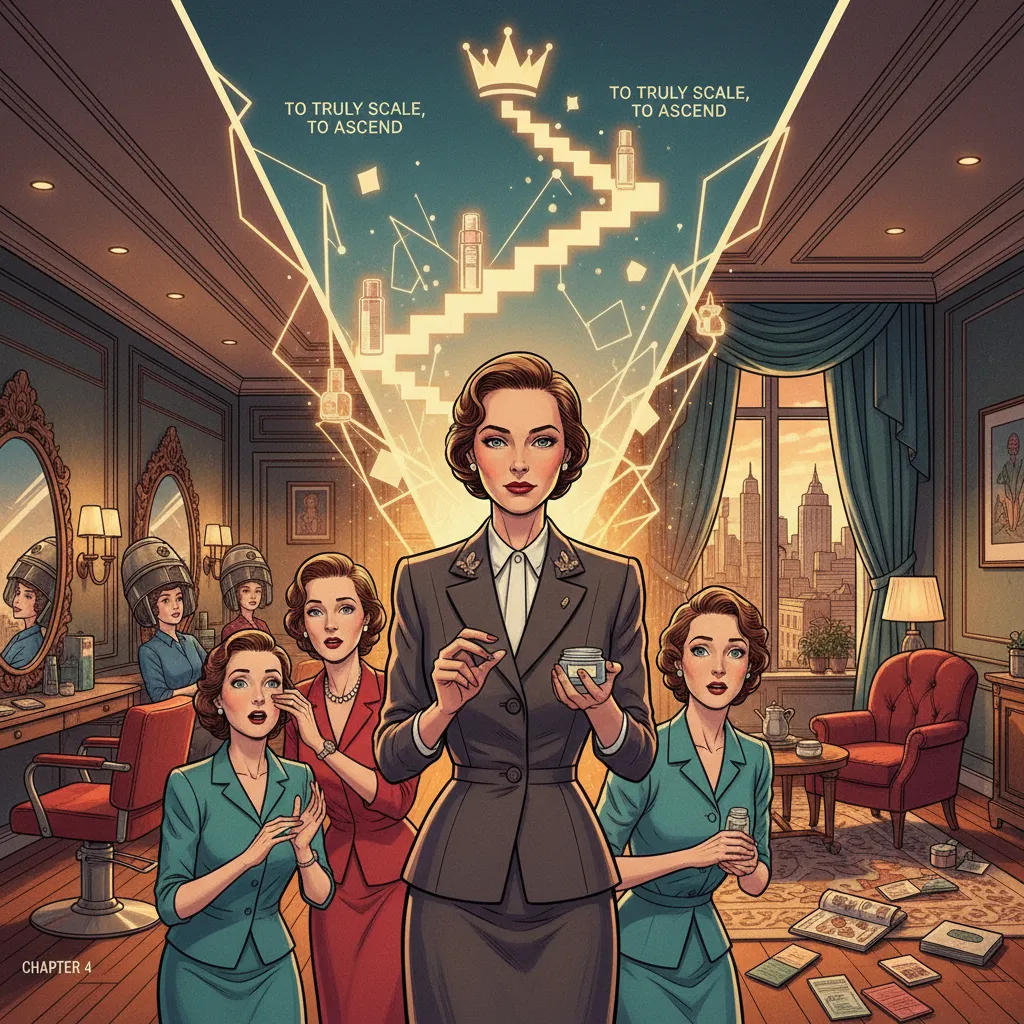
For years, Estée Lauder was the guerilla marketer, the street fighter of skincare, conquering territory one salon, one hotel suite, one meticulously patted face at a time. But to truly scale, to ascend from ambitious entrepreneur to industry titan, she needed to breach the ultimate retail citadel: the department store. These were the cathedrals of commerce, gleaming temples where luxury brands reigned supreme. And they were notoriously difficult to crack.
Her first major breakthrough came not with a gentle tap on the door, but with a calculated, audacious siege. While Saks Fifth Avenue is often credited as her first department store account in 1948, it was a pivotal moment, a validation of her relentless efforts. The story goes that a buyer from Saks tried her products at a local salon, was impressed, and placed an order. This wasn’t just a purchase; it was a seismic shift. It meant her brand, previously a word-of-mouth phenomenon, was now deemed worthy of a coveted spot on a major retail floor.
Imagine the scene: a small, unassuming counter, tucked away amidst the established giants of the beauty world. Estée, however, didn’t see herself as small. She saw opportunity. She understood that a department store wasn’t just a place to sell; it was a stage. It offered visibility, credibility, and access to a wider, more affluent customer base. But it also presented a new set of challenges. How do you stand out amidst a dazzling array of competitors? How do you replicate the intimate salon experience in a bustling retail environment?
Her answer was typical Estée Lauder: she doubled down on what she knew worked best – personal touch and irresistible allure. She didn’t just deliver her products; she became a fixture at her counter. She trained her sales associates, not just on product knowledge, but on her philosophy: touch the customer. Engage them. Make them feel special. She insisted on demonstrating the products, on offering mini-facials, on making every interaction a memorable event.
“When I started, I did everything myself. I blended the creams, I delivered them, I did the books, and I sold them. And I always had time for a customer.”
This hands-on approach was crucial. Department stores initially demanded that brands provide their own sales staff, and Estée ensured hers were not just salespeople, but evangelists. They embodied her vision, her passion. They were an extension of her own relentless drive. She would often stand at the counter herself, observing, strategizing, and even making sales. She was obsessed with the customer experience, understanding that a single positive interaction could create a lifelong devotee.
The department store deal wasn’t just about getting shelf space; it was about proving her business model was scalable. It validated her commitment to quality, her unique selling proposition of personal connection, and her audacious belief that her creams could compete with, and eventually surpass, the established European giants. The gleaming counters of Saks, and later Bloomingdale’s and other major retailers, became her new battlegrounds, and Estée, armed with her creams and an unshakeable will, was ready to conquer them all. This was the moment her kitchen alchemy truly transformed into corporate gold, signaling to the world that Estée Lauder was not just a name, but a force to be reckoned with.
🎁 Chapter 5: The Trojan Horse of Luxury – The Gift with Purchase Revolution
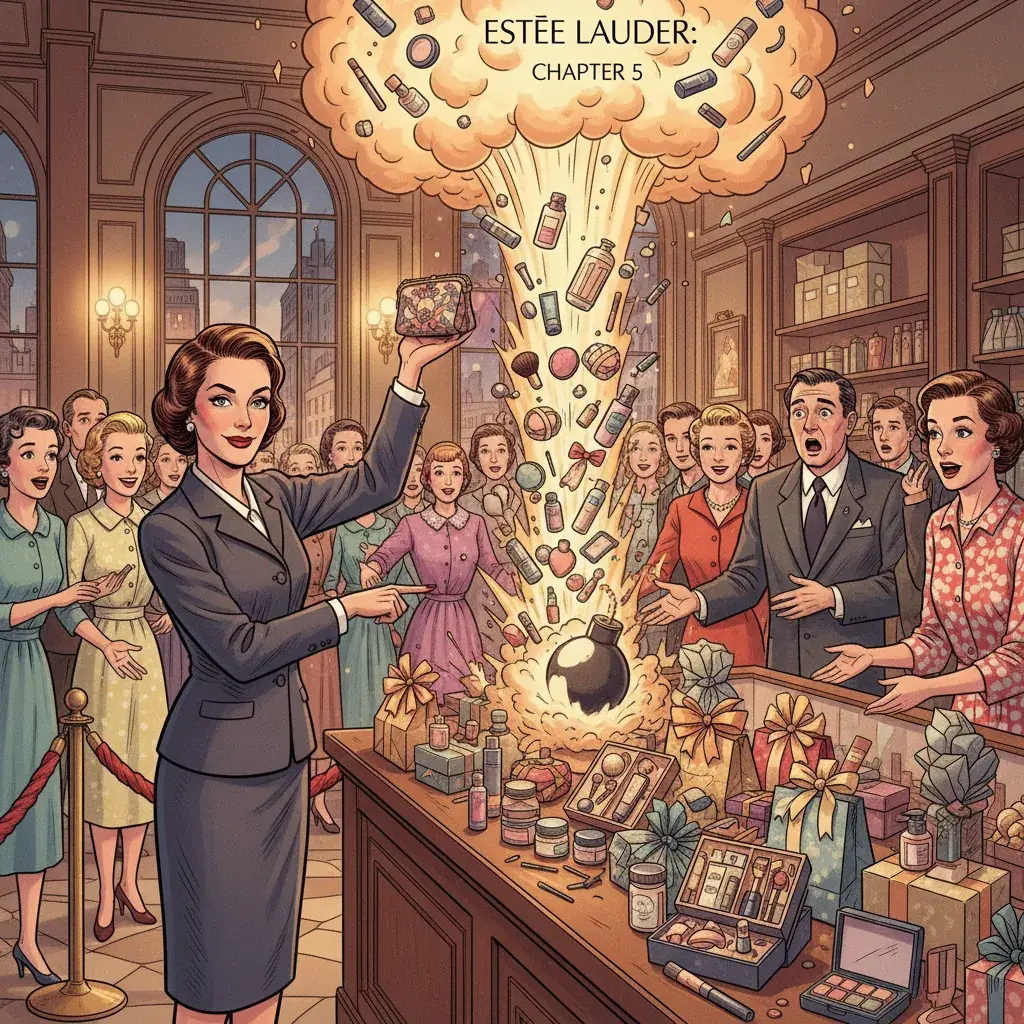
If cracking the department store code was Estée Lauder’s strategic beachhead, then her invention of the “gift with purchase” (GWP) was her tactical atomic bomb, fundamentally reshaping the entire beauty industry. This wasn’t just a clever marketing ploy; it was a stroke of absolute genius, a Trojan horse designed to lure customers, encourage trial, and build an unshakeable loyalty that her competitors could only dream of.
Imagine the typical beauty counter in the mid-20th century. Products lined up, maybe a polite sales associate. Customers would buy what they knew, or what a friend recommended. How do you get them to try your new, relatively unknown brand? How do you incentivize them to spend a bit more, to invest in a full regimen? Estée’s answer was elegant, simple, and devastatingly effective: give them something for “free.”
The concept was revolutionary. “With any purchase of X amount, receive a complimentary gift set!” This wasn’t a flimsy sample sachet; it was a beautifully packaged miniature collection of other Estée Lauder products: a small lipstick, a travel-sized bottle of her famous youth-dew fragrance, a tiny jar of another cream. It was an irresistible proposition. Customers felt like they were getting a fantastic deal, a bonus for their loyalty.
“I didn’t believe in advertising, I believed in talking to women and showing them what the product could do. The gift with purchase was just another way to get them to try it.”
But Estée, ever the shrewd businesswoman, knew it was far more than a “freebie.” It was a strategic investment. Firstly, it encouraged higher spending. Instead of just buying one lipstick, a customer might add a foundation or a moisturizer to reach the GWP threshold. Secondly, and perhaps most crucially, it drove product trial. That small lipstick or fragrance sample wasn’t just a gift; it was an introduction to other facets of the Estée Lauder universe. A woman who loved the complimentary Youth-Dew might return to buy the full-sized bottle. A woman who tried the tiny eye cream might become a convert. It diversified her customers’ product experience without them having to commit to a full-sized purchase.
Thirdly, it generated buzz and excitement. The GWP became an event. Women would anticipate the next promotion, plan their purchases around it. It created a sense of urgency and exclusivity. It transformed a routine purchase into an exciting treasure hunt. Competitors scrambled to imitate, but Estée had already set the standard, establishing her brand as the pioneer of this innovative approach.
The GWP was also a brilliant psychological play. It tapped into the human desire for value, for feeling appreciated. It transformed the transactional relationship between brand and consumer into something more akin to a reciprocal gift-giving. It made customers feel seen, valued, and rewarded.
This wasn’t just about selling more cream; it was about building a brand ecosystem. It was about creating a loyal clientele who felt a personal connection to the brand, not just because of the products, but because of the thoughtful, generous gestures Estée Lauder extended. The gift with purchase cemented her reputation not just as a creator of fine creams, but as an unparalleled marketing genius, a woman who understood the desires and motivations of her customers better than anyone else in the game. It was a masterstroke that would forever change the face of retail, leaving a legacy of strategic generosity that continues to define the beauty industry to this day.
👑 Chapter 6: Weaving the Velvet Rope – Luxury, Exclusivity, and Aspiration
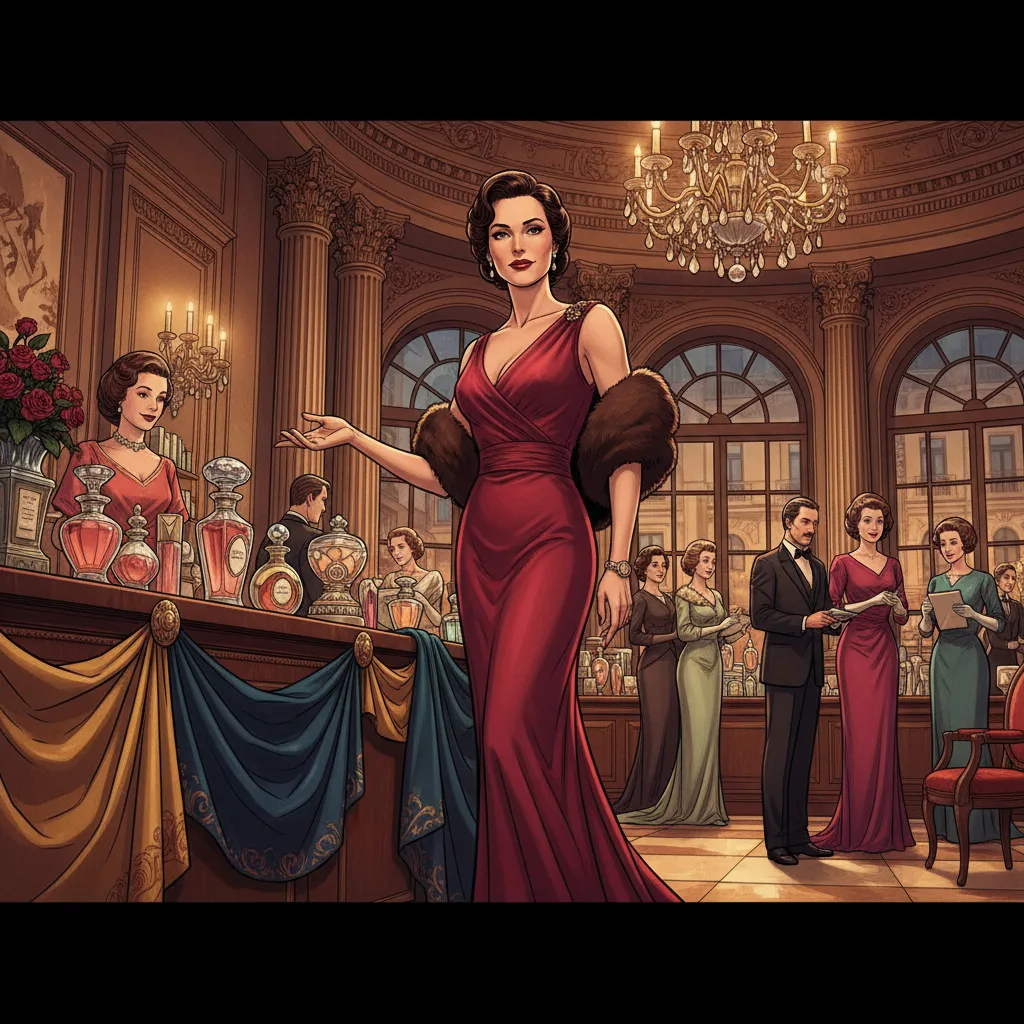
From the gritty hustle of salon sales, Estée Lauder masterfully pivoted to cultivating an aura of undeniable luxury and exclusivity. This wasn’t an accident; it was a meticulously crafted strategy, a velvet rope drawn around her brand that invited aspiration while subtly deterring the masses. She understood that true luxury isn’t just about the price tag; it’s about perception, presentation, and the powerful story you tell.
Despite her humble beginnings, Estée never marketed her products as budget-friendly. From the moment she started selling, she positioned her creams as premium. Her packaging, while initially simple, quickly evolved to reflect this. Elegant blues and golds, classic fonts, and a sense of understated sophistication became hallmarks of the Estée Lauder brand. This wasn’t about flashy bling; it was about quiet confidence, a timeless elegance that suggested quality and heritage, even when the heritage was still largely being written.
She instinctively understood the psychology of desire. By making her products aspirational, she elevated them beyond mere commodities. Owning an Estée Lauder cream wasn’t just about skincare; it was about buying into a lifestyle, a promise of refinement, sophistication, and a touch of European chic. She often spoke with a cultivated accent and carried herself with an air of continental glamour, embodying the very image she wanted her brand to project. This personal branding was as potent as her product formulations.
“I never gave up. I never gave in. I never accepted ‘no’ for an answer. You have to believe in your product, and you have to make others believe in it too.”
Her distribution strategy was equally disciplined. She was highly selective about where her products were sold, favoring prestigious department stores over drugstores or mass-market retailers. This controlled distribution reinforced the idea of exclusivity. You couldn’t just pick up an Estée Lauder product anywhere; you had to seek it out, which inherently made it feel more valuable, more special. This scarcity created demand and amplified its luxurious appeal.
She was also a master storyteller. She infused her brand with tales of discovery, of scientific innovation, of a woman’s quest for timeless beauty. She understood that people don’t just buy products; they buy stories, emotions, and identities. Her advertising, when it eventually came, was always elegant, featuring sophisticated women, often with a hint of mystery and allure, never overtly sexualized but always deeply feminine and empowered.
This meticulous brand building wasn’t just about aesthetics; it was a shrewd business decision. By positioning Estée Lauder as a luxury brand, she commanded higher price points, leading to healthier profit margins. It also created a loyal customer base that associated her name with quality and prestige. Her customers weren’t just buying a product; they were buying into an ideal, a promise of beauty and self-care that transcended the physical.
Estée Lauder didn’t just sell face cream; she sold a vision. She understood that in the competitive world of beauty, perception was everything, and by weaving a velvet rope of luxury and exclusivity around her brand, she didn’t just attract customers – she attracted devotees, building an empire that was as much about aspiration as it was about application. This deliberate cultivation of image, rooted in her own relentless pursuit of perfection, became a blueprint for luxury branding that few have ever rivaled.
👨👩👦👦 Chapter 7: The Family Affair – Forging a Dynasty of Grit

No empire is built alone, and for Estée Lauder, her core strength came from her family. This wasn’t just a business; it was a family affair, a crucible where personal ambition, unwavering loyalty, and the occasional fiery clash forged a dynasty. Her husband, Joseph Lauter (who later changed his surname to Lauder, matching Estée’s chosen professional name), and her two sons, Leonard and Ronald, weren’t just shareholders; they were deeply embedded in the very fabric of the company, each playing a crucial role in its meteoric rise.
Joseph Lauder was the steady hand, the quiet partner who provided the logistical and financial backbone. While Estée was the visionary, the marketer, the public face, Joseph handled the operational nitty-gritty. He managed the finances, oversaw production, and brought a much-needed sense of order to Estée’s whirlwind of creativity and salesmanship. Their partnership, though sometimes tumultuous, was a powerful synergy: her audacious vision, his grounded execution. He was the anchor that allowed her to sail to new horizons.
But it was their sons, Leonard and Ronald, who truly embodied the passing of the torch. Estée, ever the exacting matriarch, groomed them from an early age, instilling in them her relentless work ethic and her profound understanding of the customer. They were practically raised at the counters, observing, learning, and absorbing the wisdom of their formidable mother.
Leonard Lauder, in particular, became her most trusted lieutenant and eventual successor. He joined the company full-time in 1958, after serving in the U.S. Navy. He brought a more structured, analytical mind to the business, complementing Estée’s intuitive genius. While she was the master of emotion and personal connection, Leonard was the architect of strategic growth, driving the company’s expansion into new markets and spearheading crucial acquisitions. He understood the importance of data and market analysis, translating his mother’s street-smart instincts into scalable business strategies.
The dynamics within the family business were, as one might expect, intense. Estée was a force of nature, a perfectionist who demanded absolute dedication. Stories abound of her micromanaging, her fierce opinions, and her unwavering belief that her way was the only way. This could lead to friction, especially with her independently minded sons. Yet, beneath the occasional tension, there was an unbreakable bond of shared purpose and mutual respect. They all believed in the Estée Lauder dream.
“If you don’t sell, you don’t eat. That was the philosophy.” (A famous quote attributed to Estée, reflecting her business ethos that she instilled in her family.)
Ronald Lauder, the younger son, also played a significant role, particularly in the company’s international expansion and later venturing into politics and philanthropy. Each family member contributed their unique strengths, creating a multi-faceted leadership team that could tackle different challenges.
The family business model, while fraught with potential pitfalls, offered several distinct advantages for Estée Lauder. It ensured unwavering commitment, long-term vision (beyond quarterly reports), and a deep personal investment in the brand’s success. It also allowed for quick decision-making, unencumbered by external shareholder pressures in the early days. The Lauder family wasn’t just building a company; they were building a legacy, a name that would resonate for generations. This intricate dance of personalities, passions, and shared purpose was the secret sauce that allowed the Estée Lauder Companies to grow from a kitchen operation into a global powerhouse, proving that sometimes, the tightest bonds make for the strongest empires.
🌍 Chapter 8: The Global Stride – Conquering the World, One Vanity at a Time

Having dominated the American beauty scene, Estée Lauder’s next audacious move was to go global. For a woman who started selling creams in Queens, setting her sights on the sophisticated, often snobbish, European markets seemed like an impossible leap. But Estée, ever the visionary, understood that true empire-building meant transcending borders. And her entry into France, the very heartland of high fashion and perfumery, was nothing short of a legend.
The year was 1960. France, with its deeply entrenched luxury brands and discerning clientele, was a formidable challenge. American beauty products were often viewed as secondary, lacking the cachet of their European counterparts. But Estée wasn’t one to be intimidated. She arrived with her characteristic blend of charm, determination, and a product that she knew was genuinely superior.
The story of her breaking into the prestigious Galeries Lafayette department store in Paris is the stuff of MogulFeed legend. Faced with resistance from buyers who claimed there was no space for another American brand, Estée reportedly took matters into her own hands. While attending a launch party in the store, she “accidentally” spilled a bottle of her Youth-Dew bath oil on the floor. The rich, alluring fragrance wafted through the store, captivating customers and staff alike. Within hours, people were asking where they could buy “that wonderful scent.” Suddenly, the buyers found space.
This wasn’t just a spontaneous act; it was a calculated provocation, a brilliant display of guerrilla marketing that showcased her product’s irresistible appeal. It proved that in the world of beauty, scent, sensation, and sheer desirability could shatter preconceived notions and open doors that logic alone could not.
“I didn’t get there by wishing for it or hoping for it, but by working for it.”
Estée’s global expansion wasn’t just about getting products into stores; it was about understanding and adapting to diverse cultures. She traveled extensively, observing women in different countries, learning about their beauty rituals, their preferences, their aspirations. She understood that a one-size-fits-all approach wouldn’t work. While the core promise of beauty and confidence remained universal, the packaging, the messaging, and even the product formulations sometimes needed subtle adjustments to resonate locally.
Her sons, Leonard and Ronald, played pivotal roles in this international push. Leonard, with his strategic mind, systematically identified new markets and built robust distribution networks. Ronald, leveraging his diplomatic skills, navigated complex international business landscapes. Together, they expanded the Estée Lauder Companies footprint across Europe, Asia, and beyond, establishing subsidiaries and nurturing local teams.
But Estée remained the ultimate brand ambassador. She charmed journalists, hosted lavish parties, and personally trained international sales staff, ensuring that the Estée Lauder philosophy of personal connection and impeccable service was replicated worldwide. She understood that the brand’s success was rooted in its unique identity, an identity she meticulously cultivated wherever she went.
By the 1970s and 80s, Estée Lauder was no longer just an American brand; it was a global phenomenon. Its blue and gold packaging was recognized from London to Tokyo, a symbol of attainable luxury and proven efficacy. Her relentless pursuit of new markets, her audacious entry strategies, and her unwavering belief in the universal desire for beauty had transformed her kitchen concoctions into a truly global empire, proving that a single, determined woman with a vision could indeed conquer the world.
🧪 Chapter 9: The Product Pipeline – Innovation, Acquisition, and Eternal Youth

In the cutthroat world of beauty, resting on your laurels is a death sentence. Estée Lauder knew this instinctively. Her empire wasn’t built on a single star product, but on a relentless, almost obsessive, commitment to innovation and expansion. The Estée Lauder Companies understood that to stay relevant, to keep consumers captivated, they needed a constantly flowing pipeline of newness, whether through groundbreaking internal R&D or strategic, market-defining acquisitions.
The internal innovation engine of Estée Lauder has always been formidable. While her initial “Super Rich All-Purpose Cream” was the genesis, it was products like Youth-Dew (launched in 1953) that truly revolutionized the industry. Youth-Dew wasn’t just a perfume; it was a bath oil that doubled as a fragrance, designed to be poured into the bath. This made perfume an everyday indulgence rather than just a special occasion splash, democratizing luxury and creating an entirely new category. It was an instant sensation, proving Estée’s genius for anticipating consumer desires.
Then came the legendary Advanced Night Repair in 1982. This serum was a game-changer, pioneering the concept of nighttime skincare repair and becoming one of the first products to use hyaluronic acid. It was a scientific marvel wrapped in elegant packaging, promising visible results and tapping into the burgeoning anti-aging market. Advanced Night Repair became an icon, a staple in millions of women’s routines, and a testament to the company’s commitment to cutting-edge research. It solidified Estée Lauder’s reputation as a serious skincare authority, not just a purveyor of pretty powders.
But internal innovation alone wasn’t enough to maintain dominance in an ever-fragmenting market. This is where Leonard Lauder’s strategic brilliance truly shone. He understood that to capture new demographics, to tap into emerging trends, and to fend off new competitors, the company needed to diversify its portfolio. The Estée Lauder Companies became pioneers in strategic acquisitions, buying up smaller, niche brands that resonated with different consumer segments.
“The greatest thing I ever learned was that people don’t buy products, they buy hope.”
Think about it:
- MAC Cosmetics: Acquired in stages starting in the late 1990s, MAC brought edgy, professional-grade makeup, vibrant colors, and a strong appeal to a younger, more diverse, and fashion-forward clientele. It was a bold move that expanded the company beyond its traditional luxury demographic.
- Bobbi Brown Cosmetics: Known for its “barely there” makeup philosophy and natural aesthetic, Bobbi Brown appealed to women seeking a more understated, authentic look.
- Aveda: A pioneer in natural, plant-based, and environmentally conscious hair and skincare, Aveda tapped into the growing wellness and sustainability movement.
- La Mer: A super-premium, ultra-luxury skincare brand with a mystical origin story, La Mer captured the pinnacle of the high-end market, commanding exorbitant prices and cultivating an almost cult-like following.
These acquisitions weren’t just about adding brands; they were about acquiring market segments, consumer insights, and future growth engines. Each brand maintained its unique identity, operating semi-autonomously, yet benefiting from the vast resources, distribution networks, and business acumen of the parent company. This multi-brand strategy allowed The Estée Lauder Companies to be present in virtually every segment of the beauty market, from mass-prestige to ultra-luxury, from natural to professional.
This relentless cycle of innovation and acquisition ensured that the Estée Lauder Companies remained at the forefront of the beauty industry. It wasn’t just about selling a few good creams; it was about building a house of brands, a portfolio of beauty solutions that could adapt, evolve, and continue to captivate consumers for generations, forever chasing that elusive promise of eternal youth and boundless beauty.
👂 Chapter 10: The Unseen Hand – Marketing Mastery Beyond the Billboard
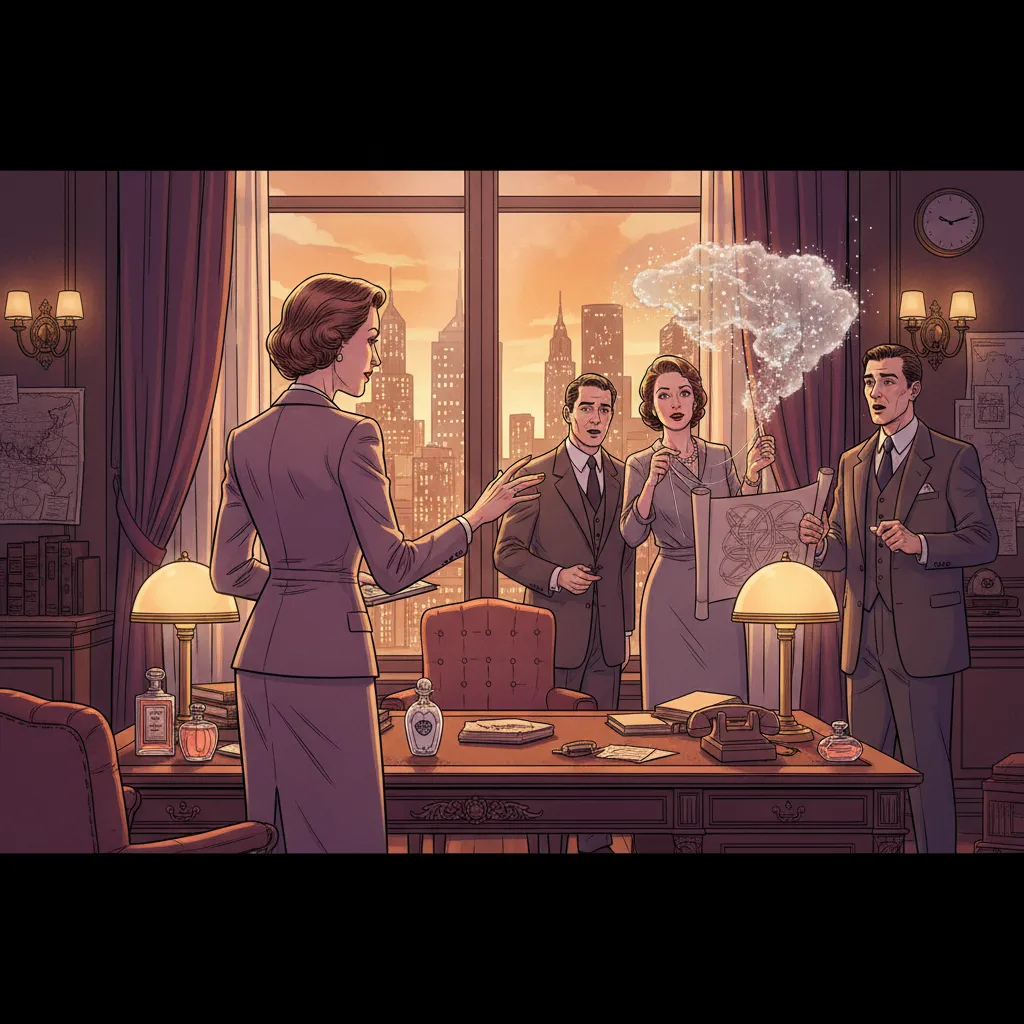
If you think Estée Lauder’s marketing genius was limited to the “gift with purchase” or elegant print ads, you’re missing the forest for the trees. Her true mastery lay in the unseen, the intangible, the whisper-soft power of personal connection and word-of-mouth. She didn’t just sell products; she sold a relationship, an experience, and a profound understanding of what women truly desired. Her marketing was less about shouting from billboards and more about leaning in close and listening.
Her philosophy was simple: “Talk to the customer, touch the customer, listen to the customer.” This wasn’t some corporate mantra; it was her lifeblood. Even as her company grew into a multi-million-dollar enterprise, Estée remained relentlessly hands-on. She would frequently visit department store counters, not just to inspect, but to observe. She’d watch women browsing, listen to their questions, discreetly offer advice, and even make sales herself. She was the ultimate ethnographer, gathering invaluable, unfiltered market research directly from the source.
This direct interaction allowed her to stay ahead of trends, to understand unmet needs, and to gauge the efficacy of her products in real-time. She understood that a woman’s true desire for a beauty product often stemmed from an emotional need – for confidence, for feeling attractive, for a moment of self-care. Her products were designed to fulfill these deeper cravings.
“I never thought of myself as working. I thought of myself as growing.”
Estée was also a master networker and a social butterfly. She cultivated relationships with society women, celebrities, and influential figures, understanding that their endorsement, however subtle, carried immense weight. A compliment from a socialite about her glowing skin, attributed to Estée Lauder cream, was worth more than any full-page ad. This organic, authentic word-of-mouth marketing was priceless and deeply ingrained in her brand’s DNA.
She created an “Estée Lauder woman” archetype – sophisticated, elegant, confident, and discerning. This wasn’t just a demographic; it was an aspirational identity. Women didn’t just buy the cream; they bought into the idea of becoming that woman. Her brand transcended mere aesthetics, tapping into deeper psychological desires for self-improvement and social affirmation.
Even her approach to sampling was a form of unseen marketing. Beyond the GWP, she encouraged her sales associates to give away small samples generously. “If you don’t give away samples, you’re not going to sell,” she famously said. These samples were mini-ambassadors, silent salespeople that worked their magic in the privacy of a woman’s home, often leading to full-sized purchases and loyal customers.
Her entire marketing strategy was built on a foundation of trust and intimacy. She didn’t just want to sell a product once; she wanted to build a lifelong relationship with her customers. She understood that in the beauty business, word-of-mouth, personal recommendation, and the genuine feeling of being understood and cared for were far more potent than any glossy campaign. The unseen hand of Estée Lauder’s marketing genius was precisely that: an omnipresent, personal touch that made every customer feel like the most important woman in the world, cultivating a loyalty that became the bedrock of her billion-dollar empire.
🏛️ Chapter 11: The Enduring Blueprint – Legacy Beyond the Founder

By the time Estée Lauder passed away in 2004 at the remarkable age of 95, her company, The Estée Lauder Companies Inc., was a multi-billion-dollar global behemoth, a publicly traded powerhouse listed on the New York Stock Exchange. But her legacy wasn’t just in the financials; it was in the enduring blueprint she left behind, a set of principles and an unshakeable culture that continues to drive one of the world’s most successful beauty conglomerates.
Her departure from active leadership didn’t signal a decline; it marked a smooth transition that she had meticulously planned for. Her son, Leonard Lauder, had been at the helm as CEO since 1982, having been groomed for decades to take the reins. This thoughtful succession planning ensured continuity and stability, a rarity in many founder-led businesses. Leonard, and later his son, William Lauder, continued to steer the company with the same blend of strategic vision and customer obsession that Estée had instilled.
The company’s enduring success can be attributed to several key pillars of Estée Lauder’s original philosophy:
- Relentless Focus on Product Quality and Innovation: From her kitchen experiments to state-of-the-art R&D labs, the commitment to creating effective, high-quality products remained paramount. Brands under the Estée Lauder Companies umbrella consistently invest in research to develop cutting-edge formulations and address evolving consumer needs.
- Experiential Marketing and High-Touch Service: The “touch the customer” philosophy remains central. Even in the digital age, the company emphasizes personalized service at its counters, leveraging beauty advisors and sophisticated online tools to replicate that intimate connection Estée first forged in salons. The “gift with purchase” continues to be a cornerstone of their promotional strategy, proving its timeless efficacy.
- Strategic Brand Portfolio Management: Estée’s vision for diversification, executed masterfully by Leonard, evolved into an unparalleled strategy of acquiring and nurturing a diverse portfolio of brands. This “house of brands” approach allows the company to cater to a vast spectrum of demographics, price points, and beauty preferences, from luxury skincare (La Mer) to professional makeup (MAC) to natural beauty (Aveda). This minimizes risk and maximizes market penetration.
- Global Mindset: The audacious move into France was just the beginning. The Estée Lauder Companies continue to prioritize international expansion, adapting strategies and products for different markets, understanding that beauty is a universal language spoken with many accents.
- Cultivation of Aspiration and Luxury: Despite its vast scale, the company has largely maintained the premium, aspirational positioning that Estée so carefully crafted. Even more accessible brands within its portfolio are managed with a focus on quality, image, and perceived value.
The Estée Lauder Companies stands today as a testament to its founder’s vision. It’s not just a collection of brands; it’s a living, breathing entity that embodies the spirit of its originator: innovative, customer-centric, ambitious, and relentlessly focused on the transformative power of beauty. Her final years saw her gracefully step back, observing the empire she built flourish, secure in the knowledge that her blueprint for success was not just enduring, but truly timeless. The girl from Queens had not just built a company; she had created an institution, a permanent fixture in the global landscape of luxury and aspiration.
✨ Chapter 12: The Iron Will Behind the Velvet Glove – An Unforgettable Mogul
So, there you have it, MogulFeed fanatics. The raw, unfiltered saga of Estée Lauder – not just a name emblazoned on countless luxury products, but a force of nature, an architect of aspiration, and an undisputed titan of industry. Her story isn’t a fairy tale; it’s a gritty, exhilarating masterclass in what it truly means to be an entrepreneur, a mogul, a force against which no “no” could truly stand.
We’ve peeled back the layers: from the humble kitchen where Josephine Esther Mentzer first stirred her potent concoctions, absorbing the wisdom of her chemist uncle, Dr. John Schotz. We saw her pounding the pavement, hitting beauty salons, hotels, and wherever women gathered, armed with nothing but a sample case and an unshakeable belief in her “Super Rich All-Purpose Cream.” Her signature move – the “patting” technique – wasn’t just a sales tactic; it was the birth of experiential marketing, a direct connection forged one face at a time.
She cracked the retail citadel, not with silver spoons, but with sheer grit, landing her products in prestigious department stores like Saks Fifth Avenue. Then, she unleashed her secret weapon, the “gift with purchase,” a revolutionary concept that transformed the beauty industry, turning a simple transaction into an irresistible value proposition and a powerful engine for product trial and loyalty.
Estée meticulously wove a velvet rope around her brand, cultivating an aura of luxury, exclusivity, and aspiration. She understood that perception was reality, and that women didn’t just buy creams; they bought into a dream, a promise of sophistication and self-confidence. This wasn’t just about selling; it was about storytelling and brand building on an epic scale.
Her family, Joseph, Leonard, and Ronald Lauder, became the pillars of her growing empire, a testament to the power and complexity of a family business, where shared vision and fierce loyalty often clashed with strong personalities, yet always converged for the greater good of the dynasty.
We watched her audacious global stride, particularly her legendary conquest of France, proving that her unique brand of charm, tenacity, and product efficacy could transcend cultural barriers. Her company’s relentless commitment to innovation and strategic acquisitions – from Youth-Dew to Advanced Night Repair, and the integration of powerhouse brands like MAC, Bobbi Brown, and La Mer – ensured its perpetual relevance and dominance in an ever-evolving market.
And perhaps most importantly, we witnessed her unseen hand of marketing mastery, her unwavering dedication to listening, observing, and connecting with the customer on a deeply personal level. She understood that the true magic wasn’t just in the jar, but in the heart-to-heart conversation, the genuine advice, and the feeling of being understood.
“I never worked a day in my life without learning something new.”
Estée Lauder’s story is the ultimate blueprint for any aspiring entrepreneur. It’s a testament to:
- Relentless Hustle: No task too small, no door too closed.
- Customer Obsession: Understanding, anticipating, and exceeding customer needs.
- Product Efficacy: Believing in what you sell because it genuinely works.
- Strategic Vision: Seeing beyond the immediate sale to build a lasting brand and empire.
- Unshakeable Self-Belief: The conviction that your vision is valid, powerful, and destined for greatness.
She wasn’t just a businesswoman; she was a force of nature, a pioneer who redefined beauty, marketing, and what was possible for a woman in business. Estée Lauder didn’t just build a cosmetics company; she built a legacy, a living, breathing testament to the iron will hidden behind a velvet glove. Her empire stands as a towering monument to the power of a single, determined individual to transform an industry, and indeed, to transform the world, one glorious, confident face at a time. The MogulFeed hall of legends has few as compelling, as driven, or as utterly unforgettable as Estée Lauder.
💡 Key Insights
- ▸ The power of direct-to-consumer interaction and experiential marketing is undeniable. Estée Lauder didn't just sell products; she sold an experience, a transformation, and a personal connection by physically applying creams and demonstrating results, proving that even in a digital age, human touch and tangible experience can create unparalleled loyalty and drive sales.
- ▸ Innovation isn't just about product; it's about pioneering new business models. Her 'gift with purchase' strategy wasn't a mere discount; it was a revolutionary way to encourage trial, reward loyalty, and generate buzz, fundamentally altering how beauty products were sold and establishing a blueprint for aspirational brand building that still thrives today.
- ▸ Building a global empire requires a ruthless focus on brand image and controlled growth. Estée Lauder meticulously cultivated an aura of luxury and exclusivity, understanding that scarcity and aspiration could command premium prices and solidify market position, teaching us that strategic brand positioning is as crucial as the quality of the product itself for long-term dominance.