Aubrey McClendon: The Fracking King Who Built an Empire on Debt and Died Chasing the Next Big Boom
He was the ultimate wildcatter, a charismatic visionary who bet everything on shale gas and remade America's energy landscape. But Aubrey McClendon's audacious empire, built on a mountain of debt and fueled by corporate excess, was destined for a spectacular, tragic crash that still echoes through the oil patch.
View all stories about this mogul
🔥 Chapter 1: The Wildcatter’s Dream: A Spark in Oklahoma Dirt
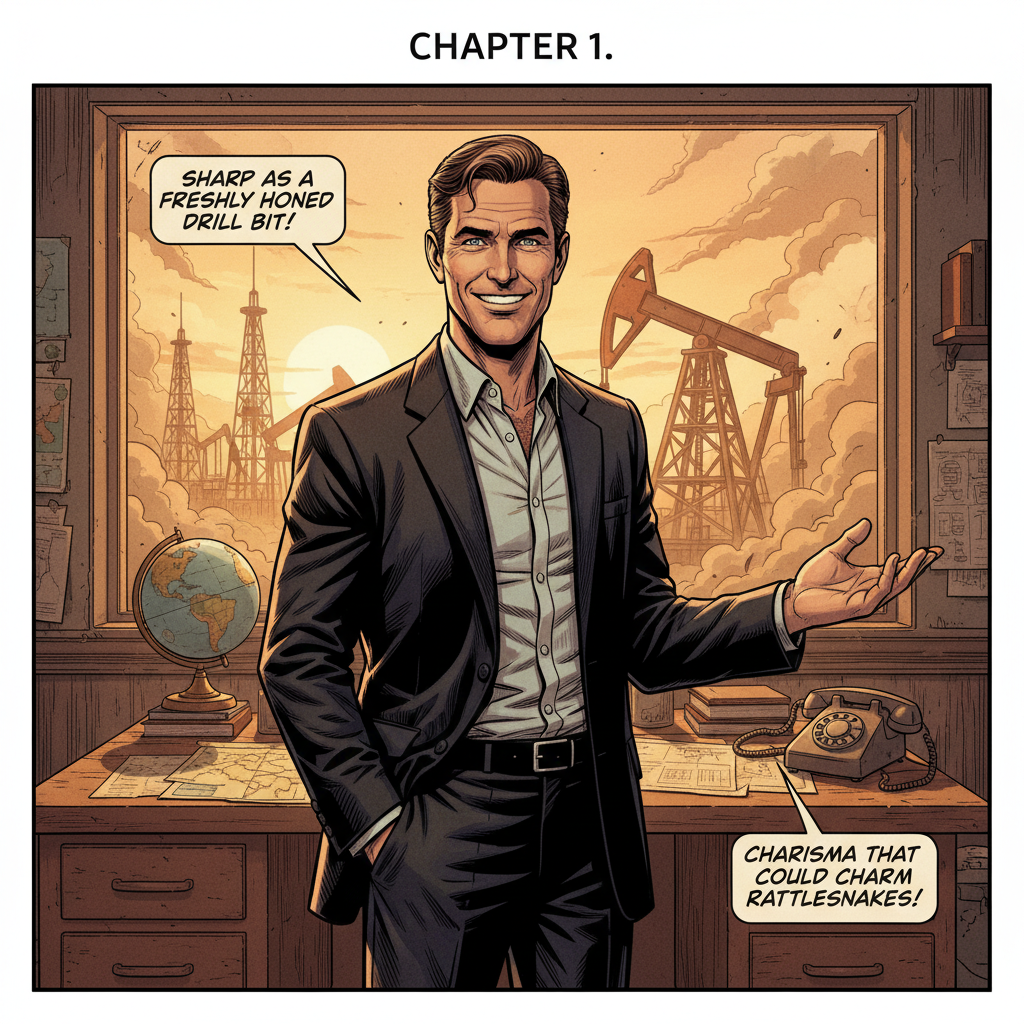
Imagine a guy, sharp as a freshly honed drill bit, with the kind of charisma that could charm the rattlesnakes out of a dry well. That was Aubrey McClendon. This wasn’t some buttoned-down Wall Street suit playing with numbers; this was a modern-day wildcatter, born and bred in the dusty plains of Oklahoma, with oil and gas in his veins. He had a vision, a hunger, and frankly, a brass pair of balls that would make lesser men blush.
It’s 1989. The oil patch is still recovering from the busts of the 80s, but Aubrey, alongside his business partner Tom L. Ward, sees something different, something beneath the surface that everyone else is missing. They’re two young guns, full of ambition, ready to shake up an industry that’s grown stale and conservative. They found Chesapeake Energy, a name that would soon become synonymous with revolution, excess, and eventually, tragedy.
Their playground? Oklahoma City. Not exactly the glitz and glamor of Houston or New York, but a place where the dirt whispers secrets of ancient seas and buried treasures. Aubrey wasn’t just looking for a good deal; he was looking for a game-changer. He was a land baron in the making, but instead of ranches, he was snapping up mineral rights, leases, and the promise of what lay beneath. He had an uncanny ability to spot potential, to sniff out acres that might hold vast reserves of natural gas, long before anyone else even considered them commercially viable. This wasn’t just business; it was an obsession, a relentless pursuit of the next big score.
He was a force of nature. His mind raced, always calculating, always pushing the limits. He didn’t just walk into a room; he commanded it. With a quick wit and an infectious enthusiasm, he could convince seasoned investors to back his crazy ideas and rally a team of roughnecks to work harder than they ever thought possible. He was a salesman, a visionary, and an evangelist for natural gas, long before it became the darling of the environmental movement. He saw it as the clean, abundant fuel that would power America into the 21st century. And he was right. For a time.
But even then, in those early days, there were whispers. A relentless drive that bordered on recklessness. A willingness to take on debt that made bankers sweat. It was the same audacious spirit that would build an empire, and ultimately, bring it crashing down. This was the opening act of a drama that would redefine an industry, enrich countless people, and leave a trail of environmental questions and personal devastation. Aubrey McClendon was just getting started, and the world had no idea what was coming.
🌪️ Chapter 2: The Shale Whisperer: Decoding the Earth’s Secrets
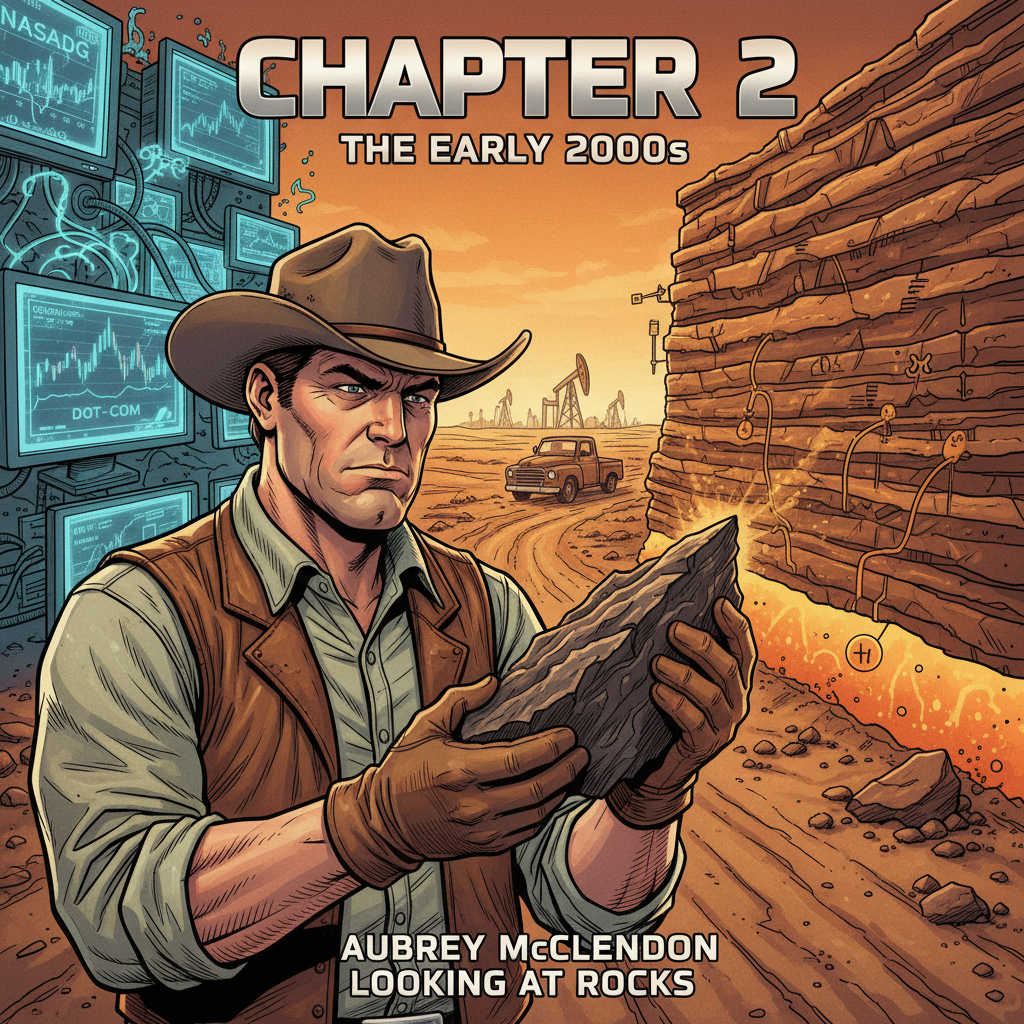
The early 2000s. The world was buzzing about tech stocks, dot-coms, and the internet revolution. But Aubrey McClendon wasn’t looking at screens; he was looking at rocks. Specifically, shale rock. For decades, it had been a geological nuisance, a dense, impermeable formation that trapped oil and gas, making it impossible to extract economically. It was the industry’s white whale, a tantalizing promise that always seemed just out of reach.
But then came the whispers, the quiet rumblings of a technological breakthrough. Horizontal drilling – boring sideways through the earth, not just straight down. And hydraulic fracturing, or “fracking” – injecting high-pressure water, sand, and chemicals to crack open the shale and release the trapped hydrocarbons. These weren’t new ideas, but combining them? That was the magic. That was the alchemy that Aubrey McClendon instinctively understood would change everything.
While the majors – the ExxonMobils, the Chevrons – were still focused on conventional oil fields and deepwater drilling, Aubrey was making a crazy bet. He was pouring every dime, every loan, every ounce of his company’s future into acquiring vast swaths of land across America’s heartland. The Barnett Shale in Texas, the Haynesville Shale in Louisiana, the Marcellus Shale stretching across Pennsylvania and West Virginia. These weren’t just names on a map; they were the battlegrounds of a new energy frontier, and Aubrey intended to own them.
He moved with a speed and aggression that stunned the industry. Chesapeake’s land department became a finely tuned acquisition machine, buying up leases at a dizzying pace, often paying top dollar, sometimes outmaneuvering competitors with sheer audacity. Farmers, ranchers, and small-town landowners suddenly found themselves courted by slick landmen offering life-changing sums for mineral rights they never knew they had. It was a gold rush, but instead of panning for flakes, Aubrey was buying the whole damn mountain.
“Aubrey didn’t just believe in shale gas; he willed it into existence. He was the prophet of the fracking revolution, and he wasn’t afraid to burn every bridge and borrow every dollar to prove it.”
He wasn’t just buying land; he was buying the future. He understood that whoever controlled the acreage controlled the game. The technology was still evolving, still risky, but Aubrey saw past the initial hurdles. He envisioned an America energy independent, powered by its own vast, untapped reserves. And he saw Chesapeake Energy, his company, as the undisputed king of this new domain. It was a vision that captivated investors, terrified competitors, and set the stage for one of the most explosive periods of growth—and subsequent collapse—in modern business history. The shale whisperer had found his voice, and it was about to roar.
👑 Chapter 3: King of the Gas Fields: Chesapeake’s Meteoric Rise
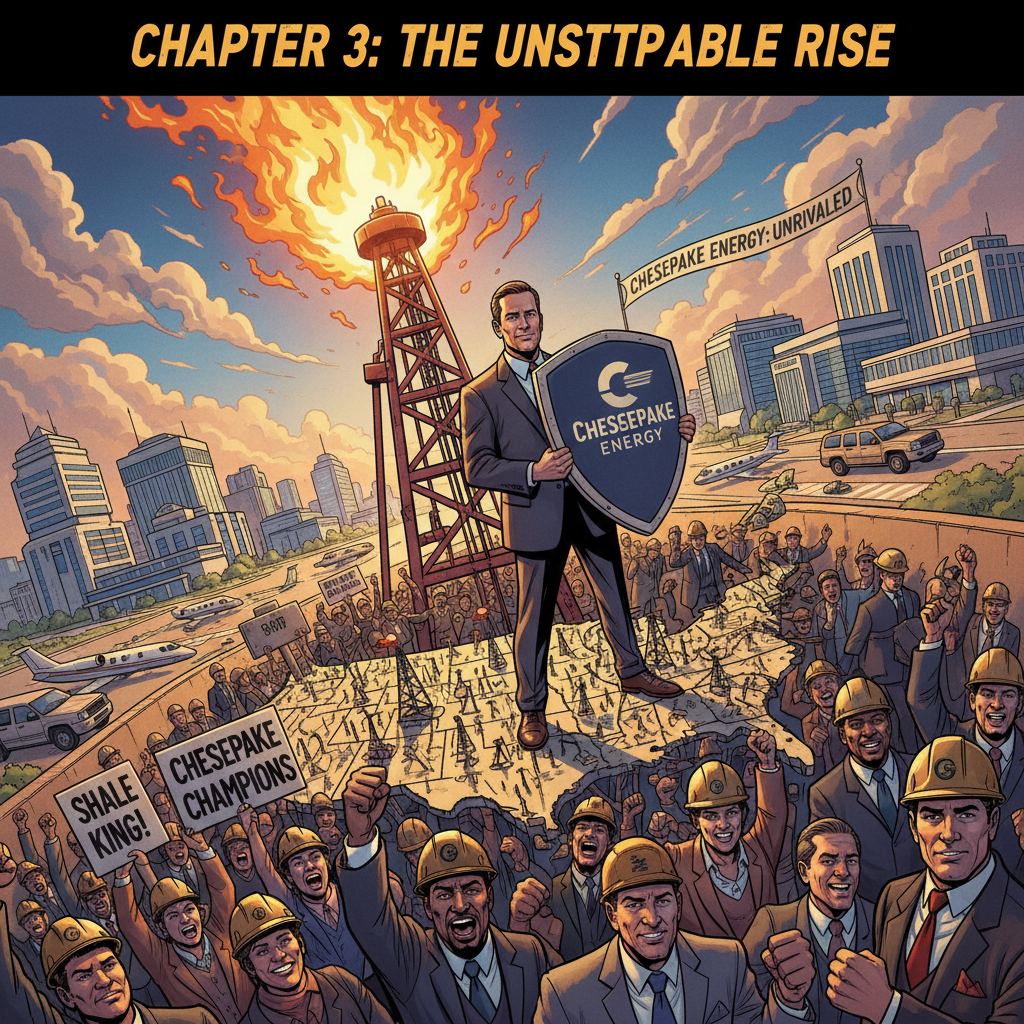
The early 2000s blurred into the mid-2000s, and Aubrey McClendon’s vision wasn’t just paying off; it was exploding. Chesapeake Energy wasn’t just a player; it was the undisputed champion of the shale gas game. Its stock price soared, its reserves grew exponentially, and its wells were pumping out natural gas at rates that made the old guard choke on their cigars.
Aubrey became a rockstar CEO. He was featured on the cover of magazines, quoted in every major financial publication, and held court with politicians and power brokers. He was articulate, passionate, and utterly convincing in his belief that natural gas was the future. He championed the environmental benefits of gas over coal, painting a picture of a cleaner, more prosperous America, powered by the very resources his company was unearthing.
Chesapeake’s headquarters in Oklahoma City became a monument to Aubrey’s ambition. A sprawling campus, complete with a massive fitness center, a golf course, and even a company-run farmers market. It wasn’t just an office; it was a kingdom, and Aubrey was its benevolent, albeit demanding, monarch. He cultivated a fiercely loyal workforce, infusing them with his boundless energy and belief in the mission. If you worked for Aubrey, you were part of something big, something world-changing.
But with great power came great temptation, and Aubrey was not immune. The line between company assets and personal perks began to blur, then eventually dissolved completely. Chesapeake owned a fleet of private jets, and Aubrey used them extensively, for business and for pleasure. He accumulated an astonishing collection of antique maps, one of the largest in the world, often displayed in Chesapeake’s offices. The company even bought a winery. The lavishness wasn’t just for show; it was woven into the fabric of the corporate culture.
Then came the infamous Founders Well Participation Program. This was the cherry on top of Aubrey’s personal enrichment sundae. It allowed Aubrey, and later Tom Ward, to personally participate in a 2.5% working interest in every single well drilled by Chesapeake. Think about that for a second: for every success Chesapeake had, Aubrey got a direct, personal cut, effectively turning him into a private equity partner within his own publicly traded company. It was a jaw-dropping arrangement, unprecedented for a CEO of a public company, and it made him astronomically wealthy. It also raised more than a few eyebrows, but in the heady days of skyrocketing stock prices, most investors were too busy counting their own gains to complain too loudly.
Aubrey was building an empire, and he was living like the emperor. He was brilliant, audacious, and utterly convinced of his own infallibility. The signs of corporate excess were there, glinting like fool’s gold, but for now, the boom continued, masking the cracks forming beneath the surface. The king was on his throne, but the foundation of his kingdom was built not just on gas, but on a mountain of debt that was quietly, steadily, growing.
💸 Chapter 4: The Debt Dragon Awakens: Fueling the Fire with Borrowed Billions
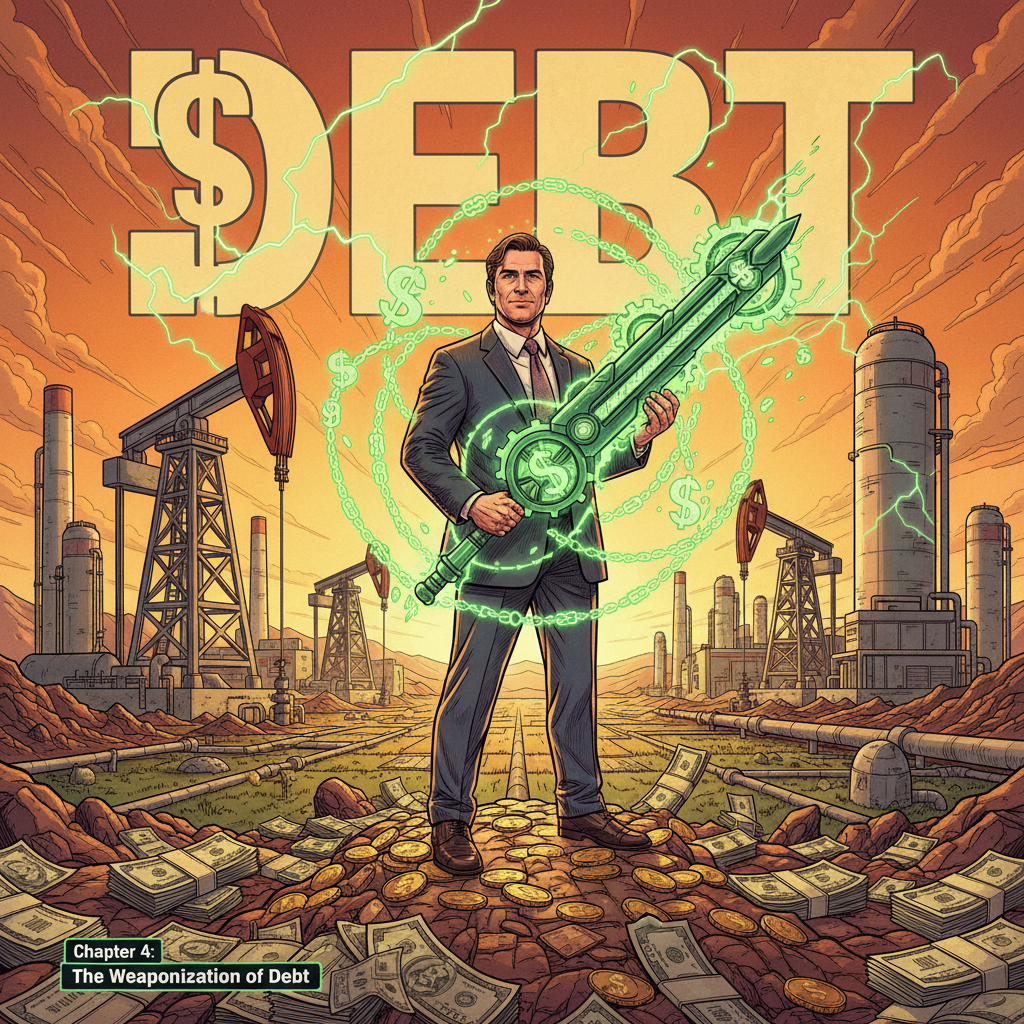
To understand Aubrey McClendon, you have to understand debt. Not just as a necessary evil, but as a strategic weapon, a tool to unlock unimaginable potential. For Aubrey, debt wasn’t a burden; it was rocket fuel. And Chesapeake Energy, under his leadership, guzzled it like a thirsty monster.
The shale revolution, for all its technological brilliance, was brutally capital-intensive. To acquire those vast land positions, to drill thousands of wells, to build the infrastructure to get the gas to market – it all cost astronomical sums. Chesapeake was drilling more wells than any other company in the United States, often thousands a year. Each well, a multi-million dollar gamble. Each land lease, a multi-million dollar commitment.
Aubrey’s strategy was simple, yet terrifyingly aggressive: acquire, drill, and expand at breakneck speed. He believed that whoever got there first, whoever locked up the most acreage, would win the ultimate prize. And to do that, you couldn’t be timid. You had to borrow. And borrow they did.
Chesapeake’s balance sheet began to swell with debt, growing from hundreds of millions to billions, then tens of billions of dollars. They issued bonds, took out loans, and engaged in complex financial maneuvers to keep the capital flowing. Wall Street, initially skeptical, soon became enamored with Aubrey’s story, his charisma, and the sheer audacity of his vision. Bankers lined up to lend him money, seduced by the promise of endless shale and the charisma of the man himself.
“Aubrey’s strategy was like building a skyscraper with no roof. He just kept adding floors, convinced that the market would always provide the next beam. It was brilliant, until it wasn’t.”
He was a master of financial engineering, not just in raising debt, but in managing it. Chesapeake became known for its aggressive hedging strategies, locking in future gas prices to protect against market fluctuations. This allowed them to project stable revenues, even in a volatile commodity market, which in turn made lenders more comfortable. For a time, it worked like a charm, creating a virtuous cycle of borrowing, drilling, and growing.
But beneath the surface, a dangerous game was being played. Chesapeake was constantly running on fumes, needing to sell assets, issue more debt, or raise equity just to cover its massive capital expenditures. It was like a giant Ponzi scheme, but legal, where future production was constantly being mortgaged to pay for current drilling. The company was profitable on paper, but cash flow was always a struggle, a relentless treadmill of needing more money to feed the beast.
Aubrey’s personal finances mirrored the company’s. He took out massive personal loans, often using his Chesapeake stock as collateral, sometimes from the company itself. He was leveraged to the hilt, just like Chesapeake. His personal wealth was inextricably linked to the company’s performance and its ability to keep the debt engine roaring. He believed in the company so implicitly, so passionately, that he saw no risk in tying his own fate so closely to its fortunes. He was all-in, always. The debt dragon was awake, and it was getting hungrier by the day.
📉 Chapter 5: Boom, Bust, and the Price of Gas: A Market Tsunami
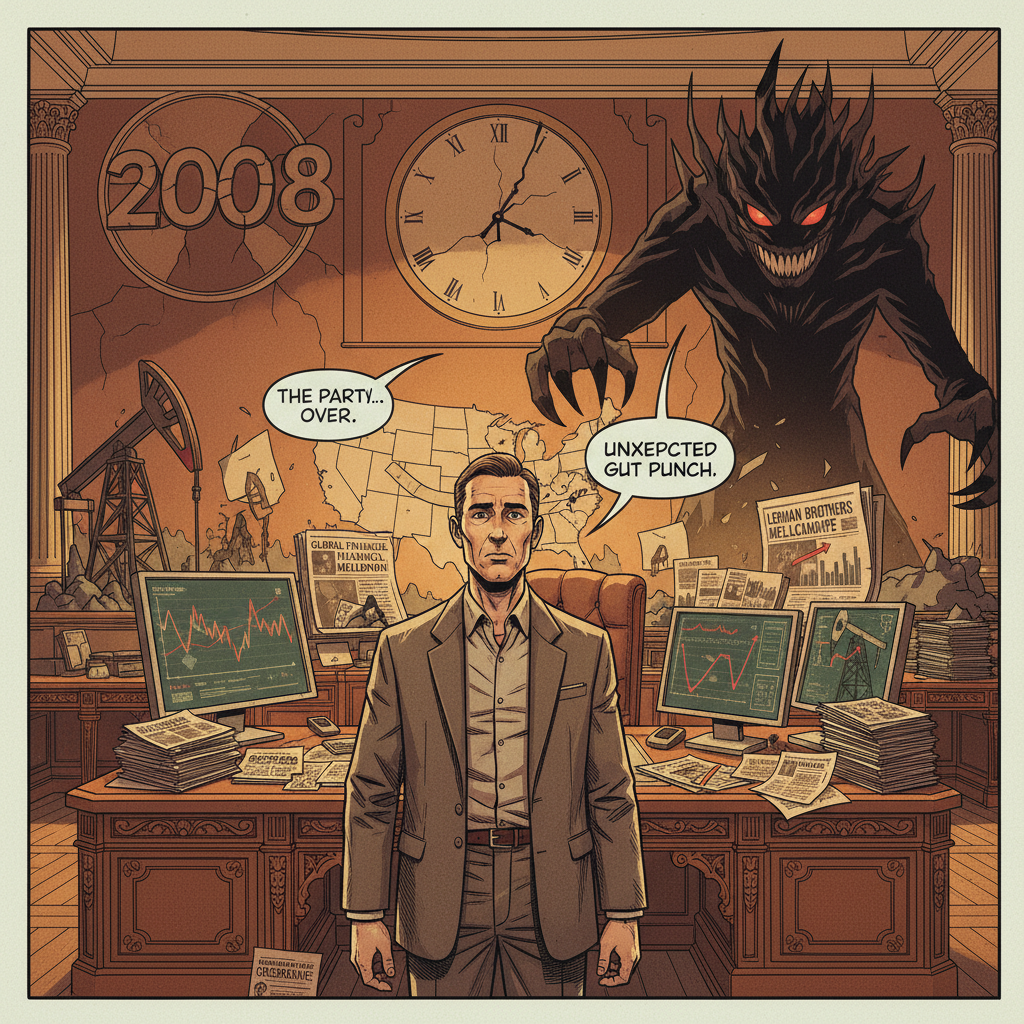
The party couldn’t last forever. The year 2008 hit like a sledgehammer, bringing the global financial system to its knees. But for Aubrey McClendon and Chesapeake, the real gut punch came from an unexpected direction: the very product they were selling.
Chesapeake had been drilling at an unprecedented rate, unlocking vast quantities of natural gas. Other companies, inspired by Aubrey’s success, followed suit. The result? A massive oversupply. Gas prices, which had been comfortably high, began a precipitous slide. From a peak of over $13 per thousand cubic feet (Mcf) in 2008, prices plummeted, eventually crashing to historic lows, hovering around $2-$3/Mcf for years. It was a market tsunami, and Aubrey’s debt-fueled empire was right in its path.
Suddenly, the highly leveraged business model looked less like genius and more like madness. Chesapeake’s vast reserves, once its greatest asset, became a liability. Every well drilled at $7/Mcf was now unprofitable at $2/Mcf. The hedging strategies, once a lifeline, became a double-edged sword, limiting upside when prices did briefly recover. The debt dragon, which Aubrey had so confidently ridden, now threatened to devour him whole.
Aubrey, ever the showman, tried to put on a brave face. He declared that gas was a “bridge fuel” to renewables, a long-term play. He preached patience. But behind the scenes, panic was setting in. The company was burning through cash at an alarming rate, struggling to service its immense debt load, and facing margin calls on its hedges. The market, once so eager to lend, now slammed its doors shut.
“When gas prices collapsed, it wasn’t just a market correction for Aubrey. It was an existential threat. His entire empire was built on the assumption of ever-higher prices, and now the earth itself was mocking him.”
He resorted to desperate measures. Chesapeake became a serial seller of assets, shedding billions of dollars worth of land and production to generate cash. Joint ventures were struck with foreign partners, selling off stakes in prime shale plays to bring in much-needed capital. He even started pivoting Chesapeake towards oil, trying to capitalize on the higher prices for crude, a stark reversal for the self-proclaimed “King of Natural Gas.”
These moves kept the company afloat, but at a huge cost. It was a constant game of financial whack-a-mole, selling off valuable assets just to pay down debt and keep the drilling rigs running. The company’s future value was being liquidated piece by piece. The vision of an unassailable empire was crumbling under the relentless pressure of commodity prices and an unforgiving debt load.
Aubrey, too, found his personal finances in peril. His Chesapeake stock, heavily collateralized for his personal loans, plummeted in value. He was forced to sell off a significant portion of his shares, a stunning blow to his personal wealth and a signal to the market that even the CEO was losing faith. The wild ride had hit a massive pothole, and the once-unflappable Aubrey McClendon was now scrambling just to stay in the driver’s seat. The boom was over, and the bust was brutal.
🎭 Chapter 6: The Emperor’s New Clothes: Scrutiny and Scandal
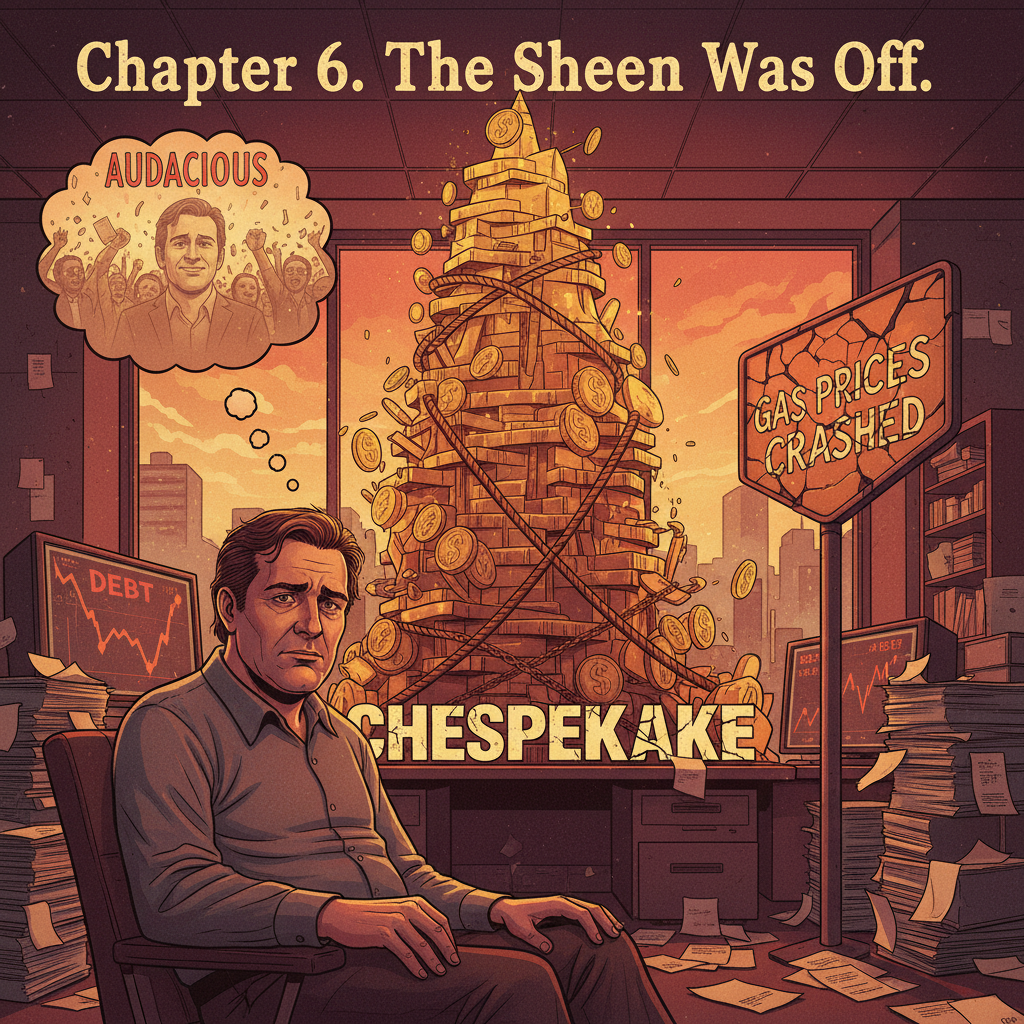
The sheen was off. The gas prices had crashed, the debt mountain was looming, and the financial acrobatics to keep Chesapeake afloat were becoming increasingly transparent. What was once seen as audacious leadership now looked like reckless hubris. The whispers of excess and questionable corporate governance began to turn into a full-blown roar.
The media, which had once lionized Aubrey, now sharpened its knives. The Wall Street Journal published a series of blistering articles exposing the intricate web of Aubrey’s personal finances and his entanglements with Chesapeake. The Founders Well Participation Program, once a quiet perk, became a glaring symbol of corporate self-dealing. How could a CEO personally profit from every well drilled by his publicly traded company? It was an unprecedented arrangement, enriching Aubrey by hundreds of millions of dollars while the company struggled with debt.
Then came the revelations about his personal loans. It wasn’t just that he had taken out massive loans; it was who he had taken them from. Chesapeake had lent him hundreds of millions of dollars, often backed by his company stock, creating an alarming conflict of interest. If Aubrey’s personal finances were tied to the company’s ability to keep lending him money, what incentive did he have to make tough decisions that might hurt his own wallet? The lines between Aubrey McClendon, the CEO, and Aubrey McClendon, the individual, had become hopelessly blurred.
“The problem wasn’t just that Aubrey was rich; it was how he got rich, and how deeply intertwined his personal fortune became with the very company he was supposed to be serving. It was a masterclass in how not to run a public company.”
His lavish lifestyle, once a source of awe, now fueled public outrage. The private jets, the antique map collection valued at tens of millions, the sprawling ranch, the donations to his alma mater – all of it came under intense scrutiny. While Chesapeake was shedding assets and laying off employees to survive, its CEO was still living like a king. The optics were terrible, and the narrative quickly shifted from visionary leader to greedy, out-of-touch executive.
Shareholders, once docile and happy to ride the stock’s ascent, started to grumble. Institutional investors, hedge funds, and pension managers who had poured billions into Chesapeake were demanding answers. Why was the company so leveraged? Why were they selling off valuable assets at fire-sale prices? And most importantly, why was Aubrey McClendon still in charge, given the mounting financial woes and glaring governance issues?
The board of directors, once a rubber stamp for Aubrey’s grand plans, found itself under immense pressure. Independent directors, who had largely deferred to Aubrey’s undeniable track record of success, now had to reckon with a company teetering on the brink. The internal struggle was palpable. Aubrey, the founder, the driving force, was now seen by many as the primary obstacle to the company’s survival and recovery. The emperor’s new clothes had been stripped away, revealing a naked ambition that had ultimately put his empire at risk. The stage was set for a showdown.
⚔️ Chapter 7: The Activist Storm: King Aubrey’s Forced Abdication
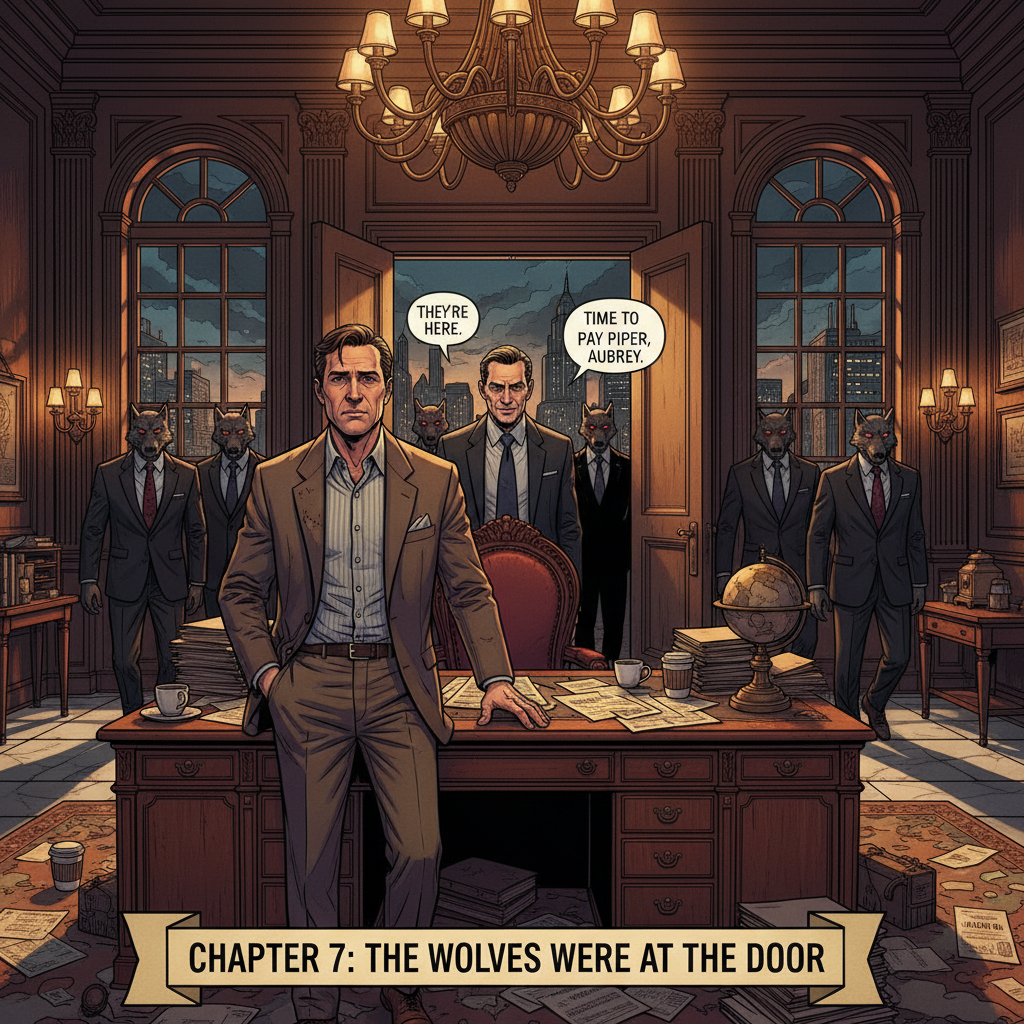
The wolves were at the door. And these weren’t just any wolves; they were the kind that sniff out weakness, circle their prey, and move in for the kill. Enter Carl Icahn, the legendary corporate raider, a man who built his empire by dismantling others. He was joined by other activist investors like Southeastern Asset Management, all smelling blood in the water.
They looked at Chesapeake’s mountain of debt, its plummeting stock price, and Aubrey McClendon’s controversial personal dealings, and they saw an opportunity. Not to save Aubrey’s vision, but to save the company – and make a hefty profit doing it. Their message was blunt: Aubrey had to go, and the company needed a radical overhaul.
The battle was brutal and public. Icahn and Southeastern launched a full-frontal assault, lambasting Aubrey’s management, demanding changes to the board, and ripping apart the corporate governance structure. They pointed to the Founders Well Participation Program as Exhibit A in a case of egregious self-enrichment. They highlighted the asset sales, the debt load, and the underperformance. They made it clear: it was either Aubrey or the company.
Aubrey fought back, as was his nature. He rallied his employees, appealed to his loyal shareholders, and defended his vision. He argued that the company was turning a corner, that the asset sales were strategic, and that he was the only one who truly understood Chesapeake’s complex operations and its long-term potential. He was a survivor, a fighter, and he wasn’t going down without a spectacular brawl.
But this time, the forces arrayed against him were too powerful. The board, battered by the public scrutiny and the relentless pressure from activist investors, had to make a choice. Their fiduciary duty was to the shareholders, not to the founder, no matter how brilliant or charismatic. The financial realities were undeniable, and the governance issues were indefensible.
“The activist investors didn’t just want a seat at the table; they wanted the head of the king. And when the music stopped, Aubrey McClendon was the one left without a throne.”
In June 2012, after months of intense pressure and behind-the-scenes maneuvering, the inevitable happened. Aubrey McClendon, the man who had founded Chesapeake Energy, built it into a multi-billion dollar behemoth, and fundamentally reshaped the American energy landscape, was stripped of his chairmanship. Less than a year later, in April 2013, he formally announced his retirement as CEO. It wasn’t a graceful exit; it was a forced abdication.
The king was dethroned. The empire he had built, brick by debt-fueled brick, was now in the hands of others. It was a crushing blow for Aubrey, a public humiliation for a man who had always been in control, always the smartest guy in the room. He walked away with a severance package that would raise eyebrows, but it was a consolation prize for a man who had lost his life’s work. The activist storm had passed, leaving behind a scarred company and a broken mogul, but Aubrey McClendon wasn’t one to stay down for long. The wildcatter still had fire in his belly.
👻 Chapter 8: The Ghost of Chesapeake: New Ventures, Old Habits
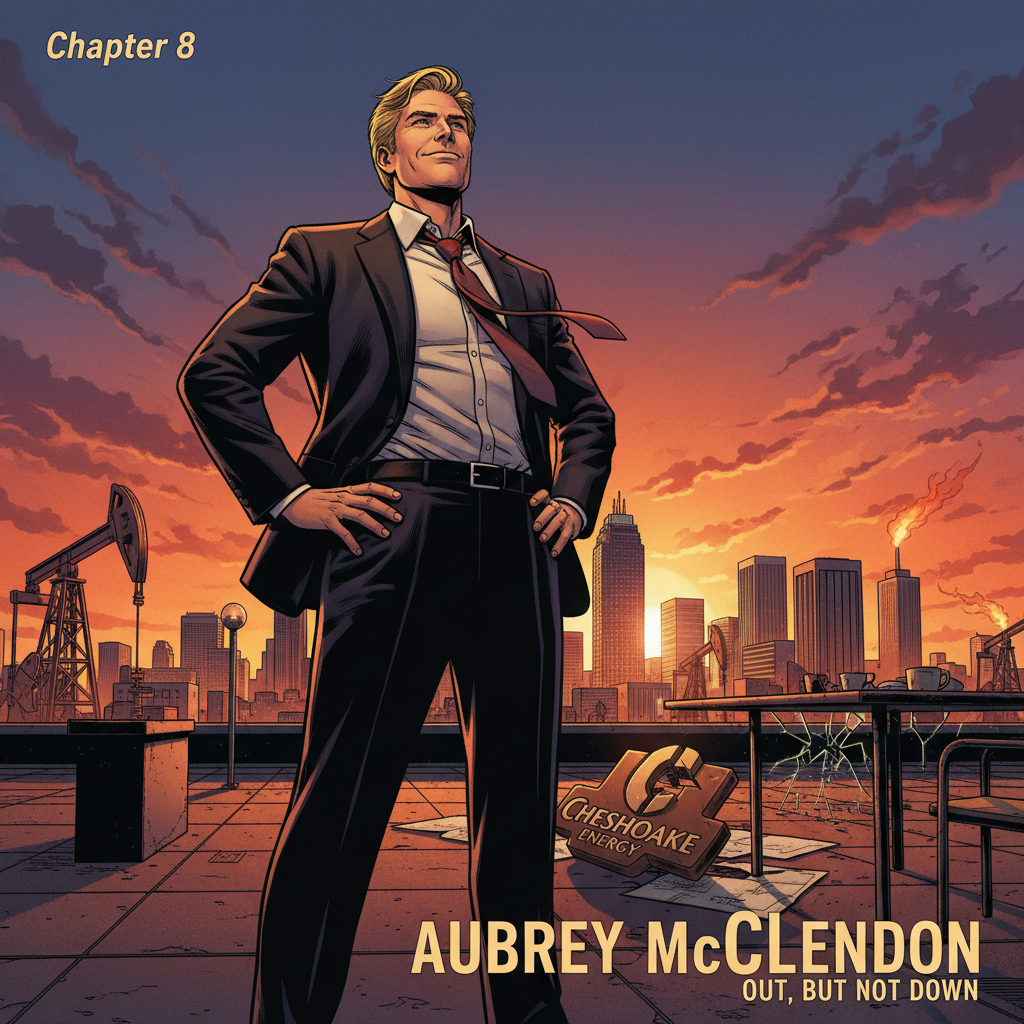
Aubrey McClendon was out, but he certainly wasn’t down. Not for long, anyway. A man of his relentless drive and boundless ambition doesn’t just fade into the background. For Aubrey, leaving Chesapeake wasn’t the end; it was just a very public, very painful intermission. He licked his wounds, regrouped, and within months, he was back in the game, albeit on a smaller, more focused scale.
He founded American Energy Partners, LP (AELP). The name itself spoke volumes – a defiant declaration that he was still the patriarch of American energy, still ready to unleash the next big boom. It was a private venture, free from the prying eyes of public shareholders, activist investors, and restrictive corporate governance rules. This was Aubrey’s chance to prove them all wrong, to show that his vision, his aggressive land-acquisition strategy, and his sheer will could still conquer the energy world.
And for a moment, it looked like he might just do it. He quickly raised billions of dollars from private equity firms, pension funds, and sovereign wealth funds, all eager to bet on the legendary wildcatter one more time. He deployed that capital with his characteristic speed and aggression, once again snapping up vast tracts of land in promising shale plays, from the Utica in Ohio to the Stack in Oklahoma. It was Chesapeake 2.0, but faster, leaner, and even more audacious.
He surrounded himself with former Chesapeake loyalists, a dedicated cadre who believed in his genius and his mission. The culture was familiar: high-energy, high-risk, and a relentless focus on growth. He was still the master of the deal, still the charismatic leader who could convince anyone that the next big discovery was just around the corner. He was, in essence, the ghost of Chesapeake, haunting the industry with his familiar tactics and unyielding pursuit of scale.
But the industry had changed. The boom times were gone. Natural gas prices remained stubbornly low, and even oil, after a brief surge, began its own downward spiral. The easy money was gone, and the capital markets were far more cautious. The debt-fueled expansion that had worked once was now a much harder sell. Aubrey was still playing the same game, but on a different field with different rules.
“He was trying to catch lightning in a bottle twice, but the storm had already passed. His genius was undeniable, but sometimes, even the most brilliant minds are outmaneuvered by the relentless, brutal currents of the market.”
The old habits, too, started to creep back in. His new ventures were complex, involving multiple private entities and intricate financial structures. There were reports of his aggressive management style, his demanding nature, and his insistence on pushing the limits. The ghost of Chesapeake wasn’t just in his methods; it was in the shadow of his past, and the lingering questions about his previous corporate conduct.
He was racing against time, against the market, and perhaps, against himself. He wanted to reclaim his crown, to prove that his vision was still valid, that his methods, though controversial, were ultimately right. But the clock was ticking, and an even darker cloud was gathering on the horizon, one that would make the activist storm seem like a gentle breeze.
🚨 Chapter 9: The Hammer Falls: Indictment and Disgrace
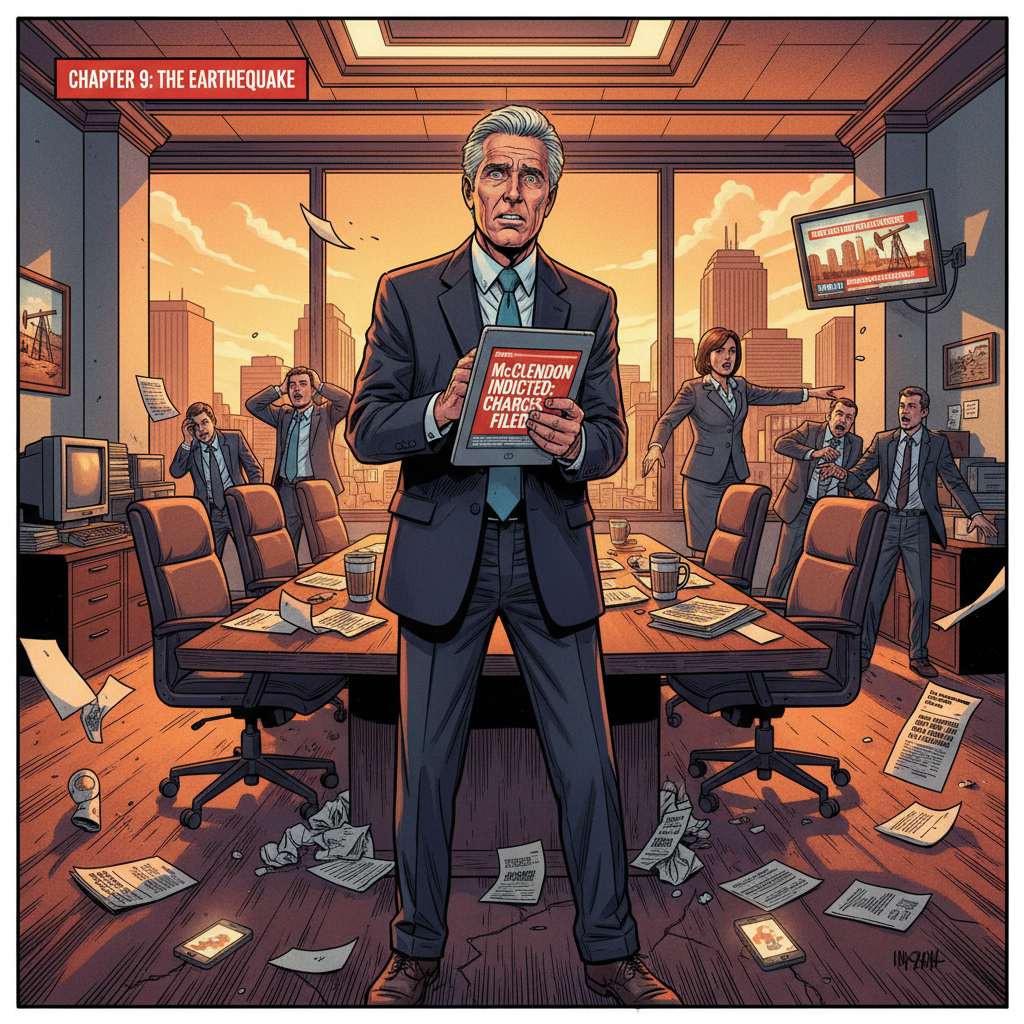
The morning of March 1, 2016, dawned like any other, but for Aubrey McClendon, it would be anything but. The news broke with the force of an earthquake through the energy industry, rattling boardrooms and headlines alike. The U.S. Department of Justice had indicted Aubrey McClendon on charges of conspiring to rig bids for oil and natural gas leases.
Let that sink in for a second. This wasn’t a civil lawsuit, not a regulatory slap on the wrist. This was a federal indictment, a criminal charge that carried the very real possibility of a decade in prison and millions in fines. The charges alleged that while he was CEO of Chesapeake Energy, McClendon conspired with another energy company to rig bids for the purchase of oil and natural gas leases in northwest Oklahoma. The goal, prosecutors claimed, was to suppress the price of leases, thereby benefiting both companies at the expense of landowners and competitors.
The details were damning. The indictment cited emails, phone calls, and meetings where McClendon allegedly orchestrated a scheme to avoid competitive bidding. “We have been working hard to make sure we don’t screw up the bid process and drive prices up,” one alleged email read. Another indicated a direct agreement to allocate bids for specific leases between Chesapeake and the unnamed co-conspirator.
The world reeled. For years, there had been whispers about Chesapeake’s aggressive land acquisition tactics, its ruthless pursuit of acreage. But this was different. This wasn’t just pushing the envelope; this was allegedly breaking federal antitrust laws. The man who had once been hailed as a visionary, a titan of industry, was now facing accusations of outright criminality.
“The indictment wasn’t just a legal document; it was a character assassination. It stripped away the myth of the visionary wildcatter and replaced it with the grim reality of alleged corporate malfeasance. The fall from grace was complete.”
Aubrey, in a public statement, vehemently denied the charges. He called them “wrong and unprecedented,” asserting that he had been “singled out” by the government. He vowed to fight the charges and fully defend himself. And for a moment, those who knew him believed he would. He was a fighter, after all, a man who never backed down.
But the weight of it all must have been immense. The public humiliation, the prospect of a lengthy legal battle, the very real threat of losing his freedom, his reputation, everything he had built and fought for. He had faced financial crises, activist investors, and corporate ousting, but this was a different beast entirely. This was the government, with all its power, coming for him.
The indictment was the final, devastating hammer blow. It didn’t just target his wealth or his company; it targeted his integrity, his very identity as a businessman. The man who had always believed he was operating on a higher plane, pushing boundaries for the greater good of American energy, was now branded a criminal. The next day, the world would wake up to an even more shocking, more tragic development, one that would forever seal Aubrey McClendon’s complex and controversial legacy.
🌑 Chapter 10: The Road’s End: Tragedy on an Oklahoma Highway
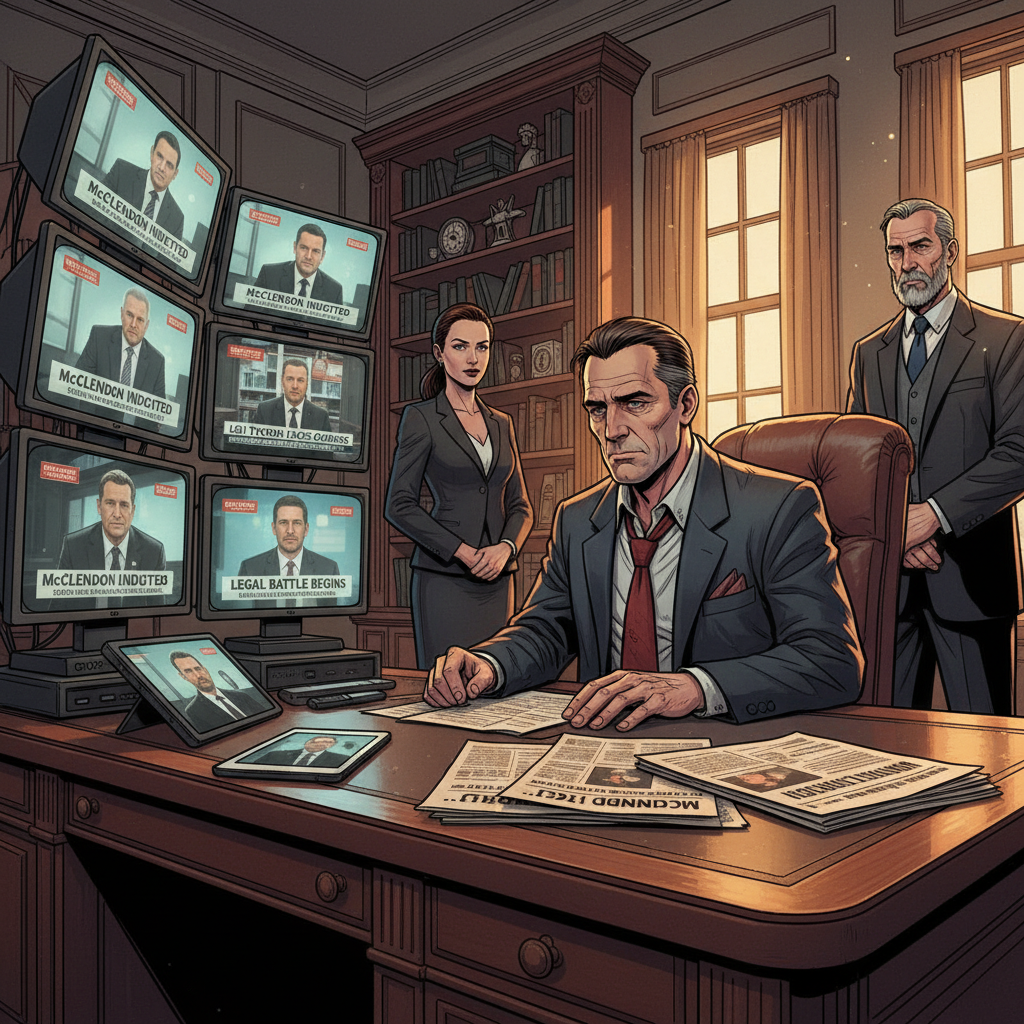
The morning after the indictment, March 2, 2016. The news cycle was dominated by Aubrey McClendon, the criminal charges, and the promise of a spectacular legal battle. But before the legal gears could even begin to grind, the story took a sudden, horrifying turn.
At 9:12 AM, less than 24 hours after the indictment was unsealed, Aubrey McClendon was dead.
The news broke like a thunderclap, silencing the chatter and replacing it with a collective gasp of disbelief. He was involved in a single-car crash in Oklahoma City, just miles from his home and the Chesapeake Energy campus he had built. His 2013 Chevrolet Tahoe was traveling at a high rate of speed when it veered off the road, striking a concrete embankment and bursting into flames. He was pronounced dead at the scene.
The immediate aftermath was a maelstrom of shock, speculation, and sorrow. Was it an accident? Was it suicide? The Oklahoma City Police Department quickly launched an investigation. They stated that McClendon was not wearing a seatbelt and that speed was a factor. There were no skid marks, no signs of braking or evasive maneuvers. The medical examiner later ruled the death an accident, citing “traffic accident injuries” as the cause.
But the timing was undeniably chilling. Less than 24 hours after being indicted, after a public statement promising to fight the charges, Aubrey McClendon was gone. For many, the conclusion was inescapable: the pressure, the public disgrace, the prospect of prison – it had all been too much. The man who had lived his life on the edge, always pushing, always risking, had finally gone too far.
His death ignited a fierce debate about his legacy. To some, he remained the visionary, the genius who saw the potential of shale and single-handedly transformed America into an energy superpower. They mourned the loss of a brilliant mind, a driven entrepreneur whose innovations had created countless jobs and brought unprecedented prosperity to the heartland. They saw him as a victim of an overzealous government, or perhaps, a tragic figure consumed by his own relentless ambition.
To others, he was a symbol of corporate greed and excess, a man whose aggressive tactics and questionable ethics ultimately caught up with him. They pointed to the debt, the lavish lifestyle, the controversial compensation, and now, the alleged bid-rigging. His story became a cautionary tale about the dangers of unchecked ambition and the seductive power of wealth.
“His life was a supernova – brilliant, intense, and ultimately, self-destructive. He burned hotter and faster than anyone else, leaving behind a crater-sized legacy that will be debated for generations.”
The fracking revolution he championed, however, continued. Chesapeake Energy, under new leadership, navigated its own turbulent waters, eventually emerging from bankruptcy in 2021, a shadow of its former self but still a player in the energy market. The methods Aubrey perfected are now standard industry practice, and America’s energy independence, once a distant dream, is a reality largely thanks to his audacious bets.
Aubrey McClendon’s life was a force of nature, a relentless pursuit of the next big boom, a dramatic saga played out against the backdrop of an industry transformed. He was a pioneer, a gambler, a king, and ultimately, a tragic figure caught in the maelstrom of his own making. His death, sudden and inexplicable, closed the book on one of the most compelling, controversial, and utterly unforgettable sagas in modern business history. The wildcatter had finally reached the end of his road, leaving behind a legacy as vast and complex as the shale fields he unlocked.
💡 Key Insights
- ▸ Aggressive growth strategies, while potentially revolutionary, carry immense risk when fueled by excessive debt. The lesson here is to always balance audacious vision with prudent financial management, understanding that market cycles can turn a genius into a gambler overnight.
- ▸ Founders and CEOs must carefully manage personal financial entanglements with their company's interests. McClendon's 'Founders Well Participation Program' and personal loans from the company blurred lines, eroded trust, and ultimately contributed to his downfall, serving as a stark reminder about corporate governance and ethical leadership.
- ▸ The energy industry, particularly during periods of technological disruption like the fracking revolution, attracts both incredible innovation and speculative excess. Investors need to differentiate between sustainable long-term plays and debt-fueled land grabs, always scrutinizing balance sheets and executive compensation for red flags.
Sources
- Bloomberg: The Fall of a Fracking King ↗
- The New York Times: Aubrey McClendon, Fracking Pioneer, Dies in Car Crash ↗
- Wall Street Journal: Chesapeake Energy Ex-CEO Aubrey McClendon Indicted ↗
- Forbes: The Spectacular Rise And Fall Of Aubrey McClendon ↗
- Reuters: McClendon's Death: The Story So Far ↗
- Wikipedia: Aubrey McClendon ↗
- The Oklahoman: McClendon's Legacy ↗