David Baszucki: How Roblox Turned Players Into a Global Creator Economy
David Baszucki spent years building a physics playground before Roblox became a global platform where players, creators, and virtual economies collide.
View all stories about this mogul
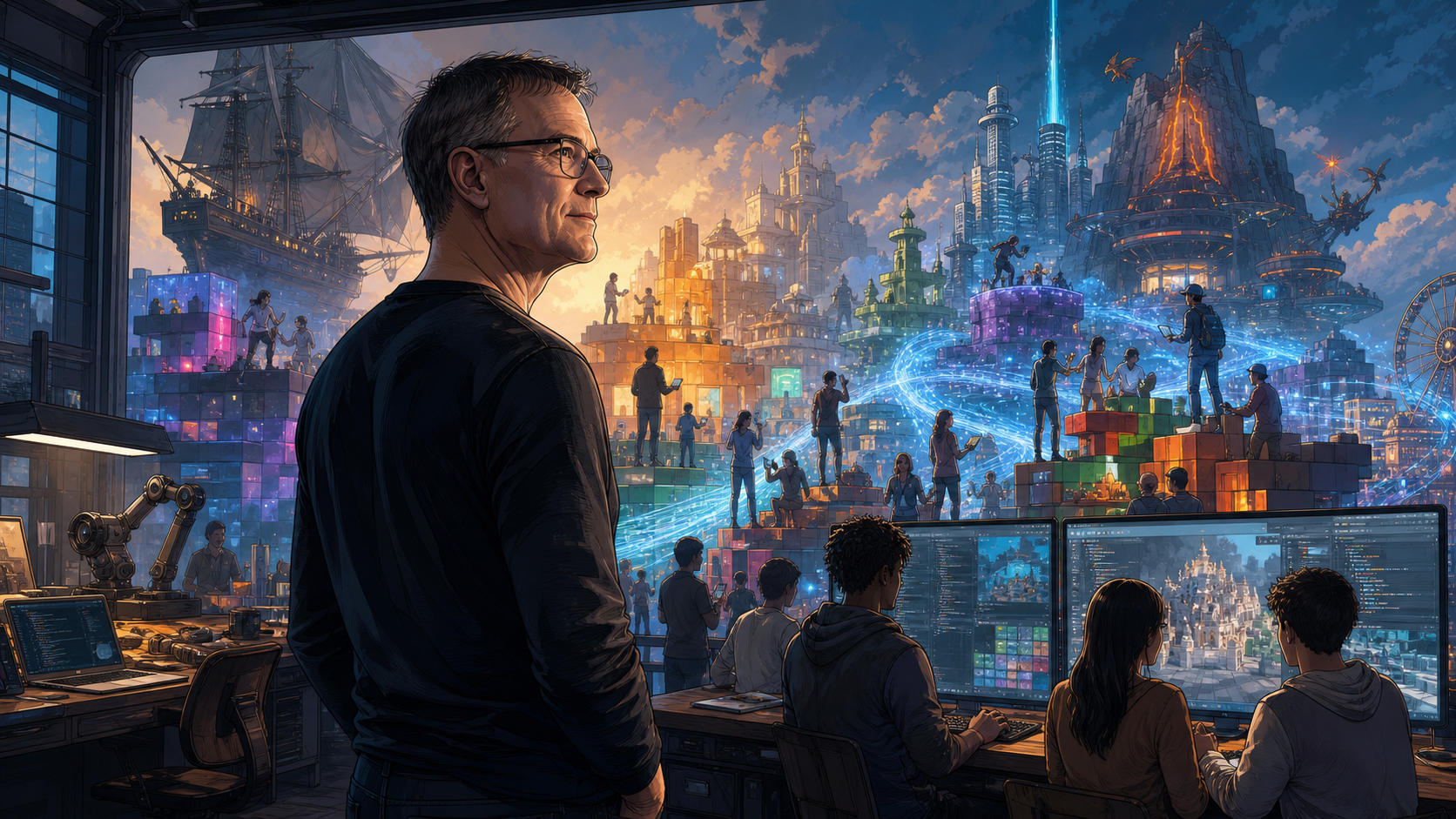
David Baszucki did not begin by building a game. He began by building a place where other people could make one.
That distinction explains Roblox better than any single hit experience. The company supplied physics, identity, publishing, discovery, payments, and social interaction; millions of creators supplied the worlds. What started as an awkward browser-era experiment became an economy in which digital labor, entertainment, and childhood culture overlap.
The same architecture created Roblox’s hardest questions. A platform designed for imagination also had to govern safety, creator incentives, moderation, and a currency that moves between play and real money.
How Did Interactive Physics Become Roblox?

Baszucki’s first major company, Knowledge Revolution, made educational physics and mechanical-design software. Interactive Physics allowed students to assemble virtual objects, apply forces, and watch systems behave. The product offered a clue that would later define Roblox: people learned by constructing and experimenting, not merely consuming instructions.
After MSC Software acquired Knowledge Revolution, Baszucki eventually returned to that idea with Erik Cassel. The project that became Roblox combined a physics sandbox with multiplayer identity. It was rough, computationally constrained, and far from the polished games dominating consoles. But its limitations encouraged a modular visual language that ordinary users could manipulate.
Roblox launched publicly in 2006. Rather than betting the company on one authored story, it bet on tools. Users could build an obstacle course, simulation, social hangout, or role-playing world, publish it, and invite others. Every new experience increased the platform’s variety without Roblox hiring a studio for each one.
The early years required patience. User-generated platforms look empty before a community reaches critical mass. Tools must be useful before there is an audience, while creators want an audience before they invest in tools. Roblox survived the cold start by improving creation, social connection, and the reliability of its shared world together.
Why Did Creators Become the Distribution Engine?
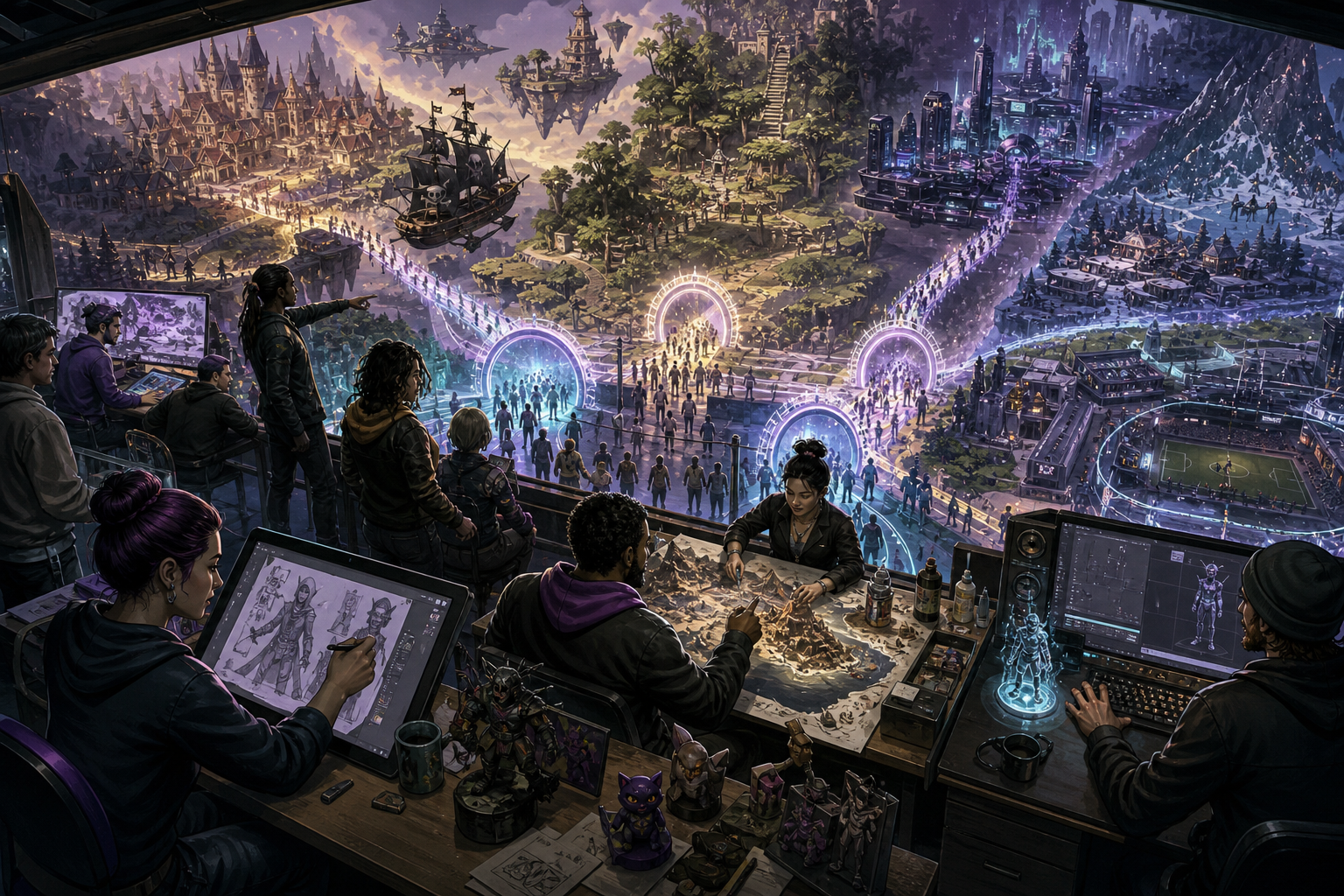
Roblox Studio made creation accessible while leaving room for serious developers. The platform handled hosting, multiplayer infrastructure, avatars, accounts, and payments. A creator could focus on an experience instead of assembling an entire technology stack.
Robux completed the loop. Players bought a virtual currency; creators sold access or digital goods; qualifying developers could exchange earnings under platform rules. The system turned popularity into an economic signal. Successful teams became studios, hired specialists, ran live operations, and treated virtual worlds as durable businesses.
This structure gave Roblox a powerful acquisition engine. Creators promoted their own experiences and brought audiences with them. Players moved among worlds with one identity and wallet. More players attracted more creators; more creators produced more reasons to return.
The economics also created tension. Roblox controls discovery, fees, policy, and the exchange path from virtual value to cash. Small changes can alter a studio’s livelihood. A healthy creator economy therefore depends on transparent rules, usable analytics, fraud control, and enough creator upside to justify the work.
What Did Hypergrowth Expose?
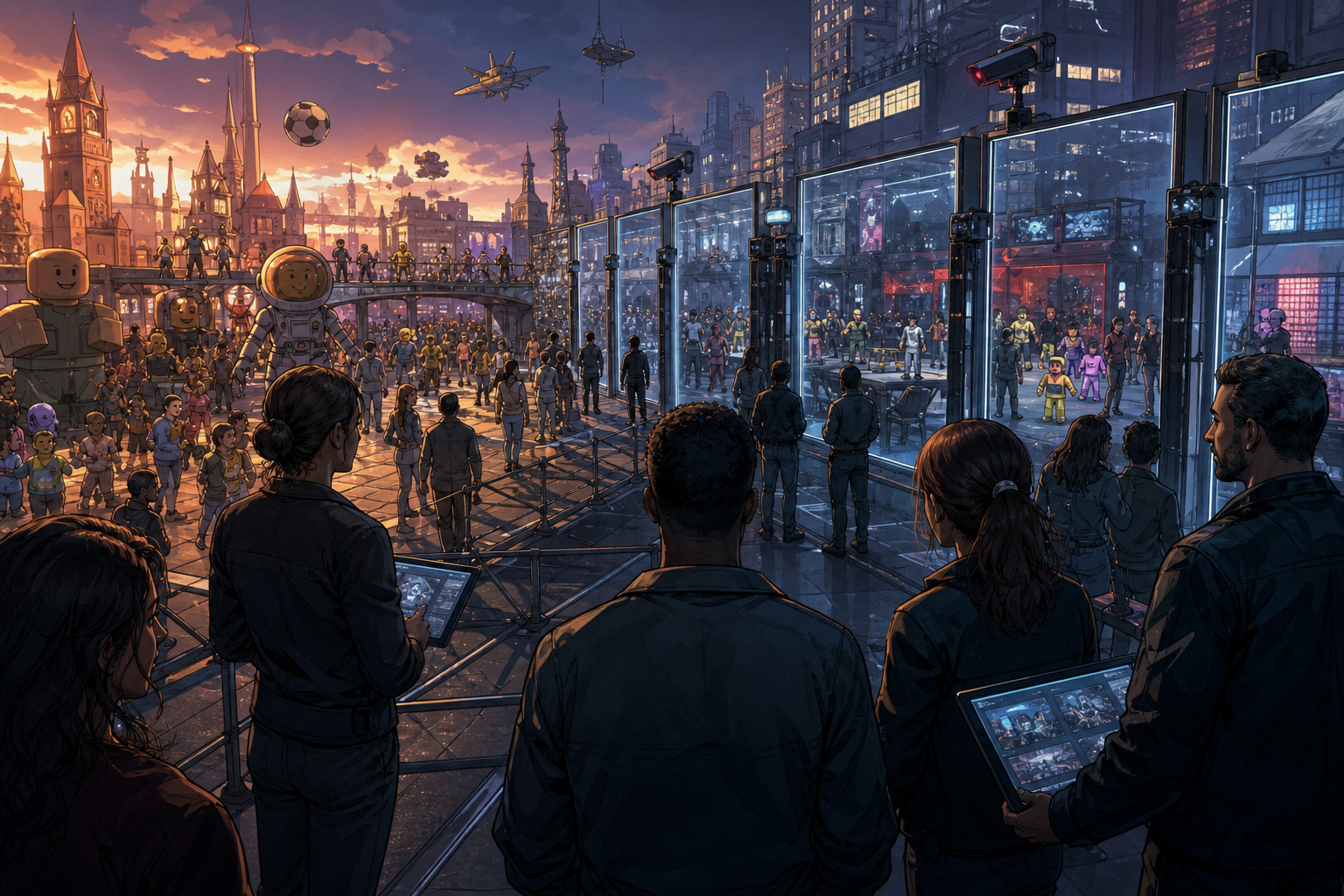
Mobile distribution and widespread broadband expanded Roblox far beyond its desktop roots. Pandemic-era isolation accelerated adoption as young people used the platform not only to play but to meet. Roblox entered public markets in 2021 through a direct listing, making the scale and cost of the system more visible.
Growth intensified its obligations. A platform with a large youth audience must manage grooming risks, inappropriate content, fraud, harassment, privacy, spending controls, and misleading experiences. Automated moderation can process scale but makes mistakes; human review is expensive and slow. Age assurance can improve access controls while introducing privacy tradeoffs.
Baszucki’s long-term vision extends beyond children’s games toward communication, education, commerce, and events. That ambition raises the standard. A social utility must be safe enough for families, predictable enough for creators, and reliable enough for brands without crushing the playful experimentation that made it valuable.
The company also faces platform dependence. Apple, Google, consoles, and payment systems influence distribution and economics. Internally, Roblox must spend heavily on compute, trust, and developer tooling before any individual experience earns a dollar.
What Is the Durable Lesson of the Roblox Empire?
Roblox demonstrates that creation tools can become culture when they connect production, distribution, identity, and payment. Baszucki’s advantage was not predicting one blockbuster. It was giving a generation a system for producing thousands of them.
The moat is therefore institutional as much as technical: creator skills, social graphs, reusable assets, virtual identities, moderation systems, and an economy accumulated over years. The risk is also institutional. If participants do not trust the rules or feel protected, network effects can run backward.
Key facts and timeline
| Milestone | Why it mattered |
|---|---|
| Knowledge Revolution | Established Baszucki’s interest in interactive physics and learning |
| 2004 development period | Baszucki and Erik Cassel began building the platform |
| 2006 public launch | Opened a persistent user-generated world |
| Developer exchange expansion | Connected creation with real economic incentives |
| 2021 direct listing | Put the platform’s scale and economics under public scrutiny |
FAQ
Who founded Roblox? David Baszucki and Erik Cassel founded the company behind Roblox.
How does Roblox make money? Its business is centered on Robux purchases and platform transactions, with economics shared under its creator programs and rules.
Is Roblox a game or a platform? It is a platform that hosts many user-created experiences, alongside social, identity, discovery, and economic systems.
What is Baszucki’s central strategic idea? People will spend substantial time creating and socializing inside shared simulated environments if the tools and network make participation easy.
Baszucki built leverage by refusing to author the ending. Roblox’s future will depend on whether the company can keep that open world inventive while making its economy and communities worthy of trust.
💡 Key Insights
- ▸ A creation tool becomes a platform when users can publish, discover, and earn.
- ▸ Young audiences amplify both network effects and safety obligations.
- ▸ Virtual economies need credible rules, not just engaging content.
- ▸ Infrastructure businesses compound when creators become the acquisition engine.