Giorgio Armani: The Medical School Dropout Who Dressed the World and Refused to Sell
He never took his company public, never accepted outside investors, and never compromised. Giorgio Armani built the last great independent fashion empire — and at 90, he still runs every detail.
View all stories about this mogul
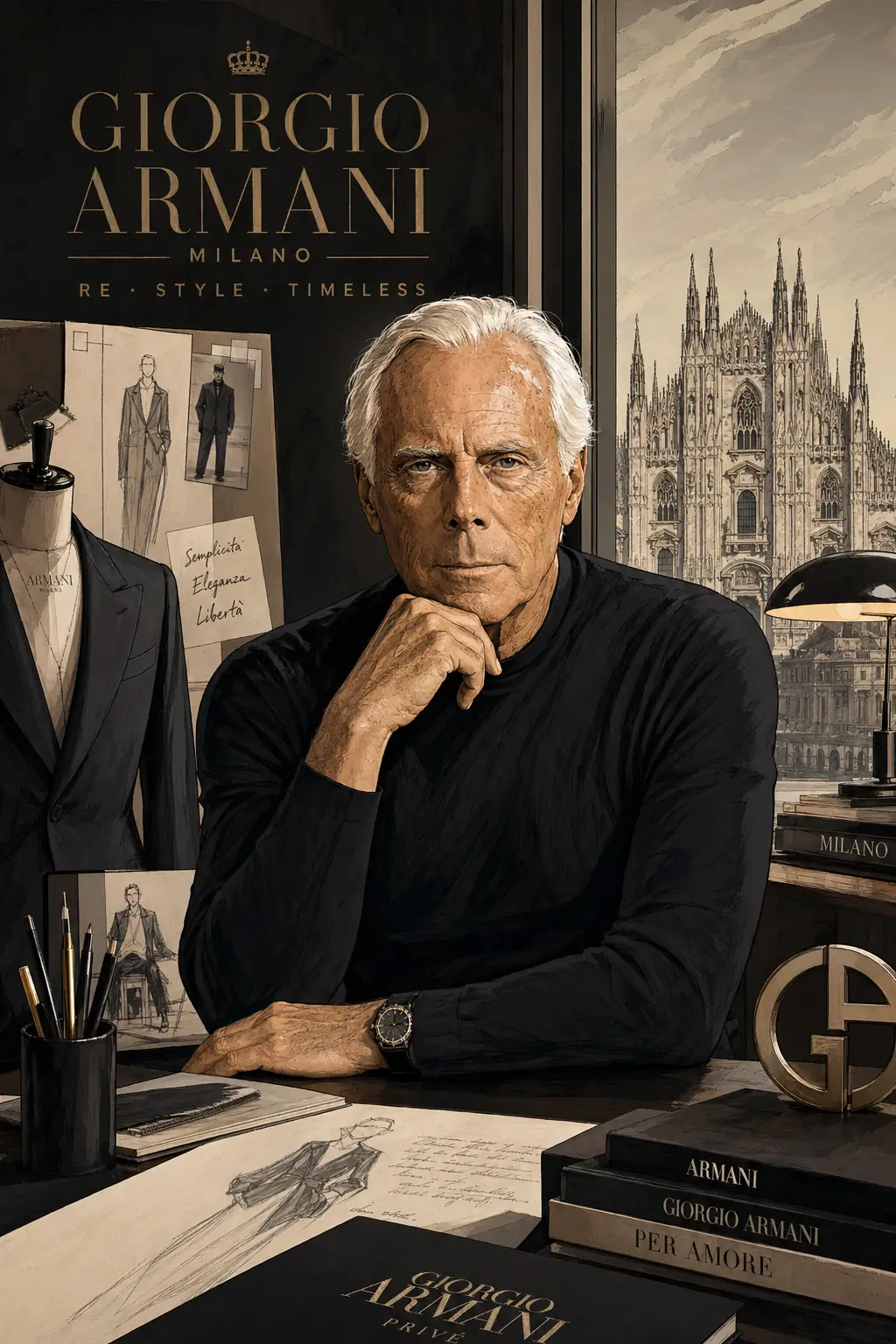
Giorgio Armani is the last emperor of fashion. While every other major fashion house has been acquired by LVMH, Kering, or some other luxury conglomerate, Armani remains independent — privately held, personally controlled, and answering to nobody. At ninety, he still oversees every collection, approves every fabric, and makes every major business decision. His company generates over $2 billion in annual revenue, and he owns it all. No shareholders. No board of directors. No private equity partners. Just one man and his vision, for over four decades. In an industry that has been almost entirely consolidated by corporate giants, Armani’s independence is either the most principled stand in luxury fashion or the most stubborn — and possibly both.
Chapter 1: Piacenza — The Doctor Who Never Was (1934–1957)
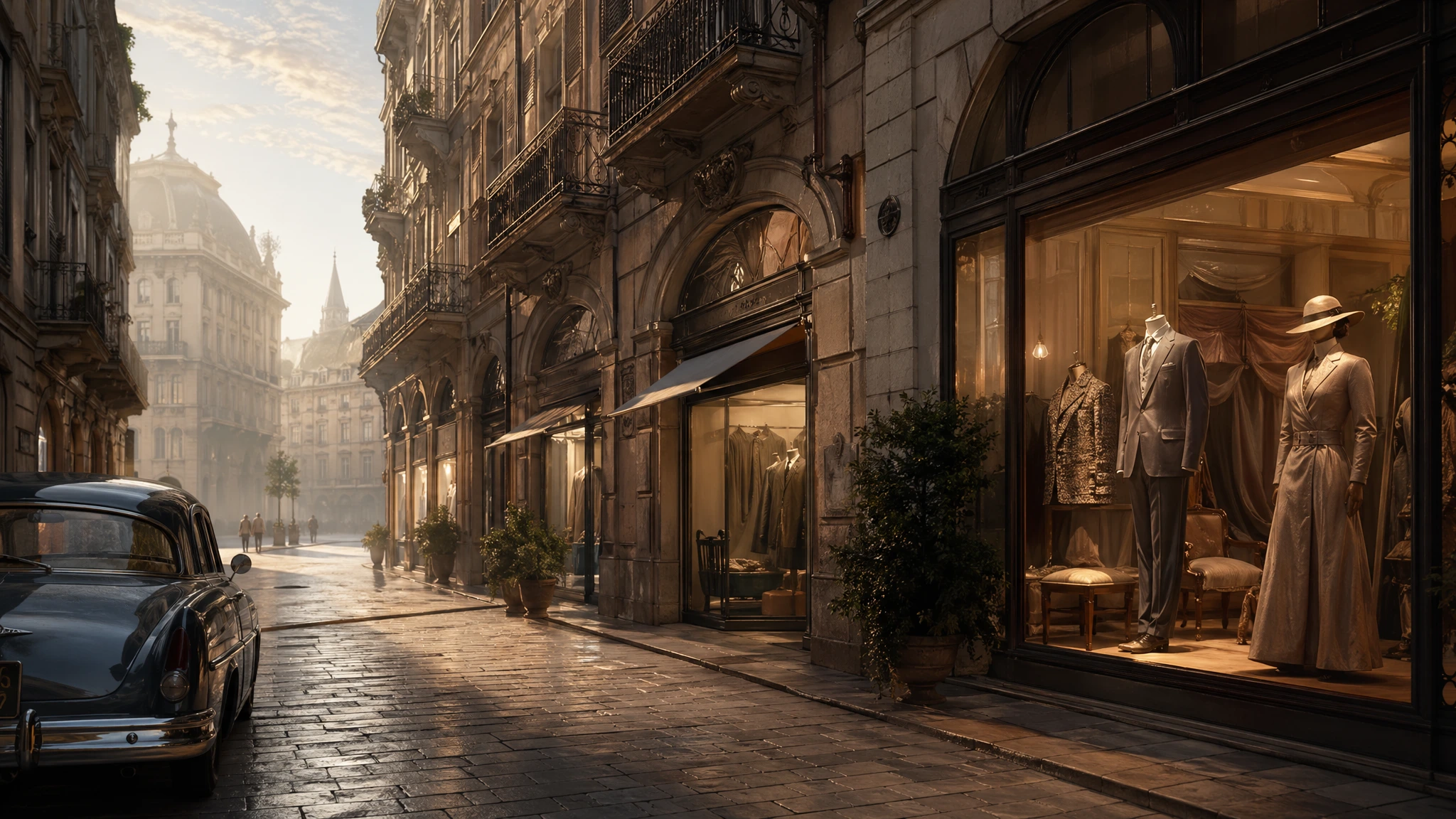
Giorgio Armani was born on July 11, 1934, in Piacenza, a small city in the Emilia-Romagna region of northern Italy. His father was a transport company manager; his mother was a homemaker. The family was middle class in the most literal sense — neither rich nor poor, neither sophisticated nor provincial. Piacenza was not Milan or Rome; it was a quiet, traditional Italian city where ambitious young men became doctors, lawyers, or bureaucrats.
Armani enrolled in the medical faculty at the University of Milan in 1953, following the expected path. He lasted two years. The reality of medical school — the blood, the anatomy labs, the relentless memorization — was not for him. He later said that he was fascinated by the human body but repulsed by the clinical aspect of medicine. He dropped out, did his mandatory military service (which he hated), and found himself at twenty-three with no degree, no plan, and no obvious prospects.
What he had was an eye. From childhood, Armani had been attuned to how things looked — how fabric fell, how colors combined, how a well-cut jacket could transform a person’s silhouette. He couldn’t articulate this aesthetic sense yet, but it was there, waiting for the right context to express itself.
Chapter 2: La Rinascente — Learning to See (1957–1970)
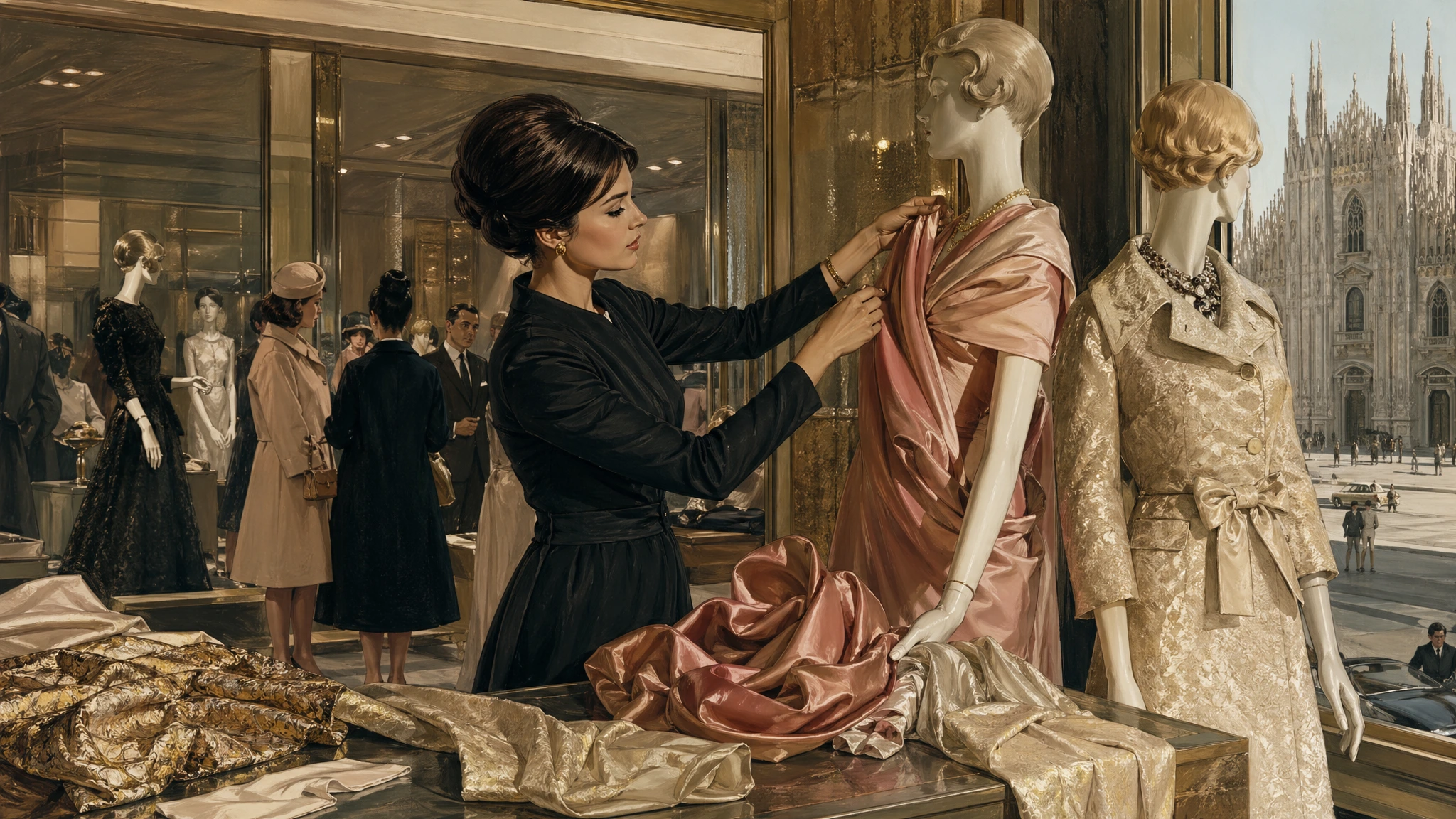
In 1957, Armani got a job as a window dresser and buyer at La Rinascente, Milan’s most prestigious department store. The job was unglamorous — arranging displays, selecting merchandise, managing inventory — but it gave Armani an education in fashion that no design school could have matched. He learned what customers wanted, what sold, what didn’t, and why.
He spent seven years at La Rinascente, developing an intuitive understanding of the relationship between design, commerce, and the human body. He noticed that men’s fashion was rigid and uncomfortable — suits were structured with heavy padding, stiff fabrics, and sharp lines that constricted movement and hid the body’s natural shape. Women’s fashion was equally constrained, with its own set of uncomfortable conventions.
In 1964, Armani left La Rinascente to work as a designer for Nino Cerruti, a textile magnate who was building his own fashion label. At Cerruti, Armani began designing men’s collections, and his aesthetic vision took shape: clothing should move with the body, not against it. Fabrics should be soft, not stiff. Colors should be neutral, not garish. The silhouette should suggest the body underneath, not mask it. It was a philosophy of subtraction — removing everything unnecessary to reveal what was essential.
Chapter 3: Going Independent — The 1975 Launch (1970–1980)
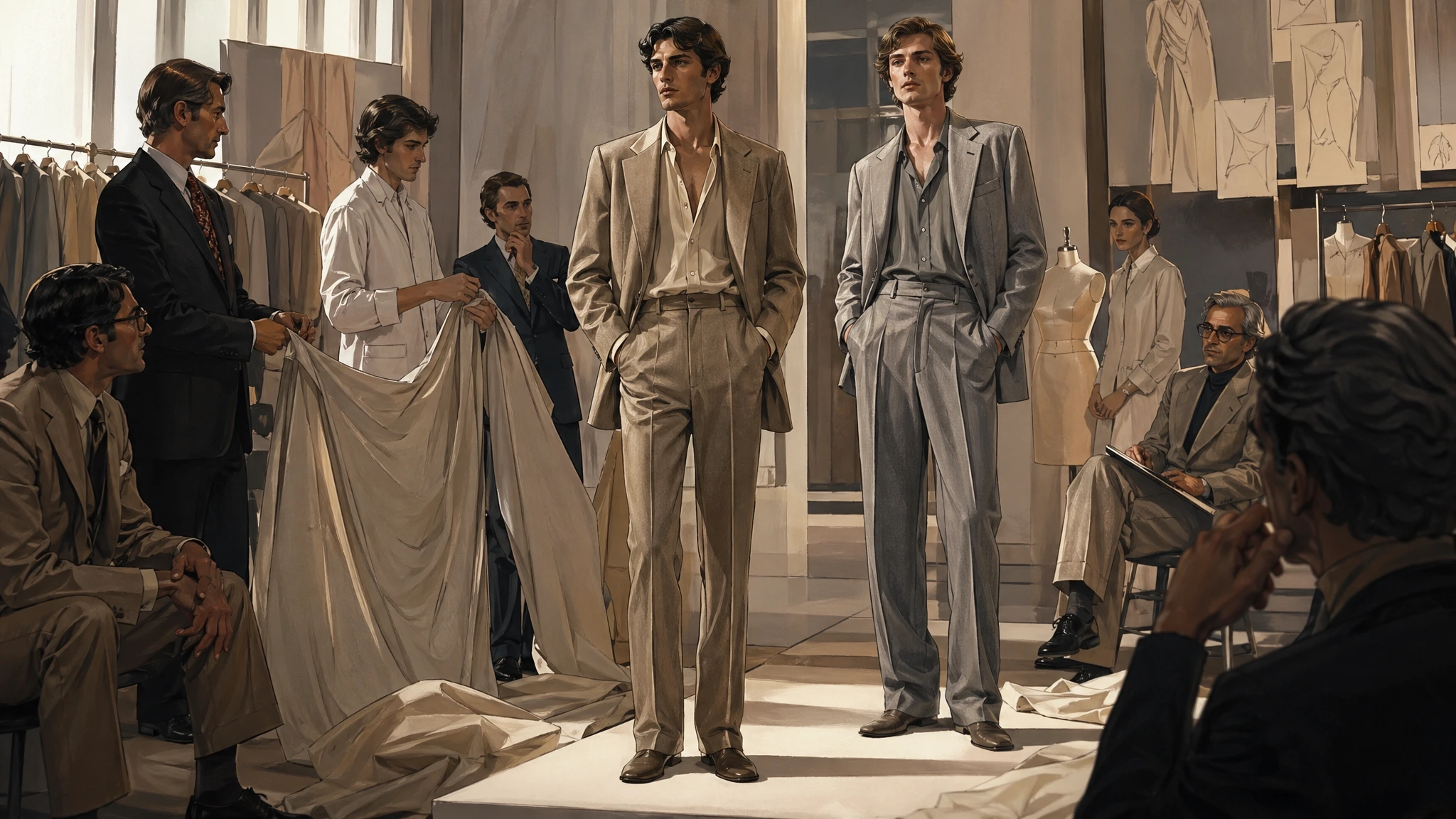
In 1975, Armani and his partner Sergio Galeotti founded Giorgio Armani S.p.A. with $10,000 in savings. The timing was uncertain — Italy was in economic turmoil, the fashion industry was dominated by established houses, and Armani had no fame, no financial backing, and no retail presence.
His first men’s collection was a revelation. The jackets were unstructured — no padding, no stiffening, no rigid lining. The fabrics were soft and fluid. The colors were muted: beige, gray, navy, cream. The suits moved when the wearer moved, draping naturally over the body’s contours. Fashion critics and buyers recognized immediately that something new was happening. This wasn’t a trend or a gimmick — it was a fundamentally different approach to men’s dressing.
The women’s collections that followed applied the same philosophy. Armani adapted elements of menswear for women — soft blazers, wide-leg trousers, neutral colors — creating a powerful, understated look that was feminine without being decorative. For professional women in the late 1970s, who were entering corporate environments in unprecedented numbers, Armani’s designs were liberating. He gave them armor that didn’t look like armor.
Chapter 4: American Gigolo — Hollywood Calling (1980)
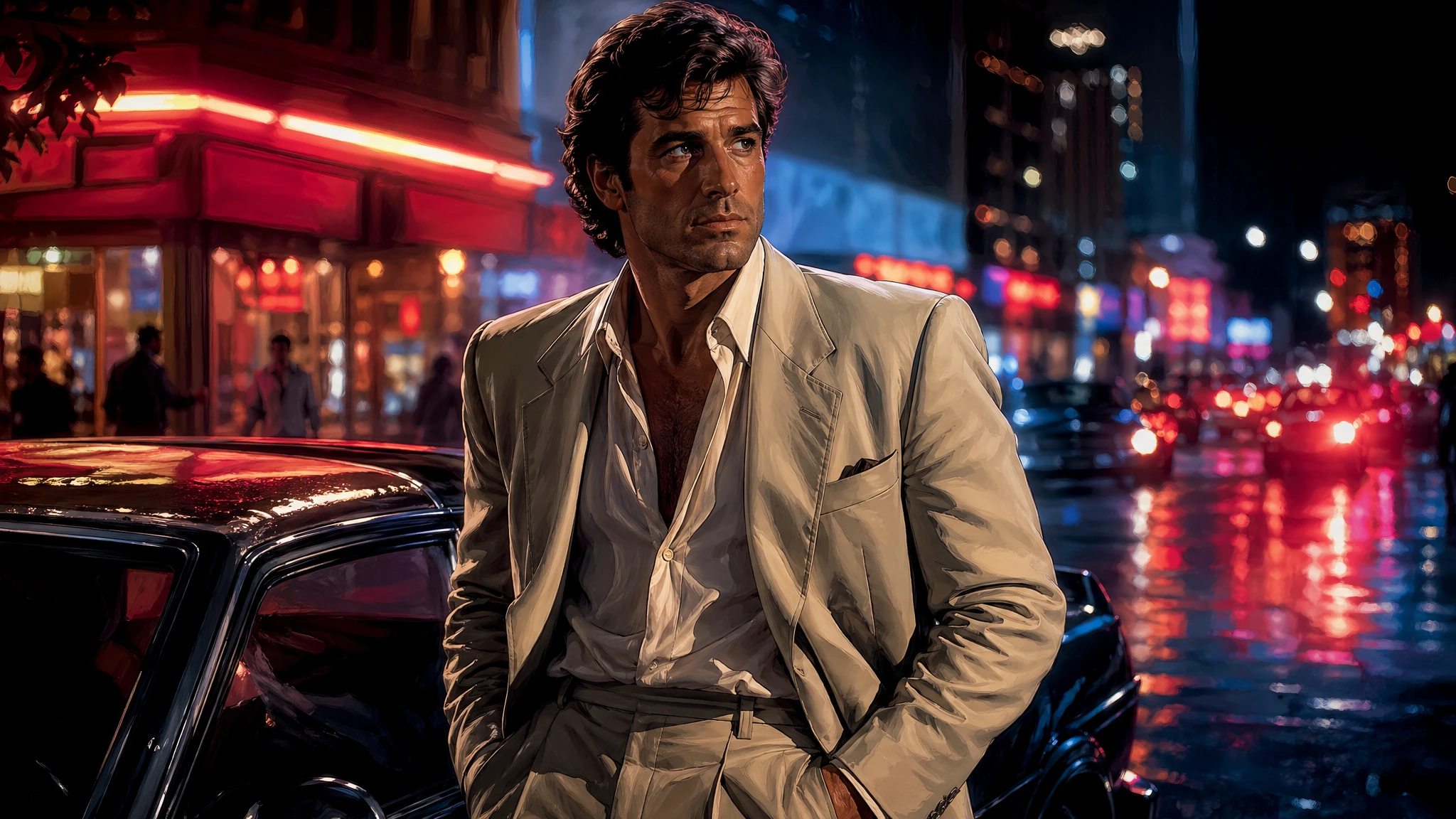
In 1980, the film American Gigolo starring Richard Gere was released. The film’s costume designer chose Armani to dress Gere’s character, a high-end male escort. The result was a global advertisement for the Armani aesthetic: Gere looked impossibly cool in soft, unstructured suits that made him appear simultaneously relaxed and powerful.
The film’s impact on Armani’s business was immediate and enormous. American consumers, who had barely heard of Armani before the film, suddenly wanted his clothes. Department stores in the US reported surging demand. Armani became the first designer since Yves Saint Laurent to fundamentally change how men dressed in America.
The Hollywood connection would become a permanent pillar of Armani’s brand strategy. Armani began dressing celebrities for awards shows and red carpet events, becoming the go-to designer for stars who wanted to look elegant without trying too hard. Over the decades, he dressed Cate Blanchett, George Clooney, Leonardo DiCaprio, Julia Roberts, and hundreds of other A-listers. Each red carpet appearance was worth millions in publicity — and Armani, unlike designers who fought for celebrity attention, attracted it naturally because his clothes made people look effortlessly good.
Chapter 5: The Empire Expands — Hotels, Homeware, and Everything (1981–2000)
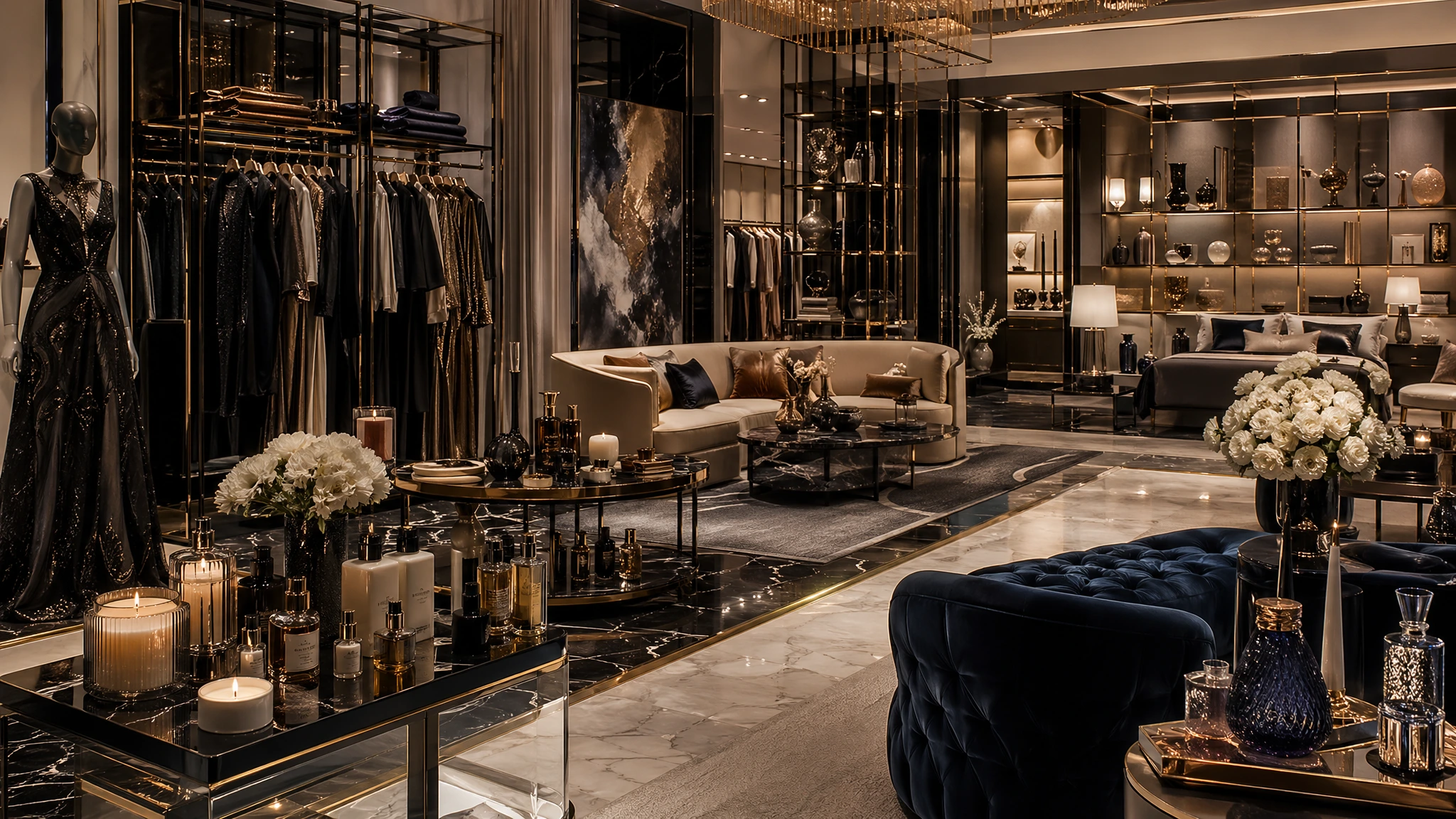
Through the 1980s and 1990s, Armani expanded his brand beyond clothing. He launched Emporio Armani (a younger, more accessible line), Armani Exchange (affordable basics), Armani Casa (furniture and home accessories), and Armani Beauty (cosmetics and fragrances). Each brand occupied a different price point, serving customers from luxury collectors to aspirational young professionals.
The multi-tier strategy was revolutionary in fashion. Most designers operated at a single price point — either luxury or mass market. Armani served both, carefully calibrating each tier to avoid cannibalization. The Giorgio Armani label remained exclusive and expensive. Emporio Armani offered accessible luxury. Armani Exchange provided brand entry at affordable prices. Each tier recruited customers for the next level up.
But the expansion also raised questions about dilution. Could a brand maintain its prestige while selling t-shirts at outlet malls? Armani insisted it could, arguing that each tier maintained its own quality standards and that the brand’s core values — simplicity, quality, elegance — transcended price points. Critics were less sure, and the tension between exclusivity and accessibility would persist throughout Armani’s career.
Chapter 6: Personal Loss and the Succession Question (1985–2000)
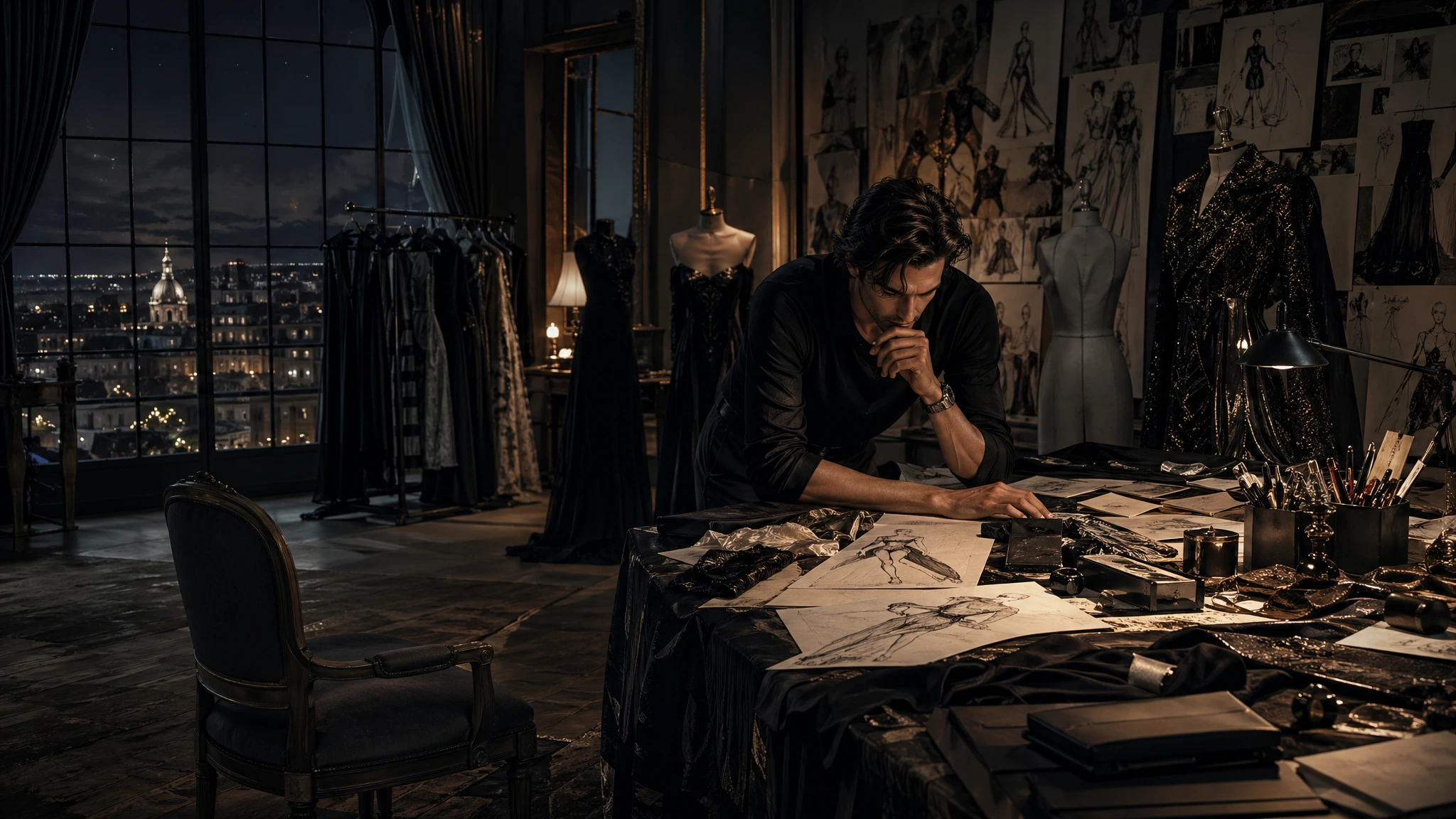
In 1985, Sergio Galeotti — Armani’s business partner, confidant, and romantic partner — died of AIDS at age forty. The loss was devastating. Galeotti had handled the business side of the company while Armani focused on design. His death left Armani alone at the helm of a rapidly growing enterprise, responsible for both the creative and commercial sides of a business that was becoming increasingly complex.
Armani never publicly discussed his relationship with Galeotti in detail during Galeotti’s lifetime. In subsequent years, he became more open about his sexuality, eventually acknowledging his relationships with men. In the conservative world of Italian fashion — and Italian culture more broadly — this openness was notable, though Armani always approached the topic with the same restraint that characterized his designs.
Galeotti’s death also created the succession question that would hover over Armani for decades. With no partner, no children (by blood), and no heir apparent, who would inherit and run the Armani empire? The question became more urgent as Armani aged and as every other major fashion house was acquired by conglomerates. Armani’s independence was admirable, but it also meant that the company’s future was entirely dependent on one person’s lifespan.
Chapter 7: Refusing to Sell — The LVMH Decision (2000–2010)
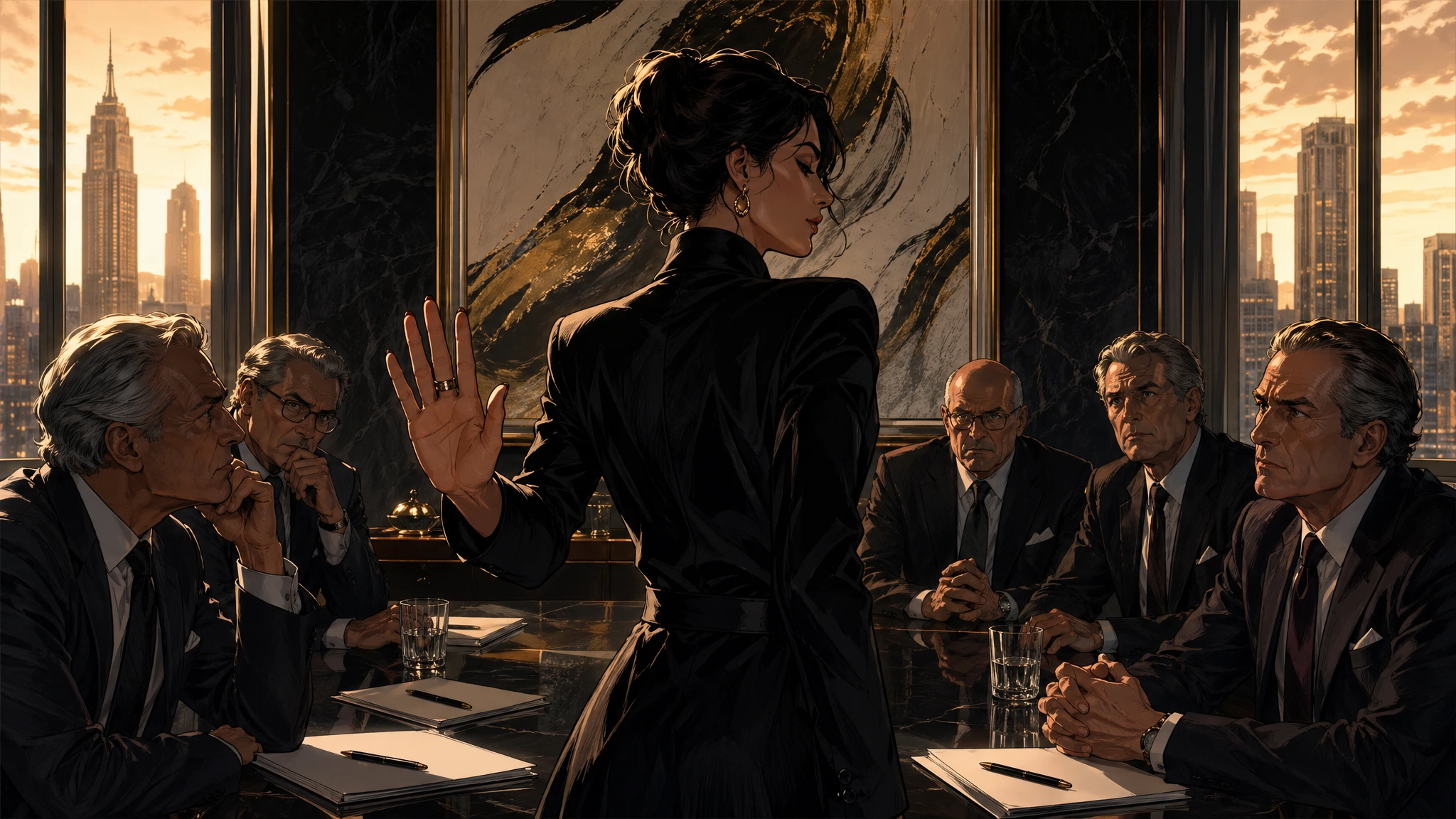
Throughout the 2000s, LVMH (Bernard Arnault), Kering (Francois-Henri Pinault), and other luxury conglomerates approached Armani about acquisition. The offers were reportedly enormous — billions of dollars for a brand that was one of the most recognized names in fashion. Armani refused every one.
His reasoning was philosophical: selling would mean giving up control, and control was the essential ingredient of the brand. Armani’s aesthetic vision — the specific shade of gray, the exact weight of a fabric, the precise width of a lapel — was not something that could be preserved by corporate managers following brand guidelines. It required the daily, hands-on involvement of someone who could feel whether a design was right or wrong. That someone was Armani, and he didn’t trust anyone else to do it.
The refusal was also personal. Armani had watched other founders sell their brands and lose control. Tom Ford’s departure from Gucci, John Galliano’s firing from Dior, the corporate homogenization of once-distinctive labels — these were cautionary tales. Armani valued his independence more than any amount of money, and he had enough money already. The independence was the whole point.
Chapter 8: Armani Hotels and Lifestyle (2010–2020)

In 2010, Armani opened his first hotel — the Armani Hotel Dubai, located in the Burj Khalifa, the world’s tallest building. The hotel was followed by Armani Hotel Milano and plans for additional properties. Every detail of the hotels — from the furniture to the bathroom fixtures to the room service menu — was overseen by Armani personally. The hotels were, in essence, three-dimensional expressions of his design philosophy: minimal, luxurious, and quietly powerful.
The lifestyle extension was the logical endpoint of Armani’s brand strategy. If you could wear Armani, furnish your home with Armani, and stay in Armani hotels, the brand became a complete environment rather than just a clothing label. The approach anticipated the “experiential luxury” trend by years, positioning Armani as a lifestyle brand before the term became an industry buzzword.
The hotels were profitable but not massively so — they were brand-building exercises as much as commercial ventures. Their primary value was in reinforcing the Armani aesthetic in the most immersive way possible and in attracting the ultra-wealthy clientele who would then purchase from Armani’s other product lines. Every night spent in an Armani hotel was, in effect, an extended brand experience that no advertisement could replicate.
Chapter 9: The Foundation and the Succession Plan (2020–2025)
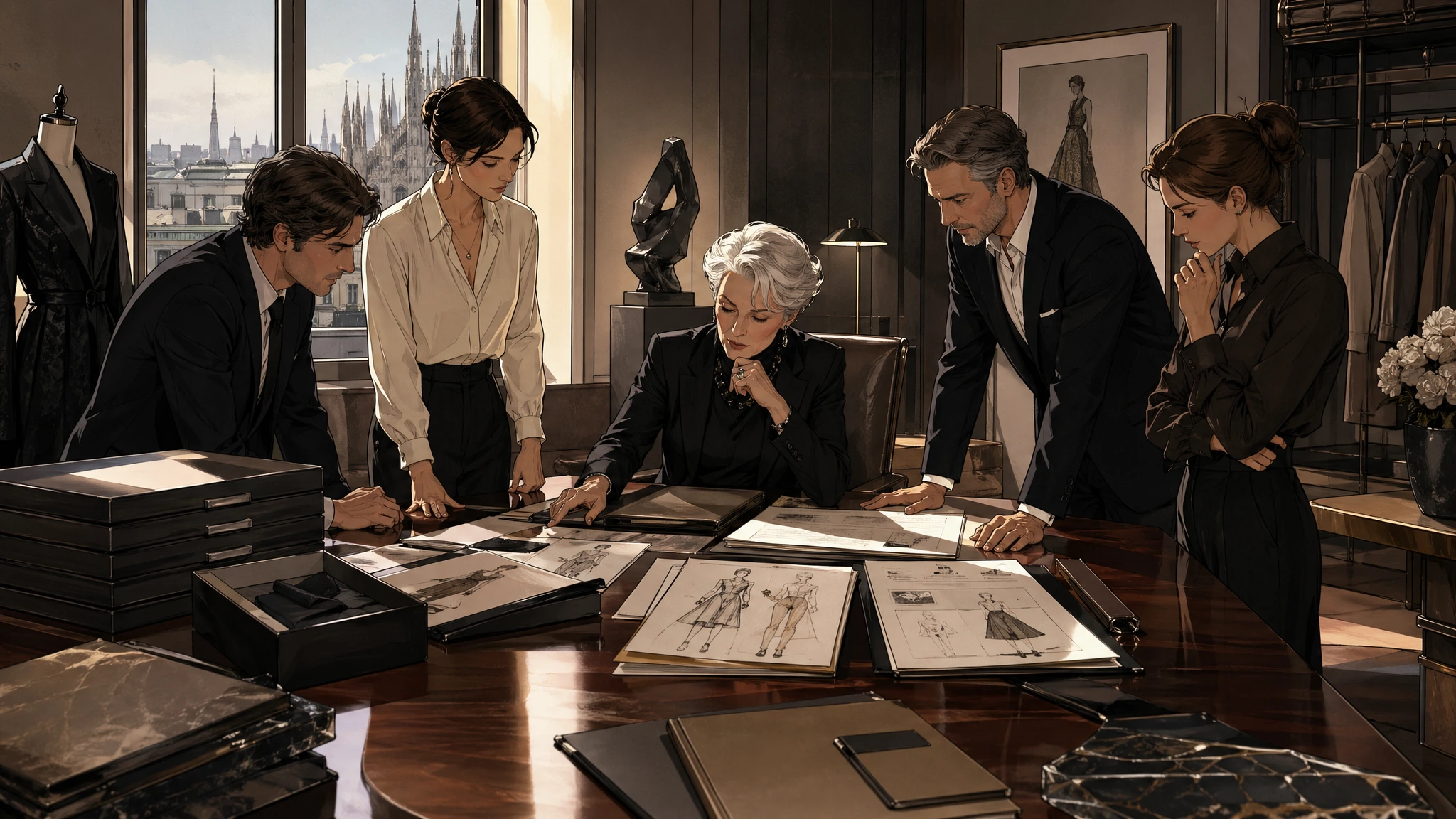
In 2022, Armani established a foundation to preserve his brand’s independence after his death. The Giorgio Armani Foundation would hold a controlling stake in the company, with a governance structure designed to prevent any single entity — including luxury conglomerates — from acquiring control. The foundation’s stated mission was to preserve Armani’s creative legacy and ensure the brand’s continued independence.
The succession plan was characteristically Armani: meticulous, conservative, and designed to maintain control from beyond the grave. He appointed a team of trusted executives to manage the company and established guidelines for creative direction. But the fundamental challenge remained: Armani’s brand was inseparable from Armani’s taste, and taste cannot be codified in governance documents.
The fashion industry watched with a mixture of admiration and skepticism. Other designer-founder brands — Versace, Dolce & Gabbana, Valentino — had been sold or were expected to be sold. Armani’s determination to remain independent was admirable, but the practical challenges of maintaining a founder-centric brand without the founder were formidable. The question wasn’t whether the foundation would try to preserve Armani’s vision — it was whether any institutional structure could replicate the instinct of one man’s eye.
Chapter 10: The Business Machine — $3 Billion Without Shareholders
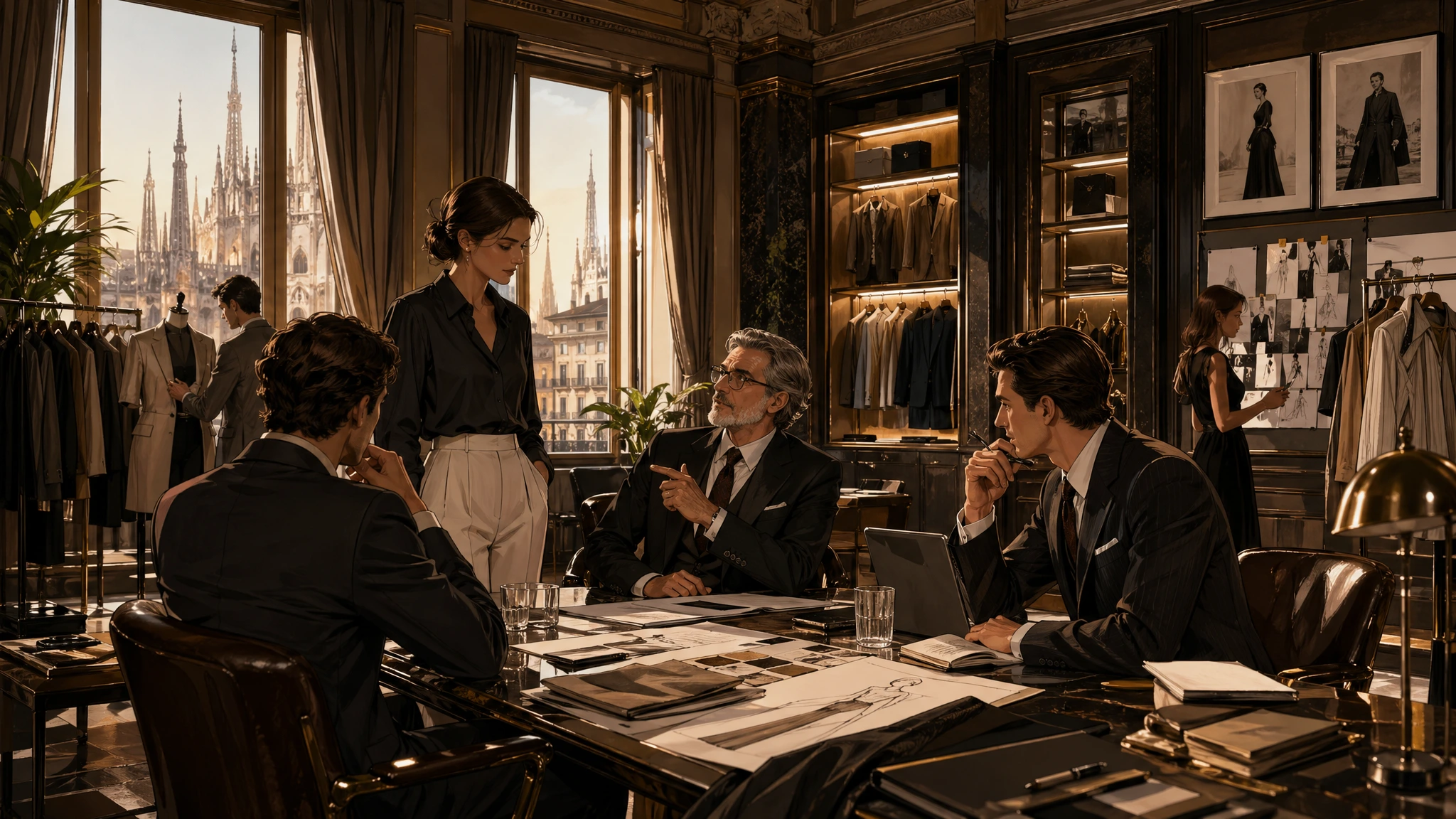
As of 2025, the Giorgio Armani Group generated over $2.5 billion in annual revenue across its multiple brands, licensing agreements, hotels, and lifestyle products. The company was entirely privately held — no public shareholders, no private equity investors, no outside board members with financial interests.
This independence was a double-edged sword. On one side, it gave Armani absolute creative and strategic control. He could invest in long-term brand building without worrying about quarterly earnings. He could refuse trends that he considered vulgar. He could maintain quality standards that a public company’s cost-cutting pressure might erode.
On the other side, the lack of outside perspective meant that Armani’s blind spots went unchallenged. The company was slower to adopt digital marketing and e-commerce than competitors. Its appeal to younger consumers was uncertain. The brand’s aesthetic — while timeless — risked being perceived as dated by a generation that valued novelty and disruption. Whether independence would prove to be a strength or a vulnerability in the post-Armani era remained the central question.
Chapter 11: The Armani Aesthetic — Changing How the World Dresses
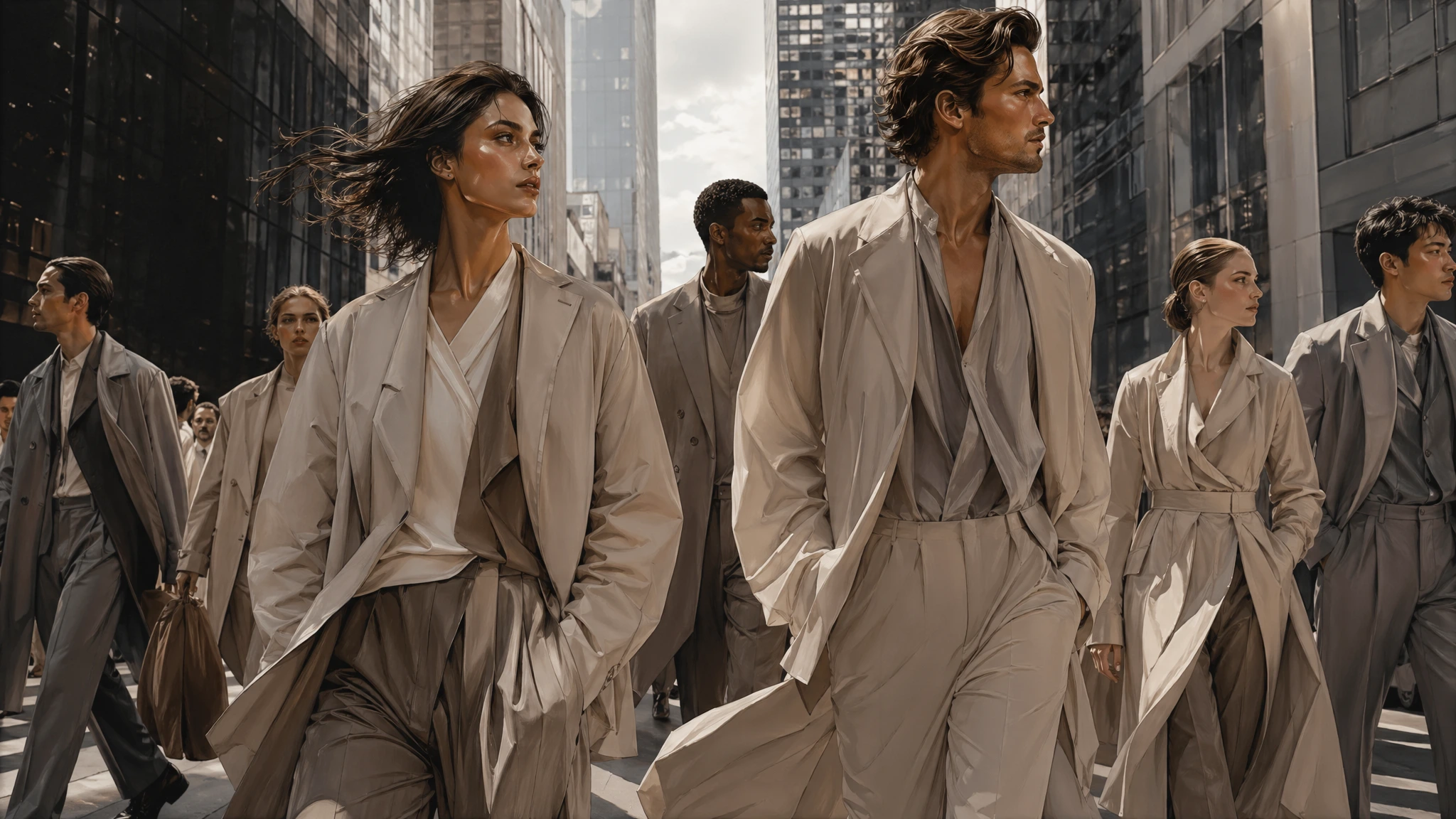
Armani’s influence on fashion extends far beyond his own brand. His deconstructed jacket — soft, unlined, and free-flowing — changed how men dressed worldwide. Before Armani, business attire was rigid and uncomfortable. After Armani, softness and comfort were acceptable in professional settings. The “unstructured blazer” that is now ubiquitous in menswear was essentially Armani’s invention.
His influence on women’s fashion was equally profound. By adapting menswear elements for women — relaxed blazers, wide-leg trousers, minimal ornamentation — Armani created a vocabulary of professional femininity that defined career dressing for a generation. His designs told women they could be powerful without being aggressive, elegant without being decorative.
The neutral palette that Armani championed — grays, beiges, navies, and creams — became the default vocabulary of understated luxury. In a world where fashion often competes for attention through brightness and novelty, Armani demonstrated that the most powerful statement is often the quietest one.
Chapter 12: Legacy — The Last Independent
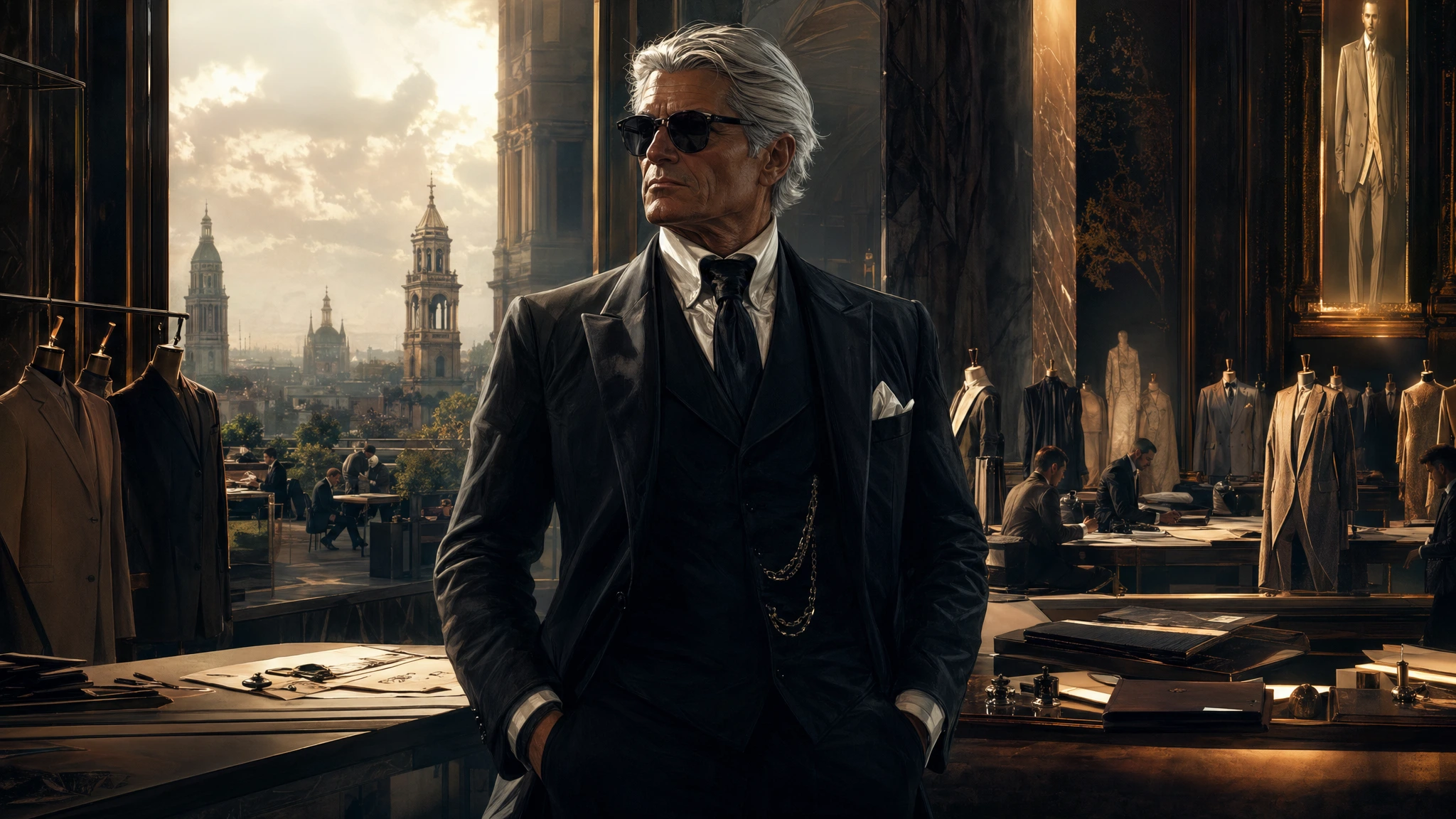
Giorgio Armani’s legacy is independence. In an industry that has been almost entirely consolidated by corporate conglomerates, he remains the last major designer who owns and controls his own brand. This independence is not just a business structure — it’s a statement about the relationship between creativity and commerce.
His net worth, estimated at $12–15 billion, makes him one of the wealthiest people in fashion. But the wealth is secondary to the principle it represents: that creative vision and commercial success are not just compatible but inseparable, and that the best guardian of a brand’s integrity is the person who created it.
The medical school dropout from Piacenza who couldn’t stand the sight of blood built a fashion empire that dressed presidents, movie stars, and millions of professionals worldwide. He did it by removing rather than adding — by stripping away the unnecessary to reveal the essential. And when every conglomerate in the world offered to buy his life’s work, he said no. In fashion, where everything is for sale, Giorgio Armani proved that some things are priceless — and that independence, properly maintained, is the most luxurious thing of all.
💡 Key Insights
- ▸ Armani's refusal to take his company public or accept outside investment is the most radical business decision in luxury fashion. It gave him complete creative and strategic control — but it also created a succession crisis that remains unresolved.
- ▸ His genius was making luxury accessible without making it cheap. The Armani brand hierarchy — Giorgio Armani, Emporio Armani, Armani Exchange — serves multiple price points without diluting the brand's prestige.
- ▸ Armani proved that a fashion brand can be built on subtraction rather than addition. His designs removed what was unnecessary — padding, structure, ornamentation — creating a modern aesthetic that became the default for professional dressing worldwide.