Ingvar Kamprad: The Cheapest Billionaire Who Furnished the World
He drove a 1993 Volvo, flew economy class, and ate at his own stores' cafeterias. He also built the largest furniture company on Earth and was, at various points, the richest person in Europe. This is the story of Ingvar Kamprad, the Swedish farm boy who turned flat-pack furniture into a $60 billion empire — and the dark secret he spent a lifetime trying to bury.

View all stories about this mogul
🌾 Chapter 1: The Farm Boy Entrepreneur
Ingvar Kamprad started his first business at age five.
This is not an exaggeration. Not a cute anecdote about a kid’s lemonade stand. The five-year-old Ingvar Kamprad bought matches in bulk from Stockholm, brought them back to his family farm in Småland in southern Sweden, and sold them to his neighbors at a profit.
He was five. He understood arbitrage. The other children were eating dirt.
Born on March 30, 1926, in Pjätteryd, Småland, Kamprad grew up in a region famous for two things: poverty and frugality. Småland was the Swedish equivalent of Appalachia — rocky soil, long winters, and a population that squeezed every öre until it screamed. The people of Småland were not cheap by nature. They were cheap by necessity. And that necessity hardened into a cultural identity that Ingvar Kamprad would carry for the rest of his life.
By age ten, Kamprad had expanded from matches to fish, Christmas tree decorations, seeds, and pencils. He bought in bulk and sold to neighbors with the relentless efficiency of a miniature supply chain manager.
“I learned at an early age that if you buy something cheaply and sell it at a fair price, people will buy from you. This is not a complicated business principle. But it is the only one that matters.”
His father, Feodor, ran the family farm, Elmtaryd, near the village of Agunnaryd. These two names would prove significant: E-l-m-t-a-r-y-d, A-g-u-n-n-a-r-y-d. Take the initials of Ingvar Kamprad, add the initials of the farm and the village, and you get: I-K-E-A.
In 1943, at the age of 17, Kamprad used a small financial gift from his father to register IKEA as a company. Initially, it sold whatever Kamprad could buy cheaply and resell: pens, wallets, picture frames, stockings, watches. It was a mail-order miscellany — a Swedish version of a general store catalog.
Furniture entered the picture in 1948, when Kamprad added locally made furniture to the IKEA catalog. The response was overwhelming. Furniture sales quickly dominated the business. By 1951, Kamprad had dropped all other products and focused exclusively on furniture.
He was 25 years old, and he had found his life’s work.
📦 Chapter 2: The Flat-Pack Revolution
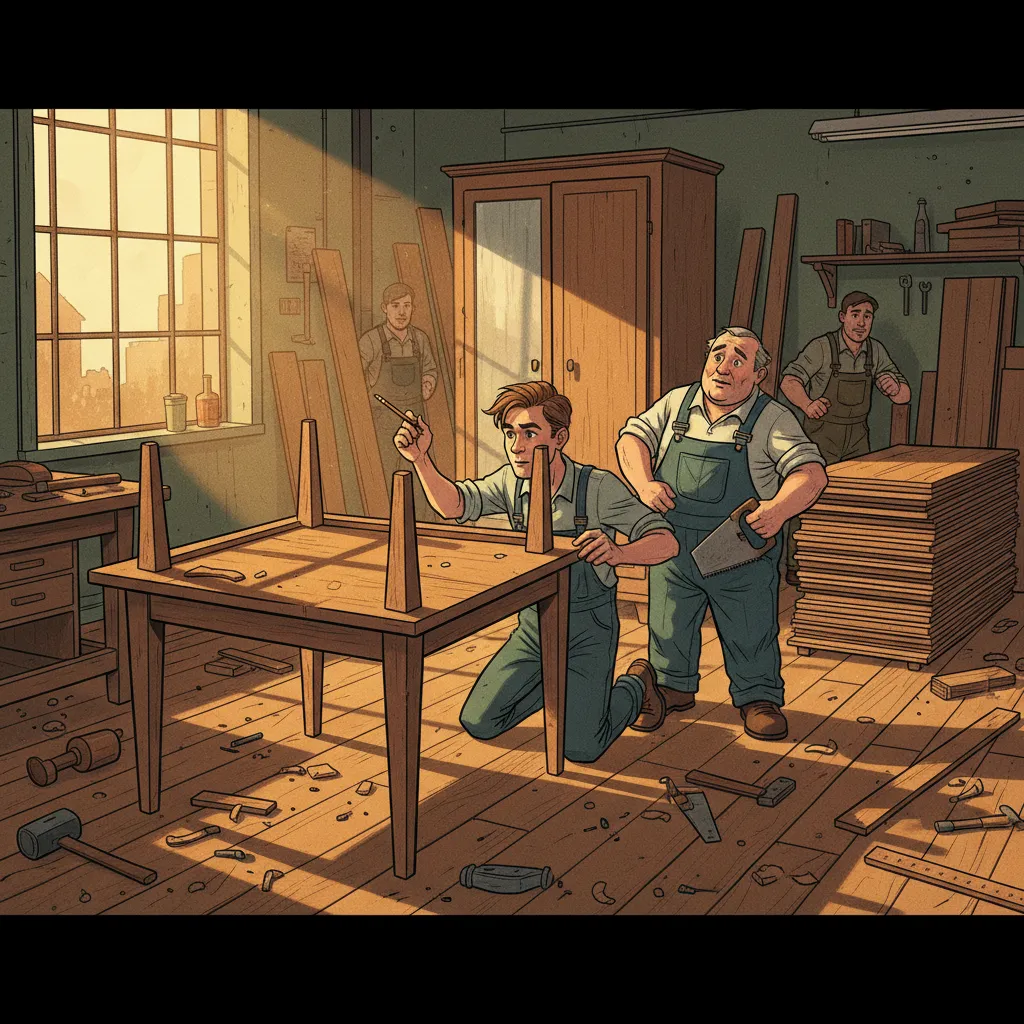
The flat-pack idea — arguably the most consequential innovation in the history of retail — came not from a boardroom brainstorming session but from a practical problem.
In 1956, an IKEA employee named Gillis Lundgren was trying to fit a table into his car for delivery. The table wouldn’t fit. Lundgren looked at it and said, “God, let’s just take the legs off and put it in flat.”
This moment — a frustrated employee trying to cram a table into a car — launched a revolution.
Kamprad immediately understood the implications. If furniture could be designed to ship flat — disassembled, packed in a box, and reassembled by the customer at home — the entire economics of the furniture business would change:
Storage costs would plummet. Flat boxes stacked efficiently in warehouses, requiring a fraction of the space that assembled furniture needed.
Shipping costs would collapse. A flat box weighing 40 pounds cost a fraction to ship compared to an assembled piece of furniture taking up the same cubic volume.
Damage rates would drop. Flat-packed items were protected by cardboard and foam. Assembled furniture was vulnerable to scratches, dents, and breakage during transport.
Customer labor was free. The customer assembled the furniture themselves. IKEA didn’t need to pay for delivery or assembly. The customer did it for free and somehow felt good about it.
“The flat pack was the most important idea in IKEA’s history. It didn’t just reduce costs. It changed the entire relationship between the company and the customer. The customer became part of the production process. And they accepted it because the prices were so low.”
IKEA redesigned its entire product line for flat-pack shipping. Every piece of furniture — every bookshelf, every table, every bed frame — was designed from the beginning to be disassembled, packed flat, and reassembled with an Allen wrench and a set of pictorial instructions (no text, to work in any language).
The design constraint — it must be flat-packable — forced IKEA’s designers to think differently. They couldn’t use traditional joinery methods. They couldn’t rely on heavy materials. They had to innovate constantly on fasteners, materials, and assembly techniques. The constraint became a source of creativity.
And the prices — already low — became absurdly low. IKEA furniture was a fraction of the cost of comparable items from traditional furniture stores. Not because IKEA compromised on design (the designs were often excellent) but because the entire cost structure was different.
🏪 Chapter 3: The Blue and Yellow Cathedral
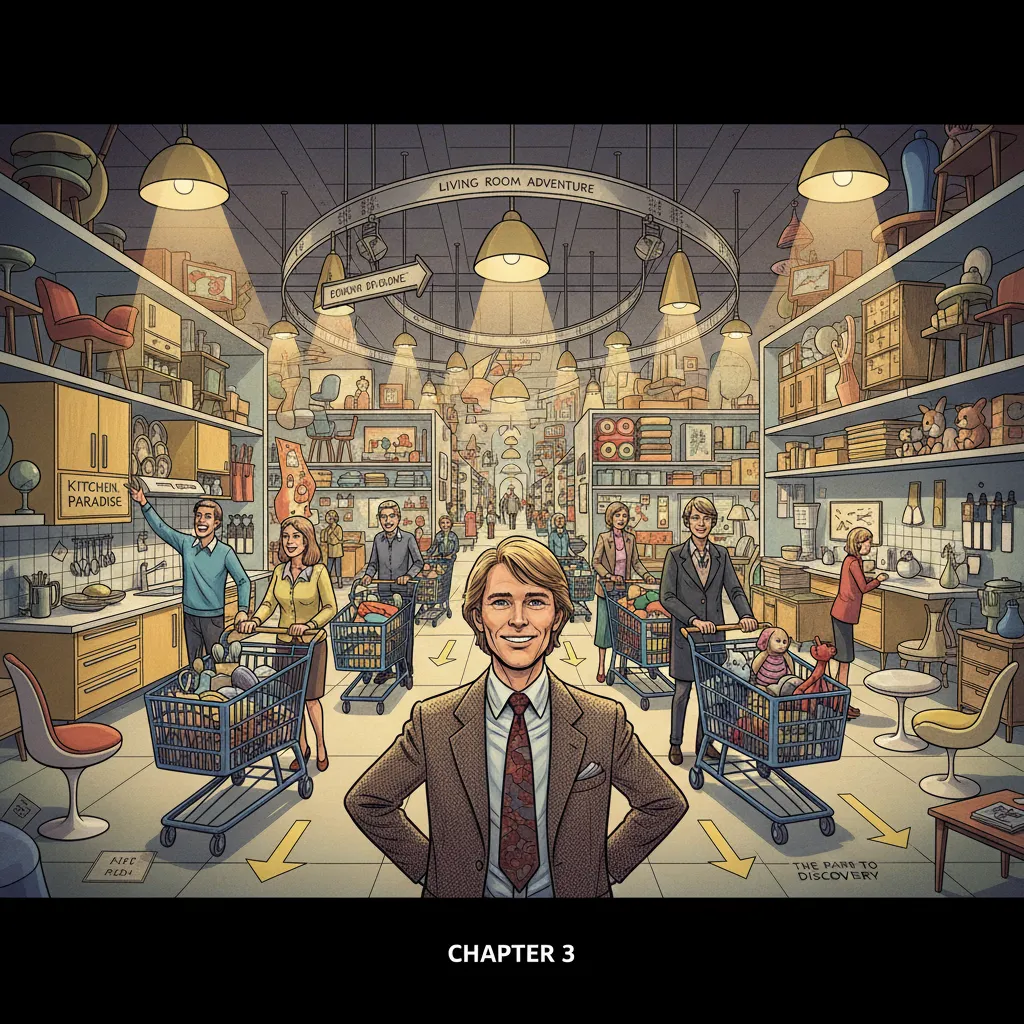
IKEA stores are not stores. They are experiences. And they are designed, with the precision of a theme park, to make you spend more money than you planned.
The first IKEA showroom opened in Älmhult, Sweden, in 1958. It was large — much larger than a typical furniture store. Kamprad wanted customers to see the furniture in room-like settings, arranged as they would be in a real home. The showroom concept — walk through model rooms, get inspired, write down what you want, pick it up in the warehouse — was revolutionary.
But the modern IKEA store, which emerged in the 1970s and 1980s, was something else entirely. It was a 300,000-square-foot labyrinth — a one-way path that snaked through model rooms, through a marketplace of smaller items, through a self-serve warehouse, and past a checkout area.
The one-way path was not an accident. It was behavioral engineering. By forcing customers through the entire store, IKEA ensured maximum exposure to maximum product. Studies showed that customers who followed the full path spent 30-40% more than customers who took shortcuts.
“The IKEA store was designed like a casino. No windows. No clocks. One path. Maximum exposure. And a restaurant in the middle selling meatballs for $1 — just enough food to keep you going, not enough to make you want to leave.”
Ah, the meatballs. The IKEA restaurant was another Kamprad innovation — and another example of his instinct for using low prices as a strategic weapon. The IKEA food court sold Swedish meatballs, hot dogs, and ice cream cones at prices so low they were practically free. The food kept customers in the store longer. It improved their mood (hungry shoppers are unhappy shoppers). And it became, in itself, a reason to visit.
IKEA’s food business — cafeterias, bistros, and the Swedish Food Market — generated an estimated $2 billion in annual revenue by the 2020s. If it were a standalone restaurant chain, it would be one of the largest in Europe.
🌑 Chapter 4: The Nazi Chapter

In 1994, a Swedish newspaper revealed that Ingvar Kamprad had been a member of Nysvenska Rörelsen (New Swedish Movement) — a pro-Nazi, fascist organization — during the early 1940s.
Kamprad was between the ages of 15 and 20 during his involvement. The movement was led by Per Engdahl, a Swedish fascist who had connections to Hitler’s Germany. Kamprad attended meetings, recruited members, and remained in contact with Engdahl until at least 1950.
The revelation was devastating. IKEA was a brand built on Swedish values — democratic design, egalitarianism, environmental consciousness. The founder’s teenage flirtation with fascism was a direct contradiction of everything the brand represented.
Kamprad responded with a public apology. In a letter to IKEA employees, he called his involvement “the greatest mistake of my life” and described it as “a part of my life which I bitterly regret.” He attributed his involvement to youthful naivety and the influence of his German-born grandmother, who was a supporter of Hitler.
“I ask for forgiveness. I was young and stupid. I was influenced by people I should not have trusted. There is no excuse for what I did, and I have spent the rest of my life trying to build something that represents the opposite of everything those people stood for.”
The apology was accepted by most, though the revelation permanently complicated Kamprad’s legacy. Defenders noted that he was a teenager during the war, that many young Swedes were attracted to radical ideologies, and that his subsequent life was defined by democratic values. Critics noted that his involvement continued into the early 1950s — well after the full horror of the Nazi regime was known — and that his grandmother’s influence was an explanation, not an excuse.
The episode also raised questions about IKEA’s corporate mythology. For decades, the company had presented Kamprad as a humble Swedish farm boy whose values were purely egalitarian. The Nazi connection revealed a more complex — and less comfortable — truth about the man behind the brand.
🌍 Chapter 5: The Global March

IKEA’s international expansion was methodical, patient, and enormously successful.
The first store outside Sweden opened in Norway in 1963. Denmark followed in 1969. Germany — which would become IKEA’s largest market — in 1974. The United Kingdom in 1987. The United States in 1985 (after a failed first attempt in 1978). China in 1998. India in 2018.
Each new market required adaptation. IKEA discovered that American customers wanted bigger furniture (American living rooms were larger than Swedish ones). Chinese customers wanted different kitchen layouts. Japanese customers wanted space-efficient designs for their smaller apartments. Arab customers wanted larger dining tables for communal meals.
The company adapted products for each market while maintaining the core IKEA proposition: well-designed, functional, affordable furniture in a distinctive shopping experience.
By 2025, IKEA operated over 460 stores in more than 60 countries. Annual revenue exceeded $50 billion. It was the largest furniture retailer in the world by a wide margin.
“Every IKEA store in the world follows the same basic layout, sells the same basic products, and offers the same basic experience. But within that framework, there are thousands of local adaptations. The genius is maintaining global consistency while allowing local flexibility.”
The U.S. market was particularly instructive. IKEA’s first American store, in Philadelphia, nearly failed because the products were too small and too metric for American tastes. American customers complained that the beds were European-sized, the kitchen measurements didn’t match American standards, and the glasses were too small.
IKEA retreated, redesigned, and relaunched. The second attempt was a success, and by the 2020s, IKEA had over 50 stores in the United States and was one of the country’s most popular furniture brands.
💰 Chapter 6: The Cheapest Billionaire

Ingvar Kamprad was obsessed with cost reduction — not just in his business but in his personal life.
He drove a 1993 Volvo 240 until it was literally falling apart. He flew economy class, even on international flights. He ate lunch at IKEA cafeterias (meatballs, naturally). He bought his clothes at flea markets. He waited for the afternoon mark-down at his local grocery store to buy vegetables at a discount.
He once berated an IKEA designer for using too many screws in a bookshelf. “Every screw costs money,” he said. “Does this bookshelf really need this screw?”
“Waste is a sin. Not a business principle — a sin. When you waste money, you waste the customer’s money, because every unnecessary cost eventually gets passed on to the customer. I will not waste my customer’s money.”
This frugality was either genuine asceticism or the most elaborate piece of brand management in corporate history. Probably both.
Kamprad’s personal wealth was the subject of endless speculation and debate. At various points, estimates ranged from $3 billion to $60 billion, depending on how you valued IKEA’s complex corporate structure. In 2004, Forbes listed Kamprad as the world’s richest person with a net worth of $52 billion. Kamprad disputed this estimate, claiming his wealth was tied up in foundations and that he was “not that rich.”
The confusion was deliberate. IKEA’s corporate structure was — and remains — one of the most byzantine in the global economy.
🏗️ Chapter 7: The Labyrinth of Ownership
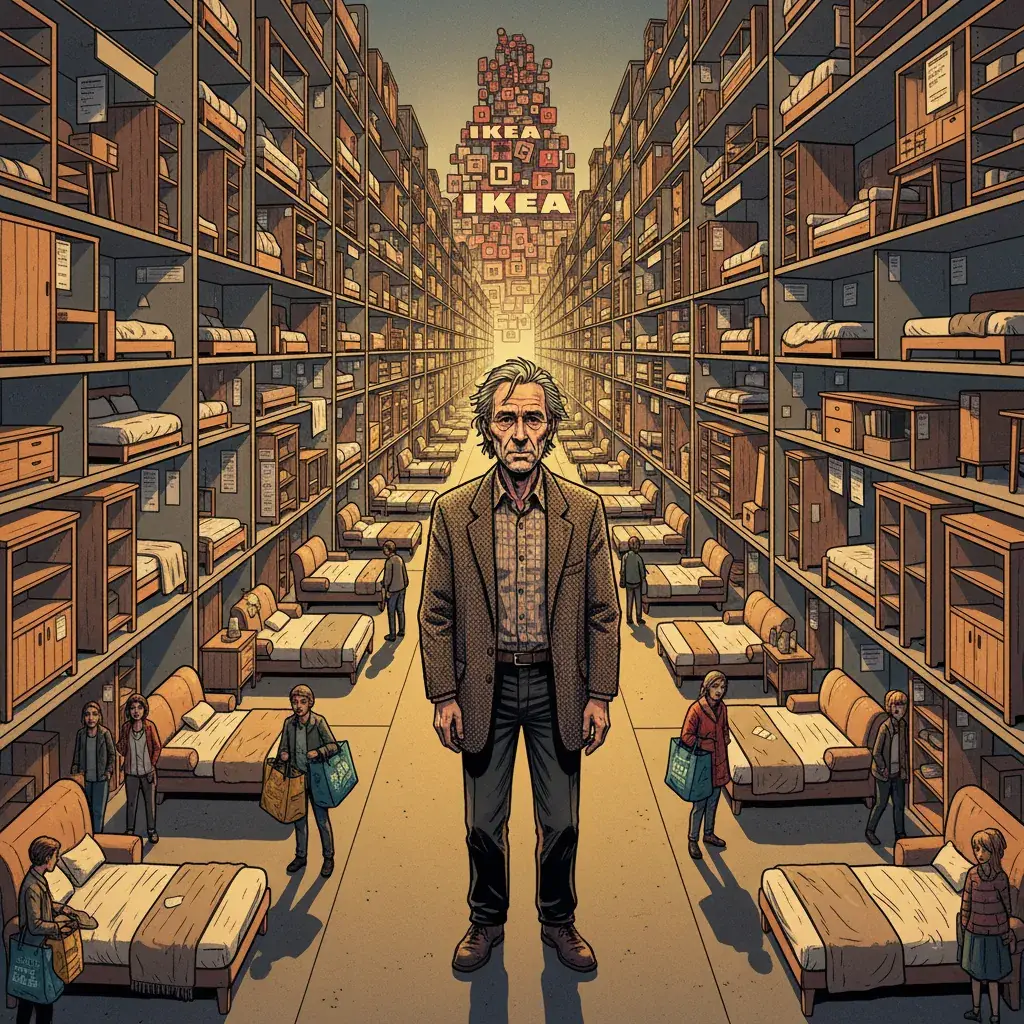
IKEA is not a company. It is a maze.
The corporate structure, designed by Kamprad with the help of tax lawyers, is deliberately complex and deliberately opaque. Here is a simplified version:
INGKA Holding — the entity that operates most IKEA stores — is owned by the Stichting INGKA Foundation, a Dutch charitable foundation. This makes the foundation the world’s largest charity by assets (larger than the Bill & Melinda Gates Foundation).
Inter IKEA Systems — the entity that owns the IKEA brand, concept, and franchise system — is controlled by the Interogo Foundation, a Liechtenstein-based entity linked to the Kamprad family.
Every IKEA store operated by INGKA pays a 3% franchise fee to Inter IKEA Systems for the right to use the IKEA name and concept. These franchise fees generate billions in revenue for the Kamprad family’s entities.
The charitable foundation structure accomplished several things simultaneously: it minimized taxes across multiple jurisdictions, it protected IKEA from hostile takeover (you can’t buy a foundation), it ensured the company’s long-term survival beyond any single family member’s lifetime, and it made IKEA’s true financial structure virtually impossible for outsiders to understand.
“The structure is either a brilliant piece of long-term governance or a brilliant piece of tax avoidance. In practice, it’s both. Kamprad ensured that IKEA would survive forever, that his family would maintain influence, and that taxes would be minimized — all through the same mechanism.”
Critics argued that the charitable foundation was a sham — that its primary purpose was tax avoidance rather than philanthropy. The foundation’s charitable spending, while substantial in absolute terms, represented a small fraction of its total assets.
Defenders argued that the foundation structure ensured IKEA’s independence and longevity — protecting it from the short-term pressures that destroy many family businesses in the third or fourth generation.
🌿 Chapter 8: The Sustainability Promise
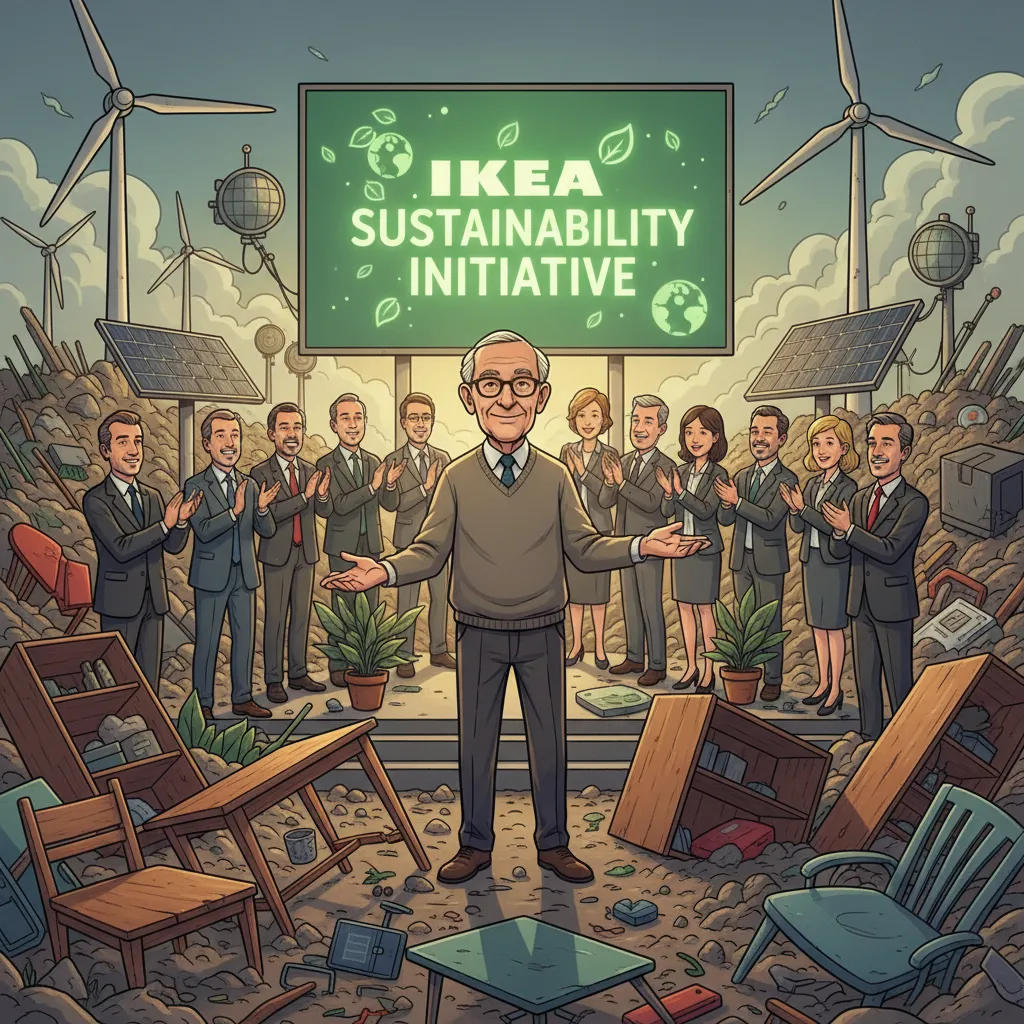
In the 2010s and 2020s, IKEA positioned itself as a leader in corporate sustainability — an ironic stance for a company whose business model was built on selling disposable furniture at low prices.
The company invested heavily in renewable energy (owning and operating wind farms and solar installations), sustainable forestry (sourcing wood from responsibly managed forests), and circular design (designing products to be repaired, reused, and recycled).
IKEA pledged to become “climate positive” by 2030 — reducing more greenhouse gas emissions than its entire value chain produced. It invested in plant-based food alternatives (the plant-based meatball, launched in 2020, was a hit). It began offering furniture buy-back programs, where customers could sell used IKEA furniture back to the store for resale.
Whether these initiatives were genuine environmental leadership or sophisticated greenwashing was debated. IKEA’s fundamental business model — selling affordable furniture to hundreds of millions of people — was inherently resource-intensive. No amount of solar panels could fully offset the environmental impact of manufacturing and shipping billions of flat-pack items around the world.
“IKEA’s sustainability challenge is existential. The company’s value proposition is ‘affordable furniture for everyone.’ But ‘furniture for everyone’ means producing at a scale that has real environmental consequences. Balancing accessibility with sustainability is the defining tension of IKEA’s future.”
🕊️ Chapter 9: The Founder’s End
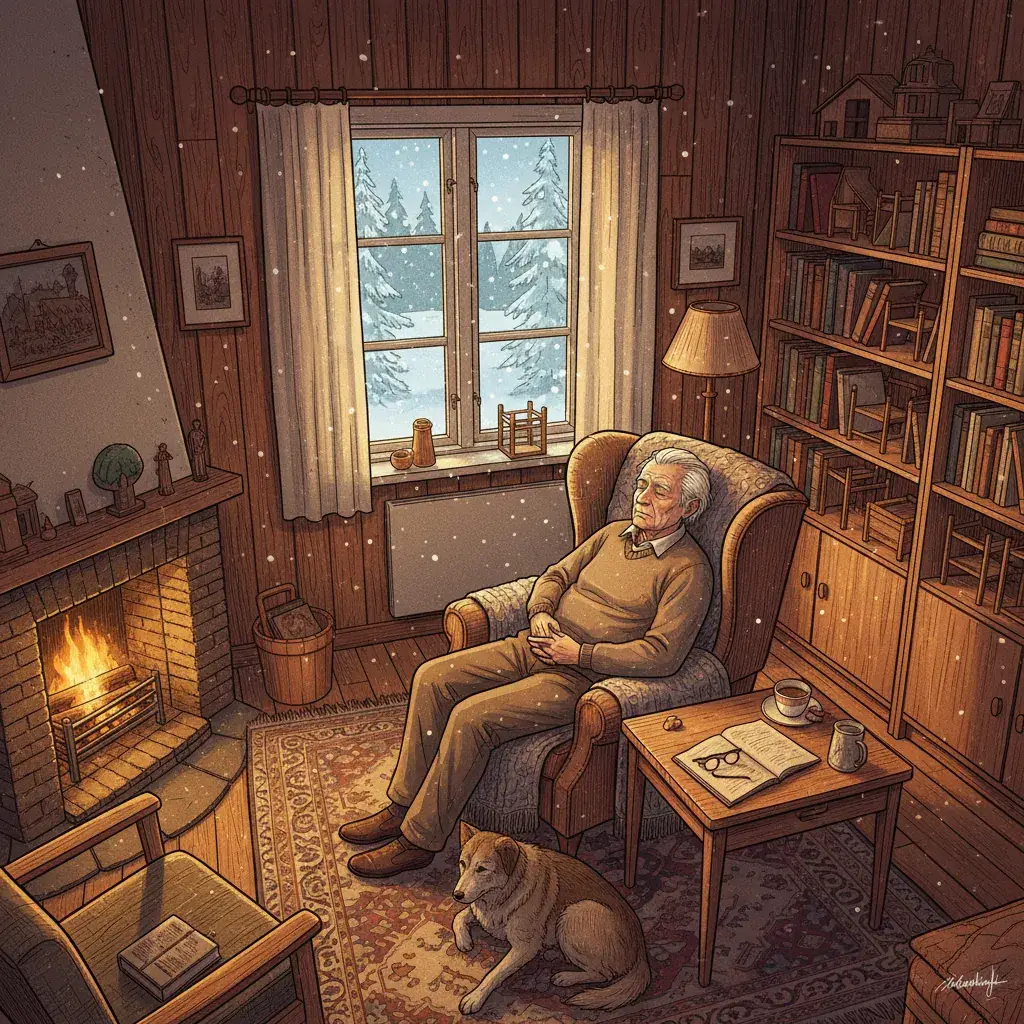
Ingvar Kamprad died on January 27, 2018, at his home in Småland, Sweden. He was 91 years old. He had spent his final years back in Sweden, having lived in Switzerland for four decades (ostensibly for tax reasons, though he claimed it was for “personal reasons”).
His three sons — Peter, Jonas, and Mathias — inherited influence over the complex web of foundations and holding companies that controlled IKEA. The transition had been carefully planned for years, with each son taking responsibility for different parts of the IKEA ecosystem.
The succession was smooth — a testament to Kamprad’s long-term planning and the foundation structure that insulated the company from the kind of family disputes that had destroyed other business dynasties.
“Kamprad spent the last decade of his life ensuring that IKEA would survive without him. The foundation structure, the succession plan, the corporate culture — everything was designed for permanence. He was building a company for the centuries, not the quarters.”
🏆 Chapter 10: The Kamprad Legacy
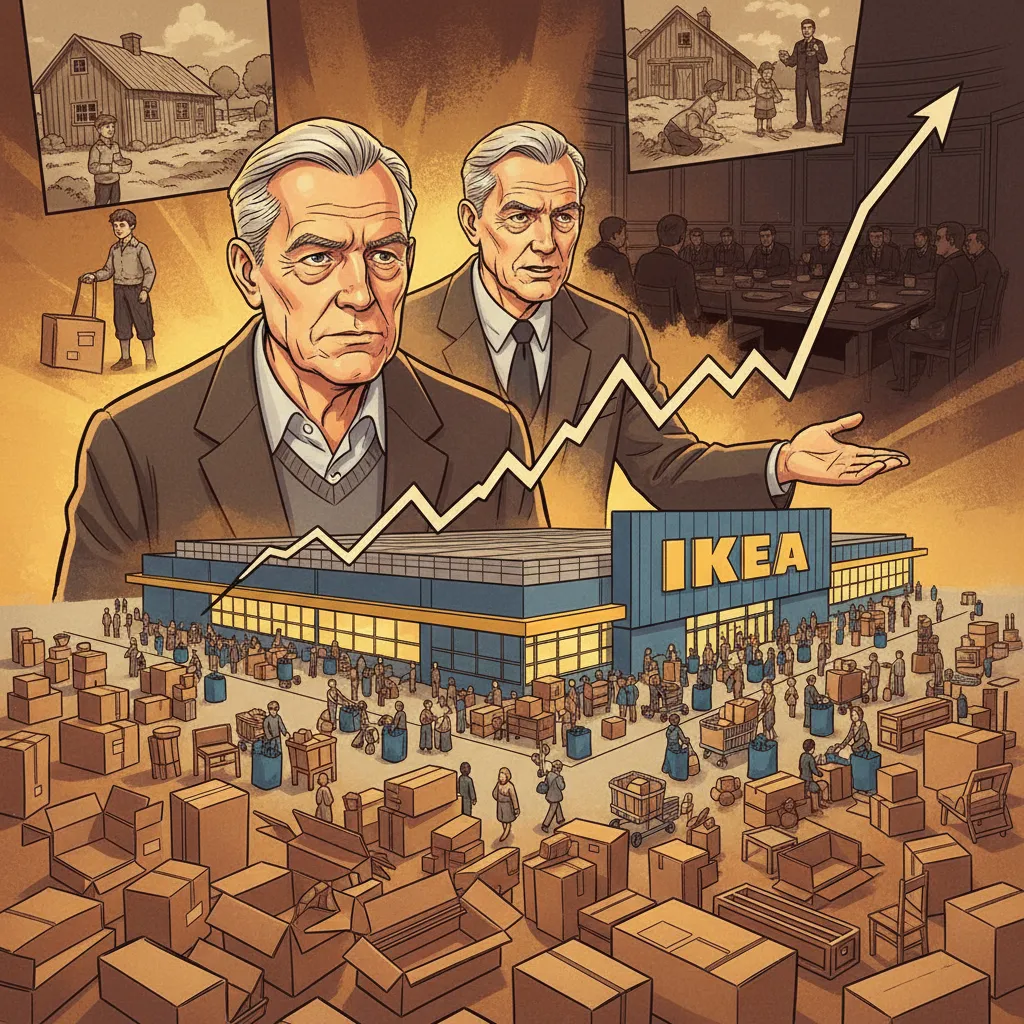
Ingvar Kamprad’s legacy is complicated.
He was a visionary who democratized good design — making well-designed, functional furniture affordable to hundreds of millions of people who would otherwise have lived with hand-me-downs or junk. The BILLY bookcase, the KALLAX shelf, the MALM bed — these products are in hundreds of millions of homes worldwide. IKEA genuinely changed how the world lives.
He was also a former Nazi sympathizer, a relentless tax optimizer, and a man whose personal frugality sometimes crossed the line into eccentricity.
The Kamprad Playbook:
-
Transfer work to the customer. The flat-pack model transferred assembly labor from the factory to the customer. The customer did the work for free — and IKEA passed some of the savings back as lower prices. This principle applies far beyond furniture: self-checkout, self-service, and user-generated content all follow the same logic.
-
Design for the price, not around it. Most companies design a product and then figure out the price. IKEA started with the price and designed the product to fit. Every design decision was constrained by cost, which forced creativity and efficiency.
-
Make the store an experience. IKEA stores were not retail spaces — they were destinations. The showrooms, the restaurant, the one-way path — everything was designed to create an experience that justified the trip and maximized spending.
-
Build for permanence. IKEA’s foundation structure ensured that the company would survive beyond any single generation. This long-term orientation allowed patient investment in brand, culture, and capability.
-
Frugality is a competitive advantage. Kamprad’s obsessive cost-consciousness permeated IKEA’s culture. Every employee understood that waste was the enemy. This cultural commitment to efficiency was IKEA’s most durable competitive advantage.
The cheapest billionaire in the world built the most popular furniture store on Earth by understanding one thing: everyone deserves a well-designed home. And if you make the furniture affordable enough, everyone will buy it.
Even if they have to assemble it themselves.
IKEA operates over 460 stores in more than 60 countries and generates annual revenue exceeding $50 billion. The INGKA Foundation, which owns the majority of IKEA stores, is one of the world’s largest charitable foundations by assets. Ingvar Kamprad died on January 27, 2018, at the age of 91.
🎨 Chapter 11: The Democratic Design Manifesto (1960s-1970s)
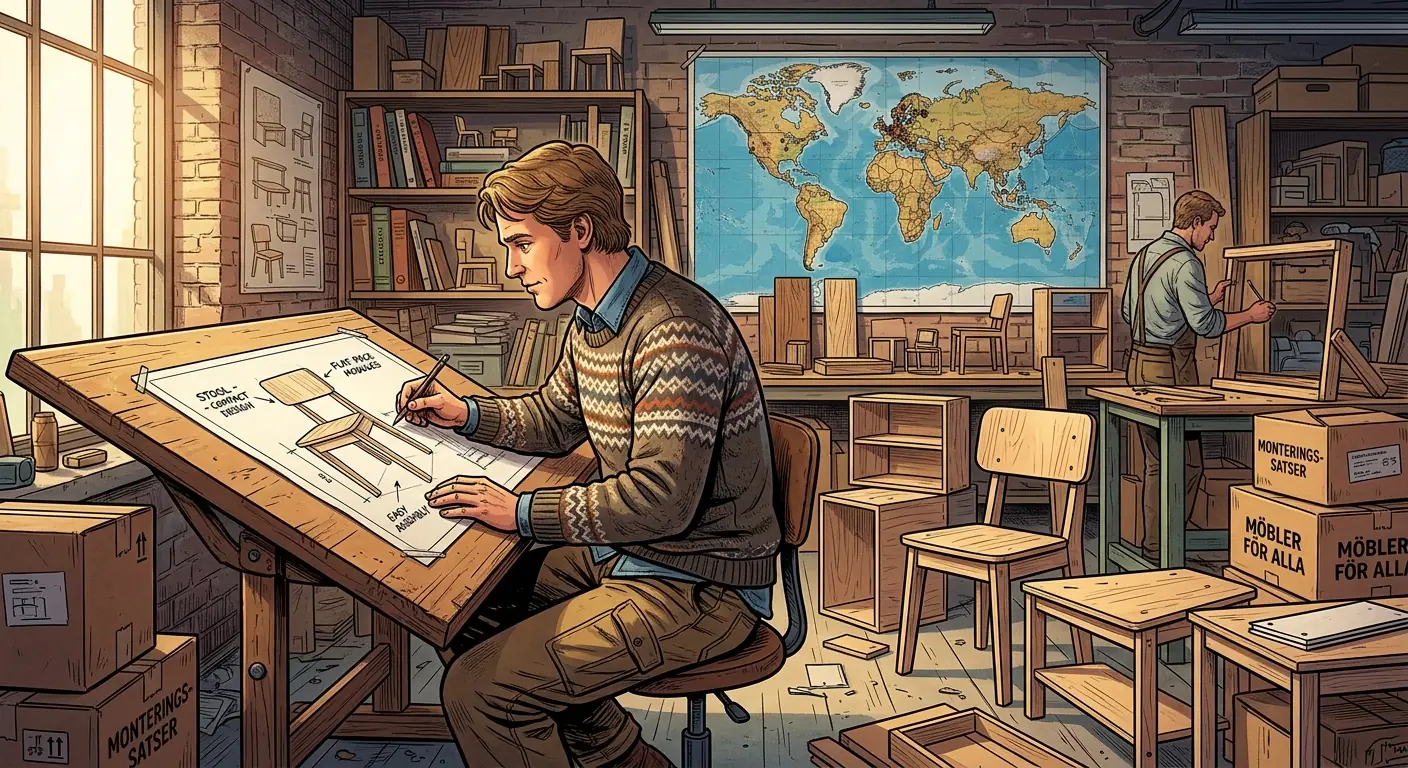
While the flat-pack was a logistical and financial masterstroke, it was only half the equation. What good is cheap, shippable furniture if it looks like it was designed by a committee of disgruntled accountants? Ingvar Kamprad, ever the pragmatist, understood that price alone wouldn’t build a global empire. People wanted good design – something stylish, functional, and durable – without having to mortgage their homes for it. This conviction gave birth to IKEA’s “Democratic Design” philosophy, a concept that would redefine what “affordable furniture” could mean.
Design for the Many, Not the Few
Kamprad wasn’t interested in catering to the elite. His vision was to furnish the homes of “the many people,” a concept deeply rooted in his Småland upbringing where practical, beautiful items were a luxury few could afford. By the late 1960s and early 1970s, IKEA began actively collaborating with external designers, challenging them to create pieces that met five strict criteria: form, function, quality, sustainability, and a low price. This wasn’t just about making things look good; it was about integrating design into the entire production process, from material sourcing to manufacturing. Kamprad famously pushed his designers and suppliers to innovate, often with a blend of charm and relentless fiscal pressure. “Good design is not a luxury for the rich,” he’d often say, “it is a right for every person. And if it’s not cheap, it’s not good design for IKEA.” This wasn’t some airy-fairy artistic endeavor; it was a hardcore business strategy, ensuring that every curve and every joint served a purpose and didn’t inflate the price tag.
Iconic Designs Born of Necessity
Out of this philosophy came some of IKEA’s most enduring icons. Take the POÄNG armchair, designed by Noboru Nakamura in 1976. It started as the “Poem” armchair, a simple bentwood frame with a resilient cushion. It was comfortable, stylish, and crucially, could be flat-packed. It’s been continuously produced for nearly 50 years, selling millions of units, a testament to its timeless design and affordability. Or consider the BILLY bookcase, introduced in 1979 by Gillis Lundgren (yes, the same guy who invented flat-pack!). It was designed to be easily expandable, endlessly configurable, and incredibly cheap. Its initial target price was 100 Swedish Kronor (about $12 at the time), and Kamprad famously challenged Lundgren to hit that mark. The result? Over 110 million BILLY bookcases have been sold worldwide by 2023, enough to stretch around the globe if laid end-to-end. These weren’t just pieces of furniture; they were solutions, democratizing access to functional, aesthetic home furnishings.
The Supplier Squeeze and Innovation
Achieving “democratic design” wasn’t always smooth sailing. Kamprad’s relentless pursuit of lower prices meant constantly pushing suppliers to innovate their production methods, find cheaper materials, and optimize logistics. This often led to friction, with some suppliers balking at the demanding margins. But Kamprad’s approach, often described as part visionary, part demanding taskmaster, forced an industry-wide shift. Suppliers learned to be more efficient, and IKEA, in turn, invested in long-term relationships, sometimes even buying stakes in its key manufacturing partners. This symbiotic, if sometimes strained, relationship ensured that IKEA could maintain its low prices without completely sacrificing quality. It wasn’t just about finding cheap suppliers; it was about making things cheap through ingenious design and manufacturing processes, fundamentally altering how furniture was conceived, produced, and sold globally. Kamprad didn’t just want a better product; he wanted a better process.
🛒 Chapter 12: The IKEA Experience: Beyond the Bargain (1980s-Present)
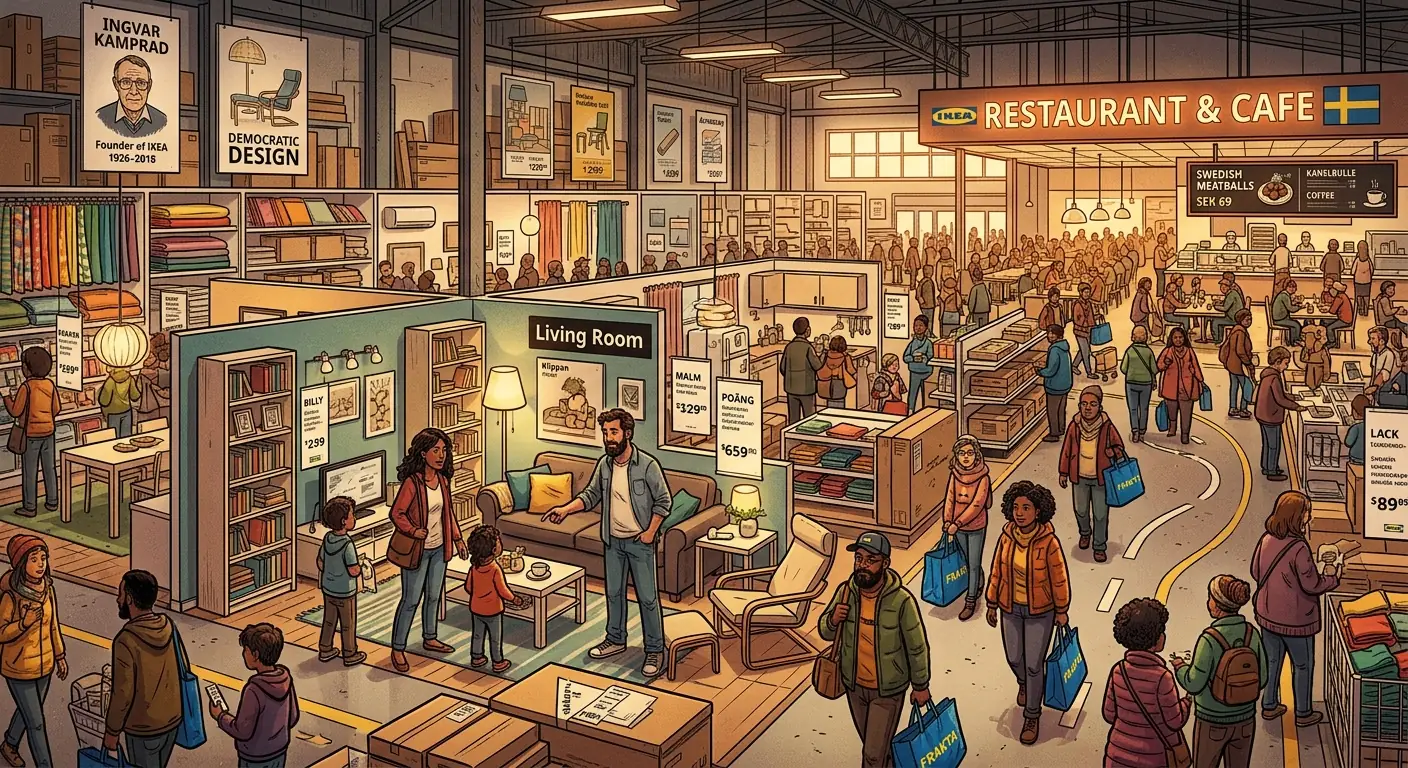
If Ingvar Kamprad was the brain behind the flat-pack and democratic design, he was also the architect of an utterly unique retail experience. Stepping into an IKEA store isn’t just shopping; it’s an immersive journey, a carefully choreographed labyrinth designed to engage, inspire, and, let’s be honest, often confuse and exhaust you. This “IKEA Experience” is as much a part of the brand’s identity as its blue and yellow logo or its Swedish meatballs. It’s a masterclass in behavioral economics, turning a functional chore into a full-day excursion for millions.
The Labyrinthine Playground
The typical IKEA store layout is famously (or infamously) a one-way path, a winding maze that takes you through fully furnished showrooms, past tempting impulse buys, and finally, into the self-serve furniture warehouse. This isn’t accidental. It’s a deliberate strategy to expose shoppers to the entire product range, inspire them with fully decorated room sets, and encourage unplanned purchases. Kamprad understood that people buy with their eyes and their imaginations. By presenting aspirational yet attainable living spaces, IKEA taps into the desire for a better, more organized home. The “arrow on the floor” is more than a guide; it’s a gentle nudge, ensuring you see everything from kitchen utensils to entire bedroom suites. This design also creates a sense of exploration, turning what could be a mundane task into a treasure hunt, albeit one where you might get lost and emerge hours later, slightly disoriented but with a cart full of unexpected delights.
The “IKEA Effect” and Psychological Ingenuity
Beyond the physical layout, IKEA ingeniously leverages a psychological phenomenon known as the “IKEA Effect.” Coined by Harvard Business School professor Michael I. Norton and his colleagues, this effect describes the increased value we place on products we have partially created ourselves. That frustration you feel while assembling a HEMNES dresser? It’s not just a rite of passage; it’s an investment of effort that makes you value the finished product more. You don’t just own a bookcase; you made that bookcase. This brilliantly turns the customer’s labor into a perceived value add, rather than a burden. Kamprad instinctively understood this long before academics gave it a name. He realized that by offloading assembly to the customer, he wasn’t just saving money; he was fostering a deeper connection to the product. It’s a subtle but powerful piece of psychological wizardry that transformed a potential drawback into a core competitive advantage.
Meatballs, Mazes, and Marriages
The IKEA experience extends beyond furniture. The restaurants, serving up millions of plates of those iconic Swedish meatballs (and, more recently, vegetarian options), are integral. They provide a much-needed break from the shopping marathon, refuel families, and cement IKEA’s image as a destination for a full day out. Kamprad recognized early on that hungry customers are not happy customers. By offering affordable food, often at a loss, IKEA encourages longer stays and a more pleasant overall experience. There’s also the childcare area, Småland, where parents can drop off their kids, allowing for uninterrupted browsing. This holistic approach, from the labyrinthine showrooms to the cheap hot dogs, transforms a simple furniture store into a cultural phenomenon, a place where families spend weekends, arguments sometimes erupt over assembly instructions, and, occasionally, even relationships are tested or strengthened. It’s a testament to Kamprad’s vision that he didn’t just sell furniture; he sold an entire lifestyle, complete with a side of lingonberry sauce.
🚀 Chapter 13: Navigating the Digital Age & Post-Founder Future (2000s-Present)
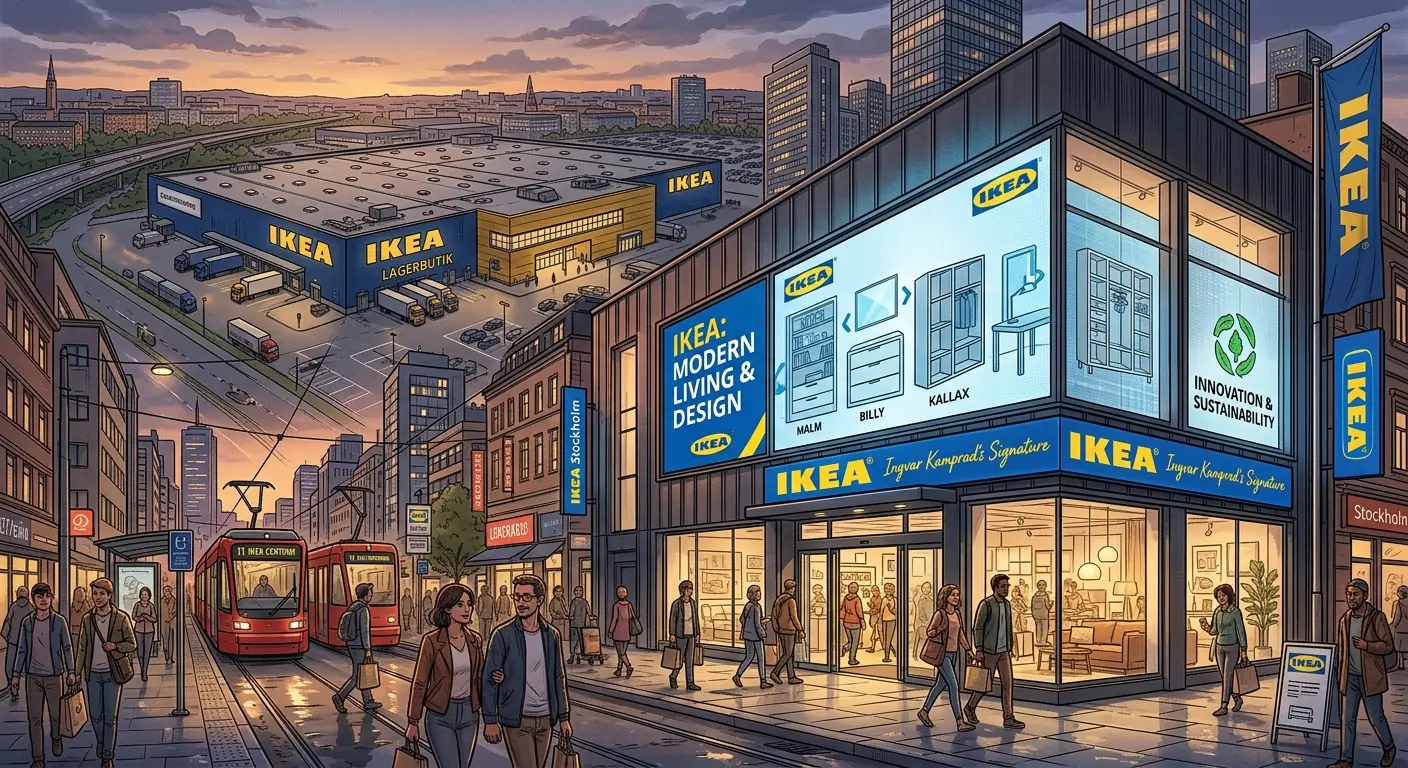
Ingvar Kamprad was a visionary, but he built IKEA in an analog world. The internet, e-commerce, and the rise of the digital-first consumer presented a monumental challenge to a business model so heavily reliant on massive out-of-town stores and the tactile experience of wandering through showrooms. As the world sped up, IKEA, with its deliberate, labyrinthine paths, sometimes felt like it was stuck in a time warp. The question for the company, especially after Kamprad’s passing in 2018, became: how do you maintain the “IKEA spirit” of democratic design and affordability while meeting the demands of instant gratification and frictionless online shopping?
The Online Paradox
For years, IKEA was notoriously slow to embrace e-commerce, a surprising hesitancy for a company built on efficiency. The very things that made IKEA successful – the flat-pack, the self-assembly, the sprawling stores – became hurdles online. Shipping bulky, heavy flat-packs was expensive, often negating the in-store savings. Customers, used to instant delivery from Amazon, balked at long lead times and high delivery fees. By 2017, online sales accounted for a mere 4% of IKEA’s total revenue, a stark contrast to competitors. This was IKEA’s central paradox: a global powerhouse that struggled to adapt to the most significant retail shift of the 21st century. The challenge wasn’t just about building a website; it was about reimagining the entire supply chain and customer experience for a digital-first world, all while preserving the low-price ethos that was Kamprad’s sacred cow. It was a massive undertaking, akin to asking a supertanker to perform a sharp U-turn.
A New Generation of Leadership, A New Era of Retail
With Kamprad stepping back from daily operations in the early 2010s and his eventual death, a new generation of leadership, often from outside the Kamprad family (though guided by the family’s foundations), took the helm. They faced the daunting task of modernizing IKEA without losing its soul. The strategy involved massive investments in digital transformation: upgrading logistics, improving online platforms, and diversifying store formats. Instead of just relying on the massive “blue box” stores, IKEA began experimenting with smaller “city stores” in urban centers, often without warehouses, allowing customers to browse, order, and arrange delivery. They introduced click-and-collect points, assembly services, and even augmented reality apps that let you “place” furniture in your home digitally before buying. This shift, which really accelerated around 2018-2020, recognized that while the core values remained, how customers interacted with IKEA needed to evolve dramatically. It was less about dictating the experience and more about offering choices.
The Future of Frugality
Today, IKEA is a company in flux, grappling with global supply chain disruptions, inflationary pressures, and the ever-present demand for greater sustainability. Can it remain “the cheapest billionaire” in a world where raw material costs fluctuate wildly and ethical sourcing is paramount? The answer lies in continued innovation, not just in design, but in process. IKEA is exploring circular economy models, aiming for 100% circular products by 2030, which means designing for disassembly, reuse, and recycling. They are also tackling the “last mile” delivery challenge, experimenting with electric vehicles and localized micro-fulfillment centers. Ingvar Kamprad’s legacy of frugality and ingenuity continues to guide the company, but the tools and tactics have changed. The future of IKEA isn’t just about selling flat-packs; it’s about selling solutions in an increasingly complex and interconnected world, proving that even a retail giant born of a five-year-old’s match-selling hustle can adapt, evolve, and continue to furnish the world, one self-assembled piece at a time.
💡 Key Insights
- ▸ IKEA's flat-pack model was not just a cost reduction — it was a complete reinvention of the furniture value chain. By designing furniture to be shipped flat and assembled by the customer, Kamprad eliminated the most expensive parts of the furniture business: storage, shipping volume, and last-mile delivery. The customer did the labor for free. This insight — that you can dramatically reduce costs by transferring work to the customer — predates self-service technology by decades.
- ▸ Kamprad's corporate structure — placing IKEA's assets under a Dutch charitable foundation (Stichting INGKA Foundation) — was simultaneously a tax optimization strategy and a governance innovation. The foundation structure made IKEA virtually impossible to acquire, protected it from inheritance taxes across generations, and insulated it from the short-term pressures of public markets. It also made IKEA's true financial structure almost completely opaque, which Kamprad preferred.