Rupert Murdoch: The Man Who Bought the News and Rewrote the Rules of Power
From a single Australian newspaper to a global media empire spanning six continents — Murdoch didn't just report the news. He weaponized it.

View all stories about this mogul
On July 10, 2011, Rupert Murdoch did something he had never done in six decades of running newspapers: he killed one. The News of the World — Britain’s bestselling Sunday tabloid, founded in 1843, read by nearly 3 million people every week — was shut down overnight. Not because it was losing money. Because its journalists had been caught hacking into the voicemail of a murdered 13-year-old girl named Milly Dowler, giving her parents false hope that she was still alive.
The scandal should have ended Murdoch. It ended dozens of careers around him. It led to criminal trials, parliamentary inquiries, and the closure of a 168-year-old institution. But Murdoch himself survived. He always survives. That is the most important thing to understand about the most powerful media mogul in history: not what he built, but what he endured — and what he was willing to destroy — to keep building.
🗞️ Chapter 1: The Inheritance
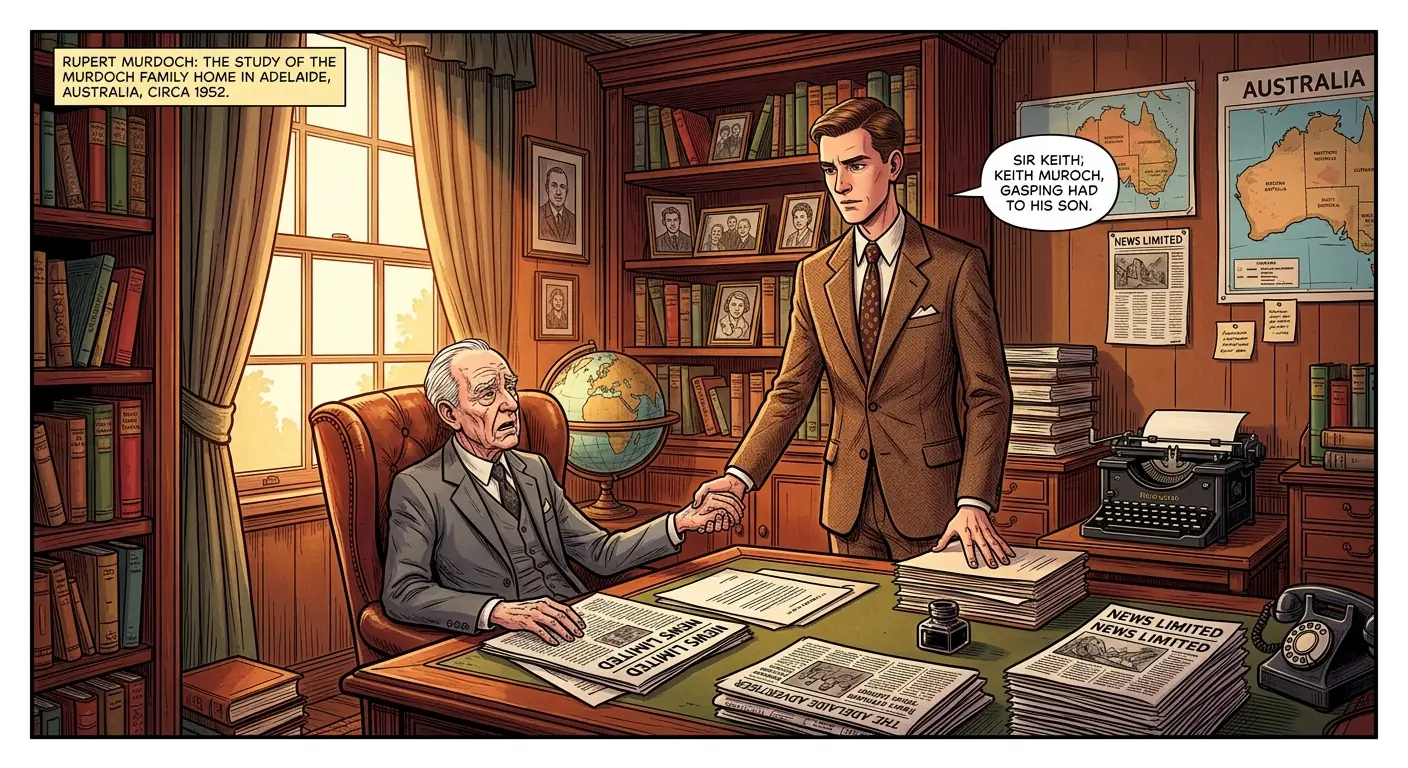
Keith Rupert Murdoch was born on March 11, 1931, in Melbourne, Australia. His father, Sir Keith Murdoch, was a celebrated war correspondent who had become one of Australia’s most influential newspaper publishers, running the Herald and Weekly Times group. Young Rupert grew up in a world of ink and deadlines, absorbing the rhythms of the newsroom the way other children absorbed bedtime stories.
When Keith Murdoch died in 1952, Rupert was 21 years old and studying at Oxford. He returned to Australia to claim his inheritance — but the inheritance was smaller than expected. Estate taxes and the structure of his father’s holdings meant that Rupert ended up with just two small newspapers: the Adelaide News and the Sunday Mail, both in South Australia.
Most heirs would have managed the papers conservatively and lived comfortably. Murdoch looked at his two modest papers and saw a launchpad.
Within a year, he was cutting costs, redesigning front pages, and pushing sensationalist stories that drove newsstand sales. He understood instinctively what would take media academics decades to articulate: people don’t buy newspapers for information. They buy them for sensation, outrage, and entertainment. Information is the excuse. Emotion is the product.
By the early 1960s, Murdoch was buying up papers across Australia. In 1964, he launched The Australian, the country’s first national newspaper. It lost money for years — but it gave Murdoch political influence at a national level. He was learning the trade he would practice for the rest of his life: trading media reach for political access, and political access for regulatory favors that enabled more media reach.
🌍 Chapter 2: The Invasion of Fleet Street
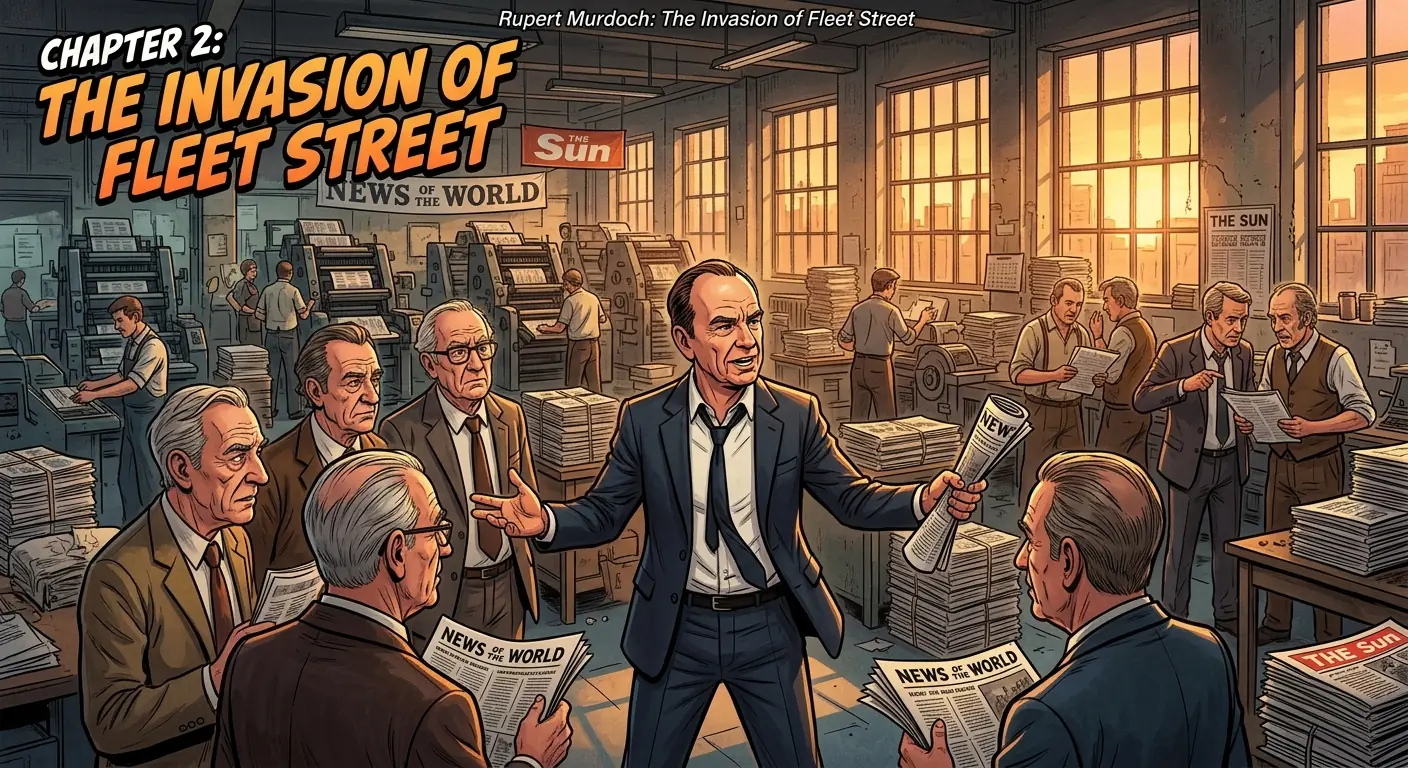
In 1969, Murdoch made his first move into the United Kingdom by acquiring the News of the World, followed quickly by The Sun. The Sun was a struggling broadsheet. Murdoch turned it into a tabloid, splashed it with sex, scandal, and sports, and introduced the infamous Page 3 feature — a daily photograph of a topless woman. Circulation tripled within a year.
British media elites were horrified. Murdoch didn’t care. He was building an audience, and the audience was buying. By the mid-1970s, The Sun was the bestselling daily newspaper in Britain.
But the real power play came in 1981, when Murdoch acquired The Times and The Sunday Times — the crown jewels of British journalism. The establishment papers. The serious papers. And he got them without a referral to the Monopolies and Mergers Commission, despite already owning The Sun and the News of the World. The ruling Conservative government of Margaret Thatcher waved the deal through.
The transaction set a pattern that would repeat across continents: Murdoch would support a political candidate or party through his media outlets, and in return, that candidate or party would smooth the regulatory path for his acquisitions. It wasn’t bribery. It was something more sophisticated — a mutual dependency between media power and political power that benefited both sides and was almost impossible to prosecute.
In 1986, Murdoch broke the print unions by moving his entire London newspaper operation from Fleet Street to a new, automated printing plant in Wapping, East London. The move was planned in military secrecy. On the night of January 24, 1986, hundreds of print workers showed up for their shifts at the old plants and found the doors locked. Their jobs were gone. The papers were already rolling off the presses in Wapping.
The Wapping dispute lasted over a year. There were riots, arrests, and accusations of police brutality. Murdoch won. The print unions were broken, and Murdoch’s labor costs plummeted. It was brutal, it was calculated, and it was the moment Murdoch proved he would sacrifice anything — relationships, reputation, workers’ livelihoods — to protect the commercial logic of his empire.
🇺🇸 Chapter 3: The American Conquest
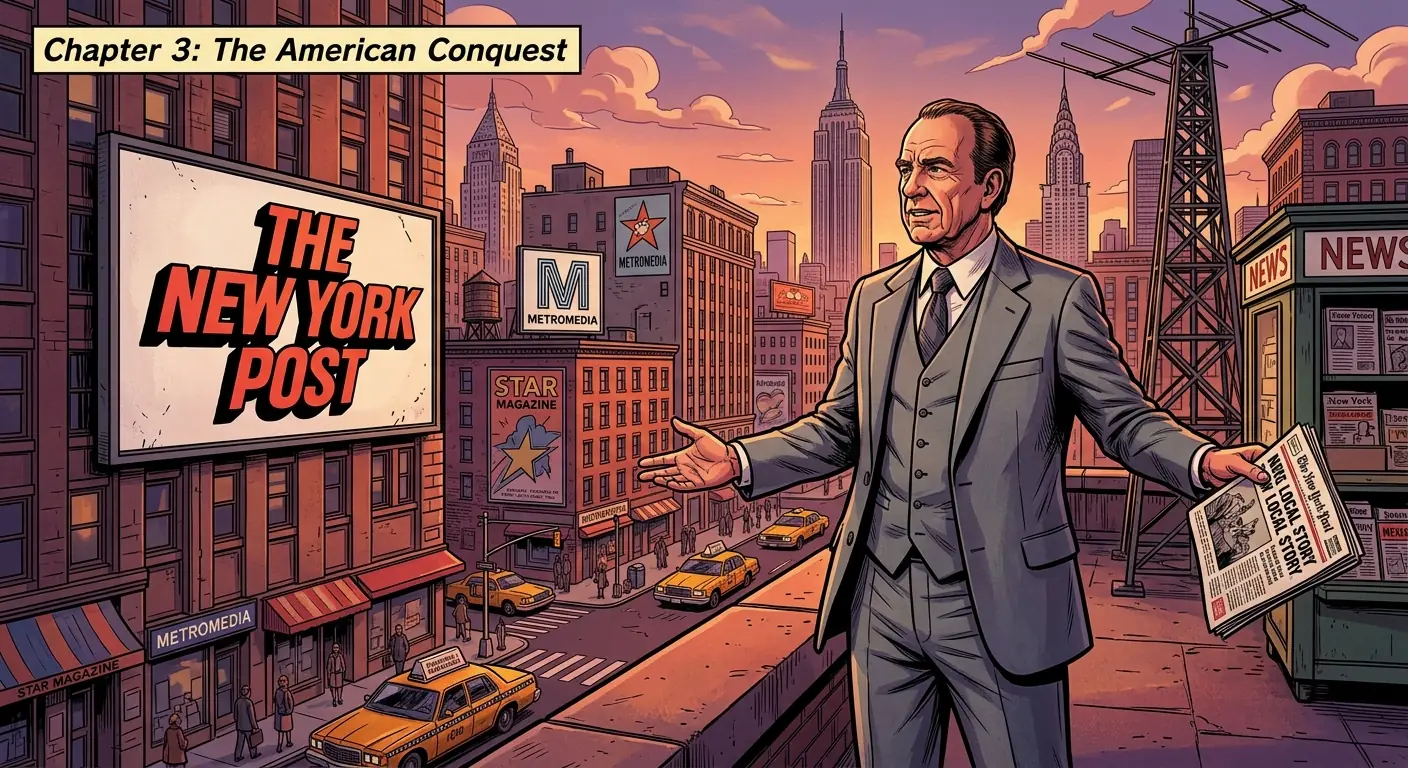
Murdoch became a U.S. citizen in 1985 — not out of patriotism but because U.S. law required American citizenship to own a television station. He had already bought the New York Post in 1976, injecting it with the same tabloid energy he’d brought to The Sun. Now he wanted television.
In 1985, he bought 20th Century Fox for $575 million and a collection of television stations from Metromedia for $2 billion. Then he did something the entire television industry thought was impossible: he launched a fourth broadcast network.
Fox Broadcasting Company debuted on October 9, 1986. The established networks — ABC, CBS, and NBC — laughed. They had decades of affiliate relationships, massive production budgets, and lock-in with advertisers. What could a scrappy Australian with a movie studio and a handful of stations do?
The answer: everything they couldn’t. Fox launched edgy, younger-skewing programming that the legacy networks were too cautious to try. Married… with Children. The Simpsons. In Living Color. Beverly Hills, 90210. The content was louder, cruder, and more irreverent than anything on the Big Three. Advertisers chasing the 18-34 demographic couldn’t get enough.
By the mid-1990s, Fox was a legitimate fourth network. And then Murdoch made the move that would reshape American politics for a generation.
📺 Chapter 4: The Fox News Gambit
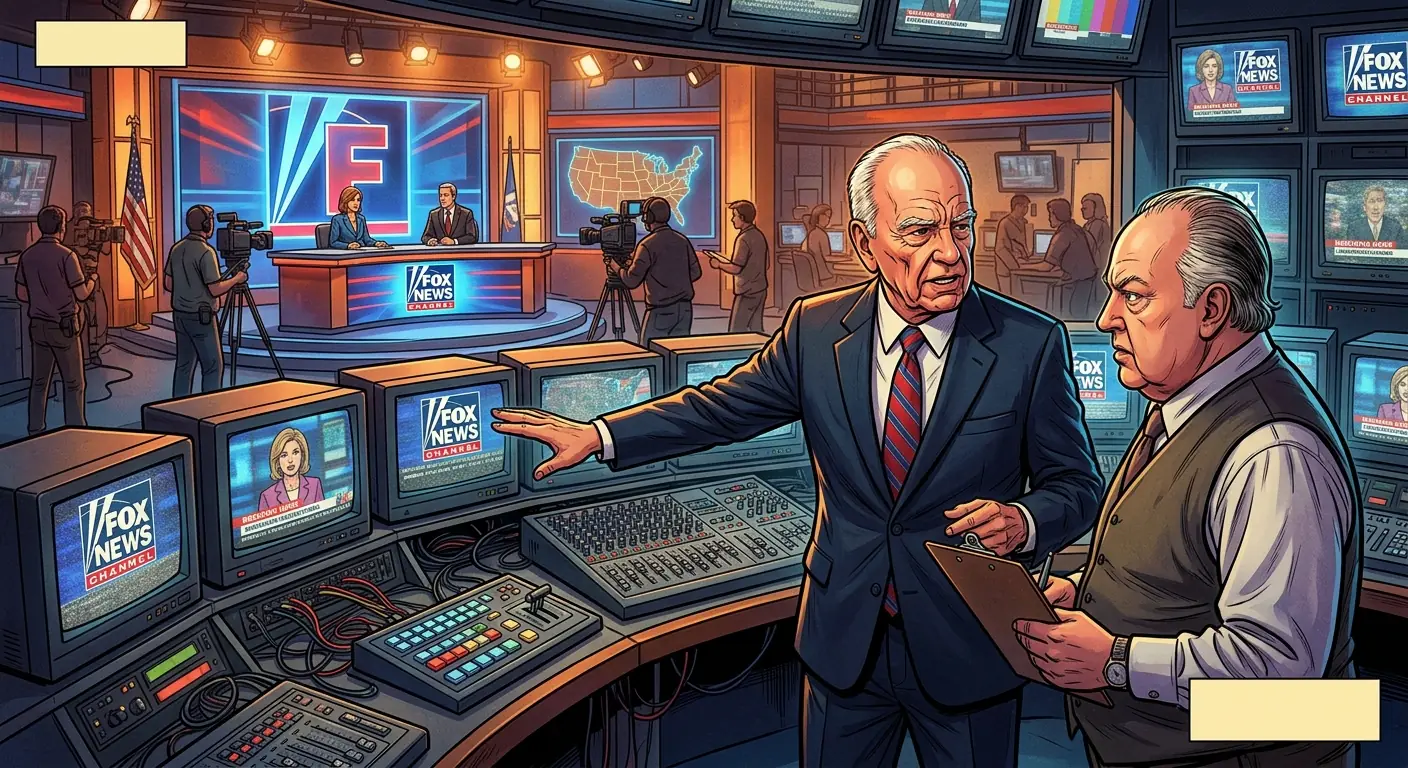
On October 7, 1996, Fox News Channel launched with a staff of roughly 300 and distribution in 17 million homes. Its founding CEO was Roger Ailes, a former Republican political consultant who had advised Richard Nixon, Ronald Reagan, and George H.W. Bush.
The premise was simple and devastating: CNN and the broadcast networks had a liberal bias. Millions of American conservatives felt unrepresented by mainstream television news. Fox News would serve them.
The slogan was “Fair and Balanced.” The content was anything but — and that was the point. Fox News didn’t pretend to be neutral. It built a fortress of opinion programming hosted by charismatic, combative anchors like Bill O’Reilly, Sean Hannity, and later Tucker Carlson. The shows were fast-paced, emotionally charged, and designed to produce outrage — the most shareable, most addictive emotion in media.
Fox News lost money for its first five years. Murdoch absorbed the losses without flinching. He knew what he was building.
By 2002, Fox News surpassed CNN in ratings. By 2010, it was the most-watched cable news network in America by a wide margin, often drawing more viewers than CNN and MSNBC combined. It wasn’t just a news channel anymore. It was a political institution. Republican candidates campaigned on its airwaves. Republican voters organized around its narratives. When Donald Trump rode down an escalator in June 2015 to announce his presidential candidacy, Fox News was the oxygen supply that kept his campaign alive.
The financial results were staggering. At its peak, Fox News generated roughly $2.7 billion in annual revenue with profit margins north of 60%. It was one of the most profitable media properties in history — and it reshaped American democracy in ways that are still being debated.
💔 Chapter 5: The Scandals
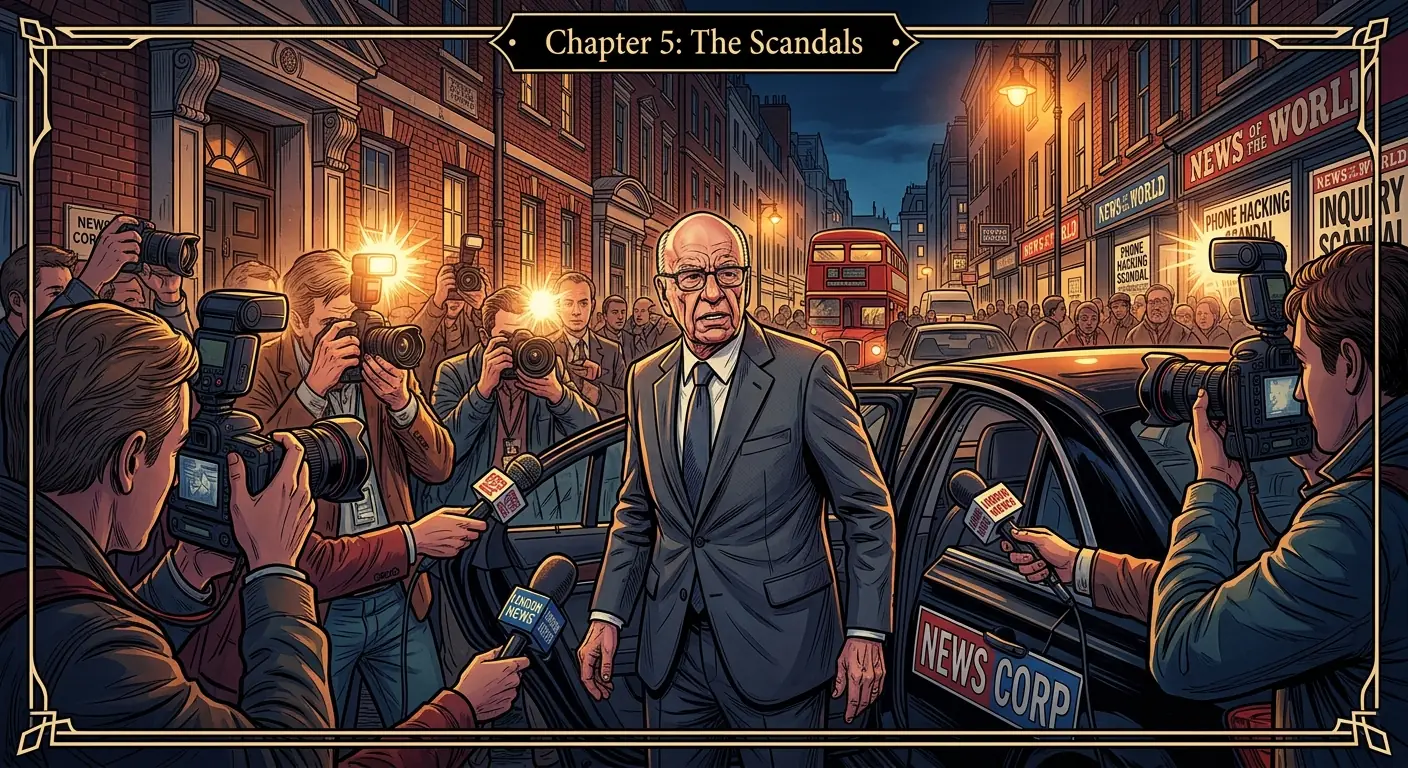
The phone-hacking scandal broke in 2006 when a royal editor at the News of the World was convicted of intercepting voicemail messages of members of the British royal household. But the true scope of the scandal didn’t emerge until 2011, when The Guardian reported that News of the World journalists had hacked the phone of murdered teenager Milly Dowler in 2002.
The revelation triggered a national reckoning. Advertisers fled. Public outrage was volcanic. On July 7, 2011, Murdoch announced the News of the World would publish its final edition three days later. A 168-year-old newspaper, dead in 72 hours.
The Leveson Inquiry — a judicial public inquiry into the culture, practices, and ethics of the British press — laid bare the symbiotic relationship between Murdoch’s media empire and British politicians. Former Prime Minister Tony Blair was godfather to one of Murdoch’s children. David Cameron, the sitting Prime Minister, had hired a former News of the World editor as his communications director. The inquiry revealed a power network so intertwined that it was impossible to tell where journalism ended and politics began.
Murdoch himself testified before Parliament on July 19, 2011. In one of the most surreal moments in modern political theater, a protester threw a plate of shaving foam at his face. Murdoch’s then-wife, Wendi Deng, leapt up and slapped the attacker — a moment that was replayed millions of times and briefly made her a folk hero.
Criminal trials followed. Andy Coulson, a former News of the World editor who had served as Cameron’s communications director, was sentenced to 18 months in prison. Rebekah Brooks, CEO of News International and one of Murdoch’s closest lieutenants, was acquitted.
Murdoch shut down the scandal, absorbed the damage, and kept going. He spun off his publishing assets into a new company called News Corp in 2013, separating the “clean” entertainment businesses (21st Century Fox) from the “messy” newspaper businesses. It was corporate surgery performed without anesthesia.
💎 Chapter 6: The Disney Deal and the Fox Remains
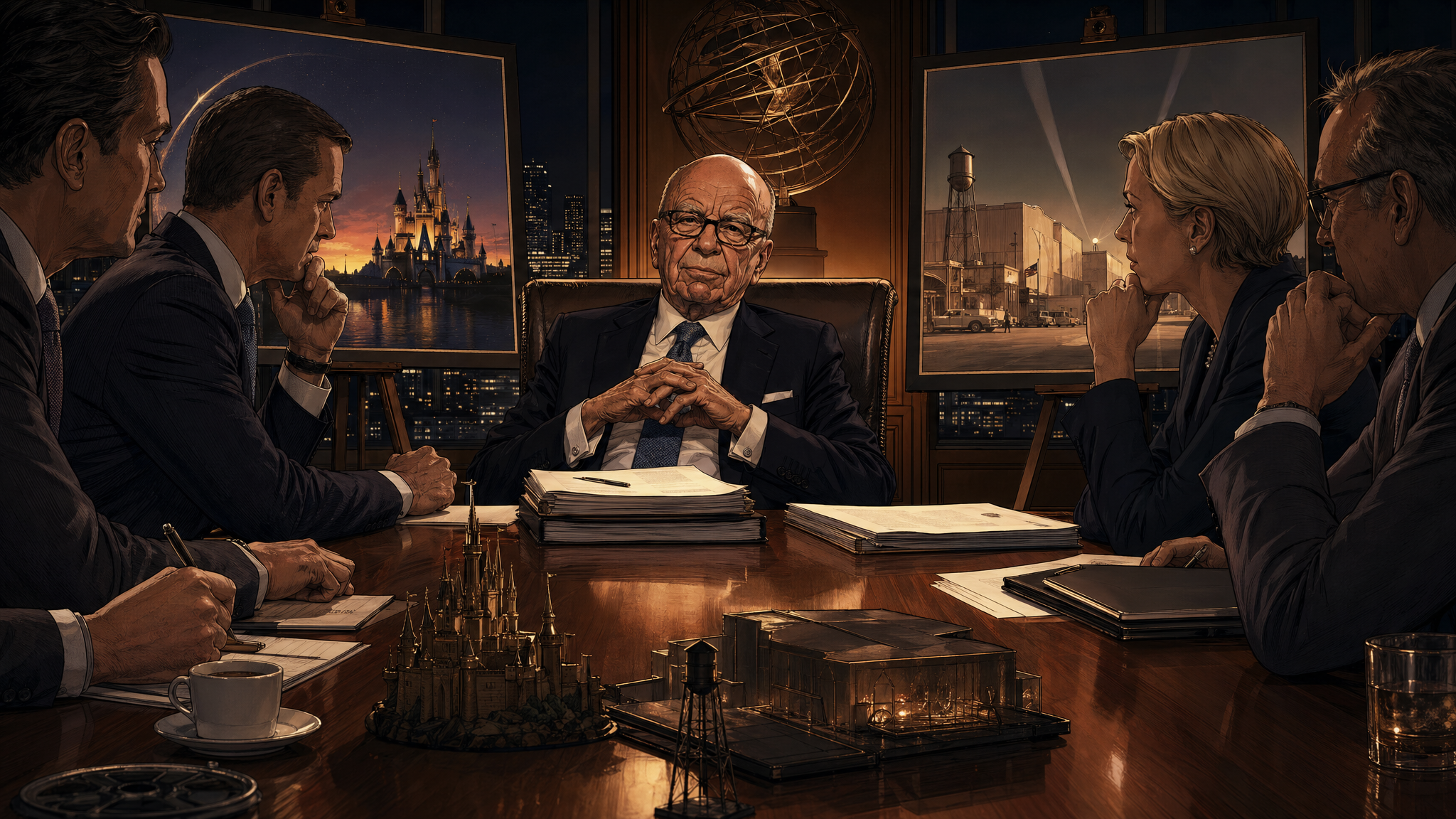
In December 2017, Murdoch did something nobody expected: he sold most of 21st Century Fox to The Walt Disney Company for $71.3 billion.
The deal included 20th Century Fox film and television studios, FX Networks, National Geographic, Star India, and Fox’s 30% stake in Hulu. What Murdoch kept was Fox News, Fox Sports, Fox Broadcasting, and the local television stations — the assets that gave him political influence and live sports, the two things that couldn’t be replicated by streaming.
Why sell? Murdoch reportedly told people he saw the streaming wars coming and concluded that Fox didn’t have the scale to compete with Netflix, Amazon, and the soon-to-launch Disney+. “Scale matters,” he told associates. Better to sell at a premium and let Disney fight that war.
The price was extraordinary. Murdoch had bought 20th Century Fox for $575 million in 1985. He sold it — along with the empire he’d built around it — for $71.3 billion. Even after accounting for the assets he’d added over three decades, the return was staggering.
👑 Chapter 7: The Succession War
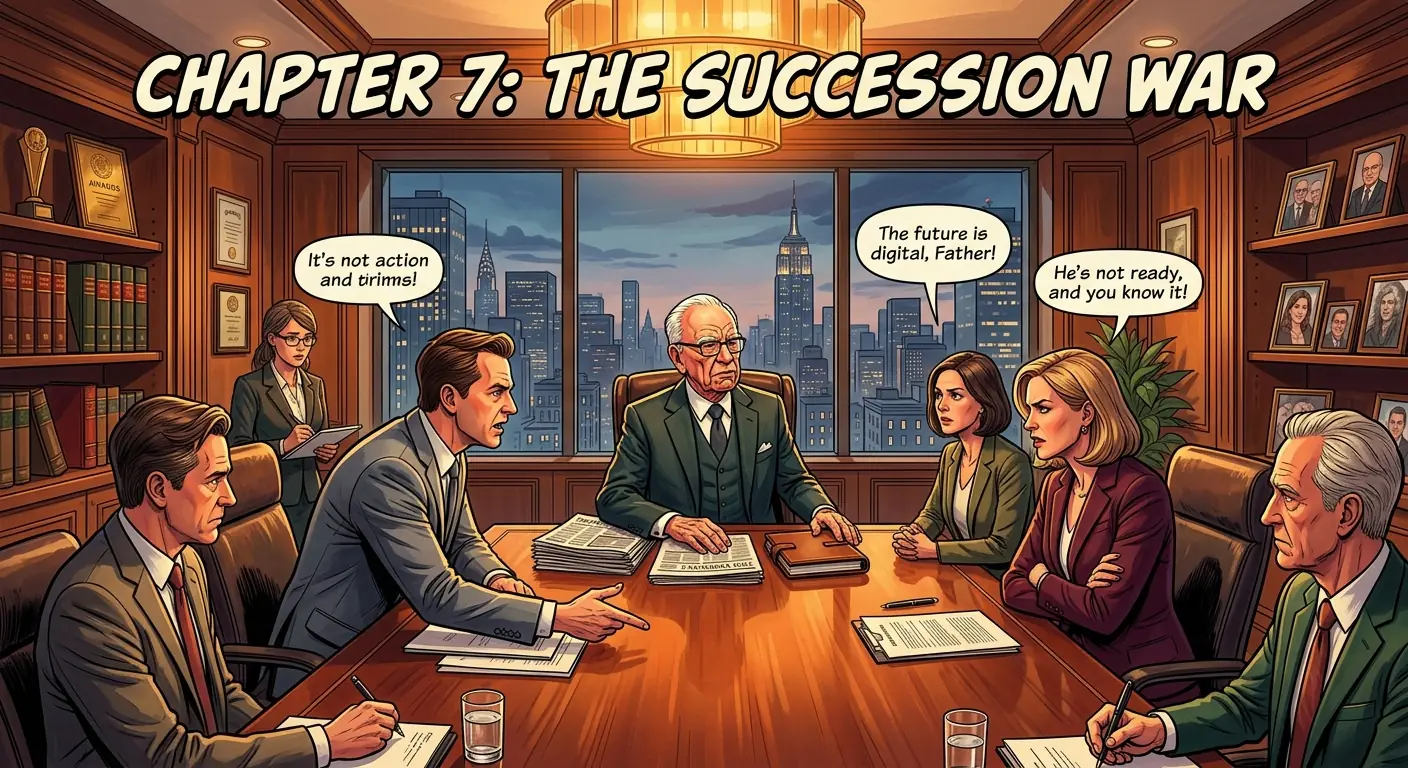
Rupert Murdoch has been married four times. He has six children from three marriages. And the question of who would inherit control of his empire has consumed more attention than any business succession since the Rothschilds.
The key players: Lachlan Murdoch, the eldest son, who serves as chairman of both Fox Corporation and News Corp. James Murdoch, the younger son, who was once heir apparent before a falling-out with his father over Fox News’s political direction and climate change coverage. Prudence, the eldest daughter from Murdoch’s first marriage. And Elisabeth Murdoch, who has run her own production companies.
In September 2023, at age 92, Murdoch stepped down as chairman of both Fox Corporation and News Corp, handing the titles to Lachlan. But in December 2023, news broke that Murdoch was seeking to amend the family trust to give Lachlan sole control — overriding a structure that was supposed to give all four eldest children equal voting power after Rupert’s death.
The legal battle that followed was straight out of the HBO series Succession — which, not coincidentally, was widely reported to be inspired by the Murdoch family. James, Elisabeth, and Prudence challenged the amendment. The case went to a Nevada court. In December 2024, a commissioner ruled against Rupert’s proposed changes, finding he had acted in “bad faith.”
The succession war laid bare the fundamental tension at the heart of every dynastic empire: the founder builds for control, but control cannot survive the grave. Murdoch spent 70 years constructing a media empire designed to bend to his will. Now, with multiple heirs pulling in different directions, the empire faces the one force its founder cannot outmaneuver — biology.
🏛️ Chapter 8: The Verdict
Rupert Murdoch’s net worth as of early 2026 is estimated at approximately $20 billion — lower than you might expect for a man of his influence, but Murdoch was never primarily motivated by personal wealth. He was motivated by power. Specifically, the power to shape public opinion across continents.
At his peak, Murdoch’s media properties reached hundreds of millions of people daily across the United States, United Kingdom, Australia, and Asia. He helped elect prime ministers and presidents. He broke unions, destroyed competitors, and survived scandals that would have vaporized anyone else. He saw the digital revolution coming, sold his entertainment assets at the top of the market, and retained the properties that give him maximum political leverage per dollar.
His legacy is a machine that manufactures influence. Whether that machine has been good for democracy is a question that will be debated for decades. What is not debatable is this: for 70 years, Rupert Murdoch understood something about media that most of his competitors never grasped.
He understood that the news isn’t the product. The audience is the product. And the customer is whoever wants to reach them — advertisers, politicians, or anyone else willing to pay the toll.
He built the tollbooth. He set the price. And for seven decades, the most powerful people in the English-speaking world lined up to pay it.
🛰️ Chapter 9: The Satellite Gamble: Sky’s Ascent and Star’s Reach (1980s-1990s)
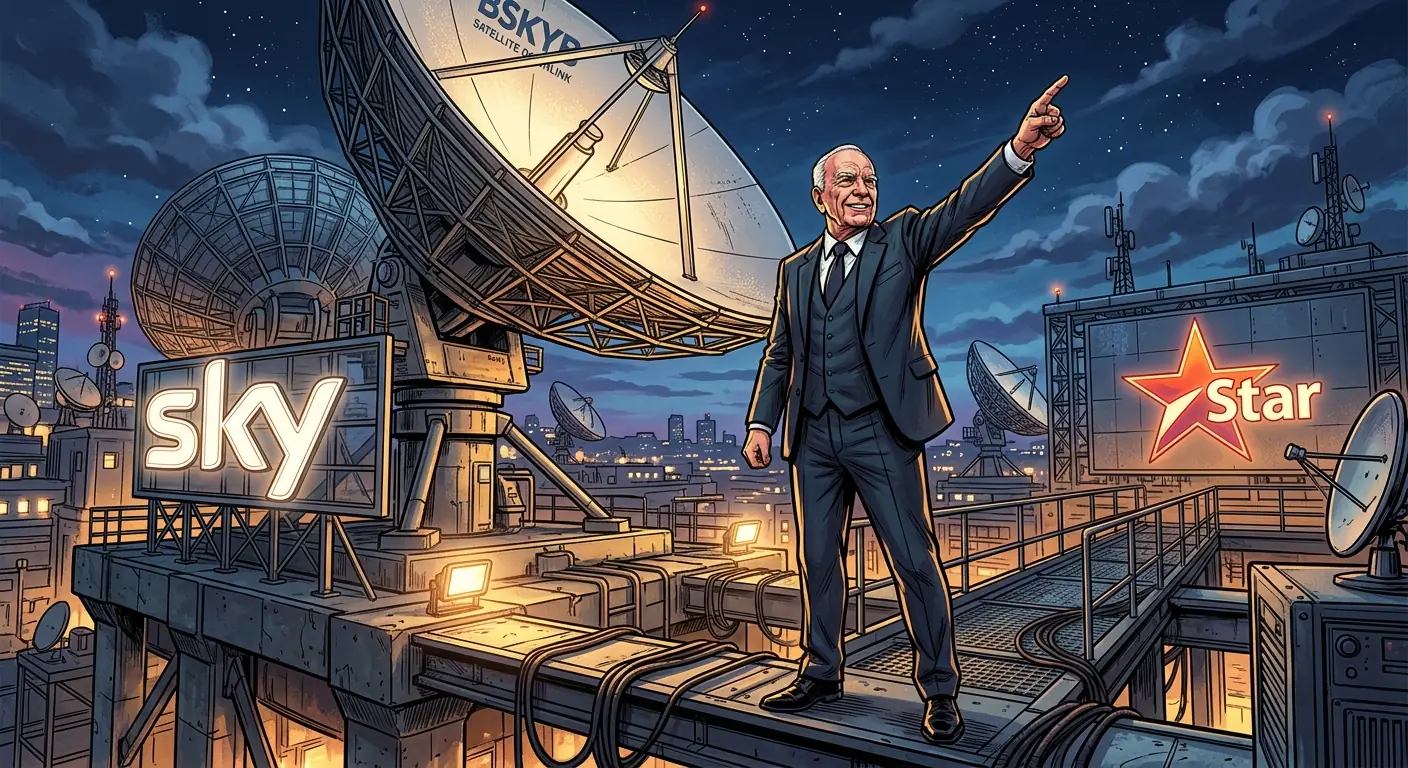
So, Rupert Murdoch had conquered newspapers, first in Australia, then in Britain, and was making serious inroads in the U.S. print and film markets. But by the late 1980s, the ink-stained future was starting to look a little… well, stagnant. Television was the real prize, and not just terrestrial broadcast, but the wild, untamed frontier of satellite television. Murdoch, ever the visionary (or perhaps just a man who really hated being told no by regulators), saw the future beaming down from space. And he wanted a piece of that sky. A big, fat piece.
The Birth of Sky: A Financial High-Wire Act
In 1989, while most people were still figuring out how to program their VCRs, Murdoch launched Sky Television in the UK. This wasn’t some cautious toe-dip; this was a cannonball into the deep end of a very cold pool. He faced off against British Satellite Broadcasting (BSB), a consortium backed by established media giants and a hefty budget. The initial years were, to put it mildly, a financial bloodbath. Sky was losing £10 million a week at one point. Can you imagine? That’s enough to make even a hardened mogul sweat through his bespoke suit. Murdoch, however, wasn’t just hardened; he was forged in a furnace of debt and ambition. He famously said,
“The thing is, television is a high-cost business. And if you’re going to be in it, you’ve got to be prepared to lose money for a long time.”
And lose money he did. But he also had a secret weapon: sheer, unadulterated grit and a willingness to merge with rivals when necessary. In 1990, facing financial collapse for both companies, Sky merged with BSB, creating BSkyB (later just Sky). Murdoch, naturally, emerged as the dominant shareholder and the strategic mastermind. He used aggressive marketing, a focus on popular content (especially live football, a genius move for the UK market), and cheap satellite dishes to woo subscribers. By 1995, BSkyB was finally profitable, and by the turn of the millennium, it was a dominant force, fundamentally reshaping British television. From near bankruptcy to ubiquitous household name – classic Murdoch.
Conquering Asia: Star TV and Cultural Collisions
But why stop at Britain when there’s an entire planet out there? In 1993, Murdoch turned his gaze eastward, acquiring Star TV (Satellite Television Asian Region) for a reported $525 million. This network, beaming from a single satellite, reached 53 countries from the Middle East to Japan. It was an audacious move, planting Murdoch’s flag firmly in the world’s most populous and diverse continent. The vision was grand: bring Western entertainment and news to billions. The reality was a bit more… complicated.
Star TV faced immense cultural, linguistic, and regulatory hurdles. What played in Hong Kong didn’t necessarily fly in India, let alone in China. Murdoch initially tried to offer a broad mix of Western programming, but quickly learned the hard way that local content was king. He had to invest heavily in regional programming, creating local channels in multiple languages. There were also the inevitable political headaches. Murdoch, a staunch free-speech advocate (when it suited him, of course), found himself in a particularly sticky situation with the Chinese government over the broadcasting of BBC World News, which Beijing deemed too critical. In a move that shocked many, Murdoch eventually pulled BBC World News from Star TV’s Chinese feed in 1994, a decision widely criticized as bowing to censorship in pursuit of market access. He later claimed it was a commercial decision, but the optics were clear: when it came to business in China, sometimes principles took a backseat. It was a stark reminder that for Murdoch, the bottom line often trumped everything else.
🌐 Chapter 10: The Internet’s Wild West: MySpace, Google, and Digital Dreams (2000s)

The 2000s arrived, bringing with them the internet, a new frontier that promised to upend every industry, especially media. For a man who had built an empire on controlling distribution – from newsstands to satellite dishes – the free-for-all of the World Wide Web must have been both terrifying and tantalizing. Murdoch, never one to ignore a potential gold rush, decided he needed to get in on the action. His initial forays into the digital realm were… well, let’s just say they were a mixed bag. More like a grab bag, really, where he occasionally pulled out a gem, but often ended up with a deflated balloon.
The MySpace Blunder: A Billion-Dollar Bet Gone Bust
Perhaps the most infamous chapter in Murdoch’s digital saga is the acquisition of MySpace in 2005. Remember MySpace? Before Facebook dominated everything, MySpace was the place to be online, particularly for teenagers and bands with questionable fashion sense. News Corp bought it for a staggering $580 million. At the time, it seemed like a brilliant move, securing a massive social media platform and a gateway to the coveted youth demographic. Murdoch himself was positively giddy, declaring,
“We are just at the beginning of a whole new era of social networking, and MySpace is the leader in that.”
Oh, Rupert. If only. The ink on the deal was barely dry before Facebook, then a nascent college network, began its inexorable rise. MySpace, under News Corp’s ownership, struggled to innovate. It became bloated with ads, difficult to navigate, and generally lost its cool factor. While Facebook embraced user-friendliness and mobile, MySpace clung to its clunky customizations and desktop focus. The result? A spectacular decline. By 2011, News Corp sold MySpace for a paltry $35 million to Specific Media. That’s a loss of over $500 million in just six years – a rare, colossal misstep for the usually shrewd Murdoch. It was a stark lesson that even a media titan couldn’t simply buy his way into the fast-moving, user-driven world of the internet without understanding its fundamental dynamics.
The War on Google: Who Owns the News?
Beyond MySpace, Murdoch had a much broader beef with the internet: content ownership. His newspapers, once the primary gatekeepers of information, were now seeing their valuable articles freely indexed and linked by Google and other aggregators, who then monetized that traffic with advertising. This, to Murdoch, was outright theft. He believed Google was “stealing” his content and profiting from it without fair compensation. Throughout the late 2000s and early 2010s, he became a vocal critic of Google, famously stating,
“The aggregators and the search engines are very clever. They take our stories, they put them up, and they get all the advertising. And we get nothing.”
He threatened to pull News Corp content from Google’s index entirely unless a payment model was established. While he didn’t entirely follow through on that threat, he did push hard for paywalls across his digital newspaper properties, starting with The Times and The Sunday Times in the UK in 2010. This was a bold move at a time when most news was free online. It was a gamble on the premise that quality journalism was worth paying for, even in the age of instant, free information. The strategy saw initial dips in readership but eventually proved successful for some of his premium brands, demonstrating that even in the digital age, Murdoch could still find a way to monetize content, even if it meant fighting a tech giant.
Digital Paywalls: A Glimmer of Success
While MySpace was a bust, Murdoch’s insistence on paywalls for his quality publications like The Wall Street Journal and The Times proved prescient. He was an early adopter of the idea that digital content, particularly well-researched news, had inherent value that consumers would eventually pay for. He fought against the prevailing “information wants to be free” mentality, betting that a dedicated audience would subscribe for exclusive access and a superior product. This was a direct challenge to the ad-supported, free-content model that dominated the early internet. While not every News Corp publication successfully implemented a paywall, the strategy helped stabilize revenue for his flagship newspapers and, arguably, paved the way for other publishers to explore similar subscription models, proving that even a grumpy old mogul could occasionally see around the corner.
👰 Chapter 11: Wives, Wars, and Wealth: The Personal Side of the Mogul (1960s-2010s)
Behind every great (or polarizing, depending on your view) man, there’s often a fascinating personal life. And Rupert Murdoch? His personal life was less a quiet domestic sphere and more a series of high-stakes, multi-million-dollar sagas that occasionally spilled into the headlines almost as much as his business dealings. He’s been married four times, fathered six children, and his relationships have been as much a part of his empire-building narrative as any boardroom battle. These weren’t just personal unions; they were often interwoven with the very fabric of his global media machine.
Patricia Booker and Anna Maria: The Early Foundations
Murdoch’s first marriage, to Patricia Booker in 1956, was relatively brief and largely predated his global ambitions. They had one daughter, Prudence, before divorcing in 1967. It was his second marriage, to Anna Maria Torv (later Anna Murdoch Mann), that truly coincided with the explosive growth of his empire. Married in 1967, Anna was a journalist herself, working at The Daily Telegraph in Sydney when they met. She bore him three of his most prominent children – Elisabeth, Lachlan, and James – all of whom would play significant roles in the family business.
Anna was a constant presence during Murdoch’s most aggressive expansion phases, from conquering Fleet Street to establishing his U.S. beachhead. She was often depicted as the more traditional, stabilizing force in his life, raising their children while Rupert was off buying up newspapers and television stations. Their marriage lasted an impressive 31 years, but by the late 1990s, cracks began to show. The divorce, finalized in 1999, was reportedly one of the most expensive in history at the time, with Anna receiving an estimated $1.7 billion in assets, including $100 million in cash. It was a staggering sum, a testament to the wealth he had accumulated, and a clear indication that even in his personal life, Murdoch played for keeps. The split was reportedly acrimonious, with Anna later remarking that Rupert had become “ruthless” and “infatuated with power.” Ouch.
Wendi Deng: The Rise of a Power Couple
Just 17 days after his divorce from Anna was finalized, Murdoch married Wendi Deng, a former Star TV executive 38 years his junior. This marriage sent shockwaves through the media world and his family. Deng, a formidable businesswoman in her own right, quickly became a prominent figure by his side, often accompanying him to high-profile events and business meetings. She bore him two more daughters, Grace and Chloe, in 2001 and 2003, respectively, raising questions about succession and the future of the Murdoch dynasty.
Wendi was far from a quiet companion. She was known for her sharp intelligence, business acumen, and, famously, for leaping to defend Murdoch from a pie-throwing protester during a parliamentary hearing in 2011 related to the News of the World scandal. It was a moment that went viral, cementing her image as a fiercely loyal protector. However, this high-octane partnership eventually soured. In 2013, Murdoch filed for divorce from Deng, citing irreconcilable differences. The split was surprisingly swift and quiet, especially compared to the Anna divorce, leading to widespread speculation about the true reasons behind it. While no official details were ever confirmed, rumors of Deng’s alleged close relationship with former British Prime Minister Tony Blair (a close friend of Murdoch’s) swirled through the press. Regardless of the catalyst, it marked the end of another significant chapter in Murdoch’s personal and public life.
Jerry Hall and the Later Years: A Brief Respite
In 2016, at the age of 84, Murdoch married his fourth wife, former supermodel and actress Jerry Hall, ex-partner of Mick Jagger. This union, announced with a touch of old-school romance via an advertisement in The Times, seemed to signal a calmer, more settled phase for the media mogul. Hall often spoke fondly of their quiet life together. However, just six years later, in 2022, it was announced that they were divorcing. The pattern was clear: Murdoch, even in his later years, remained a man driven by restless energy, perpetually moving forward, whether in business or in his personal life. Each marriage (and divorce) not only shaped his personal world but also had ripple effects on his family, his company, and the public’s perception of the man who truly bought the news.
🐘 Chapter 12: The Elephant in the Room: Power, Politics, and Public Discourse (Ongoing)
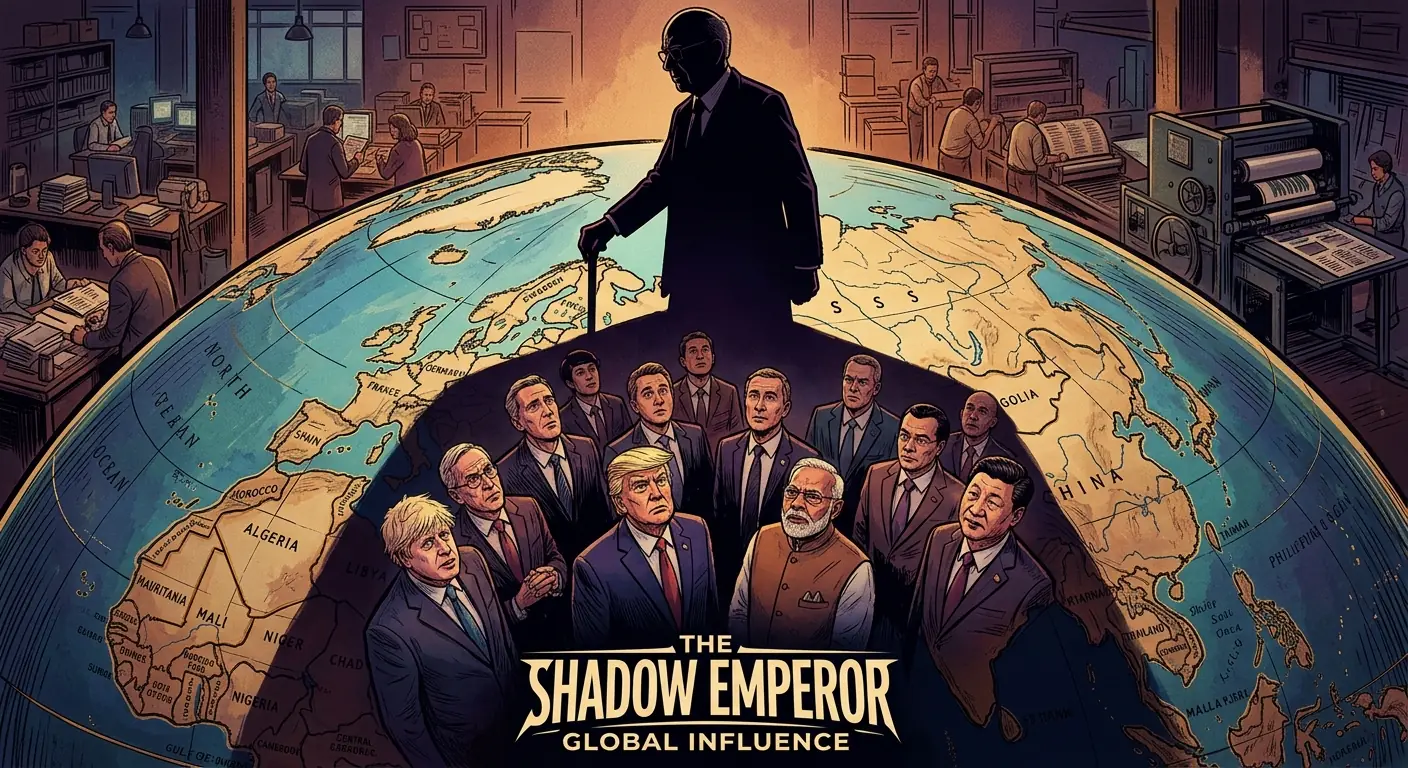
We’ve talked about Murdoch’s business genius (and occasional blunders), his relentless expansion, and even his tumultuous personal life. But to truly understand Rupert Murdoch, you have to grapple with the elephant in the room, the one that’s been stomping around the global political landscape for decades: his immense, often controversial, political influence. This isn’t just about endorsing candidates; it’s about shaping national conversations, influencing policy, and arguably, tilting the very scales of public discourse. He wasn’t just a media mogul; he was a kingmaker, a power broker, and sometimes, the chief orchestrator of public opinion.
The Kingmaker’s Touch: From Thatcher to Trump
Murdoch’s political influence is legendary. He cultivated close relationships with leaders across the globe, and his newspapers and television channels often acted as powerful cheerleaders (or ruthless critics) for specific political agendas. In the UK, his unwavering support for Margaret Thatcher in the 1980s was crucial, earning him favors like the smooth passage of The Times acquisition. Later, he famously swung his support from the Conservatives to Tony Blair’s Labour in the 1990s, helping Blair secure a landslide victory in 1997. His outlets, particularly The Sun, became notorious for their aggressive political campaigns, often boiling complex issues down to simple, often inflammatory, slogans. Remember the iconic “It’s The Sun Wot Won It” headline after the 1992 general election? While hyperbole, it reflected a widespread belief in the paper’s power.
In the United States, his influence reached its zenith with Fox News. Launched in 1996, Fox News didn’t just report the news; it actively championed conservative causes and candidates. It became a powerful, often partisan, voice, particularly during the George W. Bush administration and, most notably, during the rise of Donald Trump. Fox News’s coverage of Trump, from his initial candidacy to his presidency, was largely (though not entirely) supportive, providing a crucial platform and shaping the narrative for millions of viewers. Critics argued that Fox News wasn’t merely reflecting public opinion but actively shaping it, creating an echo chamber that amplified conservative voices and often demonized opposing viewpoints. This wasn’t subtle; it was a sledgehammer to the face of traditional political journalism.
The Climate Change Conundrum: A Divisive Stance
One of the most persistent and damaging criticisms leveled against Murdoch’s empire, particularly in recent decades, has been its approach to climate change. While some of his publications, like The Wall Street Journal, occasionally published articles acknowledging the scientific consensus, others, most notably The Australian and Fox News, have often been accused of downplaying the severity of climate change, promoting skepticism, or giving disproportionate airtime to climate deniers. This stance was particularly impactful in Australia, a country highly vulnerable to climate impacts, where Murdoch’s News Corp controlled a significant portion of the print media.
For years, environmental activists and scientists pointed to the consistent editorial line across many News Corp outlets that cast doubt on climate science, criticized renewable energy, and championed fossil fuels. This approach fueled public debate and, critics argued, actively hindered political action on climate change. It wasn’t until devastating bushfires ravaged Australia in 2019-2020, leading to immense public pressure, that some of his Australian papers softened their stance, with News Corp Australia even launching a campaign to promote net-zero emissions by 2050 in 2021. This shift, however, came after decades of what many saw as a deliberate campaign of misinformation, highlighting the profound and long-lasting impact his media empire could have on critical global issues.
Shifting the Overton Window: The Enduring Legacy of Influence
Murdoch’s genius lay in understanding that media doesn’t just reflect society; it shapes it. He didn’t just report on the news; he often became a part of it, and through his vast network of newspapers, television channels, and websites, he had an unparalleled ability to shift the “Overton Window” – the range of ideas tolerated in public discourse. By relentlessly pushing certain narratives, elevating particular voices, and sidelining others, he helped legitimize ideas and politicians that might otherwise have remained on the fringes. This capacity to influence, to set the agenda, and to rally public sentiment around his chosen causes is perhaps his most enduring, and most debated, legacy. Whether you see him as a champion of free markets and robust debate, or a dangerous purveyor of partisan propaganda, there’s no denying that Rupert Murdoch fundamentally altered the way power and media interact on a global scale.
⏳ Chapter 13: The Unending Saga: Retirement, Reflections, and a New Era (2020s-Present)
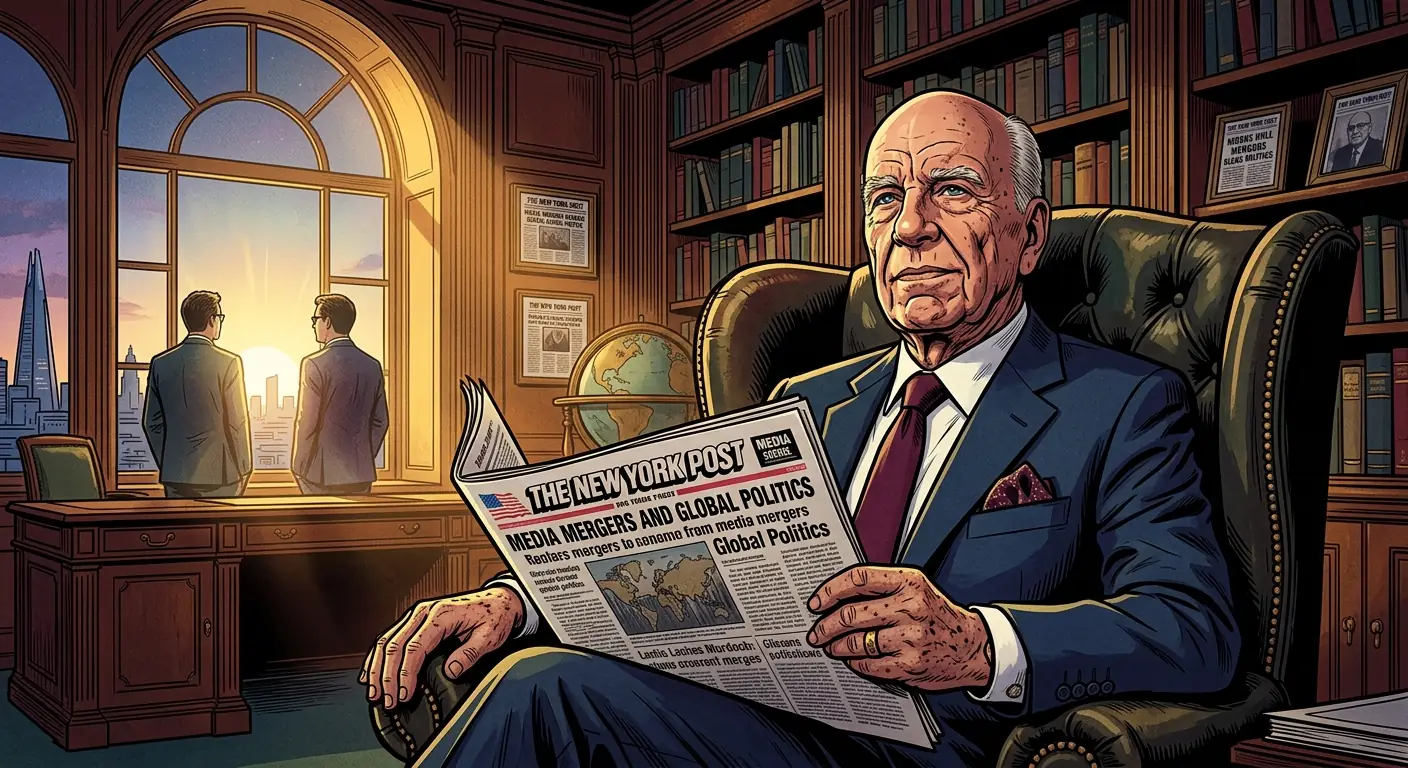
So, here we are, at what many might call the “final chapter” of Rupert Murdoch’s active reign. But for a man who has always defied convention and rewritten the rules, “final” feels a bit… premature. In September 2023, at the ripe old age of 92, Murdoch announced he would step down as chairman of Fox Corp. and News Corp., transitioning to the role of Chairman Emeritus. His eldest son, Lachlan, would take over as the sole chairman of both companies. Cue the dramatic music, right? The end of an era! Except, with Rupert Murdoch, it’s rarely ever truly “the end.”
Stepping Back (Sort Of): The Chairman Emeritus
The announcement of Rupert’s “retirement” was met with a mix of relief, speculation, and a healthy dose of cynicism. While he formally relinquished his chairmanships, the title “Chairman Emeritus” suggests a continued, albeit less hands-on, involvement. Let’s be real: a man who has been at the helm of a global media empire for 70 years doesn’t simply fade into the sunset to tend to his prize-winning petunias. His influence, his network, and his opinions are still very much present. He remains a significant shareholder and, undoubtedly, a formidable voice in the ears of his children.
His resignation letter to employees was classic Murdoch: brief, to the point, and emphasizing the importance of freedom of speech (a cornerstone, he claims, of his philosophy). He stated,
“Our companies are in robust health, as am I. Our opportunities far exceed our challenges.”
It was a defiant farewell, not a mournful one. This “retirement” is less about stepping away and more about formalizing a transition that has been years in the making, allowing Lachlan to take the undisputed lead while the patriarch keeps a watchful eye. It’s like the consigliere moving to the back room; the power is still there, just in a slightly different office.
The Next Generation’s Turn: Lachlan’s Leadership
With Rupert officially out of the top operational role, the spotlight now shines squarely on Lachlan Murdoch. Lachlan has been groomed for this role for decades, enduring his own share of boardroom drama, including a brief departure from the family business in the early 2000s before returning to Rupert’s side. He’s often seen as more conservative than his brother James (who famously left the News Corp board in 2020, citing disagreements over editorial content, particularly on climate change).
Lachlan’s challenge is immense: to steer Fox and News Corp. through an increasingly fragmented and rapidly evolving media landscape, all while living up to (or living down, depending on your perspective) the colossal shadow of his father. He’s already made moves, focusing on streaming ventures like Fox Nation and navigating the post-Disney acquisition “New Fox” (which includes Fox News, Fox Sports, and the Fox broadcast network). The future will tell if Lachlan has his father’s same uncanny ability to anticipate trends, weather storms, and ruthlessly execute his vision. The succession war, which has been a constant undercurrent for years (as we saw in Chapter 7), seems to have finally settled, at least for now, with Lachlan firmly in the driver’s seat.
The Enduring Legacy: A Complicated Verdict
Rupert Murdoch’s legacy is, and will forever be, complicated. He is undeniably one of the most transformative figures in media history, a man who built an empire from two small Australian newspapers into a global behemoth spanning continents and technologies. He broke monopolies, challenged unions, and democratized access to news (albeit often sensationalized). He saw opportunities where others saw obstacles, and he was never afraid to bet big, even when the odds seemed stacked against him.
However, his legacy is also deeply stained by controversy. The phone-hacking scandal, accusations of political manipulation, the promotion of partisan journalism, and a perceived disregard for journalistic ethics in pursuit of profit and power have left an indelible mark. He changed not just what people read and watched, but how they consumed information and, arguably, how they thought about the world. He proved that media could be a tool for immense power, not just a service.
As he steps into the role of Chairman Emeritus, the media world continues to grapple with the seismic shifts he initiated. His impact on press freedom, political discourse, and the very nature of news will be debated for generations. Whether you loved him or loathed him, one thing is clear: Rupert Murdoch didn’t just buy the news; he fundamentally rewrote the rules of power, and the reverberations of his reign will be felt for a very long time to come. It truly is an unending saga.
💡 Key Insights
- ▸ Murdoch understood before anyone else that media isn't about informing people — it's about commanding their attention. Attention is a currency, and whoever controls the largest supply of it controls the conversation. Every acquisition he made, from the New York Post to Fox News, was a bet on attention, not journalism.
- ▸ The creation of Fox News in 1996 proved that there was a massive underserved market for conservative-leaning television news. Murdoch didn't invent political bias in media — he industrialized it. The lesson: the biggest opportunities often hide in audiences that existing players are ignoring or dismissing.
- ▸ Murdoch's greatest strategic error was the $580 million acquisition of MySpace in 2005 — just three years before Facebook crushed it. He applied an old-media acquisition playbook to a new-media landscape. The lesson: buying an audience is easy; keeping it is impossible if you don't understand the product.
- ▸ At 92, Murdoch proposed a trust restructure that would hand control of his empire to his eldest son Lachlan, triggering a legal battle with his other children. The Murdoch succession war proves that even the most meticulously constructed empires can fracture over the most human of questions: which child inherits the throne?
- ▸ Murdoch survived the phone-hacking scandal that would have destroyed any other media executive. He shut down the 168-year-old News of the World, testified before Parliament, and kept going. His resilience wasn't admirable — it was instructive. In power, survival is often just a function of having more leverage than your enemies.
Sources
- Michael Wolff — The Man Who Owns the News: Inside the Secret World of Rupert Murdoch ↗
- Paddy Manning — The Murdoch Dynasty: Power, Politics and the Shaping of the Modern World ↗
- News Corp / Fox Corporation SEC Filings ↗
- The Guardian — Phone Hacking Scandal Coverage ↗
- Bloomberg Billionaires Index — Rupert Murdoch ↗