Larry Page & Sergey Brin: Two PhD Dropouts Who Organized the World's Information — and Then Bought Everything Else
They met at Stanford, argued about everything, and built a search engine in a dorm room. Then they turned it into a $2 trillion empire that knows more about you than you know about yourself.

View all stories about this mogul
In September 1998, while the rest of Silicon Valley was chasing portal deals and banner ad revenue, two Stanford PhD students incorporated a company in a garage on Santa Margarita Avenue in Menlo Park, California. They had $100,000 in funding from a single check, written by Sun Microsystems co-founder Andy Bechtolsheim — who hadn’t even seen a demo. He just liked the math. Twenty-six years later, that garage startup is worth over $2 trillion. It processes 8.5 billion searches per day. It reads your email, maps your commute, finishes your sentences, and is racing to build artificial general intelligence. The company is Alphabet. But everyone still calls it Google.
This is the story of Larry Page and Sergey Brin — two argumentative immigrants’ sons who built the most important company of the internet age, not by being the loudest or most charismatic founders in the Valley, but by being the most relentlessly logical.
🔬 Chapter 1: The Stanford Collision

Larry Page arrived at Stanford’s computer science PhD program in the fall of 1995. He was 22 years old, the son of two computer science professors at Michigan State, and he had a quiet intensity that made people uncomfortable. He didn’t do small talk. He did systems thinking.
Sergey Brin was already there. Born in Moscow in 1973, Brin had emigrated to the United States at age six when his family fled antisemitism in the Soviet Union. His father was a mathematician at the University of Maryland. Brin was brash where Page was reserved — loud, athletic, prone to doing handstands in the hallway. He’d already blown through the Stanford coursework so fast that he was casting around for a dissertation topic.
They met during a campus tour for prospective students. By every account, they argued about everything. Page later recalled: “We both found each other obnoxious.” Brin called him “an intense, contrarian guy.” It was the start of one of the most productive partnerships in business history.
The spark came when Page started thinking about the structure of the World Wide Web. In 1996, the web had roughly 10 million pages. Search engines at the time — AltaVista, Excite, Lycos — indexed pages based on keyword frequency. If you searched for “Stanford,” you got whichever pages mentioned “Stanford” the most. The results were terrible. Spam was rampant. Search was essentially broken.
Page had a different idea. What if you treated the web like an academic paper? In academia, the importance of a paper is measured by how many other papers cite it. What if the importance of a web page was measured by how many other pages linked to it?
He called the project “BackRub.” Brin, the math prodigy, saw the elegance of the idea immediately and joined. Together, they built a system that crawled the web, mapped every link, and computed a score for every page based on the quantity and quality of its inbound links. They called the algorithm PageRank — a play on Larry’s last name.
By early 1997, they had a working prototype. It was dramatically better than anything else on the market. A search for “university” actually returned universities. A search for a person’s name returned relevant pages about that person. It sounds obvious now. In 1997, it was revolutionary.
💰 Chapter 2: The Check Written in a Parking Lot
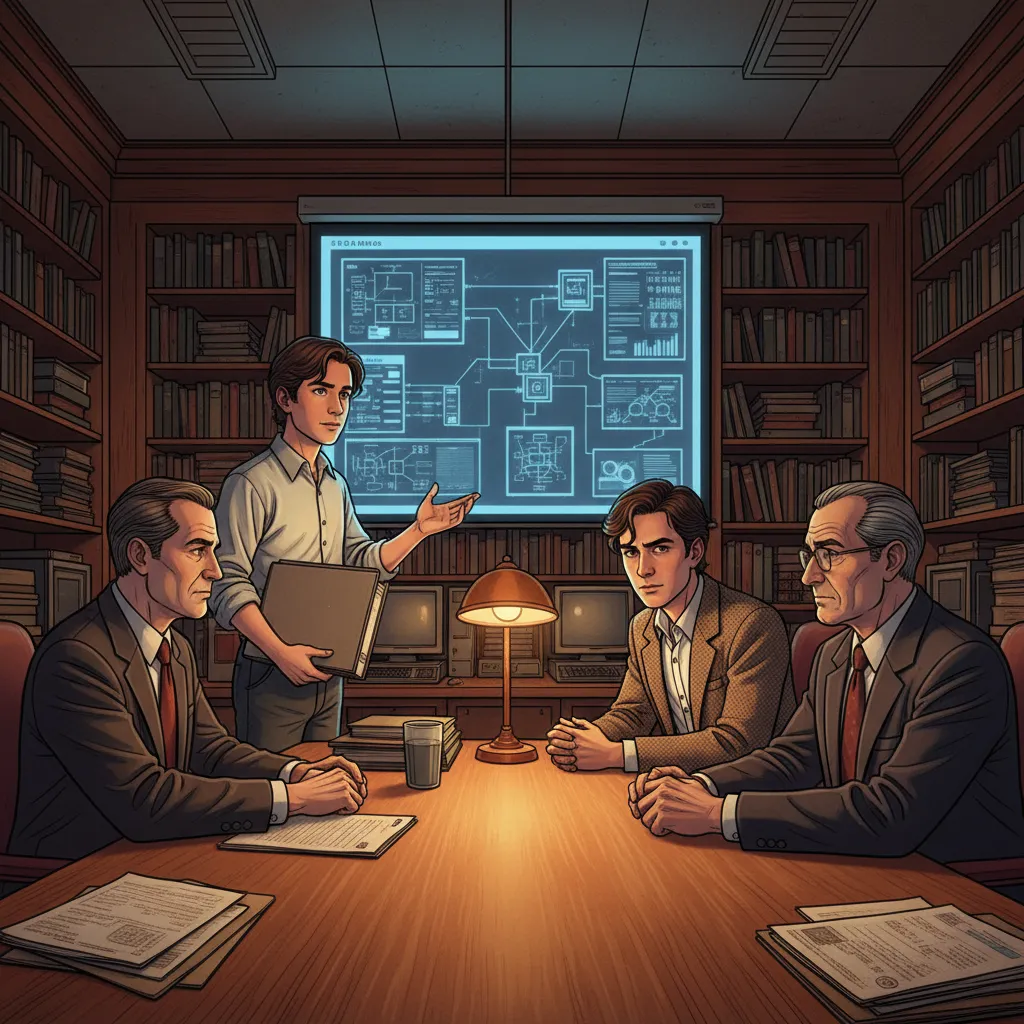
Page and Brin didn’t want to start a company. They were academics. They tried to sell the technology.
In 1998, they approached George Bell, the CEO of Excite, and offered to sell their search algorithm for $1 million. Bell turned them down. They lowered the price to $750,000. Bell still said no. He reportedly told venture capitalist Vinod Khosla that he didn’t want Excite’s search to be too good — because if users found what they wanted immediately, they’d leave the site, and Excite wouldn’t be able to sell them banner ads.
This is one of the great strategic blunders in business history. Bell chose short-term ad impressions over long-term dominance. Excite filed for bankruptcy in 2001. As of 2026, the decision not to buy Google for $750,000 may be the single most expensive “no” ever uttered by a corporate executive.
Rejected by the incumbents, Page and Brin reluctantly decided to go it alone. They needed money. Their Stanford advisor, David Cheriton, introduced them to Andy Bechtolsheim, the co-founder of Sun Microsystems. Bechtolsheim drove to Palo Alto for a morning meeting. Page and Brin gave a quick pitch. Before they’d even finished, Bechtolsheim pulled out his checkbook and wrote a check for $100,000 — made out to “Google Inc.”
There was a problem: Google Inc. didn’t exist yet. The company hadn’t been incorporated. Page and Brin had to leave the check sitting in a desk drawer for two weeks while they filed the paperwork. On September 4, 1998, they officially incorporated Google and deposited the check.
They set up shop in Susan Wojcicki’s garage in Menlo Park. (Wojcicki, who later became CEO of YouTube, was renting out the space.) Their first server was built from Lego bricks and commodity hardware. Their first office pet was a dog named Yoshka that Brin brought to work.
By the end of 1998, Google was processing 10,000 search queries a day. It had zero revenue.
🚀 Chapter 3: The Rocket Ignites

The thing that changed everything was advertising — but not the kind anyone expected.
In 1999, the dominant internet advertising model was banner ads. Big, flashy, intrusive. Google’s homepage was famously clean — just a search box and a logo. Page and Brin hated banner ads aesthetically and philosophically. But they needed money.
The solution was AdWords, launched in October 2000. The concept: small text ads that appeared alongside search results, triggered by the keywords people were actually searching for. If you searched for “running shoes,” you’d see ads from shoe companies. The ads were relevant. They were unobtrusive. And crucially, advertisers only paid when someone actually clicked.
This was the invention of pay-per-click advertising at scale, and it was like discovering oil under your backyard. Suddenly, Google knew exactly what people wanted at the exact moment they wanted it — and could sell that intent to advertisers with laser precision. No television network, no newspaper, no billboard had ever offered anything close to this level of targeting.
Revenue exploded. In 2001, Google made $86 million. By 2003, it was $1.5 billion. By 2004, when the company went public on August 19 at $85 per share, it was the most anticipated IPO since Netscape.
But the IPO itself was classic Page and Brin. They used a Dutch auction instead of a traditional Wall Street underwriting — letting regular investors bid on shares rather than letting investment banks hand them to their favorite clients at a discount. Wall Street was furious. Page and Brin didn’t care. They also issued a “Founders’ Letter” with their S-1 filing that included the famous line: “Google is not a conventional company. We do not intend to become one.”
They created a dual-class share structure that gave their stock 10 votes per share compared to 1 vote for public shareholders. The message was unmistakable: we’re taking your money, but we’re keeping control. Wall Street swallowed hard and bought in anyway. By the end of the first day of trading, Google was worth $27 billion.
🧠 Chapter 4: The Machine Gets Smarter
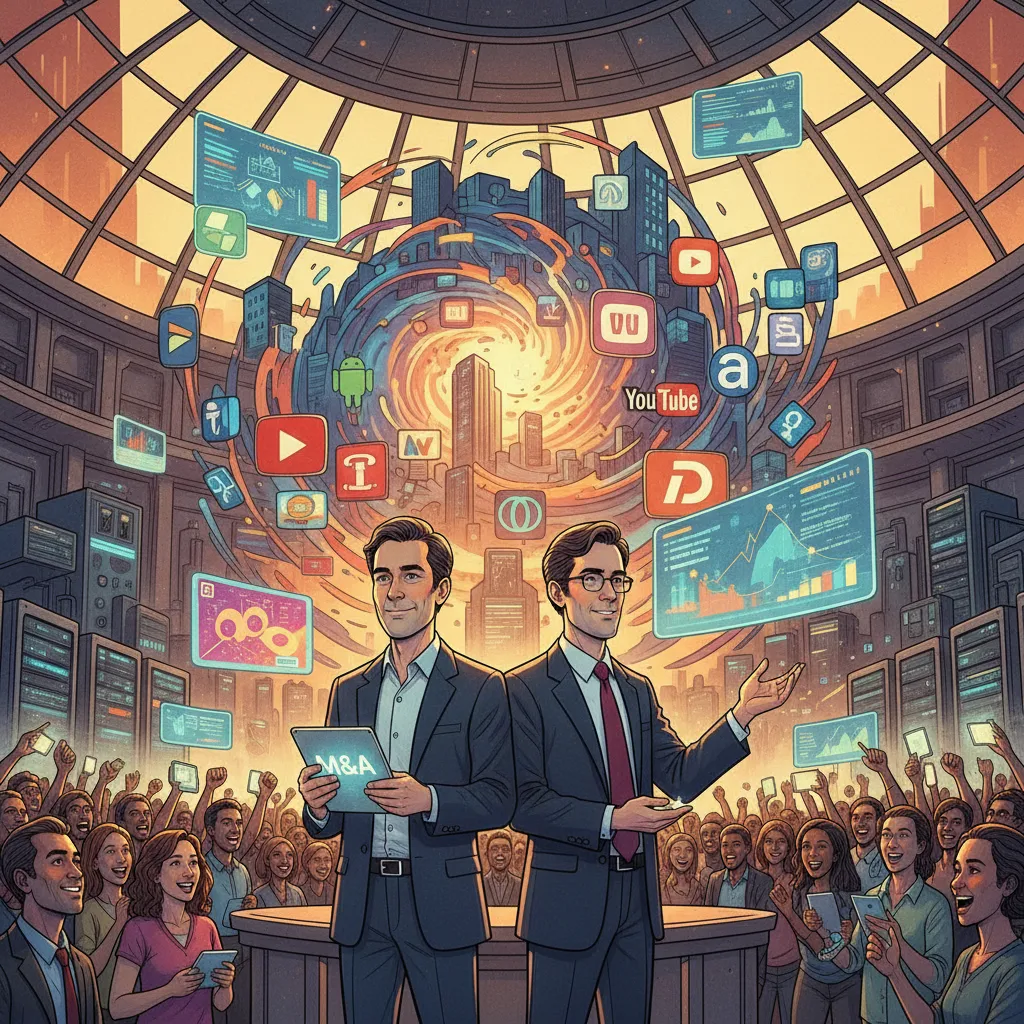
What happened next was an acquisition spree that redefined what a technology company could be.
In October 2006, Google acquired YouTube for $1.65 billion. Wall Street called it insane. YouTube was losing money hand over fist, burning through bandwidth costs, and being sued by Viacom for $1 billion over copyright infringement. But Page saw what others didn’t: online video was going to eat television, and YouTube had already won the user behavior war. By 2025, YouTube generated over $36 billion in annual ad revenue. The $1.65 billion purchase price is now a rounding error.
In 2005, Google bought a tiny startup called Android Inc. for an estimated $50 million. The startup’s founder, Andy Rubin, wanted to build an operating system for digital cameras. Page convinced him to build one for phones instead. As of 2026, Android runs on over 3.5 billion devices worldwide. It is the most widely installed operating system in human history.
Google Maps. Google Chrome. Google Cloud. Nest. Waze. DeepMind. The acquisition machine hummed relentlessly, each purchase feeding the same flywheel: more users, more data, more advertising revenue, more cash to buy the next thing.
But underneath the acquisitions was something deeper — a culture of engineering-first thinking that Page and Brin had embedded from the beginning. The company’s internal culture was almost academic. Engineers were expected to publish papers. Peer review was common. The famous “20% time” policy — which produced Gmail (launched April 1, 2004, when many people thought it was an April Fool’s joke because it offered 1 GB of free storage, 500 times what Hotmail provided), Google News, and Google Maps — wasn’t charity. It was a recruitment tool and an innovation engine wrapped in one.
Page was obsessed with speed. He once reportedly berated an engineer whose project loaded in 0.9 seconds, saying it should load in 0.3. He believed — correctly — that every fraction of a second of loading time cost users and revenue. Internal studies later confirmed that a 400-millisecond delay in search results caused a measurable drop in query volume.
🏗️ Chapter 5: Alphabet and the Art of Restructuring
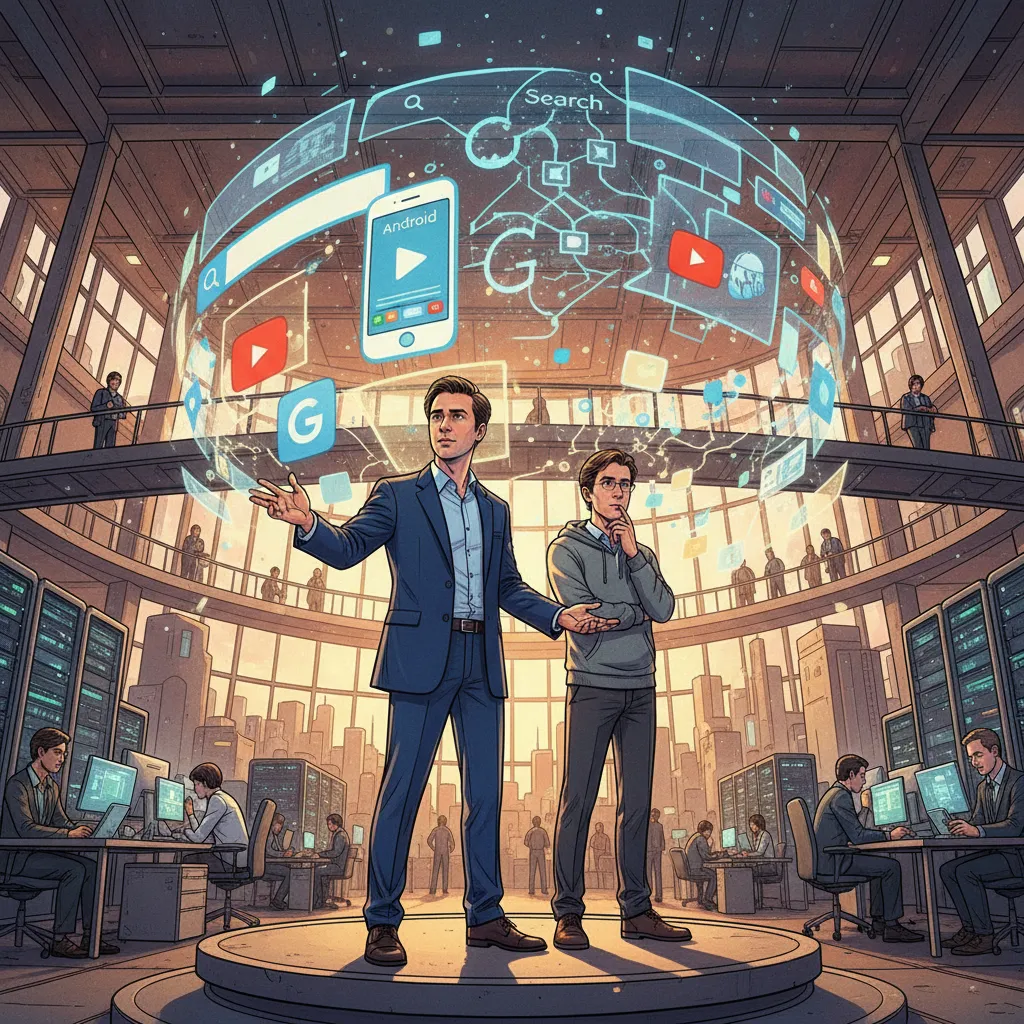
By 2015, Google had a problem: it had become too big, too diverse, and too sprawling for a single corporate structure. Page was running a search engine, a phone operating system, a video platform, a self-driving car project, a life sciences division, a venture capital arm, a fiber internet service, and a drone delivery startup. The managerial bandwidth required was crushing.
On August 10, 2015, Page and Brin announced the creation of Alphabet Inc. — a holding company that would own Google as a subsidiary alongside all the other “moonshot” projects. Sundar Pichai, a quiet IIT Kharagpur graduate who had risen through the ranks as head of Chrome and Android, was named CEO of Google. Page became CEO of Alphabet. Brin became president.
The restructuring was elegant. It let Google’s core business — search, ads, YouTube, Android, Cloud — operate with focused management while giving Waymo (self-driving cars), Verily (life sciences), Wing (drone delivery), and Calico (aging research) the autonomy to pursue long-term bets without quarterly earnings pressure dragging them down.
Wall Street loved it. Alphabet’s stock surged. For the first time, investors could see exactly how much money Google’s core business was generating — and how much the moonshots were burning. The answer: Google was a cash volcano, and the moonshots were expensive but containable.
🌅 Chapter 6: The Quiet Disappearance

Here’s the strange part of the Larry Page and Sergey Brin story: they vanished.
In December 2019, Page and Brin formally stepped down from their roles at Alphabet. Page resigned as CEO. Brin resigned as president. Sundar Pichai took over both titles. There was no drama, no boardroom coup, no public meltdown. They just… left.
Page became one of the most reclusive billionaires on the planet. As of 2026, he reportedly splits his time between New Zealand and various private islands in the South Pacific. He rarely gives interviews. He almost never appears in public. When he does speak, it’s usually about flying car companies — he personally funded Kitty Hawk and Opener (now Wisk Aero), pouring hundreds of millions into electric vertical takeoff and landing aircraft.
Brin, meanwhile, returned to Google in a hands-on capacity during the AI arms race. When ChatGPT launched in November 2022 and threatened Google’s search monopoly, Brin was reportedly spotted in Google offices writing code for the company’s Gemini AI model. The co-founder of a $2 trillion company, personally debugging AI code. It was the most Sergey Brin thing imaginable.
The contrast between the two founders in their post-Google years tells you everything about their partnership. Page was the architect — the systems thinker who wanted to organize information and then move on to the next world-changing problem. Brin was the builder — the hands-on engineer who couldn’t resist jumping back in when things got interesting.
🎯 Chapter 7: The Shadow Side
No honest accounting of Google can ignore what the company became.
In 2020, the U.S. Department of Justice filed its most significant antitrust lawsuit since the Microsoft case in 1998, accusing Google of illegally maintaining a monopoly in search and search advertising. The core allegation: Google paid Apple an estimated $26.3 billion in 2021 alone to remain the default search engine on iPhones — a deal that effectively blocked competitors from reaching the most valuable users on the planet.
In August 2024, U.S. District Judge Amit Mehta ruled that Google was, in fact, an illegal monopoly. The decision sent shockwaves through the tech industry and opened the door to potential remedies including forcing Google to divest Chrome or Android.
Then there was the data question. By 2026, Google’s servers held more information about human behavior than any institution in history. Every search query, every email, every location ping from an Android phone, every YouTube video watched, every Google Doc written. The company’s entire business model was built on knowing what people want before they know they want it — and then selling that knowledge to advertisers.
The company that once proudly declared “Don’t Be Evil” as its motto quietly changed the phrase to “Do the Right Thing” in its code of conduct in 2018. The shift was telling. “Don’t be evil” is a moral absolute. “Do the right thing” is a judgment call — and judgment calls are made by the people with the most power.
🏆 Chapter 8: The Ledger
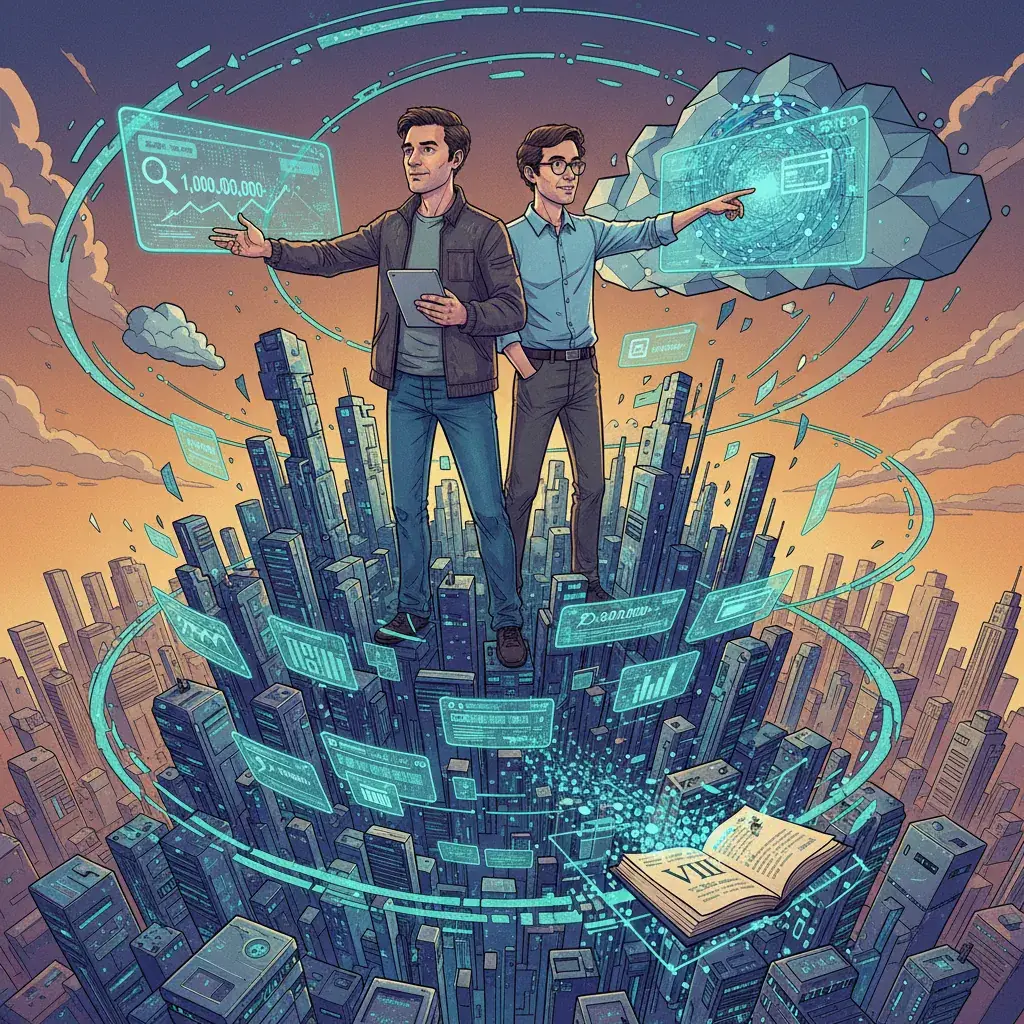
Here is what Larry Page and Sergey Brin built, by the numbers:
Alphabet’s market capitalization as of early 2026: approximately $2.3 trillion. Annual revenue: over $340 billion. Employees: roughly 180,000 worldwide. Products used by more than 1 billion people each: Search, Gmail, YouTube, Chrome, Android, Google Maps, Google Drive, Google Photos. That’s eight products with more than a billion users. No other company in history comes close.
Larry Page’s personal net worth: approximately $156 billion. Sergey Brin’s: approximately $149 billion. Combined, the two Stanford dropouts are worth more than the GDP of most nations.
But the number that matters most might be this one: Google processes approximately 8.5 billion searches per day. That’s roughly one search for every person on Earth, every single day. When humanity wants to know something — anything — it asks the machine that Larry and Sergey built.
They started with a simple question: can you rank web pages by importance? They answered it with a mathematical formula scribbled on a whiteboard in a Stanford dorm room. And then they spent the next quarter century turning that answer into the most comprehensive map of human knowledge and desire ever constructed.
Whether that’s a triumph or a tragedy depends on how much you trust the mapmakers. Page and Brin aren’t talking. They built the oracle, collected their billions, and walked away. The machine keeps running.
It doesn’t need them anymore.
💸 Chapter 9: The Ad Machine Roars (2000-2004)
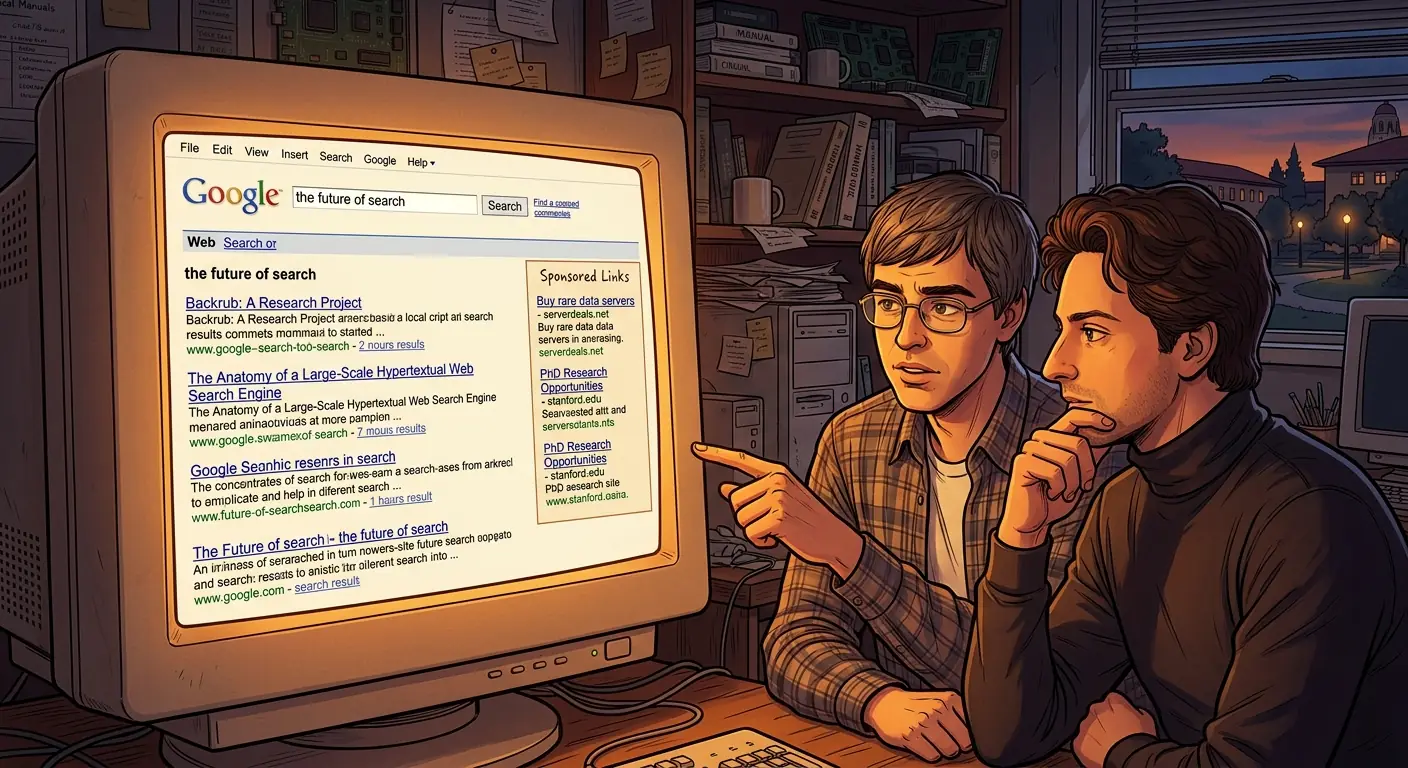
So, Page and Brin, our intrepid academics, initially wanted nothing to do with ads. Their vision for search was pure, untainted by the commercial clutter that plagued their competitors. They even wrote in their original paper on PageRank, “We expect that advertising-funded search engines will be inherently biased towards the advertisers and away from the needs of the consumers.” Oh, the sweet, naive optimism of youth! Or perhaps, just the raw honesty of researchers who hadn’t yet been introduced to the concept of a multi-billion dollar valuation. But, as we all know, even the purest intentions eventually meet the cold, hard realities of payroll and investors who expect a return.
From Search to Cash Machine
The truth is, Google needed a business model that didn’t compromise its user experience, which was its core differentiator. Early attempts at banner ads were quickly dismissed. Google’s homepage was famously minimalist, a white canvas in a sea of cluttered web portals. How do you monetize that without ruining it? The answer, ironically, came from a competitor. Overture Services (originally GoTo.com), founded by Bill Gross, had pioneered a pay-per-click model where advertisers bid on keywords, and their ads appeared alongside search results. Google, initially scornful of this approach, eventually realized its genius. It wasn’t about showing ads, it was about showing relevant ads. And if anyone could figure out relevance, it was Google.
In 2000, Google launched AdWords, a system that allowed businesses to create text ads linked to specific keywords. The magic was in the auction. Advertisers bid on keywords, and their ad’s position wasn’t just determined by the bid, but also by its “Quality Score” – a metric measuring the ad’s relevance and click-through rate. This was brilliant. It aligned advertiser incentives with user experience: relevant ads got more clicks and better placement, irrelevant ads sank. Two years later, in 2002, they introduced AdSense, extending this model to third-party websites. Now, websites could host Google ads, and Google would automatically serve contextually relevant ads based on the page’s content. Suddenly, Google wasn’t just organizing the world’s information; it was also organizing the world’s advertising, turning it into a hyper-efficient, self-serving revenue engine.
The “Don’t Be Evil” Dilemma
This shift wasn’t without its internal battles. Larry Page, ever the purist, remained skeptical of ads, fearing they would corrupt the search experience. Sergey Brin was more pragmatic, understanding the necessity of a sustainable business model. The compromise, and Google’s early ethos, was encapsulated in its famous motto: “Don’t Be Evil.” It was a promise that even as they built an advertising empire, they wouldn’t compromise user trust or manipulate search results for profit. They genuinely believed they could make money without being slimy.
This period culminated in Google’s highly anticipated IPO in August 2004. The company went public at $85 per share, valuing it at over $23 billion. It was a Dutch auction, an unusual method designed to democratize access for smaller investors, avoiding the usual Silicon Valley insider favoritism. It was a chaotic, slightly rebellious IPO, perfectly reflecting the company’s anti-establishment, yet wildly successful, founders. The revenue numbers spoke for themselves: from $19 million in 2000 to $1.47 billion in 2003, and then a mind-boggling $3.18 billion in 2004. The ad machine wasn’t just roaring; it was swallowing the internet whole. Our academic dropouts had inadvertently built the most sophisticated money printer the world had ever seen, proving that you could, in fact, make a fortune by giving away “free” search.
📱 Chapter 10: The Acquisition Spree Begins (2005-2007)
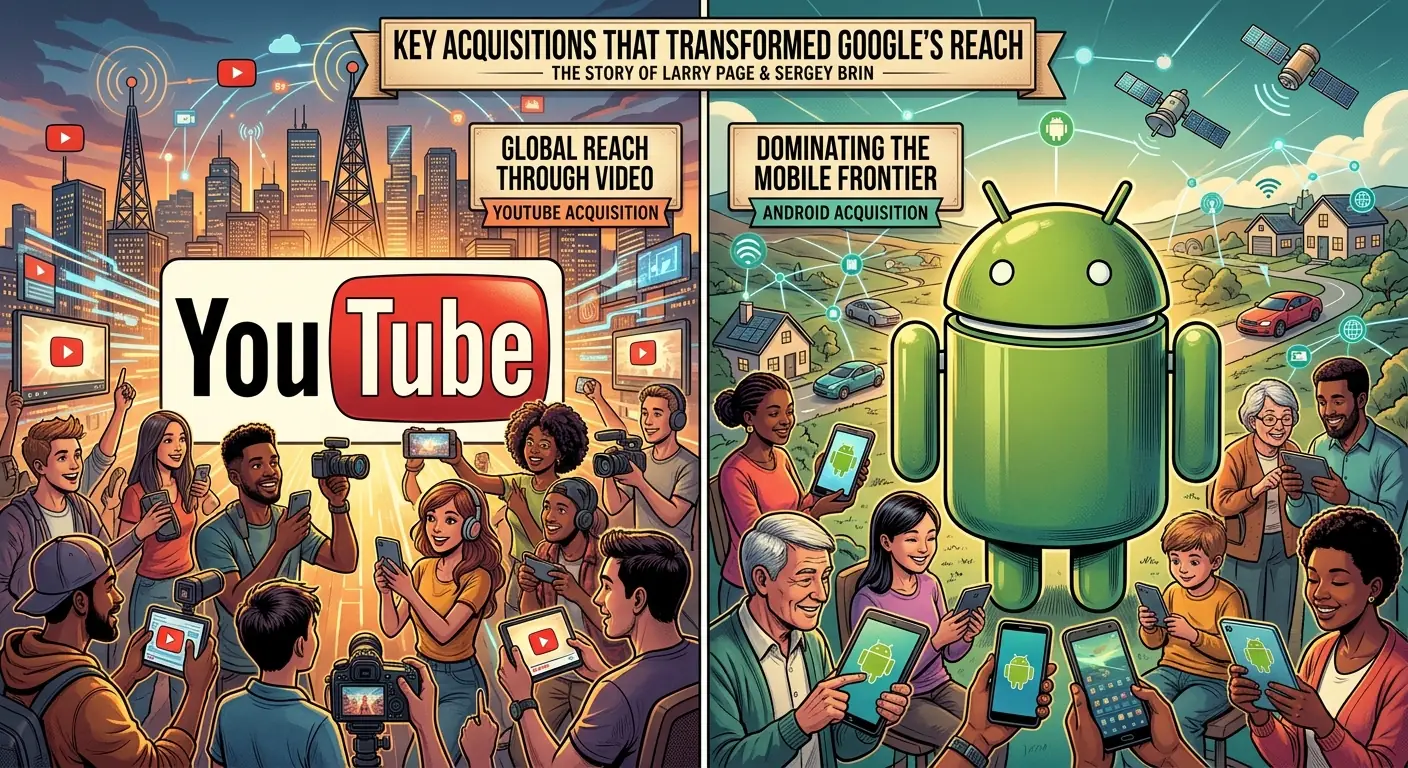
Once Google figured out how to make money (like, a lot of money), Larry and Sergey faced a new challenge: what to do with it all? Their initial mission was to organize the world’s information, but that mission quickly expanded. They realized that “information” wasn’t just text on web pages. It was videos, maps, and even the operating systems running your phone. This realization kicked off one of the most aggressive and impactful acquisition sprees in tech history, transforming Google from a search company into a sprawling digital conglomerate.
Buying the Future
Google’s acquisition strategy wasn’t just about hoovering up competitors; it was about buying into emerging trends and technologies that aligned with their long-term vision. They weren’t just thinking about today’s search results; they were thinking about tomorrow’s user experience, wherever it might happen. They often bought small, innovative companies, integrated their tech, and scaled them globally. It was a high-stakes game of venture capital, played with Google’s growing war chest. They wanted to own the platforms, not just the content.
One of their first massive, industry-redefining bets was on YouTube. In October 2006, Google announced it was acquiring the fledgling video-sharing platform for a staggering $1.65 billion in stock. At the time, many scratched their heads. YouTube was barely a year and a half old, losing money, and riddled with copyright issues. Was Google just buying a legal headache? Larry and Sergey saw something else: a paradigm shift in how people consumed information and entertainment. They saw the future of video, user-generated content, and a whole new ecosystem of creators and viewers. They were buying a cultural phenomenon before it became mainstream. Critics scoffed, but within a few years, YouTube was not just profitable, but an indispensable part of daily life for billions, a content engine second only to Google Search itself. It was arguably one of the best acquisitions in tech history, a testament to their foresight.
Android: The Mobile Revolution
But YouTube wasn’t even their most audacious mobile bet. That honor belongs to Android. In 2005, almost under the radar, Google acquired a small startup called Android Inc. for an undisclosed sum, estimated to be around $50 million. At the time, mobile phones were dominated by Nokia, BlackBerry, and early iterations of the iPhone were still a twinkle in Steve Jobs’s eye. Android’s founder, Andy Rubin, was building an operating system for digital cameras, then pivoted to smartphones. Larry Page, seeing the writing on the wall for the desktop-centric internet, championed the acquisition. He understood that if Google didn’t control the mobile operating system, their entire search and ad business could be locked out of the next generation of computing.
The goal with Android was simple yet revolutionary: create an open-source, free-to-license mobile operating system that hardware manufacturers could use. This contrasted sharply with Apple’s closed, proprietary iOS. When the first Android phone, the HTC Dream (T-Mobile G1), launched in October 2008, it was clunky, but the vision was clear. Google wasn’t selling phones; they were selling an ecosystem. They wanted their services – Search, Maps, Gmail – to be everywhere. And by offering Android for free, they quickly gained market share, eventually becoming the dominant mobile OS globally, powering billions of devices. Larry and Sergey weren’t just organizing information; they were building the very infrastructure upon which that information would be accessed, ensuring Google’s omnipresence for decades to come.
⚔️ Chapter 11: The Empire Under Attack (2008-2012)
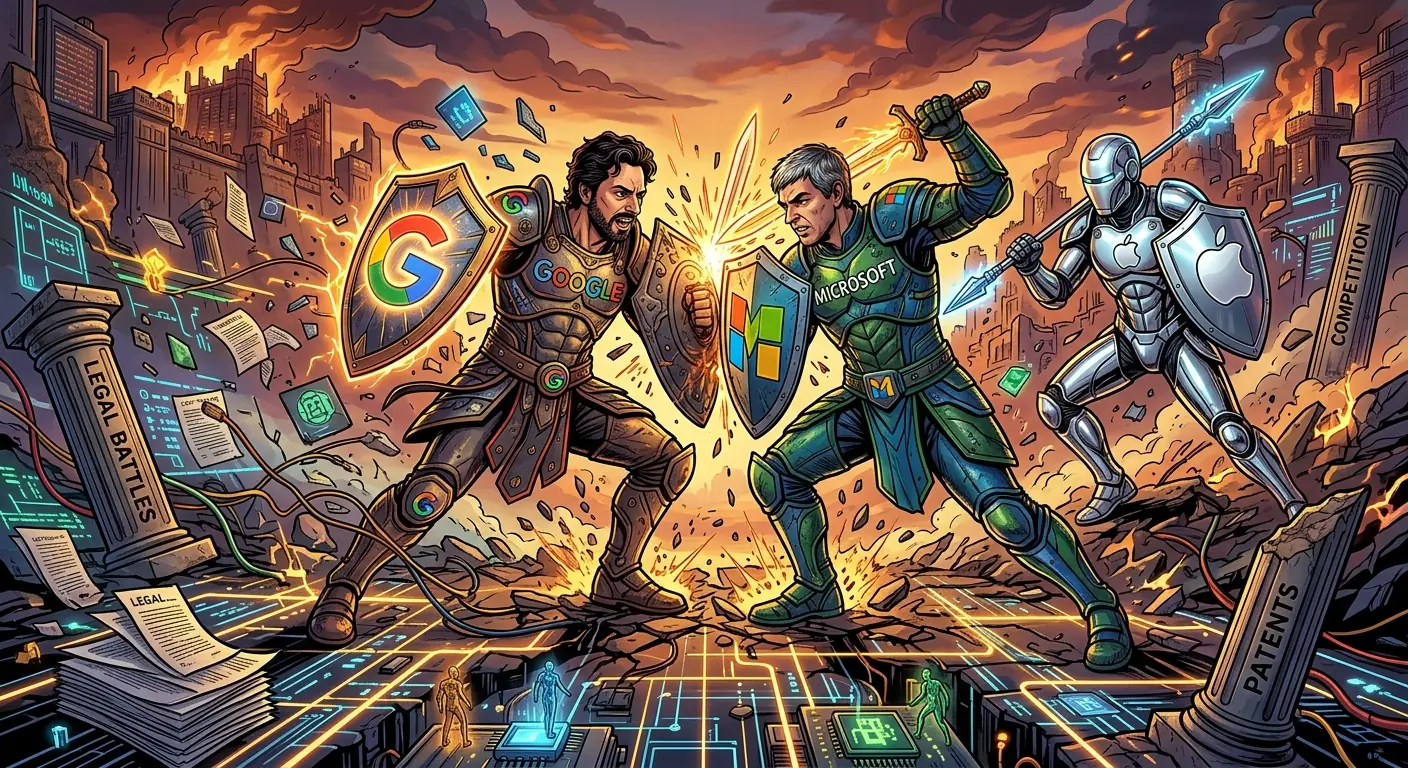
As Google grew from a darling startup to an undeniable tech behemoth, it was inevitable that the target on its back would grow too. Suddenly, our friendly, “don’t be evil” search engine was seen as a dominant, even monopolistic, force. Competitors, once dismissed, now saw Google as an existential threat. And regulators, initially charmed by its innovation, started to eye its power with suspicion. This period marked a turning point where Google had to defend its turf on multiple fronts, proving that even organizing the world’s information could get messy.
Microsoft’s Bing and the Search Wars
Microsoft, the old guard, watched Google’s rise with a mixture of envy and panic. They had missed the boat on internet search, and they desperately wanted back in. After several failed attempts (remember MSN Search? Live Search?), they finally launched Bing in June 2009. Their strategy? A slicker interface, better integration with Windows, and a boatload of marketing dollars. Microsoft poured billions into Bing, even signing a 10-year deal with Yahoo in 2009 to power their search results, effectively creating a “challenger alliance.”
The “Search Wars” were less a brutal bloodbath and more a persistent, expensive annoyance for Google. Bing never truly threatened Google’s market share, which consistently hovered around 70-90% globally (depending on the region). But it forced Google to stay on its toes, constantly innovating and refining its algorithms. It was a reminder that even when you’re on top, there’s always someone gunning for your crown, even if their chances are slim. Larry and Sergey, though largely detached from daily operations by this point, understood that market dominance required perpetual vigilance, lest a rival find a chink in their armor.
Apple vs. Android: The Smartphone Platform War
If the search wars were a skirmish, the mobile wars were a full-blown thermonuclear conflict, particularly between Google and Apple. The launch of the iPhone in 2007 fundamentally changed the tech landscape. Google’s Android, initially developed for pre-iPhone flip phones, had to quickly pivot. When the first Android phone, the HTC Dream, debuted in 2008, Apple’s Steve Jobs was furious. He felt Google had ripped off the iPhone’s innovations. Famously, Jobs declared to his biographer Walter Isaacson:
“I’m going to destroy Android, because it’s a stolen product. I’m willing to go to thermonuclear war on this.”
This wasn’t just rhetoric. Apple launched a barrage of patent lawsuits against Android manufacturers, accusing them of infringement. The legal battles spanned continents and cost billions. Google, for its part, acquired Motorola Mobility in 2012 for $12.5 billion, largely for its patent portfolio, to defend itself and its Android partners. The rivalry wasn’t just about market share; it was about the future of computing, the control of the mobile ecosystem, and two fundamentally different philosophies – Apple’s closed, curated experience versus Google’s open, sprawling one. Larry and Sergey, who had initially been friendly with Jobs, found themselves in an unprecedented war of attrition, battling not just for users, but for the very soul of the smartphone.
Antitrust Scrutiny: The Gathering Storm
Beyond the corporate rivalries, a more ominous cloud began to gather: government antitrust scrutiny. As Google’s market share in search became overwhelming, regulators in the US and especially Europe started asking tough questions. Was Google unfairly leveraging its search dominance to promote its own services (like Google Shopping, Google Maps) over competitors? Was it stifling innovation? In 2010, the U.S. Federal Trade Commission (FTC) launched an antitrust investigation into Google’s search practices. The European Commission followed suit, initiating its own formal proceedings in 2010, which would eventually lead to record-breaking fines. The “don’t be evil” mantra was being tested, not just by internal ethical dilemmas, but by external forces questioning the very structure of Google’s empire. The founders’ casual startup had grown into a global power, and with that power came unprecedented responsibility and scrutiny.
🌍 Chapter 12: The Philanthropic Paradox (2004-Present)
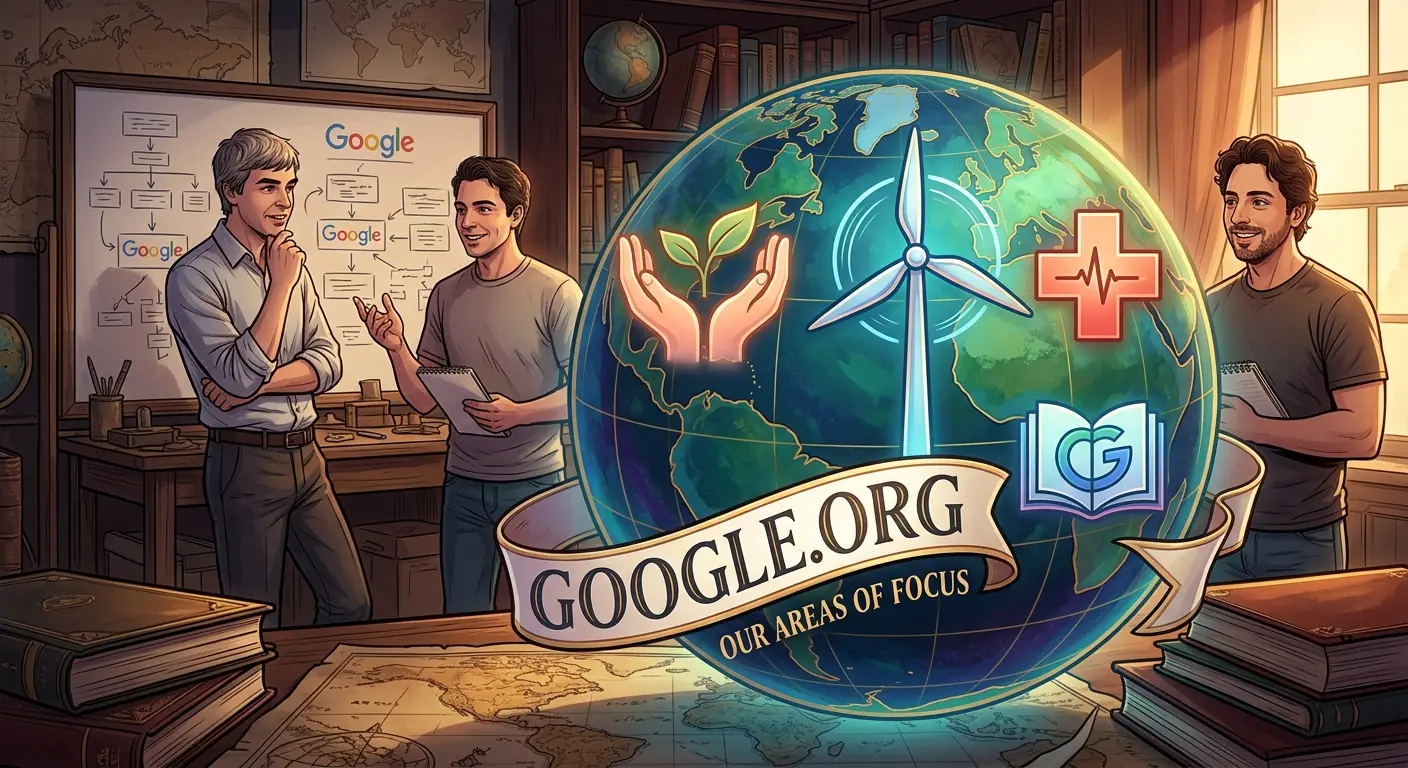
For a company that once emblazoned “Don’t Be Evil” on its corporate code of conduct, Google’s relationship with philanthropy and social impact has always been… complicated. On one hand, they built an organization specifically dedicated to tackling the world’s biggest problems. On the other, their immense power and wealth often created new ethical quandaries, making their altruistic efforts feel like a drop in a very large, sometimes murky, ocean. Larry and Sergey, despite their personal wealth and quiet giving, struggled to fully reconcile their corporate mission with their ethical aspirations.
Google.org: The Ambitious Vision
In 2004, the same year as their IPO, Google launched Google.org, a philanthropic arm initially endowed with 1% of Google’s equity and profits. This was an incredibly ambitious move, setting a precedent for corporate giving. Larry Page, in particular, was fascinated by the idea of applying Google’s problem-solving approach to global challenges. The goal wasn’t just to write checks; it was to use Google’s unique strengths – its engineering talent, data analysis capabilities, and computational power – to tackle issues like climate change, poverty, and disease.
Early projects included investing in renewable energy technologies, developing predictive models for flu outbreaks (remember Google Flu Trends?), and providing grants for innovative nonprofits. They even had a fleet of hybrid cars and a goal to develop a $1 million per gallon biofuel. The initial vision was grand, perhaps too grand. Over the years, Google.org has evolved, narrowing its focus and becoming more integrated with Google’s core product offerings, often providing grants and technical support to organizations working on AI for social good, digital literacy, and crisis response. While the original goal of solving “all the world’s problems” might have been scaled back, Google.org has still contributed hundreds of millions of dollars to various causes, with a focus on leveraging technology for impact.
Personal Philanthropy: Quiet Giving
While Google.org is the public face of the company’s giving, Larry Page and Sergey Brin have also engaged in significant, though often private, personal philanthropy. Both are signatories of The Giving Pledge, committing to give away the majority of their wealth. Sergey Brin, through the Brin Wojcicki Foundation (co-founded with his ex-wife Anne Wojcicki), has donated hundreds of millions to causes ranging from Parkinson’s research (his mother has Parkinson’s) to education and human rights. In 2008, he committed $160 million to the foundation. Larry Page, typically more private, has reportedly focused on areas like medical research and sustainable energy, though details are scarce. He’s also funded audacious “moonshot” projects through his own investment vehicles, like Kitty Hawk for flying cars (which later pivoted), blurring the lines between personal investment and impactful innovation.
One notable example is their involvement in breakthrough medical research. Brin, in particular, has been a major supporter of the Michael J. Fox Foundation for Parkinson’s Research. This personal connection underscores a different kind of impact, one driven by individual passion and a desire to see tangible change.
The “Don’t Be Evil” Legacy
The “Don’t Be Evil” motto, famously removed from Alphabet’s official code of conduct in 2018 (replaced by “Do the Right Thing”), represents the core paradox of Google’s philanthropic journey. How do you “do good” when your core business is under constant scrutiny for its data collection practices, market dominance, and impact on democracy? The immense wealth generated by Google’s advertising machine allowed for unprecedented philanthropic endeavors, but it also fueled the very controversies that made the motto so challenging to uphold.
Critics often point out that Google.org’s impact, while significant in absolute terms, pales in comparison to the company’s financial might and the systemic issues its core business sometimes exacerbates. For Larry and Sergey, “Don’t Be Evil” was a genuine aspiration, a philosophical anchor for their rapidly expanding empire. But as Google became an indispensable utility for billions, the ethical lines blurred, and the definition of “evil” itself became subject to fierce debate. Their philanthropic efforts, while substantial, ultimately became part of a larger narrative about corporate responsibility in an era of unprecedented technological power.
🔮 Chapter 13: The Unfolding Legacy (2019-Present & Beyond)
Larry Page and Sergey Brin officially stepped down from their executive roles at Alphabet in December 2019, handing the reins to Sundar Pichai. It marked the end of an era, a quiet transition for two founders who had already been largely out of the public eye for years. But while their direct operational involvement ceased, their fingerprints remain all over Google and Alphabet, and their legacy continues to unfold in profound and often unpredictable ways.
Beyond the Founders: Sundar Pichai’s Leadership
With Larry and Sergey stepping back, Sundar Pichai, who had been CEO of Google since 2015, became CEO of Alphabet. It was a clear signal of the company’s maturity and its transition from a founder-led startup to a professionally managed corporation. Pichai, known for his calm demeanor and product acumen, has navigated Alphabet through some of its most challenging times: escalating antitrust actions, intense competition in AI, and growing internal dissent over company ethics and workplace culture.
Under Pichai, Alphabet has doubled down on artificial intelligence, viewing it as the next frontier in computing, much like mobile was a decade ago. He’s also overseen continuous restructuring and optimization of Google’s sprawling product portfolio, balancing innovation with profitability. While Larry and Sergey remain on Alphabet’s board and are still controlling shareholders, their departure from daily management allowed the company to evolve, perhaps shedding some of the idiosyncratic “moonshot” focus that characterized their later years, in favor of a more streamlined, yet still ambitious, approach. It’s a testament to their foresight that they built a leadership structure capable of thriving beyond their direct involvement.
The AI Frontier: The Next Chapter
Today, Google is fundamentally an AI company. From search ranking to YouTube recommendations, from self-driving cars (Waymo) to advanced language models (Gemini), AI is the beating heart of Alphabet. Larry and Sergey’s early vision of organizing information has morphed into understanding and predicting it. They invested heavily in AI research long before it became a mainstream buzzword, recognizing its potential to transform every aspect of human life.
This focus isn’t without its challenges. The race for AI dominance is fierce, with competitors like OpenAI (backed by Microsoft) pushing the boundaries. Google, once the undisputed leader in AI research, now finds itself in a high-stakes sprint, balancing cutting-edge innovation with responsible deployment. The ethical implications of powerful AI – from bias and misinformation to job displacement and even existential risks – are immense, and Google, as a pioneer, is at the forefront of grappling with these issues. The company continues to pour billions into AI, quantum computing, and other “moonshot” technologies, embodying the spirit of ambitious, long-term bets that Larry and Sergey instilled.
The Enduring Legacy
Larry Page and Sergey Brin’s legacy is immense and multifaceted. They didn’t just build a company; they fundamentally reshaped how the world accesses and interacts with information. They democratized knowledge, put a supercomputer in billions of pockets, and created an economic engine that powered countless businesses. Their impact on the internet, on technology, and on society is arguably unparalleled in the modern era.
Yet, their legacy is also intertwined with complex questions: the immense power of a single company over global information flows, concerns about privacy and data collection, the spread of misinformation on their platforms, and ongoing antitrust battles. The “Don’t Be Evil” mantra, while a noble aspiration, has been challenged by the very scale and influence of the empire they built.
They started as two grad students arguing about links, and ended up as titans who organized the world’s information – and then bought everything else. Their story is a masterclass in innovation, relentless execution, and the often-unforeseen consequences of building something truly revolutionary. As Alphabet continues its journey, the shadow and brilliance of Larry Page and Sergey Brin will undoubtedly continue to shape its path, a testament to two quiet, intense visionaries who changed the world, one search query at a time.
💡 Key Insights
- ▸ Page and Brin's breakthrough wasn't building a better search engine — it was treating the entire web as a citation network. PageRank counted links like academic citations: the more reputable sites that linked to you, the higher you ranked. They imported the logic of academia into the chaos of the internet.
- ▸ Google almost died before it launched. Page and Brin tried to sell their search technology to Excite for $1 million in 1999. Excite's CEO turned them down. That rejection created a $2 trillion company. The biggest opportunities in business are often the ones incumbents are too comfortable to recognize.
- ▸ The decision to hire Eric Schmidt as CEO in 2001 was an act of unusual self-awareness for founders in their late twenties. Page and Brin recognized they needed adult supervision — then took the company back once they'd learned enough. Knowing when to step aside, and when to step back in, is a skill most founders never develop.
- ▸ Google's '20% time' policy — letting engineers spend one day a week on personal projects — produced Gmail, Google News, and AdSense. The lesson: structured freedom isn't a perk. It's a strategy. Some of the most profitable products in history were born from employees being trusted to follow their curiosity.
- ▸ The Alphabet restructuring in 2015 was Page and Brin admitting that Google had become too big to innovate from within. By creating a holding company, they gave moonshot projects like Waymo and Verily room to fail without dragging down the core business. Sometimes the best thing a founder can do for their company is break it apart.
Sources
- Steven Levy — In The Plex: How Google Thinks, Works, and Shapes Our Lives ↗
- John Battelle — The Search: How Google and Its Rivals Rewrote the Rules of Business ↗
- Google SEC Filings — Alphabet Annual Reports ↗
- Bloomberg Billionaires Index — Larry Page & Sergey Brin ↗
- Ken Auletta — Googled: The End of the World as We Know It ↗